
Marylee MacDonald's Blog: Writing and Caregiving, page 3
January 23, 2019
Setting in Fiction
Setting in fiction is inextricably bound up with character. On a cold winter day I learned this important lesson about the “relatedness” of character and setting from a young Navaho.
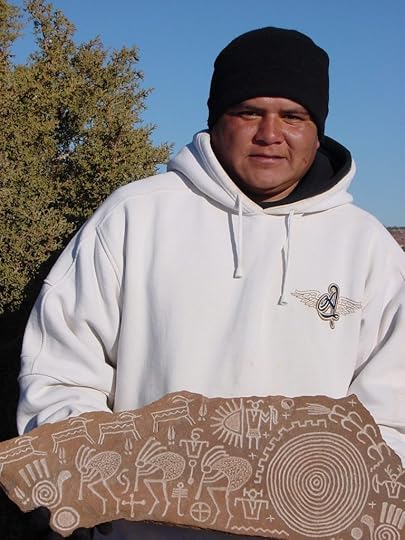
Using symbols taught by his grandmother, Creighton Begay carved petroglyphs.
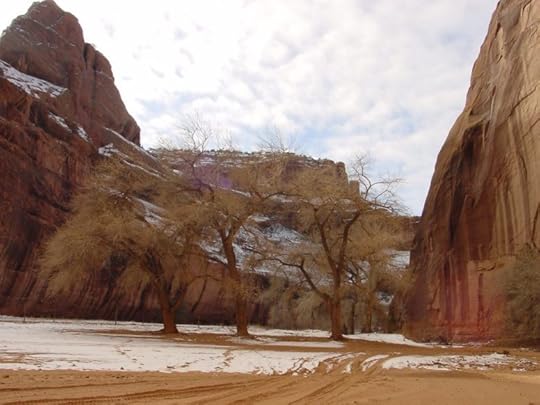
After being enslaved by the Spanish, the Navaho–or more correctly the Dine–returned to Canyon de Chelly. Today, old families like the Begays live deep in the canyon, close to their roots.
Creighton Begay lived with his uncle in the most inaccessible part of Canyon de Chelly. Each fall he and his uncle brought in supplies by mule. Living in a cabin with no electricity or running water, Creighton felt perfectly at home.
If you’re a writer and would like to know more about how setting works in fiction, download my pdf on THE SECRET POWER OF SETTING
In the winter he climbed a rocky trail to the top of the canyon and waited in the parking lot, hoping to sell his rock carvings or hitch a ride to the post office. When the weather warmed, he and his uncle tended their apricot orchards.
Canyon de Chelly had shaped this young man’s character. He had gone to high school in Winslow, but being away from the Canyon had made him sad.
I thought how stressful Creighton would find Chicago or New York City. Canyon de Chelly was not a fictional setting, but a real one, and it was the place he felt at home.
Setting in Fiction Is More than a Painted Backdrop
Setting is your “heart’s place.” Assuredly, your characters must have hearts, too. What do I mean?
Have you ever arrived someplace new and had your body respond with a leap of joy? “Gosh,” you might think, “this is where I belong.” Or, “I could happily live here the rest of my life.” Sometimes, it’s a place of great physical beauty. Other times, we respond to the frenetic pace of city life.
In my writing, setting plays an important role in where a character finds a spiritual home. Character and setting are intertwined. A character’s happiness, and in some cases, her fate, depends of where she finds herself. (For more on the issue of setting, read this post on how to use setting to increase tension.)
I started thinking about this when I moved to Arizona–that we are all, in some way, “displaced” or “misplaced” persons. Much as I find the beauty of Canyon de Chelly restorative, if I lived here all the time, I would feel antsy without a coffee shop, internet service, and library.
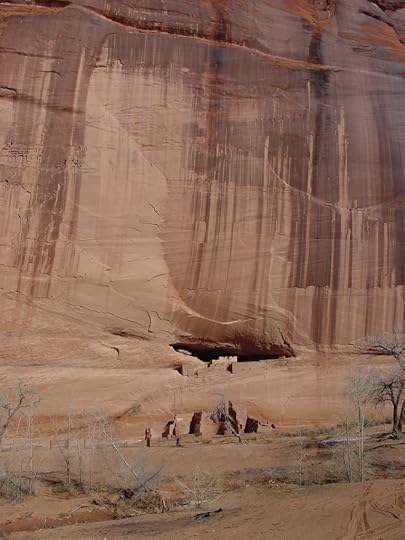
The setting here is the White House Ruins in Canyon de Chelly. Petroglyphs are found throughout the reservation, as are painted handprints, the last traces of the early inhabitants.
If you’re a writer, where is your character’s “hearts place?” Where does that person belong? Where would that person feel extremely ill at ease?
If you’re a reader, think about the book you’ve read most recently. Is the lead character at home or ill at ease? Please leave comments./
The post Setting in Fiction appeared first on Marylee MacDonald.


Writing Getaway | One Writer’s Creative Solitude
When I’m trying to plow through a rough draft or gain the concentration necessary to finish a novel, I organize a writing getaway. Time away is especially valuable when I’m doing my final edits and don’t want distractions.
You know the kind of distractions I mean. People hoping you’ll put a meal on the table. Laundry in the dryer. Weeds in the garden. Bills to be paid. All of these have an insidious way of eroding concentration.
When a writer is deep in revising a novel, she or he must hold the entire novel in her head. What happens early on lays the groundwork for what lies ahead.
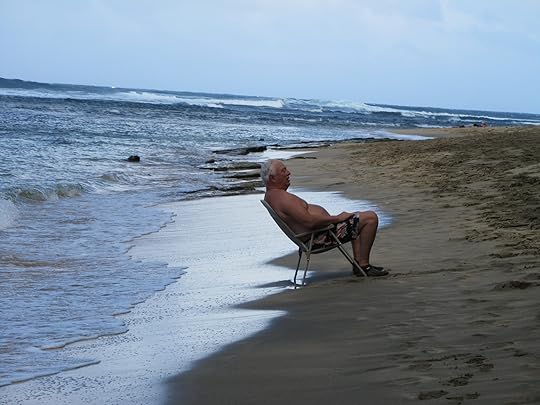
When I’m on a writing retreat, I’m like this guy: eyes closed, listening to the waves, not even bothering to stare out at the horizon
A Writing Getaway Is Not A Vacation
Though you might go to a vacation destination for a writing getaway, you don’t go with a vacation mindset. When I’m on vacation I want to go to the beach and snorkle. I spend time with my family and try to be “fully present,” not pretending to have a conversation, all the while fully engaged with the characters in my head.
Yes, I could apply to a writing residency; however, applying for those requires lead time, and a writer must send a manuscript for a committee to approve. That’s extra work. I’ve done residencies and benefited a lot. Sometimes, though, I’m okay with organizing my own “writing getaway” and just hanging with the people in my book.
Timeshares Make Great Getaways
My husband and I have a timeshare, and as part of that ownership package, we became members of Interval, a timeshare exchange network. The other big exchange is RCI. I use my normal timeshare week for travel with my husband or kids, but if I’m planning a getaway, I grab one the exchanges’ last-minute deals. Usually, I can find an apartment for $250 to $300 per week. If I’m trying to revise or finish a book, I like having a kitchen. Preparing a simple meal gives me a reason to get up and stretch.
National Parks Are a Great Getaway Destination
Because I live part of the year in Arizona, I’m close to the Grand Canyon and to the many state parks where I can rent a cabin. I usually go alone when I organize one of these getaways, writing during the day and editing in the evening. But I also take a daily walk, and being able to do that in a National Park is just the best. In the event you’re thinking you might like to visit a National Park, even without the excuse of needing to finish a book, here’s an article to give you ideas.

Cabins make great getaway destinations. This one is in Island Park, Idaho. Photo by Cara Fuller via Unsplash.com
What a Writer Brings on a Getaway
When I plan a getaway, I bring my own ergonomically comfortable work-space. I’ve never found a hotel room with a desk at a comfortable typing height, nor can I depend on a hotel chair. Most of them kill my back. If I’m going away to write, here’s what I bring:
A camp chair
A portable desk
Hiking boots
A portable printer
Post-its
And a laptop
The specific desk I bring is a Tabletote with a little upright wand to hold manuscript pages.
I’ve tried out many different camp chairs, including camp chairs from REI and camp chairs that are fine for car camping. However, most collapsible chairs are flimsy. If I’m sitting for three or four hours at a time, I want a chair that gives me good back and arm support. I found a Director’s Chair at Cabela’s that I like a lot.
As for a printer, I own a CANON BJC-85 printer. It weighs less than two pounds. Canon’s not making them anymore, but you can find them used. They’re a lot less expensive–and lighter weight–than other portables. You can buy them used on eBay or Amazon for under $50. I refill the ink cartridges myself, using an ink refill kit.
An equally good bet would be CANON PIXMA iP110 Wireless Mobile Printer. It’ll run you about $160, but that’s pretty reasonable, considering the quality of its printing.
Carrying the Office
My friends often ask if this is too heavy to carry. With a strap over one shoulder, I can easily carry the chair, which is surprisingly lightweight. In my other hand I drag a small roller bag containing my laptop, printer, cartridges, and desk.
Here’s what the “office” looks like bungee-corded together. (The bag under the blue water bottle contains my walking sticks.) As for clothes, I bring two pairs of jeans, three tee-shirts, and a windbreaker. Notice the purple boots?

Here’s my Director’s chair, hiking boots, and walking sticks, all held together and ready to go off and finish my novel.
Do you secretly want to write a book, or have you been trying to write one, but not making any progress?
Does the idea of a getaway appeal to you?
What would be the ideal place to get some writing done? I’d love to hear your thoughts.
The post Writing Getaway | One Writer’s Creative Solitude appeared first on Marylee MacDonald.
September 6, 2017
Free and Cheap Online Writing Classes
In the old days writers learned from older writers or picked apart novels and tried to figure out the craft. Some studied writing in school.
In a 1941 Paris Review interview with Steven Marcus, author Normal Mailer said this:
When I first began to write again at Harvard. I wasn’t very good. I was doing short stories all the time, but I wasn’t good. If there were fifty people in the class, let’s say I was somewhere in the top ten. My teachers thought I was fair, but I don’t believe they ever thought for a moment that I was really talented. Then in the middle of my sophomore year I started getting better. I got on the Harvard Advocate, and that gave me confidence, and about this time I did a couple of fairly good short stories for English A-1, one of which won Story magazine’s college contest for that year. I must say that Robert Gorham Davis, who was my instructor then, picked the story to submit for the contest and was confident it would win.
After World War II, writers took correspondence courses. Newly released from nearly freezing to death in a Siberian gulag, Aleksandr Isayevich Solzhenitsyn, a mathematician by training, took a correspondence course in literature from Moscow University. While working on that course, he wrote his short novel, One Day in the Life of Ivan Denisovich, a book that sent shock waves through post-Stalinist Russia. Solzhenitsyn launched a career that eventually led to a Nobel Prize.
Online Classes in Creative Writing
Today, instead of correspondence courses, universities in North America offer online classes in Creative Writing. Those classes cost a lot of money.
That’s why I am thrilled to tell you about online writing classes you can afford. These online writing classes are free or cheap. You don’t even need to be a high school or university graduate to enroll. If there is a cost, it will be modest, and you can apply for financial aid.
Online Writing Classes Offered Through MOOCs
A MOOC is a Massive Open Online Course that delivers free content, via the internet, to an audience of unlimited size. MOOCs are online classes designed for a worldwide audience, including people in developing countries.

Although the emphasis in MOOCs is on computer and business skills, you can find great values and topnotch instruction in creative writing.
For writing courses, it’s obviously an advantage to have feedback from faculty and peers, so there’s sometimes a very small fee, but nothing like what you’d pay if you were to enroll in a university’s online course. Financial aid is available to those who need it.
Totally Free Online Classes at FutureLearn
www.FutureLearn.com
FutureLearn’s classes are free. These are a couple of examples, but more come online all the time, so check back.
Start Writing Fiction – This 8-week class begins October 2017 and it’s FREE. The hands-on course helps you to get started with your own fiction writing. You’ll focus on the central skill of creating characters.
An Introduction to Screenwriting – This 2-week class is also FREE. You’ll explore the key concepts and fundamental principles involved in the process of screenwriting.
Online Classes Offered Through Coursera
www.Coursera.com
Go the the main site and type “writing” in the search box.
You’ll learn that Coursera offers a 5-course “Creative Writing Specialization.” The Specialization covers elements of three major creative writing genres: short story, narrative essay, and memoir. If you opt for the short story track, you’d spend four weeks each on plot, character, setting and description, and style. Each class in the sequence costs $295; however, you can easily apply for financial aid. At the end, you will do a 7-week “Capstone project,” meaning you will write a complete short story and revise it.
“You will master the techniques that good writers use to compose a bracing story, populated with memorable characters in an interesting setting, written in a fresh descriptive style. You will analyze and constructively evaluate peer writing. In the Capstone, you will draft, rewrite, and complete a substantial original story in the genre of your choosing.
Our courses are designed for anyone from the aspiring short story writer to established novelist. Whether you have a finished novel sitting on your desk calling for a fresh look or have had the germ of an idea for a decade, this Specialization gives you tools to achieve your goal. Through 4 courses focused on a key aspect of writing, and taken in any order you choose, you will develop a stronger ability to not only refine your writing, but critique writing in general and find inspiration in the works you are already reading.”
The Faculty Makes This a Standout Program
What’s amazing to me–and what could be a real opportunity for you–is the outstanding Faculty: Salvatore Scibona, Amy Bloom, Brando Skyhorse, and Amity Gaige. These are all well known writers. When you reach the Capstone level, presumably these folks will have a look at your work.
Goodies for Those Who Do the Work
But learning how to write and revise a short story isn’t the only benefit. When you complete your first assignment, you’ll get big discounts from the program’s sponsors. Write-Bros screenwriting software comes with an 80% discount. You can also get a 30% discount from Scrivener. This is the software I use to write my novels.
For more info like this, please visit my website: www.maryleemacdonaldauthor.com/online-writing-classes-enroll-free/
May 4, 2016
The Saroyan Prize and Laura Marello's Work
Packer taught in Stanford University's Creative Writing program where author Laura Marello was a Stegner Fellow. Stanford's is one of the finest writing programs in the country, an incubator for books that cannot be chugged like Riunite, but that must be savored like a fine Chateau Margaux.
Judges for the William Saroyan Prize just named Marello's short story collection
 a finalist in this year's prestigious, literary competition.
If you haven't read a short story collection in a while, then read this one.
November 13, 2015
Have You Ever Wanted to Run Away From The "Shoulds?"
What inspired this effort was my grandson Peter. He told his mom he didn't like to read because he wasn't sure he pictured things right. I know Peter can't be the only one, and that a short story collection may demand more of a reader than a novel.
Readers of short story collections can't "sink into" a long tale about the to-ings and fro-ings of the people who inhabit the book. Instead, readers may hear a cacophany of voices or feel as if they're on one of those extended European vacations, where it's Brussels on Tuesday, Paris, on Wednesday, and Rome on Thursday.
So, here is my bright idea. A book of postcards called POSTCARDS HOME. It will take just a sec for the file to download, but then, it's all yours. Drop me an email and let me know how this strikes you.
July 17, 2015
Rainbows
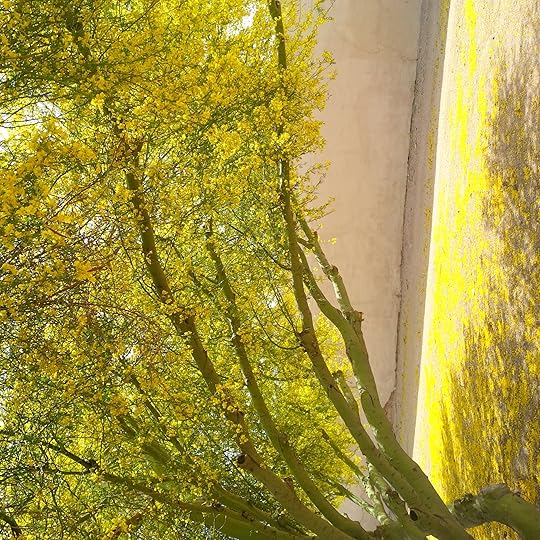
Phoenix lies at the northernmost verge of the Sonoran desert. Even though last week's temperatures climbed to 120 Farenheit (48.8 Celsius), geographers call the Sonoran desert a semi-arid region. We get six inches of rain a year. I've had my street flood so quickly that my neighbor took out his kayak and paddled to the mailbox.
This afternoon, the skies turned gray. We call this "monsoon season," but to me, it's the season of rainbows.
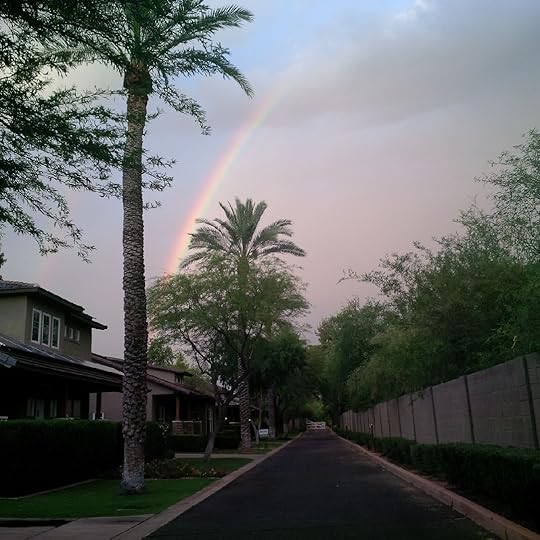
One of the minor characters in my novel, Montpelier Tomorrow, says, "Rainbows are my special thing." That line is undoubtedly one of those moments when the author's subconscious bubbles to the surface.
May 17, 2015
A Lesson About Readers
Rummage Sales and Readers
A while back I spent the day at a rummage sale to benefit the Phoenix Art Museum. Vendors sold old clothing, art, potted plants, candles, eight-track tapes, and the china one inevitably inherits after parents pass on.
Local Arizona Authors
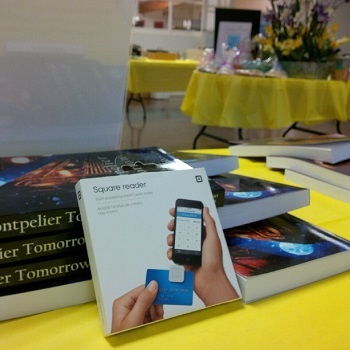
This was my first author event, and I had the jitters. A friend had advised me to buy a Square so that I could handle credit cards. I bought one, and while waiting for customers, took it out of the box. I read the instructions and connected the Square to my husband's iPad, but I couldn't get online. Be calm, I told myself.
Meeting actual readers was a new enough experience, let alone figuring out how to take their money and talk about what I had written. Barricaded behind a stack of books, I felt shy and ill at ease.
When a gray-haired woman approached the table where I, and three other Arizona authors, sat, ready to peddle our wares, I was relieved. The woman would break the ice. I was all wound up for no reason.
She asked what my book was about. I told her, "caregiving and ALS," which was the honest truth. She leapt back, as if spattered by hot oil.
"My son died of ALS," she said. "That's the last thing I want to read." She fled without a backward glance.
"Did you see that?" the author sitting next to me said. "She actually recoiled!"
"I'm not surprised," I said. "I've had that reaction from several folks."
"I thought you could promote that book to the ALS community," she said, "but apparently not."
"It's just too painful," I said.
Too Close for Comfort
Readers who have friends with ALS or who are nurses for those with the disease respond very differently. My novel opens a window and helps them understand why family dynamics can seem so fraught when illness disrupts so-called normal life.
Readers who've had parents with Alzheimer's have told me that the book helped them forgive themselves for moments of impatience or for times when they "just couldn't deal with it." One man told me, "Marylee, I don't think you know what kind of book you've written."
That's true. It's weird, but I've spent twelve years writing a novel that I still cannot reduce to an elevator pitch.
Readers vs. Non-readers
After the woman left, I sat there thinking that my fellow authors would sell many more books than I could possibly sell. One had written a novel about a woman's place in the Trojan War. Another had written three detective novels with a female p.i. The third showcased three novels about the Roman empire. We clearly had very different kinds of books, including several that might be characterized as "escape literature." Montpelier Tomorrow is not a book to bring to the beach, and that is what many people enjoy reading.
What I hadn't expected were the many reasons people gave for not reading. I mean, like zero, nada, zip. A blonde real estate agent said she hadn't read a book in seven years, but that when life slowed down, she meant to start reading again. A woman with long, black hair and a desert-dweller's lizard complexion, said that when she turned sixty, she could no longer concentrate on a book. The most she could deal with was the newspaper.
A remodeling contractor stopped by to hand each of us his card. My colleague asked what kinds of books he liked to read. His wife was the reader, he said, as if that absolved him from whiling away his free time watching football.
But then the readers sidled up to the table. One woman purchased an audio book. Another said she never read anything unless it was about Turkey.
"Have I got the book for you!" The author of the book about the Trojan War jumped to her feet.
A book about Turkey! Of all things. If my chapbook, The Rug Bazaar had been out then, I would have had a buyer.
The Bond Between Writer and Reader
Despite the slow start, I sold six books and came away with a new appreciation for the bond between writer and reader. Some readers will not or cannot read anything in your "genre." (In my case, that's literary fiction or women's fiction.) Some readers aren't interested in your subject. Some read nothing but Westerns set in Texas. Others won't touch a paperback. And one reader (we now know) doesn't read anything but books about Turkey. But, gosh, was she ever knowledgeable about archeological sites!
All of this is a round-about way of saying how grateful I am that Goodreads exists. The enthusiasm for the act of reading, no matter what kind of book, heartens me.
November 28, 2014
Book Sale
For those of you who did not win, but who have put the book on your reading lists, I want to let you know about a sale Amazon is running. Between now and Nov. 30, you can take 30% off the list price if the book. Use the promo code HOLIDAY30 at checkout. If you buy the print edition, the Kindle edition is only $1.99.
MONTPELIER TOMORROW has just received honorable mention in the Southern California Book Festival and the Great Midwest Book Festival. Amazon reviewers have commented that the book deals with issues that affect many caregivers, not just those caring for people with ALS.
Yesterday--Thanksgiving--I was invited to a friend's house. One of the other guests had been her mother's caregiver. Her mother had ALS. We sat and talked for an hour about what it means to be a caregiver, to be the one on duty 24/7, not just carrying the "worry burden," but performing the physical tasks of caring for a person who can no longer deal with their bodily functions. We talked about how we both had flashbacks to that time and how we dealt with the memories and losses, not just the loss of our loved ones, but the losses to our own lives. We talked about happiness and joy and how we had rediscovered those feelings, and understood that we had much to be thankful for.
November 7, 2014
Real Readers, Finally!
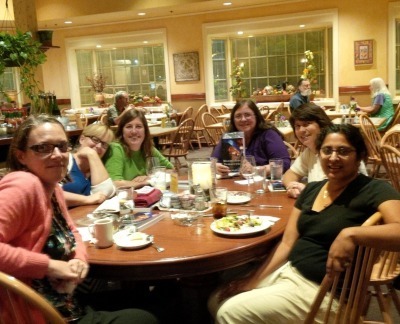
Reading a novel about a family struggling with ALS is not the same as reading a newspaper article about a celebrity taking the Ice Bucket Challenge. MONTPELIER TOMORROW immerses readers in the Ice Bucket, and as I expected, the women in this book group commented that the book was sad, well written, and true to life.
Full disclosure: My daughter-in-law Steffie invited me to meet with her book group, the Sunnyvale Las Madras 2001 Book Club. The women have been talking books since their kids were toddlers. There is no group facilitator, so they asked if I would come up with some discussion questions. They passed the sheet of questions around, and I sat like a nervous fly on the wall.
What made me nervous? Well, I had poured my heart and soul into writing this book. It had taken me years to write, and the subject itself--ALS--is inherently sad. Because I had been so close to the material for so long, I had lost perspective on whether it was a funny book about death or a sad book about life. To add to that, I wasn't sure if the questions would lead to a good discussion, or if the members would have other things they wanted to talk about.
One of discussion questions asked readers to consider who the villain was. That's kind of an author-type question. Who is the protagonist and who is the antagonist? Every story needs one of each. I thought the villain was Fate. These readers thought the villain was ALS, and I thought, Yes, ALS is the villain because it strikes not just the sick person, but every single person in the family.
The discussion turned to the characters: the protagonist Colleen, her daughter Sandy, and Sandy's husband Tony. When I wrote this book, my goal was to make each character have major flaws, and I wanted to "play against type," meaning I didn't want Tony, the dying man, to be a near-saint, nor did I want the protagonist, Colleen to be the self-sacrificing mom who jumps in to take care of her son-in-law without a thought about the impact this would have on her own life. I wanted her to have a life. I wanted her to be passionate about projects the caregiving would interrupt. Because the story is told from Colleen's point-of-view, I wanted readers to like her, even if they could see her errors of judgment.
So how did these characters do in the likeability department>?
One reader said, "I didn't find Tony all that likeable." Another added, "If they're in a wheelchair, don't assume they're nice."
About Colleen, the caregiver, one said, "If you're there for a long time, it's different. It's indeterminate. You don't get a weekend off." Another commented, "How lonely it is for Colleen. She has no life apart from her life as a caregiver."
You got that right!
The group had a great back-and-forth about bad things happening to good people. Why is it that some families, or some people within them, get clobbered with multiple disasters, while others glide through life unscathed?
"It does seem like some families have too much, like the Kennedys," one said.
One woman added, "My sister is the one bad things happen to."
Listening in on the discussion allowed me to see the way the novel affected readers emotionally. The book got them in the gut. There was a lot of talk about family communication or lack thereof, the effects of illness on young children, and the perception that the characters in this novel were all living in a pressure cooker. One comment I particularly liked was that in these situations, "People who step up are often just doing the best they can."
I believe that's right. Most of the time, we're just doing the best we can.
October 22, 2014
Do the Fates Play a Role in Our Lives Today?
The narrator of my novel, Colleen Gallagher, has blind spots. Her heart is in the right place, but she's too honest for her own good. One of her biggest failings is that she doesn't recognize the real antagonist: fate.
Or in the case of the Greeks, the Fates. When I was a freshman in high school, Edith Hamilton's Mythology: Timeless Tales of Gods and Heroes was required reading. How odd it seemed to contemplate a posse of Olympians with their petty jealousies and power plays intervening in the lives of "mere mortals."
To refresh my memory about Fate, I took a look at the definition on the website Greek Mythology.com, http://greekmythology.com/
The Fates have the subtle but awesome power of deciding a man's destiny. They assign a man to good or evil. Their most obvious choice is choosing how long a man lives. There are three Fates. Clotho, the spinner, who spins the thread of life. Lachesis, the measurer, who chooses the lot in life one will have and measures off how long it is to be. Atropos, she who cannot be turned, who at death with her shears cuts the thread of life.
Nowadays, we're largely insulated from tragedies that, to the Greeks, seemed "fated." Until a spouse is killed in an auto accident, until a parent dies, until a child dies young, or until a man in the prime of life contracts ALS.
All these events fall outside the norm of Saturday morning soccer and parents' date-nights out. Living our busy lives, confident that Western medicine can cure us, we find it easy to push away thoughts of our own mortality. And, yet, bad things do happen to good people. We are those good people. We're startled when the intruders--the Fates--knock on our door and turn our lives upside down.
That's what happened to Colleen Gallagher. Fate knocked a second time. In her efforts to protect her daughter, Colleen's own life veered off course.
Writing and Caregiving

- Marylee MacDonald's profile
- 373 followers

