Warren Rochelle's Blog, page 18
June 13, 2016
The City of Mirrors
 The City of Mirrors by Justin Cronin
My rating: 5 of 5 stars
A most satisfying ending to an amazing trilogy--a hybrid of genres--science fantasy, vampires, adventure, quest, apocalyptic. Light and dark and the final battle, between Amy, the Girl from Nowhere, and Fanning, Zero, The First, the Father of the Twelve, a battle haunted by "the anguish that shattered his human life" (front cover).
I won't spoil the ending, except that the reader does know humanity survives, from the reports of the Indo-Australian Republic that have been shared since the trilogy began. How and what price is another matter.
Cronin said in an interview that ultimately this trilogy--with all its darkness and death and blood and pain and torture--is about love.
Yes, it is. This, I think, is what it means to be human.
View all my reviews


May 9, 2016
The Hidden Oracle, by Rick Riordan
 The Hidden Oracle by Rick Riordan
My rating: 4 of 5 stars
I like Rick Riordan; I'm a fan. I applaud what his various series of encounters with Greek and Roman gods, Eygptian gods, and the Norse, have done to make mythology cool again for his intended audience (middle school, early HS is my guess). I like it that he keeps doing his homework: he knows these mythologies. Sometimes, yes, he uses them satirically and with tongue firmly in cheek, but then the old stories are always retold and reinterpreted. I am sure some of his young readers have gone to read the actual myths--job well done, and hurray.
Apollo has run afoul of Zeus and has been cast out of Olympus. Not only is he exiled, Apollo has lost his divine status and powers. He has been "cast out of Olympus in the form of a sixteen-year-old mortal boy, acne and all!" To get back into Zeus' good graces, Apollo is going to have figure out what is wrong with the various Oracles, which are not working as they should. And he will have to "serve a demigod street urchin who defends herself by throwing rotten fruit" (front cover). And he reader gets to watch Apollo grow up, as it were, from an arrogant and indulged god to a human boy aware of his frailties.
Complications ensue. Let the quest begin. There are terrible villains to be conquered--this time, a triumvirate of them, including the monstrous Nero.
Fans won't be disappointed. However, what I want to talk about--and celebrate--is here we have what I think is the 16th of Riordan's mythical retelling, and finally, finally, being gay (well, Apollo seems to be bi) is in the story. I mean, these are the Greek gods; these are the stories of classical Greece. Zeus and Ganymede. Apollo and Hyacinthus. Achilles and Patroclus.... In the last book, The Blood of Olympus, Nico di Angelo ( a son of Hades) has a crush on Percy Jackson, but eventually finds himself attracted to Will Solace (a son of Apollo) who returns his feelings. And I think I recall another minor Greek deity also being gay--one of the wind gods?--but that has been it, as far as I can remember.
There is more here. Apollo is pondering how his son can be attracted to a "dark foreboding type," and he turns to the reader:
Oh. Perhaps some of you are wondering how I felt seeing him with a boyfriend rather than a girlfriend. If that's the case, please. We gods are not hung up on such things. I myself had ... let's see thirty-three mortal girlfriends and eleven mortal boyfriends? I've lost count. My two greatest loves were, of course, Daphne and Hyacinthus ... (94)
Oh, please indeed. Such casual references are woven throughout the story and serve to make Apollo a more believable character and acknowledge the stories about him and his love of men and women are integral parts of his myth. And that here Apollo has become mortal and still finds himself drawn to both genders, a clear statement that human sexuality is as varied as humans are.
I wish Riordan had incorporated this essential part of Greek mythology and culture sooner, but I understand the demands of marketing and the like. So be it. Bravo, Rick and three cheers for Apollo.
View all my reviews
May 6, 2016
Some Thoughts on The Twelve, by Justin Cronin
a href="https://www.goodreads.com/book/show/2..." style="float: left; padding-right: 20px">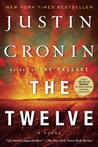 The Twelve (Book Two of The Passage Trilogy): A Novel by Justin Cronin
My rating: 5 of 5 stars
Oh, Lord.
In many ways, this book was painful to read. Remove the constraints of a civil society, checks, balances, morality, and substitute power and madness. Power without limits, power that feeds on the weak, and the weak are expendable. Indeed, "the rules have changed. The enemy has evolved into a dark new order with a vision of the future far more horrifying than humanity's extinction" (back cover).
We've seen this before: the Nazis are a ready example and the Holocaust. The Holocaust here is the virus that ravaged North American in The Passage, producing the Twelve, the virals, and brutality and pain and loss. The apocalypse, a man-made one in secret government labs, has come. Chaos comes after.
But, as Cronin does so well, when we are at our worst, we are often at our best. 100 years have passed. Ordinary people have to confront and survive extraordinary times, and endure, and indeed prevail against seemingly unrelenting evil. Peter Jaxon, Michael, Sarah, Hollis, Alicia, and Amy. Lila and Grey and ...
Yes, there are a lot of characters here, several, the survivors of the Colony and others from the government lab, we met in The Passage. Back story and what seems to a lot of threads, but Cronin does bring them all together, the connections.
Amy, a viral and yet not one, larger than life, 98 years old, and an adolescent girl becoming a woman in her body.... who, I think, will ultimately save humankind.
I am not telling this well, nor am I doing a good job of an overview of what is a complex plot. The promise of The Passage is kept here.
View all my reviews
The Twelve (Book Two of The Passage Trilogy): A Novel by Justin CroninMy rating: 5 of 5 stars
Oh, Lord.
In many ways, this book was painful to read. Remove the constraints of a civil society, checks, balances, morality, and substitute power and madness. Power without limits, power that feeds on the weak, and the weak are expendable. Indeed, "the rules have changed. The enemy has evolved into a dark new order with a vision of the future far more horrifying than humanity's extinction" (back cover).
We've seen this before: the Nazis are a ready example and the Holocaust. The Holocaust here is the virus that ravaged North American in The Passage, producing the Twelve, the virals, and brutality and pain and loss. The apocalypse, a man-made one in secret government labs, has come. Chaos comes after.
But, as Cronin does so well, when we are at our worst, we are often at our best. 100 years have passed. Ordinary people have to confront and survive extraordinary times, and endure, and indeed prevail against seemingly unrelenting evil. Peter Jaxon, Michael, Sarah, Hollis, Alicia, and Amy. Lila and Grey and ...
Yes, there are a lot of characters here, several, the survivors of the Colony and others from the government lab, we met in The Passage. Back story and what seems to a lot of threads, but Cronin does bring them all together, the connections.
Amy, a viral and yet not one, larger than life, 98 years old, and an adolescent girl becoming a woman in her body.... who, I think, will ultimately save humankind.
I am not telling this well, nor am I doing a good job of an overview of what is a complex plot. The promise of The Passage is kept here.
View all my reviews
April 26, 2016
Thoughts on The Passage, by Justin Cronin
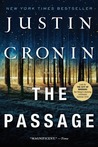 The Passage by Justin Cronin
My rating: 5 of 5 stars
Wow.
Amy is abandoned by her mother at the age of six and she is pursued by government agents, seeking expendables for a mysterious government experiment. Special Agent Brad Wolgast does his job, he's already collected a dozen men on death row. But he is drawn to this quiet and curious child, perhaps due to the memory of the daughter he lost. He will do anything to save Amy, and when the experiment goes unbelievably and catastrophically wrong, he helps her escape--into a society that is collapsing. The virus, death, humans turned into vampire-like monsters...
Amy survives. The country, and the rest of North America, doesn't, neither does most of the people. Amy "walks alone, across miles and decades, into a future dark with violence and despair" (back cover). 90-odd years later, she finds the Colony, a hidden fortress in California, where they have so little memory of the Time Before. For a while, Amy lives with Peter and Michael and Alicia and the others, in their Colony that is constantly on guard, watching, in a world where there really are monsters.
What is Amy's secret? Why is she still alive? Who or what is she? Where would the signal buried in her neck lead them? Can she save the world?
The familiar tropes of an apocalyptic dystopian novel are all here: the virus, the government secret experiment, the old world lost and destroyed, the strange and distorted successor societies. But Cronin takes these, and makes them his own, in a rich and dark and dangerous and beautiful novel.
I am looking forward to the sequel--as soon as my partner finishes it... And I really love it that his daughter asked him to write a story about a girl who saves the world and now, three novels later...
View all my reviews

April 21, 2016
The Boggart and The Monster: Some Thoughts
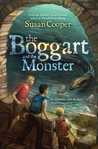 The Boggart and the Monster by Susan Cooper
My rating: 4 of 5 stars
Yes, good job on the sequel to The Boggart and a nice twist on the Loch Ness monster, who is, it turns out, a cousin to The Boggart. Nessie just happens to have been in monster form for way too long and has forgotten how to get to back to his true Boggart form.
Enter Emily and Jess Volnik from Toronto, back in Scotland 2 years after their first visit and their first encounter with the Boggart. They're off to Loch Ness with their old friend, Tommy, adn Mr. Maconochie, the new owner of Castle Keep. The Boggart goes with them, of course. More mischief and havoc, but this time, can the Boggart help Nessie get back to his true form before discovery by the latest high-tech expedition to Loch Ness?
Well written, evocative, fun, with well-constructed characters and open ending. There is a life for these characters afterwards, whether or not Cooper writes Boggart 3 (please!).
View all my reviews
April 12, 2016
Some Thoughts on Walking to Mercury, by Starhawk
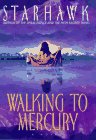 Walking to Mercury by Starhawk
My rating: 4 of 5 stars
I'm a big Starhawk fan. I can't tell you how many times I have read her cri de coeur utopian novel, The Fifth Sacred Thing. I have taught it a few times in a my first-year seminar on utopia. Yes, it has a Message--several actually--it is a rhetorical novel. But, then, I would argue that is inherent in utopian fiction.
Readers will find the same Messages, more or less, in Walking to Mercury, which is the prequel to The Fifth Sacred Thing and the "story of Maya Greenwood," the "ninety-eight-year-old writer and rebel" who is one of the main characters in Fifth. We find here the "compelling story of the forces that shaped that extraordinary woman" (front cover). Yes, at times, these Messages are a bit heavy-handed. More than once, I wanted to say to someone that I get it, I really get it: the Earth is our mother, respect her, love her, save her, the patriarchy has bled the planet and crippled humankind, power corrupts.... I could go on. But so it is with any polemical fiction. The question here is does the story survive, does it come first? Is the story overpowered by its Messages? Are the characters real human beings, with all our flaws, ambiguities, and contradictions, or are they authorial mouthpieces?
The answer here is yes, sometimes. But, Starhawk has a good story of how Maya came to be who she is--Witch, feminist, activist, rebel, and lover, friend--an "extraordinary" yet very human woman. Maya is on a pilgrimage to Nepal, to find her sister, Debby, who is a doctor in a "remote mountain clinic" in Nepal. Maya carries with her their mother's ashes. She wants to heal their "fractured family bonds" and come to terms with her past.
But, this is a story about the weight of the past and its presence in the present. As Maya climbs the mountains in Nepal, she finds herself on another journey, this time into the past, into her relationship with her mother, Debby. with Johanna, "her soul sister, her mirror, her lover," and Rio, the wild boy Maya found and loved after running away from home at 17.
Maya is no saint and neither are those whom she loves. That she is human let me past the sometimes overwrought rhetoric. Rio has alcohol-fueled demons that may cause his demise. Maya and her sister find it hard to make peace. Johanna has a "fierce commitment to her African foremothers." And there are secrets, heavy with memory and pain.
This was a good read, a page turner.
View all my reviews
April 9, 2016
Some Thoughts on The Boggart, by Susan Cooper
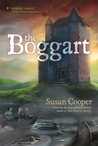 The Boggart by Susan Cooper
My rating: 4 of 5 stars
I am a big Susan Cooper fan, especially of The Dark is Rising series. I read this book because I am interested in boggart lore and there is a fair amount here in this story of a Canadian family who travel to Scotland when the dad inherits a castle there. When they decide to sell the castle and go home to Toronto, they pack up some of the furniture. Inside a desk, the boggart was sleeping. Late 20th century Canada is a big surprise to the Boggart, practical jokester extraordinaire.
There is a fair bit of the story that is predictable, beginning with the family inheriting a haunted (sort of) castle, as well as the shock of a creature of Wild Magic when he encounters the modern world. Besides the strong writing and engaging story, I was struck by the boggart as a sympathetic character, especially when he is finally able to tell them he wants to go home. The use of a computer game was clever.
Middle school children and those a bit younger, 4th and 5th grade, who are interested in the fantastic, will like this book.
View all my reviews
March 13, 2016
Some Thoughts on Alan Garner's Book of British Fairy Tales
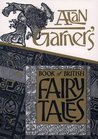 Alan Garner's Book of British Fairy Tales by Alan Garner
My rating: 3 of 5 stars
I like Alan Garner although I haven't read his more recent adult titles. I stumbled across this 1984 title while researching fairy tales and found it a curious read. Garner attempted, with some success, to recreate the original dialect of the tellers. I applaud this, although at times it made the stories hard to follow. Does "I'm going out to spotch my fortune" mean "search"? I think so, but I am not sure. At times I find it a little difficult to sort out the king's son from the prince in more than one story.
These are not the most familiar versions, either. "Tom Tit Tot" is, for example, but "Rumpelstiltskin," but there is no baby and no gold. "Jack and the Green Lady" will remind the reader of "Jack and the Beanstalk," but no beanstalk. The tone for most is generally darker--as are the stories in general. "Gold Tree and Silver Tree" is a version of "Snow White," but the malevolent and murderous is not the stepmother: it is the mother. There are suggestions of the homoerotic, as in "The Black Horse" when the hero "looked behind him to and there was the finest man he had ever set eyes upon" (133). Another example is in "The Castle of Melvale, when Jack encounters "one of the finest young gentlemen you would wish to see" (150). Was this left out from one retelling to the next or censored or could it be once one could appreciate beauty without it having to meet sexual attraction?
Or, is that "There were fiery dragons in those days; but it isn't the same world now. The world is turned over since, like you turned it over with a space" (112)? I would recommend this book to those who love fairy tales after they've read Grimm and others considered canonical, just to get grounded first.
View all my reviews
March 8, 2016
Forthcoming from Samhain Press in September 2016, The Werewolf and His Boy
Just wanted to let folks know that my next novel, The Werewolf and His Boy, will be published both as an ebook and a trade paperback, by Samhain Publishing in September 2016.
More to come!
More to come!
March 7, 2016
A Short Review of Fairy Tales from the Brothers Grimm, by Philip Pullman
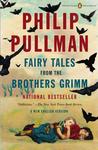 Fairy Tales from the Brothers Grimm: A New English Version by Philip Pullman
My rating: 4 of 5 stars
While I have some issues with Pullman, mostly about his issues with C.S. Lewis, I really did enjoy reading these 50 retellings of classic Grimm fairy tales.
The ones a reader would expect are included, such as "The Frog King,' "Rapunzel," "Hansel and Gretel," "The Brave Little Tailor," "Cinderella," and "Rumpelstiltskin," among others. Pullman also includes some of those that are lesser-known, such as "The Three Snake Leaves, " "Godfather Death," and "The Girl with No Hands." The writing is crisp and clear, and sharp and often funny.
"At the end of each tale Pullman offers a brief personal commentary, opening up a window on the sources of the tales, the various forms, they've taken over the centuries and their everlasting appeal" (front jacket). These and the introduction add to the value of this collection for the general reader and the fairy tale scholar.
Recommended.
View all my reviews