Liz DeJesus's Blog, page 11
December 6, 2013
Fairy Tale Friday
Anyway without further ado here is The Lion and The Mouse:
 An illustration of the start of the fable from Aunt Louisa’s Oft Told Tales, New York, 1870s
The Lion and the Mouse is one of Aesop's Fables, numbered 150 in the Perry Index. There are also Eastern variants of the story, all of which demonstrate mutual dependence regardless of size or status. In the Renaissance the fable was provided with a sequel condemning social ambition.
In the oldest versions, a lion threatens a mouse that wakes him up. The mouse begs forgiveness and makes the point that such unworthy prey would bring the lion no honour. The lion then agrees and sets the mouse free. Later, the lion is netted by hunters. Hearing it roaring, the mouse remembers its clemency and frees it by gnawing through the ropes. The moral of the story is that mercy brings its reward and that there is no being so small that it cannot help a greater. Later English versions reinforce this by having the mouse promise to return the lion's favor, to its sceptical amusement.
The Scottish poet, Robert Henryson, in a version he included in his Morall Fabillis[1] in the 1480s, expands the plea that the mouse makes and introduces serious themes of law, justice and politics. The poem consists of 43 seven-lined stanzas of which the first twelve recount a meeting with Aesop in a dream and six stanzas at the end draw the moral; the expanded fable itself occupies stanzas 13-36. A political lesson of a different kind occurs in Francis Barlow's 1687 edition of the fables. There the poet Aphra Behn comments that no form of service is to be despised, for just as the humble mouse had aided the king of the beasts, so 'An Oak did once a glorious Monarch save' by serving as a hiding place when King Charles II was escaping after the battle of Worcester.[2]
The 16th century French poet Clément Marot also recounts an expanded version of the fable in the course of his Épitre à son ami Lyon Jamet (Letter to his friend Lyon Jamet), first published in 1534.[3] This is an imitation of the Latin poet Horace's Epistles, addressed to friends and often applying Aesopian themes to their situations. In this case, Marot has been imprisoned and begs Jamet to help him get released, playing on his friend's forename and styling himself the lowly rat (rather than mouse). La Fontaine's Fables included a more succinct version of the story (II.11) in the following century.[4


December 5, 2013
More stuff about Zombie Ever After...
 Unexpected Spark is Liz DeJesus, Mik Jimenez and Lynn Kranz. I added an extra page on my website to discuss all things Zombie Ever After. :D And this is the official press release. :)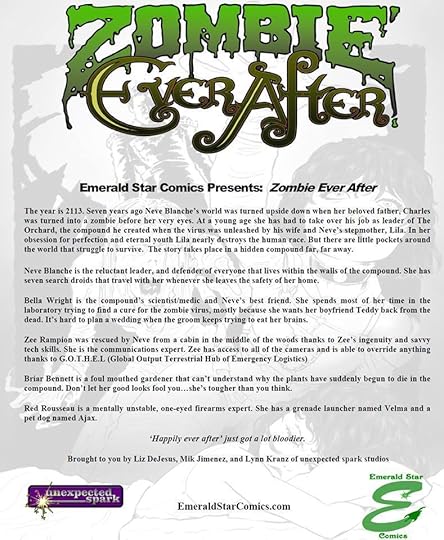
December 3, 2013
The Laughing Princess by Seymour Hamilton
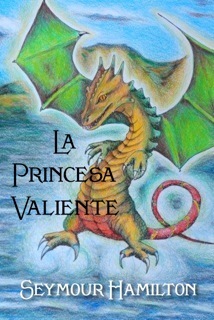
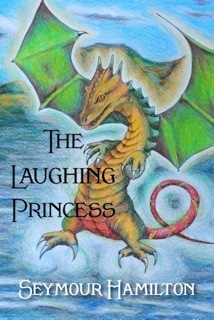
Petra and Daniel have little use for the quaint fishing Village their parents have forced them to visit on holiday. They don’t know that this Village has a legacy of Dragons. Much more fun than exploring museums or picturesque ruins, a small stone on a lonely beach offers them the chance to perform magic, match wits with elementals, steal hearts, go to war, write poetry, escape from a pirate, and sail The Laughing Princess. Their dull, rainy world will never be the same.
You can buy the book at Acedrex.com, or through Amazon.com.The stories, read by the author, are available, free. Follow the link at TheLaughingPrincess.com, or go directly to Podiobooks.com.
Seymour Hamilton's Bio
I was a war baby, born in 1941 in England during an air-raid. The war raged on for four more years, none of which I remember, possibly because my mother wrapped me in fantasy by singing, reading and telling me stories she made up as she went along.When my father came back from almost six continuous years of war at sea, interrupted only briefly to do his part in bringing me into the world, he continued my education by reading me Coleridge’s Rime of the Ancient Mariner. I thought it was autobiography. At that time, we lived in Mauritius, an island with sandy beaches and volcanic peaks that are the stuff of fairy tales. In 1949, we came to Canada, where I have lived ever since.I eventually acquired three increasingly impractical degrees in English. I studied literature because I love books, particularly fantasy, which was no help at all in becoming successful as an academic. Like many Canadians, I moved around a lot in my very large country. I grew up in Ottawa, my first job as an English teacher was on the East Coast in Nova Scotia; my next in Burnaby on the West. It was many years later while I was teaching in Calgary and hiking in the Rockies that I wrote The Laughing Princess, borrowing from Pamela Nagely Stevenson the names off a dozen dragons she had sculpted in ceramics. The harp music of Kim Robertson played as I wrote.Shortly thereafter I escaped the academic world. Reasoning that all those years of education must have at least equipped me to research and write, I spent the last 20 years of my working life as an editor and writer-for-hire, which helped me do my share of bringing up my second son Ben and keeping the Golden Retrievers fed. A decade ago I retired, and my wonderful wife Katherine soldiered on, giving me the great gift of time to write for me, instead of someone else.I live in Chelsea, Quebec, just north of Ottawa, Canada, and have done so for more than 20 years -- the longest I have ever spent in one place. This is where I completed a lifetime’s ambition to write a story for boys and tomboys of all ages: The Astreya Trilogy, and where The Laughing Princess came out of a box in the basement and ventured into print, thanks to Jessica Knauss of Açedrex.
December 2, 2013
Emerald Star Comics Presents... Zombie Ever After
November 25, 2013
Gary K. Wolf Interview and Giveaway!
I have the absolute honor and pleasure of sharing with you an interview with author Gary K. Wolf. He wrote the novel Who Censored Roger Rabbit? (which later became the popular film Who Framed Roger Rabbit?), he's also the author of The Last Great Show and Typical Day, among other works of fiction.
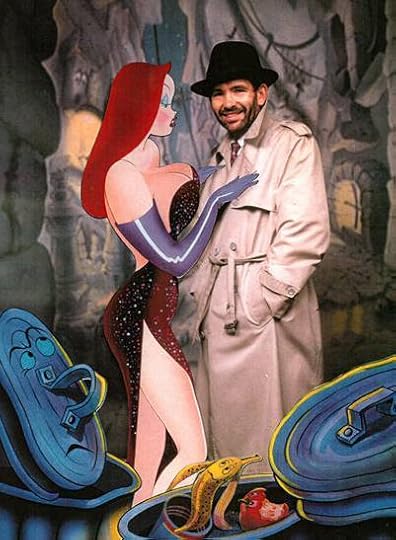
Today we're going to talk about his latest release Who Wacked Roger Rabbit?
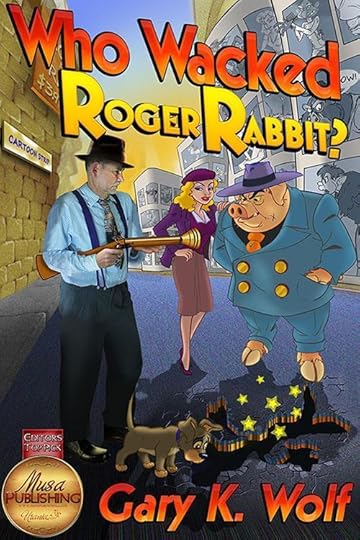
It has been a long time since you first wrote ‘Who Censored Roger Rabbit?’. After all these years how was it for you to dive back into that particular world and those characters?
I started writing Who Wacked Roger Rabbit? in 1991. My agent at the time suggested that I wait until the second movie came out before shopping it to publishers. He said I would get more money if I did it that way. Well, we all know how that second movie turned out. I’m still waiting for it. I went on to many other projects. I honestly forgot about Wacked. My current publisher, MUSA, and I were talking about things I could put on my website to attract visitors. I looked through my files and rediscovered the Wacked manuscript. I suggested running it free in installments. MUSA had a much better idea. They said let’s publish it. I did have to do quite a bit of work to bring it into line with my two previous Roger books. That took almost a year. That was a fun process. Like collaborating with my younger self. Now it’s done. I’m quite proud of it. Wacked will stand up well with my best Roger writing.
Do you have a routine?
I get up at 4 a.m. every morning. I meditate for an hour then work until 11. Then I go for a run (8-10 miles) and do a power or Vinyasa yoga class (90 minutes). That usually brings me to 2 p.m. I’ll read while I have lunch, the New York Times, the Boston Globe, and sometimes The National Enquirer (gotta keep up with what’s going on in the alien world.) I’ll then meditate for a second hour and either go to a second yoga class, read a book, or watch a DVD. I have dinner, and go to bed by 8. I know, I know. Terrifically boring, but that’s my life.
Do you write outlines or do you fly by the seat of your pants?
Everything I do is thoroughly outlined start to finish. I will occasionally change things up if the plot isn’t working, but I have to know how everything is going to turn out before I can write the plot progression that takes me there.
Is there anything in particular that helps inspire you?
I’m inspired by the good writings of other writers, clever movies, well-drawn comic books, fine art (I live just down the street from Boston’s Museum of Fine Art and go there often), interesting people. I hate to be trite and say I’m inspired by life, but that’s about it. At one time or another I’ve been inspired by just about everything with which I’ve come into contact from my mother’s chocolate chip cookies to the dog dookie on the sidewalk that caused me to slip and fall on my keister. I enjoyed the cookies far more than the dookie, but the dookie made for a much better scene.
Do you ever suffer from writer’s block? If so, what are some things that you do that help you move past it?
I have long believed that you don’t attain your maximum level of creativity until you’ve also attained your maximum level of physical conditioning and mental awareness. For physical conditioning, I run for 70 minutes every day. I’ve done this since 1971. In that time frame I’ve run 38 marathons, qualified for and run the Boston Marathon 16 times. My best marathon time is 2:47. For physical and mental training, I practice yoga for 90-180 minutes every day. To relax and focus my mind, I’ve been meditating twice a day since 1976. As a result of all that physical and mental exercise, I rarely if ever get writer’s block. When I need an idea, I go for a run, meditate, do yoga, and inevitably the perfect idea comes to me. I don’t know if that would work for everybody. All I can tell you is that the process works well for me.
What’s your favorite genre?
I don’t have a favorite. I read science fiction, mysteries, bodice rippers, travel books, biographies, pretty much whatever you got.
What’s your favorite thing about Toon Town?
In order to write about Toontown, I have to transport myself there. I rent a talking house, hire a talking car, wear goofy clothes. I treasure my time in Toontown. Everything there is so wonderfully whimsical. If I didn’t have to mow the lawn and feed my cats, I’d stay there forever. I’d never come back to reality.
What do you love most about Roger Rabbit? Why do you think he’s such a loveable character?
I wanted Roger to have the morality of a Disney character like Mickey Mouse who will do exactly what he tells you he’s going to do, and the mischievousness of a Warner Bros. character like Bugs Bunny who will tell you he’s going to do something, and then stuffs a stick of dynamite down your pants. Readers and audiences seem to respond well to the blending of naughty and nice. Plus, Roger’s one cute rabbit. Can’t discount that.
People are discovering your books and the movie every day, does the longevity of Roger Rabbit and what he represents surprise you at all?
That has been quite a pleasant surprise. I really never expected Roger Rabbit to become an iconic character, a character people still talk about, still want to read about, still want to see in a movie even now, 30 years after I created him. That’s quite gratifying to me.
What about Eddie Valiant, has he changed at all since the last book?
Eddie is Eddie. I’m fond of Eddie Valiant. He’s the kind of guy I always wanted to be. Cocksure, quick witted, nail tough, and able to handle himself in a bar fight. I don’t see much change in him book to book, although others might. He was 10 minute hard boiled in my first book, maybe 8 minute hard boiled in my second, and here, in my third, he goes to 11.
Will there be more Roger Rabbit novels in the future or is this book going to close the chapter for the series and these particular characters?
When I rediscovered my long ago novel Who Wacked Roger Rabbit?, I also found another Roger novel that I started and almost finished. If Wacked does well, if my fans still adore the rabbit and want to see more of him, then yes, I’ve got another great rabbit story waiting.
Here are some questions from fans:
How did you get the idea to mix cartoon characters with real people? I remember Uncle Remus walking with the blue birds, but none else. (question submitted by Emma Lane through blog post on Musa Publishing)
I had written three well-received and well-reviewed science fiction novels. I really wanted to write something different. Then one day, while watching Saturday morning cartoons, an idea that had nothing to do with the cartoons hit me. There were these cartoon characters, Tony the Tiger, Snap, Crackle and Pop, and so on. And they weren’t talking to other cartoon characters. They were talking and interacting with real, live people. It was crazy--especially when I realized none of the people they talked to thought it was strange. They acted like it was normal! I spent the next eight years researching what made cartoons and comics unique. I experimented a lot and eventually finished what would become Who Censored Roger Rabbit?--a story in which cartoon and comic strip characters live side by side with people.
Did you get to visit the set on ‘Who Framed Roger Rabbit?’ And how long did it take you to write your newest Roger Rabbit read? (question submitted by Sharon Ledwith through blog post on Musa Publishing)
I did get to visit the set as often and for as long as I wanted to. Truth be told, I find movie making incredibly boring. Much of the movie was filmed in London. So instead of going to the set, I toured English landmarks. I went to Paris and Dublin. I ran the London marathon. Anything to keep from having to watch another day of cameras, lights, and actors being repositioned ad infinitum.
All told, Who Wacked Roger Rabbit? took me somewhere between two and three years to write. I can’t give you an exact number because I had a 20 year hiatus stuck in there.
Can you give us a status update on "The Stooge"? (question submitted by Alex through blog post on Musa Publishing).
The Stooge is slowly wending its way through the Disney evaluation process. More than that, I don’t know.
Your thoughts on Roger and Jessica's relationship? I think they're a match made in heaven. (submitted by DeathStar1977 through blog post on Musa Publishing)
I like their relationship a lot. He loves her. She loves him. He’s a one-woman rabbit. She’s a one-rabbit woman. Who may or may not be baking carrot cakes for half the hunks in Hollywood. I enjoy playing with the ‘is she or isn’t she running around on Roger’ angle.
What do you think about Roger and Jessica having children? (submitted by DeathStar1977 through blog post on Musa Publishing)
Jessica would never have a child. She’s top and bottom heavy enough already without any additional baby weight.
Was there anything you wanted to put in "Who Framed Roger Rabbit" that didn't make it in? Such as different character personality traits, scenes, or genies? Billy Kurtz (question submitted through blog post on Musa Publishing.
I wish we could have used just one word balloon. That would have been neat.
What did you think of the three Roger Rabbit theatrical shorts? Would you like Disney to make more of them? (submitted by Vinny Foti through the Musa Publishing blog)
I loved the shorts! Roller Coaster Rabbit is one of the funniest cartoons ever made. That one holds its own with anything done by Disney, Warner Bros., even Tex Avery. I’d love to see more. Unfortunately, they cost somewhere between $10-20 million to produce. That’s a whole lot of simoleons for an eight minute short.
I want to take a moment and thank Mr. Wolf for being so gracious by answering all of these questions. As promised here's a link to the giveaway! Good luck and go check out Who Wacked Roger Rabbit?
And here is a Rafflecopter giveaway to celebrate the release of Gary's book! Good luck!
November 24, 2013
November 21, 2013
Fairy Tale Friday
This story reminds me a lot of Cupid and Psyche.
Here's the story as found on wikipedia:
The White Bear approaches a poor peasant and asks if he will give him his youngest daughter; in return, he will make the man rich. The girl is reluctant, so the peasant asks the bear to return, and persuades her in the meantime. The White Bear takes her off to a rich andenchanted castle. At night, he takes off his bear form in order to come to her bed as a man, although the lack of light means that she never sees him.
When she grows homesick, the bear agrees that she might go home as long as she agrees that she will never speak with her mother alone, but only when other people are about. At home, they welcome her, and her mother makes persistent attempts to speak with her alone, finally succeeding and persuading her to tell the whole tale. Hearing it, her mother insists that the White Bear must really be atroll, gives her some candles, and tells her to light them at night, to see what is sharing her bed.
She obeys, and finds he is a highly attractive prince, but she spills three drops of the melted tallow on him, waking him. He tells her that if she held out a year, he would have been free, but now he must go to his wicked stepmother, who enchanted him into this shapeand lives in a castle east of the sun and west of the moon, and marry her hideous daughter, a troll princess.
In the morning, she finds that the palace has vanished. She sets out in search of him. Coming to a great mountain, she finds an old woman playing with a golden apple. She asks if she knows the way to the castle east of the sun and west of the moon. The old woman cannot tell her, but lends her a horse to reach a neighbor who might know, and gives her the apple. The neighbor is sitting outside another mountain, with a golden carding-comb. She, also, does not know the way to the castle east of the sun and west of the moon, but lends her a horse to reach a neighbor who might know, and gives her the carding-comb. The third neighbor has a golden spinning wheel. She, also, does not know the way to the castle east of the sun and west of the moon, but lends her a horse to reach the East Wind and gives her the spinning wheel.
The East Wind has never been to the castle east of the sun and west of the moon, but his brother the West Wind might have, being stronger. He takes her to the West Wind. The West Wind does the same, bringing her to the South Wind; the South Wind does the same, bringing her to the North Wind. The North Wind reports that he once blew an aspen leaf there, and was exhausted after, but he will take her if she really wants to go. She does, and so he does.
The next morning, she takes out the golden apple. The daughter who was to marry the prince sees it and wants to buy it. The girl agrees, if she can spend the night with the prince. The daughter agrees but gives the prince a sleeping drink, so that the girl cannot wake him, and does the same the next night, after she pays the daughter with the gold carding-combs. During the girl's attempts to wake the prince, her weeping and calling to him is overheard by some imprisoned townspeople in the castle, who told the prince of it. On the third night, in return for the golden spinning wheel, the princess brings the drink, but the prince does not drink it, and so is awake.
The prince tells her that she can save him: he will declare that he will not marry anyone who cannot wash the tallow drops from his shirt since trolls, such as his stepmother and her daughter, cannot do it. So instead, he will call her in, and she will be able to do it, so she will marry him. The plan works, and the trolls, in a rage, burst. The prince and his bride free the prisoners captive in the castle, take the gold and silver within, and leave the castle east of the sun and west of the moon.
East of the Sun and West of the Moon by ~FluffyFluffs on deviantART
secret revealed by ~liga-marta on deviantART
WIP East of the Sun by *eva-sangnoir on deviantART
November 17, 2013
Zombie Ever After
The Orchard by ~SASPHOTOS on deviantART
Orchard by ~daRoz on deviantART
24525 / 50000 words. 49% done!
November 15, 2013
Fairy Tale Friday
Anyway there have been a few versions of this story in one the Wolf gives up when he can't destroy the Third Little Pig's brick house. In another version the Wolf climbs down the chimney and falls into the burning fire and shoots out of the chimney and vanishes. And in the other version I've read The Three Pigs put a giant cauldron of boiling water and when the Wolf climbs down the chimney, he falls into the boiling cauldron and the Three Little Pigs close the lid and cook the Wolf...alive. I kinda like the first version where the Wolf just runs off and leaves the Pigs alone.
Here's the official version I found on Wikipedia:
The Three Little Pigs is a fable featuring anthropomorphic pigs who build three houses of different materials. A big bad wolf is able to blow down the first two pigs' houses, made of straw and wood respectively, but is unable to destroy the third pig's house, made of bricks. Printed versions date back to the 1840s, but the story itself is thought to be much older.[citation needed] The phrases used in the story, and the various morals that can be drawn from it, have become embedded in Western culture.
Traditional versions
The Three Little Pigs was included in The Nursery Rhymes of England (London and New York, c.1886), by James Orchard Halliwell-Phillipps.[1] The story in its arguably best-known form appeared in English Fairy Tales by Joseph Jacobs, first published in 1890 and crediting Halliwell as his source.[2] The story begins with the title characters being sent out into the world by their mother, to "seek their fortune". The first little pig builds a house of straw, but a wolf blows it down and eats him. The second pig builds a house of furze sticks, which the wolf also blows down before eating the pig. Each exchange between wolf and pig features ringing proverbial phrases, namely:
"Little pig, little pig, let me come in."
"No, no, not by the hair on my chinny chin chin."
"Then I'll huff, and I'll puff, and I'll blow your house in."[3]
The third pig builds a house of bricks. The wolf fails to blow down the house. He then attempts to trick the pig out of the house by asking to meet him at various places, but is outwitted each time. Finally, the wolf resolves to come down the chimney, whereupon the pig catches the wolf in a cauldron of boiling water, slams the lid on, and cooks and eats him. In another version the first and second little pigs run to their brother's house and after the wolf goes down the chimney he runs away and never goes back to eat the three little pigs who all survive.
The story uses the literary rule of three, expressed in this case as a "contrasting three", as the third pig's brick house turns out to be the only one which is adequate to withstand the wolf.
Three Little Pigs by ~XiaoBotong on deviantART
Three Little Pigs by ~FragileWhispers on deviantART
November 14, 2013
Zombie Ever After
rapunzel by ~Juli-da on deviantART
Rapunzel. by ~Scarlett-Kitty on deviantART
23604 / 50000 words. 47% done!