
Cynthia Morris's Blog, page 37
September 13, 2016
Are you guilty of these creative faux pas?

Which direction to go? So many ways to make a misstep
A ‘faux pas’ {ˌfō ˈpä/} in French is literally translated as a ‘false step’. We usually think of a faux pas as a social gaff, a mistake that puts us on the wrong side of the conventional line.
But today I want to talk about some of the mistakes we may be unconsciously making that get in the way of having a satisfying writing life.
In the twenty years I have been working with writers, these are ten things we do that I know diminish our writing happiness. These faux pas are common to writers and any kind of artist. Check the list to see if you are – oops! – making any of these missteps.
Faux pas 1. Blabbing. Writers are always excited about their projects. This is good! But when you blab your ideas, you lose motivation to actually write them.
Faux pas 2. Overambitious scheduling. We all think we need hours and hours to write, but then we never manage to block off all that time. Start small and build. Fifteen minutes, several days per week, adds up.
Faux pas 3. Spending too much time reading about writing. Admit it: you know when you are procrastinating by reading rather than writing. Don’t spend your precious writing time reading someone else’s words.
Faux pas 4. Isolating yourself. The loner archetype may be appealing but isolating yourself robs you of the chance to grow beyond the known. Find other writers to share the adventure with. Connect with writing buddies in workshops, at readings, in libraries and bookstores.
Faux pas 5. Comparing yourself to others. If you make a comparison and it propels you to do more writing, the comparison has been useful. If it makes you feel like giving up writing, give up comparing instead.
Faux pas 6. Letting your inner critic take the lead. We tend to take the negative voice in our head as the truth. In my work with my clients, we always start by identifying that inner critic. When we know its tendencies, we can more easily know when it’s taken over. Choosing which perspectives to orient our actions to is one of the most powerful ways to honor our creativity and get things done that matter to us.
Faux pas 7. Staying in student mode. Classes are great, but if we’re counting on them to do all our focusing work, we’re not building our own creative muscles. Use the momentum of the class to continue writing once the class is over.
Faux pas 8. Giving in to discouragement. Every writer I’ve worked with despairs about how long it’s taking for them to write. But writing is a long process, and we have to accept that it’s not a rush job.
Faux pas 9. Judging your writing prematurely. Our inner critics love to get in on the critique action right away. Give your words a bit of space before you bring a critical eye. Leave a day or at least several hours before going in with the red pen.
Faux pas 10. Abandoning hope. I’ve been writing steadily for twenty-two years. I am always finding ways to improve my writing and am grateful for the challenge to be better. It takes time to hone a craft, so steady on!
If you’ve found yourself guilty of some of these creative missteps, don’t sweat! You are now aware of them, and that’s the first step.
The post Are you guilty of these creative faux pas? appeared first on Original Impulse .


August 30, 2016
Design a class that’s perfect for you

Being at the creative edge is exciting
Do you love the anticipation and excitement that comes from signing up for a new class? Perhaps you are like me, always studying, always feeling inspired by new insights and connections. Ever since I was a girl, I have loved being a student. When I became a teacher in 1994, I felt like I was at home designing both cooking and writing classes.
So it’s natural for me to think of my creative projects as classes I am both designing and taking. No one is grading me on these, but I find that the simple frame of a curriculum does a lot for me.
Framing things helps us focus. I’m always working with my clients to help them feel a sense of structure and focus. Without a frame, it’s easy to feel like we are all over the place, randomly consuming and creating and never getting anywhere.
Maybe you use a framework that suits your style. If you’re curious about how my clients and I develop our own course of study, read on.
Elements that go into my curricula:
Identify your creative edge.
My current creative edge is combining text with images, improving my composition and exploring hand lettering. All of these elements are present in my series 365 cups, where I draw, letter and write short bits of poetry or story. It’s the perfect amount of challenge and I love it.
If you’re having a hard time identifying your creative edge, imagine seeing a class description and saying ‘That! I want to take that class!”
The class description should show what you are learning and what you will leave the class with. I’ve been teaching since 1996 and I’ve written hundreds of class descriptions. Here’s a description I wrote for the series I am working on now:
Illustrated micro-essays
Bring your drawing, lettering and design skills together to produce a series of illustrated micro-essays around a theme. In this year-long class, you will:
• learn how to design a pleasing page layout
• gain practice with hand lettering and illustration
• practice how to succinctly and powerfully tell a story or share a mood in just a few words.
At the end of the 365 days, you will have a body of work that shows your progress and that could be compiled into a book, a series of greeting cards or illustrations that can be sold or licensed to others.
I would sign up for that class in a heartbeat – and I did by making it up!
In 75 words or less, write your course description that allows you to work at your creative edge.
Specify your satisfaction metrics.
We so often feel like we didn’t do enough or didn’t do things correctly. I’ve found it helps to identify what, specifically, will help you feel satisfied.
An exercise from the book The Art of Possibility by Benjamin and Rosamund Zander helps us to determine our own satisfaction metrics. Called Earning Your A, you simply write down what would you need to do to earn an A.
Clarify your A at the beginning of your ‘semester’ and return to it often to see how you’re doing.
Select source materials.
There’s such an abundance of podcasts and books and blogs to inspire and inform us. What materials relate specifically to what you are trying to achieve?
I’m currently reading things related to what I am teaching, a new course called Drawing as Meditation. These materials also contribute to my training as an artist and I can see their influence in my series.
On my reading lap are Frederick Franck’s Zen Seeing, Zen Drawing and Lynda Barry’s Syllabus.
Podcasts I listen to while drawing or cooking:
• The Savvy Painter
• On Being
• Design Matters
• NPR Arts and Life
What inspires or accompanies your work?
Show your work
In his book Show Your Work, Austin Kleon encourages us to develop our work and ourselves publicly. This showing can help get feedback and encouragement.
Every day I post a piece from my series on Instagram and Facebook. It’s not easy on travel days or when I am teaching like at Camp GLP last week. Some times require me to do several pieces in advance.
I use the hashtags #WIP (work in progress) and #showyourwork to feel like part of a community of global artists putting things out there.
Where do you show your work and how does it impact you?
Make consistent time.
One of the main reasons people sign up for a class is to force themselves to be consistent. But you can train yourself to be consistent on your own terms.
Doing a daily challenge works to help me stay on track. Using rituals like I wrote about in the last newsletter also helps.
Even if you don’t have a ton of time for your writing or creating, you can be consistent. One session a week, every week is consistent.
What can you commit to in order to show up consistently for your creating?
What does your course of study look like for this autumn? Share your thoughts in the comments section below.
The post Design a class that’s perfect for you appeared first on Original Impulse .
August 16, 2016
Ritualizing your making
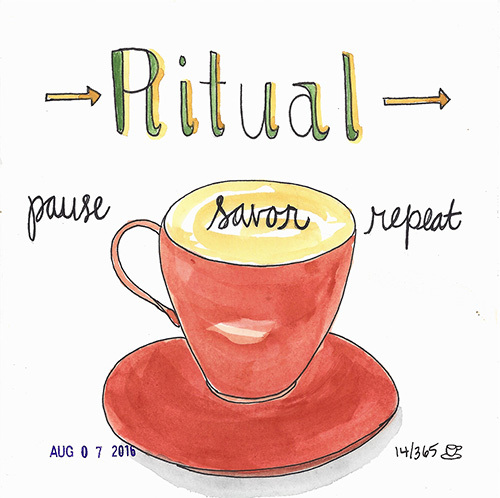
As we approach back-to-school season, I’m reminded of the seasonal rituals that support our creativity. Whether they call them rituals, everyone uses familiar gestures, tools and rhythms in their creative process.
When I teach Capture the WOW, we focus on rituals around our making. Rituals tell us that it’s time to shift from the everyday into the creative mode.
Some rituals actually hinder our creative satisfaction. People moan about these distraction rituals:
• checking in to Facebook, Pinterest or Instagram before a creating session and losing precious focus
• checking stats to see how many people have read your stuff
• checking email
These ‘checking in’ rituals, as you know, often lead you away from the cherished creative focus you crave so dearly. We want to practice rituals that support our creative focus.
Rituals that work
Transitioning often poses a challenge for us, and having simple, non-pretentious ways to access our creative zone can really help make it easier. It seems to be getting harder and harder to corral our attention. This is agenda for many of my workshops like Capture the WOW and Drawing as Meditation – to train our attention so we can focus on things that are important to us.
My coffee is a ritual that invites me to sit and focus while I am drinking it. Maybe you enjoy a beverage ritual. Here’s a peek at some of the rituals my clients and I enjoy:
• pulling a Writual Blessing card at random before a writing session
• free-writing to drop in, clear mundane concerns and focus on your work
• doodling or putting paint or lines on the page to get into the flow
• a few minutes (only a few!) of tidying up the workspace
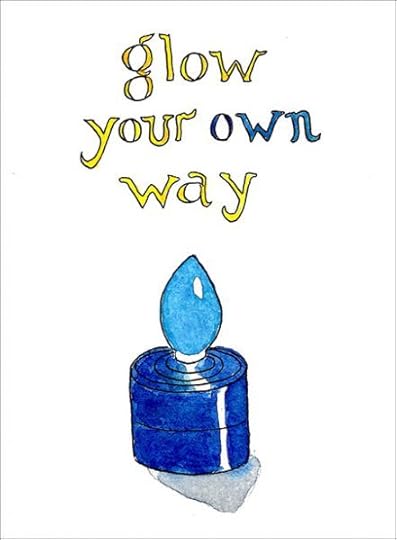
• lighting a special candle
• putting on music reserved only for creative time.
These simple actions are included in all my workshops.They’re a crucial part of designing a creative practice. I talk about rituals a lot with my clients, and it’s fun to see how much progress they make when they get in their stride.
Our time and attention are precious assets that help us take action on things that make our days feel rich. Rituals serve as an entry point to our focus.
What rituals help you transition to your creative zone? Share your creative rituals below.
The post Ritualizing your making appeared first on Original Impulse .
August 2, 2016
Designing my ‘art residency’ in Paris
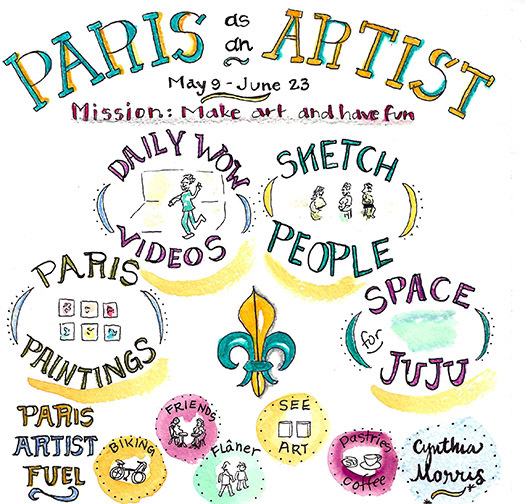
My intentions for Paris, illustrated beforehand
While in Barcelona for a few days before heading to seven weeks in Paris, I met with a new friend, artist Corrina Sephora Mensoff. She mentioned a site that advertises artist residencies. I thought, wouldn’t it be cool to go on an artist residency myself? I thought that being given time and space to work on my art would legitimize my work.
When I was first starting out as a writer, I was obsessed with the idea of going on a writing retreat or residency. I spent a lot of time researching and applying for residencies, with no success. Now I wonder if my time would have been better spent doing the writing rather than seeking someone else’s approval or permission to do the work.
En route to Paris, it dawned on me that I could design my own artist residency. Having a framework or structure for our creative time allows us to focus and produce work, so I brazenly began calling my time in Paris an artist residency.
choose yourself
In his book Choose Yourself, James Altucher talks about not letting others decide your fate. We no longer need someone to approve of us or our work and give us an art residency. I designed this time and focus, planning well in advance to make sure it happened.
When people commented ‘I’d love to go to Paris for a couple of months!’ I replied, ‘Plan for it and do it!’
What I chose so I would have the space and time to focus on making art:
Corral my teaching time into the first four months of the year, so I wasn’t in teacher mode.
Home in on what I wanted for my time in Paris so I could work in the office beforehand and be focused in Paris.
Omitted business development while I was in Paris. Planning and strategizing could happen later.
Organize my time so my client calls were clustered on a handful of days rather than spread out.
Sold a series of paintings to help fund my time and give me a challenging project to focus on.
Eliminate expenditures for the four months beforehand to save for treats in Paris.
Because of this choosing, I was able to hold a focus and take my time and projects seriously. This kind of planning and designing a framework for projects is what I do with my clients. Having clear motivation and planning in advance helps them to feel more satisfied and accomplished. (And have more fun!)
You don’t have to run off to Paris or some other exotic location to design your own residency. It takes a bit of planning, saving and patience, but you can do this too.
Often at the end of a residency program, participants are asked to do a presentation that sums up their experience and shows their work. I’m hosting an online webinar to share what I learned from this process and some thoughts on how to design your own residency.
The post Designing my ‘art residency’ in Paris appeared first on Original Impulse .
July 27, 2016
Finding permission to change
Back in 1995, I worked through The Artist’s Way. As a result of the exercises in the book, I took all kinds of art classes. Drawing. Calligraphy. Dance. Singing. Acting. Painting. And of course, writing.
I loved all these forms of expression, but it didn’t take long before I realized to make any decent progress, I would have to commit to just one medium. So I chose writing.
Later, as an entrepreneur, I saw this notion that you can only be known for one thing reinforced. Apparently people would get confused if you were both a writer and an artist.
But the truth is, people change. My whole business is built upon helping people change. I even love calling myself a change agent.
For years, though, I hid my artist from the public, fearing that if I stepped out as an artist, it would somehow cancel out my writer and my writing coaching. A friend said, “I wouldn’t hire a writers’ coach who doesn’t write.” I felt I wasn’t allowed to change, and that because I’ve been a writer for 22 years, I better keep on being a writer.
Have you felt this? A desire for change can be squelched by the status quo.
The truth is, we can’t hide our true selves. Most creative people I know have multiple interests like me. That’s okay – to deny the different parts of ourselves is to banish our truth to the basement where resentment and discontent can fester like a toxic kimchi.
The problem with doing many things isn’t in having many interests. It’s not completing anything that leads to dissatisfaction, not having multiple passions. Having many interests is fun and energizing.
I have worried that being an artist would mean my coaching business would flounder, and that what my friend said would hold true. But just because writing isn’t my main creative medium now doesn’t cancel out 17 years of experience coaching writers and other creative types.
What’s better, as a beginning artist, I have a real-time, deep understanding of what it’s like to be a newbie. To feel insecure about my work and my ability to make my art a viable thing. My empathy with my clients has soared, and I feel much more compassionate with those tender shoots of a dream breaking toward the light.
We can change. In fact, as some have said, change is the only constant. Maybe you’re changing mediums like me. Or getting a new job, a new life partner or who knows, a new sexual orientation or even a new gender.
Whatever is shifting in you, embrace it.
If you’ve been hiding a vital part of yourself in the basement for fear of what others might think, be brave and let it out. What’s one small step you can take today to claim the changes you are feeling now? It doesn’t have to be public. It just has to honor the ever-shifting landscape that is you.
You can change. And you will. Don’t let anyone – especially you – tell you otherwise.
Permission to change, granted.
P.S. I’m still a writer. And an artist. And a kick-ass coach for creatives. I have three spots in my coaching practice for the August – October coaching cycle. If you want support for your creative or professional changes, let’s connect. Get the ball rolling here.
The post Finding permission to change appeared first on Original Impulse .
July 14, 2016
Doing the scary stuff calls for this one shift
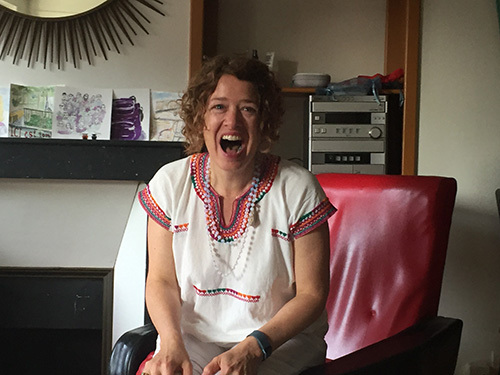
The delight and terror I felt when I heard I was accepted as a speaker at ICON9
When my proposal was accepted to be a participant presenter at ICON9, honestly, I was equally elated and terrified. Elated because, heck, who doesn’t like to be accepted for something. I also love public speaking and being onstage is one of my happy places.
The terror came when I thought oh frick! I have to pull together a 5-minute presentation with slides that will run automatically, 15 seconds per slide. My images would be projected onto a giant screen to nearly 700 visual professionals.
I have put together less than 10 slide decks in my life, so this part of the adventure is not in my wheelhouse.
More fear crept in when I thought about being judged by these professional illustrators. I feared they would think my work is not as accomplished as theirs. I don’t know how to use Illustrator or Photoshop and my art doesn’t have that polished, computer-generated look to it.
We are talking true, deep fear here. You may think of me as a brave person (I am). You may think that as a coach I can talk myself off the ledge. (Sometimes I can.)
But I am like you, taking risks and feeling the fear that accompanies these risks. However, unlike a lot of people, I have a low tolerance for living with fear. I usually get stuff done as soon as possible. I am not one of those last-minute performers who can exist with fear for months and then pull something off at the last minute. I just can’t bear that tension over a long period of time.
Plus, I was in Paris when all this happened and I was dedicated to making art and enjoying my days. I didn’t want to live with this fear that shivered through my veins like an electrical charge.
The loop in my mind repeated: Those illustrators are going to think you are a no-talent amateur!
The shift
Finally I realized: I must change the way I see myself or this is going to be a freaking nightmare.
It was clear to me right away that if I held the current self-perception that I was less than the audience, I would be living in a painful place for six weeks. And I couldn’t bear that.
My old view of myself was like an outdated tattered dress, frayed at the edges, but still really, really comfortable. But this old dress doesn’t look good on me and it’s clear to anyone else that I’ve outgrown in. It had to go.
So with the help of a couple of close friends – KC and Carl – I put in place a new self-perception. The new loop said: I have experiences that are interesting and I have something valuable to offer the audience.
It wasn’t easy to maintain this perspective. There were a lot of hurdles that I had to jump over to do this thing. My external hard drive went AWOL. I panicked about my slides and almost sent an SOS to KC to get help with my slide deck. I was two weeks late submitting the deck because I didn’t know there was a deadline to submit it. And on and on.
At one point the fear was so bad I wanted to bail out. But I’d signed a contract. So that wasn’t an option, but the flight response was deeply activated.
Last Saturday, I went onstage with the other five presenters and stayed there during their presentations. I did mine with a small cheat sheet. I finished 20 seconds under the 5 minutes allotted.
The title of my talk: How I Ditched Practical Advice and Followed an Unlikely Career as an Illustrator.
I came offstage a different person – more confident, more trusting of myself, a better public speaker and a very relieved Cynthia. Wearing, of course, a lovely new dress that completely fits me and my new self.
This feeling was worth all the suffering I went through to get there. Who knows what’s possible with this new confidence?
What about you? What self-identity are you wearing that’s out of date? Take a survey of your inner closet and see what old stories, beliefs, self-perceptions are still hanging around keeping you from doing those things you really want to do, whether it’s submitting your art or writing to a contest, submitting a book proposal or going live with your web site. What new self-perception belongs in there?
Practice this shift now and watch your life get better:
1) Look at a place in your life where you want to move forward.
2) Identify the perception or belief you have of yourself currently.
3) Then craft, in a pithy and powerful sentence, the new self-identity.
The post Doing the scary stuff calls for this one shift appeared first on Original Impulse .
June 22, 2016
Preparing to bare all onstage
If you are my friend on Facebook, you may have seen that in April I applied to be a participant speaker at the upcoming ICON9 conference, a conference for professional illustrators.
This felt like a crazy thing for me to do. I wanted to attend this conference to learn about the field of illustration and to be among the real pros. I went onto Twitter to see who was attending the conference so I could allay some of my fears by befriending people in advance or at least familiarizing myself with who would be there.
I saw a call for proposals for their Kaleidoscope, where select participants do a Pecha Kucha style presentation. The format is a five-minute talk accompanied by 20 slides. The presenter has 15 seconds per slide, and the presentation rolls along automatically.
I’ve always wanted to do this so after asking my Facebook friends if I should go for it, I applied.
Honestly, I secretly hoped that I wouldn’t be accepted. I am a seasoned public speaker and I love being onstage, but the thought of being in front of hundreds of hip and savvy illustrators made me want to…well, I’ll spare you the details but let’s say the feeling is one of intense fear.
I also knew that prepping for such a project would take precious time while I was in Paris.
So when the time came for them to announce the chosen speakers, I tentatively opened my email. And guess what? There was an email from ICON9, congratulating me on being one of six people chosen to present.
Holy CARP!
At first I was pretty excited. Then completely freaked out, feeling the kind of terror that infuses your veins and makes you all jumpy. I thought of all the work I’d have to do to prepare.
I spent a couple of days bathed in terror before I realized that wasn’t sustainable. I didn’t want my time in Paris to be full of fear and dread. It became clear to me that I would have to change my self-perception in order to feel okay about doing this presentation.
Instead of being a quaking newbie illustrator who doesn’t even know how to use Photoshop and Illustrator, I had to think of myself as someone who has something to say about embarking on a new creative field. I had to claim my place on stage and
Wish me luck as I finalize my slides, practice my presentation and share my topic – How I Ditched Conventional Advice to Launch an Unlikely Career as an Illustrator – in Austin on Saturday, July 9th.
It’s so odd that the things we want the most are also the things that scare us silly. Why is that? I don’t know. But I do know that the things we crave aren’t just the things that feel good and allow us to stay the same. Much as it challenges us, we crave change. We crave those situations that allow us to inhabit a new sense of ourselves. We love those circumstances that mark us as new versions of ourselves.
I’m so grateful I took the plunge and applied for something far-fetched. I want these situations that grow me. If you are ever on the fence about whether you should apply for something, please do it. The act of submitting your ideas is always valuable, and if you get the thing, you will be invited to step up and into a new version of yourself. Daunting but so rewarding.
When I take the stage in July in Austin, for sure I will still be scared. But I will also be prepared and I will have to claim the new version of myself, the version that absolutely has a place among the professional illustrators.
The post Preparing to bare all onstage appeared first on Original Impulse .
June 8, 2016
Savoring summer hours
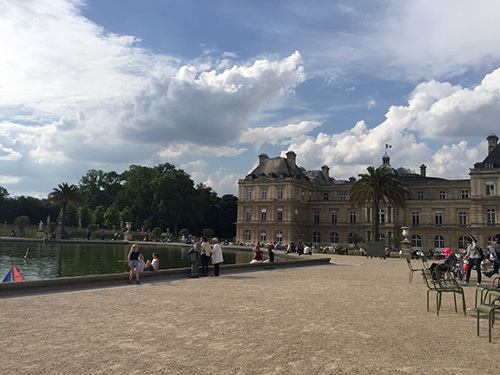
In Paris, people hang out at the Luxembourg Gardens like it’s the beach, picnicking, adoring the palace and people watching. One of the rare sunny days here with stunning clouds.
If you’ve been an Impulses subscriber for awhile now, first, thank you! This newsletter is a way for me to share a bit more than I do in my public channels, and I always want to give you more as a sign of gratitude for you.
You may know by now that summer is my favorite season. And while there is always work to do with clients, my own art and planning for autumn, I like to take what I call ‘summer hours’. I learned this concept from a master coach friend of mine years ago.
When the days are longer and there’s more to do outside, I don’t want to be inside at the computer as much. During the winter I load my schedule with projects so I can breathe a little easier in summer. Some of my winter projects included moving my web site to a new hosting system, revising and relaunching my Make Writing a Happy Habit class and changing my bookkeeping system. I also spent three solid and lovely months in my online classrooms with my wonderful students.
Now, it’s time for summer hours! While I am still in the office during the week, I take Fridays away from the office. I concentrate my work time so I get the important things done early and have freedom to do other things later in the day. I don’t focus on system maintenance projects.
With more space to play and enjoy, we have the chance to be more creative. We can shed a little stress and open to new ideas and new insights. This is vital to being a satisfied creative.
What might summer hours look like for you? What can you set aside in order to savor the season a little more? Perhaps you don’t do as much extra-curricular things so you have space to be spontaneous. Maybe you simply slow your pace a little.
Whatever your summer plans are, I invite you to open up a bit more spaciousness so you have room for creativity and play. Savor the season!
The post Savoring summer hours appeared first on Original Impulse .
May 17, 2016
The missing piece to a satisfying creative life
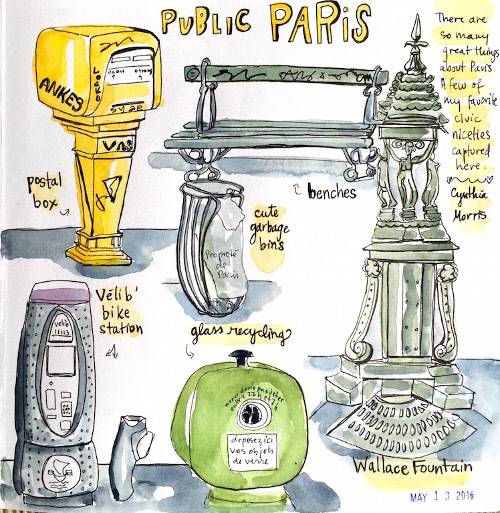
My illustrated article about what makes Paris livable.
I made a video from Paris the other day, saying I hadn’t done much that day but wander around, sit in a park and meet a friend for coffee, then yoga.
Sounds great, right?
But the truth is, I’m not just a tourist wandering around. I actually did a lot of work. I took my sketch stool and made illustrations of things that make Paris a welcoming city. I did a portrait sketch of a friend, and of course I took care of my correspondence and other things at the computer.
This year I arranged my schedule so that I would have this extended time in Paris to have my art-making as my focus. But for some reason, it’s been hard for me to step away from my work at the computer. It’s a shift to realize that the commissioned paintings I sold and the illustration projects and my videos are actually work, too.
What’s happening there?
A lot goes into being a creative person but one main thing is we struggle to give ourselves permission to do what we want to do. Even when we set ourselves up to make our art or write our stories, we still drag our feet.
I’ve been coaching for 17 years now and I’ve learned a lot about the creative process. One thing that holds true for most of us is that the only thing stopping us is ourselves. We like to blame the externals – lack of time, lack of funds, and worse, our relationships – but truly, most of us have what we need to do our work.
What’s missing is permission to do it. We (and I really mean to include myself here because I am the same as you and everyone I’ve ever coached) dearly want someone to say, do it, yes, that’s a GREAT idea, you should follow that.
How to stop dragging our feet and do the freaking work?
We can give ourselves permission in a number of ways:
• We sign up for a class.
• We take on a challenge like the 100 Day Project.
• We partner with a friend.
• We design our own curriculum of study.
• We hire a coach.
These are all valid ways to make sure we get our creative time in. I do all of them. I always take the Sketchbook Skool classes when they launch. I am participating in the 100 Day Project. My friend Cassia Cogger and I meet twice a month to talk about our art projects and to goad each other on. I mapped out my artist residency so I would know what I want to accomplish here. My coach Tiffany Han nudges me past my fears to be brave and bold with my art and writing.
All these things help me give myself permission to step away from the computer and make art.
This week, as I settle in to my artist residency here in Paris, I invite you to give yourself permission to embrace your creative flow, however that looks, wherever you are. You don’t need to leave home to dedicate time to your creative passion.
What permission will you give yourself this week?
The post The missing piece to a satisfying creative life appeared first on Original Impulse .
May 16, 2016
Paris, how do I love thee, let me count the ways…
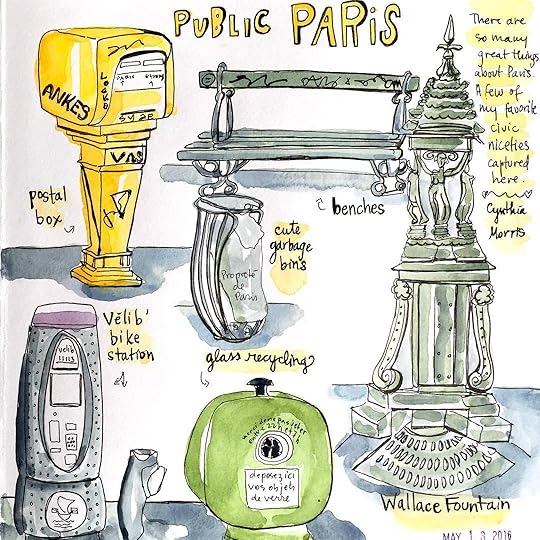
There are so many things to love about Paris, but I’ve chosen a few of the civic niceties that make the streets of Paris pleasant for me. More to come in this vein. Vive Paris!
The post Paris, how do I love thee, let me count the ways… appeared first on Original Impulse .


