Tonya Plank's Blog, page 29
November 5, 2010
Riccardo and Yulia Cha Cha in Japan
Above is a video of U.S. Latin champions Riccardo Cocchi and Yulia Zagoruychenko dancing recently in Tokyo at the World Superstars Latin Dance Festival. This is an annual festival (there's one for standard ballroom as well), where the top Latin and ballroom dancers are invited to perform a showdance in each style. I've always wanted to go, but have never been able to. I've heard it's prohibitively expensive! But I almost always buy the DVDs of the performances (they're usually available from DanceVision), which come out a couple weeks later.
According to this write up, the Latin performers this year included, in addition to Riccardo and Yulia, my favorites Sergey Surkov and Melia, and Slavik Kryklyvyy and Anna Melnikova, as well as current world champs Michael Malitowski and Joanna Leunis. Some year I must go!


ABT in Cuba
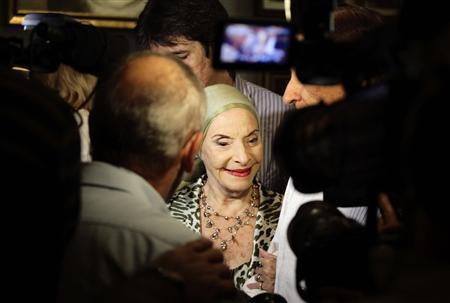
So, American Ballet Theater performed at the Karl Marx Theater in Havana, Cuba, as part of the Havana International Ballet Festival, this Wednesday and Thursday. This is the first time ABT has performed in Cuba since 1960 when diplomatic relations between the U.S. and Castro began to break down. They honored Alicia Alonso (in photo above, taken from Reuters), who danced with the company in the 1950s and 60s and whose 90 birthday is coming up, on December 21st. Apparently, she came out onstage and took a bow.
Unlike ABT's historic trip to Beijing last year, this one has received a lot of coverage, both in the press and in some blogs. In addition to the Reuters article, here are some others:
NY Times Arts Beat blog 1;
New York Times Arts Beat blog 2;
The Express Tribune (who has an excellent slide show!);
In Havana with Risquet (who has more great photos);
ABC News (video);
News Daily;
Times Union (more pix);
HDLNR.com (video);
CBS News (good video)
I'm sure there are many more, but those are some of the posts I found, to give you a bit of weekend viewing / reading 
November 4, 2010
American Bard Theater Company's "Measure For Measure" Opens Tonight!
[image error]
My friend Erin Gilbreth recently started her own theater company here in New York called American Bard Theater Company. They specialize in putting on Shakespeare plays. Tonight, they open Measure For Measure at the Roy Arias Theater Center on 43rd Street. See their website for more info. And watch the promo video below. So excited!
November 1, 2010
Denys Drozdyuk Wins So You Think You Can Dance Canada
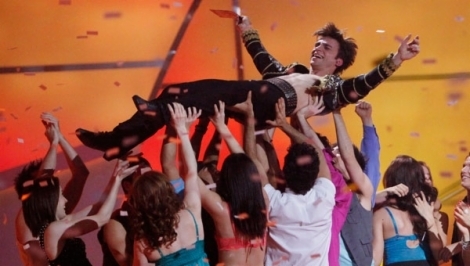
The ballroom dancer I was raving about earlier on seeing a few video clips of his dancing has won So You Think You Can Dance Canada's season three. Thank you to "Twirly" for letting me know by commenting on my prior post! Still so annoyed we don't get the show here… I do hope he tours the US at some point. I would really love to see him dance live.
Congratulations, Mr. Drozdyuk! And congratulations, ballroom world
October 29, 2010
Who Will Play Romeo in the Film Version of Anne Fortier's "Juliet"?
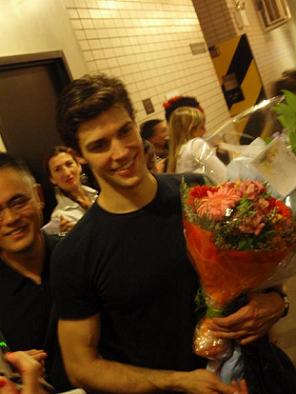
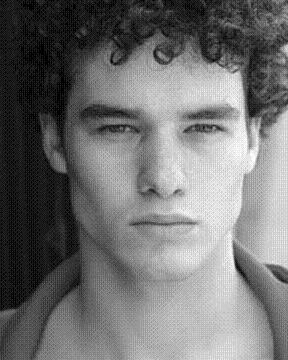
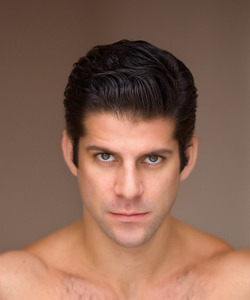
Haha, I don't even think this book has been optioned yet for film! It should be though – it's very cinematic. All throughout reading it, I kept "seeing" Romeo – and always as one of my favorite male dancers who's danced the role. Roberto (top left) is of course the natural choice since he's Italian and the book's set largely in Italy. But I feel he may not have enough of the delicious cockiness in him; Roberto's too nice, at least onstage. Ditto for Cory (top right). Marcelo of course would probably be best … although I don't know if he has acting skills required for a speaking role in a film. He's definitely a good stage dancer/actor.
I'm being goofy. I'm sure they would cast Andrew Garfield or Louis Garrel or someone.
Anyway, Anne Fortier's Juliet, which I recently finished, is a really interesting read, especially for fans of Kenneth MacMillan, and I guess … Shakespeare
It's part historical fiction, part romance, and part mystery / suspense and it shifts back and forth between the present day and the Siena, Italy of 1340, when the two people Shakespeare based his characters on – Romeo Marescotti and Giulietta Tomolei – actually lived. Of course in Shakespeare's version, the lovers were from Verona, but according to this book, early stories – and there were many tales of Romeo and Juliet; Shakespeare's was only one of many – had all the action happen in Siena.
The novel starts when 24-year-old American Julie Jacobs receives an inheritance after the death of her great aunt Rose, who raised her after her mother and father were suspiciously killed when she was a child. The inheritance is simply a key to a safe deposit box in Siena, which her mother had originally left with the aunt. Julie is told by her aunt's butler and his lawyer that it contains a treasure, which she must go to Italy to find. So she sets off for Siena. There she encounters other, less savory types, who are equally interested in her treasure, and so begins the suspense part of the novel.
Julie soon discovers that at the time her mother died, she'd been researching the history of Romeo and Juliet, or Romeo and Giulietta. Julie's mother's last name was Tolomei, and it turns out Julie is related to the original Giulietta. I don't want to give too much away, but the contemporary part of the story consists of the suspense and romance of finding the treasure – which is related to R&J – as well finding Romeo's descendant.
Julie finds in her mother's belongings in Italy the earliest version of the story of Romeo and Giulietta, and her reading of that accounts for the historical half of the novel, which was the most compelling and poignant to me. It's different from the version we all know through Shakespeare. The warring families are the Tolomeis and the Salimbenis, with the Salimbenis being far more vicious and far more financially powerful. At the beginning of the historical story, the Salimbenis have just raided Giulietta's house and murdered everyone but her. (She was in church at the time.) In a nutshell, Friar Lorenzo is able to sneak Giulietta out to her uncle Tolomei's estate. Romeo, who is a Marescotti – a historically highly respected military family with connections to Charlemagne but who currently has no financial power – is a hopeless playboy. But once he sets eyes on Giulietta's portrait, while he is having his own Marescotti-family portrait done, he is in love.
The artist tells Romeo that Giulietta resides at the Tolomei castle. He goes to a ball there in search of her, finds her (she's a Helen of Troy type and stands far out from the crowd), and follows her into her chamber. She's still traumatized by what's happened to her family and so is immune to his flirting. She does tell him though that he can have anything he wants from her if he brings her the heart (or was it the head?…) of the master of the Salimbeni family, who ordered the execution. Romeo's a bit taken aback, but tells her he'll do anything.
The next day Friar Lorenzo brings Giulietta to the Marescotti estate and tells Romeo she doesn't know what came over her the other day to ask such violence of him; she doesn't want him to get hurt. He kind of plays with her a bit, she softens, and over the course of this and several other meetings, they fall in love.
Romeo talks his father into asking Tolomei for her hand in marriage. For Romeo I mean. The father is reluctant because he doesn't want to be seen as "getting involved" in the Tolomei / Salimbeni feud. But seeing how in love his son is, he agrees.
But just as he goes to approach Tolomei that night, old Salimbeni, smitten with Giulietta whom he spies in the distance, reveals that he wants her for himself. This will end the violence between the families once and for all, he claims. The whole crowd gasps, since Salimbeni is old enough practically to be her grandfather, not to mention married (although everyone also knows his wife will soon be dead, as he is starving her, as he's done to prior wives… Medieval society must have been so lovely…) Of course Tolomei has no choice but to say yes – the Salimbenis are far more powerful – both physically and financially. Saying no to Salimbeni would be family suicide.
Poor Giulietta nearly collapses upon hearing she's to be the wife of the man who slaughtered her family, and she begs Tolomei not to let the marriage happen. Tolomei refuses. Romeo declares that he will beat Nico, Salimbeni's son, in the Palio (a Medieval-style horse race that continues to this day), and, if he does, he will win Giulietta's hand.
At the Palio the following day, Romeo does win, but during the course of the race, Nico kills Tebaldo, Tolomei's son, but with Romeo's dagger, making it look like Romeo is the murderer. This is how Romeo gets banished. Although Romeo sneaks back to town with Friar Lorenzo and marries Giulietta in the back of the church where she is at worship, Salimbeni finds them and, well, things don't go too well for Romeo… Salimbeni's wife finally starves and he marries Giulietta, then keeps her a prisoner in his country castle.
I should stop there! But the story goes on and there are all kinds of twists and turns. It's a fascinating narrative and you can see all the same – or many of the same – elements Shakespeare included. But the theme in Shakespeare is the warring families or factions, gangs, what have you – and how innocent individuals get unfairly, tragically caught up in the fighting. In the original, it's more about the viciousness of one evil, all-powerful man. I found it interesting to see how a great writer manipulated facts to craft a story with themes that would reach far beyond the time and place in which the story was set. I mean, Shakespeare's version also contained beautiful poetry of course, but his basic story is more powerful and far-reaching than the original. The original does give you a sense of how violent and how absolutely awful Medieval society was for women though.
Anyway, the novel's very good – at least the historical part. I highly recommend it for that. The contemporary part is cute romance-wise, and definitely suspenseful, but in my opinion not nearly as powerful from a literary perspective as the historical.
Funny, I didn't really think of who would play Julie / Giulietta. Diana Vishneva or Veronika Part would be good – she has to be Helen of Troy beautiful! But they both have Russian accents and I don't know if that would work… Hmmm, who else?…
(Photos above, clockwise from top left: Roberto Bolle, taken by me; Cory Stearns, from ABT's website; and Marcelo Gomes, from ABT's website.)
October 28, 2010
Emerging Pictures' Ballet in Cinema Series
Here's an addendum to my earlier post on Emerging Pictures' exciting new Ballet in Cinema series.
All of the showings on the schedule I posted are at the BIG Manhattan Cinema except for the December 19th Nutcracker, performed by the Bolshoi. That one is at the Kew Gardens Cinema in Queens.
There is one additional performance:
The Nutcracker, performed by the Royal Ballet, December 26th, 3:00 p.m., at Symphony Space (this one is recorded).
For other performances in the series, and for people outside of New York, you can consult the Ballet in Cinema website for further showings. You can search for showings by typing in your zip code. I am told you should check the website frequently as it is updated often.
I'm very excited about this, as you can probably tell The Metropolitan Opera has been very successful with their in-cinema showings, really brought opera to younger audiences by making it more affordable and engaging in this way, and has increased opera's popularity. I hope this series will do the same for ballet.
October 27, 2010
Lincoln Center Street Art and Books
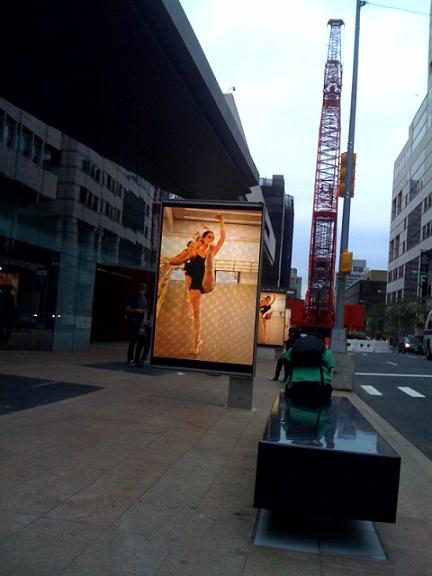 Yesterday I was walking along 65th Street and, maybe I just haven't walked down 65th Street in a while, but I just noticed on the side of the street across from Juilliard, they now have these little two-sided block panels. On one side, they have an advertisement for something going on at Lincoln Center – an opera, a symphony, a ballet, but on the other, they have brief moving pictures. One set is of dancers warming up, another of musicians. One is of waiters who decide to break-dance out on the sidewalk. There's no sound, but they're fun just to watch. And the street is lined with benches so you can sit and stay for a while.
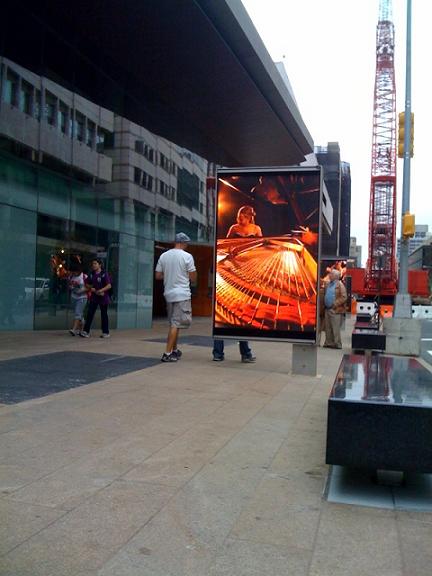 It felt a bit like Paris to me
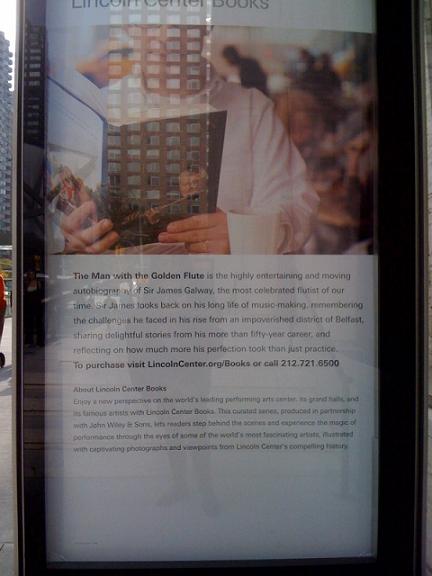 I also noticed a poster (below) on the Broadway side of Lincoln Center, advertising Lincoln Center Books. Sorry my photo isn't so good – the sun was in my eyes!
Apparently Lincoln Center and publisher John Wiley & Sons, Inc. have entered into a joint venture to publish books of importance to Lincoln Center and its patrons. The books will bear both brand names.
This book – The Man with the Golden Flute – is the autobiography of Sir James Galway, an eminent flutist from Belfast.
They have several on their list. You can search the list on their website.
City Center's Studio 5 Opens its Season Nov. 9 with Damian Woetzel, Violette Verdy, and NYCB
New York City Center's Studio 5 will open its 2010-11 season on November 9th with a performance and discussion of three Balanchine ballets that are celebrating their 50th anniversary this year. Four New York City Ballet dancers (Tiler Peck, Joaquin De Luz, Jenifer Ringer and Jared Angle) will perform Tchaikovsky Pas de Deux, Donizetti Variations, and Liebeslieder Walzer, and Damian Woetzel and Violette Verdy (who danced in the original productions) will discuss. Verdy will also coach the dancers.
Later performance/discussions this season will center on Paul Taylor Dance Company and Dance Theater of Harlem. Click on link below to read the full press release.
NEW YORK CITY CENTER PRESENTS
Studio Five Dance Series
Curated and Hosted by
Damian Woetzel
Opens on November 9 with Special Guest Violette Verdy
New York, October 27, 2010 – Studio 5 at City Center will present its first dance program of the 2010-2011 season on Tuesday, November 9. Hosted and curated by renowned dancer-turned-director Damian Woetzel, this season's three-part dance series will highlight choreographers and companies that have played an important role in City Center's history. It begins with a celebration of the 50th Anniversary of three Balanchine ballets that premiered at City Center in 1960. Stars of the New York City Ballet – Tiler Peck, Jenifer Ringer, Jared Angle and Joaquin De Luz – will dance excerpts from the three highlighted ballets.
Joining Woetzel in examining and coaching the ballets will be acclaimed ballerina Violette Verdy, an original cast member of all three works. In addition to handing down her knowledge and insights to the dancers who perform her roles today, Verdy will share her memories of performing and working with Balanchine on the creation of these magnificent ballets in the very theater where they were first unveiled 50 years ago.
Studio 5 provides an intimate forum for informal conversations with some of today's most compelling figures in theater and dance. Interactive discussions and performances by guest artists offer audiences a glimpse beyond the proscenium into the creative worlds of theater and dance.
The newest addition to Studio 5 at City Center, "Musical Theater from the Page to the Stage," debuted on October 18 with a theater program curated and hosted by Tony Award-winning actress Victoria Clark.
All programs are held at City Center at 6:30 p.m.
The schedule is as follows:
November 9, 2010 – Balanchine at City Center: 1960
New York City Ballet dancers will join Mr. Woetzel for a celebration of three Balanchine ballets that premiered at City Center 50 years ago: Tschaikovsky Pas de Deux (March 29, 1960), Donizetti Variations (November 16, 1960) and Liebeslieder Walzer (November 22, 1960). With special guest Violette Verdy.
February 7, 2011 – Paul Taylor Dance Company
Paul Taylor at 80 continues to win acclaim for the vibrancy and relevance of his current work as well as his classics. Mr. Woetzel welcomes dancers from the world-renowned Paul Taylor Dance Company for an exclusive preview of its upcoming City Center season, which includes time-honored masterworks and New York premieres.
April 11, 2011 – Dance Theatre of Harlem
Founded by Arthur Mitchell and Karel Shook in the midst of the Civil Rights turmoil of the 1960s, Dance Theatre of Harlem made history as an internationally acclaimed African-American classical ballet company. Artistic Director Virginia Johnson and members of the DTH Ensemble join Mr. Woetzel as they delve into the company's past and look ahead to its future.
Damian Woetzel, former Principal Dancer with New York City Ballet, is the Artistic Director of the Vail International Dance Festival; the founding Director of the Jerome Robbins Foundation's New Essential Works (NEW) Program, and cultural producer for the World Science Festival. Woetzel also works with Yo-Yo Ma and his Silk Road Connect Program in the New York City Public Schools. He is active as a director and producer of dance and music performances, and recently directed a performance at the White House celebrating Judith Jamison and dance in America. Woetzel holds a Master in Public Administration Degree from Harvard's Kennedy School of Government, and he is currently co-teaching a course on Performing Arts and the Law at Harvard Law School. In November of 2009, President Obama appointed Woetzel to the President's Committee on the Arts and Humanities. Woetzel serves on the Board of New York City Center.
Studio 5 at City Center is generously supported by Barbara Brandt, Margee and John Falk, and Barbara and David Zalaznick.
NEW YORK CITY CENTER (Arlene Shuler, President & CEO) has played a defining role in the cultural life of the city for more than 60 years. It was Manhattan's first performing arts center, dedicated by Mayor Fiorello LaGuardia in 1943 with a mission to make the best in music, theater and dance accessible to all audiences. Today, City Center is home to many distinguished companies, including Alvin Ailey American Dance Theater, Paul Taylor Dance Company and Manhattan Theatre Club; a roster of renowned national and international visiting artists; and its own critically acclaimed and popular programs. The Tony-honored Encores! musical theater series, now in its 18th season, has been hailed as "one of the very best reasons to be alive in New York." Dance has been integral to the theater's mission from the start, and dance programs, including the annual Fall for Dance Festival and a partnership with London's Sadler's Wells Theatre, remain central to City Center's identity. City Center is dedicated to providing educational opportunities to New York City students and teachers with programs such as Encores! In Schools and the Young People's Dance Series. Special workshops cater to families, seniors and other groups, while events such as the Fall for Dance DanceTalk series offer learning opportunities to the general public.
Studio 5 events take place in City Center Studio 5, 130 W. 56th Street, 5th floor. Tickets are $20 and must be purchased in advance via CityTix® at 212-581-1212, online at www.NYCityCenter.org or at the City Center Box Office (West 55th Street between 6th and 7th avenues). All events are at 6:30 p.m.
Swan Lake Samba Girl is Best of the Web Pick on Become.com
How fun! This blog is featured on Become.com today as one of their weekly "Best of the Web" picks  Thank you Become!
The Flames of Paris, and Emerging Pictures' Ballet in Cinema Series
[image error]
Yesterday, I was invited to a preview of a filmed recording of the Bolshoi's The Flames of Paris. The film will begin showing in New York at the BIG Cinemas Manhattan on November 2nd and will be broadcast nationally in over 30 locations starting on that day as well.
This film is the first in Emerging Pictures' Ballet in Cinema series, which, like the Met Opera's high definition series, is a series of live (or recorded, but most are live) ballet performances that will be broadcast in various movie theaters. I'm psyched about this, especially since I'd bemoaned that ballet didn't have such a thing when the Met Opera first started their film series.
Flames, by the Bolshoi, is the first ballet, and, as I said, it begins showing on November 2nd. That performance is recorded. Here is the rest of the schedule:
The Nutcracker, performed by the Royal Ballet (London), December 1, 2010 (Recorded)
The Nutcracker, performed by the Bolshoi, Sunday, December 19, 2010, 11 a.m. EST (Live)
Giselle, Royal Ballet (London), January 19, 2011, 2:30 p.m. EST (Live)
The Class Concert and Giselle, by the Bolshoi, January 23, 2011 11 a.m. EST (Live)
Caligula, Paris Opera Ballet, February 8, 2011, 1:30 p.m. EST (Live)
Don Quixote, Bolshoi, March 6, 2011, 11 a.m. EST (Live)
Coppelia, Paris Opera Ballet, March 28, 2011, 11 a.m. EST (Live)
Coppelia, Bolshoi, May 29, 2011, 11 a.m. EST (Live)
Children of Paradise, Paris Opera Ballet, July 9, 2011, 1:30 p.m. EST (Live)
At this point I'm not sure of all the locations or the time on the top date, but will let you know more specifics when I know. For now, for more info, visit their website or Facebook page.
Anyway, on to The Flames of Paris. This production is from March of this year, in Moscow, and stars Natalia Osipova, Denis Savin, and Ivan Vasiliev (as excellent a dancer as Osipova). It was originally choreographed by Vasily Vaynonen and performed in 1934, but Alexei Ratmansky has reconstructed it. Music is by Boris Vladimirovich Asafiev, a Russian and Soviet composer, and is based on songs of the French Revolution. Interestingly, it was Stalin's favorite ballet, which confuses me, unless Ratmansky substantially re-worked things, but I'll get to that in a minute.
It's set during the French Revolution and tells the story of a pair of brother and sister peasants, Jeanne and Jerome (Osipova and Savin), a Marseillais (revolutionary fighter) named Phillipe (Vasiliev), and Adeline (danced by Nina Kaptsova), the daughter of the local Marquis. Jeanne and Jerome are young, energetic free spirits at the beginning of the ballet but, upon meeting Phillipe (whom Jeanne eventually falls in love with) become revolutionaries too. Adeline, bored at one of her father's aristocratic parties (and perhaps jilted by a man there as well – I couldn't really tell), wanders off, and eventually finds herself in the camp of the Marseillais. She hooks up with Jerome and they fall in love.
Eventually, as well all know, revolutionary fervor leads to the deaths of King Louis XVI and Marie Antoinette. During the last scene, Adeline sees her father, the Marquis, dragged toward the guillotine. She becomes hysterical and begins rushing toward him, trying to save him. Jeanne and Jerome try to hold her back – Jerome out of love for her and Jeanne seemingly out of now hysterical patriotism, demanding the Marquis' death along with the other Marseillais. But Adeline won't leave the executioners alone, and when they discover who she is, she is put up on the platform, under the guillotine as well. The ballet ends with her crying and looking terrified as the guillotine comes down on her head.
Jerome keels over crying and Jeanne comforts him, but then, as he is given Adeline's head wrapped in some kind of gauze, Jeanne is lifted and off she goes with the other Marseillais fist pumping in the air, French flag overhead, with the creepiest most possessed, horror movie-esque look in her eyes I may have ever seen.
When I left the theater I felt very unsettled and more than a little scared of revolutions in general and the uncontrolled murderous mob activity they can lead to. Unless Ratmansky completed changed the ending, I don't see how this was a piece of propaganda, glorifying the French Revolution and likening it to the equally glorious Russian. I thought Ratmansky had been criticized for bringing back two Soviet-era propaganda ballets – this one and Bright Stream – during his time at the Bolshoi. I feel like either I missed something, or he changed things. New Yorkers will be able to see Bright Stream at ABT next summer.
Anyway, the dancing was tremendous, and Natalia Osipova is just as spellbinding on screen as she is onstage. She just moves so fast and with such precision and power and impeccable technique; when she's done you feel like you can't believe what you just saw. I can't imagine there's going to be another dancer quite like her. She's also a very good actress. She had the tomboyish, peasant-like gait down solid here; there was no flirty Kitri anywhere in this performance. She also, as I said, perfectly embodied the almost crazed Marseillais, sad for her brother but too hateful toward the Marquis to feel much for Adeline.
Vasiliev is also an excellent dancer, and his final final pas de deux with Osipova was fantastic. Crowd went wild, of course. And Russian crowds are a bit more fun than American They clap in unison, all clapping on the same beat, as if they're cheering the dancers on to do an encore to the rhythms they're making. But there were no encores, just bizillions of bows. I realized that the ABT production of the pas de deux, during their City Center season a couple years ago, was altered probably to suit the strengths of Daniil Simkin. Vasiliev did none of those crazy over-rotated barrel turns that Daniil in known for and I thought I remembered a no-hands fish at the end of the ABT performance?… It wasn't here. Also, they remained dressed in their regular street clothes; no fancy princess tutu for Natalia.
I thought Savin, tall and wiry, was a bit out of control in his dancing in parts, but maybe that was just part of the character. I think the Russians try to move the audience, to tell the ballet's story, with their acting just as much as with their dancing, which is somewhat different than American-trained dancers, who seem to focus more on technique and movement quality than characterization. I thought Nina Kaptsova was a beautiful dancer. And she was perfect for the part of vulnerable Adeline. But I'm sorry, I can't help but feel for anyone who has to share the stage with Osipova!
I loved the camera work – it panned in and out, just like in the Met's HD films, homing in on various characters at certain points in order to make it more cinematic.
I'm really looking forward to the other performances. We don't otherwise see much of the Bolshoi, the Royal and the POB here and, if the other films are as well-made as this one, I feel like you do get a very full experience.
Above photo (of Osipova, Savin, and Vasiliev) taken from here.