
Moira Butterfield's Blog, page 3
March 24, 2024
Battling with my Subconscious Mind (In which Mini considers the mind monsters that plague her…)
 Consciousness. There’sbeen a lot of debate about what consciousness is. I’m with Anil Seth, that havingconsciousness is having something that it feels like to be you. Ithink consciousness is a really useful invention for animals, and minds arepart of bodies.
But what about the Subconsciousness?
What is down therein the dark unknown zones of the Subconsciousness?
 I discovered in thefantastic book Sentient by Jackie Higgins: we have way more senses thanwe’re aware of – for example, proprioception, which is the sense that tells thebody where it is in space: nerves in our muscles are sending this informationto our brains all the time, but luckily we’re blissfully unaware of all this data-sharinggoing on. But senses of space and time are all part of our subconscious, boundup with our idea of what will be coming up in the future.
The Subconscious istrying to keep us safe: it is doing its own safety calculation and summoning upthe feelings for the action it has worked out is necessary. But what it haspulled up is fear, anxiety, dread and a thousand other uncomfortable feelingsthat it is horrible to sit with.
 So the Subconsciousis trying to help but causing chaos: unease, panic attacks, a roller coaster ofadrenalin rushes, immobilizing wells of rumination. My subconsciousis a drama queen, a catastrophizer, an over-reacter.

Thanks for that, SubconsciousMind. The upcoming event was challenging enough, but now you’ve summoned up theMonkey of Dread to sit on my chest at four in the morning. Really helpful.

It could be thatback when we were hunter gatherers before farming caught on, the threats we’dface would be short-lived and real, and needing a swift and definite responsefor survival, so this super-reactive subconscious was useful to us. But in ourworld now, so much is long term, complicated and imaginary, so the subconscious’sresponse can be way more mental anguish than must be good for us.

The writer DaisyGoodwin, on Radio 4’sSaturday Live, said: “I think all creative artists are to some extentdepressives, they write to get out of that slough of despond.”

But I wonder if theover-active imaginations that dream up worlds also fuel over-powerful anxieties.

It might be thatbook-makers, who spend so much time living in their own minds inventing stories– could be prone to the roller-coaster rides conjured up by an over-activeimagination. So it’s important to escape sometimes.

This is how Iescape, when I can.

If I can, I gorunning first thing in the morning. (If you can run or walk it is win-win-winin so many way: exercise, endorphins, sunlight, changing nature, and more.)

Then I go down thebottom of the garden, and think about my Nine Things.
I adapted my NineThings from Jon Kabat Zinn’s 9 attitudes. Thank you Jon. It's an attempt to reframe my day, and to shift from being immersed in my feelings or worries ( like a fish in water who can't see the water), to being an interested observer of what's going on in me today.

Mini’s Nine Things:
Patience How can Ibring patience to what may be happening today? It could be patience about whatneeds to be done, and where I am in getting it done; patience with my ownfeelings; patience to remake things that need to be remade.
Acceptance How can I bring acceptance: to be OK with thingstaking longer than I thought they would, to shake hands with an uncomfortablefeeling and let it sit next to me.
Trust I can have trust:I can trust myownself that’s had a lifetime of looking after me, I can trustthe skills I’ve used a million times, I can trust in my people, the world, theProtector of all Small Things, the Universe.

Letting Go/Letting Be Thingsdo not need to be resolved right now, they can hang and wait, like a pot on awheel. (Sorry about that simile.) Things can be fine just as they are. Don’tjust do something, stand there…
Everything’s an Offer Todayis the present – with all it offers. Accept the offers and do what you can withthem. And when the offer is something you don’t want – sometimes that’s theoffer you can learn most of all from.
I Change My Mind, I Follow My Skis My first ski instructor, Jeff, said this. I think itmeans: Jeff has been skiing so long that all his body understands how to skiand he can just follow his body’s well-experienced decisions.

Gratitude Thank you!!! Fortoday! For my family, my friends, for having a house, for living in this goodplace…Thank you, overactive brain, for trying to keep me safe…
Generosity What or whocan I bring generosity too? Can I pay more attention to my family? Can I bringsome generosity to myself…?
Beginner’s Mind Thisis about looking at the world as if you were seeing it for the first time.Often we see the familiar and we see what we are expecting to see. With thetruly unfamiliar, really new things, we have no expectations and what we seecan be surprising.

With beginner’smind – you can escape “the anaesthetic of familiarity” (Richard Dawkins) – and discover thateverything is interesting, nothing is ordinary, nothing is ‘obvious’. That weare sentient and alive on a living planet for a brief window of time isvanishingly rare and extraordinary.
 Mini's latest book is The Greatest Show on Earth, published by Puffin.


March 10, 2024
Guest Picture Book Author, Mariesa Dulak, interviewed by Pippa Goodhart
Q&A Picture Book Den
I’m delighted to welcome Mariesa Dulak to the Picture Book Den. As part of Book Trust and World Book Day’s ‘PassThePen’ project, I, as author of last year’s World Book Day ‘You Choose Your Adventure’, have been linked with debut picture book author, Mariesa. We’re celebrating the publication of her picture book ‘There’s a Tiger on the Train’, beautifully illustrated by Rebecca Cobb.

Mariesa, I’ve got so many questions to ask you!
First of all, have you always been a writer, wanting to write books? What was child Mariesa like when it came to her relationship with stories and books?
Thank you for inviting me into The Picture Book Den, Pippa.
I've always loved books and luckily, I was brought up in a household where reading was encouraged and celebrated. One of my earliest memories is scrambling onto my mum’s lap to share a well-worn copy of Grimm’s Fairy Tales. My dad took my sister and I to Harrogate Central Library every Saturday morning where I slowly munched my way through their children’s collection.
I used to enjoy writing stories too, but I was mostly inspired to write silly poems and songs. Buckingham Palace by A.A.Milne was one of my favourites. I would march around the house to that one and make up my own words.
I’ve read that you did an MA in children’s literature, worked in publishing, and been a bookseller. What did those experiences give you in preparation for becoming a published author? (I was a bookseller myself for some years, and am hugely grateful for the commercial insights it gave me.)
I think one of the best things about bookselling (other than the books of course) is the people. I worked with some lovely booksellers who were knowledgeable and passionate about what they did. As you say, bookselling teaches you about the business side of the book industry and this was a huge help to me when I eventually got into publishing.
Publishing is such a fascinating and creative industry, and I had the opportunity to run marketing campaigns for some inspiring authors and brands (Kes Gray & Jim Field's Oi Dog! was one of my favourites). But working within the industry also showed me the humungous steps that a picture book text has to go through before it reaches a bookshop; secure an agent, find an interested publisher, get to an acquisitions meeting, get through an acquisitions meeting, find the right illustrator, convince the sales team (and rights team) that the text is worth investing time in, convince the booksellers that customers will buy it, secure marketing and PR support and budget and then when it finally reaches a bookshop, make customers aware that your book exists AND convince those customers to actually buy it... For every text , securing an agent is the first step in a very long process and so many of these steps are out of an author's control.
But despite learning the nuts and bolts of the business, I still had a passion for the books themselves which is why I decided to do an MA in Children’s Literature.
The MA was tough (I was fitting it around full-time work) but so rewarding. I learned about the origins and development of children’s literature as well as genres, techniques and themes. And I think it’s around that time that I started to write my own stories. But in those days I didn’t think authors looked like me or came from a background like mine so I didn’t share my writing with anyone.
Your ‘There’s a Tiger on the Train’ story text reads with wonderful rhythm and rhyme … ‘You’ll never guess what happened on our trip down to the sea … A tiger in a top hat came and sat right next to me!’ That easy-to-read rollicking rhymical rhyming text is anything but easy to achieve. How did you manage to keep it going for a whole book?
Thank you, Pippa. I love writing in rhyme, but I have Tessa Strickland at the Golden Egg Academy to thank for showing me how to make it scan and flow. Tessa is a publisher, editor and writer and her GEA course on rhyme was a light bulb moment for me.
In the story, more and more wonderful creatures pile chaotically into the train carriage with their belongings … and Dad remains focussed on his phone … until the tiger gobbles the phone up, releasing Dad to join the fun as the boy gallops on the tiger to the beach, with Dad running after. It’s great fun! But within the fun there’s a clear lesson there for us adults about being absent from children’s lives if we focus on our phones. Do you believe in ‘a spoonful of sugar to make the medicine go down’ when it comes to stories with a message?
I didn’t set out to write a story with a message. The rhythm of the train and the little boy came first, then the animal passengers and it was only then that I had the mobile phone idea and the rest of the story fell into place.
The mobile phone theme of the story was inspired by my own experience of working full time with a young family and finding it hard to get the balance right. I'm sure readers are rooting for the little boy in the story, but I have a lot of sympathy for the Dad too. He wants to spend time with his son, he’s just distracted by the pressures of modern life.
There’s a Tiger on the Train is about taking the time to connect with those you love. I hope that children reading the book will join in with the rhymes and rhythms, have fun making some new animal friends and enjoy the ride! And I hope that their grown-ups will be reminded to look up from their phones to see what they might be missing in the wonderful world of their own child’s imagination. But I hope parents don’t feel guilty, that really is not my intention. I know that most parents, like I was, are just trying to do their best!
The illustrations in this book are bright and energetic, full of body language we can empathise with, and slightly naughty behaviour we can relate to and enjoy. Are Rebecca’s Cobb’s pictures what you imagined as you wrote?
Rebecca’s illustrations are so much more than I could have imagined. When I wrote the story I thought that perhaps the real world could be in black and white on one side of the page and the imagined world on the page facing it in colour (a bit like John Burningham’s Time to Get Out of the Bath, Shirley). But when I saw Rebecca’s illustrations I knew that the whole thing had to be in glorious full colour. And then when Rebecca did her layouts, she designed the pages so that as the book progresses, the Dad’s real world begins to take up less and less space on the spread and the little boy’s imaginative world takes up more until eventually his world just takes over. I think details like this help to make the book more immersive.
My father and all his family from as far back as we can go came from Yorkshire. He taught me, ‘Never ask somebody if they’re from Yorkshire. If they are they’ll tell you so in the first five minutes. If they aren’t, why humiliate them?’! Do you feel that anything of your home county comes through in your story?
I am proud of my dual heritage and definitely feel that I am half Bajan (from Barbados) and half Yorkshire. Yorkshire people are known for being both warm and plain-speaking. I think the way that the animals rally around the little boy when his Dad is distracted feels like something Yorkshire people might do and I suspect there is Yorkshire tea in the hippo’s tea pot!
And, of course, I’m going to finish with the question, ‘What can we look forward to from you in the coming months and years?’
My next picture book publishes in Spring 2025 with Walker Books. It’s called The Silver Shadow and is based on a story from my Dad’s childhood growing up in Barbados when he found a baby shark in a rock pool.
After that, my next book through Faber and illustrated by Rebecca Cobb is due in 2026 and it’s called The Ice Cream Crocodile.
I’ve also been working on a middle grade novel for ages 7-11 and a graphic novel text. I’m really enjoying working on different age ranges but I think my heart will always belong to picture books.
Wow! I look forward to all those new books. Congratulations, and thank you so much!
If you'd like to find out more about Mariesa, go to her website: mariesadulak.com
February 25, 2024
Books and FOREIGN RIGHTS Moira Butterfield
March 7th sees the publication of The Secret Life of Bugs, written by me and illustrated by Vivian Mineker. It’s the fifth book in a six-book series called Stars of Nature, and it’s published by Happy Yak – an imprint of Quarto.


A foreign rights deal – A foreign rights deal means that the contents of a book are licensed to an overseas publisher. I get some money each time a deal is made. In fact, my foreign rights sales comprise the bulk of my income and help in large part to pay off my advances. I’m rather like one of those pop groups that is more successful outside their own land. The reason for this is probably because I tend to write non-fiction, which doesn’t sell in large quantities in the UK. The deal will not be done by me or by my agent but by the foreign rights department of my publisher, using their contacts. This often happens at international bookfairs such as Bologna. I tend not to get sales in South America, Africa or Scandinavia (I don’t know why but I think this is pretty standard for UK books) but I do get sales in the rest of world. These can often be in quantities of 5,000 or 10,000, with repeat orders made if the books are successful.
Translation – Once a book is sold abroad it will be, in many cases, translated. I won’t get to see or check the translation as I have no way of doing that, so I trust the translators.

Contract – When I sign a contract for a book there will be sections in it about foreign sales – and the percentage cut I get from the deal. I freely admit that these figures are very confusing for me, and I should be much more knowledgeable about them than I am. There will usually be terms such as export salespercentages, foreign language royalty inclusive sales percentages and nominated printer foreign sales percentages. I rely on my agent to check them but I could also ask the Society of Authors to do so, as I am a member. If you need to check these things yourself, do look into becoming a member of a professional body which offers this service to you.
Selling your own rights – Some authors will retain translation rights (eg, when self-publishing, for example) and might employ their own foreign rights agent to sell for them. I’ve never been involved I this, though, as traditional publishers are likely to want to do it themselves.
So selling around the world is a crucial way to make a living in kid’s books, but how can you help it along?
Make your content international – You can make sure your content is very clear and strong, so it appeals to all. And avoid including parochial things unless they play a strong part in your concept. For example, if you were writing a picture book specifically set in New York you might well add a yellow taxi, or if it was in London you might add a red bus. But if your book was more general (say, about colours, for example) you’d need to avoid mentioning that specific location-based colour of taxi or bus. The colour might well be completely different in another country (this particularly applies to fire engines btw!).
Be on instagram – You can’t do publicity around the world in lots of different languages, but you can be present on Instagram to respond to people who mention your books in different countries and tag you in.
Check out your publisher's foreign rights plans - If you are lucky enough to have a choice between publishers, you could ask them about their foreign rights plans. Not all publishers are equal in this respect. Some are much more pro-active than others.
Find good homes for your copies – I get copies of different language translations sent to me contractually. I give them to people if I can. Recently I’ve been able to give to Ukranians, Bulgarians and Malaysians living in the UK, and friends with French family. It’s always a joy to receive copies and then to give them on in this way.
Remember that kid’s publishing is a highly international business, and you may find your work being offered to kids in many nations. I can tell you it’s a massive BUZZ!

Moira Butterfield is an internationally-published childrens’ author specialising in highly-illustrated non-fiction and picture books. Her Stars of Nature series grows this year with The Secret Life of Bugs (Happy Yak) and she has a brand new title – Does a Monkey Get Grumpy? - out with Bloomsbury in May. August sees another in her Look What I Found series and August sees Welcome to Our Playground – the follow-up to her bestseller Welcome To Our World (Nosy Crow), which as has sold in 16 different languages.
Moira Butterfield
twitter @moiraworld
instagram and threads @moirabutterfieldauthor
February 13, 2024
CUTE! - A dip into cute culture with Garry Parsons
Cuteness has infiltrated our lives!

 smv.org - Getty Images.
The power of cute culture is here, persuading us to forget the details and dangers of our impersonal world and tugging on our heartstrings from every corner of our daily lives and, of course, our picture books.
 Ten Minutes to Bed Little Dragon - Rhiannon Fielding - illustrated by Chris Chatterton
In the 1940's, the Austrian zoologist Konrad Lorenz suggested that a combination of a big head, with large eyes and fat cheeks, stimulated a response in humans attributed to 'care taking' behaviours, the feelings that make us "coo" and "ahh" at our babies and prompting feelings of affection and the desire to nurture and care for them. As well as human babies Lorenz also included puppies, ducklings and other baby animals in his theory.
 Kewpie doll - from the Japanese mayonnaise brand Kewpie
As picture book illustrators, when drawing up and inventing new characters, we want to imbue them with a level of appeal to elicit feelings those feelings of empathy or compassion in the reader, to create a character the reader warms towards and cares about, however subtle that may be. So there is no surprise that characters in picture books often inhabit some of the characteristics Lorenz sited in his research, the big eyes, big head on a chubby body. Cute!
The idea of cute extents into inanimate objects too. Aesthetic standards can be applied to anything by adjusting the size, shape and colour.
 Cute star shape
The origin of the popular culture of cute stems particularly from East Asia. In Japan the culture of cuteness is known as kawaii, which translates as "cute", "Tiny" or "lovable". The aesthetic of Kawaii being bold thick outlines, cartoon-like rounded eyes with concentrated features similar to those described by Lorenz.
 kawaii style Shiba Inu
In Japan, Kawaii takes on a whole new level and is everywhere. A walk in a Japanese city will surround you in a sea of Kawaii, from food packaging to shop signs, with cute characters adorned on trucks, trains and aeroplanes, even building sites employ a level of kawaii, like these construction barriers to keep the public safe.
 Unconstruction! Building work barriers, Japan
 Hello Kitty
 Kumamon statues in Kumamoto, Japan.
To promote the new train line a black bear mascot was created in the form of 'Kumamon', now famous across the whole of Japan and now known world wide. When you visit Kumamoto you will want to include Kumamon Square on your tour of the city. If you visit during one of the designated times on the mascot's busy calendar, you can meet him!
Before we get lost in the all the wonders Japan has to offer that's kawaii, we're boarding the speeding bullet train back to the UK for a browse around the bookshop at picture books we might consider on the spectrum of kawaii and whose characters express a level of 'cute' akin to their friends in the East.
Here are a few picturebook covers to tug at your heartstrings...
 Sparky Fox - Matilda Rose - Illustrated by Tim Budgen
 The Bunny Who Came To Breakfast - Rachel Davis - illustrated by Mike Byrne
 The Runaway Pea - Kjartan Poskitt - Illustrated by Alex Willmore
 Pugicorn and the Lovebug - Matilda Rose - illustrated by Tim Budgen
For more kawaii delights, visit "Cute", a new exhibition exploring the irresistible force of cuteness in contemporary culture. This show considers the cultural phenomenon of how cuteness has swept the world, including its slightly darker edges. Cute is at Somerset House, London from 25th January to 14th April.
***
Garry Parsons is an illustrator of children's books - @icandrawdinos garryparsons.co.uk

January 28, 2024
24 PICTURE BOOKS TO LOOK FORWARD TO IN 2024!
So, hold onto your library cards and 'to be read' piles... here are 24 picture books publishing in 2024 that caught my eye. (There may be some books from your resident Picture Book Den bloggers, too!)
1. I LOVE YOU MORE by Clare Helen Welsh and Kevin and Kristen Howdeshell (4th January)
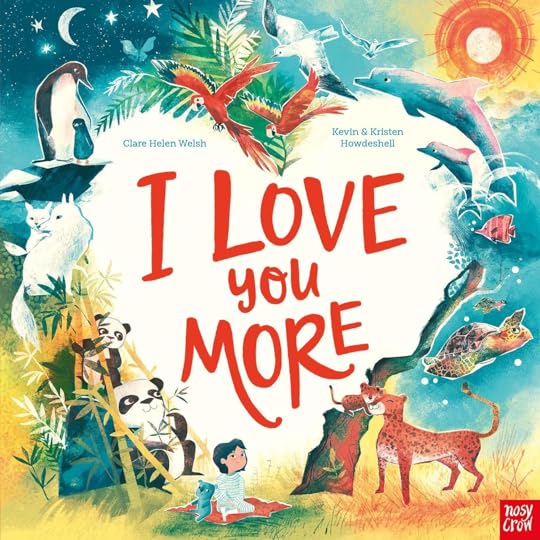
A heartfelt celebration of parental love and the beauty of nature.How much does Mum love her little Rae? More than seal pups and penguins love their icy home, more than dolphins love the boundless sea or lions love to race and roar, more even than all the stars, the moon and the sun combined. In fact, she loves her more than words can even say . . .A beautiful, lyrical story which reassures children that the love between a parent and child is unconditional and everlasting, whilst encouraging them to explore and discover, to change and grow.
2. MEET THE DINOSAURS by Caryl Hart and Bethan Woolvin (18th January)
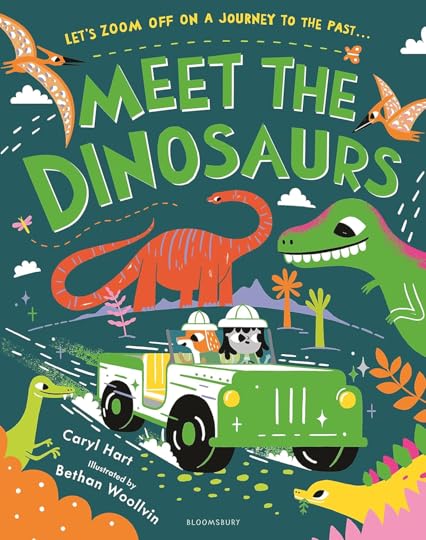
ZOOOOM! We're off on an exciting journey into the past to meet the amazing dinosaurs that once roamed the earth.Join in with the rhymes and get ready to spot all the friendly (and not so friendly!) dinosaurs, from the huge Brontosaurus and amazing Diplodocus to the speedy Velociraptor and scary T-Rex. Little ones will have an action-packed time (and be back in time for bed!) in this fun and fact-packed picture book.
This bold, bright follow-up to the acclaimed picture books Meet the Planets, Meet the Oceans and Meet the Weather is filled with ALL your favourite dinos. Combining STEM learning with a rhyming twist, it's perfect for all would-be palaeontologists.
3.
SNAIL IN SPACE by Rachel Bright and Nadia Shireen (18th January)
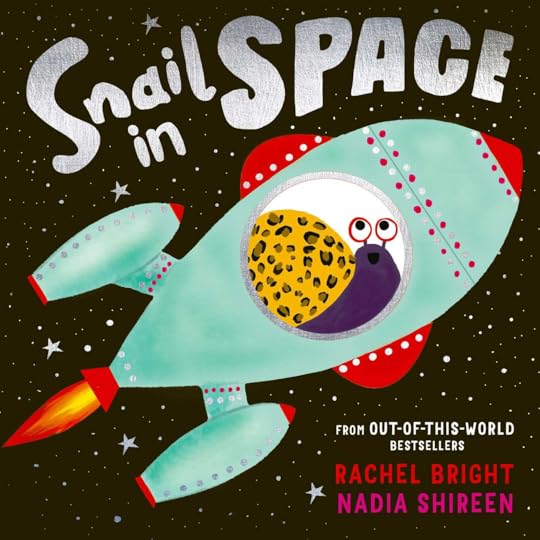
A riotous, rousing celebration of self‑belief starring the one and only Gail the Snail!
Gail the snail has always been told not to dream too big or reach too far, but Gail is not your average snail, and she has plans to be the first . . . SNAIL IN SPACE! Join Gail on her stellar adventure and discover the magic of reaching for the stars and giving it your all.
4.
IT'S TIME TO HUSH AND SAY GOODNIGHT by Chitra Soundar and Sandra Prabhat (1st February)

A dream-ride of a bedtime book, inspired by ancient Indian lullabies.
Travel a lush dreamscape world as a father lulls his toddler towards sleep, weaving a quilt of dreams across the roaring seas and through the inky night - and dealing with some big toddler emotions en route. Sumptuously illustrated by Sandhya Prabhat, and infused with the spirit and flora and fauna of India.
5.
ONE GOOSE, TWO MOOSE by Kael Tudor and Nicola Slater (February 1st)

A brilliantly funny book from debut author Kael Tudor filled with hilarious and bright illustrations from Nicola Slater, the bestselling illustrator of THE LEAF THIEF!
OK, everyone, line up! One goose, two moose, three goose, four. Five goose, six moose, seven goose, more. WAIT!
Welcome to the ice cream shop, where there's a goose line, a moose line and a slightly bossy goose who wants everyone to be IN THE RIGHT LINE, PLEASE!
That sounds easy enough, doesn't it?
This brilliantly funny picture book perfectly captures the chaos of queueing up, and features a fun counting element too.
6.
THERE'S A TIGER ON THE TRAIN by Mariesa Dulak and Rebecca Cobb (February 1st)

You'll never guess what happened
On our trip down to the sea . . .
A tiger in a top hat
Came and sat right next to me!
A little boy and his dad board the train for an EXTRAORDINARY journey. There’s a family of hippos, a band of crocs, a mummy pig and piglets, and a pug in a boa - or two... But who invited the Tiger in the Top Hat? And will Dad ever look up from his phone to notice?
A rhyming romp of a tale from debut author, Mariesa Dulak, and award-winner Rebecca Cobb, (illustrator of The Everywhere Bear) about the importance of living in the moment.
7.
I REALLY REALLY NEED A POO! by Karl Newson and Duncan Beedie (1st February)
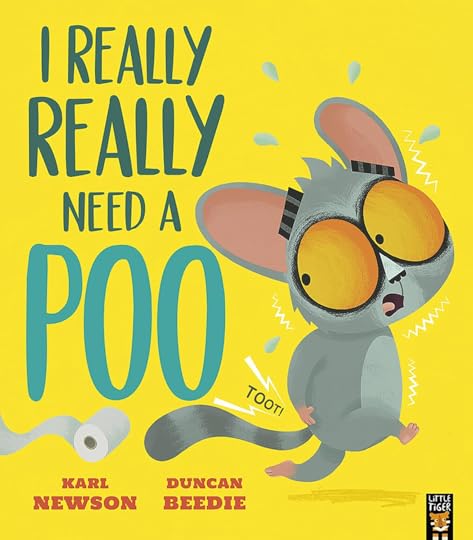
The hilarious third picture book in the internationally bestselling I Really, Really Need a Wee series by the dynamic duo Karl Newson and Duncan Beedie. The perfect toilet humour book for kids!
With plenty of parps and packed with poop, this funny poo book for children and toddlers is ideal for anyone who laughs out loud at the word POO! I Really, Really Need a Poo will appeal to children who enjoyed The Dinosaur That Pooped series by Tom Fletcher and Dougie Poynter, The Dragon with the Blazing Bottom by Beach, and I Need a New Bum! by Dawn McMillan and Ross Kinnaird.
8.
THERE'S A GORILLA AT THE DOOR by Clare Helen Welsh and Sam Caldwell (1st February)

Daphne’s mum and stepdad, Anthony, are throwing a family party. It’s going to be SO BORING! But when a gorilla knocks on the door, a rhino rolls in and a kangaroo pops up, Daphne realises that this party is going to get . . . WILD!
This joyous tale explores themes of belonging in a blended-family environment with a subtle nod to the interconnected animal family we all, as humans, share. In this light, funny read-aloud, children will love the accumulative animal action and will enjoy picking their favourite animal party guest! There’s a Gorilla at the Door! will delight readers of The Koala Who Could by Rachel Bright and Jim Field, You Can't Take an Elephant on the Bus by Patricia Cleveland-Peck and David Tazzyman, and There's Nothing Faster Than a Cheetah by Tom Nicoll and Ross Collins.
9.
A SWIFT RETURN by Fiona Barker and Howard Gray (22nd February)
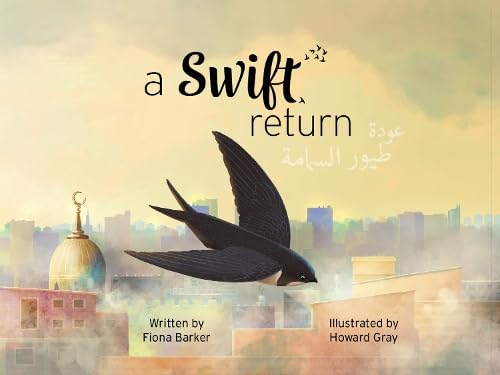
Aria has her head in the clouds. Yusuf keeps his feet on the ground. But when they work together to save a bird who has lost her way, something magical happens. When Swift loses her way on her epic migration. Aria and Yusuf come to her rescue and are inspired to think big about looking after the sky above their city.
Inspired by Fiona and Howard's love for wildlife of all kinds and is the follow-up to Setsuko and the Song of the Sea. Howard's beautiful illustrations evoke a strong sense of place, strengthened by the beautiful Arabic text distilled by Maysoon AbuBlan.
10.
LUNA LOVES GARDENING by Joseph Coehlo and Fiona Lumbers (7th March)

By award-winning Children's Laureate Joseph Coelho, the fifth book in the Luna Loves... series brings alive the art of gardening.
Luna is wowed by her local community garden, there are squashes and runner beans, potatoes and tomatoes and even an apple tree. But each plant hides a story. Grandpa and Nana show her the Callaloo their family grew in Jamaica. It’s time for Luna to grab a trowel and sow seeds that will tell a new story for the whole community as they all discover their connection to the entire world.
11.
BE MY SUNFLOWER, Kathryn Simmonds and Rosalind Beardshaw (7th March )

A warm and reassuring picture book about finding your courage even when you'd rather play it safe.The children are planting sunflowers at school and Carla gets given a seed called Vernon. All the other children's seeds are excited to get out of the packet and start growing. Not Vernon. He knows about slugs, and birds, and thunderstorms. The world is scary.
Carla waters him lovingly, but Vernon is the only seed that doesn't grow into a seedling. "Safe and snug, snug and safe," mutters Vernon, until he realizes how upset Carla is. Vernon understands that he needs to pluck up his courage, push himself out of the ground, and face the world. He needs to do it for Carla. And as Vernon blossoms into a sunflower, he discovers that although the world is not perfect, it can be... wonderful.
12.
KINDESS ROCKS , Sheryl Webster and Robert Garcia (5th March)
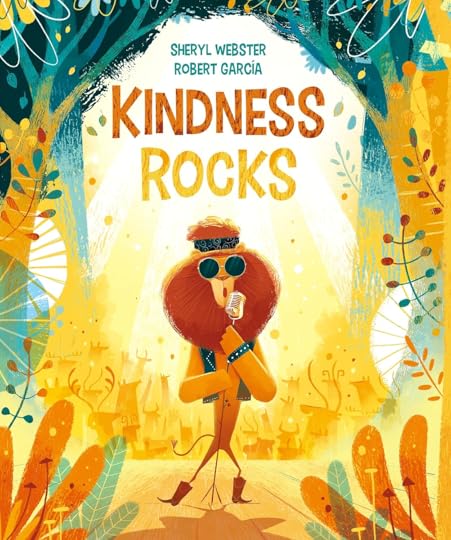
A heartwarming self-discovery journey where a rock star learns that the path to true fulfillment is paved with acts of compassion and connection.
Meet Jonny Heart, a rock star whose melodies bring happiness to all who hear them. When offered stardom by the charismatic Fat Cat, Jonny dives into a whirlwind of fame, glitter, and music. Yet, amidst the glitz, Jonny begins to miss the simple joys of life. An unexpected encounter with Busky Soul, a homeless bear, sets Jonny on an extraordinary journey, as he bridges his passion for music with the power of compassion.
Author Sheryl Webster and illustrator Robert García beautifully unfold a heartwarming tale that inspires readers of all ages to spread joy through acts of kindness. Join Jonny on his quest of self-discovery, and let this enchanting story remind you that sometimes, the smallest gestures can create the most significant impact.
13.
IS IT A SEED? by Emily Davison and Adriena Fong (2nd April)

A fun-filled and creative journey through a child's imagination, as they try to envision the many varied outcomes for a little seed they find. But will they be patient enough to see the end result?
Get ready for a captivating journey of imagination in Is it a Seed? Hold on tight as you join in the excitement of discovering a mysterious seed. With vivid curiosity, our young explorers wonder what it could become. Will it sprout into a lone flower? Or could it transform into something truly extraordinary? As the seed takes root, wild dreams unfold. Could it grow into a sprawling tree, offering shade and adventure? Or perhaps a colossal beanstalk leading to a magical kingdom?
Emily Ann Davison's wonderfully lyrical text is breathtakingly illustrated by Adriena Fong and is a celebration of imagination, growth, and the thrilling anticipation of the unknown.
14.
THE LIBRARY MOUSE, by Frances Tosdevin and Sophia O'Connor (4th April)
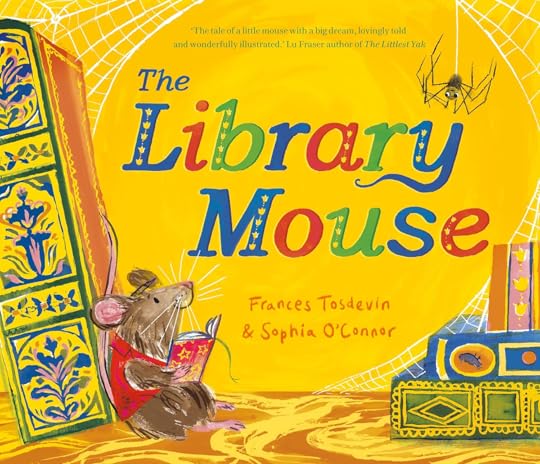
Quill, the mouse, is a dreamer! He longs to write stories and share them with children in his beloved library. But getting his words noticed seems impossible for such a small creature. Can he and his spider friend, Leggsy, find a way to make his voice stand out from the crowd ― or will Quill’s stories remain forever unheard?
15.
HERE BE GIANTS, by Susannah Lloyd and Paddy Donnelly (4th April)
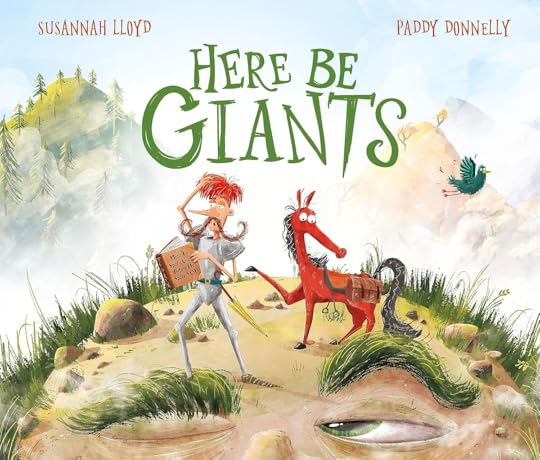
The hero of this book, a rather hapless knight, has just come across a most fortuitous find.
All the other knights in the kingdom say he could never track down a giant, but he has something quite special… a book with all the tips he needs to help him on his quest, and he couldn’t have found it sooner, for here be GIANTS!And so, with his long-suffering horse, and his nose in his precious book "How to Spot a Giant Before He Spots You", the knight sets off to find a giant.He looks out for BIG things, but all he can find are tiny forest creatures and an exasperated damsel who are all much too small. Next, he tries going UP. He obliviously passes a beanstalk and scales a great rock instead (the giant’s leg). More obstacles appear: thunder (the giant’s tummy rumbling), fierce winds (the giant hungrily sniffing him), and rain (the giant’s drool).Undeterred, the knight whips out his trusty umbrella and takes shelter in a grassy meadow (the giant’s leafy sandwich!) … Will this unobservant hero see what’s in front of him before it’s too late?Young readers will love the “he’s behind you!” feel of this laugh-out-loud story in this follow-up to Here Be Dragons from Susannah Lloyd and Paddy Donnelly.
16.
BRIAN THE LION WHO LEARNED by Frances Stickley and Chris Chatterton (11th April)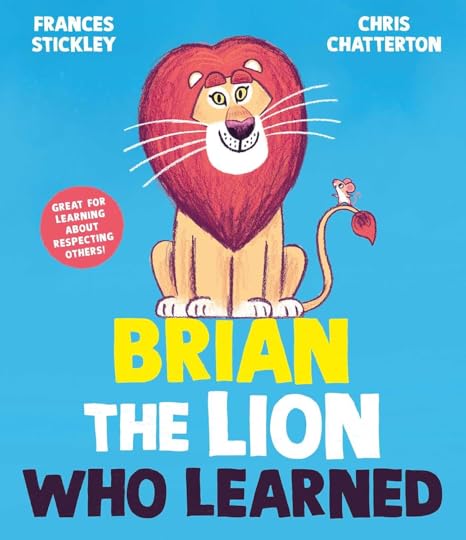
A warm and wise picture book that's great for learning about respecting others - illustrated by the bestselling illustrator of The Hugasaurus.
Brian the lion is the mightiest, bitiest beast in the jungle and he's certain all the other animals LOVE him... Until one day he finds out they're all just too scared to stand up to him! Can the King of the Jungle learn to change his ways and think of others?
A delightful and gently thought-provoking rhyming text by acclaimed author Frances Stickley is perfectly paired with gorgeously expressive illustrations from bestselling illustrator Chris Chatterton.
17.
BIG BAG WOLF INVESTIGATES SCIENCE by Catherine Cawthorne and Sarag Oligive (25th April)
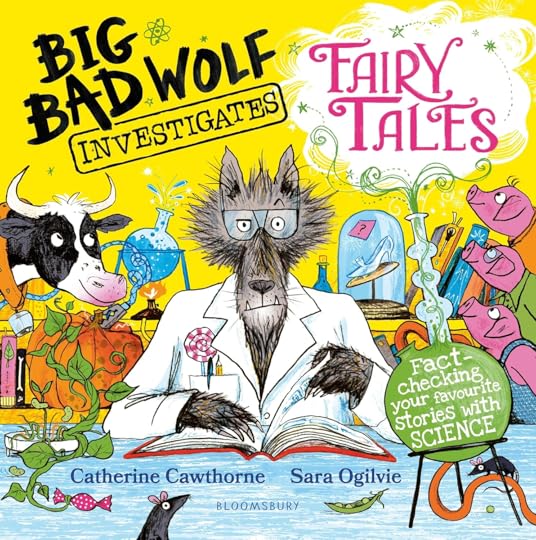
Join the Big Bad Wolf as he debunks our favourite fairy tales with SCIENCE! Written by the hilarious Catherine Cawthorne and illustrated by award-winning Sara Ogilvie.
Did a princess really feel a tiny pea through a mountain of mattresses? And could a pumpkin actually turn into a carriage to carry Cinderella to the ball? Of course not! It's all a load of fairytale NONSENSE! Or is it . . . ?The Big Bad Wolf is on a mission to find the truth behind these tales, and clear his name in the process.Combining STEM topics with classic stories children know and love, this is perfect for inquisitive children always asking big questions!
18.
RAINBOW FLAMINGO by Catherine Emmett and (23rd May)
This one young flamingo, Adele was her name, Knew under HER wings something wasn’t the same. Whilst unremarkably pink from outside … Inside were some colours she struggled to hide!Adele wants nothing more than to fit in. And she is DESPERATE for her feathers to be pink like all the other flamingos. But as the flamingos prepare to perform in the fabulous Flamboyance parade, Adele begins to discover that standing out isn’t so bad after all . . .
This heart-warming story will show children the pride and joy that can be found in being yourself.
19.
MOON BEAR by Clare Helen Welsh and Carolina T Godina (6th June)

In this enchantingly illustrated, almost wordless picture book, a story of courage and creativity unfolds when a girl who is afraid of the dark meets a magical moon bear who is afraid of the light.
Ettie is afraid of the dark. Every night without fail her Mummy calls, 'Time for bed, Ettie!' The curtains pull shut, her bedside light blinks out and Ettie is surrounded by the deep inky cloak of the dark…
… Until one night, the bright moon shines through a crack in her curtains. Cautiously, Ettie reaches out a hand to touch the light and is surprised to find that it leaves a glittering mark on her hands. Overcome with curiosity and joy, Ettie dances around her room, drawing with this magical beam of moonlight. She pulls open her curtains and begins to connect the stars in the sky as if they were dots. A moon bear slowly appears in the sky, and when she connects the very last dot, he bursts into life, standing in Ettie’s very own bedroom.
The bear and Ettie begin to play and explore Ettie’s room. But when Ettie switches on her torch, the bear hides away in fear. Together, Ettie and the moon bear help each other face their fears. One is afraid of the dark and the other is afraid of the light.
This touching story encourages little ones to be brave, in the dark and beyond, empowering them to face their fears. This beautiful book also teaches them the power of visual communication – it’s a story that says so much with only a few words, and speaks instead with comforting illustrations to soothe and reassure.
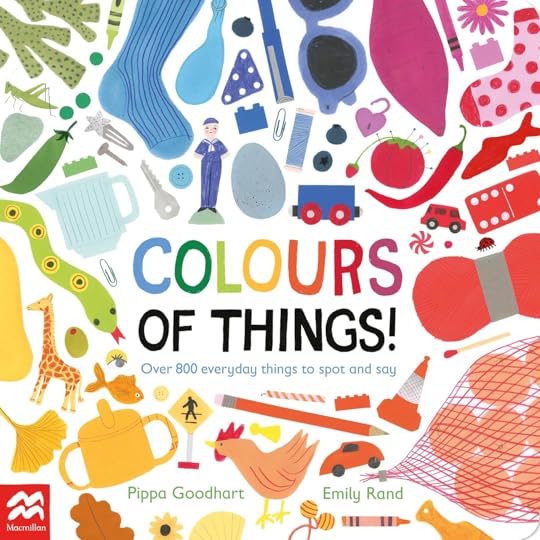
Colours of Things! is a stylist preschool picture book which will encourage children to practise choosing, categorising and spotting familiar everyday objects. With an engaging, rhyming text by Pippa Goodhart, author of the bestselling You Choose! series, and gorgeous rainbow illustrations from award-winning Emily Rand, little ones will love searching the colourful scenes over and over again.
21.
MONSTERS AT SCHOOL by Laura Baker and Nina Dzyvulska (27th June)
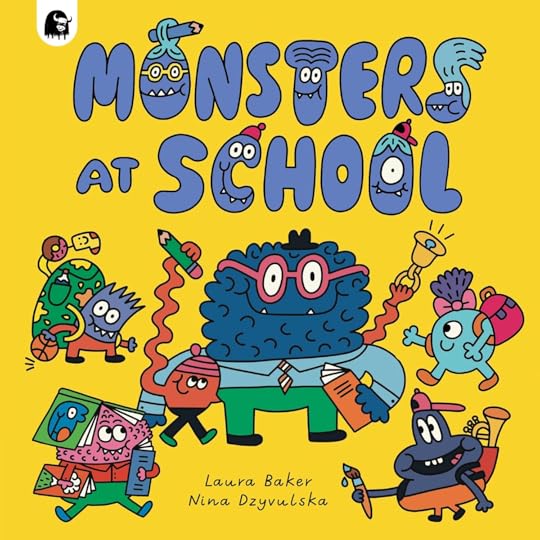
Fluffy monsters, scruffy monsters, monsters on their way. Rucksack monsters, turn-back monsters, off to school today! Children will love this super-fun title packed with hilarious monsters on their first day of school! Follow the cheeky little monsters as they have lessons, go wild at playtime, eat a messy monster lunch, and learn and play together – and watch out for the silly dog monster hiding on every page!
The simple narrative with fun wordplay and a gentle rhyme is perfect for reading aloud, ideal for preschoolers and early readers as they build up their vocabulary and reading confidence. This bold, bright and playful book is sure to be enjoyed time and time again by young readers as they are thrilled by the funny escapades of the monsters at school!
22.
BEA'S BAD DAY by Tom Percival (4th July)
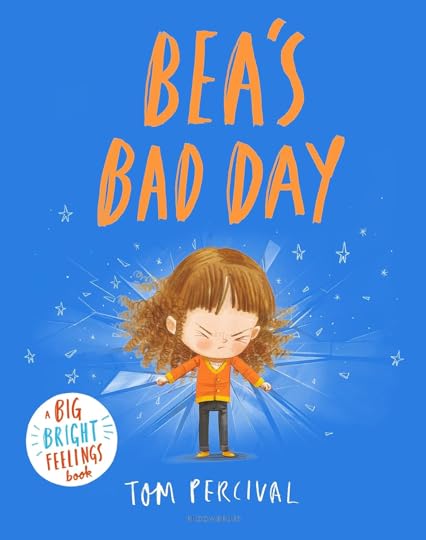
Bea is REALLY looking forward to her birthday … until things begin to go wrong. A book about managing disappointment, from the bestselling author of the Big Bright Feelings series.
Be open, be honest, be you! Big Bright Feelings for little people.
Bea CAN'T WAIT for her birthday. There are only three days to go, and everything is going to be PERFECT! Then snow begins to block the roads … and everything begins to go wrong. With no party, no cards, and maybe even no cake, can Bea find a way to be OK – even in the middle of a really BAD day?
This reassuring and funny book is the perfect springboard for talking to children about setting expectations and finding balance amidst disappointment.
23.
THE DINOSAUR WHO POOPED A SUPERHERO by Tom Fletcher and Garry Parsons (18th July)
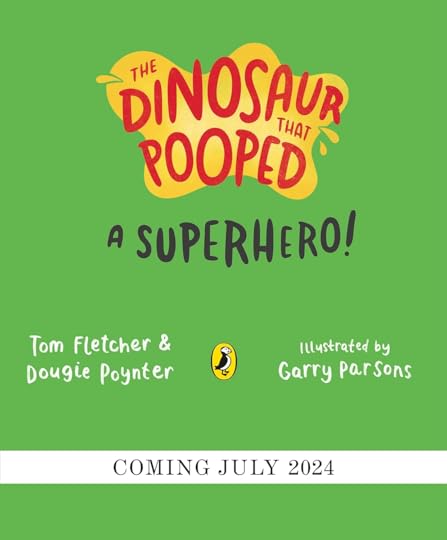
Danny and Dinosaur went to the city to see the spectacular sights -the palace, the people, and all the skyscrapers that soared to sensational heights...
Join Danny and Dino on a superhero-filled adventure as they try and save the city from a supervillain called DESTRUCTO!
The latest in Tom Fletcher and Dougie Poynter's much-loved series, this poop-filled extravaganza is brought to life by the preposterously talented illustrator Garry Parsons.
24.
LITTLE MOUSE IS ABSOLUTELY, COMPELETLY, TOTALLY FINE! by Sharon Hopwood and Marisa Morea (15th August)
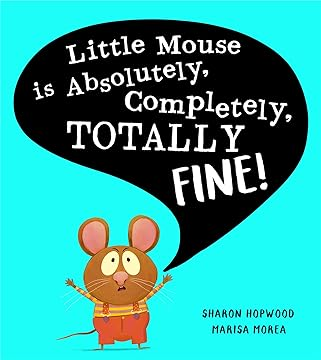
Little Mouse is Absolutely, Completely, Totally Fine! Or is he?
Have fun finding out in this fun-filled and empowering picture book that encourages children to become body language detectives, develop empathy and express their emotions as they meet an irresistible cast of mice with BIG emotions . . . happy, sad, confused, scared, angry, calm . . . Look at each mouse and see what body language and expressions you can spot!
Tired mouse. Timid mouse. Ready for the world mouse?
Curious mouse. Furious mouse. Having no success mouse.
Amused mouse. Confused mouse. Such a very jealous mouse.
Children will love the bouncy rhyming text and charming Richard Scarry-esq illustrations, packed with detail! Perfect for neurodiverse and neurotypical children alike.
CLARE HELEN WELSH
Clare Helen Welsh is a children's writer from Devon. She writes fiction and non-fiction picture book texts - sometimes funny, sometimes lyrical and everything in between! Her latest picture book, 'THERE'S A GORILLA AT THE DOOR,' is illustrated by Sam Caldwell and published by Little Tiger Press. It's a joyous tale that explores themes of belonging in a blended-family environment with a subtle nod to the interconnected animal family we all, as humans, share. You can find out more about her at her website www.clarehelenwelsh.com or on Twitter @ClareHelenWelsh . Clare is represented by Alice Williams at Alice Williams Literary.
January 15, 2024
Could overlooking some of your physiological needs indirectly be holding you back from completing creative projects? Oh No, George! realisation and ADHD by Juliet Clare Bell
I happened to read Oh No, George! by Chris Haughtonin bed last night (having not read it for about three years).
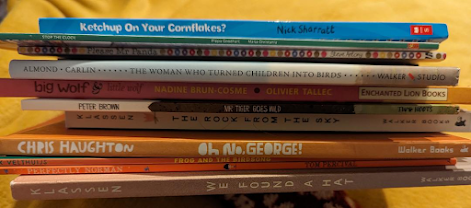
My bedtime reading for the last couple of weeks
Do you ever get that thing where something you’ve read loadsbefore suddenly resonates in a new way?
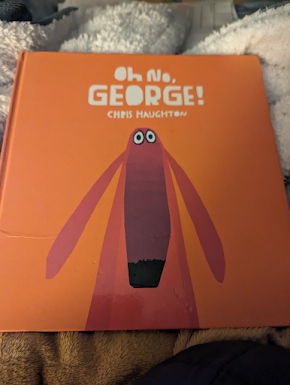
Oh No, George! (c) Chris Haughton (2012)
…because for the first time (that I remember at least; I mayhave read it and completely forgotten that I had) I saw the quote before Chris Haughton's dedication:
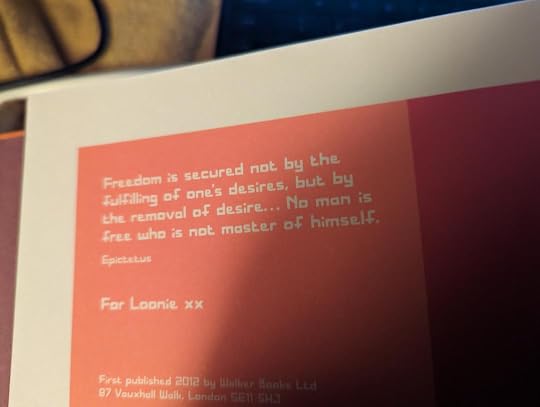
“Freedom is secured not by the fulfilling of one’s desires,but by the removal of desire… No man is free who is not master of himself” Epictetus.
Without throwing myself into ADHD books, research, podcasts,getting some really good ADHD help over the last year and then trying somethingreally new back in August, I would not have understood that quote at all. Butsuddenly it illuminated perfectly how the removal of a specific desire had allowed meto uncover something fundamental that was getting in my way (which I'd not realised) and which I couldfinally work on, freeing me to finish creative projects in a new, improved way. What’s holding you back (if something is) will be different from what was holding me back but thinking about your physiological needs and whether they are really all beingmet might help you uncover it so you can thrive creatively…
So back to Oh No, Clare (sorry, George)!...
Harris (George’s human) asks George if he’ll be good whilstHarris is out:
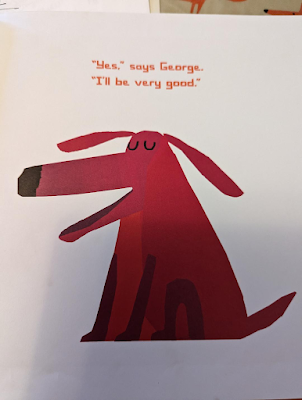
Oh No, George! (c) Chris Haughton (2012)
He’s (I’ve) even got his (my) eyes closed -I’ll genuinely foolmyself into believing I'll be good/stick at something. Once he’s opened his eyes, he’s already moved tohoping rather than knowing…
And then when he inevitably stuffs up, here comes the ADHD disappointmentof having done it again…
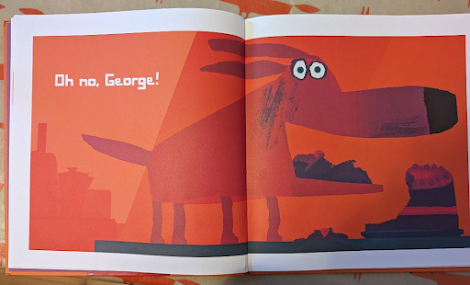
Oh No, George! (c) Chris Haughton (2012)
But he’s forgetful, too (ADHD, anyone?) and he soon movesfrom mistake to mistake. The next time he’s tempted…
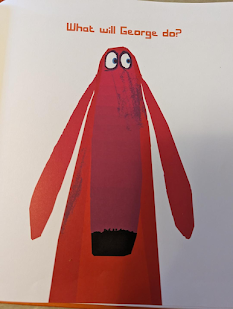
Oh No, George! (c) Chris Haughton (2012)
he’s even got the ADHD eyes… those ‘I could just quickly dothis other thing and still be able to make my deadline’ eyes…
Eventually, after a LOT of distraction and being found out comesthe real ADHD shame, perfectly encapsulated by this page:
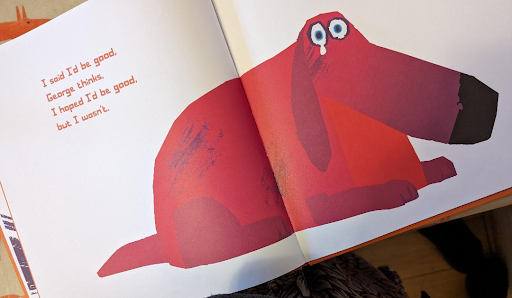
Oh No, George! (c) Chris Haughton (2012)
And the cycle repeats. I absolutely love this book andalways have done -as have my children and all the children I’ve read it with. It’sbeautiful, funny, poignant (but I'd never seen myself in it until this time round)…
We don’t have to feel sad (for long) for George. He forgetshis mishaps pretty quickly. We’re seeing a snapshot of their lives together andHarris is clearly very familiar with George and his urges. Harris and Georgehave a lovely relationship and Harris still loves George when things go wrong(every ADHDer needs a Harris!). BUT happily for George -and Harris, Georgedoesn’t have adult responsibilities and longer term hopes and dreams that he’sjust aware enough of to know that he’s messing up (like lots of adults withADHD do). George doesn’t need to be free (a la Epictetus) to pursue hisprojects. He can have an awesome life with the ever-understanding Harris. But whatabout us?
Like the lovely George, I had also always been happy and optimisticabout getting it right this time (whatever ‘it’ is) but for me, it was alwaysfollowed by ‘if I can just…’ I was George-level un-self-aware: self-awareenough to feel shame when it went wrong (which it did, a lot) it butun-self-aware enough that I genuinely thought I was self-aware. I was definitelyGeorge (until recently). I knew what I was meant to do/not meant to do, but I couldn’tmake myself do it/not do it. But unlike George, I wasn’t a really appealing dog,beautifully crafted by Chris Haughton that we all love and feelcompassionate towards. I was an adult with adult responsibilities who kept notshowing up how I wanted to -in writing and in life, but without the lovelyHarris to help pick up the pieces.
Do you find yourself thinking
This is the year I’m going to be different/do thingsdifferently?
I know I can write/illustrate/create more, be more, bebetter
[followed by the inevitable] if I can just…
use better systems, have a better year plan, be a new andbetter version of myself?
I always thought that. Each year, each new productivityplanner (there are very, very many), each new conference, retreat, goal-settingsession, in fact pretty much every day…
But
What if we’re trying to treat the symptoms and not thecause? Maybe we’re starting way too high up in our hierarchy of needs? Maybe wereally need to attend to what’s near the bottom?
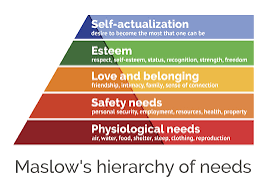
And if you’re interested, check out Translating ADHD’spodcasts on a slight reimagining of Maslow’s Hierarchy of Needs for people with ADHD… (and episodes 149-153).
Physiological needs
How aware are you of your physiological needs? It mightsound like a silly question but I think I was pretty unaware for most of mylife until the powerful combination of ADHD and perimenopause left medangerously forgetful, brain-foggy and lacking in the ability to follow eventhe most ordinary routines (keys in the fridge, frozen food in the cutlerydrawer, leaving the hobs on, forgetting to lock up). You can’t be responsiblefor children and be forgetting to turn off the hob… so things that had seemed advisablebut optional (getting enough sleep etc) became absolutely necessary.
The needs, discussed below, whilst being considered crucialfor people with ADHD, are really important for everyone -and fit pretty neatlyinto Rangan Chatterjee’s Four Pillar Plan to a healthier life, too.

The 4 Pillar Plan (c) Rangan Chatterjee (2018)
So maybe think really honestly about these needs…
Are you really getting enough sleep and at the right time -foryou?
I can’t burn the candle at both ends like I did up untileven three or four years ago. It’s different for different people and atdifferent points in your life. I used to be a night owl but I love waking up atsix to write which means being asleep as close to 10pm as possible. I'm a wreck for days now if I go to bed later. But most of the time now, I wake up, not feeling tired (which is a real revelation for me).
Are you getting enough movement -for you? And is it movementyou like? (A note: I need to not think of it as exercise, because I’vealways connected exercise with losing weight/changing shape/being a betterversion of myself. For me, movement now is to do with being able to think more clearly-and that’s a positive motivator as my job is mostly about thinking! Mymovement comes mostly in the form of: [1] walking to placesI need to get to, fast (so I'm on a mission); [2] dancing unfiltered to loud music on my own (usuallywith a disco light I can move from room to room) to get me in the proper statefor sitting down at my desk and writing if I feel a bit sluggish or tired ordon’t feel in the right mood yet; [3] very gentle jogging on the spot to get myfocus back on my work if I’m feeling a bit jittery because I’mfinding it hard; and [4] regular moving of my feet back and forth on my woodenroller foot massager (costs about £6).
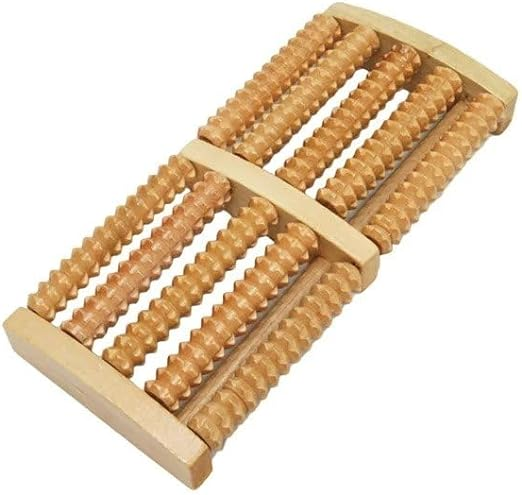
These are the types of movement that work for me. I wanted to be theperson who wants to go for a walk for its own sake, especially as there’s alovely park five minutes’ walk away but I’ve learned that it’s not the kind ofmovement I like for its own sake. If you stay curious and non-judgemental, canyou think of anything you’re doing because you ‘ought’ to like it and if so, ifthere’s anything you could swap it for that is something you actually do like?It really helps to keep it up when it’s not about self-sacrifice…
Putting the right things -for you- in your body.
For people with ADHD that may well mean: Vitamin D, omega 3,iron, lots of protein (including at breakfast) and very possibly stimulant (or non-stimulant)ADHD medication. And for people who are perimenopausal, this may well mean hormone replacement therapy (HRT; I absolutely could not function without it.) As someone who is still on the waiting list for stimulant medication,I’ve tried all the other ones and they’ve been helpful. But by far the mostlife-altering thing I’ve found has been not eating sugar (except fruit). Ican’t stress enough that it is nothing to do with trying to change shape (pleaseread Sonya Renee Taylor’s excellent The Body is Not an Apology
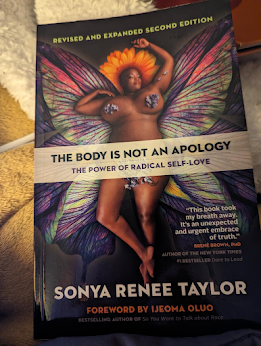
The Body is Not an Apology. 2nd Edition (c) Sonya Renee Taylor (2021)
or listen to the Sonya Renee Taylor in conversation with Brene Brown). I had noticed that I seemed more sluggish/brain foggy/forgetfulwhen I was eating lots of sugar (which I’d do when I was feeling stressed aboutanything) and I decided to do an experiment for a week and stop eating sugar atthe same time as stopping scrolling on my phone before 11am. Within three days,I noticed a big difference in terms of my focus. And I realised that it wasn’tso much that the lack of sugar improved my memory, but that I was no longer feelinganything like as impulsive as I’ve felt all my life (and I’ve never had thedesire to scroll on my phone since, either, having scrolled for hours every dayprior to experimenting with it). Prior to that, if I was writing and got to atricky part and started feeling discomfort, my thoughts would have immediatelyturned to chocolate as a way to make me feel better, or failing that, scrolling.Once I’d stopped eating sugar, I found that when things got hard when I waswriting, I didn’t have that jittery compulsive feeling, and my thoughts didn’tturn to external ways of removing the discomfort. And something quiteextraordinary (for me, at least!) happened…
I have learned to tolerate discomfort and sit withuncomfortable feelings! Sophie Hannah, poet, novelist and writing coach,hastalked about this: if you’re trying to write and you start feeling uncomfortablethoughts, what is the worst that will happen? You’ll feel uncomfortable. What’sthe best that will happen? You’ll finish the piece that you’re writing. Nothaving something to take away the discomfort immediately in the form ofchocolate or scrolling has allowed me to feel more comfortable with discomfortand finish (and even dare to start) projects that I wouldn’t have finished (or even dared to start) before. I would never have guessed that refraining from eating sugarwould reduce my distractibility and impulsivity, improve my focus and help melearn to tolerate discomfort -in an easy way. But it has. Maybe once I’m on stimulantmedication, I’ll get a similar level of calm and lack of distractibility withthe increase in dopamine. I’m all for desire -wanting something, and workingtowards getting it as long as it’s not hurting anyone else, but many of us withADHD have experienced the unpleasant side of desire that feels all-consumingand out of our control. We so often go for the big emotions because they giveus that dopamine hit but it’s a very short-term hit and having experienced theabsence of clawing desire for the last four months, I have to say I’d choose peaceand control, or Epictetus’s freedom, over chocolate -even as a lifelongdevotee.
Are there any changes to putting things or not puttingthings into your body that might help you with your focus, concentration,distractibility? Again, this has nothing to do with changing body shapeor appearance, but has to do with thinking more clearly so you can be morecreative.
Mindfulness
Finally, it’s worth thinking about how mindfulness in itswider form might help you (not directly physiological needs but still relevant I think). Personally, I really struggle with sitting-downmeditation or yoga as I don’t feel still enough for it so I’ve looked for otherways to feel mindful. Think about what makes you still? What helps youfeel at peace? It might not be what works for someone else. For me, it’s darkand water, and I’ve learned to incorporate both into my life during my workingday and week.
Writing in the dark stills me like almost nothingelse. I do it at 6am each morning, in bed, and it’s like a magical time whereit feels like all the world’s asleep (including my internal editor). Perfect.
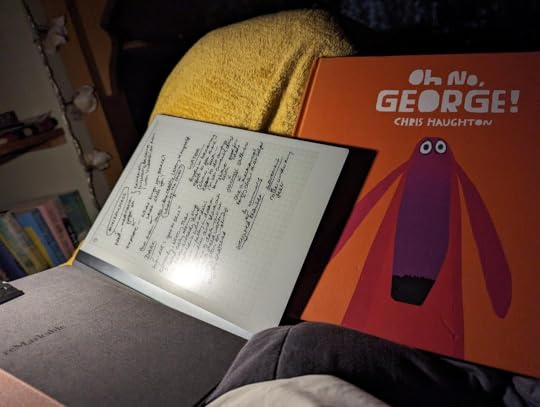
And water -works for me. Top three water/work combinations:
3 Listening to waves sounds (or even rain) through headphonesas I write or read
2 Writing by water -there’s a perfect spot by the canal intown where I write once a week for hours
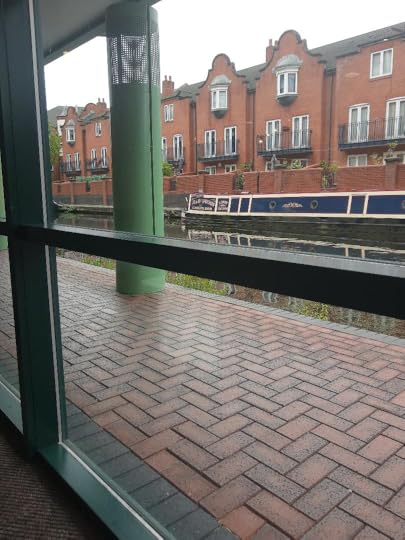
1 Jacuzzi -joint first with writing in the dark for feelingstill. Who knew? The bubbles mean you are constantly being moved around justenough (so you don’t have to be making those movements yourself as you wouldoutside of water) and it’s noisy enough to block out most of the conversationaround you and to still your own mind. It’s like the humming, vibrating babychairs for fretful babies. Perfect. It’s where my mind is the stillest it evergets and I can think really clearly about my work.
I am extremely aware of how fortunate I am and the privilegeI have in being able to access these things, including a gym (which I literally only use for writing, in and out of the jacuzzi; if a jacuzzi would help you think, lots of Sports Direct gyms have a jacuzzi and cost £20 per month including all classes); the right kind of ADHD/perimenopause nutrition; an ADHD assessment; ADHD medication (which I'll get once I finallyget to the front of the waiting list) and Access to Work support from the Department of Work and Pensions. If anyone wanted help with where or howto get ADHD support (particularly in the UK), please get in touch and I’ll tryand get some information up on my website shortly, including a guide to getting Access to Work for ADHD, which I wrote but took out as the blogpost was already too long.
I’m glad George lacks the self-awareness to change -because it’sin his nature to be impulsive and he has such a great time and he’s going toforget his shame really quickly and get back to living his best life. And he’sa dog. In a story (thank you, Chris Haughton for such a wonderful book). But asadults with responsibilities and wanting to write and or illustrate our stories,and deadlines (and for some of us, ADHD), attending to our physiological needsmight be a good place to start exploring Epictetus's possible freedom…
If you have any thoughts on what has helped free you up to make the most of your creativity, or would like to share what's been getting in your way and if something has helped, please let us know in the comments below. Juliet Clare Bell is a children’s author of over 35 picture booksand early readers and is also branching out into some longer writing projects whichshe is now confident she can actually finish… She does author visits in mostlyprimary, but sometimes secondary, schools, and you can find her atwww.julietclarebell.com
December 31, 2023
A New Year Brings New Challenges by Chitra Soundar

The Cambridge dictionary defines a challenge as:
something that is difficult and that tests someone's ability or determination.
And this is true. We face many challenges in our lives that tests our ability to overcome them and even tests our determination. When we give up, regardless of our abilities, we fail.
As a new writer all those years ago, I had the determination to write picture books. More than raw talent. I’m not one of those writers who writes a perfect word in a perfect sentence making up a perfect picture book in the first setting. (Does this mythical writer exist? If so, I don’t want to meet them).
I had determination because I loved picture books. I wanted to write them. I read hundreds of picture books and wrote hundreds of really bad stories. Perhaps I didn’t have the ability right away. But lucky for us writers, ability can be developed over a period of time, if only you had the determination to stick with it.
I learned by reading, writing, getting feedback from course leaders and peer groups. I never gave up. I just kept writing and writing and writing and through all this I was submitting too. If one idea grabbed my interest so much that I couldn’t shake it off, I held on to that idea. I wrote it and rewrote it in different forms and shapes. I modelled my text like an artist would model their paintings of great masters.
Until one day I got an acceptance. Not in the writing of it – but for the idea. And the editor, showed me how to cut my words, kill my darlings, and spruce up the word salad (take your pick of metaphors, I’ve got loads where this comes from) with an example of one spread.
It was my story and it was all there in my 1000 word essay. But she cut through all of that extra verbiage and created the first spread in 10 words. I’m a quick learner. Over the weekend I converted my 1000 words picture book novel into a 100-words PB manuscript. That was my first picture book and it did well. That story had stuck with me for years. I got some amazing rejections – a very famous editor from a big publishing house in the US sent me a 2-page rejection letter (if you must know, I’ve still got it). And my faith in that story paid off.
 Illustrated by Priya Kuriyan and published by Tulika Books, India.
But the lesson from that story is – don’t give up. Get better at your craft by putting in the work. Malcolm Gladwell’s famous 10000 hours of slog.
I’m still working at my craft, my ability to write picture books. I’ve published 20 picture books since – in India, UK and the US and they have been translated, shortlisted and even won prizes. But I’m still determined to make my craft better. I still work on every text for months and years, share it with my peer group, keep at the ones that tug at my heart and wake me up at night.
If writing picture books was easy, and it didn’t need determination and improving my ability, then I wouldn’t be doing it still. I would have gotten bored and gone to something else. If I hadn’t had the success I had about 6 years into my struggle, I’m not sure how much longer I would have stuck at it. Perhaps all my life, perhaps not after a decade…
But this is where the ability part comes in. Sheer determination is not enough. You have to listen and be open to new ideas, feedback, improving your craft. You have to brace yourself and share it with your peer group, send it out knowing it will be rejected, enter competitions (good ones!) and read, read, read. Compare your text with the masters and analyse why you can’t do what they do.
If you're not sure why you feel you're getting rejected after many years of work, also be aware the market is changing, what's being published is changing every day, and the readers are changing. The world is a different place every day and the kids of today need different books for today's world. You have to adapt with it and when your craft is solid, it will have the ability to flex and help you adapt.
So how do you improve without paying thousands for a course or even finding a critique group. Self-help will always be the first step towards improvement. Here is one of my analysis / improvement tips. It's in two parts - so try both one after the other. Don't skip the steps.
Writing Exercise 1
Step 1: Take a really good PB you love. Choose one that’s in the genre / tone / cultural context that you’d like to write in. Make sure it's critically acclaimed and not just one of your nostalgic ones. Find critically acclaimed picture books from places like Book Trust recommendations, Guardian children's round-ups, CLPE's recommended list, reputed magazines that cover books like Books for Keeps and reputed award lists like the Yoto Carnegie, IBC and Jhalak prize.
Step 2: Read this PB a few times.
Step 3: Copy it out word for word (by hand or type it up – doesn’t matter).
Step 4: This is the important step. Now put it away and tell the same story that you just typed up in your own words. Don’t judge it yet. Just tell the same story in your original words. Put it away.
Step 5: Come back the next day and compare what you typed up with what you wrote. What is the difference? What exactly did they do that you couldn’t replicate?
List the differences and analyse if
(a) It’s a craft thing. Was it the sentence structure or word choice?
(b) Is it a writer’s voice – what goes into it? Why is their text more appealing.
(c) Is it their unique way of looking at the world – are their metaphors and analogies and word choices different?
Is it one of the above or some of the above or all of the above? That’s one of the craft / ability areas you need to develop in yourself.
But how do you do that? Here is Writing Exercise 2. This must follow the above. No shortcuts on the path to glory.
1. Pick a topic that is adjacent or similar to the PB you copied.
2. Go through your analysis – what was missing last time. Read and remember and be conscious of your shortcomings.
3. Now write the new story in your own words – keeping in mind the things you need to improve.
4. Put it away for a couple of days.
5. Read it again after a few days and compare it to the master!
6. Compare it with your rewrite of the master in Exercise 1.
7. Analyse the following:
a. Are you making the same mistake?
b. Have you improved on the things you said you were lacking?
c. Is this text better than the one you wrote in Exercise 1
Repeat these two exercises with a few different acclaimed PBs you love. See if your craft is improving. See if you are finding your own style even though you’re emulating the best.
Hang on, don't run away to read and write yet. I've one more thing to add.
So now back to the Challenge! It’s a new year and a time to surge forward with determination. Last year this time, I set a challenge to the readers of PB Denners. Read it here.
There are not that many books about “being patient” for young picture book readers. Perhaps you can learn the art of patience by writing a story about it? That’s your new year’s challenge from Picture Book Den!

Be honest, how many of you actually did it? Did you submit it? Did you get it published, tell us about it. If you didn’t do it, why not? But I’m patient. You can have a go this year if you want.
Right, but that’s not the challenge I want to set you this year. My challenge is simply
do Exercise 1 and Exercise 2 for at least 4 books this year. That means by end of the year you will have at least 4 manuscripts that you can work on!C’mon! You can do it! You have the ability to improve your ability and the determination to overcome your own procrastination!

Happy New Year to you all and hope that peace returns to Earth and picture books bring joy in times of strife and hardships.
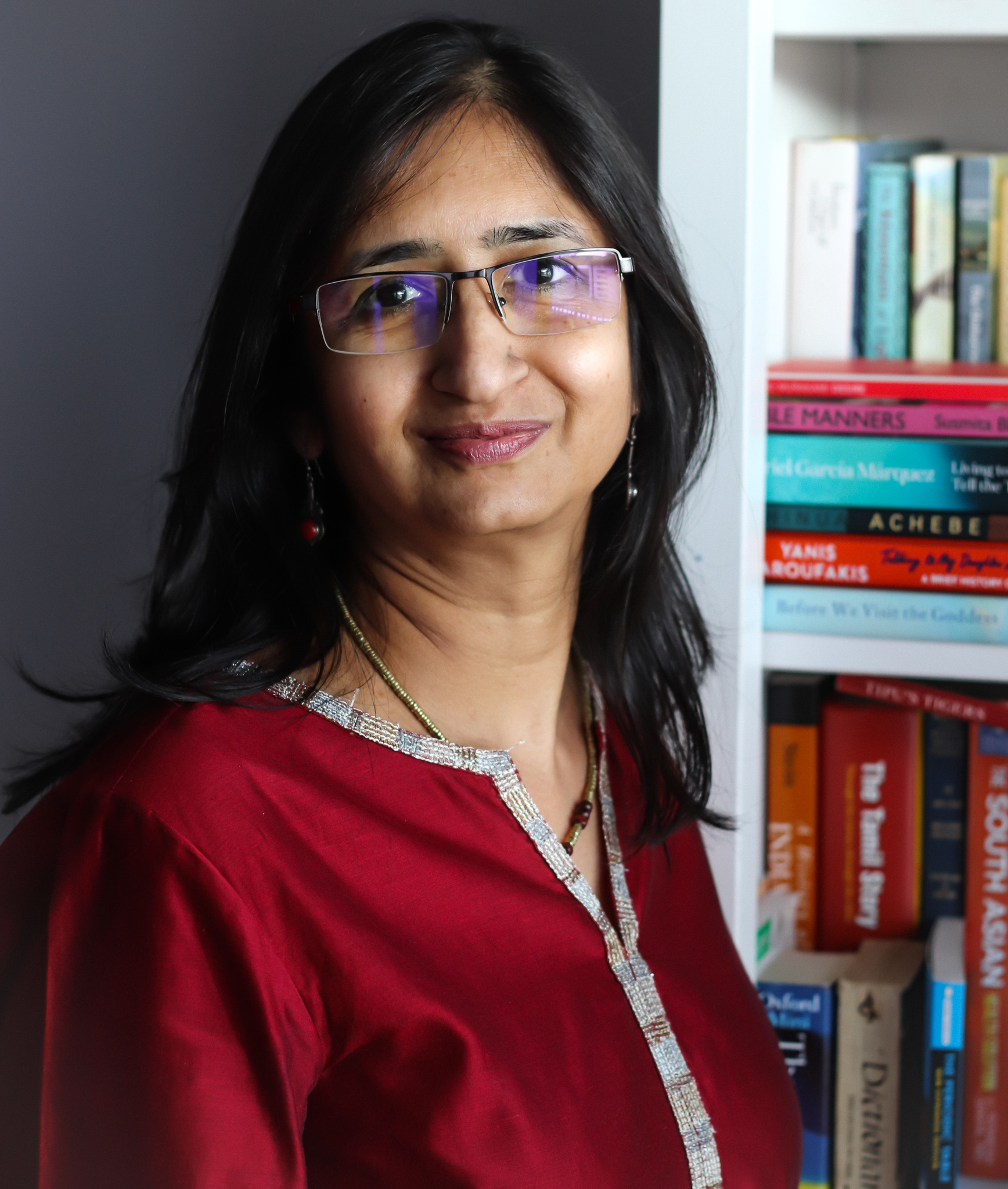
Chitra Soundar is an internationally published, award-winning author of children’s books and an oral storyteller. Chitra regularly visits schools, libraries and presents at national and international literary festivals. She often runs writers' surgeries, courses and teaches writing to writers, teachers and children. She is also the creator of The Colourful Bookshelf, a curated place for books for children by British authors and illustrators.
Find out more at http://www.chitrasoundar.com/ and follow her on X (ex-twitter) here and Instagram here.
December 17, 2023
The Highlight of Our Writing Career - The Picture Book Den
 It's that time of year when the Picture Book Den team get together and create a group post.
 This year we wanted to share with you a highlight of our writing career. We hope you enjoy and wish you all the best for this festive season and a fabulous 2024!
Moira Butterfield
There have been highs and lows in my writing career and there still are. It's part of the gig. Sometimes it feels as though, with every book, I must restart from scratch. I forget that I have any kind of track record and it feels like I am at the bottom of the mountain again. It's then that I need to bring out my precious gems to look at - those surprising and unasked-for nuggets of good feedback from everyday folk that I store in my memory. These may seem trivial but are, in fact, priceless to a writer - like magic fuel that can keep us going when our tanks seem empty. Here's a very precious one - When I moved to a new house I met my new neighbour. She asked what I did for a living, looked amazed and said 'You're the writer of my boy's favourite book. It's up in the attic now. We read it to him so many times!". Yes - I did feel old because the boy in question was at 'big school' by then, but I also filled up with pride that I had done this. So make sure you pass on good feedback to your favourite authors. You'll be giving them a shiny career highlight!
Pippa Goodhart
Ah, so many highlights after all these years! Most of them courtesy of my You Choose picture books illustrated by Nick Sharratt. Nick and I collect images of the tattiest copies of those books, ones loved to literal bits! But there was also the young man who is now a professional ballet dancer because, his mother tells, aged seven he saw the image of the ballet dancers in You Choose and said, 'I want to do that'. And the Ukrainian refugee child totally absorbed in choosing his own life in a copy of You Choose. And more. But I'm going to choose a topical and current You Choose highlight.
Nick and my new You Choose Christmas book has the two of us, large and gloriously attired, on its final spread -

We didn't manage the Elvis jumpsuit and Flamenco dress, but we did try to match the headwear when we did signing session for the book last weekend!

Chitra Soundar
I'm a picture book writer at heart. My first picture book came out in India in 2010 and it was a masterclass in editing. With the editor's advice, I edited a 1000 word manuscript into a 100 word manuscript over a weekend and to my delight that picture book had an amazing run. Since then I've written over 20 picture books. The highlights are so many... My series of Farmer Falgu books (illustrated by Kanika Nair) brought me Indian and international recognition. Pattan's Pumpkin (illustrated by Frané Lessac) is such a hit with children, parents and teachers. Mummy-baby books I wrote for Lantana Publishing, illustrated by Poonam Mistry - You're Safe with Me (the first book in the series) was shortlisted for the Kate Greenaway Medal and You're Snug with Me got shortlisted too, which is a huge honour.

But the most recent highlight I feel is my proudest moment, because even though I've been publishing with Walker Books, my first picture book with Walker Books (the giant of picture book publishing) will be out February 2024 titled It's Time to Hush and say Good Night, and has been the Editor's Pick at The Booksellers and already making waves. It is inspired by traditional Indian lullabies and beautifully illustrated by Sandhya Prabhat which is fantastic as both of us are from Chennai, India.
Lynne Garner
My writing career highlight is a rejection letter. I know that may sound odd but it's the only rejection I've received which was handwritten on a complement slip. In essence this rejection said, "The story isn't quite right for us, but I like your style so do you have anything else you are working on? If so, please send to me."
I’d an idea I'd been mulling over but hadn't written. So, I got tapping and the very first draft of 'Bramble's Diary' was completed. I placed it to one side and allowed it to 'rest.' I then edited, 'rested' it and edited again. Finally, I felt happy enough to sent it off. The editor who had sent me the rejection came back with a very positive reply. And after six rewrites and a change of title 'A Book For Bramble' was published.
Hence why this rejection is my chosen highlight.

Natascha Biebow
The most surprising and heartwarming highlight of my career has been connecting with children and wonderful teachers and librarians all around the world doing virtual and in-person school visits. Surprising because I am essentially quite a shy person and even though I do a lot of public speaking in my role as Co-Regional Advisor of the SCBWI British Isles, when my book THE CRAYON MAN was published, I was daunted by the prospect of 'getting out there' to promote it. I applied for an SCBWI Marketing Grant, and put down an action plan on paper (and on this blog), which meant I would be accountable and have to come out from under my rock:

I was surprised when I was awarded the SCBWI grant, which enabled me to do a week of author visits in Pennsylvania and DC, including a farmers' market in Easton, PA, home of Crayola.
 Nothing better than seeing children engrossed in your book!
That same year, I visited my school as an author!
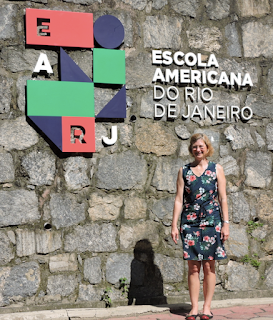 Recently, I was invited to the International School in Panama, which was extra special because I attended an international school, so have a real connection with third culture kids.

Through my school visits, I have loved meeting children and hearing their curious questions about working as an author, the invention of the Caryola crayons and living in England. And sometimes, the opportunity to do messy art and mix cool colours together:
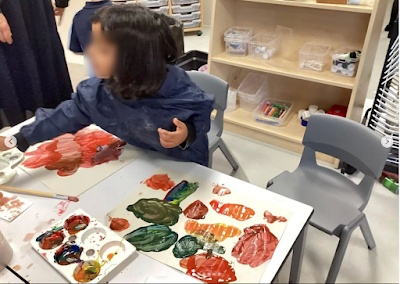 A couple of months ago, an unexpected gift arrived in my postbox:
 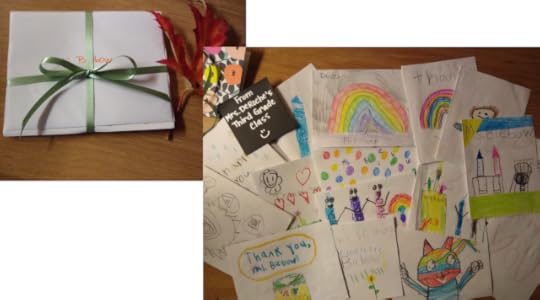 These children are very lucky to have such caring teachers and librarians, seeking out opportunities to connect with authors and enrich their students' learning by making connections around the world. I love seeing their creative drawings and curious minds at work!
Juliet Clare Bell
I feel incredibly lucky to be a children's author and there have been lots of wonderful moments. Here are a few highlights...
When Don't Panic, Annika! (illustrated by Jennifer E Morris) was read on CBeebies as my children loved CBeebies -and the presenter who read it
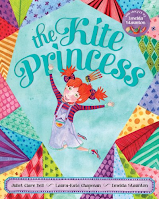
When The Kite Princess (illustrated by Laura Kate Chapman) started being sold by Amnesty International UK. It came completely out of the blue and it was an organisation I'd done loads of campaigning with as a child, as a teenager in college, at university and beyond. And then I was invited to a local International Women's Day event with vulnerable women and asylum seekers. They called it Subversive Sewing and we used The Kite Princess story and drew and decorated our own kites and put words of freedom on the kites and displayed them. It was incredibly moving
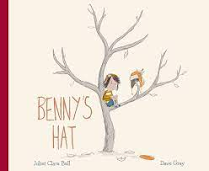
When people told me how Benny's Hat (illustrated by Dave Gray) had helped them when a family member had died
When I read reviews of Luka and the Food Cloud (illustrated by Dave Gray) from parents saying that their children felt seen and understood for the first time ever after reading the book
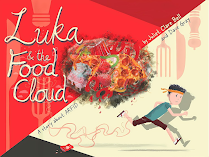
But working with young children is probably the highest of the highlights. Facilitating creative work with young people with life-limiting conditions at a children's hospice, and with bereaved and pre-bereaved siblings, when we were doing research for Benny's Hat, was an absolute privilege, as was interviewing people with ARFID and parents of children with ARFID for Luka and the Food Cloud
Bumping into children that I've done author visits with at a later date, outside of school, is so lovely and often very funny. I absolutely loved meeting a whole class-load of children I'd done an author visit with a few months before -at a bus stop in central Birmingham! They all called out to me as I approached the bus stop and it was a party atmosphere -which carried on when we got on the same bus and I sat and chatted with them on the top deck until they got off at their school stop about twenty minutes later.
And finally, one of my absolute highlights was when a girl put her hand up in an assembly I was doing and asked, completely seriously, in hushed tones, in front of hundreds of other school children...
Is your hair magic?
Clare Helen Welsh
This year, I was invited to speak at the SCBWI Conference in Manchester. I ran a session called Playing with Ideas, helping picture book authors and illustrators embrace the unexpected and find confidence as creatives.


I always enjoy the SCBWI-BI conferences. I've been every year since 2013! It's fantastic to meet with new and old friends and to soak up the creative energy from the faculty . It's my professional development to myself - a highlight of my writing year.
But this year was extra special.
I vividly remember my first conference. I remember the sessions I went to, I remember getting books signed by Catherine Rayner and watching Dave Cousins win the Crystal Kite Award. I remember looking around and thinking what a super tribe of people I'd found and wouldn't it be amazing to be published one day.
Fast forward almost ten years to the day since I first started writing, I am reflecting on just how much I have achieved. The 2023 SCBWI conference was a marker in my writing career, as well as a highlight. An opportunity to look back and reflect on everything I am proud of, how much I have learned and the people I've met on the way.
December 3, 2023
Recycling A Christmas Folktale, by Pippa Goodhart
There is a folktale Christmas story that’s well known in the Ukraine and Russia, Germany, Poland, Norway, Denmark and Finland, but was new to me when I met it as a bookseller in the 1980s.

This The Cobweb Christmas version of the story has old German Tante trying to make her home clean for Christmas, sweeping out the spiders. She brings a tree in, and decorates it with cookies for the local children to have on Christmas Eve before Christkindel comes in the night to fill the toes of their shoes. She’s asleep when Christkindel passes by and sees spiderswanting to go in and see the special tree. He opens the door to let them scuttle in.

The spiders cover Tante’s tree in webs, but Christkindel touches the webs and turns them all to gold and silver; a reward for Tante’s kindness to the children.


That book is no longer in print, but there are other versions of this story that take the story in quite different directions. The Spider Who Saved Christmas by Raymond Arroyo has a golden back spider weaving a great veil of web over the entrance to a cave where Mary, Joseph and baby Jesus hide as they flee from King Herod. As baby boys are slaughtered outside the cave by Roman soldiers ‘with blood streaked swords’, Jesus is saved because the sunlit sparkling web hides the Holy family from the soldiers. Other versions combine those ideas by having Christ himself visiting a poor home and blessing cobwebs on trees, giving wealth. That idea of spider silk turned into gold and silver is, apparently, is the origin of tinsel on Christmas trees.
Stories in which spiders bring good luck go further back to pre-Christian times. And of course Christmas trees originated in more pagan ideas, only becoming part of our familiar Christmas traditions from C19th. This is a story adapted and adopted countless times over time and space. And now I’ve written my version of it.

Old Bear in my Christmas Cobwebs story is really me at heart, remembering how magical Christmas was as a child. We never saw the decorated tree with lights switched on until Christmas morning, and even then only after breakfast had been eaten, the kitchen floor swept, and we all stood in height order to open the door … and, da daa! There it was.

Like me, Old Bear is the one preparing a tree and decorating it for others now. She wants it all to be magical for the friends she invites. But she doesn’t want the spiders making her house untidy.

Not wanting to miss out, as Old Bear sleeps, the spiders come to look at the decorated tree. ‘In the moonlight, they span and swung and spiddled, scuttling and exploring and weaving and winding wondrous webs.’ So, when Old Bear wakes up and looks at her tree, its ‘drippily draped in droopy grey cobwebs.’ Her friends are on their way, and she’s not happy …
… But you can easily guess what’s going to happen when the sun comes out! Old Bear gets some surprise Christmas magic after all, and thanks her spiddly spider friends.

Ema Malyauka from the Netherlands has brought Christmas Cobwebs to wonderful visual life, and I love the feeling of stories linking countries and peoples at Christmas. The spiders and spider web Christmas tree decorations that have been traditional in Ukraine for so long, are beginning to appear in other Christmas trees, too, including the one in Nick Sharratt and my new You Choose Christmas book.


How many other folktales can you spot being referenced in the decorations on this tree?

Wishing you all some Christmas magic, maybe from where you least expect it!

November 26, 2023
Write Picture Books Like the PROs – Create a Rock-Solid PREMISE first! • by Natascha Biebow
The art of writing apicture book is deceptively difficult. (It can be tempting to take a good long nap when you're stuck or in need of inspiration and fortitude when submitting . . .)
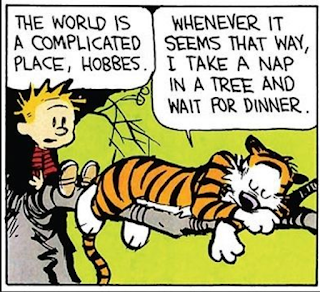 Summed up perfectly in this cartoon by Calvin and Hobbes by Bill Waterson
Here's why:
Most picture books start with an idea.
IDEA – the initial inspiration for thestory. The reason why the book is being written.
Yay! An idea is top-notch. Now, you can dive right in and write yourpicture book. You've made a good start, you might argue<span style="font-family: trebuchet;">@font-face {font-family:"Cambria Math"; panose-1:2 4 5 3 5 4 6 3 2 4; mso-font-charset:0; mso-generic-font-family:roman; mso-font-pitch:variable; mso-font-signature:-536870145 1107305727 0 0 415 0;}@font-face {font-family:Calibri; panose-1:2 15 5 2 2 2 4 3 2 4; mso-font-charset:0; mso-generic-font-family:swiss; mso-font-pitch:variable; mso-font-signature:-536859905 -1073732485 9 0 511 0;}@font-face {font-family:"Trebuchet MS"; panose-1:2 11 6 3 2 2 2 2 2 4; mso-font-charset:0; mso-generic-font-family:swiss; mso-font-pitch:variable; mso-font-signature:647 0 0 0 159 0;}p.MsoNormal, li.MsoNormal, div.MsoNormal {mso-style-unhide:no; mso-style-qformat:yes; mso-style-parent:""; margin:0cm; mso-pagination:widow-orphan; font-size:12.0pt; font-family:"Calibri",sans-serif; mso-ascii-font-family:Calibri; mso-ascii-theme-font:minor-latin; mso-fareast-font-family:Calibri; mso-fareast-theme-font:minor-latin; mso-hansi-font-family:Calibri; mso-hansi-theme-font:minor-latin; mso-bidi-font-family:"Times New Roman"; mso-bidi-theme-font:minor-bidi; mso-font-kerning:1.0pt; mso-ligatures:standardcontextual; mso-fareast-language:EN-US;}.MsoChpDefault {mso-style-type:export-only; mso-default-props:yes; font-family:"Calibri",sans-serif; mso-ascii-font-family:Calibri; mso-ascii-theme-font:minor-latin; mso-fareast-font-family:Calibri; mso-fareast-theme-font:minor-latin; mso-hansi-font-family:Calibri; mso-hansi-theme-font:minor-latin; mso-bidi-font-family:"Times New Roman"; mso-bidi-theme-font:minor-bidi; mso-fareast-language:EN-US;}div.WordSection1 {page:WordSection1;}</span>. Butwait . . . there's a catch – picture books written in this way often lack bothemotional resonance and cohesive narrative flow.This is because many ideas have been done asbooks before. This is also why you might be getting rejection letters that say yourbook 'feels too familiar' and 'doesn't stand out in the competitivemarketplace'.
More experienced creators will write out anoutline and figure out key elements in the PLOT.
PLOT – is just what happens in the story.
This is a great start too, however it stilloften leads to books that aren't compelling enough. Why? Because the authorhasn't addressed a key factor - WHY should anyone care about this story?
Waiting to plot out the book until afteryou've figured out what makes the book tick can save you a lot of time!
So how do you develop that initial idea intosomething that will make editors, agents, and most importantly, young readerstake notice?
You need a Rock-Solid Premise!
 If you figure out your rock-solid premise first, you'll stay on course and not go walkabout as you figure out
 how to fix your picture book that just isn't resonating or selling. As inspired by Calvin and Hobbes (by Bill Waterson),
artfully balancing their way to the other side of the stream. Don't make the mistake of falling in or getting lost in the woods!
PREMISE — The unique way YOU are going to develop that idea into a compelling, marketable picture bookwith resonance and impact.
This is a KEY step that many picture bookcreators miss when developing their idea. By taking the time to work out asolid premise, you can take your picture book to the next level by making itunique, memorable and powerful.
To give you an idea of how this can work,let's look at a bestselling picture book that is celebrating 20 years:
DON'T LET THE PIGEON DRIVE THE BUS by MoWillems

Premise: achild-like pigeon wants to drive the bus, but the driver has left the readerwith strict instructions to mind the bus and not let the pigeon drive it. Thepigeon begs, wheedles and negotiates, trying all the tactics that young readersmight recognize from when they are trying to get grown-ups to do what theywant. The pigeon gets increasingly frustrated and angry, butthe readers keep on telling him "NO!"
 From Don't Let the Pigeon Drive the Bus! by Mo Willems
When the driver returns and thanks them at the end of the story, thepigeon is sad, but still hopeful. Now, he's dreaming bigger with his sights seton driving . . . a truck!
 From Don't Let the Pigeon Drive the Bus! by Mo Willems
In aninterview on CBS Mornings,Mo Willems said, "I think of my audience, but I never think for myaudience."
In the firstbook of his bestselling series, the author places the child firmly in thedriver's seat. The interactive dialogue format itself encourages creativity andimagination. The book is something kids can play with. It is also a springboardfor imagining new adventures for the pigeon character.
The reason thispremise is so strong is that the role-reversal resonates with both children andadults alike. Willem's child-centred plot, character motivation and humour areseamlessly interwoven to create a very simple, but unique and compelling storythat resonates.
Crafting astrong PREMISE is a powerful (and often missed) pro skill. It is the coreconcept that gives your book a reason to exist. It's what takes an idea thatmany other writers may have had, and makes it uniquely yours. It takes craftand skill – and sometimes 'cooking time' – to develop a solid premise that willmake your book stand out in the competitive marketplace. It's well worthspending some time to consider your premise before you start writing.
_________________________________________________________________
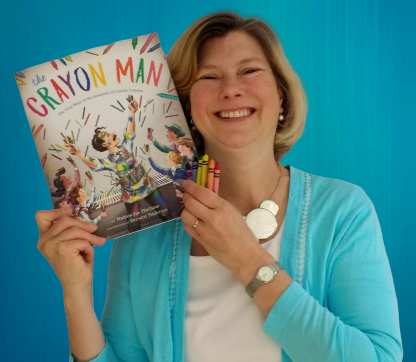 Natascha Biebow, MBE, Author, Editor and Mentor Want to know more? Take a deep-dive and learn howto develop a rock-solid premise and how it can empower you to create theperfect hook for your pitch and query letter here.
Natascha is the author of the award-winning The Crayon Man: The True Story of the Invention of Crayola Crayons, illustrated by Steven Salerno, winner of the Irma Black Award for Excellence in Children's Books, and selected as a best STEM Book 2020. Editor of numerous prize-winning books, she runs Blue Elephant Storyshaping, an editing, coaching and mentoring service aimed at empowering writers and illustrators to fine-tune their work pre-submission, and is the Editorial Director for Five Quills. Find out about her new picture book webinar courses! She is Co-Regional Advisor (Co-Chair) of SCBWI British Isles. Find her at www.nataschabiebow.com
<span style="font-family: trebuchet;">@font-face {font-family:"Cambria Math"; panose-1:2 4 5 3 5 4 6 3 2 4; mso-font-charset:0; mso-generic-font-family:roman; mso-font-pitch:variable; mso-font-signature:-536870145 1107305727 0 0 415 0;}@font-face {font-family:Calibri; panose-1:2 15 5 2 2 2 4 3 2 4; mso-font-charset:0; mso-generic-font-family:swiss; mso-font-pitch:variable; mso-font-signature:-536859905 -1073732485 9 0 511 0;}@font-face {font-family:"Trebuchet MS"; panose-1:2 11 6 3 2 2 2 2 2 4; mso-font-charset:0; mso-generic-font-family:swiss; mso-font-pitch:variable; mso-font-signature:647 0 0 0 159 0;}p.MsoNormal, li.MsoNormal, div.MsoNormal {mso-style-unhide:no; mso-style-qformat:yes; mso-style-parent:""; margin:0cm; mso-pagination:widow-orphan; font-size:12.0pt; font-family:"Calibri",sans-serif; mso-ascii-font-family:Calibri; mso-ascii-theme-font:minor-latin; mso-fareast-font-family:Calibri; mso-fareast-theme-font:minor-latin; mso-hansi-font-family:Calibri; mso-hansi-theme-font:minor-latin; mso-bidi-font-family:"Times New Roman"; mso-bidi-theme-font:minor-bidi; mso-font-kerning:1.0pt; mso-ligatures:standardcontextual; mso-fareast-language:EN-US;}a:link, span.MsoHyperlink {mso-style-priority:99; color:#0563C1; mso-themecolor:hyperlink; text-decoration:underline; text-underline:single;}a:visited, span.MsoHyperlinkFollowed {mso-style-noshow:yes; mso-style-priority:99; color:#954F72; mso-themecolor:followedhyperlink; text-decoration:underline; text-underline:single;}p.text-align-left, li.text-align-left, div.text-align-left {mso-style-name:text-align-left; mso-style-unhide:no; mso-margin-top-alt:auto; margin-right:0cm; mso-margin-bottom-alt:auto; margin-left:0cm; mso-pagination:widow-orphan; font-size:12.0pt; font-family:"Times New Roman",serif; mso-fareast-font-family:"Times New Roman";}p.text-align-center, li.text-align-center, div.text-align-center {mso-style-name:text-align-center; mso-style-unhide:no; mso-margin-top-alt:auto; margin-right:0cm; mso-margin-bottom-alt:auto; margin-left:0cm; mso-pagination:widow-orphan; font-size:12.0pt; font-family:"Times New Roman",serif; mso-fareast-font-family:"Times New Roman";}.MsoChpDefault {mso-style-type:export-only; mso-default-props:yes; font-family:"Calibri",sans-serif; mso-ascii-font-family:Calibri; mso-ascii-theme-font:minor-latin; mso-fareast-font-family:Calibri; mso-fareast-theme-font:minor-latin; mso-hansi-font-family:Calibri; mso-hansi-theme-font:minor-latin; mso-bidi-font-family:"Times New Roman"; mso-bidi-theme-font:minor-bidi; mso-fareast-language:EN-US;}div.WordSection1 {page:WordSection1;}</span>


