Bishwanath Ghosh's Blog, page 6
January 3, 2013
Random Thoughts
This evening, spent considerable time at Music World on Park Street. Bought a number of CDs, almost all of them -- predictably -- compilations of Kishore Kumar and R.D. Burman. The real treasure among them being a new release called Parampara, a set of two CDs that feature songs of the Burmans that have been inspired by traditional Bengali music. Was surprised to learn that Jaane woh kaise log thhe jinke (Pyaasa) was influenced by the national anthem, Jana Gana Mana (play the two tunes in your head and you will see the similarities). What fun!
At Music World, Hindi songs by Abhijeet were playing in the background. Perhaps he has released a new album, or maybe a new movie in which he has sung all the songs. Listening to his voice, memories went back to 1977 or 1978, when I, as a child, had watched Abhijeet sing live in Kanpur during Durga Puja. At the time, he was the lead singer of an orchestra group run by a local legend called Prashant Chatterjee.
Prashant Chatterjee -- Proshanto for Bengalis -- lives on The Mall: his house sits right where the Murray Company bridge begins. Those who are familiar with Kanpur will know. I hope he continues to live there (I did notice the familiar signboard, 'P. Chatterjee', until a year ago); I also hope he is still alive. These days you never know, considering that 2012 has particularly been a year of goodbyes: even A.K. Hangal, who had one foot in the grave for many years now, chose to breathe his last in 2012. Basically, the generation that nourished us and played the cushion against realities of life is in the process of taking the final bow. It's our turn now to take over.
I turned 42 about ten days ago -- my first ever birthday in Calcutta -- but somehow I don't feel that old. When my father was 42, he seemed old to me because I was already 16 by then. He had shaved off his moustache at the first sign of greying in order to look young, and he remains clean-shaven ever since then. Whereas I happily wear the grey on my chin, because I believe that you can't shave off the years by merely shaving off facial hair. Age lies in attitude, not in appearance. You can't beguile people into believing that you are still young, the idea is to make them realise that you are still young despite the grey on the chin.
At Music World, Hindi songs by Abhijeet were playing in the background. Perhaps he has released a new album, or maybe a new movie in which he has sung all the songs. Listening to his voice, memories went back to 1977 or 1978, when I, as a child, had watched Abhijeet sing live in Kanpur during Durga Puja. At the time, he was the lead singer of an orchestra group run by a local legend called Prashant Chatterjee.
Prashant Chatterjee -- Proshanto for Bengalis -- lives on The Mall: his house sits right where the Murray Company bridge begins. Those who are familiar with Kanpur will know. I hope he continues to live there (I did notice the familiar signboard, 'P. Chatterjee', until a year ago); I also hope he is still alive. These days you never know, considering that 2012 has particularly been a year of goodbyes: even A.K. Hangal, who had one foot in the grave for many years now, chose to breathe his last in 2012. Basically, the generation that nourished us and played the cushion against realities of life is in the process of taking the final bow. It's our turn now to take over.
I turned 42 about ten days ago -- my first ever birthday in Calcutta -- but somehow I don't feel that old. When my father was 42, he seemed old to me because I was already 16 by then. He had shaved off his moustache at the first sign of greying in order to look young, and he remains clean-shaven ever since then. Whereas I happily wear the grey on my chin, because I believe that you can't shave off the years by merely shaving off facial hair. Age lies in attitude, not in appearance. You can't beguile people into believing that you are still young, the idea is to make them realise that you are still young despite the grey on the chin.


November 25, 2012
Confessions Of A BJP Reporter: How I Outgrew Its Charm
Beautiful Sunday morning. Two headlines in the papers — Shatrughan seeks Gadkari resignation and Pollster predicts Modi sweep — brought back memories.I was only ten when, in 1980, Jana Sangh became the Bharatiya Janata Party (the idea behind the change of name was to adopt a secular face that would be acceptable to larger sections of India). When you are just ten years old, you are more familiar with the names of reigning film stars than those of political leaders.But by the time I was twenty, BJP leaders had become stars in my part of the world, the Hindi heartland of Kanpur, which was being swept by the winds of Hindutva. They were seen as our saviours: Atal Behari Vajpayee, L.K. Advani, Murali Manohar Joshi, Kalyan Singh, Uma Bharati. In the riot-stricken city, it had become fashionable for middle-class Hindus to put up BJP flags atop their homes.In 1996, I began covering the BJP; and for five years I spent almost every afternoon at 11, Ashoka Road, the party’s headquarters in Delhi, sniffing for news. In any case, one had to be there for the 3 o’ clock press briefing. As a cub reporter, I would be a little intimidated to engage the likes of Vajpayee and Advani in a conversation, something that seasoned journalists did with enviable ease; but I would spend a lot of time with those who were easily approachable — the late Kushabhau Thakre and Sundar Singh Bhandare being among them.On the whole BJP was fun beat: the party took great care of reporters. The snacks at the 3 o’ clock briefing was always something to look forward to; one was put up in the best hotels when travelling to cover the national executive or national council meetings; all facilities to ensure you are able to file your stories in time.It was impossible not to be impressed with the works. And impossible not to be sympathetic towards them when you spent afternoon after afternoon in the company of leaders whose dedication to their ideology you admired, even if you didn’t agree with the ideology. You even felt sad for each time their coalition missed the majority mark by a whisker.But dedication and discipline kept the BJP functioning like a well-oiled machine: the face of Vajpayee, the mind of Advani, the brains of Kushabhau Thakre and Govindacharya, the management skills of Pramod Mahajan, the PR skills of Sushma Swaraj, and silent contribution from countless others who remained in the shadows. Quite natural that one felt happy when the party finally won in 1998. It was a vicarious pleasure; my life remained just the same.In early 2001, I left Delhi and moved to Chennai. And once I was out of the charmed radius of 11, Ashoka Road, something magical happened. I no longer felt the sense of bonding with my beat: from the distance, all the parties looked alike. The dark side of the BJP began to emerge. Bangaru Laxman, whose coronation as the party president I had attended in Nagpur only months before moving to Chennai, was now seen on TV, accepting wads of currency notes.Gujarat happened. Egos grew. Personalities clashed. Dedicated old-timers were sidelined. And governance, as the 2004 elections proved, fell below expectations. It took just five years in power for a robust machinery to fall apart.Today the BJP is a sum total of negatives: no leadership, no agenda, no vision, no orator, and — without these — possibly no future. I don’t know how 11, Ashoka Road looks like these days, but the party itself resembles a haunted house that was once brilliantly lit up by dedication, discipline and the dream to rule India someday.I am reminded of the very first day I had stepped into the BJP headquarters. This was the summer of 1996. The office was largely empty — most leaders were out campaigning — and I nervously walked through the corridors peeping into the rooms, hoping to find someone to talk to.Suddenly I came face to face with a man who wore a cropped beard, a kurta and a warm smile. When I introduced myself, he showed me into one of the rooms. We had a longish chat, and I took notes.Finally, I asked him, “And sir, your name?”“Narendra Modi,” he dictated as I jotted down, “National secretary, BJP.”At least one man from the party has gone on to do very well — for himself. 
November 20, 2012
Two Cities
These are difficult times -- packed with anxiety and the occasional dose of excitement -- for me. Till midnight, I am the City Editor of Chennai's biggest paper; and around quarter past midnight, when I have checked the last of the local pages on my tiny netbook screen, I click open the draft of my Calcutta book and get transported to that city and stay there, quite often, till the sky is just about to change colours.
Straddling two cities, and trying to do justice to both, is not easy. The moment I focus on one, the other starts nudging me for attention. So much so that when I wake up in the morning, I often forget where I am, until I notice the window. In the Chennai bedroom, the window is on my right, and in Calcutta, on the left. This worries me, because my mother used to always say, 'Never place a foot each in two boats, you will drown.' Will I drown?
I did not have this fear while writing Tamarind City. I live in Chennai, and it was a book about Chennai: so every single moment I breathed provided me with raw material to draw from. But then, the fear of drowning did not haunt me even when I was writing Chai, Chai, which was about seven different and diverse places other than Chennai.
I don't know where Chai, Chai will stand in a few years from now -- either they will find it endowed with literary value, or it will simply go out of print and be forgotten -- but it was a book I enjoyed writing. Those railways junctions offered an escape from Chennai each night as I sat in front of my laptop, midnight till 4 a.m. Only concrete benches, no benchmarks -- so I just wrote, and wrote with great pleasure.
But Calcutta is a different ballgame. It is easily the most written-about city in India. Sometimes celebrated, mostly derided, but rarely ignored by writers during the three centuries the city has been in existence. Almost everything has been written about it and almost everything about it written. So what new am I going to write, and how is it going to measure up to what has already been written about the city? That's worry no. 1.
Worry no. 2 is the discerning eye of the Bengali reader. Calcutta Bengalis are very sporting when someone makes fun of them (they'd even contribute a joke or two to your repository of Bengali jokes), but very touchy when it comes to their city or their icons. If you fail to see poetry in the faults of Calcutta, the fault is yours and not that of the fault.
And if the fault-finder happens to be a fellow Bengali, especially a non-resident Bengali, he will be instantly sentenced to death by residents fiercely loyal to their city -- residents whose guiding slogan in life is "Saala, jai bolish, Kolkata chhere ki thhaaka jaaye?"
Worry no. 3: the critics. I can already see them shredding the yet-to-be-published book into tiny pieces, saying how little I understand of Calcutta or Calcutta culture. (I can even visualise the editor of Outlook Traveller -- the only publication to rubbish both my earlier books, that too in a tone that reeked of malice -- engaging a reviewer to savage the book. Though I may just be rescued by the sudden closure of the magazine: if Newsweek is shutting down, then what field does this raddish called Outlook Traveller belong to?)
These are worries weighing heavily on my mind, but as long as they don't weigh me down, I should be fine.
Straddling two cities, and trying to do justice to both, is not easy. The moment I focus on one, the other starts nudging me for attention. So much so that when I wake up in the morning, I often forget where I am, until I notice the window. In the Chennai bedroom, the window is on my right, and in Calcutta, on the left. This worries me, because my mother used to always say, 'Never place a foot each in two boats, you will drown.' Will I drown?
I did not have this fear while writing Tamarind City. I live in Chennai, and it was a book about Chennai: so every single moment I breathed provided me with raw material to draw from. But then, the fear of drowning did not haunt me even when I was writing Chai, Chai, which was about seven different and diverse places other than Chennai.
I don't know where Chai, Chai will stand in a few years from now -- either they will find it endowed with literary value, or it will simply go out of print and be forgotten -- but it was a book I enjoyed writing. Those railways junctions offered an escape from Chennai each night as I sat in front of my laptop, midnight till 4 a.m. Only concrete benches, no benchmarks -- so I just wrote, and wrote with great pleasure.
But Calcutta is a different ballgame. It is easily the most written-about city in India. Sometimes celebrated, mostly derided, but rarely ignored by writers during the three centuries the city has been in existence. Almost everything has been written about it and almost everything about it written. So what new am I going to write, and how is it going to measure up to what has already been written about the city? That's worry no. 1.
Worry no. 2 is the discerning eye of the Bengali reader. Calcutta Bengalis are very sporting when someone makes fun of them (they'd even contribute a joke or two to your repository of Bengali jokes), but very touchy when it comes to their city or their icons. If you fail to see poetry in the faults of Calcutta, the fault is yours and not that of the fault.
And if the fault-finder happens to be a fellow Bengali, especially a non-resident Bengali, he will be instantly sentenced to death by residents fiercely loyal to their city -- residents whose guiding slogan in life is "Saala, jai bolish, Kolkata chhere ki thhaaka jaaye?"
Worry no. 3: the critics. I can already see them shredding the yet-to-be-published book into tiny pieces, saying how little I understand of Calcutta or Calcutta culture. (I can even visualise the editor of Outlook Traveller -- the only publication to rubbish both my earlier books, that too in a tone that reeked of malice -- engaging a reviewer to savage the book. Though I may just be rescued by the sudden closure of the magazine: if Newsweek is shutting down, then what field does this raddish called Outlook Traveller belong to?)
These are worries weighing heavily on my mind, but as long as they don't weigh me down, I should be fine.
October 14, 2012
Arriving In Calcutta
Didn't sleep all night. I never do when I have a morning flight to catch. So I stayed up filling new songs in my iPod -- songs that will keep me company during my walks in Central Park. The early-morning shower made me drowsy and I mostly slept through the two-hour flight to Calcutta. Had a joyous moment at the Chennai airport when I discovered a smoking room on the ground floor (the one on the first floor had been dismantled about a year ago).
Across the aisle, in the plane, sat a small Bengali family -- man, woman and child. Man perhaps in early forties (triple chin, paunch and thick moustache made him look older, though); woman in late thirties (and exceedingly gorgeous); child not more than five or six. I wanted to steal glances at her but the husband was blocking my vision. He was reading The Hindu. I was desperately hoping that he would pause at Sunday Diary, the weekly column I write in the paper, or at least read this article on Kishore Kumar I had written for the Sunday magazine. I was desperately hoping that he would read them admiringly and then lean to his wife and tell her, "Baah, ki bhalo likhechhe"; after which I would introduce myself as the writer of those pieces.
Nothing happened. He dismissively glanced through all the pages before settling on the Open Page (Sunday version of the edit page). I lost interest in him and his wife and went to sleep. I even had a short dream -- vivid and heart-warming. A real voice finally woke me up: "Ladies and gentlemen, we will be landing shortly at Netaji Subhas Chandra Bose international airport..."
Calcutta was cloudy when I stepped out of the airport -- straight into my wife's car. The meticulous planner that she is, she times her entry into the airport with my exit from the arrival lounge, so that neither of us are kept waiting even for a moment. Though I must say I miss the old days when I would spot her familiar silhouette waiting for me inside the arrival lounge. But how can I complain when I don't even go to the airport to fetch her each time she arrives in Chennai?
As soon as I got into the car, I rolled down the window and lit up a cigarette and put on the radio (the RJ was talking about Tagore being a god to all Bengalis, so I switched to the retro channel whose presiding deities are Kishore Kumar and R.D. Burman). Calcutta is one place where you never feel apologetic about smoking in public -- even those who don't smoke are pretty accommodating about a smoker's urge to light up. And then it began to drizzle.
The drizzle; the cigarette smoke; the soul-lifting songs on radio; the festive spirit that refuses to be dampened by the intermittent showers -- it was such a heady feeling to arrive in my hometown-in-law, that too on the eve of Durga Puja. Suddenly I realised that Calcutta is no longer just my hometown-in-law but the subject of my next book; and that I should be spending more time on the streets, with a notebook and pen.
Across the aisle, in the plane, sat a small Bengali family -- man, woman and child. Man perhaps in early forties (triple chin, paunch and thick moustache made him look older, though); woman in late thirties (and exceedingly gorgeous); child not more than five or six. I wanted to steal glances at her but the husband was blocking my vision. He was reading The Hindu. I was desperately hoping that he would pause at Sunday Diary, the weekly column I write in the paper, or at least read this article on Kishore Kumar I had written for the Sunday magazine. I was desperately hoping that he would read them admiringly and then lean to his wife and tell her, "Baah, ki bhalo likhechhe"; after which I would introduce myself as the writer of those pieces.
Nothing happened. He dismissively glanced through all the pages before settling on the Open Page (Sunday version of the edit page). I lost interest in him and his wife and went to sleep. I even had a short dream -- vivid and heart-warming. A real voice finally woke me up: "Ladies and gentlemen, we will be landing shortly at Netaji Subhas Chandra Bose international airport..."
Calcutta was cloudy when I stepped out of the airport -- straight into my wife's car. The meticulous planner that she is, she times her entry into the airport with my exit from the arrival lounge, so that neither of us are kept waiting even for a moment. Though I must say I miss the old days when I would spot her familiar silhouette waiting for me inside the arrival lounge. But how can I complain when I don't even go to the airport to fetch her each time she arrives in Chennai?
As soon as I got into the car, I rolled down the window and lit up a cigarette and put on the radio (the RJ was talking about Tagore being a god to all Bengalis, so I switched to the retro channel whose presiding deities are Kishore Kumar and R.D. Burman). Calcutta is one place where you never feel apologetic about smoking in public -- even those who don't smoke are pretty accommodating about a smoker's urge to light up. And then it began to drizzle.
The drizzle; the cigarette smoke; the soul-lifting songs on radio; the festive spirit that refuses to be dampened by the intermittent showers -- it was such a heady feeling to arrive in my hometown-in-law, that too on the eve of Durga Puja. Suddenly I realised that Calcutta is no longer just my hometown-in-law but the subject of my next book; and that I should be spending more time on the streets, with a notebook and pen.
September 30, 2012
The Best Things Are Free
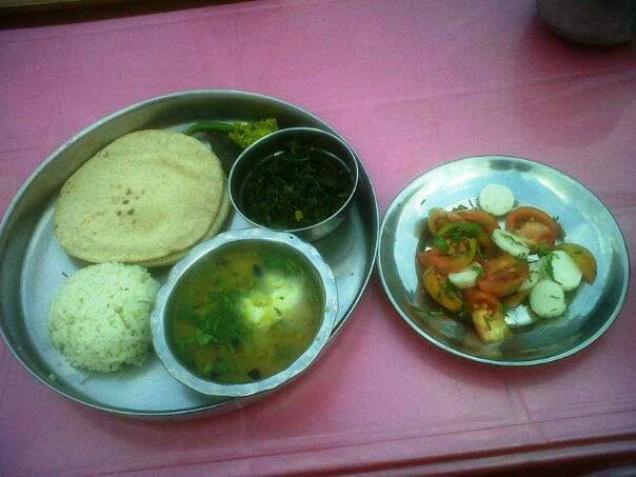 “Everything we eat,” said Jitendra Singh, the driver, as he opened the car door for the umpteenth time to spit out pan masala, “is grown in our fields. We buy nothing from the market, except spices. Everything comes fresh off the fields.”His words made me hungrier. It was 2.30 now, and we had been on the road for over three hours. We were travelling from Kanpur to his village near the town of Banda, in the rugged Bundelkhand region of Uttar Pradesh. Bundelkhand is rich in history, poor in development: tales of valour are as much in circulation as tales of notoriety.I had been conned into this trip. “If you want to get the real flavour of the elections, you must go to Banda,” Jitendra had been telling me since I set foot in Kanpur last February, with the purpose of capturing the public sentiment on the eve of the Assembly elections. I didn’t realise, until it was too late, that he insisted on bringing me to Banda so that he could visit his village. I trusted him because tradition dictates that if you are a journalist travelling out of town to report an event, you must take the local driver seriously. So one chilly morning, as I got into his Tata Indica, I told Jitendra Singh, “Chalo Banda!”It took us a while to get out of Kanpur. It’s a city I barely recognise now, even though I’ve spent the first 23 years of my life in it. But once out of the city, it became a journey back in time: unending green fields — and the monotony of the green broken every now and then by either a small Shiva or Hanuman temple, painted in white; or the hut-like tea shop that also sells samosas and gulab jamuns; or the dhaba selling hot daal and rotis; or asbestos-roofed factories that have smoke coming out of their chimneys. These are sights I’ve grown up with and, no matter which city I live in, they will always denote home.And now we were headed to Jitendra Singh’s home — his heart, rather. As for a home, he doesn’t have one at the moment: the road is his home. He is based, so to speak, in Kanpur, but he invariably spends his nights in the car, either driving or sleeping in it in some remote town. He is sufficiently happy with the money he makes as a driver, but his heart remains tethered to his village, where his wife lives with his parents and a large number of relatives.The sight of the ripe crops had begun to make me hungry. I fantasised about the end product: hot rotis, arhar ki daal, sarson ka saag. That’s when Jitender said that everything from his kitchen comes fresh off the farm. For someone who depends largely on take-away meals, his words were music to the ears.“Will you take me to your village one of these days?” I asked him.“I will take you there right now, sirji.”“What do you mean?”“My village is very close to Banda. Once you finish talking to people in Banda, I will take you home. In any case I was thinking of showing you my village.”That’s when realisation struck. But my anger melted even before it could build up — largely because of the pleasant drive through rural, central India and also because I was now too hungry to get angry.“Can I have lunch at your home, then?” I asked.“Would you like to have a chat with people in Banda first, or would you like to have lunch first and then go to Banda?”“Lunch first.”Jitendra called up his home and spoke to his mother. Even as he had one hand on the steering and another glued to his ear, we drove through a village that was a village in the true Indian sense of the word: thatched homes, cows and buffaloes loitering around, veiled women carrying pots of water on their heads, about two dozen children sitting cross-legged on the ground under a tree, facing a blackboard and a stern-looking teacher. The village stood like an island amid green fields.We drove through few more villages before we arrived at Jitendra’s — I knew we had entered the boundary of his village when a bunch of children began chasing our car in excitement. The village could have easily been Ramgarh of Sholay — this was indeed a village of Thakurs — and Jitendra’s father presently emerged from the door wearing the dignified air of Sanjeev Kumar, albeit with arms intact. He seemed too important to take notice of me even as I sat on a charpoy in the verandah and drank tea. He was going for a stroll around the village.As soon as he left, one of Jitendra’s uncles came in. He sought to know who I was. Jitendra replied with a tinge of pride, “He has come all the way from Chennai to write about our elections.”“No wonder,” the uncle turned to me, “I saw you on TV last night.”I gave an ambiguous nod: I had no desire to contradict him. I asked him his name. “Mulayam Singh,” he replied.For a moment I thought he was kidding, but he wasn’t. His name was indeed Mulayam Singh, and he turned out to be one of the friendliest souls I’ve ever come across.Lunch, I gathered, was still under preparation. I suggested to Jitendra that we take a short walk around the house. Mulayam Singh led the way. Just a few metres away from the verandah stood a small Shiva temple, at least 70 years old (it existed even when Jitendra’s father was born). Temples like these, modest and bereft of crowds, provide better connectivity to god — or so I believe. Next to the temple was a cluster of huts.Outside one of the huts, two men sat in complete silence as they crafted the wheel of a bullock cart. The silence was so overwhelming that you could almost hear the horses of Gabbar Singh’s men storming the village. In fact, this was the kind of village that Ramesh Sippy sought to depict in Sholay, even though the movie was actually shot in an elaborate set created in the south Indian locale of Ramanagaram, near Bangalore.The two Thakurs then led me to the fields. “That is arhar,” Jitendra pointed out, “and that is the mustard crop.” As a token of the newly found friendship, Mulayam Singh pulled out half a dozen radishes and a bunch of coriander leaves from the soil. “When you eat these,” he said, “you will feel the difference.”A small boy came running to us, to announce that lunch was ready. And soon Jitendra and I were sitting across a centre table that had been placed in the courtyard of the house. The women were now in charge. The kitchen — a mud structure — was right next to us.First came the salad: tomato and radish, soaked in lemon juice and garnished with chopped coriander. Mouth-watering. Then came the much-awaited decorated plate: chaney ka saag, arhar ki daal (with a generous piece of homemade butter floating in it), rotis (each soaked in homemade ghee) and rice. Very often we city-dwellers appreciate food only when we pay for it through our noses, whereas the truth is that the best things in life come for free.Jitendra’s mother, who supervised the table, made sure I did not spend even a moment waiting for another roti. They just kept coming, and I kept tearing off pieces and plunging them alternately into the saag and the daal. The rice I ate with the daal alone. All along, I had been biting into a green chilli and also digging my finger into a small heap of greenish chutney, which did not taste either like coriander or mint, but it was — to use the gourmand’s cliché — delectable. I could not resist asking Jitendra’s mother what it was made of.“Wood apple,” she said, “why, you don’t like it?”I told her about my inexplicable fascination — dating back to my childhood — for wood apples. As a result, even before I could finish my lunch, a boy placed a plastic packet containing six large wood apples on the table.“I will take them to Chennai,” I said.“Look at their luck,” Mulayam Singh remarked from a corner, “they will be travelling in a plane. We have never travelled by air, but our wood apples will.”One woman came with a mug of water, another with a towel. “Beta,” Jitendra’s mother said, “when you come next time, stay with us for a day or two.”The sun had nearly set when we drove out of the village. As soon as we hit the highway, Jitendra slowed down the car. He said: “Sir, aaj hum aap ko ek naya jaanwar dikhate hain” (let me show you a new animal today). In the dimmed light, all I could see was a horse crossing the road. But why did it have a blue-grey coat? Oh, a nilgai! Not a new animal, but the encounter was something new, considering that I live in an urban jungle where you see only dogs and cats — and the occasional monkey — crossing the road.I took out my camera and asked Jitendra to stop. But as soon as the nilgai saw me, it sprinted into the fields like a blushing bride. This piece appeared in The Hindu Sunday Magazine on September 30, 2012.
September 11, 2012
Poetry, Thy Name Is Woman
Perceptions. Tastes. Sensibilities. Beliefs. How they change with time. At least in my case they have. When I now think of the days when I was, say, twenty-five, I cringe with embarrassment.
When I was twenty-five, I believed one should marry only a virgin; considered it my birthright to know all about the past lovers of my lovers; was happy wearing Titan watches; drank only rum; always wore formals to work; hero-worshipped Khushwant Singh and envied Shobhaa De; disliked Bengali women; and hated the singer Bhupinder Singh.
But Exposure and Introspection are two angels who hold your hands and lead you out of the darkened cell where society had condemned you to live. Under the sun, you see things in a different light, besides seeing new things.
Take Bhupinder Singh, for example. The ghazal singer started his career in the film industry as a guitarist for the music director Madan Mohan (Bhupinder played the guitar in Tum jo mil gaye ho from Hanste Zakhm, the famous car-drive-in-rain song featuring Navin Nischol). He also sang small bits for Madan Mohan and S.D. Burman before he became a guitarist for R.D. Burman, who gave Bhupinder his first real break as a singer in Gulzar's Parichay, in which he sang the immortal Beeti na bitaaye raina .
Somehow, I could never bring myself to liking Bhupinder Singh. To me, he was a singer who suffered from a perpetual nasal block. I often felt like holding out a handkerchief to him: "Please blow your nose, you will sound better." And being a fan of Kishore Kumar, who threw his voice straight out of his lungs into the microphone, there was no way I could like Bhupinder. I pitied his fans -- including my father, who loved the song, Do deewane sheher mein .
That was then. Today, readers of Ganga Mail know what a great fan of Bhupinder I am. If there is ever a fire at home and I am allowed to save only 10 songs, the top two would be Bhupinder's: Raat banoon main and Aawaz di hai . Kishore Kumar's songs I can find anywhere, but these are two songs I had to work really hard to trace. They have entered my bloodstream and I simply cannot do without them.
So what brought about the change of heart? How did a singer, who I thought always suffered from a bad cold, come to possess a voice that I now think is silky and lilting? The answer lies in the song you see at the bottom of this post. The song, written by Gulzar and set to tune by R.D. Burman, changed forever the way I listened to Bhupinder Singh. Only Gulzar can write poetry that can detect sensuality in the commonest of things; and only R.D. could have whipped such static verses into a song.
And today, fifteen years after I first heard this song, it has also changed the way I look at women.
Women are the most wonderful thing to have happened to mankind -- we all know that. From time to time, poems have been written about the depth of their eyes, the lusciousness of their lips, the fulness of their breasts, the curves of their hips, the warmth in between their thighs, and so on. But are they really poetry or just lessons in anatomy?
The woman deserves greater tribute. How closely have you observed her when she:
Wakes up in the morning;
Makes you breakfast;
Comes out of bath, her face glowing and hair wet;
Pulls out a set a set of clothes from the wardrobe to decide what to wear for work;
Turns to you for advice when she can't decide what to wear;
Waves at you as she drives away;
Chops vegetables for dinner;
Changes the bedsheets;
Arranges the flowers before the guests arrive;
Buys nothing for herself but something for you whenever she visits the mall alone;
Takes ownership of the child so that you're not distracted from work;
Is pally with your drinking buddies;
But frowns when you drink too much;
Forgives you even if you drink too much?
A man is all about reality, but a woman -- even in reality -- is poetry. You just have to observe her -- the smallest things about her -- like Gulzar did in this song:

When I was twenty-five, I believed one should marry only a virgin; considered it my birthright to know all about the past lovers of my lovers; was happy wearing Titan watches; drank only rum; always wore formals to work; hero-worshipped Khushwant Singh and envied Shobhaa De; disliked Bengali women; and hated the singer Bhupinder Singh.
But Exposure and Introspection are two angels who hold your hands and lead you out of the darkened cell where society had condemned you to live. Under the sun, you see things in a different light, besides seeing new things.
Take Bhupinder Singh, for example. The ghazal singer started his career in the film industry as a guitarist for the music director Madan Mohan (Bhupinder played the guitar in Tum jo mil gaye ho from Hanste Zakhm, the famous car-drive-in-rain song featuring Navin Nischol). He also sang small bits for Madan Mohan and S.D. Burman before he became a guitarist for R.D. Burman, who gave Bhupinder his first real break as a singer in Gulzar's Parichay, in which he sang the immortal Beeti na bitaaye raina .
Somehow, I could never bring myself to liking Bhupinder Singh. To me, he was a singer who suffered from a perpetual nasal block. I often felt like holding out a handkerchief to him: "Please blow your nose, you will sound better." And being a fan of Kishore Kumar, who threw his voice straight out of his lungs into the microphone, there was no way I could like Bhupinder. I pitied his fans -- including my father, who loved the song, Do deewane sheher mein .
That was then. Today, readers of Ganga Mail know what a great fan of Bhupinder I am. If there is ever a fire at home and I am allowed to save only 10 songs, the top two would be Bhupinder's: Raat banoon main and Aawaz di hai . Kishore Kumar's songs I can find anywhere, but these are two songs I had to work really hard to trace. They have entered my bloodstream and I simply cannot do without them.
So what brought about the change of heart? How did a singer, who I thought always suffered from a bad cold, come to possess a voice that I now think is silky and lilting? The answer lies in the song you see at the bottom of this post. The song, written by Gulzar and set to tune by R.D. Burman, changed forever the way I listened to Bhupinder Singh. Only Gulzar can write poetry that can detect sensuality in the commonest of things; and only R.D. could have whipped such static verses into a song.
And today, fifteen years after I first heard this song, it has also changed the way I look at women.
Women are the most wonderful thing to have happened to mankind -- we all know that. From time to time, poems have been written about the depth of their eyes, the lusciousness of their lips, the fulness of their breasts, the curves of their hips, the warmth in between their thighs, and so on. But are they really poetry or just lessons in anatomy?
The woman deserves greater tribute. How closely have you observed her when she:
Wakes up in the morning;
Makes you breakfast;
Comes out of bath, her face glowing and hair wet;
Pulls out a set a set of clothes from the wardrobe to decide what to wear for work;
Turns to you for advice when she can't decide what to wear;
Waves at you as she drives away;
Chops vegetables for dinner;
Changes the bedsheets;
Arranges the flowers before the guests arrive;
Buys nothing for herself but something for you whenever she visits the mall alone;
Takes ownership of the child so that you're not distracted from work;
Is pally with your drinking buddies;
But frowns when you drink too much;
Forgives you even if you drink too much?
A man is all about reality, but a woman -- even in reality -- is poetry. You just have to observe her -- the smallest things about her -- like Gulzar did in this song:
September 9, 2012
Woo Me With An Asha Song
It is very unlikely for me to pay tribute to Asha Bhosle on her birthday, considering that for a long, long time I could not even distinguish between her voice and Lata's; for that matter, I could not tell one female voice from another.
It was always the male voice that mattered -- in my case Kishore Kumar's -- the reason being back then, when I was growing up, the hero alone mattered. You pestered your parents to take you to an Amitabh Bachchan film: it did not matter one bit whether he was paired with Rekha, Hema Malini, Neetu Singh or -- oh no -- Rakhi.
Consequently, the songs sung by the hero mattered. Since you wanted to be him, you wanted to sing his songs -- not the heroine's. If I were a parent back then, I would be extremely worried if my 10-year-old son sat transfixed by Dil cheez kya hai from Umraao Jaan, and find it normal if he danced to Khaike paan Banaraswala or I am a Disco Dancer. And those days, you really had some great 'hero songs', especially those sung on a bike or an open jeep, the most memorable of them being Rotey huey, aatein hain sab (Muqaddar Ka Sikandar). What a song, what a song!
I was so much of a hero-worshipper those days that I felt immensely relieved when Waheeda Rehman, playing Amitabh Bachchan's mother in Trishul, dies right in the beginning of the film. "Now that he is free from the burden of an ailing mother," my young mind told me in the theatre, "he is going to go out and fight all the bad people." Back home, when I told my mother that I was very happy Amitabh's mother died early on in the film so that he could do all the fighting, she wasn't amused at all. "Oh, the death of a mother means nothing to you?" she asked me, rather worried. This was 1979. In 2009 my mother died. Waheeda Rehman, who died ages ago in Trishul, lives on.
But memories of going to nearby movie theatres -- on my father's Lambretta -- remain etched in mind. One such movie was Mr. Natwarlal. I loved the song Pardesia yeh sach hai piya , in which Kishore Kumar makes a dramatic entry into this mindblowing duet with Lata, but thought nothing of Tauba tauba , an Asha solo. The reason being the latter was purely a heroine song.
Then, one day, you grow up and your sensibilities begin to change. You begin to take a closer look at the opposite sex and start paying attention to their voices and their songs. Today, I get goosebumps listening to the same Tauba tauba. And many many other songs sung by the heroine -- even the vamp.
And if I were to compile a list of such songs -- songs in which I could very well do without Kishore's voice -- eighty percent of them would belong to Asha Bhosle. Lata, the elder sister, might be great, but Asha's voice dances right into your heart and pierces your soul. You instantly want to indulge that voice, even while reserving all the respect for Lata. You respect Lata, but love Asha.
Asha Bhosle makes for a third of the one-rupee coin of Hindu music I always carry in my breast pocket: the remaining two-thirds being shared equally by Kishore Kumar and R.D. Burman. I may listen to -- and love -- the music of others too, but this coin is indispensable. Without this solitary coin, I would be the poorest man on earth.
Presenting five Asha songs that make a great difference to my world and make it worth living:
1. Raat banoon main; which happens to the most favourite of my Hindi songs -- and it does not even feature Kishore Kumar;
2. Aawaz di hai; a song that continues to haunt me -- no Kishore here either;
3. Jaane jaan; need I say anything about this song?;
4. Bechara dil kya kare: vintage Asha!
5. Chal saheli jhoom ke. You may not have heard this song before, but I think you will like it.
Postscript: Hindi cinema is replete with examples of the woman wooing/seducing the man with a song. At the age of 41, I don't expect to be dispensed with such kindness, but if at all any of you still thinks I am worthy of being wooed, that too with a song, please sing an Asha song.
It was always the male voice that mattered -- in my case Kishore Kumar's -- the reason being back then, when I was growing up, the hero alone mattered. You pestered your parents to take you to an Amitabh Bachchan film: it did not matter one bit whether he was paired with Rekha, Hema Malini, Neetu Singh or -- oh no -- Rakhi.
Consequently, the songs sung by the hero mattered. Since you wanted to be him, you wanted to sing his songs -- not the heroine's. If I were a parent back then, I would be extremely worried if my 10-year-old son sat transfixed by Dil cheez kya hai from Umraao Jaan, and find it normal if he danced to Khaike paan Banaraswala or I am a Disco Dancer. And those days, you really had some great 'hero songs', especially those sung on a bike or an open jeep, the most memorable of them being Rotey huey, aatein hain sab (Muqaddar Ka Sikandar). What a song, what a song!
I was so much of a hero-worshipper those days that I felt immensely relieved when Waheeda Rehman, playing Amitabh Bachchan's mother in Trishul, dies right in the beginning of the film. "Now that he is free from the burden of an ailing mother," my young mind told me in the theatre, "he is going to go out and fight all the bad people." Back home, when I told my mother that I was very happy Amitabh's mother died early on in the film so that he could do all the fighting, she wasn't amused at all. "Oh, the death of a mother means nothing to you?" she asked me, rather worried. This was 1979. In 2009 my mother died. Waheeda Rehman, who died ages ago in Trishul, lives on.
But memories of going to nearby movie theatres -- on my father's Lambretta -- remain etched in mind. One such movie was Mr. Natwarlal. I loved the song Pardesia yeh sach hai piya , in which Kishore Kumar makes a dramatic entry into this mindblowing duet with Lata, but thought nothing of Tauba tauba , an Asha solo. The reason being the latter was purely a heroine song.
Then, one day, you grow up and your sensibilities begin to change. You begin to take a closer look at the opposite sex and start paying attention to their voices and their songs. Today, I get goosebumps listening to the same Tauba tauba. And many many other songs sung by the heroine -- even the vamp.
And if I were to compile a list of such songs -- songs in which I could very well do without Kishore's voice -- eighty percent of them would belong to Asha Bhosle. Lata, the elder sister, might be great, but Asha's voice dances right into your heart and pierces your soul. You instantly want to indulge that voice, even while reserving all the respect for Lata. You respect Lata, but love Asha.
Asha Bhosle makes for a third of the one-rupee coin of Hindu music I always carry in my breast pocket: the remaining two-thirds being shared equally by Kishore Kumar and R.D. Burman. I may listen to -- and love -- the music of others too, but this coin is indispensable. Without this solitary coin, I would be the poorest man on earth.
Presenting five Asha songs that make a great difference to my world and make it worth living:
1. Raat banoon main; which happens to the most favourite of my Hindi songs -- and it does not even feature Kishore Kumar;
2. Aawaz di hai; a song that continues to haunt me -- no Kishore here either;
3. Jaane jaan; need I say anything about this song?;
4. Bechara dil kya kare: vintage Asha!
5. Chal saheli jhoom ke. You may not have heard this song before, but I think you will like it.
Postscript: Hindi cinema is replete with examples of the woman wooing/seducing the man with a song. At the age of 41, I don't expect to be dispensed with such kindness, but if at all any of you still thinks I am worthy of being wooed, that too with a song, please sing an Asha song.
September 4, 2012
Rain, Baarish, And Rimjhim Gire Saawan
Rain is romance. Provided it falls in the right amount. But what amount is right amount? What may be right for lovers and songwriters may not be sufficient for the poor farmer; and what may be sufficient for the farmer may not be sufficient enough for a parched piece of land that had been waiting for years to recharge its groundwater levels. And then comes a time when rain turns into a mass destructor, washing away people and their homes.
Rain is pretty much like a guest who shouldn’t overstay its welcome. Stay for a couple of days at a time and we will fete you, write poems on you, and even make love to the sound of the shower. But if you stay on for a couple of weeks without giving us a break, you become an enemy.
Yet, year after year, despite the destruction and hardship it causes, we eagerly wait for the smell of the wet earth and the sound of the pitter-patter on the window panes. Why so? That’s because rain brings much-needed relief and distraction when the world around turns into a blazing desert, which it does every so often.
Then there is something else. Few sights match the beauty of water descending from the sky in the form of a natural shower. Imagine the water falling from the sky just like it would if you were to upturn a bucket! — but no, nature has thought it all out. It has installed an invisible shower-head somewhere up there so that when it rains, you don’t stand under a waterfall but a shower. And the drops of water falling on your skin have an instant rejuvenating affect; what a pity that our first reaction, when it begins to rain, is to run for cover.
Rain. Baarish. Brishti. Barkha. How sensual they sound! Especially baarish. I love the sound of the word. People enjoy the rain in their own ways. The adventurous and the romantic — people I always envy — enjoy getting wet. They don’t worry about catching a cold. In fact, the pouring rain kindles a fire in them. The practical and the pragmatic, on the other hand, like to enjoy the rain from an arm’s length. They sit on the verandah and watch the rain and munch on freshly-fried pakodas and sip hot tea.
Then you have people who are practical as well as romantic: who don’t want to get wet in the rain but at the same time don’t want to miss out on its sensuality. Some like to go on long drives during a drizzle, while others see opportunity in the immobility caused by a sudden downpour and they open the windows, make a drink and pull out their favourite book. Or they choose to make love. The idea is to make use of the setting — the smell of wet earth, the sight of the grey sky and bathing trees, and the sound of falling drops.
Given my temperament, I would say I fall in the third category. But secretly, I desire to belong to the first category: adventurous-cum-romantic. Imagine getting wet in the rain without a care in the world! Oh, and the best part about getting wet in such a carefree manner is the fire it kindles within you.
Once upon a time, a few years ago, I knew someone who was equally fascinated by the idea of getting wet in the rain. During one monsoon, she wanted me to come to the beach with her so that we could both get wet together. I had even bought a bottle of brandy, just in case the sensation of dry clothes on wet skin wasn’t enough to stoke desire.
But there erupted a hitch: where would we keep our mobile phones? She suggested options, but I was very nervous about staying away from the phone for a prolonged period. And so the trip to Marina never materialised. Today she is the mother of a two-year-old boy. I don’t think I can plan another Marina trip with her in the next 15 years.
But the desire remains: to get wet mindlessly in the rain, without worrying about the phone or the leather shoes or about the voyeuristic world, and to follow it up with something equally mindless. Until such time, I am going to make do with rain songs. Presenting the top five on my list:
1. Roop tera mastana ;
2. Barkha raani, zara jamke barso ;
3. Kiss me, kiss me ;
4. Bheegi bheegi raaton mein ;
5. Aaj rapat jaayen to .
Oh, wait, I forgot to mention the song topmost on my list. It is a simple rain song, shot in the most mundane of locations in Bombay, but the visuals (depicting innocent love) and the lyrics (explaining the sexiness of the rain) make Rimjhim gire saawan one of the most sensual rain songs ever made in Hindi cinema. Today, when I am 41, this particular song — and not the fight scenes I grew up with — makes me want to be Amitabh Bachchan.

Rain is pretty much like a guest who shouldn’t overstay its welcome. Stay for a couple of days at a time and we will fete you, write poems on you, and even make love to the sound of the shower. But if you stay on for a couple of weeks without giving us a break, you become an enemy.
Yet, year after year, despite the destruction and hardship it causes, we eagerly wait for the smell of the wet earth and the sound of the pitter-patter on the window panes. Why so? That’s because rain brings much-needed relief and distraction when the world around turns into a blazing desert, which it does every so often.
Then there is something else. Few sights match the beauty of water descending from the sky in the form of a natural shower. Imagine the water falling from the sky just like it would if you were to upturn a bucket! — but no, nature has thought it all out. It has installed an invisible shower-head somewhere up there so that when it rains, you don’t stand under a waterfall but a shower. And the drops of water falling on your skin have an instant rejuvenating affect; what a pity that our first reaction, when it begins to rain, is to run for cover.
Rain. Baarish. Brishti. Barkha. How sensual they sound! Especially baarish. I love the sound of the word. People enjoy the rain in their own ways. The adventurous and the romantic — people I always envy — enjoy getting wet. They don’t worry about catching a cold. In fact, the pouring rain kindles a fire in them. The practical and the pragmatic, on the other hand, like to enjoy the rain from an arm’s length. They sit on the verandah and watch the rain and munch on freshly-fried pakodas and sip hot tea.
Then you have people who are practical as well as romantic: who don’t want to get wet in the rain but at the same time don’t want to miss out on its sensuality. Some like to go on long drives during a drizzle, while others see opportunity in the immobility caused by a sudden downpour and they open the windows, make a drink and pull out their favourite book. Or they choose to make love. The idea is to make use of the setting — the smell of wet earth, the sight of the grey sky and bathing trees, and the sound of falling drops.
Given my temperament, I would say I fall in the third category. But secretly, I desire to belong to the first category: adventurous-cum-romantic. Imagine getting wet in the rain without a care in the world! Oh, and the best part about getting wet in such a carefree manner is the fire it kindles within you.
Once upon a time, a few years ago, I knew someone who was equally fascinated by the idea of getting wet in the rain. During one monsoon, she wanted me to come to the beach with her so that we could both get wet together. I had even bought a bottle of brandy, just in case the sensation of dry clothes on wet skin wasn’t enough to stoke desire.
But there erupted a hitch: where would we keep our mobile phones? She suggested options, but I was very nervous about staying away from the phone for a prolonged period. And so the trip to Marina never materialised. Today she is the mother of a two-year-old boy. I don’t think I can plan another Marina trip with her in the next 15 years.
But the desire remains: to get wet mindlessly in the rain, without worrying about the phone or the leather shoes or about the voyeuristic world, and to follow it up with something equally mindless. Until such time, I am going to make do with rain songs. Presenting the top five on my list:
1. Roop tera mastana ;
2. Barkha raani, zara jamke barso ;
3. Kiss me, kiss me ;
4. Bheegi bheegi raaton mein ;
5. Aaj rapat jaayen to .
Oh, wait, I forgot to mention the song topmost on my list. It is a simple rain song, shot in the most mundane of locations in Bombay, but the visuals (depicting innocent love) and the lyrics (explaining the sexiness of the rain) make Rimjhim gire saawan one of the most sensual rain songs ever made in Hindi cinema. Today, when I am 41, this particular song — and not the fight scenes I grew up with — makes me want to be Amitabh Bachchan.
September 2, 2012
What Akram Khan Taught Me
This evening I realised two things. They are things you realise from time to time, but you either do nothing about them or cannot do anything about them. But the fact that you realise them at least shows you have a mind that is in working condition.
Realisation no. 1: Practice makes a man perfect. Now this is something we all know, but the point is driven into your head like a nail when you watch, for example, a performance by the celebrated dancer Akram Khan. I am not much into dance, except for shaking a leg at the disco whenever I happen to visit one, though in the recent years, ever since I learned my yoga, I am able to appreciate the grace in a dancer's movements. But of Akram Khan I am a huge fan.
I first read about this Bangladeshi-Brit dancer, who has contemporised Kathak, in the Sunday Times of London a few years ago. It was a biggish piece, accompanied with a big picture showing him and a co-dancer in action. He piqued my curiosity. I immediately looked him up on You Tube and found videos that blew my mind. I watched these videos each time my energy levels dropped and I felt too lazy to work out. I also wished -- very badly -- that I could meet him and watch him perform live someday. But then, if you are living in India, it is not everyday that one travels to London, and even if you do, chances are remote that your visit would coincide with his shows.
But to paraphrase Maugham, when you want something badly, the entire universe conspires to make your wish come true. And so Akram Khan came to my doorstep this evening, all the way to Chennai, and I watched him perform with his troupe as I sat in the front row. There are dancers and there are dancers, but Akram Khan takes his art to a level that that can be accessed by only a select few. And with the support of his small but highly talented troupe, he appears almost God-like on stage, capable of movements and precision that most humans can't even dream of.
Yet he is just another human being, who consists of the same flesh and blood that I am made of. We were just 10 feet apart: but he was on stage, under the spotlight; while I remained seated in darkness, among the faceless audience that held its breath while he performed. So what really puts him there? Practice.
Practice is what separates the good from the best. All it requires to shine is to walk that extra mile, to take that extra effort to polish your skills. But very few have the patience to persevere -- and that holds true for any profession, not just dance. As a result, while you often meet the good, you rarely get to meet the best -- to meet them you need to seek an appointment. And when the best walk into a room, you know they are the best because their faces glow with accomplishment, even though you might consider them ugly otherwise.
Akram Khan is certainly not ugly. In fact, he is a beautiful man -- one of the most graceful men you can ever set your eyes on. As I watched him today, I silently resolved that I must resume my yoga practice without delay. I will never be another Akram Khan -- certainly not in this birth -- but I can at least be somewhat like him if I were to practise ashtanga yoga regularly. If nothing else, it will at least bring me good health and enhance my desirability among the opposite sex (who wants to be Akram Khan!).
That brings me to realisation no. 2: How time flies!
The last time I climed onto a treadmill was on October 31 last year, in the hotel I was put up in during a short visit to Hong Kong. That was also the day when I last stepped into a swimming pool. When I returned to India, on November 2, I plunged myself into the draft of Tamarind City and ever since then -- it's going to be almost a year now -- I haven't had a decent workout!
My iPod is rusting (oh, those racy R.D. Burman numbers) and my Speedos are long lost in the large pile of Jockeys and FCUKs. My sculpted chest seems to be turning into boobs, my arms no longer seem to have the strength they had before, my knees hurt somewhat when I climb the stairs, and my lower back has begun to hurt. All this can be reversed in no time, but only if I have a sense of time. All this while, I've been postponing the resumption of my exercise regime, thinking, "Oh, wasn't it just the other day when I had a gratifying workout at The Mitra in Hong Kong? Why worry, I am still fit."
But the 'other day' is now 300 days old, which effectively means I haven't exercised in almost a year. I am sure it is the intermittent practise of yoga -- including the headstand and the shoulderstand -- that is still keeping me away from the hospital in spite of my highly erratic lifestyle. I only hope this evening -- after watching Akram Khan's magic on stage -- serves as a turning point, so that in the years to come, I can live better, write better, and do many things better. Better than ever before.
Realisation no. 1: Practice makes a man perfect. Now this is something we all know, but the point is driven into your head like a nail when you watch, for example, a performance by the celebrated dancer Akram Khan. I am not much into dance, except for shaking a leg at the disco whenever I happen to visit one, though in the recent years, ever since I learned my yoga, I am able to appreciate the grace in a dancer's movements. But of Akram Khan I am a huge fan.
I first read about this Bangladeshi-Brit dancer, who has contemporised Kathak, in the Sunday Times of London a few years ago. It was a biggish piece, accompanied with a big picture showing him and a co-dancer in action. He piqued my curiosity. I immediately looked him up on You Tube and found videos that blew my mind. I watched these videos each time my energy levels dropped and I felt too lazy to work out. I also wished -- very badly -- that I could meet him and watch him perform live someday. But then, if you are living in India, it is not everyday that one travels to London, and even if you do, chances are remote that your visit would coincide with his shows.
But to paraphrase Maugham, when you want something badly, the entire universe conspires to make your wish come true. And so Akram Khan came to my doorstep this evening, all the way to Chennai, and I watched him perform with his troupe as I sat in the front row. There are dancers and there are dancers, but Akram Khan takes his art to a level that that can be accessed by only a select few. And with the support of his small but highly talented troupe, he appears almost God-like on stage, capable of movements and precision that most humans can't even dream of.
Yet he is just another human being, who consists of the same flesh and blood that I am made of. We were just 10 feet apart: but he was on stage, under the spotlight; while I remained seated in darkness, among the faceless audience that held its breath while he performed. So what really puts him there? Practice.
Practice is what separates the good from the best. All it requires to shine is to walk that extra mile, to take that extra effort to polish your skills. But very few have the patience to persevere -- and that holds true for any profession, not just dance. As a result, while you often meet the good, you rarely get to meet the best -- to meet them you need to seek an appointment. And when the best walk into a room, you know they are the best because their faces glow with accomplishment, even though you might consider them ugly otherwise.
Akram Khan is certainly not ugly. In fact, he is a beautiful man -- one of the most graceful men you can ever set your eyes on. As I watched him today, I silently resolved that I must resume my yoga practice without delay. I will never be another Akram Khan -- certainly not in this birth -- but I can at least be somewhat like him if I were to practise ashtanga yoga regularly. If nothing else, it will at least bring me good health and enhance my desirability among the opposite sex (who wants to be Akram Khan!).
That brings me to realisation no. 2: How time flies!
The last time I climed onto a treadmill was on October 31 last year, in the hotel I was put up in during a short visit to Hong Kong. That was also the day when I last stepped into a swimming pool. When I returned to India, on November 2, I plunged myself into the draft of Tamarind City and ever since then -- it's going to be almost a year now -- I haven't had a decent workout!
My iPod is rusting (oh, those racy R.D. Burman numbers) and my Speedos are long lost in the large pile of Jockeys and FCUKs. My sculpted chest seems to be turning into boobs, my arms no longer seem to have the strength they had before, my knees hurt somewhat when I climb the stairs, and my lower back has begun to hurt. All this can be reversed in no time, but only if I have a sense of time. All this while, I've been postponing the resumption of my exercise regime, thinking, "Oh, wasn't it just the other day when I had a gratifying workout at The Mitra in Hong Kong? Why worry, I am still fit."
But the 'other day' is now 300 days old, which effectively means I haven't exercised in almost a year. I am sure it is the intermittent practise of yoga -- including the headstand and the shoulderstand -- that is still keeping me away from the hospital in spite of my highly erratic lifestyle. I only hope this evening -- after watching Akram Khan's magic on stage -- serves as a turning point, so that in the years to come, I can live better, write better, and do many things better. Better than ever before.
August 29, 2012
Shades Of Grey And Grey Hair
This seems to be the season of sex. Thanks to Fifty Shades of Grey.
People are writing about sex. Reading about sex. Discussing sex: this time, in a very matter-of-fact way, as if they are discussing career moves or which school to send their children to. Somewhere in between, they are probaby having real sex too.
And thanks to Fifty Shades of Grey, a large majority of those who happen to be discussing sex are women. I don't think I would be wrong if I say the book has brought about a new sexual revolution in India in an era when sex is increasingly becoming notional than real. And women seem to be on top.
I am not sure if Fifty Shades has made the Indian woman demanding (or more demanding) in bed yet, but in the emancipated West, men are reportedly wilting under new pressure to perform.
Just look at the power of the written word: even though the writing is said to be mediocre (I haven't read the book, though women friends have told me all about it), Fifty Shades has gone to become the fastest-selling bestseller of all time. It tops the bestsellers' list even in places you had forgotten all about, such as Malta. Forget Malta, even in conservative Chennai.
So how can mediocre writing that peddles mommy porn melt millions of women and stiffen their men (in places other than where they should be)? I guess that's because the book feeds on -- and lends voice to -- unrealised fantasies. Fantasy is more powerful than fact, anyday. And fact may not be as tickling for women because traditionally, they have only submitted to male fantasies. The vice-versa rarely happens because women are either too shy or feel intimidated to spell out their kinks. They fear being judged. Fifty Shades, therfore, makes for good company.
But why buy Fifty Shades when porn sites -- countless in number and far easier to access than a physical book -- can act as cathartic agents? That's because porn is porn -- it's considered dirty. But at the same time, what's life without a dose of porn? Without porn, life would be as white as the robe of a priest.
If hardcore porn is black, the absence of any porn is white. No sensible human would like to embrace either extremes: they all want to live in the comfort of the grey area. Which is why you now have not just one, but fifty shades of grey! Take your pick.
What a time to find myself in my forties, burdened with commitments that keep me confined to my laptop. Even when not on laptop, there are other worries that silently eat into me: "How long before Tamarind City goes into reprint?" "How do I make the next book different?" "How long before I start calling myself a writer?" I am too busy counting the grey on my chin and chest to savour the changes that Fifty Shades is bringing about.
The problem in being a forty-plus man is that you either have a body that does not always cope with your desires and fantasies, or come to possess a mature mind that hesitates to cooperate with the body whenever it wants to have mindless sex. Either way you miss out on the fun -- unless an angel descends from heaven and assures you that you are still perfectly capable of giving shape to your fantasies.
But how often do you sight angels descending from heaven? Or have they all migrated to Facebook?
People are writing about sex. Reading about sex. Discussing sex: this time, in a very matter-of-fact way, as if they are discussing career moves or which school to send their children to. Somewhere in between, they are probaby having real sex too.
And thanks to Fifty Shades of Grey, a large majority of those who happen to be discussing sex are women. I don't think I would be wrong if I say the book has brought about a new sexual revolution in India in an era when sex is increasingly becoming notional than real. And women seem to be on top.
I am not sure if Fifty Shades has made the Indian woman demanding (or more demanding) in bed yet, but in the emancipated West, men are reportedly wilting under new pressure to perform.
Just look at the power of the written word: even though the writing is said to be mediocre (I haven't read the book, though women friends have told me all about it), Fifty Shades has gone to become the fastest-selling bestseller of all time. It tops the bestsellers' list even in places you had forgotten all about, such as Malta. Forget Malta, even in conservative Chennai.
So how can mediocre writing that peddles mommy porn melt millions of women and stiffen their men (in places other than where they should be)? I guess that's because the book feeds on -- and lends voice to -- unrealised fantasies. Fantasy is more powerful than fact, anyday. And fact may not be as tickling for women because traditionally, they have only submitted to male fantasies. The vice-versa rarely happens because women are either too shy or feel intimidated to spell out their kinks. They fear being judged. Fifty Shades, therfore, makes for good company.
But why buy Fifty Shades when porn sites -- countless in number and far easier to access than a physical book -- can act as cathartic agents? That's because porn is porn -- it's considered dirty. But at the same time, what's life without a dose of porn? Without porn, life would be as white as the robe of a priest.
If hardcore porn is black, the absence of any porn is white. No sensible human would like to embrace either extremes: they all want to live in the comfort of the grey area. Which is why you now have not just one, but fifty shades of grey! Take your pick.
What a time to find myself in my forties, burdened with commitments that keep me confined to my laptop. Even when not on laptop, there are other worries that silently eat into me: "How long before Tamarind City goes into reprint?" "How do I make the next book different?" "How long before I start calling myself a writer?" I am too busy counting the grey on my chin and chest to savour the changes that Fifty Shades is bringing about.
The problem in being a forty-plus man is that you either have a body that does not always cope with your desires and fantasies, or come to possess a mature mind that hesitates to cooperate with the body whenever it wants to have mindless sex. Either way you miss out on the fun -- unless an angel descends from heaven and assures you that you are still perfectly capable of giving shape to your fantasies.
But how often do you sight angels descending from heaven? Or have they all migrated to Facebook?