Rosa Say's Blog: Managing with Aloha, page 17
December 19, 2014
Piloting Projects: Job One is You
Do you know who Roz Savage is?
For those who don’t, Roz is the first woman to have rowed solo across three oceans – the Atlantic, Pacific and Indian. Solo.
And you know how that came to be? She knew she needed a project, and so she chose one. Roz Savage was a management consultant living “the big life” in London. She was 33 when she sat down and wrote two versions of her obituary:
“The first was the life that I wanted to have. I thought of the obituaries that I enjoyed reading, the people that I admired… the people [who] really knew how to live,” she says. “The second version was the obituary that I was heading for — a conventional, ordinary, pleasant life. The difference between the two was startling. Clearly something was going to have to change… I felt I was getting a few things figured out. But I was like a carpenter with a brand new set of tools and no wood to work on. I needed a project. And so I decided to row the Atlantic.”

Roz in her solar-powered boat, the Brocade.
Design your own projects.
Her exercise of writing your own obituary may not appeal to you, but you can certainly jump ahead of that step to designing your own project too.
This is the time of year when we get persuaded to think about goals and resolutions. Compelling, but also somewhat nagging, making us feel apprehensive and nervous. Switching it up a bit, wherein we swap goal-setting for project-piloting can be very, very effective, and much more appealing to us.
I’m bringing it up now, for two reasons:
This is another way you can revisit the exercise we started together earlier this month: Looking back to Hō‘imi Forward. Overlay what you have already done, with this lens of potentially piloting a project in 2015.
Take advantage of December’s lulls in a personal yet proactive way. In January, most workplaces direct the attention of everyone involved with them toward their own goals and resolutions, i.e. the professional ones you are expected to adopt, which are attached to workplace mission and vision — as they should, and as coaches like me will encourage them to do. Therefore, it is time to prepare, and under your own terms.
Coming to an understanding of what you want personally first and foremost is a very wise move. You will still be expected to adopt those professional goals, but if you already have your own project in mind, you can adopt and adapt.
 To use the vocabulary intention we favor in Managing with Aloha, you can value align, you can choose a particular learning focus (parallel to your company’s objectives), and you can sharpen your project directions toward the accomplishments which may be possible.
In other words, you can go for a win-win, personal and professional.
Pilot that project.
Sky’s the limit as far as the personal project you choose, and you only have to choose one. Recognize that one project can have a lot of moving parts when done well: Managerial Batching: 1, 2, 5 and 7.
Need an example? I previously shared my 2015 project focus with you here: Failing Forward Out Loud, (which includes some thoughts on whether or not you should publicly share your intentions).
My best advice to you is this: Be a dabbler. Consider each and every project you undertake, to be a pilot – an experiment you will take on, conduct, and purely wallow in for a while to both test it and enjoy it, and then decide about continuing or not somewhere down the road in the process of playing with it.
Take full advantage of the fact that the only person you need permission from in choosing your project, is you. It is personal, and therefore, it will be highly pleasing.
Pilot your project in the laboratory of playful experiments!
In our Managing with Aloha vocabulary intentions, to pilot a project is to consider all pilots half-hatched experiments and temporary possibilities. They have the potential of more fully revealing themselves as you work through them.
To treat something as experimental and temporary is extremely liberating. We take more creative license with projects staged in those settings, and tolerate the messiness of the entire endeavor. We study more, we curate as we go, and we are less impatient in our decision-making. Frankly, we give ourselves more of a break, we take our time, and we take more chances.
 Oh, and we partner so easily! We do much better with getting others involved, asking for their help, opinion, and expertise in a way that implies nothing beyond “no strings, just play with us for a while.”
We also know that we have the option of rejecting something totally: It was an experiment. A trial run. A simmering pot in our test kitchen that we tired of eating from, and became old left-overs. We tried it out, we dabbled with different combinations of it, and we ate. No one can accuse us of not giving it a good shot, but beyond those justifications, we probably understand what we are rejecting far better than we might have at first impulse, often gaining smaller wins in our meandering: Managing: Be a Big Fan of the Small Win.
So give this some thought, or just go with your gut: What instantly comes to mind for you as your best possible project pilot in 2015?
“Piloting projects” is one of the ‘—ing’ verbs which has been slowly populating itself here on MWA Central as a subject tag (you will normally see these tags in the footer of each post.)
Here are a few suggestion links to articles already there:
The connection of Faith and Learning
We Earn Our Keep, Integrated
Policy Changes Ache Groundwork
Beauty in the Work: “Things Occur to You.”
Choose your next Project Kukupa‘u
Try another tag in the footer: How about treasure hunting?


December 17, 2014
Values are Shaped by a Heritage of Doing
We choose our values, and our values can, and will change, yet there’s little doubt that our values initially come from our parents and early caregivers before our own choices are made.
I recently read an essay passage that reminded me of that, a passage that also illustrates that this early value-giving is most often done by a variety of accumulated actions — by doing, and doing together most of all, rather than by speaking of value lessons explicitly:
To be first generation means acquiescing to a lasting state of restlessness. It’s as if you’ve inherited not just your family’s knotted DNA, but also the DNA acquired from their move, from veritable mileage, from the energy it took your parents to reestablish their lives. I grasped early — perhaps one February morning as I warmed my feet inside the car while my mother scraped snow off her windshield, her rosy cheeks emerging through icy diagonals on the glass — that my parents were not from here but from there: Kolkata. There she was, removing snow with great purpose and rhythm as I spasmed with chills until I was toasty and warm. There she was, my Anglo-Indian mother, Dolores. She from there but now living here, wearing winter boots and a puffy coat. And me, her daughter who is from here, but also in some conveyed manner, from there too.
That distinction is one that accompanies me every day but one that I have been careful to never overly indulge. There’s only so much difference I can sustain without gutting all of my confidence. Without feeling lost. What tethers me to my parents is the unspoken dialogue we share about how plenty of my character is built on the connection I feel to the world they were raised in but that I’ve only experienced through photos, visits, food. It’s not mine and yet, I get it. First generation kids, I’ve always thought, are the personification of déjà vu.
— Durga Chew-Bose, How I Learned To Stop Erasing Myself
We do talk about our values, but very little in comparison to our dance of life lived in each others company.
Our values get cemented with our own devoted belief in them, but they initially come to be through the influence of others and the proof-positive they offer us in actions demonstrated for us to see, hear, sense, taste and feel.
Having sensed these things, we make our choices.
We always have a choice, no matter our age or time spent in their company, the choice to pay attention, to notice more than observe, to ask questions, to join in and try things out.
We can do nothing, which is but another choice.
Choose to “Be proud of yourself.” — it’s a rule.

The conversation is always interesting when the subject of family rules comes up as compared to workplace culture (for both stem from foundational values).
Wonderful too, the essay author’s awareness that it’s very possible to ‘erase herself’ if she takes her choices too far in another direction, that of not choosing to be part of one’s heritage or upbringing.
Small choices, repeated day after day, will make a big impact.
We are wise to occasionally stop, and simply ask ourselves what it is we truly want, in the effort to self-check ourselves: Do our smallest, but most oft-repeated actions guide us toward the right goals, or are we bobbing along the tide of a less than Purposeful Following?
As Friedrich Nietzsche has said, “The individual has always had to struggle to keep from being overwhelmed by the tribe. If you try it, you will be lonely often, and sometimes frightened. But no price is too high to pay for the privilege of owning yourself.”
Within our Lessons Learned:Values essentially do two things for us: They define our WHY and they give us a HOW-TO.
Those two things don’t always go together, and when they do, the result is very, very powerful. To start with your WHY is to begin all efforts with your personal truth about something, to start with its “good sense.” To proceed, and take action with a HOW-TO connected to your WHY, is to honor your personal truth.
Isn’t that what personal integrity is all about, acting with authenticity and honor so that other people feel they can trust you?
— In our archives: Let’s Define Values.


December 15, 2014
Daily Affirmations, Round 2
I lightened up on my blog posts last week, to concentrate on Round 2 of this instead: New on Ho‘ohana Aloha: Daily Affirmations for Alaka‘i Managers.
You may recall that we started with a review of our Core 21 precepts of Managing with Aloha, and once we wrapped those up, my efforts in Round 2 were to shorten the affirmations, and make them more visual.
Here is a quick recap of the week, in the event Ho‘ohana Aloha or the LinkedIn Group option is not regularly on your radar: Do join us!
Click on each of the images below to see the full affirmation: Each of these came with additional resources I have not copied here in this review.
Monday, Dec. 8th
 Our daily affirmation for Alaka‘i Managers
— be kind.
Never, ever think of kindness as a weakness,
for it opens you up,
and makes you approachable.
Tuesday, Dec. 9th
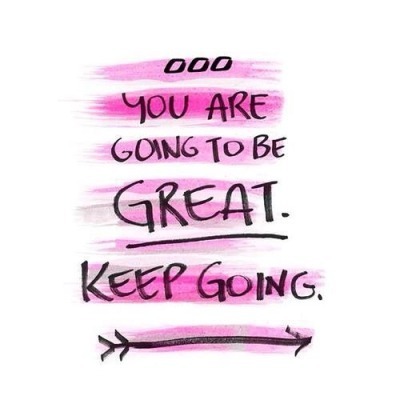 Our daily affirmation for Alaka‘i Managers — be great.
There are managers, and then there are great managers.
The great ones, are those we call Alaka‘i Managers in Managing with Aloha: They manage because they have a calling to do so, and that calling is to elevate the human condition, particularly in that sphere of influence we call the workplace. That is where they choose to lead as well, Leading with Aloha.
Wednesday, Dec. 10th
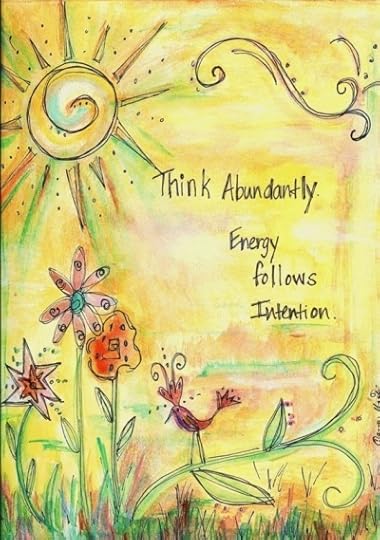 Our daily affirmation for Alaka‘i Managers
— think abundantly.
These few words speak volumes as an illustration of Palena ‘ole, our Managing with Aloha key of unlimited capacity:
See #9 within our 9 Key Concepts.
Make your connections to employing energy as well:
As the poster illustrates, abundance-thinking leads to intention, and new energies will surely follow!
Thursday, Dec. 11th
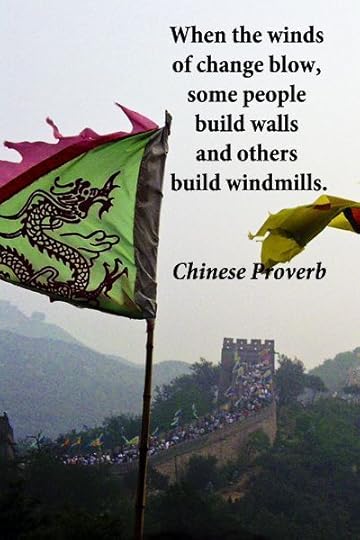 Our daily affirmation for Alaka‘i Managers
— be a builder.
In Managing with Aloha, Alaka‘i Managers choose culture-building, as they tap into the human potential of those they serve:
Simply defined, a culture is a group of people with a common set of values and beliefs.
How are they arranged to engage with each other, so that the culture is attentive to the right things, and is productive?
How do they work in an organized manner?
Friday, Dec. 12th
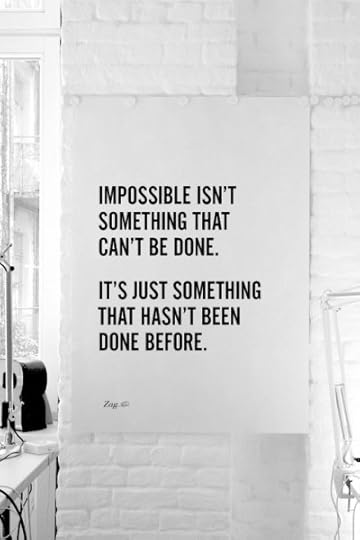 Our daily affirmation for Alaka‘i Managers
— take on the impossible.
Be the person, and lead the team that gets stuff done: Good stuff. Innovative stuff.
For remember:
“The impossible dream” is an aggregate of smaller pieces of accomplishments – all the accomplishment of good work.
Affirmations and Speaking with AlohaTo affirm something, is to articulate it clearly in your own mind, and then state it with confidence as your intention. We affirm our intentions with our actions.
The affirmations which result, get more and more effective in commanding your attention to them, when they are repeated with some regularity.
What I love about affirmations most, is the way they contribute to, and constantly will reinforce our values, and thus, our ethos of behavior: Ethos: Be true to your Values. Affirmations themselves, as practice, will directly reinforce the values of Ho‘ohana (our actions), ‘Ike loa (our learning), Ho‘ohanohano (our demeanor), and Mālama (what we are stewards of).
And let’s not forget Kākou (how we communicate): As an effective manager, you cannot “walk the talk” (a common expectation from your staff I’m sure you’ve heard before) until you talk that talk first. Make your talk the speech driven by good affirmations. Speak with Aloha.

December 6, 2014
Sunday Mālama for 12.06.14: Dads are Forever
Yes, I know that the first Sunday this December is actually the 7th (and that it may not even be Sunday yet as you read this). Call it my editorial privilege if you like, for I want to honor my dad with this Sunday Mālama. Were he still gracing this earth, my father would have been 85 years young this year: December 6th was his birthday.
It is always a great day of remembering for me, in all sorts of fatherly-inspired daddy-nesses as I celebrate a birthday he can no longer have with us. Not in person, that is. I smiled a lot today, and I even laughed out loud! Twice? No, thrice at least if a certain episode of very silly giggling counts.
Part of my reminiscing had to do with the way my dad impacted my Managing with Aloha philosophy, for he did so in several very significant ways. He provided me with good bones, the resilient muscle of tough love, and the sinewy strong values that would help me stand tall in my convictions, always and forever.
Take 1: Circa 1989
My “Be the Best Boss” posting for instance, published here in mid November, was drafted several years ago and initially published for a newspaper column I wrote, as I sat and thought about a conversation I had with my dad after I’d told him about my first promotion to an executive level position.
This won’t be exact of course, but my memory about it is clear enough to share that it went something very close to what follows: My father was an articulate, nuanced repeater — he’d keep talking about something until he was sure I really got it. He ate up new contexts and connective windows like they were word candy, savoring them in all their delicious possibility.
Dad: “That’s great news! Now you can show the whole world what a boss can actually be.”
Me: “Yeah, right Dad, the whole world.”
Dad: “Sure, why not? People talk story about when good things happen, and when they work with good people, and you can do the stuff that makes them happy, and gets ‘em talking.”
Me: “Well, I’ve already been a boss in those positions that led up to this one, and tongues aren’t wagging yet… am I doing something wrong?”
Dad: “You’re still learning, you’ve been getting where you need to be, and mistakes are useful along the way. It’s all good, as long as you keep finding your decisions and don’t throw them out like some dictator.”
ME: “I know, I know… managers are finders; we’re supposed to find answers in our decision-making, and not just hand them out like pronouncements, thinking that’s what we’re supposed to do.”
Dad: “(laughing) Okay, check. Just know that the higher up you go, the more your impulses can get in the way. Trust your instincts, but muzzle those impulses like a good boss should, and you’ll do just fine.”
Me: “So Dad, who was the best boss you ever had? What made him so good?”
Dad: “You know, I don’t think I’d call anyone in particular the best one, but I’ve done okay with the bosses I happened to get. They were good people, trying to do their best work, or at least they had good intentions most of the time. With one exception I don’t wanna think about, I could talk to ‘em, especially when I needed to. They would listen.”
Me: “I can do the listening part, I think. Sometimes it’s hard to be patient though, when people go on and on about things and I start wishing they’d get to the point.”
Dad: “You keep waiting for them. Let them talk, and let them see you listening and waiting. Just remember how awful it would be if they stopped talking to you altogether. Good bosses are the ones everyone wants to talk to, and they’re the ones everyone wants to work for.”
Me: “It sounds so simple, yet a good boss is kinda hard to find. I wonder why…”
Dad: “So let them find you. Okay?”
Me: “Okay.”
I was so, so lucky, for I had those kinds of conversations — those ‘talk stories‘ — with my dad all the time. All.The.Time. He could read me like no one else could. “Get it out girl,” he’d say to me whenever he sensed I was bothered by something, or lost in thought, “Get it out. I have time.”
He would say it no matter how much time he did, or didn’t have. Part of it could’ve been a father-daughter thing, but every daughter should be so blessed: I’ve never known another human being with a ‘circle of comfort’ so huge.
Always remember there are two types of people in this world. Those who come into a room and say, “Well, here I am!” And those who come in and say, “Ah, there you are!”
— Frederick L. Collins
Take 25 (at least): Circa 2014
So just for fun, let’s link up that conversation memory with that ‘impact’ it had on me, and on Managing with Aloha . . . This became an interesting Sunday Mālama episode of writing for me too, for I honestly did not think of linking-it-up until after I wrote down my remembered conversation with Dad, and I resisted every impulse to edit it.
You may not be a boss, you might not be a manager or a supervisor, but think about the profound impact you can have on someone too.
As a parent.
As a partner: Can everyone be a Partner?
And as someone who will eagerly ‘talk story’ and as someone who will patiently listen.
Reading tip: Remember that you can simply hover your cursor over each link to see the title of the post and/or MWA-ism I am linking back to, saving you clicks back to the articles you may remember having read before.
Dad: “That’s great news! Now you can show the whole world what a boss can actually be.”
Me: “Yeah, right Dad, the whole world.”
Dad: “Sure, why not? People talk story about when good things happen, and when they work with good people, and you can do the stuff that makes them happy, and gets ‘em talking.”
Me: “Well, I’ve already been a boss in those positions that led up to this one, and tongues aren’t wagging yet… am I doing something wrong?”
Dad: “You’re still learning, you’ve been getting where you need to be, and mistakes are useful along the way. It’s all good, as long as you keep finding your decisions and don’t throw them out like some dictator.”
ME: “I know, I know… managers are finders; we’re supposed to find answers in our decision-making, and not just hand them out like pronouncements, thinking that’s what we’re supposed to do.”
Dad: “(laughing) Okay, check. Just know that the higher up you go, the more your impulses can get in the way. Trust your instincts, but muzzle those impulses like a good boss should, and you’ll do just fine.”
Me: “So Dad, who was the best boss you ever had? What made him so good?”
Dad: “You know, I don’t think I’d call anyone in particular the best one, but I’ve done okay with the bosses I happened to get. They were good people, trying to do their best work, or at least they had good intentions most of the time. With one exception I don’t wanna think about, I could talk to ‘em when I needed to. They would listen.”
Me: “I can do the listening part, I think. Sometimes it’s hard to be patient though, when people go on and on about things and I start wishing they’d get to the point.”
Dad: “You keep waiting for them. Let them talk, and let them see you listening and waiting. Just remember how awful it would be if they stopped talking to you altogether. Good bosses are the ones everyone wants to talk to, and they’re the ones everyone wants to work for.”
Me: “It sounds so simple, yet a good boss is kinda hard to find. I wonder why…”
Dad: “So let them find you. Okay?”
Me: “Okay.”
It may seem like a lot of link-love to you, but I’m actually wondering if I’ll ever be able to share everything I learned from my dad with you. I looked for a few more of his lessons as they tugged at me in my memory, then realized I hadn’t written those up for publication yet.
Our parents teach us way more about values than we realize, and I bet yours did that for you too.
Postscript: I wrote about my Dad on his birthday last year too: When Children Sleep, Angels Whisper. He is pictured here reading with my son, Zach.
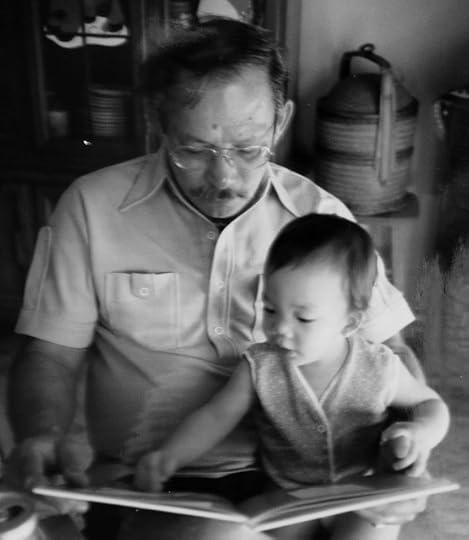
Hau‘oli lā hānau ke Lani Papa ~ Happy Birthday-in-Heaven Dad;
Your influence lives on in this humble life we lead here within earthly places, and our love, born through you, burns strong and bright. We still listen for those angel whispers, and always will.
~ Rosa

December 5, 2014
Are you approachable?
Ready for a follow-up to this? Desk time, Face time, Ho‘o time.
When I say ‘face time’ what do you instantly think about? One of my own instant word associations, is approachability, especially now, when Ha‘aha‘a is the value we are value-mapping our month with.
This is a bring-back post, remembered from the pages of my previous blog, Talking Story, and revisited for our current self-coaching on Hō‘imi. It’s actually a double-duty follow-up, connecting to our prep with D5M-ing as well.
So, you think you’re approachable huh?
I did too.
I’m barely 5’1 and have never weighed enough for the Blood Bank to sign me up as a donor, so who in the world would I ever intimidate?
 More people than I ever imagined. Much as I hate it, I know I still do, and so I have to constantly work on my approachability, helping people warm up to me, so they’ll talk to me: Speak up, I’m listening.
An Intimidation Factor. We all have one.
I was oblivious to my own intimidation factor up until a wise (and brave!) mentor showed me the truth about my perceived demeanor. It was pretty painful, but not as painful as the realization I hadn’t self-corrected soon enough.
You have an intimidation factor too.
If you are thought of as a manager, someone of authority, “with power” or “in charge” in any way whatsoever, especially in the workplace, I’ll bet you are way more intimidating than you think you are, no matter how warm, nice and gracious you might try to be. A certain degree of that intimidation factor comes with the organizational territory, and what that means, is that people do not consider you as approachable as you are hoping they do. Probably not even close to it.
Now, before you get too smug, and say, “I’m just your normal Joe, nobody reports to me,” guess again. Got seniority? Tenure? More experience than a new hire? Or are you the new hire with a degree that didn’t exist for the old guard? Leading a team, a committee or task force? Are you an older sibling? A parent? A local commanding the lay of the land, savvy in advantageous sense of place? I bet if I dig deep enough, finding out more about you and the people you interact with, that I will find a person you intimidate.
I’ll find a handful of them. It just happens.
So what’s the big deal?
If you are unapproachable,
people are not telling you what you need to know.
Not all of it.
Now there are bosses who will quietly admit that they like having a slight mystique surrounding them, forcing subordinates to use middle managers more than they otherwise would. I don’t buy it: ‘Mystique’ is a beguiling word for their intimidation factor that is similar to spraying a skunk with perfume, and they are justifying their lack of approachability with a flimsy excuse.
Besides, if you are unapproachable with one group of people, it spreads like a bad virus to everyone else too, and the ones brave enough to talk to you will be on their guard instead of being open and completely engaging.
They will not be curious about you either. They won’t seek you out, and ask you for your opinion, hoping to hear more of your mana‘o (your thoughts, beliefs and convictions).
Is that what you really want?
No, I didn’t think so. No one likes not knowing, and feeling they are forced to second guess underlying messages in what they are told (or subversively allowed to discover.) No one likes being the one that no one else will turn to.
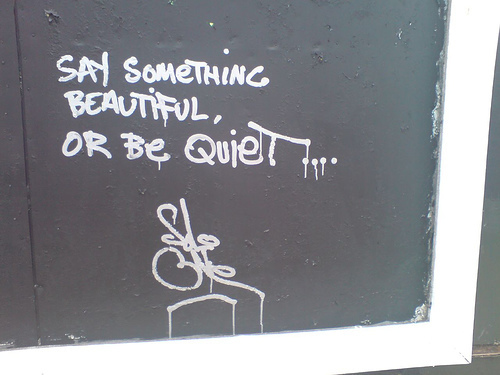
I prefer to think that everything said can be beautiful.
Everything.
For you to listen, and to hear better,
someone else has to do the talking.
My strategy for working on eliminating my own intimidation factor has been to work on Ha‘aha‘a, the value of humility (to open myself up more), and on my conversational skills, especially in dedication to the Daily 5 Minutes. The reason is pretty simple and straight-forward: The Daily 5 Minutes is about listening completely, and for me to listen, someone else has to talk.
The D5M practice is a new conversationThe Daily 5 Minutes is one way that “talking story grows up and really, truly comes to the workplace with us.”
The number one objection I will get from people hearing about The Daily 5 Minutes for the first time, and hearing that it is a daily practice they will learn, is “But Rosa, I talk to my people every day. We talk story enough.”
No you don’t. I guarantee you, you don’t. Granted, most of us talk TO others, AT others, and even FOR others all the time, but we don’t talk WITH others enough. When those times come up where we know we really need to have a heart to heart with another person, we stutter, stammer, stall, or skip the conversation altogether, hoping it will just go away. And surprise, surprise, it doesn’t.The Daily 5 Minutes is a new conversation in which we learn how to listen all over again so that we can communicate better. It can get our island way of talking story to be better than it ever has been before, because over time it vastly improves the circle of comfort and Aloha we have for each other. I hope you will take the time to read about it.
If you choose not to use The Daily 5 Minutes as your strategy with grooming better approachability, come up with something else, aimed at improving the circle of comfort which exists between you and the other people you work with. Trust me on this: It will be the best gift you give yourself.
Having more people talk to you is not a burden; it lifts burdens. You’ll see.
Related Reading: Winter Readiness for Alaka‘i Managers – “Ease into the D5M practice with a few weeks of being a kinder, gentler, more open-to-conversation you.”
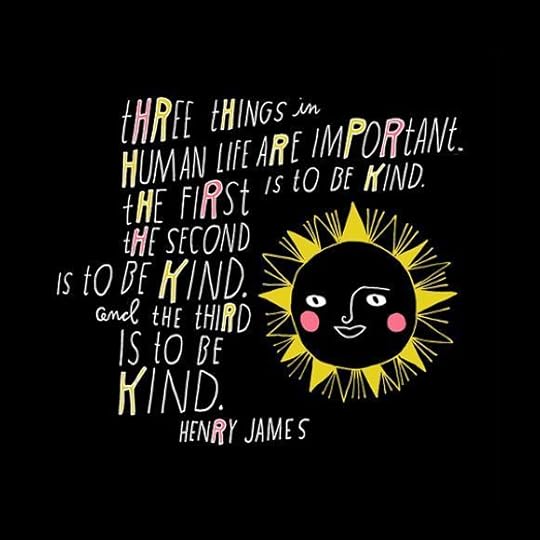
Illustrated by Lisa Congdon

December 3, 2014
Desk time, Face time, Ho‘o time
What else might be involved in your Winter Readiness as a manager (or as someone learning to ‘live, work, manage and lead with Aloha’)?
In looking back to Hō‘imi forward, it might be a useful exercise to reflect and analyze your average day at work, i.e. as it’s been in 2014, and as you prefer in 2015. What shifts toward better would you like to make?
“The idea of tiny changes cumulated over many steps is an immensely powerful idea, capable of explaining an enormous range of things that would otherwise be inexplicable.”
— Richard Dawkins (via What’s Out There)
We often hear those urgings to “MBWA! Manage by walking around!” or “Get away from your desk!” and most recently in favor, “Look up from those screens!” and we’re expected to just figure it out: Promptings don’t necessarily follow, with good coaching on how to get those things done.
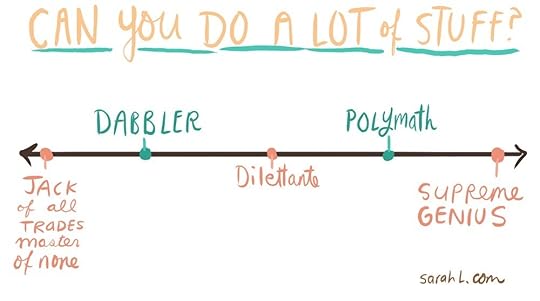
Sarah asks, Can You Do a Lot of Stuff?
or will you just end up scattered and not very good at anything?
Here is a framework we introduced to the SLC coaching laboratory this past year, finding it was quite useful to several of our clients. If you consider an average work day, how would this trifecta look for you?
1. Desk time: Engage your brain
_____% Included here, are intellectual verbs like
Planning, Organizing, Thinking, Writing to Learn
2. Face time: Open up, and Be a Good Receiver
_____% Included here, are social verbs like
Watching and Noticing, Listening, Conversing
3. Ho‘o time: Act and Do. Ho‘o means make it happen
_____% Included here, are movement verbs like
Doing, Taking Action, Hands-on Working (verb-specific to the type of work you do)
Many of the managers we begin to work with, will guess it’s been something like this for them:
50% Desk Time
20% Face Time
30% Ho‘o Time
Then we ask them to sit down at the end of every day in the coming week, to log what actually happened. With few exceptions, those percentages will change, and Why wasn’t it what I thought it was? becomes a question well worth investigating.
A good part of our coaching, will then be to help them set the targets they want to achieve, based on their other Ho‘ohana objectives.
Source: LisaCongdon.com
There is no right answer here. 30%DT – 35%FT – 35%HT may be good for me, while 40%-30%-30% might be better for you. Specifics help. Be clear on what you want, and why. For example, managers who are required to attend a lot of meetings will often have high Face Time percentages, which might seem like great engagement, but they don’t feel it’s been quality time, (communicating isn’t necessarily conversing), and we take that into consideration, suggesting various issue-solvers for them.
And consider this: You will find that every single value you proactively choose for your ethos alignment (to values, relationships, and intentional work) can be broken down into those three verbings (i.e. to value-verbing). For example, you can work on Ha‘aha‘a, the value of humility, in desk time, in face time, and in ho‘o time, giving you a more complete framework of alignment.
We say it over and over again: Values drive behavior. So when you consider your wants (those connected to your Hō‘imi forward behaviors), which values became targets for you in that exercise?
3. VALUE VERBING
Puts the process of VALUE MAPPING into the everyday language of workplace culture. We put value mapping intentions into executable actions with highly active, next-action verbs.
[Value-verbing tagged for learning.]
Compare to our vocabulary with 1. value alignment, 2. value-mapping, 4. value immersion, and 5. value-steering here: Curating Value Alignment.
Need more verb suggestions? Take a look at this slideshare from David Zinger:
Engage is a Verb: 37 Verbs of Employee Engagement from David Zinger


December 1, 2014
Begin, or Regroup with Ka lā hiki ola
Remember this goodness all month long:
Keep your firsts going with Ka lā hiki ola, the value of hope and promise.
Ka lā hiki ola translates to “the dawning of a new day.”
That does NOT mean it only applies to your mornings.
You can regroup, or newly “Begin with the End in Mind” whenever you want to. Wanting to is the operative phrase, isn’t it, for motivation is an inside job — it’s the desire and determination of self-motivation that counts.
Whatever time you may be reading this…

Ka lā hiki ola is the value of optimistic beginnings, and it can stay with you moment by moment. Ka lā hiki ola is a brand of self-leadership, and a Sense of Hope.
A Managing with Aloha Regrouping
In the dawning of this particular day, I admit feeling a little bit cautious myself, for I’m wondering if I have inadvertently overwhelmed you… I had told you about our SLC Ho‘omaha (usually a full-on vacation and hiatus, but also an opportune sabbatical for self-reflection), and then I newly introduced the Daily 5 Minutes (i.e. Our “Winter Readiness” focus) in response to few requests for it. Is a recap and regrouping our best December 1st approach?
Let’s do it. There’s method to my madness!
If your calendar has differed from ours, bookmark whatever you wish to catch up with later or trace, or just keep this email in your inbox.
New subscribers will find the listing below particularly helpful, as I have skipped over any extras (MWA gluttons can see everything on the Archive Page). Please note that this November has been a busier-than-usual month on my editorial calendar for you, and it’s not always this jam-packed! (For example, I published articles for Election Day Nov. 4th, and Veterans Day Nov.11th.)
For those of you who are following along as each post got published, this may also help connect the dots of my link-love back within the Archives (we seek to Collect stories. Dispel myths.) Much as I try to publish at a reasonable rate, I know you won’t always have the time to take all those links, and get the complete back-story.
1. Would you write “Walk my talk” on your calendar?
It’s no secret that I’m a huge fan of Value of the Month programs in the workplace. I like them because of their dipping effect: They dip workplaces into a constant swirl of value immersion, where anything and everything can be looked at with values-colored glasses, allowed into our front-and-center attentions to beg us for more alignment — more.
Language of Intention (Key 5 in the MWA business model, specifically for culture-building) is HUGE in working with value alignment. It’s the way we Speak with Aloha (our talk) to Manage with Aloha (our walk).
Therefore, I will often link you back to these posts and reference pages:
a) Managing with Aloha’s Lexicon Morphology
b) Conceptual Index for phrases, Glossary for Hawaiian words
c) Curating Value Alignment for our oft-used value verbing vocabulary
2. Change it up with Value Pairings
Here on the blog, our “MWA Coaching Central,” we are working on value immersion via Value Pairings, i.e. 2 values at a time, newly paired every two months, and where in effect, each value will actually get worked on for a full quarter-year. This posting gives you a calendar taking us into the 1st half of 2015. — more.
Thus, we’re ending the year with learning and humility as our focus:
November~December 2014: The Value Immersion of ‘Ike loa and Ha‘aha‘a
This post suggested a good starting place with ‘Ike loa in particular:
Managing with Aloha’s Learning Landscape: “Know well”
You will see what I have queued up for Ha‘aha‘a as December continues.
3. The value of Mahalo (appreciation, thankfulness, and gratitude) has been a November staple for many in our Ho‘ohana Community, so these posts were for those who wanted to keep their “gratitude month with Thanksgiving as our culmination” tradition going strong:
November and the Gratitude of Mahalo
Managing with a slimmer Thanksgiving
4. This particular November has also been notable for us, as Managing with Aloha’s 10th birthday year:
1 Book, 10 Years, and the Thriving Aloha of Grassroots Work
Sunday Mālama for 11.23.14: Failing Forward Out Loud
We are not those who rest on our laurels, so What’s next for us? We start with some basic, habitual work on our 19 Values of Aloha, a yearly exercise for us:
Looking back to Hō‘imi Forward
5. As in any business management playground, projects can happen simultaneously, and do so on a regular basis. The Art of Conversation and The Daily 5 Minutes are ongoing projects for us, and they always will be, for they are critical to the success of an Alaka‘i Manager.
On The Daily 5 Minutes
How it all started: This book excerpt on MWA’s Chapter 11 will also be a good review given our current Value Pairing with ‘Ike loa.
Revisiting the Daily 5 Minutes: Lessons Learned
Resource Page: Learning Paths: Prepping for The Daily 5 Minutes
Where we are NOW: Winter Readiness for Alaka‘i Managers
By the way, “talking story” and “D5M-ing” (with the Daily 5 Minutes) are NOT the same thing, though managers good with both will say they feel the same:
Talking Story is Thriving. It’s What We Do
On The Art of Conversation
Our “conversing” tag is well populated should you want to scroll through it. These are the bookmarks I use regularly, and would suggest:
About “MWA Conversation 101”: Conversational Catch-up ~ with Aloha
Conversation and communication are not the same thing:
All Conversations Are Not Created Equal
Speak up, I’m listening are the most powerful words a manager can say. Will people respond to your invitation?
As connection to our current Value Pairing for December:
Listening Alone Does Not Humility Make
These 3 were the most recent posts published in November:
Nov. 21st:Alaka‘i Managers, Meet the Best Boss
Nov. 13th: Lost in Internal Monologues
Nov. 12th: Nothing’s Final in the Managed with Aloha Workplace
6. New on Ho‘ohana Aloha: Daily Affirmations for Alaka‘i Managers
Daily Affirmations for Alaka‘i Managers is a new project for us: This introductory posting will cover how I am using Ho‘ohana Aloha (my Tumblr) and our LinkedIn Group to publish them. The affirmations are published Monday through Friday, Saturday is for “Archive Aloha” and Sunday remains devoted to Sunday Mālama. — more.
Any unanswered questions? I’m here for you: Write me, or comment on the LinkedIn teasers.



November 25, 2014
Managing with a slimmer Thanksgiving
I used to think that Thanksgiving was a blissfully simple holiday: Everything focused on the making of a feast that celebrated a good harvest, whether grown or bought, and then there were delicious leftovers sure to last you through the weekend.
No cook participating in preparing the feast would call it ‘simple’ I know, but the good harvest = good food premise kept everyone so aligned in what the holiday was all about. You demonstrated how thankful you were for your family mostly by merit of spending more time with them. Staying home to clear that refrigerator meant there was no need to go out, and in our house, the football games entertained just fine. None of those leftovers were wasted; we were grateful for them and showed it by eating every morsel.

Refrigerator Raid, by Amos Sewell.
Saturday Evening Post cover, February 19, 1955.
Then I learned more about the value of Mahalo, and Thanksgiving blew up.
Saying ‘thank you’ blew up, and showing it blew up.
Thanksgiving is a holiday that seems to get bigger and bigger, at least to me. Adding appreciation, thankfulness, and gratitude to what was a simple day of feasting can be a bit overwhelming once you’ve stretched your vocabulary to give that trio of words more distinction and separate focus.
I’ll admit to you that there have been a few Thanksgivings when I’ve asked myself, “what have I done?” by throwing Mahalo into the mix, and pushing Thanksgiving tradition further and further into our workplaces. What was relatively easy and entirely reasonable got kind of complicated. As things tend to do in business, Thanksgiving got so serious.
Celebrating Thanksgiving beyond harvest, food, and feasting can easily backfire on you. We fall into that trap of trying to do way too much. The busier you feel as a manager, and the more responsibilities you try to juggle, the longer your list of people and things to better appreciate seems to get, and the further behind you feel. You feel (gulp) ungrateful, yet you’re trying so hard! Sour notes can creep in, where you begin to feel like the one who’s not appreciated.
So in recent years, I find that I consciously try to slim down the Thanksgiving holiday, getting it to be simpler again. I recognize that there’s no going back in some ways — the trifecta of appreciation, thankfulness, and gratitude gets increasingly value-mapped, value-verbed, and otherwise value-aligned for me — however I can focus on parts of it, and not get overwhelmed in the whole of it.
This year for example, I decided to put all my focus on just 2 things:
1. Rally my whole family, no matter where we may have to travel to make that happen — and mission accomplished! We’re already together as you read this. (As an ‘immediate’ family we now live in 3 different states.) I am thankful we can be together in all our easy-to-be-ourselves-around-each-other quirks and glories, and there will be no forced ‘what I’m thankful for’ roundtable sharing around our feast (believe me, there will be lots of food). Mahalo in its naturally valued spontaneity will be great, and I am very confident it will be there, but we won’t be structuring it in.
2. Our family has this tendency to widen the circle in a naturally gregarious way, and there will be several others with us throughout the week’s happenings. My promise to myself, is that I will practice my skills as Mea Ho‘okipa, and have as many different conversations as I can, all focused on joy. This will be a lighthearted holiday and not a serious one.
“Be a good date.”
— Kurt Vonnegut
Lucky me, I don’t have to cook a thing this year (in case you’re wondering how I can skip over that part)! I am happy to do the dishes… you can have great conversations whatever your hands are busy doing in the kitchen.
My coaching for you this Thanksgiving is equally simple: Be kind to yourself, and enjoy this holiday however it happens. Did you notice, I haven’t even linked up this posting with subtle reading hints for you! Shut down your computer and get up close and personal with those around you.
Live with Aloha this Thanksgiving. We’ll get back to the working with, managing with, and leading with Aloha when your tummy and spirit is full.
Eat and be merry.

In the event that my body succumbs to a food coma following Thanksgiving dinner, I hereby refuse any resuscitation measures, including but not limited to poking, shoulder-shaking, and slapping my face while shouting,
“Don’t quit on us!”
— Colin Nissan for The New Yorker,
with a THANKSGIVING FOOD-COMA D.N.R.


November 24, 2014
Looking back to Hō‘imi Forward
Hō‘imi is another Hawaiian value, one that blends parts of Managing with Aloha’s ‘Imi ola (create your best possible life) and Ka lā hiki ola (hope, promise, and optimism), with generous helpings of Nānā i ke kumu (look to your source, particularly with Sense of Place).
Hō‘imi is a powerhouse in value-verbing, for it literally means to look forward, looking for better and best, and to do something about what you see. There is an element of restlessness with it, and the wanting to move on, shift, and tweak things, yet that discontent of Hō‘imi is positive and eager — for again, it expects better and best to be waiting in the wings.
The looking and ‘to look’ part (imi) is a distinction of Hō‘imi: Visualization and visionary thinking is a big part of it. You look at what is, to see it as clearly as you can, and you look toward better and best possibility — you expect that possibility is where you can see it, even if only in mind’s eye. At least for now.
We call it the value of positive expectancy, because the confidence in Hō‘imi is convicted by the experience of doing and getting things done. Remember, values reside in people, and in the elements of our human nature.
Just imagine the powerful, proactive punch in the value pairing of Hō‘imi and Ho‘ohana!

Look Back with appreciation, See Forward more clearly.
We’re begun the final stretch of 2014, and it’s a good time for this exercise using our 19 Values of Aloha.
I like to do this as journaling practice during Thanksgiving week because the value of Mahalo is so pervasive now: We are more appreciative, we speak to our thankfulness much more readily, and gratitude influences our reflectiveness. We “live in thankfulness for the richness that makes life so precious at work and at home, and we are able to sense our gifts elementally.”
At Say Leadership Coaching, we do this individually first, and then we compare notes as a team in one of our Thanksgiving week huddles.

I have structured the rest of this post in workbook page form for those of you who prefer digital ease: Copy-and-paste the section below, and then add more writing space to it before you print. The exercise is simple, but I do encourage you to take your time with it. Give some thought to the “trigger phrase” after each value’s name which I have taken from our “language of we” used here on this site. Then, write down 2 impressions for each value — express your current mana‘o.
Look Back (value-verbing done): How did you turn this value into a verb in 2014? How might it have expressed itself in a life of its own, taking you for the ride? What has that meant to you as a keeper, and lesson-learned?
See Forward (value-mapping desired): How do you want to use this value in 2015? Is there something specific you intend to do? Why? Do you have any partnership with someone else in mind?
As part of 2. See Forward, you may want to give it a theme, similar to what I did here in 2013: Going Forward into 2013, with Aloha for the double duty of this exercise, is that it can be your draft to Value Your Month to Value Your Life in the coming year.
One more coaching: Focus. It is easier to say “no” to extra baggage and the irrelevant, when there is a burning “yes” inside you. You may not call that “yes” your Ho‘ohana yet, but this can be a start.

1. Aloha ~ the value of your Aloha Spirit
Looking back:
Seeing forward:
2. Ho‘ohana ~ the worthwhile work of choice
Looking back:
Seeing forward:
3. ‘Imi ola ~ personal vision in professional mission
Looking back:
Seeing forward:
4. Ho‘omau ~ your tenacity, persistence and resilience
Looking back:
Seeing forward:
5. Kūlia i ka nu‘u ~ your striving for those higher summits of accomplishment
Looking back:
Seeing forward:
6. Ho‘okipa ~ being of service in Aloha
Looking back:
Seeing forward:
7. ‘Ohana ~ surrounding yourself with other people
Looking back:
Seeing forward:
8. Lōkahi ~ standing up for your individual role, collaborating with your team
Looking back:
Seeing forward:
9. Kākou ~ speaking with Aloha in all communications
Looking back:
Seeing forward:
10. Kuleana ~ taking on responsibility, and new readiness in accountability
Looking back:
Seeing forward:
11. ‘Ike loa ~ lessons learned, and the 2015 curriculum you desire
Looking back:
Seeing forward:
12. Ha‘aha‘a ~ humility opens us up, and will sometimes surprise us
Looking back:
Seeing forward:
13. Ho‘ohanohano ~ distinctive behaviors in dignity and respect
Looking back:
Seeing forward:
14. Alaka‘i ~ What was your Managing / Leading ratio, and will you shift it?
Looking back:
Seeing forward:
15. Mālama ~ the definition and objectives of your stewardship
Looking back:
Seeing forward:
16. Mahalo ~ actions in appreciation, thankfulness, and gratitude
Looking back:
Seeing forward:
17. Nānā i ke kumu ~ your Sense of Place and your health
Looking back:
Seeing forward:
18. Pono ~ your sense of balance, and personal/professional integration
Looking back:
Seeing forward:
19. Ka lā hiki ola ~ “the dawning of a new day” and your Sense of Hope
Looking back:
Seeing forward:
After you’ve completed your worksheet, write a paragraph which sums up your impressions. Capture whatever it is you’re thinking. Now put it aside to sleep on it.

Be an arrow, shot with Hō‘imi attitude
When you find pockets of quiet time in the holiday weeks to come, play with your worksheet a bit more, and decide what you’ll do with what you’ve learned, and what you now perceive as your current truths. These, after all, will be a draft of your own intentions.
In playing around with it, you might want to reorder these values in groups, in value pairings, or for batching and project-steering. The usefulness of this exercise is all about the choices you make: Ethos.
Postscript:When Managing with Aloha was written 11 years ago, I had identified 48 different Hawaiian values in my studies with kūpuna. Hō‘imi was not included in the 19 Values of Aloha of my book because I chose to focus on Hawai‘i’s ‘rootstock values’ as a universal collection. Hō‘imi is, however, one of the Core 5 Values of my company, Say Leadership Coaching.



November 23, 2014
Sunday Mālama for 11.23.14: Failing Forward Out Loud
This may surprise you a bit after our birthday celebrations and Ho‘omaha scheduling this past week, however today’s post is about failure — mine.
It’s the Sunday after 11.19.14, Managing with Aloha’s 10th birthday, which as you can imagine is humungous for me. Traditionally, Sunday Mālama has been when I will share my off-the-workplace-highway scenic route kind of posts. Not as a normal feature, but whenever they seem to be writing themselves. (The Sunday Mālama Tumblr affirmations are now when I will share good writing by other people.)
Alaka‘i Managers have their ups and downs, and so do I, and my failure was with a big goal I set my sights on accomplishing in 2014, and didn’t. Failing to get it done has been eating at me all month long, and I’ve been looking for the best time to tell you about it, because I had told you I was going to do it, and I owe you the update.
Time to fess up.
Derek Sivers is often quoted with this advice: “Shut up! Announcing your plans makes you less motivated to accomplish them.” which goes contrary to what we hear about transparency, having accountability partners, invoking the Law of Attraction and such. As he explains it:
“Tests done since 1933 show that people who talk about their intentions are less likely to make them happen.
Announcing your plans to others satisfies your self-identity just enough that you’re less motivated to do the hard work needed.
In 1933, W. Mahler found that if a person announced the solution to a problem, and was acknowledged by others, it was now in the brain as a “social reality” even if the solution hadn’t actually been achieved.”
Makes a lot of sense, I suppose. Sucks to be a victim of it when you know you can do better than that.
We do talk story about our intentions.
As you know, ‘intention’ is a pretty sacred word for me, and I use it a lot. I believe in clarifying intention and honoring it, and in saying it out loud as a way we “Speak with Aloha” — the Aloha expression of our self’s spirit-spilling. You may have heard me say this before: One of the best ways to honor your good word, is to speak it, so you’ll be forced to make it so. It’s even in my book, though I can’t find the exact quote and context at the moment.
As an aside, here’s an invention idea for you techies out there: My dream come true as a reader, book marginalia scribbler, non-fiction study mavin and self-talk curator, is to have a printed book (with wide margins to write in of course) that has a search box. Wouldn’t that be fantastic?
So anyways… my big goal for 2014 was to do a next edition update of Managing with Aloha, the republishing of which would be released on its’ 10th birthday 5 days ago. Not done. Despite all the time I allocated to the project, I am not sure when it will be done.
‘Allocated to’ is not the same as ‘actually worked on’ with good enough progress. Ugh. Guilty, guilty, guilty. I did work on it quite a bit, but not enough, and not with that sense of urgency I should have had about it.
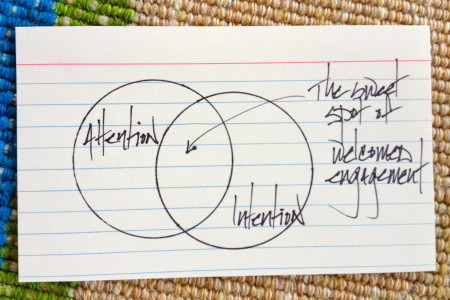
Recharging the goal with new vision, and fresh energy
Well, guilt is a rather worthless emotion, so I won’t belabor the point. However I’m not writing this as some implicit message that I’ve dropped my goal altogether. I still have to get it done: The practical reality of it, is that our inventory of hardcovers available to sell is dwindling, and I really don’t want to reprint it as is, knowing of the corrections I have in mind. Thank goodness for our ebook option on Kindle!
Reality of course, is that an unaccomplished objective gets bigger past its first missed deadline: My vision of what my next edition can be has grown substantially, and new ideas are keeping me awake at night… I’ve started to think of November’s sleepless nights as my penance! So I’m not going to tell you what my new deadline is, mostly because I’m just not sure… I need to invest more diligent work in the project so I can be realistic about it.
What I can tell you, is that these decisions have been made: It will be a softcover option next edition, with a greatly enhanced index (so even I can find some things better!) and new Resource Pages. If there is a resource page on this site you find you use quite a bit in your managing practice, would you let me know? I would love the feedback. My stats don’t help me much in that regard, for search engines send a lot of traffic to this site for Hawaiian translations and the business specifics we’ll talk about.
To be clear, I am not working on another book. I am working on improving the one we use as our key resource, and turning it into a more comprehensive workbook for you and the managers we coach at Say Leadership Coaching.

Do you know about the Kindle MatchBook program? If you buy a new print edition of MWA (or purchased one in the past), you can buy the Kindle edition for only $2.99 (Save 70%). Easy to search that way!
I feel more intentional and energized already!
As for what Sivers said, he may be right, but there is no way I’m going to stop talking about intention and what it does for us. I still believe that human energy is our single greatest resource. I’m also getting better and better in asking for help and not taking things on by myself.
Thank you for listening, and for being here to Sunday Mālama with me.
Postscript: By the way… I have also had the desire to create a smartphone app for the values of Managing with Aloha. That challenge has been in finding the right developer. I use a lot of different apps, and am very clear on what an app’s utility for our Alaka‘i Managers must be, but I don’t have the expertise required with the design and making it. Please let me know if you can refer someone to me, or have both the interest and expertise yourself. It would be a dream come true to actually work with someone who is studying Managing with Aloha too.
About this post title:
‘Failing Forward’ has been in my personal language of intention ever since I read the book of that title by John C. Maxwell: Failing Forward: Turning Mistakes into Stepping Stones for Success. It’s very, very good, and I’ve often gifted it and recommended it to Alaka‘i Managers over the years. It’s a terrific conversation starter within the workplace too — you have a company book club, don’t you?
Here is a January 2014 goal I did accomplish this year, and am still thoroughly enjoying:
A Discipline with Reading.