Stephen Tremp's Blog, page 24
April 23, 2014
Tomorrow's Devices
Intel has a project called Tomorrow's Project where their Chief Futurist Brian David Johnson recruits science fiction writers to produce "science fiction prototypes" such as future tech that help the engineering and product groups spark discussion.
They discuss their vision of the coming world and what they would like to build in a whole new way.
Users "don't care about the technology anymore," said , chief technology strategist at researcher In-Stat. "They care about how they...


April 22, 2014
S is for SpaceX
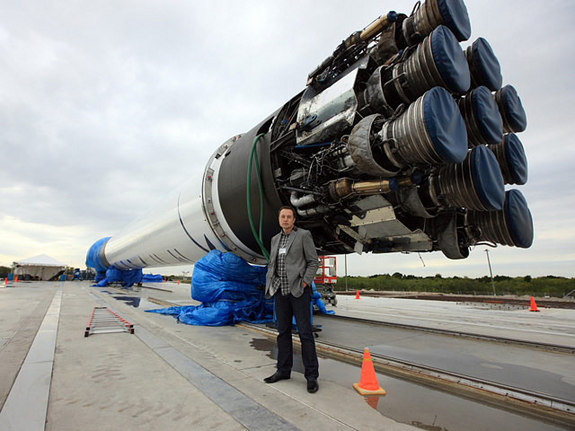 Now That's A Rocket!!!Yes folks, private industry is nipping on the heals of government space programs like NASA.
 Case in point: Space Exploration Technologies Corporation, or SpaceX - is run by billionaire Elon Musk, who made his fortune as a co-creator of PayPal. He also owns the electric car maker Tesla Motors.
In May of last year, SpaceX made history as the world's first privately held company to send a cargo payload, carried on the Dragon spacecraft, to the International Space Station. ...
April 21, 2014
R is for Relocation (of the Human Population)
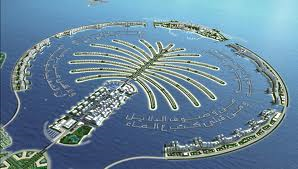 Problem: Many large cities, such as crowded Tokyo, are running out of space for an ever expanding population. And the problem is only getting worse as the global population increases. Especially for cities built on a shoreline such as an ocean or a major river where expansion is limited by mountain ranges or other geological obstacles. Solution: Artificial islands. Man-made islands are an answer to finding suitable space to expand living, work, and leisure space. Man-made islands are c...
April 19, 2014
Q is for Quantum Computers
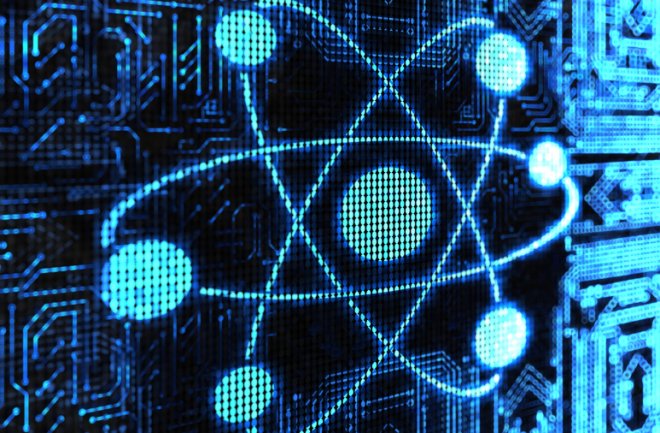 We’ve all been hearing about quantum computers. Are we on the cusp of a new Age, an Age of Quantum Information that will leave the Stone Age, Copper and Bronze Age, Iron Age, Renaissance Technology, Age of Exploration, Industrial Age, and the previous Information in light years in its dust?Let’s take a closer look ..... When it comes to data crunching, quantum computers will leave today's fastest processors in the dust.For starters, a quantum computer would be able to store more bits of...
April 18, 2014
P is for Pre-Implantation Genetic Diagnosis (Designer Babies)
 Designer Babies: Okay, I needed to squeeze this issue somewhere on the A to Z Challenge. There is a ethical and moral debate regarding Pre-Implantation Genetic Diagnosis to screen embryos for genetic defects. Follow this through, and designer babies are not far off on the horizon.
 This is a topic that is a mini-series just waiting to happen. And it will. So I will leave this very entertaining video clip for you to view. With great power comes great responsibility. Will we as a race...
April 17, 2014
O is for Orion (not the belt) and the Oort Cloud
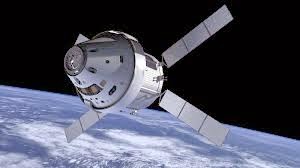 Ever wonder what will fill the incredible void left behind from shuttling the Space Shuttle Program that flew 135 missions, helped construct the International Space Station and inspired generations? Look no further. The Orion Multi-Purpose Crew Vehicle (MPCV) is NASA’s first planned beyond-low-earth-orbit manned spacecraft since the Apollo era. Crewed missions will be sent to the Moon, asteroids and Mars. Each Orion spacecraft is projected to carry a crew of four or more astronauts. It...
April 16, 2014
N is for Neutron Star (and Pulsars)
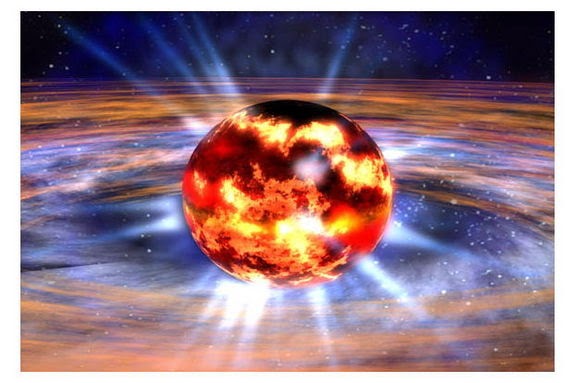 Neutron Stars are among the most extreme objects in the universe and can warp light. They are difficult to find, even with our so called advanced technological equipment. They are ancient remnants of stars that have reached the end of their evolutionary journey through space and time. These interesting objects are born from once-large stars that grew to four to eight times the size of our own sun before exploding in catastrophic supernovae. After such an explosion blows a star's outer l...
April 15, 2014
M is for Milkw Way Galaxy
 Our Milky Way Galaxy is a spiral galaxy. Our solar system lies in a sleepy little section about half way out. Like any spiral galaxy, we whirl around the center that most scientists believes contains a supermassive black hole and it’s called Sagittarius A. What lies just outside our Milky Way galaxy? There are about 200 ball-shaped globular cluster of stars each one containing around a million or so stars. Together with about 40 other galaxies we make up what is called the Local...
April 14, 2014
L is for Luna
 Our moon does not officially have a name, like the other 175 known natural moons in our solar system. It is simply called “The Moon.” Our moon is more accurately called a satellite. Luna is the ancient Roman divine personification of the Moon. It is derived from the Latin word lūna meaning “moon; month; crescent”.
 There are a lot of different and really strange planets in our solar system. And our moon is no different. For instance, the moon, our nearest neighbor, is massive compared t...
April 12, 2014
K is for Kuiper Belt
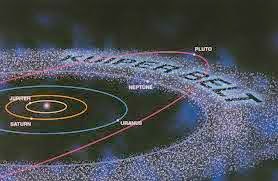 The Kuiper Belt is names after its discoverer Gerard Kuiper in 1992. This is the area beyond the orbit of Jupiter, but still under the gravitational pull of our Sun. It contains Pluto, other dwarf planets, and miscellaneous icy objects. It is similar to the Asteroid Belt, but it is far larger—20 times as wide and 20 to 200 times as massive. Like the asteroid belt, it consists mainly of small bodies, or remnants from the Solar System's formation. Although some asteroids are composed pri...