
Tom Pollock's Blog, page 4
October 27, 2013
THERE IS. NO. CONFLICT
The latest email from the WFC organizers includes the following:
“World Fantasy Convention 2013 also does not operate on a gender “quota” or “parity” system for programming. Instead, our aim has been to match the best people available to us to the most appropriate panel topics, thereby creating an informed and enlightening discussion for your entertainment.”
I’m not having a pop at the people running WFC. Some of them are my friends, and they’re all doing a very difficult job that I personally wouldn’t touch with a tractor beam, and yet am very glad is being done. They’re doing it for no money, and they’re doing it mostly very well. I will buy them a pint in Brighton.
Still, their email contains a false opposition, and it’s not the only place I’ve heard it. So here’s my two cents:
There is no trade off between gender parity and ‘having the best people’. It’s not one or the other. The point of having a parity policy is in service of getting the best people on the most appropriate panel topics.
This is mostly because the ways in which people build profile in the industry, including reviews, awards nomination and previous convention panels, systematically over represent dudes. This in turn would lead you to believe that the ‘best person’ is a dude, far more often than the best person is actually a dude.
Parity is supposed to encourage programmers to dig a little deeper into who ‘the best person’ is, as much as it help address the bias in the first place.
The parity policy which I signed up for last year is this: If I get asked to be on a panel at a convention with more than 50% blokes* I’ll try to help the con runners find someone who was not a bloke who is ‘as, or more qualified than me.’ This would never lead to a panel that was less informed or enlightening than that initially planned.
Repeat after me, in Darth Vader voice: There is. No. Conflict. No trade off. No quality sacrificed.
Also, this policy doesn’t ask con-runners to do anything other than to let me step aside and help them look for someone else. Rather the responsibility is pitched wider, at the participant. Personally, I think this a feature rather than a bug, since when you’re dealing with any systematic societal problem, it’s good to have as many people as possible acting to deal with it.
(Aside: this is one reason why merely aiming at parity across the whole convention, rather than panel by panel, works. Convention-wide programming isn’t something most people can influence, so it lets us shrug and bounce responsibility back onto the con-runners. Another bigger reason is that it tends to lead to what my wife calls ‘Women in genre, aren’t they weird?’ panels. For more on this: Jess Haines.
I know there’s a lot of points of view on this. A lot of people I respect disagree with me. I don’t expect everyone to immediately take a parity pledge. I don’t expect every convention to have one (although Nine Worlds recently showed you can have an ace con if you do). But actively trying for better representation on panels doesn’t have to come at a cost of them being ‘informing’ or ‘enlightening’, and we should stop pretending it does.
*With an even number of panellists, not counting moderators. Two out of three, or three out of five is ok.


October 4, 2013
Drive-by Worldbuilding: Estrangement and Orthogonality
And yes, I did make one of those words up.
I was chatting to a friend last night and it got me thinking about estrangement.*
So, estrangement: if you read or write any kind of urban fantasy, the odds are this is a business you’re in – bringing oddness to the everyday, making your hometown feel vast and cool and unsympathetic, making it so to speak, feel like there’s something strange in the neighbourhood. Vampires in the attic, Garuda behind the till at Sainsbury’s, magic on the 137 bus, whatever you fancy. The Germans call it unheimlich - ‘unhomeliness’, because they’re really good at naming things.
What’s currently baking my noodle is how this works in the context of a series. Because while your Vampire/ghast/scaffwolf/Mushroomkraken might have been super weird and freaky in the first book, before you can blink the reader’s subconscious will have processed it, packaged it, chewed and swallowed it, and be like: ‘Ok so you gave me like, a giant crane-fingered demolition god, but what have you done for me lately ?’

Of course, a lot fantasy writers make a virtue out of this. Think Harry Potter. The world becomes internally consistent, known and comfortable, but still awesome, right? And it reveals itself a little bit more at a time, and it becomes a really lovely place to spend some time, sink a few more butterbeers than is probably good for you and wind up drunk and in charge of a broomstick.
Fine. Splendid, but what if that’s not the game you’re in? What if you still crave the jolt of weird electricity you got when you read or wrote the first one? What can you do?
A couple of tactics spring to mind – first, in a technique technically known as MOARNOVUMZ you can just do more of the same: deluge the reader in new instances of the same kind of strangeness you were doing in the first volume. But diminishing returns sets in fast, and the initial crispness, the snap you got at beginning, might not be there for long.
Or you could try the ancient an honourable art of WEIRDANOVUMZ where, in an attempt to overcome early-onset jadedness you make each magical element exponentially more bonkers than the one before. “My new villain farts cobras”or “You liked Octopusman? Try *Dodecahedrapusman*” etc. This can work, only you risk losing the initial connection to reality, the delicious poise between the sacred and the mundane that made that initial unheimlich really sing.
The third way, and the one I’ve kind of been wrestling with, is orthogonality. You build the world of book one at right-angles to reality and you accept the fact that the reader will grow accustomed to your weirdness, in fact you rely on it. As of book two, book one is the status-quo, it is reality, and you build book two’s universe at right-angles to that, book three goes in at right-angles to book two (so at, er… right-angles to right-angles to right-angles to reality…) and so on.
In Our Lady of the Streets, the third Skyscraper Throne novel, there are Fever Streets that flash-heat to 1000 degrees, brick-glaucomas that seal up windows and doors trapping people inside their homes, and giant ophidian Serpent-terraces. I’m hoping they feel like a natural extension of, and twist and estrangement of, the logic that came in the series before.
We’ll have to wait and see if it works, but there are a couple of reasons the principle appeals to me. Firstly it shows a certain amount of respect for the reader’s ability to keep up, and readers are always at least 1.5 times smarter than we are. But what I really like about it is this: in treating your made-up world like the real one, in distorting it and beating it up, you lend it credence, you make it feel big, and strange and robust and fascinating and impossible to fully grasp – just like the world we live in every day.
*not from the friend, we aren’t estranged at all.
September 24, 2013
On Authors in Tents
Big circus tents.
Way I see it it’s like this:
The imagination of a reader is a stage. As the author you write the script, but the producers who pay for it, the director who stages it, the actors, set designers and the audience are all the reader.
You can make the stage directions as descriptive and proscriptive as you like, you can get all Shaffer on their ass, or you can leave them with barely more than the dialogue and a whole lot of space to play, but in the end, they own the building, they’re paying the rent and what goes on within it’s walls is their business and their call. They’re the ones reading the lines and sweating on the ropes.
Reading is work. Reading is magic. In fact reading is necromancy: exhuming that brief imagined experience that writers inter in our words and breathing new life into them. And hey, so what if the reanimated story doesn’t look to us so much like the one whose bones we so reverently laid in the ground? That story led a good life, had a good innings, maybe we shed a few tears over it’s passing, maybe not. But this is a whole new thing, made new by the little bit of themselves the necromancer put in to make it breathe – so let’s see what the new kid can do.
We all say we get into this because we love stories right? So the more different ways a book’s interpreted the more stories there are. Everyone wins.
September 4, 2013
He’s Got The Whole Wo-orld, in his hands…

Indulging in a touch of Terragenesis in your spare time? Here are five things I personally like in world building as a reader, that not everyone agrees with me on.
Sink or swim – nothing’s as immersive as, well, immersion. Shove my head under the waters of your imaginary world and hold it there until I stop thrashing. Let me hear it, smell it, breathe it. ‘Show don’t tell’ is as irritating a vacuity as ever gets passed off as writing advice, managing somehow to miss the fact that, as words written on paper, it’s all telling, but even so, nothing takes the magic out of magic like explaining your magic system. I want to see the fireballs fly and intuit she needs a ceramic-skin potion, not read up on it like it’s a fourth grade physics text book. Unless you’re actually writing a fourth grade science text book for your imaginary world, which y’know, would be kinda awesome, but I want a a friendly streetwise bright red dragon called Crispy to explain basic thaumaturgy to me please.
Less is more – A gap in a map does not mean your world is crap. Terra incognita and unexplored spaces (a) leave space for the reader to play with their own imagination in your own world, which is only polite and (b) makes your world feel more real, not less. What is true here in physical space goes a gazillion fold for conceptual space. If you have science, there should be uncertainties with it, people should be wrong about things. Also, 99 times out of a hundred it is better to avoid having a single character do all of the exposition on your world, as it makes it seem like Captain Exposition here has read all there is to know about your universe off a laminated beer mat over his morning cornflakes. Uncertainty is a feature of the real world and you should cleave as closely to the real world as possible.
More is More – Get as far away from the real world as possible! Seriously, go nuts. Dragons? Fine. Robots? Cool! A Vampiric Dragon Robot as your protagonist? Bring it. Wanna make a Killer Tomato her housemate? Now I’m listening. Their adversaries are the deadly and ancient order of the Teaspoon-throwing Ninja donkey Cavalry? HAVE AT ME YOU SEXY FIEND. The point is this: you can make it as big or small as you like, but it’s only ink and paper and there are no limitations, so it would be a crying shame not to use the full-scale potential for pantsless crazy if you were so inclined.
Don’t just import real-world prejudices and injustice into your world without thinking about it. – It’s lazy, and boring and depressing, and finally:
Have fun. If the five chapter description of the whiskey-glass painting ceremony genuinely excites you, by all means tell it to me. If, by any chance, you’re pulling your own teeth out in boredom while you’re writing it, but you’re including it anyway because you’re under the impression that more detail = better world building, skip to something else. It is impossible to itemize an entire universe* on a page, and any universe will contain countless things of legendary awesomeness. Give me the fun stuff.
N.B. This shit is all really hard, and while I look for it as reader, and strive for it as a writer, that doesn’t mean I succeed. Them’s the breaks.
*Except like this: Item 1. – a universe.
August 8, 2013
Of Badgers and Big Blue Boxes…


Let me go on record and say, I think Peter Capaldi’s going to make a fantastic Doctor. He’s a fine, versatile actor, and I’m excited to be seeing him on the show as a regular. There’s just one part I think he’d be better suited for:
*Fanfare*
Companion.
Companion? Companion to whom, you ask. If I had my pick, it would probably be Olivia Colman, because she’s basically the spirit of acting made flesh and I’d cast her as anyone in anything. Alternatively, Harriet Walter and Anna Chancellor could also do the sprightly, Mary-Poppins-with-a-very-big-spiky-stick-in-her-bag-just-in-case thing I have in mind.
Imagine it with me: Colman’s Doctor, full of brightly smiling energy and restless adventure, but constantly battling the terrifying alien distance that must afflict any nigh- immortal character faced with the problems of ordinary folk; balanced by Capaldi – maybe as a battle-hardened Chemistry teacher- all hilarious grouchiness, waspish wit and the experienced, empathic heart that understands what the people they have to help really need.
*Drifts off to daydream about all the possible Colman-Capaldi Capers.*
It would be sooooo good.
If the above sounds familiar, it’s because it’s a close analogue to the dynamic between Jonny Lee Miller’s Holmes and Lucy Liu’s Watson in the American Sherlock Holmes update Elementary, and I imagine it would bear a pretty much the same relationship to the Doctor Who we’re likely to get next season as Elementary does to Stephen Moffatt’s other big project, Sherlock.
Now, broadly speaking I enjoy Sherlock, despite its problems. I think Benedict Cumberbatch, Martin Freeman and Mark Gatiss are all great in their roles, and the show has some cracking dialogue and some very clever moments. But for me, Elementary has the edge, and here’s why: Elementary understands that the real heart of any drama comes not from hero-worshipping your hero, but from developing the relationship between your heroes, plural*. Elementary gets that Watson is as critical to the story as Holmes is.
In other words, Elementary gives good sidekick.
I’m a Hufflepuff, a proud member of the house of Badger. Naturally, therefore, I think a crucial test of any writer is how they treat their sidekicks. Are they fleshed out, made human, given meaningful, moving story arcs, and allowed to surprise the audience every now and then, the way any good character should? Or are they left on the side like the pointless bit of ketchup-smeared lettuce they garnish pub burgers with for no readily apparent reason?
You can write the smartest, hottest, most charismatic lead on TV, good luck to them. May their ego’s gravity well entrap all of the millions of pairs of underwear thrown their way into a sexy Egyptian cotton asteroid belt. If you want real magic, though? Butch-and-Sundance magic, Toby-and-Sam magic, Buffy-and-willow magic? You need to write the ever-loving-gravy out of both your hero and your sidekick, then put them on screen and watch them make sweet music out of saving the world.
That’s where I think the Colman and Capaldi Capers (CCC ©) could have taken away our collective breath, shattered our collective hearts and reglued the pieces together to make THE MOST AWESOME SCULPTURE OF A MOTHERF*CKING PHOENIX RISING FROM THE ASHES OF OUR MISERY EVER FORGED FROM HUMAN CARDIAC TISSUE. But alas, I guess we’ll never know.
………………….
*I had such high hopes for Sherlock, too. That bit at the end of the first episode where they’re walking towards the camera while Mycroft goes ‘Sherlock Holmes and Dr Watson’ while the triumphant music plays? A. MAZE. BALLS. Sadly, the initial promise was broken by the later treatment of Watson as a buffoon who needs to be constantly rescued and gets no snacky pops. I guess that’s the bind Moffatt put himself in when he decided to include 4 genius level characters (Both Holmes boys, Moriarty and Adler), so anyone without an I.Q. of 9,567,312 had to be written like a oaf to make them look good. Man, I hate it when screenwriters do their characters bullying for them.
August 6, 2013
And on the eight day of summer, my true love gave to me….

Nine WHO-OLE WORLDS!
Yep the brand new geek convention phenomenon known as 9 worlds is coming to an airport hotel near you*. And I’m doing some stuff.
FRIDAY:
20:30 – 21:45 LAUNCH PARTY: RAISE A GLASS OF MEAD TO SWORDS OF GOOD MEN AND THE GLASS REPUBLIC
Snorri Kristjansson and I have a little shindig to celebrate the release of our new books. There will be drinks, vikings, sewer dragons and terrible puns.
SATURDAY:
20:30 – 21:45 TEENAGE KICKS: WRITING FOR YOUNG ADULT AUDIENCES:
Good line up for this one, Cory Doctorow, Catherine Banner, Liz De Jager and I let our inner teenagers out to party. Mine will be likely be liberally decked out in eyeliner.
22:15 – 23:30 NEW VOICES SLAM SESSION: SATURDAY EDITION
LOUD NOISES.
SUNDAY:
10:00 – 11:30 MAKING MONSTERS
I’m teaching a few simple techniques to give you and all your loved ones years of nightmares and high therapy bills. Come play Doc Frank to my Igor, you know you want to.
15:00-16:00: SIGNING WITH KIM NEWMAN AND WILL HILL
What it says on the tin. It does it. Oh yes. (Worth coming to, btw, if only to display the extraordinary range of facial hair that Kim, Will and I are currently sporting between us.)
Have a bonus video of big cats in boxes, because you deserve it.
July 21, 2013
Annoucement
I had wanted to wait on this until I could announce the two things together, but a few people have been asking why The Glass Republic isn’t available on US Amazon, so I’ll say it now.
The reason TGR isn’t up on US Amazon is that I, and my US publisher Flux are parting ways. This is a business rather than a personal decision, and a wholly amicable one. I had a blast working with all the guys there, and I wish them well.
I should (hopefully) be able to announce who’ll be publishing the Skyscraper Throne trilogy in North America going forwards soon, we’re still working out a few contract details.
The upshot is though, that they’re unlikely to be able to put it out over there until next year.
I’m really, really sorry if you live in the US and Canada and were hoping to be able to read The Glass Republic this summer. My agent and I did everything I could to make that happen, but ultimately it was beyond our control.
On a personal note, I’m very sad that the cover Flux made for the book that we revealed in January now won’t see shelves. I think it was perfect, and a good example of the kind of cover YA needs more of.
As ever, you guys are the best.
Tom
July 10, 2013
Shard times, they are a-coming…

Competition Time! Time to win things.
The Glass Republic is coming. Granted this probably isn’t news to you if you’ve spent any time around me, as I have a tendency to yell it from astride chimney stacks and whisper it passionately to complete strangers on the tube (aside: as a technique for obtaining precious space on a rush-hour train, this works reaaaaaally well. Try it out.)
What you might not know, is my rather splendid publishers Jo Fletcher are running a competition to celebrate:
We have a pair of tickets to the top of the Shard (which features rather heavily in book two) AND ten signed, hardback copies of The Glass Republic to give away.
Here’s how you get your hands on the swag:
1. Snap a pic of yourself with The City’s Son (yep, the first one) . Hardback, paperback, Kindle ed if you set it to show the cover page, they’re all good.
2. Tweet said picture at me (@tomhpollock) or JF (@Jofletcherbooks)
Examples: here
We’ll pick the winners on the official publication day August 1st, so as of now you have twenty-two days to get snapping. Obviously, to be able to claim the Shard prize, you have to be able to get to the Shard, but we will ship the books internationally, so US peeps if you want in, go for your very lives you handsome devils.
Extra credit goes to the most awesome and urban shots. So – a pic of you on your sofa reading it gets fewer points -
(unless you’re on the deadly sofa-hydra of Acton, where if you cut off one zip-mawed cushion two more plump up in its place. The bones of many a brave warrior are entangled with the TV remotes and loose change down the back of her, but, in the words of Patrick Stump, I digress)
- than a pic of you reading it under a street lamp or a train station. A pic of you reading it under Reach’s cranes? MOST AWESOME. We’ll send the prize to your next of kin.
Now, the view from the top of the Shard is stunning (and also kind of expensive), but clearly the coolest prize here is the book, right? I mean there are SEWER GAS DRAGONS in it, as well as the Mirrorstocracy, and armoured police on monstrous horses and some familiar, oil-soaked… friends.
And Pen. Most of all, Pen. This is her novel.
If you need more persuading – the first two chapters are free: here.
So get in. See you on Twitter.

July 9, 2013
Monsters
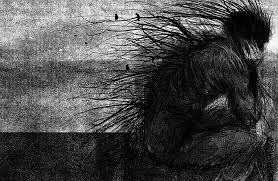
I believe that if you don’t engage with darkness, you’re leaving a teen alone to face it by themselves. I think THAT’s the amoral position.
— Patrick Ness (@Patrick_Ness) July 9, 2013

So Patrick Ness was being awesome earlier, and it reminded me to tell you about what I did last week.
Last Tuesday, I taught my first ever class, some straightforward techniques I use for creating monsters to some 16-18 year olds. Early on, I asked them: ‘what’s the one thing all monsters have in common?’
‘They’re scary’ they replied.
Damn right they were, they blew me away.
I’m not going to tell you what their monsters were, after all they’re their monsters, it’s them holding their reins, not me – but they touched on loneliness, social exclusion, surveillance, darkness, obsession, grief and lord knows how many other things. The monsters in our stories are maps of our hearts. They show us what we’re afraid of, and if we’re lucky, they can even show us why.
So why were these young men and women such splendid spawners of the unnerving? Because they were scarred? or twisted? Or had been exposed to too many dark and violent narratives? Hell, and indeed, no.
They could do it because their lives involve darkness the same way they do school and TV and love and music. Their lives are big, complicated things, and these teenagers were big and complicated enough to encompass that.
Children’s publishing includes YA publishing. The books this gentleman is criticising were published for teens. Teens who are people: smart and confused, silly and deep and dangerous and sensible and scared and brave and need stories that speak to all of that. They’re young people, sure, but you don’t respect the ‘young’ part by ignoring the ‘people’ part.
BTW, if you’re heading over to that article and you comment, do me a favour and be nice, ok? At the moment the discussion on this has been really cool and civil, it would be ace if it stayed that way.
June 18, 2013
Metaphornication: Trains
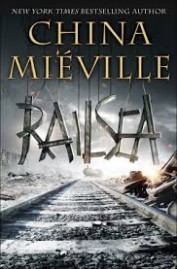
What follows is the oddest thing to bubble out of my brain in a while and that’s saying something: a critical look a trains-as-metaphor in recent SFF, as an effing poem. It was sufficiently strange, I thought I’d share, here goes.
Trains are awesome.
They have size, and speed, and momentum,
They roll right over those who resent them,
And pretty much no matter how you present them,
Trains are, (ironically for beasts built around blazing hot boilers,)
cool.
Trains are cool.
They hit that steampunk sweet-spot between intricacy and eccentricity
They’re magnificently indifferent to electricity,
And so, with a remarkable degree of chronicity,
They pop up as a favourite tale-telling tool.
The Hogwarts Express takes you back to school
And, not to harp on a theme,
but it’s an ‘Art-deco dream’, powered by steam,
That returns the Sandman to the land he used to rule.
So, trains are cool.
But
They don’t get quite a perfect score,
‘Cause for those of us vulnerable to metaphor
There’s just one thing we can’t ignore.
A fact that gets up any number of backs:
We might love the engines, but we hate the tracks.
Tracks are metaphorical manacles:
metal constraints that taint the very possibilities we want to array
Because, whatever train apologists say
A set of metal rails runs only one way
And, hard as it may be to define,
there’s something so baleful in that long, lonely line.
And it won’t lie down, no it won’t go to ground,
Not unless you hit it with a very big stick,
And in a sense, that’s just the narrative trick,
China Miéville employs, with his conceptual toys,
To give the Moletrain Medes the latitude it enjoys.
Railsea’s arithmetical,
To multiply the problem is to solve it.
The premise around which this whole world revolves is:
‘A single pair of rails makes up a prison,
but an sea of them enables any decision.’
Add to this a drop of Brechtian voice
And your image of perfect freedom of choice,
Becomes a symbol for narrative, for reading, for text,
Where what you read now won’t limit what you read… afterwards.
Still, if you’re of a mind to see it,
There’s more you can do with a trapped train than free it.
Cats like Felix, like to remix,
And when Gilman recasts the American west, it
would be a Half-Made World without a villain to test it.
And so he invests it with a power malign
A sinister armour-plated engine-agent of the Line:
A Black Knight train, crossing the border,
Bearing a Totalitrainian order.
It’s Carnegie-carnage, Snaffleburger Capitalism,
Its edicts: CONFORM, CONSUME, OBEY,
But… it’s a little extreme, wouldn’t you say?
Surely there must be some middle way,
And so we turn, at last, to Nick Harkaway.
Not really sure this counts as criticism
But a clockmaker remaking his father’s decision?
Doesn’t that smack a bit of determinism?
And Angelmaker’s train follows only one path,
But alongside her boiler, she makes room for a hearth.
Because whilst the Ada Lovelace computes, and commutes,
Her clan-destined passengers down pre-defined routes,
Her philsophy’s built around Ruskinite mores,
Where our greatest assets are our human flaws.
And that turns the metaphor in a surprising direction:
(like the waste-train that turbo-boosts Joe Spork’s erection)
Whatever limits are set on our human election,
Whatever insects alter our moral perception,
As we steam down the line to our final connection
We must dodge the tyranny of total perfection.
Trains are cool.
(With heartfelt apologies to JK Rowling, Neil Gaiman, China Miéville, Felix Gilman, Nick Harkaway, and of course, W.H. Auden.)


![[image error]](http://tompollock.com/files/2013/06/Angelmaker.jpg)
![[image error]](http://tompollock.com/files/2013/06/HMW.jpg)