
Aaron E. Carroll's Blog, page 31
November 22, 2021
Deadline Extended: HSR Special Issue Call for Abstracts on Age-Friendly Health Systems
Health Services Research (HSR) and The John A. Hartford Foundation are partnering to publish a Special Issue on Age-Friendly Health Systems. Abstract proposals are due November 22, 2021 November 30, 2021.
A key challenge facing health systems in the United States and around the world is how to best design services to provide care to a growing population of older adults that is heterogenous in health and function. The spectrum for this population will range from healthy and fit persons to others with serious illness and disability including a small number with high healthcare needs and who incur high costs. Across this spectrum, many of these individuals will be among the most vulnerable to the effects of inequality, climate change and emerging infectious diseases, as we have recently witnessed. Our healthcare systems are not always designed to address these vulnerabilities. As such, they are at increased risk for complications including delirium, medication-related adverse events, falls and complications associated with reduced mobility.
To address these issues, The John A. Hartford Foundation, Institute for Healthcare Improvement, American Hospital Association, and the Catholic Health Association have collaborated on an initiative to improve the safety and effectiveness of care for older adults. The Age-Friendly Health Systems (AFHS) movement builds on existing evidence-based models of geriatric care and integrates with a wider ecosystem of age-friendly public health, public policy, cities, and states.
The goal of the AFHS initiative is to aim for all care with older adults to be age-friendly care. Its work is intended to improve the experience of care for older adults, reduce health care-related harms, improve satisfaction with care, reduce costs, address health disparities, gaps, and inequities in care, and optimize value for patients, families, caregivers, healthcare providers, payers and health systems.
Therefore, the goal of this Special Issue is to highlight cutting-edge work that showcases the potential to learn from those involved in understanding, designing, implementing and studying age-friendly programs and policies.
Find more information about the issue and how to submit an abstract here.
The post Deadline Extended: HSR Special Issue Call for Abstracts on Age-Friendly Health Systems first appeared on The Incidental Economist.

November 18, 2021
An Anti-viral Pill to Treat Covid?

Molnupiravir is a broad-spectrum antiviral that has been in development for quite some time – it was first tested as an Ebola drug and is now showing promise against Covid-19. In this episode we take a look at what we know so far and what we’re waiting to find out.
The post An Anti-viral Pill to Treat Covid? first appeared on The Incidental Economist.
November 17, 2021
Rx vs. OTC (Part Three): The Role of Pharmacists

Izabela Sadej, MSW, is a policy analyst at Boston University School of Public Health. She tweets at @IzzySadej. Research for this article was supported by Arnold Ventures.
This post is the third in a series that examines pharmaceutical drug distribution in the United States (US). The first post described the Food and Drug Administration’s (FDA) drug classification process [prescription or over-the-counter (OTC)] and how drugs can switch classifications, while the second post focused on the costs and benefits associated with both classification types. This final post will explore expanding the role of pharmacists as an alternative method in drug distribution and access to care.
Pharmacists in the US Today
Pharmacists have a specific set of responsibilities across the US health care system, primarily in the distribution of medications prescribed by health care providers. They are also a source of information on medication usage for patients and advise other health practitioners on the selection, dosage, interactions, and side effects. While a large portion of pharmacists work in community pharmacies (drug stores), many also work in hospitals, outpatient care centers, and other settings that handle medication.
The role of pharmacists has expanded over time, particularly when it comes to patient care services. For instance, take Medication Therapy Management (MTM), which first arose through Medicare Part D and has since expanded across several states. MTM allows pharmacists to provide direct patient services to optimize therapeutic medication outcomes and prevent unnecessary costs. This includes reviewing a patient’s entire medication list (both prescribed and OTC products) to address any potential issues, such as incorrect medication usage, duplicates or unnecessary medication, or the need for additional medication. MTM encourages a patient-centered approach to pharmaceutical care through increased direct patient education and more intensive collaboration with other health care providers.
Beyond MTM, other ways to broaden the responsibilities of pharmacists have been considered, such as granting prescribing privileges and provider status, as well as creating a “third class” of drugs that would be distributed by pharmacists themselves.
Proposed Changes
Prescribing and Provider Privileges
Providing pharmacists with prescribing privileges and/or provider status has been greatly contested in the US. While all states allow pharmacists to prescribe medication in some capacity, most prescribing regulations are restrictive and only apply to specific medications (such as naloxone, hormonal contraceptives, and smoking cessation products). Expanding these privileges has become especially relevant during the COVID-19 pandemic, as pharmacists have become a key access point to health care services.
However, many health systems do not recognize pharmacists as health care providers, which prevents pharmacists from being able to bill for services provided. In 2021, the Pharmacy and Medically Underserved Areas Enhancement Act was introduced, which if passed would amend the Social Security Act to include pharmacists on the list of recognized providers under Medicare Part B. This would increase access to services for recipients and set a precedent to grant pharmacists with provider status.
While expanding pharmacists’ prescribing and provider privileges may alleviate some burden on health systems, these additional responsibilities are contested by some. Some pharmacists do not want the greater responsibility that come with these privileges. Physician groups have also historically opposed pharmacist provider status over concerns like the change it would have on a pharmacist’s scope of practice, essentially allowing them to “practice medicine” similar to physicians. Additionally, granting provider status causes hesitation about the associated increase in costs with providing reimbursement payments for services.
A Third Class of Drugs
As previously discussed, the US follows a two-class drug distribution system (prescription or OTC). However, an alternative approach that would increase pharmacist involvement would be the introduction of an official “third class” of drugs. The US has a single non-prescription category (OTC), with some exceptions as mentioned above, while there are several nations (that are considered “equally developed” as the US) that have two or more non-prescription classifications.
For instance, through a model that promotes self-care, the United Kingdom has two non-prescription classifications, OTC and pharmacy-only (drugs that can only be sold from a registered pharmacy). New Zealand and Australia have three non-prescription classifications including pharmacist-only (for medicines that require professional advice from a pharmacist but do not require a prescription from a doctor), pharmacy-only (for medicines that are available in pharmacies but do not require consultation with a pharmacist), and general sales (for medicines that can be sold in places not classified as pharmacies). Japan restricts all non-prescription medicine sales to pharmacy staff-only (pharmacist or other registered persons).
While some non-prescription medications have restrictions for purchase in the US (like age limits or requiring proof of identification), the FDA and American Medical Association have historically rejected the creation of an additional classification that would serve as pharmacist-only, or behind the counter (BTC), access. In 2009, the US Government Accountability Office released a report stating that there are several issues that need to be addressed before BTC could be established, including concerns that it would become the default for prescription to OTC drug switches, thus reducing patient access to medicine that would otherwise become OTC.
Series Conclusion
As examined in this series, pharmaceutical drug distribution in the US is a heavily regulated process with both benefits and drawbacks. These include:
Multiple methods in achieving FDA drug approval, which also allows drugs to switch from prescription to OTC (Part 1/3).Costs and benefits to both the prescription and OTC classifications, including concerns for patient autonomy, access to care, and cost (Part 2/3).Hesitancy around alternative methods to pharmaceutical drug distribution, such as expanding the role of pharmacists (Part 3/3).While alternative approaches to pharmaceutical drug distribution exist, many of these methods would require drastic changes to the US’ system. It’s important to first understand how this system currently works and keep patient access and affordability at the forefront of future conversations.
The post Rx vs. OTC (Part Three): The Role of Pharmacists first appeared on The Incidental Economist.November 15, 2021
Scheduled TIE Downtime this Friday
We intend to take TIE offline on Friday, November 19 so we can put up a newer, better version. We don’t expect more than a day offline, but predictions can be wrong. For updates, follow @IncidentalEcon on Twitter.
The post Scheduled TIE Downtime this Friday first appeared on The Incidental Economist.November 12, 2021
Come work with me! Research scientist position opening at BU School of Public Health
Colleagues and I are advertising for a research scientist. If that’s you, this is an opportunity to work with us at the Partnered Evidence-based Policy Resource Center (PEPReC). Though PEPReC is a center in the Veterans Health Administration, the position will be filled through Boston University.
Apply here.
The post Come work with me! Research scientist position opening at BU School of Public Health first appeared on The Incidental Economist.November 10, 2021
Should You Get a Covid Vaccine Booster?
As booster shots become available in the United States, many Americans are scrambling to get them. But are these shots the best use of our resources? Who really benefits from them and what is the most prudent way to use our vaccine supplies?
The post Should You Get a Covid Vaccine Booster? first appeared on The Incidental Economist.
November 9, 2021
The Big Impact of Little Barriers to Public Benefits
Paul Shafer is an assistant professor of Health Law, Policy, and Management at the Boston University School of Public Health. He tweets @shaferpr.
A recent article, I published in Tradeoffs looks at a study in JAMA Network Open examining how needing to physically show up at a social service agency office dampened participation in a critical food assistance program—Special Supplemental Nutrition Program for Women, Infants, and Children (WIC)—during COVID-19. Administrative burdens can keep people out of programs that they are eligible for, with big implications for health and health equity given the populations that programs like this serve.
In it, I write:
The Special Supplemental Nutrition Program for Women, Infants, and Children (WIC) supports women with low incomes and their children, and the program has proven to help narrow racial and ethnic disparities in infant health. WIC benefits are provided on an electronic debit card, which some states automatically reload (“online states”) and others reload only at in-person WIC office visits (“offline states”).
The authors estimated that offline states experienced a nearly 10% drop (-9.3%) in WIC participation during the first nine months of the COVID-19 pandemic relative to online states. This was a product of both increased participation in online states and decreased participation in offline states. Meanwhile, the authors found that participation in the Supplemental Nutrition Assistance Program (often referred to as “food stamps”) — a program that renews remotely in all states — saw no significant changes in participation during COVID-19.
Read the full piece at Tradeoffs!
Research for this piece was supported by Arnold Ventures.
The post The Big Impact of Little Barriers to Public Benefits first appeared on The Incidental Economist.Another harm from firearms: lead exposure
Christian Hoover is the Co-Investigator of the Firearm Exposure Research Team at the Harvard Chan School of Public Health, where he is also a member of the Harvard Injury Control Research Center, student in the Health Policy Master’s program, and former project manager in the Department of Environmental Health.
When we reflect on gun risk, we think shootings. Since 2013, there have been over 35 thousand gun-related deaths in the US. But there’s a more insidious risk of harm — lead exposure.
Lead exposure is a big deal. It has been linked to mental and behavioral disorders, as well as early death by all causes. Lead exposure in children is one of the worst dangers facing young families. A single exposure in youth can impact a child for their entire life.
The way lead from firearms impacts children is layered and complex. In basic terms, children can be exposed to lead by occupying the same space as someone who handled a weapon that used lead bullets or lead primer.
New Research
Alongside my colleagues, Drs. Aaron Specht (Purdue University) and Gabrielle Hoover (Harvard Medical School), I published a paper examining the lead-related risks of firearm ownership in 2017 by measuring the number of active Class A firearm licenses in Massachusetts cities and towns and its association with child lead levels in those same communities.
The study used data collected from the Massachusetts Department of Criminal Justice Information Services, Department of Public Health, and Federal Census to inform the rates of active firearm licensure in a community, elevated pediatric blood lead levels, lead in water and paint, spatial proximity to firing ranges, and demographic features such as population size, occupation, sex, race, ethnicity, and socioeconomic status. There were 347 sub-counties with data on licensing and lead exposure included in the study.
Findings
We found that firearm licensure was significantly associated with pediatric blood lead levels, closely following lead paint in degree of risk. Licensure also had greater explanatory power than many other variables, including lead in paint, lead in water, and lead-related occupations (construction, forestry, fishing, hunting, mining, and agriculture). This means the presence of firearms in a community, formerly undocumented, could be the reason certain demographic factors are historically related to lead exposure (such as studies of occupation or socioeconomic status). Furthermore, the significant correlation between lead levels and firearm licensure was stronger than those associated with any other variable.
In the prevalence rate analysis, children living in the highest quartile of firearm ownership were 2.16 times more likely to have elevated blood lead levels even though they were less likely to be exposed to lead paint, which is traditionally seen as the most aggressive exposure mechanism for children.
As with any research, there were several limitations that could impact our interpretation. The study was of a single year only, and measurement of environmental toxicants is inherently difficult. Regardless, the findings are significant enough to warrant a closer look and cautious approach to gun use.
Conclusion
There are many societal fears related to firearms and, separately, lead poisoning. This is especially true for young children. Unfortunately, results from this preliminary study point towards an important link between the two. Children growing up in high gun-licensed communities are at more than double the risk of elevated lead levels compared to their peers in lower licensed communities. Importantly, this study was the first of its kind to both incorporate the novel use of firearm licenses as a direct measure of ownership and to examine child lead levels and firearm ownership on a community level.
My team has multiple plans for future studies. We are currently attempting to analyze this relationship over a decade, between the 2010 and 2020 censuses. These data may help identify cause-and-effect. If findings are corroborated in further research, we plan on implementing a prevention program in partnership with local universities. These future investigations hinge on the ability to identify funding sources, which historically has been and remains a challenge for firearms-related research.
The post Another harm from firearms: lead exposure first appeared on The Incidental Economist.November 5, 2021
The Law and COVID-19 on the Weeds
I was really pleased to have a chance to sit down with Vox’s Ian Millhiser to talk about COVID-19 and the law. Our conversation ranged broadly, from vaccine mandates to religious exercise to the nondelegation doctrine. As a longtime listener of the Weeds, I was thrilled to go on the show.
As befits the Weeds’s penchant for nerdy details, I did my best to avoid the partisan red meat that characterizes so much of the public debate on COVID-19. You can’t avoid politics altogether, but I hope it offers a level-headed perspective on legal developments over the past 18 months.
The post The Law and COVID-19 on the Weeds first appeared on The Incidental Economist.November 4, 2021
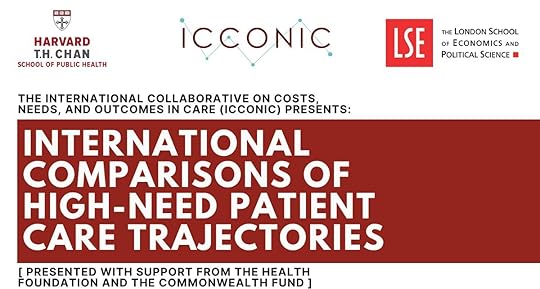
International Comparisons of High-Need, High-Cost Patient Care Trajectories: Upcoming Webinar and Health Services Research Special Issue
Ciara Duggan is a Research Assistant in the Department of Health Policy and Management at the Harvard T.H. Chan School of Public Health
Register here for a November 11th webinar on International Comparisons of High-Need Patient Care Trajectories.
Across health systems, high-need, high-cost (HNHC) patients tend to constitute a relatively small segment of the population while accounting for a disproportionately large share of healthcare expenditures. Understanding how international differences in care delivery correspond to differences in the cost and quality of care received by HNHC patients is therefore an important step toward improving high-need patients’ lives and optimizing health system performance. Previously, however, little was known about how patterns of healthcare spending, utilization, and outcomes vary across health systems for this complex and costly group of patients.
Founded in 2018 and led by researchers at the Harvard School of Public Health and the London School of Economics, the International Collaborative on Costs, Outcomes and Needs in Care (ICCONIC) sought to fill this gap by comparing patterns of care delivery among HNHC patients across 11 OECD countries: The United States, Australia, Canada, England, France, Germany, the Netherlands, New Zealand, Spain, Sweden, and Switzerland. The results of this research will be featured in an upcoming special issue of Health Services Research (expected to be released November 12th, 2021).
Methods
Using regional and national administrative data, ICCONIC employed a case-vignette methodology to compare two specific HNHC personas across countries and care settings: (1) a frail older adult recovering from a hip fracture, and (2) an older person with complex multimorbidity (i.e., hospitalized with congestive heart failure and a comorbid diagnosis of diabetes). To best capture patterns of spending, utilization, and outcomes among these patients, ICCONIC examined the entire patient care trajectory, encompassing seven domains of care—hospital care, primary care, outpatient specialty care, outpatient drugs, post-acute rehabilitative care, home health care, and long-term care.
Key Findings
Results from the ICCONIC project indicate that average utilization and spending vary substantially across the 11 countries for an older person with complex multimorbidity and a frail older person who sustains a hip fracture, with the US spending far more than comparison countries for both personas. High levels of spending in the US are driven by both (a) higher prices per unit of care across most settings and (b) above-average utilization of post-acute rehab and outpatient specialty care.
The ICCONIC project also revealed substantial variation in mortality rates for both personas across countries at different time intervals, with the exception of England, which consistently reports the highest mortality rates across all time intervals. While the US reports relatively low 30-day mortality rates, it reports the second highest mortality rates at 365-days post-hospitalization. Higher spending thus does not correspond to better long-term outcomes for HNHC patients in the US, suggesting inefficiencies in how the US cares for these patients (such as possible under-utilization of long-term care services and over-utilization of post-acute and specialty care).
Additional analyses of frail patients who sustained a hip fracture also unveiled notable cross-country differences in long-term care trajectories and end-of-life care.
Finally, using Gini coefficients to compare within-country variation in the care consumption of complex multimorbid patients, ICCONIC found significant within-country differences in care consumption patterns, as well as common differences by sex across countries, with women using less specialty care and more rehabilitative and home nursing care than men do on average.
Looking Forward: Implications for Research and Policy
The results of the ICCONIC project have important implications for those in the research community interested in conducting international healthcare comparisons as well as national policymakers interested in understanding how their country performs relative to peers when it comes to caring for high-need, high-cost patients.
These implications will be discussed in greater detail at an upcoming webinar on “International Comparisons of High-Need Patient Care Trajectories,” to take place November 11th, 2021 from 12-1pm EST. The webinar will be moderated by Dr. John E. McDonough of the Harvard School of Public Health and will feature presentations by Dr. Jose F. Figueroa and Dr. Irene Papanicolas, Co-Directors of ICCONIC. Dr. David Blumenthal, President of the Commonwealth Fund, and Dr. Jennifer Dixon, Chief Executive of the Health Foundation will join to discuss the results and their policy implications for the US and the UK. Register here to join the webinar.
The post International Comparisons of High-Need, High-Cost Patient Care Trajectories: Upcoming Webinar and Health Services Research Special Issue first appeared on The Incidental Economist.Aaron E. Carroll's Blog

- Aaron E. Carroll's profile
- 42 followers

