Jason Franks's Blog, page 18
July 7, 2014
How Dreary Reality Became the new Villain of Comics
The excellent Van Badham of The Guardian interviewed me, along with Tom Taylor, Nicola Scott and Tristan Jones, for this piece about comicbook villains and the economy. I spoke mostly about the Sixsmiths and the GFC.
Read all about it here:


42nd Parallel Interview
Amanda Bridgeman, author of the ridiculously cool AURORA series, interviewed me for the 42nd Parallel.
Klick on through to see what I told her.
http://42ndparallel.merylstenhouse.com/blog/movies/guest-interview-horror-writer-jason-franks/
Then go buy all of her awesome SF novels, right here:
http://momentumbooks.com.au/books/aurora-darwin/
Hopscotch Friday at Oz Comic Con
I had a brief chat with Hopscotch Friday at Oz Comic Con over the weekend and they recorded me behaving like a silly fool.
Klick on through–they spoke to heaps of much more interesting folk, and you can watch Dean Rankine doing a head-in-the-jar commission.
http://www.hopscotchfriday.com/2014/07/release-your-inner-geek-oz-comic-con-melbourne/
Interview with Alan Baxter
Alan Baxter is a British-Australian author based in the Illawara region of New South Wales. He is an International Master of Choy Lee Fut Kung Fu, and if that’s not impressive enough, he’s one of Australia’s best writers of speculative fiction. He’s also a jolly nice bloke.
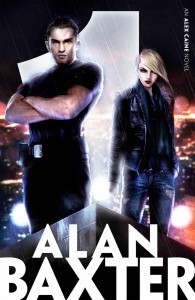
HarperVoyager have just released Alan’s novel BOUND, the first of the Alex Caine series, and the next two books int he series will follow in short order.
Alan was kind enough to give me this interview:
JF: So tell me, how did you get started in this whole writing caper? What made you want to do it and what made you stick with it?
AB: Honestly, I’ve just always told stories. Since I was a little kid, I loved the idea. When I was 7, we had to write a story for class. Most kids came in with two paragraphs about something. I came in with 8 pages about a dude who travelled back in time and had run-ins with dinosaurs and mad adventures. My teacher rang my parents – when they assured her they knew nothing about it and it must be all my own work, the teacher asked me to read it to the class. As I did, I saw for the first time the power of storytelling. I’d always loved stories; now here was a class of kids all enraptured by a story I wrote. It was magical. I’ve never looked back.
JF: When did you get serious about writing? Was there a particular moment when you decided it was time to start submitting, time to get published?
 AB: Yes, actually. I’d always been a martial artist, always trained and fought in comps. I just did drudgery 9-5 jobs to finance that. Then one day I decided I was in a rut and needed to shake things up, decide where I wanted to go in life. I took off, went travelling. While travelling through South East Asia and Australia I decided I needed to make a career of martial arts and I needed to seriously have a stab at writing professionally. It took a long time to build my life that way, but I’m slowly succeeding on all counts. Slooooooowly!
JF: What was your first story sale? Did you have a particular breakthrough in your working habits or methods that led to publication?
AB: I’d had a couple of publications in places that didn’t pay – very small time – but my first actual sale was for an online horror zine called The Harrow. I think they paid $5 or something. I was very pleased, as it was the first time an editor actually picked a story of mine from slush and paid for it, even if it was a very token payment! And the only thing that lead to publication then and continues to work now is bloody-minded hard work and determination. I keep doing it and always strive to get better.
JF: You work mostly at the intersection of the fantasy and horror genres. Do you think of yourself as most at home in one or another of those areas?
AB: No, I try to not think about it too much. I’ve written a fair amount of sci-fi too (though not as much), and some crime. I just love genre fiction in all its guises and often try to mash them up together. I do seem mostly drawn to contemporary settings and dark fantasy/horror, but I don;t know that I’m really more at home there. It’s just such a rich field for stories.
JF: Are there any particular themes or structures that you find yourself returning to in your work? Subconsciously or deliberately?
AB: There are definitely themes in what I do, which is often why I get drawn to write darker fiction. Consequences is a common theme. I’m also fascinated by the nature of belief and how that affects people. Magic and its misuse is another thing I play with a lot. Death and injustice, in numerous forms, creep in a lot too. Often these are not conscious themes, but I recognise them as I start to write and see them coming out again.
JF: Your first novel, RealmShift, is a terrific book that seamlessly combines the fantasy, noir, adventure, and horror genres. Originally you self-published this book before Gryphonwood Press picked it up. Can you tell me a bit about that experience?
AB: Oh man, that’s a loooong story. I’ll give you the abridged version. The book originally scored me a very good agent, who shopped it to all the usual suspects in publishing. It landed a couple of very near misses, but never quite got picked up. The agent in question only dealt with Australia and suggested I start looking for an overseas agent (or an Australian one who dealt internationally.) At the time, I’d just learned about Lulu and Xlibris and all those outfits – it was the beginning of the new surge in digital publishing. I knew (thanks to the whole agent thing) that I had a good book on my hands. I wanted to write MageSign (the sequel). Rather than start all over again with the agent hunt and submission and all that, I decided to try out the brave new world of self-publishing. So I set it up through Lulu. It was a really interesting experience and I learned a lot about all aspects of writing and editing and publishing. It was pretty fascinating and the book did okay. Nothing huge, but okay for self-publishing.
In the meantime, I’d written MageSign. So I took all I’d learned and set up Blade Red Press as a micro-press, bypassing Lulu and going straight to Lightning Source to keep prices down. It meant I had to do all the stuff myself, without Lulu’s support, but I actually preferred it that way. I re-released RealmShift along with MageSign and they did okay. Subsequently they were picked up by Gryphonwood Press, a small press outfit in the US, who have done great things with them. That’s where they reside now.
This is about four years compressed into two paragraphs, not counting everything that came before the agent decided she couldn’t sell RealmShift, so the whole story is far more complicated. But that’s the bones of it.
JF: You recently signed a three book deal with HarperVoyager for the Alex Caine series. The first book, BOUND is out now. Tell me about this project. What’s it about? How does it build on the work we know you for and how does it differ?
AB: It’s a whole new series with all new characters, but there are a couple of cameos from RealmShift and MageSign. The books are completely unconnected in terms of story and theme, but I’m a nerd for Easter eggs, and there was a good opportunity to use cameos and one of the groups from MageSign is involved quite heavily. After all, there’s a whole lot of room in the world for all kinds of stories. The style is similar, of course, as I wrote them. They explore magic and choice and destiny and refusing to give in when all hope seems lost. Where The Balance books deal with a very powerful person in the form of Isiah, the Alex Caine books start with Alex just as he’s coming into a power he never knew he had. Where The Balance dealt with belief and its effect on people, the Alex Caine books deal with more urban and everyday magic and monsters and mayhem. Here’s the blurb for Bound, the first of the trilogy:
Alex Caine, a fighter by trade, is drawn into a world he never knew existed — a world he wishes he’d never found.Alex Caine is a martial artist fighting in illegal cage matches. His powerful secret weapon is an unnatural vision that allows him to see his opponents’ moves before they know their intentions themselves.An enigmatic Englishman, Patrick Welby, approaches Alex after a fight and reveals, ‘I know your secret.’ Welby shows Alex how to unleash a breathtaking realm of magic and power, drawing him into a mind-bending adventure beyond his control. And control is something Alex values above all else…A cursed grimoire binds Alex to Uthentia, a chaotic Fey godling, who leads him towards chaos and murder, an urge Alex finds harder and harder to resist. Befriended by Silhouette, a monstrous Kin beauty, Alex sets out to recover the only things that will free him – the shards of the Darak. But that powerful stone also has the potential to unleash a catastrophe which could mean the end of the world as we know it.
JF: The first Alex Caine book came out last week, with the other two quickly to follow–by the end of the year, if I am not mistaken? This is something new in publishing, I think–pushing out the sequels as quickly as possible to build on sales momentum. Did you have all three books complete when your agent sold the trilogy, and if so, do you think this helped to sell the book?
AB: Bound is out now in print and ebook, with the ebooks of Obsidian and Abduction to follow in August and September respectively. The print editions of books 2 and 3 are out in 2015. I think! Anything can change in the publishing world. But yes, the binge-read is a thing people are using more and more often. Also, a lot of people wait for a series to be completed before they buy in, so publishers are trying to get on top of that trend.
I sold the trilogy with the first and second books complete and a promise that book three would be done before the end of the year (2013). I had to deliver it at the end of January this year. That was possibly the most pressure I’ve ever known from a deadline, especially as my son was born at the end of October. But as book three of a trilogy is was well outlined and I knew where I was going with it. It sold base don its synopsis. But it definitely helps to sell a book if there are more coming – a publisher will see you have the chops to turn out more than one book. Plus, you’re almost certainly never going to sell a book that isn’t written (despite the situation I described above.) Having two of a trilogy written and the third well underway is what worked for me here. I would advise anyone who’s writing a series, or planning to, to write s many as possible before submitting the book to agents. At the very least, have one book written that you’re trying to sell and have strong synopses of possible sequels to help sweeten that deal.
JF: You’ve had a booming couple of years. What’s next for you, now that Alex Caine is rolling out into the world?
AB: I certainly do seem to be seeing some benefit from all my hard work – it’s very gratifying. After Alex Caine? Who knows? I’m working on a standalone novel at the moment which I hope to get finished well before the end of the year. That’ll go to my agent and we’ll see what happens. I’d love to write more Alex Caine books if these ones are successful. And I love the short form, so I’ll certainly continue to write, and hopefully sell, short stories. I’ve got way more novel and story ideas than I have time, so I’ll stay pretty busy, I hope.
JF: Thank you so much for your time, Alan. I can’t wait to get my hands on Bound and I wish you every success.
AB: Thanks mate! I hope you enjoy it.
Go find Alan’s books here:
http://harpercollins.com.au/books/Bound-Alan-Baxter/?isbn=9780732299101
or at your local bookstore.
The electronic version of BOUND is available FREE for the month of July:
http://harpercollins.com.au/book/ebook-buy.aspx?isbn13=9781460702864
July 6, 2014
Oz Comicon Wrap
It’s a wrap, folks.
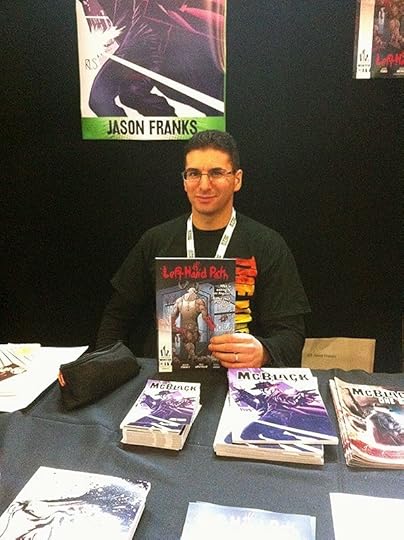
Oz Comic Con was huge. Thank you so much to everybody who stopped by for a chat. Thanks to everyone who asked for a signature. Thanks to everyone who bought a book. Thanks especially to Carissa and Rand for having me at the show.
There has been a real buzz about Left Hand Path, by me and Paul Abstruse and Eddy Swan, and that really made the show particularly special. Thanks for all the positive feedback everyone! Comics is a tough business and your kind words make a real difference to those of us on the front lines.
Cheers!
– JF
July 3, 2014
Oz Comic Con Melbourne
Alright now!
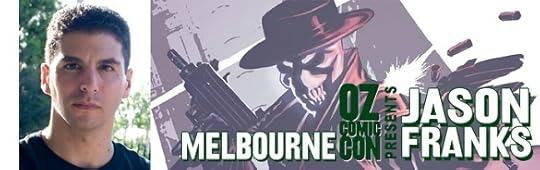
It’s Oz Comic Con this weekend and I expect all of you good little boys and girls, kittens and puppies, pixies and elves to come along and say hello!
I will be a guest of the show and you can find me signing at table 22 most of the day. I will be selling copies of Sixsmiths, McBlack, Bloody Waters and, hot off the presses, Left Hand Path by me and Paul “the wild man” Abstruse! Paul will have his own table, so if you snag a copy from either one of us we’ll both be happy to sign it for ya. No charge for a signature or a photo, or a big fat chinwag. (Sorry, I don’t do con sketches.)

I will be participating in a Q&A session with some of the other comics guests on Saturday at 3pm (stage 3) and on Sunday at 2pm (stage 2). If it gets boring, Paul Mason will kick off one random panelist’s head while quoting from the works of Arnold Schwarzenegger. And in case that’s not enough Paul for your action, Paul Bedford will be there talking about his dog.
Tons of other guests, including Tristan Jones, Tom Taylor, Fil Barlow, Colin Wilson, Matthew Clark, Dillon Naylor, Tim Molloy, Wayne Nichols, Adam Nichols, Justin Randall, Andrew Constant, Dean Rankine, David Yardin, Wolfgang Bylsma, Doug Holgate, Jon Sommariva, Nicola Scott, Jason Palmer, Stew McKenny and a bunch of much less famous people from TV and the movies.
Geeyup!
– JF
July 1, 2014
Interview with Dirk Flinthart
Dirk Flinthart is the Tasmania-based author of the brilliant novel Path of Night, which this year was nominated for the Best Horror Novel Aurealis Award. A prolific short story writer and editor of Andromeda Spaceways Inflight Magazine, Dirk’s a talented writer, a smart bloke and a wonderful human being. He’s funny, too.
So I interviewed him. Or at least, I tried to–but Dirk was always two or three questions ahead of me in his answers. Here’s what he said:
JF: So tell me, wow did you get started in this whole writing caper? What made you want to do it and what made you stick with it?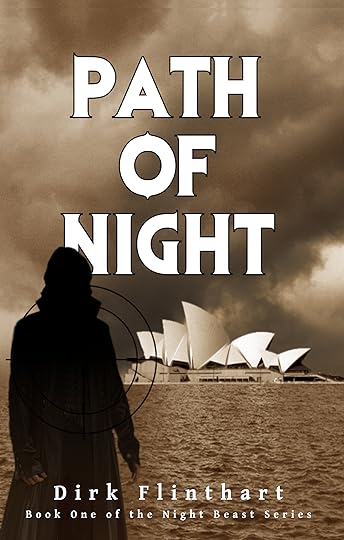
DF: I keep going back to Moliere on this one, I’m afraid. You know the old quote:
“Writing is like prostitution. First you do it for love, and then for a few close friends, and then for money.”
I learned to read somewhere between two and three years old. I started writing and telling stories not long after. I got into old-school role-playing games when they first came out, desperately uncool in the very early eighties in Australia, and found that I loved the improvised storytelling that grew out of a good game. I won local competitions as a kid — “Book Week” stuff, things like that. By the time I got to university and discovered that science was really interesting to learn about, but really boring to do, writing was the only alternative that made any sense. I literally cannot imagine myself trying to live without some kind of storytelling, some kind of
creative writing.
So… Moliere, yep. I figured since I was stuck with the writing bug, I might as well try to make it my way of life. Trouble is I’m not a very successful prostitute, yet. Worse still, my elder son (goes by Jake Flinthart) has inherited all the worst storyteller traits, so he’ll probably wind up being an underpaid eccentric as well.
JF: Was there a particular moment when did you decided it was time to start submitting, time to get published?
DF: I tried a few times early in college. Real juvenilia. I had a kind knockback from Ursula le Guin, a refusal from F&SF (yeah, it’s not like I was trying the Literature mags…) But during university I wound up doing a lot of writing for the university newspaper (Semper) and a bit of work alongside John Birmingham, and it kinda rolled on from there. Once you’ve had work accepted, published and paid for — I don’t know how it is for others, but to me that was the signal.
This was back in the late eighties, if it helps at all. Not long ago, Birmo reprinted some exceptionally scurrilous wine reviews I did with a bunch of mates. I convinced the uni newspaper to pay for the goon, AND pay per page for the reviews, so we had these huge, drunken parties in which we’d sample the most godawful wines Australia could muster up, and then try to write coherent reviews of the things. The one that really sticks in my mind was the day we wound up tasting a sterile urine sample just because too many people had referred to the cheap-shit bubblies we were reviewing as “tasting like piss”. I’m here to tell you that cheap bubbly wine does NOT taste like piss, by the way. A good, clean glass of slightly chilled urine from a healthy person is far preferable to a glass of really shoddy eighties-vintage bubbly.
That’s a bit off the track there, isn’t it? Never mind.
JF: What was your first story sale? Did you have a particular breakthrough in your working habits or methods that led to publication?
DF: You know… I can’t actually remember. What counts as a first sale, anyway? I recall writing what was meant to be a script for the “Flash Domingo” space ranger character in the old Southern Squadron comics. Flash Domingo was a platypus/alien space range. Except I knew nothing about scripting for comics, so I wrote a short story instead; a story in which Flash got into a bar fight with a big guy called “Knuckles” (IIRC) and wound up taking off with Knuckle’s girlfriend. The Southern Squadron folks must have liked it, because they ran the story as a story instead of adding art. I was kind of disappointed, but not so much as I didn’t cash the cheque, you know?
After all the stuff with the university newspaper, there was the crime-fiction novella with Duffy & Snellgrove: “Brotherly Love”. That would have been about 1994, I suppose. I still now and again run across people who recall that one.
Breakthrough, though… that’s an interesting question, isn’t it? There wasn’t one. Not really. I just wrote more, and revised more, and submitted more. I should still be submitting more, to be honest. The problem is that I’m kind of overcommitted. But I’m working on that, too. Really, that’s what “Path of Night” is all about for me: a commitment to write more, and place more work into the market.
The truth is that writing more, revising more, and submitting more really is the magic formula. That, and knowing your genres. You need to really live inside the genres that you choose to write, and you have to respect those genres — including fandom as part of that. So if you want to write, say, steampunk — read it all, and then write a lot of it.
JF: Do you think of yourself as most at home in any particular genre or subgenre?
Well… I know I have trouble writing horror that horrifies me. Paul Haines did that very well. Haines had a real grip on the horror of the mundane world. We talked about it a few times. Even he had a few no-go areas, it transpires, and they were much the same as mine. But he had that knack for taking everyday situations or characters and making them horribly wrong. So when I do write horror, I tend to think of it more as dark fantasy.
Birmingham accuses me of being a fantasy writer. Sometimes he’s probably correct, too. But I read science fiction through the years of growing up and into this gig, and it’s still my first love. Nevertheless, the old genres are spinning, warping, mixing and changing. I don’t think the genre boundaries are clear enough for strong labels any more. (Gary Wolfe has a rather interesting book out there called “Evaporating Genres”. It’s worth reading.) I do love the imaginative element, though. Can I just say that I like to write “speculative fiction”?
I mean — I’ve just written (for my Masters degree) nearly fourteen thousand words of complicated, Byronesque poetry to tell a story which is a mix of steampunk and fantasy. The poem started as an opera libretto for Outcast Opera in Brisbane. They’re still working on getting it to stage, but I’ve just got to include this link:
https://www.youtube.com/watch?v=xUbMX8Ega1Y because these people are seriously damned talented, and I am amazed at where they’ve taken my words. And when the novel comes out, it will mix horror with steampunk and fantasy and alternate history and…
… and I write speculative fiction.
JF: Your work can be pretty dark, but it has a humorous tone to it. Do you think of yourself as a humorous writer? Are you particularly interested in writing comedy?
DF: I’ve done a fair bit of comedy in an amateur sense — work with university revues, a couple of years on community radio, things like that. And the book with Birmo — “How To Be A Man” was written with a very light tone. So was the backpacker’s guide I did, I guess. But I’m afraid I don’t have the raw talent to be really funny. I’ve met seriously funny people, and they can go places and do things as a matter of instinct and response that I can only do with considerable planning and effort. And then there’s the problem that my sense of humour is… somewhat idiosyncratic, shall we say?
On the other hand, I really can’t take most people, societies and organisations as seriously as they want to be taken. I mean, really – who the hell can face an Abbott government without laughing? What else can you do in the face of relentless, corrupt, imbecilic bullshit? If I didn’t laugh at it, I would have to take up a gun… and since I have a family and kids, I’m not planning direct violent overthrow of the government just yet.
So of course, some of this comes out in what I do. What’s humour, anyway? It’s a reframing. Humour happens when you put a new perspective on something, highlighting its ridiculous qualities. For example, I dropped a post on Facebook the other day about the situation in Uganda where the government is prosecuting men for being gay, and planning to imprison them. Now that’s not funny. Not at all. And yet… the sheer stupidity and futility of this action, the petty, childish fear that it illustrates — those are potentially funny. And of course, the first thing that occurred to me that imprisoning men for the crime of active homosexuality is — well, kind of
counterproductive, really. You’re telling a bunch of men that it’s wrong to have sex with each other, and then locking them all up together in a big building without any women and making them have showers together.
You see what I mean? The sheer brainlessness of it all is funny. It has to be, doesn’t it? Because really, if we can’t laugh at these bastards then sooner or later things are going to get very dark indeed.
So… I’m not sure I could ever set out to ‘write comedy’ as such, though it would be fun to try under certain circumstances. (I’d love to work with an animator, and put together an ongoing satirical work lampooning the Australian government. That would be a lot of fun.
Say… set Australia as a Federation space-ship with Tony Abbott as the captain… yeah, I could have a truckload of fun with that.) But it’s likely there will always be a current of humour in much of the work I do. It’s part of our national culture, and for me, it’s simple self-defense.
JF: Are there any particular themes or structures that you find yourself returning to in your work? Subconsciously or deliberately?
DF: Structures — that’s pretty instinctive. I don’t meticulously plan my work. For short stories, it usually starts with an emotionally loaded concept. For example, one story I was really pleased with was ‘One Night Stand’, which came out in the agog! series Cat Sparks put together. On the surface, it’s darkly funny: Elvis is now a vampire, making a very scratchy “living” as an Elvis impersonator, and as people get less and less interested as time goes by, the work gets harder to find. (The proprietor of the club in which the story takes plays says something like – “Yeah, you’re pretty good, but you’re not him. I saw him once. He had charisma.”) But just below that surface it’s a story about fear of death, because Elvis (in the story) chose to become undead, for fear of losing everything — his looks, his youth, his fame. And of course, most of it is gone anyway, but he’s still putting it out there, getting up in front of increasingly disinterested crowds because as he says “The King will never die.”
The usual stuff, really. We’re all concerned about living and dying, love and fear and the uncertainty of the future. I think most of the really good stories I know reflect that kind of thing. Often what happens in the writing process is that I’ll kick off with that single image or idea, and write the story — but the story doesn’t feel right, and I have to stop and think for a while. And then, all of a sudden, I realise: oh, yes! I get it now: this story doesn’t work because while I thought it was going to say this thing, it’s actually about this other thing entirely. And then there’s some rewriting, and then it usually works well enough.
That very same process happened with my novel, Path of Night. It’s more-or-less a thriller in structure, with plenty of crime and horror tropes to move it along. Anyway, I got up to the crisis point – the bit where the main character has to rise to the occasion, and it felt flat. I didn’t really know why. And then it dawned on me: even though he was knocking off the Big Scary Bad Guy, it was still just another fight. I needed my guy Devlin to put something out there, to sacrifice something. And of course, through the whole book Devlin has been desperately trying to hang onto his humanity (having been infected by something that resembles vampirism) so the obvious, logical, proper thing to do was to force Devlin to draw on that darkness that he’d been trying to deny. I literally, in that scene, realised what the book was about for me: a man trying to stay a man, trying not to
become something terrible.
I like those moments of realisation. It just annoys me that they often come after I’ve already done four-fifths of a story!
JF: Tell us about Path of Night. What’s the book about? What was the genesis of the idea?
DF: You know, I really have no idea! I honestly can’t recall what sparked the concept, but the more I fleshed it out, the more fun I was having and the better the idea looked.
A lot of it lay in the simple fact that while there’s plenty of SF and fantasy set in Australia, we still somehow seem to shy away from embracing the Australian on the street, the everyday life here. Devlin is a smart guy. As a medical student with some serious travel behind him he’s better educated and probably smarter than most Australians. But he was raised on a farm in northern New South Wales, and he’s a Sydney medical student living in a share-house dump, struggling to get by.
I knew I wanted to contrast the weirdness and horror of the Night-Beasts with sunny, everyday Australia, and I knew I wanted to invoke the Australian sense of humour. Path of Night is structured more like a thriller than anything else, I think. There are any number of thrillers set in the USA, in Europe and the Middle East and Asia… but not so very many in Australia. So while I cannot recall what set me down that particular path, as I wrote it became more and more clear to me that I wanted to bring a taste of Australia — and not the bloody “outback” yet again — to the work. I wanted to write a book in which ordinary Australians might be able to identify themselves or people like them. And if that meant writing a book that Americans and Brits might have to translate in places — well, Ellen Datlow has assured me in the past that Australia has an ‘exotic’ quality that
makes it a desirable setting, and that the oddball nature of our language makes us interesting as writers. Who am I to argue with Ellen Datlow?
JF: Can you tell us a bit about the book’s path to publication and is reception? The Aurealis Award nomination must have been gratifying!
DF: I was fully prepared to self-publish Path of Night. There are plenty of very good books coming down that road now, and I realised that it was better to have a product in the marketplace than it was to have an MS rattling around the publishers for two years while they made up their minds.
I’m not advocating that road to everyone, understand. I’ve been writing now for over twenty years. I know what my prose is like. I know the marketplace. I was well aware that I could write a book that would be publishable in terms of structure, style and technique. I could not have done that ten years ago, however, and self-publishing anything at all before your work is genuinely readable is… not a great idea.
In any case, I didn’t know everything I wanted to know about the whole self-publishing process, so I ran the MS past the boss editor at Fablecroft, and she was rather enthusiastic. I was quite happy to have a publisher, rather than doing it all myself, so it was pretty much a done thing from that point.
I should state very clearly that the MS which went to Fablecroft was already in a finished, polished state. Tehani (the editor/publisher brains behind Fablecroft) and the line-readers made some relatively minor changes, but by and large it went through unscathed.
Should I have gone to the big publishing firms? I don’t think so. Inote that the big publishers are more and more risk-averse. The old system, where a publishing house might be willing to support the development of a new writer through a few early hiccups — that’s largely dead. It’s sink or swim now, and the last time I dealt with the big firms it took them a year and a half longer to finish rejecting my novel MS (for kids in the 9-12 age bracket) than it did for me to write it. I thought that was a pretty counterproductive way of going about things, so as I said: I figured I’d test the waters of the marketplace myself, and see what I could do.
The small-press approach made sense, in any case. I knew that getting Path of Night through a conventional publisher would be a tough sell. The distinctly Australian language and humour, I felt, would pose a problem because the mainstream publishers have always got one eye on the big market in the USA — and they don’t really credit American readers with enough patience to read something that isn’t thoroughly Americanised. I really, really didn’t want to Americanise the book, so I simply didn’t bother chasing a bigger publisher. I figure I’ll just keep going with the Night-beast books for a while, and try to generate a bit of traction. I enjoyed writing Path of Night, so why not?
The reaction so far has been excellent. Naturally it’s hard to get word out. That’s one place the big publishers still hold the aces. They have the resources to publicize and distribute on a level that the small presses can only dream of. But yes: the Aurealis short-listing was gratifying. And surprising, I admit. I know the book has strong horror elements, but it feels to me like quite a cross-genre piece, and I didn’t expect it to do that well. Still,
overall the reader responses have been fantastic. In fact, the buggers are nagging me about the sequel, so I’m working as fast as I can. AS FAST AS I CAN, dammit! There’s a short story around the two main characters out on Kindle right now. The novel will take longer — but I can let you know that the working title is “Midnight In Chinatown”, and it will be set in Sydney, to culminate at the Gay and Lesbian Mardi Gras parade. Vampires and gigantic, pan-sexual parades… what’s not to like, right?
JF : … and that, I think, is a great place to end the interview. Thanks for stopping by, Dirk!
Dirk Flinthart, ladies and gentlemen. Go buy a copy of Path of Night his book here:
http://fablecroft.com.au/about/publications/path-of-night
“Sanction”, a short story featuring the two principle characters from the book, is available direct from Amazon right here:
http://www.amazon.com/Sanction-Night-Beast-Dirk-Flinthart-ebook/dp/B00JPNNKR8/
June 30, 2014
Metempsychosis live on SQ Mag
My short story “Metempsychosis” has now been published in SQ Mag edition 15.
http://sqmag.com/2014/06/30/edition-15-metempsychosis-by-jason-franks/
Set in grungy Dublin and Melbourne and featuring dead druids, magical texts* and bad magic, this is my attempt to write a straight-up traditional horror story that is both strange and violent. I came up with this concept out of whole cloth while obsessively listening to the album DEATH IS THIS COMMUNION by High on Fire, so it seems fitting that the story be published in the month where I will finally get to see the band perform live–in Melbourne.
Special thanks to Sophie Yorkston for editing the story into shape, Marta Salek for the crits and suggestions, and Peter Nickless for putting me onto the band.
Hope you dig it.
– JF
* Yes, I am fully aware that the druids did not keep written records–that’s the central mystery of the story.
June 28, 2014
Left Hand Path #1 now available…
The first issue LEFT HAND PATH, written by me, with art by Paul Abstruse and colours from Eddy Swan, is now available from the Winter City Productions website.
https://www.wintercityproductions.com/
The book is coming soon to ComiXology and to local comic stores around Australia.
Paul and I will be selling copies at Oz Comic Con in Melbourne this weekend. Stop by, say hi, buy some comics!
June 25, 2014
Left Hander
Alrighty, so the dust has settled a bit and Left Hand Path is now out in the world. Many punters from Supanova Sydney have copies and more of them are flapping their way to shops around Australia on a pair of creaky black bat’s wings. First review is in and the book is already looking like it will be the biggest success I have had with a domestically-published Australian comic.
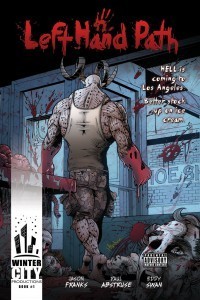 Obviously, with only the first issue out I can’t say too much without spoiling anything–there are some twists and turns coming up that I hope will surprise and shock you–but I do want to talk a little bit about where all this came from.
Back in 2010 I was standing around depressed in the Hyatt bar in San Diego. I was there to promote my new graphic novel, The Sixsmiths, at Comic Con, but the book wasn’t ready in time and I had already booked everything. I knew that the Hyatt bar was where real business at the show done, but I didn’t have a proper book to show for myself, I didn’t really know anyone and I didn’t know what the fuck I was even doing there. My old contacts hadn’t seen me for about four years and I could tell they weren’t quite sure who I was anymore.
Then Paul Abstruse rolled into the bar. I’d met Paul back home in Australia, but I don’t think we’d had a proper conversation before. Paulie came over and started croaking at me–he’d lost is voice but was powering through it. It sounded like he’d swallowed a chainsaw. Paul introduced me to his friends, we had some drinks, and eventually he braced me about writing a comic for him. “A horror book. Something depraved.”
Well, that sounded right up my alley. Once I got home I put my head down and came up with LEFT HAND PATH (click through and then click on the cover thumbnail for an 8 page preview).
I had a few starting criteria in mind. First, I wanted a contemporary setting. Originally it was going to be Sydney, but Paul convinced me to relocate the book to LA. I wanted to do something depraved, per Paul’s orders, but not particularly grim. Los Angeles is a sunny place, full of beaches and beautiful idiots and paparazzi. I wanted something heady–black magic and humour, gore and ice cream. Professionals struggling to make ends meet and amateurs succeeding beyond their wildest nightmares.
I wanted to write about magic, as the title suggests, and I had a specific idea about how I wanted to do that for this project. Without going Dungeons and Dragons on it, I wanted to sorcery with a forensic eye. That suggested specialist police.
I didn’t want to do the X-Files. There have been a lot of different variations of the old paranormal investigator over the years and I wanted these characters to seem fresh. I didn’t want to make the cops Federal Agents with carte blanch to gallivant all over the country with unlimited resources. I wanted them firmly rooted in LA and I wanted them to be ground-level plods. The Unconventional Incidents Unit is primarily there because weird shit does happen in LA and nobody really knows how to do with it… but it doesn’t happen often. It has two detectives on staff and they’re not there because of some secret backstory–they have been put there because the department doesn’t know what else to do with them. Danik’s been sequestered to the UIU because she’s talented but bad-tempered, which is not a good combination of attributes to demonstrate exhibit in the boy’s club LAPD. Livia, on the other hand, is overqualified for her job. A science PHD who has joined the force because she’s tired of working in a lab, she’s not a particularly experienced police officer but she’s undoubtedly one of the smartest people in the department.
So yeah. Two women who don’t fit into the organizational culture, marginalized into a small office that mostly deals with hoaxes and coincidences. I have tried to present a pair of smart, professional, well-adjusted women. They have problems like everyone else, but neither of them is pursuing a revenge quest for a dark and rapey past. Neither of them is going to become a Spinny Killbot in a spandex outfit. Neither one of them is a prize for a male hero to claim or a damsel in need of rescuing. They’re capable operators trying to solve a problem that nobody else in the department can, because it’s their job.
On the other hand we have Beaumont, a magician, and his apprentice, Trevor. Beaumont is talented but small time, and he’s not above scamming the rich and credulous to make ends meet. Trevor is tough, confident and good-humoured.
I can’t say much about Zycorax, the antagonist, without soiling the story but Paul’s designs for him look ridiculously cool, and that’s important, too, right?
So yeah. Left Hand Path, written by me, drawn by Paul Abstruse, coloured by Eddie Swan, lettered by Ed Brisson and published by the fine folks at Winter City Publishing. Paul and I will have copies at Oz Comic Con Melbourne from next week; otherwise look for it in comic shops around Australia. You like ice cream? Then come get some.