Jason Franks's Blog, page 16
March 1, 2015
Bloody Waters Review by AJ Spedding
A five star review of Bloody Waters from AJ Spedding.
“Franks takes the reader on a fast-paced ride filled with black-humour, bloody battles, and a look at ideology from an altogether different standpoint. His characters are well-fleshed out, engaging, and were perfectly suited to the parts they played. I flew through this book, so engaged was I with the story and the characters. I sat up ‘til 3am to finish it, and if that isn’t the sign of a good book, I don’t know what is.”
Read the whole review in the link below:
http://amandajspedding.com/2015/02/28/review-bloody-waters-by-jason-franks/


February 15, 2015
Songs of Innocence
Long time readers will know that I am frequently disgruntled with the quality of music journalism.
Long time readers will also know that old dead William Blake was a big influence on me in my teens, as an artist and as a writer. I should write something about that one day.
In the meantime, I have reviewed U2’s controverisal-ish new album, Songs of Innocence for the lovely folk at Hopscotch Friday.
Read all about it right here:
http://www.hopscotchfriday.com/2015/02/nostalgia-repurposed-u2s-songs-of-innocence/
February 14, 2015
Gillian Polack Interview
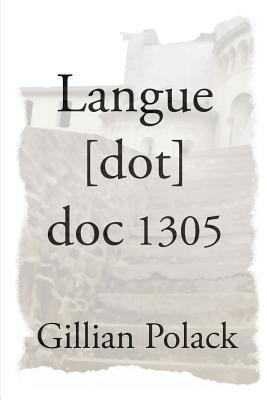
Gillian Polack is a writer and a teacher from Canberra with PhDs in English and History. Her newest novel, Langue[dot]doc 1305, is about a group of scientists and a historian who travel back in time to the year 1305 to conduct studies in the Languedoc area in the South of France. Plying the boundaries between literature and science fiction, Langue[dot]doc is not like any other time travel story you’ve read.
Gillian was kind enough to consent to this interview about the book.
JF: Gillian, you have a PhD in medieval history (and another in creative writing), so it seems an obvious choice for you to write a novel set in Europe in the period. I know that for many years you said you never would write such a novel: why is that, and what changed your mind?
 GP: I totally hate admitting this. I was/am/always will be a historiographer. That means that the narrative form of history is terribly important to me. I see big differences between the way historians write (and why they have a bunch of apparatus so that their theories can be tested) and the way a novelist writes (look Ma, no citations!) and I thought that it would be too hard to reconcile the two. Novels are primarily entertainment and history is primarily establishing our interpretation of the past and there are good reasons why the two seldom meet.
Because of these reasons, a lot of people care about how history is used in fiction. I and my fellow-historians are a weight on the shoulder of each and every novelist who tries it. I decided an accurate fictional Middle Ages was too difficult. Fantasy was easier and more fun.
Then Van Ikin intervened. I wrote the novel. It wasn’t nearly as hard as I’d feared. My biggest worry was whether it was any fun to read, for it’s splendidly historiographical and there’re bunches of modern historical theory about medieval lives embedded in it.
I’ll never write another novel like it, but I will write more history into fiction. I now really like the idea of fiction as experimental history. Only if the fiction is fun, though.
JF: Readers expect a novel set in medieval times to be in the Fantasy genre, but Langue[dot]doc is a rigorously scientific novel.
GP: I pushed modern thoughts on some subjects, used hundreds of sources in five languages, and even apparently, got the science right. CSIRO checked the science for me, because the people at CSIRO are seriously cool.
In fact, only Judith Tarr and Kari Sperring have said outright how very subversive that novel is in terms of what it does intellectually – everyone else tells me they like this character or that, or that they worked with Sylvia Smith and were sorry I knew her too. Some people notice the history, but most readers notice the characterisation, which is as it should be.
JF: Most time travel stories are not really about science–mostly they’re about having tea with Attila the Hun and dodging temporal paradoxes. If they are about science, they’re about the science of time travel. Langue[dot]doc is about the scientific method, the culture of science, and the ways that the methods of a historian are very similar to those of a scientist.
GP: This is one of the reasons why Tarr and Sperring call my novel subversive. I put the methods of scientists ahead of “Let’s change history”. Also, those methods are used by people, and not all those people are good at following rules.
JF: You’ve shown these scientists not as eccentric geniuses, but as skilled professionals with their own inner lives and with their own jobs to do. Some of them put on airs about how talented they are but at the end of the day they’re ordinary people.
GP: I was far more interested in seeing what would happen if I added the fallibility of human beings into the time travel equation. ‘Fallibility’ includes scientists and historians who know normal amounts, not heroic fonts of knowledge that are created to make the story flow. I wanted the story to happen because of who these people were, not because it was predestined.
Some of my early feedback from CSIRO was from a scientist who said “This really happens. I’ve worked in a team like that.”
JF: Although the stories are utterly different, I think the book this most reminds me of is Left Hand of Darkness, which to my mind is designed the like a sociological thought experiment about how gender effects different political systems. I think Langue[dot]doc also has some experimental design in its structure.
GP: Left Hand of Darkness is quite influential on me, although I didn’t have it in mind when I wrote Langue[dot]doc 1305.
And yes it’s a thought experiment. Quite intentionally so. Stephen Ormsby (my editor) commented to me “This is really sociology.” It’s not, but history and sociology aren’t as far removed from each other as they sometimes seem.
JF: In Langue[dot]doc it’s not just the scientists that evade the kind of archetyping we’re used to in pop culture, though, is it? Interesting that Artemisia’s specialty is the lives of the saints.
GP: I put marauding peasants in there! What more can you ask in terms of pop culture?
Serious, I intentionally took a lot of the packages people have for the Middle Ages, for time travel novels, for the shape of hard SF, for the shape of private lives and I challenged as many as I could. I looked at different visions of masculinity and femininity, for instance, and what heroes are, and I tried to discover how people sort their lives when those lives become difficult. It looks like a cosy novel, but for those who read it from a particular direction, it’s the exact opposite.
I have to admit that I chose Artemisia’s speciality because I rather like the name “Clemence of Barking.”
JF: I didn’t find the book cosy at all. The primary POV characters are constantly ill-at-ease. Artemisia is subject of derision by most of her colleagues, who have no idea of the past and present traumas she is dealing with. Guilhem is unwilling and unable to be a part of his new community, and Ben lives with all of those secrets and lies. But you keep it very low key. Most of the big drama happens off-screen.
GP: I didn’t mean cosy as in comfortable: I meant cosy in the same way John Wyndham wrote cosy catastrophes. The focus is on small lives dealing with big things, not on (in this case) the glory of the time dance. When I developed my characters, I let the historian inform the development rather than letting other novels inform it.
JF: Certainly I did not expect the story thread about sexual violence and that hits really hard, especially given that the perpetrator is a point of view character who would probably be the hero in most other time-travel stories. It was refreshing to see how bravely the victim responded to it. There are brave responses to such terrible acts that do not involve the kind of bloody vengeance pop culture usually gives us.
GP: I’ve been thinking a lot about what violence does in novels and the narratives given to the various players. It appears in so many stories and in so many stories there is no real answer. We need choices in real life. That’s why I wanted to change the narrative.
That isn’t why I included that story thread. That thread follows naturally from my reading on the brand-new research into medieval masculinities. I build up Guilhem’s path very, very carefully following what we know about these things. His actions are dictated by what we know of his choices at that time period, not his choices now.
Artemisia is different. She could be any of a dozen friends and relatives and I was thinking “What could they have done, outside the choices novels usually give us”. And Artemisia was a Medievalist – of all the characters, she could cross culture and change things. So this is what I had her do. She used her historian’s superpower.
JF: I think it’s in Artemisia and Ben’s choices that we see most of the themes of the book drawn together. How do we deal with other cultures and with our past. What is a rational and reasonable response to the things we find there that hurt us?
GP: It’s quite intentional that of the two modern characters who hurt the most, it’s the woman who finds her own path and the man who runs away. That was me subverting trope by letting their personalities dictate.
JF: Ben is another character I’ve never really seen in popular fiction; caught between casual antisemitism and guilt at his parents’ betrayal of their own. He’d rather identify as French but even if he could, the other characters won’t allow it.
GP: I’ve met many people like Ben. Not from that particular background, but from other wars in other countries. I’m very fortunate to have met these people – they’ve helped me realise just how complicated conflicts are. Being a good person from a good family with a solid sense of civic duty isn’t enough in some situations and I think I might explore that some more one day.
JF: Tell me about Geoff Murray. He seems to be the best-adjusted and most stable of the scientists; perhaps that’s why he goes unnoticed?
GP: Of all my books, this is the one I most want to be filmed, just so that I can see how Geoff Murray is played.
He’s a lovely human being with a wicked sense of humour (at least, I hope he is), and he’s not white. I got sick of all the core characters in time travel coming from majority culture groups. That’s why, in this novel, the core characters with major personal issues are majority, while the ones I personally want to meet are anything but.
JF: You’ve told me that your next book, which is due out on the 28th of February is under some kind of curse. I believe it’s quite different to Langue[dot]doc. Can you tell me a bit about the book and the curse?
GP: I sold two novels to Trivium Publishing, many years ago. One was Illuminations and the other was delayed by hurricanes and earthquakes and computer meltdowns and near-death experiences. Recently, Trivium and I decided that it would be better to move on. This was a very difficult decision because the folks at Trivium are amazing to work with and pretty much changed my life (for the better). They’re still my close friends. A curse is a curse, however.
Satalyte signed The Art of Effective Dreaming as part of a group of six stand-alone novels of mine, last year. Stephen Ormsby’s first comment when he started editing was how wonderful and strange it was.
In tone, it’s closer to Ms Cellophane than to the other novels. It’s close and personal and intimate and riddled with folksongs. It’s a portal novel, and an inverted quest novel. When people ask what it’s about, I tell them to envisage the moment between being awake and being asleep, that split second when dreams become real. Fay (the protagonist) has a life so disenchanted she dreams her way out of it. But are the dreams real? And does she have any obligation to help dream-characters out when their friends are murdered? And why would anyone want to murder morris dancers, anyway?
JF: Why indeed? Thank you so much, Gillian. It’s been a pleasure and an education!
Find Gillian online at http://www.gillianpolack.com/, or @GillianPolack.
Langue[dot]doc 1305 is available now in print and ebook from Satalyte Publishing, Amazon.com, and all the usual places. The Art of Effective Dreaming will be available on February the 28th.
December 24, 2014
McBlack Two Shot on ComiXology, Too
McBlack Two Shot is now live on comiXology, too. Too bloody right, ‘ey?
This is a stand-alone story in which a young boy hires Old Smiley to kill the monster that has been giving him nightmares. Can our unkillable antihero survive the imagination of a small child? May contain traces of unicorns. Art by me and Dave Gutierrez, Bruce Mutard, Rhys James, Luke Pickett and JohnStewart. Colours by Luke Pickett and a fantabulous cover by Rhys James. 99c and it’s up in all your devices.
Come git some:
Course the hardcopy-floppy is still available right here:
December 18, 2014
McBlack One Shot on ComiXology
Hey kids, digital comics!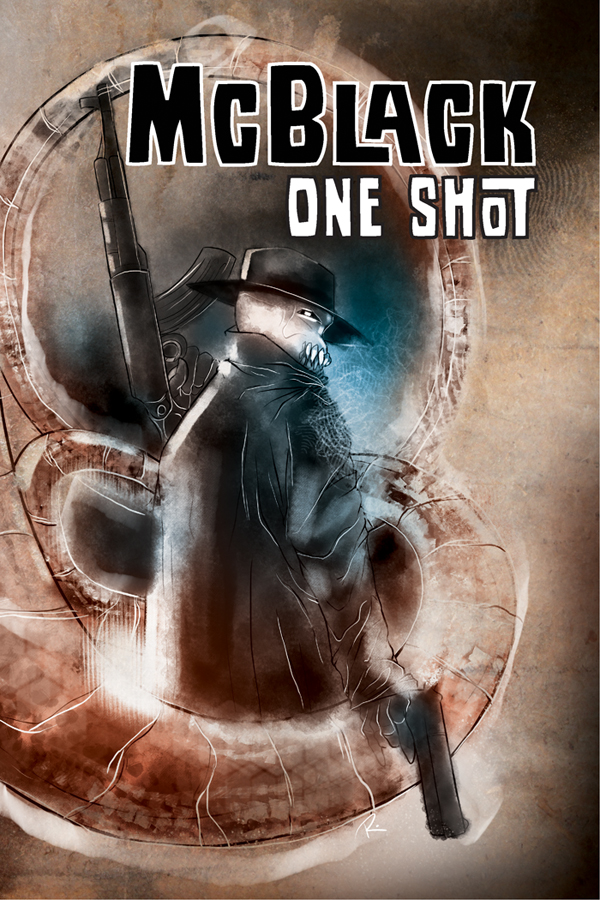
McBlack One Shot is now live on comiXology.
This is a stand-alone story in which Our Hero tangles with tropes and challenges from various types of video games. Of course there’s a sting in the controller at the end. Art by me, Tom Bonin, Trev Wood and Mike Athey, with colours by Luke Pickett and a glorious cover by Rhys James. 99c and it’s all over your tablet.
Come git some:
Course the hardcopy-floppy is still available right here:
http://www.blackglasspress.com/?page_...
(Note: McBlack Two Shot should be out early in January. Stay tuned!)
December 17, 2014
Year that was, year that will be
Mid December, huh? How did that happen? The year has flown by–but it’s not over yet.
I had only a handful of new publications this year, but most of them were pretty well received:
The first issue of my comic series with Paul Abstruse LEFT HAND PATH #1, from Winter City Productions.
“Metempsychosis”, a short horror story published in SQ MAG (clicky-clicky to read it online for free, yo).
“The Third Alternative”, a short comic illustrated by Daniel Watts, published in Matt Kyme’s THAT ALL STAR BULLET PROOF KID anthology.
Two Bloody Waters short stories, direct to Kindle for Possible Press: “Hellhound on My Trail” and “The Martyr and the Qarin”.
In addition to that, I republished all three issues of McBlack volume 1 on comiXology, and McBlack One Shot will be out tomorrow. (Like I said: the year’s not over yet.) McBlack Two Shot should be out in January.
Highlights included being a guest at Oz Comicon, and coverage in The Guardian as a result. The other highlight, of course, was seeing my short story “Butcher’s Hook” get an honorable mention on Ellen Datlow’s Best Horror 2013 list. I still can’t believe I saw my name in such fine company (To be fair, it was a big list).
I have a few other pieces already slated for publication in 2015:
SHADOWMANCY, a dark fantasy novel from Satalyte Publishing, due out I think in March.
“The Old Portrait”, an comic adaptation of the short story by Hume Nisbett to be published in MIDNIGHT ECHO. Illustrated Leigh Kuilboer.
“Darkness Beyond”, a short horror story for the crowdfunded CTHULHU: DEEP DOWN UNDER anthology. This will only be exclusively available to people who pledged to the crowdfunding campaign, because an agent is currently trying to place it with publishers overseas. Sorry if you missed out. (I’m not really sorry.)
More than likely you will also see at least one more issue of LEFT HAND PATH from me and Paul next year (hopefully 2 issues, which will bring us to the halfway point in the series). I am hoping that I will be able to draw the long-delayed LADY McBLACK #2 and perhaps a McBlack annual of some sort as well.
I have a couple of additional acceptances that I can’t talk about yet but that’s only a small part of what I have been working on through the year.
This year I completed my novella sequence FAERIE APOCALYPSE. This is a project I have been working on since, I think, 1998, it’s easily the most difficult thing I’ve ever attempted. Done now. I hope to have some news about it soon.
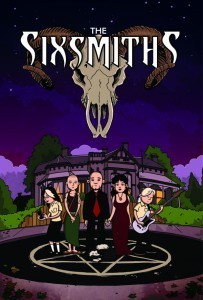
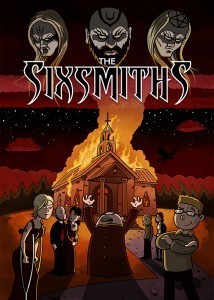
I also completed THE SIXSMITHS volume 2, with a team of fifteen amazing local artists (and one dirty foreigner). This is a project I have been working on since 2010. I remastered the first volume and I expect there will be a second edition in 2015 to go with the new volume.
Not every project made it over the line. I had hoped to complete my novel XDA ZAI this year but what was going to be the final draft is… not good enough. With the help of some excellent beta readers I think I’ve figured out how to fix it, but it’s going to require some surgery and I’m unlikely to have time for that until probably the middle of next year. I have a new short short that’s almost submission-ready, but I don’t think I have time to finish it before the new year, either. Boo.
The year is not over yet. I still have to complete the final draft of SHADOWMANCY, and I have to fast track a new freelance gig with Daniel Watts (yes, him again) that I don’t think we can speak about yet. I have my work cut out for me next year with some other new comics and prose projects that it’s much too early to talk about.
Lookout, 2015. I’m coming right for ya.
December 13, 2014
Interview with Justin Woolley
I first came to know Justin Woolley through the Melbourne comics scene. Justin’s a talented, motivated, and down-to-earth writer, and I was surprised to learn that he writes prose as well–I only know a handful of others who publish in both mediums here in Australia.
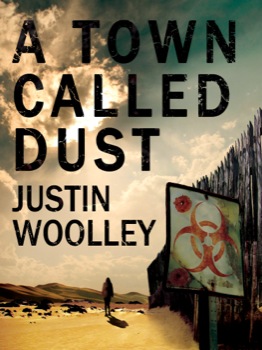
Momentum have just published Justin’s first novel, A Town Called Dust, so I thought now would be an excellent time to interview him.
JF: How did you get started in this whole writing caper? What made you want to do it and what made you stick with it?
JW: I’ve been writing as long as I can remember. Mum dragged a box out of her garage a while ago loaded with “books” I’d written when I was 5 or 6 years old. Amongst the collection were such classics as The Magician Who Thought He Knew All The Magic–surely an in-depth portrayal of a man tortured by his own feelings of superiority. I am Captain Black Skull–a riveting and multi-layered depiction of how the social environment shapes a simple man into a feared villain. The Pirate Dragon–a Pirate WHO IS ALSO A DRAGON. Probably not a lot different from the stuff I’d write now, except maybe for the spelling.
So, I’ve always been making up stories, but I suppose it was in my mid to late teens that I started taking it more seriously. At that time I was completely enthralled with reading the Discworld novels by Terry Pratchett. Other than being enormously enjoyable I think it was these books that showed me how an author can craft a truly unique world and bring it to life. I wanted to do that.
JF: What was the path like for you from there to your first publication, and from that publication to A Town Called Dust?
JW: I kept writing all the way through school. I wrote a bunch of directionless science fiction stories. I wrote a whole lot of terribly generic fantasy stories. I wrote some good stories but I mostly wrote bad stories but I stuck at it, improving all the time. When I was in year 12 I studied a creative writing course. During that course I wrote an autobiographical story about being present during the Port Arthur massacre, something I’d never been that open about, but writing about it proved to be incredibly cathartic and the story was well received during a reading. The teacher approached me to submit it to Voiceworks magazine. When they accepted it I had my first publication. As a side note that story was reprinted in 2009 in the Voiceworks anthology ‘The Words We Found: The Best Writing From 21 Years of Voiceworks Magazine’. It’s still one of the stories I’m most proud of.
From then onwards I kept writing, mostly focusing on speculative fiction. I achieved sporadic success with short stories in competition and publication and faced a lot of rejection of course. I began writing comics as well, a medium I’d always read, had a few short comics published in anthologies and eventually had two graphic novels accepted by publishers (both still in-development).
After having a few false starts along the road, around five years ago I started getting serious about writing (and finishing) a novel. I was inspired by my time as a teacher to write for young adults. That was when I began writing A Town Called Dust. It took me over a year to write the first draft and then another year to rewrite it and polish it to a stage where I was happy with it. Then, through a fortuitous meeting I landed my agent. I did a little more reworking and it took almost two years to find a publisher. In the end it found its home with Momentum and I couldn’t be happier.
JF: Besides the obvious production concerns, what do you think are the key differences between writing prose and writing for comics?
JW: Comics are a different beast for a writer. The major difference is in the form itself. As a writer a comic script is mostly a conversation with the artist, other than the dialogue the reader never actually reads your description of the action, whereas obviously with prose your words are the only thing they read.
This brings a different way of thinking. Comics are a visual medium and this necessitates that the writer think visually. Pacing of panels, the length of dialogue, the need to avoid “talking heads”, how to portray emotion, even what occurs on the turn of a page all become considerations that are different to prose.
That said, I think writing comics teaches you to write very visual prose and to be concise and effective with your language.
JF: What do you think is the reason for the recent flourishing of genre fiction for young adult readers?
JW: That’s an interesting one, while I don’t necessarily think genre fiction for young adults is a new thing you’re right that there certainly seems to be a boom at the moment. I think it comes down to the psychology of being a teenager. It’s a time of trying to find your place in the world and it’s easy to feel like you don’t belong. Genre fiction provides an escape for young adult readers just as it does for adult readers but often the themes of genre fiction reflect the things young adults struggle with even more. Post-apocalyptic fiction often invokes feelings of isolation. Fantasy often provides a sense of finding great power. Science fiction is very often about identity.
JF: One of the things that strikes me about A Town Called Dust is the way that it addresses politics. Church and state are both shown as to be corrupt. Even the military is mostly stratified by class. Are these themes you intend to explore further in the series?
JW: The inherent conflict between Church and State and the use of power for control are certainly all major themes of the book. Many of my ideas about this stem from the world of The Territory. The population lives within an enormous border fence designed to keep the ghouls out but I quickly realised that this same fence keeps everyone else trapped inside. The behaviour of the government and the church really comes from a view of needing to control a population who lives this way. In many ways, particularly for the teen audience, this represents feelings of being trapped and controlled by authority figures that regularly tell you how to behave and what to believe.
In terms of moving forward in the series these themes do continue. Without too many spoilers we see what happens when individuals within large organisations seize control and use power for their own purposes, and the damage they can do even when they believe that purpose is right.
JF: Tell me about the inspiration for A Town Called Dust.
JW: For me inspiration is often difficult to completely articulate. It usually comes from many different sources, but for ‘A Town Called Dust’ the majority of the inspiration came while I was working as a teacher.
I saw how difficult it was to get 15 and 16 year old boys to read and that made me want to write for that audience. I thought back to the books I loved at that age and one that immediately came to mind was John Marsden’s ‘Tomorrow When the War Began’ series. In particular I remembered the buzz of reading a novel set in Australia. I had already planned to write a post-apocalyptic novel and the Australian desert jumped out at me as the perfect setting. It’s such a vast, desolate landscape that already evokes feelings of isolation and the end of the world, just think of Mad Max. Much of the rest of the inspiration flowed from this setting, the way the ghouls thirst for moisture rather than brains, dirt farming, the fence and even the imagery used throughout the book.
JF: How many books will there be in the Territory series?
JW: The Territory series is planned to be a trilogy. ‘A Town Called Dust’ is out now. ‘A City Called Smoke’ is due for release in October next year and then they’ll be a third book ‘A World of Ash’ in 2016.
JF: What’s next for you, Justin?
JW: Right now I’m just over halfway through the first draft of ‘A City Called Smoke’ the second book in The Territory series so that is my main focus at the moment. Once that’s done I’ll get cracking on book 3.
I’ve also got two graphic novels currently being developed. One, called ‘Nemesis’, is the story of a young boy who wants nothing but to be the next great supervillain but perhaps isn’t as evil as he thinks. It is unfortunately in what you might called ‘development hell’ being much delayed. The other is ‘King and Country’ an alternate history about a resistance group in Nazi occupied London. ‘King and Country’ is a book I’m incredibly proud of and so excited for people to read. It’s being released through Australian publisher Gestalt Comics and is still being worked on but hopefully not too far away.
Beyond that, I’ve got another YA series I’m writing the first book of which ‘Alpha’ I’ve spoken a little bit about on my writing blog explaining my process for planning and beginning the first draft. The premise of that book is: Six years after aliens arrive on Earth as refugees from a long distant war, a group of troubled teenagers find themselves at Alpha Academy – a prestigious institute for human youth to learn from the aliens – but they soon discover Earth’s visitors may not be as peaceful as they seem and must band together to prevent disaster for both races. It’s taken something of a back seat until the Territory series is done but it’s still percolating in my brain!
Then there’s more ideas, always too many ideas not enough time!
JF: Thank you, Justin, it’s been a real pleasure!
And so, dear readers, would you like some post-apocalyptic YA fiction for Christmas?
“Yes, please!”
Very well, then:
A Town Called Dust, the first book in the Territory series, is available now from Momentum Books or from Amazon.com, iBooks and Kobo. The fate of the Territory depends on you!
November 27, 2014
Ed Siemienkowicz
My good friend and collaborator Ed Siemienkowicz has pancreatic cancer. If you’ve been around comics in Orlando, Tokyo, Melbourne, or Chicago you probably know him. If you’ve been to SPX, you probably know him. You might’ve read some of his excellent comics, like Chrome and Dust or Random Play or V3. You might know him from the Voice of the Republic podcast. You might just know him because he’s a happy, personable, outgoing, talented and humble dude. You might not know him at all.
Edo-san has a life-threatening illness and no health insurance. If you’d like to help him out, please think about contributing to the GiveForward campaign in the link. I don’t know anybody more deserving.
November 7, 2014
Butcher’s Hook – Year’s Best Horror 2013 Honorable Mention
My short story “Butcher’s Hook” (published in Aurealis #65) received an honorable mention in Ellen Datlow’s 2013 Best Horror collection. I guess that makes it the Little Story That Could.
Butcher’s Hook was a rare story that, according to my records, was only rejected once before it sold. It’s always a source of wonder to me which stories sell and which ones do not, much less which stories get recognized. I only work here.
I really don’t write a lot of short stories these days. For many years my efforts in the shorter form mostly went into comics and now I’ve gotten out of the habit. My inclination is to go big: it’s rare for me to come up with anything as contained as Butcher’s Hook, these days. A handful of characters, a single idea and a limited wordcount delivered as a concentrated hit of story.
Maybe I should write some more.
October 29, 2014
Halloween Sale
Hey folks,
The Kindle edition of my Aurealis-nominated novel Bloody Waters is on sale for $0.99. Guitars, monsters, monster egos and perhaps even some laughs. Come get some!
http://www.amazon.com/Bloody-Waters-Jason-Franks-ebook/dp/B009WRWIAW/
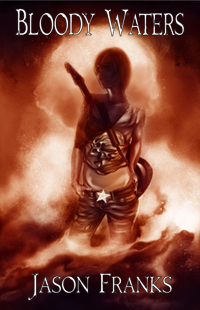
Also don’t forget the two Bloody Waters short stories, also 99c each:
HELLHOUND ON MY TRAIL, featuring the bluesman Bad Jack Saunders:
http://www.amazon.com/Hellhound-Trail-Bloody-Waters-Book-ebook/dp/B00NXZHBHE
and
THE MARTYR AND THE QARIN, featuring Clarice, her own bad self!
http://www.amazon.com/Martyr-Qarin-Bloody-Waters-Book-ebook/dp/B00NXZZIWO
Happy Halloween!