Jason Franks's Blog, page 11
December 30, 2016
And Then… Exli and the Dragon
And Then… on the last day of the year… a new anthology of thrilling adventure stories DESCENDED FROM THE HEAVENS courtesy of Clan Destine Press.
Featuring stories by Alan Baxter, Jason Nahrung, Narrelle Harris, Dan Rabarts, Lucy Sussex, Peter Ball, Tor Roxburgh, Tansy Rayner Roberts…
Oh, and me. My long-short story “Exli and the Dragon” is in there, too, in which Exli and a disgusting alien creature that calls itself ‘the Dragon’ attempt to escape from a space prison. Includes vehicle theft and pew pew lasers and jellyfish and robots, so if that’s your bag I can only suggest that you open your wallet and fork out the buckazoids required to purchase a copy of your very own.
http://clandestinepress.com.au/conten...
It’s rare for me to publish a short and I am very very pleased to be sharing space between the covers with these folks in an anthology of new, original work.
Available digitally from today and in paperback from next month. First volume in a series.
Come get some.


December 23, 2016
2016 Dead on the Floor
So, 2016 is down and will soon be dead on the floor.
This year I had a particularly good time working with Dan Watts and Garth Jones on a short comic for Flip-Out! trampoline arenas. That was a fun project and I am looking forward to working more with both of those two guys. Likewise, I had tons of fun working with my team for Gourmand Go: Hazz Purnell, Laura Renfrew, Gavin Thompson, Matt Kyme, Aly Faye, and Ben Byrne. The book is pretty much done now and it should be available next year.
Aside from the Flip-Out comic I have one piece of short (well, the longer side of short) coming out before New Year’s day, and that will be my total output for the whole year. Sometimes these things are out of your control. And sometimes not:
One of the most difficult things I did this year was pull my novel Shadowmancy before it was published, after it was typeset and ready to go. There were a variety of reasons for this, but in the end I was unhappy with the quality of the work and I’m going to have to tinker with it some more. Perhaps you’ll see it next year.
Stuff you will certainly see from me next year: my second novel, Faerie Apocalypse, to be published by IFWG. Also, the the new edition of The Sixsmiths will be back in shops in January, although it has been available from online retailers for about a year now.
I was on the radio twice in 2016, and both times were an absolute blast, despite the pants-wetting episodes in the preceding days. In January I was on RRR’s Graphic Nature program with Sarah Howell and Zoran Ilievski, and in August Wendy Tonkin invited me onto PBS’s Metal Genesis.
I enjoyed a bunch of stuff this year, although it’s been hard to keep current with popular culture given my diminished free time. Here’s a quick list:
Books: This year I read a lot of Australian work. I particularly enjoyed reading more of Devin Madsen’s Vengeance trilogy, Paul Rasche’s Smudgy in Monsterland, and Angela Slatter’s Vigil.
TV: Most enjoyable TV show was the new season of Ash vs Evil Dead show, in all its cut-rate, B-Grade glory. Daredevil season 2 was riddled with story problems, but the cast are so good as an ensemble that I didn’t really mind. I have watched a lot of children’s TV this year and my favourite programs for under 5s are Kazoops! and Ben and Holly’s Little Kingdom. I just wish they had more guns, demons and electric guitars in them.
I missed a lot of movies that I badly want to see (the Arrival, the VVitch, Rogue One), but of those that I did see I most enjoyed The Nice Guys and Hail, Caesar!
Motorhead’s Bad Magic was released late in 2015, but I’ve listened to it about a thousand times more than any other album I bought this year so I’m putting it on this list. Here’s my favourite cut from it. I can’t think of a more fitting farewell to the late great Lemmy Kilmister.
November 28, 2016
Faerie Apocalypto
Faerie Apocalypse.
I’ve been hearing a lot of people saying “It sounds cool,” and then “what is it actually about, anyway?”
I’m not yet able to give you a blurb, but I thought I’d give you some bullet points to chew on:
There are bullets in the book, and some characters do chew on them–full auto. This ain’t your grand pappy’s fairyland.
Despite that it is a fantasy novel, set mostly in Faerie Land and featuring a variety of magical, monstrous beings as well as a succession of human characters who are also, in varying degrees, monstrous and magical.
It’s a fantasy novel that also investigates the relationship of fantasy to the science fiction, horror and western genres.
Music references? You bet those hedgerows are a-bustling. Fairyland just ain’t right without a hefty dose of ’70s rock’n’roll.
I have called it ‘literary fantasy’, although I dislike using the word ‘literary’ as a qualifier, in order to set the expectation that this is a stylized work, unlike the stripped-back prose and natural dialogue in Bloody Waters. In this book I want readers to attend to the language, as the characters themselves must.
Alas, I have said too much… but I’m sure there will be more to come. Listen at your browser window, for you never know when the RSS Pixies might bring you some new morsels. Just make sure you understand the price before you try them.
— JF
November 21, 2016
Nerdy Girl Express Review of The Sixsmiths volume 2
Another one from Kat at The Nerdy Girl Express, this time covering Sixsmiths volume 2!
“Volume two of The Sixsmiths is very much a book about transitions as many characters find themselves setting out on new paths, including the vicar of the church himself.”
Full review right here:
The Sixsmiths Volume 2 @CaliberComics Review from @kleffnotes
Hail Satan!
November 19, 2016
Nerdy Girl Express Review of The Sixsmiths
Just in time for Diamond Day is a brand new review of The Sixsmiths from Kat at The Nerdy Girl Express.
“What makes this series so fun to read is that everything that happens just seems so normal. When I was trying to think of the best way to explain it I actually thought of the American television classic, Happy Days, but if Richie and his family had more tattoos and occasionally listened to death metal.”
Read the full text here:
Remember–the book will be in stores in January! Hail Satan!
–JF
November 7, 2016
Faerie Apocalypse signed to IFWG
IFWG Australia has just signed my second novel, Faerie Apocalypse, for a 2017 release. Here’s the announcement on IFWG’s website:
New Signing: Faerie Apocalypse by Jason Franks
It’s a ‘literary fantasy’ novel, I guess you’d call it. You will certainly be hearing more about this in the coming months but for now this is all you’re getting.
November 3, 2016
Paul Rasche in Monsterland
I spoke with Paul Rasche about his bizarro occult-SF novel, Smudgy in Monsterland.
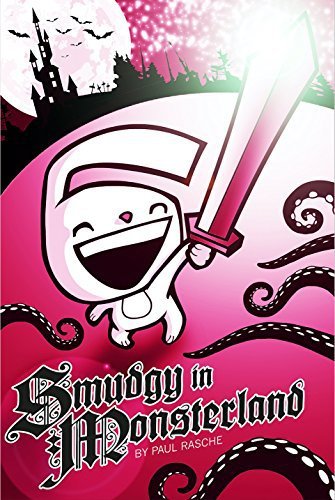 JF: Smudgy In Monsterland is about a boy who is orphaned in a Satanic terrorist attack on a space theme park, in a world where the Heinrich Himmler is king of a Nazi empire that spans the solar system. How does a project like this take shape in your brain? What was the seed idea?
PR: This was the second novel I’d attempted. Both attempts were built from a single idea, that is then extrapolated upon in both directions (i.e. how did it come to this, and where does it go from here?) The first (unfinished, rubbish) concept was “What if someone’s cat literally told them to fuck off?” The idea that eventually morphed into Smudgy In Monsterland was “What if someone was attacked by jackals every day?”
That was the initial seed. I made a few attempts at starting it, but nothing was working. Then, one evening, I just happened to be having a tipsy conversation about movies with my brother (not a rare occurrence). I’d probably just seen Pandorum and/or The Devil’s Rock and/or Outpost, because I was waxing eloquent about how my two favourite genres of movie are ‘Space Madness’ and ‘Nazi Occult’. Then there came the light-bulb moment. What if there was “Space-Madness-Nazi-Occult”? Gold. Staplegunned that onto the existing concept and got writing the next day. The whole thing came out in a big hurry. It was a wave of inspiration that took me all the way through to the end, the likes of which I haven’t experienced before or since.
JF: Smudgy is a difficult book to categorize. In the end it probably reminds me of Norman Spinrad’s work–the willingness go so very dark, not just in terms of plot but in terms of who the characters are. Satanic terrorists on one side, Nazis on the other… and a cartoon rabbit on the cover. Very dark satire.
PR: I don’t think of Smudgy as a satire, but I can see how others might. I’m not interested in social commentary or deeper meanings or metaphors in my writing. My only goal is to tell an interesting, weird, new story – I’m inspired by Lewis Carroll’s work in that respect. So the only reason its Nazis v Satanists with a cartoon rabbit in the mix is because I thought it would be cool.
Smudgy is hard to categorize, I agree. When people ask me what it’s about it’s hard to know what to say. I didn’t start with a genre in mind, or even an audience, really, I just wrote what I wanted to write. It was fun!
JF: I detect some rage in Smudgy. This poor kid Odo, who lives in a world run by Nazis, whose life is ruined by Satanic terrorists and then by a demon… Surely this reflects some dissatisfaction with the how the real world operates. Where does this anger come from?
PR: I’d never really thought of Smudgy as an angry book. It’s true that Odo (and many others) face a horrible fate and there is nastiness aplenty throughout. On one hand, I’d say that a protagonists face seemingly unassailable adversity, (unless you’re reading a pretty dull book), and that Smudgy’s ending isn’t too nasty. On the other hand, the truth of the matter: Smudgy was written in 2012, when our house was being built. If you ever want to be “dissatisfied with how the real world operates”, hiring a dodgy rip-off lowlife builder for a year will do the trick! Having another, entirely under-my-control, world to escape into was more than just a relief, it was probably necessary for my mental health. Also, I was in my early 20s when Howard came to power, and that was a pretty heart-breaking time to be invested in the real world. I think that whole “Children Overboard” thing was the final straw for me, it really exposed the underlying racism of the Australian electorate and the willingness of that lowlife weasel scum Howard to exploit said racism. Did someone say they detected rage?
After that it was time for me to stop watching the news and start smoking pot, playing video games and drawing cartoons instead.
JF: You make it sound as if the book was a thing that coalesced around an almost random set of ideas, but there’s a thorough worldbuilding project here (especially the Smudgy cartoon universe!) and a rock solid internal logic to the plot. Did you make detailed plans before you started writing?
PR: I use an spreadsheet to work out what needs to happen in each chapter. It’s pretty bare-bones stuff though. When it comes time to write the actual content, a lot of it is just thought of on the spot. All of the Monsterland attractions and the stories they relate back to in the original Smudgy cartoon world were all thought of on-the-fly, as were all the character names and little details. For me, that is the most fun part of writing, coming up with crazy stuff. Things like the story behind the Haunted Mansion or the 666 Castles of Madness don’t have much, if any, actual impact on the plot. It’s basically just letting my imagination off the leash and watching it tearing around like a mad thing.
It’s kinda like the plot is one of those fake Christmas trees, whose construction you struggle over, scratching your head and reading the instructions. Once that’s done, you can have all the fun and express all the creativity you like putting on the decorations. Only then do you have a real Christmas tree.
JF: Were you at all concerned about offending anyone with this book? Christmas tree aficionados, for example?
PR: No, not at all. I never had the thought, “Oh, I should change this because it might offend someone.” I can’t second-guess what a moron might think. I don’t have any respect for people who get offended by fictional content. If you don’t like it, stop reading it. If you really don’t like it, maybe have a book-burning, that’s always the sign of a healthy mindset.
I don’t go out of my way to be offensive, I just write whatever I like and don’t censor it. I will say that I have always found offensive jokes to be especially funny. I don’t know why, but there’s no point denying it. I love the comedy of Anthony Jeselnik, he really explores the nature of what is offensive and why (mainly by being as offensive as possible).
I had a printer refuse to print my first graphic novel “Contrariwise”, due to offensive material, and to this day I’m not even sure what they found so wrong with it. Officeworks to the rescue.
Patton Oswalt sums it up perfectly, I think. He has this routine wherein his newborn baby is murdered by a robot, and people in the audience are appalled and stuff, and as a quick aside, he snarks “Yeah, BOO robot I just made up.”
JF: What’s next for you, Paul? Another book? A graphic novel? What else can readers buy if they need some more Rasche in their eyes?
PR: Well, let’s see… Yes, I am working on a new book, which I’ve plotted out and am something like 25,000 words into. I want to write a really, really long book, and that’s what this will be. A tome of sheer madness that, hopefully, some misfit kid/s will get into. That project is my favourite thing to think about when I’m bored or being talked at. It’s set in the same universe as Smudgy but there are no crossover characters (yet – who knows?).
I just finished an illustration project, it’s a Dr Seuss parody called Dopeheads on Mopeds (and is extremely offensive). It was a secret birthday surprise for my brother, I’m giving it to him on the 22nd, so don’t tell anyone until then. I’ll let it loose on the webs after that. Might have to take some bits out.
I also illustrated a deck of cards last year, they’re still for sale, but there’s only a few left. They’re called “Below Deck” and they’re on Etsy. And some friends want me to design a mural or some sort of giant picture to go on a blank wall in their new house, that’s exciting and there are ideas a-swirlin’ about that. And I’ve got some cool ideas for tattoo designs. I’m still hoping to sit bolt upright in bed one night with an amazing idea for a new illustration project, so I’ll keep you posted on that front.
Smudgy in Monsterland is available now from amazon.com or directo from the Satalyte Publishing. Get it before it gets you.
October 26, 2016
THE SIXSMITHS vol.01 IN PREVIEWS!
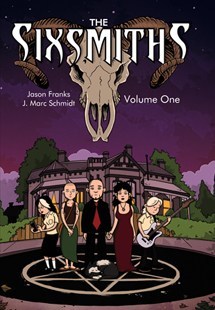
O, my wicked children, our time of dominion is nigh!
The Sixsmiths vol.01 is listed in this months’ Previews catalogue, for distribution to comic stores world wide next January thanks to Caliber Comics.
This is how it works: if you would like a copy, please go to your local comic store and request one, using the order code NOV161353, prior to November 20.
You can view the listing here:
http://www.diamondcomics.com/Home/1/1/3/244?articleID=29178
Hail Satan!
— JF
October 4, 2016
Gary Reed
Gary Reed passed away today, far too young at the age of sixty.
I never go to meet Gary, but we exchanged a hell of a lot of correspondence over the last 18 months since Caliber Comics took on The Sixsmiths. He was blunt, honest, smart, and completely genuine and I felt truly privileged to be a part of Caliber’s revival.
As I have mentioned before, Caliber was the first company I ever tried to brace for publication, back in the 1990s when I was a punk teenager, so it was a real thrill to see my own work come out with the nib logo on it last year, and indeed to receive correspondence from Gary directly.
As many greats as Gary published at Caliber (James O’Barr, Warren Ellis, Garth Ennis, Vince Locke, Brian Bendis, John McCrea, Guy Davis, David Mack, and tons of others), he was a writer of no small talent himself. Gary’s Deadworld books predated the zombie craze and the Walking Dead by more than a decade. His Renfield graphic novel integrated into Stoker’s Dracula novel with no visible seams. Baker Street and Saint Germaine are also seminal works. Gary did things his own way, and at his best that put him 20 years ahead of his peers. The comics industry needs more like him.
Gary is survived by a wife and four daughters. My condolences to his family and friends. I wish I;d had the opportunity to know him better.
September 17, 2016
The Wizardry of Gillian Polack
I interviewed Gillian Polack about her new urban fantasy novel, THE WIZARDRY OF JEWISH WOMEN.
We spoke about magic, antisemitism, Anglo-Jewish culture, narrative forks. middle-aged protagonists, and science.
Warning: There are some minor spoilers for those who haven’t read the book.
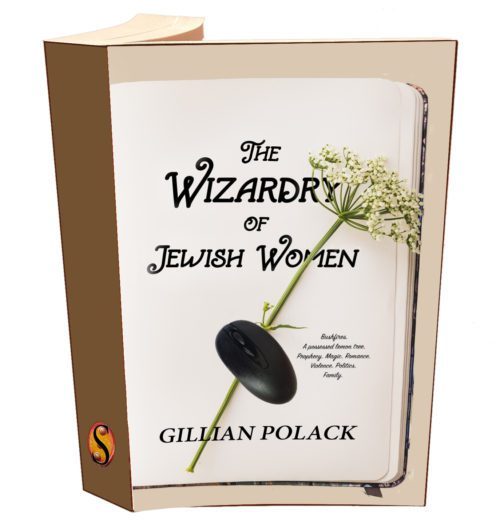
JF: Why did you choose to feature two middle-aged women as protagonists for your new book, the Wizardry of Jewish Women?
GP: They’re young women compared to three of the protagonists of The Time of the Ghosts! In this case it wasn’t their age that was critical, it was where they were up to in their lives. I needed them to have key life experiences like relationships, children, career changes. Also, so many women I know sort out big things in their lives in their thirties and early forties. I wanted to see what would happen if I kept throwing life events at women who are determined to do just that.
JF: The two protagonists have different stories, but they’re both Jewish–but they’re neither of them particularly so. Rhonda is barely aware of her heritage and does not identify as Jewish, and Judith only begins to become interested as a side-effect to a developing fascination with a set of papers bequeathed to her by a deceased ancestor. Given that the word ‘Jewish’ is in the title of the novel, why the distance between the protagonists and their culture?
GP: Recently I asked around to see what kind of books were published in Australia with Jewish protagonists. I read half a dozen of them. Australia is a wonderfully secular country, but the books I read had religious Jews, often Ultra-Orthodox Jews, as protagonists. There are so few Ultra-Orthodox Jews in this country – I know this because I’m related to several of them. There are more practising Jews (of various traditions), but most Jews have exactly the same religious profile as most other Australians. You know, the ones who will write down their religion as C of E on the census, but when pressed say “Well, I celebrate Christmas.” Australia is a secular country and yet we have precious little literature that shows secular Jews. So I built a profile of Jews who are very Australian and still Jewish. Not Jewish in the way I am, for I had a very traditional upbringing, but Jewish as many of my friends are.
They aren’t religious, but their Jewish culture is very strong. Whether they know the term ‘tikkun olam’ or not, their hearts are in making the world a better place, which is central to Judaism. Family counts and family decisions are big decisions. Not cooking well is a bit embarrassing, really. Learning and books are terribly, terribly important. Guilt haunts one. All of this is part of being Jewish. It doesn’t look like that to people who think that ‘Fiddler on the Roof’ Jewish or ‘Woody Allen’ Jewish are the only kinds of Judaism, but it is. It’s Anglo-Australian secular Jewish. Judaism is a religion, but it’s also a hundred thousand cultures: I depicted just one of them.
JF: The two protagonists in this have their own distinct stories. They are connected–tenuously–at the start, by events and, we later discover, by blood, but they don’t join up again at the end as one might expect. Why this bifurcation of the story?
GP: I was looking at family culture at the time. It struck me that families create patterns in their lives. The two paths and the places they meet in the novel show just how much of our lives is determined by our family culture. The families meet not because of shared ancestry, but because of shared culture resulting from it. I’ve seen this time after time in real life. People who marry only to discover they’re distant cousins, for instance. Or me. I took up crochet lace only to discover my grandmother had done the same thing fifty years before. We possess some surprising inheritances. I wanted to show how this plays out over time when two quite different people have basically the same family culture, but with quite different factors influencing their lives.
It was a fun thing to do as a narrative. I have another novel with two tracks and it will be out next year – its two tracks are different, but it was written as a balance to this one. I’m playing with narrative.
JF: One of the factors that you mentioned there is antisemitism. How does this effect the fracturing of the families and also the present moment for Judith and Belinda?
GP: Antisemitism in Australian often leads to a diminution of some aspects of Jewish religion and culture. There are so many potential ways of handling it. Some families handle it by losing aspects of their culture that they think might trigger it, or by denying their religion in public (because, from their family’s experience, it’s safer). Others handle it by marrying out, or by affirming their identity and using the hate as a reinforcement. There is always a small group who maintain the religion and the culture despite it all, but most Jews here will blend in if they can. One of my nephews had eggs thrown at him when he was school age, because didn’t hide his religion. Given this sort of thing, I entirely understand the people who come to me and say, quietly “My parents were Jewish.” It’s a lot easier to deal with hate by doing what the haters think is the right thing. For me, the haters are bullies, so I’m open about my Judaism and I deal with the consequences. i don’t deal with them gracefully, but I deal with them.
Choices made due to antisemitism can be minuscule or enormous. They can be made 10,000 times in one person’s life. The choices made by people around you are going to affect the choices you make. So a choice to do something that’s more acceptable to the non-Jewish community (in the case of the novel, that would be marrying out) and extraordinarily difficult for the Jewish family, can and does lead to splintering. I have relatives I don’t know, for similar reasons. The pressure of antisemitism isn’t always a constant, but it returns and it returns and it returns and every time, it changes our lives in some way. I put the past and the present into the novel partly to show this. The modern characters have to make their choices, just as their ancestors did.
JF: Have you personally observed antisemitism becoming worse and if so, why do you think that is?
GP: I’ve observed that I’m forced to defend myself more often now. And that people are unbelieving about antisemitism, even when it’s fully documented. I cite statistics and send them to web pages. Also, I’ve been told far more frequently than I used to be that other people are hurting more. I should just deal. We had our moment of attention. This is the most offensive thing. They’re assuming that the Shoah is something we did to get attention. I’ve also been told how I think and what I believe, especially by the Left. I have some pre-prepared answers, because some issues arise over and over. I also joke a lot about Jewish languages, because so few people understand that the most common mother tongue for Jews globally is English.
JF: Rhonda and Judith both possess different kinds of magic, but the only person who is aware of both strains is dead. The knowledge has been lost and it seems that there’s nobody left who can connect the dots. Again, why do we have this fork in the story?
GP: This is a different type of fork. One very important aspect of being Jewish is how much we lose each time we have to hide or have to run. One of the big things that has been lost for most Jews is Jewish magic. For at least a thousand years, European and North African non-Jews have said that the language of magic is Hebrew and the best practitioners are Jewish. I’ve seen it time after time in medieval sources, for instance. Modern supernatural stories use Latin and turn everything Christian, but until recently, the really powerful magic was suposed to be Jewish. And we’ve lost it. There must be Jewish magicians out there (for to lose something so very strong, culturally, is unbearable) but if I’ve met any practitioners, they’ve not admitted it to me.
Mostly, though, I wanted a subject through which I could explore just how much forgetting persecution and cultural change have brought. Melusine, in The Time of the Ghosts, looked briefly at the persecution, and this novel is looking at the role of cultural change. Modern Judaism is a bastion of scientific thought – this has to have affected the preservation of Jewish magic. I created a family where these things mattered, historically. And one of the side effects was a natural splintering of the magic abilities: it’s a natural result of the loss of control mechanisms.
JF: So the advent of science has further disrupted the transmission of magical knowledge down the generations? Why do you think that it has been adopted so vociferously by modern Judaism?
GP: Judaism, religiously, embraces questioning. Science fits within Judaism wonderfully. It always has. It’s no co-incidence that so many scientists identify as Jewish proportionately to the world’s Jewish population. It’s a cultural thing based upon the really cool nature of our religion, where it isn’t just OK to ask questions, it’s obligatory.
JF: There are many Jewish writers of science fiction, but very few who write in the fantasy genre (present company excluded). Do you think Jews’ preoccupation with science is the cause of this–a simple preference–or do you think there are other reasons that Jewish writers of genre fiction avoid Fantasy?
GP: I don’t think we do. I can instantly think of a half-dozen major fantasy writers who are Jewish. Most of them exclude their Judaism from their fiction, but that’s not the same thing. We talk about Asimov as representing Jews, but not Kushner, for instance. There aren’t many Australian Jewish fantasy writers. But then, there aren’t many Australian Jews.
JF: Thank you, Gillian. It’s been a pleasure, as always!
THE WIZARDRY OF JEWISH WOMEN is available now from Satalyte Publishing, from Amazon.com, and selected awesome bookstores (like Readings).