
Michael Hiebert's Blog, page 8
June 27, 2013
NPR Radio Spots: Finally Aired
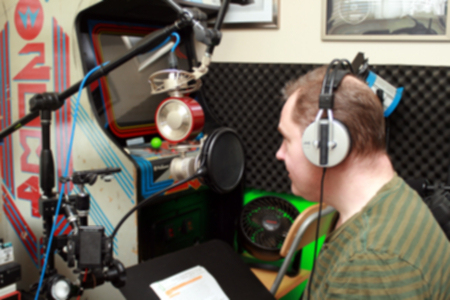
If anyone is interested in hearing the five two-minute NPR radio spots I did promoting my new novel Dream with Little Angels (that has been out now for two days! They can do so by going here. I guess they turned out okay. Like most people, I hate the sound of my own voice, so I can’t judge.
They were a lot of fun to do, though. We recorded them in an actual studio and everything.
Funny how things can go from ten years of nothing to suddenly doing radio spots and interviews on an almost every second day basis.
Michael out.
The post NPR Radio Spots: Finally Aired appeared first on Michael Hiebert.


June 26, 2013
The Forward Path
Today’s post comes from Leona Pence. You’ll find me posting over on her blog, but stay here first. Read what she has to say. Put up your feet and grab that coffee. It’s a good post.
Leona sort of does her own introduction with this piece, so I’ll leave you here, in her capable hands.
Michael out.
The Forward Path

There are some days you never forget. The day you get your first kiss; the day you get married; the birth of your first child—then your first grandchild. And there are the darker days, too. Your first heartbreak. The first time you lose your job, or a friend. January, 8, 2006, is a date forever etched in my mind. It was the day my husband of forty-four years succumbed to lung cancer. My story starts from that point forward. I never thought I’d survive a year without him, but here I am, seven and a half years later. I’ve changed so much over the past few years. I’m stronger, more confident, and not shy anymore about speaking my mind. My children call me a stubborn, opinionated, know-it-all, but they love me anyway.
What they say about one door closing and another opening has proven to be true for me. I’m a firm believer that people cross your path for a reason, be it for a day, or a lasting friendship. After I lost my Ren, I became a night owl and sat in front of my computer for hours chatting with a few friends. It was the only way I kept my mind from replaying his death over and over. When I finally made it to bed, I slept well.
One friend gave me a link to a pen pal site. Writing to strangers was no easy task, but those people became lasting friends and, in turn, introduced me to others. Sandie and Robin are two of those online acquaintances that soon became my friends. Laughter was constant whenever we got to chatting. We joked around often.
One night we decided we wanted to create our alter-egos and be heroines in a humor story. We twisted our names, projected ourselves back in age, and each described a love interest. I used the information to write a story. I had never really written anything before, but the story kept growing. Words flowed, plot twists came to me in my dreams, and my novel was born.
Both Robin and our friend Jo have Multiple Sclerosis. And, even though I was free from the difficulties of that particular condition, they were kind enough to adopt me into their MS support group. The people in the group became my sounding board and cheering squad. Every week, I’d send them an installment of my growing story. And God forbid if it arrived late. Many times, I wanted to give up, but then I’d get emails asking what happened to the next installment. It was exactly the support and encouragement that I needed, not only to write, but to recapture some of the joy I had lost.
One of the members asked me to put him in my novel. He became Mayor Hemphill and inspired my title, Hemphill Towers. Everybody recognized their twisted names. In fact, all the characters in my book were inspired by somebody. The story made my family laugh as they picked out names I’d used. My brother, Larry Harmston, became Judge Lawrence Harmstrong. My nephew, Eric Barrish, became Dr. Eric Barrisher. Funny, huh?
In three months time, I finished writing the book. It was in fifteen installments. I had no intentions of having my novel published until people began to push me in that direction. One day, while looking on the pen pal site, I saw a post that drew my attention: Writers wanted, young or old. Beginners welcome. We will critique your work.
It was a writing forum, and I joined it. Scared of my own shadow, I merely lurked and read other people’s posts. I didn’t know what a “thread” was, except the kind that wound on a spool. Eventually I posted a couple of chapters and received good feedback. A moderator in the forum gave me a link to F2K—a free writing course—somewhere she said had helped her.
She thought it might help me.
I clicked the link and looked it over, deciding I was too old and had been away from school far too long to even try. The moderator was not a happy camper. She said, “Don’t you dare use your age as an excuse. It’s free! What can you lose by trying?” So I meekly clicked the button registering me for the next installment of the course, not realizing It was, literally, a big turning point in my life.
Johnty was my Mentor for my first session, but Maruxa, his intern, took me under her wing and helped me immensely. By my third session of F2K, I was fearless. I signed up for a fourth session, but in the first week, a Mentor needed to step down for personal reasons, and I was asked to take her classroom. I hesitated briefly when the email request came, but a little voice in the back of my head said, “Do it, Leona, do it or you’ll regret it.”
Writing has created a path I never imagined I’d find for myself. It began on the worst day I can remember, but has since added so many memorable dates to the events of my life. And, now, here I am. My first book is due out late this summer, and I’m a writing mentor with my own classroom at F2K; it still boggles my mind. I am living proof, that no matter how dark things may seem, and no matter how old you get, life still holds challenges worth facing, and memories worth creating.
Bio: Leona Pence is a lifelong resident of Illinois. She’s a widowed mother of four, grandmother of twelve, and gr-grandmother of two. She can usually be found in front of her computer writing, reading, chatting, or playing online pool.
Be sure to check out her blog. It’s available here: leonaschatter.blogspot.com/p/blog-page.html
Look for her new book, Hemphill Towers, available summer of 2013, from MuseItUp Publishing
Leona’s also has a short story included in the anthology Bump Off Your Enemies, available on Amazon.
The post The Forward Path appeared first on Michael Hiebert.
June 25, 2013
Weekends with my Grandmother and Judy Blume
So, without further ado, I hand the microphone over to her…
Michael out.
***************************************************
First of all, I’d like to thank Michael Hiebert for sharing my post on his blog. It’s kind of unfair. He shared an informative post about copy editing on my blog; in return, I gave him a post about…periods.
But Michael is a good sport and a good friend so he accepted my post with absolute grace and good humor. (I’m guessing he’ll pay me back later.)
 For those of you who don’t know, The Judy Blume Project is a collection of stories written by fans of her novels. I read somewhere that’s it’s like a gigantic love letter to Judy Blume—I like that description very much. A huge thanks to Kim of The West Coast Posse blog and Dana of The Kitchen Witch blog who created this project. And, of course, thank you to Judy Blume who said the words out loud that young girls could only whisper. To find out more, please visit Kim’s blog.
Weekends with my Grandmother and Judy Blume
The year I turned eleven, my mother went to the psychiatric ward of the hospital, and I spent every weekend at my grandmother’s house. I remember Saturday nights the best, hamburgers and Coke in front of the television with TJ Hooker and Love Boat. Fantasy Island, if I didn’t fall asleep. My grandmother was already in her late seventies, too old probably for a rebellious, snappy-eyed girl who swung her hair in anger and rolled her eyes in vexation.
I spent hours sprawled on the carpet in front of her television, reading books and listening to shows—whatever ABC or PBS had to offer; that’s all her antenna could pick up. She kept a small wooden bookcase full of books just for me, and, like any good librarian, she switched them up when she saw the spines getting too creased or the pages too dog-eared. The God books always outnumbered the chapter books twelve to one.
Back then I wasn’t positive I believed in God. Don’t get me wrong, my grandmother tried her best, dragging me to the Church of God to listen to preaching and, even worse, making me listen to Jim Baker, loud, on Sunday mornings before church.
But it was hard to understand her devotion. God didn’t live in the same places I had lived, not in the city, and not in the country. And definitely not that year. When His name was mentioned in my house, it was followed by a firm, loud, “damn it.” Or worse.
But this God-being, this father-like entity, fascinated me. Like mythology.
And boys.
When I discovered Are you there God? It’s me, Margaret by Judy Blume on the bottom shelf of that book case, I shook my head. Another God book.
After the first few pages though, I moved from the floor to a chair in the far corner of the room, my back straight and my eyes narrowed, watching my grandmother for any sign that she had planted the Judy Blume book, that she had somehow known it wasn’t a true God book. Real God books didn’t talk about breasts and boys and kissing and periods. Periods! Those were all topics that interested me more than God.
I can’t remember getting my first period. At all. I do remember that it was just me and my dad at that point, that my mom was still in some hospital —her second or third— , and that it definitely came after I read Are you there God? It’s me, Margaret.
I have my grandmother to thank for preparing me.
On one of those weekends, she handed me a small package, covered in brown paper and taped shut. Immediately, my dad had asked what it was. To which my grandmother had replied, “Ginger cookies.” My dad hated ginger cookies.
Of course they weren’t cookies at all. They were Stayfree Maxi Pads. I don’t know which shocked me more: what was in the package, or that my devout grandmother had lied.
I was embarrassed, and I was thrilled. I locked my bedroom door and pulled out a pad. Just like I had learned from Blume’s character Margaret, I pealed the strip off the back and plunked the pad down in my underpants. I was practicing.
Every month after that, my grandmother sent me home with a new box of “cookies.” My dad, at some point, stopped asking.
When my mom finally came home to stay, Tiger Eyes by Judy Blume appeared on a bookshelf between two stacks of Guideposts. By that point I knew not to question the books my grandmother chose, but to recognize them as the gifts they were. Tiger Eyes, more than anything else, helped me reconnect with my mom, helped me understand how sadness can invade your body like a cancer and take your life away, like a cancer.
Judy Blume carried me through that year and several years after. First kisses. Packages you keep hidden. Mothers who sleep all the time because they’re passed out on pain killers. Special boys who never kiss your lips, but leave a kiss on your heart that never goes away.
My grandmother, whose generation couldn’t say the words, made sure I always had the right book to explain what she couldn’t.
And me? Did I tell my grandmother all the things that my generation kept hidden? Like how much I needed her? How much I respected her? How scared I was of living without her? In my own snappy-eyed, rebellious way, I guess I did.
I wrote stories and I wrote poems and I hid them under her King James Bible, the large-print edition she read from every single day. I poured the words I couldn’t say out loud into stories about rebellious granddaughters who loved their sweet grandmothers more than anything in the whole world and poems about brokenhearted girls who didn’t want to grow up.
And when the pages grew too dog-eared, I left her a new crop.
 Von Rupert is a writer and a podcast producer. She’s a mentor at Bob Hembree’s Writer’s Village University, and a member of the Write 1 Sub 1 website. She writes poems, short stories, and too many twitter posts. To find out more about Von, you probably want to visit her blog which is located at wheretheshadowsmeetthelight.blogspot.com
The post Weekends with my Grandmother and Judy Blume appeared first on Michael Hiebert.
June 4, 2013
Recipe for Writing a Thriller Novel
Continuing on with my guest post swaps with other writers, today’s post comes from none other than Joshua Graham himself.
I met Joshua years ago when we were both a little wet behind the ears. I can remember long nights staying awake and talking about writing while everyoone else in the house was asleep. Funny thing is, to this day, I haven’t actually “met” him in real life… it’s all been through Cyberspace.
But we both moved on to brighter and bigger things and I can’t help but wonder how much of those late night conversations had to do with our futures as writers.
So I leave you now, in Josh’s more than capable hands. And when you are finished here, you may want to visit his site at and check out my post here.
Michael out.
Recipe for Writing a Thriller Novel
By Joshua Graham
The basic ingredients of fiction apply especially to thrillers and are as follows:
Take 1 Character (Protagonist)
Place carefully in a setting (you may thrust, splatter, or toss)
Add a problem (Protagonist’s major conflict)
Shake, beat, batter well for several iterations (known as the try-fail cycle), more if novel, less if short story.
Present ending either sunny-side-up (victory), or sunny-side-down (tragedy), or poached (up-down ironic ending)
 It’s very much like preparing eggs, if you think about it. Writing a great thriller requires the basic elements listed in the recipe above. But here are some more ingredients you’ll need to make a thriller pop.
1. Go easy on the exposition – Of course every character has a back story. Every locale has a story. But in a thriller, you need to move the action. Think of the pacing of just about any Indiana Jones movie. There’s not a lot of ruminating, not a lot of contemplation. Indiana Jones, while a learned person (a professor) is a man of action, not talk. A man of decision, not deliberation. If you have crucial backstory, work it into the dialogue or keep the ruminations to a bare minimum—a couple of short paragraphs and back into the present action.
2. Breathe—though thrillers are basically non-stop action, you need to give your character and readers a chance to catch their breath. A chance to lick their wounds, to laugh or cry. Do this after several intense chapters, but then let the action spring up, “just when they think it’s safe to go back into the water” to borrow a phrase from JAWS 2.
3. Short-quick chapters—Ever watch a great TV thriller? Try counting the lines of dialogue before the scenes change, the number of seconds establishing the location. It’s surprisingly short and fast. Don’t spend pages and pages beautifully describing the trees, the sky, the weather, the clothes your character is wearing (that’s for literary fiction.) Just put in enough to set the scene, then let go of the brakes and floor it!
4. End every chapter with a cliff-hanger –This is key. What makes a page turner so impossible to put down is that the chapters are short and just about every one of them ends leaving you in suspense. And because your reader already knows the next chapter will be very short and quick, what does she do? She turns the page of course. Keep doing this for the rest of the book and you’ll have a fast-paced novel. I don’t think fans of literary fiction like this so much, but you’re not writing for them. (With all due respect, they have great Pulitzer Prize winning authors to read, so don’t feel too sorry for them.)
4. Identify the personal stakes and the global stakes—Indiana Jones must stop the Nazis from obtaining the Holy Grail and unleashing the power of immortality for Adolf Hitler, but he must also save Dear Old Dad (Dr. Henry Jones) and resolve their strained relationship. Every thriller must be about saving the world, so to speak, but it also must be personal. Your larger than life protagonist must be just that. And at the same time, she must have a daughter to save, or an aging parent to care for, even a cat to rescue.
5. Twists and turns—It’s like preparing a surprise party and the guest of honor is your reader. You must plot, plot, plot. You must misdirect him, take him to a door and when he opens it, he finds himself somewhere he never would have imagined. To do this you must do a lot of reverse engineering. Figure out early what kind of payoff you want, then work your way back to setting it up. Don’t cheat and withhold information (clues). Rather, plant them ever so subtly such that by the time the surprise comes, your reader slaps himself over the head ins delighted surprise and says, “Oh! Of course!”
6. Characters should arc—it’s not always possible with a book series hero to undergo a life-altering experience in each book, but it still should happen. Something very important should change in your protagonist’s life. If you want your reader to feel that they’ve read something significant, then something significant must happen in your protagonist’s life. If at the end of your book, your protagonist is the same person and nothing has changed, then really, nothing important has happened. Your reader may be entertained for the duration (which is a good result, don’t get me wrong), but in the end, they will probably forget your book. At best, what they’ll remember is having fun reading it.
In order for a book to be transformative, something must transform your characters. Was Joe Detective a man who hated people and only looked out for himself, since that’s what everyone in the world does? Well, by the end of your book he should become either significantly MORE so, or have adopted a different outlook on life.
How do you do this with a recurring hero in a series? Well, people have many different things to go through and never stay the same person as life goes on. We are all works in progress at all times of life. So your recurring hero can have other changes throughout your subsequent novels. His basic personality and traits can remain the same, but his values can evolve over the series. Your readers will feel they’ve grown up with him, done life with him. He’ll be their close friend, and when the series is done they’ll feel like they’re saying good-bye to a lifelong friend. And they’ll be begging you to write the next series, or clamoring for a return of the hero.
I realize not every writer will agree with me on all this, and that’s fine. This is just my recipe for writing a great thriller and it shouldn’t taste like anyone else’s.
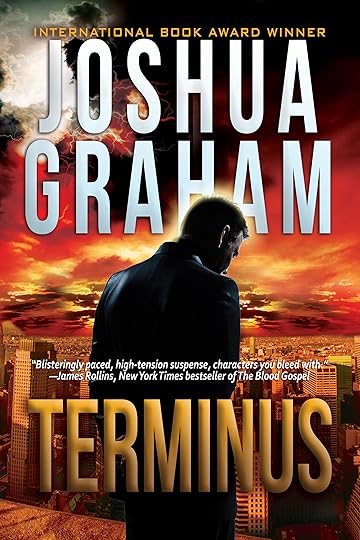 Thanks for the opportunity to share; it’s been an absolute pleasure, thank you for having me. I hope you’ll check out Michael Hiebert’s guest post on my on my blog regarding research and writing here. I’d like to invite everyone to keep in touch with me via facebook, twitter, and by signing up for my official newsletter, in which every subscriber is automatically entered for occasional giveaways.
Please visit my author page on Amazon.com here: www.amazon.com/author/joshuagraham
I hope to hear from you soon!
TERMINUS can be found on Amazon.com for Kindle and paperback here:
http://www.amazon.com/TERMINUS-ebook/dp/B00BSHEXVG
and on Barnes & Noble for Nook here: http://www.barnesandnoble.com/w/terminus-joshua-graham/1114886111?ean=2940016360478
May 29, 2013
Rules of Engagement
Actually, the letter C had nothing to do with it. I was just thinking of Sesame Street for some reason. Anyway, when you’re done reading this, scoot on over to her site and take a gander at my post :)
Michael out.
Rules of Engagement
By Mysti Parker
I recently became aware of a website called STGRB (The Blog That Shall Not Be Named: Taking a Stand Against Bullies). It doesn’t take much effort to figure out exactly what their anagram stands for. But, that’s really not the point here. The point (and it’s a sad one) is that someone found it necessary to create this website due to the insane amount of online drama propagated between authors and reviewers.
Since I began publishing in 2009, I’ve witnessed these outbreaks time and time again, and quite frankly, it makes me sick. I mean, I left high school and all the idiotic teen drama behind when I went to college, got married, had kids and you know…became a grown up. So, what’s going on here? We’re hiding behind the anonymity of the internet.
 Right now, I’m typing and sticking my tongue out at you in a most hideous way…or am I? It’s impossible to tell exactly how I’m feeling or what I’m expressing from where you are and where I am. And I might be feeling a little snarky today. I missed the darn garbage truck again, after all. So, I decide to leave a so-so review of John Smith’s “Greatest Book Ever”, because it didn’t make me feel any better about missing the garbage truck.
That’s where it SHOULD end. But, many times it does not end there. Many times, John Smith gets bent out of shape that I didn’t leave a glowing review of his “Greatest Book Ever” and he lets his temper guide his fingers and replies to my review in a snarky way.
Ok, so it COULD end there. But, no…it escalates. John Smith’s friends and family get involved. The reviewer’s friends and family get involved. Insults, even threats, are flying around before you know it.
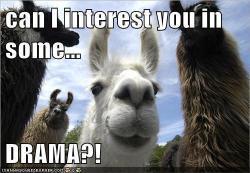
Sure, there are those who never let go of their high school drama addiction, but even those gentler souls who thought they’d matured beyond all that can get carried away when the drama llama strikes…but let’s talk prevention, shall we?
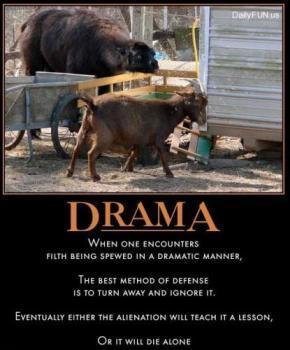 Authors: Never engage with critical reviewers! Yes, it’s tempting, especially when you’ve worked your @$$ off on something and someone tears it to shreds or leaves some snarky review. Someone called one of my books a “nickel-nasty”. Yeah, it stings, but learn to deal with it. Once you put something out there for public consumption, the public has a right to their opinion. They may have missed the garbage truck or are just really, really prudish or they hate your cover. Who knows? Don’t engage. Just don’t. Walk away from the computer. Complain to your spouse or dog or whomever, but DO NOT ENGAGE! Because, soon as you do, you’re likely to start a flame war that leads to a website like STGRB. If you ignore them, they will usually go quietly into the night to criticize someone else.
Reviewers: I’m sorry you missed the garbage truck. But, fight the impulse to leave snarky reviews and just plain nasty ones. Seriously. If you’ve never written a book, please understand that authors spend countless hours on them. And even if you think it’s total crap, TRY to be civil in the review of it. You can dislike or even hate something and not resort to name-calling and f-bombs. Pretend the author is sitting in front of you and you need to tell him/her what you thought of the book. I almost guarantee you wouldn’t be so harsh in person, so be equally as civil in your online assessments.
Book-Related Websites: Don’t play favorites. If you have firm policies against certain behaviors, apply them to EVERYONE. Yes, your customer service people are getting dragged into the drama, too. You need to have some staff meetings, pronto. Or it’s going to escalate into the legal arenas. I’m not kidding.
I have absolutely NO delusions of my advice being magically absorbed by the drama llamas out there, but maybe you will at least think twice about how you conduct yourself online. Words do matter, and they do carry weight, even if you’re typing them in your pajamas.
 Bio:
Bio:
Mysti Parker (pseudonym) is a full time wife, mother of three, and a writer. Her first novel, A Ranger’s Tale was published in January, 2011 by Melange Books, and the second in the fantasy romance series, Serenya’s Song, was published in April 2012. The highly anticipated third book, Hearts in Exile, has already received some great reviews. The Tallenmere series has been likened to Terry Goodkind’s Sword of Truth series, but is probably closer to a spicy cross between Tolkien and Mercedes Lackey.
Mysti’s other writings have appeared in the anthologies Hearts of Tomorrow, Christmas Lites, and Christmas Lites II. Her flash fiction has appeared on the online magazine EveryDayFiction. She has also served as a class mentor in Writers Village University’s six week free course, F2K.
Mysti reviews books for SQ Magazine, an online specfic publication, and is the proud owner of Unwritten, a blog voted #3 for eCollegeFinder’s Top Writing Blogs award. She resides in Buckner, KY with her husband and three children.
Contact the Author:
Blog:
www.mystiparker.blogspot.com
Facebook Page:
https://www.facebook.com/pages/Mysti-Parker/103786449704221
Twitter:
@MystiParker
Goodreads:
http://www.goodreads.com/author/show/4625596.Mysti_Parker
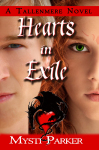 A Ranger’s Tale, Tallenmere #1
Hearts in Exile, Tallenmere #3 Available June 3 @ www.melange-books.com
May 28, 2013
Interviewed on NPR Radio: Even the Airwaves Aren’t Safe Anymore
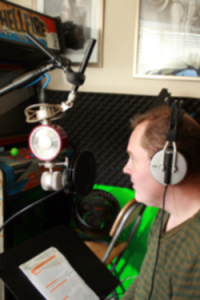
I was interviewed for NPR today. I had been freaking out for a month about it and then, when it finally came, it was almost a letdown it was so laid back. The interview was done by a DJ in California and I think DJs have that same laid-back vibe going on that airplane pilots do. It was the most relaxing thing I’ve ever done.
Anyway, I should have the actual interview available on here later tonight. It won’t be broadcast on NPR until next week.
Michael out
May 22, 2013
Interview on BlogTalkRadio with Joshua Graham
On Thursday, June 23, Joshua Graham of BlogTalkRadio interviewed me live.
The Interview is over, of course, but you can listen to it via podcast for the rest of your natural life.
Gotta love the Internet.
Michael out.
Interview on BlogTalkRadio
Tomorrow I will be interviewed on BlogTalkRadio. The Interview is at 10:00 PST, but if you miss it, you can listen to a podcast of it immediately afterward.
Michael out.
May 14, 2013
Writers’ Village University
I found a new home, so to speak, online. At least it feels like a new home. Lately, it’s been taking all the time I normally spend on Facebook away from me and I spend it over there. It’s called Writers’ Village University and it’s a great hangout for writers.
It’s full of online courses you can take, although admittedly in the short time I’ve spent there I haven’t actually taken one yet. I am signed up for two and I’m actually giving a course on the Hero’s Journey (based on the book I just published under my DangerBoy Books imprint, Journeys under the Moon: Writing and the Hero’s Quest). My course will likely start in late June and be an eight week course.
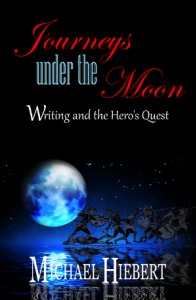 In fact, the only reason my course hasn’t started yet is because we’re waiting for the trade paperback release of my book. The ebook is already available. I should have the proof of the trade in my grubby little hands by the end of this week.
They seem to have a lot of members. Judging by the numbers I’ve seen on the screen, it’s near the two thousand mark. The price to become a member is $99 the first year then $69 every year after that.
The selection of courses they offer is stunning and seems to traverse every skill level. They also have meeting rooms and support groups that are quite active and all of the people I’ve interacted with so far are very nice. If this is starting to sound like a commercial, well, I guess it sort of is.
I start my orientation course tomorrow. When you first log onto the site it is quite overwhelming. I quickly managed to get a handle on things, but figured I’d take the orientation course anyway. All courses are free, other than your yearly dues.
If I’m correct, classes are moderated by a single person and (depending on the size of the class) can have any number of mentors or interns who help the moderator get things done. For instance, the second class I’ve signed up for is one that traditionally gets a lot of people signing up for it so I believe there will be eight mentors involved with it.
Along with the moderators, mentors, and interns, a lot of the critique is by peer-review. It seems like a pretty good model to me. They’re also very open to suggestions, which is nice. When a friend suggested my Hero’s Journey class, they jumped at it, and I have since suggested a class on researching your novel, which they also showed interest in.
It feels good to at least be listened to. I have to think these people are very busy and yet, whenever I log in, if they’re on chat, they take their time to talk to me or answer any questions I have. I get the feeling the site has been up for a fair number of years and I only wish I would’ve known about it years ago.
If you or anyone you know wants to tighten their craft and take some great courses on writing, check their site out. If you get in early enough you could even make it into my class.
Michael out.
May 10, 2013
Pillaging the Public Domain: Why Should Disney Have All the Fun?
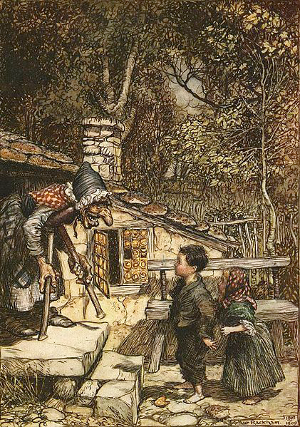
Most of us have seen the Disney classics, like Beauty and the Beasst, Cinderella, Snow White and the Seven Dwarfs, Sleeping Beauty, The Little Mermaid, etc. But what you may not know is that Disney simply adapted these stories from old fairytales, most of which came from the Brothers Grimm (all but one that I mentioned did. The Little Mermaid is a Hans Christian Anderson tale). Even the Lion King has its roots in Shakespeare’s Hamlet.
How can Disney do this and not get sued? Easy. These stories they are pillaging are from the 1800s or even earlier, putting them into the Public Domain, which means they’re fair game.
Most of the Brothers Grimm tales, if you start reading them, are sketchy at best. But sometimes, that’s exactly what you need to kickstart your creativity. Something sketchy to work with. Then, using what you know about archetypes and three act structure, you can turn a four or five page story into a children’s novel that barely even resembles the original story you borrowed the idea from. And even if the story is visible beneath everything you’ve added on top of it, that’s okay, too. Because you’re allowed to use it.
One caveat here: You’re allowed to use the original story, not the Disney version. The Disney version is copyrighted and Disney actively goes after anyone impinging on their copyrights.
I have two great texts, The Complete Hans Christian Anderson and The Complete Brothers Grimm just full of writing ideas. Really, what it’s full of is writing starters: ideas to kick off stories for me to then brainstorm (or Mind Map–see my previous post on Mind Mapping) and fill in a lot of missing details. And there are a lot of missing details to fill in, generally. The Brothers Grimm weren’t known for their wordiness.
In most cases, in the end, your story will have changed so much it will be unrecognizable from its source. And that’s great, because you’ve taken something and made it your own.
I don’t suggest doing this for every story you write. It would numb your creativity over time. But every once in a while, if you really can’t think of anything to put down on paper, try flipping through some old Hans Christian Anderson or Brothers Grimm stories and see what happens to catch your fancy. There’s a lot of resources there to be tapped. Even Disney has only touched the tip of a very big iceberg.
Michael out.
Michael Hiebert's Blog

- Michael Hiebert's profile
- 99 followers

