
Michael Hiebert's Blog, page 10
January 5, 2013
Final Darkstone Cover Art (Without Text)
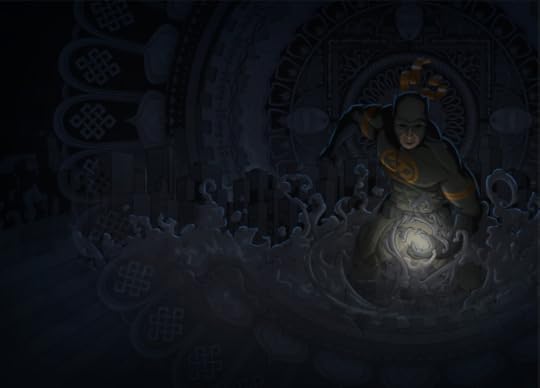
You can click on that image to make it larger.
I simply love the look of this cover. I love how it’s so dark and lit from the center. The costume of Darkstone is perfect. It’s exactly as I pictured it when I wrote the book. And yes, his palm lights up in the book. I love the Om on his chest. I love the mandala in the background. I love it all :)
It’s a wrap-around cover, so you’re looking at the front, back and the spine right now (just in case that wasn’t obvious).
I can’t wait to see what it looks like with the textual elements in place. They should really pop off such a dark backdrop.
I’m a little worried about the story. It’s very Buddhist and I hope it doesn’t turn readers away. It’s going to be tough for me to sell copies here at home because I live in the Christian Bible Belt of Canada, but I’m sure, as Qui-Gon Jin would say, “A solution will present itself.”
Let me know your thoughts.
Michael out.


God is In the Details: Compiling a Dream with Little Angels “Bible”
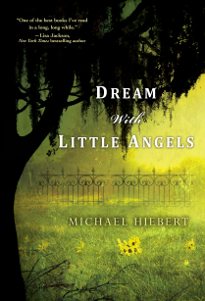
Finished the first pass on a Dream with Little Angels “Bible” and I think I managed to get most of the little nit-picky facts out of the original book that I might otherwise overlook while writing the second. I even have an over-sized map of my made-up town on my wall above my desk with all the major locations marked on it (it even has street addresses. Okay, I’m a bit anal).
One thing I hadn’t done when I wrote the first book was actually place my town in Alabama in a specific spot. I knew “roughly” where it was. But now I went back through the book and found references that allowed me to figure out exactly where it must be. I knew it was east of Satsuma and took an hour to get there by school bus. I knew it was “up” from Mobile and took an hour to get there by police car when the police car was in a hurry with the sirens going. I wanted to stay as south as possible, though, because the swampland is southern Alabama and, since the state line for Alabama sort of juts into a bend, I was left with very little choices in the matter.
So Alvin, Alabama is officially just north of Interstate 65 on the western border of Conech County. It’s about sixty-five miles due north of the Gulf of Mexico. It’s a nice spot. I like it. And it’s a good thing, because, for the next nine months, I’ll be living there.
I also downloaded a bunch of research material for Conech County. In the second book there are some historical facts that come into play so I figure I may as well make them as accurate as possible even if my entire town is a figment of my imagination.
My Bible also contains five pages citing every single character mentioned in book one, along with any details of that character. In some cases, I have added new material. For instance, my protagonist’s best friend was never given a surname. Now he has one. His mother was never given a maiden name. Now she has one. All my principal characters now have birthdays and astrological signs that fit their personality (I just love Linda Goodman’s Sun Signs I use that book a lot while writing. I also use my three baby naming books and my supply of college football books for figuring out first and last names–especially for the south. Oops. I gave away one of my trade secrets).
I’ve even drawn floor plans (on the computer using AutoCad-like software no less) of some of the more important buildings in book one and listed all of the details that were mentioned there. This time around, I will be sure to do the same with new things as I write book two because I’m just going to go in assuming there will be a book three.
It’s actually a fun process. One thing’s for sure. It quickly points out any weak spots in my story logic from the first book, and there are some. Nothing hugely blatant that anyone will notice. Not unless they start compiling encyclopedias of data about it, anyway.
Anyway, that’s it. Back to a rainy Saturday.
Michael out.
January 4, 2013
A Journey through Archetypes-Another Way to View Mythic Structure
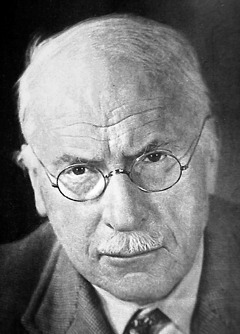
A few days ago, I put up a post about Jungian archetypes. Today I want to delve a little more closely into this esoteric realm of psychology that spills very nicely over into the craft of writing and focus on seven Jungian archetypes in particular.
These seven are:
The Uninitiated
The Apprentice
The Nonbeliever
The Athelete
The Warrior
The Mother
The Spirit
The best way to approach this discussion is to just give a description of each of these archetypes in order.
The Uninitiated
The uninitiated is what the Taoists would call “the uncarved block.” He is ignorant. Not by choice, but by circumstance. He simply has no idea about the rest of the world or his potential within it. He only knows what he knows and all he has known up to this point in his life. He may have secrets lying deep within him waiting to be tapped that he is completely oblivious to, but he doesn’t care about those.
In fact, he is happy in his ignorance. Blissfully happy. Blissfully ignorant.
The Apprentice
By nature, an apprentice is someone with a mentor. He is in the process of being trained in methods he may not fully understand, but he is being trained nonetheless. In the case of the Apprentice archetype, the mentor training him doesn’t necessarily have to be a real person. It can be the memory of a dead father haunting him and forcing him to learn new ways that his father had always told him he would need to learn in order to survive.
These new ways are usually in order to tackle a new world with new rules that he will soon encounter that he probably doesn’t yet fully understand or even have a proper concept of. What drives the Apprentice is the mentor, not the need to survive. In the process, he happens to attains skills he doesn’t realize he even manages to attain.
The Nonbeliever
The Nonbeliever archetype is usually an archetype that has shifted masks from an Apprentice archetype and believes he has done so too early. He either begins to encounter this new world he’s been warned about and feels he’s inadequately prepared and still doesn’t fully understand everything about it or the new rules he must learn to follow, or he might not even be convinced a new world even exists and questions whether he wasted his time wearing the mask of the Apprentice archetype.
Whatever it is, the nonbeliever has a crisis in faith. He questions his progress. He begins rethinking all his archetype shifts and wonders if things might have been better before, back when he wore the mask of the Uninitiated archetype.
The Athlete
When a character puts on the mask of the Athlete archetype, his focus becomes entirely on his physical body and achieving physical goals. All of his emphasis is put on how he looks and how he performs. He believes there is nothing he can’t overcome and no training he cannot complete through pure physical activities. In essence, he attempts to become a superhero.
The Warrior
I’m doing these archetypes in order for a reason. I want you to assume this is one character wearing all these different archetypal masks in order and, as the Athlete archetype takes off one mask and exchanges it for the mask of the Warrior, his focus once again shifts. Now he wants to compete and defeat every opportunity he gets. He lives to collect prizes and rewards. Life becomes a game of non-stop competitions that he must win at all costs.
It is during this archetypal phase that leadership qualities will stand out. Whatever drive the character has will be very pronounced and relentless. He is the Warrior.
The Mother
The Mother archetype emphasizes fulfilling the desire of others. Characters wearing this mask nurture others, asking them, “How may I serve you?” He will care dearly for the people close to him and the people that need him. Instinctively, he will protect those around him.
This archetype also longs to see others excel within themselves. They try to build self-esteem and self-confidence and show the innate potential everyone has available to them.
The Spirit
When a character slips on the mask of the Spirit archetype, the realization of the difference between being “in” this world and “of” this world becomes obvious. This archetype is the God archetype. His actions will be nearly inseparable from the divine. Given the right circumstances, Spirit archetypes will give their lives for the betterment of mankind without question.
Characters who have achieved this archetype understand the Circle of Life (to coin a corny phrase) in its totality. They have the wisdom of the sages. And once they’ve come this far, there is no going back. They may shift masks to other archetypes, but they will always know that, underneath, they truly are the God archetype and nothing else.
Relating this to the Hero’s Journey
The astute of you have probably already figured this out.
These seven archetypes I just listed, in order, are exactly the Hero’s Journey. They describe precisely what your protagonist goes through–on an archetypal level–throughout your story. So, this shows you the power of archetypes. It also shows you the flexibility of mythic structure. It also shows you something else.
And that is this: what I just showed you (along with the Hero’s Journey) is a complete metaphor for life.
There’s a reason why this stuff is embedded into our psyches. Writers didn’t make it up. It’s stuff we’re born with. We dream in three act structures and Jungian archetypes. We automatically write in it. It’s the way the universe works. The day consists of a morning, an afternoon, and an evening. Stars are born, they burn for a while, and they die. So do humans. Everything happens in three acts. And everything starts off uninitiated, goes through a stage of questions, of struggles, and finally (if all goes well), successfully reaches the ultimate stage.
The Hero’s Journey is man’s quest to become God. The story of Jesus is pure mythic structure. Most religions are. That’s why there’s so much similarity between them. That’s why they all ring so true for us. They’re primal.
You want to write primal stories that ring true for your readers. You want to use archetypes. You want to use these techniques I’ve been talking about over the past few months.
You want to write myths that will move your readers beyond anything they’ve ever read before.
Michael out.
Dream with Little Angels Cover!
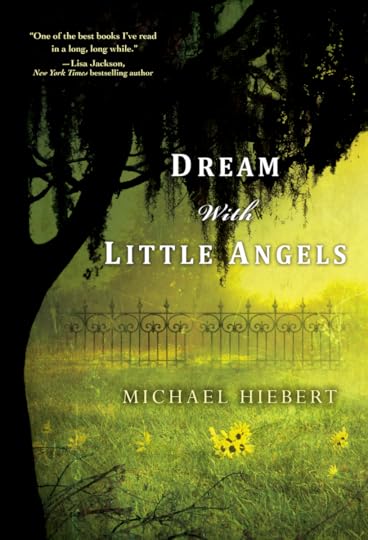
I’m posting it nice and large so that you can see all the details. Sorry if it’s destroying anybody’s bandwidth. I promise not to do it again. It’s just not every day I get images of my new novel to put up on my site :)
Apparently, real, actual covers are in the post on their way to me and once I get those I will scan the back and insides (the insides are cool–they are being done with French folds, so they have a design on the inside, almost like the jacket of a hardback) and post a copy of those as well.
I also plan on getting an enlargement of this printed at my friendly neighborhood photography store that I can frame and hang in my room alongside my two awards I have hanging from my Surrey International Writers’ Conference Storyteller Award victories. Slowly, but surely, it’s happening. I think, had I known just how slowly, I might have given up a long time ago. Maybe part of the overall plan is that we don’t know. It keeps us going.
Anyway, leave me a comment and let me know what you think of the cover.
I’m looking forward to seeing it stuffed with pages. Just a tad under three hundred, to be exact. I believe the finished book is going to be 5 1/2″ x 8″ in size, going by the image I was given, and that sort of corresponds to the page proofs I just sent back as well.
It’s all becoming so real, it can’t help but get exciting at this point.
That’s it for now.
Michael out.
January 3, 2013
Give Us the Same Thing, Only Completely Different: Tips on Writing Sequels
 So, I’m working on the sequel to Dream with Little Angels. Kensington have now committed to it, so it’s official, there will be a second book. They hated my original title, Cry and the Blessed Shall Sing, so, after I came up with a list of about fifty potential new ones (which I think my agent paired down to a dozen or so) they picked Close to the Broken Hearted, which I am more than happy with. Actually, the longer I live with it, the more I like it. I think I like it better than Cry now, to be honest. The problem with putting the word “blessed” in a title is that it can be pronounced two different ways and if one were to pronounce it as a single-syllable word, the title’s rhythm would be completely thrown off and it would be terrible.
No such problems with Close to the Broken Hearted. And it fits the story very well, too.
So now that the excitement has all died down about getting the second book green-lighted, reality has set in: I have to write another book. Not only that, I have to do it under pressure of deadline because this time, they’re paying me upfront. I’ve never had this problem before. When I first came to this realization, it nearly locked up my creativity completely.
I do have a couple of things going for me, though. I wrote a very detailed outline for the proposal that I managed to sell the book on. It’s about forty pages long. And I’ve already got the first five chapters of the book laid down (that’s about fifty-five pages). So the tone’s been set, and the scenes are pretty much all there. There are some things missing from the outline, but–in theory–those things will fall out organically as I write.
One would think that writing a sequel would be easier than writing the original book because “the world” is already set up. The main characters and a lot of the surrounding situation is already in place. This was my way of thinking, too. That was, until I had to reread the original book last week to do my page proof corrections.
I hadn’t read Dream with Little Angels for probably eight months and so a lot of the details were fuzzy. When I started reading it again, I realized I needed to make every minor detail unfuzzy very quickly. The two books had to jibe with each other, and not just on a superficial level. They only take place nine months apart, so not a lot will have changed in the lives of the main characters or the setting. If my main character’s house has gold drapes in the first book, it should probably have gold drapes in the second book, for example.
All I can say, is thank God I had to reread that book now, before I got too far into Close to the Broken Hearted.
As soon as I started into it, I realized I needed to keep detailed notes of, well, everything. So I pulled out my iPod and started throwing any little detail down (I use this cool little free app called Scatterbrain for this). The color of the drapes, the color of the carpet, the color of the kitchen light, how the kitchen is set up, the layout of the house, the layout of the police station, the layout of the police chief’s office.
 I had already made a map during the writing of the first book (just with pencil and paper) which I had had the brains to scan into the computer so I didn’t lose it like I did the rest of the notes which were only on paper. Since then, I’ve made a digital version of that map using The Gimp (another free program like Photoshop–are you starting to see my penchant for anything free?) that allows me to overlay different things on top of each other. So I can see a version without rivers, or without road names or with everything if I want to.
Now I’m going to go and start building a Dream with Little Angels bible. Because it is my hope that this book won’t be the last in the series and I don’t want to reinvent the wheel, I’m going to make sure I do this right upfront. If I had my druthers, I’d set the whole thing up as a wiki site, but I don’t know if I’m going to go that far. For now, having all the resources digitally available and also in a binder for easy access will be good enough. Maybe the wiki will come with the next book.
Some of the work was already done for me by the kindness of the copy editor when she put together my style sheet. I have character names (first and last) along with descriptions and, in most cases, how they are related and even where they live. That’s a good start. When I read through the book last week, I made notes on anything strange, like eye colors that I didn’t remember ever mentioning or little facts like when my protagonist’s sister gets upset with her mom she always refers to her as, “Mother!” and her mom pretty much always refers to her daughter as “Caroline Josephine” (her full name) when everyone else in the book simply calls her “Carry”.
I’m hoping that by doing all of this it will take some of the load off trying to recall exactly how everything is set up in my little town of Alvin so I can concentrate on what really counts: and that’s the story. It might also ensure that there’s some cohesiveness between this book and the first which I would really like to see. I had forgotten how innocent (in its own little way) the first book really is and how disturbing the events that transpire are magnified because of that innocence. I want to strive to continue that same feeling of innocence in this book, although it will be slightly harder, given that the first book is not only a murder mystery but also a coming of age tale and my eleven-year-old protagonist learns a lot about life through the ordeals he is forced to face (without giving anything away). I can’t have him arcing backward before this book begins, so I have to start him at the growth point I left him at in book one.
But that’s all academic stuff. Stuff that doesn’t need to be bothered by me wondering whether or not my protagonist’s best friend, Dewey, has blue eyes or brown (they’re actually green–who knew?). See? This is why I need the bible.
Unfortunately, I’m probably looking at a week to put all this together. But I think it’s a week well spent as it will save me probably many weeks in the coming months as I race toward a September deadline.
I’ll keep you posted.
Michael out.
Sometimes the Angels Weep Trade Paperback Now Available
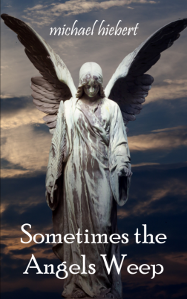 The trade paperback version of Sometimes the Angels Weep is now available from Amazon.
I am very proud of this book. It is a book of what I consider to be my ten best short stories, along with introductions to every piece explaining why and how they were written. The cover turned out beautiful. It is a wrap-around cover design with a darkened spine that looks awesome on any bookshelf (am I sounding like a sales pitch, yet?).
For those of you who know my work, the following stories are in this volume:
My Lame Summer Journal by Brandon Harris Grade 7
The Reality of Time
Dust
Angels
Love Hurts
Fallen
Nashville Beaumont
The King is Dead
Orchids
But Not Forgotten
Two of these stories won the Surrey International Writers’ Conference Storyteller Award in consecutive years. One was listed in the top fifty most distinguished mystery stories published in 2004 by Joyce Carol Oates. There are stories here that were listed in Year’s Best Anthologies. I literally had about eighty stories to choose from when I picked these ten and these were the ones I considered to be the cherries.
There is no one genre in the book. The stories range from mystery to fantasy to military science fiction to literary fiction. There is also no standard as far as length goes. Dust is a story written in poetic prose that is barely eight pages long (although one of my personal favorites). Angels is a fantasy novella (with enough sentiment, it actually made my mother cry). So I guess what I’m saying is: there’s something for everyone here.
There are some naughty words, I should say that upfront. You may not want your twelve-year-old reading some of the stories (although some would be perfectly fine… perhaps you should read them first).
The book’s available on Amazon.com for $ 10.95, or contact me (via this website is one way, or on Facebook or Twitter–both of which you can find me through by links also on this site) if you would like a signed copy.
Michael out.
December 22, 2012
What Carl Jung Knew About Your Writing
The Eleventh Edition of Merriam-Webster’s Collegiate Dictionary defines the word archetype as the original pattern or model of which all things of the same type are representations or copies; also: a perfect example. An inherited idea or mode of thought in the psychology of Carl G. Jung that is derived from the experience of the race and is presence in the unconscious of the individual. Strangely, the word doesn’t appear in Webster’s Third New International Dictionary even though that tome was written in 1961 (the same year Carl Jung died), and Carl Jung had come to define the term in the early 30s.Although Carl Jung was the first to sort of accurately pinpoint them and hang a label on then, archetypes have been around as long as Plato who thought everything in the universe was a facsimile to a perfect form that existed somewhere. That perfect form would be what Jung would call the archetype. It was the ideal. The real life interpretations were simply shadows, trying to live up to the perfection of the ideal.
Where Jung made his discoveries regarding archetypes were the way they kept recurring in mythology, folklore, and dreams. Archetypes are not an invention of mankind. They are something that is built into the human psyche at birth. We expect to find them in our lives. So much so, we dream in archetypes. We think in archetypes. And, of course, we write in archetypes. We do it without even thinking, so, like most things we do without even thinking, there’s probably value to thinking about a little and learning what sort of value can be generated from learning how to use archetypes wisely.
Archetypes appear in your stories are character types. We know them well. For the sake of discussion, I’m just calling them archetypes as a sort of “catch all,” but most people refer to them as Jungian Archetypes, especially when speaking of them in this manner. Some archetypes you know so well they appear in every story you write, such as the archetype of the Hero and the Shadow. One is the protagonist on his quest toward his goal to save the day and capture the golden fleece and the other is the antagonist, dead set to put a stop to the Hero’s progress. Other archetypes is the Mentor–the wise old man who teaches the Hero how to fight and persuades him to venture forth into the unknown, or the Great Mother–the wholesome figure who takes in the Hero and nurtures him at his time of need, dressing his wounds and healing him, or the Damsel in Distress–the fair princess trapped at the top of the castle’s high tower waiting to be rescued by the dashing young protagonist after his final climactic battle against the Shadow antagonist.
So, you may very well ask, what’s the difference between archetypes and stereotypes? It’s a fair question, because the answer is a daunting one. It’s a fine line. Archetypes run the risk of becoming stereotypes when they are overused or used in clichéd ways. You do not want your Damsel in Distress to be the quintessential Damsel in Distress or your Great Mother to be the epitome of all Great Mothers. You want to use aspects of the archetype and rely on their power in your story the way you rely on spices to make a great pasta sauce. Archetypes have great power and readers expect to encounter them, but turn them on their heads; use them in ways that surprise readers; and you’ll find yourself writing fantastic stories that are truly unforgettable.
Think about the way Diablo Cody handled the father and stepmother in the movie Juno. At every turn, they went against the way you expected them to react to things and it worked fabulously. Instead of being the wicked step mother, she turned out to be the cool step mother who was on Juno’s side. Instead of freaking out and screaming at his daughter when he found she got herself pregnant while still I high school, Juno’s father took it calmly. The archetypes of the Father and the Step Mother were still present, they were just used differently. And they were made more powerful for it because it made the story modern and new.
Think about Mentors for a minute. Sure you can have an old wizard like Gandalf, or a wise old muppet like Yoda or Master Po from the 70s television show Kung Fu all handing out sage advice to young learners on the path to becoming warriors and that will work. It’s a tried and true method that has shown to be effective in story telling for probably thousands of years. But you can also make your Mentors bossy parents or over-protective grandparents or that psychic from the hotline on TV. . .
Types of Archetypes
There are many Jungian archetypes and you will do well to fill your writer’s toolbox with at least a dozen or so good ones. They give you lots to draw on while writing, especially when you get stuck somewhere.
Here’s just a small list of some common ones. You can research them on the Internet and find out much more about them and their qualities and what is expected out of them and how they act. You can also find a lot more archetypes once you start researching.
The Hero
The Shadow
The Self
The Mentor
The Anima
The Animus
The Child
The Martyr
The Great Mother
The Maiden
The Trickster
Many times archetypes will change their roles during the course of the story. In this way, archetypes are almost like masks. A character may wear the mask of the Mentor for a while and then wear the mask of the Shadow, such was the case of Hannibal Lechter in Silence of the Lambs.
If you haven’t already discovered the use of archetypes, I encourage you to dig deep into this untapped treasure trove of resources. You will find endless fascination with it; at least I do. There’s so much information available, you can literally keep researching for months on the topic and pretty soon you start becoming an expert in psychology, and even that is good for your writing.
Michael out.
December 17, 2012
New Title for the New Book
As I mentioned in an earlier post, the sequel to Dream with Little Angels has been picked up by Kensington, but they didn’t like title I had for it which was Cry and the Blessed Shall Sing.
After much back and forth with my agent, and a few dozen title submissions by me, we finally gave our short list to my editor and he chose two he liked. Of those two, I liked one a lot. So the title of the new book will be: Close to the Broken Hearted. It’s a title I sort of stole from part of Psalms 34:18 in the King James Version of The Bible.
I like it because it has the same sort of flow as Dream with Little Angels and really does sound and feel like it fits into the same series. It also fits the new story very well. I will make sure I work it into the plot line, as I usually do with all my titles, to make sure they have a solid adherence and foundation with the book.
Michael out.
December 13, 2012
The Climax-Breaking Down the Big Finish
 Wow, three blog posts in one day. It’s a record.
One of the things I never really did when I talked about my simplified version of the Hero’s Journey (or three act structure as it’s also called) was fully explain what happens in the Climax. I’ve recently been reading Blake Snyder’s third (and, no doubt, final, due to his untimely death) Save the Cat! book: Save the Cat! Strikes Back. And in this book, he does a good job of breaking the Climax down into five points.
I’m not about to plagiarize his book, but I will be using some of the information from it for the information I give you here.
You might remember, Blake Snyder had his own version of the three act structure graph that I briefly touched on. Just like Syd Field, Christopher Vogler, and a host of other authors, they all break the story down into three acts and just pick out different pieces, or, in many cases, pick out the exact same points and simply give them different names.
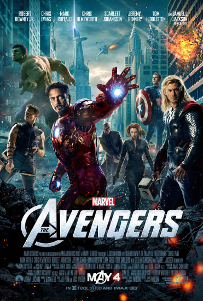
If you recall, heading into the Climax on my graph, the protagonist had an idea to outwit the “antagonist” in the final showdown. Remember, the antagonist doesn’t have to be a specific person. It can be a group of bad guys (like Loki and his army in The Avengers, it can be a thing (like the meteor coming toward the Earth in Armageddon), it can even be a concept (like patriotism in the movie Ali). But for the sake of convenience, we’ll refer to it as the antagonist.
At this point, we head into the five point Climax. The five points, as I am going to refer to them are:
1. Assembling the Team.
2. Execution of the Idea.
3. Things Go Bad
4. Soul Search for Another Idea
5. Execution of Idea #2.
For further convenience, I’m going to continue using the movie The Avengers as an example for each step.
1. Assembling the Team
This is where the protagonist gathers all his forces together and gets ready to, as Blake Snyder puts it, “storm the castle”. In The Avengers, it’s where Iron Man figures out that Loki’s going to use the Stark building to set up the Tesseract and so he, and the remaining Avengers, head off to Manhattan. This stage may involve assembling tools, arming or equipping the team, or even amending relationships before the protagonist can convince everyone to come along.
2. Execution of the Idea
The plan gets put into action. The plan should have some semblance of being rational enough that it might actually work, yet, at the same time, there should be a sense that it’s completely crazy. The team (which, by the way, may only be the protagonist) must be in way over their heads. But, in the beginning of the execution of the plan, they look good. They look like they are going to pull this one out of a hat. They are almost winning. It’s in this stage that the minor characters often arc and we see growth payoff for them. They may also get to use any items they found along the journey.
As they get close to the goal, as Blake Snyder says, we get the sense that this is all too easy.
3. Things Go Bad
In his book, Snyder sticks with the castle metaphor and says the hero reaches the high tower in the castle only to find: there’s no princess!
This is the stage where we find out the antagonist has been waiting for the attack all along. He expected this to happen. He was ready for it. In The Avengers it’s where Loki knows his outer space army is big enough that the heroes can’t possibly keep fighting long enough to bring them all down. Sooner or later, Loki’s army will win. At this point, a ticking clock starts for the heroes. They’re running out of time.
In The Avengers the ticking clock is the nuclear missile that has just been launched at Manhattan.
4. Soul Search for Another Idea
Of course, the team doesn’t have a backup plan. It is at this point in the story where the hero reaches deep down into his soul for that last ounce of whatever he’s got left and looks for some small glint of an idea, even considering things he would never have in a million years considered when the story started. This shows how much our hero has changed throughout his journey.
5. Execution of Idea #2
The hero come up with a solution. This is the touched by God moment I sort of spoke about the other day. An idea comes to the hero from the grace of divinity.
In The Avengers it’s where Robert Downey Jr. decides to go after the nuclear missile and take it up through the hole in the atmosphere created by the Tesseract, even though it will mean his own death. That sacrifice is part of what makes the decision divine.
The hero puts this second idea into action and it works. In The Avengers, not only does it get rid of the nuclear threat, but the explosion of the aliens base in space takes out all the soldiers down on Earth in Manhattan. Iron Man saves the day.
But what did he give up? He falls from the sky, seemingly dead, only to be caught by the Hulk. It’s in that final moment when the Hulk roars that Robert Downey Jr. experiences his resurrection and becomes a true hero.
And that’s a basic Climax.
I know I’ve used an action movie as an example, but the same plot points hold true for any story, whether it’s a comedy, a romance, a fantasy, or whatever. It was just easier to use The Avengers as an example, as it almost uses the elements literally. But your romantic comedy would have the protagonist trying to get the girl with a hair-brained scheme that was crazy. It would look like he might actually pull it off, until he realized she wasn’t falling for it; she actually suspected he’d try something stupid like that all along. To make matters worse, her plane’s leaving for Kansas in thirty minutes. So the clock’s ticking. So he regroups and digs way down in his soul for that one idea that comes from the divine. Once he has it, he executes it. It’s something unexpected and it sweeps her off his feet. He wins the girl and either goes to Kansas with her or they both decide to stay in Maine.
I think that pretty much puts a cap on three act structure. It fills in the bit I was missing from my earlier post. Coming up soon, I want to talk about Archetypes.
Until then,
Michael out.
Writer Voice: Developing Your Own Style

We previously talked about character voice or what is known as “dialogue” in a previous post. In that post, I mentioned that, when it comes to voice, we could be talking about one of two things: either the voices of the characters in your story, or the voice of the author telling the story. Today, I want to talk about author voice.
Author voice is the “you” that shines through in your writing. It’s the reason you can read a few pages of prose and just know Stephen King wrote them, or just know they were penned by Hemingway, or by Dean Koontz, or Kurt Vonnegut. Or by Jeffery Deaver. All of these authors have one thing in common: they all have very distinct authorial voices. Does it mean their stories all sound the same? Well, the answer to that is tricky. It’s sort of a yes and no thing.
Developing your authorial voice is the best thing you can do for your career, especially if your voice is unique and compelling. When you first start writing, it’s actually beneficial from a voice development point of view to try and emulate other authors. This little exercise will help you learn what it means to write with a voice. Then, once you leave the nest and write with your own voice, you’ll know what you’re doing. At least that’s the theory.
The key to developing your voice is to not try too hard. Relax, and write almost as though you were talking to your readers. Especially on initial drafts, don’t even worry about grammar or syntax or punctuation, just tell your story as though you were sitting around a campfire trying to enthrall a bunch of friends on a cozy summer’s night. See, the thing is, you already have a voice. The key is trying to find it. And it’s not very hard to find, because you use it every day. The hard part is learning how to let go and just write with it.
This is not to say you can’t wax poetic from time to time. You won’t always write with the same words you use when you normally speak, but you should still write in the same manner you speak. Or maybe, to be more precise, I should be telling you to write in the same manner in which you normally think. When you think to yourself using words, what do those words sound like? They are probably slightly different than the ones that come out when you open your mouth and actually talk. They probably have a more eloquent quality to them. It’s that voice that is yours and yours alone. It’s that voice that’s going to make you stand out from the rest of the crowd of writers floundering to put down sentences any way they can.
Once you’ve started finding your voice, there are some qualities you should work on perfecting. It must be confident and strong. It should not be transparent in the writing. Your characters should all sound different, and each of your stories should have their own tone, depending on how they’re set, but the voice behind that tone and those characters should be unarguably yours. You will find, as you develop this voice, that it might change as it grows stronger and gains conviction. As long as you like the changes you’re experiencing, roll with them.
What do you do if you absolutely hate the voice you find yourself naturally writing in? Well, this is where the exercise of trying to copy other author voices comes in handy. Find authors who have strong voices that you admire and teach yourself to write in a voice style similar to theirs. Do not take their style verbatim, though. You do not want to be seen as a copycat of any particular writer. This will do your career no good.
You may have the opposite problem. You may find your natural voice is very similar to a well-known published author. If this is the case, I wouldn’t fret too much, providing you’re not actively trying to simulate that writer. My advice would be to stop reading his work, though. The more you read of a single writer’s work, the more your own voice will naturally get pulled in the direction of that writer’s voice.
The biggest problem facing you while finding your authorial voice is that it takes courage because you have to let go of the handrails and walk across the tightrope without a net. Once you start writing with your own voice, you are truly out on your own. Your writing suddenly belongs to you in a way it never did before. It’s like giving up your last vestige of security because now it’s all you and nobody else. And when you get critiqued (and of course, you’re still going to get critiqued just as badly as you were before), it’s going to feel even more personal because, especially at first, it will feel like you’ve put yourself all over those pages. There will be a strong temptation to feel personally attacked.
Don’t let yourself be. Try to keep an emotional distance from your writing. Always. You will write better, you will be able to see your own flaws better, and you will take criticism better.
Even after all this, the trade off for writing with your own voice are by far worth it. Your writing skill will begin to progress much more quickly, and soon your work will take on a much more professional form than it ever had before.
You will have made much progress along the road toward publishing your first book because editors are looking for new, original voices. Original voices sell books.
And we all want to sell books.
Michael out.
Michael Hiebert's Blog

- Michael Hiebert's profile
- 99 followers

