Ariane Sherine's Blog, page 14
May 30, 2016
ON RACE AND HUMOUR
Today I had an article published on the Spectator website, which I reposted on Facebook, which was about jokes on race. Some people took issue with it, which I was expecting. You can read it here.
Race and humour is so complex and nuanced a subject that a 500-word piece can't really do the whole massive subject justice - and I'm not sure this blog will either. But the people who didn't like the article said a lot of things, including the following:
"Do you not see that the underlying problem is that when jokes like that one above ["Why are Asian people rubbish at football? Because every time they get a corner, they build a shop"] are told, the people who tell them aren't laughing with Asians, they are laughing AT them. Your piece will now be used by real racists to justify their own racism. "look it's alright, this paki girl said it's ok, so no-one should be offended."
Firstly, there's nothing we can do about real racists. If they've managed to grow up in our generally-extremely-tolerant British society and harbour serious prejudice against Asian and black people, they will use pretty much anything to 'justify' their racism. And I think my skin colour will preclude them from being particularly interested in my views, for what it's worth, rather than suggesting I legitimise them with a joke that is basically daft wordplay.
Secondly, this Facebook contributor suggested that it was okay for Asian and black people to tell jokes about our own race, but not for white people to tell them.
So who are these Asian and black people telling these jokes to? In the UK, more often than not, it's to white people. So the big question is: is it then okay for white people to laugh in response to these jokes? How can we ensure they're laughing WITH us rather than AT us? And if it's okay for white people to laugh at jokes about race, why is then not okay for them to tell them?
Let's take the following joke in the article: 'Did you hear about the Jamaican percussionist who played the triangle in an orchestra? He said "I just sit at the back and ting".'
Is it okay for a Jamaican comic to tell it and white people to laugh at it? If it is, why isn't it okay for white people to tell it? Because it involves a different accent and ethnicity? Because Jamaican people have experienced racism? Or because we're all being a bit too serious about something innocuous and funny? I would say the latter.
And I would also imagine that Jamaican people are about as bothered about this joke as Asian people are about corner shop jokes. We generally have other, bigger things to worry about and we can laugh these things off - or even laugh at them, as I did when I first heard the corner shop joke.
Of course, genuinely pejorative jokes are another matter entirely. Most people can tell the difference. But having a go at people who aren't racist for telling innocuous jokes about race just creates defensiveness and a culture where people get upset at 'political correctness' - and where they don't take actual racism seriously. Also, I would contend that just about everyone, whatever ethnicity they are, has at some stage told or re-told a so-called "racist" joke they found funny. They just don't want to admit to it publicly.
Comment pieces are all about debating issues, and sometimes the debates get heated. My best friend actually told me this piece made him uncomfortable, and advised me not to submit it. But I would genuinely say that airing uncomfortable stuff, talking things through and coming up with a consensus is how we make progress as a society.
Race and humour is so complex and nuanced a subject that a 500-word piece can't really do the whole massive subject justice - and I'm not sure this blog will either. But the people who didn't like the article said a lot of things, including the following:
"Do you not see that the underlying problem is that when jokes like that one above ["Why are Asian people rubbish at football? Because every time they get a corner, they build a shop"] are told, the people who tell them aren't laughing with Asians, they are laughing AT them. Your piece will now be used by real racists to justify their own racism. "look it's alright, this paki girl said it's ok, so no-one should be offended."
Firstly, there's nothing we can do about real racists. If they've managed to grow up in our generally-extremely-tolerant British society and harbour serious prejudice against Asian and black people, they will use pretty much anything to 'justify' their racism. And I think my skin colour will preclude them from being particularly interested in my views, for what it's worth, rather than suggesting I legitimise them with a joke that is basically daft wordplay.
Secondly, this Facebook contributor suggested that it was okay for Asian and black people to tell jokes about our own race, but not for white people to tell them.
So who are these Asian and black people telling these jokes to? In the UK, more often than not, it's to white people. So the big question is: is it then okay for white people to laugh in response to these jokes? How can we ensure they're laughing WITH us rather than AT us? And if it's okay for white people to laugh at jokes about race, why is then not okay for them to tell them?
Let's take the following joke in the article: 'Did you hear about the Jamaican percussionist who played the triangle in an orchestra? He said "I just sit at the back and ting".'
Is it okay for a Jamaican comic to tell it and white people to laugh at it? If it is, why isn't it okay for white people to tell it? Because it involves a different accent and ethnicity? Because Jamaican people have experienced racism? Or because we're all being a bit too serious about something innocuous and funny? I would say the latter.
And I would also imagine that Jamaican people are about as bothered about this joke as Asian people are about corner shop jokes. We generally have other, bigger things to worry about and we can laugh these things off - or even laugh at them, as I did when I first heard the corner shop joke.
Of course, genuinely pejorative jokes are another matter entirely. Most people can tell the difference. But having a go at people who aren't racist for telling innocuous jokes about race just creates defensiveness and a culture where people get upset at 'political correctness' - and where they don't take actual racism seriously. Also, I would contend that just about everyone, whatever ethnicity they are, has at some stage told or re-told a so-called "racist" joke they found funny. They just don't want to admit to it publicly.
Comment pieces are all about debating issues, and sometimes the debates get heated. My best friend actually told me this piece made him uncomfortable, and advised me not to submit it. But I would genuinely say that airing uncomfortable stuff, talking things through and coming up with a consensus is how we make progress as a society.


February 19, 2016
LOVE SONG FOR JEREMY CORBYN

I haven't yet relaunched my career as a musical stand-up - I'm still at the songwriting stage - so I was surprised but delighted to make it into today's Evening Standard with my Love Song for Jeremy Corbyn!
Here's the piece (third bold item down): http://www.standard.co.uk/news/londoners-diary/londoners-diary-cleggs-get-set-to-battle-it-out-on-the-books-front-a3184406.html
And here are the lyrics:
Love Song for Jeremy Corbyn
Though you look like a trampYou're a hit with the ladiesAnd I'd love to haveYour little Corbabies
Though you're in old ageYou still tend the oppressed I'm female and beigeWill you get me undressed?
Although I'm obsceneI could be a refugeeIf you won't bow to the QueenWill you go down on me?
Though most of your clothingIs fit for the binThat won't be an issueWhen living in sin
You say that you're certainThat you don't eat meatBut I've got some beef curtains That are right up your street
Folk think that you're oddAt least that's what they claimThough you don't do GodI'll have you screaming His name
So get on your bikeAnd pedal me homeYou're all that I likeMy sweet garden gnome
Jeremy's reply:
The words I shall useAre clear with no maybesYou share my core values,Please have my Corbabies!
You’re liberal and hearty,A friend in adversity,You bring youth to the PartyAnd ethnic diversity
My beard will get velcroedTo your lady gardenWhich will be a tragedyJust like Bin Laden
Under the coversMy tongue will strike sparksBut if you leave your lovers,I swear I'll leave Marx
So if you’re a breederI’ll unsheath my sabre:One poke from the leaderAnd you’ll be in Labour.
Though it's tongue-in-cheek, I'm a huge Corbyn fan and would love to see Jeremy become Prime Minister in 2020.
Here are some gig dates where I'll be performing the song:
Thursday April 14th - Monkey Business, Camden TownSaturday April 16th - Monkey Business, Camden LockThursday April 21st - Up the Creek, Greenwich
Hope to see you there.
February 11, 2016
AN INTERVIEW WITH IAN DUNT

Ian Dunt is the editor of politics.co.uk. Despite writing about politics all day, he mysteriously manages to retain both objectivity and a sense of humour. I ask him some pressing questions…
I love Jeremy Corbyn in a way I have never loved another UK politician. Am I going to be heartbroken in 2020, or is it too early to tell?
No, you'll probably be heartbroken around 2018. I just can't see him making it to 2020. At the rate he's going it's quite likely he'll run out of people prepared to work in his shadow Cabinet, for a start.
The only thing stopping the parliamentary party getting rid of him now is the certain knowledge he'll just be re-elected by the membership. In a few months we'll likely be looking at some disastrous results for Labour in Scotland, Wales and England. That'll test that theory to its limit.

Corbyn is a good egg. He's decent and witty and not a machine politician. I mean, his first foreign trip this year was to the Calais jungle. He's a man of principle, whether you agree with his principles or not. People keep saying they don't want the same old robot politician sticking to the party line. But when a politician of real conviction comes along they hate him for it.
That being said, Corbyn doesn't help himself. He needs to find issues where he and the public are on the same page and make them the focus of his agenda, then work with broadcast media to talk to the public over the heads of the press. But instead he gets bogged down in weird, unpopular issues, like the Falklands, and treats the media like it's some vast conspiracy. It's all a bit of a wasted opportunity, your crush notwithstanding.

I hope you're wrong, and the good egg isn't replaced by a rotten egg. But if you had your way, who would replace Corbyn?
I don't really have an answer to that question. The really scary thing about Labour is how little talent they have. There are some good thinkers and people of principle in there, but they're not leaders. And there are some passably convincing leaders, with no original ideas or capacity for interesting political thought. That was why Corbyn got in in the first place. They all looked like losers, so you might as well go with the loser who believes in something apart from their own advancement.
I like the way Dawn Butler comes across - human, sincere, funny - but I haven't seen anything cerebral from her. Kate Green and Angela Eagle are impressive, but you can't see them in the leadership role. It's all terribly slim pickings, I'm afraid.
You can tell by the type of people the press are touting as leadership material. I mean, that Syria speech was OK, but Hilary Benn? Seriously? Keir Starmer? It's pretty desperate stuff.
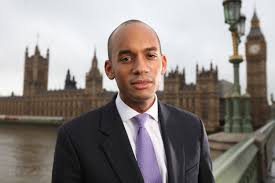
If I had to put money on it, by the way, I'd say it'll be Dan Jarvis against Chuka Umunna and Dan Jarvis will win. But then I thought we'd currently have a Lib/Lab coalition, so take that as you will.
Have you ever thought of standing as an MP yourself?
God no. I'd sooner turn to crime. And in fact that becomes a more compelling proposition the more I look at my tax returns.
The reason most MPs are so evidently psychologically damaged is that only someone who was psychologically damaged would ever consider doing the job. You lose all your privacy and you become an object of public ridicule and contempt. And for what? So that you can trundle through whichever voting lobby your party whip tells you to.
You're really not even particularly powerful. You just act according to the whims of your party, which really is just a brand. Neither of the two big parties can claim to have roots in British communities anymore. You're not fighting for what's right, because you're not even in control of their policies or in a position to predict what they'll be in a year's time. Are you a representative of the public? A delegate? Party voting fodder? No one knows. We've made a terrible pig's ear of it, constitutionally.
And honestly, if political power is what you crave, you have more of it as a senior political journalist than you do as an MP.

That's it! I'm officially depressed. To recap: politicians are psychologically damaged autonomy-free trundling objects of contempt and ridicule, with the possible exception of Corbyn, who is not psychologically damaged but trying to make a positive difference to the poor and oppressed, but who will be out on his ear by 2018, breaking my heart. And his Labour successor will be a bit shit too.
Do you have any good news for us, politically speaking?
Well, there's no good news exactly, but there is a glimmer of what might eventually become good news. It's been obvious for some time that the current party political system here, in Europe and the US is unable to deliver what people want, either in policy or rhetoric. And now we are finally starting to see it splinter.

In the US, we are looking at the very real prospect of a Donald Trump vs Bernie Sanders presidential fight. Here, Corbyn has shaken the whole system to pieces. You can see the lobby journalists and New Labour types struggling to comprehend what is happening.
This could all happen to the Tories very soon too. They are currently protected by the fact the splintering of the right-wing took place outside the mainstream party, in Ukip. But that won't be the case forever. We're in a period of enormous change. So politics might soon regain some of its principles and its meatiness.
Or Trump will win, start World War Three and turn America into a proto-fascist state. But let's be optimistic.

Brrrrr! Let's change the subject for our last question: it's Valentine's Day this Sunday. A romantic opportunity to treat a loved one, or a cynical capitalist travesty?
Neither. A useful litmus test of the basic integrity of a relationship. If you think you have to be romantic with your partner due to social convention, something is terribly wrong.
And it's this sort of observation which has made sure I am still single.

Follow Ian on Twitter: @IanDunt
October 19, 2014
PROJECT 25%: Day 2
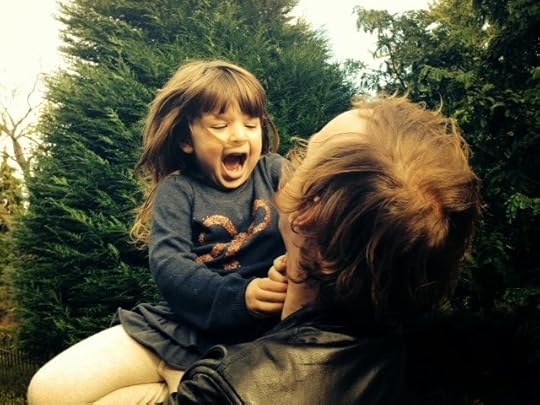
Hello, and welcome to part two of Things I Have Stuffed Through the Hole In My Face.Today I awoke to the dulcet tones of my daughter, instructing me "Don't wipe my nose Mummy, I want to EAT my bogies!" If that's not enough to suppress a person's appetite, I don't know what is.For breakfast, we went to the local gentrified cafe. It was full of kids called Alfalfa and Pomegranate, and weary mothers snapping "Archie, don't put your foot in the houmous!"
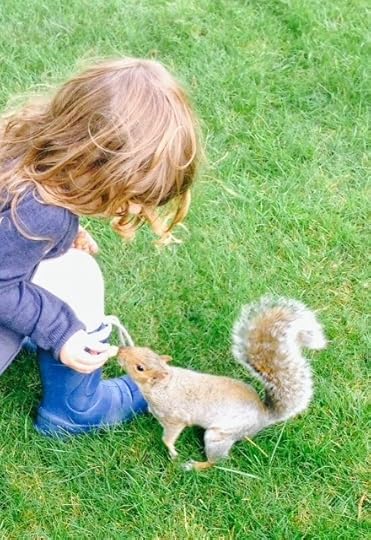
Then it was off to Greenwich, to see my lovely friend Mark and feed dozens of squirrels. They were so tame, they would eat walnuts off our palms, and one ran up Mark's body onto his shoulder!
We also saw deer grazing, fed geese and spied a parakeet.
I fell in love with a gorgeous navy lace dress in one of Greenwich's dress shops. It was on sale at £35, so I decided to buy the smallest size as an incentive, to wear after I reach my target weight of 7 stone 7lbs.
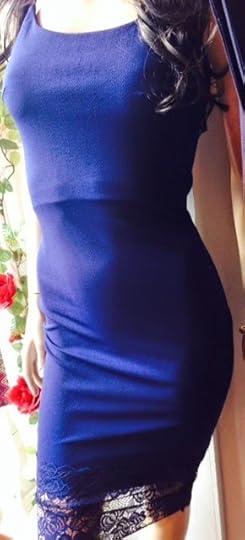
"Do you have this in an extra-small?" I asked the assistant. She looked me up and down, and I could tell she was thinking "Poor deluded woman - she really thinks she's an extra-small!"Back at home, my friend Nick came round and I forced him to take a "before" picture of me in my bikini. (I mean, I was wearing the bikini. I wouldn't force Nick to wear it, though I would let him if he really wanted to.)And now, the bit you haven't been waiting for...
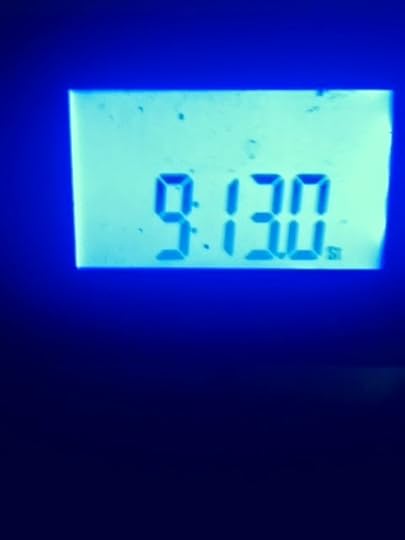
Weight: 9 stone 13lbs (target weight: 7 stone 7lbs)
Loss since yesterday: 2lbs
Total left to lose: 2 stone 6lbsWaist: 31.5" (target waist measurement: 25")
Loss since yesterday: 1.5"
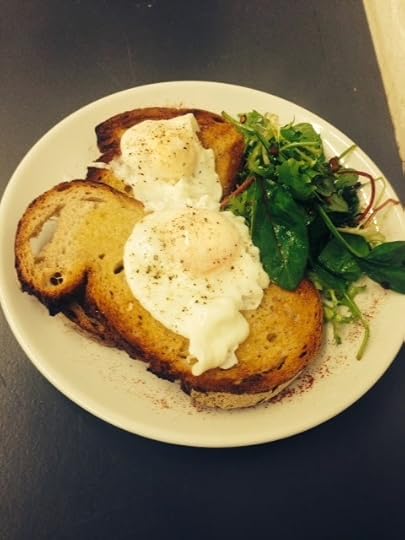
Total left to lose: 6.5"Breakfast: Over-priced poached eggs on buttered sourdough bread with side salad = 600kcalsLunch: The unappetising remnants of Lily's bear-shaped crisps and gingerbread man = 100kcalsDinner: The last remaining Cheese Ploughmans, which looked as though it had been manhandled by several other shoppers = 625 kcalsExercise: 3.5-mile walk = -200 kcalsTOTAL: 1125 kcals
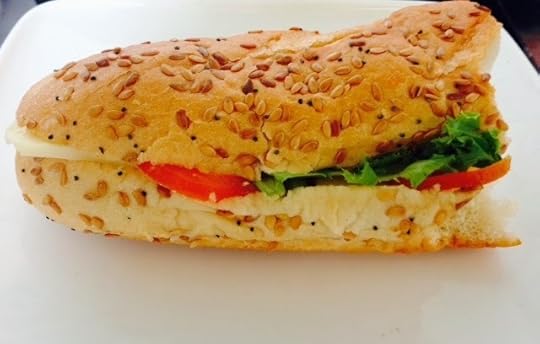
Lessons learned: if I keep going to the posh cafe I will soon go bankrupt. I shouldn't buy my dinner from the supermarket at the end of the day. And I mustn't put my foot in the houmous.

Then it was off to Greenwich, to see my lovely friend Mark and feed dozens of squirrels. They were so tame, they would eat walnuts off our palms, and one ran up Mark's body onto his shoulder!

We also saw deer grazing, fed geese and spied a parakeet.

I fell in love with a gorgeous navy lace dress in one of Greenwich's dress shops. It was on sale at £35, so I decided to buy the smallest size as an incentive, to wear after I reach my target weight of 7 stone 7lbs.

"Do you have this in an extra-small?" I asked the assistant. She looked me up and down, and I could tell she was thinking "Poor deluded woman - she really thinks she's an extra-small!"Back at home, my friend Nick came round and I forced him to take a "before" picture of me in my bikini. (I mean, I was wearing the bikini. I wouldn't force Nick to wear it, though I would let him if he really wanted to.)And now, the bit you haven't been waiting for...

Weight: 9 stone 13lbs (target weight: 7 stone 7lbs)
Loss since yesterday: 2lbs
Total left to lose: 2 stone 6lbsWaist: 31.5" (target waist measurement: 25")
Loss since yesterday: 1.5"
Total left to lose: 6.5"Breakfast: Over-priced poached eggs on buttered sourdough bread with side salad = 600kcalsLunch: The unappetising remnants of Lily's bear-shaped crisps and gingerbread man = 100kcalsDinner: The last remaining Cheese Ploughmans, which looked as though it had been manhandled by several other shoppers = 625 kcalsExercise: 3.5-mile walk = -200 kcalsTOTAL: 1125 kcals

Lessons learned: if I keep going to the posh cafe I will soon go bankrupt. I shouldn't buy my dinner from the supermarket at the end of the day. And I mustn't put my foot in the houmous.
PROJECT 25%: Day 1

Day 1 of the I-Want-To-Be-A-MILF Diet, and I haven't yet gnawed my own arm off in hunger. When Lily thoughtlessly smeared chocolate ice cream all over my face, I valiantly resisted licking it off. For lunch, we went to a Chinese restaurant, where a notice in the ladies begged "Do not put anything but toilet paper into the toilets". I think they may have fundamentally misunderstood the nature of toilets...

Behold, the following fascinating breakdown!Weight: 10 stone 1.0lbs (this is roughly how much I should weigh if I were standing on the scales while holding Lily. Target weight: 7 stone 7lbs)

Waist: 33" (target waist measurement: 25")

Breakfast: Two much-needed coffees, no milk or sugar = 0 kcals

Lunch: Stir-fried mixed vegetables with too many cashew nuts. One soggy mouthful of broccoli and garlic. Two pieces of stringy orange = 500 kcals

Tea: Pot of icy cold houmous = 450 kcals

Dinner: Potato and egg salad covered in ice from too-cold fridge = 250 kcalsTOTAL: 1200 kcals
Lessons learned: I need to turn my fridge down and not put anything in the toilet.
October 2, 2014
EXTRAORDINARY WORLD
Many people feel it's not acceptable to write too much about your own life. For years, I was told by newspaper editors who I respected greatly not to be too confessional in my writing, and I listened to them. But my life has been so bleak and absurd and violent, full of too many depressing stories to keep hidden, that in July of this year they finally began to spill out.
First, I wrote this piece, which touched on my violent childhood, the fact that I was attacked and suffocated while pregnant, and the threats I received during the atheist bus campaign, leading to my nervous breakdown. I explained that I take an anti-psychotic, an anti-convulsant and an anti-depressant every day, and will probably have to for the rest of my life. Since then, I have briefly mentioned how violent my father was during my childhood, how I was anorexic, and how I self-mutilated during my teens. (I am now estranged from my parents and brother.)
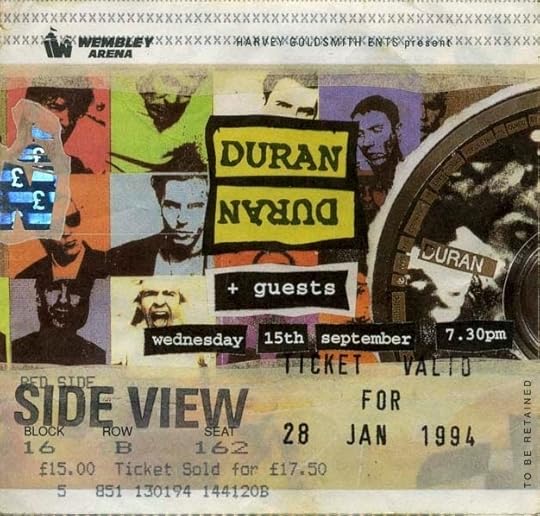
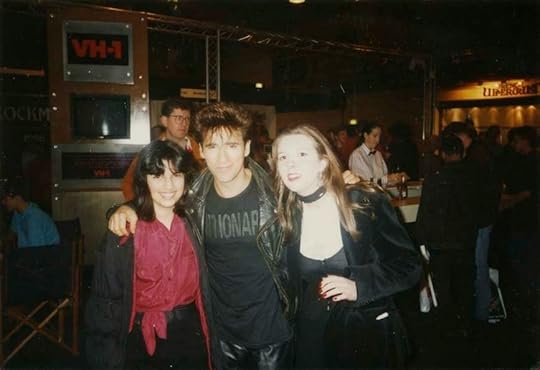
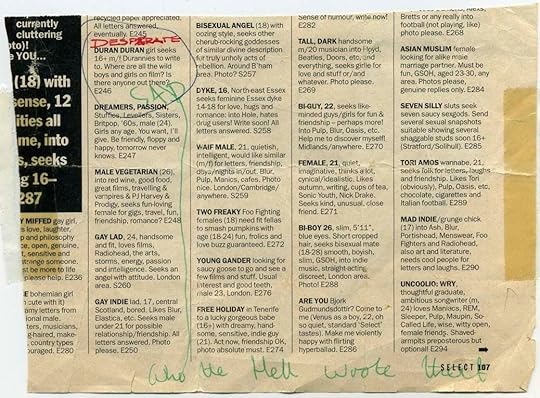
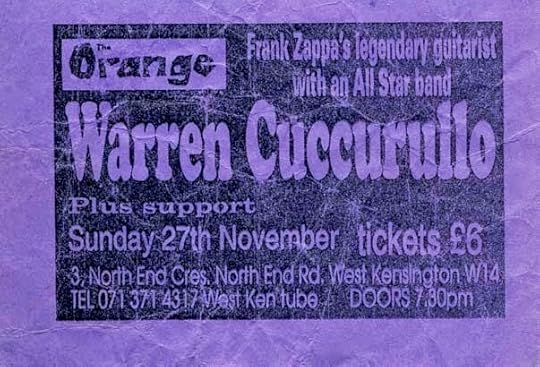
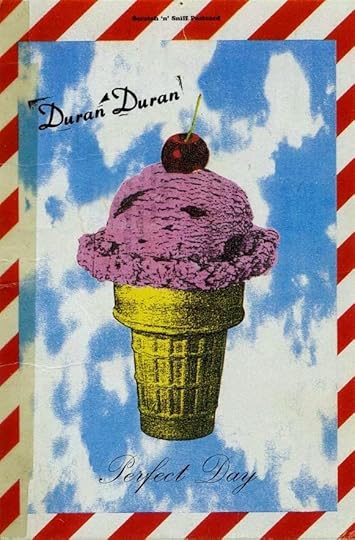
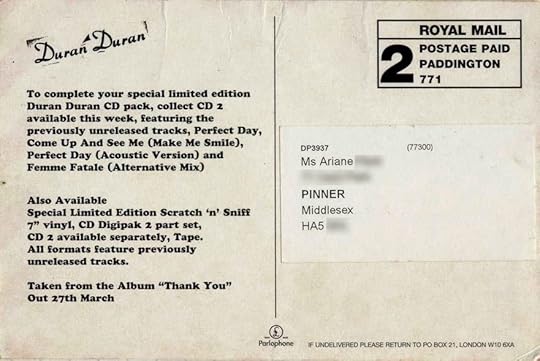
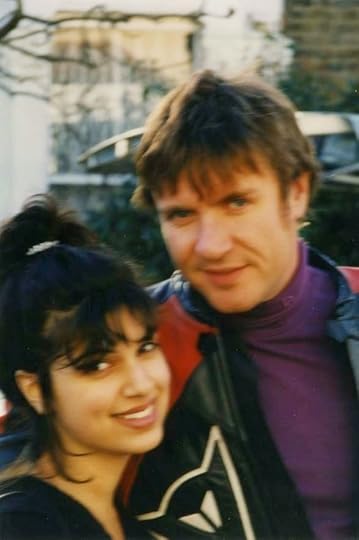
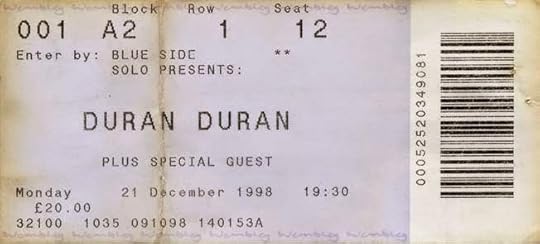
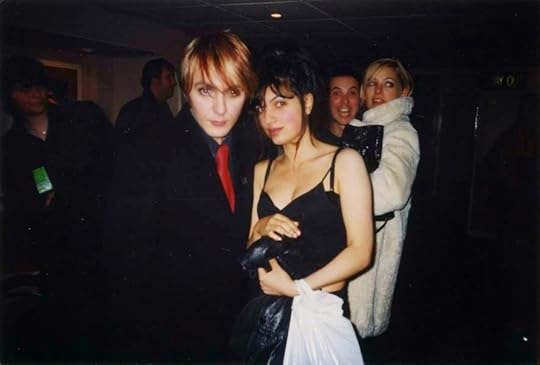
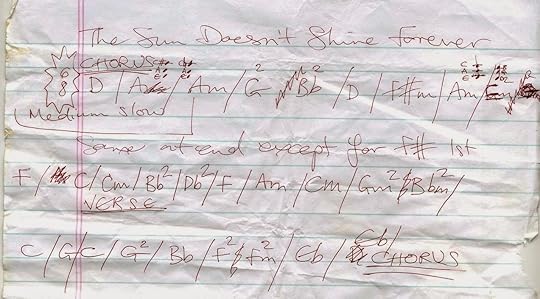
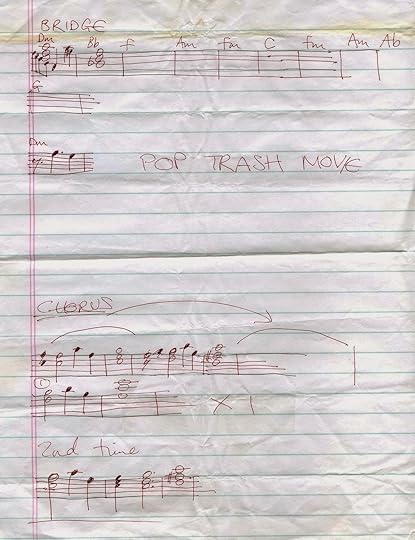
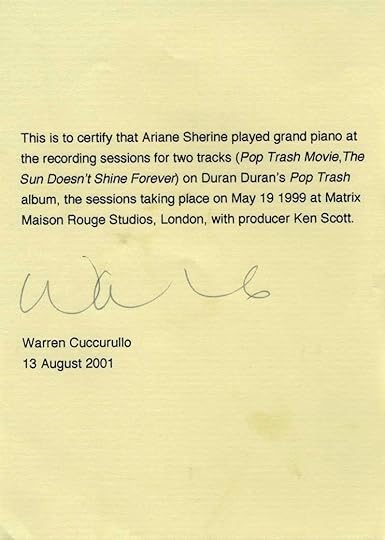
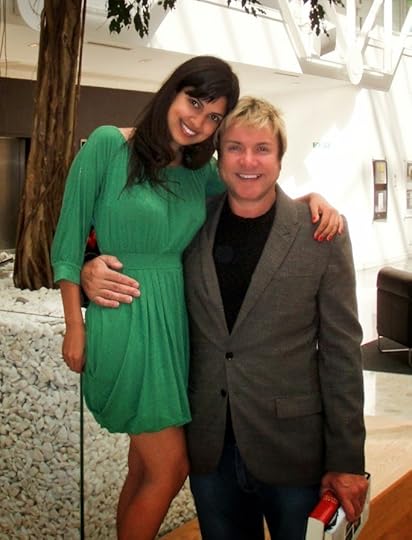
But until its publication today on the Guardian Music blog, I had never written about the most fantastical element of my childhood: the fact that, between the ages of 16 and 21, I was friends with my favourite band, Duran Duran. They let me hang out with them in the studio, laughed and joked with me, listened to songs I wrote, and let me come to all their gigs for free. After my childhood, it felt wonderful to be accepted by the people I most admired in the world. I was suffering suicidal ideation at the time, and the band's acceptance gave me hope that life could get better.
So here is the piece: http://www.theguardian.com/music/musi...
When I first wrote it, I sent it to my best friend. He replied "Its biggest problem is that it sounds so improbable, like a highly embroidered teenage girl's fantasy. If I didn't know better I might doubt its authenticity. But that's just your life... I've had a lot of time to get used to the hyper-reality you inhabit, but others haven't! There's nothing you can do about that, though."
Though I wasn't overly worried about proving the story's authenticity, because of all the photos and paraphernalia I had kept from that period, I was very cautious about it. First I sent it to Simon Le Bon, to check he was okay with it. In response, he took me out to dinner. I hadn't seen him for five years, and it was lovely to spend an evening with him.
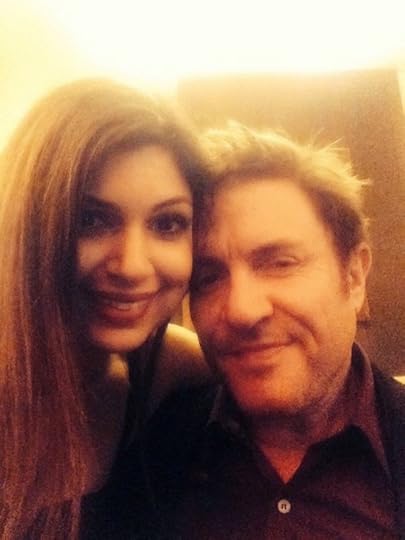
Next, I contacted Riazat Butt, the Guardian's former religious affairs correspondent, to check that she remembered receiving the letter from Simon. (She did.)
And lastly, I spent an afternoon with the girl who stuck the maths compass in my back at school and was one of the worst bullies. She was lovely, and now has a child my daughter's age. We talked about the bullying, and it felt oddly freeing to be able to look back, aged 34, as our children played together, and to think: it's okay. It was all okay in the end.
First, I wrote this piece, which touched on my violent childhood, the fact that I was attacked and suffocated while pregnant, and the threats I received during the atheist bus campaign, leading to my nervous breakdown. I explained that I take an anti-psychotic, an anti-convulsant and an anti-depressant every day, and will probably have to for the rest of my life. Since then, I have briefly mentioned how violent my father was during my childhood, how I was anorexic, and how I self-mutilated during my teens. (I am now estranged from my parents and brother.)
But until its publication today on the Guardian Music blog, I had never written about the most fantastical element of my childhood: the fact that, between the ages of 16 and 21, I was friends with my favourite band, Duran Duran. They let me hang out with them in the studio, laughed and joked with me, listened to songs I wrote, and let me come to all their gigs for free. After my childhood, it felt wonderful to be accepted by the people I most admired in the world. I was suffering suicidal ideation at the time, and the band's acceptance gave me hope that life could get better.
So here is the piece: http://www.theguardian.com/music/musi...
When I first wrote it, I sent it to my best friend. He replied "Its biggest problem is that it sounds so improbable, like a highly embroidered teenage girl's fantasy. If I didn't know better I might doubt its authenticity. But that's just your life... I've had a lot of time to get used to the hyper-reality you inhabit, but others haven't! There's nothing you can do about that, though."
Though I wasn't overly worried about proving the story's authenticity, because of all the photos and paraphernalia I had kept from that period, I was very cautious about it. First I sent it to Simon Le Bon, to check he was okay with it. In response, he took me out to dinner. I hadn't seen him for five years, and it was lovely to spend an evening with him.

Next, I contacted Riazat Butt, the Guardian's former religious affairs correspondent, to check that she remembered receiving the letter from Simon. (She did.)
And lastly, I spent an afternoon with the girl who stuck the maths compass in my back at school and was one of the worst bullies. She was lovely, and now has a child my daughter's age. We talked about the bullying, and it felt oddly freeing to be able to look back, aged 34, as our children played together, and to think: it's okay. It was all okay in the end.


September 17, 2014
AN EXPLANATION
I have the most beautiful little three-year-old girl. She is kind and sweet and funny, and she loves everyone unconditionally. But a few weeks ago she came home from staying with my parents, and told me she didn't want to see them any more. I asked her why, and she told me that my father had hit her, and that my mother had told her not to say anything about it. My mother swears this is untrue, but I don't believe her - because, you see, my father began hitting me when I was the same age as my daughter.
I was absolutely heartbroken, because I really thought my parents had changed and were different people now, and I felt overwhelming guilt for leaving Lily with them every other weekend while I recorded the album. My mother and I fought, and my parents and I are now estranged. Though I alluded to the violence in my childhood before, I didn't want to publish anything in detail until my parents died. But if my dad comes and kills me for this, then, well, he comes and kills me.
Here is a little bit of my story, written almost ten years ago. It is for anyone who thinks abuse doesn't happen in middle class families. I am posting it because I no longer want to hide it away inside me.
I will get through this, for my daughter. I would never leave her. I love her completely and would die for her. I am determined to be the kind of parent to her that I never had.
*
When I was little, my father used to sing me songs. Not lullabies or nursery rhymes, but funny songs about murdering your wife.
I hold your hand in mine, dear I press it to my lips I take a healthy bite From your dainty fingertips The night you died I cut it off I really don't know why For now each time I kiss it I get bloodstains on my tie I'm sorry now I killed you For our love was something fine And 'til they come to get me I shall hold your hand in mine.
I remember being confused by the songs. I knew that my father would never kill anyone. But the next day, I could be sitting at the top of the stairs with my younger brother, watching an argument between my parents. My mother would be backing down; she never argued for long.
‘Darling, I’m sorry, I only meant – ’
My father would lean into her face. ‘I don’t give a shit what you meant! This is how women get battered. Do you want to get battered?’
‘Sweetheart, stop it, please.’ My mother would retreat, walking backwards.
‘I will not stop it, dammit!’ he would yell, his face inches from hers. ‘You start these arguments, and then you think they’re gonna stop when you want them to. Well I’m telling you, this one’s not stopping for a long time, God help you!’
As a child, I used to sing the songs to myself in bed. I had to sing them under my breath, in case my father heard and stormed in, took my trousers and knickers down and began to hit me. Even humming had caused this to happen in the past, so I didn’t take chances. I whispered the words, and made up my own funny songs in my head.
*
I remember only one, bittersweet day during my childhood when my mother spent time with me. It was The Day We Ran Away, and I was nine years old. My father was threatening to hit my mother, running at her with his hand raised and his face clenched, a coral vein pulsing against his bright pink forehead. He was full of blood and anger, though I don’t remember why. There never seemed to be a reason. I can still hear the jangle of keys as my mother dragged me out by my jumper sleeve. 'Quickly, come on!' I remember looking at my five-year-old brother, slumped in a chair in the living room, wondering if we shouldn’t take him too. But we didn’t. We ran down the drive into the ancient beaten-up car, locked the doors and drove away, as my father stormed out of the front door.
I thought we would go to the police, or the women’s refuge. Somewhere official where there were people who could protect us from my father’s rages; who, when he turned up on the doorstep demanding to see us, would turn him away and lambast him. But my tiny, nervous mother didn’t take us anywhere safe. Instead, she drove us to the local shopping centre.
We walked down the entry slope, weeding our way through large mottled-pink mothers pushing kids with chocolate mouths. ‘Wannit now!’ ‘No, you can have it when you get home.’ Their voices bounced off the hard shiny surfaces of the shopping dome, like echoes in a swimming pool. We passed C&A, with its rainbow of misshapen winter cardigans, and WHSmith, a haven of water pencils and felt-tip pens. We came to a halt near the benches, where an old man was eating a sandwich very slowly.
‘This is nice, isn’t it?’ my mother said brightly. ‘Let’s have lunch.’
My mother had never bought me lunch before. Treats were for birthdays and Christmases only, and even then you got a pullover when you’d asked for a Spirograph. But that day, she bought me a drink and a cheesy jacket potato, bulbous and dripping with oil in its yellow polystyrene. I slurped my orange juice and wondered why she wasn’t eating anything. She smiled vaguely, but her eyes were pink and full of water.
‘We don’t have to go back, Mum.’ I handed her the napkin I had been given with my potato. ‘We can go and live somewhere else. You can divorce him. It can just be the three of us.’
My mother shook her head. ‘You don’t understand. It doesn’t work like that.’
‘But why not?’ I persisted. ‘He hits us, and he says he’s going to hit you. And none of us do anything wrong, and we’re all scared of him. So why don’t we just leave?’
My mother picked at her skin, and sighed. ‘Your father is very unhappy.’
‘What, so he has to make us all unhappy too?’ I blazed. ‘That’s not fair. Why is he unhappy anyway? No one’s hitting him.’
She smiled again, wanly. ‘Let’s not talk about it. Let’s just have a nice day. What would you like to do?’
I trailed, suddenly uncertain. I had never been asked what I wanted to do before. ‘Um… could we see a film?’
I had seen a film once before at the cinema, The Jungle Book. I had liked the songs. Seeing a film would give me something to say at school.
My mother picked up my tray. ‘I suppose so.’
*
It was Back To The Future, and I didn't really understand the plot, but it didn’t matter. It had loud pop songs, and shoot-outs, and it was funny. My mother and I ate salt popcorn in the half-empty cinema, and laughed together, and I wondered whether I would always be able to spend time with her like this now that we were leaving my father.
I skipped out of the cinema, thumbs in my jeans pockets. ‘So what do we do now?’
My mother looked at her thin black wristwatch. ‘Let’s go for a drive.’
I remember odd things about my mother. I see her black leather handbag, the way the popper pressed shut firmly. Her unpainted greyish-yellow fingernails, shaped to points so her fingers looked like trotters. The strange, metallic smell of her hands when she wiped things off my face. I still wonder where that smell came from, whether it was money or cutlery or the natural smell of her skin.
We drove out of the car park. Her arms were too short to feed the ticket into the machine, and she had to open the door and step out of the car. The yellow-zebra barrier lifted, and we slid out over a grate.
‘Where are we going, Mum?’
She didn’t answer. The traffic lights changed. The amber light was my favourite colour, the same colour you got when you cut open an orange. Some people would call that orange, I knew, but it wasn’t. It was deep amber yellow.
‘Mum?’
She adjusted the rear-view mirror. ‘Mm?’
‘Where are we going?’
We veered off the roundabout, past the Quality Hotel. My father had told me that nothing which was really quality had to advertise it.
‘Are we going to a hotel?’
My mother still refused to answer. I began to panic. I recognised these streets, the youth centre and the orange terraced houses with the different-coloured front doors. I knew the roadworks where the lights stuck, the big silver church clock with its hands always pointing to half past nine.
‘We’re going home, aren’t we? Why are we going home? Are we going to get [my brother]? If you like, I’ll run in and get him. I can carry him, you know. Or drag him. You keep the engine running.’ If I could just keep talking, nothing would go wrong.
My mother pressed her lips into a line. ‘Ariane, please don’t make this any harder than it is.’
My voice went up half an octave. ‘Make what harder? We’re not going back to stay, are we? We can’t.’
The car turned into our road. I kicked the car seat, twisting in my seatbelt. My mother stared straight ahead. ‘Don’t make a fuss. When we get indoors, I want you to go straight up to your room and stay there.’
‘But you can’t go in!’ I wailed in disbelief. ‘He tried to hityou, Mum! He called you a bitch.’ I mouthed the word, knowing my mother would hate it. ‘Please don’t go in. I’ll get [my brother].’
‘Remember what I said. Straight up to your room.’ She got out of the car.
I slammed the car door, hating her. She was stupid. Nothing made sense.
When we entered the house, all the lights were off. Everything was silent. I walked upstairs to my brother’s room, where he was dozing, and pulled up his eyelids. I kissed his matted black hair, and pushed my finger into his half-closed palm, which curled around it. I listened for shouts and screams from downstairs, but none came.
There wouldn’t be any for a while. My father didn’t say a word to my mother for the next eight months.
August 23, 2014
BREAKING UP
On Tuesday August 5th, my best friend of 17 years told me he loved me and wanted to care for me - not just as a friend, but as a boyfriend. I was elated. It didn't occur to me to be cautious, because he knew me completely and I trusted him. It felt so beautiful, as though the sun was shining inside me - a lovely, kind man who knew me intimately, knew all my faults and history, was willing not just to accept me but to love me. I couldn't sleep for the excitement. I would talk to him each evening for three hours, then wake up in the morning to speak to him again before he went to work. It felt as though everything had finally fallen into place, washing away all the years of pain, and I could be truly happy.
The following Monday, August 11th, we agreed to get married, and started planning our wedding and honeymoon. I didn't think it was too soon, because we had known each other for so very long. On Saturday August 16th we went to choose an engagement ring, holding hands and smiling into each other's eyes in the jewellers. I told him I didn't need a diamond, but he bought me one anyway on that tranquil, sunlit day. He took me down to the River Deben in Woodbridge, Suffolk, where tiny fishing boats were sailing on the calm water. He knelt on one knee and said "Ariane Sherine, you've made me the happiest man in the world. Will you marry me?" I said yes immediately.
He asked if we could put it on Facebook and tell the world. I agreed, and posted all about my happiness. He put up a romantic Facebook post too, telling everyone the proposed date and venue of our wedding. Over 550 people 'liked' the posts, and over 150 left a sweet comment congratulating us. Our friends and families were so happy for us. We went to see his mother and she was thrilled. My own mother, not usually an effusive person, waxed lyrical about our romance and said the ring was beautiful.
But the problem with telling the world so quickly and publicly is that, when things go wrong, you have to untell people too. It is humiliating and embarrassing, even though most people are kind. On the scale of world problems, it is insignificant; on the scale of life events, it is huge and painful.
Three days after my fiance proposed, he broke up with me. I am devastated. I still love him and I know he didn't mean to hurt me. He just couldn't deal with the situation. It was too much, too soon. He doesn't want to get back with me, despite my trying to persuade him. He just wants to move on.
To make things worse, we are in a band together and have worked really, really hard on our album since the start of this year, with me living with him every other week. The album is now finished and we're both so proud of it and so thrilled by how it sounds. But we can't tour together as planned, as it hurts too much for me to be with him, so we have had to cancel our tour dates. I was going to write pieces to promote it, but all the pieces involve him and are too bittersweet. However, it is still painful as we now have to film a video together, build a website, send out press releases, etc, so we have to be in touch with each other. The emails are formal and brief with no kisses, and it hurts every time I receive one and every time I send one. I never thought our 17-year friendship would come to this. We both love the Pet Shop Boys, and a line from one of their songs keeps running through my head: "I wish I'd never met you, then I wouldn't have to let you go."
I have been trying not to cry in front of Lily. She throws her little arms around me and says "Don't worry Mummy, I'll kiss you better" and that just makes me cry harder. Little things have been difficult, like the internet throwing up adverts for wedding venues and wedding rings; having to cancel the venue and the ceremony just days after booking them; having to tell all my friends and family that we aren't getting married after all, that he doesn't love me, that the happiness I thought was real was an illusion. Having to tear up the congratulations cards from my mother and his mother, the former saying in sparkly writing "Soulmates: Today, Tomorrow, Always".
I was only 16 when I first met my best friend, and was full of dreams and idealism. I never thought that, aged 34, I would feel this empty and numb inside. I will get through this though, as I have got through everything else. Please don't worry about me. I would never do anything stupid. As much as anything, I have my daughter to think of. She is beautiful, and I am lucky. So I am still forcing myself to joke about on Twitter and Facebook, to post funny things, to be myself when it all seems to have fallen apart, in the hope that I can put things back together as quickly as possible.
Thank you for reading this, and for being my friend.
The following Monday, August 11th, we agreed to get married, and started planning our wedding and honeymoon. I didn't think it was too soon, because we had known each other for so very long. On Saturday August 16th we went to choose an engagement ring, holding hands and smiling into each other's eyes in the jewellers. I told him I didn't need a diamond, but he bought me one anyway on that tranquil, sunlit day. He took me down to the River Deben in Woodbridge, Suffolk, where tiny fishing boats were sailing on the calm water. He knelt on one knee and said "Ariane Sherine, you've made me the happiest man in the world. Will you marry me?" I said yes immediately.
He asked if we could put it on Facebook and tell the world. I agreed, and posted all about my happiness. He put up a romantic Facebook post too, telling everyone the proposed date and venue of our wedding. Over 550 people 'liked' the posts, and over 150 left a sweet comment congratulating us. Our friends and families were so happy for us. We went to see his mother and she was thrilled. My own mother, not usually an effusive person, waxed lyrical about our romance and said the ring was beautiful.
But the problem with telling the world so quickly and publicly is that, when things go wrong, you have to untell people too. It is humiliating and embarrassing, even though most people are kind. On the scale of world problems, it is insignificant; on the scale of life events, it is huge and painful.
Three days after my fiance proposed, he broke up with me. I am devastated. I still love him and I know he didn't mean to hurt me. He just couldn't deal with the situation. It was too much, too soon. He doesn't want to get back with me, despite my trying to persuade him. He just wants to move on.
To make things worse, we are in a band together and have worked really, really hard on our album since the start of this year, with me living with him every other week. The album is now finished and we're both so proud of it and so thrilled by how it sounds. But we can't tour together as planned, as it hurts too much for me to be with him, so we have had to cancel our tour dates. I was going to write pieces to promote it, but all the pieces involve him and are too bittersweet. However, it is still painful as we now have to film a video together, build a website, send out press releases, etc, so we have to be in touch with each other. The emails are formal and brief with no kisses, and it hurts every time I receive one and every time I send one. I never thought our 17-year friendship would come to this. We both love the Pet Shop Boys, and a line from one of their songs keeps running through my head: "I wish I'd never met you, then I wouldn't have to let you go."
I have been trying not to cry in front of Lily. She throws her little arms around me and says "Don't worry Mummy, I'll kiss you better" and that just makes me cry harder. Little things have been difficult, like the internet throwing up adverts for wedding venues and wedding rings; having to cancel the venue and the ceremony just days after booking them; having to tell all my friends and family that we aren't getting married after all, that he doesn't love me, that the happiness I thought was real was an illusion. Having to tear up the congratulations cards from my mother and his mother, the former saying in sparkly writing "Soulmates: Today, Tomorrow, Always".
I was only 16 when I first met my best friend, and was full of dreams and idealism. I never thought that, aged 34, I would feel this empty and numb inside. I will get through this though, as I have got through everything else. Please don't worry about me. I would never do anything stupid. As much as anything, I have my daughter to think of. She is beautiful, and I am lucky. So I am still forcing myself to joke about on Twitter and Facebook, to post funny things, to be myself when it all seems to have fallen apart, in the hope that I can put things back together as quickly as possible.
Thank you for reading this, and for being my friend.
July 9, 2014
THANK YOU
Thank you so much for all your touching responses to my blog earlier this week. I have been overwhelmed by people's kindness. It is so different to my experience in 2005, when friends just stayed silent after I told them, or said "But you're over it now, right?" When I wrote the post very quickly at the weekend in a rush of catharsis, I was just expecting to post it on my blog, and that maybe ten people would comment. I didn't expect so many people to share the link, that the Guardian would take it, or that the Huffington Post would feature the story.
For the first time in my life, I no longer feel ashamed or alone - I feel accepted. I hid the truth about myself for so long because I was scared of the consequences of being honest. I feared the worst kind of response, but wanted to publish the piece to break down the stigma and let others know they weren't alone. Instead, I received grateful emails from women and men all over the world who have had similar experiences to me. It is depressing that so many other people have experienced elements of my story or worse, but I'm very glad that they felt able to share their stories in response to the piece.
For so long, I felt a tremendous amount of guilt over the abortion and my breakdown. I hid them both carefully - I used a false name at the BPAS clinic, and initially told everyone outside of my family that I'd had a miscarriage. It took a long time for me to confess to all my friends that I'd had a termination. (One of them quoted Stephen King, saying "Life is cheap: abortion makes it cheaper.") After the first year, I no longer felt guilty about the abortion, but was angry at pro-lifers instead, and wrote this post under a pseudonym on a Guardian article on comments from the Archbishop of Canterbury.
My breakdown took much longer to come to terms with, probably because I am unlikely to ever be fully better. If I forget to take my pills, I have disturbing thoughts again within twelve hours. I used to repeatedly beg the handful of people who knew about my breakdown not to tell anyone about it; paranoid, I wrongly accused a friend of telling other people. I would also go into the chemist's with my head down and a hat pulled low over my eyes to get my prescriptions filled, in case anyone I knew recognised me, and once had a panic attack when I realised every chemist I had visited kept a record of my medications.
Now I feel liberated enough to say that I am on olanzapine, pregabalin and clomipramine. I know there may be dark days ahead in the future, but the fact that I will be able to be honest about my illness and that people will understand means the world to me. I know that it takes time to feel ready to open up, especially if you suffer from anxiety or paranoia, and that there are many issues involved - but I wish I'd done it sooner, and I hope anyone wondering whether to be truthful about their own illness can take heart from that.
Thank you again, so very much. I will reply to all the emails as soon as I can.
July 7, 2014
ANXIETY, DEPRESSION, VIOLENCE, AND THE STIGMA OF A NERVOUS BREAKDOWN
Nine years ago, I was newly pregnant when I was violently attacked by my boyfriend at the time. We were having an argument: he hit me in the face, causing my ear to bleed, then clamped his hand over my mouth, suffocating me, and told me repeatedly that he would kill me. He said afterwards that the incident only lasted 20 seconds, but those 20 seconds were to change my whole life irrevocably.
It doesn’t matter who he was. He could have been anyone. I don’t want to identify him, but he was probably different to the man you’re imagining: he was over ten years older than me, well-spoken, intellectual, ex-public school, cruel, abusive; he was also funny, smart, kind, affectionate, and I was deeply in love with him and thrilled to be carrying his baby. People are complex, and to demonise him and paint him in black and white doesn’t make sense; that isn’t how real life works.
I managed to get away from him, from that dark room in the middle of the night, but we were on holiday abroad at his relatives’ remotely-located house, and I knew they wouldn’t help me. I didn’t know the emergency number or the address; I hadn’t thought I would need to know details like that, because my boyfriend would be taking care of me. I texted home to tell a friend what had happened.
When we returned home the next day, I called the police, but because the incident had happened abroad, they said it was outside of their jurisdiction and that I would have to return to that country if I wanted to press charges. Even then it would be his word against mine; in addition, I didn’t speak the language in that country fluently, and to return there when I was pregnant and struggling with severe morning sickness, while still being mostly in love with my boyfriend, seemed impossible. I knew there was nothing I could do. The police didn’t even take pictures or a written record of my injuries; I went to the doctor to have them recorded.
Though my boyfriend apologised and said “I know I can love you properly, if you only let me”, I knew I couldn’t stay with him, though he threatened to kill himself. I left him and had a termination, which I agonised over for weeks because I had been so happy to be pregnant, and had already named the baby. I was very early on so could take the abortion pill, RU-486, but when I searched for information on abortion online, thousands of pro-life Christian websites came up, with enlarged pictures of foetuses sucking their thumbs, and threats that if I had an abortion, I would be sure to die of breast cancer and go to hell. A Catholic friend gave me the number of a Catholic “helpline” where they tried to dissuade me from going through with the abortion. I was so vulnerable after the termination, I was scared to fall asleep in case I died in my sleep and went to hell.
My boyfriend and I had belonged to the same creative community for work; he told everyone in it that I was mentally ill and was making up stories about him. He explained to them that I had had a violent childhood, which was true, a fact I had told him in confidence, and which he used to explain my “illness”; he privately told me that I had subconsciously “wanted” him to violently attack me. He was confident and authoritative and more well-established than me; I was 24, he was 35. Other people in the community believed his story and began to spread it. As I’d known it would be, it was his word against mine; even though I had an email from him confessing to the attack, I didn’t want to post a screengrab online; I was too scared of what he might do to me.
The friend who I had texted about the attack said that she was sure I must have done something to provoke it. I started to think it was my fault; I had sworn at my boyfriend during the argument. This friend was my closest friend at the time; she sided with him and I ended our friendship. My next closest friend was my previous ex-boyfriend, who had seen my injuries and was horrified; my boyfriend lied to him that I had cheated on him, causing my ex to sever all contact with me.
I cried for a year. I was constantly fearful of absolutely everything, convinced that strangers would try to attack me. Because of the suffocation, I couldn’t be in enclosed spaces without suffering severe panic attacks – and that meant rooms with the door shut and the windows closed, which made professional interviews and meetings difficult. I couldn’t take lifts, couldn’t take the tube underground, couldn’t take planes. The attack had hemmed in my whole life. I didn’t trust anyone, and hated myself for – as I saw it – ending my baby’s life.
I had two sets of therapy on the NHS; when it didn’t work, I would go on to have five more sets privately. Psychodynamic therapy, integrative, cognitive behavioural therapy, cognitive analytic therapy; I was so desperate I even tried hypnotherapy, EMDR and EFT. None of it worked. I was depressed and having suicidal ideations. I woke up sobbing and would go to sleep sobbing.
After that year, I was still very scared, but I was a much harder person. So few people had shown me kindness throughout the experience that I had a very dim view of human nature. I didn’t believe in God any more; I was resolutely pro-choice and anti-religion. I had relationships with men, but I didn’t let myself fall for anyone, and I didn’t believe anyone if they said they loved me.
When I finally started writing for the Guardian in 2008, three years on, my anger and scorn came through in my writing; I wrote a particularly stupid piece about anti-depressants. Reading it now, the subtext says “If I came through that hellish experience and my whole shitty life without anti-depressants, which don’t work anyway, you should be able to cope without them.” But I didn’t write about the attack; I glossed over my twenties as though they had been uneventful.
Later that year, I started the atheist bus campaign. The campaign was hellish for two reasons; firstly, I had to appear on TV and radio in studios with the doors and windows shut. I had a panic attack nearly every time; one time live on BBC Breakfast in front of six million viewers, though thankfully the segment ended before anyone realised; one time on the Jeremy Vine show, clutching the producer’s hand. Any kind of broadcast media opportunities I might have had were curtailed by my claustrophobia.
Secondly, I started to get threats. Not just one, or two, but dozens and dozens, filling up my Inbox. “If you come to America I will shoot you in the head”, “I hope you die”, “I hope Jesus kills you” etc. I didn’t report them because I thought the police would say “what the hell do you expect, running this kind of incendiary campaign?”, and besides, none of them were direct enough to warrant police attention, but I received several per day, providing an unpleasantly menacing kind of soundtrack to my life. I thought of taking my email address off my site, but reasoned that I would rather people express their anger in written form than in person, and that I would rather know if people were angry with me. I tried to shrug off the threats by making light of them in public.
I have asked myself a question several times over the past few years: how could I, such a fearful person, have successfully run a nationwide campaign which – though essentially lighthearted – was so potentially inflammatory?
I guess the answer is that I was as angry as I was fearful: angry at the idea that a benign God existed, when my whole life had been a testament to the exact opposite; angry at Christian pro-lifers who targeted women at the most vulnerable point of their lives; angry at the Christian bus adverts which linked to a website saying all non-Christians would end up in hell. I never expressed this, though; I had left my ex-boyfriend and that experience behind mentally, even though I was still struggling with it in lots of ways.
I was going up and up. The atheist bus campaign was a huge success and went global, running in 13 countries across the world, from America to Germany to New Zealand. Despite the panic attacks, I was still going on TV and radio shows, BBC1 and Radio 4, was mentioned on Have I Got News For You, and got a book deal with HarperCollins. I managed to get so many people I admired to write for the book, The Atheist’s Guide to Christmas: Richard Dawkins, Derren Brown, Charlie Brooker, Simon Le Bon, Ben Goldacre, Simon Singh, Jenny Colgan, Natalie Haynes… the book was a bestseller and raised £60,000 for the HIV charity Terrence Higgins Trust. I even overcame my claustrophobia enough to start writing travel pieces for The Sunday Times, and start filming a video series for The Guardian. For the first time since the incident, I felt glad to be alive.
And then I fell in love, and I fell apart.
It was the first time I had been in love since the incident in 2005, and something inside me just broke. I was terrified – not that my boyfriend would hurt me physically or leave me – but terrified that someone would kill me, whether the government or a religious organisation or one of the people who had sent me a threat. I didn’t deserve this amount of beauty in my life. I decided I would try and kill myself before “they” killed me, but I was too scared to commit suicide, so I just lay in bed and shook and screamed. I screamed for my boyfriend to help me, but he couldn’t – nobody could. I withdrew from everything – I cancelled the Guardian video series and stopped pitching pieces to all my editors. I took my name off the US and paperback editions of the book I had edited, the book I was so proud of. I begged my boyfriend to leave me because I couldn’t bear to see him fall out of love with me due to my illness. To his credit, he didn’t; he waited for me to get better. I didn’t get better.
I was put on antipsychotic medication, but was too scared to talk to anyone about my thoughts in case “they”, the establishment I had upset with the campaign, were following and monitoring and recording me. I fell pregnant, started eating compulsively and put on five stone in weight. Despite the medication, the thoughts worsened, and I started researching ways to kill myself before “they” killed me; the helium method seemed to be the most effective, but I didn’t know how I would rig it all up without anyone realising what I was planning. I obsessively visited suicide and euthanasia websites, trying and failing to find someone who would help me commit suicide while pregnant.
When I gave birth to my daughter, over a year after my nervous breakdown began, I was temporarily elated and felt well enough to re-emerge on Twitter. I felt so well, I came off my antipsychotic medication and quickly became suicidal again. Because I was a new mother with mental illness, I was assigned a psychiatrist quickly, and I will forever be grateful that he put me on an additional drug, an anticonvulsant, and diagnosed me with generalised anxiety disorder with prominent paranoia. The drug got me back to feeling 60% normal, and the thoughts slowed down. It would take another drug to treat my other condition, obsessive-compulsive disorder, to get me back to where I am now: 80% normal and fully-functioning. I will probably have to take all three drugs daily for the rest of my life. I am hugely grateful to medical science and the amazing doctors in the NHS for giving me my life back.
It is one of my greatest regrets that romantic relationships cause me to panic to the extent that life becomes unbearable. I have no doubt that it is related to the incident in 2005, but I have forgiven my ex-boyfriend for what happened. I keep trying to get into relationships, needing someone to spend my life with, then withdrawing when the horrific anxiety sets in again. Despite all this, I am lucky: I survived my nervous breakdown, and now have a beautiful daughter who I would never have had otherwise. I also have two great friends, Graham and Emily, whose kindness I will never forget.
I didn’t expect to be telling this story now, but I turned 34 last Thursday and it got me thinking. For many years, I have hidden the extent of my mental illness: because of the stigma, because I didn’t want people to think I was weak, because I didn’t want anyone to take my daughter away, and because I was scared that - if I ever died in an accident - people would wrongly assume it was a suicide because of my mental health issues. For the record, I love my daughter more than life itself, and would never ever leave her. I have missed far too much of my life due to fear, and I want to embrace every second of it.
During the years that I struggled desperately, I couldn’t believe that I would ever feel well again or overcome the crippling anxiety that destroyed any chance of happiness. Everyone I read about seemed to be coping with life effortlessly; I was the only person who couldn’t cope. I wanted to tell this story to let anyone who had a violent childhood know that there can be life afterwards, to let anyone who has experienced domestic violence – during pregnancy or otherwise – know that life can get better, to let anyone having a breakdown know that there is hope, and that though the future often seems insurmountably bleak, time and the right medication can make life worth living again.
I wish there were a more cohesive narrative to this story, and that it were less of a muddle, but life is rarely neat. We are all messy and just muddling through the best way we know how. Lots of people have told me never to tell this story, and for years I refused to tell it, but I am no longer ashamed. What is shameful is not being a victim of violence, or having a termination as a result, or receiving threats, or falling apart, but instead being a complicit part of a society that says that victims should remain silent and hide the crimes of others, as well as their own frailties. It is not a society I want my daughter to grow up in, and if I want to change the way it works, speaking out myself is the first step.