Peter M. Ball's Blog, page 23
November 5, 2019
Book Math
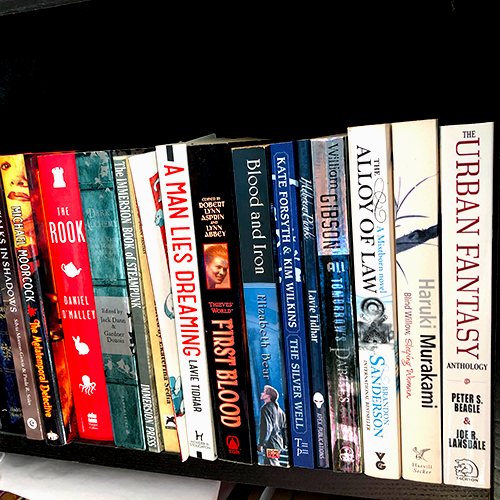
I picked up a copy of William Gibson’s All Tomorrow’s Parties in 2001, a shiny trade paperback find in a second-hand bookstore. The latest in a long line of Gibson books that started with my long-since read-to-death paperback of Burning Chrome that I acquired in high-school after our IT teacher showed us a documentary on cyberpunk.
I purchased Haruki Murakami’s short story collection, Blind Willow, Sleeping Woman, brand-new in 2005. At the time I was reading Murakami a lot, was just starting to write my own short fiction in earnest, and taught classes in both Murakami and short story writing to university classes.
I made a special trip into the city to buy Brandon Sanderson’s Alloy of Law from the inestimable Pulp Fiction Booksellers. I’d never read Sanderson before, but the reviews tempted me with its promise of a traditional European fantasy setting progressed to the point where it effectively contained a Wild West.
I made a similar trip to acquire Elizabeth Bear’s Blood and Iron, the first of her novels picked up after falling hard for her short fiction collection, The Chains That You Refuse, and the Jenny Casey trilogy.’
These are all stories about how the books first found their way to my shelf, where their value was clear and situational. I picked up the Gibson because it was part of a series I hadn’t yet finished, the Murakami because I was a fan of his work and was grappling with the short story form. The Sanderson’s value lay in the idea’s potential, and my interest in seeing it executed. Buying a new Elizabeth Bear book was a celebration of an author whose work excited me, and a chance to be part of an ongoing conversation about her work going on in genre circles at the tie.
That’s how they found their way to my shelf. Four books, all in trade paperback, taking up ten centimeters of shelf space in an apartment where space is at a premium. So why keep these books? Why grant them this shelf space, rather than getting rid of them and reclaiming the physical space for something else?
There are those who say you don’t get rid of books for any reason. A book, once acquired, is a thing to love forever. I went through that phase myself as a younger man, dutifully carting books from share-house to share-house, my bookshelves gradually expanding as I lived in larger places.
Part of the logic here lies in the value of a library—anyone walking into your house and seeing the metric buttload of books will automatically know you’re a reader. As statements of identity go, shelves full of physical books is a pretty big statement.
It also has a lot to do with access. In the days before online bookstores and the Dark Lord Jeff’s giant river of commerce, the idea of picking up a backlist title was a relatively weird and unlikely thing. Books came out and sat on the shelves for a month, then disappeared into the ether. Part of the reason my copy of All Tomorrow’s Parties is second-hand lies in the fact that I missed the window when it was first released and had to scour the local book exchanges for a copy.
Today, I could pick up an ebook copy for $12. I could order a smaller paperback that takes up half the space for not much more than that. Is the space that book takes up over the years worth more or less than the cash it would take to replace it, given the minimal effort required?
And so the book math changes, because the marketplace in which I bought them has been superseded. There are physical books where the math is easy—books by friends, books that are beautiful objects in and of themselves, books that I love so much that the physical copy brings me joy that an ebook never would.
And then there are books like these, which I kept out of habit. Books that interested me enough that I knew I might want to revisit them or study them for a future project, and because it’s easy to make a shelf full of trade paperbacks look nice if you have enough of them. Books whose primary value wasn’t just story, but predicated on other factors that are no longer in play.
Books who have served their purpose in my life, and may well serve a purpose again, but the math no longer supports keeping a copy just in case. If the strongest value lies in the content, not the physical container, it’s easier to reacquire a copy as the need arises.


November 4, 2019
Putting the Gamer Hat Back On
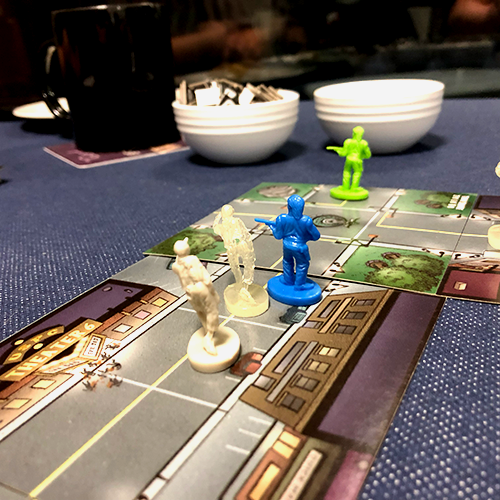
We recently dug out the big box o’ board games here in Casa Del Brain Jar, separating out everything that we can rock with two players and working our way through them. I haven’t played board games regularly in about six or seven years—not since my primary board-gaming friends decamped for Melbourne for good—and I have a bad tendency towards playing other people’s games when I do.
Then we spent a week playing Zombies!!! and Killer Bunnies and my partner’s copy of the pirate-themed card game Splice, and my brain started poking at board games I might want to pick up soon. My partner started researching games and identifying those that looked interesting.
At the same time, I’ve been poking at new RPG systems for the first time since 2011. Getting familiar with the Blades in the Dark system so we can pick it up in place of our now-completed-after-nine-years Thursday Night Superhero Campaign. Kicking the tyres on a Shadowrun game I might run at some stage.
And it’s funny—for a few years, I didn’t really feel like a gamer. I played games every now and then, but I wasn’t really part of a gaming community in the same way I had been as a younger man. I didn’t get excited about new releases of games, didn’t go searching for new opportunities, and didn’t really gather to talk about them online or at conventions. The part of my brain that used to be all about gaming communities got subsumed by writing fiction, and there weren’t enough spoons to manage the gaming stuff on top.
One of my goals for 2019—often interrupted and hard to get back to—was trying to recapture that feeling of being part of a larger community. Putting my gamer hat back on, after years of being writing-focused.
It’s happening slowly, but it’s getting there.
November 3, 2019
Bad Correspondant
There are currently 38 unread emails sitting in my inbox, a component part of 86 emails left in the inbox overall. The oldest dates back to September 12th and I barely remember September at this point.
My comfort zone is keeping the unread email under 10, and not leaving things in the inbox at all.
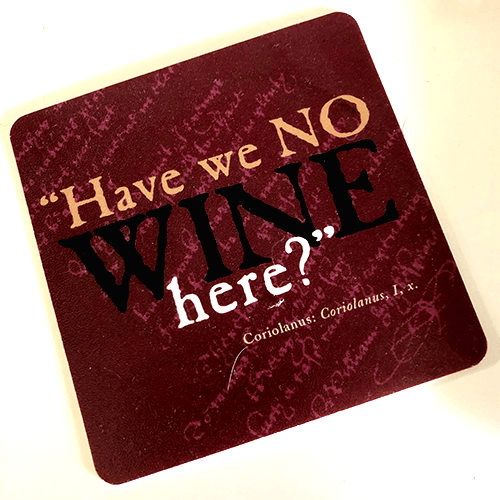
The drinks coaster on my desk is starting to feel appropriate.
November 2, 2019
The Sunday Circle: What Are You Working On This Week?

The Sunday Circle is the weekly check-in where I ask the creative-types who follow this blog to weigh in about their goals, inspirations, and challenges for the coming week. The logic behind it can be found here. Want to be involved? It’s easy – just answer three questions in the comments or on your own blog (with a link in the comments here, so that everyone can find them).
After that, throw some thoughts around about other people’s projects, ask questions if you’re so inclined. Be supportive above all.
Then show up again next Sunday when the circle updates next, letting us know how you did on your weekly project and what you’ve got coming down the pipe in the coming week (if you’d like to part of the circle, without subscribing to the rest of the blog, you can sign-up for reminders via email here).
MY CHECK-IN
What am I working on this week?
My major goal this week is landing the second chapter of my exegesis draft and officially hitting the 50% done phase of the critical side of my thesis. It’s slowed me down a little because it’s a gear-change part of the chapter–l’ve got to take the arguments I’ve been setting up and apply it to actual series works. This is the bit that I find tricky about theory–I can apply it to my own work easily enough, but always feel dicey about using it to critique other people’s creative products.
What’s inspiring me this week?
I’m going to split this answer in two this week. On the creative side of things, I finally sat down and watched Spiderman: Into the Spiderverse this week, and verily, it’s a damned awesome film that gets better the more I poke at it and explore how it was made. For me, it’s one of those films that really brings home the power of having a unified theme–everyone’s motivations in the film, whether hero or villain, seems to revolve around the idea of family and loss, and the contrasting ways they react to that is part of the appeal.
On the more practical side, Tobias Buckell’s post about intentionally dropping his daily wordcount goal down to 500 is a great, though-provoking post about what productivity really looks like. Incredibly well-timed, too, given that my brain is starting to whir into a faster-faster-faster-catch-up-catch-up-catch-up mode after all the recent disruptions to my process.
What action do I need to take?
I did my monthly checkpoint for November and outlined ten major projects that hold my attention this month, ranging from writing goals (finish the exegesis draft, write a novella dubbed Project Thug), work goals (marking lands tomorrow), and household tasks.
Interestingly, a good chunk of those don’t have clear definitions and hard edges–I don’t really know what success looks like, how I’m going to achieve them, or what concerns impact upon my ability to work on them. Part of my goal for the week will be sitting down and doing a firm playbook for the coming months–clear project definitions, rough plans, breakdowns of prep that needs to take place.
October 28, 2019
Word Count Versus Progress in Thesis Land
I’ve been wearing my thesis hat a good deal through October, because there’s an official deadline to get an exegesis draft finished by November 30. It’s gotta be somewhere between 20,000 and 30,000 words. My impulse is to aim for the middle, assuming some stuff is going in ’cause I missed it while I will pull out other things ’cause they don’t need to be there.
Meanwhile my supervisor stresses that I’ve met university requirements so long as the exegesis clocks in at 20,001, and pointedly suggests that that minimum viable length will be just fine given that I’m submitting next year.
My draft currently sits around 18,616 words, so I’m doing okay on the productivity front, but it’s also a stark reminder that there’s a big difference between word count and progress. It looks like I’m almost done on the surface, but the stuff that’s actually “rough draft” only makes up 11,519 words of it.
The rest is all random bits, theoretical chunks of a larger jigsaw where I still searching out the edge pieces. Short pieces that may or may not fit into the overall thesis structure, written out of order and frequently trying to lock down a particular idea or argument. It’s valuable to have them, but they won’t make sense if someone asks to read where my research is at.
A few months back, when I started this process, those segments counted as good progress. They were how I got the computer every morning and started typing new words. Doing everything I could to avoid starting with a blank page.
You can rack up a pretty good wordcount that way, but it takes more than that to become a narrative (and an exegesis is a narrative, telling the story of your research and process as you solve a particular problem).Those notes got me to the point where where I could start linking things up and figuring out what chapters should look like, effectively moving me out of first gear and getting on the highway.
The core of progress is always word count, but the type of wordcount that counts as progress is likely to shift across the lifespan of a project. I’m still locking down ideas and rough notes at this late stage, but they tend to be part of a daily braindump into a diary rather than occurring on the page.
October 26, 2019
The Sunday Circle: What Are You Working On This Week?
The Sunday Circle is the weekly check-in where I ask the creative-types who follow this blog to weigh in about their goals, inspirations, and challenges for the coming week. The logic behind it can be found here. Want to be involved? It’s easy—just answer three questions in the comments or on your own blog (with a link in the comments here, so that everyone can find them).
After that, throw some thoughts around about other people’s projects, ask questions if you’re so inclined. Be supportive above all.
Then show up again next Sunday when the circle updates next, letting us know how you did on your weekly project and what you’ve got coming down the pipe in the coming week (if you’d like to part of the circle, without subscribing to the rest of the blog, you can sign-up for reminders via email here).
MY CHECK-IN
What am I working on this week?
I’m gearing up to announce the next short story collection this week, which means focusing on proofing pages, producing meta-data/blurbs, and doing the text around the main text ahead of the launch-date at the close of the month.
On the writing front, it’s all engines go on the thesis—I’m aiming to get the critical half drafted by the end of November, then switching back to the creative work over the Christmas break.
What’s inspiring me this week?
My partner and I mainlined the first two seasons of The United States of Tara this week, which is a show full of incredible performances (particularly from Toni Collette). We’d been meaning to watch it for a very long time, but it’s only recently that we discovered it streaming on Amazon here in Australia.
I tend to run a bit hot-and-cold on Diablo Cody’s obsessions as a screenwriter, but this is definitely one where things came together in an interesting way.
What action do I need to take?
I mentioned being at the end of a long-running superhero RPG campaign back on Friday, and this coming week will see the final session to we wrap up an eight- or nine-year game.
Which means it’s both time to plan this week’s sessions, but also put together some idea of how we’re going to transition to something new when we’re done.
October 24, 2019
Almost Done: Some Thoughts After the Penultimate Session of a Very Long RPG Campaign
The most read posts on this website, year after year, are Thirteen Things I’ve Learned About Superhero Games After Running 30 Sessions Of Mutants And Masterminds and its follow-up Fifteen Things I’ve Learned About Superhero RPGs After Running 150 Sessions of My Campaign. They’re both RPG-centric posts about an ongoing superhero game I’ve been running since early 2011.
Last night I ran session 199, and when we convene for session 200 last week it will be the last game of the campaign as it exists in its current format. One of the original players is moving interstate, and we’re hitting the end-point of plot elements originally set up somewhere in issue 20. The heroes just beat-up the Herald of a world-devouring galactic horror, and next week they’ll fight the ancient robot from the dawn of time trying to bring that galactic horror to earth.
Which is not bad for a group of heroes that got their start chasing down escaped velociraptors and re-skinned knock-offs of the Vulture, all while fretting about whether they’ll fail English.
I’ve run long RPG campaigns before—D&D campaigns that spanned three or four years and took the heroes from 1st level to the top of the XP chart—but it surprises me that the longest in both years and the number of sessions has proven to be a superhero-based game because, frankly, I’ve tried to get one running several times over the last few decades and they usually falter very early on.
Fortunately, we’ve had a good lead-in to the end of the campaign. Lots of forewarning that the player in question was going, and I’ve spent a good chunk of time thinking about what made this campaign work and what I’d do differently if I started a new supers campaign tomorrow.
It’s largely refinements of the notes I wrote in last year’s Fifteen Things, with some influence from reading games like Blades in the Dark, which have really interesting systems for achieving long-term goals and keeping all the power-players in the setting active and coming up against one another.
It was also largely theoretical—I’d been intending to set superhero games aside when the campaign is done and try something else. For someone who ran a lot of D&D and other games, sticking to a single campaign world for nine years is a weird feeling. I was looking forward to running something else, and enjoying a change of pace.
Then, about three weeks back, I sat down and jotted notes for two different ways of continuing in the setting. Not the same campaign, necessarily, but doing a kind of reset that would take the end-point we’re heading towards and fly off in a new direction. Something that would work rather well with two player characters instead of the larger group, and give me a chance to try and lock down the lessons of the last nine years and formulate them into a broader theory. Maybe even a chance to try and replicate the kinds of things comics do that don’t come naturally to games.
And it’s tempting. Extraordinarily tempting. If only because running a superhero game is so much less prep work than anything else I’ve ever run, especially if I try and stick to my plan of only using twenty or so villains for the first year or two of gaming.
October 22, 2019
New Cubicle

When I started my PhD they gave me a cubicle at university, ostensibly a quiet place to work and store books and be close to research tools. I’ve done a few tours in the post-grad world and they’re almost never that–put enough postgrads into a room looking to procrastinate, and the distractions will come thick and fast.
My little work space was relatively heavy with distractions, so I worked from home a lot of the time. All my stuff was already there, and there weren’t so may distractions.
Last week, I got the news that my post-grad desk was being relocated to a bank of cubicles on the top floor. A slightly larger space, less of a thoroughfare, and with about three times the number of post-grads around. Fewer people who went through their initial study at the same time that I did, though, which means I’m largely a stranger who can wander in and just…work.
Not sure whether that will tempt me to use it any more than the last spot, but it has the potential to serve as a going-out-to-work space that doesn’t actually require me to buy a coffee or food court snack. That’s a thing worth keeping in mind until something happens to change it.
October 21, 2019
Great Writing Advice (and a book to go get)
I spent a good chunk of last week writing about symbolic capital in the publishing industry, then read Nic Mamatas Ask Nick column over on LitReactor where he answered about why some writers get multiple failures on their resume and still draw advances.
The answer, of course, is that publishing isn’t an even game and some people are “special.” Largely because, frankly, publishing is an industry where Symbolic Capital matters and there’s a whole lot of people involved who come from money and treat that capital like it’s very important.
But that belies the intelligence and wit that Mamatas brings to the topic:
Are you special? Depends. Where did you go to school? Who did you meet there? Where do you live now? How close is it to the L? Who are your best friends; who do you date? Do they all have the same “publishing haircut” (asymmetrical bobs for women, Princetons for men)? Is exposed brick good or bad? Are you suspicious of anyone who can write a book in a year? Are you from a “good” family (which is different than a “good family”)? Do these questions make perfect sense to you? No? You’re not special.
Some authors are subsidized despite failures due to the reputational economy within publishing. While this is mostly a phenomenon in literary publishing (including literary non-fiction), it happens in genre publishing as well. Gene Wolfe was a thrilling talent and rightly considered one of the best science fiction/fantasy writers of the 20th century, but he published his share of clunkers and only occasionally made any money for his publisher—however, his editor was very prominent and thus Wolfe was protected from his own commercial failures. It’s not bad that some people are special; you wouldn’t want to enter a bookstore in a society where the accountants made all the decisions rather than just eighty percent of them.
Go read the full column if you’ve got any interesting in writing. And, for the love of all that’s holy, go track down a copy of Nick’s essays about writing, Starve Better, which is one of the best books on writing you’re ever going to come across.
October 20, 2019
We’re all selling the ethanol buzz
When talking about the writing business with folks, one of my recurring refrains is that we don’t really sell stories to people–we sell a token of identity. It may be an aspirational identity, or one that the reader already identifies with, but even the use of the word reader in this context underlies my point.
Over the weekend I was catching up on my blog reading and was intrigued by Fast Company’s article about the way our sewerage holds markers that can be used to identify our income. It caught me off-guard with its reminders that consumption is an act of cultural identity, but the researchers noted that:
Surprisingly, (higher) income correlated with more alcohol and coffee consumption. Regarding coffee, researchers point to the intelligentsia institution that coffee has become, in which this choice of beverage is actually a statement about one’s self. You could easily say the same thing about wine, whiskey, or craft beer, too—all of which are tasty, and culturally prized delivery systems for a chemically identical ethanol buzz.
Types of writing are just as cultural coded as the types of coffee we drink and the booze we consume. Certain types of fiction are culturally prized because they’re positioned in a certain way in the culture, while others are disparaged. While it used to divide purely along genre lines, you now add in the complications of delivery method (ebook versus print), the perceitved professionalism of the creator (indie vs traditionally published vs fanfic vs blogger) and other details.
It’s never really been enough to just tell a good story, any more than a type of booze is jus delivering an ethanol buzz. There’s always a second story–an identity–that’s being constructed around what you write