
Maggi Andersen's Blog, page 74
March 13, 2012
Pretty image: A dainty 18th Century woman
 From Madame Guillotine's site.


March 11, 2012
Superb Reading!
 On a summer night in 1812, a boy sets fire to a house in Paris before escaping over the rooftops. Carrying vital intelligence about Napoleon's Russian campaign, he heads for England. But landing in Kent, he is beaten almost to death.
 The Foreign Secretary, Lord Castlereagh, is desperate for the boy's information. He is even more desperate, however, to track down the boy's assailant – a sadistic French agent who knows far too much about Castlereagh's intelligence network.
Captain George Shuster is a veteran of the Peninsula, an aide-de-camp to Wellington, now recalled from the continent and struggling to adjust to civilian life. Thomas Jesuadon is a dissolute, living on the fringes of society, but with an unrivalled knowledge of the seamy underside of the capital. Setting out to trace the boy's attacker, they journey from the slums of London to the Scottish coast, following a trail of havoc, betrayal, official incompetence and murder. It takes an unlikely encounter with a frightened young woman to give them the breakthrough that will turn the hunter into the hunted.
Meanwhile, the boy travels the breadth of Europe in the wake of the Grande Armée, witnessing at first hand the ruination they leave behind and the awful price of Napoleon's ambition.
This companion to M.M. Bennetts's brilliant debut, May 1812, is a gripping account of deception, daring and determination, of intelligence and guile pitted against brutality. Bennetts brings to vivid life the harrowing devastation wrought on the civilian populations of Europe by Napoleon's men, and the grit, courage and tenacity of those who stood against them.
My Review: If I could give this six stars I would! Bennetts' superior knowledge of the Napoleonic era shines through in this work, but more than that her rendering of fascinating and endearingly human characters makes this a must read. The bleak and dangerous lives of those involved in espionage and spying deftly rendered. The tragedy of the war and its effect on Europe, is described in moving, gritty and heartbreaking terms. When describing the English landscape, it's flora and fauna, her prose at times reminds me of Mary Stewart's poetic writings. A touch of romance for those who like it just sweetens the mix! Loved it!

March 9, 2012
BLOG TOUR WITH GODDESS FISH BEGINS MARCH 12-23
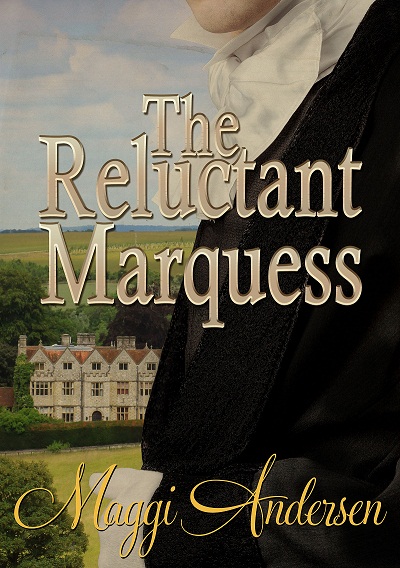
Virtual Book Tour: The Reluctant Marquess by Maggi Andersen

Thank you for your interest in hosting this tour, but all stops have been filled.
Goddess Fish Promotions is organizing a virtual book tour for The Reluctant Marquess by Maggi Andersen, a historical romance coming March 8th from Knox Robinson Publishing. The tour will run March 12 - 23, 2012 and the author is available for guest blogs or interviews. Additionally, a PDF copy of will be available soon for review in conjuction with a post or interview.
Maggi will be giving away a $10 Amazon GC to two randomly drawn commenters during the tour.
March 12: Sugarbeat's Books
March 12: STOP #2 Reviews By Molly
March 13: As The Pages Turn
March 14: Reading Romances
March 15: From Me to You ... Video, Photography, & Book Reviews
March 16: Everyday Is An Adventure
March 19: Cocktails and Books
March 20: Queen of all She Reads
March 21: Always a Booklover
March 21: STOP #2 Rogues Angels
March 22: Reader Girls
March 23: Kacey's Kreations

Thank you for your interest in hosting this tour, but all stops have been filled.
Goddess Fish Promotions is organizing a virtual book tour for The Reluctant Marquess by Maggi Andersen, a historical romance coming March 8th from Knox Robinson Publishing. The tour will run March 12 - 23, 2012 and the author is available for guest blogs or interviews. Additionally, a PDF copy of will be available soon for review in conjuction with a post or interview.
Maggi will be giving away a $10 Amazon GC to two randomly drawn commenters during the tour.
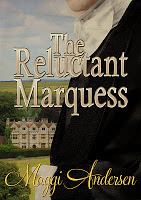
Charity Barlow wished to marry for love.
The rakish Lord Robert wishes only to tuck her away in the country once an heir is produced.
March 12: Sugarbeat's Books
March 12: STOP #2 Reviews By Molly
March 13: As The Pages Turn
March 14: Reading Romances
March 15: From Me to You ... Video, Photography, & Book Reviews
March 16: Everyday Is An Adventure
March 19: Cocktails and Books
March 20: Queen of all She Reads
March 21: Always a Booklover
March 21: STOP #2 Rogues Angels
March 22: Reader Girls
March 23: Kacey's Kreations

March 8, 2012
Nobody likes writing a synopsis, least of all me. Here's some tips to remove some of the pain.
 Because a synopsis is a summary of your book they can be tough to write. Begin by making it clear what your book is about. What genre, thriller? Mystery? Word length? Where might it fit on a bookshop shelf, and what writers inspired you to write it.
1. Length: Two pages unless otherwise requested. Any less is too little, too long may work against you.
2. You must tell the ending - in a synopsis you reveal all. This is probably the only time you will want to reveal the ending.
3. For genre fiction - explaining your characters and plot points is important. Make sure there's a clear, beginning, middle and end.
4. Write it in plain, simple language. Style and voice is not important here. It's 'tell' not 'show'. The reverse of writing the book.
5. Introduce characters' names in Capitals. And don't name too many. Leave sub-plots and secondary characters out, if there's more than six.
6. Don't fail to detail the important plot points in the novel.. Show the conflict! How characters interact, change and grow. And if it's a romance, how they fall in love.
Fitting all that into two pages is definitely a challenge.
Good luck!
Maggi

March 7, 2012

March 5, 2012
THE SERPENTINE IN HYDE PARK, LONDON
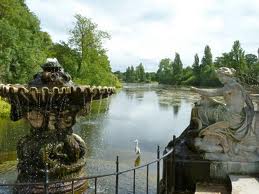
THE SERPENTINE (RIVER)Because it features so often in my books, I thought I'd take a look at the Serpentine in Hyde Park, London.It is a 28-acre (11 ha) recreational lake created in 1730
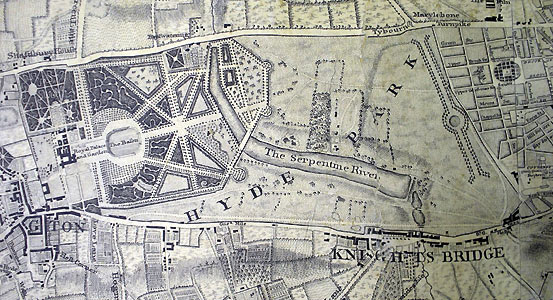 The Serpentine takes its name from its snakelike, curving shape. Detail of the 1746 Rocque map showing the newly constructed Serpentine. The paths converging on the Round Pond to the west of the lake are also visible.
Although it is common to refer to the entire body of water as the Serpentine, strictly the name refers only to the eastern half of the lake. Serpentine Bridge, which marks the boundary between Hyde Park and Kensington Gardens, also marks the western boundary of the Serpentine; the long and narrow western half of the lake is known as the Long Water.
[image error] Sluice gate of the 1730 dam at the eastern end of the lake. The lake has a maximum depth of 40 feet (12 m).Originally the lake was fed by the River Westbourne entering at the Italian Garden at the north-western end of the Long Water. The Westbourne ceased to provide the water for the Serpentine in 1834, as the river had become polluted, and it is now supplied from water pumped from the Thames. The Long Water runs south-east from this point to Serpentine Bridge, where the lake curves sharply to the east. At the eastern end, water flows out of the lake via a sluice in the dam, forming a small ornamental waterfall. Historically, the river flowed due south from this point marking the boundary between Westminster and Kensington, but since 1850, the river has been diverted into a culvert, running underground to join the Thames near Chelsea Bridge.
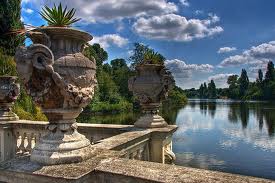
In 1730 Queen Caroline, wife of George II, ordered the damming of the River Westbourne in Hyde Park as part of a general redevelopment of Hyde Park and Kensington Gardens. At that time, the Westbourne formed eleven natural ponds in the park. During the 1730s, the lake filled to its current size and shape. The redevelopment was carried out by Royal Gardener Charles Bridgeman, who dammed the Westbourne to create the artificial lake, and also dug a large pond in the centre of Kensington Gardens (the Round Pond) to be a focal point for pathways in the park.At the time of construction, artificial lakes were long and straight. The Serpentine was one of the earliest artificial lakes designed to appear natural, and was widely imitated in parks and gardens nationwide.
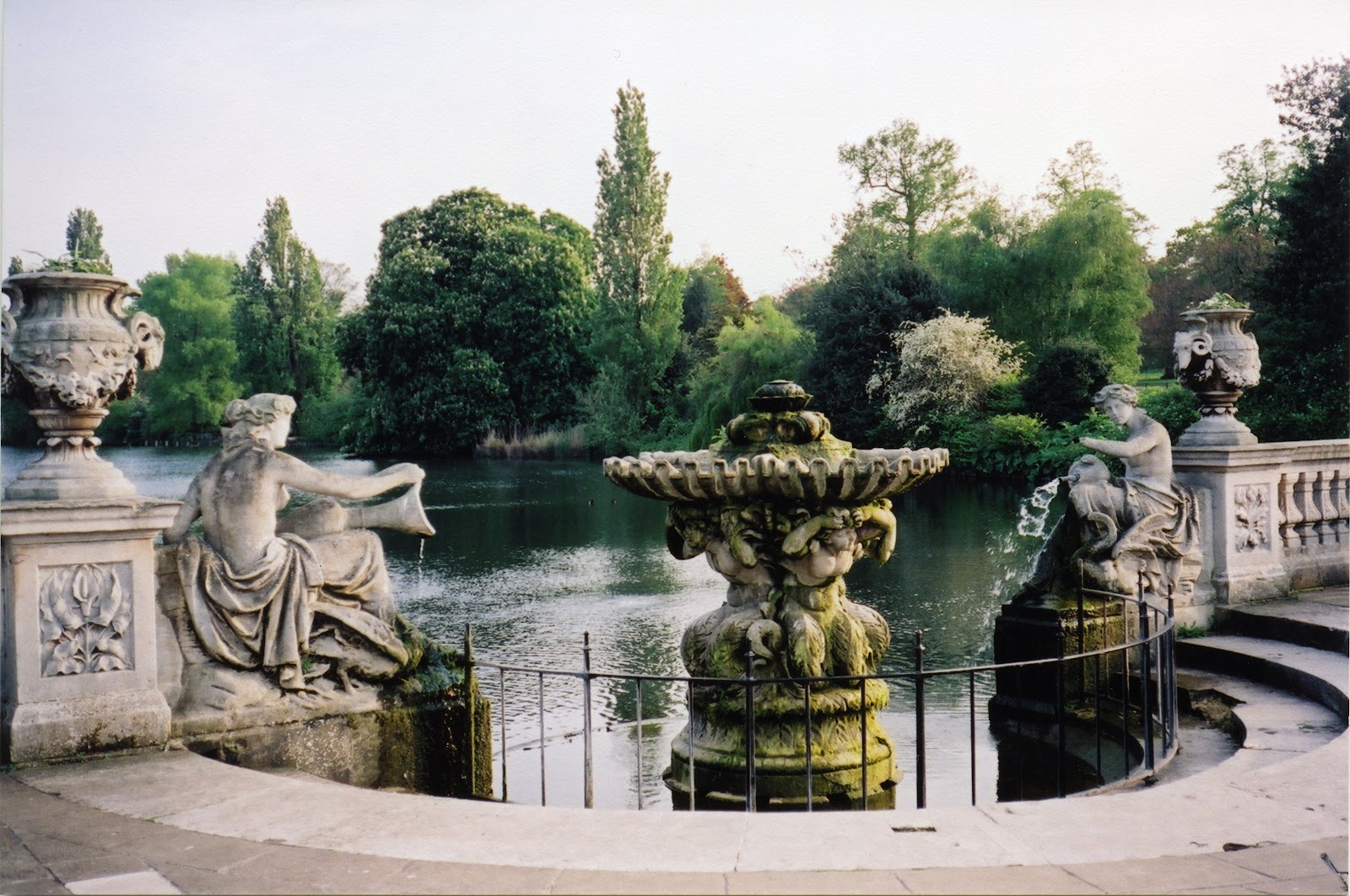
The Long Water from the Italian Garden. Large numbers of mute swans nest in this area.The lake achieved notoriety in December 1816 when Harriet Westbrook, the pregnant wife of the poet Percy Bysshe Shelley, was found drowned in the Serpentine having left a suicide note addressed to her father, sister and husband. Shelley married Mary Wollstonecraft Godwin less than two weeks later.
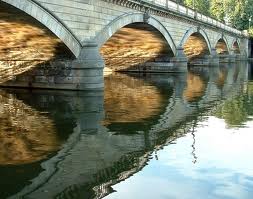
Serpentine BridgeThe lake formed a focal point for the 1814 celebrations commemorating the British victory at Trafalgar, and of the 1851 Great Exhibition, with the Crystal Palace standing on its southern shore. Following the introduction of more stringent regulations to protect the environment in the park, the relocation of the Crystal Palace, and the construction of the nearby Albertopolis complex of museums and exhibitions, large-scale events ceased to take place on the banks of the Serpentine. In the 1820s, the park was extensively redesigned by Decimus Burton. At the same time, John Rennie built the Serpentine Bridge to carry the newly built West Carriage Drive along the boundary between Hyde Park and Kensington Gardens, formally dividing the lake into the Serpentine (east) and the Long Water (west).
The Long Water At the northern end of the Long Water are five fountains surrounded by classical statuary and sculpture, the area is officially known as the Italian Gardens. A large bronze memorial to Edward Jenner, the developer of modern vaccination, dominates the area; it was originally located in Trafalgar Square in 1858, but four years later was moved to its present site. The Long Water is surrounded by dense overgrowth for much of its length, and is relatively undeveloped in comparison to the Serpentine. Due to its undisturbed nature, it forms a significant wildlife habitat and is designated as a bird sanctuary. A 2005 survey showed it as home to 90 species of moth alone. On the western bank of the Long Water, deliberately hidden in foliage, is a bronze sculpture of Peter Pan by George Frampton. The "real world" elements of the play and novel were set in the park and in the surrounding streets. ROTTEN ROW
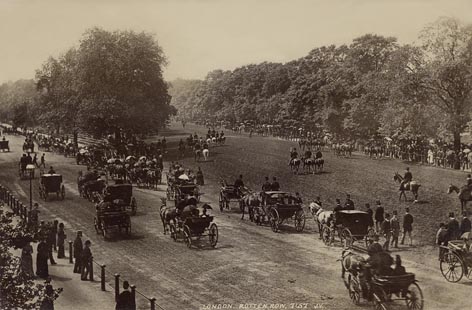
Rotten Row is a broad track running for 1,384 metres (4,541 ft) along the south side of Hyde Park. It leads from Hyde Park Corner to the Serpentine Road. During the 18th and 19th centuries, Rotten Row was a fashionable place for upper-class Londoners to be seen. Today it is maintained as a place to ride horses in the centre of London, but it is little used.
Rotten Row was established by William III at the end of the 17th century. Having moved court to Kensington Palace, William wanted a safer way to travel to the previous St. James's Palace. He created the broad avenue through Hyde Park, lit with 300 oil lamps in 1690– the first artificially lit highway in Britain. This was called Route de Roi, French for King's Road, and this became "Rotten Row".
In the 18th century, Rotten Row became a popular meeting place for upper-class Londoners. Particularly on weekend evenings and at midday, people would dress in their finest clothes in order to ride along the row and be seen. The adjacent South Carriage Drive was used by society people in carriages for the same purpose. In 1876, it was reconstructed as a horse-ride, with a brick base covered by sand.
The sand-covered avenue of Rotten Row is still maintained as a bridleway and forms part of Hyde Park's South Ride. It is particularly convenient for the Household Cavalry, stabled nearby at Hyde Park Barracks in Knightsbridge, who exercise their horses there. Members of the public also ride there, although few people have stables close enough to make use of it. However, there are commercial stables nearby, Hyde Park Stables, that offer horse hire and riding lessons to the public.
The Peter Pan CupSince 1864, the Serpentine has hosted a 100 yard (91.4 m) swimming competition every Christmas morning at 9 am. In 1904, author J. M. Barrie awarded the Peter Pan Cup to the winner of the race, a tradition which has continued ever since. Due to the hazards of swimming in freezing water, the race is open only to members of the Serpentine Swimming Club.BoatingRowing boats are available for hire. Until the 1970s pleasure boats were able to use the whole lake.
 A rare snowfall.
February 29, 2012
Blog visit - Mona Karel and a tasty recipe.
I'm visiting Mona's blog today with a nice recipe for the barbeque. http://mona-karel.com.
February 27, 2012


February 26, 2012
Podcast for The Reluctant Marquess is up at Knox Robinson Publishing
I read an excerpt from the my Georgian novel, The Reluctant Marquess released on March 8th.
http://www.knoxrobinsonpublishing.com/podcastgen/
http://www.knoxrobinsonpublishing.com/podcastgen/


