Stephanie Morrill's Blog, page 10
February 9, 2018
Discovering My Setting
 Shannon Dittemore is the author of the Angel Eyes novels. She has an overactive imagination and a passion for truth. Her lifelong journey to combine the two is responsible for a stint at Portland Bible College, performances with local theater companies, and an affinity for mentoring teen writers. Since 2013, Shannon has taught mentoring tracks at a local school where she provides junior high and high school students with an introduction to writing and the publishing industry. For more about Shan, check out her website, Facebook, Twitter, Instagram and Pinterest.
 Today, as we continue our Grow An Author series, I'm moving from characters, which has been my focus for the past three weeks, to the setting of my story. Like characters, I depend heavily on discovery writing to determine the look and feel of the stage my story will play out on.
If you're playing catch-up and want to read more about how and why I consider myself a discovery writer, check out these links:
The Value of First ThoughtsDiscovering My ProtagonistDiscovering My Cast of Characters
Discovery writing, as we've established, is the process of sitting down to write with little or no plan for your manuscript.
Sometimes when a story idea presents itself to me, it will come with a handful of ready-made set pieces. I just finished a manuscript about an ice road trucker and when that idea came to me, it arrived in my head as this Frozen-meets-Mad-Max-Fury-Road epic fantasy. I knew, from the outset, that I'd need a big rig capable of trucking ice roads. Everything else about the setting grew from this one idea.
While I spent a considerable amount of time developing my setting through discovery writing, I knew that everything I created had to support the idea of this massive set piece and its driver. The entire story came about because I wondered, "What would it be like to be a female ice road trucker and what if the ice road itself was magic?"
The book I'm working on now is different. The idea came to me as a character and a problem. The solving of that problem becomes my hero's goal, but I'm still left with a world of possibilities when it comes to place and time. Where and when is this hero's journey going to play out?
One of the things that must be decided early on is whether or not you're going to set your story in a place that exists or has existed at some point. If so, you're going to need to do some research into the location and the era. If you're creating your own setting, you have a little more freedom to discover details along the way. In my case, because my story idea requires royalty and kingdoms and people groups at war with one another, I decided to start by modeling the world my hero lives in after Europe in the middle ages.
I've never written a medieval-inspired fantasy, so before I sat down to write, I googled pictures of medieval villages and taverns, castles and cathedrals. I found concept art that appealed to me and I saved the links so I could pull them up again when necessary. I dug out some of my favorite YA fantasies and I purchased a few new ones. I immersed myself in comparable settings for a couple weeks so that when I sat down to discover my own world, I'd have no shortage of words and images in my head.
It's important that the fantasy world I create is mine and mine alone, so my goal is not to steal other ideas, but to glean inspiration from them. Books, movies, artwork, theater, music--anything that feeds your creative soul is good for this. Take ideas, concepts, questions, and images from outside yourself and thoughtfully change them: update, switch, darken, enlarge, age, embellish, combine, or destroy and rebuild. The goal is to make them your own.
When at last I sit down to write, I don't discovery write my setting separately from my hero and the cast of characters who surround her. As mentioned in previous posts, I select a possible opening scene and I continue forward. Moving from one scene to the next, I discover my characters and my setting simultaneously.
This is vital to my process because I believe wholeheartedly that readers experience storyworlds through characters. If you can move your cast to a different storyworld and nothing changes, you've missed a crucial element. By discovering these big foundational pieces of my story simultaneously, the world and the characters become inseparable from one another. The writing will not be perfect, but that's not the point. I'm writing to understand my characters and the world they inhabit. I'm writing to understand how they work together.
In these early scenes, here's what I'm hoping to discover about my setting: What genre am I writing? Just like with character choice, the genre I'm writing will come with certain expectations. An urban fantasy will likely require a human location, a location where paranormal characters exist separately, and a way to move between worlds/realms. A cozy mystery might indicate a small town or village with a quiet exterior and some drama brewing beneath the surface.
Since I'm writing a medieval fantasy, readers will expect horses and carts, they'll expect taverns and castles and soldiers. They might expect magic and dragons and journeys through dark forests. They'll expect kings and a court. And while I am under no obligation to include any of those things, the genre itself is a great place to start when deciding what a setting might look like.
What are the locations that are most crucial to the story? If 90% of my story happens in a city, I need to devote most of my story building time to developing the city. I don't need to understand or waste time exploring the countryside. One of the tragedies of world building is that we often mistake rabbit trails for writing. We do not need to know everything about every corner of a story world. We need to spend our creative energy on the locations that will be featured heavily in the story.
What does my hero's home say about her? Does she have a dependable place to lay her head down at night? Is food easy to come by? Is she wealthy, well-loved, poor, despised? Does she take pride in her surroundings? Is she connected to them?
Do you see how it is impossible to separate story from character? One informs the other.
What does this world look like year-round? In my ice road trucker fantasy, the world has two seasons and both of them are winter. The differences between one winter and the other are subtle and the freezing cold touches everything. In the medieval fantasy I'm working on, the seasons will be more traditional with winter, summer, spring and fall playing a role in both peace and wartime, in harvest and the general wellness of the people.
How are technology, religion, and magic viewed in the world you're building? If you're writing contemporary fiction, this may or may not matter, but as I like the weird stuff, this is always something I have to consider as I construct my people groups and the culture they make up. Does science play a role in your story? What about religion? Are the peoples in your world monotheistic or polytheistic? Is magic something you plan to include? What does your magic system look like? It should have rules and while you don't need to flesh all of these things out right away, these early sessions give you an idea of what your storyworld could look like.
In each of the categories listed above, we have the opportunity to make the setting of a book truly ours. By pinning down unique details specific to our storyworlds, we can set our books apart from other comparable titles.
I'd be lying if I said I ONLY discovery write my storyworld. That's not true at all. But it's where I start. It's where the ideas come from. After a few discovery writing sessions, I go back through these early scenes and I allow myself to pick the world apart and edit a bit. I take the ideas that I dumped onto the page and I stew on them, consider whether or not they should stay or go. I adjust, adjust, adjust until I feel like I have the beginnings of a world for my characters to move around in. When I'm satisfied, I jump back into discovery writing and go again. It's a process, but it allows me to be creative and it works for me.
Today, I've given you five things I look for as I'm discovery writing my early chapters, but there are so many more.
What do you consider a priority when it comes to setting, location, and story worlds in general?


February 7, 2018
When You Need More Research and Worldbuilding
 Jill Williamson is a chocolate loving, daydreaming, creator of kingdoms. She writes weird books in lots of weird genres like fantasy (Blood of Kings and Kinsman Chronicles), science fiction (Replication), and dystopian (The Safe Lands trilogy). She has a podcast/vlog at www.StoryworldFirst.com. You can also find Jill on Instagram, Facebook, Twitter, Pinterest, or on her author website. Tagboth (Tag for short) is a goldhorn dragon from Belfaylinn, a hidden fantasy realm on the western end of the Sargasso Sea. Jill is working on the first book of this tale for this year's Grow an Author series.
I need more world building.
At this point, I've done A LOT of brainstorming and making lists. I have a list of fairy names. Lists of types of stones and what their magic will be. List of colors and their meanings. Lists of different types of fairies. Lists of place names to use if I need them. List of character names. I have a map. I have research on thin places. I have pictures I printed off the internet for all my main characters and many side characters. The list goes on and on. In fact, I have a file folder filled with research and a 3-subject notebook full of worldbuilding work and research. (See pictures below.) I once had tentatively called the Belfaylinn series Ultraviolet, so that is what is written on the tab of my file folder and the front of my notebook. I think you can get an idea of how much worldbuilding I've done so far. That's about two inches of stuff.

It's a great start. But I'm still finding it difficult to answer some of the "why" questions I had from the initial list in my first blog post, specifically: Why are these fairies peoples fighting with each other? Why are they hiding from the modern world? And why do they continue to live without technology?
I think part of my problem here is that I haven't developed the culture of the three fairy types beyond the physical and the location of their homes. Arials have wings and live in the mountains. Grounders live on the ground. Merrows have webbed fingers and toes and live in or near the ocean. That's all good to know, but it's surface stuff. I need to go deeper. I need to know why there are three types. I need to know what each type (race? species?) values. I need to know the goal of their ruler. That will help me as I set out to answer those three "why" questions. I can't really answer them well until I know more.
Besides that problem, I've found some other areas lacking in this story. I spent a lot of hours the past few weeks reading over everything I had in that series file and notebook. I also read the chapters of Onyx Eyes I wrote and made a list of plot holes and problems I need to fix. So, I've taken all of that and made this updated "To Do" list for more research and worldbuilding.

MY NEW TO DO LIST-Develop the culture for the three fairy types. Include a history for their land, how they came to live there, what each kingdom cares about, and why they are fighting.
-Why are they hiding from the modern world?
-Why do they continue to live without technology?
-Fill out a detailed character chart for Drake and Kaitlyn. Perhaps also for Tagboth and Roose.
-Brainstorm sayings or popular phrases that have to do with colors to incorporate into fairy dialogue.
-Research the Hebrew "Breastplate of the High Priest" that has twelve each to represent a tribe of Israel. See if I can somehow incorporate it into the story or backstory.
-Interview a Hebrew speaker on some of the words I'd like to use.
-Make a list of books or series to read for inspiration that either have to do with fairies or Celtic mythology. I want to know what is out there so that I can make my story different.
That's where I am so far. Before I can really dive in and get writing, I need to figure out a few more things. I have several charts I've made over the years to help me brainstorm, but for the most part I really only need to know the following about all three people types to get me going:
Values:Chief resource:Struggles:Type of government:Ruler:
Ruler's goal:
Ruler's motives:Internal political problems:Nation's colors:
Nation's flag/standard/sigil:
Type of dress:
Architecture:
Weapons:
Adjectives that describe these people:
History:
Religion:
Types of food:
Any important animals:
So while I'm working on that this week, I'd like to challenge you to answer a question about the culture of one of the peoples in your story. I'd like to know:
1. What does that culture most value? (Wealth? Power? Freedom? Happiness? Family? God? The environment? Survival? Food? Water? Individualism? Loyalty? Logic? Tolerance? Etc.) Share your answer in the comments.
February 5, 2018
Ideas For How to Organize Your Research Notes

Stephanie Morrill is the creator of GoTeenWriters.com and the author of several young adult novels, including the historical mystery, The Lost Girl of Astor Street (Blink/HarperCollins). Despite loving cloche hats and drop-waist dresses, Stephanie would have been a terrible flapper because she can’t do the Charleston and looks awful with bobbed hair. She and her near-constant ponytail live in Kansas City with her husband and three kids. You can connect with her on Facebook, Twitter, Pinterest, Instagram, and sign up for free books on her author website.
Last week I talked about how I decided what to research early on in brainstorming Within These Lines. Today I get to marry up two of my favorite things in life: Writing and organization.

Within the first few weeks of preparing to write Within These Lines, I ordered dozens of books from the library, read original source documents, watched several DVDs, listened to podcasts, followed the social media accounts for Manzanar National Park, watched online videos, looked through historical photographs, and emailed with a park ranger.
Because I'm relatively new to the world of writing historical fiction, I didn't yet have a system for tracking all my different notes. I found myself with notes on my phone, notes I wrote by hand while reading a book or watching a documentary, articles I had printed out, a Pinterest board, and a slew of helpful websites that I had bookmarked ... and no idea how to bring it all together.
Originally, I wanted to find The Perfect Organization System. (This is a theme in my writing life. Please see Mistakes I Made So You Don't Have To: Wanting To Find The Perfect Novel Writing System for further evidence of this.)
I wanted one that was completely digital or completely physical (a binder, file folders, etc.) but eventually decided that I would need a hybrid. Whatever system you create, remember that your system is just a tool. It’s only effective to the extent that it serves you. The goal is to write your story, not to perfectly code code or alphabetize.
Here are the two parts of my research note organization system:
Digital:
In my web browser, I created a bookmark folder specific to my story. I bookmarked any research I did online, and any article that seemed like it would be helpful. While I do have a Pinterest board for my story, the reason I don’t like to have everything pinned there is that I only like to pin things that resemble the finished product. My bookmarks folder is a private place where I can save everything without having to give thought to who might see it or what it implies about the story. Often the folder ends up having saved pages for plot lines that I ended up abandoning later.
Folder on my hard drive: Inside the folder where I keep my manuscript, I also have a folder labeled "Research." If I download articles or save photographs, this is where I put them.
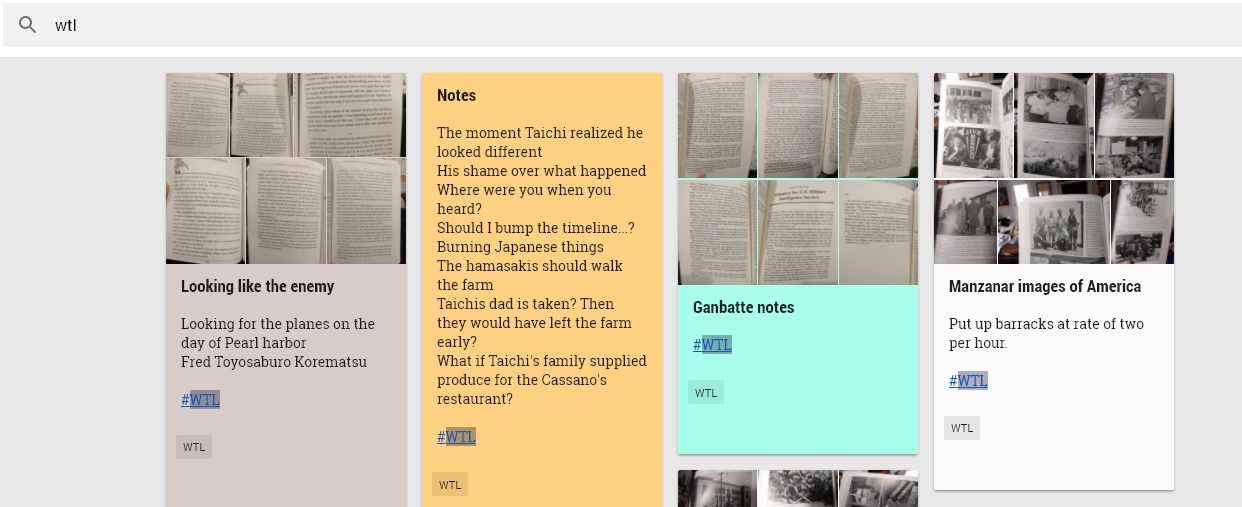
Google Keep: This is my favorite app for taking notes. I like that I can use it both on my laptop and my phone, and I like that everything is searchable, taggable, and archivable. Sometimes I'm just jotting general notes about the story, but other times I use Keep for taking notes when I'm reading. Like if a book has images I want to be able to refer to when I’m writing, I will create a note for that specific book, take a picture of the page, or jot down the information I want to remember. Then I'll tag it with my story specific label. Here's a screenshot of some of my Google Keep notes for Within These Lines:
Physically:
3-ring binder: For a book like Within These Lines where I have a lot of original source documents, I like to have a three-ring binder. For The Lost Girl of Astor Street, I just used file folders tacked up to my cork board. That worked fine, but this time since I was digging deep into a specific historical event, I needed something more.
Here’s how I divided mine:
Front cover: My year-at-a-glance calendar for 1942. You can see from the coffee stains that this lived by my computer for the months I worked on this book. I print these from timeanddate.com.

Story: Probably obvious, but this is where I put all notes about the story. Not research related, but they need a home too.
Era: This is where I file all my general notes about the 40s as an era, whether it’s the notes I took on what Italian restaurants served before WWII, pop culture notes, an overview of the progression of WWII, whatever.
Fashion: Pretty self-explanatory

Original Source Documents: This is my place for newspaper articles, government documents, and other pieces written during the era that I printed out. I don't always print them out, but sometimes I want to be able to highlight or take notes on the document.
List of Digital Resources: This is the link between my two systems. It's just a piece of notebook paper where I list books that I have notes for that are stored in Google Keep, or original source documents are downloaded on my computer, or stored online somewhere. This is just a way to remind myself of additional resources that I've saved elsewhere.
Lots of writers like OneNote, and I've used that at times for my contemporaries. Scrivener has some cool research organizing capabilities. If you have ways that you keep research organized, I would love for you to share in the comments!
February 2, 2018
Discovering My Cast of Characters
Shannon Dittemore is the author of the Angel Eyes novels. She has an overactive imagination and a passion for truth. Her lifelong journey to combine the two is responsible for a stint at Portland Bible College, performances with local theater companies, and an affinity for mentoring teen writers. Since 2013, Shannon has taught mentoring tracks at a local school where she provides junior high and high school students with an introduction to writing and the publishing industry. For more about Shan, check out her website, Facebook, Twitter, Instagram and Pinterest. Happy Friday, friends! Before we jump into today's blog post, let me share with you something fun. Because Jill and I are on the west coast (waving across the country at you, Steph!), we've had a couple of co-teaching opportunities pop up for us of late. This March, along with author Paul Regnier, we'll be co-teaching the all new Teen Track at Mount Hermon Christian Writers Conference. If you're anywhere near the Santa Cruz mountains, consider joining us. We're incredibly excited and would love to sit down and talk writing with all of you.
Here's a silly little promo video (that I can't watch without guffawing). For more information on the conference, please visit the official site. There are some fantastic discounts available for teen writers and their chaperones.
And now, with the commercial break over, let's continue to Grow An Author, shall we? Last Friday, we talked about how I write my hero into existence using a process called discovery writing.

To follow that up, I want to show you how I choose the individual characters who will make up my hero's supporting cast.
The initial process cannot be separated from the discovery writing that brings my hero to life. As I'm writing my main character, the others climb onto the page and into existence. As mentioned last week, I start with my story idea and I brainstorm an opening scene. Once I know how I want the story to begin, I make a chronological list of five or six follow-up scenes that will give me plenty of space to explore my hero and the characters that surround her.
As daunting as it can be to create characters from scratch, that's not really what happens when I sit down to write. Most always, the genre itself will require certain types of characters.
For example, when writing a murder mystery, there are three characters that I know will be necessary from the outset: the murderer, the victim, and the detective. When writing a teen novel, I can't overlook the fact that teenagers are generally supervised. I'll need to create parents, or at least develop a reason for their absence. Readers will expect certain character types based solely on the genre of the book you've handed them.
Every genre is going to have its expectations and this is not a bad place to start as you begin to discover your way through the story. Perhaps even more important than genre conventions though, is a character's ability to help you show off your hero as you want her to be seen.
There are several attributes I'm on the outlook out for when I'm discovering a cast of characters.
PURPOSE: What is this character's purpose in the story? It's not always clear at the outset why I need a specific character in a story. And that's okay. As I write, I often uncover various possibilities. The trick as I move forward is to be honest with myself. Every character I end up keeping must have a purpose.
This can be a difficult thing to decipher as a writer; we have a tendency to fall in love with characters we create and often lose our objectivity. Here's a simple question you can ask yourself: Does this character reveal something important about my main character, setting, or plot?
Maybe conversations with this character give the reader insights into your hero's motivation or wiring. Maybe the way your hero treats this character reveals his attitude, personality or level of integrity. Maybe the character has a job that helps us understand the story's setting. Maybe the character is entwined intrinsically into the plot and provides a vital moment as the story unfolds. Maybe the character is schooled in ways that your hero is not--maybe that character provides the expert wisdom that both the hero and the reader need to make it from point A to point B.
There are many solid reasons for including a character in your story. Just be sure that at some point during the drafting process you're able to pinpoint what that purpose might be.
DESIRE: What does this character want? Yes, it's a question I ask myself regarding the protagonist in my story, but it's just as important to understand your minor characters and what they want. After discovery writing your secondary characters for a while, can you state their two most integral wants? What do they want more than anything? AND what do they want in relation to the hero's journey? Your secondary characters should have their own desires and goals, totally separate from the main characters. This makes them authentic. They should also have an opinion on what the hero's doing and whether or not the hero is on the right track. Maybe they'll never say these two wants out loud, but you, as the writer, should know them. It will help you craft both their actions and their words.
VOICE: Does this character have his own, clearly recognizable voice? Not every minor character will deserve such attention, but those closest to your hero need to be recognizable on the page. In my Angel Eyes books, especially in Dark Halo, one of the most popular characters is the protagonist's best friend, Kaylee. She has her own dreams and desires and, while Brielle is her best friend, Kaylee's life does not revolve around Brielle. As I discovered my way through the series, Kaylee became as real to me as my main character and her voice became just as recognizable. She uses her own vernacular and she processes conversations and situations in her own unique way. She is her own person though she shares many life experiences with my hero, and because of that, she's a very good sounding board and companion. She provides an anchor and helps us make sense of Brielle and the strange things happening all around her. And, because I can hear her voice in my head, I could easily write Kaylee's story if I had to. In fact, I just might.
GROWTH: How will this character grow as the story moves forward? Again, the less impact a minor character has on our hero, the less time and energy we need to devote to their development, but for those with a lot of "onscreen" time, we need to consider their own personal arcs. Does your secondary character grow in some important way? Ability, wisdom, integrity, empathy. Or, maybe, this character regresses. Maybe this character shows us what happens if growth is refused. Maybe this character is a reflection of your hero's "what could have been." Either way, characters close to the hero should show some sign of change by book's end. Change is authentic and we desperately want to be authentic.
I've given you just four of the attributes I look for in secondary characters as I discover my way through a first draft. Can you think of any more? What do you look for when you're casting your book?
January 31, 2018
What to Do When Your Ideas are in Someone Else's Book
Jill Williamson is a chocolate loving, daydreaming, creator of kingdoms. She writes weird books in lots of weird genres like fantasy (Blood of Kings and Kinsman Chronicles), science fiction (Replication), and dystopian (The Safe Lands trilogy). She has a podcast/vlog at www.StoryworldFirst.com. You can also find Jill on Instagram, Facebook, Twitter, Pinterest, or on her author website. Tagboth (Tag for short) is a goldhorn dragon from Belfaylinn, a hidden fantasy realm on the western end of the Sargasso Sea. Jill is working on the first book of this tale for this year's Grow an Author series.This past week, I read the first five chapters of Onyx Eyes that I wrote on my blog back in 2012. You can go read them too, if you'd like, but keep in mind, I will be making some changes. (Click here to see the chapter list.)
Overall, I liked what I had of the story so far. I really like Drake, the side characters, and the feel of the story. I also read through the reader comments to familiarize myself with what had been working and what hadn't. Three problems arose from my read through.
1. Worldbuilding. I need more world building on the three races of fae people. They aren't feeling real and distinct enough for me. The physicality of wings/no wings/webbed fingers and toes set them apart, but I need it to go deeper. I want three distinct cultures with history and values and rituals and ways of life that are different for logical reasons that makes sense. This I will work on and discuss in next week's post.
2. Princess AyanaRynn and Drake's romance. It was a little odd for readers to read about Drake desperately searching for a kidnapped princess they had never met in the story. Because they liked Drake, the readers believed in his love and were rooting for him. But I didn't like the way the story was flowing without the princess "on screen," so to speak. My plan back then had been to rewrite Drake's first chapter so that the readers could meet Princess AyanaRynn and see how much she and Drake loved each other--before she was abducted.
Now, however, with my daughter's involvement in the story (ahem) my plans will have to change again. In the old story, the human Kaitlyn was NOT going to have a romantic subplot with Drake. Drake loved Princess AyanaRynn. But my daughter is opposed to this. She ships Drake and Kaitlyn. And since she is my child and since I stole her name for the story, I am prepared to let her have her way.
My first idea was the simplest. I would make AyannaRynn ten to twelve years old. She could still be in love with Drake, her handsome guardsman, but those feelings would be one-sided. I could even leave the chapters the way I had them and surprise both the human character Kaitlyn and the reader when Drake finally does find the princess and we see that she is still a child. My daughter approved of this plan. But when I read through the five chapters, it didn't fit. Those five chapters are designed around Drake's romantic love for the princess. Rewriting them would take more work than I want to do at the moment. (If I truly believed it was the right thing to do--the only way to fix things, then I would rewrite those chapters. But I didn't feel that way.)
So I thought about it for a while and came up with a secondary plan. One that was cruel to Drake, but one that I think will work, perhaps even better. In this story, the fae people can cast mask spells, which enable them to look like someone else. Drake does this when he goes into the Aerial kingdom to spy. And when his investigation leads him to Kaitlyn's home in the human realm, Drake instantly discovers that Kaitlyn's brother Quinn is a changeling wearing the mask of the human Quinn. Since I have set up this magic, why not make it (spoilers!) that Princess AyanaRynn is an impostor. She has been wearing the mask of the real AyanaRynn for several years, living in the Grounder kingdom, spying. And she started a romance with Drake because, hey. Who would know more about how things work in the kingdom than the captain of the guard?
This means I can leave most of the story as is, but I know that AyanaRynn is not AyanaRynn. Drake doesn't. He will discover the truth during the course of his investigation in the series and will become tragically heartbroken. And I'm thinking that when he does finally find AyanaRynn, she will not really know him, since she will have been imprisoned for so long.
Sad, huh?
But Kaitlyn will have been there for all of this. She will have become good friends with Drake, and once he learns the truth about AyanaRynn, his heart will be free.
So that is how I plan to deal with that problem, which brings me to the third problem I discovered while reading through my old chapters.
3. Ideas that are now in another published book. There were two things in my story that jumped out at me as similar to things in Sara Ella's Unblemished, which I read a few months ago. It's a funny thing about books. There are SO MANY out there. At some point, all writers come to realize that their ideas have been done already, in one way or another. It would be impossible to try and take out every idea that in any way mirrored another. Still, stumbling upon these two similarities was hard. I started writing this story back in 2010. By 2012 I'd published my five chapters on my blog. Sara's book was published in 2016.
None of that matters.
Sara's book was published. Mine is still unpublished. So now I must choose. Do I leave these two elements as they were and risk having people accuse me of copying her? Or do I change them?
That's a choice every author has to make for him or herself. Me, I'm going to change them. Kicking and screaming, a bit perhaps, but knowing that I'll feel better about it in the end.
What are the two elements that are so bothering me? I shall tell you.
First, when Drake casts his forbidden spell to bond with Tagboth the dragon and grow wings, he brings death upon himself. A slow death. From the inside. And since the theme of the story is black/sin, I had planned to show this with his blood turning darker until it was black. And that would show through his skin. Dark black veins. I thought this was cool.
So did Sara. She has a character whose veins turn black for a vaguely similar reason. So this felt too close.
Second, my fairies traveled through thin places. The Celts said that heaven and earth are only three feet apart, but in thin places that distance is even shorter. I liked this idea of doorways the fae people could travel through. So in my story, I decided that magical doorways could be formed anytime there was a combination of magic and water. I loved this idea. I especially loved that Drake could look into a glass of water and talk to his Grounder soldiers back home. Alas, in Unblemished, one travels between the realms through bodies of water. They swim through it and come up on the other side. Still, it felt too similar. To leave that as is in my story felt like I was copying that element as well.
Now, if I was writing for the adult fantasy market, I might just leave it as is. But since Sara wrote for YA fantasy readers and I'm writing for YA fantasy readers, it's pretty much the same market. And so these two things need to change.
I imagine you all have experienced this somewhere in your own writing/brainstorming. And, to be honest, it stinks! It's hard when you have things just so and are forced to start over and brainstorm something new. I get it. This sometimes happens during the editing stage of the story as well. Your editor might point out that something isn't working. And you might agree. But you also know that to fix it will take SO MUCH WORK. And you just want to weep.
Thankfully, my problems are not that much work to fix, though I really, really liked both of those things. And so I emailed Stephanie and Shannon and whined a little and asked what I should do. Because we all need to commiserate sometimes. Stephanie suggested I ask myself what other things show death in a body? What if this dying showed itself more like leprosy or nerve damage?
And as to the thin places, she asked what about something like hot springs or geysers? Sinkholes or Yellowstone where the ground is so unsteady, they've had people fall through crumbling ground?
I'm not sure yet what to do. I need to brainstorm, that's for sure. And I might not find a satisfying answer for a very long time. In fact, I might have to write the story and leave holes where such things would be described. Once I figure out how to fix those things, then I can go back in and edit. But that's where I'm at today.
Have you ever found your ideas in another book? Did you leave them or change them? If you changed them, how did you come up with something new? Share in the comments.
And if anyone has ideas how to fix my problems, feel free to share that too! ;-)
January 29, 2018
How To Effectively And Efficiently Do Research for Your Historical Novel
Stephanie Morrill is the creator of GoTeenWriters.com and the author of several young adult novels, including the historical mystery, The Lost Girl of Astor Street (Blink/HarperCollins). Despite loving cloche hats and drop-waist dresses, Stephanie would have been a terrible flapper because she can’t do the Charleston and looks awful with bobbed hair. She and her near-constant ponytail live in Kansas City with her husband and three kids. You can connect with her on Facebook, Twitter, Pinterest, Instagram, and sign up for free books on her author website.
Research is intimidating. Before I wrote The Lost Girl of Astor Street , I thought I would never write a historical novel, as stated here in Go Teen Writers: How To Turn Your First Draft Into A Published Book.

I remember thinking there was no way I could know everything I needed to know to feel confident that I had done a good job. How could I ever be expected to know what 1920s era Chicago was like? How do you find out details like what was served for school lunch? Or what was taught in science class? Since I write YA and the parents are still involved in shaping my main character, I thought I also needed to research and understand not just the generation of my character, but the generation before!
Not only that, but I knew from talking to historical writer friends that there are book reviewers who seem to delight in pointing out history-related errors that authors make. If I attempted to write a historical novel, I thought, it would surely be obvious that I'm not a real historical writer.
Have I talked you out of writing a historical yet? Here are a a few things I realized that helped me get over my fears, and I hope if you're feeling nervous this can help you too:
1. I realized I don't need to know everything from the moment I start. I learned how to research in phases. More on that in a bit.
2. I'm telling a story, not writing a textbook. Most readers of historical fiction care about the history, yes, but they mostly care about the story.
3. I'm not claiming to be a scholar. I'm a novelist. Someone is going to read my book who knows more about my subject than I do. Maybe they'll knock me down a star on Amazon if they notice a mistake, or maybe they won't. But it says there on the front that it's a NOVEL. I did my best, but mistakes happen.
4. What, exactly, do I think makes somebody a "real" historical writer? I never once worried that someone would think I wasn't a real contemporary YA author, so why did this mess with me so much? I think this is just a part of writing in a genre that wasn't your first love. Contemporary YA is what I grew up writing, what I wrote in my early days as a published author, and what I had self-identified as for a long time. That was more about me and my perception of myself.
(If you feel other barriers about writing historical fiction or historically-inspired fiction, I would love to interact with you about those in the comments section!)

Let's go back to number one on that list and talk about the research process. I'm often asked, "Should you research before you write your book? Or while you write it? Or at the end?"
The answer? YES!
I'll have more posts in the future about research, but today we're just going to talk about phase one of your research.
Like I talked about last week in my Story Spark to Story Blurb post, developing my idea into a sentence and a few paragraphs typically takes very minimal research. I needed to know the time and place of my story, so I had done a bit of research about that to identify some plausible locations, but that was it.
After writing my blurb, I like to write a chapter or two of my story so I can get a feel for my storyworld. For me, that's the most effective way to think through the rest of the story. I used to think this was weird, but now I've talked to more and more writers who are the same way. There's just something about mucking around in your character's heads and hearts that helps figure out where the rest of the story needs to go. (Shan talked about this some last Friday in her post Discovering My Protagonist.)
My research goal at this point is to know just enough to write those chapters and get a 2-3 page synopsis together. The more you understand about what you need to know the less time you'll waste researching stuff that never makes it into the book.
Reading through my story blurb, I identified a few questions I needed to answer and research:Where did Italian American and Japanese American families live in San Francisco in 1941? How would Evalina and Taichi have met?What did America's involvement look like in the war in 1942?After the executive order was signed, how long was it before the Japanese American families were removed?What did those removals look like? How did families know?When the Japanese American families from San Francisco were evacuated, where were they sent?After I discovered several options and settled on Manzanar in southern California, I also put "research life at Manzanar" on my list.What did the average teenage girl do after she had graduated high school in 1942?For a while, you will feel like every question you answer just leads to more questions. I promise that's normal.
In phase one of research, I try to do as much online and through the library as possible. I tend to be a bit of a binge shopper at my library. Here's a stack of books I picked up early in my research for Within These Lines :

That's a lot of books. But it's important to keep in mind that you don't have to read all of the research book, usually. Within These Lines takes place entirely in 1942, with a few flashbacks to 1941, so when I researched WWII and the evacuation and life at Manzanar, all I focused on was 1942. (I found, and you probably will too, that I was so naturally curious about how things turned out that I frequently read more than I really needed to just to find out what happened to certain people after the war.)
And I'm constantly amazed by what kind of information I can find on the internet. In The Lost Girl of Astor Street, I have a very important scene where Piper makes a long distance call, and I wanted to get it right. I was shocked to find video tutorials from the 1920s on how to place a long distance call. Who felt the need to upload these on the internet? I have no idea, but I'm sure grateful to them!
Some questions you'll be shocked to find answers to by simply Googling them. Others you'll have to dig a bit. Next week we'll talk about keeping all your research organized!
January 26, 2018
Discovering My Protagonist
Shannon Dittemore is the author of the Angel Eyes novels. She has an overactive imagination and a passion for truth. Her lifelong journey to combine the two is responsible for a stint at Portland Bible College, performances with local theater companies, and an affinity for mentoring teen writers. Since 2013, Shannon has taught mentoring tracks at a local school where she provides junior high and high school students with an introduction to writing and the publishing industry. For more about Shan, check out her website, Facebook, Twitter, Instagram and Pinterest. Happy Friday, you guys!
I'm learning so much from our Grow An Author series and I hope you are too. The truth is, when you set out to write a novel, you're doing so much more than just telling a story. You're growing an author.
Last Friday, I talked about The Value of First Thoughts. I broke down how I select my story's narrator and protagonist. Today, I'd like to talk about my protagonist's character development and how I approach this very important aspect of storytelling.

protagonist: the leading character, the main character, the hero
In my heart of hearts, I am a discovery writer. I write to discover everything from my setting to my characters, and over the next few Fridays, we'll discuss what I look for as I discovery draft my way through the story. I do take time to plot, but it's not something I do separate from my discovery writing. There is a lot of back and forth that happens between my notebook and my computer. My notebook, where I list questions and ideas, and my computer where I do my writing.
Now that I've selected my narrator and zeroed in on my hero, it's time to breathe some life into this girl. Based on my story idea, I know a few things about her, but I don't know much. I know what her BIG FAT story problem is going to be because this particular story idea came to me as a character and a problem, but I don't know how she talks to people or what she eats for breakfast. I don't know who her best friend is or what she wears to do her chores. I have no idea at all about her family life or her role in the community. And to be honest, I've been going back and forth about how old she will be when the story opens. There is a lot for me to discover about my hero.
Some people fill out character worksheets or charts. I do use Stephanie's story workbook (which you can get for free if you sign up for Go Teen Writers Notes), but not at this point. I don't know enough about my character to fill anything out just yet and I won't know near enough until I write a bit.
The first thing I do is decide which scene I want to use as my opening--this isn't a life or death decision, friends. I can change my mind later. But I do need a starting point. When I've got that selected, I make a chronological list of scenes that should follow the opening. Not every scene I've considered, but five or six. I do this so that I'm not writing blind. So that I have something to work toward.
Next, I climb inside my hero's head and I begin to write. As I do, my main character begins to take shape and the writing itself digs her from the dark, often muddy cave of my imagination.
Things I need to find out about my protagonist include:
What does my hero want? This is a loaded question of course, because at any given time you and I want several things. But while I may discover some interesting tidbits as I write, there are two very important wants that I am keeping an eye out for.
What does my hero want more than anything? And, what does my hero want in relation to the story problem?
These two things will drive my hero and my readers from the very beginning of my story to the end. If I want to carry them all with me, it's important that I discover the answer to these two questions fairly early on in my drafting process.
Why isn't my hero equal to the task? The problem facing my main character must be large. Insurmountable even. Not only should the problem be a doozy, but my main character must somehow be unequal to the challenge.
I watched a video the other day featuring an inspiring little boy. He was at the park with his mother and sister and he wanted to climb up the stairs of a jungle gym and go down the slide. And, no, he didn't want his mama's help. Not a huge goal, not even all that admirable. Until you realize this little boy was born with no arms and no legs.
I'm a weeper and I had no desire to cry off my makeup that morning, but two things kept me watching the computer screen: the boy's determination and the impossibility of the task. I watched as this beautiful little boy used his entire body, face-included, to inch his way up the stairs and then roll to the slide where he victoriously slid down.
What an accomplishment! If we can pair a compelling hero with overwhelming odds, we just might have a story worth writing.
Is my hero relatable? Note that I didn't say likeable. Likeable isn't a must, but I certainly want a hero the reader will willingly root for. Some of the best protagonists are prickly characters, but they have attributes that we can all identify with and understand. I want my hero to be someone that is welcomed, not only into my head, but into the reader's. Her internal struggles, her words, her actions--they need to be authentic.
Where does my hero fit in the world around her? As I'm noodling away at scenes, other characters will inevitably crop up. Some of them aren't surprises; they're characters I've chewed on a bit, but many of them are new. With my current work in progress, I recently discovered that my hero has three brothers. Two of them are older and one is the baby of the family. I didn't plan that, but it begins to define my hero's place in her family and it gives me a dynamic I can work with. Similar developments will arrive when I place my hero into her friend group and into her classroom. Each scene that unfolds teaches me about my lead, and with every word I discovery write, I learn more and more about who my character is and who she isn't.
There are all sorts of details I'll pick up as I engage in these early writing sessions, but I'm not big on charting them just yet. Her favorite color may or may not matter, but I've no reason to commit myself one way or another until it does. There will come a time when I'll pull out my story workbook and mark some of these details down, but not yet. Not until my hero has some air in her lungs and a mission to accomplish. Not until I'm convinced my character is here to stay.
It'll happen. The more I write, the more I'll discover about the story as a whole and the closer I'll get to creating a hero worth following.
How about you? How does your hero take shape on the page?
January 24, 2018
Creating a Map for a New Storyworld
Jill Williamson is a chocolate loving, daydreaming, creator of kingdoms. She writes weird books in lots of weird genres like fantasy (Blood of Kings and Kinsman Chronicles), science fiction (Replication), and dystopian (The Safe Lands trilogy). She has a podcast/vlog at www.StoryworldFirst.com. You can also find Jill on Instagram, Facebook, Twitter, Pinterest, or on her author website. Tagboth (Tag for short) is a goldhorn dragon from Belfaylinn, a hidden fantasy realm on the western end of the Sargasso Sea. Jill is working on the first book of this tale for this year's Grow an Author series.I'm now at the point where I would start drawing a map for my storyworld. I did that years ago for the Belfaylinn story. Here it is.
 Click here to see a larger version.
I've spent a lot of time looking at this map over the past few weeks. It's fun. I like it. But I'm not sure it fits the feel of my story, which is YA fantasy. This map looks to be for a younger age, like a children's chapter book or a middle grade book. So I'm toying around with the idea of re-drawing it. We'll see. What do you think?
Along with creating a map, I usually spend a lot of time world building the culture of each country, kingdom, or realm on the map. For the Belfaylinn stories, I have three kingdoms. The aerial fairies live in Tarafoyle, up on the top of the highest mountain. The grounders live in Glasderry, in the thickest forest in all of Belfaylinn. And the merrows live among the islands and rocks of the Glassloch Sea in the kingdom of Kenmare.
I spent a lot of time carefully naming the places on this map. I was trying to come up with quaint titles, and I'm happy with the way all of that turned out with places like Cloudbright, Petal Fog, Tarrelton, Ballinloch, and Novahorn.
I've spent a lot of time in my research and world lately, and I'm specifically trying to create unique culture for the fairy people as a whole and for each of the three races. Those are my biggest concerns for my storyworld and I think the map I have now shows the differences in each environment quite well.
I've written several thorough posts on the topic of creating a map for your storyworld, so I won't go over all of that again. If you need help creating the map itself, check out these posts:

Map-Making 101: Drawing the Map
Map-Making 201: Naming Things
The Evolution of a Fantasy Map
A map a snapshot of your world, and you want that to be a good one. You want it to grab the reader's eye and keep them there, exploring. Here is a short list of questions to ask yourself or tasks to do before or while you are map-making.
1. What is the purpose of this map?
2. What do you want to show? (An entire world? One city? Something else?)
3. List some interesting places or landmarks you can add to your map.
4. Make a list of places mentioned in your story and make sure to put them all on your map.
5. Don't put very many other places on your map--places that your characters won't go. Such places will only clog up your map and make your reader wonder when the characters will go there. And then they never will.
Anyone map-making? Share a link to your map in the comments. And if you have map questions, ask away!
January 22, 2018
From Story Spark to Story Blurb
Stephanie Morrill is the creator of GoTeenWriters.com and the author of several young adult novels, including the historical mystery, The Lost Girl of Astor Street (Blink/HarperCollins). Despite loving cloche hats and drop-waist dresses, Stephanie would have been a terrible flapper because she can’t do the Charleston and looks awful with bobbed hair. She and her near-constant ponytail live in Kansas City with her husband and three kids. You can connect with her on Facebook, Twitter, Pinterest, Instagram, and sign up for free books on her author website.
Last March, my writing path took an unexpected turn.
 The thing is, many historical writers "mine an era," as my agent put it, meaning most of their books are set in the same time/place. Medieval Germany, Edwardian England, Civil War in the South, etc. Because I loved all of the research I did for my 1920s era novel,
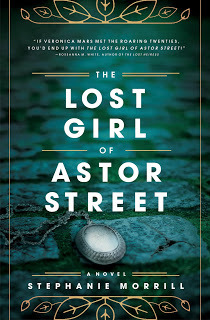
The Lost Girl of Astor Street
, I anticipated hanging out in the Jazz age for the foreseeable future.
The thing is, many historical writers "mine an era," as my agent put it, meaning most of their books are set in the same time/place. Medieval Germany, Edwardian England, Civil War in the South, etc. Because I loved all of the research I did for my 1920s era novel,
The Lost Girl of Astor Street
, I anticipated hanging out in the Jazz age for the foreseeable future.Early in March, as I was moving about my house, getting things together for our family's spring break trip, I was listening to a Stuff You Missed In History podcast. It was a two-part episode about Executive Order 9066, which allowed the U.S. government to force Japanese Americans into concentration camps after Japan bombed Pearl Harbor.
I was fascinated by the history.
Every Story Begins With a Spark
You've probably experienced the same thing I did that afternoon. As I listened, I had a spark of a story idea flit through my head. "What if there was a teenage girl who was in love with a Japanese American boy, and he was taken away?"
 I felt really excited about the idea, but I knew better (or rather, I "knew better") than to get too excited. 1920s was my era, and I had already pitched my next book to my editor, so as fun as this new idea was, I would have to wait a few years before I tackled it.
But barely two weeks later my agent sent me a text saying that my editor wondered if I had any WWII era story ideas.
I just stared at the message in disbelief. I mean, technically I had an idea, but...
I wrote back, "Kind of. I have a blip of an idea. But it's really not much. I listened to a podcast about the Japanese American experience during WWII, and I wanted to write a story about that."
She said, "Do some brainstorming and get back to me."
Good Ideas Are Sticky Ideas
The pattern I've noticed with story sparks that evolve into actual novels is they tend to be sticky in nature. They naturally attract other pieces of ideas that I've had before, or they gain momentum quickly when I press into them a bit.
While I used to insist on doing this part of the story creating process alone, in the last few years I've realized how helpful it is to brainstorm with a trusted writing friend. If you don't have writing friends, or you prefer to work out story ideas on your own, Shan wrote a great article last Friday about the way she works with ideas early on. If you're looking for writing friends and you're a teen writer considering joining the Go Teen Writers Community Facebook group. It's helpful to us if you also email us at GoTeenWritersCommunity(at)gmail.com so that we know you're legit.
My trusted brainstorming friend is author Roseanna White. Once I caught her up on the odd turn of events, she said, "That's funny. I once had a blip of a WWII story idea, but I'll never use it." She proceeded to tell me about how she read that the U.S. government worked with imprisoned Italian mobsters to gain intelligence from them, and her idea was based on that.
I basically said, "If you're not going to use that, can I?"
We spent two-and-a-half hours bouncing ideas back and forth about how my original vision for the story of a Caucasian teenage girl in love with Japanese American boy would fit together with the Italian mafia plot. Whether you're brainstorming with a writer or two, or you're working on your own, this is the time to let ideas fly. Write it all down. I have several pages of half-baked thoughts and ramblings from that brainstorming session. You just never know what might be useful down the road.
All the Ideas Get Boiled Into A Sentence
The next step for me is taking what I have and creating a sentence or two.
Why just a sentence or two? If you're anything like I used to be, the thought might make you groan. There's a reason we write novels, after all. Here is why I make myself do this:
My agent needs it for pitching to my editor, and my editor needs it for pitching it to her publishing house. The sales team needs it for pitching it to bookstores. And I need it when people ask me, "What's your new book about?"It helps to guide the rest of the story development process. Having the heart of the story documented somewhere is very useful as I move into developing the rest of the plot.At the end of the morning's conversation, I sent my agent the following hook sentence:
When an Italian American girl's sweetheart is packed off to a Japanese internment camp in the early days of World War II, she decides to tap into her family's Mafia connection and venture to Alcatraz itself to try to bring the war to an end.Not only was my agent excited about the idea, but my editor adored the concept and asked me to send her a blurb, a synopsis, and some sample chapters so she could show the others at Blink.
Growing the Sentence into a Blurb
Even when I haven't had a direct request for one, the blurb is the next step for me in the idea growing process. It's a great way to explore what I think the story is going to look like, even if I haven't yet done much research.
My early blurbs tend to be 2-3 paragraphs, though I don't worry too much about how long they are. Mostly it's about capturing the overall vision of the story. Here's the blurb I wrote for my WWII novel:
Evalina Cassano is a senior in high school when Japan attacks Pearl Harbor. While she has always been tender-hearted, Evalina’s parents are surprised by how devastated she is over the attack and the Executive Order that soon follows. An order that makes it lawful to remove all Japanese Americans from the west coast and imprison them in concentration camps.
What Evalina’s parents don’t know is that over the last year, Evalina has fallen in love with Taichi Hamasaki, an American citizen of Japanese descent.
In a time when interracial marriage is illegal in California, Evalina and Taichi have always known that when their relationship became public, they would be fighting a battle. They just never realized that they would be divided in this fight, one of them free, and the other stuck inside the barbed wire fences of Manzanar Relocation Center.
This novel, tentatively titled Within These Lines, is a story about the gritty, exhausting side of love. The kind of love that seems to only invite heartbreak, but is tenacious and unrelenting all the same.When I'm writing a historical novel, this is the point in the process where I have to stop for a chunk of research time. Next week, we'll talk about the research process!
Have you had any fun story sparks recently? Do you write them down anywhere?
January 19, 2018
The Value of First Thoughts
Shannon Dittemore is the author of the Angel Eyes novels. She has an overactive imagination and a passion for truth. Her lifelong journey to combine the two is responsible for a stint at Portland Bible College, performances with local theater companies, and an affinity for mentoring teen writers. Since 2013, Shannon has taught mentoring tracks at a local school where she provides junior high and high school students with an introduction to writing and the publishing industry. For more about Shan, check out her website, Facebook, Twitter, Instagram and Pinterest. Last Friday I wrote about the importance of committing to an idea. Today, I'm going to talk about my first thoughts on a project and why it's so important for me to get them onto the page. I want to make it clear though, that this isn't necessarily STEP #2 for me. As I mentioned in last week's post, committing to an idea isn't something I do lightly and it isn't something I ever do before squirreling around with my narrator's voice and a character or two on the page.
This is all part of STEP #1 for me and at this point I'm little more than a discovery writer. A discovery writer is someone who sits down to write with little or no idea of what they plan to do or where they want their story to go. Another term for a writer like this would be a pantser, so named because this writer writes by the seat of his or her pants.
Of late, I've started to pull away from the term pantser and lean into the term discovery writer. It feels like what I'm doing when I sit down to write. Author Joan Didion said this:

Me too, Joan. Me too. At this point in the process, when an idea seems to have merit, when it entices me, when it disturbs my sleep with unanswered questions, I need to sit down so I can discover what it is I think about the idea.
In many ways, Joan Didion was talking about the bigger picture. She was talking about writing to figure out what you think of the world, and society, and the human condition. But in every stage of writing a book, this quote rings true. If you're like me, you must sit down with your idea and you must write on it to figure out what you think.
At this early stage, the writing is all about my narrator and my protagonist.
 The way it works is simple. I pull out my notes. Yes, I have notes. If you haven't read Jill's Wednesday post, you should do that. She talks about making lists for world-building and characterization. I do something similar in the early days of toying with an idea. I'll jot down every idea that pops into my head about a story concept and I'll keep it in a notebook that I haul with me when I run errands or sit in the school parking lot waiting for my kids. It's not fancy. It's just a cheap notebook from Target with ideas arranged in no particular order. But I make sure to keep it at my elbow when I'm sitting down to flesh out my first thoughts.
With that notebook nearby, I'll read through the list and choose some aspect of the story that can easily be translated into a moment. Truly, it does not matter which moment I choose, but I've noticed that I have a tendency to choose a point in time that could feasibly be worked into an opening chapter. Just the way I seem to work.
Once I have my moment selected, I give myself two maybe three minutes to think about it and then I set a timer for fifteen minutes and I don't stop writing until the timer goes off. We call these word sprints and they're immeasurably valuable. They can help you capture your first thoughts on any given subject, moment, or concept. After fifteen minutes of writing, I do one of two things. I either set the timer for another fifteen minutes and keep going, or I allow myself to read back what I've written, typos and all.
I do this as many times as I need to until I can answer these two questions:
Who is my narrator? And do I like my protagonist?
Things I want to discover about my narrator during these early writing sessions:
Point of view: Who is telling my story? Will there be one narrator or several? Is my narrator also the hero of the story (first person) or is someone else describing events as they happen (third person)? If so, is this someone else an all-knowing, all-seeing omniscient narrator? In any case, how much knowledge, experience, education does my narrator have?
Tense: When is my story taking place? Is my story taking place in the past? If so, is it the recent past or the distant past? Maybe my story is taking place in the present?
When I first did this exercise for the book I'm working on now, I hated the way my first thoughts fell onto the page. I didn't like the narrator (omniscent, btw) at all. But what I learned when I read my words back is that I really did like my protagonist (my hero). I liked her story as I was beginning to piece it together in my head, and I wanted to examine it further.
When I came back to the page, I chose a different moment from my notebook to zero in on and I began in first person, present tense. During this fifteen minute sprint, I didn't deviate from first person, present. I stayed with my hero in that moment until the fifteen minutes were up.
When I started the timer over again, I chose another moment from my notebook, an earlier moment in my hero's life, and though I stayed in first person, I switched to past tense.
After those fifteen minutes were up, I realized how much I liked this format, moving back and forth between my hero's current struggle and her past life. It was an eye-opening half hour for me, and though it took two different writing sessions to figure it out, I now know everything I need to know about the point of view and tense of my work-in-progress, and I've discovered that I do really like my protagonist. I want to know more about her. More than that, I think we'll get along well enough for me to allow her to rent space in my head for the better part of a year.
Things I want to discover about my protagonist during these early writing sessions:
Who is the best hero for this story? Sometimes my great story idea revolves around a concept or a set piece or high impact event and I'm not entirely sure who is best suited to tell the story. If you're in this place, you may have many options. If so, you may decide to devote a word sprint or two to each of these characters until you're able to zero in on a hero or two worth following. Yes, you can have multiple heroes, but no, we're not going to dig into that today.
Does my hero have an easily definable goal? My hero does. The story I'm working on is based loosely on a historical event, so I have some idea where my hero is heading. If you're using my word sprint/discovery writing method to flesh these things out, you don't need to focus on this goal during the free write, but having it in mind will help you. If you don't know what your hero's goal is, these word sprints might set you on the road to discovering it.
While these early writing sessions don't always leave me with words worth keeping, they do set the tone for every minute of writing time that will follow. They teach me about my own frame of mind when I enter this world and they begin to evoke emotions in me that will eventually make it onto the page. The story itself starts to take on a flavor, a vibe, a style. And whether or not that flavor, vibe, and style are appealing to me is very important. And with just a handful of writing sprints I'm able to discern if this idea is worth pouring time and creative energy into or if I would be better suited working with another idea altogether.
Tell me, do you use word sprints or free writes early in your writing process, or do you save that for later?