Amy Julia Becker's Blog, page 51
January 24, 2023
False Message: Disability is a joke to be laughed at.
Images, words, and attitudes all shape our implicit impressions of people with disabilities, and many of those words and images create false understandings. We’ve looked at two of these false messages in the past few weeks, and here’s the third:
FALSE MESSAGE:Disability is a joke to be laughed at.
WHERE THIS FALSE MESSAGE SHOWS UP:Everywhere. I’ve encountered the r-word used as a joke in television shows like Veep, in movies and stand-up comedy routines, even in one of our favorite children’s books, Because of Winn-Dixie. I’ve driven behind cars with bumper stickers making fun of people who ride the short bus. I’ve heard President Obama make fun of himself by comparing his bowling skills to people in the Special Olympics. And I’ve heard friends mock themselves and others this way too.
And then there are slightly more subtle ways of mocking people with disabilities by using terms like “spaz,” “lame,” or even “celebutard.” (I first read the word celebutard in TIME magazine. Urban Dictionary defines it as a mash-up of the words celebrity and retarded that refers to people who are filthy rich and “unable to form complete sentences.)
TRUTH:People with physical and intellectual disabilities deserve the same respect as any other human. Using people or people groups as a shortcut to humor or derision dehumanizes all of us.
The campaign “spread the word to end the word” has helped raise awareness about the way the r-word has been used as a joke and how that has caused harm and perpetuated a hierarchy of value among us.
Disability Is Not a JokeLanguage can both reflect reality and shape reality. We can use words to describe people with disabilities that shape a world of belonging.
False Messages About Disability:
False Message: Disability is a problem to be fixed.False Message: Disability is a tragedy to be alleviated.False Message: Disability is a joke to be laughed at.More with Amy Julia:
Memoirs/Books About God’s Logic of DisabilityS3 E15 | Who Belongs? Disability and the Built World with Sara HendrenHow God Thinks About DisabilityTelling a New Story About DisabilityS6 E3 | Down Syndrome and Belonging with Heather AvisThe post False Message: Disability is a joke to be laughed at. appeared first on Amy Julia Becker.


January 23, 2023
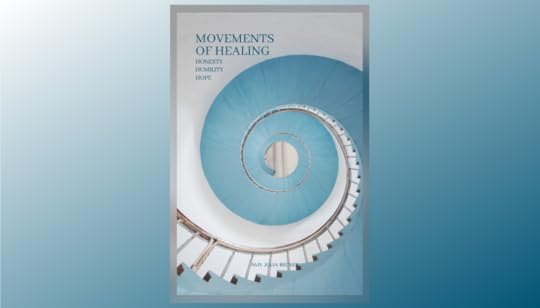
Healing’s Upward, Outward, Expansive Spiral
Healing often feels like a circle, where we tiptoe slowly forward and return to the same place. Where we think we’ve made progress, and then find ourselves back in that conversation about who has sacrificed more for the family or we find ourselves snapping at our kids again or in physical pain again in an area that seemed to have healed.
I’ve written before about how I’ve started to think of healing more as a spiral. Yes, it is circular. Yes, it returns. But it returns to a similar place, not the same place. As we move—patiently, gently, maybe even steadily—upward.
Healing’s Upward, Outward, Expansive SpiralI’ve started to believe that when love is at the center of that spiral of healing, we not only spiral upward, but outward as well. Because love is always expansive. Always making room for more creativity, more diversity, more relationships, and more healing.
So when I find myself in what feels like an all-too-familiar place of hurt or grief or anger or pain, I can take it as an invitation to return to love.
For more on the movements of healing:
Movements of Healing: Honesty, Humility, Hope
More with Amy Julia:
Healing: Spiraling Upward?When the Sink Breaks, You Call a PlumberHealing Is ExhaustingIf you haven’t already, you can subscribe to receive regular updates and news. You can also follow me on Facebook , Instagram , Twitter , Pinterest , YouTube , and Goodreads , and you can subscribe to my Love Is Stronger Than Fear podcast on your favorite podcast platform.
The post Healing’s Upward, Outward, Expansive Spiral appeared first on Amy Julia Becker.
January 20, 2023
Disability and Respect: Look Her in the Eye
I’m so grateful for the technician at the eye doctor appointment who assumes that Penny can speak for herself. I’m also aware of how surprised I feel that this young woman is acting as if I am not in the room.
Many people treat Penny as if she is both younger and less capable than she is. They look to me to answer questions. They talk to her as if she is a child. They assume incompetence.
None of this behavior is ever mean-spirited. If anything, it is out of a desire to accommodate Penny and make sure she is well cared for. And yet it implicitly belittles her when people don’t start by looking her in the eye and giving her the chance to respond for herself. (And let’s be clear, while there are kids and adults with disabilities who aren’t able to respond with words, all of us deserve the respect that comes from this kind of attention and the assumption that we are capable of making a human connection.)
Disability and RespectThe sad thing is that I’ve gotten used to it. So when this technician asks Penny if she wants the eye-numbing drops before she puts in drops that sting, I’m surprised. And I’m surprised when she says, “You’re seventeen now. You’re allowed to choose for yourself.” And when Penny asks to hold my hand just in case the drops sting anyway, I’m surprised again when she continues her conversation with Penny by saying, “I sometimes still ask my mom to come with me to the doctor too.”
I wish I didn’t feel surprised that she is treating Penny like the young adult she is. I wish I didn’t live in a world where it makes sense to write an Instagram post about how someone saw my child with Down syndrome and treated her with respect. But that’s what happened, and I am grateful for this woman and for all the people out there who are able to see beyond labels, speak beyond cultural assumptions, and do the small but significant work of honoring our common humanity.
Shared with Penny’s permission
Free ResourceFor more, I have a free resource about the significance of community—people who help to create a space not just of inclusion but of belonging for Penny and for our family. Missing Out on Beautiful: Growing Up With a Child With Down Syndrome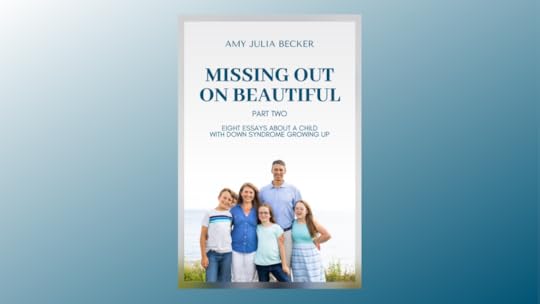
More with Amy Julia:
Book: A Good and Perfect Gift: Faith, Expectations, and a Little Girl Named Penny False Message: Disability is a tragedy to be alleviated.Hope Heals | And You Will Be BlessedIf you haven’t already, you can subscribe to receive regular updates and news. You can also follow me on Facebook , Instagram , Twitter , Pinterest , YouTube , and Goodreads , and you can subscribe to my Love Is Stronger Than Fear podcast on your favorite podcast platform.
The post Disability and Respect: Look Her in the Eye appeared first on Amy Julia Becker.
January 19, 2023
Domestic Monastery
“Raising small children, if it is done with love and generosity, will do for you exactly what private prayer does.” –Ronald Rolheiser, Domestic Monastery
I just read this whole (very small) book in one sitting. Starting with this thought on the first page and continuing throughout, I was reminded of those early years of our children’s lives. I did not always raise them with generosity, and yet I resonate with this idea. Those years of abandoning contemplative practices and snatching at sleep rather than committing to any sort of regular rhythm of prayer were sacred ones because of the messiness and disruption and the way I became more and more dependent upon grace as our kids demonstrated their dependence on me.
Domestic MonasterySo if you are a parent or caregiver for small children, yes, I recommend Domestic Monastery as an encouragement. But even more so I recommend the sentiment within its pages that you are doing the work of maturing in love, which is the only work the world needs.
For those of us without small children in our daily lives, this book is a reminder that we either need that kind of regular proximity to people whose dependence and vulnerability are obvious or we need a practice of regular prayer that draws us out of ourselves and closer to the heart of God. Or both. In all these cases we need, as Rolheiser observes, “a place to learn the value of powerlessness and a place to learn that time is not ours, but God’s.”
More with Amy Julia:
Small Talk: Learning from my children about what matters most 9 Non-Fiction Books I Loved in 2021Friday Favorites and AJB RecommendsIf you haven’t already, you can subscribe to receive regular updates and news. You can also follow me on Facebook , Instagram , Twitter , Pinterest , YouTube , and Goodreads , and you can subscribe to my Love Is Stronger Than Fear podcast on your favorite podcast platform.
The post Domestic Monastery appeared first on Amy Julia Becker.
January 18, 2023
False Message: Disability is a tragedy to be alleviated.
When it comes to disability, we receive many erroneous and incomplete messages from the media and popular culture. Here’s the second of four false messages we receive about disability.
FALSE MESSAGE:Disability is a tragedy to be alleviated.
WHERE THIS FALSE MESSAGE SHOWS UP:Popular books and films (like Me Before You) send a message that life with a disability is not a life worth living. The New Atlantis has also recently exposed how legislation in Canada to permit euthanasia similarly underscores a message that disability is a fate worse than death. (Ross Douthat has also written about this in the New York Times.)
Countless disability advocates tell a different story.
TRUTH:According to research from Brian Skotko, “nearly 99% of people with Down syndrome indicated that they were happy with their lives, 97% liked who they are, and 96% liked how they look. Their siblings and other family members also reported positive experiences within their families.”
According to a BBC essay, “impairment usually makes little difference to quality of life. Research shows, for example, that overall levels of life satisfaction for people with spinal cord injury are not affected by their physical ability.”
Plenty of people with disabilities do experience suffering, but changes to our support networks and communal acceptance and welcome would help us address the needs of people with disabilities rather than reducing those needs to irresolvably tragic conditions. Reclaiming an understanding of suffering as an aspect of human life that we can face with compassion and care allows all of us to recognize that all human life is fragile and uncertain and valuable and beloved.
False Messages About Disability:
False Message: Disability is a problem to be fixed.False Message: Disability is a tragedy to be alleviated.More with Amy Julia:
Memoirs/Books About God’s Logic of DisabilityS3 E15 | Who Belongs? Disability and the Built World with Sara HendrenHow God Thinks About DisabilityTelling a New Story About DisabilityS6 E3 | Down Syndrome and Belonging with Heather AvisIf you haven’t already, you can subscribe to receive regular updates and news. You can also follow me on Facebook , Instagram , Twitter , Pinterest , YouTube , and Goodreads , and you can subscribe to my Love Is Stronger Than Fear podcast on your favorite podcast platform.
The post False Message: Disability is a tragedy to be alleviated. appeared first on Amy Julia Becker.
January 17, 2023
Interdependent Healing
My new year has started off with heavy news from multiple friends. One whose husband moved out. Another who lost her job. Another whose sister is heading to a treatment center. Another whose kids lost a friend to suicide. In the midst of all this pain around me, I have been considering interdependent healing.
What role do I have in other people’s healing? I know I can’t cause healing. I know I am not the catalyst for healing. There’s some dynamic relationship between God’s grace and our decisions that enable healing to begin, and I can’t manufacture either one.
Movements of HealingAnd yet, the movements that can open me up to healing in my own life are the same as the ones I can offer to my friends. Honesty, humility, and hope guide me in the healing of others just as they do in my own life.
I practice honesty when I acknowledge the pain, the devastation and fear and loss and grief.
I practice humility when I ask how I can help, knowing that my offering with be only one small part of what is probably a long, slow process.
I practice hope when I keep showing up, day after day or week after week. When I check in and return to that spiral of healing. When I listen to the pain again. When I offer to pray or bring a meal or simply give time and presence. When I share my own stories of pain and of healing.
Interdependent HealingFor ourselves, and for others, we are invited to participate in the honest, humble, hopeful (and the long, slow, messy) work of healing.
More with Amy Julia:
FREE RESOURCE: Movements of Healing guideS4 E13 | Disability, Friendship House, and Interdependent Community with Matt FlodingHonesty. Humility. Healing.If you haven’t already, you can subscribe to receive regular updates and news. You can also follow me on Facebook , Instagram , Twitter , Pinterest , YouTube , and Goodreads , and you can subscribe to my Love Is Stronger Than Fear podcast on your favorite podcast platform.
The post Interdependent Healing appeared first on Amy Julia Becker.
January 16, 2023
3 Reasons I’m Grateful for the Reverend Doctor Martin Luther King Jr.
More with Amy Julia:
William’s Book Recommendations for Martin Luther King Jr. DayTed Cruz and KBJ and MLK and ColorblindnessHas Anything Changed?If you haven’t already, you can subscribe to receive regular updates and news. You can also follow me on Facebook , Instagram , Twitter , Pinterest , YouTube , and Goodreads , and you can subscribe to my Love Is Stronger Than Fear podcast on your favorite podcast platform.
The post 3 Reasons I’m Grateful for the Reverend Doctor Martin Luther King Jr. appeared first on Amy Julia Becker.
January 13, 2023
January Introductions
This community has been growing in recent months, and I’ve started doing a little introduction on a monthly basis. Which is fun for me for two reasons. One, I get to know a little bit about you, so please do share in response. Two, it keeps me on the lookout for “fun facts” about myself, which might otherwise be known as quirky habits or strange things that one would only share in our strange age of social media. Here goes:
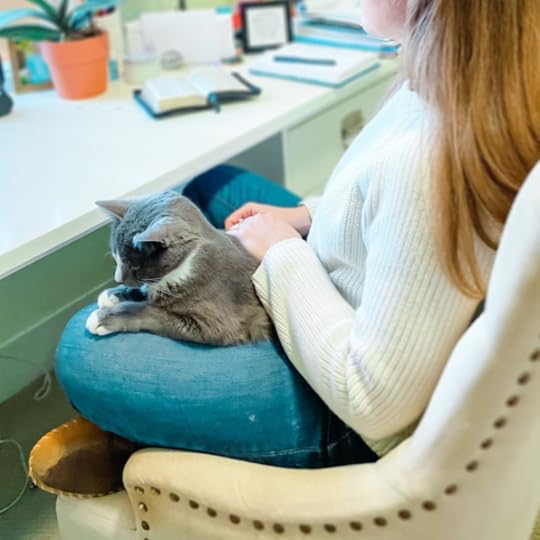
I am not as afraid of heights as I would have expected. I learned this recently when Peter gave me a Christmas present of a trip to NYC, and we went to the top of One Vanderbilt (see photo) and stood on the glass-encased outcropping and looked down to the street 91 floors beneath our feet.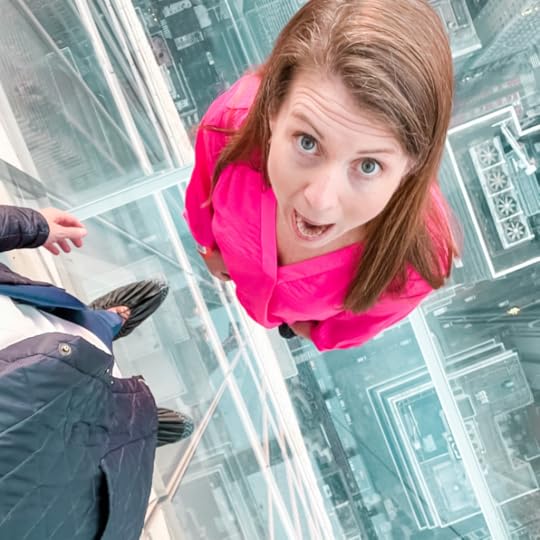 I spend the majority of my workday sitting cross-legged with a cat on my lap. Those days are really good days when they involve some combination of writing, preparing for talks, reading, and interviewing interesting people for my podcast, Love Is Stronger than Fear.
 Some of you already know that I’m an Enneagram One. I am also a Myers-Briggs INTJ. I don’t really know what this means other than that I get energy from being alone or with small groups of people who like to have pretty deep, somewhat abstract conversations. I also like lists and getting things done. And it truly baffles me when people don’t load the dishwasher correctly ( I know there isn’t really a correct way to load the dishwasher, but in my mind there really is!).I used to keep to-do lists all over the house. I would pile up three or four on my desk and make a master list in the morning. Now, I use a planner (Full Focus Planner), and the idea is that I keep one master list there. But when I am away from said planner, I email myself. So my unread email inbox usually contains at least five items from me, reminding me of shows I want to watch, books I want to read, and things like calling the dentist to make sure we all have appointments soon.I really like teenagers in general, and our three kids in particular. Penny is 17 and William is 14. I think of Marilee as 11 going on 21. So they all count as teens in my book, and I delight in them. It’s only now that I’m kind of wishing they would never grow up.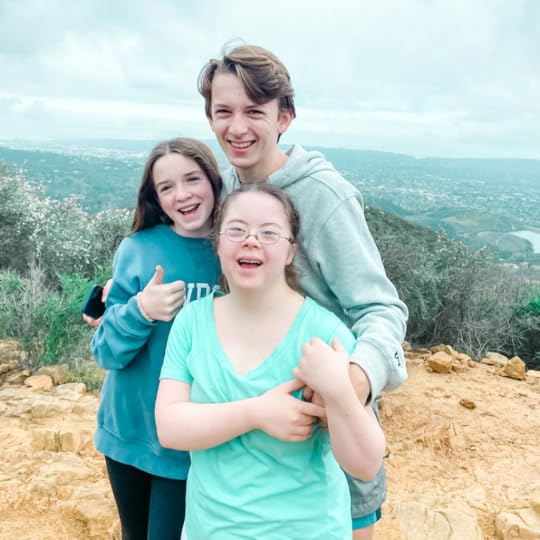
What about you? Are you scared of heights? Is a pet part of your daily life? What’s your Enneagram number or Myers–Briggs type indicator? Do you use a planner?
More with Amy Julia:
AboutBooksSpeakingIf you haven’t already, you can subscribe to receive regular updates and news. You can also follow me on Facebook , Instagram , Twitter , Pinterest , YouTube , and Goodreads , and you can subscribe to my Love Is Stronger Than Fear podcast on your favorite podcast platform.
The post January Introductions appeared first on Amy Julia Becker.
January 12, 2023
False Message: Disability is a problem to be fixed.
Every day, we encounter images and phrases and assumptions and false messages about disability that shape our way of perceiving people with disabilities. Many of these depictions and assumptions are incomplete at best and harmful at worst. Here is the first of four false messages that our culture tells us about disability:
False Message: Disability is a problem to be fixed.26% of American adults live with a disability of some kind. Instead of viewing disability—and people with disabilities—as problems to be fixed, we can view disability as an aspect of human life that will come to almost every one of us at some point in our lives.
Where this false message about disability shows up:In the media, when reporters write stories about individuals who “suffer from” Down syndrome or are “confined to” a wheelchair. In doctor’s offices, when individuals are defined solely by biomedical concerns with lists of potential problems and deficits. In faith communities, when people assume they know what a person with disabilities needs and wants simply by looking at their bodies.
Truth:Sometimes having a disability involves pain, and looking for ways to alleviate or even end that pain can be helpful. And yet often the pain and suffering that arise as a result of disability come from a social system that excludes and stigmatizes people with disabilities, not from the disability itself.
People with disabilities are a diverse group of people with real needs and real gifts, with pain and sorrow alongside hope and joy, with bodies and minds that are limited and vulnerable and glorious and beautiful.
More with Amy Julia:
Memoirs/Books About God’s Logic of DisabilityS3 E15 | Who Belongs? Disability and the Built World with Sara HendrenHow God Thinks About DisabilityTelling a New Story About DisabilityS6 E3 | Down Syndrome and Belonging with Heather AvisIf you haven’t already, you can subscribe to receive regular updates and news. You can also follow me on Facebook , Instagram , Twitter , Pinterest , YouTube , and Goodreads , and you can subscribe to my Love Is Stronger Than Fear podcast on your favorite podcast platform.
The post False Message: Disability is a problem to be fixed. appeared first on Amy Julia Becker.
Hope Heals | And You Will Be Blessed
I had a chance to write an essay (And You Will Be Blessed) for the Hope Heals blog. (And if you don’t already know about Hope Heals, now is the time to check out their work. Hope Heals exists to create spiritual and social spaces of belonging and belovedness for families affected by disabilities to experience the hope of Christ in the context of inter-ability communities.)
It begins:
“And you will be blessed…”
These words stopped me in my tracks as I was reading chapter 14 of Luke’s gospel. I thought I knew the story. Jesus goes to the house of a “prominent Pharisee,” and he notices that all the guests at the table are jockeying to sit in the places of highest honor and status. He also notices that the host has invited all sorts of people who are like him, other powerful religious leaders of his time. So Jesus challenges both groups. He tells them they are getting the kingdom of God all wrong. He tells the guests they should take the lowest place at the table, not the highest. And he tells the host he should invite a completely different group of people, “the lame, the blind, the poor, and the crippled.”
As if these ideas aren’t startling enough, then Jesus adds what will happen if the host follows his instructions and invites all the wrong people to his feast. Jesus says, “And you will be blessed.”
I’ve had to wonder—in what way is it a blessing to welcome people who are poor and needy? In what way is it a blessing to associate with the dispossessed and identify with the ones who most people see in terms of “can’t do,” the ones who can’t walk or can’t talk or can’t see or can’t move quickly? In what way could it be a blessing to show hospitality to people who can’t?
KEEP READING: AND YOU WILL BE BLESSED
More with Amy Julia:
Penny’s Take on Hope HealsHope Heals Camp: When We’re SeenHope Heals Camp: Believing Something GoodHope Heals Camp: Belovedness and BelongingIf you haven’t already, you can subscribe to receive regular updates and news. You can also follow me on Facebook , Instagram , Twitter , Pinterest , YouTube , and Goodreads , and you can subscribe to my Love Is Stronger Than Fear podcast on your favorite podcast platform.
The post Hope Heals | And You Will Be Blessed appeared first on Amy Julia Becker.