Amy Julia Becker's Blog, page 43
May 2, 2023
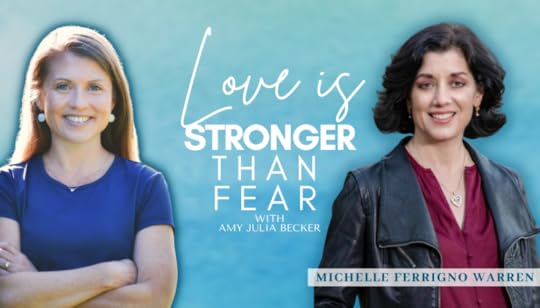
S6 E18 | Join the Work of Justice with Michelle Ferrigno Warren
How do we step into the good work of kingdom justice? In this episode:
hear the story of Michelle Ferrigno Warren, a faith-rooted justice advocate and activistlearn how to be a faithful ally in this life-giving, transformative justice work /*! elementor - v3.12.2 - 23-04-2023 */.elementor-toggle{text-align:left}.elementor-toggle .elementor-tab-title{font-weight:700;line-height:1;margin:0;padding:15px;border-bottom:1px solid #d5d8dc;cursor:pointer;outline:none}.elementor-toggle .elementor-tab-title .elementor-toggle-icon{display:inline-block;width:1em}.elementor-toggle .elementor-tab-title .elementor-toggle-icon svg{-webkit-margin-start:-5px;margin-inline-start:-5px;width:1em;height:1em}.elementor-toggle .elementor-tab-title .elementor-toggle-icon.elementor-toggle-icon-right{float:right;text-align:right}.elementor-toggle .elementor-tab-title .elementor-toggle-icon.elementor-toggle-icon-left{float:left;text-align:left}.elementor-toggle .elementor-tab-title .elementor-toggle-icon .elementor-toggle-icon-closed{display:block}.elementor-toggle .elementor-tab-title .elementor-toggle-icon .elementor-toggle-icon-opened{display:none}.elementor-toggle .elementor-tab-title.elementor-active{border-bottom:none}.elementor-toggle .elementor-tab-title.elementor-active .elementor-toggle-icon-closed{display:none}.elementor-toggle .elementor-tab-title.elementor-active .elementor-toggle-icon-opened{display:block}.elementor-toggle .elementor-tab-content{padding:15px;border-bottom:1px solid #d5d8dc;display:none}@media (max-width:767px){.elementor-toggle .elementor-tab-title{padding:12px}.elementor-toggle .elementor-tab-content{padding:12px 10px}}.e-con-inner>.elementor-widget-toggle,.e-con>.elementor-widget-toggle{width:var(--container-widget-width);--flex-grow:var(--container-widget-flex-grow)}Guest Bio:
Michelle is the president and CEO of Virago Strategies, a consulting group that provides strategic direction and project management for civic engagement campaigns alongside communities affected by racial and economic injustice. She helped found Open Door Ministries in downtown Denver to address poverty, addiction, and homelessness. She is also the author of a new book, Join the Resistance.
Connect Online:
Website: michelleferrignowarren.comInstagram: @michelleferrignowarrenFacebook: @michelle.f.warren.1Twitter: @mcfwarrenOn the Podcast:
Michelle’s books: Join the Resistance and The Power of Proximity Open Door MinistriesI John 3:18Nicholas Wolterstorff Micah 6:8Hebrews 11Amos 5:24Interview Quotes
Coming soon
Season 6 of the Love Is Stronger Than Fear podcast connects to themes in my latest book, To Be Made Well, which you can order here! Learn more about my writing and speaking at amyjuliabecker.com.
*A transcript of this episode will be available within one business day on my website, and a video with closed captions will be available on my YouTube Channel.
Note: This transcript is autogenerated using speech recognition software and does contain errors. Please check the corresponding audio before quoting in print.
Michelle (5s):
I am like, the most profound thing you can do is actually become proximate to what you care about. And so one is you have to open your eyes to even see that there might be things and you may be like, I don’t really even see it, and I feel, I don’t wanna feel guilty that I don’t see it. Oh, don’t feel guilty. Just pray that you will. Cause it’s there. God will open your eyes. He will help you not be blind. And there’s that one piece. And then when you do, we’re not looking for champions of issues, we’re looking for solidarity with people.
Amy Julia (34s):
Hi friends. I’m Amy Julia Becker. And this is Love is Stronger Than Fear, a podcast about pursuing hope and healing in the midst of personal pain and social division. My guest today is Michelle Ferrino Warren. Michelle has a really cool bio. She is the president and CEO of Virago Strategies. And we don’t even get to talk about this too much, but you’ll be able to see how what she does in her professional life really runs through this book that she’s written that we’re talking about and all of the work that she’s done. So, Virago Strategies is a consulting group that provides strategic direction and project management for civic engagement campaigns alongside communities affected by racial and economic injustice.
Amy Julia (1m 16s):
Michelle also helped to found Open Door Ministries in downtown Denver to address poverty, addiction, and homelessness. And she’s the author of a new book. That’s what we’re really talking about today. The book is called Join the Resistance. And when we are discussing that book, we really focus in on how people who care about social justice and yet feel somewhat on the margins of the movement, on the movement for social justice, how people like me can begin to get involved in this life giving and transformative work. I’m really glad you’re here with us today.
0 (1m 51s):
Well,
Amy Julia (1m 51s):
I am here today with our guest, Michelle Ferrigno Warren, and she is the author most recently of a book called Join the Resistance, but also a book that I do wanna mention here called The Power of Proximity. And we’ll get to talk about both of these a little bit in this conversation. But first, Michelle, I just wanna say thank you for being here with us today,
Michelle (2m 11s):
Amy. Julia, I’ve been looking forward to this, so thank you so much for the invitation. Mm.
Amy Julia (2m 15s):
Well, yeah, I’ve been looking forward to this too. And I thought for our listeners who aren’t aware of the work that you’ve been doing now for decades, I would love to get a kind of a, you know, 40,000 foot overview of where you’re from, your story, the work that you have done, the work that you are doing. Can you just give us a little bit of an introduction to Michelle? Yeah,
Michelle (2m 37s):
No problem. So I was, I was born in Long Island and I lived in the tri-state area, Philadelphia, actually Redding, Pennsylvania, and then also mache New Jersey. So that was my formative years and very connected to my Italian immigrant heritage. Yeah. And, and that, but but also say I moved to Colorado halfway through high school Okay. And then went to college at Cedarville University in southwestern Ohio. I studied math and music and thought I was gonna be maybe some type of actuary or, you know, statistician or business forecasting. That’s what I thought I was gonna do. I met and married my college sweetheart. We went down to Dallas. And because I still was landing in my more long-term plans that needed graduate school, I taught math and seventh grade math in a local public school at Dallas, in Dallas Independent school district.
Michelle (3m 28s):
And I would slow down that part of my story because it was the most formative. You, I was 22, I didn’t know what I was doing. I mean, my husband and I had made an intentional decision to move into a community that was impacted by racial and economic injustice. We were the only white and married people and in our, in our section eight apartments, and everyone was African American and, you know, they were, was just really beautiful to, to learn from neighbors on how to be a good neighbor. Hmm. And so that was really formative. But then I taught seventh grade math. Seventh grade math is a lot of fun. Don’t let anybody tell you seventh graders are not fun, because I
Amy Julia (4m 5s):
Have a good friend who is a seventh grade math teacher, so I actually believe you, but I agree, many people might not.
Michelle (4m 11s):
Yeah, no, it’s really easier to contain energy than drum it up. So I’d take a seventh grader over a high schooler any day. But anyway, I did that for a few years. And while my husband was in seminary, we were just doing a lot of community led, you know, organic relationships and, and ministry to each other really. And moved up to Denver. And that is really what started a lot of what I would say my Christian community development lens and formation. And so we started a home for homeless teen girls, and then the next year started a community development corporation called Open Door Ministries. And it opened Door Ministries is in it’s 26th the year, and it is a CDC nonprofit that is alongside a church called Open Door Fellowship.
Michelle (4m 58s):
And so we, we served there for a long time, and I think being a math teacher and being a community member, starting some nonprofits and doing direct services through a Christian lens, I was just like, I’ve, I, I need more, I need to understand more. I was realizing that individual restoration, which is kind of how I had been trained, was beautiful and a really important aspect to the, the flourishing and the wellness of individuals and societies. But, you know, you needed to look more into social concerns and how we were getting along and began to realize that the tide was rising and I was getting in above my head and I kept butting up against what we now know as systemic barriers.
Michelle (5m 41s):
And so just feeling really inadequate in that, you know, my husband and I were talking a lot about law degrees and po you know, policy. I’m just like, we’re just not smart enough. Like your THM from Dallas and my math degree from Cedarville is very ill equipping for the work that we are in now. And I just wanna be, yeah. I just wanna be better trained. And so I decided instead of going to seminary, which I think is a great choice, you know, but it wasn’t the right choice for me. I actually went and got my master’s in public policy and multi-sector collaboration. And I think, you know, what ended up, so right now, you know, I work in advocacy and faith rooted activism and, and really impacting systems alongside people who want to see change. And it’s all community based and community driven.
Michelle (6m 23s):
That wasn’t like my original intent, it’s just, it was so needed. Yeah. There was just so few people like me with my background and understanding now in our community, and there were plenty of pastors and pastors are good, but how are we going to equip and organize ourselves so that we can change our reality around, you know, landlord and tenant leasing, bedbugs. I mean, there’s just so many things in my community and in, in the years that we’ve shared, you just wanna scream, is there no justice? Like how come the landlord always wins? Mm. You know, how come and you just begin to ask a lot of questions and you’re like, you know what? It doesn’t have to be this way.
Michelle (7m 4s):
Yeah. We have a country that is both a republican, a democracy, and voices should be curated. They should be heard and they should be able to, you know, show up in the public square and, and make the change because the system should work for everyone. Especially in a country that says that we want liberty and justice for everyone.
Amy Julia (7m 23s):
Well, let’s turn to this recent book, join the Resistance. And I, the way I saw it was, and you can, you know, kind of redefine the purpose if you want to, but I saw it as a call to Christians specifically to participate actively in the work of resisting injustice and repairing the harm that a history of injustice has caused. I mean, does that seem like a fair summary? I think you
Michelle (7m 48s):
Got the thesis.
Amy Julia (7m 49s):
Okay, good. What was
Michelle (7m 51s):
I gonna say? Thank you for playing.
Amy Julia (7m 53s):
Well, so I thought that actually it might be helpful to define some terms, like, let’s talk about injustice, right? Like, what do we mean when we use the word injustice? And let’s just name some places where it’s like, okay, here is an example of injustice today. So could you do that just like define injustice and give us some examples?
Michelle (8m 13s):
Yeah. I mean, before I do, I, I will say this, it’s, it’s actually the exact, it’s the, it’s the book that follows the proximity. You don’t have to read both the standalone, but, you know, injustice doesn’t just happen. So, and it doesn’t repair itself. It’s not something that’s natural. And as Christians, especially when the system works for us, we don’t understand the level of injustice. And I’m, I’m happy to speak into it, but we can think that the work of loving our neighbors in this type of very important action, that, that somehow that might be mission drift for the church. And so, yes, that’s the, the reason I wrote the book is it actually isn’t mission drift at all, which is why all nine chapters I cover nine of the prophets.
Michelle (8m 57s):
Yep. You know, I use parables all through it because it’s Jesus’ very words. I mean, Jesus is, the prophets are foretelling fourth telling Jesus’ r and also the heart of God. Yeah. And what Jesus is gonna represent in his, in his kingdom. And so where everyone can flourish and everyone can be reconnected. And it’s really important for us as Christians, this is not this little side optional work for some people who, you know, are swinging left. This is, this is something that we as people need to care about. And it is the mission. It is a mission. And that’s why that passage in First John is something I refer to a couple times through the, through the book with, that we cannot continue to love in words in speech, you know, and I just think of all the commentating, it’s exhausting to listen to all the opinions, but that we need to move beyond that and to really love in action and in truth.
Michelle (9m 50s):
And to me, the most honest action is one that is made public, not when I think it in my heart or I wrestle with in my head, but I actually open my mouth and I use my body to join in solidarity. That which I know isn’t right. So, so that’s just a little bit more about that, the book and why I wrote it. It’s actually the most, if I had to give one word, it’s actually the work of peacemaking. And we can talk a little bit about it, but that’s, that’s the work that we’re talking about. Injustice is when the restoration doesn’t work for everyone. And so when you have people who are kind of, and I want, I’m not even gonna say it’s an evil thing there. There’s plenty of evil. I’m not even gonna pretend that things haven’t been and continue to be written Yeah.
Michelle (10m 32s):
In perpetual evil. But even well-meaning people, we don’t, if we don’t have diverse experiences, we don’t have diverse relationships. The way we think things should be done is from our own personal, cultural, theological context. Yeah. But that’s not the way the world works. That’s not the way the timeless piece works. So injustice is when a system doesn’t work for you, when there are reasons it doesn’t work for you when there’s barriers so that you aren’t even able to be a part of a restoration or of a work.
Amy Julia (11m 5s):
That sense of, and I, I think there’s a, the biblical notion of justice is more proactive care for the vulnerable as opposed to reactive punishment or consequences for people who’ve done something wrong.
Michelle (11m 18s):
Yeah, a hundred percent. You know, I think I really began to understand systemic issues the most through my immigrant neighbors and the issue of immigration because, you know, I’ve told a little bit of my story, I’m a teacher and then from being a teacher, I started a couple nonprofits and all of it has been church based and, you know, so it’s all been through the court, you know, in the context within church community. And I think churches can do really beautiful things. And you know, when we respond to problems that actually isn’t justice you, when you see somebody who’s hungrier somebody in need of housing, that’s actually mercy and mercy’s a really important thing. Yeah. We need to love it so much. Right. Micah says, love mercy, don’t get tired of giving mercy.
Michelle (11m 60s):
And right now I’m just like, don’t give t be tired of forgiving people who don’t agree with you right now. That’s my practice of mercy. It’s easier for me to, you know, give generously to, to people who are without, than to, I mean with economically disadvantaged, you know? Yeah. But it’s hard to sometimes to love mercy people who look like me and don’t, don’t see things the way I see it. But but also say, you know, mercy is a response to a problem. Whereas justice really steps out of it and looks at how did we even get there in the first place? Yeah. And how can we address that?
Amy Julia (12m 30s):
Will you tell, just as, will you tell the story of your mom as it relates to just because I think I, I, when I read that story in the book, I felt like this was a great example on so many levels of someone who in your mind was not doing the same work that you are doing. Right. And like, but at the same time, she was willing to kind of take one more step beyond where she had started out, out of a place of compassion, perhaps in a way of moving from some measure of mercy to justice a anyway, I think it kind of might be a great anecdote in relation to the things you’ve just been talking about.
Michelle (13m 8s):
I love that you’re pulling out that story. This makes me smile because we’re not really trying to turn people into us. Yeah. I’m not trying to turn people into me. You know, I didn’t write a book on proximity cuz I thought everybody should like, live where I lived. I just wanted to understand, you can’t from, you can’t fix problems you don’t understand. Yeah. So you, you need to lean in and, and so this book, so my mom, well, I will tell you this, my parents live in the third wealthiest county in the country. That’s really important. Yeah. So this is not, you know, and it’s incredibly conservative, really conservative. It’s not, it’s not, you know, rich liberal money. It’s really rich conservative money. And, and that’s my, you know, that’s my background.
Michelle (13m 48s):
Yeah. And that’s my parents. And I, I love my parents and I, we’ve all been pushed by each other, but you know, we’ve continued to try to build bridges. So my mom is a nurse by training, but has not worked, you know, for decades and decades and decades. Yeah. And didn’t, and in that many years, but she volunteered at an inner city health clinic here in Denver. And she had good relationships with the doctors and a couple of the nurses, but she never was able to get anybody to talk to her that was, other than a white doctor, white nurses. And so it was mostly people of color there. And of course patience would answer the questions. But she’s a scary white woman and she’s coming into some really, you know, communities that they don’t, there’s just not that many neighbors and friends that are white.
Michelle (14m 33s):
So yeah, I think she was sad. I mean, she was happy to give up her time and she liked the work that she was doing, but she wasn’t really able to build any relationships. And I was doing what I do and said, you know, I’m doing this. Immigration was not something I had been working on in the public square at that time. I mean, that was a newer thing for any of us to, to be bringing things around immigration. So I did this event in our city right in front of the capitol in, in Denver, Colorado. And I, we invited everybody and there was a lot of nonprofit service providers like ourselves and churches. And I thought, oh, the inner city health clinic is coming. Maybe I should just tell my mom. And we were having a conversation, I thought, I need to really start practicing that I the bravery of telling her, well, I’m gonna be, you know, building this outside.
Michelle (15m 17s):
Not a protest, but a rally. You know, like, it’s just not what we do, you know? And I had been doing it, I’d already been arrested, you know, so I’m like, I gotta, you know, kind of keep using my words to help her understand that this is, you know, a part of it. Of course, my kids, my family, everybody I know is there, so I gotta let my mom, you know, from Douglass County come. So, so anyway, she comes and I think it was because she was intrigued. I honestly do I really think that was it. And then all of a sudden she, she’s by herself, my mom’s strong woman, she’s got agency. She’s not like waiting for to stand next to me. Plus I might have been polarizing, who knows. But, but she was out in the crowd and she realized she knew some people, like some of the people who ran the clinic were there that she volunteered at. So she walked over to them and they had a big group of people, many immigrants that were on their staff or people that maybe had status, but their family didn’t.
Michelle (16m 3s):
And so she was there with them. And I think their cheers and, you know, sharing, she was participating quite fully. She didn’t come with a sign, she didn’t come with an agenda, but she got caught up in it and was so happy to be a part of it. She went home. Nothing. We didn’t even talk about it. But then she told me afterwards that when she started, when she went to the clinic, everyone wanted to talk to her. Everyone, every phlebotomist, every, you know, cna, I mean like everybody wanted to talk to her because she wasn’t just now this woman who volunteered, she was with them Yeah. In solidarity. And when she ate her lunch, she no longer ate by herself. People were, were flocked at her table. And my mom was not an expert, but they knew she was safe now.
Michelle (16m 46s):
Yeah. And so then they would tell her about this is person’s being deported. And so she became a part of that. And it, it changed everything. And so my mom never did another rally, you know, and I’ve never brought her to a legislative meeting, but she never stopped sharing what she was experiencing and doing. And so in her small group and in her Sunday school, she would share what she was doing. And she’s like, you know, we don’t, we don’t know everything. I mean, that’s a very famous line. I’ve heard my mom say it over again. We need to, we need to learn. We don’t know everything in our world. Yeah. And it changed her relationships. And I think that’s part of it is I would say that my mom was loving in action and in truth, yeah.
Michelle (17m 27s):
She’s being very honest. She wasn’t, she wasn’t quietly holding in my heart, I care about immigrants, but I don’t care about I immigration. You know, I don’t know. I mean, I, I usually say if you care about immigrants, if you truly love immigrants and you say you don’t care about immigration, you must not know any immigrants. Right.
Amy Julia (17m 43s):
Well, and I think what I love about that story is that sense of there being a, she stepped out of her comfort zone for sure. Going to the rally and as you said, didn’t go back. Like it was not as though she all of a sudden became an activist who every Saturday morning tell me where to be, you know, whatever it is. Right.
Michelle (18m 3s):
I don’t even do that every Saturday morning. I sometimes need my Saturdays.
Amy Julia (18m 9s):
Fair enough. And yet at to your point, that was a hinge moment in terms of just building real relationships with real people. She had proximity in the sense of working at the clinic, but she couldn’t, she didn’t have like a way to bridge the gap of her position as a white woman and the position of the people who are coming to the clinic until she went to that, to that rally. And we don’t always know what those opportunities are. But I, I think there’s just a, a beautiful encouragement as far as that movement from mercy to justice. And then as you say also that she’s then willing to bring those stories with her back into her affluent, you know, conservative, white religious communities.
Amy Julia (18m 53s):
It sounds like in a very gentle and appropriate way.
Michelle (18m 56s):
It is, it’s hard to go back and try to bring people along with you in the midst of a lot of, you know, criticism or comments. And so I wrote that book, that part of the book because one of our main jobs in that work of resistance is to help our people. You know, we need more people that look like you and I, Amy, Julia. And we need to believe that the things that we’re learning that as we’re stepping more deeply into the work of restoration and repair, that we need to bring people with us. Yeah. And I know it’s hard, but it’s not as hard for us as it is for people who are not from that culture. And so I just wanted us to realize, you know, we’re not too far gone. Even if people don’t step as deeply in that doesn’t mean we shouldn’t invite them.
Michelle (19m 40s):
And so we need to invite them because we can be doing work and they can be doing work that they didn’t even imagine. I mean, that’s what my dad says. He’s like, how is it that this has become my life? It’s not his life, but I mean, like, he just doesn’t understand how did this happen? Yeah, yeah.
Amy Julia (19m 56s):
Well what, for the people who are listening to this podcast who maybe took what you just said as an invitation, like what’s, what are some of those small steps? Like what is the, okay, here are some things that if you are someone who’s listening and you’re like, yeah, I’m kind of like your mom. Like I’m kind of on the fringes of this, but I do get the, I get the email newsletter or I, you know, like I’m, I’m attuned to the concerns on some level. I recognize that this is a part of who I want to be, who I want our country to be, what I believe is true and good and right in the world as far as Jesus, you know, giving us a way to live. And yet I also feel pretty stuck in my homogenous world that has plenty of like, daily concerns of its owns.
Amy Julia (20m 40s):
Like what, what would, what would be some invitations for that group of people?
Michelle (20m 46s):
Yeah, I mean I think, I think some of the first invitations have to come in our own head and heart and the willingness to keep opening our eyes to what’s really going on. I, I know that’s, that may seem like, oh, why would you say that’s a step? But it’s really, really important. It’s, you know, I’ve led intern programs at Opener Ministries for years. I think I stopped counting when I had like, had had over 70 interns, you know, since 2012. And people find me from even around the country and will DM me and just say, how do I get a job like yours? Cuz I was the advocacy director for Christian Community Development Association for nine years. And she’s like, what, what’s, what can I study? And you know, what can I put in my path because I do wanna make a difference.
Michelle (21m 28s):
And I’m like, the most profound thing you can do is actually become proximate to what you care about. And so one is you have to open your eyes to even see that there might be things. And you may be like, I don’t really even see it and I feel, I don’t wanna feel guilty that I don’t see it. Oh, don’t feel guilty. Just pray that you will. Cuz it’s there. God will open your eyes. He will help you not be blind. And there’s that one piece. And then when you do, we’re not looking for champions of issues. We’re looking for solidarity with people and beginning to make steps towards people who are impacted. I used to teach a class in, I still teach at Denver Mary, but I used to teach a political advocacy class. And I mean, here all these pastors are like, yeah, finally we’re gonna get down and do justice.
Michelle (22m 8s):
We’re gonna join this woman’s, you know, political advocacy class. You know, we’ve heard it’s sort of notorious. So they would always start and I would say, okay, so you know, what issue do you really care about? So they would write it down and, you know, I never asked a never asked them to answer out loud. And I was like, okay, how many years do you plan on working on it? I have no clue what they said. But you know, that was when the, the fevered excitement of the room starts to die down is they’re writing down what numbers. It’s like a three to five years, yet you won’t be knocking it out in three to five years, but, you know, whatever they wrote. And then I would say, how, you know, list the names of the people you know that are directly impacted by that. And pretty much that was the crushing first 10 minutes of that class. Cause we champion these ideas and it’s a long work.
Michelle (22m 51s):
And so the book that I wrote, join The Resistance has three pieces in it. And before you can really get to helping your people, I broke the book up in the way that you join this work, first of all, you have to understand you join it, that issues and you know, the movement and the work that’s happening didn’t start when you became aware of it. And so the first part of joining the resistance is serving the movement. It’s beginning to realize I need to be a student of the resistance. It’s not enough to just know a couple MLK quotes to follow a few people on Instagram. And now I’m this expert. It’s like, no, serve the movement. Become a student of it. You know, find people that can, can you can sit at their feet and serve them.
Michelle (23m 33s):
This isn’t about you and how do you decenter yourself? This isn’t, you know, it isn’t even about your pain. These are your, your pain and your secondary trauma is important. But there’s somebody who is, it’s their principal pain, it’s their principal trauma. And so it’s just respectful. The second piece is staying at the table. And that’s the next step because it’s a long work. It’s so long. And some of us have been doing it for almost three decades and some people were born into it because it’s their reality. And we’re still not always seeing what we hope for, yet. We aren’t giving up hope and we’re not stopping working for it. But we’re like the Hebrews 11, you know, we’re doing it by faith and maybe, you know, maybe we’ll get to see it in our lifetime. Maybe we won’t. But the work will be done and we will stay at the table even if sometimes our presence is even wanted.
Michelle (24m 18s):
Now I’m not saying we should stay obstinate, but often as a white person in the work, if I don’t, if you don’t know me and you don’t have a relationship with me, usually I am not like the person you want in the room. Yeah. Because I don’t, I represent the voice, you know, in the face of the oppressor. I mean, it’s just real. And so we have to be willing to stay at the work and, and not be fragile. And, you know, and that’s, that posture of service really helps us to stay at the table. Cause we’re not trying to make a name for ourselves. You know, we’re trying to, to join people in the work that they are already doing. And then the last piece, which we’ve actually been talking about a little bit on this podcast, is helping your people. It’s really hard to, to love and forgive people who don’t agree with you when they look like you.
Michelle (25m 1s):
And it’s just like, so frustrating. And so those are the steps that are really, really important to begin to, like I said, see the evil, hear the evil and speak the evil. I don’t know about you. I remember those like kind of photos that we thought were cute, where we’d hide. One person hides their eyes, one person covers their mouth and one person covers their ears. It’s not the work of peacemaking. Right. Peacemakers are brave. They are willing to see the rawness and the pain. They’re willing to open up the cries of the suffering, and then they’re willing to open up their mouths and do what they can. And it often starts with talking about what’s going on in your head and heart and becoming a little bit more brave.
Michelle (25m 45s):
Well, when your ideas maybe aren’t as culturally acceptable.
Amy Julia (25m 48s):
And I think, you know, this is a great place to kind of end our conversation, but implicit in what you’re saying is the difference between peacekeeping and peacemaking. And while peacemaking is not violent, obviously at the same time it is disruptive and it can be uncomfortable and all sorts of things. We might not associate with peace because we think so much about peacekeeping. And that has, again, is a way of being that ex feels as though it works. If you are an affluent, educated white person, let’s just keep the peace. And I’m sorry that happened to you, but let’s deal with you simply as an individual rather than asking some questions that would be pretty disruptive to what I’ve believed is true and what I’ve experienced, even as a just world.
Amy Julia (26m 38s):
And starting to see that that’s actually not the case. And in fact, my experience of justice has often been a participation in injustice. It all gets very upside down. But I think one of the reasons I really wanted to introduce people to your work, certainly to join the resistance, but also to the power of proximity is exactly that encouragement to say, I mean, as you know, I do a lot of work when it comes to disability and my experience with disability was in the beginning, like when our daughter was born, feeling like, oh no, I’m going to be introduced to this population of people who are vulnerable and needy and dependent, and it’s gonna close my world into these like very small walls and be hard and uncomfortable and all those things.
Amy Julia (27m 23s):
And there was some truth to that in the sense of like some discomfort and it being different and you know, all of those things. But oh my gosh, like all it did was expand my, and not just expand my world, it did in like the sense of like all the things you think about what’s beautiful about diversity. But it expanded my absolute understanding of what it means to be beloved and to participate in love. And I really think that’s true in the work that you’re describing as well, whether that’s with kind of people who are working in an experiencing problems with our immigration system or our justice system and all these different issues. And so I think trying to really invite people into a work of love, right.
Amy Julia (28m 6s):
Of mercy and justice, because that is how the love of God gets to be expressed in our world. So it’s really a beautiful thing, even though also an uncomfortable one a lot of the time.
Michelle (28m 18s):
Agreed. Yeah, I it’s interesting that peace in the English language is so different than peace in the Greek and in the Hebrew. Yeah. You know, ours is a peace, not a retreat, but of engagement. And that’s really important when you think of peacemaking. And then what are you engaging towards, you know, Shalom and Eddie, Irene, which is the Greek word, all has to do with being bound up and, and having healing and restoration. Mm. And really it’s just a testament to our belief that Christ is able to restore everything if he says he is redeeming and reconciling all things when we join him in that we recognize that him and his words are, are sufficient for a broken world.
Michelle (29m 2s):
And so if anything, it’s just a testament of faith when we do, you know, I, this is probably, I don’t mean, I shouldn’t say it’s gonna be hard to to it’s not hard to share, but sometimes it’s hard to hear in the sense that I, I think about Amos and I think about his life and his witness and what was happening in, you know, in, in Judah and Israel at the time. And I, I go into it a little bit in my book, and if you know anything about Amish, you can read that. You don’t have to read my book for that, but, but just how frustrating he, he was at all of the injustice and duplicity Yeah. With the children of God at that time in history.
Michelle (29m 42s):
And I, I definitely think we have a lot of what’s going on in Amos now too. So I, I don’t think it’s just something in the past, but, but he exclaims almost like, oh, oh, that justice would roll down like a river in righteousness, like a never ending stream. And this is the hard part. He was, he was sort of this crying, oh, if we could only have what we hoped for, and we think about even in even the New Testament, we talk about the groaning that we all still experience. That’s what we’re groaning for. We’re groaning for a status quo of the sort of the metaphorical images of God’s throne, righteousness and justice, that when people do their right acts, it becomes justice. That’s how justice and righteousness are, are intertwined.
Michelle (30m 23s):
But that oh, that, that would be the status quo from people who the system doesn’t work and that is, and that they are crying or, oh, that we’d finally have justice. That, you know, we, we’d no longer be hungry and thirsty for, for justice. You know, we, they have to do the work of resistance. We as the people of God should have the eyes to see it and do it with and alongside them. But here’s the heart, here’s the heart part. And this is just my reality. And I’m not gonna say it’s for anybody, everybody who looks like me. But if you can’t see injustice and unrighteousness, then that’s because you benefit from the downstream of the opposite. So if, if the status quo, if isn’t righteousness, then it’s unrighteousness.
Michelle (31m 7s):
And if the status quo isn’t justice, then it’s injustice. And if you are doing fine, then that’s because you benefit from it. And so it may be not your direct injustice and your direct unrighteousness, but that’s where we have to pray that God would open up our eyes because wisdom cries out in the streets. And we have to be curious enough to say, what is going on? I’m benefiting. I mean, I’m okay, but if you go back to Amos, well, why are you Okay?
Amy Julia (31m 41s):
Well, and there is a sense of, if we think about, I’m thinking about the Lord’s Prayer as a collective prayer. I’m thinking about the body of Christ as a picture of our interconnection. And so there’s also a sense of, if I am a finger and there are all these brothers and sisters of mine, brothers and sisters in Christ who are crying out about injustice, then why is it that I can’t feel my toes? Why is it that I can’t feel the elbow? Why is it that I can’t? Right. Like how if, because it means I’m com completely cut off from another part of my body that is not health, that is not wholeness, that is not flourishing. And so there is a sense in which, to your point, if we can’t see and hear and even begin to experience some of that pain, then what it means is that we’ve been anesthetized to a reality.
Amy Julia (32m 34s):
And if we can wake up to it, yes, painful discomfort. We didn’t, none of us would like that. And yet you gotta, when you wake up from the anesthesia, anesthesia, what happens? The healing begins. Right? Like, and so that’s the hope for all of us, not just for the ones who are experiencing the injustice, but is some measure of collective healing that leads to collective flourishing. That has to be better than what we have, even if we are benefiting from what we have, I believe.
Michelle (33m 1s):
Yeah. I mean, as you were sharing, I was just thinking that before we can do any work of restoration, we just need to be honest. And because you, I just think of the person who doesn’t want to go into the doctor. You know, they this huge, you know, think growing. I’m like, I don’t, I don’t wanna know. I don’t wanna know. Yeah. You don’t wanna know. And it’s killing us. It’s killing you. I don’t wanna know. No, we really do wanna know the truth. If we truly believe that the truth is going to set us free, then we should be so eager for the truth, but we’re so scared of it. Yeah. And, and that what I mean, I, I don’t understand that as Christians, like you follow a savior who actually said he defined himself as the truth.
Michelle (33m 47s):
You know, we should be a people of truth. Yeah. We should be a people of honesty. We should not be settling for what we know, but what we need to know because it’s supposed to set us free. I do recognize that while the truth will set us free, it, it costs us a lot. It’s very expensive. And that’s usually why people don’t want to, it’s gonna cost me something. I’m gonna look dumb. I’m gonna feel guilty. I’m gonna have to change. I’m gonna have to be inconvenienced. I might be insulted even if it’s settled. We’re just so afraid of learning something that might be indicting, but wouldn’t we rather learn and be at peace?
Michelle (34m 30s):
When you think about that body of Christ, we’re supposed to be functioning in health with many members. Right. And we’re not supposed to be divided along political lines and racial lines and class lines. Yep.
Amy Julia (34m 44s):
Michelle, I could talk to you for hours, but I’m gonna leave it at that with gratitude for the work you’ve done and just pointing people towards that work because there is really more just depth of insight and, you know, stories and encouragement. And also, as you mentioned, just like tying this really deeply back into both the scripture of the prophets as well as a Jesus board. So thank you for your work and thank you for your time today.
Michelle (35m 10s):
Well, thank you for inviting me. And I gotta put one little quick plug. Yeah. The book is not a sad book. It’s a very hopeful, wonderful story laid book that it, it, it’s, and it has songs all through it because I think this is a good work and it’s a work that should be done rooted in joy. So I just say this is not a book of depression. Totally.
Amy Julia (35m 29s):
You land on joy very firmly.
Michelle (35m 32s):
But thank you so much for, for just inviting me here today.
Amy Julia (35m 36s):
All right, thank you. Thanks as always for listening to this episode of Love is Stronger Than Fear. I will mention, we rely on you to spread the word about this podcast. And that happens anytime you share it with a friend or give a rating or review. There are no official sponsors of this podcast. There’s no advertising. We wanna keep it that way, but we also want to let other people know about the good work that’s happening here. So please share, rate, review, all of those things. And also I would love to hear from you. My email is Amy Julia Becker, writer@gmail.com. I’d love to hear your suggestions of guests. I’d love to hear your thoughts on the interviews that I’ve been able to have with people during this season.
Amy Julia (36m 20s):
Your thoughts on what they are. You know, hmm, how did I say that? The thoughts that these conversations prompt for you. I’d love to hear it. I also wanna thank Jake Hanson for editing this podcast, Amber Beery, my social media coordinator for doing everything to make sure it happens. And I do thank you my guest and pray that as you go into your day today, you’ll carry with you the peace that comes from believing that love is stronger than fear.
[image error]Apple Podcasts[image error]Spotify[image error]CastBox More!
More!
 Apple Podcasts Google Podcasts Spotify More!
 Learn more with Amy Julia:
To Be Made Well: An Invitation to Wholeness, Healing, and Hope S4 E1 | How Do We Fight Racism? with Jemar TisbyS6 E12 | How to Cultivate Racial Healing with David M. BaileyIf you haven’t already, you can subscribe to receive regular updates and news. You can also follow me on Facebook, Instagram, Twitter, Pinterest, YouTube, and Goodreads, and you can subscribe to my Love Is Stronger Than Fear podcast on your favorite podcast platforms.
The post S6 E18 | Join the Work of Justice with Michelle Ferrigno Warren appeared first on Amy Julia Becker.


Join the Work of Justice with Michelle Ferrigno Warren
How do we step into the good work of kingdom justice? In this episode:
hear the story of Michelle Ferrigno Warren, a faith-rooted justice advocate and activistlearn how to be a faithful ally in this life-giving, transformative justice work /*! elementor - v3.12.2 - 23-04-2023 */.elementor-toggle{text-align:left}.elementor-toggle .elementor-tab-title{font-weight:700;line-height:1;margin:0;padding:15px;border-bottom:1px solid #d5d8dc;cursor:pointer;outline:none}.elementor-toggle .elementor-tab-title .elementor-toggle-icon{display:inline-block;width:1em}.elementor-toggle .elementor-tab-title .elementor-toggle-icon svg{-webkit-margin-start:-5px;margin-inline-start:-5px;width:1em;height:1em}.elementor-toggle .elementor-tab-title .elementor-toggle-icon.elementor-toggle-icon-right{float:right;text-align:right}.elementor-toggle .elementor-tab-title .elementor-toggle-icon.elementor-toggle-icon-left{float:left;text-align:left}.elementor-toggle .elementor-tab-title .elementor-toggle-icon .elementor-toggle-icon-closed{display:block}.elementor-toggle .elementor-tab-title .elementor-toggle-icon .elementor-toggle-icon-opened{display:none}.elementor-toggle .elementor-tab-title.elementor-active{border-bottom:none}.elementor-toggle .elementor-tab-title.elementor-active .elementor-toggle-icon-closed{display:none}.elementor-toggle .elementor-tab-title.elementor-active .elementor-toggle-icon-opened{display:block}.elementor-toggle .elementor-tab-content{padding:15px;border-bottom:1px solid #d5d8dc;display:none}@media (max-width:767px){.elementor-toggle .elementor-tab-title{padding:12px}.elementor-toggle .elementor-tab-content{padding:12px 10px}}.e-con-inner>.elementor-widget-toggle,.e-con>.elementor-widget-toggle{width:var(--container-widget-width);--flex-grow:var(--container-widget-flex-grow)}Guest Bio:
Michelle is the president and CEO of Virago Strategies, a consulting group that provides strategic direction and project management for civic engagement campaigns alongside communities affected by racial and economic injustice. She helped found Open Door Ministries in downtown Denver to address poverty, addiction, and homelessness. She is also the author of a new book, Join the Resistance.
Connect Online:
Website: michelleferrignowarren.comInstagram: @michelleferrignowarrenFacebook: @michelle.f.warren.1Twitter: @mcfwarrenOn the Podcast:
Michelle’s books: Join the Resistance and The Power of Proximity Open Door MinistriesI John 3:18Nicholas Wolterstorff Micah 6:8Hebrews 11Amos 5:24Interview Quotes
Coming soon
Season 6 of the Love Is Stronger Than Fear podcast connects to themes in my latest book, To Be Made Well, which you can order here! Learn more about my writing and speaking at amyjuliabecker.com.
*A transcript of this episode will be available within one business day on my website, and a video with closed captions will be available on my YouTube Channel.
Note: This transcript is autogenerated using speech recognition software and does contain errors. Please check the corresponding audio before quoting in print.
Michelle (5s):
I am like, the most profound thing you can do is actually become proximate to what you care about. And so one is you have to open your eyes to even see that there might be things and you may be like, I don’t really even see it, and I feel, I don’t wanna feel guilty that I don’t see it. Oh, don’t feel guilty. Just pray that you will. Cause it’s there. God will open your eyes. He will help you not be blind. And there’s that one piece. And then when you do, we’re not looking for champions of issues, we’re looking for solidarity with people.
Amy Julia (34s):
Hi friends. I’m Amy Julia Becker. And this is Love is Stronger Than Fear, a podcast about pursuing hope and healing in the midst of personal pain and social division. My guest today is Michelle Ferrino Warren. Michelle has a really cool bio. She is the president and CEO of Virago Strategies. And we don’t even get to talk about this too much, but you’ll be able to see how what she does in her professional life really runs through this book that she’s written that we’re talking about and all of the work that she’s done. So, Virago Strategies is a consulting group that provides strategic direction and project management for civic engagement campaigns alongside communities affected by racial and economic injustice.
Amy Julia (1m 16s):
Michelle also helped to found Open Door Ministries in downtown Denver to address poverty, addiction, and homelessness. And she’s the author of a new book. That’s what we’re really talking about today. The book is called Join the Resistance. And when we are discussing that book, we really focus in on how people who care about social justice and yet feel somewhat on the margins of the movement, on the movement for social justice, how people like me can begin to get involved in this life giving and transformative work. I’m really glad you’re here with us today.
0 (1m 51s):
Well,
Amy Julia (1m 51s):
I am here today with our guest, Michelle Ferrigno Warren, and she is the author most recently of a book called Join the Resistance, but also a book that I do wanna mention here called The Power of Proximity. And we’ll get to talk about both of these a little bit in this conversation. But first, Michelle, I just wanna say thank you for being here with us today,
Michelle (2m 11s):
Amy. Julia, I’ve been looking forward to this, so thank you so much for the invitation. Mm.
Amy Julia (2m 15s):
Well, yeah, I’ve been looking forward to this too. And I thought for our listeners who aren’t aware of the work that you’ve been doing now for decades, I would love to get a kind of a, you know, 40,000 foot overview of where you’re from, your story, the work that you have done, the work that you are doing. Can you just give us a little bit of an introduction to Michelle? Yeah,
Michelle (2m 37s):
No problem. So I was, I was born in Long Island and I lived in the tri-state area, Philadelphia, actually Redding, Pennsylvania, and then also mache New Jersey. So that was my formative years and very connected to my Italian immigrant heritage. Yeah. And, and that, but but also say I moved to Colorado halfway through high school Okay. And then went to college at Cedarville University in southwestern Ohio. I studied math and music and thought I was gonna be maybe some type of actuary or, you know, statistician or business forecasting. That’s what I thought I was gonna do. I met and married my college sweetheart. We went down to Dallas. And because I still was landing in my more long-term plans that needed graduate school, I taught math and seventh grade math in a local public school at Dallas, in Dallas Independent school district.
Michelle (3m 28s):
And I would slow down that part of my story because it was the most formative. You, I was 22, I didn’t know what I was doing. I mean, my husband and I had made an intentional decision to move into a community that was impacted by racial and economic injustice. We were the only white and married people and in our, in our section eight apartments, and everyone was African American and, you know, they were, was just really beautiful to, to learn from neighbors on how to be a good neighbor. Hmm. And so that was really formative. But then I taught seventh grade math. Seventh grade math is a lot of fun. Don’t let anybody tell you seventh graders are not fun, because I
Amy Julia (4m 5s):
Have a good friend who is a seventh grade math teacher, so I actually believe you, but I agree, many people might not.
Michelle (4m 11s):
Yeah, no, it’s really easier to contain energy than drum it up. So I’d take a seventh grader over a high schooler any day. But anyway, I did that for a few years. And while my husband was in seminary, we were just doing a lot of community led, you know, organic relationships and, and ministry to each other really. And moved up to Denver. And that is really what started a lot of what I would say my Christian community development lens and formation. And so we started a home for homeless teen girls, and then the next year started a community development corporation called Open Door Ministries. And it opened Door Ministries is in it’s 26th the year, and it is a CDC nonprofit that is alongside a church called Open Door Fellowship.
Michelle (4m 58s):
And so we, we served there for a long time, and I think being a math teacher and being a community member, starting some nonprofits and doing direct services through a Christian lens, I was just like, I’ve, I, I need more, I need to understand more. I was realizing that individual restoration, which is kind of how I had been trained, was beautiful and a really important aspect to the, the flourishing and the wellness of individuals and societies. But, you know, you needed to look more into social concerns and how we were getting along and began to realize that the tide was rising and I was getting in above my head and I kept butting up against what we now know as systemic barriers.
Michelle (5m 41s):
And so just feeling really inadequate in that, you know, my husband and I were talking a lot about law degrees and po you know, policy. I’m just like, we’re just not smart enough. Like your THM from Dallas and my math degree from Cedarville is very ill equipping for the work that we are in now. And I just wanna be, yeah. I just wanna be better trained. And so I decided instead of going to seminary, which I think is a great choice, you know, but it wasn’t the right choice for me. I actually went and got my master’s in public policy and multi-sector collaboration. And I think, you know, what ended up, so right now, you know, I work in advocacy and faith rooted activism and, and really impacting systems alongside people who want to see change. And it’s all community based and community driven.
Michelle (6m 23s):
That wasn’t like my original intent, it’s just, it was so needed. Yeah. There was just so few people like me with my background and understanding now in our community, and there were plenty of pastors and pastors are good, but how are we going to equip and organize ourselves so that we can change our reality around, you know, landlord and tenant leasing, bedbugs. I mean, there’s just so many things in my community and in, in the years that we’ve shared, you just wanna scream, is there no justice? Like how come the landlord always wins? Mm. You know, how come and you just begin to ask a lot of questions and you’re like, you know what? It doesn’t have to be this way.
Michelle (7m 4s):
Yeah. We have a country that is both a republican, a democracy, and voices should be curated. They should be heard and they should be able to, you know, show up in the public square and, and make the change because the system should work for everyone. Especially in a country that says that we want liberty and justice for everyone.
Amy Julia (7m 23s):
Well, let’s turn to this recent book, join the Resistance. And I, the way I saw it was, and you can, you know, kind of redefine the purpose if you want to, but I saw it as a call to Christians specifically to participate actively in the work of resisting injustice and repairing the harm that a history of injustice has caused. I mean, does that seem like a fair summary? I think you
Michelle (7m 48s):
Got the thesis.
Amy Julia (7m 49s):
Okay, good. What was
Michelle (7m 51s):
I gonna say? Thank you for playing.
Amy Julia (7m 53s):
Well, so I thought that actually it might be helpful to define some terms, like, let’s talk about injustice, right? Like, what do we mean when we use the word injustice? And let’s just name some places where it’s like, okay, here is an example of injustice today. So could you do that just like define injustice and give us some examples?
Michelle (8m 13s):
Yeah. I mean, before I do, I, I will say this, it’s, it’s actually the exact, it’s the, it’s the book that follows the proximity. You don’t have to read both the standalone, but, you know, injustice doesn’t just happen. So, and it doesn’t repair itself. It’s not something that’s natural. And as Christians, especially when the system works for us, we don’t understand the level of injustice. And I’m, I’m happy to speak into it, but we can think that the work of loving our neighbors in this type of very important action, that, that somehow that might be mission drift for the church. And so, yes, that’s the, the reason I wrote the book is it actually isn’t mission drift at all, which is why all nine chapters I cover nine of the prophets.
Michelle (8m 57s):
Yep. You know, I use parables all through it because it’s Jesus’ very words. I mean, Jesus is, the prophets are foretelling fourth telling Jesus’ r and also the heart of God. Yeah. And what Jesus is gonna represent in his, in his kingdom. And so where everyone can flourish and everyone can be reconnected. And it’s really important for us as Christians, this is not this little side optional work for some people who, you know, are swinging left. This is, this is something that we as people need to care about. And it is the mission. It is a mission. And that’s why that passage in First John is something I refer to a couple times through the, through the book with, that we cannot continue to love in words in speech, you know, and I just think of all the commentating, it’s exhausting to listen to all the opinions, but that we need to move beyond that and to really love in action and in truth.
Michelle (9m 50s):
And to me, the most honest action is one that is made public, not when I think it in my heart or I wrestle with in my head, but I actually open my mouth and I use my body to join in solidarity. That which I know isn’t right. So, so that’s just a little bit more about that, the book and why I wrote it. It’s actually the most, if I had to give one word, it’s actually the work of peacemaking. And we can talk a little bit about it, but that’s, that’s the work that we’re talking about. Injustice is when the restoration doesn’t work for everyone. And so when you have people who are kind of, and I want, I’m not even gonna say it’s an evil thing there. There’s plenty of evil. I’m not even gonna pretend that things haven’t been and continue to be written Yeah.
Michelle (10m 32s):
In perpetual evil. But even well-meaning people, we don’t, if we don’t have diverse experiences, we don’t have diverse relationships. The way we think things should be done is from our own personal, cultural, theological context. Yeah. But that’s not the way the world works. That’s not the way the timeless piece works. So injustice is when a system doesn’t work for you, when there are reasons it doesn’t work for you when there’s barriers so that you aren’t even able to be a part of a restoration or of a work.
Amy Julia (11m 5s):
That sense of, and I, I think there’s a, the biblical notion of justice is more proactive care for the vulnerable as opposed to reactive punishment or consequences for people who’ve done something wrong.
Michelle (11m 18s):
Yeah, a hundred percent. You know, I think I really began to understand systemic issues the most through my immigrant neighbors and the issue of immigration because, you know, I’ve told a little bit of my story, I’m a teacher and then from being a teacher, I started a couple nonprofits and all of it has been church based and, you know, so it’s all been through the court, you know, in the context within church community. And I think churches can do really beautiful things. And you know, when we respond to problems that actually isn’t justice you, when you see somebody who’s hungrier somebody in need of housing, that’s actually mercy and mercy’s a really important thing. Yeah. We need to love it so much. Right. Micah says, love mercy, don’t get tired of giving mercy.
Michelle (11m 60s):
And right now I’m just like, don’t give t be tired of forgiving people who don’t agree with you right now. That’s my practice of mercy. It’s easier for me to, you know, give generously to, to people who are without, than to, I mean with economically disadvantaged, you know? Yeah. But it’s hard to sometimes to love mercy people who look like me and don’t, don’t see things the way I see it. But but also say, you know, mercy is a response to a problem. Whereas justice really steps out of it and looks at how did we even get there in the first place? Yeah. And how can we address that?
Amy Julia (12m 30s):
Will you tell, just as, will you tell the story of your mom as it relates to just because I think I, I, when I read that story in the book, I felt like this was a great example on so many levels of someone who in your mind was not doing the same work that you are doing. Right. And like, but at the same time, she was willing to kind of take one more step beyond where she had started out, out of a place of compassion, perhaps in a way of moving from some measure of mercy to justice a anyway, I think it kind of might be a great anecdote in relation to the things you’ve just been talking about.
Michelle (13m 8s):
I love that you’re pulling out that story. This makes me smile because we’re not really trying to turn people into us. Yeah. I’m not trying to turn people into me. You know, I didn’t write a book on proximity cuz I thought everybody should like, live where I lived. I just wanted to understand, you can’t from, you can’t fix problems you don’t understand. Yeah. So you, you need to lean in and, and so this book, so my mom, well, I will tell you this, my parents live in the third wealthiest county in the country. That’s really important. Yeah. So this is not, you know, and it’s incredibly conservative, really conservative. It’s not, it’s not, you know, rich liberal money. It’s really rich conservative money. And, and that’s my, you know, that’s my background.
Michelle (13m 48s):
Yeah. And that’s my parents. And I, I love my parents and I, we’ve all been pushed by each other, but you know, we’ve continued to try to build bridges. So my mom is a nurse by training, but has not worked, you know, for decades and decades and decades. Yeah. And didn’t, and in that many years, but she volunteered at an inner city health clinic here in Denver. And she had good relationships with the doctors and a couple of the nurses, but she never was able to get anybody to talk to her that was, other than a white doctor, white nurses. And so it was mostly people of color there. And of course patience would answer the questions. But she’s a scary white woman and she’s coming into some really, you know, communities that they don’t, there’s just not that many neighbors and friends that are white.
Michelle (14m 33s):
So yeah, I think she was sad. I mean, she was happy to give up her time and she liked the work that she was doing, but she wasn’t really able to build any relationships. And I was doing what I do and said, you know, I’m doing this. Immigration was not something I had been working on in the public square at that time. I mean, that was a newer thing for any of us to, to be bringing things around immigration. So I did this event in our city right in front of the capitol in, in Denver, Colorado. And I, we invited everybody and there was a lot of nonprofit service providers like ourselves and churches. And I thought, oh, the inner city health clinic is coming. Maybe I should just tell my mom. And we were having a conversation, I thought, I need to really start practicing that I the bravery of telling her, well, I’m gonna be, you know, building this outside.
Michelle (15m 17s):
Not a protest, but a rally. You know, like, it’s just not what we do, you know? And I had been doing it, I’d already been arrested, you know, so I’m like, I gotta, you know, kind of keep using my words to help her understand that this is, you know, a part of it. Of course, my kids, my family, everybody I know is there, so I gotta let my mom, you know, from Douglass County come. So, so anyway, she comes and I think it was because she was intrigued. I honestly do I really think that was it. And then all of a sudden she, she’s by herself, my mom’s strong woman, she’s got agency. She’s not like waiting for to stand next to me. Plus I might have been polarizing, who knows. But, but she was out in the crowd and she realized she knew some people, like some of the people who ran the clinic were there that she volunteered at. So she walked over to them and they had a big group of people, many immigrants that were on their staff or people that maybe had status, but their family didn’t.
Michelle (16m 3s):
And so she was there with them. And I think their cheers and, you know, sharing, she was participating quite fully. She didn’t come with a sign, she didn’t come with an agenda, but she got caught up in it and was so happy to be a part of it. She went home. Nothing. We didn’t even talk about it. But then she told me afterwards that when she started, when she went to the clinic, everyone wanted to talk to her. Everyone, every phlebotomist, every, you know, cna, I mean like everybody wanted to talk to her because she wasn’t just now this woman who volunteered, she was with them Yeah. In solidarity. And when she ate her lunch, she no longer ate by herself. People were, were flocked at her table. And my mom was not an expert, but they knew she was safe now.
Michelle (16m 46s):
Yeah. And so then they would tell her about this is person’s being deported. And so she became a part of that. And it, it changed everything. And so my mom never did another rally, you know, and I’ve never brought her to a legislative meeting, but she never stopped sharing what she was experiencing and doing. And so in her small group and in her Sunday school, she would share what she was doing. And she’s like, you know, we don’t, we don’t know everything. I mean, that’s a very famous line. I’ve heard my mom say it over again. We need to, we need to learn. We don’t know everything in our world. Yeah. And it changed her relationships. And I think that’s part of it is I would say that my mom was loving in action and in truth, yeah.
Michelle (17m 27s):
She’s being very honest. She wasn’t, she wasn’t quietly holding in my heart, I care about immigrants, but I don’t care about I immigration. You know, I don’t know. I mean, I, I usually say if you care about immigrants, if you truly love immigrants and you say you don’t care about immigration, you must not know any immigrants. Right.
Amy Julia (17m 43s):
Well, and I think what I love about that story is that sense of there being a, she stepped out of her comfort zone for sure. Going to the rally and as you said, didn’t go back. Like it was not as though she all of a sudden became an activist who every Saturday morning tell me where to be, you know, whatever it is. Right.
Michelle (18m 3s):
I don’t even do that every Saturday morning. I sometimes need my Saturdays.
Amy Julia (18m 9s):
Fair enough. And yet at to your point, that was a hinge moment in terms of just building real relationships with real people. She had proximity in the sense of working at the clinic, but she couldn’t, she didn’t have like a way to bridge the gap of her position as a white woman and the position of the people who are coming to the clinic until she went to that, to that rally. And we don’t always know what those opportunities are. But I, I think there’s just a, a beautiful encouragement as far as that movement from mercy to justice. And then as you say also that she’s then willing to bring those stories with her back into her affluent, you know, conservative, white religious communities.
Amy Julia (18m 53s):
It sounds like in a very gentle and appropriate way.
Michelle (18m 56s):
It is, it’s hard to go back and try to bring people along with you in the midst of a lot of, you know, criticism or comments. And so I wrote that book, that part of the book because one of our main jobs in that work of resistance is to help our people. You know, we need more people that look like you and I, Amy, Julia. And we need to believe that the things that we’re learning that as we’re stepping more deeply into the work of restoration and repair, that we need to bring people with us. Yeah. And I know it’s hard, but it’s not as hard for us as it is for people who are not from that culture. And so I just wanted us to realize, you know, we’re not too far gone. Even if people don’t step as deeply in that doesn’t mean we shouldn’t invite them.
Michelle (19m 40s):
And so we need to invite them because we can be doing work and they can be doing work that they didn’t even imagine. I mean, that’s what my dad says. He’s like, how is it that this has become my life? It’s not his life, but I mean, like, he just doesn’t understand how did this happen? Yeah, yeah.
Amy Julia (19m 56s):
Well what, for the people who are listening to this podcast who maybe took what you just said as an invitation, like what’s, what are some of those small steps? Like what is the, okay, here are some things that if you are someone who’s listening and you’re like, yeah, I’m kind of like your mom. Like I’m kind of on the fringes of this, but I do get the, I get the email newsletter or I, you know, like I’m, I’m attuned to the concerns on some level. I recognize that this is a part of who I want to be, who I want our country to be, what I believe is true and good and right in the world as far as Jesus, you know, giving us a way to live. And yet I also feel pretty stuck in my homogenous world that has plenty of like, daily concerns of its owns.
Amy Julia (20m 40s):
Like what, what would, what would be some invitations for that group of people?
Michelle (20m 46s):
Yeah, I mean I think, I think some of the first invitations have to come in our own head and heart and the willingness to keep opening our eyes to what’s really going on. I, I know that’s, that may seem like, oh, why would you say that’s a step? But it’s really, really important. It’s, you know, I’ve led intern programs at Opener Ministries for years. I think I stopped counting when I had like, had had over 70 interns, you know, since 2012. And people find me from even around the country and will DM me and just say, how do I get a job like yours? Cuz I was the advocacy director for Christian Community Development Association for nine years. And she’s like, what, what’s, what can I study? And you know, what can I put in my path because I do wanna make a difference.
Michelle (21m 28s):
And I’m like, the most profound thing you can do is actually become proximate to what you care about. And so one is you have to open your eyes to even see that there might be things. And you may be like, I don’t really even see it and I feel, I don’t wanna feel guilty that I don’t see it. Oh, don’t feel guilty. Just pray that you will. Cuz it’s there. God will open your eyes. He will help you not be blind. And there’s that one piece. And then when you do, we’re not looking for champions of issues. We’re looking for solidarity with people and beginning to make steps towards people who are impacted. I used to teach a class in, I still teach at Denver Mary, but I used to teach a political advocacy class. And I mean, here all these pastors are like, yeah, finally we’re gonna get down and do justice.
Michelle (22m 8s):
We’re gonna join this woman’s, you know, political advocacy class. You know, we’ve heard it’s sort of notorious. So they would always start and I would say, okay, so you know, what issue do you really care about? So they would write it down and, you know, I never asked a never asked them to answer out loud. And I was like, okay, how many years do you plan on working on it? I have no clue what they said. But you know, that was when the, the fevered excitement of the room starts to die down is they’re writing down what numbers. It’s like a three to five years, yet you won’t be knocking it out in three to five years, but, you know, whatever they wrote. And then I would say, how, you know, list the names of the people you know that are directly impacted by that. And pretty much that was the crushing first 10 minutes of that class. Cause we champion these ideas and it’s a long work.
Michelle (22m 51s):
And so the book that I wrote, join The Resistance has three pieces in it. And before you can really get to helping your people, I broke the book up in the way that you join this work, first of all, you have to understand you join it, that issues and you know, the movement and the work that’s happening didn’t start when you became aware of it. And so the first part of joining the resistance is serving the movement. It’s beginning to realize I need to be a student of the resistance. It’s not enough to just know a couple MLK quotes to follow a few people on Instagram. And now I’m this expert. It’s like, no, serve the movement. Become a student of it. You know, find people that can, can you can sit at their feet and serve them.
Michelle (23m 33s):
This isn’t about you and how do you decenter yourself? This isn’t, you know, it isn’t even about your pain. These are your, your pain and your secondary trauma is important. But there’s somebody who is, it’s their principal pain, it’s their principal trauma. And so it’s just respectful. The second piece is staying at the table. And that’s the next step because it’s a long work. It’s so long. And some of us have been doing it for almost three decades and some people were born into it because it’s their reality. And we’re still not always seeing what we hope for, yet. We aren’t giving up hope and we’re not stopping working for it. But we’re like the Hebrews 11, you know, we’re doing it by faith and maybe, you know, maybe we’ll get to see it in our lifetime. Maybe we won’t. But the work will be done and we will stay at the table even if sometimes our presence is even wanted.
Michelle (24m 18s):
Now I’m not saying we should stay obstinate, but often as a white person in the work, if I don’t, if you don’t know me and you don’t have a relationship with me, usually I am not like the person you want in the room. Yeah. Because I don’t, I represent the voice, you know, in the face of the oppressor. I mean, it’s just real. And so we have to be willing to stay at the work and, and not be fragile. And, you know, and that’s, that posture of service really helps us to stay at the table. Cause we’re not trying to make a name for ourselves. You know, we’re trying to, to join people in the work that they are already doing. And then the last piece, which we’ve actually been talking about a little bit on this podcast, is helping your people. It’s really hard to, to love and forgive people who don’t agree with you when they look like you.
Michelle (25m 1s):
And it’s just like, so frustrating. And so those are the steps that are really, really important to begin to, like I said, see the evil, hear the evil and speak the evil. I don’t know about you. I remember those like kind of photos that we thought were cute, where we’d hide. One person hides their eyes, one person covers their mouth and one person covers their ears. It’s not the work of peacemaking. Right. Peacemakers are brave. They are willing to see the rawness and the pain. They’re willing to open up the cries of the suffering, and then they’re willing to open up their mouths and do what they can. And it often starts with talking about what’s going on in your head and heart and becoming a little bit more brave.
Michelle (25m 45s):
Well, when your ideas maybe aren’t as culturally acceptable.
Amy Julia (25m 48s):
And I think, you know, this is a great place to kind of end our conversation, but implicit in what you’re saying is the difference between peacekeeping and peacemaking. And while peacemaking is not violent, obviously at the same time it is disruptive and it can be uncomfortable and all sorts of things. We might not associate with peace because we think so much about peacekeeping. And that has, again, is a way of being that ex feels as though it works. If you are an affluent, educated white person, let’s just keep the peace. And I’m sorry that happened to you, but let’s deal with you simply as an individual rather than asking some questions that would be pretty disruptive to what I’ve believed is true and what I’ve experienced, even as a just world.
Amy Julia (26m 38s):
And starting to see that that’s actually not the case. And in fact, my experience of justice has often been a participation in injustice. It all gets very upside down. But I think one of the reasons I really wanted to introduce people to your work, certainly to join the resistance, but also to the power of proximity is exactly that encouragement to say, I mean, as you know, I do a lot of work when it comes to disability and my experience with disability was in the beginning, like when our daughter was born, feeling like, oh no, I’m going to be introduced to this population of people who are vulnerable and needy and dependent, and it’s gonna close my world into these like very small walls and be hard and uncomfortable and all those things.
Amy Julia (27m 23s):
And there was some truth to that in the sense of like some discomfort and it being different and you know, all of those things. But oh my gosh, like all it did was expand my, and not just expand my world, it did in like the sense of like all the things you think about what’s beautiful about diversity. But it expanded my absolute understanding of what it means to be beloved and to participate in love. And I really think that’s true in the work that you’re describing as well, whether that’s with kind of people who are working in an experiencing problems with our immigration system or our justice system and all these different issues. And so I think trying to really invite people into a work of love, right.
Amy Julia (28m 6s):
Of mercy and justice, because that is how the love of God gets to be expressed in our world. So it’s really a beautiful thing, even though also an uncomfortable one a lot of the time.
Michelle (28m 18s):
Agreed. Yeah, I it’s interesting that peace in the English language is so different than peace in the Greek and in the Hebrew. Yeah. You know, ours is a peace, not a retreat, but of engagement. And that’s really important when you think of peacemaking. And then what are you engaging towards, you know, Shalom and Eddie, Irene, which is the Greek word, all has to do with being bound up and, and having healing and restoration. Mm. And really it’s just a testament to our belief that Christ is able to restore everything if he says he is redeeming and reconciling all things when we join him in that we recognize that him and his words are, are sufficient for a broken world.
Michelle (29m 2s):
And so if anything, it’s just a testament of faith when we do, you know, I, this is probably, I don’t mean, I shouldn’t say it’s gonna be hard to to it’s not hard to share, but sometimes it’s hard to hear in the sense that I, I think about Amos and I think about his life and his witness and what was happening in, you know, in, in Judah and Israel at the time. And I, I go into it a little bit in my book, and if you know anything about Amish, you can read that. You don’t have to read my book for that, but, but just how frustrating he, he was at all of the injustice and duplicity Yeah. With the children of God at that time in history.
Michelle (29m 42s):
And I, I definitely think we have a lot of what’s going on in Amos now too. So I, I don’t think it’s just something in the past, but, but he exclaims almost like, oh, oh, that justice would roll down like a river in righteousness, like a never ending stream. And this is the hard part. He was, he was sort of this crying, oh, if we could only have what we hoped for, and we think about even in even the New Testament, we talk about the groaning that we all still experience. That’s what we’re groaning for. We’re groaning for a status quo of the sort of the metaphorical images of God’s throne, righteousness and justice, that when people do their right acts, it becomes justice. That’s how justice and righteousness are, are intertwined.
Michelle (30m 23s):
But that oh, that, that would be the status quo from people who the system doesn’t work and that is, and that they are crying or, oh, that we’d finally have justice. That, you know, we, we’d no longer be hungry and thirsty for, for justice. You know, we, they have to do the work of resistance. We as the people of God should have the eyes to see it and do it with and alongside them. But here’s the heart, here’s the heart part. And this is just my reality. And I’m not gonna say it’s for anybody, everybody who looks like me. But if you can’t see injustice and unrighteousness, then that’s because you benefit from the downstream of the opposite. So if, if the status quo, if isn’t righteousness, then it’s unrighteousness.
Michelle (31m 7s):
And if the status quo isn’t justice, then it’s injustice. And if you are doing fine, then that’s because you benefit from it. And so it may be not your direct injustice and your direct unrighteousness, but that’s where we have to pray that God would open up our eyes because wisdom cries out in the streets. And we have to be curious enough to say, what is going on? I’m benefiting. I mean, I’m okay, but if you go back to Amos, well, why are you Okay?
Amy Julia (31m 41s):
Well, and there is a sense of, if we think about, I’m thinking about the Lord’s Prayer as a collective prayer. I’m thinking about the body of Christ as a picture of our interconnection. And so there’s also a sense of, if I am a finger and there are all these brothers and sisters of mine, brothers and sisters in Christ who are crying out about injustice, then why is it that I can’t feel my toes? Why is it that I can’t feel the elbow? Why is it that I can’t? Right. Like how if, because it means I’m com completely cut off from another part of my body that is not health, that is not wholeness, that is not flourishing. And so there is a sense in which, to your point, if we can’t see and hear and even begin to experience some of that pain, then what it means is that we’ve been anesthetized to a reality.
Amy Julia (32m 34s):
And if we can wake up to it, yes, painful discomfort. We didn’t, none of us would like that. And yet you gotta, when you wake up from the anesthesia, anesthesia, what happens? The healing begins. Right? Like, and so that’s the hope for all of us, not just for the ones who are experiencing the injustice, but is some measure of collective healing that leads to collective flourishing. That has to be better than what we have, even if we are benefiting from what we have, I believe.
Michelle (33m 1s):
Yeah. I mean, as you were sharing, I was just thinking that before we can do any work of restoration, we just need to be honest. And because you, I just think of the person who doesn’t want to go into the doctor. You know, they this huge, you know, think growing. I’m like, I don’t, I don’t wanna know. I don’t wanna know. Yeah. You don’t wanna know. And it’s killing us. It’s killing you. I don’t wanna know. No, we really do wanna know the truth. If we truly believe that the truth is going to set us free, then we should be so eager for the truth, but we’re so scared of it. Yeah. And, and that what I mean, I, I don’t understand that as Christians, like you follow a savior who actually said he defined himself as the truth.
Michelle (33m 47s):
You know, we should be a people of truth. Yeah. We should be a people of honesty. We should not be settling for what we know, but what we need to know because it’s supposed to set us free. I do recognize that while the truth will set us free, it, it costs us a lot. It’s very expensive. And that’s usually why people don’t want to, it’s gonna cost me something. I’m gonna look dumb. I’m gonna feel guilty. I’m gonna have to change. I’m gonna have to be inconvenienced. I might be insulted even if it’s settled. We’re just so afraid of learning something that might be indicting, but wouldn’t we rather learn and be at peace?
Michelle (34m 30s):
When you think about that body of Christ, we’re supposed to be functioning in health with many members. Right. And we’re not supposed to be divided along political lines and racial lines and class lines. Yep.
Amy Julia (34m 44s):
Michelle, I could talk to you for hours, but I’m gonna leave it at that with gratitude for the work you’ve done and just pointing people towards that work because there is really more just depth of insight and, you know, stories and encouragement. And also, as you mentioned, just like tying this really deeply back into both the scripture of the prophets as well as a Jesus board. So thank you for your work and thank you for your time today.
Michelle (35m 10s):
Well, thank you for inviting me. And I gotta put one little quick plug. Yeah. The book is not a sad book. It’s a very hopeful, wonderful story laid book that it, it, it’s, and it has songs all through it because I think this is a good work and it’s a work that should be done rooted in joy. So I just say this is not a book of depression. Totally.
Amy Julia (35m 29s):
You land on joy very firmly.
Michelle (35m 32s):
But thank you so much for, for just inviting me here today.
Amy Julia (35m 36s):
All right, thank you. Thanks as always for listening to this episode of Love is Stronger Than Fear. I will mention, we rely on you to spread the word about this podcast. And that happens anytime you share it with a friend or give a rating or review. There are no official sponsors of this podcast. There’s no advertising. We wanna keep it that way, but we also want to let other people know about the good work that’s happening here. So please share, rate, review, all of those things. And also I would love to hear from you. My email is Amy Julia Becker, writer@gmail.com. I’d love to hear your suggestions of guests. I’d love to hear your thoughts on the interviews that I’ve been able to have with people during this season.
Amy Julia (36m 20s):
Your thoughts on what they are. You know, hmm, how did I say that? The thoughts that these conversations prompt for you. I’d love to hear it. I also wanna thank Jake Hanson for editing this podcast, Amber Beery, my social media coordinator for doing everything to make sure it happens. And I do thank you my guest and pray that as you go into your day today, you’ll carry with you the peace that comes from believing that love is stronger than fear.
[image error]Apple Podcasts[image error]Spotify[image error]CastBoxMore!
Apple Podcasts Google Podcasts Spotify More! Learn more with Amy Julia:
To Be Made Well: An Invitation to Wholeness, Healing, and Hope S4 E1 | How Do We Fight Racism? with Jemar TisbyS6 E12 | How to Cultivate Racial Healing with David M. BaileyIf you haven’t already, you can subscribe to receive regular updates and news. You can also follow me on Facebook, Instagram, Twitter, Pinterest, YouTube, and Goodreads, and you can subscribe to my Love Is Stronger Than Fear podcast on your favorite podcast platforms.
The post Join the Work of Justice with Michelle Ferrigno Warren appeared first on Amy Julia Becker.
April 30, 2023
Inclusion vs the Real World
I’ve had to learn not to sacrifice our daughter on the altar of my ideology. When Penny was a toddler, I read an article about a teenager with Down syndrome whose mom had advocated for inclusion for him for years. She insisted that he take all the typical classes alongside his typical peers. According to the article, once he got to high school, he finally begged her to let him withdraw from at least some of those classes and learn alongside his peers with intellectual disabilities. He said, “I just want someone to eat lunch with, Mom.”
Of course, in an ideal world, inclusion doesn’t only mean taking classes together but also socializing and going to dances and playing on teams and participating in clubs and eating lunch together. As a parent, I empathize with the mother in that article. I want to e one of the people advocating for the ideal world for our daughter and for all the other kids too.
Inclusions vs the Real WorldBut we don’t live in an ideal world.
The problem is not with my ideals. The problem is not with Penny’s abilities. The problem is not with any individual teacher. The problem is the way the schools are set up and the way our society is conditioned to receive people with disabilities. So we have to make choices within the context of a problematic and broken system, which of course feels somewhat impossible.
For us, this means that Penny is in classes with her typical peers and also in classes only with other kids with disabilities. She experiences the comfort of spaces where it is not unusual to have Down syndrome and the challenges (both good and bad) of spaces where her disability can set her apart from her peers.
Choices Motived by LoveSo we try to make choices motivated by love, for Penny and her classmates and her teachers, not fear of what might happen if we don’t get it right. We don’t blame or shame ourselves for the system we need to operate within. We critique and challenge that system, but we also give thanks for the many people within it who are doing the best they can to serve as many kids as possible.
We make choices motivated by love, not idealism. Love, not ideology. Love, not fear.
More with Amy Julia:
Teaching Students About Inclusion and BelongingBecoming a Culture of BelongingS6 E3 | Down Syndrome and Belonging with Heather AvisIf you haven’t already, you can subscribe to receive regular updates and news. You can also follow me on Facebook , Instagram , Twitter , Pinterest , YouTube , and Goodreads , and you can subscribe to my Love Is Stronger Than Fear podcast on your favorite podcast platform.
The post Inclusion vs the Real World appeared first on Amy Julia Becker.
April 28, 2023
What Do I Think About the Barbie With Down Syndrome?
What do I think about the new Barbie with Down syndrome?
I was a little skeptical at first. She isn’t wearing glasses, which most people with Down syndrome wear. Her face didn’t seem to feature the characteristics of a person with Down syndrome when I first saw her photo. And I’ve never purchased a Barbie doll for any of my children, so why would I really care about this one?
But then I learned about her necklace with three arrows that emerged from The Lucky Few. The braces on her ankles, like the ones Penny wore for years. The short stature. And I thought about just how important it is for all of us to have representations that signify our inclusion and welcome within the wider world.
I showed Penny this new addition to the Barbie lineup, and I asked her what she thought.
She seemed pensive for a minute and then looked me in the eye.
“I have one word,” she said. “Cool.”
Other people are mocking this Barbie. I don’t want to direct anyone’s attention to the group of middle-aged white men recording a podcast and laughing at Mattel’s recent news, so I’m not sharing a link, and I don’t suggest you take the time to look them up. Suffice it to say they seemed to think that laughing at a doll with Down syndrome would be beneficial to their ratings, which is to say there is some large audience of people who will join in the mockery.
At first, I was furious. But pretty quickly I realized that they are the ones missing out. They are missing out on laughter that comes from the place of connection instead of cutting people down, from companionship instead of mockery. I pretty quickly realized that all of us who can celebrate a wider world of dolls—and humans—with differences are the ones who can live with freedom and gratitude. Hopefully, this new Barbie doll will be one small piece of creating a world of children who become adults who don’t miss out on the joy and love and goodness available to them too.
{Go here to learn more about the intentionality that went into designing the Barbie.}
More with Amy Julia:
Two Picture Books (for Everyone) With Characters With Down SyndromeTIME | Where Are All the Children’s Books Featuring Kids With Down Syndrome?S6 E3 | Down Syndrome and Belonging with Heather AvisIf you haven’t already, you can subscribe to receive regular updates and news. You can also follow me on Facebook , Instagram , Twitter , Pinterest , YouTube , and Goodreads , and you can subscribe to my Love Is Stronger Than Fear podcast on your favorite podcast platform.
The post What Do I Think About the Barbie With Down Syndrome? appeared first on Amy Julia Becker.
April 27, 2023
The Gift of Hope Heals
My heart is so full of gratitude and wonder.
I had the great honor of spending the past few days with my friends from Hope Heals. It began with a beautiful dinner/fundraiser on Sunday night. We celebrated the 10-year anniversary of Hope Heals and also the 15-year anniversary of the day that Katherine lived.
If you aren’t familiar with the story of Hope Heals, it emerged out of the tragedy of a young woman, Katherine Wolf, suffering a massive brain stem stroke at the age of 26 with a six-month-old baby. Katherine lived and she persevered through years of rehabilitation and multiple surgeries.
Jay and Katherine recognized that the massive spiritual and social support they received after the stroke was not available for so many other people going through similar situations, and so they founded Hope Heals. Their vision is to “make hope accessible to people of all abilities.” Right now, they do so through three weeks of summer camp, beautiful merchandise, and content that includes books, a podcast, and a deeply thoughtful and true newsletter. Soon, they will open a coffee shop called Mend, a community gathering center that will both employ and welcome people with disabilities. (See the photos below for a glimpse of Mend in the making!)
I’ve gotten to know Jay and Katherine over the years, first through a mutual friend and then through our own participation at Hope Heals camp, and now as a board member. The dinner on Sunday night was followed by two days of gathering as a board to continue to clarify the mission and vision and goals of this ministry, a treasure that was born out of suffering and has become a gift of honesty, humility, hope, and healing to the world.
My heart is full of gratitude and wonder that I get to play a little part in bearing witness to this beauty.
More with Amy Julia:
Our experiences with Hope HealsPenny’s Take on Hope HealsHope Heals: Partnership of Hope and HealingIf you haven’t already, you can subscribe to receive regular updates and news. You can also follow me on Facebook , Instagram , Twitter , Pinterest , YouTube , and Goodreads , and you can subscribe to my Love Is Stronger Than Fear podcast on your favorite podcast platform.
The post The Gift of Hope Heals appeared first on Amy Julia Becker.
April 26, 2023
7 Things I’m Loving Right Now
Peter and I started watching Shrinking on AppleTV. We are only two episodes in so far, but we love the characters and the story and have laughed out loud and also cringed with the awkward and messy humanity of this show.
2. Spring.I’m loving running outside and all the shades of yellow daffodils and surly gray skies that make that fresh new green grass all the more bright.
3. Track meets.William and Marilee are running track and it is so fun to watch.
4. The Dictionary of Lost Words.I’m also loving The Dictionary of Lost Words, a novel about a young woman at the turn of the 20th century in England who ends up working on compiling both an official dictionary and an unofficial one of the “lost words” of women and poor people. It took me a little while to love this, but I got there.
5. JCrew Factory espadrille wedges.Okay, so I bought these for $64 and they were comfortable. As anyone who reads these posts knows, I have never recommended shoes before. But these are keepers and they make me feel happy.
6. The Good Faith podcastOn the podcast front, I’m loving The Good Faith podcast. Curtis Chang has hosted such rich and varied conversations lately, including a discussion about life and death with Lydia Dugdale, impact and influence with Andy Crouch, and what it means to be human with Anne Snyder Brooks.
7. Martin Luther King’s Ten Commandments of Non-Violence.
Someone pointed these out to me last week and I’m so taken with the combination of practicality and idealism embedded within them. Not to mention the “meditate daily on the teachings and life of Jesus.”
What are you loving right now?
More with Amy Julia:
Friday Favorites and AJB RecommendsBooks I’m Reading Right NowDomestic MonasteryIf you haven’t already, you can subscribe to receive regular updates and news. You can also follow me on Facebook , Instagram , Twitter , Pinterest , YouTube , and Goodreads , and you can subscribe to my Love Is Stronger Than Fear podcast on your favorite podcast platform.
The post 7 Things I’m Loving Right Now appeared first on Amy Julia Becker.
April 25, 2023
What an Assessment of My Daughter’s Life Tells Me About Us
Every few years, Penny goes through a series of tests to determine the extent of her disability and, therefore, what services she is eligible to receive. I am tasked with reporting on her daily life, and every time, I am struck by how broken our system is when it comes to understanding disability.
As I click through the questions, I notice all the things Penny can do: cook a meal with three ingredients for herself, button large buttons and zip zippers wash her hair and hang up her towel and use social interaction technology and find a date on a calendar.
My chest pings with the reminder that some families face hardships we have never known. I click through the things she never does: hears voices or fixates on one part of an object or screams or harms herself.
I notice the things she doesn’t or can’t do: button small buttons and lock up when we leave the house and start small talk.
And then there are the questions where the answer is also “never.” I feel the ache with prompts like “goes to a park or a mall with someone her age without someone supervising.” “Gets together with two or more people her age at someone else’s house.” These questions remind me that her “disability” does not only come from her body or her mind but from our society.
Disability and Standardized TestingThese tests give us a sense of the baseline of support Penny needs. They help us identify areas where she could learn and grow in meaningful ways.
They also isolate the person with a disability as the problem to be addressed rather than seeing the system as the locus of change. They rank and measure and evaluate as if human beings can be reduced to numbers on a graph, as if they are problems to be fixed.
I’m exceedingly grateful for the people who are supporting Penny’s growth as a human, and these evaluations are all designed to give them information toward that support. But all of us lose out a little bit when we try to measure a life through data. None of us will ever be captured in our wholeness through a standardized test.
More with Amy Julia:
Education: Penny’s PATH ResourcesBook: A Good and Perfect Gift: Faith, Expectations, and a Little Girl Named Penny Free Resource: Missing Out on Beautiful: Growing Up With a Child With Down SyndromeIf you haven’t already, you can subscribe to receive regular updates and news. You can also follow me on Facebook , Instagram , Twitter , Pinterest , YouTube , and Goodreads , and you can subscribe to my Love Is Stronger Than Fear podcast on your favorite podcast platform.
The post What an Assessment of My Daughter’s Life Tells Me About Us appeared first on Amy Julia Becker.
April 24, 2023
Making Hard Decisions With Love, Not Fear
Every day brings with it little hard parenting decisions. And every day I’m not sure at all that I get them right. Recently, I’ve decided to let Marilee bring her Ipad up to her room and snuggle under the covers and watch a movie, even though we have a no-screens-in-the-bedroom policy. I’ve let William skip church. I’ve also said no to fast food and forced them to go to school when they felt sick.
So many decisions in life are unclear. We don’t know the best way to parent our kids. We don’t know when to push a doctor to order more tests. We don’t know when to push for our kids to be included with their typical peers. We don’t know when to say yes to the sugary treats or the video games or the Snapchat account or the expensive prom dress.
Sure, sometimes prayer and discernment and the counsel of wise friends will help us reach an unambiguous conclusion. But lots of times we are muddling through in the fog and we won’t ever know for sure whether we made the right call. We won’t know what would have happened if we had taken the other road.
Making Decisions With Love, Not FearBut we can know whether we made our choices out of love. When we make choices out of love—not fear, not a need to control, not anxiety—we won’t always like the outcome. And we won’t always get it right. But love will ultimately lead us to what is good and true and beautiful. And, even amidst the uncertainty and mistakes, we can rest in the promise that love is what matters in the end.
More with Amy Julia:
Family Hikes Are Like Family ItselfThe Dignity of RiskProtecting Our ChildrenIf you haven’t already, you can subscribe to receive regular updates and news. You can also follow me on Facebook , Instagram , Twitter , Pinterest , YouTube , and Goodreads , and you can subscribe to my Love Is Stronger Than Fear podcast on your favorite podcast platform.
The post Making Hard Decisions With Love, Not Fear appeared first on Amy Julia Becker.
Some People Are Awesome
We’ve encountered our fair share of subtle discrimination over the years. The people who talk to me as if Penny isn’t present. The professionals who have predicted her future in dire terms. The well-meaning comments that nevertheless dehumanize or demean her.
BUT. We have also encountered the loveliest people who see Penny for who she is and respect her as she is. Those people have included friends and family and pastors and therapists and teachers. Most recently they included the technician for her sleep study and the optometrist at Warby Parker.
At the sleep study, the woman who helped us described everything to Penny before she did it and then gently, graciously, with good humor, applied a gazillion little wires to Penny’s head and face and body. She talked to Penny the whole time rather than assuming I needed to speak for her. (As an aside, we did the sleep study because lots of kids with Down syndrome have sleep apnea and her doctor wanted us to check as a precaution. Thankfully, Penny does not.)
Then at Warby Parker, we brought Penny’s new glasses in for fitting. The optometrist worked on them three times. Each time, she asked Penny to be the judge of how they worked. She also asked us to come back again if they needed further adjustment. Penny insisted we return. When we arrived again the next morning there was no sign of exasperation. She ultimately advised us to return these glasses and get a different pair with nose pads that would help them stay in place on Penny’s narrow nose bridge.
These women were both kind and lovely. They treated Penny as the 17-year-old young woman that she is. They participated in Penny learning how to advocate for herself and learning how to expect to be treated well. And they offered a subtle and beautiful witness to the power of interacting with strangers with respect and compassion. They gave me great hope.
More with Amy Julia:
Book: A Good and Perfect Gift: Faith, Expectations, and a Little Girl Named Penny Free Resource: Missing Out on Beautiful: Growing Up With a Child With Down Syndrome 3 Things I’m (Still) Learning About Down SyndromeIf you haven’t already, you can subscribe to receive regular updates and news. You can also follow me on Facebook , Instagram , Twitter , Pinterest , YouTube , and Goodreads , and you can subscribe to my Love Is Stronger Than Fear podcast on your favorite podcast platform.
The post Some People Are Awesome appeared first on Amy Julia Becker.
April 21, 2023
Family Hikes Are Like Family Itself
At least one of them complains every single time. Whether it is a stroll by a river or a hike up a mountain or something in between, the thought of walking and talking and being together as a family is not usually high on their lists of priorities. It also might be the most important thing we do as a family.
Family hikes are a lot like family itself.
There is laughter and sometimes contention and often mud and sweat. There are unexpected puddles to jump and the trail is rockier and steeper than we anticipated and then all of a sudden we emerge into a clearing and have a view of the whole sky.
More with Amy Julia:
Turning 46Protecting Our ChildrenReruns With JesusIf you haven’t already, you can subscribe to receive regular updates and news. You can also follow me on Facebook , Instagram , Twitter , Pinterest , YouTube , and Goodreads , and you can subscribe to my Love Is Stronger Than Fear podcast on your favorite podcast platform.
The post Family Hikes Are Like Family Itself appeared first on Amy Julia Becker.