Amy Julia Becker's Blog, page 117
July 1, 2020
Uncomfortable, Beautiful, Disruptive Change
 Image by Pavel1964 via Getty Images Pro
Institutions change slowly. Individuals change slowly.
If I change my diet and exercise patterns, it takes weeks for that change to register on a scale. If I start learning a new skill—the piano, Spanish—it takes years to become proficient.
Beautiful, Disruptive Change
Undoing the harm of centuries of injustice means changing. Uncomfortable, beautiful, hopeful, disruptive, it-takes-time change.
And just as starting a new way of eating, or learning a new skill, can feel so overwhelming that we decide not to even try, the thought of changing our thinking and parenting and spending and socializing and institutional commitments can feel impossible. As if we are too little. As if we are too late.
But change begins with one small step. And then another. And then another.
First Steps Toward Change
If you are just starting out in this process, start at the beginning. I’ve written about five first steps that white people can take to acknowledge the harm of injustice and participate in a holistic work of healing.
In short: learn more, talk to your kids about race, celebrate leaders who are people of color, speak up among friends, and pray. (You can find explanations of all five here.)
Next Steps Toward Change
If you have been learning about race and injustice and privilege for a while, if you’ve started talking to your kids and having conversations about these things, then I’ve also written about five next steps that white people can take to continue that work.
In short: Take a class, give money, create collaborative spaces, attend a protest and/or prayer gathering, and take a pilgrimage. (You can find explanations of these five here.)
We are each small participants with small parts to play.
Take One Step
And we each can take one small step, and then the next, and then the next. Until the change is no longer disruptive and uncomfortable and overwhelming, but the change is a part of something new.
To read further with Amy Julia:
Five First Steps Toward Racial Healing
Five Next Steps Toward Racial Healing
S3 E3 | Our Different Stories Divide Us with Patricia Raybon
A Week of Protests: Learn, Listen, Lament, and Love
If you haven’t already, please subscribe to receive regular updates and news. You can also follow me on Facebook , Instagram , and Twitter, and you can subscribe to my Love is Stronger Than Fear podcast and my Reading Small Talk podcast on your favorite podcast platforms.
The post Uncomfortable, Beautiful, Disruptive Change appeared first on Amy Julia Becker.


A Black Lady Talks to a White Cop
 Image by vmargineanu via Getty Images Pro
“A black lady talks to a white cop.” That was the title of the essay Patricia Raybon wrote as a guest author on my blog six years ago. She described the experience of hearing a white police officer say, “cops only trust other cops,” and then deciding to ask him about his comment. It turned out that they were both Christians. Plenty of social forces divided them, and their faith connected them too. In the end, the black lady and the white cop didn’t change each other’s minds. They didn’t solve social problems. But they each moved towards the other. They each moved one step closer to listening, one step closer to love. (Incidentally, this essay is still sadly relevant in our continued time of social division. You can read it here.)
On the podcast this week, Patricia and I talk about her encounter with that police officer six years ago. We talk about talking with kids about injustice. We talk about the difference between bigotry and racism. And we talk about the potential for growth in mutual understanding, for growth in love, especially among Christians.
Patricia mentions that one thing African American Christians and white evangelical Christians share is a commitment to studying the Bible. Her comment made me wonder—if predominantly white churches reached out to predominantly black churches and suggested leading a Bible study together, what could happen? What could happen to a black lady and a white cop who share the same faith and study the Scripture side by side?
I’m going to pray for more people like Patricia, who courageously began a conversation. I’m going to pray for more people like that white cop, who willingly entered in. And I’m going to pray for opportunities—especially for people of faith—to learn and to listen from one another with the Word of God as our common guide.
To read further with Amy Julia:
S3 E3 | Our Different Stories Divide Us with Patricia Raybon
AJB Recommends: Books, Podcasts, and Films About Racism and Privilege
Five First Steps Toward Racial Healing
If you haven’t already, please subscribe to receive regular updates and news. You can also follow me on Facebook , Instagram , and Twitter, and you can subscribe to my Love is Stronger Than Fear podcast and my Reading Small Talk podcast on your favorite podcast platforms.
The post A Black Lady Talks to a White Cop appeared first on Amy Julia Becker.
June 29, 2020
S3 E3 | Our Different Stories Divide Us with Patricia Raybon
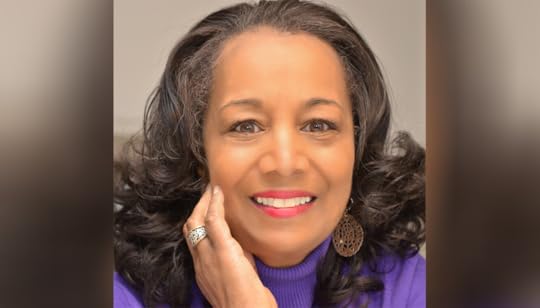 Image courtesy of Patricia Raybon
How do white parents talk with their children about race and racism? Why do white evangelical and Black Christians seem so socially and politically divided? How do our different stories divide us? How can we move towards one another in love even when we disagree? Author Patricia Raybon and Amy Julia discuss these questions and more in this conversation about race, books and reading, parenting, and faith. (Also, check back in later this week for a bonus episode where Amy Julia talks with her kids about what they’ve learned from talking about racism and injustice at home.)
Show Notes
Patricia begins by talking a bit about her history. Go here to learn more about her writings and career in journalism and as a professor of journalism.
We talk about my essay series about racial healing on my Christianity Today blog and the connection to the shooting of Michael Brown in Ferguson. Patricia wrote an article entitled “A White Cop and a Black Lady” that was published on my CT blog following this essay series.
We mention Brené Brown, Kelli Trujillo, and Howard Thurman.
We talk about mortgage discrimination, economic disparities, and white privilege.
Patricia recommends reading Alex Haley’s book Roots: The Saga of an American Family, as well as Victor Hugo’s Les Miserables.
Patrician mentions an article she wrote entitled “Will We Judge Young Looters or Love Them?” This article has not yet been published, but these Show Notes will be updated when the link is available.
Find Patrica Rabyon online: patriciaraybon.com. She also writes for Our Daily Bread Ministries, DaySpring’s (in)courage, Charles Stanley’s InTouch Ministries, and Christianity Today.
If you would like to read more from Patricia, she recommends starting with My First White Friend, and then reading I Told the Mountain to Move, which is a prequel to Undivided: A Muslim Daughter, Her Christian Mother, Their Path to Peace.
Two additional books that Patricia recommended to me but not mentioned in the podcast are: Born a Crime and Cry, the Beloved Country.
This podcast season is called White Picket Fences, and it is based on my book White Picket Fences: Turning Towards Love in a World Divided by Privilege. Learn more about White Picket Fences! Also check out free RESOURCES to accompany White Picket Fences—action guide, discussion guides—that are designed to help you respond.
To read further with Amy Julia:
Classroom Conversations: To Kill a Mockingbird and the Discussion of Privilege
Trying to Expand Your Bookshelf? Here Are 20 Diverse Books for Kids of All Ages
AJB Recommends: Race and Privilege Resources (books, podcasts, films for all ages)
If you haven’t already, please subscribe to receive regular updates and news. You can also follow me on Facebook , Instagram , and Twitter, and you can subscribe to my Love is Stronger Than Fear podcast and my Reading Small Talk podcast on your favorite podcast platforms.
The post S3 E3 | Our Different Stories Divide Us with Patricia Raybon appeared first on Amy Julia Becker.
June 23, 2020
Five Next Steps Toward Racial Healing
 Image by spukkato from Getty Images
I resisted offering “action items” for white people (like me) who wanted to DO something about injustice and inequity in our nation for a long time. I didn’t want to play into a (false) savior mentality. I didn’t want to pretend that a few action steps could be checked off a list and I/we would be done with the work of racial healing. But I’ve also come to realize that lots of people out there are people like me, people who sincerely want to participate in a lifelong, transformative work towards healing and wholeness. To that end, I wrote about five first steps that helped me begin to understand and respond to injustice in our nation and in my own life. Today I want to offer five next steps for people who want to continue on a journey toward racial healing and justice:
1. Take a class.
 Image by August de Richelieu from Pexels
If you’ve read books, watched videos, and listened to podcasts to help educate yourself, one next step you can take toward racial healing is to connect with other people (in person or online) to discuss what you are learning. In a classroom setting, you’ll be reading as well as listening to teachers and classmates. You’ll have a chance to ask questions. You’ll be forced to reflect more deeply—and sometimes publicly—about what you’ve learned. There are lots of classes out there. The ones that have been most highly and often recommended to me come from The Racial Equity Institute, Be the Bridge, and Arrabon.
2. Give money.
 Image by photosbyhope from Getty Images Pro
Take any economic measure, and white people in general have more stability than people of color. And while we can understand forces other than privilege and racism creating economic differences in individual cases, taken as a whole we see an economic system that has advantaged white people. (I’m not going to go into this whole argument here, but I’ll point out, for instance, that most Black servicemembers during WWII were ineligible for the GI bill, whereas equally poor white servicemembers during WWII were able to benefit from this government program. Those college degrees led to opportunities that led to wealth for generations.) So if you are a white person with even a relative amount of wealth, you can give money to help rectify the wrongs of systemic injustices and take steps towards racial healing.
If you are inclined to give money, there are a few ways to do so that do not contribute to what has been called “toxic charity.” First, you want to do so with humility and love. (I’ve written before about The Problem with “Noblesse Oblige.”) Second, consider giving to nonprofits whose leadership is representative of the people they seek to serve. In other words, give to nonprofits who have people of color in leadership roles when the purpose of the organization is primarily to serve people of color. Third, consider investing in businesses owned by people of color or providing seed money for entrepreneurial ventures led by people of color. (As a supplemental note, you can also consider ways to give of time, networks, and other material goods. If you have a second home, give a black pastor and her family a week of vacation. If you have networks and connections, find a way to give those relationships to those without such access.)
3. Create collaborative spaces.
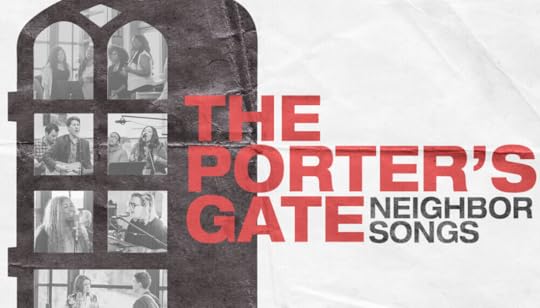 Image from Porter’s Gate
In American life, we often exist in segregated spaces. This is true in our schools, our churches, and our neighborhoods. In recent years, white people have often wanted to invite people of color into their spaces, but the spaces themselves remain white spaces and the “outsiders” to that space know themselves as invited guests. Collaborative spaces provide a way for people who want to build relationships outside of their homogeneous spheres to take steps toward racial healing.
Collaborative spaces come into being when people of disparate social backgrounds join together with a shared purpose or goal. When people of faith from different churches decided to pray together for the healing of their local community. When a diverse array of worship leaders gathered to create an album of worship music. When schoolchildren gather to create works of art together. (David Bailey and I talk a bit about collaborative spaces at the end of our podcast episode.)
4. Attend a protest and/or prayer gathering.
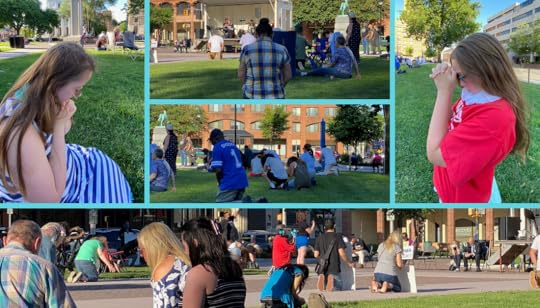 Prayer gathering our family attended
I’ve been writing and thinking about social and racial justice for years now, but I have never attended a protest or public prayer gathering to demonstrate my solidarity with people of color until these past few weeks. I’ve come up with all sorts of reasons why I haven’t participated: that’s not my calling, my presence won’t really make a difference, I don’t have time. But there was also the truth that I was afraid of taking a stand, afraid of appearing too radical, afraid of criticism.
After George Floyd died and protests spread across the country, Peter and I decided to participate in our town’s local protest. We invited our kids to join us. We walked the mile into town and stood alongside hundreds of other mostly white protesters in order to demonstrate our solidarity—our willingness to stand alongside and publicly announce our support—of people of color.
The following week we learned about a prayer gathering—”Standing for Justice. Kneeling in Prayer”—in Waterbury, CT. We again decided to attend this gathering as a family. We knelt in repentance with a diverse group of other Christians. We raised our hands in worship to the words, “You are the waymaker, miracle worker, promise keeper, light in the darkness.” It was humbling, and a little bit uncomfortable, and also a little taste of heaven.
5. Take a pilgrimage.
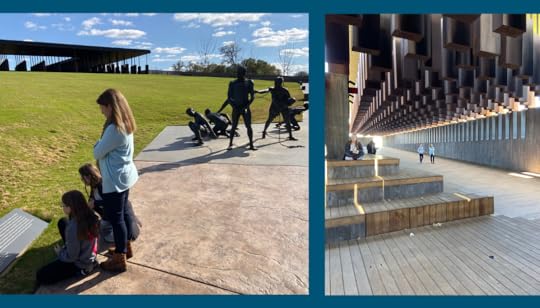 Our family’s Civil Rights tour
Physical spaces across our nation tell our history. Traveling to the places where enslaved people have lived and died, to the sites of Civil Rights marches, to the museums that have curated the stories of people throughout the ages, all help to make history lessons far more personal and memorable.
We had the chance to take our kids on a short trip from the Whitney Plantation outside of New Orleans up to the sites in Montgomery, Selma, and Birmingham, Alabama. I’ve written elsewhere about our personal journey (and I have a suggested 4-day itinerary), and next week I’m going to share some audio reflections from our kids on what this experience meant to them. The short version is that it was a transformative experience that led to us changing the way we give money, the way we interpret news events, and even the way we think about our own local community and history.
You can make your own pilgrimage, as our family did, or look into similar opportunities like Ruby Woo and Sankofa.
I would love to hear what you are learning as you take these next steps with me toward racial healing.
To read further with Amy Julia:
Five First Steps toward Participating in Racial Healing
Hope for Healing: Engaging with the Problem of Privilege
A Week of Protests: Learn, Listen, Lament, and Love
If you haven’t already, please subscribe to receive regular updates and news. You can also follow me on Facebook , Instagram , and Twitter, and you can subscribe to my Love is Stronger Than Fear podcast and my Reading Small Talk podcast on your favorite podcast platforms.
The post Five Next Steps Toward Racial Healing appeared first on Amy Julia Becker.
June 22, 2020
S3 E2 | Living into the Really Real with Micha Boyett
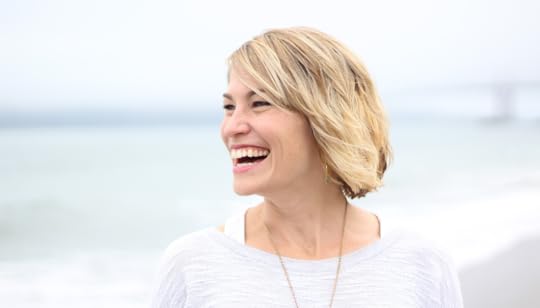 Image courtesy of Micha Boyett
How can we talk about race and disability without conflating the two? How can white, able-bodied, neurotypical people enter into this conversation? What is the difference between “white fragility” and being vulnerable? What is the connection between contemplation and activism? How can we live into the “really real”? Amy Julia talks with author, podcaster, and advocate Micha Boyett today about all these questions and more.
Show Notes
Follow Micha Boyett online:
Website: michaboyett.com/ (she used to blog at Mama:Monk)
Instagram (features Micha’s writing): @michaboyett
Instagram (features life with Micha’s son Ace, who has Down syndrome): @acefaceismyfriend
Facebook: @MichaBoyett
Twitter: @michaboyett
Micha also co-hosts a podcast called The Lucky Few, along with Heather Avis and Mercedes Lara.
In the intro, I mention that Micha is a poet and studied with Mary Karr.
I reference last week’s podcast episode: S3 E1 | Waking Up to Privilege with David Bailey.
We talk about Jean Vanier’s book Becoming Human and the sorrow we felt over the revelation of the sexual abuse perpetrated by Vanier.
We mention Fr. Richard Rohr several times and his phrase “the really real,” as well as how he prays for “one good humiliation a day.”
The concepts of “all lives matter,” “black lives matter,” and gaslighting come up in our conversation. Here’s more info about why “all lives matter” is problematic and some of the warning signs of gaslighting.
We talk about “white fragility,” a concept described in White Fragility by Robin J. DiAngelo. To read more about the differences I see between white fragility and vulnerability, go here.
In talking about the contemplative life, we mention The Rule of St. Benedict.
We end our conversation by mentioning Micah 6:8 from the Bible, and in the conclusion, I tell you about my favorite podcast episode on The Lucky Few: Friendship Pt. 2 with Guest, Melynn Henry
This podcast season is called White Picket Fences, and it is based on my book White Picket Fences: Turning Towards Love in a World Divided by Privilege. Learn more about White Picket Fences! Also check out these free RESOURCES to accompany White Picket Fences—action guide, discussion guides, etc.—that are designed to help you respond to the content in this book.
To read further with Amy Julia:
How Disability Helped Me Understand Privilege | Washington Post
Changing the Game: Explaining Exclusion, Tolerance, Inclusion and Belonging to Fourth Graders (and the rest of us!)
S3 E1 | Waking Up to Privilege with David Bailey
If you haven’t already, please subscribe to receive regular updates and news. You can also follow me on Facebook , Instagram , and Twitter, and you can subscribe to my Love is Stronger Than Fear podcast and my Reading Small Talk podcast on your favorite podcast platforms.
The post S3 E2 | Living into the Really Real with Micha Boyett appeared first on Amy Julia Becker.
June 21, 2020
The Difference Between White Fragility and Vulnerability
 Image from nailiaschwarz via Getty Images
Robin DiAngelo’s book White Fragility has soared to the top of the non-fiction bestseller list. If you haven’t heard of it before, here’s a podcast interview with Jonathan Capehart in which she talks about her work, and here’s a 20-minute video in which she explains it as well. The idea behind “white fragility” is that white people have generally grown up without a sense of racial identity. We think of whiteness as the norm, and so we haven’t had to do the work that other racial/ethnic groups have needed to do to understand our identity in terms of race.
Not only that, but white people have grown up knowing that “racism” is bad, so when ideas like “systemic racism” come up, white people often hear those words as an accusation about their moral status and culpability for social problems. When this lack of consciousness about race and identity is exposed—in conversations about white privilege or racism or the like—white people often feel defensive, brittle, fragile. That defensiveness can easily turn to aggression or withdrawal (fight or flight) and the work of listening, learning, and loving one another gets lost.
White Fragility in My Life
I think there’s a lot of truth in DiAngelo’s work. I’ve experienced that sense of fragility in my own life. For example, when I listened to the Seeing White podcast and I learned about various ways American institutions have written laws and exercised power to benefit white people like me and exclude all others, I felt as though my sense of self (as good, caring, morally upright) could break into pieces.
Or there’s the time when I compared my own experience with Barbie as a young white child to my friend’s experience with Barbie as a young Black child as if they were the same, and then I felt like I needed to apologize for the false equivalence. At that moment, a part of me wanted instead to just withdraw from the relationship and hide. I didn’t grow up understanding the deep history of racism and injustice in America. I didn’t grow up realizing that racism can be subtly, insidiously present even when I thought I had good intentions. It was hard to face my own participation in racism and consider the implications of that reality. DiAngelo’s term “white fragility” aptly applies to me.
Concern with the Term “White Fragility”
But, despite their helpfulness, those words concern me. The words “white fragility” can be lobbed like a weapon against white people who are just starting to consider whether there is any truth to concepts like “systemic racism” and “implicit bias.” It’s easy for anyone who has “woken up” to these social problems and their root causes to feel and show disdain for those who have been sleeping. These people—people like me—might simply be exhibiting classic white fragility. But they also might be experiencing vulnerability. If we confuse the two (white fragility and vulnerability), we will fail to invite white people into the work of racial healing.
Vulnerability
I first thought a lot about vulnerability when our daughter Penny was born and diagnosed with Down syndrome.
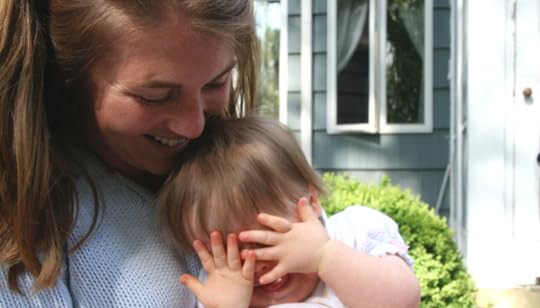
Every baby is vulnerable, but Penny’s disability has made her vulnerability more visible throughout her life. As I began to understand more and more the humanity that Penny and I shared, I began to understand more and more that I too am a vulnerable human being. I just have learned how to hide the vulnerability, even from myself.
At its root, to be vulnerable is to be wound-able. Able to be hurt. Able to be wounded. Able to put down the defenses, the guards, the shield.
Of course, when we raise our shields against the arrows of this world, we also raise our shields against the blessings. When we put down our shields, the arrows may come. But when we are vulnerable, we are not just able to be wounded. We are also able to be loved.
White Fragility Is a Defensive Mechanism
White fragility, ironically, is a form of protection. A defensive mechanism to avoid the vulnerable place of acknowledging the generations of harm from racism. That defensive mechanism avoids acknowledging harm, which means it also avoids asking for help and participating in healing.
White fragility needs to be exposed and shed.
Experiencing Vulnerability
But white people also need places where they can experience vulnerability. White people need to have safe places to process being white. To admit shame and guilt and fear and anger and distrust and hurt and grief and gratitude and confusion and questions. To recognize the ways they have wounded others, and the ways a culture built upon whiteness has wounded them as well. Moreover, white people need to put down the defensive shield of white fragility in order to be able to live into the fullness of their being. White fragility and vulnerability have different destinations. Vulnerability leads us towards our humanity because it allows us to receive and to give love.
For me, going back to my friend Mardi and asking for her forgiveness after I made the Barbie comment was a moment of vulnerability. She could have rejected me or told me I was an insensitive jerk. She could have taken that opportunity to wound me. Instead, she graciously forgave me. Vulnerability opened me up to hurt, but it also opened me up to love.
White Fragility and Vulnerability
In this national moment of reckoning and awakening, as thousands of people read White Fragility and protests continue and more and more people ask, “What can I do?”—let us look for ways to shed our fragility and make space for our vulnerable selves.
Micha Boyett and I talk about vulnerability and fragility in tomorrow’s episode of the White Picket Fences podcast. We also talk about Down syndrome, the really real, and the way contemplation relates to activism. I hope you’ll join us!
To read further with Amy Julia:
How Disability Helped Me Understand Privilege | Washington Post
Changing the Game: Explaining Exclusion, Tolerance, Inclusion and Belonging to Fourth Graders (and the rest of us!)
S3 E1 | Waking Up to Privilege with David Bailey
If you haven’t already, please subscribe to receive regular updates and news. You can also follow me on Facebook , Instagram , and Twitter, and you can subscribe to my Love is Stronger Than Fear podcast and my Reading Small Talk podcast on your favorite podcast platforms.
The post The Difference Between White Fragility and Vulnerability appeared first on Amy Julia Becker.
June 20, 2020
Penny Heads to High School
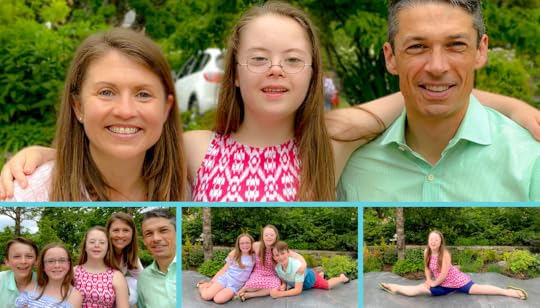
This week we celebrated the end of Penny’s years in middle school with a car parade through campus, a dinner out—for the first time in four months—as a family, and a Zoom gathering with the rest of her class. We celebrated her for her hard work and for the many ways she has grown as a person these past three years. We celebrated her school and her teachers for the many ways they have equipped her for that growth.
Penny and I talked earlier this week about the fact that she has Down syndrome, and I asked her how having Down syndrome affected her. In the past, her automatic answer to that question has been, “It makes me really flexible.” (In other words, I can do the splits, as she chose to demonstrate in this photo!) But this time, she said, “It makes me slower in everything.”
And she didn’t say that as a negative thing, but as a statement of fact. Penny processes information and moves through the world more slowly. If there’s anything Penny has given to me in the past few years it is an appreciation for slowing down, for a deliberate pace, for refusing the frantic effort to accomplish everything now.
There is much to celebrate about this young woman: her kindness and encouragement to others, her delight and optimism, her faith, her love of language, books, and reading, her love for people. And her self-acceptance.
Congratulations, Penny, for three years of growing up into the beautiful gift God made you to be!
To read further with Amy Julia:
First Day of School: Penny Starts Eighth Grade – In Her Own Words
Why I Won’t Tell You What Happened When Penny, Our Daughter with Down Syndrome, Went to the Middle School Dance
In Her Own Words: Penny on Independence and Self-Advocacy
If you haven’t already, please subscribe to receive regular updates and news. You can also follow me on Facebook , Instagram , and Twitter, and you can subscribe to my Love is Stronger Than Fear podcast and my Reading Small Talk podcast on your favorite podcast platforms.
The post Penny Heads to High School appeared first on Amy Julia Becker.
June 18, 2020
I Didn’t Know About Juneteenth…
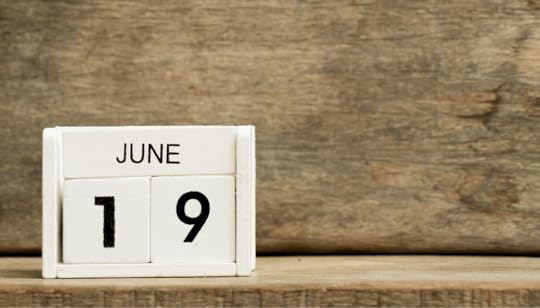 Image by bankrx from Getty Images Pro
I started hearing and learning about Juneteenth a few years ago as a holiday where African Americans celebrated emancipation from slavery. I was a white woman writing about race and privilege and culture, so I tried to pay attention to things like this, but the past few years, Juneteenth still snuck up on me. I would get to this point in June and see posts from various Black friends and social media types, and I would kick myself for forgetting Juneteenth, again.
Learning About Juneteenth
I admit this forgetfulness for two reasons. One, because it is yet another demonstration of the ways in which a traditional white version of American history and celebration is central in my life and in the life of most white people. Learning about Juneteenth—what it commemorates, how it has been celebrated, and why it matters—helps me expand my perspective and stand in support of my fellow Americans.
Two, I admit this because there are still a lot of white people who don’t know what Juneteenth is, and who honestly wonder whether they are just too late to the conversation about race and justice and healing. It’s not too late to learn.
Celebrating Juneteenth
This year, I marked Juneteenth on my calendar ahead of time, but I realized I still didn’t fully understand the holiday. What was it for? Why this day? How was it celebrated?
The origins of the holiday go back to the announcement in Galveston, TX, that slavery had ended. This day—June 19th, 1865—marked the day that the last enslaved people learned that they were free. Because I am not Black, and because I am new to knowing about and understanding this holiday, I am not going to try to explain it here. I do, however, want to point readers to this helpful essay by Brianna Holt about her experience as a child and as an adult celebrating Juneteenth.
She writes:
[Juneteenth celebrations] acted as a reminder that there was a community of people who were rooting for you, supported you and wanted to see you succeed…
Attending a Juneteenth celebration was freeing: I had the freedom to wear my hair however I wanted without judgment, to dress however I wanted without comments and to express myself without microaggressions. All of these freedoms granted to me as a child have molded me into the proud black woman I am now. It’s the one day each year that I’ve been able to exist, unapologetically and unproblematically, in a space surrounded by people who have my growth in their best interest.
I asked a few of my Black friends about their experiences with Juneteenth. Some of them remember huge city-wide celebrations going back decades. Others are only celebrating for the first time this year. Osheta Moore has curated photos of what she calls “black joy” (#blackjoy) on Instagram. I love her vision of this day, this whole week, as a day of celebration even in the midst of ongoing sorrow.
To read further with Amy Julia:
S3 E1 | Waking Up to Privilege
AJB on Privilege
The 1619 Project and True History
If you haven’t already, please subscribe to receive regular updates and news. You can also follow me on Facebook , Instagram , and Twitter, and you can subscribe to my Love is Stronger Than Fear podcast and my Reading Small Talk podcast on your favorite podcast platforms.
The post I Didn’t Know About Juneteenth… appeared first on Amy Julia Becker.
June 16, 2020
Privilege, Monuments, and Healing

Twenty-one years ago, I moved to Monument Avenue, in Richmond, Virginia. The monuments that line the center of this thoroughfare that connects downtown Richmond to the suburbs are huge. Taller than houses. Edifices of concrete and metal with towering men on large horses tell a visual story. These men were leaders of the Confederacy: Stewart, Jackson, Davis, Lee.
Privilege and Monuments
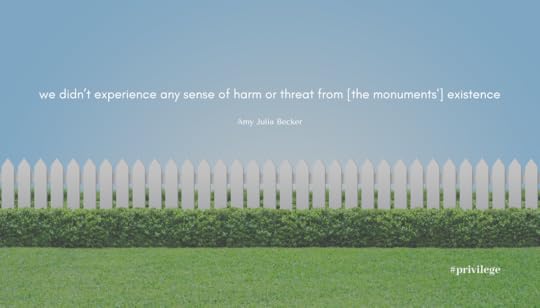
I didn’t think much about them. My husband and I walked in their shadow on our way to church on Sunday morning. We drove past them daily. It wasn’t as though we were in favor of what they represented, but we also didn’t experience any sense of harm or threat from their existence.
We thought it was positive that the city had also erected a monument (which was, now that I think about it, much smaller and more intimate) to Arthur Ashe. We also appreciated the more recent conversations about whether there is any way to put the monuments into a more appropriate historical context.
One attempt Richmond made to address the problem of exclusion the monuments represented was to commission a new monument by Kehinde Wiley. The New Yorker called this new monument an Anti-Confederate image.
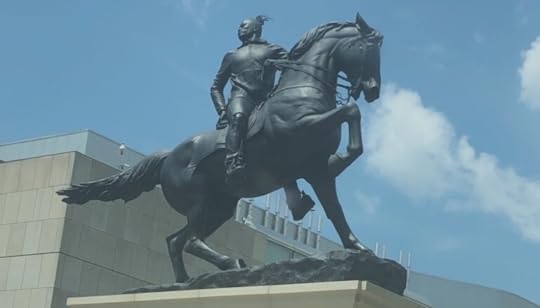
But even once I grew more aware of what those original monuments communicated, and even once I thought they should be removed, it remained abstract for me.
Message of Monuments
Yesterday was the first day of the White Picket Fences season of the Love is Stronger than Fear podcast. In this conversation, I talk with David Bailey about those monuments. David is an African-American man who grew up and still lives in Richmond. To him, the monuments always sent a message. They always represented threat. They always communicated that the city of Richmond was not built for him.
Monuments and Healing
The awesome thing about David, and about so many people like him, is that he sees a way forward that is filled with redemption. He envisions setting those monuments in their proper historical context. He imagines the possibilities for Richmond as a city that exists for the good of the whole population. David runs a ministry, Arrabon, whose name comes from the Greek word that means “foretaste.” He wants to help churches become who they are meant to be, “a foretaste of the kingdom of God,” of the place where healing, love, and welcome bring people together and make us whole.
Tune in to our conversation to hear about the monuments, the unexpected people who are giving us hope right now, and the possibilities for collaborative spaces to bring healing. Listen online here or wherever you get your podcasts!
https://amyjuliabecker.com/wp-content/uploads/2020/06/FB-AJB-S3E1-20200616-1.mp4
To read further with Amy Julia:
Our Four-Day Civil Rights Tour
Civil Rights Tour Itinerary
S3 E1 | Waking Up to Privilege
If you haven’t already, please subscribe to receive regular updates and news. You can also follow me on Facebook , Instagram , and Twitter, and you can subscribe to my Love is Stronger Than Fear podcast and my Reading Small Talk podcast on your favorite podcast platforms.
The post Privilege, Monuments, and Healing appeared first on Amy Julia Becker.
S3 E1 | Waking Up to Privilege with David Bailey
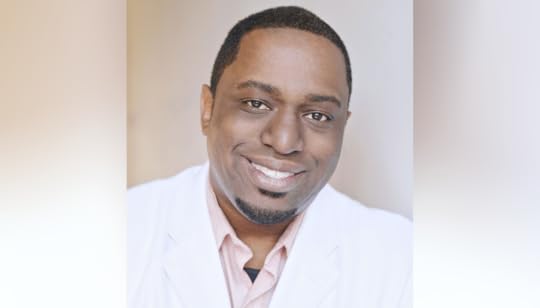 Image courtesy of Arrabon
Race, class, and the kingdom of God all come up in this conversation between Amy Julia and David Bailey, Director of Arrabon, a ministry to help churches become reconciling communities. In this introductory episode for Season 3, David and Amy Julia talk about why white people can feel afraid to enter into conversations about race and privilege, the controversies over Confederate monuments in David’s hometown of Richmond, Virginia, whether this moment of protest and activism will translate into lasting social change, and more.
This is a podcast for restless sleepers. I’m speaking metaphorically, but I’m thinking about the experience of tossing and turning throughout the night, only to find that you then overslept your alarm, and waking up feeling disoriented, already tired, and already late.
Waking Up to Privilege
In the wake of the death of George Floyd, and the thousands of protests across the nation and around the globe, many of us want to wake up to a history of abuse and injustice. And yet, for those of us who have never attended a march for anything, those of us who have never felt afraid of police officers or other people in authority, those of us who have been able to feel peaceful and safe and disconnected from the anger and hurt we see in the news, waking up feels kind of scary and disorienting.
If you are a restless sleeper, you aren’t too late. This is a podcast about waking up to privilege, which I think of as “unearned social advantages.” You’re invited to enter into a conversation over the next few weeks and months in which we talk about race, class, disability, identity, faith, and privilege in a way that welcomes all people—no matter what time you arrive—to the table.
David Bailey
Today I’m talking with my friend David Bailey, director of Arrabon, a ministry that helps churches become reconciling communities by better understanding race, class, and the kingdom of God. I hope you’ll join us. Listen via the player above or on your favorite podcast platform.
S3 E1 Show Notes
David references a lot of rich material in this show, so hopefully I’ll get it all recorded in one place. First, there are some references to the Bible. David talks about the foundational Judeo-Christian narratives found in Genesis 1 and Genesis 3, and he also makes reference to the “Jericho Road” and the “Good Samaritan” which can be found in Luke 10:25-37.
Next, we discuss current events, including monuments along Monument Avenue in Richmond, Virginia, Rush Limbaugh’s visit to The Breakfast Club, and Ezra Klein and Ta-Nehisi Coates’ conversation about non-violence and policing.
We also talk about The Porter’s Gate project, a collaborative worship album David helped put together (and invited me to attend) with a disparate group of Christian worship artists. This is an album about justice and mercy, all taken from Scripture.
Here’s the essay about Christian anger that David mentions he wrote recently for Christianity Today.
Finally, to learn more about David’s work, go to arrabon.com. There are great resources for churches and individuals who want to become reconciling communities. David also directs Urban Doxology, whose most recent release is “God Not Guns.”
Also, I mention that I define privilege as “unearned social advantages.” To learn more about this idea, read What Privilege Is, and What Privilege is Not.
David M. Bailey is a public theologian and culture maker who believes the church should lead by example in effective cross-cultural engagement and practices in reconciliation. He’s the founder and executive director of Arrabon; an organization that builds reconciling communities in the midst of a digital, diverse, and divided world. David is an active speaker, consultant and strategist for many national organizations about cultural intelligence and culture-making. He is the co-author of the Race, Class, and the Kingdom of God Study Series. David is the executive producer of documentary 11am: Hope for America’s Most Segregated Hour and the Urban Doxology Project. He’s rooted at East End Fellowship and serves on the preaching team. David’s greatest honor in life is to be married to his wonderful and beautiful wife, Joy. [bio courtesy of Arrobon]
To read further with Amy Julia:
Using My Head, My Heart, and My Hands to Consider Defunding the Police
Injustice: Reflect, Relate, Respond
Announcing Head, Heart, Hands
If you haven’t already, please subscribe to receive regular updates and news. You can also follow me on Facebook , Instagram , and Twitter, and you can subscribe to my Love is Stronger Than Fear podcast and my Reading Small Talk podcast on your favorite podcast platforms.
The post S3 E1 | Waking Up to Privilege with David Bailey appeared first on Amy Julia Becker.