Amy Julia Becker's Blog, page 116
July 14, 2020
What Should We Do About Segregated Sunday Mornings?
 Image by Balazs Toth from Canva
The Rev. Dr. Martin Luther King Jr. famously said that 11 a.m. on Sunday morning was “the most segregated hour of the week” across the United States. Fifty years after the Civil Rights movement, most churches (and many other public spaces) remain functionally segregated along racial lines. Why is this so? And what, if anything, should be done about segregated Sunday mornings?
Segregated Sunday Mornings—History
I asked my guest on this week’s podcast, Natasha Sistrunk Robinson, to reflect on this question. She pointed out that the reason our churches remain functionally segregated begins with history: white Christians kicked Black Christians out of their worship communities.
She also noted that our churches reflect our society. If churches want to see more racial integration, we will need to reckon with a history of discrimination as well as the current social situation of functional segregation throughout American life. Our segregated Sunday morning worship services reflect our history, and they reflect our contemporary social divisions.
Place of Safety and Dignity
But Natasha also points out what many other Black leaders have emphasized: the Black church is an important place of safety, dignity, and belonging for many Black people. In a world that historically and even now denigrates and devalues people of color, Black church communities offer a place where Black men and women are treated with the honor they deserve, where they are invited to love and serve others out of their full humanity, in all their giftedness.
Many predominantly and historically white congregations are taking a self-critical look right now. The temptation for white Christians is to invite Black Christians to assimilate into white communities. To say, “You know those walls we erected so many years ago? They’re gone now. You can come back!”
The Problems with Welcome
The problem with this type of welcome is multi-faceted. One, it fails to reckon with the sin, the abuse and pain, of many years of exclusion.
Two, it fails to honor the integrity of the Black church and the ways God has used Black church communities as pillars of justice and truth in our national story.
Three, it continues to assume that the white Christian experience is the center, the only way to do church. As Natasha remarks on the show, if she knows how to sing a Christian hymn in five different ways, any multiethnic church she’s ever been a part of has sung that hymn according to the way a white church would typically sing it. Whiteness, even in multiethnic spaces, often becomes the norm.
The Problems with Functional Segregation
At the same time, the functional segregation of our churches poses multiple problems. The early church was a multiethnic church. The New Testament letters demonstrate a central commitment to breaking down social dividing walls of Jew and Gentile, slave and free, male and female. And this wasn’t just an idealized vision.
The Book of Acts and the lists of people at the end of Paul’s letters document the names of countless men and women who testify to the multicultural nature of the early church. The New Testament presents a vision of God’s people from different nations coming together in common purpose and common worship. It is a far cry from America’s churches on Sunday mornings.
So where do we go from here?
Unity and Diversity
To move from our current place of functional segregation on Sunday mornings to this vision of unity amidst diversity will be a long, slow process of healing. It will begin (and continue) with white Christians acknowledging, lamenting, and repenting of their complicity in racist practices.
It will continue with building trust between diverse communities. It will involve relationships that extend beyond the boundaries of church buildings. It will involve cost—financial, physical, emotional cost—as white Christians give up power and status. And it will involve putting our spiritual imagination to work as a vehicle of hope for a future powered by love.
Practical Steps
On a very practical level, if you want to participate in a more diverse local church community, you can learn about your own church’s history and research other churches both within your denomination and in your local area to begin or continue a work of repentance and to see if one or more of them might be places to connect across social dividing lines. You can pray—and invite others to pray—for this type of connection. And you can propose specific collaborative actions—like a joint Bible study, service project, or prayer gathering.
We aren’t trying to return to something that once existed in the American church and was harmed along the way. We also aren’t trying to reject the goodness that has taken place amidst the broken vessels and broken institutions of American Christianity up to this point.
We are instead called to imagine something new, church communities that better reflect the multifaceted face of God, the multiethnic Body of Christ.
To go further with Amy Julia:
Love is Stronger Than Fear | Season 3—White Picket Fences
A Model for Race and Justice Events
S3 E4 | Challenging Comfort, Acknowledging Power, and Using Privilege with Natasha Robinson
AJB on Racial Healing
If you haven’t already, please subscribe to receive regular updates and news. You can also follow me on Facebook , Instagram , and Twitter, and you can subscribe to my Love is Stronger Than Fear podcast and my Reading Small Talk podcast on your favorite podcast platforms.
The post What Should We Do About Segregated Sunday Mornings? appeared first on Amy Julia Becker.


July 13, 2020
S3 E4 | Challenging Comfort, Acknowledging Power, and Using Privilege with Natasha Robinson
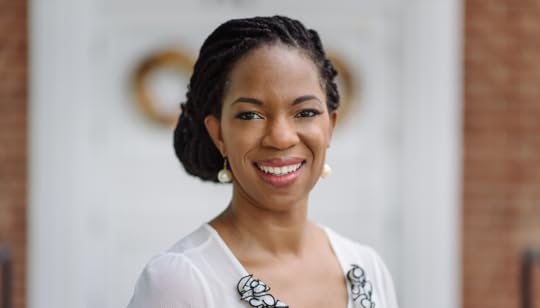 Image courtesy of Natasha Robinson
Natasha Sistrunk Robinson began her career as a United States Marine and later worked in the Department of Homeland Security. She is now an author, speaker, and leader. Today we talk about her most recent book, A Sojourner’s Truth: Choosing Freedom and Courage in a Divided World. We also cover the topic of patriotism, whether or not churches should seek to become multicultural spaces, and how white people can name both the injustices and the goodness within their lives and use it to serve God’s good purposes. We talk about comfort, power, and privilege in connection to racism.
SHOW NOTES:
Patricia Raybon wrote the forward for both Natasha’s book, A Sojourner’s Truth, and for my book, White Picket Fences. We talk about the times we have been co-speakers at events—here’s an example.
Natasha mentions the Orangeburg Massacre, which occurred in her hometown. We talk about monuments in the South, which you can read more about here.
We talk about several books and people: Divided by Faith, James Baldwin, and Frederick Douglass’ What to the Slave is the Fourth of July. Natasha also references an article she wrote for Christianity Today, and we mention Acts 17 and the book of Exodus from the Bible, as well as research from Pew Research Center and this article on Ed Stetzer’s Christianity Today blog: Social Justice, Critical Race Theory, Marxism, and Biblical Ethics.
Natasha and I talk about supporting organizations led by people of color. Read more about this here.
Follow Natasha online: www.natashasrobinson.com; Facebook; Instagram; Twitter
T3 Leadership Solutions, Inc
Leadership LINKS, Inc
To go further with Amy Julia:
Love is Stronger Than Fear | Season 3—White Picket Fences
A Model for Race and Justice Events
AJB on Privilege
If you haven’t already, please subscribe to receive regular updates and news. You can also follow me on Facebook , Instagram , and Twitter, and you can subscribe to my Love is Stronger Than Fear podcast and my Reading Small Talk podcast on your favorite podcast platforms.
The post S3 E4 | Challenging Comfort, Acknowledging Power, and Using Privilege with Natasha Robinson appeared first on Amy Julia Becker.
S3 E4 | Challenging Comfort, Acknowledging Power, and Using Privilege
Image courtesy of Natasha Robinson
Natasha Sistrunk Robinson began her career as a United States Marine and later worked in the Department of Homeland Security. She is now an author, speaker, and leader. Today we talk about her most recent book, A Sojourner’s Truth: Choosing Freedom and Courage in a Divided World. We also cover the topic of patriotism, whether or not churches should seek to become multicultural spaces, and how white people can name both the injustices and the goodness within their lives and use it to serve God’s good purposes. We talk about comfort, power, and privilege in connection to racism.
SHOW NOTES:
Patricia Raybon wrote the forward for both Natasha’s book, A Sojourner’s Truth, and for my book, White Picket Fences. We talk about the times we have been co-speakers at events—here’s an example.
Natasha mentions the Orangeburg Massacre, which occurred in her hometown. We talk about monuments in the South, which you can read more about here.
We talk about several books and people: Divided by Faith, James Baldwin, and Frederick Douglass’ What to the Slave is the Fourth of July. Natasha also references an article she wrote for Christianity Today, and we mention Acts 17 and the book of Exodus from the Bible, as well as research from Pew Research Center and this article on Ed Stetzer’s Christianity Today blog: Social Justice, Critical Race Theory, Marxism, and Biblical Ethics.
Natasha and I talk about supporting organizations led by people of color. Read more about this here.
Follow Natasha online: www.natashasrobinson.com; Facebook; Instagram; Twitter
T3 Leadership Solutions, Inc
Leadership LINKS, Inc
To go further with Amy Julia:
Love is Stronger Than Fear | Season 3—White Picket Fences
A Model for Race and Justice Events
AJB on Privilege
If you haven’t already, please subscribe to receive regular updates and news. You can also follow me on Facebook , Instagram , and Twitter, and you can subscribe to my Love is Stronger Than Fear podcast and my Reading Small Talk podcast on your favorite podcast platforms.
The post S3 E4 | Challenging Comfort, Acknowledging Power, and Using Privilege appeared first on Amy Julia Becker.
July 9, 2020
Continuing the Conversation: Penny and Black Lives Matter
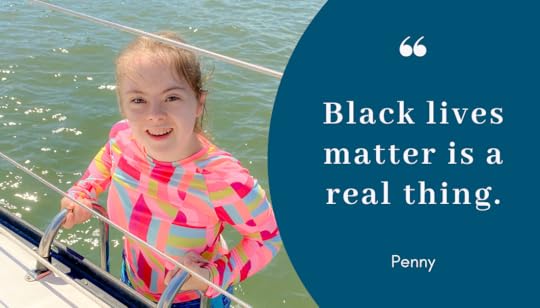
In this week’s podcast, I interviewed all three of our kids about their experiences over the past few years of reading diverse books, traveling to museums and historic sites in Civil Rights’ history, and learning most recently about the death of George Floyd. When I asked Penny why our family attended a local protest and, later, a local prayer gathering, she said, “Because black lives matter is a real thing.”
Penny doesn’t know all the details of the controversies over the phrase “black lives matter.” She did read a book (which she also talks about in this episode) in which a young Black girl has to decide whether to identify with the Black Lives Matter movement or not. But Penny doesn’t know people critique it as a Marxist, atheistic slogan. She doesn’t know people counter with the words “all lives matter.” She just states a simple truth: Black lives matter is a real thing.
Black Lives Matter
For centuries, Black lives have been devalued in America. First, those lives were literally devalued, written into law as ⅗ of a human person. Later, they were devalued in both demeaning attitudes and actions of the majority white culture, and they were devalued through laws that prevented access to democracy, education, wealth creation, and work. And lest we think that devaluing happened way back then, we can still see the gaping wage and wealth gap between Black communities and white communities, even when controlling for education.
It is a bitter irony that George Floyd died over a twenty-dollar bill.
What was George Floyd’s life worth?
For the purposes of making health care decisions, insurance companies value individual human lives at one million dollars.
Spiritually speaking, human lives hold intrinsic and immeasurable value.
Proclaiming Truth
George Floyd’s life mattered. All Black lives matter. And white Americans have, again and again and again, demonstrated how little we believe those words.
And so we stand up and proclaim Black Lives Matter. If proclaiming this truth aligns me with an imperfect movement, so be it. The fact that this truth needs to be proclaimed is an indictment of American democracy and of any semblance of a Judeo-Christian ethic that claims to value all lives.
So, I’m with Penny. Black lives matter is a real thing. A real truth that calls us to protest injustice and pray for active peace. (You can listen to this episode here or wherever you get your podcasts.)
For an explanation of how white evangelicals have responded to the Black Lives Matter movement, here is an article from the Atlantic about the reasons pastors see it as controversial, and here is an article from Christianity Today about the relationship between the Black Lives Matter movement and Marxism.
https://amyjuliabecker.com/wp-content/uploads/2020/07/TW-AJB-S3Bonus-video.mp4
To read further with Amy Julia and for more resources to talk with kids about race:
How Disability Helped Me Understand Privilege | Washington Post
AJB Recommends: Books, Films, and Podcasts for All Ages About Race and Privilege
S3 E3 | Our Different Stories Divide Us with Patricia Raybon
Civil Rights Tour Itinerary
If you haven’t already, please subscribe to receive regular updates and news. You can also follow me on Facebook , Instagram , and Twitter, and you can subscribe to my Love is Stronger Than Fear podcast and my Reading Small Talk podcast on your favorite podcast platforms.
The post Continuing the Conversation: Penny and Black Lives Matter appeared first on Amy Julia Becker.
Continuing the Conversation: William and Growing Up to Be a White Man
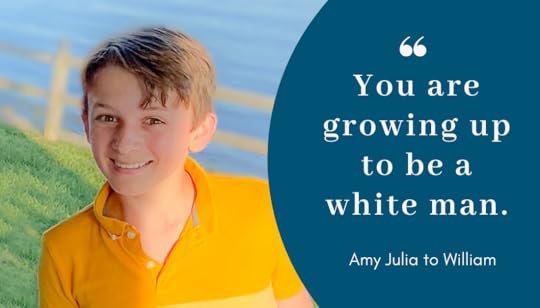
In this week’s podcast, I interviewed all three of our kids about their experiences over the past few years of reading diverse books, traveling to museums and historic sites in Civil Rights’ history, and learning most recently about the death of George Floyd. In this conversation, I said to William, “You are growing up to be a white man.”
I hear from my friends of color regularly that they think about the dangers of raising a boy with black or brown skin. My friend Niro, who is Sri Lankan, talks about how she intentionally dresses her son in clothes that look “preppy”, not because she likes the style but because she thinks those clothes will protect him. Black parents share regularly about needing to have “the talk” with their children, and especially their sons, “the talk” about how to interact safely with authority, how to stay alive in a society that reads Black as dangerous. Natasha Sistrunk Robinson writes about the time her brother rode home from school with a white girl and she berated him for putting his life at risk in the encounter.
For white parents of white sons, what do we need to say to our children when it comes to understanding their own identity in a racialized society? How do I convey to William the power he has been unjustly given by our society so that he can recognize that power, and, with humility and love, use it for good and share it with others?
I do not have talking points for this one. I just know I want to expose him to injustice, introduce him to diverse people in real life and in history, talk honestly about what it means to acknowledge our privilege and the harm it can perpetuate, and affirm the inherent goodness and giftedness that he brings to the world. I believe those conversations are the beginning of a path he could walk his whole life long, a path of hope and healing.
In the podcast this week, William and I talk about books that have shaped his understanding of race in America, how he responded to attending a Sunday morning service at a Black Baptist church in Birmingham, Alabama, and what it means for him to be growing up as a white man. You can listen to this episode here or wherever you get your podcasts.
https://amyjuliabecker.com/wp-content/uploads/2020/07/TW-AJB-S3Bonus-video-1.mp4
To read further with Amy Julia and for more resources to talk with kids about race:
William’s Book Recommendations for Martin Luther King Jr. Day
AJB Recommends: Books, Films, and Podcasts for All Ages About Race and Privilege
S3 E3 | Our Different Stories Divide Us with Patricia Raybon
Civil Rights Tour Itinerary
If you haven’t already, please subscribe to receive regular updates and news. You can also follow me on Facebook , Instagram , and Twitter, and you can subscribe to my Love is Stronger Than Fear podcast and my Reading Small Talk podcast on your favorite podcast platforms.
The post Continuing the Conversation: William and Growing Up to Be a White Man appeared first on Amy Julia Becker.
July 8, 2020
Continuing the Conversation: Marilee and Ruby Bridges

In this week’s podcast, I interviewed all three of our kids about their experiences over the past few years of reading diverse books, traveling to museums and historic sites in Civil Rights’ history, and learning most recently about the death of George Floyd. Marilee first learned the story of Ruby Bridges when she was six years old. She experienced a sense of connection through their shared age.
Marilee could imagine what it was like for a little girl to walk to school and endure the hateful shouts of men and women who did not want her in their children’s classrooms.
Through a straightforward story, Marilee learned about the hateful attitudes and actions of white people toward Ruby. She also learned about Ruby’s resilience and how “she prayed for all the haters.” She didn’t learn the history of the African American church. She didn’t learn about the high rates of Bible reading among Black Christians or the way the Gospel has sustained many within the Black community throughout the centuries. She didn’t learn about Gospel music or Negro spirituals. But Ruby Bridges’ story invited her to begin to understand a whole history of faith, a whole history of resilience, and a whole history of discrimination.
As Marilee points out when we talk about this story in this week’s podcast, Ruby Bridges is still alive. She’s in her 60s now, younger than Marilee’s grandparents. She made history when she integrated her elementary school in New Orleans. She also gave my daughter a glimpse of what a community of faith can provide in the face of danger, threat, and abuse. Her story offers a way to imagine hope in the face of hardship, love in the face of fear, and grace in the face of violence.
https://amyjuliabecker.com/wp-content/uploads/2020/07/Copy-of-FB-AJB-S3Bonus-video-1.mp4
To read further with Amy Julia and for more resources to talk with kids about race and privilege:
Love is Stronger Than Fear | Season 3—White Picket Fences
AJB Recommends: Books, Films, and Podcasts for All Ages About Race and Privilege
S3 E3 | Our Different Stories Divide Us with Patricia Raybon
Civil Rights Tour Itinerary
If you haven’t already, please subscribe to receive regular updates and news. You can also follow me on Facebook , Instagram , and Twitter, and you can subscribe to my Love is Stronger Than Fear podcast and my Reading Small Talk podcast on your favorite podcast platforms.
The post Continuing the Conversation: Marilee and Ruby Bridges appeared first on Amy Julia Becker.
July 6, 2020
S3 Bonus | Talking with Our Kids About Race, Justice, Love, and Privilege

How do we talk with kids about race, justice, and privilege? In this follow up to last week’s interview with Patricia Raybon, Amy Julia interviews her three children. Penny, William, and Marilee all talk about what they’ve learned from books, museums, and the recent protests after the death of George Floyd.
SHOW NOTES
As I talk with our kids about race and justice, we begin our conversation by talking about our family’s Civil Rights tour in 2019. Here’s a description of our four-day tour, as well as a recommended itinerary, which includes the Whitney Plantation that Marilee mentions, as well as the Legacy Museum, which is where we saw the jars of dirt that Penny talks about.
We talk about the death of George Floyd.
Penny mentions the song Way Maker.
All three children talk about books/resources they recommend for learning more about race and privilege. Go here for links to the resources they mention (as well as many more resources!). In relation to this conversation and reading books from different perspectives, Marilee mentions the Little House series.
This podcast season is called White Picket Fences, and it is based on my book White Picket Fences: Turning Towards Love in a World Divided by Privilege. Learn more about White Picket Fences! Also check out free RESOURCES to accompany White Picket Fences—action guide, discussion guides—that are designed to help you respond. Learn more about my writing and speaking at amyjuliabecker.com.
To read further with Amy Julia and for more resources to talk with kids about race:
Love is Stronger Than Fear | Season 3—White Picket Fences
AJB Recommends: Books, Films, and Podcasts for All Ages About Race and Privilege
S3 E3 | Our Different Stories Divide Us with Patricia Raybon
Civil Rights Tour Itinerary
If you haven’t already, please subscribe to receive regular updates and news. You can also follow me on Facebook , Instagram , and Twitter, and you can subscribe to my Love is Stronger Than Fear podcast and my Reading Small Talk podcast on your favorite podcast platforms.
The post S3 Bonus | Talking with Our Kids About Race, Justice, Love, and Privilege appeared first on Amy Julia Becker.
Christianity Today Essays: Racial Healing Within the Church

Six years ago, I decided to run a series of essays on my blog at Christianity Today about racial reconciliation and healing within the church. I commissioned essays from writers like Trillia Newbell and Leroy Barber. I asked friends of ours who had participated in the establishment of a multiethnic church to write about that experience. Black, brown, and white people all responded with their stories.
Then, in the midst of those Christianity Today essays, Michael Brown was shot and killed in the streets of Ferguson, Missouri. This series of reflections took on new urgency, new meaning. They catapulted me into an interview with Civil Rights activist John Perkins, and I extended the series to include the voices of people like Christena Cleveland and Dominique Gilliard. In light of our current moment of reckoning with the legacy of racial injustice in America, I wanted to draw attention again to that series of posts which you can access here.
To read further with Amy Julia:
A Black Lady Talks to a White Cop | Christianity Today essay
AJB on Racial Healing
Penny’s Prayer for Church During COVID-19 Crisis
If you haven’t already, please subscribe to receive regular updates and news. You can also follow me on Facebook , Instagram , and Twitter, and you can subscribe to my Love is Stronger Than Fear podcast and my Reading Small Talk podcast on your favorite podcast platforms.
The post Christianity Today Essays: Racial Healing Within the Church appeared first on Amy Julia Becker.
July 3, 2020
AJB Recommends: Reckoning with Our American Identity
 Image by goceris from Canva Pro
As Americans across the nation gather (or don’t gather, as we are in a time of global pandemic!) to celebrate the 4th of July, many of us are reflecting on the complicated origins of American identity. There’s the idealistic vision of liberty and justice for all within our founding documents that frame our national identity. There’s the brutal reality not only that many Americans were denied both liberty and justice in the past but also that many Americans still experience exclusion from liberty and justice.
This 4th of July, I join many of my fellow white Americans in continuing to learn from amazing people writing and speaking and teaching and offering wisdom on all these topics. I’ve chosen four articles and three podcast episodes that have been helpful to me in the past few weeks as I continue to reckon with our American identity:
ARTICLES:
City Structures
A depiction from The Atlantic of how and why our cities are structured in such a way to divide racial groups from one another: Urban inequality didn’t happen by accident.
Critique of White Fragility
And then there’s this critique of Robin DiAngelo’s White Fragility by Matt Taibbi. As much as I appreciate DiAngelo’s work in naming the problem of white fragility, I also appreciate Taibbi’s work to recognize the danger that comes if we reduce our humanity to our racial identities.
Anti-Racism
And this one from Medium, written back in 2017 but all-too-relevant today, for white people who are starting to learn about anti-racism. The part that struck me most is about how white people can use their racial privilege for good:
When utilized properly, [racial privilege] can do real damage to the White Supremacist system — and it’s a weapon that POC do not have. You have access to people and places we don’t. Your actions against racism carry less risk.
You can ask your office why there are no managers of color and while you might get a dirty look and a little resentment, you probably won’t get fired. You can be the “real Americans” that politicians court. You can talk to fellow white people about why the water in Flint and Standing Rock matters, without being dismissed as someone obsessed with playing “the race card.” You can ask cops why they stopped that black man without getting shot. You can ask a school principal why they only teach black history one month a year and why they pretty much never teach the history of any other minority group in the U.S. You can explain to your white friends and neighbors why their focus on “black on black crime” is inherently racist. You can share articles and books written by people of color with your friends who normally only accept education from people who look like them. You can help ensure that the comfortable all-white enclaves that white people can retreat to when they need a break from “identity politics” are not so comfortable. You can actually persuade, guilt, and annoy your friends into caring about what happens to us. You can make a measurable impact in the fight against racism if you are willing to take on the uncomfortable truths of your privilege.
Social Justice and Marxism
This is a thorough and really helpful response to the critique that Christians shouldn’t participate in “social justice” or “black lives matter” movements because they are Marxist.
PODCAST EPISODES:
Unlocking Us with Brené Brown
I read Austin Channing Brown’s I’m Still Here when it first came out. After listening to her gracious and challenging words in conversation with Brené Brown about anti-racism, I’m inclined to read it again.
The Ezra Klein Show
Did you know that Thomas Jefferson didn’t write the Declaration of Independence alone? That John Adams and Benjamin Franklin, who both opposed slavery, also had major roles in drafting those words connected to our American identity? That’s just one of the helpful pieces of new information I picked up from listening to Danielle Allen talk with Ezra Klein about the “radicalism of the American revolution.”
NPR Fresh Air
And I just love Lin-Manuel Miranda, so I’m going to mention (again), his interview with Terry Gross about the new film production of Hamilton that aired on Disney Plus last night. Another great way to consider our American identity.
To read further with Amy Julia:
More AJB Recommends
The Radical Generosity of Lin-Manuel Miranda’s Hamilton
AJB Recommends: Books, Podcasts, and Films About Racism and Privilege
If you haven’t already, please subscribe to receive regular updates and news. You can also follow me on Facebook , Instagram , and Twitter, and you can subscribe to my Love is Stronger Than Fear podcast and my Reading Small Talk podcast on your favorite podcast platforms.
The post AJB Recommends: Reckoning with Our American Identity appeared first on Amy Julia Becker.
July 2, 2020
The Radical Generosity of Lin-Manuel Miranda’s Hamilton
Tonight at 7pm EST, Disney Plus will release a film version of the megahit Broadway musical Hamilton. Our whole family will gather in our playroom (with popcorn, candy, and anything else Marilee can come up with to make it feel like a movie theater) to watch it together. This film couldn’t come at a better time. Between a global pandemic keeping us out of movie theaters, social unrest and civic demonstrations bringing up questions about the founding of our nation and the underpinnings of our democracy, and the 4th of July weekend, the themes of this show and its radical generosity are more relevant than ever. The conversations it provokes are more necessary than ever.
Hamilton: A Quick Primer
A quick primer: Hamilton is a hip-hop musical created by Lin-Manuel Miranda and based upon Ron Chernow’s 2005 biography of Alexander Hamilton. It almost sounds absurd. What is a hip-hop musical anyway? And how could there be a musical about the Revolutionary War? And how could it be appealing to schoolchildren and grandparents alike?
This show is serious and you do learn a lot from watching it and there are layers upon layers of meaning, but it is also fun and witty and funny.
One more thing. Hamilton is radically generous. Radically inclusive. Radically hopeful about who we are and where we could be headed as a nation.
A Diverse Cast
With one exception, every single cast member is a person of color. George Washington. Thomas Jefferson. Aaron Burr. And, of course, Alexander Hamilton (played in the original cast, including this film, by Miranda himself, the son of immigrants from Puerto Rico).
What does it mean to reimagine the American story as a story written and enacted by a diverse cast of women and men? The show challenges the notion that the glories of American democracy could only have come into being through the brilliance of white men of European descent. It pokes fun and shines light on the tensions inherent within these declarers of independence, these leaders of a revolution of freedom. Jefferson penned lofty words about human equality even as he enslaved hundreds of people, including his own children. Washington fought for freedom even as he retired to his own forced labor camp in the hills of Virginia. Hamilton opposed the institution of slavery, but he also compromised with the southern landowners in order to get the banking system he wanted for the nation.
The story of these men’s lives is messy. They are so very human. So capable of greatness. So capable of degradation and denial. By casting them all as people of color, Miranda subverts the notion that all the good things from American democracy rest on the shoulders of white men. But even as he is subverting a historical narrative that rests upon a group of white men founding a great nation, he is not denying or dismissing the contributions of those men.
By writing this story through the genre of hip-hop, Miranda brings it into the 21st century through a storytelling method created by people of color. He makes the notion of human freedom and revolution current and relevant. As if, go figure, there is still work to be done to make this story complete. By writing this show as an immigrant’s story—Alexander Hamilton arrived in the colonies as a teenager from Barbados—he subverts the notion that immigration is a threat to American greatness. (“Immigrants, we get the job done!” is one of the best lines in the show.)
Radical Generosity
Hamilton stands in contrast to the work of the New York Times’ 1619 Project, which envisions the true founding of this nation as enslavement, not freedom. Rather, Hamilton extends a hand of radical generosity to the white men, including the white men who enslaved people, who wrote the foundational documents for American democracy. In this telling, these men are humanized, not demonized. They are morally complex. They are even beloved, in the midst of their impurity, their complicity, their guilt.
Which brings us to tonight’s showing. To the as-yet-unrealized promise of those words penned centuries ago, that idea that all humans are created equal, that all deserve the dignity of life. Of Liberty. And of the pursuit of happiness.
We are invited to watch this subversive, generous retelling of America’s founding and enter into the story anew.
 Family trip to see Hamilton
As a final note, we are Hamilton geeks here in our household. Peter and I got to see the show on Broadway in its first season. We took our children as a Christmas present a few years back when it came to Hartford. Peter taught an entire senior elective on it. If you want to dive deep into the genius and generosity of this show, this book contains fabulous essays as well as fascinating notes by Miranda himself on the allusions he makes throughout the show to everything from My Fair Lady to Tupac. And this recent interview between Miranda and Terry Gross is fun to listen to as well.
To read further with Amy Julia:
Why I Disagree with The National Review about the 1619 Project
I Didn’t Know About Juneteenth…
AJB Recommends
If you haven’t already, please subscribe to receive regular updates and news. You can also follow me on Facebook , Instagram , and Twitter, and you can subscribe to my Love is Stronger Than Fear podcast and my Reading Small Talk podcast on your favorite podcast platforms.
The post The Radical Generosity of Lin-Manuel Miranda’s Hamilton appeared first on Amy Julia Becker.