Amy Julia Becker's Blog, page 115
August 17, 2020
S3 E8 | Equality, Equity, and Education with Subira Gordon
 Image courtesy of ConnCAN
What is the difference between equality and equity and how does that affect education? Subira Gordan, executive director of ConnCAN, talks with Amy Julia about the lack of equity in education, the effects this has on opportunities for children, the role of antiracism in education, and the questions we can ask to move our communities toward affirming antiracist policies.
SHOW NOTES
Subira Gordan is the executive director of ConnCAN, an organization that is “leading a movement to improve education outcomes for Connecticut’s kids…to ensure that all kids in The Constitution State have access to a high-quality education, regardless of their address.” Connect with ConnCAN at @ConnCAN on Facebook and @conncan on Twitter.
“Your ZIP code should not determine your future.”
“Education is a great equalizer.”
“Everyone wants to keep what they have, and they don’t recognize that what they have was made possible by government policies.”
“We should be talking about how as a community we can affirm antiracist policies.”
On the Podcast:
Episode with Patricia Raybon
Research about Connecticut schools provided by ConnCAN (more info about equality, equity, and education)
White Picket Fences, Season 3 of Love is Stronger Than Fear, is based on my book White Picket Fences. Check out free RESOURCES—action guide, discussion guides—that are designed to help you respond. Learn more about my writing and speaking at amyjuliabecker.com.
To go further with Amy Julia:
Love is Stronger Than Fear | Season 3—White Picket Fences
Announcing Head, Heart, Hands: An Action Guide
AJB Recommends: Books, Podcasts, and Films About Racism and Privilege
If you haven’t already, please subscribe to receive regular updates and news. You can also follow me on Facebook , Instagram , and Twitter, and you can subscribe to my Love is Stronger Than Fear podcast on your favorite podcast platforms.
The post S3 E8 | Equality, Equity, and Education with Subira Gordon appeared first on Amy Julia Becker.


August 12, 2020
Love for a Thousand Generations
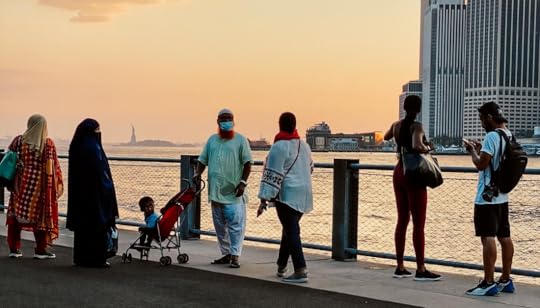 Portrait of the American experiment | Vacation 2020
“For a thousand generations…” There’s this phrase that comes up a lot in the Old Testament. It’s a promise, or maybe, even more, a declaration—that God’s love will endure for a thousand generations. Yes, it is meant to be a symbolic number—it means God’s love abounds for more generations than you can bring to count or imagine.
But still, I did the math the other day. A conservative estimate of a thousand generations is 20,000 years. We are a few thousand years into that promise. We have millennia to go. God’s love is not in danger of running out in the course of our lifetimes, or our children’s lifetimes, or our children’s children’s lifetimes.
In the midst of the swirl of pandemic fears and social unrest and sadness and anger and pain, I am leaning into the promise that God’s love is the constant, enduring truth that runs underneath all the rest.
To go further with Amy Julia:
How to Receive God’s Love
When God Looks at Us with Love
The Foundation is Shaking: Coronavirus and Living in Love {Ep. 103}
If you haven’t already, please subscribe to receive regular updates and news. You can also follow me on Facebook , Instagram , and Twitter, and you can subscribe to my Love is Stronger Than Fear podcast on your favorite podcast platforms.
The post Love for a Thousand Generations appeared first on Amy Julia Becker.
August 10, 2020
S3 E7 | Conversations About Whiteness with Cara Meredith
 Image courtesy of Cara Meredith
How does “color blindness” actually enable blindness to racism and the system of whiteness? Cara Meredith, author of The Color of Life: A Journey Toward Love and Racial Justice, joins Amy Julia to talk about racism in the north, the harm of “color blindness,” the tenants of whiteness, and creating space to process whiteness in a way that’s “not all about me.”
SHOW NOTES
Cara Meredith is a writer, speaker, and coach. Connect with her online: carameredith.com, @carameredithwrites on Facebook and Instagram, and @caramac54 on Twitter.
“Love helped me see color”
“Blindness [to racism] continues to exist.”
The celebration of who we are as humans – it’s not just our personalities but it is also what we look like on the outside and where we’ve come from.”
“Whiteness is the construct. Whiteness is all of those things that keep some people in and some people out…Whiteness is the system that we benefit from.”
Continuing the Conversation:
Read: The Color of Life (100% of proceeds from book sales through Cara’s website will go to The Swan Dreams Project)
On the Podcast:
James Meredith
Oregon’s racist history
The Warmth of Other Suns
Jemar Tisby and The Color of Compromise
the Samaritan woman in John 4
So You Want to Talk About Race
Be the Bridge and Latasha Morrison
Austin Channing Brown and I’m Still Here
Robin DiAngelo and her episode on Krista Tippett’s podcast
White Picket Fences, Season 3 of Love is Stronger Than Fear, is based on my book White Picket Fences. Check out free RESOURCES—action guide, discussion guides—that are designed to help you respond. Learn more about my writing and speaking at amyjuliabecker.com.
To go further with Amy Julia:
Love is Stronger Than Fear | Season 3—White Picket Fences
Announcing Head, Heart, Hands: An Action Guide
The Difference Between White Fragility and Vulnerability
If you haven’t already, please subscribe to receive regular updates and news. You can also follow me on Facebook , Instagram , and Twitter, and you can subscribe to my Love is Stronger Than Fear podcast and my Reading Small Talk podcast on your favorite podcast platforms.
The post S3 E7 | Conversations About Whiteness with Cara Meredith appeared first on Amy Julia Becker.
S3 E7 | Conversations about Whiteness with Cara Meredith
Image courtesy of Cara Meredith
How does “color blindness” actually enable blindness to racism and the system of whiteness? Cara Meredith, author of The Color of Life: A Journey Toward Love and Racial Justice, joins Amy Julia to talk about racism in the north, the harm of “color blindness,” the tenants of whiteness, and creating space to process whiteness in a way that’s “not all about me.”
SHOW NOTES
Cara Meredith is a writer, speaker, and coach. Connect with her online: carameredith.com, @carameredithwrites on Facebook and Instagram, and @caramac54 on Twitter.
“Love helped me see color”
“Blindness [to racism] continues to exist.”
The celebration of who we are as humans – it’s not just our personalities but it is also what we look like on the outside and where we’ve come from.”
“Whiteness is the construct. Whiteness is all of those things that keep some people in and some people out…Whiteness is the system that we benefit from.”
Continuing the Conversation:
Read: The Color of Life (100% of proceeds from book sales through Cara’s website will go to The Swan Dreams Project)
On the Podcast:
James Meredith
Oregon’s racist history
The Warmth of Other Suns
Jemar Tisby and The Color of Compromise
the Samaritan woman in John 4
So You Want to Talk About Race
Be the Bridge and Latasha Morrison
Austin Channing Brown and I’m Still Here
Robin DiAngelo and her episode on Krista Tippett’s podcast
White Picket Fences, Season 3 of Love is Stronger Than Fear, is based on my book White Picket Fences. Check out free RESOURCES—action guide, discussion guides—that are designed to help you respond. Learn more about my writing and speaking at amyjuliabecker.com.
To go further with Amy Julia:
Love is Stronger Than Fear | Season 3—White Picket Fences
Announcing Head, Heart, Hands: An Action Guide
The Difference Between White Fragility and Vulnerability
If you haven’t already, please subscribe to receive regular updates and news. You can also follow me on Facebook , Instagram , and Twitter, and you can subscribe to my Love is Stronger Than Fear podcast and my Reading Small Talk podcast on your favorite podcast platforms.
The post S3 E7 | Conversations about Whiteness with Cara Meredith appeared first on Amy Julia Becker.
July 31, 2020
AJB Recommends: Breaking Ground
 Image courtesy of breakingground.us
There’s an embarrassment of riches on the new website Breaking Ground. This site has a threefold purpose:
to learn from the past
to see what is being revealed in the present
to imagine redemptive possibilities for the future
My big news is that the Love is Stronger Than Fear podcast is now co-sponsored by Breaking Ground, so you can find it on their website here.
While you’re checking that out, there’s so much more to find—video interviews with Walter Brueggemann, articles by Natasha Sistrunk Robinson, N. T. Wright, Mark Noll, and so many more, as well as Breaking Ground’s new podcast, The Whole Person Revolution.
To go further with Amy Julia:
More AJB Recommends
A Week of Protests: Learn, Listen, Lament, and Love
Uncomfortable, Beautiful, Disruptive Change
If you haven’t already, please subscribe to receive regular updates and news. You can also follow me on Facebook , Instagram , and Twitter, and you can subscribe to my Love is Stronger Than Fear podcast and my Reading Small Talk podcast on your favorite podcast platforms.
The post AJB Recommends: Breaking Ground appeared first on Amy Julia Becker.
July 27, 2020
S3 E6 | Now Is the Time for Justice with Jemar Tisby
 Image courtesy of Jemar Tisby
How do we find hope, particularly in white American churches, when our history and identity is intertwined with racism? How does knowing who we were—and who we are—help us move toward who we want to become? I talk with historian Jemar Tisby, New York Times bestselling author of The Color of Compromise, about racism’s past and present reality, his sense of a growing darkness, why now is the time for justice, and also where he sees hope.
SHOW NOTES
Jemar Tisby is a Christian, historian, speaker, a New York Times best-selling author, and co-host of the Pass the Mic podcast. Connect with him online: jemartisby.com, Facebook, Instagram, and Twitter.
“We can’t heal what we don’t reveal.”
“Not knowing our history or misremembering our history—telling part of the story—is actually an assault on our identity. We don’t get the full picture of who we are, whether as a corporate body as a church or as individuals.”
“Our own racial history as a church is about our identity. It’s about how we were, who we are, who we want to become.”
“If you want to talk about threats to Christianity, particularly in the United States, we need to talk about Christian nationalism.”
Time for Justice—Continuing the Conversation:
Read: The Color of Compromise
Join this book study: The Color of Compromise book study group on Facebook
Watch: The Color of Compromise Video Teaching Series
Pre-Order Jemar’s new book: How to Fight Racism: Courageous Christianity and the Journey Toward Racial Justice
Learn more: The Witness, BCC—a black Christian collective that engages issues of religion, race, justice, and culture from a biblical perspective
Give: The Witness Foundation—identifying, training, and funding the next generation of Black Christian leaders
IN THE PODCAST:
Scripture references: 10 Commandments, King David, Ephesians 3, Paul on Mars Hill
Individuals, books, and concepts:
Rev. Dr. Martin Luther King Jr.’s Letter from Birmingham Jail
John Lewis
Jesus and the Disinherited by Howard Thurman
Ta-Nehisi Coates
John Meacham’s The Soul of America: The Battle for Our Better Angels
Bree Newsome
Critical Race Theory
White Picket Fences, Season 3 of Love is Stronger Than Fear, is based on my book White Picket Fences. Check out free RESOURCES—action guide, discussion guides—that are designed to help you respond. Learn more about my writing and speaking at amyjuliabecker.com.
To go further with Amy Julia:
Love is Stronger Than Fear | Season 3—White Picket Fences
Announcing Head, Heart, Hands: An Action Guide
Steps Toward Racial Healing
If you haven’t already, please subscribe to receive regular updates and news. You can also follow me on Facebook , Instagram , and Twitter, and you can subscribe to my Love is Stronger Than Fear podcast and my Reading Small Talk podcast on your favorite podcast platforms.
The post S3 E6 | Now Is the Time for Justice with Jemar Tisby appeared first on Amy Julia Becker.
July 23, 2020
In Honor of John Lewis
 Photo from our family’s 2019 Civil Rights Tour
Civil Rights activist and longtime Congressional Representative John Lewis died earlier this week. His life was a testimony to the power of love. For anyone who is not familiar with his history as a non-violent protester throughout the 1960s and his continued commitment to non-violent means towards political change, I want to recommend taking some time this weekend to learn about him and from him:
John Lewis: Walking with the Wind
I wrote a long reflection a few months back on Lewis’ memoir, Walking with the Wind. To sum it up:
Lewis critiques this nation with its history of injustice and brutality against people of color at the same time as he upholds the ideals of this nation and pursues justice and peace through political action. He upholds the beauty and truth of the founding ideals of the United States of America even as he insists that these ideals have not been realized and the struggle does and must continue. Faith in the relentless love of God undergirds both his realistic critique of structural injustice and his hope for a better future.
You can read those thoughts in full here.
John Lewis: March
Lewis also authored a graphic novel trilogy about his experience marching for justice throughout the South during the 1960s. Our son William read those books, and he says:
The March series is a series of graphic novels written by congressman John Lewis of Georgia. He describes in these books what it was like to be a young man in the south during the civil rights movement, He was a strong Civil Rights activist and also led many of the important marches during the movement. I think that this would be a great book for middle schoolers. It is not a particularly hard read, but the content is intense.
Read William’s book recommendations for Martin Luther King Jr. Day.
John Lewis on Podcasts
ON BEING
I’ve also appreciated hearing John Lewis speak about his perspective in recent years. His commitment to putting love into action sustained him throughout his service to our nation, as he talks about here with Krista Tippett.
CAPE UP
Lewis also talked very recently with Jonathan Capehart about the recent demonstrations. I’m so glad he lived to see his legacy in action.
THE DAILY
Finally, The Daily podcast has a reflection on Lewis’ legacy in which Brent Staples talks about how to him, as a young Black man, John Lewis’ non-violent activism was incomprehensible. Staples goes on to explain how he came to understand the subversive and healing power of non-violence.
John Lewis and the Power of Love
I am grateful for the many ways John Lewis lived out his words through his actions and for the ways he testified to the power of love to bring about justice without vengeance, and to bring healing to our entire society.
To go further with Amy Julia:
Our Civil Rights Tour
AJB Recommends: Books, Podcasts, and Movies About Racism and Privilege
Continuing the Conversation: Marilee and Ruby Bridges
If you haven’t already, please subscribe to receive regular updates and news. You can also follow me on Facebook , Instagram , and Twitter, and you can subscribe to my Love is Stronger Than Fear podcast and my Reading Small Talk podcast on your favorite podcast platforms.
Briefly mention here: Our Four-Day Civil Rights Tour
The post In Honor of John Lewis appeared first on Amy Julia Becker.
July 22, 2020
Forgiveness, Racial Healing, and Justice
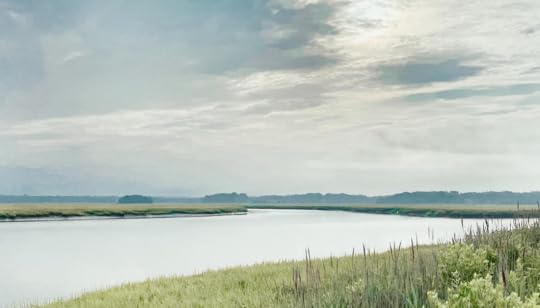
What role does forgiveness play in the work of racial healing and justice?
On my podcast this week, I am replaying an interview with my friend Niro Feliciano. This conversation first appeared on her podcast, All Things Life. One question Niro asked is about the role of forgiveness when it comes to racial healing. I haven’t talked or written much about forgiveness before, so I wanted to share an edited version of those thoughts:
Niro: I notice in the church that we talk a lot about forgiveness first. I think we’re all called to forgive as people of faith. But can you talk a little bit about why forgiveness doesn’t come first in this process [of healing]?
Amy Julia: Finding ourselves in need of forgiveness— whether for our implicit participation in unjust and racist systems or in overt things that we have done that have harmed other people—brings us to a place of humility. I even think it brings us to a place of helplessness.
Asking for forgiveness involves lament, confession, repentance. It means saying, “Something has gone really, really wrong here, and I’ve been a part of it. I want to reckon with it and acknowledge the harm of it.”
Then we wait. Forgiveness may or not come. And even when forgiveness is offered, that doesn’t mean that reconciliation happens. It’s like we’ve accrued a debt with someone, and if they forgive us the debt is wiped away. Receiving forgiveness gets us back to zero. But it doesn’t put us in the black. After forgiveness, there’s the work of repair and the possibility of reconciliation. That’s a long road.
We can feel confident that we have been given forgiveness from God, and it is a gift of God that we are able to forgive one another as human beings. But even God’s forgiveness doesn’t mean that now our relationships among humans are totally restored. It doesn’t mean that we say, “I trust you, and we’re going to be great.” There’s still work to do in order to repair and to build trust and to listen and to learn and to grow.
One of the things I so admire about our daughter Marilee is her honesty. There have been times when I have truly messed up, and I’ve said to her, “I’m very sorry. Will you forgive me?” And she responds, “No. I’m hurt. I’m not ready to forgive you.”
I appreciate her honesty because, if someone asks me for forgiveness, I always say, “Yes,” as if, “Oh my gosh, it would be wrong if I didn’t forgive you.” I don’t own how I really feel. I don’t go through the hard emotional and spiritual work of forgiveness. I just do what I think the “right thing” is to do. Marilee’s honest response is “I’m sitting in this hurt for awhile, and I’m mad at you because you shouldn’t have done that.” I hope she’s learning grace and forgiveness along the way, but I appreciate her unwillingness to forgive because of her honesty there.
And I think that for a lot of us—who are white Christians in particular—acknowledging pain means sitting in the discomfort and uncertainty of those broken relationships. It means pleading with God to come and help us do the work by the Spirit of Jesus to actually repair and heal.
Niro: I think, like you said, that first piece is just acknowledging that there is a wound—understanding what that wound looks like, maybe where it came from. And your example with Marilee reminds me of when I’m in the office and I’m facilitating sessions either between a parent and a child or a couple, and one person describes a situation and how they were hurt in that situation. And the other person says, “Well, I’m sorry.” That response is not effective until that person understands what they’ve done to hurt the other person and why they need to be sorry for it.
Amy Julia: Right. Until you have a more complete understanding of the picture, you can say, “Sorry,” but still not understand what you’re apologizing for. And then the apology becomes a bandaid. You’re more likely to cause hurt again or participate in harm again unless you really understand how it evolved to be the situation it was. I think that it’s so important, as people of faith, that we understand that process—that we understand the process to get to the healing, to get to the repair—and what has to come before it.
{Bryan Stevenson, author of Just Mercy and founder of the Equal Justice Initiative, speaks with power and grace about the need for truth telling as a first step towards confession, repentance, forgiveness, and repair in the most recent episode of the Ezra Klein Show.}
To hear more of this interview, go here.
To go further with Amy Julia:
Love is Stronger Than Fear | Season 3—White Picket Fences
Five First Steps toward Participating in Racial Healing
Five Next Steps Toward Racial Healing
If you haven’t already, please subscribe to receive regular updates and news. You can also follow me on Facebook , Instagram , and Twitter, and you can subscribe to my Love is Stronger Than Fear podcast and my Reading Small Talk podcast on your favorite podcast platforms.
The post Forgiveness, Racial Healing, and Justice appeared first on Amy Julia Becker.
July 20, 2020
S3 E5 | Why I Wrote White Picket Fences
 Left image courtesy of Niro Feliciano
When it comes to the enduring legacy of racism, what place is there for forgiveness, humility, and healing? On today’s episode, Amy Julia’s friend Niro Feliciano interviews her about how she came to write White Picket Fences and what she has learned in talking about social divisions over the past few years. {This episode originally aired on Niro’s podcast—All Things Life.}
SHOW NOTES
In the interview we mention that White Picket Fences was sold out on Amazon…it is now back in stock!
Niro Feliciano is a certified cognitive therapist and is the co-founder of a multi-specialty mental health group—Integrative Counseling and Wellness Group in Wilton, CT. Follow Niro at nirofeliciano.com, on Facebook at Niro Feliciano, The Incidental Therapist, and on Instagram at @niro_feliciano.
We talk about Rev. Dr. Martin Luther King Jr.’s “beloved community,” which you can read more about here, and we talk about how Black authors topped the New York Times bestseller list.
We also discuss talking to children about racism, privilege, and current events, which you can learn more about from my interview with Patricia Raybon and my interview with our children.
We also talk about the shooting of Philando Castile, as well as Head, Heart, Hands, which is an action guide to accompany White Picket Fences, and our family’s Civil Rights tour.
Finally, we mention two Bible passages: Micah 6:8 and Isaiah 20.
This podcast season is called White Picket Fences, and it is based on my book White Picket Fences: Turning Towards Love in a World Divided by Privilege. Learn more about White Picket Fences! Also check out free RESOURCES to accompany White Picket Fences—action guide, discussion guides—that are designed to help you respond. Learn more about my writing and speaking at amyjuliabecker.com.
https://amyjuliabecker.com/wp-content/uploads/2020/07/Untitled-Project-Made-by-Headliner.mp4
To go further with Amy Julia:
Love is Stronger Than Fear | Season 3—White Picket Fences
Announcing Head, Heart, Hands: An Action Guide
AJB on Privilege
If you haven’t already, please subscribe to receive regular updates and news. You can also follow me on Facebook , Instagram , and Twitter, and you can subscribe to my Love is Stronger Than Fear podcast and my Reading Small Talk podcast on your favorite podcast platforms.
The post S3 E5 | Why I Wrote White Picket Fences appeared first on Amy Julia Becker.
July 16, 2020
AJB Recommends: Resources About Antiracism, the Enneagram, and Church in the 1960s
 Image by Redphotographer from Getty Images Pro
#Blacklivesmatter. Cancel culture. Free speech. Antiracism. Marxism. Classical liberalism. Democracy.
These are the ideas, words, themes that have been swirling in my brain for the past few weeks. Is Antiracism and Critical Race Theory really just thinly-veiled Marxism? Is it anti-democratic and nihilistic? Is it in and of itself racist, as John McWhorter has written? On the other side, is anything that critiques antiracism automatically racist? Is American democracy so flawed it cannot be redeemed?
The Debate
For the most part, I’m hearing/reading the antiracist/white fragility/#blacklivesmatter movement pitted against the ideals of classical liberalism and democracy, as if one or the other of these ideologies is the only right and true way to view the world. The oppositional nature of the debate obscures the value that each system of thinking brings, and it negates conversation about another way forward that incorporates the areas of agreement between the two “sides” and considers the flaws of both and moves towards building something new.
If you, like me, are trying to understand what is at stake as we consider who we want to be as an American people, here are some of the articles and podcasts I recommend:
AJB Recommends
Nature of Antiracist Conversations
Although I thought he did too little to consider what it would mean to reform classical liberalism, Andrew Sullivan’s Is There Room for Debate? still offered a helpful critique of the totalizing nature of antiracist conversations.
Free Speech and Cancel Culture
I learned a lot from listening to Ezra Klein and Yascha Mounk discuss free speech and the recent letter published in Harper’s Magazine decrying the “cancel culture” of shame that can inhibit that same freedom.
Enneagram
The other podcast I’ll recommend from this week has nothing to do—at least not directly—with antiracism or classical liberalism. It’s Suzanne Stabile and Russ Hudson talking about the virtues and passions of each number of the Enneagram. This conversation is one of the more helpful I’ve heard, in terms of spiritual formation, in understanding myself and other people through the lens of the Enneagram.
Thoughtful Fiction
I’m also reading The Dearly Beloved by Cara Wall, which is a novel set in New York City in the 1960s which follows two pastors and their wives as they consider questions of faith and activism and love and hope. It’s really great for anyone who enjoys thoughtful fiction.
To go further with Amy Julia:
More AJB Recommends
What Should We Do About Segregated Sunday Mornings?
Continuing the Conversation: Penny and Black Lives Matter
If you haven’t already, please subscribe to receive regular updates and news. You can also follow me on Facebook , Instagram , and Twitter, and you can subscribe to my Love is Stronger Than Fear podcast and my Reading Small Talk podcast on your favorite podcast platforms.
The post AJB Recommends: Resources About Antiracism, the Enneagram, and Church in the 1960s appeared first on Amy Julia Becker.