Amy Julia Becker's Blog, page 114
September 4, 2020
Willliam Recommends: Books About Racial Injustice for Middle Schoolers
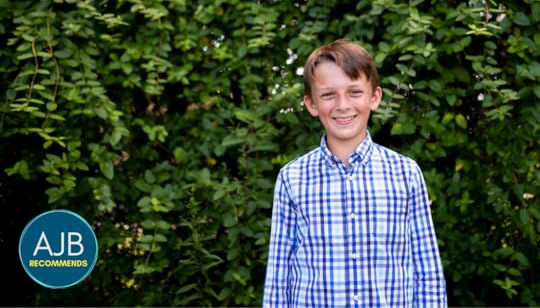
Anyone looking for great books for middle schoolers that address issues of racial injustice? I asked William to share a few recommendations for books for middle schoolers from his summer reading.
(I’ll add that I have read “Roll of Thunder” and “On the Come Up” and loved them both, so these count as my book recommendations too!)
Enjoy—three book recommendations for middle schoolers in three minutes!
To go further with Amy Julia:
More AJB Recommends
Reading Small Talk: Behind-the-Scenes
AJB Recommends: Books, Podcasts, and Films About Racism and Privilege
If you haven’t already, please subscribe to receive regular updates and news. You can also follow me on Facebook , Instagram , and Twitter, and you can subscribe to my Love is Stronger Than Fear podcast on your favorite podcast platforms.
The post Willliam Recommends: Books About Racial Injustice for Middle Schoolers appeared first on Amy Julia Becker.


September 1, 2020
Finding Freedom From the Condemnation of Comparison

A few weeks ago, I found myself in a swirl of self-righteousness and self-condemnation and comparison. It happened like this. I was heading into my sister’s wedding, and I started thinking about how I would look. I noticed that the tea I have been drinking in copious amounts every morning plus the lack of appointments at our dentist’s office had led to brown stains on my teeth. I noticed that the snacks and wine and less-than-regular exercise had led to a few extra pounds around my middle. My kids pointed out the gray strands of hair that have started to poke through.
Comparison: Outward Appearances and Achievements
Then there was my assessment of my work. For years, I’ve struggled with how to balance family and household concerns and a calling to write and teach and speak. I’ve criticized myself for not getting enough work done. At times, I’ve hurt myself and my family by pushing too hard. In this pandemic season, it’s been an even greater challenge. Do I abandon my kids to their screens and work on a chapter of a new book? Will I ever write an essay worth publishing again?
So I criticize myself, and then I look at people who seem to be doing what I wish I could pull off. I look at people who are fitter, more polished, more accomplished, more devoted.
I compare based on our outward appearances and achievements.
Comparison: Jealousy and Judgment
And here’s what happens: jealousy and judgment. I either think I’m doing “better” (Sure, I don’t make any money, but at least my kids are behaving themselves…) or I think I’m doing “worse” (I wish I could work like that, look like that, be like that). Either way—jealousy or judgment—I’m demeaning myself and another person. Either way—and I often pull off the feat of both jealousy and judgment in the same breath towards the same person—I am creating distance between me and another human being.
I don’t want to live in these types of comparisons.
I don’t want to live in jealousy and judgment.
On this week’s episode of Love is Stronger than Fear, Niro Feliciano and I talk about the insidious nature of comparisons and how we increasingly live in a “comparison culture” (see minute 23 and following of this episode for more conversation on this). If I root my identity in my achievements, it will lead to judgment and jealousy. It will lead to self-righteousness and self-loathing. It will lead to distanced or broken relationships. It will lead to anxiety and despair.
But there is another way to live.
An Identity in Love
I can also root my identity in the love of God. I can find my nourishment in my belovedness that is independent of status or success. And when I do that, I don’t need to compare myself to the people around me. When someone is in need, instead of judgment, I can show compassion. When someone is succeeding, instead of jealousy, I can celebrate their gifts and accomplishments.
An identity in achievement leads to judgment and jealousy.
An identity in love leads to compassion and celebration.
Love stops the spiral of self-doubt and self-righteousness. Love offers peace and connection and joy. May we all have eyes to see ourselves—and everyone we encounter—through the lens of love.
To go further with Amy Julia:
Anxiety, Affluence, and Identity with Niro Feliciano
How Love Brings Power in the Midst of Powerlessness {Ep 109}
How to Receive God’s Love
If you haven’t already, please subscribe to receive regular updates and news. You can also follow me on Facebook , Instagram , and Twitter, and you can subscribe to my Love is Stronger Than Fear podcast on your favorite podcast platforms.
The post Finding Freedom From the Condemnation of Comparison appeared first on Amy Julia Becker.
Anxiety, Affluence, and Identity with Niro Feliciano

In an achievement-oriented culture, how do we risk vulnerability in order to move toward personal and racial healing? Cognitive therapist Niro Feliciano talks with Amy Julia about the complexities of privilege, race and identity, affluence and anxiety, and the hurt and the hope found within communities of faith.
SHOW NOTES:
Niro Feliciano is a certified cognitive therapist and co-founder of a multi-specialty mental health group in Connecticut where she treats anxiety in adults and adolescents. Connect with Niro: nirofeliciano.com, her All Things Life podcast, @niro_feliciano on Instagram, and Niro Feliciano, The Incidental Therapist on Facebook.
“Race is a part of my identity and it is so much a part of my relationships.”
“Affluence contributes to…anxiety and depression.”
“Identity and value is so linked to accomplishment.”
“Starting in the home, we have to validate our families and our kids for who they are and not what they do. We can’t constantly be focused on the achievement.”
“I am sure about Jesus. When we say Christianity and the Church has not always been inclusive, my feeling is—Jesus always has been.”
“Be compassionate towards yourself. Forgive yourself.”
On the Podcast:
Podcast episodes with Niro: Super Bowl episode and White Picket Fences episode
Niro’s podcast: All Things Life
“The Autobiography of an Ex-Colored Man” by James Weldon Johnson
“Why Are All the Black Kids Sitting Together in the Cafeteria?: And Other Conversations About Race” by Beverly Tatum
“Caste: The Origins of Discontents” by Isabel Wilkerson
Niro’s blog post on ridgefieldmom.com
Thank you to Breaking Ground, the co-host for this podcast.
White Picket Fences, Season 3 of Love is Stronger Than Fear, is based on my book “White Picket Fences,” and today we are talking about chapter 7. Check out free RESOURCES—action guide, discussion guides—that are designed to help you respond. Learn more about my writing and speaking at amyjuliabecker.com.
To go further with Amy Julia:
Love is Stronger Than Fear | Season 3—White Picket Fences
AJB Recommends: Books, Podcasts, and Films About Racism and Privilege
S3 E9 | How Jesus Overcomes the Barrier of Wealth with Marlena Graves
If you haven’t already, please subscribe to receive regular updates and news. You can also follow me on Facebook , Instagram , and Twitter, and you can subscribe to my Love is Stronger Than Fear podcast on your favorite podcast platforms.
The post Anxiety, Affluence, and Identity with Niro Feliciano appeared first on Amy Julia Becker.
August 27, 2020
AJB Recommends: The Best of What I Read, Watched, and Listened To on Vacation

I took 10 days of vacation at the beginning of August, and I had a chance to read and listen and watch a lot. Here are some podcasts, books, articles, and films worth finding:
PODCASTS

Nice White Parents is a five-part series on the history of integration (and segregation) of one school in New York City. This is a really thorough but concise look at the role white parents play in our public school systems, including the way white parents contribute to ongoing segregation within schools. If you can’t listen to the whole series (though I highly recommend it), try episodes 1 and 5. (Runners up, as always, include the Ezra Klein show, Kate Bowler’s interview with Ray Hinton, who was exonerated and released after nearly thirty years on death row, and especially this episode of Strengthening the Soul of Your Leadership with Ruth Haley Barton.)
FILM
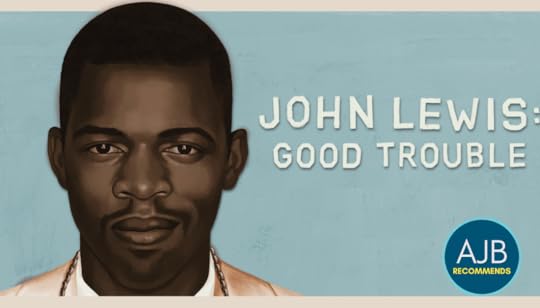
Peter and I watched the documentary “John Lewis: Good Trouble,” the story of Congressman John Lewis from his years of activism as a young leader in the Civil Rights movement in that 1960s to his faithful service in Congress for decades. It’s a great way to learn about Lewis himself, but it also offers a way to consider the legacy of the 1960s, the intersection of activism and politics, and the reasons to continue to have hope for our democracy. (Runner up is “Just Mercy,” but I figure more people have already heard of that one…)
ARTICLE
I’m still thinking about this article by Malcolm Gladwell about God’s power and how when we understand that God’s power is different than human power, it will change us from the inside out. He tells stories of people who forgive the unforgivable, act with courage and hope rather than fear, and how they experienced the “weapons of the spirit” as more powerful than the weapons of this world.
NON-FICTION BOOKS

I spent most of vacation with two non-fiction books at my side: “How to Be an Antiracist” by Ibram X. Kendi and “The Second Mountain” by David Brooks. I haven’t finished Brooks’ yet, but I think it’s his best book yet, and it offers a compelling case for people on the career-and-achievement ladder to step off it and into a different space of community-and-calling. I think I’ll write more in a separate post about Kendi’s book (Peter has borrowed it for now, so I don’t have it at hand as I type). For now, I’ll say it is an important and challenging book in thinking through what racism is and what it takes to be actively opposed to racist policies. I was challenged by this book. I disagree with parts of his argument. I’m grateful to have read it. (I also read this short critique of “White Fragility” by George Yancey, and Tim Keller’s helpful summary and critique of social justice theory from a Christian perspective.)
NOVELS

Finally, I can recommend two novels: “The Leavers,” by Lisa Ko, a story of a mother and son separated and the American immigration system. I thought the white parents were oversimplified, but I cared about the characters, the book is really well-written, and I certainly wanted to know what would happen. And “The Guest Book,” about an old white family with a summer house in Maine uncovering secrets and sadnesses from generations past and reckoning with who they are for the present and the future. It invites questions about whether I—as a white American who has grown up with my own family summer house even as I read this book—am willing to let go of the “benefits” of my heritage. And it invites me to wonder how much I lose by insisting on holding on to the past.
What have been your favorite reads, listens, and watches this summer?
To go further with Amy Julia:
More AJB Recommends
AJB Recommends: Resources About Antiracism, the Enneagram, and Church in the 1960s
The Difference Between White Fragility and Vulnerability
If you haven’t already, please subscribe to receive regular updates and news. You can also follow me on Facebook , Instagram , and Twitter, and you can subscribe to my Love is Stronger Than Fear podcast on your favorite podcast platforms.
The post AJB Recommends: The Best of What I Read, Watched, and Listened To on Vacation appeared first on Amy Julia Becker.
August 26, 2020
Anxiety and the Peace of God
 Vacation 2020
I spent a few hours awake in the middle of the night. It was the first time in a long time that anxiety pushed aside peace and dripped into my heart, as if whatever had been keeping it at bay all summer had sprung a leak. Soon I was flooded with doubts and fears—what if the kids don’t actually go back to school next week? What if I can’t meet those deadlines? What if I can’t keep up with email? What if I fall behind in everything, again?
Anxiety or Peace
I made my way back into a restless sleep in the early morning, and when I woke up I felt like I had a choice. Anxiety or peace. I could allow the anxiety to energize my day. I could try to take control over the tasks and to do’s and push to conquer. Or I could relinquish control and plans and productivity. I could receive the day as a gift. My circumstances weren’t changing. But my attitude toward them would lead in two different directions.
Anxiety and Fear
Later that morning, with the choice still hanging in the balance, I took Penny for her annual visit to the ear doctor. She has a well of painful memories that carry her into that office. She’s had tubes placed in her ears five or six times, and fluid suctioned out of them on multiple occasions, and tubes pulled out, so she associates the ear doctor with pain even though it has been two years since the last hard visit.
We sat together, and she took my hand, and she said, “Can we do our prayer breaths please?” We breathed in peace. We exhaled all the worry. We breathed in the promise of God’s presence. We breathed out our fears and anxieties.
The Violence of Anxiety and the Peace of God
This all got me thinking about how peace is both the opposite of violence and the opposite of anxiety. Which then got me thinking that maybe violence and anxiety are related to each other. Maybe anxiety is a type of violence against our soul, and the peace of God stands guard, according to Paul’s letter to the Philippians, to protect us from that violence.
The reasons I feel anxiety aren’t going to change any time soon. But I can, again and again and again, ask God to guard my heart and my mind so that I can walk through each day in peace.
To go further with Amy Julia:
What I Learned When I Tried to Stop Drinking So Much Wine: Peace and Overcoming Anxiety
How Observing Sabbath Frees Us From Anxiety
A Three-Minute Invitation to Peace
If you haven’t already, please subscribe to receive regular updates and news. You can also follow me on Facebook , Instagram , and Twitter, and you can subscribe to my Love is Stronger Than Fear podcast on your favorite podcast platforms.
The post Anxiety and the Peace of God appeared first on Amy Julia Becker.
August 25, 2020
Four Spiritual Practices That Help Social Justice Stay Grounded in Love
As individual human beings, the scope of the brokenness in our society is impossible to comprehend, much less to address. It is easy to get overwhelmed. Without an abundance of love, the work of social justice and healing is exhausting and can lead to despair or cynicism. Spiritual practices can connect us to the source of abundant, eternal, overflowing love and grace that equip and empower us to receive love and then offer that same love to others without becoming depleted ourselves.
In my conversation with Marlena Graves, author of “The Way Up Is Down,” we talk about spiritual practices and social justice, about how spiritual practices can root and ground us in the love of God so that contemplation leads to action. Calling upon our own reserves of grace and love does not get us very far, but the boundless love of God can comfort us and send us out in love that does not run out. Here are four ways to receive and offer that love:
1. Practice receiving the love of God.
I’ve written another post about five ways to receive God’s love, so all I will say here is that daily time contemplating or experiencing Love is foundational for any attempt to share that love with others.
2. Practice lamenting and confessing.
Throughout their histories, both Jewish and Christian communities have offered prayers of lament in which they express their sorrow and anger about the state of the world. The book of Lamentations provides one example of this type of prayer, as do many of the Psalms. Lament gives us permission to name the despair and hopelessness many of us feel in the face of widespread suffering. Lament does not “solve” the problem. It does allow us to entrust the brokenness to God. (Soong-Chan Rah has a book about the practice of lament if you want to learn more: “Prophetic Lament.”)
Confession is another longstanding spiritual practice of admitting our own complicity—through action and inaction—in a world of division and injustice. This practice depends upon the love and grace of God to take our sin and give us healing and forgiveness and opportunities to move forward in love in exchange.
3. Practice fasting.
As I write about in “White Picket Fences,” I had an opportunity to fast for one meal once a week as a reminder to pray about social divisions and injustice. A friend of mine recently commented that fasting is like putting an exclamation mark on our prayers. For me, that weekly commitment to go hungry for a short period of time was an invitation into a deeper reckoning with the pain of our world, my participation in that pain, my longing for change, and my continued dependence upon God to guide me in my own small part.
4. Practice studying justice.
The Jewish and Christian Scriptures are filled with references to God as a God of justice for the oppressed, marginalized, poor, and vulnerable people in society. As Tim Keller points out in his book, “Generous Justice,” God introduces himself as a “defender of widows” and one who cares for the orphans. Jesus so identifies with the poor, the imprisoned, and the sick that he says caring for a person in such a vulnerable position is the same as caring for him. As Dominique Gilliard explains in his book, “Rethinking Incarceration,” God’s justice is a restorative, community-healing justice in which everyone experiences healing. We need a broader understanding of the healing and restorative aspects of justice in order to offer a vision and work towards justice in our broken world.
Spiritual Practices and Social Justice
If you are a person of faith who wants to participate in healing action in the world, you will need to be rooted and grounded in spiritual practices in order to sustain that healing action. You will need to be filled up so that your life overflows with love, grace, courage, peace, and hope. And you will need a place where you can return to rest, to restore, and to remember the love that holds us all together.
To go further with Amy Julia:
Love is Stronger Than Fear | Season 3—White Picket Fences
AJB Recommends: Books, Podcasts, and Films About Racism and Privilege
A Week of Protests: Learn, Listen, Lament, and Love
If you haven’t already, please subscribe to receive regular updates and news. You can also follow me on Facebook , Instagram , and Twitter, and you can subscribe to my Love is Stronger Than Fear podcast on your favorite podcast platforms.
The post Four Spiritual Practices That Help Social Justice Stay Grounded in Love appeared first on Amy Julia Becker.
August 24, 2020
S3 E9 | How Jesus Overcomes the Barrier of Wealth with Marlena Graves
 Image courtesy of Marlena Graves
Fear often inhabits both wealth and poverty. How does viewing money and self-sacrifice through the life, death, and resurrection of Jesus bring freedom and joy? Writer and speaker Marlena Graves, author of “The Way Up Is Down: Becoming Yourself by Forgetting Yourself,” talks with Amy Julia about wealth, poverty, faith, and the freedom that comes from being filled up with God’s love.
SHOW NOTES
Marlena Graves received her M.Div. from Northeastern Seminary in Rochester, New York, and is pursuing her Ph.D. in American Culture Studies as she researches the influence American culture has on Evangelicals’ view of immigration, race, and poverty. Connect with Marlena: marlenagraves.com; @marlena.graves on Instagram, @marlena.propergraves on Facebook, and @MarlenaGraves on Twitter.
“Money can’t buy happiness or joy or peace. We can use money that God has given us for God’s ways, but to think that [money by itself] is going to satisfy—it really doesn’t.”
“The way of Jesus is to use whatever God has given us and whatever station of life we are in for God’s Kingdom.”
“The only way I can love people, love my neighbor, is if I am in tune and paying attention to God.”
“Prayer is putting your gaze upon God.”
On the Podcast:
Scripture: Amos 5:24; James 5:1-6; Matthew 13; Matthew 19:24; Luke 5:27–32; Luke 19:1-10; Luke 9:51-56; Mark 9:35; Matthew 25
Rich Mullins
Pope Francis
Penny’s diagnosis of Down syndrome
Thank you to Breaking Ground, the co-host for this podcast.
White Picket Fences, Season 3 of Love is Stronger Than Fear, is based on my book White Picket Fences, and in this episode, we talk about chapters 6 and 7 in this episode. Check out free RESOURCES—action guide, discussion guides—that are designed to help you respond. Learn more about my writing and speaking at amyjuliabecker.com.
To go further with Amy Julia:
Love is Stronger Than Fear | Season 3—White Picket Fences
AJB Recommends: Books, Podcasts, and Films About Racism and Privilege
How We Think About Giving Money Away
If you haven’t already, please subscribe to receive regular updates and news. You can also follow me on Facebook , Instagram , and Twitter, and you can subscribe to my Love is Stronger Than Fear podcast on your favorite podcast platforms.
The post S3 E9 | How Jesus Overcomes the Barrier of Wealth with Marlena Graves appeared first on Amy Julia Becker.
August 21, 2020
Questions About Justice: Talking With Everybody’s Church

What are two practical things I can do this week to respond to racial injustice? What if in trying to say something welcoming I instead commit a microaggression? Do people have to experience vulnerability before they will care about social justice?
These are three of the great questions about justice that I received in the webinar series with Everybody’s Church (First Presbyterian Church of Birmingham, MI) earlier this week. It was an honor to offer my own thoughts about how to use our heads, hearts, and hands to participate in the work of healing.
It was even more encouraging to know that they have met regularly in small groups to read and discuss White Picket Fences and what they can do to respond in their own local communities. Thank you, Everybody’s Church, for having me!
To go further with Amy Julia:
AJB on Racial Healing
A Model for Race and Justice Events
What Should We Do About Segregated Sunday Mornings?
If you haven’t already, please subscribe to receive regular updates and news. You can also follow me on Facebook , Instagram , and Twitter, and you can subscribe to my Love is Stronger Than Fear podcast on your favorite podcast platforms.
The post Questions About Justice: Talking With Everybody’s Church appeared first on Amy Julia Becker.
Welcome! Let Me Introduce Myself

Hello friends! I’ve been writing blog posts, teaching, speaking, and writing books for years, but I wanted to pause for a minute and introduce myself to any new readers and listeners.
I’m Amy Julia Becker, and I write and speak and teach about faith, family, disability, and privilege because I care about personal and social healing. I believe that if we can begin to understand our common humanity—the ways all of us are both broken and beloved, both needy and gifted—we will be able to live in love instead of fear.
My Family and Writing
I’m married to Peter, the Head of School at The Frederick Gunn School in Washington, Connecticut. We have three kids: Penny, William, and Marilee.
My writing has all emerged out of the personal experiences of our family alongside my commitment to follow the way of Jesus. Penny was diagnosed with Down syndrome at birth, and her birth transformed my understanding of what it means to be human and of the beauty and joy of receiving all people as the gifts that they are. I wrote “A Good and Perfect Gift: Faith, Expectations, and a Little Girl Named Penny” about that experience.
And then we had two more kids, and I had a pretty rough go of it as a mother of babies and toddlers. I really like communication through words. I really like structure and order and predictability. So those early years were tough, and I learned a lot of ugly truths about myself and eventually some beautiful truths about receiving my own limits and what it means to stretch the bounds of love. My book “Small Talk: Learning from My Children About What Matters Most” comes out of those years.
White Picket Fences
And then I wrote “White Picket Fences: Turning toward Love in a World Divided by Privilege.” It’s a memoir about my own childhood in a functionally segregated southern town, my adolescence in the northeast where I saw the harmful effects of wealth and achievement, and my adult years of learning about how to understand our common humanity so that we can celebrate our diverse needs and gifts and learn to live in love instead of fear.
Along the way, I’ve also written a gazillion blog posts, essays for various other publications, and taught in churches and schools and at conferences. My most recent adventure has been to start a podcast to talk about the themes of “White Picket Fences” and explore issues surrounding unjust social advantages and how to participate in hopeful, holistic, healing action.
I’d love for you to explore some of the resources here, listen to a podcast episode, read one of my books, and let me know what you think about it all. Welcome, and thanks for being a part of the conversation!
To go further with Amy Julia:
AJB on Racial Healing
What Having a Baby with Down Syndrome Taught Me About Distraction, Fear, and Love
“White Picket Fences” Resources
If you haven’t already, please subscribe to receive regular updates and news. You can also follow me on Facebook , Instagram , and Twitter, and you can subscribe to my Love is Stronger Than Fear podcast on your favorite podcast platforms.
The post Welcome! Let Me Introduce Myself appeared first on Amy Julia Becker.
August 18, 2020
Rectifying Educational Injustice: My Bumbling Journey
 Image: a morning run
In mid-April, the disparity between my kids’ experience of education and the kids in neighboring towns and cities began to feel unconscionable. Yes, the pandemic highlighted the difference. But now I was witnessing the inequity in my own home, and I started to think about rectifying educational injustice.
Witnessing Educational Injustice
I watched our daughter with special needs as she sat in front of her school-issued Chromebook connecting in real time with teachers and paraprofessionals. I watched, with gratitude, as our kids continued to learn. And I heard report after report of school districts where kids had no access to the same type of learning.
I also realized around that same time that this pandemic, and many of its disorienting effects on social structures and systems, wasn’t going away any time soon. There was a good chance my kids were going to keep learning—in person or remotely—and other kids were not. For another year.
I wasn’t just witnessing inequity. I was witnessing injustice.
Hoping to Participate in Change
Around that same time, I took a walk with our kids, and we started talking about how we could help people. The combination of our belief in the power of education to open up possibilities for all people—especially the most vulnerable and marginalized people—and our own educational experiences led me to suggest that we think about whether we had a part to play in rectifying educational injustice in our local community.
It felt inspired. It felt like a perfect way to apply my “head, heart, hands” approach to personal and social healing.
William and Marilee had a flexible enough schedule to set aside an hour each day to research and learn about the current and historic situation. They wrote emails to state officials and local superintendents. We set up video meetings and enlisted other moms who were willing to help out. I had a dream of creating networks of people and connecting kids across digital platforms and providing enriching resources for students. I had a vision of tutoring and collaboration and building up communities.
I had a hope for at least some little opportunity to participate in change.
False Starts and Rabbit Trails
It was two months of false starts and rabbit trails. At the end of the day, the state would provide devices to all students as well as internet connectivity. They would provide masks and other PPE. For a brief moment it seemed like they might need infrared thermometers, and I was ready to raise the funds. But then they decided that wasn’t necessary.
The resources they needed most—teacher training on online platforms and parental support—wasn’t something I had any way to give.
It felt like everything failed. Nothing budged.
Rectifying Educational Injustice—A Small Part to Play
But along the way I met Subira Gordon, the executive director of ConnCAN, whom I interviewed for my podcast this week. I talked with a friend of mine who lives in a local city and has neighbors in a local school whose kids could use support. I talked with another friend who is the chairman of the board of a local educational nonprofit. She wondered whether we could redouble the efforts of the nonprofit to create collaborative projects between students in schools across our region. I talked about it all with Peter, the head of a boarding school doing more now than ever to consider racial injustice and how we can all participate in rectifying inequities. He suggested trying to start a small, local, tutoring program. He connected me to the Boys and Girls club nearby.
And I realized that even though my grandiose dreams had not worked out, even though there were lots of dead ends and no broad highways, even though thousands of kids would still not receive the education they deserve this fall, I still wanted to do my small part. I still had a small part to play.
The Work of Healing
I share this bumbling journey not because we’ve formed a nonprofit or because I have an inspirational story about a kid whose life has been transformed. I share it because it reminded me that I am not asked (or able) to save the world. But I am invited to participate—alongside countless others—in the small, messy, local work of healing.
To go further with Amy Julia:
S3 E8 | Equality, Equity, and Education with Subira Gordon
How My Daughter Convinced Me We Can Help {Ep 107}
AJB on Racial Healing
If you haven’t already, please subscribe to receive regular updates and news. You can also follow me on Facebook , Instagram , and Twitter, and you can subscribe to my Love is Stronger Than Fear podcast on your favorite podcast platforms.
The post Rectifying Educational Injustice: My Bumbling Journey appeared first on Amy Julia Becker.