Amy Julia Becker's Blog, page 113
September 21, 2020
Entrusting vs. Letting Go
 Summer 2020
I used to think about “giving over” parts of my life to God as letting go. I saw my hand clutching tightly to various aspects of my self—work, family, food, body image, money, the future—and I would envision opening my hand and letting go of whatever I had been grasping.
Letting Go
I feel myself trying to assert control by grabbing various aspects of my life. Time. Success. My children’s behavior. The to-do list. I want to hold it tightly to try to make sure it doesn’t all fall apart.
These days, letting go has begun to feel like falling apart. Like it all might shatter on the floor or float away on the water or dissipate. I don’t want to let go in the midst of such uncertainty.
A few weeks ago on my podcast interview with Marlena Graves, I mentioned a sailboat that was anchored and rocking on the sea in front of the summer cottage where we were staying. I mentioned seeing myself held by God like the hull of that sailboat. Anchored. Steady. Rocking in security until it was time to set sail.
Entrusting
It gave me a vision of entrusting my life to God instead of letting go. Handing over all those things I grasp and try to control for safekeeping. Trusting that God will hold on to them and take better care of those people and tasks and responsibilities than I will. That God will relieve me of some of them, work with me on some of them, and hold on to some for later.
My new morning prayer is to sit with my palms open on my lap, close my eyes, and envision that sailboat rocking on the gentle water. I breathe in with the words “I am held in the arms of love.” I breathe out with the words, “I entrust my [life, family, work, body, day, feelings] to you.”
I am not letting go. But I am opening my hands and my heart. I am entrusting myself to love.
To go further with Amy Julia:
Anxiety and the Peace of God
S3 E9 | How Jesus Overcomes the Barrier of Wealth with Marlena Graves
Privilege and Planning
If you haven’t already, please subscribe to receive regular updates and news. You can also follow me on Facebook , Instagram , and Twitter, and you can subscribe to my Love is Stronger Than Fear podcast on your favorite podcast platforms.
The post Entrusting vs. Letting Go appeared first on Amy Julia Becker.


September 17, 2020
AJB Recommends: Resources to Learn More About Criminal Justice

Anyone paying attention to the news in recent months will know there’s a huge debate raging over the role of the police in society. This debate around criminal justice is linked to other issues related to America’s immigration system, our prison system, our school systems, and our legal defense system.
Sometimes it seems as though the different “sides” of this issue interpret the same data in strikingly different ways. Sometimes it seems as though there are only radical positions—defund the police? Militarize the police! But there are lots of people who are thinking and writing and enacting change in this area who can help us learn more and advocate better.
If you’re interested in learning more about criminal justice, here are a few books, films, and podcast episodes I recommend (in addition to the conversation I had with Dominique Gilliard earlier this week and his book, “Rethinking Incarceration.”)
Podcasts About Criminal Justice
The Ezra Klein Show
Ezra Klein has hosted two conversations in the past few months that have reshaped my understanding of the problems facing police officers, the nuances of trying to understand systemic bias, and the paradigm shift we need in order to reimagine a more just society with more safety for police and the communities they seek to serve. In this conversation with Ta-Nehisi Coates, they consider how a paradigm of non-violence and de-escalation would change policing. In this conversation with Phillip Atiba Goff (episode 362), they talk about how to better understand bias and policing.
The Daily
The New York Times’ The Daily podcast has also enhanced my understanding of this issue and the complexities police face under our current model of policing. Last week’s reporting on Daniel Prude’s death, as well as their two-part series on Breonna Taylor’s death, both offered real-life stories that bring these policy issues to life.
Serial
I’ve mentioned this before, but Serial’s Season 3 also provides an amazing look at many angles of the justice system.
Books and Films About Criminal Justice
Michelle Alexander’s “The New Jim Crow” and Bryan Stevenson’s “Just Mercy” (and the films they both inspired—”13th” and “Just Mercy”) are all helpful in understanding the history that has led us to our current state of mass incarceration. James Foreman’s “Locking Up Our Own” is an additional helpful study in how African-American leaders participated in our current sentencing and crime laws, the injustice of many of those laws, and how we can make change.
Bottom Line
For me, the bottom line is that our criminal justice system is broken on many many levels. That can feel totally overwhelming, or it can be an invitation to participate in one small aspect of reform. As Dominique says on this week’s podcast, if lots of people do their small part, we will see change.
To go further with Amy Julia:
More AJB Recommends
AJB Recommends: Books, Podcasts, and Films About Racism and Privilege
S3 E12 | What Is Unjust About the Criminal Justice System with Dominique Gilliard
Breaking Ground: Is God Antiracist?
If you haven’t already, please subscribe to receive regular updates and news. You can also follow me on Facebook , Instagram , and Twitter, and you can subscribe to my Love is Stronger Than Fear podcast on your favorite podcast platforms.
The post AJB Recommends: Resources to Learn More About Criminal Justice appeared first on Amy Julia Becker.
September 16, 2020
The Spiritual Problem of Racism Calls for a Spiritual Solution

When I look at the history of social divisions and inequities within our nation, I see at least three different ways people have tried to address them, but do these responses truly address the spiritual problem of racism?
Addressing Social Divisions: Charity
One way people have tried to address social divisions is through charity or “noblesse oblige.” I’ve written about the problems of noblesse oblige before:
Noblesse oblige can lead to assumptions of superiority, the idea that the upper class has gifts to offer the rest of the world, and those poor, marginalized, underprivileged people are grateful recipients of this beneficence.
Noblesse oblige can bring resources to under-resourced communities, but it also can lead to disconnected, well-meaning but ultimately unhelpful programs and gifts.
Addressing Social Divisions: Public Policy
Another way we’ve tried to address social problems is through public policy that ensures everyone has the same access to opportunity. As with charitable giving, public policy can do a lot to rectify injustice, but plenty of writers and thinkers have demonstrated that even the best intentions to provide opportunities to all end up with a “meritocracy” that is closed off to the vast majority of people. Daniel Markovits’ book, “The Meritocracy Trap,” is the most recent long-form argument about this problem.
Addressing Social Divisions: Activism
A third way is through activism. We’ve seen this activism most recently in the antiracism movement. There is both truth and positive change that has and can come through these efforts to name injustice and call for action to reform the systems that perpetuate the injustice. Of course, there are reasons to criticize the activists as well. They can create a new power dynamic and an us-versus-them mentality in which everyone is either good or bad and there is no nuance or compassion.
But there’s a foundational aspect of human societies that noblesse oblige, public policy, and activism neglect at their peril, and that is the moral and spiritual dimension of who we are as human beings.
The Spiritual Problem of Racism
At its core, social divisions are a result of a deep spiritual problem that runs through the history of our nation. The spiritual nature of this problem comes up even in our secular society—the authors that write about “America’s original sin” and the “soul of America.” Ta-Nehisi Coates—an avowed atheist—comments that we need a “spiritual renewal” if we are to address racism and injustice. Similarly, my guest on this week’s podcast, Dominique Gilliard writes:
Mass incarceration will not end via legislative tweaks and incremental reforms. Mass incarceration will be halted only by a moral awakening.
Is there a solution to the spiritual problem of racism?
A Spiritual Solution
A spiritual problem calls for a spiritual solution. People of faith have both a source of strength for the work of justice and a motivation for pursuing justice that can bless the culture at large. The love of God is vast and steadfast and enduring. It is this love that believers are invited to draw upon in order to find personal strength and comfort, and in order to move with grace and courage into the world.
If and as America has a moral and spiritual awakening, these other means—charitable giving of time and resources, public policy changes that advance opportunity, and activism that continues to insist upon equal rights and justice for all—will only become more powerful tools in the work of justice.
To go further with Amy Julia:
Love is Stronger Than Fear | Season 3—White Picket Fences
When God Looks at Us with Love
Four Spiritual Practices That Help Social Justice Stay Grounded in Love
If you haven’t already, please subscribe to receive regular updates and news. You can also follow me on Facebook , Instagram , and Twitter, and you can subscribe to my Love is Stronger Than Fear podcast on your favorite podcast platforms.
The post The Spiritual Problem of Racism Calls for a Spiritual Solution appeared first on Amy Julia Becker.
September 15, 2020
Breaking Ground: Is God Antiracist?
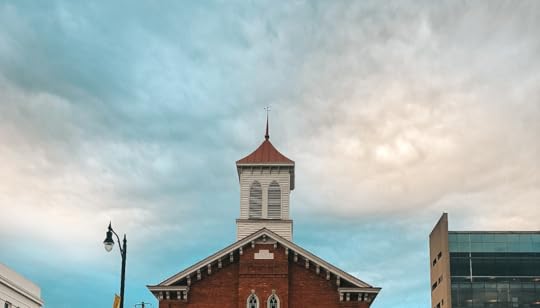
I first heard the word “antiracism” a few years ago. At first, I didn’t know what it meant. And I wondered why a new term was needed. Isn’t everyone opposed to racism?
I soon realized that “antiracism” meant something more than “not racist.” It meant taking active positions against racism. But it also became associated with a progressive ideology that included “destabilizing the nuclear family” and advocating for rights for many different identity groups. As a result, political moderates and political conservatives as well as many people of faith, have remained distant from antiracism as a cause.
I had a chance to do a deep dive into antiracism in writing an essay that was published over at Breaking Ground in which I ask the question “Is God Antiracist?”
Here’s a taste of the essay:
In our church community, as in many predominantly white churches across the United States, the issue of how Christians should respond to our current moment of reckoning with a history of racial injustice has bubbled to the surface of our collective consciousness. What tools do we have at our disposal?
The Scriptures warn against thoughtless acquiescence to the world’s norms du jour. At the same time, they and the historical witness of the church encourage Christ’s disciples towards discerning political and social engagement in whatever land they inhabit, made all the more urgent when questions of human dignity are at stake. Faced with the dueling temptations to ignore political “issues” on the one hand and to baptize every current of popular opinion on the other, it is incumbent upon those who follow Jesus to learn how to bring the Scriptural, spiritual, and social resources of his gospel truth to bear on the political and cultural moment in which we live, including that which we’ve simply inherited. What might Christian moral reasoning and reform look like in this complicated hour, and how do we recover these depths in our churches, practices, and broader public conversation?
To read more, join the conversation at Breaking Ground.
Image: Family Sabbatical Trip 2019 / Civil Rights Tour
To go further with Amy Julia:
Love is Stronger Than Fear | Season 3—White Picket Fences
AJB Recommends: Books, Podcasts, and Films About Racism and Privilege
S3 E6 | Now Is the Time for Justice with Jemar Tisby
If you haven’t already, please subscribe to receive regular updates and news. You can also follow me on Facebook , Instagram , and Twitter, and you can subscribe to my Love is Stronger Than Fear podcast on your favorite podcast platforms.
The post Breaking Ground: Is God Antiracist? appeared first on Amy Julia Becker.
September 14, 2020
S3 E12 | What Is Unjust About the Criminal Justice System with Dominique Gilliard
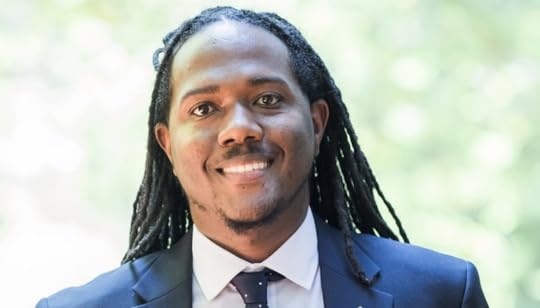 Image courtesy of Dominique Gilliard
What would it mean for the criminal justice system to be unjust? And if it is, what should Christians do about it? Dominique Gilliard, author of “Rethinking Incarceration,” talks with Amy Julia about the history of injustice in the criminal justice system, reimagining justice, punishment, and reconciliation in light of the gospel, and practical ways the church can love people who have been incarcerated.
SHOW NOTES:
Dominique DuBois Gilliard is the Director of Racial Righteousness and Reconciliation for the Love Mercy Do Justice (LMDJ) initiative of the Evangelical Covenant Church (ECC). “Rethinking Incarceration: Advocating for Justice that Restores” won the 2018 Book of the Year Award for InterVarsity Press and received a starred review from Publisher’s Weekly. Gilliard earned a bachelor’s degree in African American Studies from Georgia State University and a master’s degree in history from East Tennessee State University, with an emphasis on race, gender, and class in the United States. He also earned an MDiv from North Park Seminary, where he served as an adjunct professor teaching Christian ethics, theology, and reconciliation.
Follow LMDJ on social media:
Twitter
Facebook
Instagram
YouTube
“Restorative justice says that for justice to be made manifest, there has to be a tangible pathway toward restoration for not only the person who has suffered from the offense but also the person who has caused the offense.”
“Do we really believe the things that we proclaim in our congregational spaces, and, if so, how does that inform how we vote, how we live, how we engage in the world at large?”
“Nobody is beyond redemption. If we really believe that the Spirit of God is the resurrection Spirit at work within us and within the body of Christ, then that Spirit who has the ability to bring life out of death has the ability to bring restoration out of people who have caused offenses.”
“When we understand that privilege is something for us to steward, then that liberates us from feeling immobilized by it. It liberates us from actually denying it. We can affirm privilege is real and that we have a responsibility to steward it in a way that furthers the kingdom and loves our neighbor.”
On the Podcast:
“The New Jim Crow” by Michelle Alexander
Shooting of Kathryn Johnston
Equal Justice Initiative
Prison Fellowship
Season 3 of Serial
Chicago’s Million Dollar Blocks
Old Testament gleaning laws
“Compassionate Justice” by Christopher Marshall
Bryan Stevenson and Equal Justice Initiative
67% of white evangelicals support the death penalty
Interview with Bryan Stevenson about “Just Mercy”
Psalm 139:23-24
Resources from Dominique: What We Can Do PowerPoint and Follow-Up Resources pdf
Thank you to Breaking Ground, the co-host for this podcast.
White Picket Fences, Season 3 of Love is Stronger Than Fear, is based on my book White Picket Fences, and today we are talking about the criminal justice system and Privilege Walk from the book. Check out free RESOURCES—action guide, discussion guides—that are designed to help you respond. Learn more about my writing and speaking at amyjuliabecker.com.
To go further with Amy Julia:
Love is Stronger Than Fear | Season 3—White Picket Fences
AJB Recommends: Books, Podcasts, and Films About Racism and Privilege
AJB Recommends: The Sun Does Shine
If you haven’t already, please subscribe to receive regular updates and news. You can also follow me on Facebook , Instagram , and Twitter, and you can subscribe to my Love is Stronger Than Fear podcast on your favorite podcast platforms.
The post S3 E12 | What Is Unjust About the Criminal Justice System with Dominique Gilliard appeared first on Amy Julia Becker.
September 13, 2020
Privilege and Planning
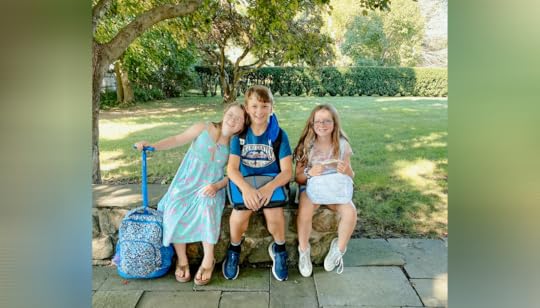
Today, all three of our children are going to school, in person, for a full day. (Last week, they had a variety of half days and phase-in days, which is when I took this picture.) We are all feeling doubly grateful for teachers, for bus drivers, for administrators, and for friends!
But I’m also doubly aware that this could change quickly. Pretty much everyone around here assumes that we will move to a hybrid model and perhaps even back into remote learning at some point this fall. It will feel like a tremendous victory if we make it to Thanksgiving.
Privilege and Planning
A friend of mine pointed out recently that one of the hallmarks of privilege is predictability. Usually, I can predict our family’s schedules. Usually, I can know that when school starts they will attend it, in person, throughout the year. Usually, I can buy what we need (is anyone else still experiencing a shortage everywhere on all-purpose cleaner?!?).
But affluence, education, and white skin cannot buy me predictability right now. I am living with a greater degree of uncertainty than I usually do, with a greater sense of vulnerability than I usually must. As you all know, it’s kept me up at night. It has brought me to my knees.
Gratitude
I will be grateful when I can return to planning. But right now I’m learning how to live with gratitude in the midst of the uncertainty. Today, with three smiling kids, all I am is thankful.
To go further with Amy Julia:
Anxiety and the Peace of God
When Grace Runs Dry
AJB on Privilege
If you haven’t already, please subscribe to receive regular updates and news. You can also follow me on Facebook , Instagram , and Twitter, and you can subscribe to my Love is Stronger Than Fear podcast on your favorite podcast platforms.
The post Privilege and Planning appeared first on Amy Julia Becker.
September 11, 2020
AJB Recommends: The Sun Does Shine
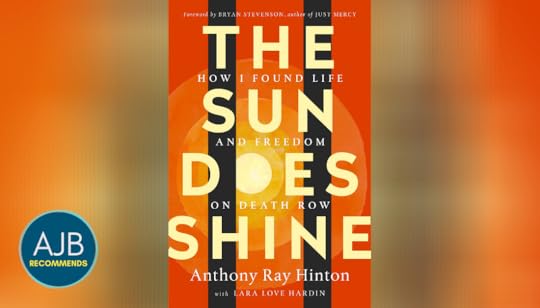
I have gone to bed late every night this week because I stay up to read more of Anthony Ray Hinton’s new memoir, “The Sun Does Shine: How I Found Life and Freedom on Death Row.” This story is heartbreaking and hopeful all at the same time.
In “The Sun Does Shine,” Hinton relates his story of wrongful incarceration, his bitterness and despair over the injustice, and the subsequent healing he experienced once he decided to trust God even behind bars. I want to share the whole story, but I don’t want to give away the poignancy of the friendships he forms and the hope he cultivates in the midst of the tragedy and injustice of his imprisonment.
If I tell you that he is able to initiate a book club for the inmates on death row that includes reading James Baldwin’s “Go Tell It On the Mountain“ alongside a former KKK member, is that enough to encourage you to read this book?
(By the way, I first learned about Hinton in Bryan Stevenson’s book, “Just Mercy.” I heard him tell his story on video when we visited the Equal Justice Initiative’s museum in Montgomery, Alabama. Then I listened to his conversation with Kate Bowler on her podcast. Then I was reminded of it all over again when I watched the film version of “Just Mercy.” I recommend all of the above: book, movie, podcast, museum, and memoir!)
To go further with Amy Julia:
More AJB Recommends
AJB Recommends: Books, Podcasts, and Films About Racism and Privilege
Willliam Recommends: Books About Racial Injustice for Middle Schoolers
If you haven’t already, please subscribe to receive regular updates and news. You can also follow me on Facebook , Instagram , and Twitter, and you can subscribe to my Love is Stronger Than Fear podcast on your favorite podcast platforms.
The post AJB Recommends: The Sun Does Shine appeared first on Amy Julia Becker.
September 7, 2020
S3 E11 | The Black Church’s Gift to Christianity with Esau McCaulley
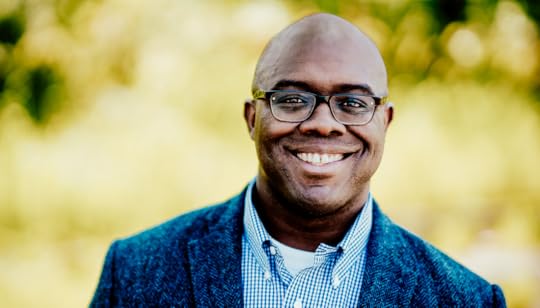 Image courtesy of Esau McCaulley
The Black church has a gift for American Christianity. Are we willing to receive it? New Testament scholar Esau McCaulley, author of “Reading While Black,” talks with Amy Julia about Black biblical interpretation, distorted views of the gospel, the importance of identity within a Christian’s story, and the Black church’s commitment to both the theological tenets of Christianity and advocating for justice.
SHOW NOTES:
Esau McCaulley (PhD, St. Andrews), author of “Reading While Black: African American Biblical Interpretation as an Exercise in Hope,” a priest in the Anglican Church in North America, and a contributing writer for The New York Times. He is also the host of The Disrupters podcast. His publications include Sharing in the Son’s Inheritance and numerous articles in outlets such as Christianity Today, The Witness, and The Washington Post. Connect with him online:
esaumccaulley.com
Twitter: @esaumccaulley
“There’s a whole story in the Bible of God liberating an entire people who are enslaved. This goes to the front of God’s resume. He says it over and over and over again, ‘I am the Lord your God who brought you out of Egypt, out of the land of slavery.’”
“The very practice of going to the Bible and asking God to meet us there is an exercise of hope.”
“Look to the Black church in America. It has a long history of advocacy for justice along with remaining in the great tradition of things Christians will always believe.”
“If our ethnicity is eschatological, if we go into the new creation as black and brown and white people, if we all come into the kingdom as our ethnic selves, then God is glorified in the salvation of each of us and each part of who we are. My blackness is not immaterial to the story of my life. I can’t tell the story of my life and what God has done in my life without talking about what it means to be Black and Christian.”
On the Podcast:
Articles/Essays in The New York Times
Scripture: Genesis 48, Exodus 12:37-38, I Timothy 6:1-2, Genesis 1:26-28, Luke 20:4, Sermon on the Mount, Revelation, John 9
“Deacon King Kong” by James McBride
“The Cross and the Lynching Tree” by James Cone
The New York Times: The Bloody Fourth Day of Christmas
Penny’s diagnosis of Down syndrome
Thank you to Breaking Ground, the co-host for this podcast.
White Picket Fences, Season 3 of Love is Stronger Than Fear, is based on my book White Picket Fences, and today we are talking about chapter 7. Check out free RESOURCES—action guide, discussion guides—that are designed to help you respond. Learn more about my writing and speaking at amyjuliabecker.com.
To go further with Amy Julia:
Love is Stronger Than Fear | Season 3—White Picket Fences
AJB Recommends: Books, Podcasts, and Films About Racism and Privilege
AJB on Racial Healing
If you haven’t already, please subscribe to receive regular updates and news. You can also follow me on Facebook , Instagram , and Twitter, and you can subscribe to my Love is Stronger Than Fear podcast on your favorite podcast platforms.
The post S3 E11 | The Black Church’s Gift to Christianity with Esau McCaulley appeared first on Amy Julia Becker.
When Grace Runs Dry

For our family, summer has been a relief. Marilee played softball and William played baseball and Penny went to summer school, in person. We spent a lot of time with our cousins, unmasked. Peter and I even hired a babysitter and spent two nights away together. It almost felt normal.
But we’re heading back to school now, with masks aplenty and more stringent restrictions on our interactions with other people. I’ve developed a red patch underneath my left eye. When I asked the dermatologist about it, she said, “That usually happens because of stress.” Even when I don’t acknowledge the stress in my conscious self, my body reports it to me.
Uncertainty and Discomfort
I wish I had profound thoughts to offer or a story of overcoming the anxiety and living more and more into the hope and faith and love that I profess to believe. Like so many of us, I’m still in the middle of this story. I’m still in the learning-how-to-handle-uncertainty part. Learning how to trust God in the midst of the unpredictable.
The love and grace that I have in and of myself has run dry. All I can do now is to admit my emptiness. And wait in the discomfort of empty until the source of love and grace begins to fill me up once more.
A Lifeline of Grace
That said, I have found a lifeline in the Psalms. I’ve read a Psalm more or less every day since mid-March. I’ve prayed alongside these ancient words, finding strength and comfort and hope. I’ve realized that the enemies in my life are most often my own self-critical thoughts. I’ve realized that when I pray against injustice I’m often praying against my own passive participation in the status quo. And I’ve realized that the Psalmists offer a pattern for life with God:
Express the pain, confusion, doubt, and fear of the present moment,
Remember the experience of God’s faithfulness in the past, and
Turn from pain to healing, from confusion to trust, from doubt to faith, and from fear to hope for the future.
We are living in a time of revelation, in which the hurts and divisions of our personal lives and our social systems are being laid bare. We are invited to name those hurts and address those divisions.
To go further with Amy Julia:
Anxiety and the Peace of God
The Foundation is Shaking: Coronavirus and Living in Love {Ep. 103}
Four Spiritual Practices That Help Social Justice Stay Grounded in Love
If you haven’t already, please subscribe to receive regular updates and news. You can also follow me on Facebook , Instagram , and Twitter, and you can subscribe to my Love is Stronger Than Fear podcast on your favorite podcast platforms.
The post When Grace Runs Dry appeared first on Amy Julia Becker.
September 4, 2020
In Her Own Words: Penny on Being a Bridesmaid

Penny and I got to be bridesmaids together last weekend in my sister’s wedding. I’m going to let Penny tell you about it in her own words, but first I want to point out that we were wearing the same dress in different colors from Revelry, who super-rushed this order because it was the only dress we could find that fit Penny’s petite frame. (And let me tell you, trying on dresses is not easy in the midst of a pandemic, so we could not be more grateful to Revelry for going above and beyond in making sure we had these for the wedding day!) Here are Penny’s thoughts on being a bridesmaid, participating in the ceremony, and delivering a very special toast to the bride and groom:

My aunt Elly announced I was going to be a bridesmaid in the wedding in a card at Christmas one year. Elly’s now-husband Chas was a part of that invitation and this was so special to me.
Being a bridesmaid means you walk down the aisle in a pretty dress with flowers in your hand before the bride walks down the aisle normally with the father of the bride. This is important because there will be a lot of memories to look back to and there are future memories like starting a family.
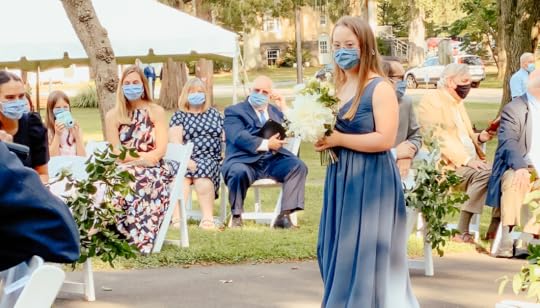
Weddings are a big deal because the bride and the fiance need to plan the wedding with the wedding planner. Pick all the food, where the events are going to be, make sure everything is prepared.
Marriage is a big deal because when someone loves someone and wants them to be in their everyday life they propose. It means they want kids in the future so they need to start being together so that they can start a family.

The wedding ceremony will always be the highlight of all of the events. When Chas saw Elly in the wedding gown he was tearing up everyone stood up and watched and clapped when Elly walked down the aisle. There a lot of parts to the reception. There was the reception with a pizza truck when I gave my toast. I wanted the bride and groom to know that they are loved and are special to everyone. Even friends who were not there wanted to be a part of the series of events leading up to the wedding.

The Bride and Groom were crying and I actually was tearing up during my toast as well. I didn’t let my mom record it but someone did and I was okay with that. There were parts that were funny too like “New York Vibes “, and “ nice night no bugs but one happy elly”.

The next night there was another reception at a flower farm which was also a special night with dancing, more toasts, and Elly and Chas learning the pretzel which is a dance.
I loved the ceremony and all the events. I felt like a kangaroo because I was so happy to finally be in a wedding like in the bridal party.
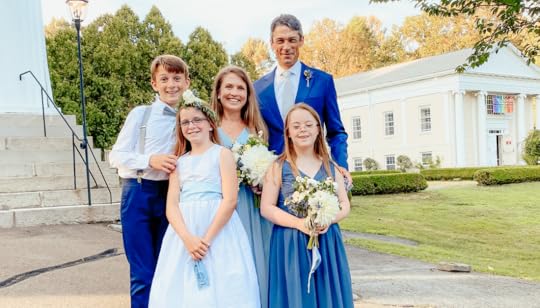
(See today’s post on Instagram and Facebook for a video of a portion of Penny’s toast.)
To go further with Amy Julia:
In Her Own Words: Penny on Independence and Self-Advocacy
In Her Own Words: Penny on Church and Faith
First Day of School: Penny Starts Eighth Grade – In Her Own Words
If you haven’t already, please subscribe to receive regular updates and news. You can also follow me on Facebook , Instagram , and Twitter, and you can subscribe to my Love is Stronger Than Fear podcast on your favorite podcast platforms.
The post In Her Own Words: Penny on Being a Bridesmaid appeared first on Amy Julia Becker.