Amy Julia Becker's Blog, page 111
October 9, 2020
Bloom Where You’re Planted
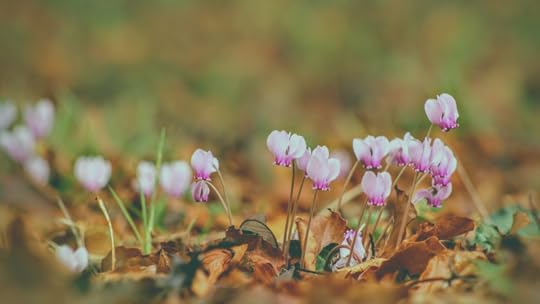 Image via Getty Images
I used to think that the only way for me to participate in social healing was to move. I live in a predominantly white, affluent, highly educated neighborhood. How could this be the place where I could take part in breaking down walls of social division? We didn’t move, and an old youth group phrase came to mind. “Bloom where you’re planted.”
Put down roots where you really are rather than longing for someplace else. Look for ways to grow, to bless, to engage, to partake.
And so I began talking with friends here about social justice. I began noticing the places where I am already connected, where I already have even small measures of influence—our church, our kids’ schools, a local arts organization—places to bloom where I’m planted.
The changes in me and in these places have not been seismic or quick. They might not even be noticeable to others. But our arts organization has formed a group to start talking about the connections we could foster among kids from diverse backgrounds. Our church is reading “The Color of Compromise,” and our pastors are talking about justice from the pulpit. I’m receiving emails and phone calls from people listening to Love is Stronger than Fear and asking how they too can bloom where they are planted—in schools, in neighborhoods, in families, in churches, and in workplaces.
So here I am. Soccer and ballet and homework and dishes and conversations about zoning laws and educational inequity and prison reform. One small step leading to one small next step. The pace of slow, messy, transformative, blossoming change.
To learn more with Amy Julia:
Love is Stronger Than Fear | Season 3—White Picket Fences
AJB on Racial Healing
Five Next Steps Toward Racial Healing
If you haven’t already, please subscribe to receive regular updates and news. You can also follow me on Facebook , Instagram , and Twitter, and you can subscribe to my Love is Stronger Than Fear podcast on your favorite podcast platforms.
The post Bloom Where You’re Planted appeared first on Amy Julia Becker.


October 7, 2020
Dreaming and Planning With Our Teenager With Down Syndrome
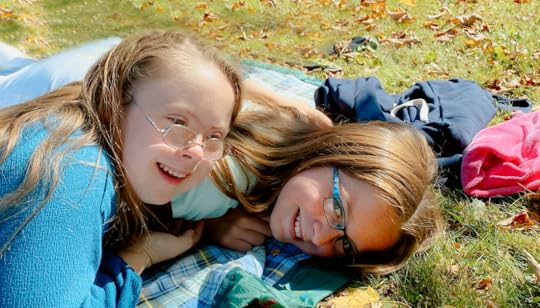 We had a planning meeting last February for our teenage daughter, Penny, who has Down syndrome. Penny invited friends, family, and teachers to join her for this conversation.
Dreaming and Planning With our Teenager with Down Syndrome
This wasn’t an IEP (individualized education plan) meeting. It wasn’t to go over test scores or evaluate behaviors. It was a chance for everyone to talk about Penny’s hopes and dreams, needs and challenges, strengths and abilities. From that conversation, we together constructed an action plan to help as she transitioned into high school.

Action items included things like reviewing the Circles curriculum with the school psychologist to establish good boundaries with peers, exploring clubs and activities to get more involved in co-curricular life at school, and creating a plan to “fade out” the adults in her life as she grows in independence.
I sometimes hesitate to share things like this. It speaks to the tremendous support we receive in this particular school district and through this particular team of people, and I know many other schools do not offer kids and families anything like this type of encouragement. Also, Penny’s needs are relatively mild and manageable, and I know that’s not the case for many other equally valuable and fabulous kids with intellectual disabilities.
Hope and Dreams
Still, I wanted to offer this visual because it gives a snapshot of a process that underscores the possibilities that open up when treating a child with a disability as a whole person. Penny is seen here not as a problem to be fixed or as a box to be checked, but as a young woman filled with possibilities to be realized.
Instead of focusing on her needs or weaknesses, we began with her hopes and dreams and all the things she enjoys and does well. We began with celebration, then talked about the very real challenges she faces, and put together a plan for next year.
Plans and Dreams for All Kids
Penny is now back in school with a team of supportive people who know not only her needs but also her abilities and goals. Our experience of planning and dreaming with Penny leads me to want two things for all kids, and especially for all kids with special needs:
an ability to name and celebrate their strengths and gifts,
and a team of people who will journey with them.
The next step is a PATH meeting when Penny turns 15. This process will help us plan for the day when she graduates from the public school system altogether. I am very glad that day is many years from now! But I am also grateful that we walk towards that day alongside a team of people who see this beautiful young woman for the gift that she is.
Want to read more? Here are some recommendations!
A Day in the Life with Down Syndrome {Middle School}
Four Tips on Teaching Your Child with Down Syndrome to Read
In Her Own Words: Penny on Being a Bridesmaid
If you haven’t already, please subscribe to receive regular updates and news. You can also follow me on Facebook , Instagram , and Twitter, and you can subscribe to my Love is Stronger Than Fear podcast on your favorite podcast platforms.
The post Dreaming and Planning With Our Teenager With Down Syndrome appeared first on Amy Julia Becker.
Dreaming and Planning With Our Teenager with Down Syndrome
We had a planning meeting last February for our teenage daughter, Penny, who has Down syndrome. Penny invited friends, family, and teachers to join her for this conversation.
Dreaming and Planning With our Teenager with Down Syndrome
This wasn’t an IEP (individualized education plan) meeting. It wasn’t to go over test scores or evaluate behaviors. It was a chance for everyone to talk about Penny’s hopes and dreams, needs and challenges, strengths and abilities. From that conversation, we together constructed an action plan to help as she transitioned into high school.
Action items included things like reviewing the Circles curriculum with the school psychologist to establish good boundaries with peers, exploring clubs and activities to get more involved in co-curricular life at school, and creating a plan to “fade out” the adults in her life as she grows in independence.
I sometimes hesitate to share things like this. It speaks to the tremendous support we receive in this particular school district and through this particular team of people, and I know many other schools do not offer kids and families anything like this type of encouragement. Also, Penny’s needs are relatively mild and manageable, and I know that’s not the case for many other equally valuable and fabulous kids with intellectual disabilities.
Hope and Dreams
Still, I wanted to offer this visual because it gives a snapshot of a process that underscores the possibilities that open up when treating a child with a disability as a whole person. Penny is seen here not as a problem to be fixed or as a box to be checked, but as a young woman filled with possibilities to be realized.
Instead of focusing on her needs or weaknesses, we began with her hopes and dreams and all the things she enjoys and does well. We began with celebration, then talked about the very real challenges she faces, and put together a plan for next year.
Plans and Dreams for All Kids
Penny is now back in school with a team of supportive people who know not only her needs but also her abilities and goals. Our experience of planning and dreaming with Penny leads me to want two things for all kids, and especially for all kids with special needs:
an ability to name and celebrate their strengths and gifts,
and a team of people who will journey with them.
The next step is a PATH meeting when Penny turns 15. This process will help us plan for the day when she graduates from the public school system altogether. I am very glad that day is many years from now! But I am also grateful that we walk towards that day alongside a team of people who see this beautiful young woman for the gift that she is.
Want to read more? Here are some recommendations!
A Day in the Life with Down Syndrome {Middle School}
Four Tips on Teaching Your Child with Down Syndrome to Read
In Her Own Words: Penny on Being a Bridesmaid
If you haven’t already, please subscribe to receive regular updates and news. You can also follow me on Facebook , Instagram , and Twitter, and you can subscribe to my Love is Stronger Than Fear podcast on your favorite podcast platforms.
The post Dreaming and Planning With Our Teenager with Down Syndrome appeared first on Amy Julia Becker.
October 6, 2020
Human Suffering Is Not the Only Point of Connection
I am so much more interested in human connection than human division.
But where does that connection come from? How does it happen?
I spoke with a former English teacher from my high school at an alumni event last week, and he mentioned how death connects us to one another. The Greeks saw all humans—even those who fought against one another—as connected in their mortality. Shakespeare wrote about how all the dead will take up the same space in the ground.
I agreed with him—we are connected to one another in our limits, our suffering, and our mortality.
Human Connection: Capacity to Love
But we are also connected to one another in our capacity to love.
I don’t want to wait for death to embrace our common humanity. And I don’t want to wait for love either. I want to pursue it.
Pursuing our common humanity means pursuing love that crosses social boundaries, one small step at a time.
Love Connects Us
On the podcast this week, Todd Billings talks about choosing to introduce his children to elderly members of their congregation who live in nursing homes and forge connections across the generations. In White Picket Fences, I write about the gift of human connection that can transcend social location when meeting a young immigrant woman from Morocco who misses her sister with Down syndrome.
Love connects us here and now.
In this time of great division and unrest, we all have an opportunity to take small steps towards human connection and love.
To learn more with Amy Julia:
Love is Stronger Than Fear | Season 3—White Picket Fences
Love for a Thousand Generations
Embracing Our Common Humanity
If you haven’t already, please subscribe to receive regular updates and news. You can also follow me on Facebook , Instagram , and Twitter, and you can subscribe to my Love is Stronger Than Fear podcast on your favorite podcast platforms.
The post Human Suffering Is Not the Only Point of Connection appeared first on Amy Julia Becker.
S3 E14 | The Astonishing Hope of a Mortal Life with J. Todd Billings
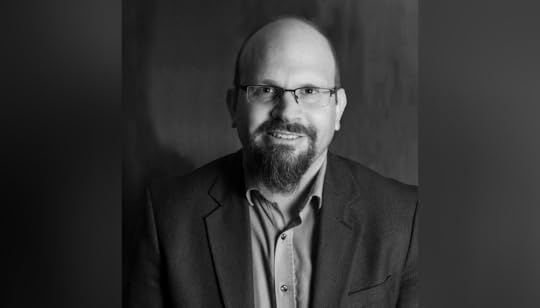 Image courtesy of Todd Billings
Mortality is often connected to fear, so how does embracing a mortal life provide hope to individuals and communities? Professor Todd Billings, author of “The End of the Christian Life: How Embracing Our Mortality Frees Us to Truly Live,” talks with Amy Julia about lamenting and embracing mortality, the potential for mortality to exacerbate divisions or create connections, and how the presence of God brings freedom from our slavery to the fear of death.
Show Notes
Dr. J. Todd Billings is a professor at Western Theological Seminary in Holland, MI. An ordained minister in the Reformed Church in America, he received his M.Div. from Fuller Seminary and his Th.D. from Harvard. Connect further with Todd:
Twitter: @jtoddbillings
Facebook: @jtoddbillingsauthor
https://jtoddbillings.com/
“Whether you are young or old…our mortality matters for all of us in how we relate and connect to one another.”
“A tremendous gift of the church is that it’s one of the few places in our cultural moment where young children and middle-aged people and dying older people can come together and be part of a community.”
“In Christian circles, I sometimes get the idea that we shouldn’t be afraid of death at all. I don’t think that’s either biblical teaching or likely to happen. It sets up this ideal that makes people shameful when they grieve deeply.”
“Of course we should have a certain fear of death. But when fear of death is on the throne, then self-protection becomes the central priority…we pull in rather than reaching out in compassion.”
“This same presence of God that we’ve been aching for from the pit and in our whole pilgrimage—this one centered in Jesus—that presence will be the wide and spacious land, so to speak, of our rejoicing and dwelling in rest.”
ON THE PODCAST:
The End of the Christian Life
Penelope Ayers (Amy Julia’s memoir about caring for her mother-in-law)
Scripture: Psalm 27, Jonah, Matthew 27:46, Hebrews 2:15, 2 Corinthians 4
“Rejoicing in Lament” by Billings
Check back at https://breakingground.us/ for a new article by Amy Julia coming out in October
Terror management theory
“The Denial of Death” by Ernest Becker
George Floyd’s death
Zoom video call
Thank you to Breaking Ground, the co-host for this podcast.
White Picket Fences, Season 3 of Love is Stronger Than Fear, is based on my book White Picket Fences, and today we are talking about chapter 9. Check out free RESOURCES—action guide, discussion guides—that are designed to help you respond. Learn more about my writing and speaking at amyjuliabecker.com.
To go further with Amy Julia in thinking about mortal life and hope:
Love is Stronger Than Fear | Season 3—White Picket Fences
Upcoming Online Interview: Faith, Hope, and Love During Election Season
Faith Is Trusting in the End of the Story
If you haven’t already, please subscribe to receive regular updates and news. You can also follow me on Facebook , Instagram , and Twitter, and you can subscribe to my Love is Stronger Than Fear podcast on your favorite podcast platforms.
The post S3 E14 | The Astonishing Hope of a Mortal Life with J. Todd Billings appeared first on Amy Julia Becker.
S3 E14 | The Astonishing Hope of a Mortal Life with Todd Billings
Image courtesy of Todd Billings
Mortality is often connected to fear, so how does embracing a mortal life provide hope to individuals and communities? Professor Todd Billings, author of “The End of the Christian Life: How Embracing Our Mortality Frees Us to Truly Live,” talks with Amy Julia about lamenting and embracing mortality, the potential for mortality to exacerbate divisions or create connections, and how the presence of God brings freedom from our slavery to the fear of death.
Show Notes
Dr. J. Todd Billings is a professor at Western Theological Seminary in Holland, MI. An ordained minister in the Reformed Church in America, he received his M.Div. from Fuller Seminary and his Th.D. from Harvard. Connect further with Todd:
Twitter: @jtoddbillings
Facebook: @jtoddbillingsauthor
https://jtoddbillings.com/
“Whether you are young or old…our mortality matters for all of us in how we relate and connect to one another.”
“A tremendous gift of the church is that it’s one of the few places in our cultural moment where young children and middle-aged people and dying older people can come together and be part of a community.”
“In Christian circles, I sometimes get the idea that we shouldn’t be afraid of death at all. I don’t think that’s either biblical teaching or likely to happen. It sets up this ideal that makes people shameful when they grieve deeply.”
“Of course we should have a certain fear of death. But when fear of death is on the throne, then self-protection becomes the central priority…we pull in rather than reaching out in compassion.”
“This same presence of God that we’ve been aching for from the pit and in our whole pilgrimage—this one centered in Jesus—that presence will be the wide and spacious land, so to speak, of our rejoicing and dwelling in rest.”
ON THE PODCAST:
The End of the Christian Life
Penelope Ayers (Amy Julia’s memoir about caring for her mother-in-law)
Scripture: Psalm 27, Jonah, Matthew 27:46, Hebrews 2:15, 2 Corinthians 4
“Rejoicing in Lament” by Billings
Check back at https://breakingground.us/ for a new article by Amy Julia coming out in October
Terror management theory
“The Denial of Death” by Ernest Becker
George Floyd’s death
Zoom video call
Thank you to Breaking Ground, the co-host for this podcast.
White Picket Fences, Season 3 of Love is Stronger Than Fear, is based on my book White Picket Fences, and today we are talking about chapter 9. Check out free RESOURCES—action guide, discussion guides—that are designed to help you respond. Learn more about my writing and speaking at amyjuliabecker.com.
To go further with Amy Julia in thinking about mortal life and hope:
Love is Stronger Than Fear | Season 3—White Picket Fences
Upcoming Online Interview: Faith, Hope, and Love During Election Season
Faith Is Trusting in the End of the Story
If you haven’t already, please subscribe to receive regular updates and news. You can also follow me on Facebook , Instagram , and Twitter, and you can subscribe to my Love is Stronger Than Fear podcast on your favorite podcast platforms.
The post S3 E14 | The Astonishing Hope of a Mortal Life with Todd Billings appeared first on Amy Julia Becker.
October 5, 2020
Big Feelings and Growing Up with Marilee
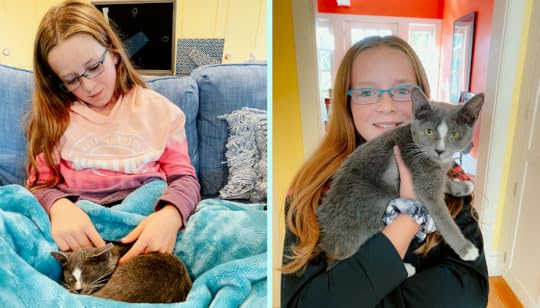 What do you do with a child with big feelings? Especially if you are a parent who has never had similarly big feelings?
Yes, I am the parent with feelings that don’t get expressed through tears or exuberance or anger very often. And, yes, Marilee is the child with big feelings. A typical day can include arms stretched wide with ebullient joy and glowering in the general direction of any human being who dares to enter her line of sight.
Children and Big Feelings
Last week contained multiple events that evoked big feelings. First, there was the soccer debacle. Peter and I allowed Marilee to play on two soccer teams this fall, somewhat against our own principles, because they needed players and she loves competitive team sports and who knows how long they’ll get to run around and play outside so let’s take advantage while it lasts and we’re still getting over our own overachieving ways and all that.
The first weekend, we told her she couldn’t go to her game on Sunday because it conflicted with church. She glowered and cried. We stood firm. Then her Saturday game was canceled due to a COVID conflict. She glowered and cried. We stood firm.
Then we were supposed to go pick up our new kitten on Tuesday, but we were told we needed to wait another few days because the kitten’s eyes were runny. I told Marilee we’d go on Saturday instead. She cried a bit, but she understood— until the next morning she realized that the reason we were going on Saturday was my schedule, not the kitten’s availability. “I’ve been waiting FIVE YEARS for a kitten and you are making me wait FOUR MORE DAYS!!!”
The glowering and crying amped right up. I stayed calm and tried to be empathetic without changing my plans for the week.
Disappointment
Then two more soccer games were canceled because of COVID.
And then the kitten was exposed to ringworm.
If I didn’t believe in God, I would say that the universe had something to teach Marilee about dealing with disappointment.
More so, God had something to teach me about loving a child through disappointment.
Loving a Child Through Big Feelings
Here’s what I realized. I have two instincts when one of our children (or someone else I love) is facing hardship. Either I want to fix the problem or I want to dismiss/minimize their feelings.
In Marilee’s case, I knew I couldn’t fix the problem of COVID. But I could go back on our word about church. Or I could change my schedule and get the kitten a few days earlier. But to do either of those things would be to sacrifice values we hold dear as a family—that we are committed to a faith community together, that Mom has needs too.
Once I decided not to fix the problems, I really wanted to change her feelings. I wanted to be dismissive of her and explain how her problems compare to all the other “real” problems in the world. Truth be told, there was that really low moment in the midst of this saga when she refused to give me a hug goodnight, so I slammed the door to her bedroom and she yelled, “Please don’t slam my door,” and I yelled, “Please don’t be a jerk!” and then she wept again, and I felt terrible.
BUT other than that, I did a lot of praying that I could stay with her in her disappointment. I didn’t try to fix it. I also didn’t try to minimize it. I just tried to be with her in the midst of it.
Growing Up
On Friday morning, she woke up early with a stomach ache. Sad about the lack of a kitten and the lack of a soccer game. Sad about having to go to school in the midst of it all. Ready for a hug and a snuggle. Hoping for a Mom who would say she should stay home from school instead of a Mom who held her close and then said, “Let’s go get ready for the day.”
But then she said, “I’m deciding to have a positive attitude. I’m still sad about the kitten. I don’t want to go to school today. But I know you’re going to make me go, so I might as well think positive thoughts about it.”
She went to school. She had a great day. She got to play in two soccer games. And we brought Peppa home.
We are both growing up.
To go further with Amy Julia:
Love is Stronger Than Fear | Season 3—White Picket Fences
When Grace Runs Dry
Continuing the Conversation: Marilee and Ruby Bridges
If you haven’t already, please subscribe to receive regular updates and news. You can also follow me on Facebook , Instagram , and Twitter, and you can subscribe to my Love is Stronger Than Fear podcast on your favorite podcast platforms.
The post Big Feelings and Growing Up with Marilee appeared first on Amy Julia Becker.
October 2, 2020
AJB Recommends: Three Podcast Episodes About Addressing Racism
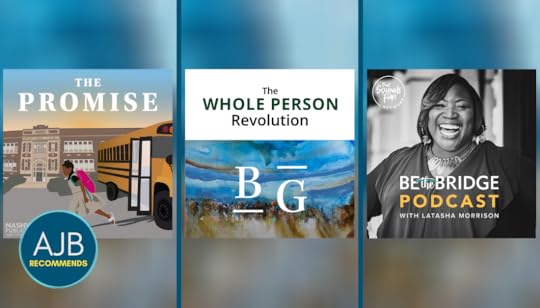 This week, I’ll recommend three podcast episodes about racism that challenged me, brought hope, and brought clarity this week:
CHALLENGE
The challenge: A podcast about how one public school district in East Nashville, Tennessee, is handling the reality of school resegregation. Yes, that’s right. Re-segregation. In 2005, a local public magnet school was split down the middle with kids from white families and Black families attending in almost equal numbers. Now, there are a handful of Black children in a 98% white local school, and the racial composition of the neighborhood hasn’t changed. This season of Nashville public radio’s The Promise is a compelling look at the way resegregation happened, why this is problematic, and what could be done about it.
HOPE
The hope: Breaking Ground’s The Whole Person Revolution podcast is interesting and uplifting every week, but I especially loved this conversation between two pastors in Chicago who together have formed a network of church leaders to serve one neighborhood in the city. This neighborhood has seen unprecedentedly low levels of violence in response to their efforts through Together Chicago.
CLARITY
The clarity: Many of you read my article for Breaking Ground called Is God Anti-Racist? In it, I mention that some Christians are concerned about antiracism because of its “Marxist roots.” I received responses from readers that included the question—what are you talking about? What is Marxist about valuing the lives of Black people? As well as from people who said that if we engage antiracism we will end up like the USSR with an oligarchical power structure and rampant political corruption. Either way, it points out to me the ways that Critical Race Theory can be misunderstood and misappropriated, so I am grateful to Latasha Morrison at Be the Bridge for interviewing both Jemar Tisby and Christina Edmondson about racism and Critical Race Theory.
And a few more bonus recommendations!
From Joni and Friends:
I love this reflection on how losing a visa for their daughter with Down syndrome allowed her gifts to become more visible to the whole community.
From The New York Times:
Should kids who make racist comments be kicked out of school? Or is there another way? I appreciated this reflection on how restorative justice can work in a school setting.
Restorative justice doesn’t allow an institution to simply remove the bad apples. It inspires solutions that achieve value and respect for everyone. It forces an institution to look at community-oriented solutions that make everybody uncomfortable, not just those who are involved. But it’s the only way real change can be made.
If these podcast episodes about racism challenge you and bring hope and clarity, consider learning more with Amy Julia:
More AJB Recommends
Three Harms of Privilege
S3 Bonus | What Is Privilege?
If you haven’t already, please subscribe to receive regular updates and news. You can also follow me on Facebook , Instagram , and Twitter, and you can subscribe to my Love is Stronger Than Fear podcast on your favorite podcast platforms.
The post AJB Recommends: Three Podcast Episodes About Addressing Racism appeared first on Amy Julia Becker.
White Picket Fences Turns Two {And a Giveaway!}
 White Picket Fences turns two today! Yes, this book that almost-never-was—not only did it get published, but it has stayed “alive” for two years because wonderful people like you have read it and passed it along to friends and neighbors and family members and pastors and teachers and more.
The Urgency
I remember when I felt worried that this book wouldn’t come out “in time.” I felt an urgency in writing it, way back in 2016 and 2017. I guess I thought and hoped that the social divisions of race and economics and ability would be less relevant as time went on. But our divisions are only more evident. The harm of those divisions–the exclusion, injustice, and isolation–is only more evident. The need for healing, the desire for healing, is only more evident right now.
There are three things I hope people get from reading White Picket Fences:
Privilege harms everyone. And we are all invited to participate in healing.
If we embrace our common humanity, we can celebrate our diverse identities.
Love is stronger than fear.
White Picket Fences Turns Two
If you’ve already read White Picket Fences, would you consider celebrating with me by giving a copy to a friend? Reflecting on the book via email or social media?
If you haven’t read it yet, we’re running a giveaway this weekend on my Instagram account beginning at 9 a.m. EST today (10/2/20) to celebrate the fact that White Picket Fences turns two today. And even if you don’t win the giveaway, you can purchase it in paperback, audiobook, or ebook versions.
Nearly four years ago, on the day after the last Presidential election, I had a phone call with my editor from NavPress, and I agreed to write White Picket Fences with them. Two years ago, the book was published. And now, as we head into an even more contested election, with more shouting, more fear, more heartache, more pain—the invitation of this book is more relevant than ever.
An Invitation
As White Picket Fences turns two:
I want this book to be an invitation, especially for people from a cultural background similar to mine, to consider the reality of privilege, the benefits and wounds that come from privilege, and whether we can respond to the fact of our privilege with generosity, humility, and hope . . . I want this story to open up the conversations we are afraid to have, to prompt the questions we are afraid to ask, and to lead us away from fear and toward love, in all its fragile and mysterious possibilities.
To go further with Amy Julia:
Love is Stronger Than Fear | Season 3—White Picket Fences
Resources to Accompany White Picket Fences
Head, Heart, Hands: An Action Guide
If you haven’t already, please subscribe to receive regular updates and news. You can also follow me on Facebook , Instagram , and Twitter, and you can subscribe to my Love is Stronger Than Fear podcast on your favorite podcast platforms.
The post White Picket Fences Turns Two {And a Giveaway!} appeared first on Amy Julia Becker.
White Picket Fences Turns Two
White Picket Fences turns two today! Yes, this book that almost-never-was—not only did it get published, but it has stayed “alive” for two years because wonderful people like you have read it and passed it along to friends and neighbors and family members and pastors and teachers and more.
The Urgency
I remember when I felt worried that this book wouldn’t come out “in time.” I felt an urgency in writing it, way back in 2016 and 2017. I guess I thought and hoped that the social divisions of race and economics and ability would be less relevant as time went on. But our divisions are only more evident. The harm of those divisions–the exclusion, injustice, and isolation–is only more evident. The need for healing, the desire for healing, is only more evident right now.
There are three things I hope people get from reading White Picket Fences:
Privilege harms everyone. And we are all invited to participate in healing.
If we embrace our common humanity, we can celebrate our diverse identities.
Love is stronger than fear.
White Picket Fences Turns Two
If you’ve already read White Picket Fences, would you consider celebrating with me by giving a copy to a friend? Reflecting on the book via email or social media?
If you haven’t read it yet, we’re running a giveaway this weekend on my Instagram account beginning at 9 a.m. EST today (10/2/20) to celebrate the fact that White Picket Fences turns two today. And even if you don’t win the giveaway, you can purchase it in paperback, audiobook, or ebook versions.
Nearly four years ago, on the day after the last Presidential election, I had a phone call with my editor from NavPress, and I agreed to write White Picket Fences with them. Two years ago, the book was published. And now, as we head into an even more contested election, with more shouting, more fear, more heartache, more pain—the invitation of this book is more relevant than ever.
An Invitation
As White Picket Fences turns two, “I want this book to be an invitation, especially for people from a cultural background similar to mine, to consider the reality of privilege, the benefits and wounds that come from privilege, and whether we can respond to the fact of our privilege with generosity, humility, and hope . . . I want this story to open up the conversations we are afraid to have, to prompt the questions we are afraid to ask, and to lead us away from fear and toward love, in all its fragile and mysterious possibilities.”
To go further with Amy Julia:
Love is Stronger Than Fear | Season 3—White Picket Fences
Resources to Accompany White Picket Fences
Head, Heart, Hands: An Action Guide
If you haven’t already, please subscribe to receive regular updates and news. You can also follow me on Facebook , Instagram , and Twitter, and you can subscribe to my Love is Stronger Than Fear podcast on your favorite podcast platforms.
The post White Picket Fences Turns Two appeared first on Amy Julia Becker.