
Neil Cole's Blog, page 7
October 17, 2012
A New Name & Logo Isn't Enough, The Church Needs a Transfusion
Five men sat around a table talking late into the night about the name of our church. Would we remain Grace Brethren Church or become Grace Fellowship? It isn’t that big of a difference now as I look back, but in the moment it seemed so important.
 This was in the mid-1990s in a suburb outside the Los Angeles area. The five consisted of three young men in their early thirties, including myself, and two middle-aged men that were actually fathers of the other two younger guys. I remember we had heated discussions on our elder board. I was the pastor of this more established congregational church, and I wanted to bring change. We were thinking that if we changed our name, got a fresh logo, and cast a bigger vision, the church would become healthier and more attractive and would grow. We wanted a new identity in the community. One elder opposed this thought, but we wouldn’t let him stop us. We pushed this new vision through, and the elder later excused himself from our leadership team and the church, but we got what we wanted. We changed the name, the logo, the vision—but not the church.
 Years later, I have a different view of what brings change to a church. My new view is born from much more experience and admittedly many mistakes. I don’t think an established church needs a transition to be healthy and vital. What is truly needed is more than a transition; it needs a transfusion of healthy DNA found in the blood of Jesus and nothing less.
Someone once described changing a church’s name, structure, or programs to fix the problems it faces as much like rearranging the deck chairs on the Titanic—futile and meaning- less in altering the outcome.
Church is not an organization or an institution but an organism, a living body. An organization can transition. An organism grows, matures, reproduces, and dies. The thought that we can fix a church by hiring a new staff member or plugging in a new program is ridiculous. Simply changing direction with clever goals and a capital giving campaign is not going to transform a congregation but merely send the same ailing church down a new path.
To learn how an established church can receive a transfuion of organic life check out our latest book Church Transfusion.


October 5, 2012
Old vs New Leadership: A Study in Contrast
 Someone wisely pointed out that our organizations are perfectly designed for the results that we are currently seeing. More of the same will only produce more of the same.
Today there is something new happening. With the advance of technology making the world flatter and mass communication easier we are rediscovering movements. Bestselling authors are pointing us to a more movemental paradigm of how to lead. The Tipping Point (Gladwell), The Starfish and the Spider (Brafman/Beckstrom) and Tribes (Godin) point us toward a new way of leading as well as organizational principles that defy the status quo and break open new ways that are actually quite ancient. Jesus and Paul both catalyzed this sort of movemental influence in the first century. My own books Organic Church (Jesus) and Journeys (Paul) describe how these masterful leaders ignited movements. I address many the specifics of movements by answering the most common questions I get asked in my book Church 3.0
In our new book Church Transfusion, Phil Helfer and I go to great lengths to adjust the leadership paradigm in order to release healthy movemental influence within an established church context.
A few things are obvious. You cannot lead the way you have always done so in the past and expect different results. What brought success in the old form of influence will actually bring failure in the new. Drawing a crowd and dispersing a people movement are exactly the opposite sort of task. You can suck water in a straw or you can blow air out, but you can't do both at the same time. You cannot continue pursuing what once made you a success in the old way of influence and expect to be successful in the new.
The way you attract people, train them and organize them all must change. The old standard of what is success must be replaced.
In this spirit I have compiled a chart contrasting the old and the new ways of influence:


September 25, 2012
The Church Transfusion Process: An Overview
 Throughout the second part of our new book, Church Transfusion, Phil Helfer and I elaborate on the things we find necessary to bring organic transfusion to a church. Below is simply a general overall process for you to think through. This is not a formal five-step plan. It is simply a bird’s-eye view of the process of transfusion. To bring transfusion to a church body, we suggest that you follow this simple progressive pattern.
1. See it. Change agents and innovators must see the potential of a transfused church. They must understand and envision an organic body functioning in complete connection with the Head. If we cannot re-imagine what can be we will just tolerate what is.
2. Want it. If there is going to be a contagion of health within the body, then those who would spread the healthy DNA must want it badly enough to endure the process necessary to bring complete change to a congregation. It must be birthed first as a passion in the leader’s own heart before it becomes transfusion in the leader’s church.
3. Pray for it. The passion for this change needs to be such that it often becomes the subject of your prayers. “Prayer,” as someone once said, “is the slender nerve that moves the muscle of omnipotence.” If you want it badly enough, you will pray for it passionately. If you find you haven’t been praying for it, perhaps that means you don’t really want it badly enough yet.
4. Pay for it. There is a cost to change, and not to tell you this up front would be misleading. If a fully functioning body, with each part connected to the Head and reaching out into the world with the transformative gospel, is indeed worthwhile, you will pay the price necessary to see it happen. People who are comfortable with the way things have been will resist the changes. Doing church organically may mean less financial security for leadership. Leaders who have developed a reputation for their expertise may find that the new changes mean that their importance is lessened as they must become equippers of others rather than specialized leaders on which the church depends. These are but a few of the costs that some will have to face. Count the cost up front, which is what Jesus taught; then if it is worth it, pay for it.
5. Do it. Make it happen. It will come about in phases, not all at once. It will start small and slow, but if things are done right, it will increase in speed and breadth of transformation over time. You must first live as a connected member of Christ’s body before you can ask others to do the same. Personal transformation precedes community transformation. Live it out yourself first.

September 20, 2012
The Way to Live is to Die
 In our new book,
Church Transfusion
, Phil Helfer and I start by claiming that the true expression of Christ's kingdom should stand out as very different from all other religions. To demonstrate the radically different nature of God's kingdom we list 6 ways that the upside-down kingdom stands in contrast from the world's view of what is right. Unfortunately this is often is at odds with the Church as well. In these blog posts I will list those six different paradigms of the upside-down Kingdom. This is the sixth and final one: The way to live is to die.
In our new book,
Church Transfusion
, Phil Helfer and I start by claiming that the true expression of Christ's kingdom should stand out as very different from all other religions. To demonstrate the radically different nature of God's kingdom we list 6 ways that the upside-down kingdom stands in contrast from the world's view of what is right. Unfortunately this is often is at odds with the Church as well. In these blog posts I will list those six different paradigms of the upside-down Kingdom. This is the sixth and final one: The way to live is to die.In God’s kingdom resurrection is meant to be the way to life. In church transfusion we must die to our old ways if we hope to exist in new resurrected ways. This truth is universal and applies to us as individuals and to us as a collective—the church. All change begins with a death. A church that is unwilling to risk death is simply unwilling to live by faith in Christ. Resurrection power is available only to the person or church that is willing to die.
Jesus went on to say, “He who has found his life will lose it, and he who has lost his life for My sake will find it” (Matt. 10:39b).
Why is death to self so important? Consider this: without death, you cannot have a resurrection. Without death, there would not be any gospel or salvation or even life itself. Perhaps it is time that we embrace a theology of death.
This is what a theology of death looks like:
Die daily to who we are and what we want.
Empowering others, not self, is our life.
Accept risk as normative.
Theology is not just knowledge but practice.
Hold tight to Christ and loosely to everything else.
Unless we are willing to die, we will not live. It is that simple. Death is the path to life. Conversely, holding on to life appears to be the path to death. We are to die to self because it is the only way we can live for Jesus. We can only have one master. Either we will live for ourselves or we will live for Jesus. This is why we must put ourselves to death every day.
Our cultural mind-set in the West places the individual first and foremost. We read verses that use the second person plural and apply them to ourselves as individuals when in fact they are addressed to a community as a whole rather than to us alone.
There are many cultures, however, that do not see the world that way. They immediately regard life as a community first and an individual second.
The words of Jesus having to do with death are most commonly applied to the individual disciple. And granted, the verse should be applied in this way. We have found, though, that the truth in His words is universal and applies to any organization made up of disciples, such as a church.
Death is no longer our enemy, for there is no sting in death anymore. When we place our faith in our own efforts to maintain the life of the church, we have already passed into a place of dying. We of all people should be ready to embrace death as if our life depended on it—because it does. Jesus said, “Whoever clings to his life will lose it, and whoever loses his life for my sake gains it.” We follow Jesus to the cross or we do not follow Him at all.
All church transfusion begins with the concept of death. The churches that are more ready to die are the healthier churches. In most churches and ministries of the West, leadership is focused on self- preservation and keeping things going. Decisions are based on how the outcome will help the church continue. Those who are in self-preservation mode are dead already; they just don’t know it yet. As our friend Lance Ford once said, “You need more than buy-in to change a church; you need die-in.”

September 19, 2012
The Way to Be First is to Be Last.
 In our new book,
Church Transfusion
, Phil Helfer and I start by claiming that the true expression of Christ's kingdom should stand out as very different from all other religions. To demonstrate the radically different nature of God's kingdom we list 6 ways that the upside-down kingdom stands in contrast from the world's view of what is right. Unfortunately this is often is at odds with the Church as well. In these blog posts I will list those six different paradigms of the upside-down Kingdom. This is the fifth: The way to be first is to be last.
In our new book,
Church Transfusion
, Phil Helfer and I start by claiming that the true expression of Christ's kingdom should stand out as very different from all other religions. To demonstrate the radically different nature of God's kingdom we list 6 ways that the upside-down kingdom stands in contrast from the world's view of what is right. Unfortunately this is often is at odds with the Church as well. In these blog posts I will list those six different paradigms of the upside-down Kingdom. This is the fifth: The way to be first is to be last.It is the American way to push and pull yourself to the top of the ladder. We have annual articles in our Christian magazines ranking our successes as the fastest growing churches or the largest churches. We even occasionally have lists of the fifty most influential people.
Jesus was never impressed with these things. He clearly says that the way to be first is to become the last. Most of the church growth occurring in America is merely transfer growth at the expense of other churches. The current mood of Christendom is that of competition, where each church is striving to grow with little to no regard for the church that is losing its members to the growing church.
Jesus did not come to gain permission and empowerment but to give it away. He said, “The Son of man did not come to be served but to serve and to give His life a ransom for many” (Mark 10:45). Those who would follow Christ must follow His example.
Empowerment is not just for leaders; it is also for congregations. Imagine what would happen if the Brethren church in your town were more concerned with the success of the Baptist church. What would happen to the spiritual climate of a city if the local Presbyterian church were praying for the success of the Pentecostal church and vice versa? I cannot help but believe that if the churches that make up the body of Christ, the one body of Christ, were to empower and lift up one another rather than attempt to ride each other’s failure into their own success, a whole town or city would be transformed. The gospel would not just be preached but demonstrated in power. This can happen when a congregation is willing to take up its cross and die. Perhaps your church should lead the way.
In church transfusion, the leadership needs not to pursue being above others but to lift others up. In fact, if a church were more concerned with the success of the church around the corner than its own success, we firmly believe that God would honor such a church with fruitfulness. Test us on this; we dare you.

September 18, 2012
The Way to Becoming Rich is to Give Everything Away
In our new book,
Church Transfusion
, Phil Helfer and I start by claiming that the true expression of Christ's kingdom should stand out as very different from all other religions. To demonstrate the radically different nature of God's kingdom we list 6 ways that the upside-down kingdom stands in contrast from the world's view of what is right. Unfortunately this is often is at odds with the Church as well. In these blog posts I will list those six different paradigms of the upside-down Kingdom. This is the fourth: The way to becoming rich is to give everything away.
The more you cling to, the less you will have. Greed is not the way to have plenty in God’s kingdom. The more generous one is, the more true riches one will have. One who has nothing to lose is a dangerous person.
In a world divided only by those who feel entitled to their wealth and those who feel entitled for their fair share of the other person's wealth, the church is meant to stand as a model of love and generosity. Unfortunately, we have not fulfilled that role very often, but instead have become greedy rather than generous. Jesus said, “Where your treasure is, there will your heart be also.” When a church starts to accumulate things and hold on to them as prizes worth defending or preserving, they will quickly find that their affection and provision is not found in Christ but in the maintenance and management of possessions and property.
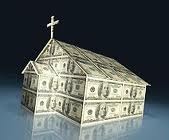 So much greed, selfishness, and stinginess in the kingdom of God is excused under the banner of “good stewardship.” We believe that the tighter you hold on to Christ, the looser your grip on other things will be. There is an absolute and direct corollary between these two opposites. The harder you cling to things, the less you are holding on to Christ. If you find that as a church you have a difficult time giving away the use of facilities or equipment, perhaps that means you are not holding on to Christ with enough faith.
We know of a senior pastor of a church in our area who, after refurbishing the facilities with fresh paint and new carpet, stood before the congregation with a cup of coffee. To the shock and sighs of the congregation, he then intentionally poured its con- tents directly onto the new carpet, creating a dark puddle and a permanent stain. He said to the church that the carpet can go to hell but he didn’t want the kids in the neighborhood to have to. The people outside the walls are far more important than the carpet inside of them. They left the stain as a permanent reminder that the mission is not in the building, but outside in the streets. We must not let our grasp of material things keep us from the mission we are actually called to and then excuse it under the banner of being good stewards.
We believe with all our hearts that a church that is overtly generous with all the resources it has been blessed with will always have enough to do whatever God has called it to. We also believe that greater resources come to the churches that are generous. A generous church is one that Jesus will want to increase and multiply. A greedy church is one that He will not want more of.
We would all agree that Jesus was a faithful steward, right? Well, I think we should take a second look at his financial practices. He had a band of followers who were responsible men for the most part. He even had a professional bookkeeper-accountant who served as a tax collector on His team. When Christ chose someone to be responsible for the purse, He chose the only untrustworthy thief on the team. We do not believe that this was an accident or a blind spot on His part. The way Jesus views money and the way the church views money are two very different things.
Jesus never placed His faith in His financial balance; he placed it in His Father, and we should all do likewise. It is safe to assume that if God has blessed your congregation with some property, it is so that you can bless others, for that is His nature and way (Gen. 12: 1–3). It has been estimated that only 15 cents of every dollar received by a church is actually spent to benefit those outside its own membership.1 Of course, that 15 cents includes money spent on all mission work that is to reach people who will hopefully become members of the church, so the percentage that is intentionally spent on people never expected to darken the door of the church is even less.
We find that churches that allow multiple congregations to use their facilities are not as clean or ordered—but are far more beautiful. Those that do so without charge are the most beautiful, and both of us have aspired to that kind of generosity in ministry.
In church transfusion we have found over and over again that the church that holds loosely to all its assets and gives generously is the church that is healthy and is one that God would prefer to multiply.
The more you cling to, the less you will have. Greed is not the way to have plenty in God’s kingdom. The more generous one is, the more true riches one will have. One who has nothing to lose is a dangerous person.
In a world divided only by those who feel entitled to their wealth and those who feel entitled for their fair share of the other person's wealth, the church is meant to stand as a model of love and generosity. Unfortunately, we have not fulfilled that role very often, but instead have become greedy rather than generous. Jesus said, “Where your treasure is, there will your heart be also.” When a church starts to accumulate things and hold on to them as prizes worth defending or preserving, they will quickly find that their affection and provision is not found in Christ but in the maintenance and management of possessions and property.
 So much greed, selfishness, and stinginess in the kingdom of God is excused under the banner of “good stewardship.” We believe that the tighter you hold on to Christ, the looser your grip on other things will be. There is an absolute and direct corollary between these two opposites. The harder you cling to things, the less you are holding on to Christ. If you find that as a church you have a difficult time giving away the use of facilities or equipment, perhaps that means you are not holding on to Christ with enough faith.
We know of a senior pastor of a church in our area who, after refurbishing the facilities with fresh paint and new carpet, stood before the congregation with a cup of coffee. To the shock and sighs of the congregation, he then intentionally poured its con- tents directly onto the new carpet, creating a dark puddle and a permanent stain. He said to the church that the carpet can go to hell but he didn’t want the kids in the neighborhood to have to. The people outside the walls are far more important than the carpet inside of them. They left the stain as a permanent reminder that the mission is not in the building, but outside in the streets. We must not let our grasp of material things keep us from the mission we are actually called to and then excuse it under the banner of being good stewards.
We believe with all our hearts that a church that is overtly generous with all the resources it has been blessed with will always have enough to do whatever God has called it to. We also believe that greater resources come to the churches that are generous. A generous church is one that Jesus will want to increase and multiply. A greedy church is one that He will not want more of.
We would all agree that Jesus was a faithful steward, right? Well, I think we should take a second look at his financial practices. He had a band of followers who were responsible men for the most part. He even had a professional bookkeeper-accountant who served as a tax collector on His team. When Christ chose someone to be responsible for the purse, He chose the only untrustworthy thief on the team. We do not believe that this was an accident or a blind spot on His part. The way Jesus views money and the way the church views money are two very different things.
Jesus never placed His faith in His financial balance; he placed it in His Father, and we should all do likewise. It is safe to assume that if God has blessed your congregation with some property, it is so that you can bless others, for that is His nature and way (Gen. 12: 1–3). It has been estimated that only 15 cents of every dollar received by a church is actually spent to benefit those outside its own membership.1 Of course, that 15 cents includes money spent on all mission work that is to reach people who will hopefully become members of the church, so the percentage that is intentionally spent on people never expected to darken the door of the church is even less.
We find that churches that allow multiple congregations to use their facilities are not as clean or ordered—but are far more beautiful. Those that do so without charge are the most beautiful, and both of us have aspired to that kind of generosity in ministry.
In church transfusion we have found over and over again that the church that holds loosely to all its assets and gives generously is the church that is healthy and is one that God would prefer to multiply.
September 17, 2012
The Way to Be Strong is to Become Weak
 In our new book,
Church Transfusion
, Phil Helfer and I start by claiming that the true expression of Christ's kingdom should stand out as very different from all other religions. To demonstrate the radically different nature of God's kingdom we list 6 ways that the upside-down kingdom stands in contrast from the world's view of what is right and often is at odds with the Church as well. In these blog posts I will list those six different paradigms of the upside-down Kingdom. This is the third: the way to be strong is to become weak.
In our new book,
Church Transfusion
, Phil Helfer and I start by claiming that the true expression of Christ's kingdom should stand out as very different from all other religions. To demonstrate the radically different nature of God's kingdom we list 6 ways that the upside-down kingdom stands in contrast from the world's view of what is right and often is at odds with the Church as well. In these blog posts I will list those six different paradigms of the upside-down Kingdom. This is the third: the way to be strong is to become weak.Success can often become your greatest hindrance in a church. Does that sound strange? The spiritual truth is clear in the Scriptures: the stronger we are, the weaker we become spiritually. True spiritual strength comes in weakness. Success is sometimes a tool of the devil that spawns pride, self-sufficiency, and an inability to learn anything new. A person (or church) that acknowledges his/her weakness is more likely to turn to God for help. One who is self-sufficient is further from dependence on God for the fulfillment of needs. "Success" and all it entails creates a false sense of importance and masks our worst deficiencies.
Perhaps the worst part of this "success" scenario is the delusion. The pastor feels good about his or her popularity and thinks all must be well because so many people come to here his/her sermon each week. The people also feel good with the “success” and the fact that their felt needs are being met, so they too believe this must be right. Both parties are happy with this scenario; therefore, it must be good, and God must be pleased. But nothing could be further from the truth.
It is possible as a church to think you are doing well when in fact you are very sick and near death. Of the seven letters to churches that Jesus sent in Revelation 2–3, almost half of the churches suffered from a form of self-deception, two in a negative way and a third in a positive manner.
To the church of Sardis, Jesus dictated to John the apostle, “I know your deeds, that you have a name that you are alive, but you are dead. Wake up, and strengthen the things that remain, which were about to die; for I have not found your deeds completed in the sight of My God.”
To the church of Laodicea Jesus said, “Because you say, ‘I am rich, and have become wealthy, and have need of nothing,’ and you do not know that you are wretched and miserable and poor and blind and naked.”
Even in a positive way a church can think it is worse off than it really is. To the church of Smyrna He wrote, “And to the angel of the church in Smyrna write: The first and the last, who was dead, and has come to life, says this: ‘I know your tribulation and your poverty (but you are rich).’” Some churches that do not appear "successful" by the standards of the world feel inferior even when they are actually truly healthy and strong.
The worst part of self-deception is that by very definition, you do not think that you have a problem. Because you do not recognize the problem, whatever the illness is, you believe you are healthy and successful, and all the while you are evaluating and celebrating or perhaps bemoaning the wrong things. Because things that need correction go unaddressed, problems progress from bad to worse, and through it all everyone feels happy and content. If you knew you were deceived, you wouldn’t be deceived; that’s the sinister part of the problem. Most sane people do not leave their zipper down on purpose, but it happens and we are embarrassed when we realize it. Until then we are deluded into a false sense that all is fine...and it is not.
Jesus concludes each of His letters with the same admonition: “He who has an ear, let him hear what the Spirit says to the churches.” If we are to have any hope of transfusion, we must have an ear that wants to hear the truth even if we do not like what the Spirit has to say. Our vision will be polluted if we simply rely on our own viewpoint to assess our health and success because we are part of the problem, not the solution. Only when we are brutally honest, repent (change our mind), and seek Jesus’ own viewpoint will we be able to see the truth.
In church transfusion it is harder to get a church that thinks it is strong to accept that it needs a transfusion. "Successful" churches often do not have an ear to hear what the Spirit is saying. Jesus said, “It is not the well who need a physician but those who are sick.” Jesus also said, "Blessed are the poor in Spirit for theirs is the kingdom of Heaven." Our greatest blessing in this upside-down kingdom is to start from weakness and poverty, not from a place of strength and success. It is the weak that confounds the strong.
Weak things are often the strongest in God's upside-down kingdom. Beware the wrath of the lamb.

September 16, 2012
The Way to Go Fast is to Start Slow
 In our new book,
Church Transfusion
, Phil Helfer and I start by claiming that the true expression of Christ's kingdom should stand out as very different from all other religions. To demonstrate the radically different nature of God's kingdom we list 6 ways that the upside-down kingdom stands in contrast from the world's view of what is right and unfortunately often is at odds with the Church as well. In these blog posts I will list those six different paradigms of the upside-down Kingdom. The second is that The way to go fast is to start slow.
In our new book,
Church Transfusion
, Phil Helfer and I start by claiming that the true expression of Christ's kingdom should stand out as very different from all other religions. To demonstrate the radically different nature of God's kingdom we list 6 ways that the upside-down kingdom stands in contrast from the world's view of what is right and unfortunately often is at odds with the Church as well. In these blog posts I will list those six different paradigms of the upside-down Kingdom. The second is that The way to go fast is to start slow. Exponential growth always starts slow. A large and fast start may be appealing for most church planters, but that actually negates the possibility that the work they are doing might ever become a spontaneously multiplying movement. All multiplication starts off slow and builds in momentum with each succeeding generation: 2 becomes 4; 4 becomes 8; 8 becomes 16; . . . There’s nothing impressive about these numbers at first, but by the fifteenth year, you have 32,768. By the twentieth year, you have passed a million and just keep on going. By the time you pass the thirty-fourth year, you have reached every person on the planet and have started reaching out to new solar systems.
According to David Garrison, author of the seminal book Church Planting Movements, one of the ten characteristics of a church planting movement is rapid reproduction. Because many people do not see reproduction occurring rapidly, they have taken issue with this assessment. Actually, if you are truly multiplying, rapid is the only way—eventually. All multiplication begins slow and small and builds toward rapid momentum over time. That is sound arithmetic, and you must respect both the slow and small start as well as the rapid exponential up-curve that eventually comes. That is how movements emerge. In a sense you must have both if it is to be an exponential movement—the slow, small start and the rapid exponential momentum later. Do not despise the day of small beginnings, but don’t stay there either.
In church transfusion you must respect the long, slow beginning that is a part of the multiplication process. If you bypass the slow beginning, you bypass multiplication. In Christendom we usually celebrate the fast start as truly successful, but then we are bypassing any real multiplication and will never break out into a true movement. Most church leaders grow impatient with the slow start of multiplication and feel that they are failing, so they instead opt for a fast addition approach. Once that decision is made, the future of the church is likely stuck in addition mode and will probably never produce real multiplication.

September 15, 2012
The Way to Get Big is to Go Small
In our new book, Church Transfusion, Phil Helfer and I start by claiming that the true expression of Christ's kingdom should stand out as very different from all other religions. To demonstrate the radically different nature of God's kingdom we list 6 ways that the upside-down kingdom stands in contrast from the world's view of what is right and unfortunately often is at odds with the Church as well. In the next few blog posts I will list those six different paradigms of the upside-down Kingdom. The first is that the way to get big is to go small.
All multiplication movements begin small. Jesus described His kingdom as starting with the smallest seed known to man at the time–the mustard seed. All reproduction occurs on the cellular level. In essence, if the cells of your body are not healthy, your body is unhealthy. It doesn’t matter if you have a killer wardrobe, a face lift, and a winning smile on the outside if the cells that make up your body are ailing.
While most pastors are considering ways to get a bigger church, the key to true success is to go smaller. In the end, if you get the small things right, global impact will eventually come. When it comes to church transfusion, you must begin by planting health in the smallest unit of church life–the disciple in relation to other disciples. If you can’t multiply at that level, you will never multiply at any larger and more complicated level.
Most pastors, missionaries and church planters are in a hurry to grow big, but mistakenly pass over the small places where the life actually starts and transforms. "Do not despise the day of small beginnings."
All multiplication movements begin small. Jesus described His kingdom as starting with the smallest seed known to man at the time–the mustard seed. All reproduction occurs on the cellular level. In essence, if the cells of your body are not healthy, your body is unhealthy. It doesn’t matter if you have a killer wardrobe, a face lift, and a winning smile on the outside if the cells that make up your body are ailing.
While most pastors are considering ways to get a bigger church, the key to true success is to go smaller. In the end, if you get the small things right, global impact will eventually come. When it comes to church transfusion, you must begin by planting health in the smallest unit of church life–the disciple in relation to other disciples. If you can’t multiply at that level, you will never multiply at any larger and more complicated level.
Most pastors, missionaries and church planters are in a hurry to grow big, but mistakenly pass over the small places where the life actually starts and transforms. "Do not despise the day of small beginnings."
August 22, 2012
Some Encouraging Stories of Organic Church Around the World
 We do an organic church training which we call Greenhouse. We have trained many trainers around the world. These days there is a training going on every week somewhere in the world, often more than one.
 In the best case scenario we send someone to a place to do the training. A church planter there takes hold of the idea and runs with it. A year later we return to give the same training again followed by a more advanced training for those who are doing the work. Within another year those who have done the work are given the material and become trainers. We do not need to return much after that as the trainers begin to train others in that nation. This has happened in many different parts of the world.
Several of my books have been translated into multiple languages. Organic Church especially.
Here are a couple stories from the Russian translation of Organic Church and training coming out of the Ukraine and surrounding area:
A Baptist pastor in Armenia, wants to translate the book Organic Church. The Organic Church trainer in the Ukraine says that he found their website and started reading articles and got Organic Church from them. As a result of reading the book and the articles, he made a decision, after years of frustration, to stop trying to get people to come to the church and to start going to them. He has started nine new groups in 3 months. Some of the groups have as many as 15 people. They recently baptized ten people.
Timmy goes on to write:
"Another cool story began four years ago when Joel Ragins, an IMB missionary, purchased some Organic Church books from us. Right after he bought the books a visiting lecturer from Houston talked about organic church in Joel’s class at Kiev Theological Seminary. Joel mentioned he had the books and several guys bought them that day. Andre Rozodovsky is one guy who bought a book that day and as result he called me (my contact info is in the book). Andre and I are close to this day and he is a committed and fruitful brother. In the last month I met someone else who bought a book that day. His name is Sergei Sergienko. He bought a book, but it sat on his shelf for over two years. About a year and a half ago he picked it up. He said it was God’s timing. He had become very frustrated with the deadness and lack of evangelism and discipleship in his church. After reading the book, he decided to take some steps to go into the harvest. He found a person of peace and began to affect an oikos (social web of relationships). There have now been ten people who have come to Christ and were then baptized. I have visited them twice in the past month. They became their own church and they are a really close spiritual family and are extremely eager to learn. I did the organic church seminar with them this past weekend and they were so excited. The husband of one woman (she had come to Christ herself in the past few months) repented as a result of some things that God spoke to him during the time together. It is really cool because Sergei would say that all of this came about because he read Organic Church.
In general, it seems that many of the seeds we have planted over the past 6 years through our conferences, coaching, books, and website are really beginning to bear more fruit. It seems hardly a week goes by that I do not get a phone call or a letter from someone who wants to talk because they have been impacted by Organic Church and some of the other resources we have been able to provide. Thanks for your part in all of this.
Just wanted to encourage you with what continues to happen in this part of the world.
Blessings,
Timmy"

Neil Cole's Blog

- Neil Cole's profile
- 36 followers
Neil Cole isn't a Goodreads Author
(yet),
but they
do have a blog,
so here are some recent posts imported from
their feed.

