
Neil Cole's Blog, page 5
December 18, 2013
Interesting Church Statistics
The following is from my good friend and coworker
 Felicity Dale's blog called Simply Church...
I actually think that the numbers of people seeing a small gathering in the home as their main spiritual family is much larger (Felicity notes that the stat is four years old). Even many mega-churches today are working diligently to make sure that missional commuities in homes are people's primary source of spiritual relationships.
The public platform of the mega-church is viewed as a much bigger stage because of obvious marketing reasons, but I do suspect that the organic church movement is having more influence than is noted by some.
Scott McKnight has interesting observations about the marketing platform of the mega-church pastor on his blog that closely relates to some of my own thoughts that same week.
 Felicity Dale's blog called Simply Church...
 According to a good and informative 2013 year-end status report by Leadership Network providing statistics on the state of mega-churches in this country, almost 10 percent of Protestant churchgoers attend a mega-church.
According to a Pew Forum report in December 2009, (if there is a more recent report, I am not aware of it), 9 percent of Protestants “attend religious services in homes.”
Just saying…
I actually think that the numbers of people seeing a small gathering in the home as their main spiritual family is much larger (Felicity notes that the stat is four years old). Even many mega-churches today are working diligently to make sure that missional commuities in homes are people's primary source of spiritual relationships.
The public platform of the mega-church is viewed as a much bigger stage because of obvious marketing reasons, but I do suspect that the organic church movement is having more influence than is noted by some.
Scott McKnight has interesting observations about the marketing platform of the mega-church pastor on his blog that closely relates to some of my own thoughts that same week.


December 7, 2013
The Pressures of Plagiarism, Part Five
Plagiarism is an especially a strange concept when we dive into the pool of Biblical interpretation. My theologian brothers and sisters in academia may not like to hear this, but at the end of the day it may be so.
 Is it really right to say that Professor Such&Such is responsible for an interpretation of Scripture when in fact the Holy Spirit had given that truth to us two thousand years ago through Paul, Peter, James or John?
This is especially a question when we approach Scripture with the belief that there is one true interpretation of most passages. To give one person the credit for the correct interpretation of a passage seems to grant them perhaps too much authority and comes close to ranking them next to the original author.
Is it really possible for any of us to claim ownership of ideas found in the Scripture? Or is it more likely that all of us should claim ownership of what is in the Bible? I’m in favor of citing sources and giving honor to those who went before, but in truth every good idea is built on thousands of years of good ideas...and several bad ones as well.
If we had to cite every one responsible for our own limited intelligence displayed in a single message it would sound like the listing of possible negative side-effects read off during a pharmaceutical commercial, and the sermons would be just as interesting.
 Is it really right to say that Professor Such&Such is responsible for an interpretation of Scripture when in fact the Holy Spirit had given that truth to us two thousand years ago through Paul, Peter, James or John?
This is especially a question when we approach Scripture with the belief that there is one true interpretation of most passages. To give one person the credit for the correct interpretation of a passage seems to grant them perhaps too much authority and comes close to ranking them next to the original author.
Is it really possible for any of us to claim ownership of ideas found in the Scripture? Or is it more likely that all of us should claim ownership of what is in the Bible? I’m in favor of citing sources and giving honor to those who went before, but in truth every good idea is built on thousands of years of good ideas...and several bad ones as well.
If we had to cite every one responsible for our own limited intelligence displayed in a single message it would sound like the listing of possible negative side-effects read off during a pharmaceutical commercial, and the sermons would be just as interesting.
December 6, 2013
The Pressures of Plagiarism, Part Four
<!-- /* Font Definitions */ @font-face {font-family:Cambria; panose-1:2 4 5 3 5 4 6 3 2 4; mso-font-charset:0; mso-generic-font-family:auto; mso-font-pitch:variable; mso-font-signature:3 0 0 0 1 0;} /* Style Definitions */ p.MsoNormal, li.MsoNormal, div.MsoNormal {mso-style-parent:""; margin:0in; margin-bottom:.0001pt; mso-pagination:widow-orphan; font-size:12.0pt; font-family:"Times New Roman"; mso-ascii-font-family:Cambria; mso-ascii-theme-font:minor-latin; mso-fareast-font-family:Cambria; mso-fareast-theme-font:minor-latin; mso-hansi-font-family:Cambria; mso-hansi-theme-font:minor-latin; mso-bidi-font-family:"Times New Roman"; mso-bidi-theme-font:minor-bidi;} @page Section1 {size:8.5in 11.0in; margin:1.0in 1.25in 1.0in 1.25in; mso-header-margin:.5in; mso-footer-margin:.5in; mso-paper-source:0;} div.Section1 {page:Section1;} </style>Perhaps the bigger problem in Church is not the amount of plagiarism, but the lack of creativity. I suspect that if we had an environment that was more innovative we might see better thinking and less rehashing of the same ideas. <br /><div class="MsoNormal"><br /></div><div class="MsoNormal">Maybe we have become so placid in our canned routines and expectations that we are not producing people who are able to think outside the box. Perhaps our staid practices, perpetuated for centuries, draw only the kind of person who is uncreative and actually resists innovation. </div><div class="MsoNormal"><br /></div><div class="MsoNormal">Church has become sedentary in so many different ways that it is actually hostile to creativity and innovation. It is also boring. This pressures pastors to spice it up a bit just to stay “relevant” (read: compete with other churches) within the confines of inherited boundaries in both practices and beliefs. This pressure results in needing to find another message every week that is at least as good as the last. Plagiarism can be the byproduct.<br /><br />Every time we do this we take more steps away from the beauty evidenced in our Creator. Reconciled to the Creator, we of all people, should be the most creative in this world. But alas, we are the least. Rather than innovate we end up copying the innovations of the world. We sanctify the lyrics of a popular rock song as best we can for our saintly audience to try and make church less boring this next week.<br /> </div><div class="MsoNormal"><a href="http://4.bp.blogspot.com/-X-8CWm3T4tY..." imageanchor="1" style="clear: right; float: right; margin-bottom: 1em; margin-left: 1em;"><img border="0" src="http://4.bp.blogspot.com/-X-8CWm3T4tY..." /></a>This lack of innovation is especially true in certain domains of the kingdom that emphasize liturgies, hymns, creeds and doctrinal systems developed centuries ago. It is as if nothing new can be learned since John Calvin, John Wesley or Martin Luther.<br /><br />We dare not question the ideas of great men who died 300 years ago. Realize that these are people who executed other Christians for a baptizing differently, or sold tickets to buy seats in pews. These men couldn’t even imagine a world with mass communication, rapid transit, instant publications, smart phones and global news channels on our LED TVs. In my iPhone I have dozens of versions of the Bible at my finger tips (literally) carried around with me all day in my pocket. What would Gutenburg think of that? They are dead and buried– their brains are but dust–yet still they think for the rest of us. In such an environment, where every thought must be held up to the mentality of long dead theologians, plagiarism is not surprising––an original thought is scandalously shocking. </div><div class="MsoNormal"><br /></div><a href="http://2.bp.blogspot.com/-S7XOFYBPOco..." imageanchor="1" style="clear: left; float: left; margin-bottom: 1em; margin-right: 1em;"><img border="0" height="200" src="http://2.bp.blogspot.com/-S7XOFYBPOco..." width="200" /></a>We haven’t reached the apex yet of learning from God’s word. Luther, Calvin, and Wesley were not the final word in our march of progressive revelation. Creeds written in the fourth century cannot possibly contain the whole of scriptural truth and define all there is to learn. There are insights and understandings that they missed, in spite of how sound and profound their observations were. If encouraged, our Spirit-led children will discover even more than we do in the Bible.<br /><br />Do not be afraid to dive boldly into the Scriptures without the boundaries of your inherited theological restraints. Keep on learning. Keep on growing. Ask questions of sacred ideas that have been around for centuries! If you have the Spirit of God in your heart and the word of God in your hand (or pocket) get out of the box and start to think for yourself. Feel free to make a mistake or two, that’s how we learn. Is this dangerous? Perhaps, but maybe our Christianity could stand for a little more danger in the mix. In fact, those very creeds we have loved for a millennium and a half came to be <i>because</i> of dangerous thinking.<br /><div class="MsoNormal"><br /></div><div class="MsoNormal">Am I anti-doctrine? No, but I am against closed doctrinal systems that don’t stimulate better thinking or advance in understanding and application. When all the possible categories are defined, and the walls well established, and all learning must be within their boundaries you have put your god in a box. I am against that.<br /><br /><div class="separator" style="clear: both; text-align: center;"><a href="http://2.bp.blogspot.com/-wlw6b3HItfI..." imageanchor="1" style="clear: right; float: right; margin-bottom: 1em; margin-left: 1em;"><img border="0" height="200" src="http://2.bp.blogspot.com/-wlw6b3HItfI..." width="140" /></a></div>I am devoted to the Scriptures as inspired revelatory truth that is alive and enduring. The Scriptures are a baseline of all truth, but they are also eternal and inexhaustible. We do them a disservice by making them submit to our theological categories, labels and systems, it should be the other way around. I do not think the creeds or writings of church fathers are equal to the authority of Scriptures––or as empowered to change lives. I'm weary of theologians <a href="http://www.desiringgod.org/blog/posts..." target="_blank">judging another teacher's orthodoxy</a> based upon how they line up within the categories of a human designed system of doctrines, rather than simply how they square in the light of Scripture. Those two things are not the same thing and I believe to equate them is less than orthodox...heretical even. I am not against learning from great men, I am against seeing those men as having already learned all there is to learn. I suspect that if they truly are great men, they would agree.<br /><br />What would Christendom look like if we all agreed, all the time, and no one ever raised a different point of view? Some may say that would be heaven, I think it would be hell. All learning and growing would stop. We'd be monochromatic robots with little beauty or diversity, and we would lack all creativity and surprise. Heaven will be like our Creator who made 10,000's of varieties of flowers and birds, and gave each person a one-of-a-kind DNA so that each one is unique in all of history. Personally, I am grateful for the diversity of opinion. I love people that disagree with me, and those who agree as well. We all can learn from each other. We can discover the rich depth each part of the body brings to the round table if we only humble ourselves and accept one another. Perhaps combinations of thought can produce entirely new realms of understanding.<br /><br />Doctrine was not meant to be the glue of unity. A statement of faith does not bring people together, in fact, it's designed to keep people out! Humility induced love is the only way to have true unity. Knowledge induces pride and division, only love edifies. If you have to agree to love, than you do not know love. Love shines best when you do not agree. When we make agreement to doctrine what unites us we end up dividing...time and again. When will we learn this?</div><div class="MsoNormal"><br /></div><div class="MsoNormal">We need to aspire to be more attentive to the voice of Scripture without hearing the same old broken record of theological systems replaying over and over. Is it possible for the church to break free of this? It will take people that are free and innovative, and right now the church doesn’t seem to favor that kind of person. We’ll see. I have hope, but not in the religious system that exists but rather in the Creator who always has existed––both in the system and outside of it.</div>
December 5, 2013
The Pressure to Plagiarize, Part Three
Plagiarism is sometimes very obvious, at other times it is not. At the end of the day you really can’t always find the initial source of every quip, story or idea. My question is: Why are we so concerned with credit for everything we’ve said?
I have had more than a few of my words used by others without credit given. I’ve also seen where someone used my material and attributed its authorship to someone else that had “borrowed” my ideas earlier. Honestly, that makes me excited…most of the time. Sometimes I'm troubled because I sense a less then genuine person capitalizing on my work for his own financial benefit…and ego. But most of the time I am able to recognize the benefit of ideas spreading.
We cannot catalyze a movement that spreads far if we have to be at the center of it all. We should want the ideas to be owned and spread willingly by each part of the movement.
I regularly preface some statements with: “We have a saying in our movement...” I do this for the very reason that I want others to own the idea and say it as their own rather than simply quote Neil Cole. I want the movement to own the idea. This actually fosters an environment where there isn't individual credit for an idea. Sometimes we must sacrifice individual ownership for the sake of mass ownership if we want a real movement. At the end of the day we want people talking about Jesus more than about their pastor or favorite author...don't we?
 That is a very different value. It's a more apostolic (sending) approach to words and statements. You see, in a movement ideas must be owned by everyone so that they will get passed on by everyone. People must be so gripped by the idea that it becomes their own for all intents and purposes. That is how they go from consumers to communicators. Perhaps that is why Paul called the gospel "my gospel." If you are always worried about who gets the credit then you will not witness a movement. You will end up owning your own material and getting the credit, but you will not spread those ideas far and wide. There is still no guarantee that others wont plagiarize your idea anyway.
 I’ll never forget the time I was at a restaurant and saw a couple guys using one of our Life Transformation Group (LTG) cards. I asked them about it and one of the men enthusiastically evangelized me with the concept of LTGs not knowing that I was the author of it. I reveled in that moment and did not bother telling them who I was. I simply said, “Wow, that’s great…I think I'll do that too.”
Of course, it wouldn’t be right for me to take full credit. The LTG concept was first inspired by John Wesley’s class meetings. But then Wesley got the idea from the Moravians.The early church was said to meet early in the morning to ask each other hard questions of character...so how far back do we go with the credit?
Am I giving permission for people to steal ideas? No, I’m not saying that. This is more a giving away of ideas than stealing. We need a more generous learning environment, so we need more generous teachers who are actually wanting others to learn, implement and even teach their ideas. Perhaps if we had a more generous learning environment we would be less inclined to steal some one’s words and would be generous enough to honor others wherever possible.
Lets value everyone's learning more than one person's teaching.
Note: this post is copyrighted and usage of any part of this material is strictly forbidden without the author’s expressed written consent…just kidding. Use it. There’s my expressed written consent.
December 4, 2013
The Pressure to Plagiarize, Part Two
Plagiarism is a problem. When you consider that committing intentional plagiarism could actually violate up to six of the seven things the Lord hates listed in Proverbs 6:16-19 it has serious implications. But is all plagiarism the same? Does the context make a difference in how it is treated?
 As hard as it is for more "black and white" Christians to hear, there are certain environments where it is a worse sin than in others. The context and the reasons for the plagiarism do make a difference.
Plagiarism is a cardinal sin in the academic world where people trade in the commerce of original ideas and words. One's reputation, identity, life's work, position and salary are all on the line in this environment and as such the whole system is designed to police this activity. This is one reason why plagiarism is treated so harshly in universities and grad schools.
The same is true in literature, though it is more forgiven there as a whole, especially in the context of popular literary works. As self publishing emerges I suspect that plagiarism will also increase and that policing it will become harder, but in the literary world in general there are safe guards and boundaries in place and plagiarism is still taken seriously. As a published author I know that things can squeak by even after rounds of editing and proof reading, but there are still consequences and the public polices it more than in some other realms of communication.
In the music industry we all remember the whole Milli Vanilli fiasco. While it is less plagiarism, it is still fraudulent to have actors lip sync some one's voice and pretend to be the true author and singer of the song. The public reaction to this "crime" was unforgiving and is still a punch line: She Milli Vanilli'ed it." Were those guys "ghost singing" rather than "ghost writing"? Is it really that different? Hmmm. In the music world, it is common to hear exact riffs from one song in another these days. Sometimes there are law suits for this and other times there is not. The music industry is extremely volatile right now as technology advances faster than the laws can. This is also happening now in the literary world, though the entertainment world is ahead of the literary one.
In the blogosphere we are writing words so we do have a higher level of responsibility, but we are also without the same levels of editing and proofreading that publishing a book would receive. So in this environment it is more likely that we will simply make mistakes, but unfortunately those mistakes remain floating in a very public cyber world for a long time, so we have to learn to be more forgiving and at the same time more responsible. Having open comments on a blog can allow for more accountability.
In the world of public discourse, plagiarism is less volatile and less policed. It can have equally as serious implications in this context and stealing oral messages for personal gain is still not acceptable, but it does tend to be forgiven much easier and is caught less frequently.
Mass media is a world of instantly published thoughts by anybody and everybody. Tweets and retweets are propagated several generations without any checking of sources. It is harder to cite sources when you are limited to 140 characters and sending it out while doing two or three other things (hopefully not driving!); so mistaken plagiarism has become a very common thing and should not be taken as seriously. We should strive always to be honest and give honor to whom it is due, but I wouldn’t stone anyone because they misrepresented someone’s words in 140 letters sans punctuation. I have been given credit for things I shouldn't and ripped off of credit on other things in the world of social media. We just need to read things with eyes that are less offended and more discerning.
The bottom line is that we will all be held accountable for our words, written or spoken. The tongue can set a large firestorm with words said casually and without thought. In fact, if we could just master our own tongue we would be close to perfection. Intentional deception and theft of others ideas for personal gain is far more serious than leaving out the phrase, "Someone once said..." before you say something. Nevertheless, we should still always strive to master our tongues and tapping fingers because there are some things that our Lord hates worse than others.
 As hard as it is for more "black and white" Christians to hear, there are certain environments where it is a worse sin than in others. The context and the reasons for the plagiarism do make a difference.
 Plagiarism is a cardinal sin in the academic world where people trade in the commerce of original ideas and words. One's reputation, identity, life's work, position and salary are all on the line in this environment and as such the whole system is designed to police this activity. This is one reason why plagiarism is treated so harshly in universities and grad schools.
The same is true in literature, though it is more forgiven there as a whole, especially in the context of popular literary works. As self publishing emerges I suspect that plagiarism will also increase and that policing it will become harder, but in the literary world in general there are safe guards and boundaries in place and plagiarism is still taken seriously. As a published author I know that things can squeak by even after rounds of editing and proof reading, but there are still consequences and the public polices it more than in some other realms of communication.
In the music industry we all remember the whole Milli Vanilli fiasco. While it is less plagiarism, it is still fraudulent to have actors lip sync some one's voice and pretend to be the true author and singer of the song. The public reaction to this "crime" was unforgiving and is still a punch line: She Milli Vanilli'ed it." Were those guys "ghost singing" rather than "ghost writing"? Is it really that different? Hmmm. In the music world, it is common to hear exact riffs from one song in another these days. Sometimes there are law suits for this and other times there is not. The music industry is extremely volatile right now as technology advances faster than the laws can. This is also happening now in the literary world, though the entertainment world is ahead of the literary one.
In the blogosphere we are writing words so we do have a higher level of responsibility, but we are also without the same levels of editing and proofreading that publishing a book would receive. So in this environment it is more likely that we will simply make mistakes, but unfortunately those mistakes remain floating in a very public cyber world for a long time, so we have to learn to be more forgiving and at the same time more responsible. Having open comments on a blog can allow for more accountability.
In the world of public discourse, plagiarism is less volatile and less policed. It can have equally as serious implications in this context and stealing oral messages for personal gain is still not acceptable, but it does tend to be forgiven much easier and is caught less frequently.
Mass media is a world of instantly published thoughts by anybody and everybody. Tweets and retweets are propagated several generations without any checking of sources. It is harder to cite sources when you are limited to 140 characters and sending it out while doing two or three other things (hopefully not driving!); so mistaken plagiarism has become a very common thing and should not be taken as seriously. We should strive always to be honest and give honor to whom it is due, but I wouldn’t stone anyone because they misrepresented someone’s words in 140 letters sans punctuation. I have been given credit for things I shouldn't and ripped off of credit on other things in the world of social media. We just need to read things with eyes that are less offended and more discerning.
The bottom line is that we will all be held accountable for our words, written or spoken. The tongue can set a large firestorm with words said casually and without thought. In fact, if we could just master our own tongue we would be close to perfection. Intentional deception and theft of others ideas for personal gain is far more serious than leaving out the phrase, "Someone once said..." before you say something. Nevertheless, we should still always strive to master our tongues and tapping fingers because there are some things that our Lord hates worse than others.
There are six things which the Lord hates,
Yes, seven which are an abomination to Him:Haughty eyes, a lying tongue,
And hands that shed innocent blood,A heart that devises wicked plans,
Feet that run rapidly to evil,A false witness who utters lies,
And one who spreads strife among brothers.
December 3, 2013
The Pressure to Plagiarize, Part One
There is much talk about Mark Driscoll being involved in alleged plagiarism this week. Mark Driscoll involved in controversy? It must be Tuesday.
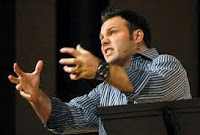 I've known Mark for several years now––as much as anyone can know Mark Driscoll that is not a male, hip, five-point, mega-church, Calvinist (actually I am male). I've always liked Mark and a couple times his preaching truly altered my own life in positive ways, so in spite of our obvious differences in how we see liturgy, ladies, leadership, and limited atonement, I hold a warm spot in my heart for him. I don't have to agree with everyone I like––I'm not sure the same can be said for Mark, but that's for him to decide.
I will not weigh in on Mark's guilt or innocence regarding plagiarism on this blog. I simply want to address the idea of using other people's ideas for one's own benefit and a Christian climate that encourages it. Whether Mark plagiarized or not, all I want to address is the pressure pastors face today to do so. Therefore as I address this pressure do not read that I am singling out Mark. I'm just using the current news as a launch pad to unpack some ideas about "advancing original thought." In later posts I want to look at the culture we have that sees plagiarism as the most grievous sin when it is not always as bad as that. I will have a few posts to cover the subject from more than one angle, so as you read one post, realize that there is more to the story in the next.
Plagiarism is stealing material from another that is not rightfully yours. It is also stealing confidence from the public that is not rightfully yours. Building fame based upon other people's ideas taken as your own is fraudulent, false and unfortunately far reaching. Fraud is a particularly ugly sin and one the world is eager to expose in the church. The world can smell it in us. They know its there and are waiting to pounce when it is exposed. The church in today's world cannot afford to be built upon false confidence and fraudulent ideas...but often it is.
We have a church celebrity culture that actually encourages plagiarism and often refuses to admit it. Entire books are written by ghostwriters who are never mentioned. While this is seemingly acceptable in our current Christian climate, one must ask if it should be. If your name is on the front cover (and often your smiling face), and you didn't write the book but someone else did, you have questionable integrity. Honesty is not possible when you take credit for a book someone else wrote. No matter how good the content, such a book should be held suspect. This has gone on for decades now and as long as the contract is clear and the check is written all is fine...or is it? I've heard of personal stories from a ghostwriter's childhood that have been used by an author who then changed names to fit his own background and published the story as if he had the experience. This is not merely plagiarism, it is straight up lying; even if the ghostwriter is paid what the contract stipulated. Can we buy a life story for publication? Is that what we have come to? Why are some pressured to this point?
To build one's success as a Christian celebrity on lies is folly and will not be fruitful in the end. In fact fame itself is fickle and can be gone in a moment. It demands all your attention immediately just to keep your Klout score up and your blog traffic coming. The race to collect twitter followers and Facebook friends is cruel and never satisfied. When your book sells well and is featured in Barnes and Noble there is always another book that sold better and is featured at Walmart or Costco...upping the ante. When you are invited to speak at a big conference, you feel good until you realize someone else is speaking in the prime slot and you're just the warm-up act. No matter how far up you climb the ladder of fame there is always somebody's backside your are looking up at. Fame is a race that doesn't have a finish line, it just has lots of people running and falling back––and eventually out––while younger energetic people jump onto the track...until they too fall behind. No one wins in this race. That is a lot of pressure to put on someone who is already busy running a church, and many are trying to do just that.
Once you are a published author or a famous Christian speaker there is much pressure to continue producing material to keep the success and fame going for as long as you can. Some pastors of large churches who start work before the sun rises and stay busy until late into the night maintaining the success of the church. Every week another awesome sermon must be preached several times, another elder meeting must be led, another building project must be managed, another staff member recruited and another let go. It is actually a well hidden secret that many mega church pastors have had to take a lengthy sabbatical for health reasons because they have been running on adrenaline for far too long. It is an unrealistic and unreasonable environment to endure. These celebrity pastors hardly have time to write a new book every year, but that is what is demanded by their success. On top of all that after the book is written the celebrity pastor must travel to conferences, do interviews and book signing gigs, to push the book increasing the pressure and the demand on his/her time and health.
In order to write the next book a staff is often hired to do the research and help write the sermons that eventually a ghostwriter turns into a book. This can be a time-wise usage of a famous pastor's resources, so I get it. I don't think I could do it, the artist in me would not be able to live with it, but I understand. This process can produce a bestseller, but it rarely produces a good book; and the two are not always the same. A pastor who is particularly postured to be an intelligent "thinker" has the added pressure of having to articulate something profound and not just practical. Unfortunately there are no shortcuts to creativity and innovation. There is no other path to originality beyond hard work, practice, failure and rewrites...but a busy pastor needing another book to follow up the last bestseller cannot afford that. Given today's celebrity climate the real shock today shouldn't be that a famous speaker/author used someone's idea. The real shock is when they come up with an original one.
 I've known Mark for several years now––as much as anyone can know Mark Driscoll that is not a male, hip, five-point, mega-church, Calvinist (actually I am male). I've always liked Mark and a couple times his preaching truly altered my own life in positive ways, so in spite of our obvious differences in how we see liturgy, ladies, leadership, and limited atonement, I hold a warm spot in my heart for him. I don't have to agree with everyone I like––I'm not sure the same can be said for Mark, but that's for him to decide.
I will not weigh in on Mark's guilt or innocence regarding plagiarism on this blog. I simply want to address the idea of using other people's ideas for one's own benefit and a Christian climate that encourages it. Whether Mark plagiarized or not, all I want to address is the pressure pastors face today to do so. Therefore as I address this pressure do not read that I am singling out Mark. I'm just using the current news as a launch pad to unpack some ideas about "advancing original thought." In later posts I want to look at the culture we have that sees plagiarism as the most grievous sin when it is not always as bad as that. I will have a few posts to cover the subject from more than one angle, so as you read one post, realize that there is more to the story in the next.
Plagiarism is stealing material from another that is not rightfully yours. It is also stealing confidence from the public that is not rightfully yours. Building fame based upon other people's ideas taken as your own is fraudulent, false and unfortunately far reaching. Fraud is a particularly ugly sin and one the world is eager to expose in the church. The world can smell it in us. They know its there and are waiting to pounce when it is exposed. The church in today's world cannot afford to be built upon false confidence and fraudulent ideas...but often it is.
We have a church celebrity culture that actually encourages plagiarism and often refuses to admit it. Entire books are written by ghostwriters who are never mentioned. While this is seemingly acceptable in our current Christian climate, one must ask if it should be. If your name is on the front cover (and often your smiling face), and you didn't write the book but someone else did, you have questionable integrity. Honesty is not possible when you take credit for a book someone else wrote. No matter how good the content, such a book should be held suspect. This has gone on for decades now and as long as the contract is clear and the check is written all is fine...or is it? I've heard of personal stories from a ghostwriter's childhood that have been used by an author who then changed names to fit his own background and published the story as if he had the experience. This is not merely plagiarism, it is straight up lying; even if the ghostwriter is paid what the contract stipulated. Can we buy a life story for publication? Is that what we have come to? Why are some pressured to this point?
To build one's success as a Christian celebrity on lies is folly and will not be fruitful in the end. In fact fame itself is fickle and can be gone in a moment. It demands all your attention immediately just to keep your Klout score up and your blog traffic coming. The race to collect twitter followers and Facebook friends is cruel and never satisfied. When your book sells well and is featured in Barnes and Noble there is always another book that sold better and is featured at Walmart or Costco...upping the ante. When you are invited to speak at a big conference, you feel good until you realize someone else is speaking in the prime slot and you're just the warm-up act. No matter how far up you climb the ladder of fame there is always somebody's backside your are looking up at. Fame is a race that doesn't have a finish line, it just has lots of people running and falling back––and eventually out––while younger energetic people jump onto the track...until they too fall behind. No one wins in this race. That is a lot of pressure to put on someone who is already busy running a church, and many are trying to do just that.
Once you are a published author or a famous Christian speaker there is much pressure to continue producing material to keep the success and fame going for as long as you can. Some pastors of large churches who start work before the sun rises and stay busy until late into the night maintaining the success of the church. Every week another awesome sermon must be preached several times, another elder meeting must be led, another building project must be managed, another staff member recruited and another let go. It is actually a well hidden secret that many mega church pastors have had to take a lengthy sabbatical for health reasons because they have been running on adrenaline for far too long. It is an unrealistic and unreasonable environment to endure. These celebrity pastors hardly have time to write a new book every year, but that is what is demanded by their success. On top of all that after the book is written the celebrity pastor must travel to conferences, do interviews and book signing gigs, to push the book increasing the pressure and the demand on his/her time and health.
In order to write the next book a staff is often hired to do the research and help write the sermons that eventually a ghostwriter turns into a book. This can be a time-wise usage of a famous pastor's resources, so I get it. I don't think I could do it, the artist in me would not be able to live with it, but I understand. This process can produce a bestseller, but it rarely produces a good book; and the two are not always the same. A pastor who is particularly postured to be an intelligent "thinker" has the added pressure of having to articulate something profound and not just practical. Unfortunately there are no shortcuts to creativity and innovation. There is no other path to originality beyond hard work, practice, failure and rewrites...but a busy pastor needing another book to follow up the last bestseller cannot afford that. Given today's celebrity climate the real shock today shouldn't be that a famous speaker/author used someone's idea. The real shock is when they come up with an original one.
September 23, 2013
Starting Starling Initiatives With the Right Team
I set out a few months ago to recruit the very best leaders I could find to join me in a new enterprise called Starling Initiatives. These people are not necessarily the most famous thinkers and speakers of the missional church (though some truly are that); they are all practitioners that have done the work in challenging environments and in remarkable ways. Honestly, they are all thriving leaders who have busy lives with their own work to attend to–so I fully expected them all to decline politely. To my shock almost all have responded affirmatively believing that God is saying the same thing to them at this time. Wow, what confirmation. Perhaps we are already seeing the murmuration of starlings!
 Each one is not just experienced, but their experience was fruitful at empowering others to reproduce. Each member is mature enough that they now find their sense of importance in the fruitfulness of others. They are more concerned with others success than their own. In a sense, our fruit grows on other people’s trees now. This is important when you want to ignite movements in other cultures and languages and do not want to create unhealthy dependence upon expert leaders with US models and dollars.
None of us are out to prove ourselves, in a sense we’ve already done that (and bought the t-shirt). We want to help others to become change agents in their own environment and release kingdom movement into all the spheres of society…and to every nation. To play off what the famous coach once said: there is no "i" in Starling Initiatives. Uh, oops, well, you know what I mean.
We never plan to become a large corporation. We have no plans for a large offices and an expensive staff to administer it. Our movement will be decentralized and our resources and power will be distributed rather than held onto and protected by a board of directors or corporate headquarters.
September 19, 2013
Why Call This New Ministry Venture Starling Initiatives?
<!-- /* Font Definitions */ @font-face {font-family:Cambria; panose-1:2 4 5 3 5 4 6 3 2 4; mso-font-charset:0; mso-generic-font-family:auto; mso-font-pitch:variable; mso-font-signature:3 0 0 0 1 0;} /* Style Definitions */ p.MsoNormal, li.MsoNormal, div.MsoNormal {mso-style-parent:""; margin:0in; margin-bottom:.0001pt; mso-pagination:widow-orphan; font-size:12.0pt; font-family:"Times New Roman"; mso-ascii-font-family:Cambria; mso-ascii-theme-font:minor-latin; mso-fareast-font-family:Cambria; mso-fareast-theme-font:minor-latin; mso-hansi-font-family:Cambria; mso-hansi-theme-font:minor-latin; mso-bidi-font-family:"Times New Roman"; mso-bidi-theme-font:minor-bidi;} @page Section1 {size:8.5in 11.0in; margin:1.0in 1.25in 1.0in 1.25in; mso-header-margin:.5in; mso-footer-margin:.5in; mso-paper-source:0;} div.Section1 {page:Section1;} </style> <br /><div class="MsoNormal"><a href="http://4.bp.blogspot.com/-9y9wzUcw9us..." imageanchor="1" style="clear: right; float: right; margin-bottom: 1em; margin-left: 1em;"><img border="0" height="196" src="http://4.bp.blogspot.com/-9y9wzUcw9us..." width="200" /></a>At 53 I am pioneering again and setting out to launch a whole new global enterprise called <a href="https://josiahventure.webconnex.com/5..." target="_blank"><i>Starling Initiatives.</i></a> <style><!-- /* Font Definitions */ @font-face {font-family:Cambria; panose-1:2 4 5 3 5 4 6 3 2 4; mso-font-charset:0; mso-generic-font-family:auto; mso-font-pitch:variable; mso-font-signature:3 0 0 0 1 0;} /* Style Definitions */ p.MsoNormal, li.MsoNormal, div.MsoNormal {mso-style-parent:""; margin:0in; margin-bottom:.0001pt; mso-pagination:widow-orphan; font-size:12.0pt; font-family:"Times New Roman"; mso-ascii-font-family:Cambria; mso-ascii-theme-font:minor-latin; mso-fareast-font-family:Cambria; mso-fareast-theme-font:minor-latin; mso-hansi-font-family:Cambria; mso-hansi-theme-font:minor-latin; mso-bidi-font-family:"Times New Roman"; mso-bidi-theme-font:minor-bidi;} @page Section1 {size:8.5in 11.0in; margin:1.0in 1.25in 1.0in 1.25in; mso-header-margin:.5in; mso-footer-margin:.5in; mso-paper-source:0;} div.Section1 {page:Section1;} </style><span style="font-family: Cambria; font-size: 12.0pt; mso-ansi-language: EN-US; mso-ascii-theme-font: minor-latin; mso-bidi-font-family: "Times New Roman"; mso-bidi-theme-font: minor-bidi; mso-fareast-font-family: Cambria; mso-fareast-language: EN-US; mso-fareast-theme-font: minor-latin; mso-hansi-theme-font: minor-latin;">Needless to say it is thrilling, scary and rewarding all at the same time. I love the new learning. I love the rising levels of creativity involved with starting new things. I love the reward of taking huge risks and seeing God work in unbelievable ways. </span> I'll post more about this new idea in the coming days. But why call it <i>Starling Initiatives</i>?</div><div class="MsoNormal"><br /></div><div class="MsoNormal">A starling is a hearty bird that seems to prosper in any part of the world where it is introduced. They are even considered invasive in many habitats and farmers are often desperate to find ways to be rid of them. Starlings can be very diverse in color and appearance around the world, but pretty much they are the same kind of bird. </div><div class="MsoNormal"><br /></div><div class="MsoNormal">They are a smart bird, in fact they can even be taught to mimic sounds and human speech (a Myna bird is a type of Starling). </div><div class="MsoNormal"><br /></div><div class="MsoNormal">What is most remarkable about the starling is when they fly together in what appears like a well-coordinated swarm of birds. This is called murmuration. Scientists cannot explain how so many birds can all move at once, varying angles and velocity, as though they were all hearing from the same source. In such cases each small bird becomes part of a much larger organic thing that seems to act as one. They do this to resist predators. Alone, a starling is a small and weak little bird. Together a murmuration is powerful. I believe this is a picture of the kingdom of God as it is meant to thrive all over the world.</div><div class="MsoNormal"><br /></div><div class="MsoNormal"><i style="mso-bidi-font-style: normal;">Starling Initiatives</i>will remain small and highly mobile. Our aim is not to grow a large lumbering organization that costs more and more and increases its own need for self-preservation. Instead, we choose to remain small, reproductive and highly responsive. And we intend to birth many more of the same all over the world. Our most essential value is to remain small, healthy, quick and always respond to the voice of our Father...and equip others to do the same. As the flock grows the murmuration can become more and more complex and beautiful and yet never be a large organization, but rather an organic movement. </div><div class="MsoNormal"><br /></div><div class="MsoNormal">If you would like to understand more about murmuration here is a link to a <a href="http://www.ted.com/talks/don_tapscott..." target="_blank">TED talk </a>presented by Don Tapscott that is very helpful in presenting a global context for such thinking and using starlings to picture a way of working better in today’s rapidly changing world.</div><div class="MsoNormal"><br /></div><div class="MsoNormal">If you are so led, we are accepting <a href="https://josiahventure.webconnex.com/5..." target="_blank">support</a> for this new venture. Josiah Venture, a mission to reach young people in Eastern Europe, has granted us the favor of flying under their umbrella until we can get our feet under us. </div><div class="MsoNormal"><br /></div><div class="MsoNormal"><br /></div><div class="MsoNormal"><br /></div><div class="MsoNormal"><br /></div>
September 17, 2013
Missions Is Broken
 In just ten years time (ca 47-57 AD) the apostle Paul was able to establish a thriving expression of the kingdom of God in five different provinces of the Roman Empire: Galatia, Macedonia, Achaia, Asia Minor and Illyricum. After that he had nothing more to do in those places and was looking for other places further west. Today, with modern missionary practices we do not see even one people group reached in the same amount of time. Why is that? Are the people of the world more lost? Does our gospel have less power? Are we somehow at a disadvantage with missions that Paul did not suffer?
 I actually think the opposite may be true. We may have more advantages than Paul did. We have air travel, mobile phones, the internet, rapid transit, computers, Bible aids, mass communication and an abundance of publications, none of which were available to Paul. At the same time, we also have the same God, the same empowering presence of the Holy Spirit and the same powerful good news that he had. Nevertheless we are struggling to see even a fraction of the fruitfulness he saw and it is taking us a whole lot longer for what little fruit we see. Surely we are doing something wrong.
I am convinced that we can save billions of dollars and accomplish 10 times the results if we have the courage to do missions differently. Mission agency dysfunction has been a well-known secret that can no longer be denied or contained, yet is unpopular to speak about. We are sending too many people, the wrong kind of people, who are staying too long, costing too much, and not leaving behind a healthy, well-rounded and indigenous movement that is strong enough to endure let alone send missionaries to other places. This must change.
We simply cannot expect current mission agencies to correct a problem that they are contributing to and not designed to fix…and one that they actually benefit from maintaining. More of the same will only produce more of the same. So I, and a few others, feel called to start something new, something more organic, movemental and indigenously empowering. And we need to start something that does not produce a dependence upon US dollars, leadership and models of ministry. This is why we are starting Starling Initiatives. In the coming days I will explain a bit more about this new endeavor.
June 6, 2013
Critique of the Center Church by Tim Keller [Part 3]
In my previous two posts reviewing Center Church by Keller I was actually critiquing the way his thoughts were framed or communicated. The criticism had more to do with semantics than doctrine. Overall I stressed that I agree with him on most all of his thinking, and in fact recommend the book for many good reasons. In this post, however, I will discuss where we differ theologically, and I believe the difference (while a narrow slice) is substantial when talking about church life and movements. I believe that much of what Keller establishes in the first section of the book about being gospel centered he passively dismantles in the third section when he discusses the need for institutionalism in churches. In this post I will demonstrate how I come to see this.
Now in this critique I am actually hoping to expose an inconsistency that is prevalent in the Church, not just in Keller’s book. I am using Keller’s book because he is a respected theologian and his book seems to boldly reveal this inconsistency, though to date, none have mentioned it in reviews that I have found. I hope all understand that I do greatly respect Tim Keller and his ministry.
First a point of reference: Keller is from a Reformed tradition of the church. My spiritual roots, while influenced by reformed doctrine, are more Anabaptist Brethren. Keller is creedal in his faith and puts much more authority in tradition than I (being non-creedal). So we both have different lenses by which we view things as we strive to search the Scriptures for a Biblical understanding of church and that likely serves to explain our differences.
Is Institutionalism Biblical?
 As I read Center Church it is in our views of institutionalism that we differ most, which should not be a surprise to any who read our books. While Keller is clear that a church should err on the side of being organic rather than institutional, he still feels that a church needs institutionalism in order to be healthy and alive. He states: “Churches are and must be institutions.” (p. 344)
 Now in my reading of Center Church, the only reason presented to embrace institutionalism as a church is for sustainability and longevity. This is a common defense for more structured institutionalization of the church and its fruit…clergy. Dangerous fruit is oft born on the branch of self-preservation in Christendom. Our roots are either in the gospel of Jesus–granting us life–or in our own efforts, but never both. I contend that if it is our organization and structure that keeps us alive we are dead already. Our faith is either placed in Christ (our life) or in our own organizational mechanism, but we cannot have two masters.
The only biblical support I found for institutionalism presented by Keller is simply the appointing of elders and deacons. In his mind this alone establishes a top-down, authoritative structure for the sustained practices of the church, namely: preaching of the word, baptism, communion and discipline (which he also sees as the marks of a true church). Does the recognition of elders necessitate hierarchical authority and institutionalization? I do not see it that way, and would ask, “Is it possible to have elders and deacons and not have a hierarchical structure? Do elders necessitate institution?” Of course one’s understanding of these roles will influence your view on these questions, but suffice it to say–it is possible to recognize leaders who have spiritual authority but do not hold authoritative positions or offices in a hierarchical chain of command within an institution. Jesus had authority but no office or position in contrast to those who held position in the religious institution (Matt. 7:29).
In Keller's view elders are necessary to preach the word, baptize, serve communion and conduct discipline (p. 314). I would argue that nowhere in the New Testament are these functions delegated only to elders and in fact the Bible seems to clearly grant these functions to all God's people. I would challenge Keller to connect those practices with an elder’s responsibility in the New Testament, and not simply in the ministerial handbook.
Jesus did not say, “If a brother sins go and tell the elders.” All of us are responsible for the discipline within the church. Every brother and sister is responsible to restore their spiritual siblings.Baptism is in the heart of the Great Commission, which all are to fulfill. Jesus didn't command us to be baptized, he commanded us to be baptizers. Paul even stated to the Corinthians that he was glad he only baptized a few of them. It is important to note that when Paul arrived in Corinth he was alone without his apostolic band (Luke was in Philippi, Timothy in Thessalonica and Silas in Berea). If he was the only mature leader present, who did the baptizing? The only conclusion you can make is that newly baptized believers were baptizing others. Communion is something we are all to do, often, in remembrance of Christ.
There is not a single verse that connects any of these practices solely to elders. So to build an entire ecclesiology on zero Biblical support is quite dangerous indeed.
Institutionalism vs Gospel
In defending institutionalism in the church Keller states: “Institutions promote stable patterns of behavior through rules and policies that change slowly, thereby limiting and shaping people's choices and practices. ...this is a healthy thing.” (p. 338) Quoting Hugh Heclo in defining an institution he says, “Institutions represent inheritances of valued purposes with attendant rules and moral obligations.” (p. 338) He goes on to say, “Institutions rely on submission to an established authority that preserves the values and purpose of the past. Institutions are necessary and helpful, providing established, reliable systems and frames for accomplishing what needs to be done.” (p. 338)
I suggest that this is contradictory to Keller's view that the Gospel should be the center of the church in every way. It seems to me that people doing what the institution says is right by utilizing rules, traditions and practices (vested with hierarchical authority) in order to gain correct behavioral obligation from congregants is the opposite of a gospel-driven church. Keller states that, “the glue that holds the institution together is really rules, regulations and procedures.” (p. 339) It seems to me that we have a choice of having the love produced by the gospel that sets captives free as our glue or rules regulations and procedures enforced by authoritative leaders...but not both. To me, this is a radical inconsistency in Keller’s theology, but it is one that is prevalent in the church at large, so he is not alone.
If indeed the Gospel is the center of the church in how it relates to God, one another and the world (as Keller argues in the first section of the book–and I firmly believe), than the result is love. Love is the fulfillment of the law (Rom. 13:10). Love is the heart of the New Covenant driven from internal motivation, not from external pressure (2 Cor. 3:1-18). It is the only motivation that is true and acceptable (1 Cor. 13:1-13). Love is the glue for a church, not rules and obligation. Behavior that is generated by conformity to rules and procedures enforced by leaders who are over them is the opposite of a gospel-centered church. Rules, traditions and procedures established by tradition and leaders vested with authority will not, and cannot, produce love. Only the Gospel can produce real love. A church held together by less than love should probably embrace dissolution rather than continue to perpetuate a loveless religion. My question is: can the gospel (and resulting love) be enough to sustain a church, a people and a movement? I believe it is and I am willing to bet everything that it is enough. In fact, if love is not enough, than I would rather jettison Christianity than continue to live under the rule of religion held together under the name of Christ but without the power of the Gospel transforming people from within.
You cannot be motivated as a people by the Gospel and by rules at the same time. Galatians is harsh, clear and compelling in arguing this very truth. I suggest that if you accommodate rule driven obligation as a motivation, by necessity you are choosing to not be gospel motivated.
Many suggest that without institutionalism a church lacks any chance of sustainability or longevity. My question is this: do we want something that lacks life and love to be sustained? I would rather a church die than remain by using pressure from authoritative leaders to keep them behaving properly by obligation. I actually believe that Keller's devotion to the Gospel and his devotion to church tradition are at odds and, in my opinion, irreconcilable.
Perhaps some think that a church would have a mixture of some with gospel-motivated love and others that are as yet still motivated by institutional means. That is likely true. Then one may surmise that given time, those without gospel motivated love would catch on and start being motivated correctly. Perhaps, but it is not the institution that will produce such love. As long as you choose the wrong means to incite love you will never get the true fruit. You cannot get an apple from a lemon tree. There are better ways to infect people with the Gospel than the expensive and never satisfied institutional approach. In fact, some can argue that the institution does as much to turn people away from the Gospel as it does to hold them until the Gospel has its desired affect.
There is an inconsistency in Keller’s ecclesiology. He uses strong language about how the gospel is to be our motivation, but then is left defending institutionalization to motivate by other means. He claims that all Christians are priests and to be practitioners of discipline, but then argues that we need elders to exercise discipline. It appears to me that this tension is born from his devotion to two masters: the gospel and his church tradition, and I do not see reconciliation for these two forces at anytime in the future.
Now Keller truly preaches, teaches and lives out the Gospel. His church does consistently follow Gospel values and most churches would be better off learning from Redeemer Pres' example in NYC. There just seems to be a limiting factor to their Gospel centered ecclesia and that limit is the walls of institutionalism. We all live with inconsistencies that we do not realize are there. That is the fallen nature of mankind and none of us are immune. All this said, I actually do recommend this book. The first two sections are outstanding and the chapters on contextualization are well worth the price of the book.
Neil Cole's Blog

- Neil Cole's profile
- 36 followers
Neil Cole isn't a Goodreads Author
(yet),
but they
do have a blog,
so here are some recent posts imported from
their feed.

