
Neil Cole's Blog, page 2
December 15, 2015
What is an Organic Church? Part One: Multiplication Organizing

I have been a published author and pioneer of organic church movements for 20 years (yeah, I'm officially old). The term "organic" has come to mean many things in church world over those years. Often it has been hijacked from my original ideas and mutated to mean something less than healthy. It has become as suspicious as the same label used on food packaging at the grocery store.
I'm not the first to use organic ideas to describe the church (that would be Jesus and Paul). As the person who published the book Organic Church ten years ago let me set the record straight on what "organic church" means.
1. Organic Church is not just a house church. Many people assume that is what I mean when I use the word, and I assure you it is not. I'm not against house churches but I'm also not against organized churches. Organic is not a descriptor of one kind of model, it is a description of a necessary quality for all churches. In fact, I often say every church is organic or it is not the church. Organic simply means it is alive and natural. It can also mean being void of artificial ingredients. As such, organic is more a quality of the church rather than the type of church. Some churches can be partly organic and partly inorganic. Our goal should be 100% organic. A house church can be completely inorganic, and a mega church can be very organic. So I would suggest we stop using organic to describe one model of church. That said, you cannot do church organically and skip intimate relationships with one another in a spiritual family. Actually one can argue that you cannot be a follower of Christ and skip that. Just because a church meets in a house doesn't make it organic, but one that never brings life into the home is less than organic.
2. Organic Church is a way of relating to God, one another, and the world. In our movement the DNA is the key component of organic church. Our life giving code is within each disciple (a result of internalizing and activating/obeying the gospel) and is the most important part of being organic. The DNA is Divine Truth (relating to God––The great commandment), Nurturing Relationships (relating to one another––the second greatest command) and Apostolic Mission (relating to the world––the great commission). Again, these are qualities every church should aspire to have. This DNA should be found healthy and whole within the smallest unit of church life––the disciple in relation to other disciples. Any church void of the whole DNA is unhealthy, and no amount of better musicians, buildings, programs, staff or sermons can make up for it's absence.
3. Organic Church is about the true life source and the development of that life within a church. Perhaps the most distinguishing mark of what is organic is the source of life and consequently how it grows, develops and reproduces. So much of churchianity is growth being perpetuated from an external source. This is the inorganic approach and is in fact a counterfeit gospel where we try to make people and churches grow with motivation from the outside. When we use guilt, shame and fear to coerce behavior we are being inorganic. When we try to entice people with glitzy entertainment and "motivational" talks, we are delving into less than organic practices. When dollars are required to bring growth inorganic church is the result.
As my mentor George Patterson described, such methods are like trying to make a corn stalk grow faster by grabbing it and pulling on it. Foolishness. We all know that the growth comes from within the plant as cells reproduce. Our life must come from Christ within and grow out because of the internalized good news. Anything else is futile. Christ in you is the hope of glory––and nothing else is.
Combining inorganic practices with organic ones simply nullifies the true with the false. You cannot add just a little poison to a casserole and expect it to be healthy just because all the other ingredients are natural. As I often say, "If the death, resurrection and indwelling of Jesus Christ is not enough to motivate you, a sermon and a song isn't going to be enough."
It is the life within that causes health, growth and reproduction. Every dollar spent in inorganic practices is an investment in the opposite of life and produces something less than real. Every type of church can release true life rather than suffocate it with inorganic methods. Movements have potential for release when we organize around life instead of thinking that we get life by organizing. It is life that produces healthy organization. Organization never produces life––but it can kill it.
I am now a part of a team launching new movements from a few established churches. It is called 100m (100movements). I am honored to be working alongside a team of exceptionally gifted and godly people, including Alan Hirsch, Will Mancini, Dave Rhodes and Jessie Cruikshank. [If you would like to sign up to find out more about 100m click this link. This is the first in a series of blog posts to shed light on what 100movements is all about.]
One of the six areas we work to bring health to an existing church is in the area of organic systems, which we call Multiplication Organizing. In order to release movements we must begin to allow the true life of Christ to burn bright within us. Organization must be built around life, and never the other way around. Good organization never produces life, but good life can produce healthy organization. Your own body is full of systems that make it structured and working properly. All those structures began with a single cell containing your DNA...then multiplying. Church can learn much from this form of organizing.
One symptom of being inorganic is if the organization and programs of the church take precedence over the simple obedience of God's people outside the church. If the life of the disciple is only about promoting the organization of the church everything is backwards. The life in the disciple should be more important than the organization of the church. If everything is about growing an organization than you probably have to pull a few inorganic weeds from your midst. In an organic church, the organization is to help the disciple produce and reproduce the life of the gospel in others. It doesn't really work the other way around.
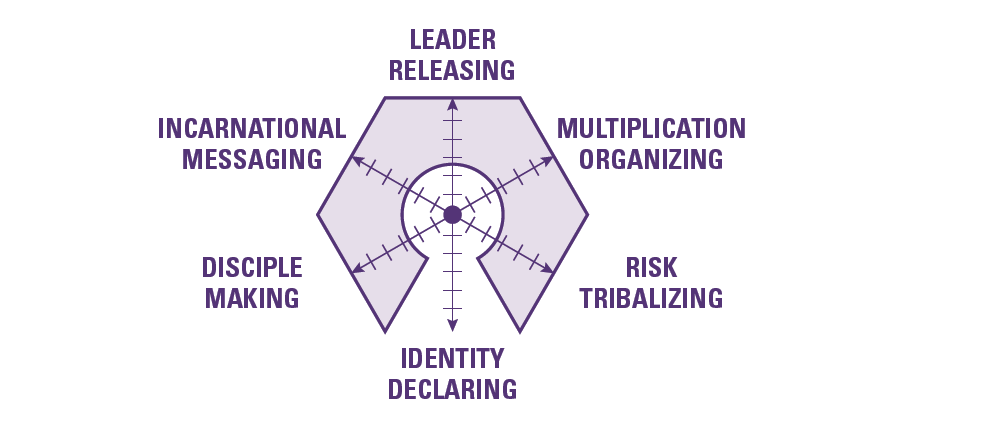 I will be posting a series on how these six areas are a part of being organic, healthy and releasing movements. These six areas are important for all churches.

March 17, 2015
An Apostolic Example: Patrick
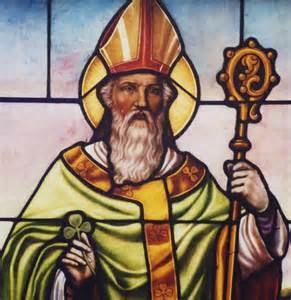 @font-face { font-family: "Arial"; }@font-face { font-family: "Cambria Math"; }@font-face { font-family: "ヒラギノ角ゴ Pro W3"; }p.MsoNormal, li.MsoNormal, div.MsoNormal { margin: 0in 0in 0.0001pt; font-size: 12pt; font-family: "Times New Roman"; color: black; }span.MsoEndnoteReference { color: black; vertical-align: super; }p.MsoEndnoteText, li.MsoEndnoteText, div.MsoEndnoteText { margin: 0in 0in 0.0001pt; font-size: 8pt; font-family: Arial; color: black; }span.EndnoteTextChar { font-family: Arial; color: black; }p.body-text, li.body-text, div.body-text { margin: 0in 0in 0.0001pt; text-indent: 0.25in; font-size: 12pt; font-family: "Times New Roman"; color: black; }span.body-textChar { color: black; }p.body-first, li.body-first, div.body-first { margin: 12pt 0in 0.0001pt; font-size: 12pt; font-family: "Times New Roman"; color: black; }.MsoChpDefault { }div.WordSection1 { page: WordSection1; } Early in the fifth century, an English teenager named Patrick was captured by Irish raiders and taken as a slave to the Emerald Isle. There he was forced to work through snow, frost, and rain as a herdsman. Though he was not a Christian at the outset, Patrick’s faith in God grew during this difficult time and he became accustomed to talking with God and hearing the Shepherd’s voice.After six years in captivity, Patrick managed to escape and make his way almost two hundred miles to a port city, where he was able to get on board a ship and return to his home in England. Now in his early twenties, he studied to become a priest like his grandfather.One day, he heard a specific call in a vision to go back to Ireland to save the Irish people from their paganism. He returned to bring Christ to the very people who had once enslaved him. He preached the Good News, started churches, and refused to use the church or his position for personal gain at the expense of the movement. His work, and that of those who built on his apostolic foundation, is credited with saving Western civilization from the Dark Ages.In his own writing, Patrick, who is known as the apostle of Ireland, recounts his calling in a vision that came to him:
 @font-face { font-family: "Arial"; }@font-face { font-family: "Cambria Math"; }@font-face { font-family: "ヒラギノ角ゴ Pro W3"; }p.MsoNormal, li.MsoNormal, div.MsoNormal { margin: 0in 0in 0.0001pt; font-size: 12pt; font-family: "Times New Roman"; color: black; }span.MsoEndnoteReference { color: black; vertical-align: super; }p.MsoEndnoteText, li.MsoEndnoteText, div.MsoEndnoteText { margin: 0in 0in 0.0001pt; font-size: 8pt; font-family: Arial; color: black; }span.EndnoteTextChar { font-family: Arial; color: black; }span.citation { }span.cs-italic { font-style: italic; }p.extract, li.extract, div.extract { margin: 12pt 0.75in 0.0001pt 0.5in; font-size: 11pt; font-family: "Times New Roman"; }.MsoChpDefault { }div.WordSection1 { page: WordSection1; } I saw a man coming, as it were from Ireland. His name was Victoricus, and he carried many letters, and he gave me one of them. I read the heading: “The Voice of the Irish.” As I began the letter, I imagined in that moment that I heard the voice of those very people who were near the wood of Foclut, which is beside the western sea—and they cried out, as with one voice: “We appeal to you, holy servant boy, to come and walk among us.”
 This blog post is the start of chapter 9 of my book Primal Fire about the equipping gifts of Ephesians 4:11. Patrick, whom we honor today was a great example of the apostolic gift. Thomas Cahill, How The Irish Saved Civilization (New York: Anchor, 1996). Liam De Paor, Saint Patrick's World: The Christian Culture of Ireland's Apostolic Age (Dublin: Four Courts Press, 1993), 100.
March 16, 2015
What is a Church, Part Three
<!-- /* Font Definitions */ @font-face {font-family:"MS 明朝"; mso-font-charset:78; mso-generic-font-family:auto; mso-font-pitch:variable; mso-font-signature:1 134676480 16 0 131072 0;} @font-face {font-family:"Cambria Math"; panose-1:2 4 5 3 5 4 6 3 2 4; mso-font-charset:0; mso-generic-font-family:auto; mso-font-pitch:variable; mso-font-signature:-536870145 1107305727 0 0 415 0;} @font-face {font-family:Calibri; panose-1:2 15 5 2 2 2 4 3 2 4; mso-font-charset:0; mso-generic-font-family:auto; mso-font-pitch:variable; mso-font-signature:-520092929 1073786111 9 0 415 0;} @font-face {font-family:Cambria; panose-1:2 4 5 3 5 4 6 3 2 4; mso-font-charset:0; mso-generic-font-family:auto; mso-font-pitch:variable; mso-font-signature:-536870145 1073743103 0 0 415 0;} /* Style Definitions */ p.MsoNormal, li.MsoNormal, div.MsoNormal {mso-style-unhide:no; mso-style-qformat:yes; mso-style-parent:""; margin:0in; margin-bottom:.0001pt; mso-pagination:widow-orphan; font-size:12.0pt; font-family:Cambria; mso-ascii-font-family:Cambria; mso-ascii-theme-font:minor-latin; mso-fareast-font-family:"MS 明朝"; mso-fareast-theme-font:minor-fareast; mso-hansi-font-family:Cambria; mso-hansi-theme-font:minor-latin; mso-bidi-font-family:"Times New Roman"; mso-bidi-theme-font:minor-bidi;} span.woj {mso-style-name:woj; mso-style-unhide:no;} .MsoChpDefault {mso-style-type:export-only; mso-default-props:yes; font-family:Cambria; mso-ascii-font-family:Cambria; mso-ascii-theme-font:minor-latin; mso-fareast-font-family:"MS 明朝"; mso-fareast-theme-font:minor-fareast; mso-hansi-font-family:Cambria; mso-hansi-theme-font:minor-latin; mso-bidi-font-family:"Times New Roman"; mso-bidi-theme-font:minor-bidi;} @page WordSection1 {size:8.5in 11.0in; margin:1.0in 1.25in 1.0in 1.25in; mso-header-margin:.5in; mso-footer-margin:.5in; mso-paper-source:0;} div.WordSection1 {page:WordSection1;} </style> --> <div class="MsoNormal"><a href="http://4.bp.blogspot.com/-ilYQ9xf3G7I..." imageanchor="1" style="clear: left; float: left; margin-bottom: 1em; margin-right: 1em;"><img border="0" src="http://4.bp.blogspot.com/-ilYQ9xf3G7I..." height="112" width="200" /></a><span style="font-family: Verdana,sans-serif;"></span><span style="font-family: Verdana,sans-serif;">Francis Chan has used an analogy to shake up our view of church. He says: “Imagine you were alone on a desert island and had no experience at all with Christianity, and a bible washed up on shore so you read it cover to cover. If you then decided you would do church, do you think you would do church the way we do it?” The obvious answer is of course not! What this tells us is that much of the way we do church is more wrapped up in church historical tradition than in what the Bible says. </span> </div><div class="MsoNormal"><br /></div><span style="font-family: Verdana,sans-serif;"> </span><br /><div class="MsoNormal"><span style="font-family: Verdana,sans-serif;">The Greek word translated “church” is ecclesia, which means “called out ones” and is used to describe a gathering or assembly. The word morphs into greater significance as the NT progresses, Paul giving a far more detailed and elevated view of it. In Acts the word is used to describe an angry, confused and divided mob of pagans declaring allegiance to a false god (Acts 19:32). I’ve been to that church. </span></div><span style="font-family: Verdana,sans-serif;"> </span><br /><div class="MsoNormal"><br /></div><span style="font-family: Verdana,sans-serif;"> </span><br /><div class="MsoNormal"><span style="font-family: Verdana,sans-serif;">The Bible does not define the church. Instead it is describe<b>s</b> with helpful pictures: a flock, a field, a family, a body, a bride, a branch, a building made of living stones. Definitions are helpful, but descriptions can catch the heart and vision of people and is far more memorable and spreadable. People don't usually spread definitions around but they do spread simple and visible ideas that capture one's imagination. I firmly believe that the NT intends for the church to be spread like a viral movement. </span></div><span style="font-family: Verdana,sans-serif;"> </span><br /><div class="MsoNormal"><br /></div><span style="font-family: Verdana,sans-serif;"> </span><br /><div class="MsoNormal"><span style="font-family: Verdana,sans-serif;">If you were to try and describe today's church as we know it using pictures I believe we would have an entirely different list of descriptors. In fact, do a Google search of the term church and look at the images that pop up...all buildings. The church we have all experienced looks more like one of these: a building with an address, a concert with a motivational speaker, A public meeting with religious practices, a business that provides spiritual goods and services, an organization with bylaws and business meetings, a school teaching people about the Bible and its author, or a hospital for the sick and broken. Contrast those two lists. We have replaced an organic and life producing view with an institutional one that does not produce life but at best simply tries to preserve and contain it. </span></div><span style="font-family: Verdana,sans-serif;"> </span><br /><div class="MsoNormal"><a href="http://4.bp.blogspot.com/-hd-fYGm1UQE..." imageanchor="1" style="clear: right; float: right; margin-bottom: 1em; margin-left: 1em;"><img border="0" src="http://4.bp.blogspot.com/-hd-fYGm1UQE..." height="133" width="200" /></a><span style="font-family: Verdana,sans-serif;"> </span></div><span style="font-family: Verdana,sans-serif;"> </span><br /><div class="MsoNormal"><span style="font-family: Verdana,sans-serif;">Our common way of seeing the church today contains, conforms and controls God’s people. The biblical pictures of the NT are all about releasing and reproducing the life of the church, not managing and controlling financial interests.</span></div><span style="font-family: Verdana,sans-serif;"> </span><br /><div class="MsoNormal"><br /></div><span style="font-family: Verdana,sans-serif;"> </span><br /><div class="MsoNormal"><span style="font-family: Verdana,sans-serif;">Inorganic things can produce, but not reproduce. As Christian Schwartz points out so eloquently, “A coffee maker can make coffee (praise God), but it cannot make more coffee makers.” Jesus intends for his bride and body to be fertile and for his branches to bear fruit. Jesus didn’t use images of an institution, nor should we.</span></div><span style="font-family: Verdana,sans-serif;"> </span><br /><div class="MsoNormal"><br /></div><span style="font-family: Verdana,sans-serif;"> </span><br /><div class="MsoNormal"><span style="font-family: Verdana,sans-serif;">With much study, research, experience and time spent seeking wisdom from smarter men than us, we have come to understand church by this simple yet profound description: </span></div><span style="font-family: Verdana,sans-serif;"> </span><br /><div class="MsoNormal"><br /></div><span style="font-family: Verdana,sans-serif;"> </span><br /><div class="MsoNormal" style="margin-left: .5in;"><span style="font-family: Verdana,sans-serif;"><i style="mso-bidi-font-style: normal;">“The church is the presence of Jesus among His people, called out as a spiritual family, to pursue His mission on this planet.”</i></span></div><span style="font-family: Verdana,sans-serif;"> </span><br /><div class="MsoNormal"><br /></div><span style="font-family: Verdana,sans-serif;"> </span><br /><div class="MsoNormal"><span style="font-family: Verdana,sans-serif;">While the bible uses a number of metaphors to describe the nature of the church, these metaphors have one very striking thing in common. They all imply that the church is a living thing. What about the building you might ask? Remember, it’s built with living stones and is a dwelling place for the Living God.</span></div><span style="font-family: Verdana,sans-serif;"> </span><br /><div class="MsoNormal"><br /></div><span style="font-family: Verdana,sans-serif;"> </span><br /><div class="MsoNormal"><span style="font-family: Verdana,sans-serif;">The church is alive, and the indwelling Spirit of Jesus is her life. What is a body without a Head? A corpse. What is a bride without a groom? A widow. What is a branch without a vine? Firewood. What is a building without a foundation? Rubble. What is a flock without a shepherd? Wolf-chow. Every New Testament picture of the church points to the living connection with Jesus as the most essential element of its being. As I said before, If you can define church without Jesus than you can do church without Jesus.</span></div><span style="font-family: Verdana,sans-serif;"> </span><br /><div class="MsoNormal"><br /></div><span style="font-family: Verdana,sans-serif;"> </span><br /><div class="MsoNormal"><span style="font-family: Verdana,sans-serif;">God’s presence is not only a necessary part of the definition of church; it is the most essential one.<span class="woj"><span style="mso-bidi-font-family: "Times New Roman"; mso-fareast-font-family: "Times New Roman";"></span></span></span><span style="font-family: Verdana,sans-serif;"></span><span style="font-family: Verdana,sans-serif;"><span class="woj"><span style="mso-bidi-font-family: "Times New Roman"; mso-fareast-font-family: "Times New Roman";"> </span></span></span><span style="font-family: Verdana,sans-serif;"><span class="woj"><span style="mso-bidi-font-family: "Times New Roman"; mso-fareast-font-family: "Times New Roman";">I am convinced that the world would love to come and experience Jesus. They are not so interested in experiencing us. </span></span><span style="mso-bidi-font-family: "Times New Roman"; mso-fareast-font-family: "Times New Roman";"></span></span><span style="font-family: Verdana,sans-serif;"></span><span style="font-family: Verdana,sans-serif;"> </span><span style="font-family: Verdana,sans-serif;"></span></div>
March 11, 2015
What is a Church, Part Two
 I distinctly remember standing up in front of my denomination’s annual gathering giving a report on our church planting efforts. We didn’t plant a single church that year, so I was already uncomfortable. What I could positively report is that we, as a volunteer church planting board, had finally agreed on what a church is.
 The person in charge of starting churches wasn’t sure until that moment what a church even is. At least it was honest, so many never really address the issue. Church is one of those things that most people think they understand from their experience. It turns out that defining this entity that has had so many forms and expressions over the centuries is not as easy as it seems. Merriam-Webster’s Dictionary definition will include a type of building where Christians meet above all else. The New Testament, however, does not understand church this way. So what is a New Testament understanding of church?
As I mentioned in my previous post, typically a list of ingredients from the New Testament are used to define a church. Here is a typical list:
1. A group of believers who gather together regularly to worship.2. …that hear the biblical preaching of God’s word.3. …that consider themselves a church.4. …that have qualified elders.5. …that practice baptism, communion and (some include) church discipline.6. …that have an agreed upon doctrinal foundation.7. …and have an evangelistic purpose.
I already demonstrated that many of the things we put on such a list are not actually as core to a NT understanding of church as we once thought. In this post I want to look at something even more alarming, and that is what we failed to put on such a list. Here are three things not mentioned on the list:
1. The One Anothers. There are close to 60 commands in the NT for Christ-followers that contain the words “one another.” Not a singleone made the list. Commands such as “love one another,” “give preference to one another,” “pray for one another,” “confess your sins one to another,” “teach one another,” and “bear one another’s burdens” are throughout the entirety of the New Testament, but not in our definition of church. More alarming is that very few of these important commands can be obeyed at a typical Sunday worship service, yet we all assume that is what church is.
Why are we so quick to include the preaching of a sermon in our definition of church and forego all the activities that we are supposed to do one with another? No wonder the church today appears more like an audience of consumers rather than agents of change in the world. So much responsibility is placed on the shoulders of qualified elders and preachers and so little on the shoulders of God’s people.
2. Godly Character Qualities. There are numerous lists of character qualities that Christians are expected to follow in the NT such as the beatitudes (Matt 5:1-10), the description of love (1 Cor. 13:1-13), the fruit of the Spirit (Gal. 5:22-23), qualities to dwell on (Phil 4:8-9), qualities of an elder/deacon (1 Tim 3:1-13; Titus 1:5-9), but none make the list of ingredients necessary to be a church. Wouldn’t church be more attractive to the world if we did include such lists as a part of what we are supposed to be when we are together? The only inclination toward these godly characteristics in the definition of church is the description of “qualified elders,” which again means the leaders to do all the heavy lifting, even when it comes to being Christ-like.
3. Jesus. By far the most grievous oversight is that Jesus didn’t make the list! Some have commented that Jesus is assumed, because wherever believers are gathered there he is in their midst. My follow up question is, why then do you simply assume Jesus’ presence but you spell out the need for elders? Which is more important, Jesus or elders?
Is it really important that we include Jesus in our definition of church? Yes, I believe it should not just be one of the ingredients, but the most important element. Is that a Biblical presupposition? Yes, I think so.
In Acts chapter one we find all the previous ingredients present in the upper room. Church didn’t start, however, until Acts 2. What was the added ingredient? The indwelling presence of the Spirit of Christ! Church was born when Christ indwelt us. His presence is the only thing that makes church any different from another organization in this world. The ingredients listed above that supposedly make up a NT church can also be used to describe the Kiwanis Club.
Some would like to distinguish Jesus from the church, but I’m not sure that is wise or Biblical. You might as well try and sever your head from your body. Jesus clearly said, “Abide in Me and I in you…for apart from Me you can do nothing.”
Jesus only mentioned church twice in the gospels. In both cases His presence was the key ingredient. In Matthew 16 it is Jesus building His church, not us. In Matthew 18, He is present wherever we gather, even in groups of only two or three.
In Revelation Jesus actually addresses seven churches some were healthy, some were not. He warns the Ephesian church that if they do not repent he would remove them from His presence (represented by removing their lampstand), in essence they would cease to be. It is being in the presence of Christ that makes us a church and being removed from His presence that determines our demise as a church.
It is His presence that makes us anything good whatsoever. Why are we so quick to make church about us and not about him? Is it any wonder why the world is just not interested in church? Heck, even Christians are not so interested in church these days.
Imagine, for a moment that these three omissions are actually how we defined church. What if the way we loved one another and the godliness that comes from the indwelling Spirit of Christ was church. I think we would see a lot more people wanting to be a part of that!
Now read that list of seven ingredients above that “defines” church and ask yourself if your neighbors would like to come to that. Imagine you made a glossy flier with those ingredients featured as the attraction and went door-to-door inviting people to come. Who do you think that would interest? Why would anyone who is not a Christian want to go to a place full of Christians to have someone collect money, hear someone preach at them and then sing a bunch of unfamiliar songs in public? This is our strategy to reach the world? Seriously? And we have somehow convinced ourselves that this was God’s plan? Really?
Jesus didn’t say, “By this will all men know that you are my disciples, by the preaching of sound doctrines by qualified elders in a weekly worship service followed by eating crackers and a thimble of grape juice.” No. It is by our “love for one another” that we demonstrate we are His disciples.
If you can define church without Jesus you can do church without Jesus. Therein is our greatest shame. Church has become something we do, not what we are because of Christ living within us. I want to be a part of something that only Jesus can do. How about you?
Paul wrote, "Christ in you is the hope of glory." Oh that we would allow that to be our glory rather than all the other stuff we do.
In my next article I will share what my own understanding of church is.
March 9, 2015
What is Church? Part One
 <!-- /* Font Definitions */ @font-face {font-family:"MS 明朝"; mso-font-charset:78; mso-generic-font-family:auto; mso-font-pitch:variable; mso-font-signature:-536870145 1791491579 18 0 131231 0;} @font-face {font-family:"Cambria Math"; panose-1:2 4 5 3 5 4 6 3 2 4; mso-font-charset:0; mso-generic-font-family:auto; mso-font-pitch:variable; mso-font-signature:-536870145 1107305727 0 0 415 0;} @font-face {font-family:Calibri; panose-1:2 15 5 2 2 2 4 3 2 4; mso-font-charset:0; mso-generic-font-family:auto; mso-font-pitch:variable; mso-font-signature:-520092929 1073786111 9 0 415 0;} @font-face {font-family:Cambria; panose-1:2 4 5 3 5 4 6 3 2 4; mso-font-charset:0; mso-generic-font-family:auto; mso-font-pitch:variable; mso-font-signature:-536870145 1073743103 0 0 415 0;} /* Style Definitions */ p.MsoNormal, li.MsoNormal, div.MsoNormal {mso-style-unhide:no; mso-style-qformat:yes; mso-style-parent:""; margin:0in; margin-bottom:.0001pt; mso-pagination:widow-orphan; font-size:12.0pt; font-family:Cambria; mso-ascii-font-family:Cambria; mso-ascii-theme-font:minor-latin; mso-fareast-font-family:"MS 明朝"; mso-fareast-theme-font:minor-fareast; mso-hansi-font-family:Cambria; mso-hansi-theme-font:minor-latin; mso-bidi-font-family:"Times New Roman"; mso-bidi-theme-font:minor-bidi;} p.MsoListParagraph, li.MsoListParagraph, div.MsoListParagraph {mso-style-priority:34; mso-style-unhide:no; mso-style-qformat:yes; margin-top:0in; margin-right:0in; margin-bottom:0in; margin-left:.5in; margin-bottom:.0001pt; mso-add-space:auto; mso-pagination:widow-orphan; font-size:12.0pt; font-family:Cambria; mso-ascii-font-family:Cambria; mso-ascii-theme-font:minor-latin; mso-fareast-font-family:"MS 明朝"; mso-fareast-theme-font:minor-fareast; mso-hansi-font-family:Cambria; mso-hansi-theme-font:minor-latin; mso-bidi-font-family:"Times New Roman"; mso-bidi-theme-font:minor-bidi;} p.MsoListParagraphCxSpFirst, li.MsoListParagraphCxSpFirst, div.MsoListParagraphCxSpFirst {mso-style-priority:34; mso-style-unhide:no; mso-style-qformat:yes; mso-style-type:export-only; margin-top:0in; margin-right:0in; margin-bottom:0in; margin-left:.5in; margin-bottom:.0001pt; mso-add-space:auto; mso-pagination:widow-orphan; font-size:12.0pt; font-family:Cambria; mso-ascii-font-family:Cambria; mso-ascii-theme-font:minor-latin; mso-fareast-font-family:"MS 明朝"; mso-fareast-theme-font:minor-fareast; mso-hansi-font-family:Cambria; mso-hansi-theme-font:minor-latin; mso-bidi-font-family:"Times New Roman"; mso-bidi-theme-font:minor-bidi;} p.MsoListParagraphCxSpMiddle, li.MsoListParagraphCxSpMiddle, div.MsoListParagraphCxSpMiddle {mso-style-priority:34; mso-style-unhide:no; mso-style-qformat:yes; mso-style-type:export-only; margin-top:0in; margin-right:0in; margin-bottom:0in; margin-left:.5in; margin-bottom:.0001pt; mso-add-space:auto; mso-pagination:widow-orphan; font-size:12.0pt; font-family:Cambria; mso-ascii-font-family:Cambria; mso-ascii-theme-font:minor-latin; mso-fareast-font-family:"MS 明朝"; mso-fareast-theme-font:minor-fareast; mso-hansi-font-family:Cambria; mso-hansi-theme-font:minor-latin; mso-bidi-font-family:"Times New Roman"; mso-bidi-theme-font:minor-bidi;} p.MsoListParagraphCxSpLast, li.MsoListParagraphCxSpLast, div.MsoListParagraphCxSpLast {mso-style-priority:34; mso-style-unhide:no; mso-style-qformat:yes; mso-style-type:export-only; margin-top:0in; margin-right:0in; margin-bottom:0in; margin-left:.5in; margin-bottom:.0001pt; mso-add-space:auto; mso-pagination:widow-orphan; font-size:12.0pt; font-family:Cambria; mso-ascii-font-family:Cambria; mso-ascii-theme-font:minor-latin; mso-fareast-font-family:"MS 明朝"; mso-fareast-theme-font:minor-fareast; mso-hansi-font-family:Cambria; mso-hansi-theme-font:minor-latin; mso-bidi-font-family:"Times New Roman"; mso-bidi-theme-font:minor-bidi;} .MsoChpDefault {mso-style-type:export-only; mso-default-props:yes; font-family:Cambria; mso-ascii-font-family:Cambria; mso-ascii-theme-font:minor-latin; mso-fareast-font-family:"MS 明朝"; mso-fareast-theme-font:minor-fareast; mso-hansi-font-family:Cambria; mso-hansi-theme-font:minor-latin; mso-bidi-font-family:"Times New Roman"; mso-bidi-theme-font:minor-bidi;} @page WordSection1 {size:8.5in 11.0in; margin:1.0in 1.25in 1.0in 1.25in; mso-header-margin:.5in; mso-footer-margin:.5in; mso-paper-source:0;} div.WordSection1 {page:WordSection1;} /* List Definitions */ @list l0 {mso-list-id:964772007; mso-list-type:hybrid; mso-list-template-ids:526929768 67698703 67698713 67698715 67698703 67698713 67698715 67698703 67698713 67698715;} @list l0:level1 {mso-level-tab-stop:none; mso-level-number-position:left; text-indent:-.25in;} @list l0:level2 {mso-level-number-format:alpha-lower; mso-level-tab-stop:none; mso-level-number-position:left; text-indent:-.25in;} @list l0:level3 {mso-level-number-format:roman-lower; mso-level-tab-stop:none; mso-level-number-position:right; text-indent:-9.0pt;} @list l0:level4 {mso-level-tab-stop:none; mso-level-number-position:left; text-indent:-.25in;} @list l0:level5 {mso-level-number-format:alpha-lower; mso-level-tab-stop:none; mso-level-number-position:left; text-indent:-.25in;} @list l0:level6 {mso-level-number-format:roman-lower; mso-level-tab-stop:none; mso-level-number-position:right; text-indent:-9.0pt;} @list l0:level7 {mso-level-tab-stop:none; mso-level-number-position:left; text-indent:-.25in;} @list l0:level8 {mso-level-number-format:alpha-lower; mso-level-tab-stop:none; mso-level-number-position:left; text-indent:-.25in;} @list l0:level9 {mso-level-number-format:roman-lower; mso-level-tab-stop:none; mso-level-number-position:right; text-indent:-9.0pt;} ol {margin-bottom:0in;} ul {margin-bottom:0in;} </style><span style="font-family: Calibri; mso-ascii-theme-font: major-latin; mso-bidi-font-family: "Times New Roman"; mso-fareast-font-family: "Times New Roman"; mso-hansi-theme-font: major-latin;">Several years ago I hosted a retreat for pastors. The retreat was to address a single question: <i style="mso-bidi-font-style: normal;">what is a church?</i> You would think this to be an easy question for pastors to answer, like a convention of bakers gathering to define bread</span><span style="font-family: Calibri; mso-ascii-theme-font: major-latin; mso-bidi-font-family: "Times New Roman"; mso-fareast-font-family: "Times New Roman"; mso-hansi-theme-font: major-latin;">. Nevertheless, we all left the retreat without an adequate answer we could agree on…and that should make us all a little nervous. </span> </div><div class="MsoNormal"><br /></div><div class="MsoNormal"><span style="font-family: Calibri; mso-ascii-theme-font: major-latin; mso-bidi-font-family: "Times New Roman"; mso-fareast-font-family: "Times New Roman"; mso-hansi-theme-font: major-latin;">It turns out that defining church is not as easy as you would think. </span></div><div class="MsoNormal"><br /></div><div class="MsoNormal"><span style="font-family: Calibri; mso-ascii-theme-font: major-latin; mso-bidi-font-family: "Times New Roman"; mso-fareast-font-family: "Times New Roman"; mso-hansi-theme-font: major-latin;">While in seminary, I was given a list of ingredients from the New Testament to define a church. Some lists have 5 ingredients, others go as high as “9 marks,” but they are all very similar. Here is a typical list:</span></div><div class="MsoNormal"><br /></div><div class="MsoListParagraphCxSpFirst" style="mso-list: l0 level1 lfo1; text-indent: -.25in;"><span style="font-family: Calibri; mso-ascii-theme-font: major-latin; mso-bidi-font-family: Calibri; mso-bidi-theme-font: major-latin; mso-fareast-font-family: Calibri; mso-fareast-theme-font: major-latin; mso-hansi-theme-font: major-latin;"><span style="mso-list: Ignore;">1.<span style="font: 7.0pt "Times New Roman";"> </span></span></span><span style="font-family: Calibri; mso-ascii-theme-font: major-latin; mso-bidi-font-family: "Times New Roman"; mso-fareast-font-family: "Times New Roman"; mso-hansi-theme-font: major-latin;">A group of believers who gather together regularly to worship.</span></div><div class="MsoListParagraphCxSpMiddle" style="mso-list: l0 level1 lfo1; text-indent: -.25in;"><span style="font-family: Calibri; mso-ascii-theme-font: major-latin; mso-bidi-font-family: Calibri; mso-bidi-theme-font: major-latin; mso-fareast-font-family: Calibri; mso-fareast-theme-font: major-latin; mso-hansi-theme-font: major-latin;"><span style="mso-list: Ignore;">2.<span style="font: 7.0pt "Times New Roman";"> </span></span></span><span style="font-family: Calibri; mso-ascii-theme-font: major-latin; mso-bidi-font-family: "Times New Roman"; mso-fareast-font-family: "Times New Roman"; mso-hansi-theme-font: major-latin;">…that hear the biblical preaching of God’s word.</span></div><div class="MsoListParagraphCxSpMiddle" style="mso-list: l0 level1 lfo1; text-indent: -.25in;"><span style="font-family: Calibri; mso-ascii-theme-font: major-latin; mso-bidi-font-family: Calibri; mso-bidi-theme-font: major-latin; mso-fareast-font-family: Calibri; mso-fareast-theme-font: major-latin; mso-hansi-theme-font: major-latin;"><span style="mso-list: Ignore;">3.<span style="font: 7.0pt "Times New Roman";"> </span></span></span><span style="font-family: Calibri; mso-ascii-theme-font: major-latin; mso-bidi-font-family: "Times New Roman"; mso-fareast-font-family: "Times New Roman"; mso-hansi-theme-font: major-latin;">…that consider themselves a church.</span></div><div class="MsoListParagraphCxSpMiddle" style="mso-list: l0 level1 lfo1; text-indent: -.25in;"><span style="font-family: Calibri; mso-ascii-theme-font: major-latin; mso-bidi-font-family: Calibri; mso-bidi-theme-font: major-latin; mso-fareast-font-family: Calibri; mso-fareast-theme-font: major-latin; mso-hansi-theme-font: major-latin;"><span style="mso-list: Ignore;">4.<span style="font: 7.0pt "Times New Roman";"> </span></span></span><span style="font-family: Calibri; mso-ascii-theme-font: major-latin; mso-bidi-font-family: "Times New Roman"; mso-fareast-font-family: "Times New Roman"; mso-hansi-theme-font: major-latin;">…that have qualified elders.</span></div><div class="MsoListParagraphCxSpMiddle" style="mso-list: l0 level1 lfo1; text-indent: -.25in;"><span style="font-family: Calibri; mso-ascii-theme-font: major-latin; mso-bidi-font-family: Calibri; mso-bidi-theme-font: major-latin; mso-fareast-font-family: Calibri; mso-fareast-theme-font: major-latin; mso-hansi-theme-font: major-latin;"><span style="mso-list: Ignore;">5.<span style="font: 7.0pt "Times New Roman";"> </span></span></span><span style="font-family: Calibri; mso-ascii-theme-font: major-latin; mso-bidi-font-family: "Times New Roman"; mso-fareast-font-family: "Times New Roman"; mso-hansi-theme-font: major-latin;">…that practice baptism, communion and church discipline.</span></div><div class="MsoListParagraphCxSpMiddle" style="mso-list: l0 level1 lfo1; text-indent: -.25in;"><span style="font-family: Calibri; mso-ascii-theme-font: major-latin; mso-bidi-font-family: Calibri; mso-bidi-theme-font: major-latin; mso-fareast-font-family: Calibri; mso-fareast-theme-font: major-latin; mso-hansi-theme-font: major-latin;"><span style="mso-list: Ignore;">6.<span style="font: 7.0pt "Times New Roman";"> </span></span></span><span style="font-family: Calibri; mso-ascii-theme-font: major-latin; mso-bidi-font-family: "Times New Roman"; mso-fareast-font-family: "Times New Roman"; mso-hansi-theme-font: major-latin;">…that have an agreed upon doctrinal foundation.</span></div><div class="MsoListParagraphCxSpLast" style="mso-list: l0 level1 lfo1; text-indent: -.25in;"><span style="font-family: Calibri; mso-ascii-theme-font: major-latin; mso-bidi-font-family: Calibri; mso-bidi-theme-font: major-latin; mso-fareast-font-family: Calibri; mso-fareast-theme-font: major-latin; mso-hansi-theme-font: major-latin;"><span style="mso-list: Ignore;">7.<span style="font: 7.0pt "Times New Roman";"> </span></span></span><span style="font-family: Calibri; mso-ascii-theme-font: major-latin; mso-bidi-font-family: "Times New Roman"; mso-fareast-font-family: "Times New Roman"; mso-hansi-theme-font: major-latin;">…and have an evangelistic purpose.</span></div><div class="MsoNormal"><br /></div><div class="MsoNormal"><span style="font-family: Calibri; mso-ascii-theme-font: major-latin; mso-bidi-font-family: "Times New Roman"; mso-fareast-font-family: "Times New Roman"; mso-hansi-theme-font: major-latin;">Such a list interests me for two reasons: 1.) What it chooses to include, and especially, 2.) What it does not include. Our church traditions have biases that come out in our theological definitions of church. In many cases, we choose to accept our tradition as biblical and then go back to the New Testament to prove it, rather than letting the Bible do the defining. In this post I will address the things mentioned on this list of ingredients. In the next post I will delve into the things not mentioned on the list. Finally, in a third post, I will explain my own view of what church is.</span></div><div class="MsoNormal"><br /></div><div class="MsoNormal"><span style="font-family: Calibri; mso-ascii-theme-font: major-latin; mso-bidi-font-family: "Times New Roman"; mso-fareast-font-family: "Times New Roman"; mso-hansi-theme-font: major-latin;">It is all too common for preachers to include the preaching of a sermon on the list of what makes up a NT church. It is extremely difficult to find a Biblical justification for this inclusion, but they find some verses taken out of context to put in parenthesis at the end of each line, knowing few will ever question it. In fact, the sermon has been made into a sacrament at the core of what church is, and functionally is treated more as a sacrament than baptism or communion. Even in baptistic circles where the elements in communion and baptism are taken to be merely symbolic acts to picture a sacred truth, the sermon alone is considered a means of actually receiving life changing grace of God (which is truly what it means to be sacramental). </span></div><div class="MsoNormal"><br /></div><div class="MsoNormal"><span style="font-family: Calibri; mso-ascii-theme-font: major-latin; mso-bidi-font-family: "Times New Roman"; mso-fareast-font-family: "Times New Roman"; mso-hansi-theme-font: major-latin;">The usage of the Greek word <i style="mso-bidi-font-style: normal;">kerygma</i>, translated “to preach” is overwhelmingly used in regard to sharing the good news with an as-yet-unconvinced audience, not delivering a sermon to the saved. There are very few examples of sermons delivered to Christians in the NT. Those we find hardly constitute a model for weekly sermonizing; and the longest sermon we can find is about 15 minutes in length. There is nothing at all wrong with the practice, I’m in favor of it in </span><span style="mso-bidi-font-family: "Times New Roman"; mso-fareast-font-family: "Times New Roman";">many cases, but to make it a core ingredient to define church has more basis in church tradition than the New Testament. </span></div><div class="MsoNormal"><br /></div><div class="MsoNormal"><span style="mso-bidi-font-family: "Times New Roman"; mso-fareast-font-family: "Times New Roman";">There isn't any biblical support that believers have to consider themselves a church to be a church. Are we simply trying to separate parachurch from local church? There isn't any biblical support for the idea of parachurch either. A reactionary theological statement that has no grounds in Scripture will come to haunt us later if that is how we define a church. If you ask me, when Jesus thinks you are in His church, it really doesn’t matter what others think, including yourself.</span></div><div class="MsoNormal"><br /></div><div class="MsoNormal"><span style="mso-bidi-font-family: "Times New Roman"; mso-fareast-font-family: "Times New Roman";">There are examples of churches without elders in the NT. On Paul’s first missionary journey he started churches with Barnabas and then left them without elders. Later, he returned to those churches in order to appoint some as elders. You would be very hard pressed to say biblically that they are not churches prior to the second visit. While these are not a great example of churches (Galatians), they were churches nonetheless. </span></div><div class="MsoNormal"><br /></div><div class="MsoNormal"><span style="mso-bidi-font-family: "Times New Roman"; mso-fareast-font-family: "Times New Roman";">Why is it that we so often insist that elders are present in order to be a NT church but so rarely include deacons? The NT is equally as strong on both roles. I think it is because those determining such things are elders, and those considered to be deacons are usually not in the meetings that define theological limits. I'm in favor of having elders and deacons in church, but lets not make their presence or absence the defining ingredient of a church. </span></div><div class="MsoNormal"><br /></div><div class="MsoNormal"><span style="mso-bidi-font-family: "Times New Roman"; mso-fareast-font-family: "Times New Roman";">While I am a staunch proponent of baptism and communion and becoming more so with each passing year, I am not willing to make the statement that those who do not practice them are not a church. My Quaker brothers and sisters as well as my Salvation Army friends would take issue. This sort of thinking actually promotes the idea of parachurch as well. If a group of Christians that fellowship, worship, do evangelism and discipleship together simply avoid getting wet and eating crackers and grape juice they avoid being a church and are therefore not a threat of competition to the local church and can raise their funds. Sorry, but I don’t buy it.</span></div><div class="MsoNormal"><br /></div><div class="MsoNormal"><span style="mso-bidi-font-family: "Times New Roman"; mso-fareast-font-family: "Times New Roman";">I believe that it is this incomplete and inadequate definition of church that has given rise to the idea of parachurch, or at least has given it a theological justification. </span></div><div class="MsoNormal"><br /></div><div class="MsoNormal"><span style="mso-bidi-font-family: "Times New Roman"; mso-fareast-font-family: "Times New Roman";">Next post I will look at what failed to make the list to define a NT church. </span></div><div class="MsoNormal"><br /></div>
March 3, 2015
Jesus’ View of Church
THE BLOGALOGUE SERIES: "Encountering Jesus: Inside and Outside the Meeting"
 Jesus only mentions the word “church” (ecclesia) twice in the Gospels, both in Matthew. The first time ecclesia is mentioned is in Matthew 16:13-18. He took his disciples away on a retreat and gave them a surprise test that had two questions. The first question was easy, it was the warm up question: who do people say that I am? Everyone had an answer and everyone’s answer was correct. Sadly, we Christians are better than most at talking about other people’s mistakes. Everyone likes to get in on that fun.
The second question was the hard one: “Who do you say that I am?” After Jesus asked this it got quiet. I believe all the eyes dropped to the ground. You see there is no risk with the first question. After all, it is other people who are wrong. The second question is the most important question anyone will ever ask you. The answer, right or wrong, puts you out on a ledge, vulnerable and alone.
Peter, who dislikes awkward silence, finally says, “You are the Christ, the Son of the living God.” I imagine all the heads quickly look up and turn to Jesus to see if Peter got it right.
After a pause (for effect), and then a smile,* Jesus replied, “Blessed are you Simon, son of Jonah, because you cheated on the test.” Okay, he didn’t really say that, but when I was in school, if you got the answer from someone else they called it cheating. Peter didn’t figure it out himself, but was given the answer from the Father. In truth, we all must cheat on this test. We can never figure it out ourselves…we are too broken in our fallen state to understand God without His miraculous and loving intervention and revelation. It’s like trying to lift yourself up out of quicksand by pulling up on your own hair…it doesn’t help. God has to reach down and lift you out of the muck.
At this moment Jesus first mentioned church, but before we look at Jesus’ words about church I think we should pay close attention to the context of those words.
Any good discussion of church begins with asking the right questions. The questions most often asked of churches are: Who is the church trying to reach? What are the demographics of their community? Who is the pastor? How are his/her sermons? What kind of music do they play? What sort of governance do they use? How old is the church? What denomination is the church a part of? How friendly does the church seem upon a visit? What are the youth and/or children’s ministries like? Do they serve good coffee? All are good questions and all are the wrong questions to start with.
Jesus begins His discussion of church with the only right question to ask: Who is Jesus to you? The truth is, if you skip this question “church” will be more about you and less about him. Church begins and ends with the question: Who is Jesus? It is when we depart from that question that we get into all kinds of trouble and start making church about us—what we practice/say/sing/believe and whom we associate with.
I am convinced that the world is far more interested in Jesus than they are in us. Why don’t we make our churches about Him instead of about us? The answer, I believe, is because we ask and answer the wrong questions when it comes to church. We also end up measuring the wrong milestones to determine a good church from a bad one.
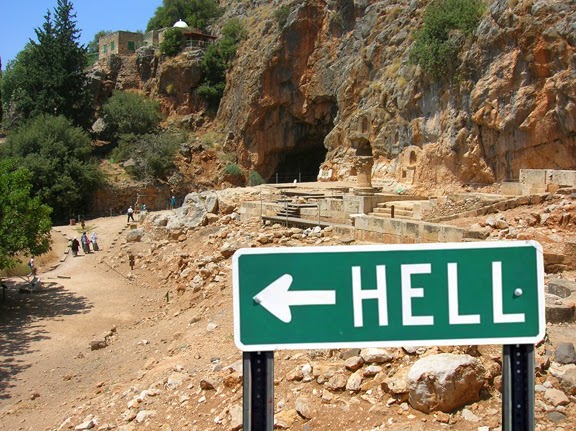
It is in this context that Jesus mentions church. In a single sentence Jesus shares a view of church that shatters all our stereotypes of what church is. He says, “Upon this rock I will build my church and the gates of hell will not prevail against it.” Notice he did not say, “Upon this rock you will build your church?”
From this we see a few things:
1. The church belongs to Jesus. He calls it “my church.” His church is not Baptist or Brethren, Pentecostal or Presbyterian. His church is all the above and so much more. His church is not just your church, but also the one across the street. He is as interested in the success of the Lutheran church around the corner as your church. Perhaps you should be as well for in fact we are all His church. When His church succeeds, we succeed. And succeed it will.
2. The church is Jesus’ work, not ours. He says, “I will build my church.” So often the church is our project that we do for him, but actually that is backwards. He is the one that does the building of the church. Though I am a church planter, I realized long ago that I am not ever told to plant a church. I am to make disciples; he is the one who builds the church. I am to plant the gospel, not a church. He builds the church.
3. The church is a movement pressing into mission against opposition. He said, “…the gates of hades will not overpower the church.” There is a war all around us in the spiritual world and we are unwise to ignore it. There is no power on earth that is capable of stopping the church from accomplishing the mission given to her by Jesus…except her own lack of faith. It is not Satan or his minions that threaten our success. It is not any cult, philosophy or “ism” that is holding us back. No government or ideology of hate can stop the church. The onlything that can hold us back is our misplaced and weak faith.
 Most of us are familiar with gates and likely have one at home. What are gates good for? Gates keep dogs in the yard and prowlers out. Gates are not offensive weapons; they are defensive. Police officers do not carry loaded gates. Terrorists do not hold hostages at gate-point. Dogs do not wear signs that say “Beware of gates!” Gates are not a threat. In Jesus understanding, we are the threat, and the enemy is running scared! Jesus sees the church on offense and Satan back on his heals on defense with his tail between his legs.
If we understood church the way Jesus described it, we would not be waiting for the world to come to us; we would be taking Jesus to the very gates of hell and setting captives free.
The only other time Jesus mentions church is a few chapters later in Matthew 18 where he specifically mentions that He is with us in our midst (v. 20). Most are told that church is where people need to go to find Jesus. Is Jesus at church? Yes. But He is not only at church. Wherever His people go, Jesus and His kingdom will go. Why on earth would we restrict that awesome life changing power to the space between stained glass windows?
If we get back to the original question we will likely find the courage and hope necessary to be what He expects of us. Who is Jesus to you? If indeed He has all authority of heaven and earth, why are we not going forward in power? If He is the one who opens the door and that no one can shut, why are we not going through those doors? If He is the one who preaches the good news to the oppressed and heals those who are broken why are we not bringing Him to those who need Him the most?
Here’s a closing suggestion: Take a sheet of paper and draw a line down the middle creating two columns. On the left write: “Who is Jesus?” and write down all the things you know about him (descriptions, names, powers). On the right side write: “Difference this should make in the way we do church.” Write down all the ways we should be different because of who Jesus is. I seriously doubt you can leave church the way it is in light of who Jesus truly is. I suspect, you can’t stay away from a hurting world and remain in the gathering of the faithful and really know and love Jesus for who He is.
*Yes, this is my imagination as I read the passage and is not in the text, no need to tell me so. ** The first picture is actually in the location where Jesus said these words to his disciples. The second is a picture of Auguste Rodin's masterpiece called The Gates of Hell. _____________________________________________NOTE: This blog is part of a Blogalogue Series of posts from Neil Cole, Richard Jacobson, Dan Herford, Jon Zens and Keith Giles.
The Topic: Encountering Jesus: Inside and Outside the Church
The Schedule:
Richard Jacobson: Week of Feb. 9Keith Giles: Week of Feb. 16Dan Herford: Week of Feb 23Neil Cole: Week of March 2Jon Zens: Week of March 9Video Skype Roundtable discussion: Saturday March 14 or Sunday March 15
December 22, 2014
Trust Jesus To Speak and Lead
<!-- /* Font Definitions */ @font-face {font-family:"MS 明朝"; mso-font-charset:78; mso-generic-font-family:auto; mso-font-pitch:variable; mso-font-signature:1 134676480 16 0 131072 0;} @font-face {font-family:"MS 明朝"; mso-font-charset:78; mso-generic-font-family:auto; mso-font-pitch:variable; mso-font-signature:1 134676480 16 0 131072 0;} @font-face {font-family:Cambria; panose-1:2 4 5 3 5 4 6 3 2 4; mso-font-charset:0; mso-generic-font-family:auto; mso-font-pitch:variable; mso-font-signature:-536870145 1073743103 0 0 415 0;} /* Style Definitions */ p.MsoNormal, li.MsoNormal, div.MsoNormal {mso-style-unhide:no; mso-style-qformat:yes; mso-style-parent:""; margin:0in; margin-bottom:.0001pt; mso-pagination:widow-orphan; font-size:12.0pt; font-family:Cambria; mso-ascii-font-family:Cambria; mso-ascii-theme-font:minor-latin; mso-fareast-font-family:"MS 明朝"; mso-fareast-theme-font:minor-fareast; mso-hansi-font-family:Cambria; mso-hansi-theme-font:minor-latin; mso-bidi-font-family:"Times New Roman"; mso-bidi-theme-font:minor-bidi;} .MsoChpDefault {mso-style-type:export-only; mso-default-props:yes; font-family:Cambria; mso-ascii-font-family:Cambria; mso-ascii-theme-font:minor-latin; mso-fareast-font-family:"MS 明朝"; mso-fareast-theme-font:minor-fareast; mso-hansi-font-family:Cambria; mso-hansi-theme-font:minor-latin; mso-bidi-font-family:"Times New Roman"; mso-bidi-theme-font:minor-bidi;} @page WordSection1 {size:8.5in 11.0in; margin:1.0in 1.25in 1.0in 1.25in; mso-header-margin:.5in; mso-footer-margin:.5in; mso-paper-source:0;} div.WordSection1 {page:WordSection1;} </style> --> <br /><div class="MsoNormal"><span style="font-size: small;"><a href="http://3.bp.blogspot.com/-S2d_jKshbtg..." imageanchor="1" style="clear: right; float: right; margin-bottom: 1em; margin-left: 1em;"><img border="0" src="http://3.bp.blogspot.com/-S2d_jKshbtg..." height="133" width="200" /></a>Last week I was in a room discussing established church structures and change. The meeting was in another state. These were good discussions that could result in some very revolutionary influence. I was the “purist” organic church leader in the meetings; at least that is how others described me. </span></div><span style="font-size: small;"> </span><br /><div class="MsoNormal"><br /></div><span style="font-size: small;"> </span><span style="font-size: small;">At one point someone was drawing on the white board, designing a potentially hierarchical structure of leadership. Because I know the man and the context of our discussions, I was confident it wasn’t actually a hierarchy, but it was sounding a bit like it. I'm confident that anything that can be construed that way will be abused that way in a traditional church environment, so I mentioned that this cannot ever be a command and control structure. The reaction of the others was to be expected. They saw Neil Cole being the “Organic Purist” and resisting any semblance to a leadership structure. Who knows, maybe that is exactly what was happening and I have likely earned that reputation. </span><br /><span style="font-size: small;"> </span><br /><div class="MsoNormal"><br /></div><span style="font-size: small;"> </span><br /><div class="MsoNormal"><span style="font-size: small;">As we continued the discussion, they mentioned that some degree of oversight is necessary and that if we let it all go without any leadership it will fall apart. That is a common concern and often the reason (or excuse) people use to enforce some leadership oversight and accountability. My response is that it will not fall apart if a healthy DNA is intact and Jesus is indeed the one who is leading. The fear is that people will not be motivated to continue on without leaders holding them to it. There is also a fear that they will compromise truth if there is not some degree of leadership looking in on them to make sure that they don’t.</span></div><span style="font-size: small;"> </span><br /><div class="MsoNormal"><br /></div><span style="font-size: small;"> </span><br /><div class="MsoNormal"><span style="font-size: small;">I said, as I often do, that we can in fact trust Jesus to lead. If the goal is a movement that spreads beyond driving distance to your church and beyond your eulogy we must trust that people with Jesus will carry it forward without us. I asked if it was at all possible for people to carry the life force of the church forward without someone looking over their shoulder?</span></div><span style="font-size: small;"> </span><br /><div class="MsoNormal"><br /></div><span style="font-size: small;"> </span><br /><div class="MsoNormal"><span style="font-size: small;">Everyone smiled and obliged my rant and we went on. That was a fairly typical discussion for me. I understand that people are all in a process and I no longer expect everyone to have the same way of thinking immediately. </span></div><span style="font-size: small;"> </span><br /><div class="MsoNormal"><br /></div><span style="font-size: small;"> </span><br /><div class="MsoNormal"><span style="font-size: small;">Later that evening something remarkable occurred. We all went out to dinner and went back to the host’s home for cake, coffee and conversation. He had two sons in their early twenties who joined us as well as one of their best friends. All three young men went to different universities and were part of different church ministries near their schools. Because of the holidays everyone was back together and enjoying this discussion with some “famous” Christian authors in comfy sofas around a fireplace. </span></div><span style="font-size: small;"> </span><br /><div class="MsoNormal"><br /></div><span style="font-size: small;"> </span><br /><div class="MsoNormal"><span style="font-size: small;">As we were talking it became clear that all three of the young men were involved in Life Transformation Groups (LTGs) even though they were at different churches and universities. The boys had no idea that I had been the one who innovated the strategy many years ago. When they found out it was quite a surprise. I love it when that happens.</span></div><span style="font-size: small;"> </span><br /><div class="MsoNormal"><br /></div><span style="font-size: small;"> </span><br /><div class="MsoNormal"><span style="font-size: small;">An LTG is a simple way of being and making disciples that needs no oversight or tracking. It is two or three people meeting weekly in a gender specific group. They commit to do three things together: read the same portion of Scripture repetitively during the week, confess sins to one another when they meet using some character conversation questions, and pray for the souls of friends that need to know Jesus. It is simple, non-hierarchical and establishes a healthy DNA in the smallest unit of life in the church. It is a group that doesn’t need a leader, because everyone is benefiting from the group and the accountability is mutual. Each disciple is responsible to hear God’s voice in the Scripture and to be vulnerable, authentic and transparent in relationship to one another and to keep the needs of hurting people around them foremost in their hearts and minds. I’ve been doing this for 30 years and still value it for my own spiritual life. I don’t do it to just make better disciples but to be a better disciple. [You can read more about LTGs in my book <a href="http://www.amazon.com/Cultivating-Lif..." target="_blank"><i>Cultivating a Life for God</i></a> or <a href="http://www.amazon.com/Ordinary-Hero-B..." target="_blank"><i>Ordinary Hero</i></a>).</span></div><span style="font-size: small;"> </span><br /><div class="MsoNormal"><br /></div><span style="font-size: small;"> </span><br /><div class="MsoNormal"><span style="font-size: small;">You couldn’t have orchestrated a better way to demonstrate that we can trust the DNA and let Jesus lead in a movement that spreads far away from the source and yet maintains a pure DNA. These young men were far removed from the original source that created the LTG system, nevertheless it still held together and it still worked. They had no idea where it came from or who developed the idea, and didn’t need to know. The evening meeting had something to say to the one earlier in the day. </span><br /><br /><span style="font-size: small;">The very man who sketched the potentially hierarchical diagram was the one who made the observation later that evening about the LTG and its author to the young men. I didn't need to connect the dots because the One who actually leads such meetings had already done so. </span></div><span style="font-size: small;"> </span><br /><div class="MsoNormal"><br /></div><span style="font-size: small;"> </span><br /><div class="MsoNormal"><span style="font-size: small;">Is it feasible that we can trust Jesus to speak to us directly in his church? Can the Head be the director of the body? I believe it is not just possible but preferable. I have seen it work spreading many generations removed. I’ve even had people try to convince me that LTGs are great and that I should try it, with no clue that I originated the idea. I love that! It requires that we not get credit or have our own control of everything. It also requires that we not get rich in the process. But I believe the rewards of such a movement are far greater than fame or fortune. </span></div><span style="font-size: small;"> </span><br /><div class="MsoNormal"><br /></div><span style="font-size: small;"> </span><br /><div class="MsoNormal"><span style="font-size: small;">I could never have been able to provide leadership and oversight so far removed, but Jesus is capable, and He has done it. Trust him. In fact, trust him more than you trust yourself. He will not disappoint you. </span><br /><br /><span style="font-size: small;">Note: This blog post is dedicated to my friend and co-laborer Jim Rutz who recently went to be with our Lord. He was a pioneer in <a href="http://www.amazon.com/Open-Church-Jam..." target="_blank">Open Church</a> meetings and he will be missed. </span></div><span style="font-size: small;"> </span><br /><div class="MsoNormal"><br /></div><span style="font-size: small;"> </span><br /><div class="MsoNormal"><br /></div><span style="font-size: small;"> </span>
December 4, 2014
The Syrian Circle

"Prayer is the slender nerve that moves the muscle of omnipotence."
—Martin Tupper
My friend and mentor, Carol Davis, has launched a new initiative to provide prayer for the crisis in Syria. Half the population has been forced out of their homeland.Her new initiative is called the Syrian Circle and is an opportunity to move the hand of God through prayer on behalf of millions of people.
Here are Carol's words about this urgent opportunity...
<!-- /* Font Definitions */ @font-face {font-family:"MS 明朝"; mso-font-charset:78; mso-generic-font-family:auto; mso-font-pitch:variable; mso-font-signature:-536870145 1791491579 18 0 131231 0;} @font-face {font-family:"MS 明朝"; mso-font-charset:78; mso-generic-font-family:auto; mso-font-pitch:variable; mso-font-signature:-536870145 1791491579 18 0 131231 0;} @font-face {font-family:Cambria; panose-1:2 4 5 3 5 4 6 3 2 4; mso-font-charset:0; mso-generic-font-family:auto; mso-font-pitch:variable; mso-font-signature:-536870145 1073743103 0 0 415 0;} /* Style Definitions */ p.MsoNormal, li.MsoNormal, div.MsoNormal {mso-style-unhide:no; mso-style-qformat:yes; mso-style-parent:""; margin:0in; margin-bottom:.0001pt; mso-pagination:widow-orphan; font-size:12.0pt; font-family:Cambria; mso-ascii-font-family:Cambria; mso-ascii-theme-font:minor-latin; mso-fareast-font-family:"MS 明朝"; mso-fareast-theme-font:minor-fareast; mso-hansi-font-family:Cambria; mso-hansi-theme-font:minor-latin; mso-bidi-font-family:"Times New Roman"; mso-bidi-theme-font:minor-bidi;} .MsoChpDefault {mso-style-type:export-only; mso-default-props:yes; font-family:Cambria; mso-ascii-font-family:Cambria; mso-ascii-theme-font:minor-latin; mso-fareast-font-family:"MS 明朝"; mso-fareast-theme-font:minor-fareast; mso-hansi-font-family:Cambria; mso-hansi-theme-font:minor-latin; mso-bidi-font-family:"Times New Roman"; mso-bidi-theme-font:minor-bidi;} @page WordSection1 {size:8.5in 11.0in; margin:1.0in 1.25in 1.0in 1.25in; mso-header-margin:.5in; mso-footer-margin:.5in; mso-paper-source:0;} div.WordSection1 {page:WordSection1;} </style> --> <blockquote class="tr_bq"><div class="MsoNormal" style="mso-layout-grid-align: none; mso-pagination: none; text-autospace: none;"><span style="color: #4d4d4d; font-family: Helvetica; font-size: small; mso-bidi-font-family: Helvetica;">I am writing to you because you and I, together with believers from around the world, have an incredible opportunity to literally change the physical and spiritual future for millions this December. </span></div><div class="MsoNormal" style="mso-layout-grid-align: none; mso-pagination: none; text-autospace: none;"><span style="font-size: small;"><br /></span></div><div class="MsoNormal" style="mso-layout-grid-align: none; mso-pagination: none; text-autospace: none;"><span style="color: #4d4d4d; font-family: Helvetica; font-size: small; mso-bidi-font-family: Helvetica;">The Syrian Refugee situation is being called the greatest and most complex humanitarian emergency of our lifetime. Yet I talk with believers everyday that are unaware of the magnitude and significance of what is happening, with half of Syria’s population having fled their homes for safety.</span></div><div class="MsoNormal" style="mso-layout-grid-align: none; mso-pagination: none; text-autospace: none;"><span style="font-size: small;"><br /></span></div><div class="MsoNormal" style="mso-layout-grid-align: none; mso-pagination: none; text-autospace: none;"><span style="font-size: small;"><b><i><span style="color: #4d4d4d; font-family: Helvetica; font-size: 15.0pt; mso-bidi-font-family: Helvetica;">A sustainable breakthrough for the Syrian people will not come through bombs or negotiations. It will only come through a consistent, real, and focused movement of prayer.</span></i></b></span></div><div class="MsoNormal" style="mso-layout-grid-align: none; mso-pagination: none; text-autospace: none;"><span style="font-size: small;"><br /></span></div><div class="MsoNormal" style="mso-layout-grid-align: none; mso-pagination: none; text-autospace: none;"><span style="color: #4d4d4d; font-family: Helvetica; font-size: small; mso-bidi-font-family: Helvetica;">I am reminded that prayer is the one absolute thing I can do to release the powerful hand of God into this situation. God has heard the cry of these dads, moms and children for safety and hope – </span><span style="font-family: Helvetica; font-size: small; mso-bidi-font-family: Helvetica;">and in response he is calling us to pray<span style="color: #4d4d4d;">. <u>God is their hope</u>. Our prayers can shape Syria’s future.</span></span></div><div class="MsoNormal" style="mso-layout-grid-align: none; mso-pagination: none; text-autospace: none;"><span style="font-size: small;"><br /></span></div><div class="MsoNormal" style="mso-layout-grid-align: none; mso-pagination: none; text-autospace: none;"><span style="font-size: small;"><b><i><span style="color: #4d4d4d; font-family: Helvetica; font-size: 15.0pt; mso-bidi-font-family: Helvetica;">Will you take action with me today? </span></i></b></span></div><div class="MsoNormal" style="mso-layout-grid-align: none; mso-pagination: none; text-autospace: none;"><span style="font-size: small;"><br /></span></div><span style="color: #4d4d4d; font-family: Helvetica; font-size: small; mso-bidi-font-family: Helvetica;">If so, please visit The Syrian Circle website. Register to receive daily prayer points, beginning December 1 and be part of an intense, urgent and focused intercession, encircling the Syrian people in prayer for 31 days in December.</span> </blockquote><blockquote class="tr_bq"><div class="MsoNormal" style="mso-layout-grid-align: none; mso-pagination: none; text-autospace: none;"><span style="font-size: small;"><br /></span></div><div class="MsoNormal" style="mso-layout-grid-align: none; mso-pagination: none; text-autospace: none;"><span style="color: #4d4d4d; font-family: Helvetica; font-size: small; mso-bidi-font-family: Helvetica;">Why December -- our busiest month, celebrating our Lord’s birth in our churches and with family? Because their situation is urgent!</span></div></blockquote><blockquote class="tr_bq"><div class="MsoNormal" style="mso-layout-grid-align: none; mso-pagination: none; text-autospace: none;"><span style="color: #4d4d4d; font-family: Helvetica; font-size: small; mso-bidi-font-family: Helvetica;">I hope you will choose to join me. Even though it’s an inconvenient season, sacrifice a few moments each day to pray the way you would want to be prayed for if you were in a similar situation and see what God will do. </span></div><span style="font-size: small;"><br /></span><div class="MsoNormal" style="mso-layout-grid-align: none; mso-pagination: none; text-autospace: none;"><span style="color: #4d4d4d; font-family: Helvetica; font-size: small; mso-bidi-font-family: Helvetica;">Start circling with me in prayer for the Syrian people. Click </span><span style="font-size: small;"><a href="mailto:info@thesyriancircle.com" target="_blank">here</a> <span style="color: #4d4d4d; font-family: Helvetica; font-size: 15.0pt; mso-bidi-font-family: Helvetica;">or visit www.thesyriancircle.com </span></span></div><div class="MsoNormal" style="mso-layout-grid-align: none; mso-pagination: none; text-autospace: none;"><span style="font-size: small;"><br /></span></div><div class="MsoNormal" style="mso-layout-grid-align: none; mso-pagination: none; text-autospace: none;"><span style="color: #4d4d4d; font-family: Helvetica; font-size: small; mso-bidi-font-family: Helvetica;">Our prayer is Syria’s HOPE, </span></div><div class="MsoNormal" style="mso-layout-grid-align: none; mso-pagination: none; text-autospace: none;"><span style="font-size: small;"><br /></span></div><div class="MsoNormal"><span style="color: #4d4d4d; font-family: Helvetica; font-size: small; mso-bidi-font-family: Helvetica;">Carol Davis</span></div></blockquote><br /><span style="font-size: small;">The month is still early. Get on board and be counted as one who made a difference in this urgent opportunity. </span>
November 5, 2014
Engineering APEST Gifts Doesn't Usually Work
 <!-- /* Font Definitions */ @font-face {font-family:Arial; panose-1:2 11 6 4 2 2 2 2 2 4; mso-font-charset:0; mso-generic-font-family:auto; mso-font-pitch:variable; mso-font-signature:-536859905 -1073711037 9 0 511 0;} @font-face {font-family:Arial; panose-1:2 11 6 4 2 2 2 2 2 4; mso-font-charset:0; mso-generic-font-family:auto; mso-font-pitch:variable; mso-font-signature:-536859905 -1073711037 9 0 511 0;} @font-face {font-family:"ヒラギノ角ゴ Pro W3"; mso-font-charset:78; mso-generic-font-family:auto; mso-font-pitch:variable; mso-font-signature:1 134676480 16 0 131072 0;} /* Style Definitions */ p.MsoNormal, li.MsoNormal, div.MsoNormal {mso-style-unhide:no; mso-style-qformat:yes; mso-style-parent:""; margin:0in; margin-bottom:.0001pt; mso-pagination:widow-orphan; font-size:12.0pt; font-family:"Times New Roman"; mso-fareast-font-family:"ヒラギノ角ゴ Pro W3"; color:black;} p.body-text, li.body-text, div.body-text {mso-style-name:body-text; mso-style-priority:99; mso-style-unhide:no; mso-style-link:"body-text Char"; margin:0in; margin-bottom:.0001pt; text-indent:.25in; mso-pagination:none; mso-layout-grid-align:none; text-autospace:none; font-size:12.0pt; font-family:"Times New Roman"; mso-fareast-font-family:"Times New Roman"; color:black;} span.body-textChar {mso-style-name:"body-text Char"; mso-style-priority:99; mso-style-unhide:no; mso-style-locked:yes; mso-style-parent:""; mso-style-link:body-text; color:black;} p.body-fl, li.body-fl, div.body-fl {mso-style-name:body-fl; mso-style-priority:99; mso-style-unhide:no; mso-style-parent:body-text; mso-style-next:body-text; margin:0in; margin-bottom:.0001pt; mso-pagination:none; mso-layout-grid-align:none; text-autospace:none; font-size:12.0pt; font-family:"Times New Roman"; mso-fareast-font-family:"Times New Roman"; color:black;} span.cs-italic {mso-style-name:cs-italic; mso-style-priority:99; mso-style-unhide:no; mso-style-parent:""; font-style:italic;} p.heading-1, li.heading-1, div.heading-1 {mso-style-name:heading-1; mso-style-priority:99; mso-style-unhide:no; mso-style-qformat:yes; mso-style-parent:body-text; mso-style-next:body-fl; margin-top:12.0pt; margin-right:0in; margin-bottom:0in; margin-left:0in; margin-bottom:.0001pt; mso-pagination:none; page-break-after:avoid; mso-hyphenate:none; mso-layout-grid-align:none; text-autospace:none; font-size:11.0pt; mso-bidi-font-size:12.0pt; font-family:Arial; mso-fareast-font-family:"Times New Roman"; mso-bidi-font-family:"Times New Roman"; color:black; font-weight:bold; mso-bidi-font-weight:normal;} .MsoChpDefault {mso-style-type:export-only; mso-default-props:yes;} @page WordSection1 {size:8.5in 11.0in; margin:1.0in 1.25in 1.0in 1.25in; mso-header-margin:.5in; mso-footer-margin:.5in; mso-paper-source:0;} div.WordSection1 {page:WordSection1;} </style>The CMA APEST team has learned from experience that the APEST gifts are organically formed, not engineered by mortal humans. We have tried, more than once, to recruit and slot people into assignments based on their perceived gifts. This has rarely worked well for us. Occasionally it did, but rarely.<br /><div class="body-text"><br /></div><div class="body-text">Simply having strengths that others need does not form a team. Humility and love toward one another are the glue that binds us together as we pursue mission together. Gifts do not bind us together. I would rather have a team that loved each other and was willing to defer and submit to one another, even if we lacked the right gifts, than to have a team with all the right gifts but no unity.<br /><br />Focusing on your strengths actually divides us because we can easily devalue the strengths of others. We have found that when you focus on your weaknesses you become stronger because you begin to value everyone else's gifts. Let everyone else notice your strength, while you value the strengths of everyone else. </div><div class="body-text"><br /></div><div class="body-text"><a href="http://4.bp.blogspot.com/-qbxgissG_I8..." imageanchor="1" style="clear: left; float: left; margin-bottom: 1em; margin-right: 1em;"><img border="0" src="http://4.bp.blogspot.com/-qbxgissG_I8..." height="200" width="133" /></a>Jesus gives us the gifts; we do not scout for them and recruit them to our team. We do not scout for and hire the gifts. We do not suggest holding a spot open and searching for someone with the gift to plug in. Start with <span class="cs-italic">relationships</span>, not gifts. On our CMA team, we were friends first and discovered our gifts later. We have found this makes for a far better approach.</div><div class="body-text"><br /></div><div class="body-text">Rather than looking for people with all the right gifts, we suggest you look for the qualities of Christ that the gifts represent and allow them to take root and grow. The difference between this approach and most spiritual gifts discovery systems is that the focus remains on Christ and what He brings to the table, rather than on the attributes of individuals. As Christ works in and through us, we believe the gifts will naturally emerge.<br /><br />This series of blog posts are from my latest book <a href="http://www.amazon.com/Primal-Fire-Rei..." target="_blank">Primal Fire</a>. </div>
November 1, 2014
How do I Discover my APEST Gift?, Part 3
<!-- /* Font Definitions */ @font-face {font-family:"Cambria Math"; panose-1:2 4 5 3 5 4 6 3 2 4; mso-font-charset:0; mso-generic-font-family:auto; mso-font-pitch:variable; mso-font-signature:3 0 0 0 1 0;} @font-face {font-family:"ヒラギノ角ゴ Pro W3"; mso-font-charset:78; mso-generic-font-family:auto; mso-font-pitch:variable; mso-font-signature:1 134676480 16 0 131072 0;} /* Style Definitions */ p.MsoNormal, li.MsoNormal, div.MsoNormal {mso-style-unhide:no; mso-style-qformat:yes; mso-style-parent:""; margin:0in; margin-bottom:.0001pt; mso-pagination:widow-orphan; font-size:12.0pt; font-family:"Times New Roman"; mso-fareast-font-family:"ヒラギノ角ゴ Pro W3"; color:black;} p.body-text, li.body-text, div.body-text {mso-style-name:body-text; mso-style-priority:99; mso-style-unhide:no; mso-style-link:"body-text Char"; margin:0in; margin-bottom:.0001pt; text-indent:.25in; mso-pagination:none; mso-layout-grid-align:none; text-autospace:none; font-size:12.0pt; font-family:"Times New Roman"; mso-fareast-font-family:"Times New Roman"; color:black;} span.body-textChar {mso-style-name:"body-text Char"; mso-style-priority:99; mso-style-unhide:no; mso-style-locked:yes; mso-style-parent:""; mso-style-link:body-text; color:black;} span.cs-italic {mso-style-name:cs-italic; mso-style-priority:99; mso-style-unhide:no; mso-style-parent:""; font-style:italic;} .MsoChpDefault {mso-style-type:export-only; mso-default-props:yes;} @page WordSection1 {size:8.5in 11.0in; margin:1.0in 1.25in 1.0in 1.25in; mso-header-margin:.5in; mso-footer-margin:.5in; mso-paper-source:0;} div.WordSection1 {page:WordSection1;} </style> <br /><div class="body-text"><a href="http://3.bp.blogspot.com/-HJrSu-FeEMI..." imageanchor="1" style="clear: right; float: right; margin-bottom: 1em; margin-left: 1em;"><img border="0" src="http://3.bp.blogspot.com/-HJrSu-FeEMI..." height="150" width="200" /></a>Most of the methods available for determining spiritual gifts can easily turn into a self-focused search for personal identity and a special place in the church. Often they begin with the premise that we can simply <span class="cs-italic">decide</span> what we want to do and identify gifts based on our personal preferences. Do you see the contradiction in that? Determining how we want to <span class="cs-italic">serve</span> based on our own personal preferences? Do slaves typically choose their areas of service? As slaves to Christ, why would expect to choose our own gifts? The gifts are given to each one as the Spirit desires (1 Corinthians 12:11)</div><div class="body-text"><br /></div><div class="body-text">Approaching the APEST gifts based on our personal preferences starts us off on the wrong trajectory. And once the rocket has left the launch pad, it is nearly impossible to adjust our course to reach the right target. We must start with a right understanding of the gifts if we hope to see them develop as God intended.</div><div class="body-text"><br /></div><div class="body-text">The gifts are not determined by surveys or interviews or personal preferences. They are <span class="cs-italic">discovered</span> through hard work, failure, practice, and God’s callin<span id="goog_1448529752"></span><span id="goog_1448529753"></span>g and verification through others. This may not be as simple as taking a test, but in the long run it is far better because it not only <span class="cs-italic">reveals</span> our gifting, but <span class="cs-italic">develops</span> our gifting as well, which is something a test can never do.</div><div class="body-text"><br /></div><div class="body-text">We believe that if you will simply focus on Jesus, love other people and serve them, the gifts will naturally come to the surface, and in time you and others will recognize them. The church is far better off when we just love Jesus and love one another, rather than worrying about how specially gifted we each and all might be. If we focus on loving Jesus and one another, the gifts will manifest themselves. But as the Corinthians learned, if we pursue the gifts in the absence of love, we leave the most important thing behind. But if we pursue <span class="cs-italic">love</span>, the gifts will come naturally.<br /><div class="separator" style="clear: both; text-align: center;"><a href="http://4.bp.blogspot.com/-psvJNHSu3pQ..." imageanchor="1" style="clear: left; float: left; margin-bottom: 1em; margin-right: 1em;"><img border="0" src="http://4.bp.blogspot.com/-psvJNHSu3pQ..." height="200" width="133" /></a></div>Of course, we can have <span class="cs-italic">both</span>.<br /><br /><br /> _____________<br />This post is adapted from my book <a href="http://www.amazon.com/Primal-Fire-Rei..." target="_blank">Primal Fire </a></div>
Neil Cole's Blog

- Neil Cole's profile
- 36 followers
Neil Cole isn't a Goodreads Author
(yet),
but they
do have a blog,
so here are some recent posts imported from
their feed.

