David Gessner's Blog, page 89
April 8, 2012
Empty Nest Syndrome
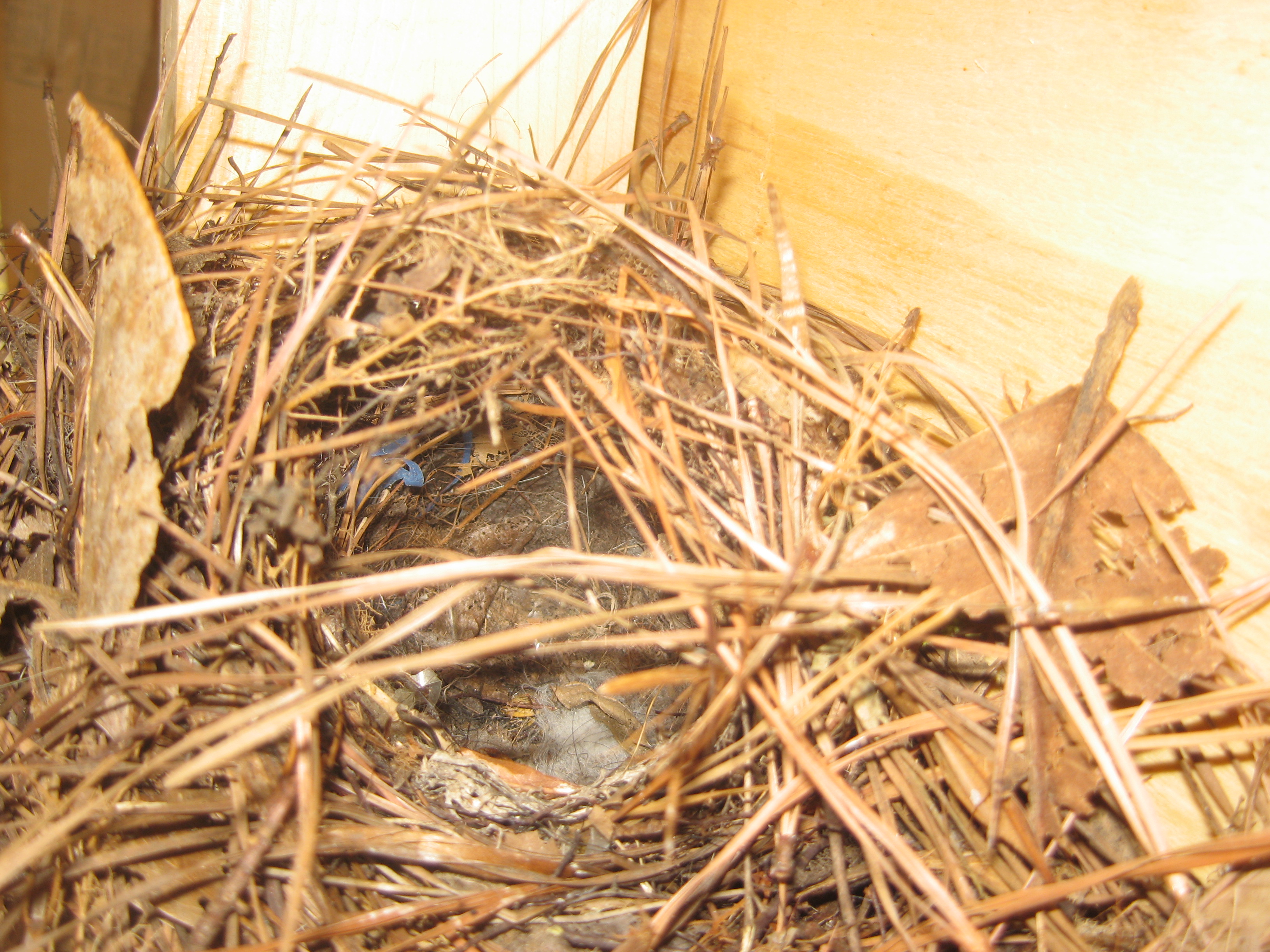 That was quick.
Wrens we barely knew thee. After two weeks of begging, and feeding, and begging, and feeding….they're gone. Just like that. I thought I saw one of the little fellows flying off two days ago, but when I checked the nest they were still there. I was watching rapid-fire feedings like this:
Or this:
Or this:
Both the male and female were coming in under and over the screen door, with worms and insects, and trying to sate the insatiable kids…..
And then yesterday we saw what you see in the photo above.
Some bird crap on the ground where they had made their escape. I went back later hoping that they'd come back for the night. But they were really gone. I'm used to ospreys who return to the nest after they can fly. Apparently not Carolina Wrens.
We are a little sad, but happy for the wrens.


April 7, 2012
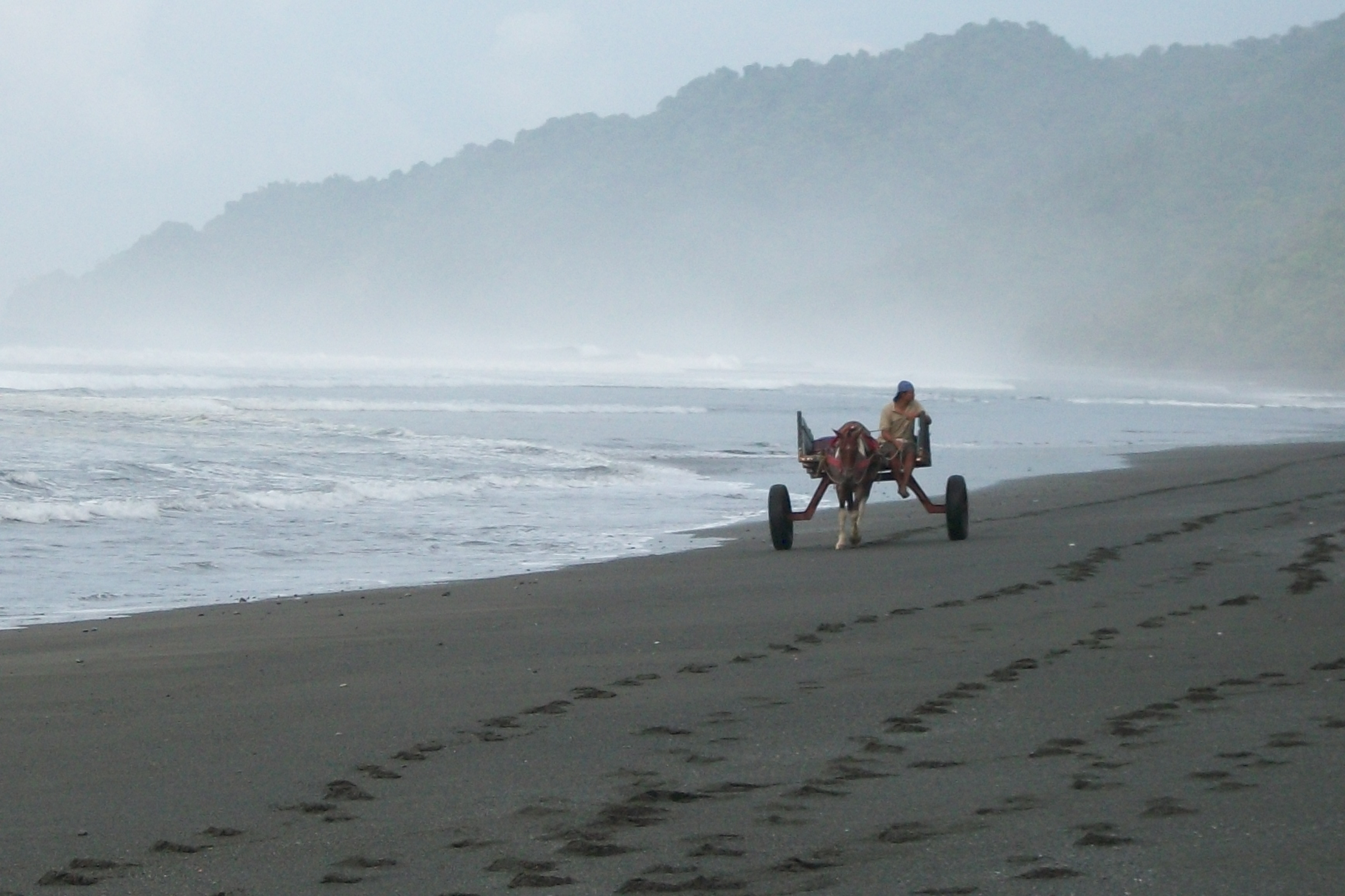
Getting Outside Saturday: Osa Peninsula, Costa Rica
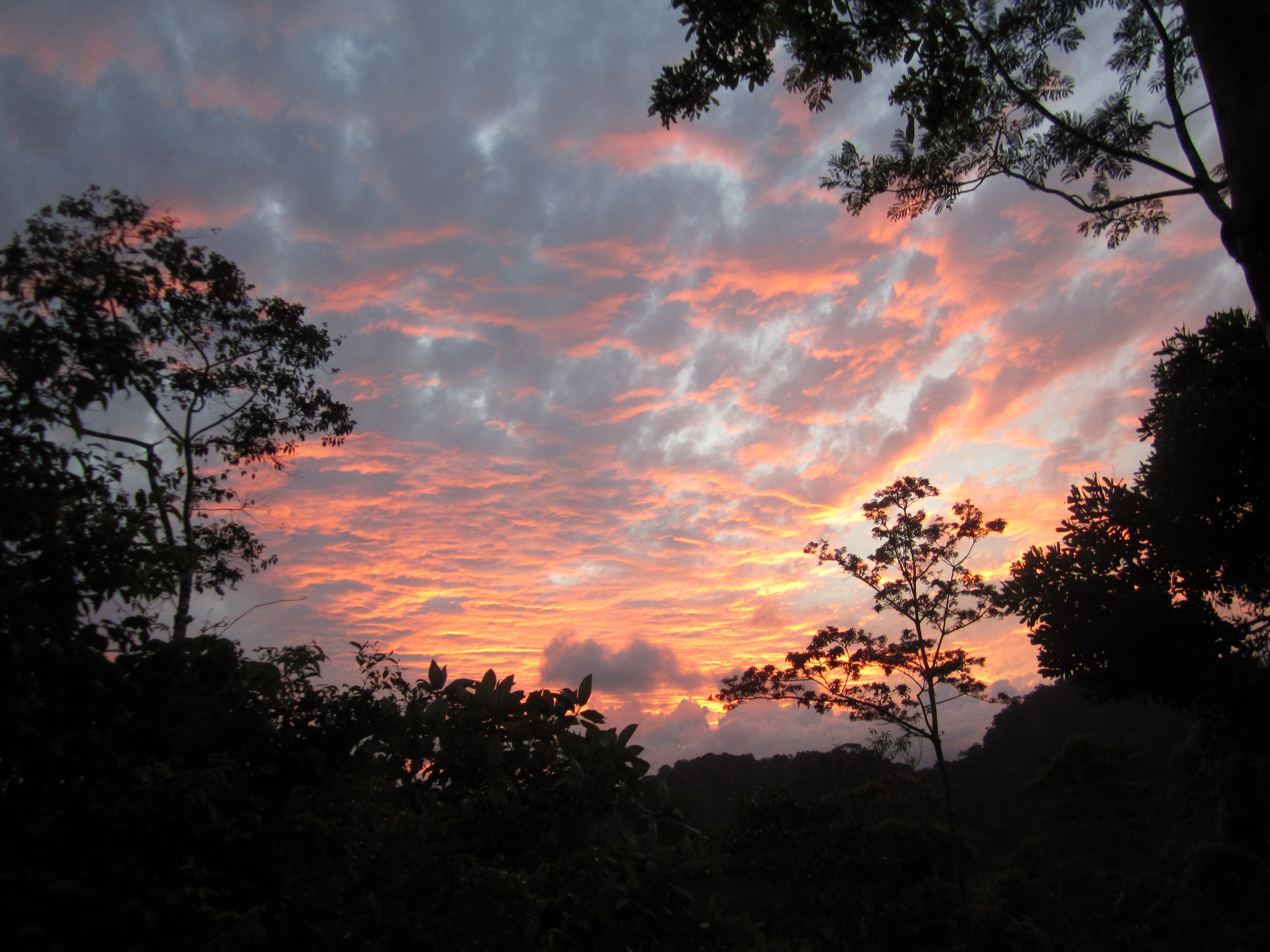
Rain forest evening
Our trip was vacation. Nothing arduous, small glitches only, comfortable lodging, some of it expensive. Despite which all was exotic, beautiful, elemental, heartening. We started–Juliet, Elysia, and I–with a couple of orienting nights in Alajuela, not too far from the San Jose airport. First morning, Elysia breathed in the heat and light and all the greenery and said, "I love Costa Rica!" And that remained our theme. Second morning, not too early, we took an internal Sansa
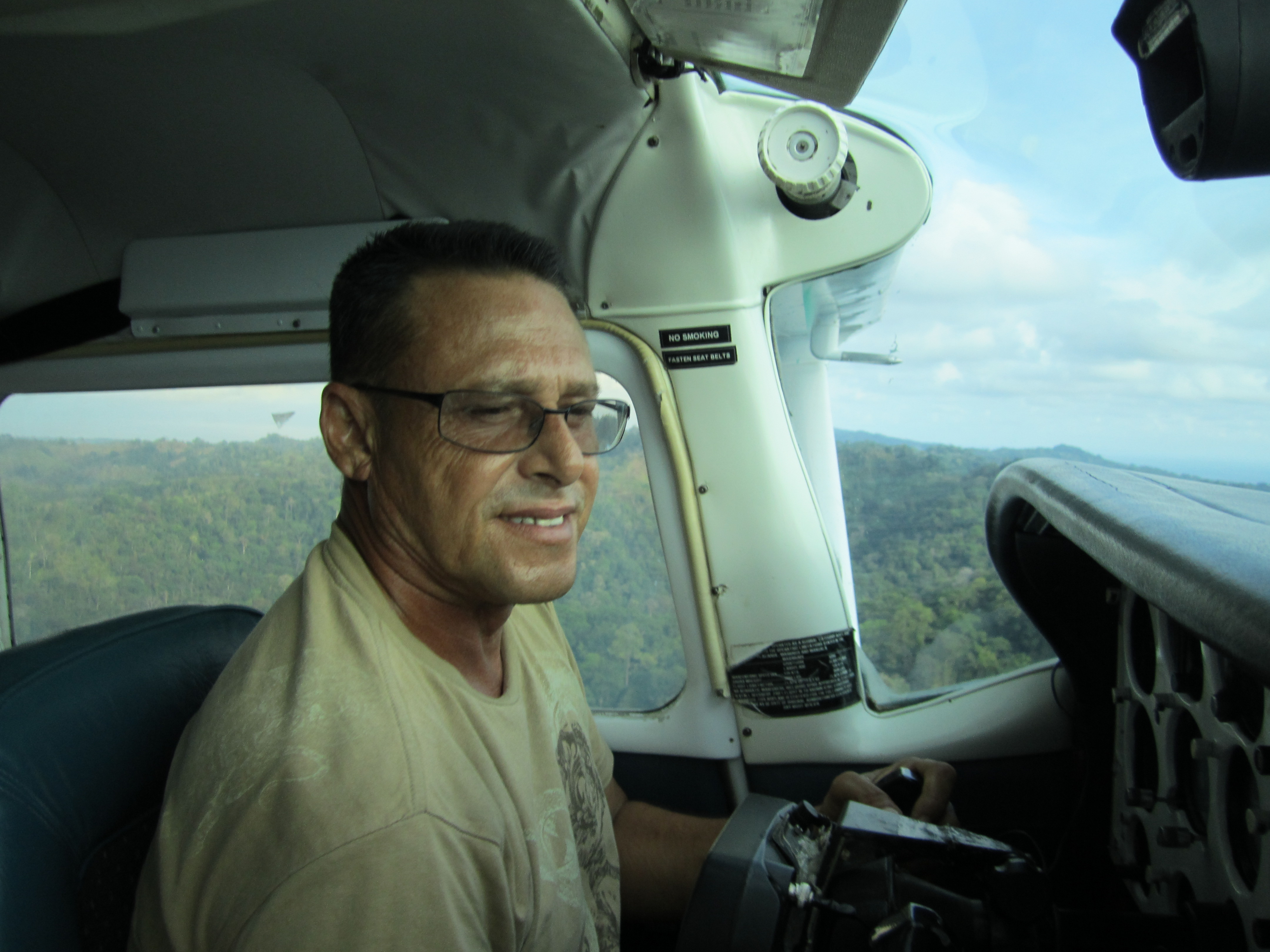
Charter to Carate
flight to Peurto Jimenez on the Golfo Dulce, Osa Peninsula, then a little Cessna I'd chartered to hop over the peninsula to the Pacific surf-side. These planes were fun. You're not too high up for detail. The Cessna barely cleared the very tall rain-forest trees. The landing strip, in Carate, was just a couple hundred yards paved beside the ocean. A man from Luna Lodge picked us up in their Land Rover. We tried our Spanish a little. Yes, he said in better English, it is dry. It had been, in fact, a record dry season–no rain for nearly three months.
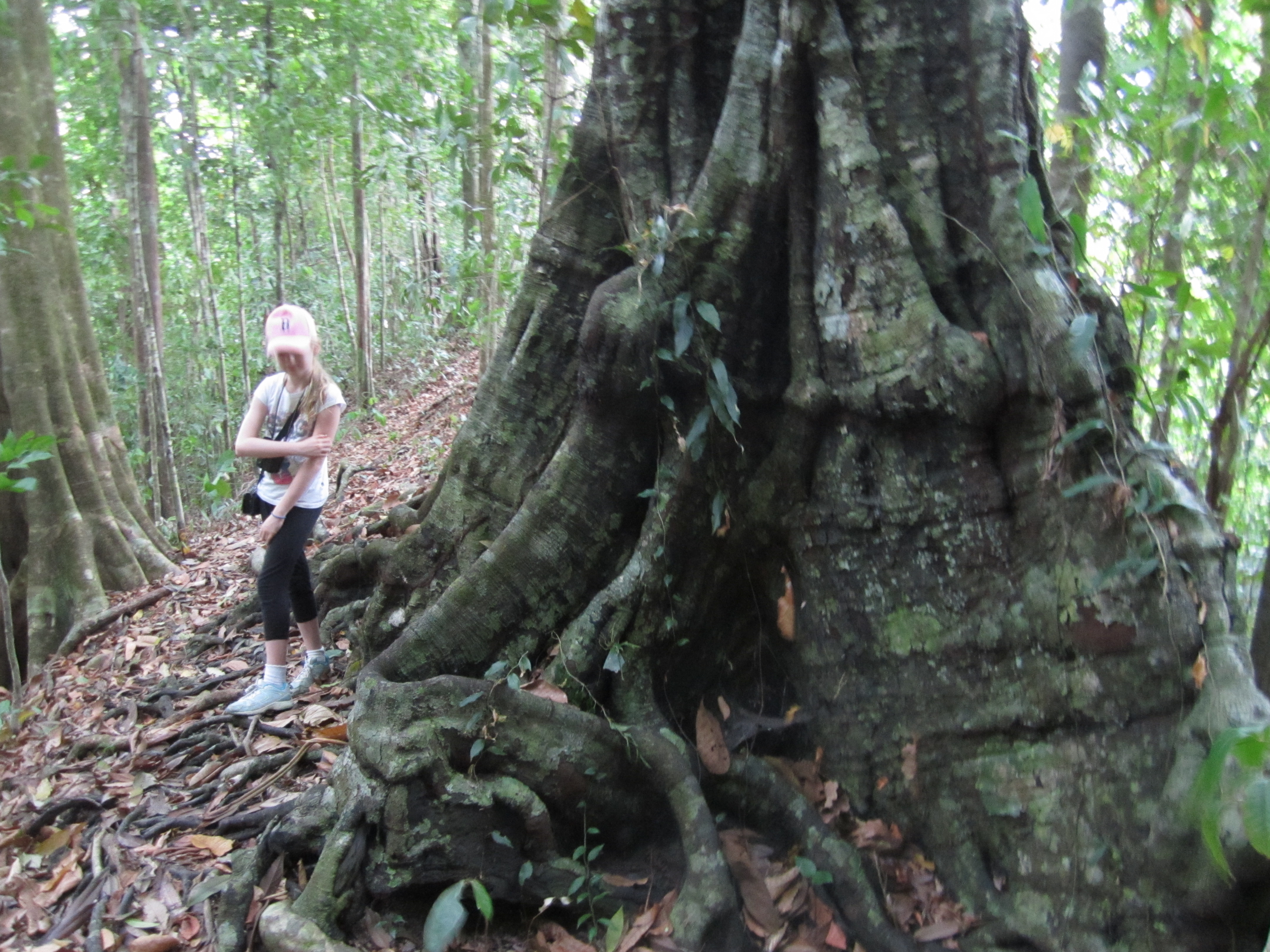
Strangler Fig
At the end of the road we came to the lodge and were offered glasses of cold water. The owner, Lana, greeting us, showed us around and eventually to our bungalow, which was a conical thatched-roof structure with open walls, nicely appointed, a couple of big beds. Elysia claimed hers.
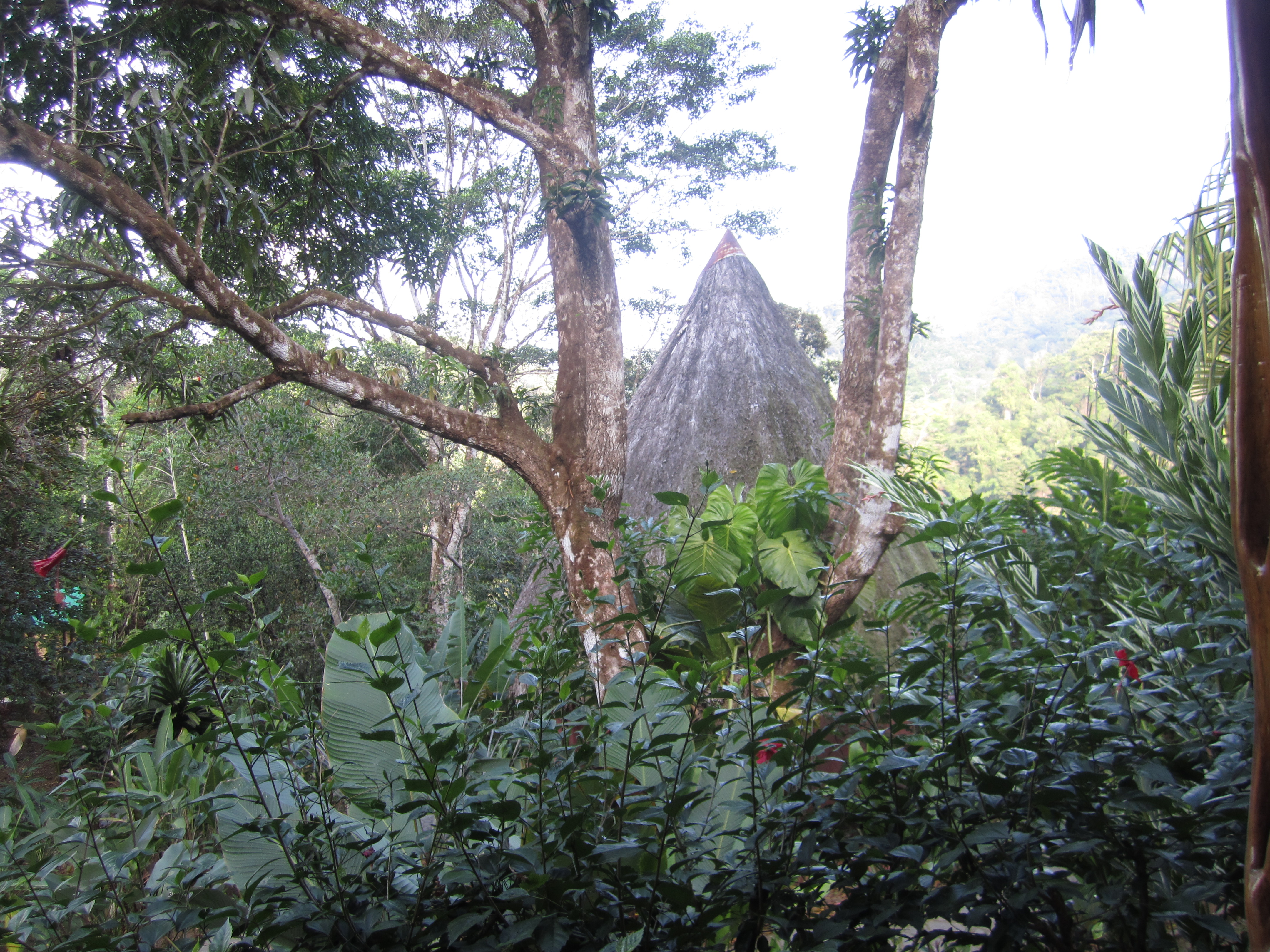
Our bungalow
In subsequent days we made like tourists and went out with guides, and then, more and more, on our own. Birdwatching, monkey spotting, night walks, hikes to waterfalls, hikes in secondary and primary rain forest, horseback riding along a manicured lane (more monkeys) and to the beach. We walked into Corcovado hike six miles starting one morning very early. It was hot. But we saw our first squirrel monkeys and more howler monkeys and spider monkeys and capuchins (or white-faced). Also tapir
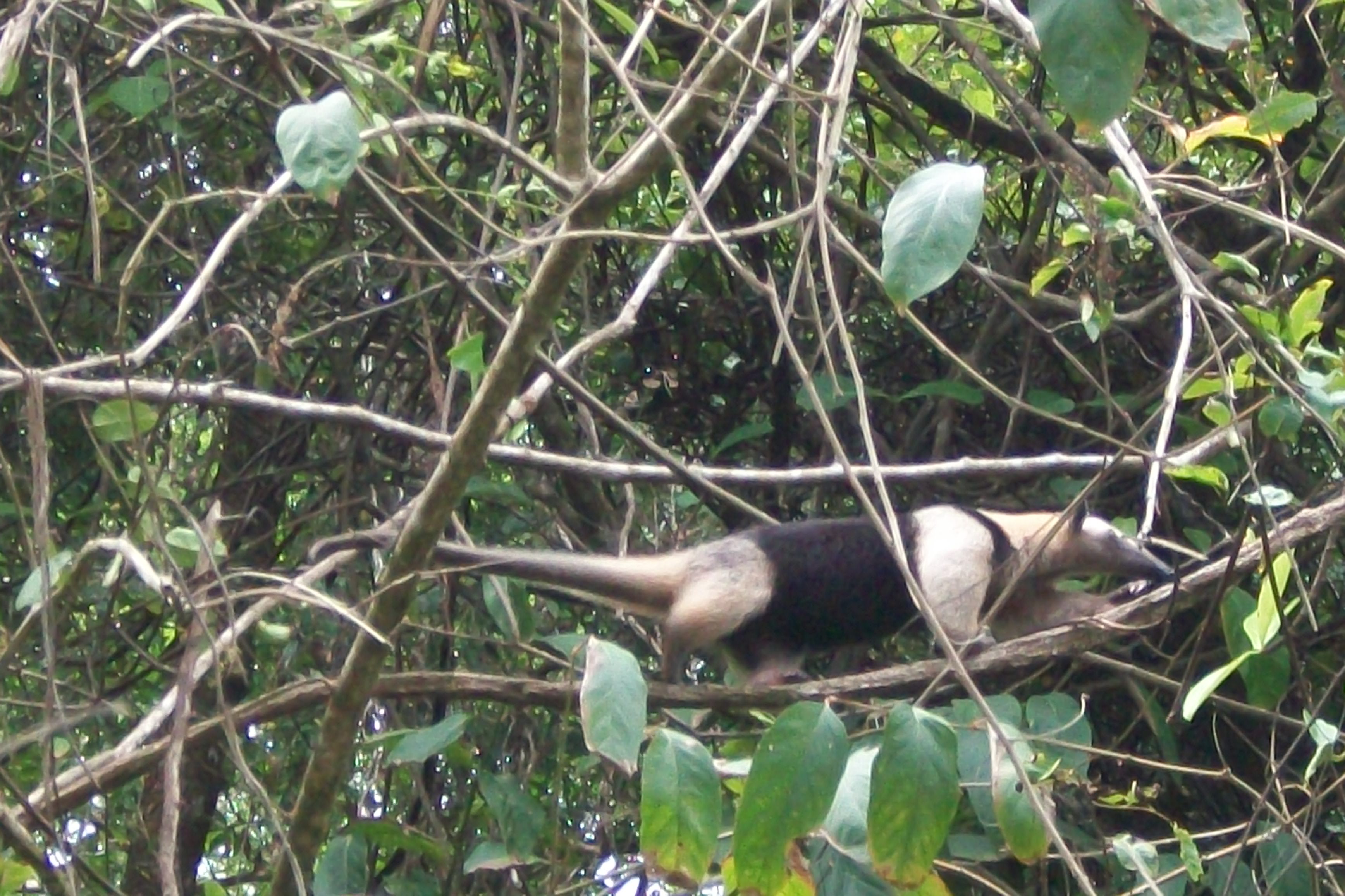
Anteater, Corcovado
tracks and an anteater and land crabs and birds, birds galore, especially scarlet macaws, which were everywhere. (I'll write up the birds in a separate post.) And the ocean! I wanted to swim, but the guide said forget it. Rip-tides, he said. And you could see it wouldn't be easy. Still. I took my boots off, put my toes in, sank fast in the soft sand. The slope into the surf was steep. Do you see any surfers here? the guide said. There weren't any surfers. There weren't
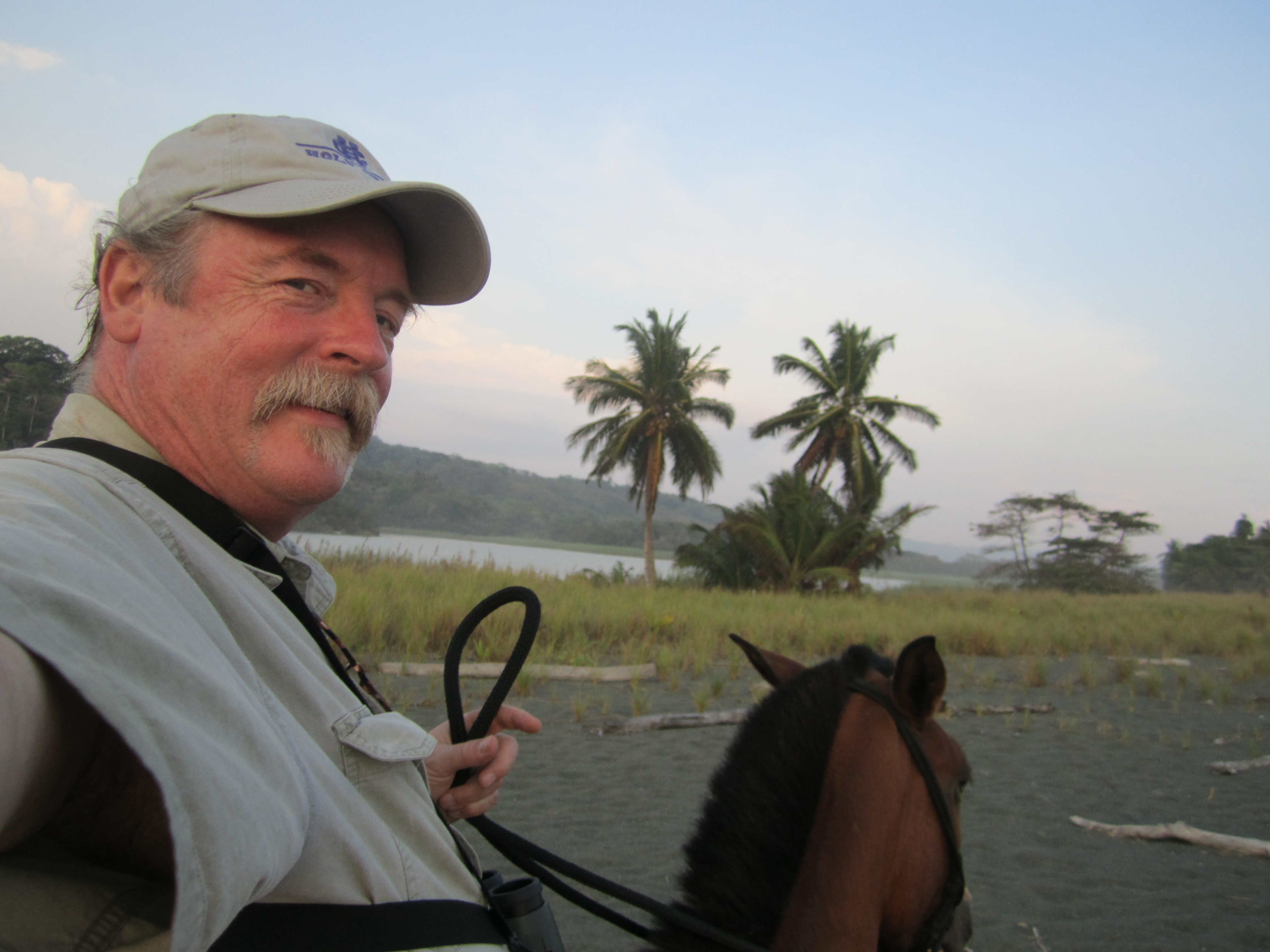
Wild Bill
any people at all. No surfers because it isn't safe. And then he pointed down the beach to a log that turned out to be a crocodile. They hunt in the surf. Who knew. I didn't swim.
Snakes, armadillos, kinkajous, even an opossum. Insects, from dazzling blue morpho butterflies to a big scorpion on the floor of our room to giant katydids to leaf-cutter ants in great parades.
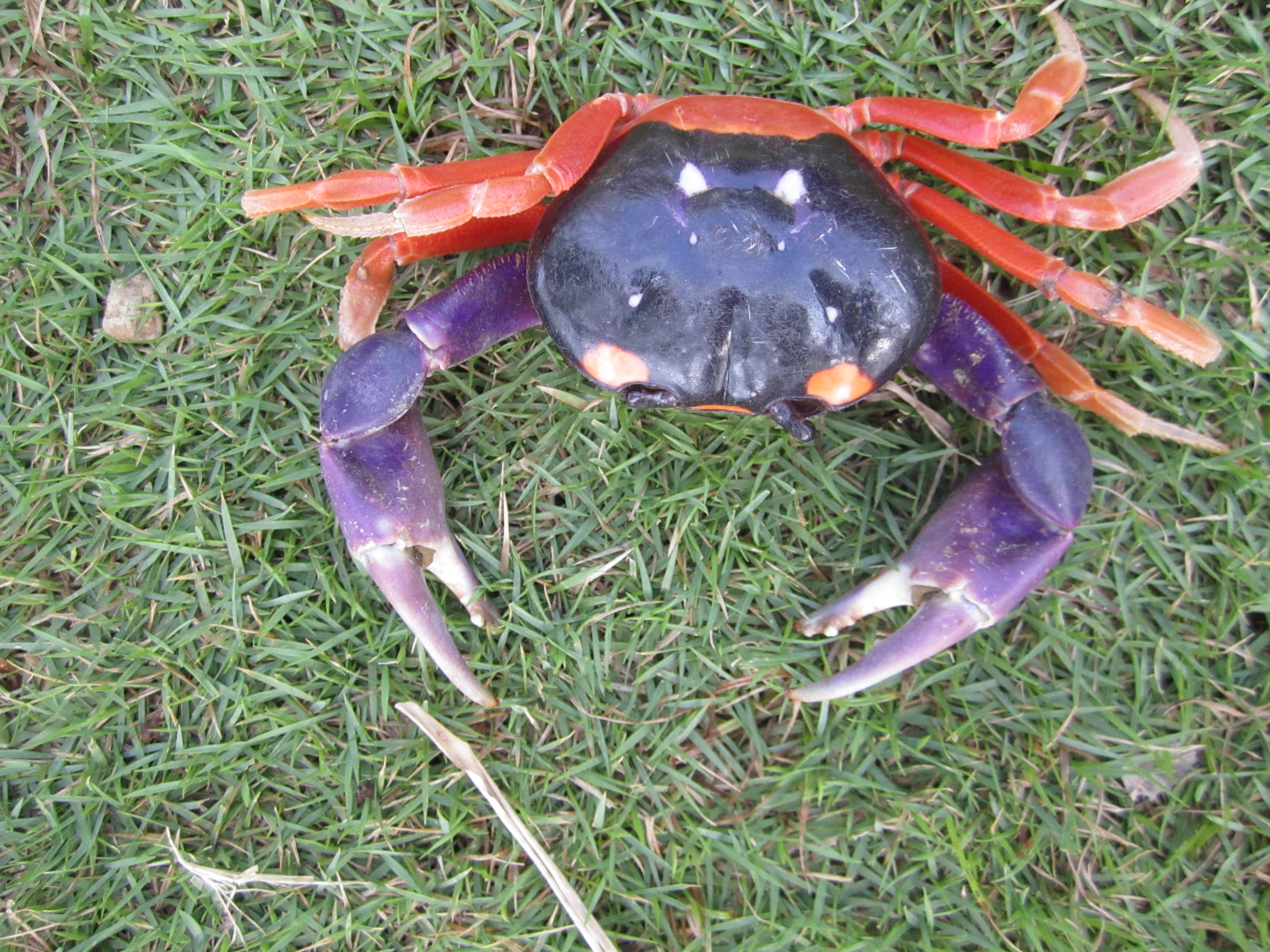
Corcovado crab
Sudden sunsets. Sudden downpours. The new moon rising with Venus and Jupiter.
Vines. Leaves the size of tablecloths. Strangler figs. Trees taller than any in Maine, and lots of them. Gold miners in the river, carrying machetes, retreating to their huts at night–black plastic for a roof, visible fire for cooking, spring water gushing from hoses plugged into the earth.
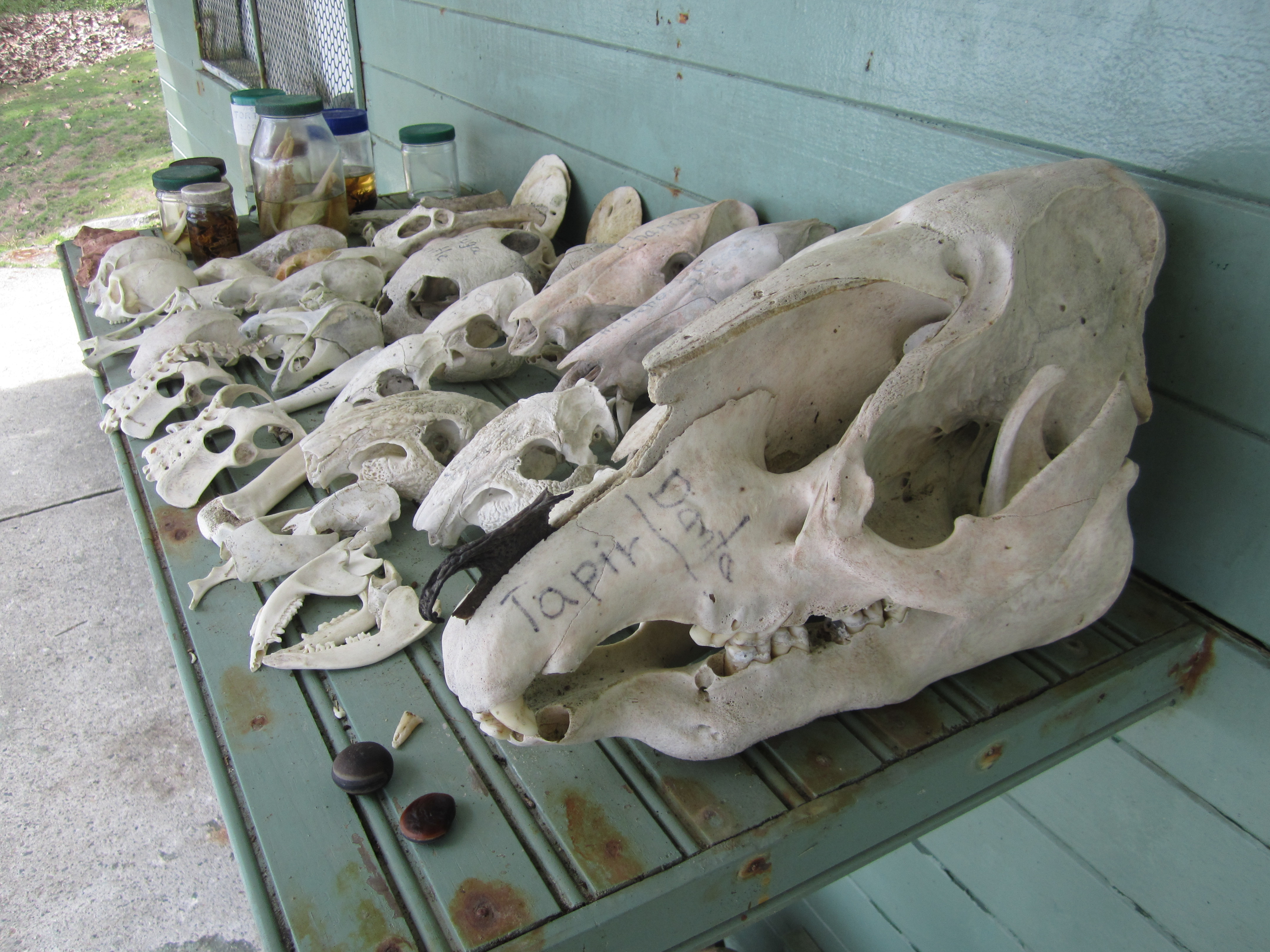
As you are now, so once was I. As I am now, so you shall be. At the Madrigal Beach ranger station, Corcovado
Power at Luna Lodge is supplied in several ways–a complicated water turbine system, solar panels, back-up generator. Lights are dim. Dark is bedtime. Guests eat together in the rancho, and gradually we made friends, ended up at the big table in a group of ten or more, laughter and stories from around the world. Simple, excellent, local food.
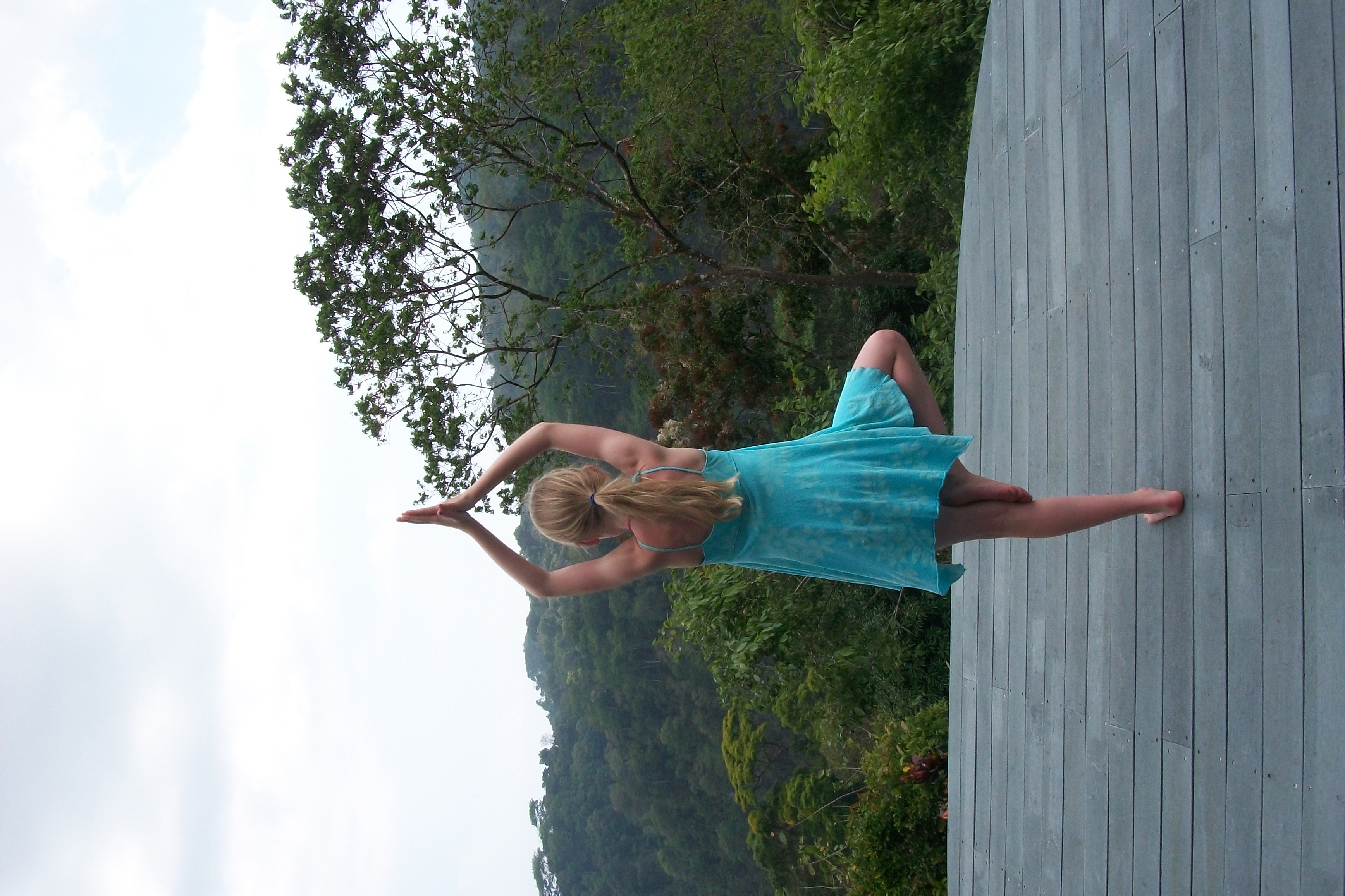
Elysia in tree pose
Yoga every morning with Lana, who's an inspiring teacher. And just Lana in general, the power it took to put this place together in the middle of the dense forest at the end of the road.
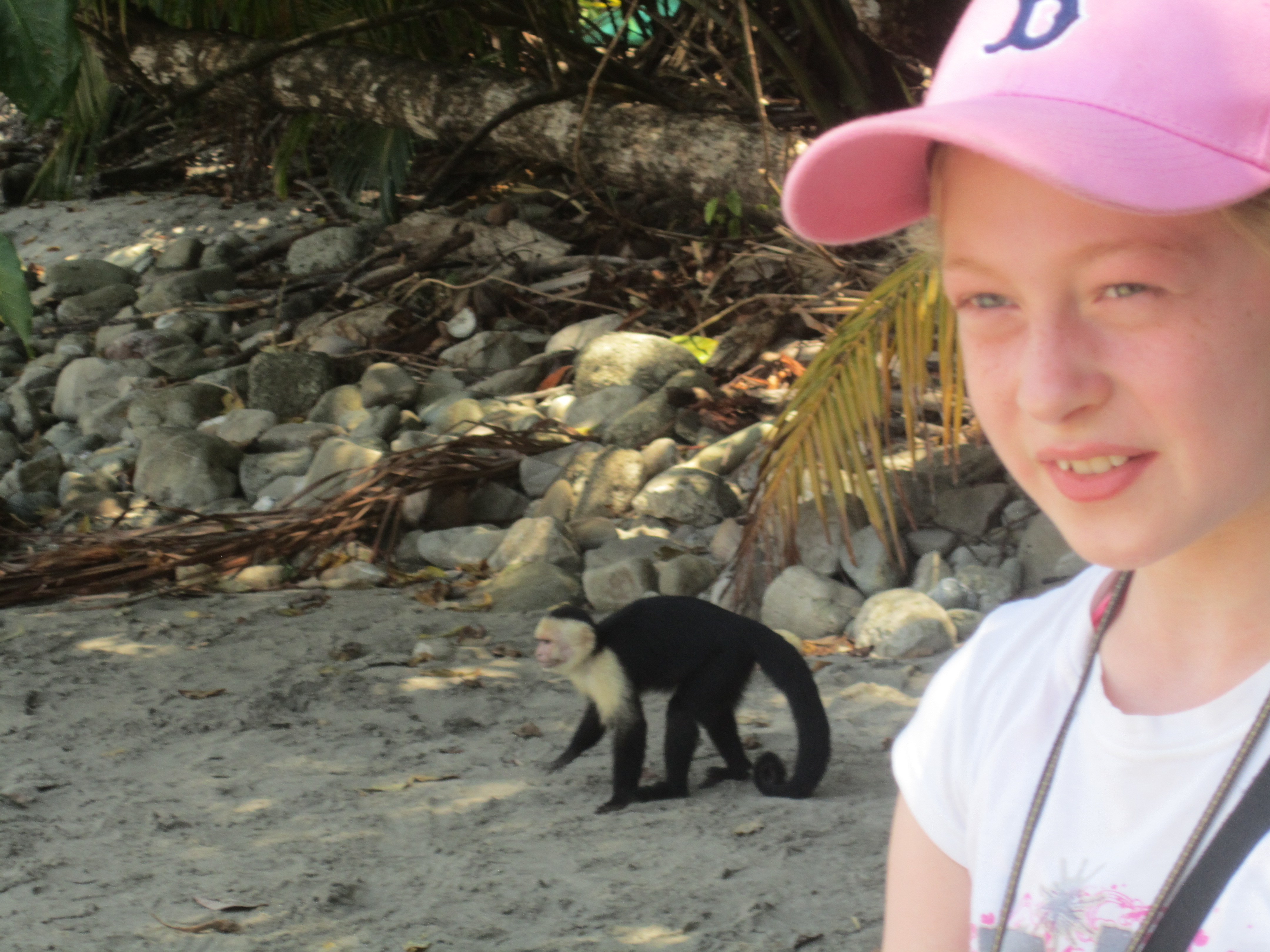
Dos monos
Delivery Man
April 6, 2012
The Finals are Set: Battle of the Reviews!
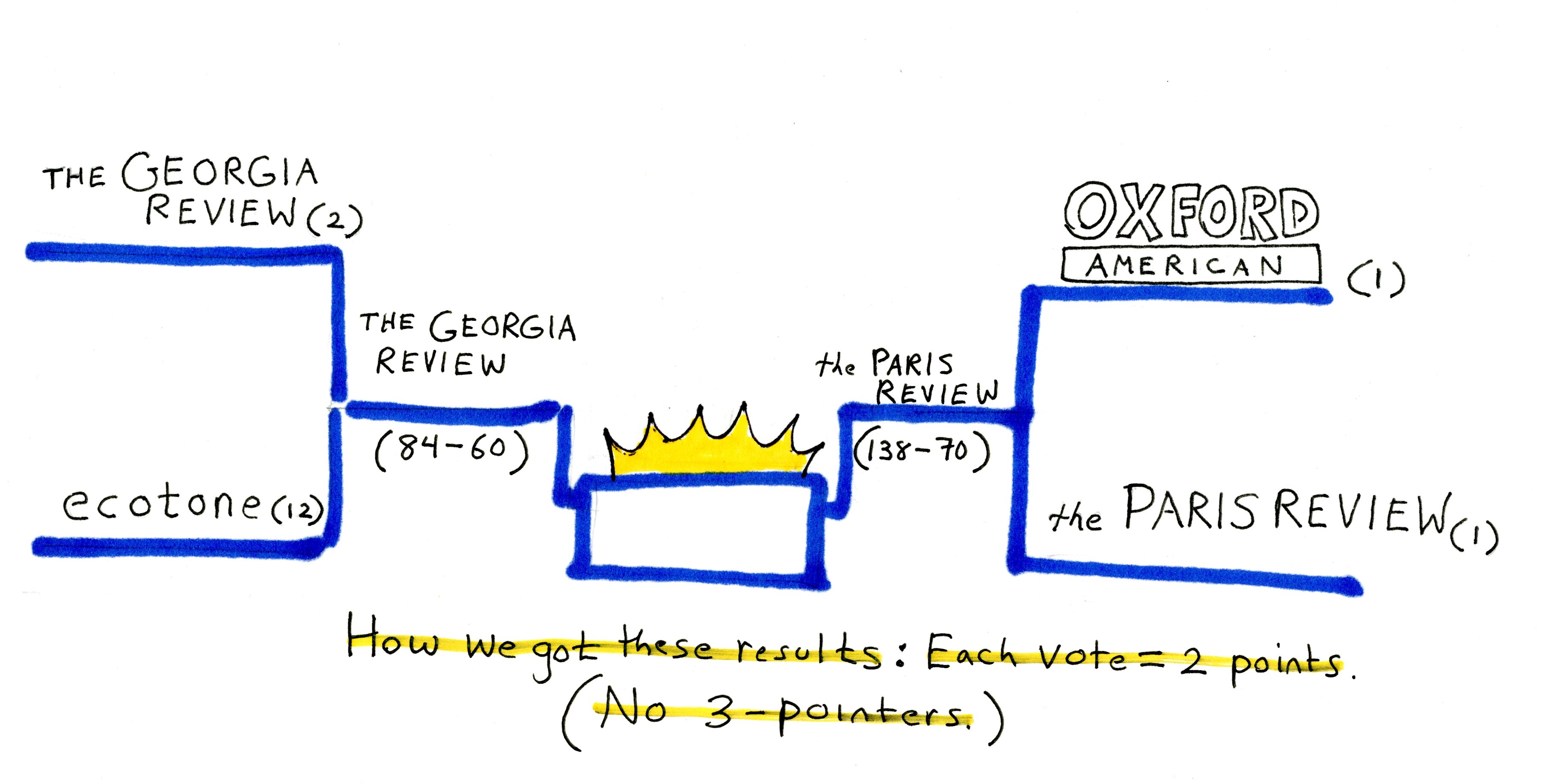
The Finals are set: The Georgia Review vs. The Paris Review. The voting has been extended to midnight Monday April9th. Please vote for the finals in the comments section on this page. You don't have to be as witty as last time. (We expect a much lower scoring game.)
Our scoring system is simple. Each vote equals 2 points. No 3-pointers.
Semis recaps:
Despite Ecotone's overwhelming homecourt advantage, the Georgia Review proved unstoppable. After making it a game with a late rally, Ecotone's Cinderella season came to an end, buried under a barrage of Georgia threes.
In the other bracket, The Paris Review steamrolled into the finals. There is some arrogance in tradition (many voters, for instance, put the word "duh" after their votes for TPR), but in this case the arrogance was well-founded. A classic performance that hints at a continued dynasty.
For lovers of the Paris Review (and as we have discovered, they are legion), we have a special treat planned for later next week. It turns out that the staff archivist here at Bill and Dave's has unearthed some rare footage of the time, previously known only through myth and rumor, when Paris Review Founding editor George Plimpton played Ecotone Founding Editor David Gessner in a game of one-on-one. Say tuned!
Also, please read Bill's Memories of the Sweet Sixteen.…such a close call for Tin House….
* * *
Finally, in fairness to the Oxford American, which is one of my favorite mags, both TGR and TPR rallied their fans on blogs.
In The Paris Review wrote:
Dear readers,
This is a matter of honor. If you love and believe in The Paris Review, now is the time to show what our fans are made of. We are currently in the Final Four of the Bill and Dave's Cocktail Hour Tournament of Literary Magazines.
Meanwhile in the AthensPatch, Rebecca McCarthy wrote:
Listen up, Bulldog Nation:
Turns out the University of Georgia does have a contender in the Final Four after all.
The Final Four of Literary Magazines.
Yep, under the boards, the Georgia Review has ruled, bruising and battering opponents right and left. If you've ever seen editor Stephen Corey crush a treadmill at the Athens YMCA, you've seen raw power.
The Final Four is held by Bill and Dave's Cocktail Hour, an online site about all things literary, large and small. You have to comment on why the Georgia Review rocks in order to have your vote count.
So, you might ask, who is the Review facing?
A puny weakling. A nothing, we hope. Who is it? North Carolina-based Ecotones, unfortunately rumored to have a staff member who can pump in the commas as fast as Jeremy Lin can hit three-pointers.
The other contenders are The Paris Review and another Southern literary magazine, the risen-from-the-grave Oxford American.
Don't worry. The Review can handle them.
Go, Dawgs!
Memories of the Lit Mag Sweet Sixteen
Sweet Sixteen
Dave's a be-here-now kind of guy, but I like looking back. And what a bracket this year. I've only got one team left in the running, and the office pool is shot. My bets are still on Ecotone, though, as they are friendly with the commissioner. But wasn't last weekend great? Tinhouse was tough. And what about One Story? Amazing Cinderella tale–Hanna Tinti getting that far with only one player on the court at a time? And the genre purity, wow. Stomped by Georgia, of course. And the Crab Orchard Warriors, wow! Who knew Paris Review had designed a defense against the Tribble Dribble! Hard to believe Playboy got classed as a literary magazine–but Hefner's cheerleaders played great when the team went down. Ecotone smashed them, of course, throwing poems in front of their power forwards–hardly fair, but this is the real deal. Ploughshares was aggressive under the boards, but the distinguished guest coach for this round leaned on the long shot (twenty-four three-pointers and nothing else, wow!). We loved Granta's full court buzzer shot, outstanding drama, and so unusual at the beginning of their game! Someone put something in McSweeney's Gatorade, not fair, but at least one game needs to be a shutout. Brigid Hughes led A Public Space to the program's finest year. Love all the Paris Review veterans on that team! Of course my money was on Missouri Review when they came up against the Oxford American. Who were those refs? And thirty overtimes? Speer Morgan is still hoarse, from what I hear. Iron Horse Review surprised with a very young team. And that Poetry got as far as it did with the oldest team in the history of the madness? Yale Review's performance was the first Ivy in memory.
Who was your team? What did you bracket look like?
And Like us on Facebook, damn it!
April 5, 2012
Final Four Lit Mag Update
VOTING FOR THE SEMIS WILL END AT MIDNIGHT TONIGHT: SEMI RESULTS POSTED FRIDAY!
VOTING FOR FINALS WILL END SUNDAY MIDNIGHT: RESULTS POSTED MONDAY!
April 4, 2012
Bad Advice Wednesday:The Art of the Disclaimer
 The toxins from the snake bite from the Costa Rican jungle have briefly rendered Bill incapable of writing Bad Advice (and made him pronounce his Ss in a sibilant fashion.) So I, heroically, must step in at the last minute……I've already picked at the carcass of this essay for my cartoon piece on nonfiction and my Truth essay, but, meager as it is, it's all I got……
The Art of the Disclaimer
Before I begin this short, insignificant essay (which I only dashed off this morning) I must first tell you that what follows is only partly true, and that though I have tried my best to make it interesting, my imagination is weak and my powers humble. Also, I tend to ramble.
The disclaimer or apologia or note to the reader, of which the above is an example, has a long, proud history in literary nonfiction, dating back to the cave no doubt, but best exemplified by Montaigne in the 1580s, whose rambling essays often read like one long disclaimer. Of course James Frey recently tried his hand at this sub-genre, and with the note to the reader that his publishers have attached to the front of A Million Little Pieces, has demonstrated that there is yet another way in which he seems entirely incapable of telling the truth. At best a disclaimer should be an eye-to-eye talk with the author before the story begins, an honest laying of cards on the table. Though historically some courtly bowing and scraping have intruded on the form, and some excessive humility have falsified it, the one thing the writer of a disclaimer can't do, above all, is posture.
Sadly, this is just what we get from Frey, who having tossed aside his tough guy leather jacket, dons the robes of a New Age priest, telling us that he wanted "to write a book that would change lives, would help people who were struggling, would inspire them in some way." As a writer of memoir myself, this strikes me as false to the point of grandiose, and though of course anyone might hope that their book would eventually inspire, I've never known a writer who sits down to the hard work of excavating memory with that lofty goal in mind. Nor have I known a writer who, as Frey claims, "didn't initially think of what I was writing as nonfiction or fiction, memoir or autobiography" In fact questions of form, or at the very least the question, "What is this thing I'm working on?" are almost obsessive concerns for anyone who has ever tried to write a book. Even more to the point, disclaimers are historically supposed to come before we know anything about a book, as a kind of pre-emptive strike of honesty, the way some people who fear being criticized will criticize themselves to beat others to the punch. They somehow lose their zing when you slap them on after you've been caught lying.
Of course by criticizing poor Mr. Frey at this point, I feel a little like the last boy to throw a tomato at a man long in the stocks, and the fact is that those around him—Oprah, his agent, his publisher, and certain wildly moralistic columnists—seem more deserving of being splattered with fruit. And today I come not to bury Frey but to extol the disclaimer. Four hundred and twenty six years ago, Michel de Montaigne began his great book of essays by assuring readers that what followed was the product of his somewhat feeble memory, that he sometimes stretched the truth a little, and that he couldn't always stick to his story. Montaigne's sentences were the closest thing the 16th century had to a reality TV show and he painstakingly revealed the particulars of his life, right down to his bowel movements, while still somehow coming across not as annoyingly revealing, but as downright chummy, a pal to the average reader. He did this in part by being up front about his motives. In his note to the reader he wrote:
I want to be seen here in my simple, natural, ordinary fashion, without straining or artifice; for it is myself I portray. My defects will here be read…Had I been placed among those nations which are said to live still in the sweet freedom of nature's first laws, I assure you I should very gladly have portrayed myself here entire and wholly naked.
And Montagine is just getting started. In essay after essay he admits to his own inadequacies, intellectual and otherwise, while creating the indelible self-portrait of the man as a kind of literary Columbo, apologizing, stuttering, forgetting, stumbling, but ultimately digging down to the truth. It may be that Montaigne's excessive humility sprung in part from stagefright about publishing his work, and he may have had second thoughts about the idea of appearing naked before friends and family. But it's the psychological striptease that counts, what the contemporary essayist Philip Lopate calls "the vertical dimension," where the "plot" of the essay "consists in watching how far the essayist can drop past his or her psychic defenses toward deeper levels of honesty." In Montaigne's famous disclaimer, this descent begins even before the book does.
But back to our whipping boy. What James Frey seemed to miss was the idea that the reader's note, like a kind of mini-essay, is about the stripping away of defenses, not the building up of them. If he'd snooped around a bit he would have discovered that we are in a kind of golden age of the disclaimer. Take for example the excessive apologias of Dave Eggers, whose book, A Heartbreaking Work of Staggering Genius, self-consciously anticipates the backlash that Frey went whistling by, many of its pages devoted just to defending the author against imagined charges of self-aggrandizement and dishonesty. Eggers, characteristically, goes on a little too long, but the effect of his confessions, in contrast to the secretive, Nixonian air of the guilt-ridden Frey, is refreshing, like talking with a friend who inspires trust by admitting past lies. Right on the copyright page, Eggers admits, "This is a work of fiction, only in that many cases, the author could not remember the exact words said by certain people, and exact descriptions of certain things, so had to fill in gaps as best he could." Here he echoes Hemingway's preface to A Moveable Feast: "If the reader prefers, this book may be regarded as fiction. But there is always the chance that such a book of fiction may throw some light on what has been regarded as fact."
Maybe one reason that disclaimers have proliferated recently is that we memoirists have a whole lot of explaining to do. Oprah lectures that truth matters, but the truth is it's not that simple. Anyone who sits down to read a detailed account of a conversation a memoirist had when he was thirteen with his mother over the death of a goldfish, should know that what is on the page is made up, or as we say in the trade, re-created. Astute readers also know that within the world of memoir there are lies and then there are acceptable lies. As Bill Roorbach, a daring contemporary writer of nonfiction, says in Writing Life Stories: "Approximating the words from a lecture attended long ago at your modest college is something quite different from saying you studied under Robert Lowell atOxford." Historically "acceptable" lies include time compression, when a writer squashes or elongates time to novelistically frame a story, the way Henry David Thoreau squashed his two years and change at Walden into a single year. Then we get to the messier issue of human beings, who inside our pages become something called characters. Omission is one of the lesser crimes of character: I have an essayist friend who wrote a beautiful piece about experiencing a moment of euphoria after climbing a mountain alone. The only problem was that the companion the writer had actually been hiking with read the essay and grumbled about being edited out. Equally common is creating something called composite characters, when several real life people are smushed into one. This is usually motivated by a desire for clarity and artistic neatness among minor characters: say you are writing about a time when you were in the hospital and you conflate three night nurses into one.
Frey wanders this way and that in his own disclaimer, but at one point tries to wrap himself in his memoirist's cloak of "emotional truth": "I believe, and I understand others strongly disagree, that memoir allows the writer to work from memory instead of from a strict journalistic or historical standard." Sure, but while most readers accept that the memoristic contract is quite different than the journalistic one, they also know the difference between editing an "um" out of a line of dialogue and outright lying. It will be interesting to see if publishers actually hold to the emerging (and slightly hysterical) belief that memoir should be held up to the rigorous journalistic standards of factual accuracy.
Of course the simplest way for an author to still use the techniques of "creative nonfiction" without upsetting readers is by simply fessing up. And that is where the art of the disclaimer comes in. The paradox within personal nonfiction, going back to Montaigne, is that while we may forgive a few misplaced facts, we never forgive an overall lack of honesty. As it turns out one of the surest and most obvious ways to establish this honesty is by telling the reader right at the start that what follows may not all be exactly true. In her reader's note to her memoir Tender at the Bone, Ruth Reichl admits that in her family storytelling was prized over truth. "This book is absolutely in the family tradition," she tells us. "Everything here is true, but may not be entirely factual…I learned early that the most important thing in life is a good story." And in the prefatory note to his classic memoir, This Boy's Life, Tobias Wolff writes: "I have been corrected on some points, mostly of chronology. Also my mother thinks that a dog I describe as ugly was actually quite handsome. I've allowed some of these points to stand, because this is a book of memory, and memory has its own story to tell. But I have done my best to make it tell a truthful story."
This last point is a vital one. Intention may be hard to discern and somewhat vague, but intention matters. Can readers be misled? Of course. Can candor be used as a parlor trick, the way really good liars use it in life? Certainly. But we also hope we can ultimately ferret out intention. One of the reasons for the Frey backlash is the sense of many readers that he was manipulating them. In the best essays or memoirs we feel just the opposite: that the writer is honestly wrestling with his or her past and then trying to present it to us as nakedly and frankly (and of course as artistically) as possible. A good memoir or essay becomes great when we sense this honest effort to face life's facts, and a good disclaimer has the job of laying out the plan of attack. It says to the reader, look, here's how it is. Here's who I am and what I did. I may not have gotten all the facts exactly right, but I tried. You can trust me. Really.
April 3, 2012
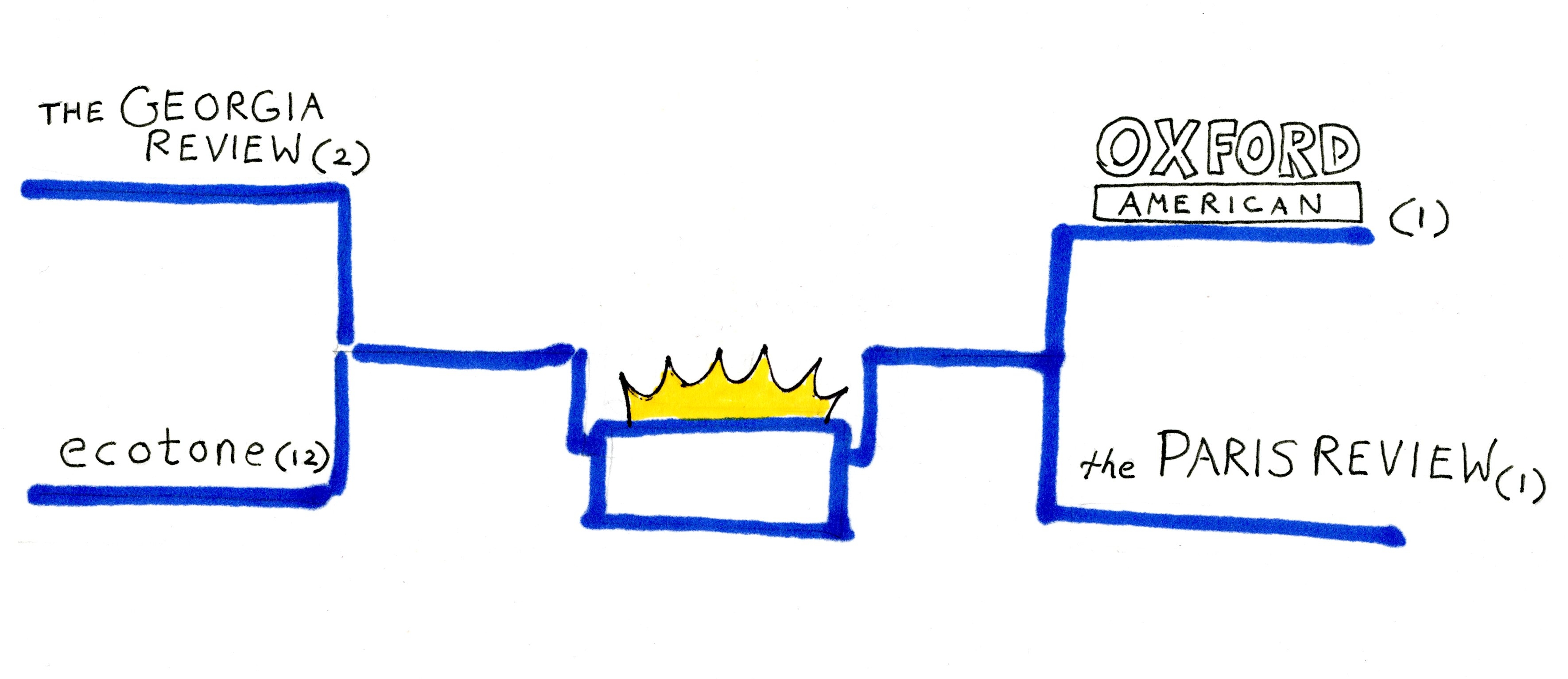
The Final Four Literary Magazines
 Every year here at Bill and Dave's we have our own version of March Madness. We take 64 of the best small literary magazines and let them play it out, no holds barred, determining unequivocally the best small magazine in the country. I don't know if you've been following this year's satellite video feed over at LSPN, but things can get ugly, and last week after their big win over The Believer, the fans down in Athens burned their copies of the Chicago Manuel of Style. Their passion can be forgiven; it truly is mad when literary journals go at it. For instance no one who witnessed it will ever forget the bloody war in the Southern Regionals, when the Oxford American hung on against their bitter rival Garden and Gun.
OA will now take on another program with a shining pedigree, The Paris Review, in what promises to be a battle of titans. The surprises this year are all on the other side of the bracket. Many thought that the Georgia program had grown too old and could never return to its glory days under coach Lindberg, but their execution has been flawless, and they play a measured style that has everyone buzzing about the old days. The real Cinderella story of the tourney, however, has been Ecotone, a tiny program that, thanks in part to the recruiting pull of recent grad (and power forward) Edith Pearlman, has made a surprising run, littering the courts with higher seeds.
As a reporter I may be accused of a lack of objectivity, since I still have some old connections at Ecotone (and since I made up everything that happened in this post.) But from here on in, the fate of these four teams is in your hands. Please vote on our comments page. Let us know who you think should win the semis and the finals. We promise not to alter the results (even though we can) just so we can win our office pool.
April 2, 2012
Things You Never Hear Writing Teachers Say
 "Just write what comes into your head!"
"Too many specifics."
"To hell with commas!"
"This piece needs more dialect."
"I've never read a piece about a grandparent dying before."
"Your work is too disciplined."
Please join the fun. Add your quotes in the comments section below.
March 30, 2012
Getting Outside Saturday: Wren Cam–Day 5
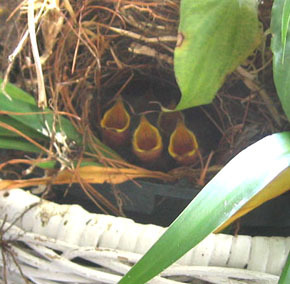 Here's the latest from the lives of the young Carolina wrens. They are basically all mouth. Mom and Dad fly into the shack, brandishing insects in their bills, and feed the maw(s). Then, briefly, the squeeze toy squeaking subsides. Beginning again soon enough……
Click here for footage of young wrens: 010
Wren Cam–Day 5
Here's the latest from the lives of the young Carolina wrens. They are basically all mouth. Mom and Dad fly into the shack, brandishing insects in their bills, and feed the maw(s). Then, briefly, the squeeze toy squeaking subsides. Beginning again soon enough……
Click here for footage of young wrens: 010