David Gessner's Blog, page 27
September 23, 2014
Come See May-Lee Chai read on Thursday
 New Creative Writing Faculty Member May-lee Chai to Read at the University of North Carolina Wilmington September 25
WILMINGTON, N.C.— May-lee Chai, new faculty member in the Creative Writing Department at the University of North Carolina Wilmington, will read at 7 p.m., Thursday, September 25 in Kenan Hall Room 1111.
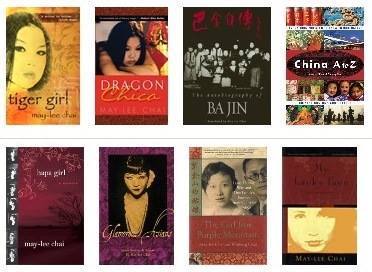
May-lee Chai was born in Redlands, California the eldest daughter of an artistically gifted Irish American mother and Shanghai born political scientist father. She is the author of the novels Tiger Girl, Dragon Chica and My Lucky Face, the memoirs Hapa Girl and The Girl from Purple Mountain, coauthored with Winburg Chai, the nonfiction book China A to Z and Glamorous Asians: Short Stories & Essays. In addition to her books, she has published numerous short stories in journals, magazines and anthologies as well as essays and journalism.
She majored in French and Chinese Studies from Grinnell College in Iowa. May-lee received her M.A. in East Asian Studies from Yale University. She also completed a second Master’s in English-Creative Writing from the University of Colorado in Boulder. She has studied at universities in France, China, and Taiwan, and likes to study new languages. She has also taught at various universities, including San Francisco State University, the University of Wyoming, and Amherst College in Massachusetts.
All events are free and open to the public. Receptions sponsored by the department and book signings sponsored by Pomegranate Books will follow readings.
For further information on UNCW’s programs and events in creative writing, please contact the Department of Creative Writing at 910.962.7063.


September 22, 2014
Autumnal Equinox
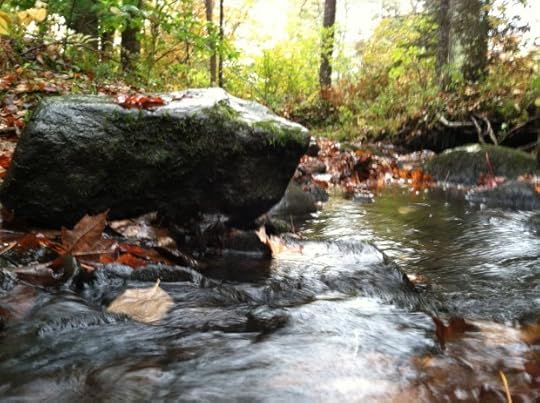
In late August, more emphatically in September, the garden begins to die. First frost in our valley location is generally within a week or two of Labor Day, and follows the olden wisdom: beware the full moon. The first hard freeze (a full night at twenty degrees or lower–as opposed to mere frost) might wait till the next full moon, but then again, it might come any night at all, starting late August. One looks to the evening sky after a perfect, clear day as the stars emerge and can almost see the heat flying up and up and gone. The cold drops in. I throw old sheets over the tomatoes the way my elderly neighbor Isabel Hammond showed me before she died, pull a tarp over the basil and cover the cucurbits (cumbers, squashes, pumpkins). Some years I do nothing but mourn: you can’t stop winter.
Steve at the Hardware store gives an appraising look, askes the ritual question: “Got your wood in?” Orion creeps into view after minight. Old sweaters migrate out of the closets, the sky has never been so blue. The hummingbird goes missing, but the college kids are back, a thousand beats per minute.
From my book Temple Stream: A Rural Odyssey, about to be reissued by Down East Books.
September 18, 2014
Are you Ready for Some Wife-Beating?
 In the mad swirl of the NFL, it has been good to finally hear the voice of reason. That was of course Reggie Bush, who assured reporters that while he beats (“disciplines”) his one-year old, he tries not to leave bruises. Wait a second. Did he just “one-year old”? Is he really saying he beats his baby? Holy Shit.
Here is the video of Bush.
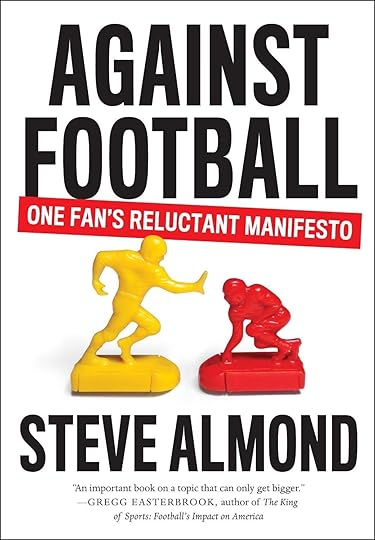
Meanwhile check out Steve Almond’s book Against Football: A Reluctant Manifesto.
My father was a Patriots season ticket holder and took me to Schaefer Stadium as a kid to watch Jim Plunkett and Randy Vataha. Doubt I will give up the Pats any time soon. But this bullshit right now is pushing me away, and the moralizing about the bullshit (by the likes of Ray Lewis) is almost worse than the bullshit itself.
Maybe it’s time we celebrate a more civilized but equally exciting sport. Ultimate Frisbee, anyone?
September 17, 2014
Bad Advice All-Stars: Lose the Suitcase!
 There is almost nothing more frightening for a writer than the idea of losing one’s work. This used to mean losing one’s work physically when, say, your house burned down. (I actually remember reading, and following, the advice of another writer who suggested placing final drafts wrapped in plastic in the freezer, where they might survive a fire.) Of course the world has changed and now the anxiety is focused more on forgetting to hit SAVE or having your computer crash. Here at Bill and Dave’s its been an anxious few days as we try to recover lost posts, but we consider ourselves lucky not to have lost the entire content as both of us do our final revisions on line.
But that’s not the kind of loss I want to talk about today. While there is nothing more frightening than losing your work, for the development of a writer it is not always a bad thing. The most famous story in this regard was that of Hemingway and his wife Hadley. As the tale goes, Hadley was on a train to Spain and lost the suitcase containing many of Hemingway’s earliest short stories. And as the tale goes, narrated of course by Hemmingway himself, our macho hero greeted this news with stoicism. (Why is it that I imagine there might have been a temper tantrum or two?) Of course he was devastated, but later he could look back and see this tragedy as less of one, as in fact an opportunity to grow beyond his apprentice work.
“Lose the suitcase!” I exhort my students, trying to get them to shed their earliest writing skins. It is scary advice, but it is important ability to have, an ability that allows us to finally get rid of apprentice work and trust the writers we have become. But it’s hard: you have written something, you think it’s good, you never grow beyond it. The problem here is that the secret of writing—if there is a secret (there isn’t)—lies in the growing part. Of course it’s human nature to cling to the suitcase, to want to “use” your old work if it hasn’t been published (and sometimes if it has) and to never want to lose it. And there are many reasons to cling to the old, indolence and fear being two. It is scary out there in the new; safe back here in the old. Most of us hold onto our suitcase, work that is both finished and acceptable to us, for dear life.
But. Still. Lose the suitcase! Say you are writing a novel and you have gotten to the part where Mrs. Edwards throws the dinner plate at Mr. Edwards and you are oh so happy because five years ago you wrote a short story based on the same incident, which means you’ve got it and now you can rest and be confident for a while instead of living in the insecure (but thrilling) world of the first draft and insteaad of doing the daily impossible, uncertain work of making something out of nothing. But, lo and behold, it turns out you are a slightly different, maybe even better, writer than you were then, and the story made use of the event a little differently than the novel, and the story, after all, was a story, with a story’s shape, not a novel’s. So you suck it up and do the hard thing and make it new. You know your book, if not your mood, will be better served by writing the whole scene anew, and adding all the subtle differences that occur to you in the frenzy of creation, instead of leaning on, and clinging to, the old work.
Before I get carried away, let me be clear about one thing. I’m not saying you have to always lose the suitcase. I’m not a rigid anti-suitcase-ist, and there have been plenty of times I’ve jammed the dinner-plate-throwing scene in and it’s worked just fine. And I will admit that while we tell young writers to let go, there may be no more important tool of the trade than that of hanging on. Without it books wouldn’t get written. And yet….we writers too often err on the side of the suitcase and too infrequently embrace the scary world of letting go. It’s natural to want to hold on. But there is something to be gained by a new draft, new writing, where all of your faculties, including, most importantly, your imagination, are fully engaged. That is when the unexpected starts popping up on the page.
I think Bill is going to tell a story about Fitzgerald in the comments below. But one of my favorite suitcase-losing stories comes from the great essayist Brian Doyle and I’ll now mangle that story off the top of my head. Robert Louis Stevenson had written the story of Dr. Jekyll and Mr. Hyde in a mad rush, the way it seems he did everything, cranking the whole thing out in three days after having a dream about a Hyde-like character. When he had finished he came down and read it out loud in front of the fire to his wife and step-son Lloyd.
I’ll let Brian Doyle take it from here:
“Lloyd listened, “spellbound, and waiting for my mother’s burst of enthusiasm,” but it did not come: “Her praise was constrained, the words seemed to come with difficulty; and then all at once she broke out with criticism. He had missed the point, she said; had missed the allegory; had made it merely a story – a magnificent bit of sensationalism – when it should have been a masterpiece.”
Stevenson was livid, enraged, “his voice bitter and challenging in a fury of resentment,” said Lloyd, 17 years old at the time and frightened to see the stepfather he dearly loved “impassioned and outraged.” Lloyd fled, Stevenson stomped back upstairs, and Fanny stayed by the fire, “pale and desolate.”
Then Stevenson returned. “You’re right,” he said quietly to Fanny. “I’ve missed the allegory, which is, after all, the whole point of it.” He threw the manuscript in the fire. Fanny and Lloyd shouted and reached for it but Stevenson stayed their hands: “In trying to save some of it, I should have got hopelessly off the track. The only way was to put temptation beyond my reach.”
He wrote it again, in three days, and then off it went to be published….”
* *
So throw it in the fire. Lose the suitcase. The thing about our early work, our apprentice work, is that we think that if we don’t use it, it isn’t good for anything. But it is good for something. It’s good for getting us to the point where we can throw it away.
September 16, 2014
The Georgia Review, Ecotone and Some Guy named Henry
By The Georgia Review On September 11, 2014 · In Other Online Exclusives
 The Georgia Review seldom solicits work, but in 2008 we saw the chance to put together a special nature-writing feature comprising an essay, “Simplicity and Sanity,” by Scott Russell Sanders along with solicited responses to that work by four noted authors with a special interest in environmental issues. Drawing extensively from Walden, Sanders advocated a sustainable and environmentally sound life informed by Thoreau’s principles. Among the four other authors, the gently contrarian David Gessner mounted some opposition based, in part, on his own reading of Thoreau and simplicity.
In a recent editorial in Ecotone, of which Gessner is founding editor, he revisits his position from that Spring 2009 issue, providing us with an opportunity to present again, through these two influential writers, some ideas that have lost no currency or urgency in the last five years.
Here, with a link to Gessner’s new essay, we offer both original Sanders and Gessner pieces from Spring 2009.
D.C.
Scott Russell Sanders’ “Simplicity and Sanity”
David Gessner’s “Against Simplicity”
“On the Gallows with Henry David”
Buy the Spring 2009 issue and read the entire nature-writing feature including essays by Alison Hawthorne Deming, Reg Saner, and Lauret Edith Savoy. Additional work includes a folio of paintings by Terry Rowlett; fiction by David Huddle and Lori Ostlund; poetry by David Clewell, Alice Friman, Margaret Gibson, Maxine Kumin, and others.
September 14, 2014
Our Sunday Sermon: A Dialogue on Race (and Writing)
 FIVE EMAILS ON RACE (IN ORDER FROM TOP [Sept. 4 and 5, 2014])
EMAIL 1
FROM: David Gessner
TO: Clyde Edgerton
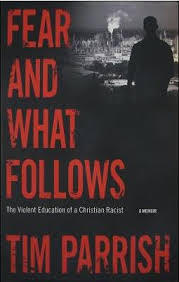
Below find something my friend Tim Parrish posted on Facebook. He wrote a memoir called FEAR AND WHAT FOLLOWS: The Violent Education of a Christian Racist. on growing up poor in a racist family in the south. (“The story of a working class, Southern Baptist upbringing that transformed into a nightmare of bigotry and bullying in Baton Rouge”)
From Tim:
Trouble on my mind: FB is a way, I suppose, to simply express stuff, so I’m expressing and sharing a dilemma. My keynote talk yesterday was a great experience overall, but it included a problematic reading from my memoir (all of them are problematic with this book). Those of you who have read it know that I write the N-word extensively, mostly in dialogue, but also at times to express how I thought when I was younger. I preface my readings (except for an unfortunate lapse at Sanibel’s conference) with an explanation of why I think I have to use the word and how Audrey Petty helped me unknot some reservations, but I also believe that it’s not the right of a white person to use what is probably the most damaging word in American English (I also think it’s perfectly within the rights of African Americans to use the word, which I think of as a completely different word, but that’s another debate). Frankly, I’m exhausted from saying the word for over a year now (but don’t see how I can be true to that time and my experience if I don’t say it), and yesterday five African-American colleagues walked out of the room during my reading. Someone brought this up almost immediately during the Q and A, although I was already painfully aware of it. I don’t know why they left, and I don’t know them to be able to ask; however, I know that hearing that word repeatedly must be like getting repeatedly punched in the gut, or at least I imagine it might be. No question or request for comments here. I just wish there were a solution that could convey the truth and maintain artistic honesty without possibly striking people in the most vulnerable of places.
EMAIL 2
Edgerton to Gessner
I’m with him in spirit. It’s a problem. I’m thinking of ways to solve it. First thought is say / explain to audience the dilemma and then say the word once and then each subsequent time just raise a hand or nod it …. But that could be worse.
To become offended by someone ON YOUR SIDE seems possibly disrespectful in a way that is one type of disrespect out of many. A study of Wittgenstein’s “language games ” may be in order. CE
___________________________________________________________
EMAIL 3
Edgerton to James Johnson
Your. thoughts ?? Briefly?
___________________________________________________________
EMAIL 4
Johnson TO Gessner (and Tim Parrish)
Hi David,
I am Clyde’s friend. He asked me to respond to Tim’s Facebook piece.
Please see the attached piece. I felt compelled to respond to your friend’s situation. Maybe we can all chat one day.
Please forward this to Tim. Let him know that I would be happy to speak with him further on this issue.
Have a good day.
James
Tim,
I have studied and published extensively on issues related to various forms of interracial dynamics. In 2003, I published the Johnson-Lecci Scale (i.e., a scale to measure Black negative attitudes towards Whites) because there had been minimal empirical attention given to this very important issue. The research demonstrated that a central component of Black negative attitudes towards Whites involves the expectation that most Whites harbor racist thoughts and the propensity to discriminate against Blacks. Further, and consistent with my own experiences, the extent that Blacks endorsed these anti-White beliefs varied greatly. However, those who scored high on my scale (high JLS) both expect and show little tolerance for any hint of White racism. They are predisposed to make racist attributions as a “default response. For example, let’s assume that they are in a restaurant and White waitress is a bit late with their order. Although there are a number of factors that could have caused this event, high JLS Blacks would consider only one–she is racist!
There is always a possibility that your audience may include high JLS Blacks. Consequently, despite your efforts to frame the situation as a reflection of your experience, you may encounter negative reactions and “acts of disapproval” (e.g., walking out, glares, eyes rolling). Specifically, high JLS Blacks will not be influenced by any form of framing for racist statements or racist behaviors. Their responses will only be driven by your statements and /or your actions (including those that occurred years ago). This is not to disparage those Blacks who, for whatever reason, cannot handle language and/or reminders of the historical and contemporary (e.g., Michael Brown) suffering and struggles of our people. I am only attempting to provide some understanding and perspective.
Tim you have clearly sought growth through “introspection and brutal self-reflection.” I think that those Blacks who walked out on your talk should consider engaging in a similar exercise. I would suggest that it would benefit them greatly if they endeavored to gain insight into why they would attend a talk focused on an author’s racist past and walk out when he uses racist terms and speaks of his racist actions. Their actions should neither discourage nor dissuade you from telling your story.
Please know that there will be a significant number of Blacks who will both understand and appreciate your courage for telling your story. Please count me in that number.
Clyde Edgerton and I have had a number of frank discussions about our common and divergent experiences as “Sons of the South.” His story includes bias against Blacks. My story includes minimal racist experiences but significant hurt and pain inflicted upon me by other Blacks because I was dark, motivated, and intellectual. We have bonded because each of us recognizes that we need greater clarity regarding how both our horrible emotional suffering and important triumphs can be traced back to our southern experience. This will only work if we are honest. Importantly, we have both grown to understand how the conflation of a number of contextual factors shaped us and those around us.
While reading about your personal conflict with this issue, I thought about my mentor and uncle whose was central in my personal and professional life. Dr. Billy Ray Dixon was born poverty-stricken in rural North Carolina during the forties. However, he eventually earned a doctorate in English from University of Massachusetts (with the highest GPA of all the graduates in his class). He would come home for summers and spend time with me because he knew that I needed support. The one thing that he taught me was that, no matter the consequences, I should always be intellectually honest. He abhorred weakness, ambiguity, or fear in discourse and in life. Tim, he would tell you to “tell your fucking story”! I agree wholeheartedly.
God bless you and the best of luck!
Respectfully,
James Johnson
EMAIL 5
Parrish to Johnson
James, thanks so much for the generous, thoughtful response and for sharing your research. Your findings sound a lot like the kind of animosity I carried toward rich people and many African Americans growing up. We all come in with our wounds and angers and when a situation is charged we often read people’s reactions through the lens of our own projector. I have no idea if the people who walked out were having any reaction to what I was reading. It was the second half of a too-long “keynote” talk, and I didn’t know any of the people to be able to ask them. My FB post was mainly to get some support for the exhaustion at reading the book in public for over a year (and now fielding the nearly desperate questions from faculty on how to teach such a charged book since it’s my school’s First Year Common Read), and I have to say that people, including you, have stepped up amazingly. I also have to say that the BIG flip side to reactions to the book has been overwhelmingly positive, and even loving. The response from people black and white (except for the skewering on a radio from a guy who thinks all whites are racists) has been beyond anything I ever expected and way beyond what I thought a book of mine could elicit. Most intense have been the hugs I’ve gotten from African Americans I didn’t know and their gratitude at a white person admitting his racist past and talking about how he still struggles with those programmed thoughts. One woman, who had never crossed the threshold of a white-owned house until she was 24, came up to me and said, “You know what black people are going to say about you. They’re going to say ‘You crossed over,’” which really resonated because of its River Jordan reference and my struggle with being raised in racist churches. Any discomfort I feel is, of course, truly nothing compared to the sting the N-word must cause many people of color, no matter what the content of my preface.
I wish I could’ve met Dr. Billy Ray Dixon, and I’m glad he was there to encourage you. I’m definitely doing what he prescribed, and it sounds like he would be massively proud of you. I’m also glad that Clyde is teaching his course and you’ll have a chance to participate. I’m as interested in the response you two get as I am in the responses I’m already getting from freshmen studying my book and the teachers who are courageously taking it on.
Again, thanks for your support and for sharing your “fucking story,” at least the thumbnail of it. I don’t typically foist my book on people because I know we all have too much to read, but if you’re interested in mine, I’d love to send you a copy. Just let me know. And please stay in touch and let me know how the course goes.
All best,
Tim
–end–
_________________________________________________________________
_________________________________________________________________
September 13, 2014
Getting Outside Saturday: Gold Season (a photo haiku)

Aster

Jewel weed

Gold
September 11, 2014
Tour de Blog: Bill and Dave Join the Great All-Universe Blog Tour
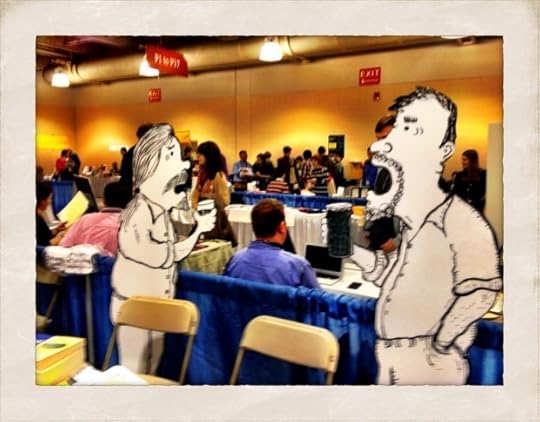
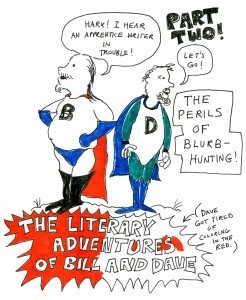
Bill and Dave were invited to participate in the MY WRITING PROCESS BLOG TOUR by Dinty W. Moore, a truly remarkable individual (ask him sometime about Paul McCartney’s ashes) who also happens to be a kick-ass writer, and who just happens to be the editor of the first and best online journal, Brevity, which is devoted to short nonfiction. The Brevity Blog is one of the greatest on earth, though Bill and Dave’s is quite a bit better. Dinty loves to garden and crack jokes. His books show greatness and include Between Panic and Desire; The Accidental Buddhist; and The Rose Metal Guide to Writing Flash Nonfiction.
Bill’s and Dave’s answers to the four Blog Tour questions follow below, and our nominations come after that:
[image error]Question One: What are you guys working on?
BR: Sadly, I’m working on this questionnaire. Also replacing the sewer line under my kitchen, which stinks. How about you?
DG: Well, to be honest, I’ve been in photo permission hell for about four months. My new book, All the Wild that Remains, is in part a biography of Edward Abbey and Wallace Stegner, which means I have to do all sorts of grown up things I’ve never had to do before like footnotes and photos and an index. Getting back to work on fiction or memoir or some essays or the sewer line under my kitchen seems like a dream.
BR: It’s kind of fun, especially with the kid up the street helping me. I couldn’t have dug that trench and found the old ruined pipe myself. I’ve been working on the pilot script for the HBO multi-year drama-series adaptation of my novel Life Among Giants. It’s really fascinating, moving those characters into a new medium. I’ve got a co-writer, who’s a genius, and two production companies, and we have these huge group calls and get great notes and ideas, and make our revisions. Right now, we’ve finished the first draft of the pilot script and gotten notes, and we’re working on implementing great suggestions. Also working on a new novel when I can. And getting ready to tour with The Remedy for Love, which comes out October 14, yikes.
Question two: How does your work differ from others in its genre?
DG: This answer is a judo flip on my first. Because though it’s been somewhat exhausting I am really excited about the book, in part because it really  isn’t a biography, or at least not only a biography. I did the work of a biographer–went to the libraries and did the interviews and all that–but the book is also about my own travels through the American West, and the places that meant so much to Abbey and Stegner, which means that it mixes travel writing and nature writing and personal essay writing and memoir with bio. It’s been challenging to get the mix right, and I couldn’t have done it without my editor, Alane Mason, but its a mix that, whatever else it is, is, I think, uniquely my own.
BR: Plus, of course, it’s the best book ever written. By far. I don’t know how to answer, as I’m not sure what the genre of my books is, and surely not what the genre of our TV series might be. The book has elements of mystery, as will the show, but that, to me, is peripheral. So I’ll say it’s exactly the same as other work in its genre, because it’s sui generis, the book I was able to make at the time I was making it.
Question Three: Why do you write what you do?
DG: Because I read what I read when I was younger. About 5 years ago my wife and daughter and I visited Walden Pond. My daughter was 6 and my wife pointed to the old foundation of Thoreau’s cabin and said “That’s where the man lived who ruined Daddy’s life.”
 BR: “A man is a god in ruins,” Emerson said. I don’t know why I write what I do. I like putting characters in motion, I guess, and I like watching as they take over…
Question Four: What is your writing process like?
BR: It’s different for every project, really. Right now, I work in little bursts throughout the day when I get a minute, just sloppily putting together a draft to work on later. Revision is where all the rock ’n’ roll happens, all my best ideas, all the real fun. More and more I work late at night. I draft and and redraft and redraft, moving between the kitchen table and my studio, between standing and sitting, between daydreaming and pure focus. I count hiking and gardening and skiing and many other things as writing, because as long as I’m alone, I’m doing all the associative thinking that’s required to always be on fire when it comes time to type… ha ha ha.
DG: For a long time I got up at a ridiculously early hour ever day–sometimes as early as 4–so that Bill could call me before he quit writing for the night. The idea was the same as Bill’s late night–to have an island away from the world where the focus could be all on the work. I still do that though my hours have gotten slightly more sane. Another change that has occurred over the eons has been working on multiple projects on multiple burners, letting them feed off each other, while in the old days I was a one-project-for-four-years kind of guy.
For the next stop on the Blog Tour, we nominate Caroline Leavitt, one of our favorite bloggers and novelists. Her blog is called CarolineLeavittville. Check it out. She’s the New York Times and USA Today bestselling author of Is This Tomorrow, Pictures of You, Girls In Trouble, Coming Back To Me, Living Other Lives, Into Thin Air, Family, Jealousies, Lifelines, Meeting Rozzy Halfway.Various titles were optioned for film, translated into different languages, and condensed in magazines. She lives in Hoboken, New Jersey, New York City’s unofficial sixth borough, with her husband, the writer Jeff Tamarkin, and their son Max, who’s a great actor. Watch her read one of worst all-time reviews here: https://www.youtube.com/watch?v=Kp2QV8UW-Io
September 10, 2014
Bad Advice Wednesday All Stars: Write a Fan Letter!
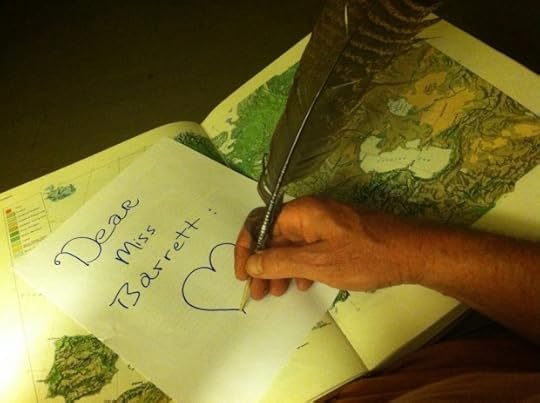
Actual Photo
Let us start with Robert Browning’s fan letter to Elizabeth Barrett, January, 1845:
“I do, as I say, love these books with all my heart — and I love you too. Do you know I was once not very far from seeing — really seeing you? Mr. Kenyon said to me one morning ‘Would you like to see Miss Barrett?’ then he went to announce me, — then he returned . . . you were too unwell, and now it is years ago, and I feel as at some untoward passage in my travels, as if I had been close, so close, to some world’s-wonder in chapel or crypt, only a screen to push and I might have entered, but there was some slight, so it now seems, slight and just sufficient bar to admission, and the half-opened door shut, and I went home my thousands of miles, and the sight was never to be?”
Would it kill you to right a letter like that to me? Or at least an email. Email is fine. And email makes it so much easier to write as a fan, of anyone, really, but today I’m talking writers. The advice: Write a fan letter. Or fan email. If you love something you’ve read, take a minute to articulate why. This is smart just for your own development as a thinker and writer, but it can also open the door to literary friendships. If sincere. If intelligent. If heartfelt. And especially if you’re seeing what no one else has seen, saying what no one else has been saying. You don’t do this for any reason but wanting to say what you think. No thought of advantage, no thought of favors sought. Any such petty concern will taint the very paper you write upon. Or taint whatever digital hocus-pocus brings emails home.
My favorite notes start something like this: “I was poking around in X library in X town and happened across your book.”
You know? A book that’s been twenty years out of print and some kindly soul has found it in the stacks on vacation (or once, in jail–be sure to send your books to prison libraries!).
But really. You finish a book. You love it. Write a fan letter. If you’re famous, all the better. But if not–don’t be shy. Just be real. And don’t freak when you hear back. Unless you’re writing to dead poets. Then you can freak.
That’s a good exercise, by the way: write to dead writers. Make yourself say it: this is why I love this book. Maybe after a few books, you’ll have the start of an essay.
Another fine thing to do is to write yourself a fan letter–especially if you’re just getting started publishing and others haven’t thought to do it. Again, the idea is to articulate just exactly what you’re doing right. I’d mail this, too. Or give it to your husband to copy out and send. Or wife. Or sig oth.
In college I wrote to Carl Sagan, partly because he also lived in Ithaca, partly because he’d spoken to my physics class at Ithaca College, partly because I loved his newest book, and also because I disagreed with some point he’d made about parathanatic experiences (I was also reading Edgar Cayce at the time, fully credulous). I closed by mentioning that I thought I’d try my hand at construction work after college so I could have enough money to write. He wrote back! His parents also lived in Ithaca! Soon I was waterproofing their basement. And it did help my writing. They were holocaust survivors, Mom with a number tattooed on her forearm. You learn one thing, then you learn another.
But even if you don’t need work, write a letter every time you finish any book no matter what. And send it.
You can practice here!
And tell us about writers you’ve written to, and whether they’ve written back.
[Follow Bill on Twitter for #DailyLove, such as "I love you like bees in the wildflowers, my kind of buzz": @billroorbach And Like us on FB, damn you!]
September 8, 2014
Table for Two: Bill Interviews “Nightingale” author Suzanne Congdon LeRoy
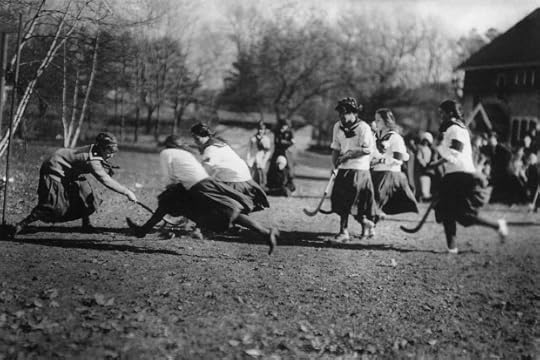
Elisabeth Congdon (third from left) playing Field Hockey, 1909 at Dana Hall
Bill: Greetings, Suzanne, and welcome to Bill and Dave’s. And warm congratulations on the publication of your astonishing true story, Nightingale: A Memoir of Murder, Madness, and the Messenger of Spring . It’s such a complex story. How would you summarize it?
Suzanne: Nightingale is the story of my grandmother, Elisabeth Mannering Congdon, who was heiress to a mining fortune and victim of one of Minnesota’s most notorious homicides. As the eldest granddaughter, I was entrusted with the burdens and joys of memory as I detailed a family legacy of love, loss and perseverance. Elisabeth Congdon emerges not as heiress or victim but as the messenger of spring and the key to my survival as I tried to escape my own mother, a dangerous serial criminal falling deeper into madness. My grandmother’s early efforts to nurture a foundation of hope, optimism, and the power of possibility led me to advanced education, a beloved nursing career and the discovery of the ineffable relationship between healing oneself, service to others, and the connection to the spirit and beauty of the earth that made me whole again.
Bill: What was theinspiration for the title?
Suzanne: Nightingale is a deeply interwoven complex of themes, each one a part of the arc of my memoir: love and longing, death and dying, nursing, a redemptive female figure that embodies the cycles of nature and the healing powers of the earth, a mentor who offers hope and companionship in times of desperate pain and solitude, and the messenger of spring and renewal of life.
Bill: In the midst of a tumultuous childhood, what were your dreams?
Suzanne: I wanted to be a nurse, a costume designer, and a mathematician. I also wanted to travel the world.
 Bill: How did it go?
Suzanne: I have been a nurse practitioner for 30 years with specialty certifications in Women’s Health (OB/GYN), Family Practice, and advanced practice HIV/AIDS. I completed a Bachelors, Masters, and Ph.D. in Nursing at the University of Minnesota, and executive education at Harvard Kennedy School.
Bill: Any hobbies? I know from the book that you love nature.
Suzanne: Yes, I love the great outdoors, hiking, canoeing, and travel. A love of art, architecture, and ikebana bring beauty into my life. Reading and writing are as integral to me as breathing. I am passionate about health and human rights issues for women and girls.
Bill: When did writing become important to you?
Suzanne: As a little girl my grandmother told me stories and as I learned the stories we told them together, however I did not write stories as a child or adolescent. I was the math and science girl and I also had an interest in Latin. I’m embarrassed to say that I mostly read Cliff Notes in English class and I barely made it through high school due to an extremely unstable home life. When I became a nurse, I realized that I was documenting the life stories of my patients when I gave report or when I wrote/dictated/typed the medical history and exam findings. Working with critically ill and marginalized and vulnerable populations I realized the privilege and responsibility I had to keep those stories safe and as detailed and accurate as I could. I learned about the importance of psychosocial as well as physical aspects of people’s lives, being accurate and accountable, and respecting and honoring the importance of story in diverse cultures. I thoroughly enjoyed doing the research and writing involved with my Masters thesis and subsequently my doctoral dissertation.
Bill: How did you come to write Nightingale?
My grandmother was so much more than the ill-fated tragedy of the last day of her life. I felt compelled to immerse myself in her story and what she would have wanted people to know. I desperately wanted to preserve those details of her existence that had been overlooked and so easily forgotten by others, but so essential to our relationship and to my own survival. Several books greatly influenced my ability to look deeply into my immediate and extended family and subsequently put pen to paper. Once Upon a Time: A True Story by Gloria Vanderbilt, which is a memoir about fame, fortune, and scandal that was written by the woman who would ultimately define her own life. Gloria Vanderbilt’s courage, passion, and grace helped pave the way as I wrote my own story. Also Families: A Memoir and a Celebration by Wyatt Cooper. Gloria Vanderbilt’s fourth husband, Wyatt Cooper, eloquently describes the meaning of family relationships with insight into the past, cherishing the present, and the promise of future generations. And, believe it or not, Women Who Run With The Wolves: Myths and Stories of the Wild Woman Archetype by Dr. Clarissa Pinkola Estes. An extraordinary book that depicts the spirit, soul and instinctual nature of women. Dr. Estes is an internationally known Jungian psychoanalyst and cantadora (keeper of the old stories in the Latina tradition).
Bill: What were the challenges in bringing your book to life?
Suzanne: I often felt miniscule when I thought about the incomprehensible frontier ahead of me. Multiple storylines, massive amounts of information, and a goal of keeping the book under 300 pages constantly tested me. I often was sidetracked with interesting research findings as every new detail added a different dimension. Reliving the loss of my grandmother and the shame of my mother’s criminal behavior was very difficult. I would often take breaks and immerse myself in nature in order to find my way back and face the page.
Bill: How did you know when Nightingale was finished?
Suzanne: When I held the final manuscript in my hands, it was if I had arrived home and knew myself for the first time. Everything I wanted the reader to know was there.
Bill: What are the messages that you hope to convey?
Suzanne: My grandmother was an extraordinary woman who was so much more than the last day of her life. There is always hope no matter how dire the circumstances. If you see something, you say something, and you do something. And by the way, a portion of the proceeds of my book will be used to support health and human rights initiatives that benefit women and girls in the areas of education, reproductive health, and violence prevention.
 Suzanne Congdon Leroy is a writer living in Minnesota. For more information on Suzanne and her new book, go to: www.suzannecongdonleroy.com, Her book is available at http://suzannecongdonleroy.com/purchase-nightingale/