David Gessner's Blog, page 26
October 21, 2014
Most Excellent
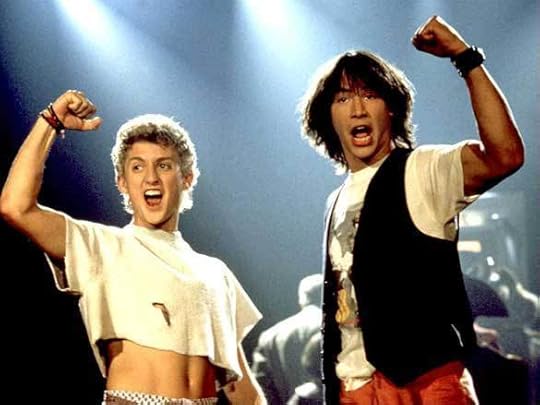
Amidst all the exciting news about Bill (Amazon, People, HBO), you may have missed the fact that we are making a new film. We may not look as good as we did when we were younger, but it turns out Hollywood wants us back. For more info on our forthcoming flick: http://time.com/3431163/bill-and-ted-...
And here’s a shot from our first movie (Bill, beardless, on left):


October 18, 2014
Getting Outside Saturday: Autumn II, a photo haiku
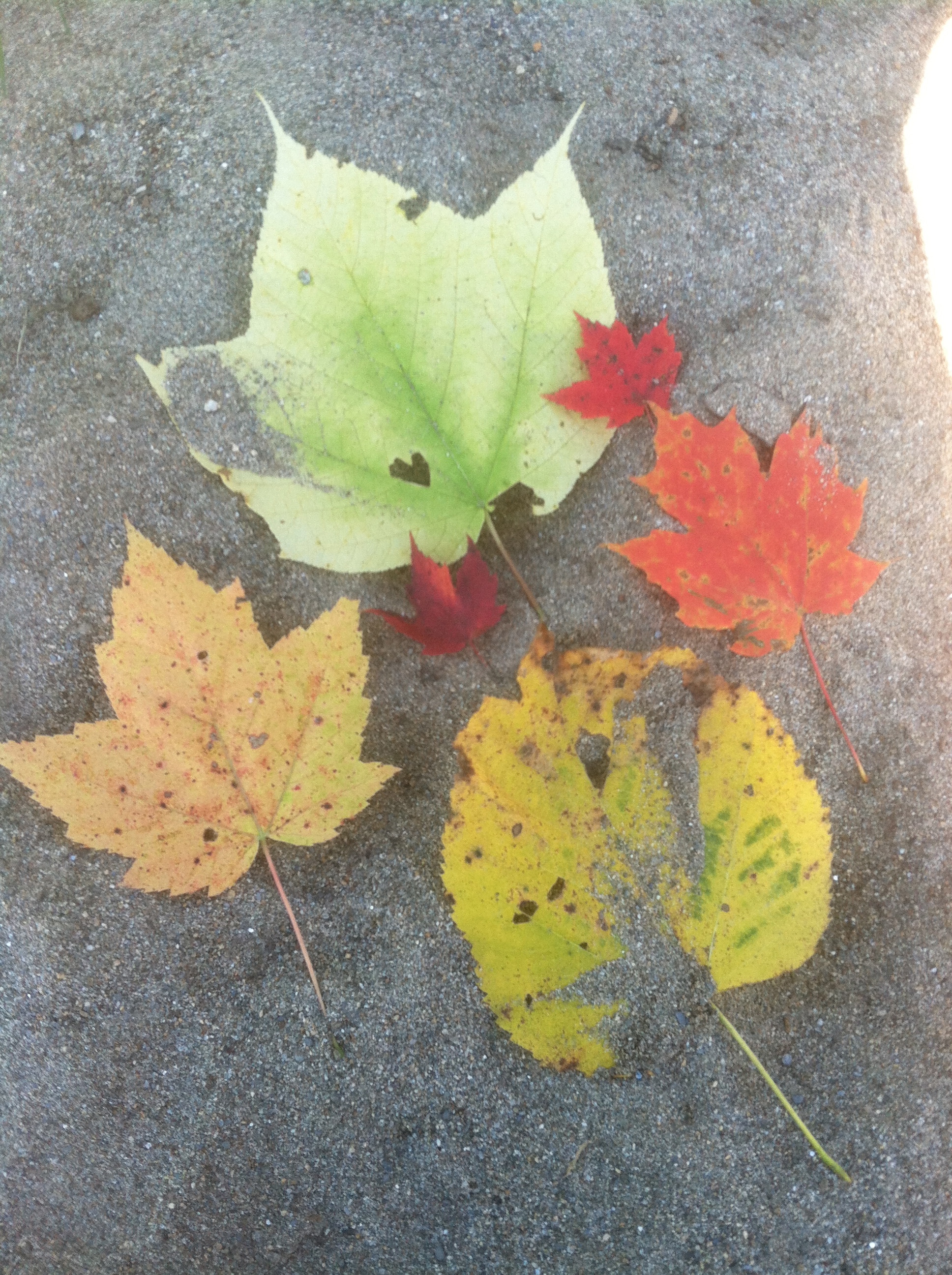
sugar, red, striped maples, plus basswood
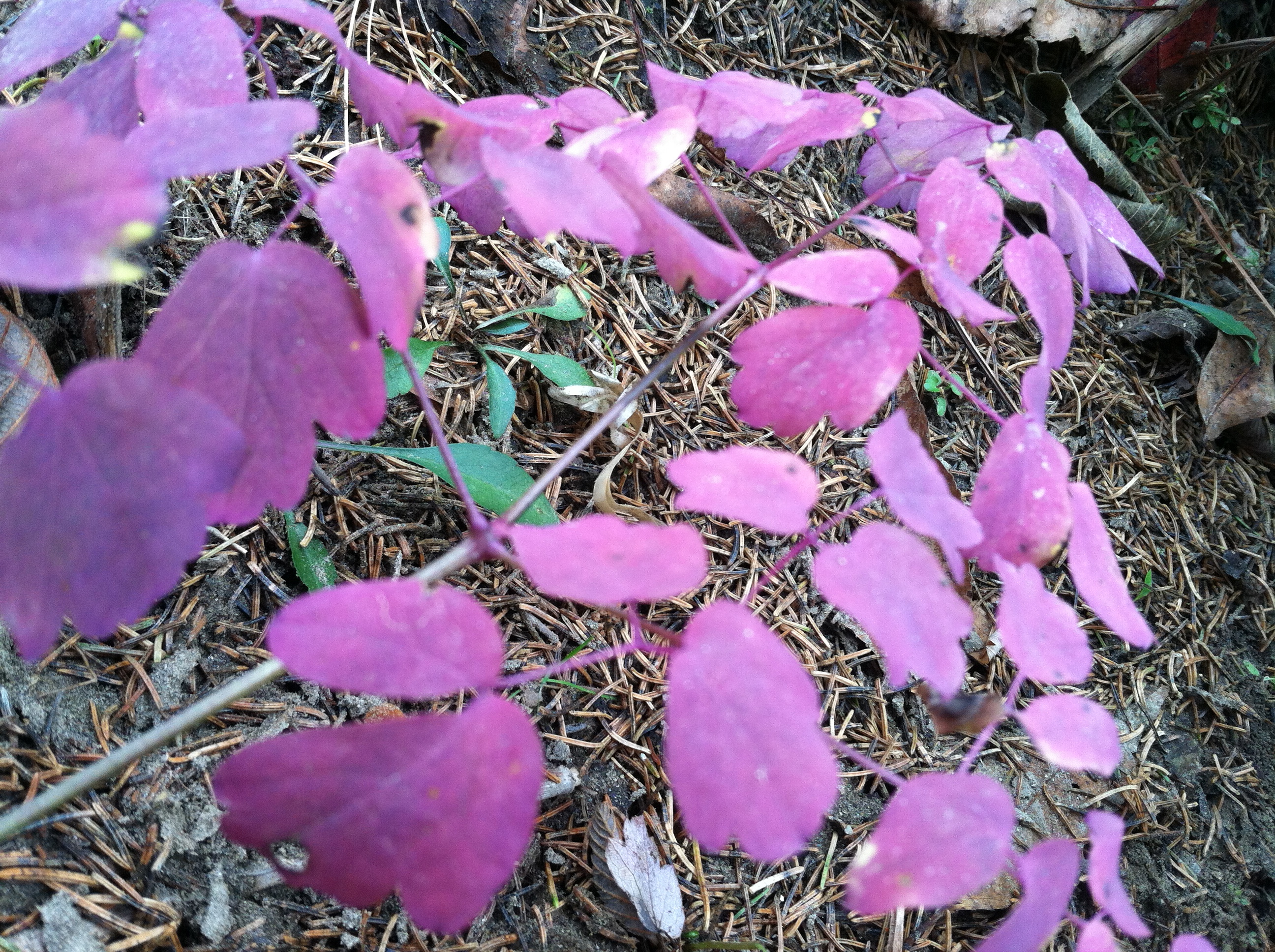
early meadow rue
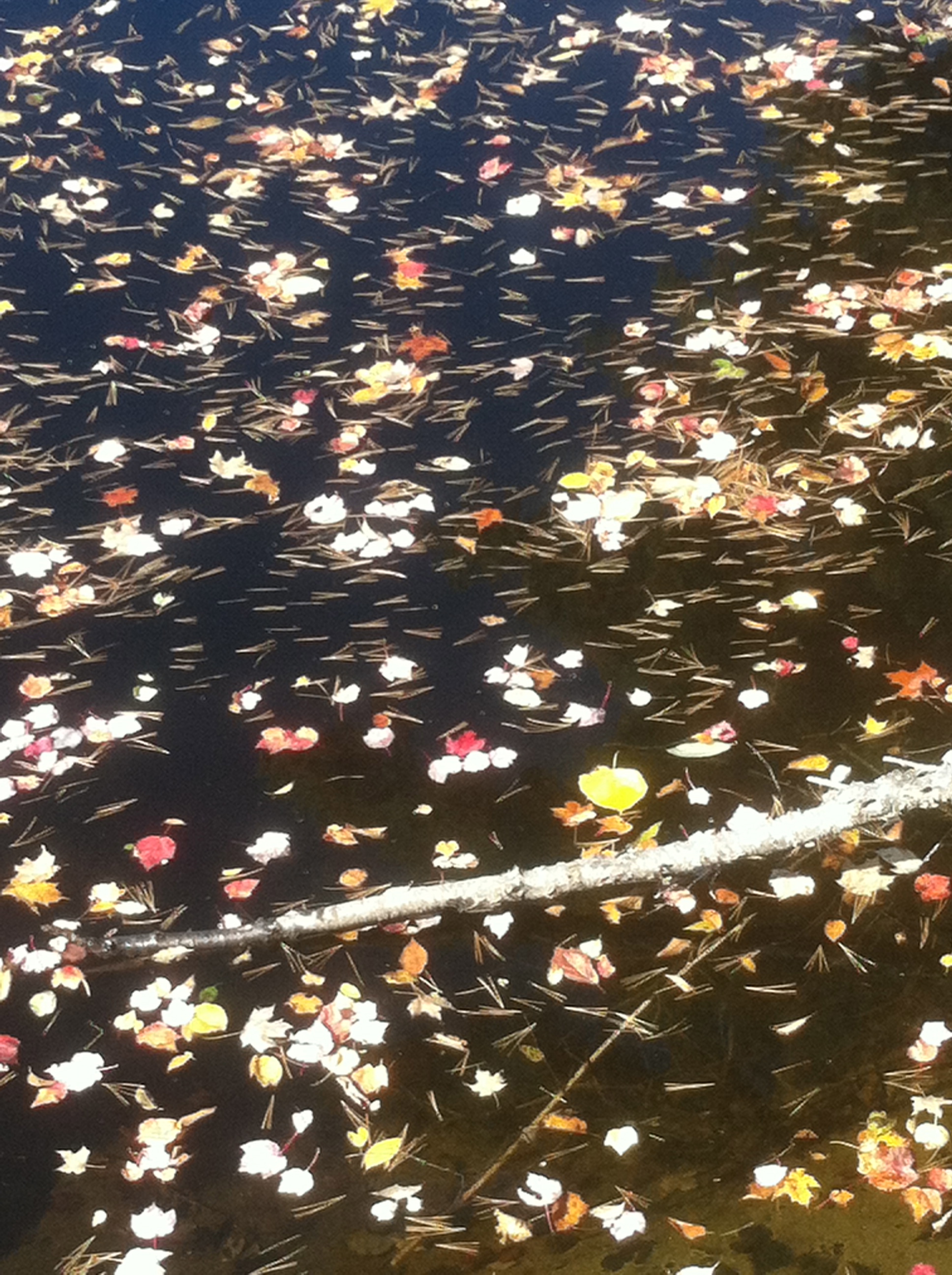
flotilla
October 15, 2014
Bad Advice Wednesday: Call in Sick
Every year I come in and guest teach in our big intro lecture class, CRW 201. But this year I was sick so I wrote this to Wendy Brenner, who is currently running the class:
Woke up still sweating. Better, but not great.
Doesn’t look like I can do it.
How about you ask a student to read this:
David Gessner really wanted to be here. He has grown to love talking to 201. This was not always the case. At first he thought there was no tougher audience in the world than 201. When he spoke he felt a little like Rodney Dangerfield (a comedian from long ago). {Note to reader of this page: when you speak of Rodney squirm uncomfortably and wiggle your tie, or where a tie would be if you had one}
One year David decided he was going to wow the 201 audience. He had just written about about following the osprey (better known to you as seahawk) migration. He had gone into Cuba illegally and into the jungles of Venezuela following the birds. He had great pictures and a power point presentation, which was cutting edge back then.
He threw his heart into his presentation. He felt good when he was done and continued to feel good until he walked out the door after class along with the students. There he overheard one gum-snapping girl say to another: “That was the most boring fucking hour of my whole fucking life.”
Disheartened but not defeated, Gessner vowed he would get his revenge. If they thought that was boring, they hadn’t seen anything yet. The next year he asked a film student to sneak into 201 and sit in the front row, filming the class. Then he did this:
http://www.youtube.com/watch?v=SuNjEs8mdrA
October 13, 2014
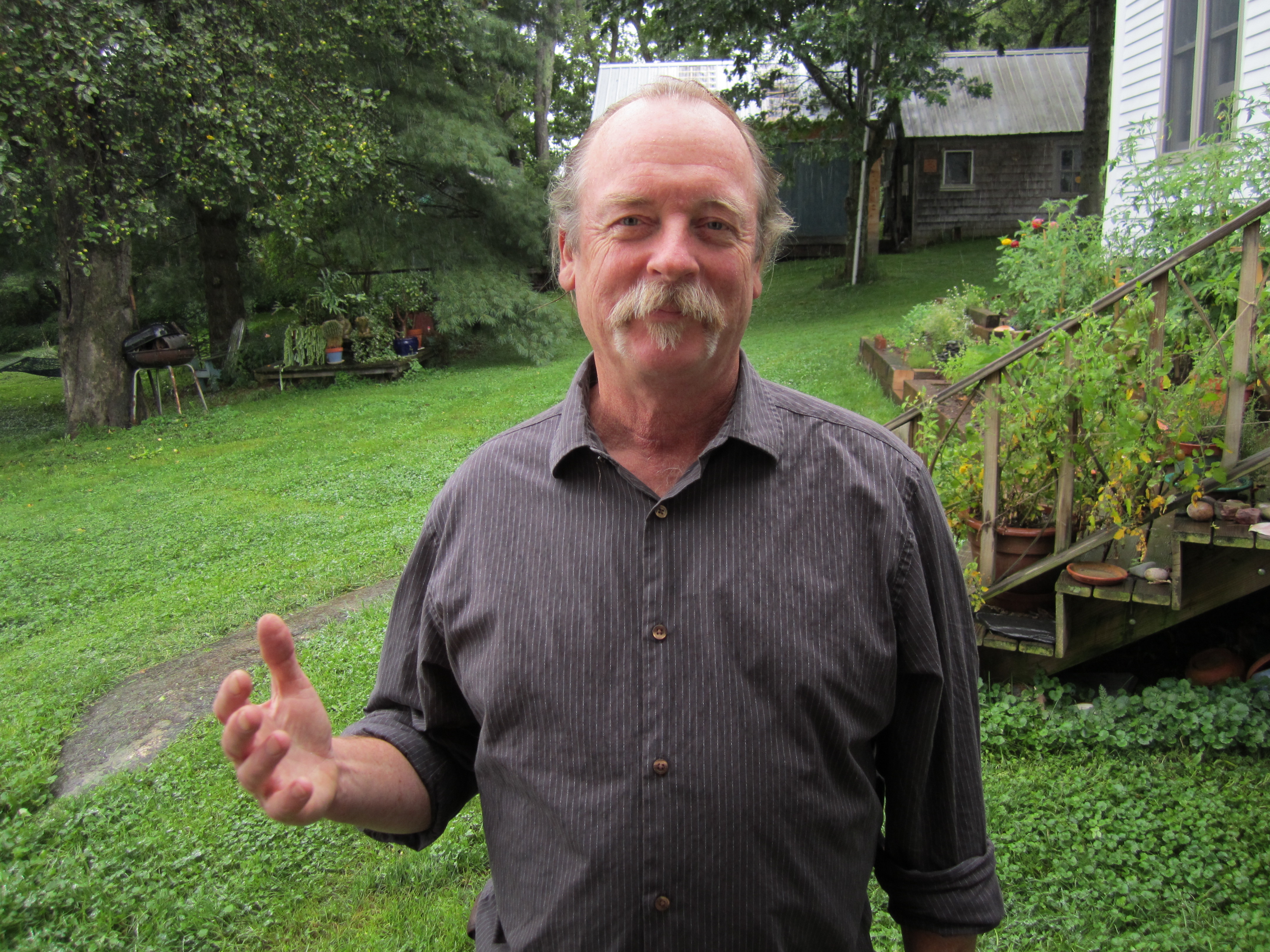
Lundgren’s Book Lounge: “The Remedy For Love,” by Bill Roorbach
Living in Maine or anywhere with a real winter, we’re all familiar with the hyperbolic ‘storm of the century’ and the panic that ensues as grocery store shelves are emptied, cars shuttled about, gas procured for the snowblower and emergency supplies (batteries, water etc.), restocked. And of course what usually follows is anticlimactic as the storm blows offshore or the storm track veers off to the west (or east or north or south).
Now imagine a genuine ‘storm of the century,’ a truly exceptional weather event that becomes almost like a character in the hands of a m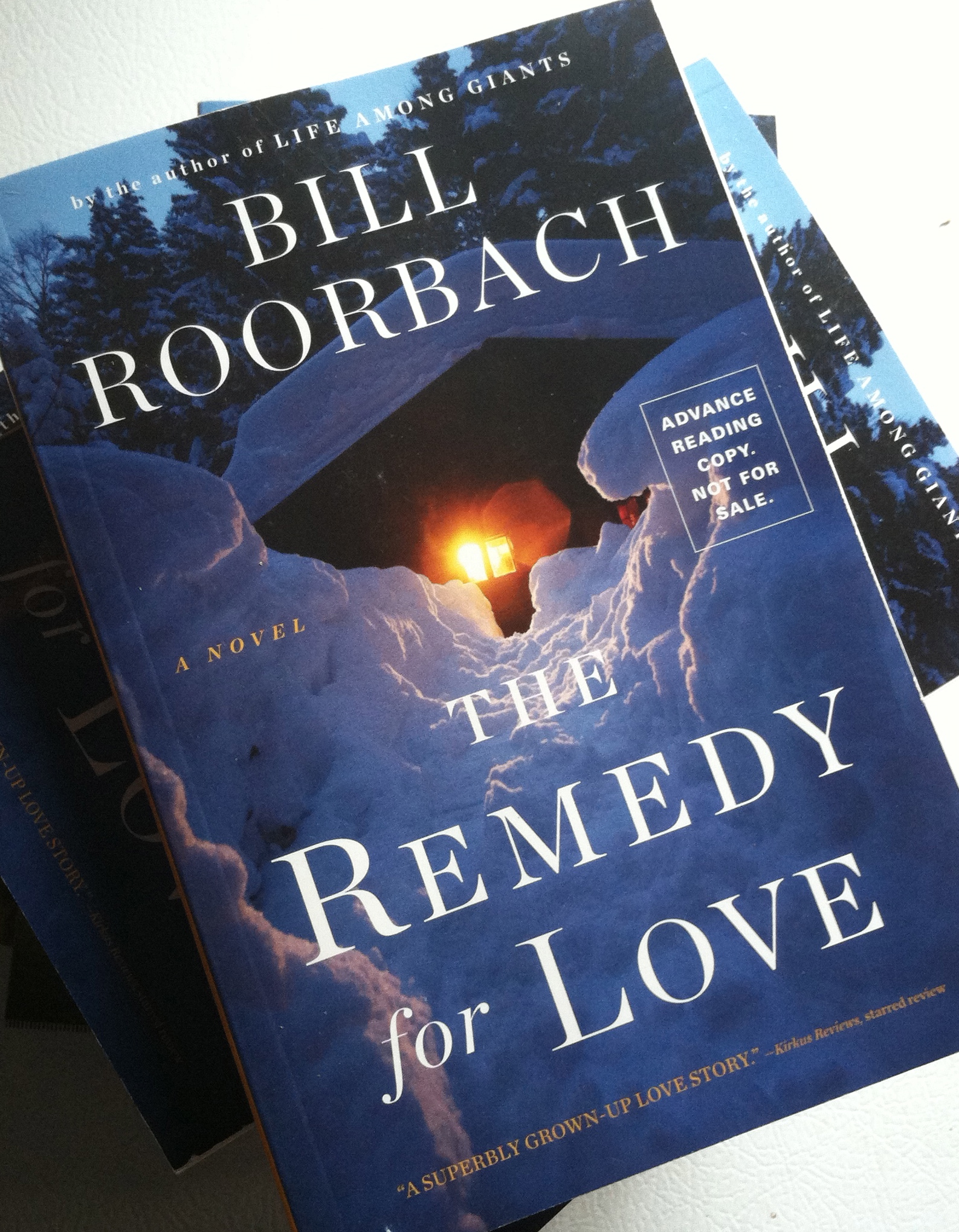 aster storyteller. And then place at the center of this storm a falling-down cabin in the Maine woods where two strangers have taken refuge and the scene has been set for Bill Roorbach’s beguiling, quirky, charming new novel, The Remedy for Love. Recently named one of six finalists for the prestigious Kirkus Prize for fiction (along with another of our local literary luminaries, Lily King, for Euphoria), A Remedy for Love showcases an author with a dizzying profusion of writing chops who has lived through epic storms and is clearly enjoying the opportunity to describe the ride.
Local attorney Eric has closed the office early as the storm bears down and stops at the store on his way home. In the checkout line he finds himself next to a young woman best described as scattered. Danielle seems like a bird always on the verge of taking flight; in this instance she is short of cash to pay for her groceries so Eric helps out and offers the stranger a ride home, despite her almost paranoid mistrust. After helping her get set up, as the storm rages and gathers power, Eric walks back out of the woods only to find his car has been towed with his cellphone inside… there is nothing left to do but to return to the cabin and wait out the storm. What follows is a love story that could only come from the pen of Bill Roorbach. Described as “intensely moving and frequently funny, The Remedy for Love is a harrowing story about the truths we reveal when there is no time or space for artifice.” Roorbach has captured the heightened sensory awareness that comes with intense weather and wields it as a staging ground for the eternal dance of love and the inevitable complications that ensue. Roorbach reminds us again, as he did so beautifully in Life Among Giants, that love, far from being simple, is more often mysterious, incomprehensible and maddening… would we have it any other way?

[Bill Lundgren is a writer and blogger, also a bookseller at Longfellow Books in Portland, Maine (“A Fiercely Independent Community Bookstore”). He keeps a bird named Ruby, and teaches at Southern Maine Community College.
October 8, 2014
Bad Advice Wednesday: Do Something For Someone Else (from the archives)
How to get published, how to get an agent, how to be a better writer, these are all high on the list of common questions we get asked here at Bill and Dave’s. Where there’s not a bit of desperation in the question there is often anger, and where the anger has faded there’s sometimes sadness, maybe a whiff of self-pity. Or is that me, feeling all those things no matter where the writing takes me, often in equal measure with pleasure, even elation (but that comes most often in the making, sitting at my desk alone, lovely, soon to be dashed). What I’m proposing today is forgetting about our own careers (or lack) and thinking about what we can do for others, what we can do to make the world a more hospitable place for art, and for artists, which is to say for writing and writers. Doing for others may be your key to success, and is certainly the key to happiness. Herewith, 30 suggestions for writers, and an invitation to suggest more. Karma, anyone?
1. Write a fan letter when you read something good. Every time. Big or small.
2. Listen to that guy at your cousin’s wedding as he talks about his book idea, and take him seriously, take his name, make it a correspondence.
3. Read a friend’s book when it’s published and write a long letter in reaction. Or just a short letter. Or just an email. But something, and sincere, with details!
4. Praise the sentence wherever you find it.
5. Read a book you’d expect to hate, and think about why so many people love it, and see if you can’t love something about it, too. (Those vampire books? Really?)
6. Start a writers group.
7. Start a readers group.
8. Offer to read work in manuscript. Do this for kids, for World War II vets, for your gastroenterologist, for friends (especially for friends).
9. Start a writing club for kids. Slowly put the kids in charge.
10. Promote the work of others.
11. Start a reading series.
12. Arrange a writers float for the Fourth of July parade.
13. Say yes. (I’ll write that blurb. I’ll query my agent. I’ll read your daughter’s poems. I’ll contribute something to your new magazine. I’ll let you use my name.)
14. Steer talented young writers away from careers in law, in banking.
15. Steer talented young writers away from grad school, at least till they’re 27.
16. Steer talented young writers away from drink and drugs.
17. Steer talented young writers toward drink and drugs.
18. Steer talented young writers away from spouses who don’t get it.
19. Steer talented young writers away from their parents.
20. Unless you are the parents, and then be the ideal parent for a writer: praiseful, supportive, attentive, and maybe a little neglectful and neurotic, so the poor kid has something to write about.
21. Babysit a writer friend’s kids.
22. Help with the rent.
23. Offer a strapped writer a room in your house for an office–you’re at work anyway and the place is empty, why not?
24. Loan a writer your house in the mountains for a month.
25. Loan me your house by the sea!
26. Give your not-that-old computer to a young writer. Or just a pencil.
27. Subscribe to three literary magazines, or at least go to the library and scatter their collection of such mags around the tables.
28. Give away books.
29. Buy more.
30. Praise an obscure writer.
31. Read to someone, anyone.
32. Comment on Bill and Dave’s posts, and spread them far and wide.
Any more suggestions? Can we get 100?
October 4, 2014
Getting Outside Saturday: Fall Berries (a photo haiku)
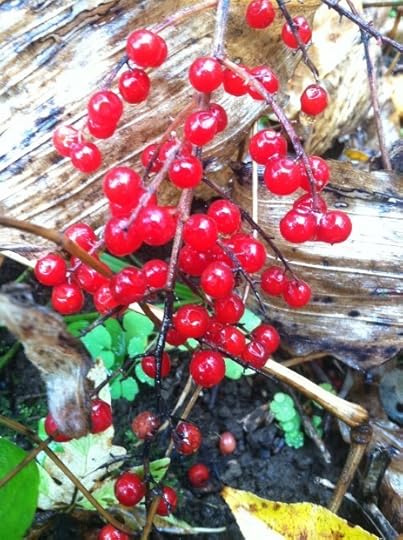
False Solomon’s Seal
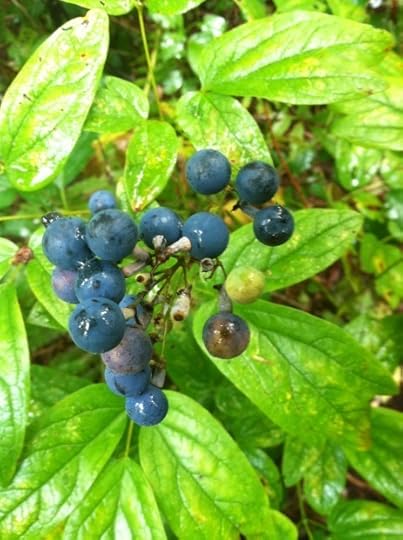
blue cohosh
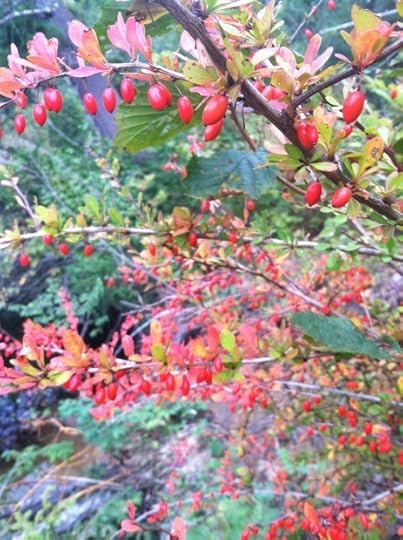
Japanese barberry
October 1, 2014
Bad Advice Wednesday: Don’t Forget Suspense
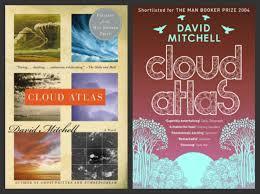 Back when they built the fence between literary and commercial fiction someone decided it was a good idea that Suspense should stay on the commercial side. Oh, an occasional stray would wander over into the literary hills, but for the most part we here in fancy town looked down our noses at creatures so craven, so obvious, so vulgar. You mean our readers are supposed to care about what happens next? But then how can they pause and admire our beautiful sentences?
These thoughts came to mind while I was laid up in bed with an infection over the last week. With my body ping-ponging between cold and hot, and my energy level barely allowing me to get to the bathroom, I watched a whole lot of TV. And I read. At first I tried to dip into the more language-oriented books that I’d assigned for a class, but after an attempt or two they remained on the shelf for the rest of the week. Instead I picked up Cloud Atlas by David Mitchell, a book that someone had put on one of those top ten lists on Facebook (and a movie that I had seen small parts of about a thousand times). I am not ready to put the book on any lists of mine, and I found it far from perfect, but Jesus Christ there were sections of that book where I was close to ripping the next page off, so excited was I to find out what was going to happen (even though I kind of knew due to the movie.) As my health got a little better, I would sit down for sessions of almost a hundred pages. And then I would just stop to close my eyes for a while, hungry for more. It brought back memories of the marathon reading sessions I had as a teenager—gobbling down Lord of the Rings, science fiction, Kurt Vonnegut. It was fun.
The last literary book that I’d gotten so caught up in was Possession by A.S. Byatt. Like Cloud Atlas, it was smart, well-written and sharp. But that wasn’t the engine that drove the book. The engine was what happened. The engine was whodunit. It occurs to me that it would not be a bad thing for a young ambitious writer to read and re-read sections of these books and break down exactly what it is that pulls us forward with such excitement.
So I guess today’s bad advice is “don’t fence out suspense.” I think literary writers fear it, worrying that a book can be too fun to be considered great. But the opposite is death. There was a lot of talk on this blog last week about Hemingway and the racism in The Sun Also Rises. Those are legitimate reason to debate the book’s place on the curriculum, but one reason it is off mine is that it is so boring. Yes, I love Hemingway’s sentences and the short stories can still give me chills. But I simply don’t care about what happens to Jake Barnes.
How fun to read when you care so much.
September 29, 2014
Lundgren’s Book Lounge: “A Rough-Shooting Dog,” by Charles Fergus
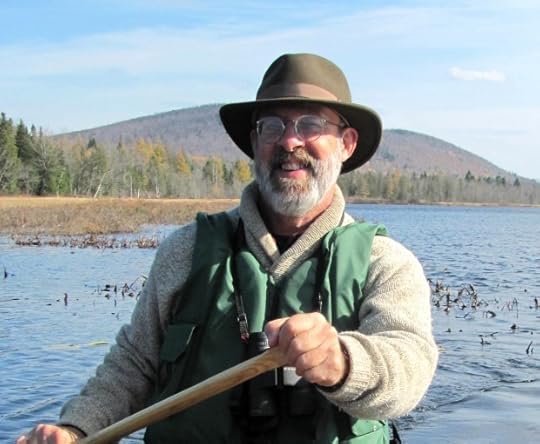
Charles Fergus
Complementing my love of books, I have always been drawn to the beauty of the natural world. It’s why I was a farmer and why following a springer spaniel filled with bird lust, shotgun in hand, makes me feel as alive as nearly anything I have ever experienced. Recently I came across a classic that combines these twin passions: A Rough-Shooting Dog: Reflections from Thick and Uncivil Sorts of Places by Charles Fergus. Fergus’ book transcends the limitations of the hunting genre: it is a memoir of a man and a bird dog’s education that qualifies as genuine literature.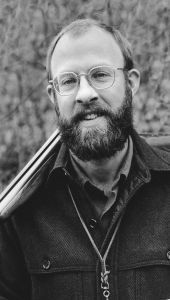
Hunting birds with a dog is about the bond between man and canine and a re-enactment of a very old dance betwixt dog and bird and Fergus captures the essence of these relationships with an elegance of style and a companionable charm that never fails to seduce. Listen to this description of an early hunting experience: “I remember my first grouse. It was fifteen years ago. I was hunting by myself in a stand of aspen and bear oak, and the bird went out behind me in a thunder of wings–I was given no chance to think, which is probably whyI connected. I spun, swept gun to shoulder, shot, and the grouse was stopped as if by a great invisible hand. A moment of intense clarity lasted from the time my ears detected the grouse’s flush until I walked over and picked the bird up. There was no sense of accomplishment; that would come later. Only a shining lucidity, a sensation that, as I pursued it over the year in autumn’s thickets and brakes, became akin to the physical, like a note playing inside me… during the shining moment when I shot and connected, when I declared and defined myself a predator, a fellow creature, a product not only of mother and father, but first and foremost of the earth–a note. A note, I should say, about two octaves above middle C, purer and lovelier and more bittersweet than anything I had ever heard before.”
Of course, as Fergus goes on to point out, there is something missing from this scenario–the dog. The heart of A Rough-Shooting Dog (an English term describing a dog capable of hunting all manner of birds–grouse, 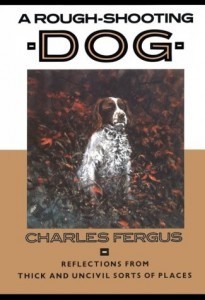 woodcock, pheasant, ducks), is the tale of the dual education of Fergus and Jenny, an extraordinary springer spaniel puppy that becomes Fergus’ hunting partner and beloved companion for the next fifteen years. It is not a how-to book although along the way we learn much about training and learning from a good dog: rather it is a rhapsodic, lyrical paean of praise to an endeavor and a relationship that have bound humans to the natural world since time immemorial. And to those who might voice objections to the hunt, Fergus (and I) would ask, what other way is there to experience that note, “purer and lovelier and more bittersweet than anything I (have) ever heard before” ?
[Bill Lundgren is a writer and blogger, also a bookseller at Longfellow Books in Portland, Maine (“A Fiercely Independent Community Bookstore”). He keeps a bird named Ruby, and teaches at Southern Maine Community College.
September 25, 2014
The Remedy For Love Book Trailer
I made it myself! Let me know what you think…
Publication day is October 14. And then I go on the road–please come say hello. I’d love to meet you. Here’s the schedule so far:
Tuesday, October 14th, 7 p.m: Longfellow Books, Portland, Maine LAUNCH PARTY!
Thursday, October 16th, 7 p.m: Jesup Library, Bar Harbor, Maine
Friday, October 17th, 7 p.m: Emery Center, UMF, Farmington, Maine HOMETOWN LAUNCH!
Wednesday, October 22, Noon: Portland Public Library (A different program altogether from the Longfellow evening)
Thursday, October 23, 7 p.m: Lithgow Public Library, Augusta, Maine (Capitol Reads program)
Friday, October 24th, 7 p.m: Magers and Quinn Books, Minneapolis, MN [A Whiskey Tour event!]
Saturday, October 25th and 26th, Texas Book Festival, Austin, TX [A Whiskey Tour event!]
Monday, October 27th, 8 p.m: Books and Books, Coral Gables, FL [A Whiskey Tour event!]
Thursday, October 30th, 6 p.m: Watermark Books, Wichita Kansas
Saturday, November 1st, 2 p.m: Lighthouse Writer’s Workshop, Denver, CO
Tuesday, November 4th, 7:30 p.m: Book Bar, Denver, CO
Wednesday, November 5th, 7:30 p.m: Booksmith, San Francisco, CA
Thursday, November 6th, 7 p.m: Rakestraw Books, Danville, CA
Monday, November 10th, 7:30 PM: Powell’s Books (Hawthorne), Portland, OR 97214
Tuesday, November 11th, 6 p.m: University Books, Bellevue, WA
Monday, November 17th, 7:00 p.m: Talking Leaves Books, Buffalo, NY
Tuesday, November 18th, 7:00 p.m: RiverRun Books, Portsmouth, NH 03801
Monday, November 24th, 7:15 p.m: Georgia Center for the Book at DeKalb County Public Library
Tuesday, November 25th, 7:00 p.m: Politics and Prose Washington, DC
September 24, 2014
Bad Advice Wednesday: Need a Job? Be a Writer First
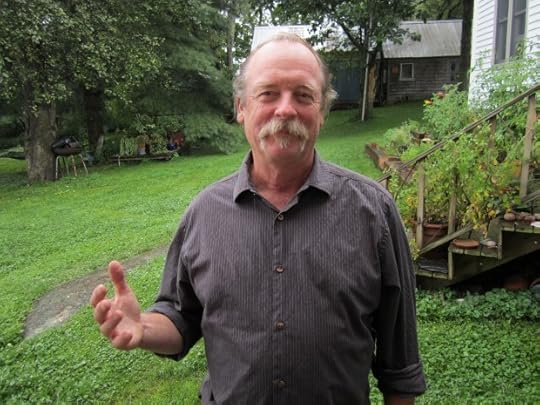
Do not listen to this man…
Oh, I’ve seen such anguish on FB and elsewhere about the thin market in college jobs for writers. More jobs will turn up, of course, and somewhere, right now, someone’s writing up a job description that sounds a lot like you. But that September job list really is depressing. Then again, if you’ve set out to be a writer, why let the job statistics for teachers bother you? Yes, you need a way to make money, but what difference does it make how you get there, if the whole point is to buy time to write?
I always thought it was best to do work that had nothing to do with writing. So I put in kitchens and bathrooms. I bartended. I rode a horse and chased Simmental cattle around. I painted apartments in NYC. I played in bands (famously!). And when I got home from these generally lucrative activities (well, not the ranch stuff), or while I lay on the beach during all the time my night work opened up, I wrote. I didn’t really get that I was in an apprenticeship. But what I did get was that what I meant to be was a writer. Not a bartender, for example. So I didn’t take that too seriously (though I often made a teacher’s weekly salary in a night–tips). When I was done, I was done.
And not a contractor. No, I hadn’t set out to do that! Though construction got fairly serious at times… But then I’d remind myself: you, my friend are a writer. And so I’d finish up the bathroom I was working on, pinch the large wad of cash, and take as many months off as that cash would buy. And I’d write. Preferably someplace nice…
Practice novels, sure. And then stuff that was getting published. And that got me into grad school. My MFA program (Columbia U.) was wonderful as a way to focus on reading and writing among like-minded souls. I taught the undergrads (Logic and Rhetoric), and that paid my way. No different than the other work I’d done: my teaching assistantship bought me time to write. Also, grad school taught me to be poor, which was good preparation for teaching in the academy, or teaching anywhere.
After grad school, and largely because of it, I published a book, and with the degree, that made me employable. I applied for jobs and got some of them. I taught 25 years in all, promoted, tenured, endowed chair, the whole shebang. All so I could write, I didn’t forget. And when at long last I could rely on writing to pay the way, I quit teaching. Just like that.
Because I’d never set out to be a teacher.
Don’t get me wrong. I love teaching!
But I love not teaching more…
And I’m way busier than I ever was teaching, go figure…
I know it’s no fun to contemplate, but if you want to be a writer, it doesn’t really matter what else you do to get along. X dollars is X dollars, no matter where they came from.
Jesus, if you believe that, you’ll believe anything.
Be a writer first at least. Can you do that for me? Thanks.