David Gessner's Blog, page 21
February 24, 2015
Bad Advice Wednesday: Create a Tour!
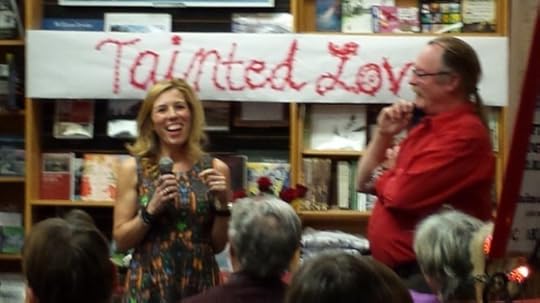
My long-former student and great old friend Melissa Falcon Field had a book coming out, and mine had just been published, and so we put our heads together and thought–Let’s do some a reading together. Just that. And then we figured out where, adding one another to invitations already received, until we had several events lined up, then several more, from Maine to New York City, and back again. We named it after an element both of our books share: TAINTED LOVE.
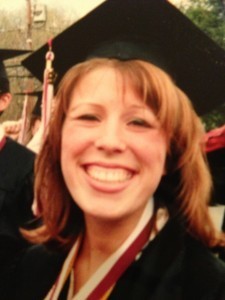
Melissa was my student–early 90s
We might have called it FIRE AND ICE, as her debut novel–What Burns Away–is about a frustrated young wife and mom captive in suburbia who takes up with a former love and their hobby, which was arson… And mine–The Remedy for Love–about a pair of strangers getting caught together in a cabin during a terrible and enormous snowstorm.
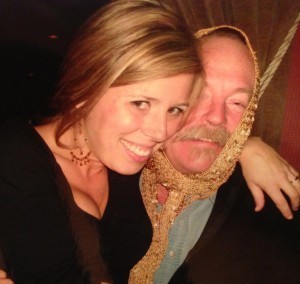
Later she was my friend
But the idea wasn’t so much to promote books as to have fun promoting books. Tours can be lonely even when you’re surrounded by people, or maybe especially then. Best to bring a friend. My own tour was already done–a lot of travel last fall, 2014.
Our evenings were built on chemistry–the two of us riffing off one another, stories and jokes, also serious discussion, and short readings from the work. Her friends and fans and family turned up to join mine, and bookstores got more excited about the duo than they might have been about either one of us alone… And we had real crowds turn up.
So, when your book comes out, find a friend who’s also trending, and do the thing together. It’s fun, it works, and you can sleep when you’re dead.
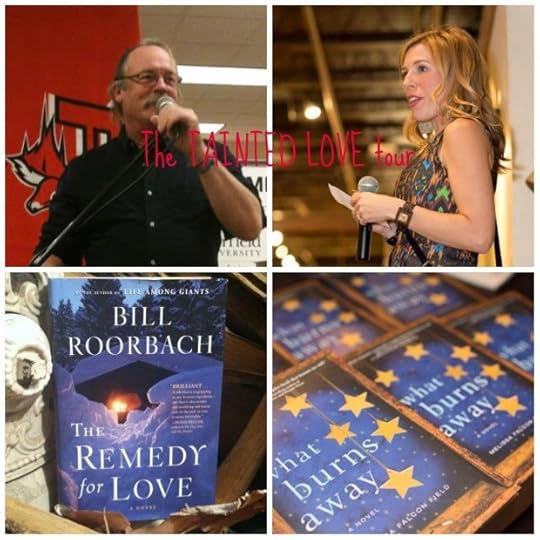
Bill Roorbach is a writer who got home and slept two days straight. He’s also headed to Portland this very day to introduce Melissa at her solo reading at the Portland, Maine, Public Library, at noon. Need some love? Follow him on Twitter: @billroorbach #DailyLove


When Doug Met Arnold
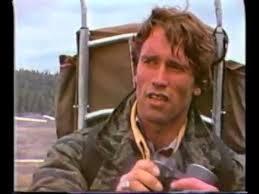 During my research on the Abbey-Stegner book, I became fascinated with an episode of the old TV show, “American Sportsman,” in which Doug Peacock spends a week in backcountry of Yellowstone looking for grizzly bears with Arnold Schwarzenegger. This is a younger more innocent Arnold, fresh off his early “Pumping Iron” fame, and one of the pleasures of the show is the odd couple factor. There is Peacock, who was the real Grizzly Man and retains that title in my book despite the Herzog documentary, in archetypal Wildman mode, spouting his radical enviro-philosophy—including some great lines about his goal “preserving an element of risk in wilderness” by keeping an animal around that can kill humans—and there is Arnold, kind of stiff and silly at first, but then getting more and more into it. The two only see tracks the first day but that night they stand in the smoke of the fire to disguise their “foul human scent,” after which Arnold says: “I hope the whole week is going to be as strange as the first night.” When they finally do see grizzlies, a sow and its yearling, Arnold’s whole face lights up with a goofy enthusiasm and he keeps muttering things like “This is fantastic.” In a way he perfectly embodies Peacock’s main point: that we feel more alive when the threat of death is near.
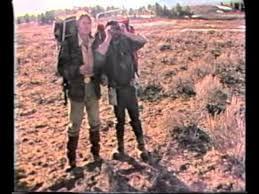
To add yet another surreal element to the video, you gradually notice that the show is being narrated by a voice you have known forever: Curt Gowdy’s. I’m interested in this confluence of wildness and celebrity, like the three nights that Teddy Roosevelt, while in office, spent camping in the Yosemite backcountry with John Muir. And I’m interested in this as the first of many Arnolds:megastar, eco warrior, scandal fodder’.
P.S. More on Peacock:
DP, as I said above, is the real Grizzly Man. Not the over-the-top, aspiring actor from L.A., Timothy Treadwell, who was the subject of the Werner Herzog documentary, and who was eventually killed with his girlfriend when he got too close to the bears he claimed to love. No, the real Grizzly Man.
Part II of American Sportsman:
For most people, Doug Peacock is best known as the character, or caricature, that the writer Edward Abbey created out of the raw materials of the man’s life. Peacock grew up in Alma, Michigan, but during his three tours as a Green Beret medic in Viet Nam he dreamed of the American West, clinging to a map of Montana like a secret and a promise. When he finally got home, he headed out into the western bakcountry to try to make something out of the remains of his life. Shaken by all he had seen, numb but at the same time full of unnamed rage, he turned to a new hobby, to monkeywrenching, or environmental sabotage, cutting down billboards, putting sugar in the tanks of bulldozers, and using more explosive means to disarm the machines that were despoiling the land he loved. It was a hobby that he shared with a new friend named Ed Abbey, who would eventually transform Peacock into a fictional character, the heroic but primitive George Washington Hayduke, the central figure and driving force in Abbey’s novel, The Monkey Wrench Gang.
But Peacock’s own life would take a turn that Hayduke’s did not. He would come to spend time deep in the Wyoming and Montana wildernesses, passing months living with grizzly bears. A gun-lover, he refused to carry firearms when among the bears. He didn’t study the animals so much at first as get to know them, learning their ways. Meanwhile his fictional alter ego was growing into a legend around the West. That legend still grows. During my trip, looking out at Monument Valley from the Muley Point overlook in Utah, I had seen, painted in big black letters on the concrete barrier, the words “Hayduke Lives!”
February 23, 2015
Lundgren’s Lounge: “The Whites,” by Harry Brandt, aka Richard Price
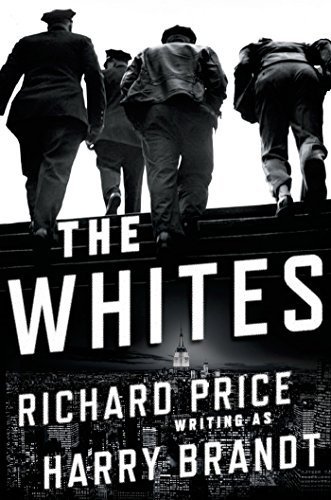
We live in a culture that is obsessed with specialization and categorization. Things that don’t fit easily into a preordained niche make us nervous. The result diminishes work that is unique and difficult to classify, but it also does a disservice to writing that becomes pigeonholed into a category that does not often receive the serious attention it deserves.
Perhaps nowhere is this egregious injustice more prevalent than in the genre of crime fiction. Unquestionably much of the work that is slotted into this category is pure pulp entertainment, written to be quickly read and just as quickly discarded. Yet the best writers of urban crime fiction, for instance Richard Price, George Pelecanos or Dennis Lehane (all three of whom wrote for the monumental HBO series The Wire), are also among the best writers, period, working today. To be convinced, one need look no further than the latest book from Price, The Whites.
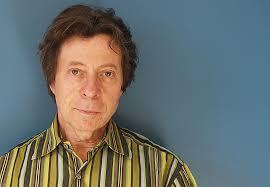
Richard Price
When Price began working on The Whites, he envisioned it as different from his previous books. He wanted it to sell like a blockbuster and he planned to write it quickly, aimed at the broader pulp market. So he adopted a pseudonym, Harry Brandt, and set to work. What he discovered, four years later, was that he was incapable of writing like anyone other than Richard Price–the economy of words, the unstoppable narrative momentum and the exquisite, perfect-pitch dialogue are hallmarks of Price’s work from The Wanderers to Lush Life… and now The Whites. The title does not refer to race but is rather an allusion to Ahab’s whale–the ‘whites’ in this tale are those unresolved cases that have stayed with a small group of detectives long after most of them have moved on to life after the N.Y.P.D. In the past these detectives were members of an elite anti-crime unit–now only one of them, Billy Graves, our story’s hero, remains on active duty. And when the suspects at the heart of the ‘white‘ cases begin to turn up dead, it is left to Billy to traverse the ambiguous moral minefield that results.
Along the way there is a riveting parallel story involving Billy’s wife and an ancient childhood misstep and the complications that inevitably ensue. Price has voiced his regret at the creation of the pseudonymous Harry Brandt, but claims the strategy was too far along in the publishing pipeline to stop it, so The Whites‘ title page bears this curious description: Richard Price Written as Harry Brandt. Whomever receives credit for this engrossing tale, described as “… a great American novel” (Dennis Lehane), “… the best of Richard Price” (Colum McCann) or “… the crime novel of the year” (Stephen King), anyone cracking it’s pages and spending the ensuing night reading till dawn will be in for the kind of entertaining and didactic reading pleasure that we anticipate from Richard Price.

[Bill Lundgren is a writer and blogger, also a bookseller at Longfellow Books in Portland, Maine (“A Fiercely Independent Community Bookstore”). He keeps a bird named Ruby, and teaches at Southern Maine Community College.]
February 20, 2015
Come to Minnesota to Write This Summer
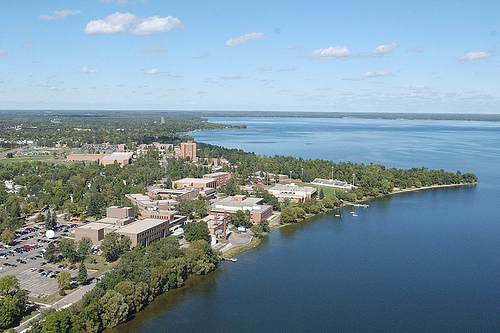 Cold and miserable? Try thinking ahead to summer. Better yet think ahead to the week of summer solstice in beautiful northern Minnesota. Now add writing to the mix…..
Boy I should have gone into advertising and bagged this book-writing thing. Anyway, the above is my attempt to seduce you into signing up for my “Writing from Place” workshop at the Minnesota Northwoods Writing Conference starting this June 20th and running through Friday June 26th.
Here’s a description of my class:
Creative Nonfiction ~ David Gessner
WRITING FROM PLACE
This is a workshop in creative nonfiction with a special emphasis on writing about place. We will explore the role that writing about places—sometimes natural places, sometimes not—can play in writing personal essays and memoir. For nonfiction writers who are stuck for a subject, place often unlocks other topics and deeper concerns. For some writers turning their minds to a specific place they care for—a home, a patch of woods, a beach—can prove a reliable muse. At the same time, writing about deeply knowing a place can make us feel a little mystical, even silly. As the great Alaskan writer John Haines said: “To express a place in art we need to take certain risks . . . we need intimacy of a sort that demands a certain daring and risk: a surrender, an abandonment.” Or as Barry Lopez puts it, we need to “become vulnerable to a place.” We’ll attempt this in our work and our reading.

David Gessner is the author of nine books, including the forthcoming All the Wild That Remains: Edward Abbey, Wallace Stegner and the American West, Return of the Osprey, Sick of Nature, My Green Manifesto, and The Tarball Chronicles, which won the 2012 Reed Award for Best Book on the Southern Environment and the Association for Study of Literature and the Environment’s award for best book of creative writing in 2011 and 2012. He has published essays in many magazines, including Outside magazine and the New York Times Magazine, and has won the John Burroughs Award for Best Nature Essay, a Pushcart Prize, and inclusion in Best American Nonrequired Reading. He recently appeared on MSNBC’s The Cycle to offer his take on the anniversary of Hurricane Sandy. Gessner taught Environmental Writing as a Briggs-Copeland Lecturer at Harvard, and is currently a Professor at the University of North Carolina at Wilmington, where he founded the award-winning literary journal of place, Ecotone.
He also puts a lot of energy into blogging for Bill and Dave’s Cocktail Hour, a website he created with the writer Bill Roorbach. He still dreams of winning the national championship in ultimate Frisbee, but knows it will never happen.
Conference Faculty
Siats-Fiskum Distinguished Visiting Writer ~ Mark Doty
Poetry ~ Aimee Nezhukumatathil
Young Adult Fiction ~ Matt de la Peña
Fiction ~ Tayari Jones
Creative Nonfiction ~ David Gessner
Creative Nonfiction ~ Joni Tevis
And here’s the schedule:
Schedule
Minnesota Northwoods Writers’ Conference Schedule 2015
Saturday, June 20
12:00 PM – 5:00 PM Registration & Informal Reception
5:30 PM – 7:00 PM Opening Dinner*
7:30 PM Reading Series, Aimee Nezhukumatathil
Sunday, June 21
8:00 AM – 8:50 AM Sunday Breakfast*
9:00 AM – 9:45 AM Craft Talk by Aimee Nezhukumatathil
10:10 AM – 12:45 PM Workshops
1:15 PM – 3:15 PM Pontoon outings on Lake Bemidji and BBQ
4:00 PM – 5:00 PM Consultations
7:30 PM Reading Series, David Gessner
Monday, June 22
9:00 AM – 9:45 AM Craft Talk by Matt de la Peña
10:10 AM – 12:45 PM Workshops
2:00 PM – 4:00 PM Craft Talk by Mark Doty, Fiskum Distinguished Visiting Writer
4:00 PM – 5:00 PM Consultations
7:30 PM Reading Series, Mark Doty, Fiskum Distinguished Visiting Writer
Tuesday, June 23
9:00 AM – 9:45 AM Craft Talk by Tayari Jones
10:10 AM – 12:45 PM Workshops
2:30 PM – 3:30 PM Editor’s Talk
4:00 PM – 5:00 PM Participant Reading HS 112
7:30 PM Reading Series, Matt de la Peña
Wednesday, June 24
9:00 AM – 9:45 AM Craft Talk by Joni Tevis
10:10 AM – 12:45 PM Workshops
2:00 PM – 4:00 PM Consultations
4:00 PM – 5:00 PM Participant Reading HS 112
6:00 PM – 7:00 PM Lakeside Picnic*
7:30 PM Reading Series, Tayari Jones
Thursday, June 25
9:00 AM – 9:45 AM Craft Talk by David Gessner
10:10 AM – 12:45 PM Workshops
2:00 PM – 5:00 PM Consultations
7:30 PM Reading Series, Joni Tevis
Friday, June 26
8:30 AM Closing Breakfast*
9:30 AM – 10:30 AM Faculty Publishing Panel Talk
12:00 Noon Check-out
February 17, 2015
All the Wild That Remains Trailer
Hi folks. Here’s the trailer for All the Wild That Remains:
I’ve pasted below some nice things some people are saying about the book. More at my home site: www.davidgessner.com
On All the Wild That Remains:
“Gessner writes with a vividness that brings the serious ecological issues and the beauty of the land into to sharp relief. This urgent and engrossing work of journalism is sure to raise ecological awareness and steer readers to books by the authors whom it references.”—Publishers’ Weekly. Starred Review.
“Stegner and Abbey ‘are two who have lighted my way,’ nature writer Wendell Berry admitted. They have lighted the way for Gessner, as well, as he conveys in this graceful, insightful homage to their work and to the region they loved.”—Kirkus Review (Starred Review)
“Two extraordinary men, and one remarkable book. To understand how we understand the natural world, you need to read this book.” –Bill McKibben, author of Eaarth
“An excellent study of two difficult men.”— Larry McMurtry, author of Lonesome Dove and The Last Kind Words Saloon
“Stegner and Abbey ‘are two who have lighted my way,’ nature writer Wendell Berry admitted. They have lighted the way for Gessner, as well, as he conveys in this graceful, insightful homage to their work and to the region they loved.”—Kirkus Review (Starred Review)
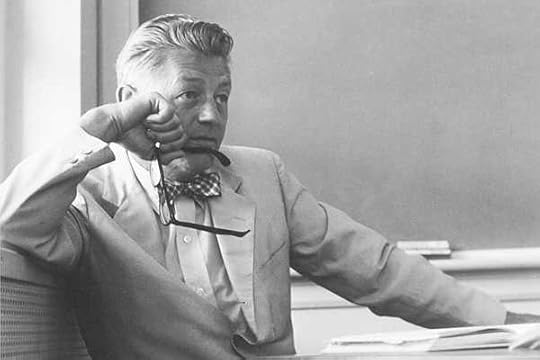
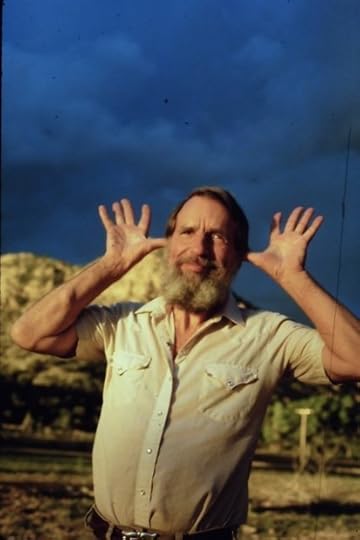
Photographs courtesy of Milo McCowan and Lyman Hafe
February 11, 2015
Bad Advice Wednesday: Don’t Know Where You’re Going
So many people ask if I outline, if I know where I’m going when I start a story, a novel, an essay. The answer is an inefficient but satisfying: No. I’m not even E.L. Doctorow trusting that he’ll get where he’s going even though it’s night and his headlights only illuminate a small part of the way. Because that implies he knows where he’s going, that it’s only the way in question. I’m more like getting in the car blindfolded and seeing how far I can go before I crash. Usually, the crash is more interesting than whatever magnificence I’d planned.
There’s an old Chinese riff that goes like this: If you don’t know where you’re going, get there by a road you don’t know. Lewis Carroll famously modified it to: “If you don’t know where you are going, any road will get you there.” This approach to making art can make new practitioners uncomfortable. But it’s knowing too much that causes all the problems.
Do I outline? Only when I’m finished. Yup, all done. Then I draw up what I’ve done, look for any missing chunks the outline is good at identifying. And often restructuring everything to get where I’ve gone. Which means not cutting and pasting so much as cutting and writing it all again.
If you’ve taught, you know that students don’t like to change anything they’ve made, at least not very much. To get a groan, suggest cutting a few pages! Back when I taught, I’d assign throwaway drafts. That is, give an assignment, collect the papers (or perhaps in your case sculptures, or equations, or whatever it is you’re teaching), then wait a few days, till one of your best go-getters says, “Are you handing our papers back?”
I always wanted to teach college outdoors where we could have a fire–I’ve done it at conferences, just build a fire and gather around it and talk writing. But a wastebasket does the trick. Anyway. The answer is: “Yes, I’ve got your papers.” And then elaborately pull them out (best if you’ve got your own notes all over them), pull them out and feed them to the flames one-by-one, real flames or metaphorical, doesn’t matter. It’s safe enough emotionally, of course, as kids have copies on their computers these days. But still, it’s way dramatic: folks, let go of that shit! And then have them–right there under the stars, whether real or metaphorical–have them write whatever they think they’ve written over again, from memory. Mostly they will write something different, and nearly always better. Seldom do they ever refer to their original drafts again.
Do I outline? Yes, for certain types of nonfiction, for journalism, where the story is in front of you and you are looking for structure primarily. No for most anything else. For anything else, especially fiction, especially memoir, especially poetry, especially actually everything, I just start writing. And keep writing. That’s the road I don’t know. When the road has taken me someplace, usually a pretty arbitrary someplace, but with a view, I go back where I started and have a look at my trail. Often, cutting through all the twists and turns of the original route, and now that I know more about where I’ve been, a straighter road announces itself. All those pages I have to toss ? Like so many leaves of lettuce to the rabbits of revision. I toss ‘em, burn ‘em, delete ‘em, file ‘em, feed ‘em (pick your image), never remorseful, and still in love with every word and every fit of punctuation: without them, I wouldn’t have gotten where I got. With them, however, I’m not going to get where I’m going.
One my favorite editing techniques is to look for the place the story heats up, and then cut everything before, sometimes an entire draft except the last paragraph. You almost never need that stuff! And then forward from there.
I’m thinking of Richard Hugo’s great craft book, “The Triggering Town.” Basically, a Richard Hugo “Triggering Town” is the road you don’t know. His method for poetry was to sit down every single day without preconceptions, and just pick a town. Any town would do. Worcester, Mass. Ten Sleep, Wyoming. Mexico City, Mexico. And starting there, just get writing. Eventually, sentence by sentence, paragraph by paragraph, page by page, you’re going to get to the issue at hand, or to the heart of a story or idea or image, that place where your road is going and toward which your town got you started. At that point, you cut the triggering town and the first waves of associations, those sentences and stanzas that aren’t where you’re going but got you there. Ruthlessly you cut them. Leave the destination. Which may just be your next starting point.
That’s what I’ve got for today: Get lost before you’re found.
Bill Roorbach is still trying to get his old house right 20 years later, even as he realizes he’s just passing through…
February 9, 2015
Lundgren’s Lounge: “Astonish Me,” by Maggie Shipstead
Over beers recently with a famous American writer, I admitted to being somewhat preoccupied. It seems I was halfway through a reading of Maggie Shipstead’s second novel, Astonish Me, and the story was there hovering on the edges of my consciousness, always. My friend the writer leaned forward conspiratorially and said, “Maggie Shipstead is the next great female American writer.” Indeed. Or the next great American writer, period.
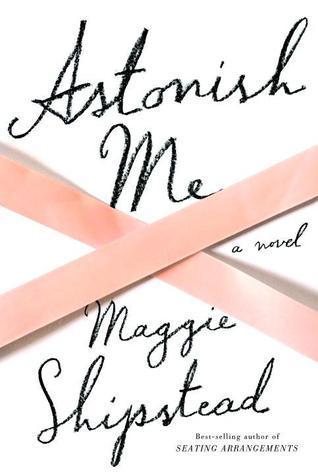 Shipstead’s first novel, Seating Arrangements, was a delicious evisceration of the moneyed class by one of its own. It describes the coming together of the clan for a wedding on a Nantucket-like island in a biting tone that evokes the best work of Edith Wharton. It marked Shipstead as a writer to watch, but it was a playful romp, semi-satirical in style. With the publication of Astonish Me, set in the world of classical dance, we realize that Seating Arrangements was simply Shipstead warming up at the barre before embarking on the real work–and Astonish Me, just released in paperback, is that work, a novel of mesmerizing, transcendent power.
The story begins with Joan, an aspiring young dancer whose pregnancy and very modest talent spell the beginning of the end to the dream that has been at the center of her life since childhood. Shipstead deftly jumps back and forth in time and place with each chapter, from New York City to California to Paris. It is in Paris, where Joan lands a position as a quadrille, the lowest rank in the company of the Paris Opera Ballet. Sneaking into the balcony to spy on the visiting troupe of practicing Soviet dancers, led by Arslan Rusakov, the world’s most famous dancer, her life is changed forever. Watching him, Joan feels, “… the beauty of his dancing is almost terrible. It harrows her… She is afraid of how this man, this stranger, has already changed the sensation of being alive.”
A brief, impetuous erotic liaison ensues and following an exchange of secret letters, Joan finds herself driving the getaway car aiding Arslan in his defection to the West. After Joan’s fantasy of a life with her Russian lover proves illusory, torpedoed both by her own modest talent and by Arslan’s voracious appetites, she turns to Jacob, the childhood friend who has always worshipped her and they begin a life together with their newborn child, Harry.
If all this sounds like a moderately sophisticated soap opera, that is decidedly not how it reads. Shipstead’s gorgeous prose elevates even the most mundane episodes to “precise, flawless” art (Maureen Corrigan). That Harry, of course, turns out to be a dance prodigy may seem predictable, yet in Shipstead’s telling, she accomplishes what Diaghilev demanded of his dancers in the Ballet Russes: etonnez-moi, “astonish me.” From the very first page to the last, when Arslan thinks back to why he chose Joan to be his rescuer, you will never fail to be astonished.
[Bill Lundgren is a writer and blogger, also a bookseller at Longfellow Books in Portland, Maine (“A Fiercely Independent Community Bookstore”). He keeps a bird named Ruby, and teaches at Southern Maine Community College.]
February 6, 2015
Cartoon Bill Makes the Rounds
We are lucky enough to have a lot of great guest teachers who visit down here at the University of North Carolina Wilmington. This past month our grad students were treated to a class with the poet Aimee Nezhukumatathil (who by the way found out just yesterday that she had landed a poem in the forthcoming Best American Poetry–congrats!). Anyway, we were having a little goodbye party for Aimee and who should show up? Bill! He was looking good too…..
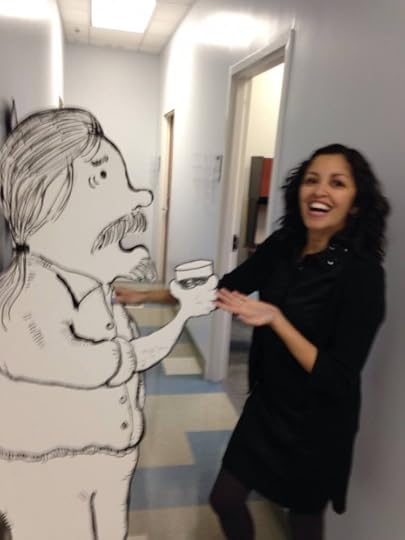
This is going to be a new tradition at UNCW. All visitors will get to have a drink with cartoon Bill. Might have to put him on our masthead.
February 4, 2015
Bad Advice Wednesday: Birthing Your Bastards
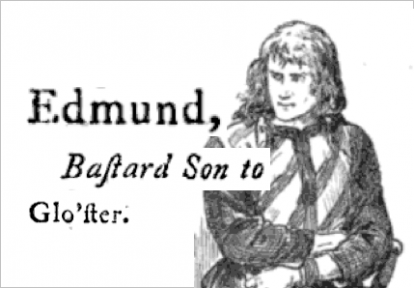
Literature’s Most Famous Bastard?
This week I finally began to tackle the chapter of my current book project that I have been dreading more than all of the others put together. It’s the largest and most complex topic of the book, but also the most important, so I’ve been feeling this enormous pressure to get it right. And since every other chapter of the book begins with a brief narrative example of some kind, I’ve been trying for weeks and even months now to keep my eye out for the perfect anecdote that would illustrate the main idea of the chapter.
A tiny little flash of an idea came to me last weekend, and so I ran with it. It was a small story but I worked it hard, kneading every detail until eventually I could foresee how it might stretch into three full paragraphs and maybe another two paragraphs of exposition. About midway through getting it all down, as the story was burgeoning into life, a thought popped into my head as suddenly and clearly as if someone had spoken it into my ear: “None of this is going to make it into the final manuscript.”
I stopped, took my hands from the keyboard, and stared off into space. I was sitting in the coffee shop where I normally write in the mornings, my office-away-from home during my sabbatical. When I have to stare off into space, as I often do while writing, the coffee shop provides a landscape more varied than the walls of my actual offices at home or school. I looked down at my laptop screen, scrolled back to the beginning of what I had written, and then read it all back. The voice was correct. None of this was going to make it into the final manuscript. I was taking a minor character, the misshapen bastard child of the king, and trying to set him up on the throne. He didn’t belong there, and we both knew it.
Unfortunately, this smart realization was not accompanied by a parallel eureka moment in which a perfect substitute story appeared to me. I knew the story I was writing was not going to work, and yet I had no better option. But what choice did I really have? I still had to produce my thousand words for the day. My green tea was warm in the cup; the coffee shop was filled with faces; the smells of food and drink were in the air; classical guitar music was playing in my headphones. I heaved a sigh and kept writing the bastard paragraphs that I knew would never make it into the final manuscript.
The chapter is complete now, and I’m happy with it. It would make for a neat ending to this essay if I could tell you that eventually I figured out how to make that original story and its exposition—five full paragraphs when I finally finished them—work for the chapter. But that’s not what happened. By the time I completed the fifth paragraph I remembered a much better story, one that fit the chapter opening perfectly. Before I left the coffee shop I wrote the first few sentences of it, just to help get me started on it the next day.
Those original five paragraphs are still sitting in what I call the “Runoff” folder in my computer. They won’t make it into the final manuscript. The little voice in my ear was correct about them. They weren’t very good, and they didn’t belong there. But I still had to bring them to life. The right story only arrived after I had written my way through the wrong one.
So you’ve heard the (good) advice that sometimes writers have to kill their darlings. Well, I’m here with the (bad) advice from the other side of the divide: sometimes, if you want to make those darlings come alive in the first place, you have to birth your bastards.
James M. Lang is the author of four books, the most recent of which is Cheating Lessons: Learning from Academic Dishonesty (Harvard UP, 2013). Visit his website at http://www.jamesmlang.com or follow him on Twitter at @LangOnCourse.
February 2, 2015
The Worst Moment (Before the Best Moment)
 That Kearse circus catch was right up there with the all-time worst Boston moments, a full-on baby-hook Buckner Bob-Stanley-trotting-in Ray-Hamilton-roughing-Stabler Aaron Boone Tyree Bucky Dent of a moment. Of course, unlike the others, it was immediately washed away. But at that moment….that sickening moment….
If you are a Seattle fan, simply flip my title around: The Best Moment (Followed by the Worst Moment)