David Gessner's Blog, page 17
June 1, 2015
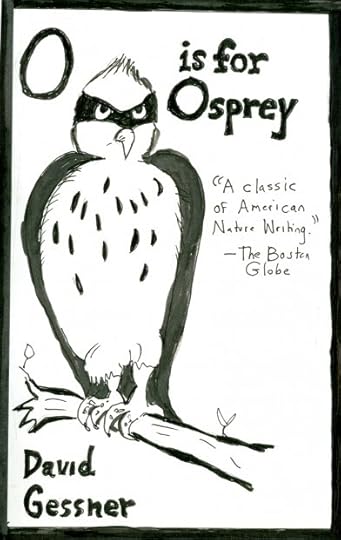
O is for Osprey
The 15th anniversary of Return of the Osprey is coming up, and it might be time for a little repackaging. What do you think?


May 26, 2015
A Reality Show You’ll Love. No, Really.
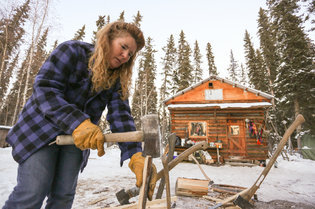 I’m not a big reality TV person, though we did watch the first season or two of “Survivor” (ironically at first, with cocktails aplenty, but then honestly into it, caught up in seeing if Richard Hatch could lie his way into the winner’s circle), so it was partly out of obligation that I tuned into my friend Jim Campbell’s new show, “The Last Alaskans.” But by the time the first scene ended, I knew something different was going on than the usual reality fare–“Hey, Mildred, look at this idiot spearing a catfish!”–and I soon understood that I was witnessing something beautiful. The scenery was one of the stars and real star, Heimo Korth, was funny,soft-spoken and smart. The pace wasn’t frenetic and Heimo wasn’t required to throw a hatchet that would hit a target that dropped another trapper into a dunking booth. Instead he talked about the challenges and pleasures of living on the land.
Listening to Heimo felt a little like listening to an old friend, since I had gotten to know him in Jim’s fine book, The Final Frontiersmen. But I didn’t know Ray Lewis, who speaks like a mountain man crossed with a poet, or Bob Harte, who at first seems like comic relief but turns out to be more than he first appears (part of that more being he is a lot of fun). In just one small example of how the show flouts the usual reality conventions there is a nice moment when the usually invisible cameraman tells Bob that one of his plane’s wheels hit the water during a landing. Somehow this breaking through the wall seemed more real than reality,a natural thing that someone filming up in the middle of nowhere would say to the person being filmed. It’s just one of many examples of how this show is better than the rest of its kind.
And if you don’t believe Bill and Dave’s, listen to the NY Times rave:
“Where Alaska-based shows about truckers, pilots, gold miners, fishermen or survival-competition yahoos tend to be characterized by humans-against-nature bravura, this one thrives on sensitivity and solitude. It’s about the handful of people who still live at least part of the year in the Arctic National Wildlife Refuge in northeast Alaska, their right to do so grandfathered in.”
The rest of the rest of the review is HERE.
And an even more glowing appreciation from Bill and Dave’s new buddy, the Wash Post:
“So hear me out as I describe the exquisite and sometimes melancholy effect of watching Animal Planet’s ‘The Last Alaskans,’ a superb, eight-part docuseries premiering Monday night. Without overblown narration or any of the other heavily produced tropes and techniques that viewers associate with the genre, ‘The Last Alaskans’ quietly settles in with some of the last legal residents of the Arctic National Wildlife Refuge.”
What happens next? Not a whole lot, except for a patient rumination on the themes of independence and solitude in nature, minus the posturing and usual yammering about the Second Amendment, snow machines, gold fever, etc.”
Read the rest HERE.
So,watch it! Next show is Sunday night.
May 22, 2015
The Washington Post Chimes in
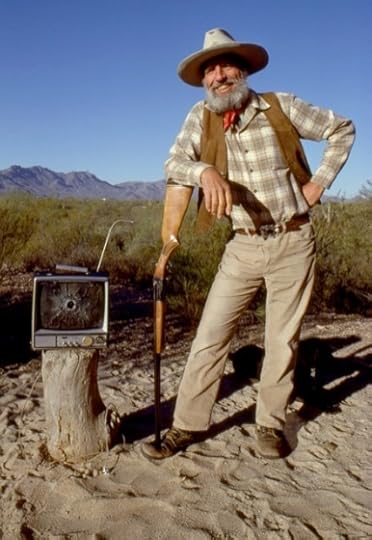 Just in time for the long weekend, The Washington Post chimes in on All the Wild:
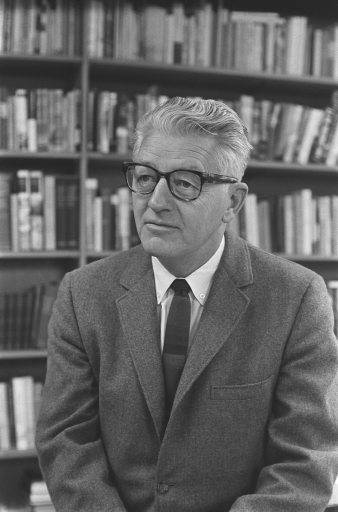
Gessner’s book serves as an excellent primer to readers new to Abbey and Stegner, and an insightful explanation of their continuing relevance. Gessner, an important nature writer and editor in his own right, also uses the writers’ lives as a template for his exploration of the Western landscape they lived in and wrote about. He visits places that were important to All the Wild That Remains: Edward Abbey, Wallace Stegner,… and Stegner, and draws trenchant conclusions about the current state of affairs in a region still battling over how to best protect and exploit its fragile resources…..
Gessner’s reporting, whether profiling Stegner and Abbey’s acolyte Wendell Berry or observing the consequences of Vernal, Utah’s fracking boom, is vivid and personable. In his able hands, Abbey and Stegner’s legacy is refreshed for a new generation of readers. Perhaps now even the Easterners will take notice.
 with-sharp-pens/2015/05/21/3b4193e2-e1fe-11e4-b510-962fcfabc310_story.html
May 17, 2015
Getting Outside Saturday: Spring Blossoms (a photo haiku)
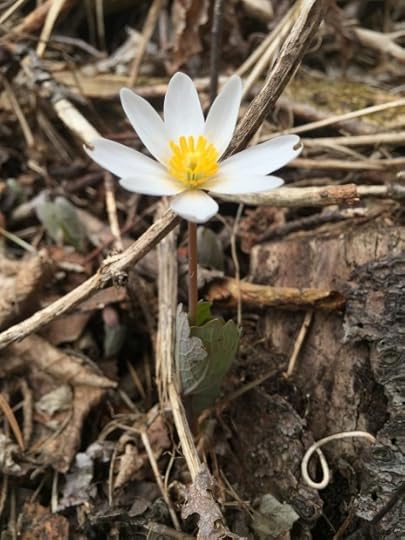
Blood root
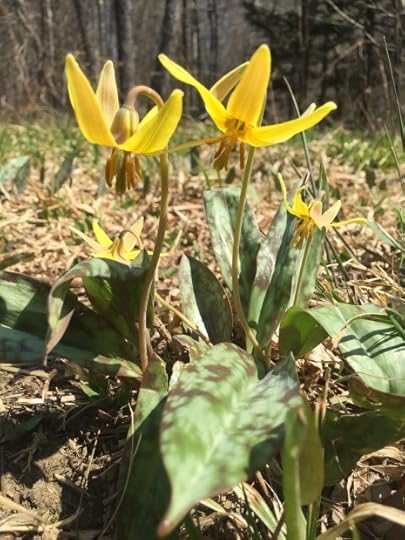
Trout Lily
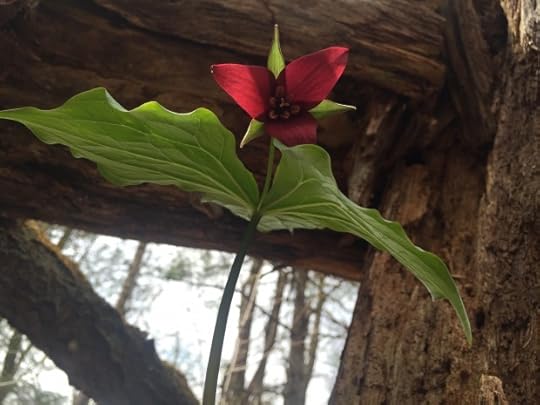
Trillium
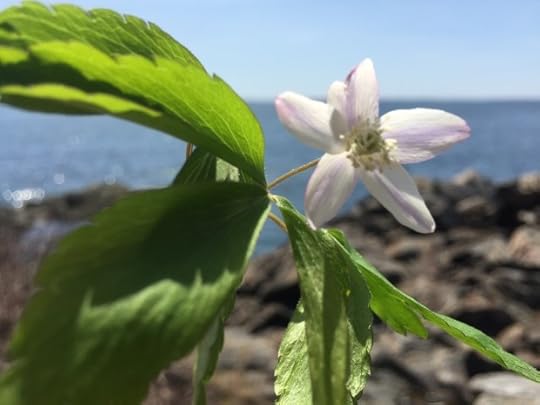
Windflower
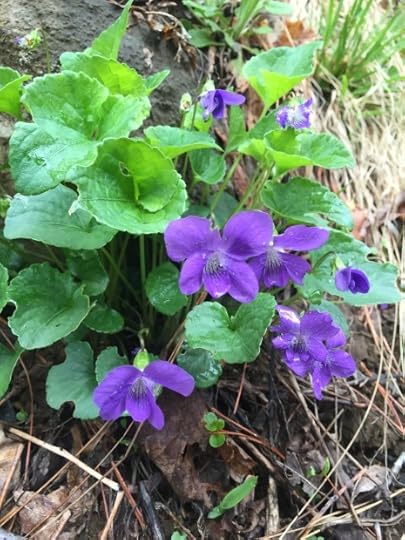
Wild violet
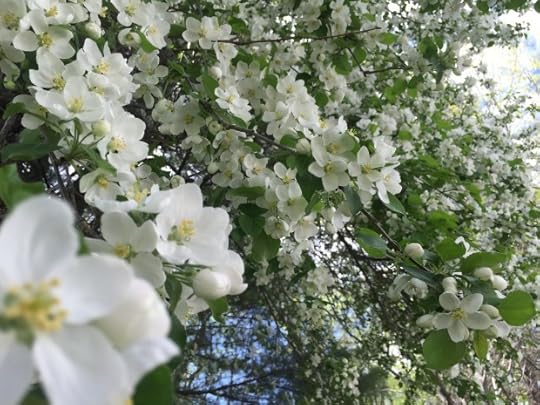
Crab apple
May 14, 2015
Anxious is Back, but in a Minor Key
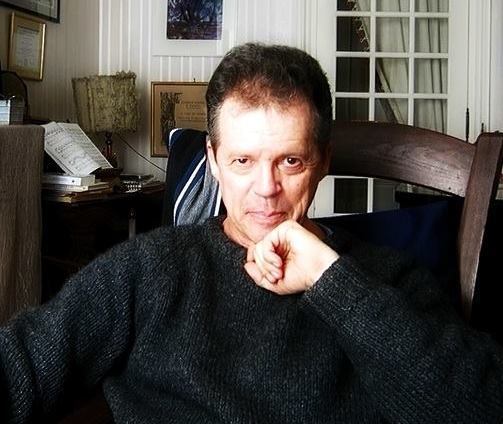
Anxious Bode
Rachmaninoff was a minor composer. Not minor as in of no importance, he just composed a lot in minor scale. Depressed third if you wish. I feel it, that’s why I don’t play too much Rachmaninoff. Except when I’m depressed, but then, it’s roll over Rach, you want to hear what depression sounds like, I’m the undisputed king, I get free depression just from waking up. I know, it’s unfair, why me. Because someone has to give. I get all the blessings, but the blessings mean nothing, if they’re not shared, that is given. I give, so I can live. My name is Anxious Bode, professor of panic and sleep disorders. I teach at night, when I can see more clearly. It’s also the time at which I wake up. I have Parkinson’s disease. My nights are short.
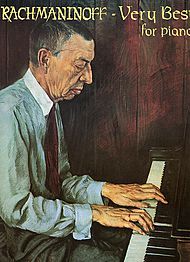 Rach, as he is known, his concertos, wrote four. The most difficult pieces of the entire piano repertoire. Think the four knights of the Apocalypse. I play the third. At my speed, with my understanding of it, but that, even, is just the beginning. A beginning.
Sit back, grab a program, today I play, I’m the pianist, but you need explanations, so I’m also the director, film director. We’re shooting a documentary on art and Parkinson’s. And I’m your host, here, ready to give.
When I wake up, at 3 AM, my brain scrambles to restart after the disconnection that the night is. It must restore everything, power, time, memory, space, my brain is a wreck, my mind, the cleaning crew. It’s not always bad, but it takes time. And while this takes place, while I pull myself out of the hole I’m in, talking to myself like the captain of a ship to his team of one, behind the brouhaha of voices, I hear music.
It’s a concerto. It begins with the end, my birth, third movement. Tempest of sound, tumultuous strings, until the clamorous eruption of light, the real one, that of the sun, presiding over a Vermeer sea. I call it the restoration of love.
Before I can speak, before I can return to who I am, or thought I was, music, a music as complete as one written by a composer, has played in me, on command, on autopilot. I run to a piece of paper or to my portable keyboard and key in all the notes I can but this is music of the mind, it’s internal monologue. It can be heard, but not interrupted. There remains one solution, and if you know me you know which one it is. If it can only be heard once, I will play it. There will be no composing, I will wake, at the piano, come to life and let my hands tell the musical story.
That was the story, the plan. I had decided to improvise this concerto out on the keys, skip the page, burst into joyous collisions of strings, hammerfest, Anxious style. That was two days ago. Yesterday, my second wake up, dayshift, I heard Rachmaninoff. Concerto number 3.
I had not played it, nor even attempted to play it for at least a year. To prepare my concert, my daredevil “so you think you can improvise a concerto”, I had worked on lifting my left hand, the depressed side, and free it from the bonds of unresponsive muscles, an awkward fighting for grace hand, which my right hand helps, across the keyboard. I’ll show you. I have pictures. I can show you right now.
Anxious steps to the piano. He looks like he’s stumbling but there is order in his fall. He lands on the piano stool. His hands spread on the keys.
Hi this is me Anxious, sorry I lost the mic. I’m back. Let me turn the volume down. Here we go.

[Anxious Bode is Thierry Kauffmann, who lives in Grenoble, France, where he studies sleep, and fights Parkinson’s, all while keeping his chops on the piano.]
May 13, 2015
Bad Advice Wednesday: Take my Graphic Novel Class!
I am teaching my graphic novel class again at UNCW and somehow, mysteriously, only have 3 students enrolled. Please help me out and spread the word. I mean wtf? It’s a graphic novel class. Here’s a blog from the last time I offered it:
Last fall I taught a course on the graphic novel. I’m pretty sure it was the first time I 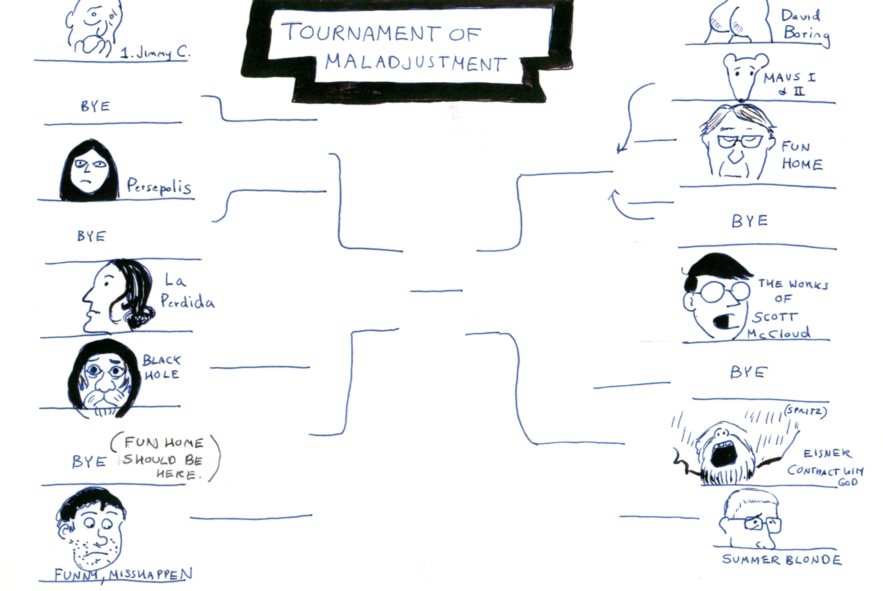 taught a class where the students clearly knew more about the subject than I did. This was by plan. I’d been a cartoonist in college and when I decided I wanted to return to cartooning, and to possibly write/draw a graphic novel, I figured I had better educate myself in the genre. What better way to educate myself, and to force myself to read, than to teach a course to grad students? And it worked–for me at least. (The students may tell another story.)
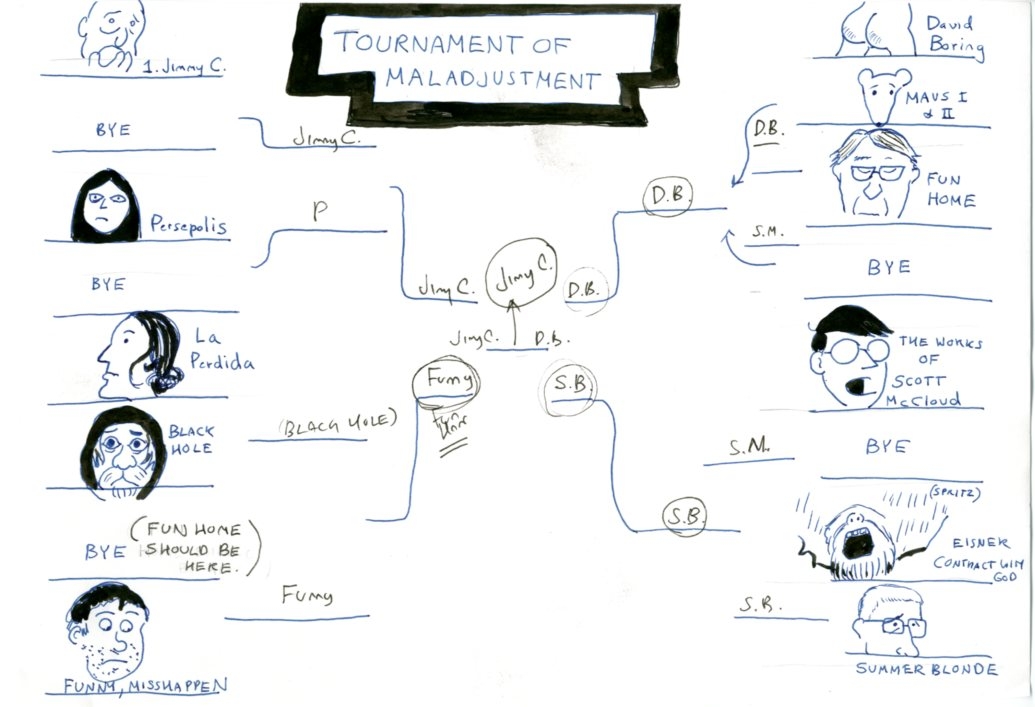
It turned out I learned a lot, in large part thanks to my students, and next time round I’m sure I’ll do a much better job. But the funny thing is that while I had only read two graphic novels when I first conceived of the class, it was these novels that still stood tall at the end of the term. I guess it should come as no surprise that these novels were Art Spiegelman’s Maus and Alison Bechdel’s Fun Home. But the class did hold surprises, and one of the primary ones were the books of Scott McCloud, Understanding Comics and Making Comics. I know McCloud already has a huge following but it should be even bigger,more general and less restricted to the genre. The guy is smart and Woody Allen self-conscious/funny and talented with a pen (even if he mostly uses a computer) and brilliant and lots of fun. He did well in the “Tournament of Greatness”(TOG) we held at the end of the term, though I seem to remember his books losing to Maus in the semi-finals. The other semi-finalist was the powerful Persepolis by Marjane Satrapi (though my memory is faulty and it may have been Black Hole by Charles Burns.) While Persepolis and Maus are obviously political and even historical, this was not the case with most of the books we read in the class. In fact most of the books were peopled by self-conscious, adolescent sexually-obsessed losers, which in a way is all of us, but, on the other hand, if we have survived past thirty and stopped doing bong hits, is none of us. So they are fun to read, a trip down a pimply memory lane, but not GREAT. Which led to another tournament: the “Tournament of Maladjustment. ” (TOM) While the Tournament of Greatness was about the power of the books, the TOM was about which characters in the books were most fucked up. Jimmy Corrigan: The Smartest Kid on Earth by Chris Ware, was the winner hands down in the maladjustment category, and also won me over in the end with its sheer non-linear strangeness. The butt-obsessed David Boring by Daniel Clowes also scored well in the TOM, as did all the characters in Summer Blonde by Adrian Tomine, and both of these books are well worth reading. Another strong contender in that division was Funny, Misshapen Body by Jeffrey Brown, with its author’s Kerouacian philosophy of “first draw, best draw” and his firm belief that every thought that comes into his head is worth recording.
 Tournaments aside, I was truly impressed by the quality of the work and just how engrossed I got in the reading. Maybe McCloud is right when he prophesizes a shining future for the graphic novel, and a future synthesizing of art and writing that reaches a level of art we have not yet seen. When McCloud points to the past, not the future, he often pays homage to Will Eisner, one of the genre’s founders, and while the class sometimes found reading him was like watching a classic movie from 1936, where they had to nod and say “brilliant” when they were really bored, in the end they at least appreciated the man’s books. Honestly, about the only book that the class really turned against, and that didn’t really do it for me either, was La Perdida by Jessica Abel. I report this with some hesitancy, both because it’s a little mean to Abel and because it was recommended to me by Mark Lynch, public radio host of the show Inquiry , birder, and reader of literature extraordinaire (whose taste is otherwise.) impeccable.) And who has a gret interview with Art Spiegleman here.
Syllabus from the course:
Graphic Novel Syllabus
David Gessner
Course Description
The main goals of this class are to give you an overview of the genre of graphic novels and to give you a language to discuss this emerging form. To achieve these goals we will read from a broad, though admittedly far from comprehensive, range of graphic novels. Secondarily, we will work on our own graphic projects. It should be stressed that no art background is required for this. Stick figures are okay.
What is Required of You
1. You will each teach one class. On the first day, we will pick the names of the books out of a hat to determine which author you will teach. You are required to make yourself something of an expert, not just on the specific book but on your author. We can’t all be expected to read the other work that these writers/artists have done. Since the reading is generally light (it just takes a couple/few hours to read most of these books), consider “your” week the one week where your reading will be heavy. (Don’t worry, you won’t be entirely on your own since I am, technically, the teacher.)
When studying these authors you should, as well as considering scholarly questions, consider creative ones. Is there something you could steal from this author for your own work? How is this work like and unlike work you might want to do yourself?
2. You will be asked to hand out four or five questions for your classmates the week before the class when you teach. These should be probing and interesting and should, as well as exploring this particular author’s work, get at some of the general characteristics of the genre. How is the book you are teaching like and unlike other things we have read? How does it go with, or against, the grain of what we have come to expect from graphic novels?
3. You will be asked to answer the weekly questions and to be a lively class participant.
4. You will be asked to work on your own creative graphic project. You don’t need to draw or use the computer (though you can). You are not expected to write a graphic novel, but you are expected, as creative person, to react creatively to the work we read.
At some point you will discuss your project with the class, and we will have a brainstorming session specifically devoted to your project.
Reading/Teaching Schedule
August 24
Course Introduction
Pick out names from a hat (with trading period)
Questions handed out on Maus
August 31
Discuss Maus and hand in answers to questions
Hand Out questions on Fun Home
Read Fun Home for next class
September 7—NO CLASS
September 14
Discuss Fun Home/hand in questions
Hand out McCloud and Contract questions
Read McCloud’s Understanding Comics and Eisner’s Contract with God for next class
September 21
Discuss McCloud and Contract/hand in questions
Hand out Black Hole questions
Read Black Hole for next class
September 28
Discuss Black Hole/hand in questions
Hand out La Perdida and Eisner questions
Read La Perdida and Eisner’s Comics and Sequential Art for next class
October 5
NO CLASS
October 12
Discuss La Perdida and Eisner/hand in questions
Hand out Summer Blonde questions
Read Summer Blonde for next class
October 19
Discuss Summer Blonde/hand in questions
Hand out David Boring questions
Read David Boring for next class
October 26
Discuss David Boring
Hand out Persepolis questions
Read Persepolis and answer questions for next class
November 2
Discuss Persepolis
Hand out questions on Making Comics
Read Making Comics and answer questions for next class
Brainstorm sessions on our own comics
November 9
Discuss Making Comics
Hand out Jimmy Corrigan questions
Read Jimmy Corrigan and answer questions for next class
Brainstorm sessions on our own comics
November 16
Discuss Jimmy Corrigan
Hand out questions on Funny, Misshapen Body (not in bookstore) by Jeffrey Brown
Read Funny, Misshapen Body and answer questions
Brainstorm sessions on our own comics
November 23
Discuss Funny, Misshapen Body
Brainstorm on our own comics
November 30
Last Class
FINAL EXAM MONDAY DEC 7
May 12, 2015
Gessner Receives Four-Post Suspension for “Boothgate”
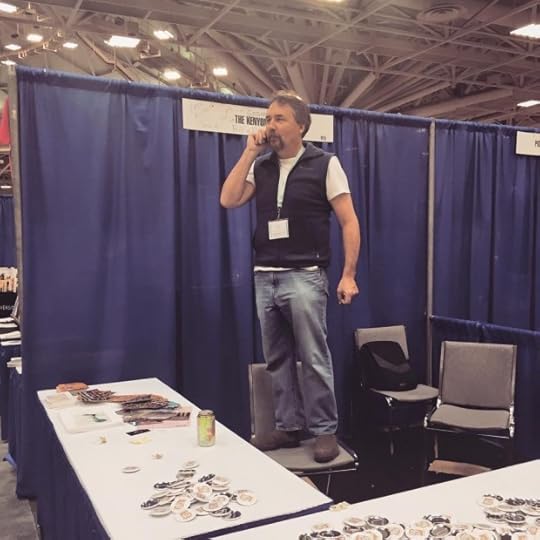
The explosive photograph
The National Bloggers League today handed down a four-post suspension for David Gessner, Captain of the world-champion blog Bill and Dave’s Cocktail Hour. Fans were left wailing and enemies gloating. “I feed off their hatred,” said Mr. Gessner in a rare comprehensible moment. He was suspended in part for his brazen capture of the Kenyon Review table at AWP 2015 in Minneapolis, but also for his comments afterwards. “I never denied it,” he says. And, “I have the utmost respect for the Ken Doll Review.” His partner in crime, head coach Bill “Billychek” Roorbach, who arrived on the scene late but in time for shots of contraband whiskey, received a lighter penalty–he must sit with Dave in the writing shack during the suspension–without alcohol. “Harsh, that’s what I call it,” says Roorbach, the best writer in America and beyond (rated slightly better than Dave in most polls). “…And besides, I was napping during the alleged piratical behavior.” As a final measure, the NBL will crash Bill and Dave’s four times in the 2015-2016 season, always just as Dave’s and Bill’s books have the usual big news to share. And no more AWP.
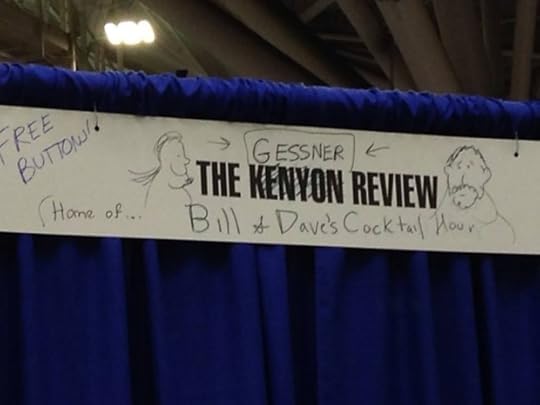
Further Evidence
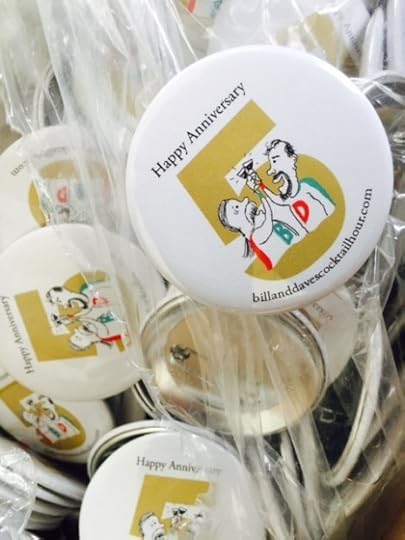
Left at the scene of the crime “Fifth anniversary of depravity, we call it,” says the BPL
May 10, 2015
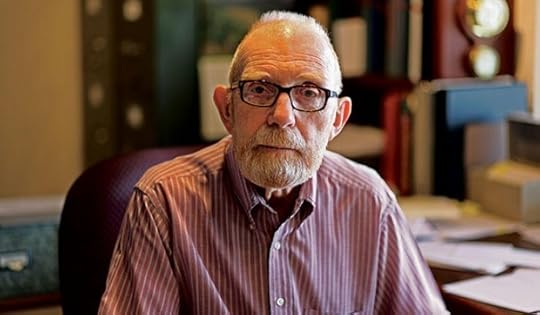
Farewell to Ivan Doig, Another Great of the American (North) West
Growing up in the small town of Snohomish in Western Washington in the 1950s, it often felt as if the rest of the world had forgotten about us. Mountain ranges, desert and plains separated Northwesterners from the white hot center of culture in New England, and its glitzy pop cousin, Los Angeles. And Eisenhower’s dream of interstate freeways connecting us all, was 15 years from being realized. Not that I didn’t feel the pull of the world out there as I sat in the Snohomish Theater, transfixed by Around the World in 80 Days or staring agape as a young Elvis pretzel twisted his hips and sneered on our teeny-tiny TV, or tuning in to San Francisco’s KGO at night to listen to Ira Blue at the Hungry I as he birthed talk radio. But it seemed that in the Northwest we were free to invent ourselves. Thank God for parents who allowed us almost free rein to explore the Pilchuck River, or on one Sunday afternoon, to walk across the Snohomish River Valley on the railroad tracks to hunt for fossils at Fiddler’s Bluff; had a train come while we were on the last high trestle, we would have had a tragic Stand By Me moment. And to the east, the glacier-carved valleys and peaks of the Cascade would soon become an even larger playground. Our earliest jobs were outside, picking strawberries and raspberries and later wandering behind trucks in the pea fields with pitchforks or milking cows.
There was no Northwest cultural tradition to speak of. There was Mark Tobey, Imogene Cunningham, Gary Snyder, Betty McDonald, Bing Crosby, Quincy Jones, and Gypsy Rose Lee, but they fled the state at the earliest opportunity. There was no opera, no ballet, no theatre, and the Seattle Symphony, our lone connection to the arts, would often play in the echoey Snohomish High School gymnasium to disinterested farm kids. As much as I loved my home with its gray wet, salty water, Doug Fir forests, and especially the ragged, snowy peaks, I yearned vaguely for something that spoke to me of my northwest, something I couldn’t ever quite articulate. It would happen for me in books.
In college I worked much harder reading Ken Kesey’s Sometimes a Great Notion than I ever had for any class. I mean, all those pages of hallucinatory dreamy stream-of-consciousness was head-melting, but Hank Stamper, standing against the bastards, chopping down trees, now there was an anti-hero I could get behind. Shortly after, Tom Robbins turned the Skagit Valley into a rain-soaked mystical other-world in Another Roadside Attraction. Then I chose a book at the University Bookstore because it had trees on the cover, what the hell? It was Norman MacLean’s A River Runs Through It, which I have read more times than any other book. And always I saw my father whenever Norman’s father cast his line into the Blackfoot River, as if it were a sacrament. Another Montanan, James Welch wrote Winter in the Blood, which laid out a young Native American’s tortuous psychic journey for understanding and dignity, in a country that seemed hell-bent on muddying understanding and stripped dignity away.
My antipathy to poetry was blown away by Richard Hugo’s What Thou Lovest Well Remains American, David Wagoner’s Collected Poems, and William Stafford’s Stories That Could Be True. There was so much generosity in Hugo’s poems even as he chronicled the lost lives of sad losers; Wagoner’s quiet contemplation in moss-covered forests, along snow-melt streams; and Stafford’s poetic conversations with the reader.
These were Northwest voices, strong and true and I carried them with me wherever I went, and they lent muscle to my arguments for the specialness of my place in the world.
Central to all these writers was the land, land that nurtured, inspired, bedeviled, haunted, trapped, ruined and transfigured. It was land without the gauze of nostalgia, but swelling with the ache of memory.
The last writer I came to was Ivan Doig, whose This House of Sky introduced me to the modern memoir, not to mention the Montana big sky, which I would not believe until I moved there in the late 1980s. It is blue and it is infinite. Doig wrote of a childhood spent with his itinerant ranching father and grandmother. It is a rough life, herding sheep, blistering in the summer, frigid in the winter, the wind a constant. And though it might seem like a lonely life for a boy, he had the company of cowboy characters he met on the ranches or in the bars, where from the age of six he became a regular with his dad: people with names like Bowtie Frenchy, Hoppy, Deaf John, Mulligan John or Long John. These characters I believe came to populate his novels, people dependent on the land, in touch with the land, and inextricably tied to the land, more than to any people in their lives. It is a tale of hardship and love. Doig, realizing that his father’s wanderlust would never be his own, came all the way out to settle in Seattle at the same time I was a young boy in Snohomish. And there he stayed until he died this April at age 75. I have not returned to Doig, although at various times I have had around the house Winter Brothers (My friend Jim says that’s the one), Dancing at the Rascal Fair, English Creek, and Ride With Me Mariah, Montana. There was something slightly loopy about his sentence structure, convoluted and awkward. After rereading This House of Sky I find his sentences to be delightful little winding rivers of words, and I am going to catch up on all things Doig this summer.
Today, there is a whole new generation of Northwest authors/poets writing wonderfully about a changed landscape, to be sure: Timothy Egan, Kim Barnes, Molly Gloss, Jess Walters, Sherman Alexis, Pete Fromm, David Guterson, John Krakauer, Deidre McNamer. Writers have discovered the Northwest, and we are ground zero for connectivity. Parents don’t let their kids explore Snohomish unless it’s an organized field trip. And while our citizens value the land, they are hell-bent developing it, all the way to the foothills of the Cascades. At least we have the work of Doig, MacLean, Stafford, Welch, and Robbins (still feisty and writing in his early 80s) to connect us to varied landscape that makes the Pacific Northwest special, a landscape that inspires me every day.
Mac Bates is a writer, teacher, and mountaineer who lives in Snohomish, Washington
May 8, 2015
Here Come the Summer Birds!
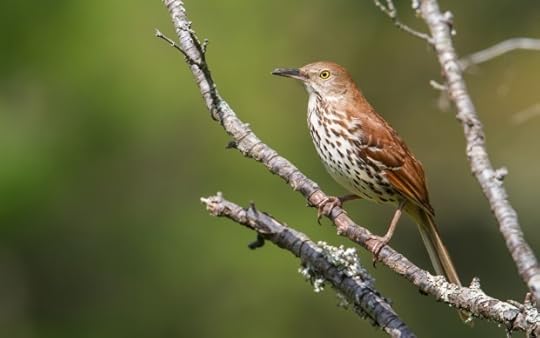
Brown Thrasher
Today was a warm one in western Maine, sixty-some degrees and sunny. Warm enough for the bugs to wake, which means the arrival of the breeding crowd, our summer birds. I took the usual hour’s walk in the woods this morning and to the stream, a great meeting place of forest and field, stream and sandbar. And what singing! It always takes me a minute to remember my birdsongs, but they do come back. Black and White Warbler like a squeaky wheel. Common Yellowthroat, witchety-witchety-wichety. That kind of insistent and snotty-seeming and much-repeated Chestnut-Sided Warbler song: I’m a chestnut sided, what d’ya think of that? And the oven birds are back: Teacher! Teacher! Teacher! Also a Black-Throated Green Warbler, plenty to say.
Catbird in the thicket, singing quietly to itself in the voices of others. Then its cousin, Brown Thrasher, long phrases at full voice, quotes from all the birds he’s ever met, including a perfect blue jay keening.
Bank Swallows, Tree Swallows. No blue bird as yet.
Woodcock in winnowing flights till midnight in the field next door. Killdeer by day.
Common Mergansers, Hooded Mergansers, Mallards, Wood Ducks, Canada Geese.
Finally a Solitary Sandpiper, alone, of course, stopping over for a week or so, if history holds, on its way much farther north.
Dozens and dozens more species to come in the next few weeks… I love watching for them.
May 5, 2015
Bad Advice Wednesday: Naming is Knowing
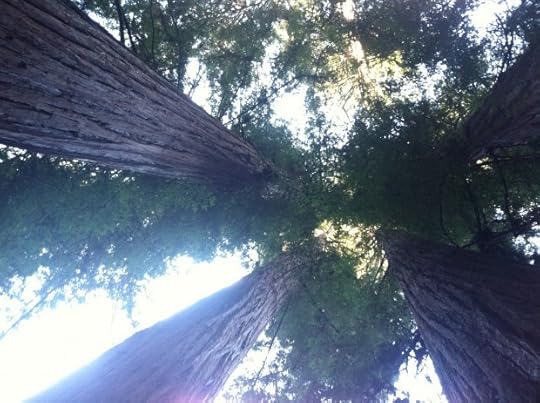
I always noticed it in student work, but you see it in the big-time books, too. “He stood under a tree.” My question as a reader is always: what kind of tree? It’s a lot different standing under a white pine and a white ash. Your feet are in needles in case one. In case two, old leaves. The woods are darker among pines, too. If it’s a Douglas fir, you’re in the Pacific Northwest. A bird flies by. What kind? Gray Jay? That tells us something too–those camp robbers like wild places, a bit of elevation. A bug bit him. A bug? Not a mosquito? Horsefly? Blackfly? I like the precision, I guess, but there’s something more, the names of things. And the names of things carry within them states of being, unstated inferences, geographies, even eras, also music, the rhythm of the particular, of a place.
So make a study, learn the names of things. That’s a start.