Katherine Frances's Blog, page 100
December 13, 2017
k-frances:
Using Myers-Briggs Personality Types for Characters
What is it?
Myers-Brings Personality...
Using Myers-Briggs Personality Types for Characters
What is it?
Myers-Brings Personality tests and types were created by psychologists to help measure and study different personality types. Having my bachelors in psychology myself, I feel the need to issue a disclaimer/explanation of the validity and reliability of something like this. Think of this test as a ruler, meant to help measure variables in a study. But in psychology, the rulers are complicated because instead of measuring something definite and lawful like distance, we are measuring many different elements that are not fixed or lawful, like personality. So, the moral of the story is, don’t take this test as proven law for yourself or your life.
That being said, this test has been… tested, and it took a lot of scientists smarter than most of us to put it together, so it’s a totally legit and valuable resource for your life, and especially for your writing, which is what I want to talk about!
How does it work?
Before you can use the personality types in your writing you have to understand how it works. If you already know about the types and how they’re broken down, you can skip this section and read the last bit.
The test breaks down personalities into four main principle areas of personality. They are:
-Extroversion vs. Introversion
-Sensing vs. Intuition
-Thinking vs. Feeling
-Judging vs. Perceiving
Click Here for a in depth explanation for what the four aspects of personality mean [however I don’t like this sights depictions of types so hang tight for that]. There is a full length [its long af] test that can be used to determine your [or a character if you take the test pretending to be them] personality type. The result will be a letter from each category combining to make a type that is one of 16 possible types. So ESTJ is a personality type for example, standing for Extroversion, Sensing, Thinking, Judging.
How Can I use this in my writing?
I do not recommend taking this test for every single one of your characters, or even any of them. It’s very long and time consuming, though it certainly can’t do any harm to give it a shot as an exercise to force yourself to think about your characters in new ways. However, I do not recommend you use these as the end all be all of your character. You should still delve into facts about them, habits they have, memories, things that changed them/made them. You should still have concrete ideas about their flaws and their strengths. These personality type can merely help you get there.
I do recommend that you click here [if you didn’t click on the last link] to read the explanation of the personality areas. This sight has each area defined in the order that it’s easiest to think about them. Read it, and as you’re reading it, see if you can come up with which letter your character would be given if they did take the test. Like I said before, the test is way too long to take for all your characters, but you are an unbiased narrator/creator so you should be able to assign the criterion that they would most likely fit into. For example, the first one is easy since the terms are fairly general and culturally understood already. If your character his outgoing, they would get an E as their first letter, for Extroversion. If they are shy and/or like to keep to themselves, they would get an I for Introversion.
Once you have a personality type [like ESTJ] that fits your character, click here for the official descriptions of their type. You can use this description to think of your character differently from the conflict/resolution model of thinking that most writers tend to use. After all, the most important parts of your character are the things that drive the plot forward, but doing this can really help flesh out a full character.
There are two different links in this article for a reason; I like the explanation of the personality areas in the first link, but their descriptions of the personality types are too long and too specific [I feel they take a lot of creative license with the original, more scientifically backed personality type descriptions that you can find in the second link.]
Here they are one more time in case you skimmed this article and missed it. This is the areas explained. This is the types defined.
How you found this helpful, and for more writing advice by me and other writing blogs I like, check out the Writer’s Library!


ithotyouknew2:
smaug-official:
bemusedlybespectacled:
thedosian-cabbage:
kurosmind:
There’s...
There’s one (1) think in Disney’s Mulan that irks me.
The jaw line.
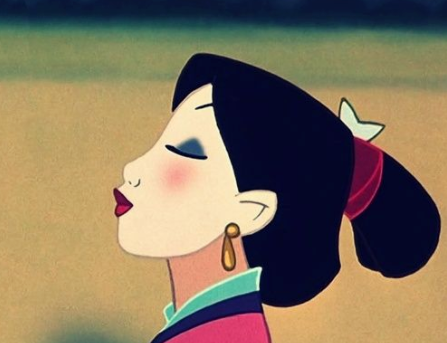
Mulan’s jaw line is drawn differently when she’s acting as Ping. No kidding:
this is her “regular, Fa Mulan” face. In this version her jaw is even highlighted by the makeup. Look how round is it.
and this is her Ping jaw. Square. Totally square.
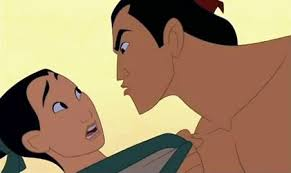
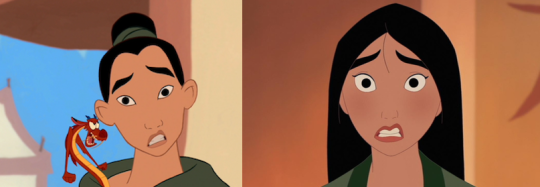
WHY?????
Isn’t consistency in the character base shapes like, an important thing??
Not to mention how she immediately regains her long lashes as soon as she is exposed. With her round jaw obviously.
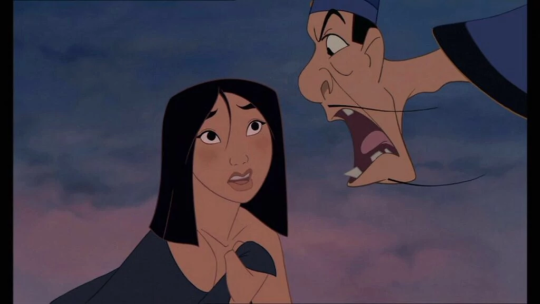
?????
That feel when you’re Asian and your father with a bad leg was about to be sent off to surely die in a war for your great empire so you squared up both metaphorically and physically.
it’s on the fricking vhs cover
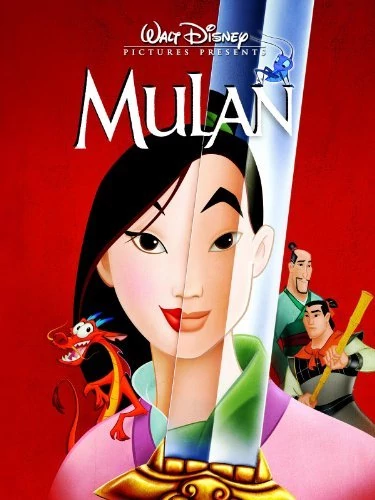
this has bothered me since 1999
Why do you have to come for Mulan like this
It’s called contour sweetie
This has little to do with writing but I had an idea and I wanted to comment.
Unlike in literature where you can describe things in metaphor or flowery language, movies are forced to use visual/audio cues to slant a viewers perspective. Often this is done with lighting and music. In this case, it’s using small differences in shapes to represent a skew in perspective.
When you see someone who you deem a man, you most likely [everyone does this to an extent, it’s how brains function] assign assumptions about what it is to be a man to what you are perceiving. In this way, you might not literally see a squarer jaw when you see someone who you think is a man, but you will probably see some qualities over others based on your assumptions. The same goes for when you see someone who you believe is a woman.
In this way, when Mulan is revealed as a woman and everyone around her sees her as a woman, the choice to draw her in a more feminine way, in my opinion, represents the characters’ paradigm shift and therefore shift in perspective the animators are trying to convey.
The men around her have realized she is a women, and women must be feminine according to the social law of the time [and arguably still today in many ways], and so the men around her literally see her as more feminine.
Using Myers-Briggs Personality Types for CharactersWhat is it?Myers-Brings Personality tests and...
Using Myers-Briggs Personality Types for CharactersWhat is it?
Myers-Brings Personality tests and types were created by psychologists to help measure and study different personality types. Having my bachelors in psychology myself, I feel the need to issue a disclaimer/explanation of the validity and reliability of something like this. Think of this test as a ruler, meant to help measure variables in a study. But in psychology, the rulers are complicated because instead of measuring something definite and lawful like distance, we are measuring many different elements that are not fixed or lawful, like personality. So, the moral of the story is, don’t take this test as proven law for yourself or your life.
That being said, this test has been… tested, and it took a lot of scientists smarter than most of us to put it together, so it’s a totally legit and valuable resource for your life, and especially for your writing, which is what I want to talk about!
How does it work?
Before you can use the personality types in your writing you have to understand how it works. If you already know about the types and how they’re broken down, you can skip this section and read the last bit.
The test breaks down personalities into four main principle areas of personality. They are:
-Extroversion vs. Introversion
-Sensing vs. Intuition
-Thinking vs. Feeling
-Judging vs. Perceiving
Click Here for a in depth explanation for what the four aspects of personality mean [however I don’t like this sights depictions of types so hang tight for that]. There is a full length [its long af] test that can be used to determine your [or a character if you take the test pretending to be them] personality type. The result will be a letter from each category combining to make a type that is one of 16 possible types. So ESTJ is a personality type for example, standing for Extroversion, Sensing, Thinking, Judging.
How Can I use this in my writing?
I do not recommend taking this test for every single one of your characters, or even any of them. It’s very long and time consuming, though it certainly can’t do any harm to give it a shot as an exercise to force yourself to think about your characters in new ways. However, I do not recommend you use these as the end all be all of your character. You should still delve into facts about them, habits they have, memories, things that changed them/made them. You should still have concrete ideas about their flaws and their strengths. These personality type can merely help you get there.
I do recommend that you click here [if you didn’t click on the last link] to read the explanation of the personality areas. This sight has each area defined in the order that it’s easiest to think about them. Read it, and as you’re reading it, see if you can come up with which letter your character would be given if they did take the test. Like I said before, the test is way too long to take for all your characters, but you are an unbiased narrator/creator so you should be able to assign the criterion that they would most likely fit into. For example, the first one is easy since the terms are fairly general and culturally understood already. If your character his outgoing, they would get an E as their first letter, for Extroversion. If they are shy and/or like to keep to themselves, they would get an I for Introversion.
Once you have a personality type [like ESTJ] that fits your character, click here for the official descriptions of their type. You can use this description to think of your character differently from the conflict/resolution model of thinking that most writers tend to use. After all, the most important parts of your character are the things that drive the plot forward, but doing this can really help flesh out a full character.
There are two different links in this article for a reason; I like the explanation of the personality areas in the first link, but their descriptions of the personality types are too long and too specific [I feel they take a lot of creative license with the original, more scientifically backed personality type descriptions that you can find in the second link.]
Here they are one more time in case you skimmed this article and missed it. This is the areas explained. This is the types defined.
How you found this helpful, and for more writing advice by me and other writing blogs I like, check out the Writer’s Library!
From a Nonbinary Writer:
I’ve been wavering back and forth on whether or not I should post this because it’s very personal and possibly not as informed as I would like it to be. And it requires a little prefacing.
I’m nonbinary.
I write nonbinary characters. (I don’t have a single story which doesn’t include at least a protagonist or love interest who’s nonbinary, usually with a number of nonbinary supporting characters.)
And these nonbinary characters come in all forms and styles and pronouns and self presentations, from humans who believe they aren’t defined by anyone else’s perception of their gender, to characters whose entire society doesn’t differentiate between male and female, to agender demi-gods who use gendered pronouns because they feel like it and their to genderfluid parents who wear dresses to the opera.
Through the process of writing these characters I’ve subjected them to quite a few beta readers. And what I see in my feedback is a consistent trend of binary readers worried over whether my portrayals of nonbinary character might come off as offensive, while nonbinary readers don’t bat an eye.
Now, I’m certainly not saying that it’s bad for people of binary genders to be critical of how nonbinary characters are portrayed, because I love having people watching out for me and my nonbinary fam.
But I’m also worried.
I’m worried that binary writers aren’t writing nonbinary characters because they’re afraid of getting it wrong.If binary writers are worried a nonbinary writer is getting their own representation wrong, then how much more are they criticizing themselves for perceived flaws in their own nonbinary characters?
Please: Write nonbinary characters. Specifically, write nonbinary protagonists and love interests.There is such a broad scale of nonbinary identifying individuals, who’ve all had very different experiences, who all present themselves in different ways, with different pronouns, for different reasons. We are more diverse than you can imagine.
And yet we have essentially no representation. We are dying, dying, for characters in fiction who’s similar to us. The most devastating way you can mess up is to not care enough to try in the first place.
Edit:I’ve had this post sitting in my drafts for a day because I needed to edit it and boy. Boy am I pissed.
Just fucking pissed.After having a binary person (one who only writes a nonbinary villain no less) attempt to call out my #ownvoice representation, I couldn’t be more angry.
(I mean, I could be more angry, as proven by that time a TERF broke into my personal messages to write me two essays on why my identity isn’t real and I actually just hate myself enough to pretend it is, but that’s a different story altogether.)
So I amend this:
Please, please write nonbinary characters. But please, for the love of all things good, don’t try to tell other writers how to write these nonbinary characters if you aren’t also nonbinary.Write us characters but don’t fucking step on us in the process.
#If you’re binary, please reblog this!
As a nb writer, I second this post ^^
December 12, 2017
avelera:
thewritinghole:
omgkatsudonplease:
avelera:
If you have writer’s block because of a...
If you have writer’s block because of a certain idea or passage in your story, one thing I suggest is to work with a second document for discards. Every substantial story I write is written across at least 2 documents - one “main” story, and one for notes.
The notes document contains everything not in the main document. That’s where I throw things like deleted passages, even if it’s just half a sentence because I may figure out later that I actually said it better the first time. I also put notes or even whole scenes for later plot points there, basically ideas as they come to my head that I might want to add. It takes the pressure off the main document to know nothing gets permanently thrown away.
It’s also a place where I can free-write if I haven’t quite come up with the right wording for something, and then I can take out the best parts and put them in the main doc. It’s a document that allows me to make mistakes without wasting my effort or time, or permanently altering the pristine “real” manuscript with a random idea that ends up not really working out.
This is pretty common writing advice but I thought I’d throw it out there for anyone who feels stuck.
this shit works i do it all the time now; btds has a notes document with my outline and deleted snippets and links to picture references and then the actual fic is in another document, 10/10 would recommend
Amazing advice!!
This piece of random advice I gave on a day I was trying to psych myself up to get some writing done is one of my most reblogged posts lately. I almost didn’t post it because I thought it would be condescending to literally everyone on the planet who already knew this tip. Was pleasantly shocked to learn it was useful for many people!
bucketsiler:
Writers: Just a friendly reminder that creativity is difficult to quantify.
If keeping...
Writers: Just a friendly reminder that creativity is difficult to quantify.If keeping track of your daily word count or time spent writing motivates you and makes you feel good about your progress, that’s fantastic. By all means keep doing it! But don’t use those measurements against yourself as a way to size up your failure or shortcomings.
Whether you wrote 100 words or 1,000 words today is not an indicator of your worth as a writer or as a person, nor is it an accurate measure of “productivity.”
Some of my best writing days have happened when my actual word count for the day was very low, but I had a revelation while taking a walk that completely changed how I approached the story the next day.
Be nice to yourself, and try to remember to see the myriad ways your creativity is constantly flowing regardless of your word count or the number of hours clocked behind your computer.