Randy Conley's Blog, page 2
November 13, 2023
How Quickly You Decide to Trust…and Why You’re Likely Wrong
 How much time do you think it took you to read this sentence?
The average person reads approximately 238 words per minute, so that 13-word sentence probably took you about 3.25 seconds to read.
How long do you think it takes you to make an initial assessment of another person’s trustworthiness? Try 1/10th of a second.
A study by two Princeton psychologists, Janine Willis and Alexander Todorov, revealed that people assess the facial features of others in milliseconds and form judgements about the person’s trustworthiness, among other traits. Although Willis’ and Todorov’s study was remarkable for revealing the speed at which people make these assessments, other studies support the notion of how quickly we form initial impressions. One study illustrated that it takes under 30 seconds to assess a person’s body language and form judgements about how we think they’ll behave toward us, while another showed that it takes just 20 seconds for a person to appraise the trustworthiness of a complete stranger.
Whether it’s milliseconds or a half-minute, we make quick judgements about another person’s trustworthiness…and those decisions are often wrong.
Our initial impressions of another person are often clouded by our own mental biases and falsely interpreting the physical and behavioral signals we receive from them. I like to call these trust traps.
Trust Traps
One common trust trap is affinity bias. We have a predisposition to look favorably upon others who share similar characteristics, backgrounds, interests, or beliefs that we hold. Without even consciously recognizing it, we may place more trust in a person who went to the same school as we did, grew up in the same neighborhood, or shares the same religious faith, yet none of those factors can fully speak to the person’s trustworthiness without further exploration.
Another frequent trust trap is confirmation bias. This unconscious bias happens when we look for evidence that confirms our existing beliefs, essentially seeing what we want to see. If your life experiences have conditioned you to believe that most people can’t be trusted, then you will (consciously and unconsciously) look for signs in another person that confirm your belief that they are untrustworthy. Conversely, if your experience has taught you that most people can be trusted, you’ll be more likely to look for signs confirming you can trust another person. In either scenario, your previous experience has no bearing on the trustworthiness of a person you’re meeting for the first time.
Cultural norms can be another trust trap that derails our judgement. For example, in Western culture, people generally interpret direct eye contact and a firm handshake as signs of trustworthiness. However, in Eastern cultures, a softer handshake and indirect eye contact is more the norm. If we only use our own cultural lens to interpret the behavior of others, we will likely make mistakes that damage or limit the effectiveness of our relationships.
Perhaps one of the trust traps people most often encounter is mistaking a person’s confidence for competence. People who project self-confidence and assertiveness are often perceived as being competent and trustworthy, yet anyone can talk a good game without backing it up. Confidence is feeling capable. Competence is being capable. We want to place our trust in people who are truly capable, not those who simply feel they are capable.
These are just a few of the common trust traps that impair our ability to accurately gauge another person’s trustworthiness. Others include the social status of the person being judged, emotions being expressed by us and others, and our own emotional intelligence. All these dynamics play a factor in shaping our judgements about trusting others.
Deciding Whom to Trust
The reality is that when it comes to assessing another person’s trustworthiness, our initial impressions can only take us so far. And, as I’ve discussed above, our initial impressions are often faulty.
To fully understand another person’s trustworthiness, we need to examine their behaviors. The best predictor of a person’s future trustworthiness is their past trustworthiness. If you’re not sure where to start, you can start by asking these four questions.
What’s your experience with trusting others? Have your initial assessments proved accurate? Have they gotten you in hot water? Feel free to join the conversation by sharing your comments on this article.
The post How Quickly You Decide to Trust…and Why You’re Likely Wrong appeared first on Leading with Trust.


September 21, 2023
You Are “They” – Owning Your Role as a Mid-Level Leader
 Recently, I’ve been working with a number of mid-level leaders (e.g., Directors) who are looking to make the move into the ranks of senior leadership (V.P. and beyond). They’re at that in-between stage in their leadership career where they have significant responsibilities in leading their own teams but aren’t always the ones making the strategic decisions that affect how their teams operate. These mid-level leaders have the challenge of translating the strategic priorities of the organization into everyday activities their teams will embrace and execute.
If you are a mid-level leader, you know how hard it is to be in the middle.
A common trap that leaders at this level fall into is having an “us versus them” mentality. I see this evidenced by the language they use. When talking about having to implement decisions or policies they or their teams don’t like or didn’t have a part in formulating, they often say things like, “They are making us follow this new process,” or “They want us to adopt this new technology.” Whatever the issue may be, it’s the impersonal “they” that are behind it.
Why is this a problem?
It’s a problem because you are they.
Look at it from the perspective of your team members. You are they. You are leadership. You are the one asking them to follow that new process or adopt that new technology. Once you assume the mantle of leadership, you become one of them.
One of the easiest ways to undermine your credibility as a leader is to pawn off responsibility to the leaders above you. When you do this, you may think you’re showing your team that you’re one of them. However, what you’re actually showing them is that you aren’t fully owning your role as a leader. You run the risk of creating the perception that you lack the power and ability to effectively “manage up” the hierarchy or are hesitant or unwilling to embrace your own leadership authority.
So, how can you authentically navigate the messy middle when you don’t fully understand, agree, or support the decisions made above you? Here’s a few things I suggest you consider.
First, be candid with your team about the reality of the situation. Your team likely knows how you feel, and if you try to mask your feelings by being pollyannish or take their side by blaming someone else, they will see through the smokescreen. Although it’s okay to not be excited or fully supportive of every decision made by senior leadership, it’s not okay to throw others under the bus. Being candid, yet professional, sounds like, “I recognize this is a difficult decision, and if I had the final say I would have handled it differently, yet this is the direction we need to go and I’m going to do my best to make it successful.”
Second, acknowledge your team’s feelings about the situation. Many times, people just need to express their dissatisfaction and “say their piece” before they can move forward. But be careful! Don’t let this turn into a bitch session or a “woe is me” conversation with the team. That only drags everyone down and prevents the team from getting on with the task at hand. Don’t dwell on why or how the decision was made but keep the focus on positive ways to move forward.
Third, own your role as the leader. Regardless of your personal feelings or those of your team, your job is to lead your team in implementing the organization’s priorities. A clear way to demonstrate your ownership is to use “we” language when referring to the organization’s leadership. This sounds like, “We have decided to implement this new process” or “We are adopting this new technology.” Notice the key difference between saying we versus they? We is taking personal responsibility by identifying yourself with the organization’s leadership. They is shifting responsibility to someone else.
Regardless of your level in the organization, once you became a leader, you became one of them. As it relates to your team, the buck stops with you. You are the leader. You are they. Own it!
The post You Are “They” – Owning Your Role as a Mid-Level Leader appeared first on Leading with Trust.
July 20, 2023
Summer of Trust Series – Restoring Lost Trust

A myth about trust is that it takes a long time to build and just a second to break. That can be true in the most egregious cases, but generally speaking, trust is gradually eroded over time by repeated violations.
Just as a hillside abruptly collapses after a long period of erosion, so trust is suddenly lost when a relationship suffers too many transgressions of trust. The good news is that trust is incredibly resilient and can be restored if both parties are committed to the process.
That’s why I’m inviting you to join me for the five-week Summer of Trust series—Restoring Lost Trust.
Every Tuesday in the month of August, you will receive an email with insights and resources to help you restore trust that has been damaged or lost. I’ll address such topics as…
The warning signs of low trustHow to discuss “trust issues” in a relationshipA process for restoring lost trustHealing from lost trust and learning to trust againThe five-week series will culminate with an exclusive, live webinar on Thursday, August 31st, open to all members of the Blanchard Community. The community is free to join and everyone is welcome!
I hope you’ll join me. I’m confident the Summer of Trust series will provide you with knowledge and resources that will help you restore trust in your relationships and make this a summer to remember.
The post Summer of Trust Series – Restoring Lost Trust appeared first on Leading with Trust.
May 19, 2023
Don’t Assume You’re Trusted – 3 False Beliefs That Get Leaders in Trouble
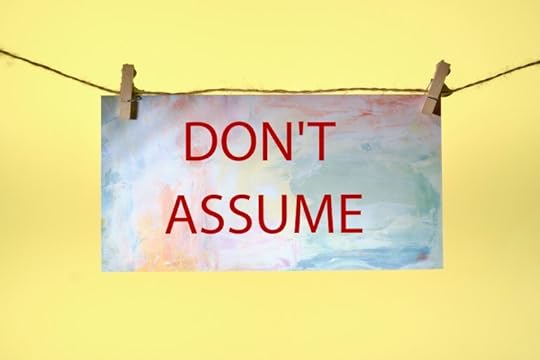 My experience has shown that many leaders take trust for granted. They assume people trust them by virtue of their title or position, when the reality is they aren’t as trusted as they think they are. A recent survey by PWC reported a 15-point gap between leaders who believe employees highly trust their company (84%) and what the employees reported (69%).
Ironically, building and maintaining trust is an issue that most leaders agree is critically important, but few have a plan to achieve it. A survey by YPO showed 96% of chief executives said building and maintaining trust was a high priority for their success, yet just 34% of the respondents said they had defined and specific plans for building trust in their organizations.
It reminds me of the old project management adage: people don’t plan to fail; they just fail to plan.
I’ve found that principle also applies in my work teaching leaders how to build trust in the workplace. Most leaders don’t plan to fail in building trust, they just fail to create a plan. I’ve observed three common assumptions leaders make that prevent them from building trust in a consistent and proactive way.
They assume trust “just happens.
Like some sort of relational osmosis, people figure trust just naturally develops over the course of time, and the longer you’re in relationship with someone, the greater the likelihood you’ll build a strong bond of trust. Well, if you believe that, I’m sorry to burst your bubble. Trust doesn’t work that way. Trust is based on perceptions, and those perceptions are formed by the behaviors you use. If you use trustworthy behaviors, you’ll be trusted. If you use behaviors that erode trust, people won’t trust you. Building trust is a skill that can be learned and developed, and once you have those skills, you can be intentional about acting in ways that build trust with others.
They assume others view trust the same way they do.
When I conduct training workshops on building trust, I often like to ask participants to draw a symbol or picture that represents trust. I’ve seen hundreds of representations of trust: wedding rings, a cross, a child holding a parent’s hand, a bank vault, and people shaking hands, just to name a few of the common ones. I conduct this activity because it illustrates the point I mentioned earlier: trust is based on perceptions. Everybody has their own view of what trust means, based on their unique personal experience. This varied understanding of trust reminds me of the classic movie, The Princess Bride. The character Vizzini uses the word “Inconceivable!” as an adjective to describe just about any situation, even if it doesn’t quite make sense. Finally, Inigo says to him, “You keep using that word. I do not think it means what you think it means.” The same misunderstanding happens between leaders and their team members if they don’t share a common definition of trust.
They assume trust is only a “warm and fuzzy” concept.
When you discuss building trust, many leaders jump to the conclusion that you’re talking about building warm and fuzzy relationships. You know, the “let’s all hold hands and sing kumbaya” kind of warm and fuzzy. Well, trust does have a relationship component, and it’s the interpersonal connection that often sparks the development of trust in the first place. However, trust also has a hard, bottom-line impact on organizations. The research is clear that high-trust organizations have lower turnover, higher employee engagement, and outperform low-trust organizations on practically every measurable metric. Don’t make the mistake of thinking that pizza lunches, fancy off-site retreats, or ropes courses check the box for having a strategy of building trust in the workplace.
I’m sure you noticed I used the word “assume” in the three examples above; that was intentional. You’ve probably the heard the familiar warning about what happens when you assume, right? Well, when it comes to building trust, you don’t want to assume anything. Don’t assume trust just happens by chance. Have a defined plan for building and sustaining it. Don’t assume other people perceive trust the same way you do. Chances are they see it differently, and if you’re not on the same page as to what trust looks like in a relationship, your efforts in building trust will miss the mark. Finally, don’t assume trust is solely a “soft” relationship dynamic. Trust can literally make or break the success of your organization. To build trust, I’m reminded of another project management adage: plan your work and work your plan.
The post Don’t Assume You’re Trusted – 3 False Beliefs That Get Leaders in Trouble appeared first on Leading with Trust.
April 18, 2023
6 Principles to Consider Before Electronically Monitoring Remote Employees

Let’s be honest. Many leaders are suspicious of remote employees’ work habits.
“I know remote employees aren’t working eight hours a day,” said a leader when I recently asked him how his organization was dealing with remote/hybrid workers. He didn’t have any specific data to support his conclusion, but it was clearly his perception that people working remotely weren’t putting in the same effort as those in the office.
Keeping an eye on workersThis leader’s perception is not an outlier, as Microsoft’s 2022 Work Trend survey showed that 85% of leaders doubt their remote workers are being productive. “Productivity Paranoia” has taken hold in a large number of organizations as leaders struggle to adjust to new ways of managing remote workers. In June 2022, Gartner’s research showed the number of large employers using tools to track their workers had doubled since the beginning of the pandemic to 60%, with that number expected to rise to 70% within the next three years.
Monitoring employees in some form or fashion has occurred for decades—think GPS trackers in trucks, timecards, swipe badges, CCTV, regulating web browsing—but some of today’s methods border on outright distrust of remote workers. Organizations are surveilling employees by using software to record keystrokes, monitor time spent in specific applications, take periodic screenshots, record meetings, and even accessing employees’ webcams, with some requiring “always on” live video feeds for remote workers.
Effects of electronic monitoringIs there a good or “right” way to monitor remote employees? Research indicates it’s a risky proposition that often backfires on organizations. One study found that workers under surveillance intentionally worked more slowly, took more breaks, and stole more office supplies than their un-monitored peers. A meta-analysis (a study of multiple studies) examining the effects of electronic monitoring on employee wellness and performance found that monitoring workers had no impact on improving performance and resulted in lower job satisfaction and higher stress.
The reason for these negative impacts? Monitoring an employee’s every move directly opposes the basic psychological need for autonomy. Workers who are monitored feel they have less choice and control, so they circumvent company rules to regain a sense of autonomy over their actions and work environment.
Trust vs ControlIf the consequences of monitoring remote employees are so obviously bad, why do organizations do it?
As I share in my recent book with Ken Blanchard, Simple Truths of Leadership: 52 Ways to Be a Servant Leader and Build Trust, the very nature of trust requires one party to take a risk and extend trust to another. Extending our trust to someone makes us vulnerable to their actions. Will they reward our trust? Will we get burned? If we feel the risk is too great, we resort to control. Control is the opposite of trust.
Granted, the nature of some industries requires an appropriate level of monitoring. Certain governmental, military, healthcare, or financial services organizations work with confidential or highly sensitive data, and this requires them to tightly control and monitor employee activity. Monitoring remote employees in these environments makes sense, and it presents leaders with the extra challenge of figuring out ways to meet legal/regulatory requirements while minimizing the negative impact on the employee experience.
Apart from these situations, it seems most organizations who electronically monitor remote employees do it because they simply don’t trust workers to be productive (although they would never state that publicly).
Six Important PrinciplesThe decision to electronically monitor remote employees is not one to be taken lightly or made quickly. If you’re considering going this route, I recommend you consider these six important principles.
1. Examine Your Motives—Be brutally honest with yourself. Why do you feel the need to monitor your remote workers? Is it truly a concern over their productivity? If so, what data do you have that shows it’s suffering? Is the quality of work not up to snuff? Again, what data supports your conclusions? Or is the root issue a lack of trust? It’s OK to admit there are trust issues. You can’t improve trust until you first acknowledge there is a problem.
2. Look for Ways to Address Concerns That Don’t Involve Monitoring—If there are legitimate concerns that need to be addressed, explore ways to resolve those concerns that don’t involve electronic monitoring or surveillance (e.g., completing status reports, daily scrums, etc.). It may require more time and effort to create and implement new systems or processes, but the effort will result in higher trust and respect with your team members than if you take the quick and easy route of digitally tracking their every move.
“People who plan the battle rarely battle the plan.” ~ Simple Truth #22
Simple Truths of Leadership, by Ken Blanchard & Randy Conley
3. Involve Employees in Creating the Strategy—If you find some sort of monitoring of remote employees is needed, digital or otherwise, involve the people who will be impacted in developing the strategy. People will have greater ownership and commitment to the strategy if they understand the purpose of it and help create and implement it. If it’s done to them, rather than with them, they will push-back and act in self-protective ways that are usually counter to what the organization desires.
4. Be Clear on What’s Being Measured and Why—Simple, rote tasks that have easily measurable metrics around quantity and quality are easiest to monitor, but complex, knowledge-based tasks requiring discretion and judgement are much harder to measure. How do you quantify innovation and collaboration? The difficulty of measuring these factors is why many organizations have defaulted to demanding remote workers return to the office.
5. Make it a Win-Win—The organization clearly benefits from keeping tabs on remote workers, but what about the employees? Creating a win-win is a key success factor of any employee monitoring system, say researchers who study this topic. From the employee perspective, will it result in more manageable workloads? Training opportunities? Higher compensation? It will look different for every organization and job role, but it’s critical that employees see the benefit.
6. Play Fair—Fairness is treating people equitably (being impartial, unbiased, giving them what they deserve) and ethically (according to the principles, standards, or rules). If monitoring remote employees is necessary, then be completely above-board and transparent about why it’s required, how it’s being done, what the data will be used for, and how it will impact employees.
Is It Worth It?When deciding to monitor remote employees, each organization must answer this question: Is it worth it? From my perspective, the drawbacks far outweigh any potential benefits. I believe organizations have much more to gain by collaborating with employees to define this new world of remote work.
The pandemic let the genie out of the bottle and proved that remote work can deliver business results just as effectively, if not more so, than in-person work. With survey after survey showing most people wanting some form of remote work, organizations are going to have to address this issue head on. The ones who will be the most successful are those who build their approach on a foundation of trust with their employees rather than suspicion.
The post 6 Principles to Consider Before Electronically Monitoring Remote Employees appeared first on Leading with Trust.