Randy Conley's Blog
November 11, 2025
Leadership Development Carnival — November 2025
It’s my pleasure to host this month’s Leadership Development Carnival, sponsored by Weaving Influence.
The Leadership Development Carnival is a monthly collection of insights from top thought leaders around the world, and this month’s edition features topics related to business, culture, communication, artificial intelligence, career development, team building, and leadership. As with any good carnival, it’s best enjoyed when you immerse yourself in the experience and enjoy the variety it has to offer.
So, without further ado, I present to you the November 2025 Leadership Development Carnival!
A 5-Step Change Management Plan to Lead Your Organization Forward | David Grossman
Find out what’s behind today’s failure rate for transformations and explore a practical 5-step roadmap every leader can use to communicate better, align teams, and turn change into a competitive advantage.Seeing Ourselves Clearly: Overcoming Leadership Blind Spots | John Stoker
We all have blind spots. And often, we’re unaware of our own lack of awareness. Being more personally aware of how we come across and how our behavior impacts our results can be the key to getting the results that we want.The Small Habit That Transforms Culture | John Spence
Recognizing great work is one of the simplest actions with the biggest impact on culture and performance. When you catch people doing things right and call it out with clarity and sincerity, you build trust, increase engagement, and reinforce the culture you want to see in your business or association. This article shares how to make recognition a daily practice that transforms performance.It Doesn’t Have to be Lonely at the Top | Priscilla Archangel
Leaders often say, “It’s lonely at the top,” because until you sit in their seat, you cannot fully appreciate the weight and responsibilities of the role. Learn how to be less lonely and to build community.Win or Lose—Your Attitude Decides | Frank Sonnenberg
There are two types of people in the world—those who face a challenge and say, “This will be tough, but we can do it!” and those who say, “Nobody’s done this before. Why even try?”From DEI to High-Performance: A New Blueprint for Culture Fit | Dana Theus
The old idea of “culture fit”—hiring people who mirror the team you already have—is holding organizations back from real innovation and performance. Instead, we need to shift toward “culture contribution,” where individuals are valued for bringing their unique perspectives, experiences, and strengths to the table.How to improve organizational resilience? | Marcella Bremer
Research discerns seven practices that enhance organizational resilience. Imagine future failure, and define your essential outcomes—what is tolerable if disruption strikes? Anticipate solutions, do some stress testing and develop a learning culture. Check how small to medium-sized organizations prepare themselves.3 Leadership Reversals Required for Success Today | Julie Winkle Giulioni
In today’s fast-changing world, the traits that once defined great leadership are no longer enough. Success now depends on a willingness to rethink old instincts and embrace a new set of counterintuitive skills. This article explores three essential leadership reversals that help leaders thrive amid complexity and change.From Busy to Impactful: A Year End AI Strategy for Leaders | Sara Canaday
Ever end a week wondering how you worked this hard and still didn’t move the needle? You’re not alone. This piece gives leaders a year-end reset button by letting AI spotlight which tasks drive impact versus drain energy. The result? Fewer reactive days, more meaningful progress, and the satisfaction of actually leading where it counts.“That’s Just How I Am”: The Lie That Limits Leadership | Robyn McLeod
In the post, “That’s Just How I Am”: The Lie That Limits Leadership, Robyn McLeod of Thoughtful Leaders Blog shares five important tips for changing unproductive behaviors that may be hindering your ability to have effective working relationships.Breaking Free from Cycles of Judgment | Ann Van Eron
We all get caught in moments of judgment when someone’s behavior irritates or confuses us. Yet each of us is doing what makes sense from our own perspective. When we pause, get curious, and assume positive intent, we begin to shift from tension to understanding and open the door to more meaningful connections.The Importance of the Pause | Diana Peterson-More
How many times have you written or said something that you later regretted—often in the moment? It’s happened to all of us—it’s that immediate, heart-stomping comeback to whatever was lobbed our way. When we do that, a quick, unvarnished apology is the best antidote. How about avoiding the need for an apology altogether? How about taking a pause before responding . . .Open Your Heart and the Door | Bill Treasurer
Before employees care about what you want, they want to know one thing: Do you care about them? When leaders put people first—not as “resources,” but as human beings—trust deepens and performance rises. Open your heart, and you open the door to stronger relationships and better results.Poor vision can keep you from seeing organizational problems | S. Chris Edmonds
Poor vision can hamper leaders from seeing how managers are treating employees, which can damage organizational health.Execution Over Excuses: The Real Reason Businesses Struggle | Jon Verbeck
“Execution is a discipline, and integral to strategy.” In other words, it’s not enough to have a plan. The real work is in driving that plan forward—week by week, person by person, number by number. That’s where most businesses fall short.The Evolving PMO Series: Built for Agility, Led by People, Powered by AI | Naomi Caietti
Project Management Offices (PMOs) weren’t built for agility, enterprise complexity, or strategic return on investment (ROI). They were built to track timelines, push process, and report progress. That was fine when business moved slower.Beyond Goal Setting: What I’ve Learned About Leading Yourself by Design | Susan Mazza
In this article, Susan Mazza reflects on how loss became a turning point for redefining leadership—from achieving more to living with deeper alignment and intention. She reminds us that the most meaningful leadership begins with how we choose to live and lead each day.Why Your Leadership Team Meetings Have Become Tactical Fire Drills (And How to Reclaim Strategic Focus) | Bill Ringle
Smart tech leaders get trapped managing tactical issues not due to poor leadership, but because of systematic “executive escalation syndrome” where operational decisions funnel upward instead of being resolved at appropriate organizational levels. The solution requires implementing escalation architecture: clear criteria, decision boundaries, and systematic frameworks that prevent tactical fire drills from consuming strategic leadership bandwidth.The post Leadership Development Carnival — November 2025 appeared first on Leading with Trust.


May 4, 2025
Airing of Grievances – 4 Ways Leaders Can Combat a Culture of Resentment and Outrage
 Any fan of the old TV series Seinfeld will remember the classic Festivus episode, where George Costanza’s father kicks off the make-believe holiday with the “Airing of Grievances.” At dinner, each person takes turns venting about how everyone else has disappointed them throughout the year.
Lately, it feels like Festivus never ends. Instead of a once-a-year laugh, many of us are living in a constant state of grievance. Political division, economic anxiety, and a non-stop outrage cycle have left people stuck in fight-or-flight mode—and it’s bleeding into our workplaces.
Even the 2025 Edelman Trust Barometer, a well-respected annual global survey, titled this year’s report: Trust and the Crisis of Grievance. Of the 33,000 people surveyed across 28 countries, the majority expressed deep resentment toward business, government, and the wealthy—driven by worries over job security, globalization, economic instability, and technological disruption. Add income inequality, dishonest leadership, and growing support for hostile activism, and you’ve got a potent recipe for disillusionment.
So, what can leaders do? While we can’t control global events, we can shape the culture within our teams. Here are four strategies to help counteract the grievance mindset and cultivate a culture of trust, resilience, and hope:
1. Boost Transparency
When information is scarce, people will fill in the blanks—often with fear or suspicion. That’s why transparency matters. As much as possible, share how and why decisions are made, what’s driving key priorities, and the financial health of your organization.
Also, make it a habit to distinguish facts from opinions. Too often, our conversations are shaped by misinformation or echo chambers. Promoting evidence-based dialogue fosters smarter decisions and better outcomes.
And don’t forget, transparency goes both ways. Create space for feedback. Invite perspectives. Healthy dialogue, especially across differences, strengthens your team’s thinking and builds trust from the inside out.
2. Lead with Empathy
Empathetic leaders are curious. They lean in with genuine interest, seeking to understand the person—not just the performance. They make space for stories, concerns, and identities, honoring each person as more than their job description.
They also listen differently. Most of us listen to respond, rebut, or reinforce our own viewpoint. But empathetic leaders listen to understand. That requires patience, presence, and the willingness to hear what’s not being said.
Lastly, they help. Simple, yes—but not always easy. Being helpful means expending energy, offering support, and taking initiative. And it’s hard to stay resentful toward someone who’s consistently looking out for your well-being. Show up with service.
3. Make Trust a Priority
Trust isn’t a soft skill—it’s a core competency. And too often, we don’t talk about it until it’s already eroded. Make trust a visible, measurable part of your culture.
That starts with defining what trust looks like—then teaching it. Trust-building behaviors can be learned and practiced. Training your team on these fundamentals strengthens relationships and performance alike.
It also means tracking trust. Include it in your leadership dashboard. Use surveys, focus groups, and one-on-one conversations to keep a finger on the pulse of your organization’s trust levels—both internally and externally.
4. Stay True to Your Values
In an unpredictable world, your greatest power is how you choose to show up. Your values don’t matter if they’re just words on a wall—they come alive through consistent action.
Living your values gives people something to believe in. It offers hope, stability, and a shared sense of purpose. As the old saying goes, “Where there is no vision, the people perish.” Your job as a leader is to articulate that vision—and anchor it in values that inspire.
This isn’t a one-time declaration. It’s a daily discipline. Lao Tzu said it best:
“Watch your thoughts, they become your words; watch your words, they become your actions; watch your actions, they become your habits; watch your habits, they become your character; watch your character, it becomes your destiny.”
The “Airing of Grievances” may be funny on a sitcom, but in real life, resentment, disappointment, and disillusionment are serious barriers to connection and performance. As leaders, we have a choice: react to the grievance culture or rise above it.
By increasing transparency, leading with empathy, prioritizing trust, and staying grounded in our values, we don’t just survive the storms—we build teams that thrive through them.
And that’s a Festivus miracle we can all get behind.
The post Airing of Grievances – 4 Ways Leaders Can Combat a Culture of Resentment and Outrage appeared first on Leading with Trust.
April 7, 2025
What Kind of Trust Are You Feeling? A Simple Map to the 4 Ways We Connect
 There’s a kind of magic that happens when we trust someone—but have you ever stopped to wonder what kind of trust you’re feeling?
Not all trust is created equal. Some trust lives in your head, built on logic and consistency. Other trust? It blooms in your heart, born from warmth and connection. I call these two types head trust and heart trust, and understanding the blend of both can transform how we lead, collaborate, and show up for one another.
Head trust sounds like this: “I trust her because she always follows through.” It’s grounded in reliability, competence, and good judgment. Head trust grows when people do what they say they’re going to do. It’s the kind of trust that makes you feel safe putting someone in charge of the numbers, the project, the car keys.
Heart trust, on the other hand, whispers: “I trust him because he truly listens.” It’s the emotional side of trust—rooted in empathy, care, and emotional availability. Heart trust shows up when someone remembers your coffee order, checks in after a hard day, or sits with you in silence without needing to fix anything.
Here’s where it gets interesting: we can actually map our trust experiences by looking at the levels of head and heart trust we feel toward someone. Think of it as a matrix, with head trust on one axis and heart trust on the other, ranging from low to high. The combination of these levels creates four distinct kinds of trust:
Balanced Trust (High Head + High Heart): This is the gold standard. You believe in someone’s competence and feel emotionally safe with them. These are the relationships where trust multiplies and collaboration thrives.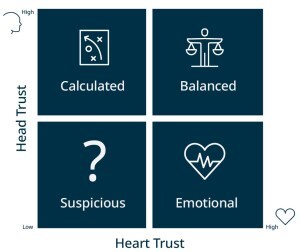 Calculated Trust (High Head + Low Heart): You trust someone’s skills but keep your emotional guard up. This works well in transactional or task-focused situations, but it may feel cold or disconnected over time.Emotional Trust (Low Head + High Heart): You feel a strong personal connection but question their reliability or competence. This can lead to warmth without results—and that can create friction when performance matters.Suspicious Trust (Low Head + Low Heart): Neither competence nor connection are present. This is where mistrust lives, and where collaboration tends to stall before it even starts.
Most of our deep, enduring relationships are built on some mix of head and heart trust. But the balance shapes how those relationships feel and function.
So next time you’re wondering why a relationship feels flat or fragile, ask yourself:
Is the head trust strong, but the heart trust missing?Or is there heart, but not enough follow-through?Am I dealing with calculated, emotional, or even suspicious trust?And most importantly:
How can I offer both head and heart trust to the people around me?Because trust isn’t just something we receive. It’s something we build—with our words, our actions, our presence. And when we build it with both head and heart, we don’t just create better teams.
We create better humans.
The post What Kind of Trust Are You Feeling? A Simple Map to the 4 Ways We Connect appeared first on Leading with Trust.
March 11, 2025
Trusting with Head and Heart: 4 Steps to Making Wise Trust Decisions
 Trust is one of the most valuable currencies in relationships—personal and professional. But have you ever stopped to think about how you trust? Do you lead with your head, relying on logic and evidence? Or do you trust with your heart, leaning into intuition and emotional connection?
The truth is, we need both.
There are two types of trust: cognitive trust (head trust) and affective trust (heart trust). Cognitive trust is built on logic, competence, and reliability—do they have the skills and track record to follow through? Affective trust is rooted in emotions, affinity, and shared values—do I feel safe and connected with this person?
The Elements of Trust Model aligns with this dual nature of trust:
Able (Competence) and Dependable (Reliability) = Cognitive trustBelievable (Integrity) and Connected (Caring) = Affective trustSo, how do we blend both head and heart when deciding whether to trust someone? Follow these four steps:
1. Assess the Context of the Relationship
Before deciding how much trust to extend, consider the nature of the relationship. Does this situation call for more head trust or heart trust? A work colleague may need to demonstrate competence before earning your trust, while a friend might first need to show empathy and understanding. Recognizing the right balance ensures you set realistic expectations.
2. Evaluate Their Trustworthiness
Use Blanchard’s four trust elements as your guide. Is the person Able and Dependable? Do they consistently follow through? Are they Believable, acting with integrity? Do they make you feel Connected, showing care and respect? If any of these areas are weak, trust might need to be earned more gradually.
3. Assess the Risks
Every act of trust involves risk. Consider the stakes—what’s at risk if trust is broken? What are the potential gains if trust is honored? If the downside is minimal, a leap of faith might be worth it. If the risk is high, a cautious, measured approach may be wiser.
4. Make the Call: Extend Trust
Trust is ultimately a choice. Once you’ve assessed the context, the person, and the risk, decide whether to extend trust—and at what level. Not all trust has to be all-or-nothing. Sometimes, it’s best to start small and build up as trust is reinforced.
By integrating both head and heart, we make trust decisions that are both wise and meaningful. The key is balance—leaning on logic when necessary, embracing emotion when appropriate, and knowing that trust, like any relationship, is something we build over time.
How do you decide when to trust? Do you lean more toward head trust or heart trust? Let’s continue the conversation in the comments!
The post Trusting with Head and Heart: 4 Steps to Making Wise Trust Decisions appeared first on Leading with Trust.
February 9, 2025
3 Priorities of Servant Leaders

I find that when I speak about servant leadership, many people misunderstand what it means. Some say, “Oh, you mean being nice to people.” Others think, “That’s all about not micromanaging employees.” One of my favorites is, “Letting the inmates run the prison!” Really? Is a prison the best analogy for the workplace?
Although servant leaders are often kind and avoid micromanaging, those ideas miss the mark. So, how do we define it? The modern father of servant leadership, Robert K. Greenleaf, used this test: “Do those served grow as persons? Do they, while being served, become healthier, wiser, freer, more autonomous, more likely themselves to become servants?”
Servant leaders focus on bringing out the best in people and organizations. To do that, they prioritize three key areas:
1. Results — Does listing this first surprise you? Servant leaders are responsible for their organization’s success. They ensure people achieve their goals, which drives results. Servant leadership isn’t only about people. Without success, there are no people to serve. “No margin = no mission.”
2. Relationships — People are the heart of every organization. Sometimes, we talk about organizations as if they exist separately from people. Without people, there is no organization. Servant leaders prioritize growth and well-being because they understand this truth.
“Servant leadership is the best way to achieve both great results and great relationships.” — Simple Truth #1, Simple Truths of Leadership
3. Trust — Leadership starts with trust. Great results and strong relationships require an environment built on trust. Servant leaders develop trust by showing competence, acting with integrity, demonstrating care, and keeping commitments.
Leaders who focus on results, relationships, and trust bring Greenleaf’s definition of servant leadership to life.
Want to explore these ideas further? Join me in the Blanchard Community on February 10th at 12:00 p.m. Pacific. We’ll discuss Simple Truths of Leadership and other principles from Blanchard’s leadership courses. This interactive session will help turn common sense into common practice. The Blanchard Community is free and open to all.
The post 3 Priorities of Servant Leaders appeared first on Leading with Trust.
December 4, 2024
Leadership Development Carnival
It’s my pleasure to host this month’s Leadership Development Carnival, sponsored by Weaving Influence.
The Leadership Development Carnival is a monthly collection of insights from top thought leaders around the world, and this month’s edition features topics related to business, culture, communication, artificial intelligence, career development, team building, and leadership. As with any good carnival, it’s best enjoyed when you immerse yourself in the experience and enjoy the variety it has to offer. So, without further ado, I present to you the December 2024 Leadership Development Carnival!
AI in Business: Thrive or Fall Behind, by John Spence
AI is reshaping the business world, impacting roles and decision-making at every level. Leaders can’t afford to ignore it. With AI’s power to streamline tasks and open new avenues for growth, those who embrace it early will set their organizations up for success. Here’s how to lead the way in an AI-driven landscape. (Connect with John)
If You Water it, It Grows: Cash Flow Management for Small Businesses, by Jon Verbeck
Recently, I spoke with a small group of business owners about my 4 Pillars for Small Business framework (explained more in my free booklet, Be Your Own CFO), and we homed in on cash flow. Cash flow isn’t just about having money in the bank. It’s about understanding where cash comes from, how it flows through the business, and how to measure and manage it effectively. (Connect with Jon)
Values Are Constant: Words We Use to Describe Them Vary, by Diana Peterson-More
Despite our collective shared values of treating others with respect, dignity and kindness, the divisive times in which we live have used short-hand descriptors to divide us. The controversy over DEI (Diversity Equity and Inclusion) seems to be one of them. What if we simply said, “we value others and their contributions, and treat one another with dignity and respect?” Read on to ponder more on the topic, and what I learned from students at two elementary schools. Food for thought. (Connect with Diana)
The Gifts We Miss!, by Brenda Yoho
December brings with it a flurry of activity—decorating trees, hanging stockings, and searching for the perfect gifts to place under the tree. The stores are bustling, wish lists are growing, and we’re consumed with the glittering bows, sparkles, and ribbons that will adorn our carefully wrapped presents. But amidst the holiday rush, it’s easy to overlook the best gifts—the ones we’ve already received, quietly and consistently, throughout the year. (Connect with Brenda)
When You Do Nothing, Nothing Happens, by Frank Sonnenberg
You can be the smartest and most capable person in the world, but without following through on your intentions and your commitments you’ll never achieve anything. (Connect with Frank)
On the Balcony of One’s Own Life: The Personal Side of Adaptive Leadership, by Dan Oestreich
Building off the distinction between adaptive and technical problems called out by Ronald Heifetz, this post addresses the personal side of the work to be an effective, adaptive leader. It is all too common to feel overwhelmed and stripped of personal agency, especially for leaders in the middle, where expectations to cope and to perform can be very high. The post points to inner and outer work needed to be successful under tough conditions. (Connect with Dan)
Is Development Feeling Heavy? Try Lighter Lift Learning, by Julie Winkle Giulioni
In a fast-paced work environment, career development can often feel like a daunting task for leaders and employees alike. This article explores the concept of “lighter lift learning” — practical, bite-sized strategies that make development more manageable and enjoyable, while still delivering impactful results. Discover how small changes can lead to big growth. (Connect with Julie)
Courageously Fearful, by Bill Treasurer
Fear and courage often go hand in hand. As a former high diver and founder of a courage-building company, I’ve learned that courage isn’t reserved for daredevils—it’s an essential ingredient for personal and professional growth. Whether leaping from a 100-foot platform or stepping up to deliver tough feedback, courage fuels success. (Connect with Bill)
Gaining Power in Your Career: A Guide to Getting Promoted at Every Level, by Dana Theus
Getting promoted is not just about hard work: While dedication is important, getting promoted requires a deeper understanding of how the system works. You need to be strategic and play the game effectively. (Connect with Dana)
How to Develop a Positive-Impact Organization?, by Marcella Bremer
If you are discouraged by the poly-crisis in the world, improve your positive impact. Both the organization and customers will flourish! (Connect with Marcella)
It Shouldn’t Be This Way!, by Ann Van Eron
In recent weeks, I’ve heard numerous expressions of frustration: “This shouldn’t be happening.” Whether it’s inclement weather disrupting plans, hearing of the ill health of a colleague, learning of a board decision you don’t agree with, political decisions, or encountering a slow driver in route to a critical meeting—these moments trigger a natural reaction. We often wish circumstances were different. But how long do we dwell in this state? (Connect with Ann)
How to Give Feedback to Motivate and Engage Employees, by David Grossman
Mastering the art of feedback is essential for motivating employees, fostering engagement, and driving organizational success. Discover proven strategies, frameworks, and practical examples to deliver feedback that inspires growth, enhances performance, and creates a culture of continuous improvement. (Connect with David)
How To Keep Going When You Can’t Keep Going Anymore, by Lisa Kohn
Lisa Kohn of Thoughtful Leaders Blog shares five practices that can help you (or whomever you’re helping) make it through tough times. (Connect with Lisa)
Senior Leaders Drive Your Culture, by S. Chris Edmonds
How do senior leaders sustain an uncompromising work culture? By living the organization’s values in every interaction — and coaching others to do the same. Here are five critical practices that culture-savvy senior leaders use to drive a purposeful, positive, productive work culture. (Connect with Chris)
Stress Levels Rising? Here’s How to Prepare, by Michael Lee Stallard
Many leaders are facing rising stress levels at the end of the year. Connection can help to mitigate the negative effects of stress, making now the perfect time to do a personal “audit” to pinpoint areas of your life that could use a connection boost. Michael breaks down why it works and how to conduct your own personal audit in this article and accompanying video. (Connect with Michael)
How Leaders Can Understand and Work More Effectively with Four Generations in the Workplace, by Sean Glaze
Understanding and working effectively with all four generations in the workplace is more crucial than ever for leaders who strive to foster a successful and cohesive team culture. (Connect with Sean)
Leading in the Midst of Differences, by Priscilla Archangel
Leaders are increasingly facing expectations to respond to circumstances and situations occurring outside the work environment about which their employees and society have strong and differing opinions. They can create and support a positive work environment in the midst of such differences by modeling these behaviors. (Connect with Priscilla)
The post Leadership Development Carnival appeared first on Leading with Trust.
October 1, 2024
10 Practices of Leaders Who Are Easy to Follow
 As long as there has been work, bosses have been a source of stress for employees. But have you ever considered exactly how much stress you cause your people?
One survey showed that 75% of employees say their immediate manager is the most stressful aspect of their work. Another global study found that 69% of people said their managers had the greatest impact on their mental health, in some cases even surpassing the influence of their doctors (51%) or therapists (41%).
How would your people respond? Do you make it hard for your people to work with you?
“He’s a pretty easy guy to follow.”That was the response from a friend when we were recently talking about her relationship with her boss. She’s worked with this person for several years, they have a great rapport, and she loves her work. She said the fact that her boss is easy to work with is a primary reason for her success and job satisfaction.
Her statement got me thinking about my own leadership. Am I easy to follow? I’d like to think so, but of course, the only real opinions that matters are that of my team members.
Considering leadership in general, what makes a person easy to follow? I think the answers are straight forward and commonsense, but often not common practice because our own personality quirks and baggage get in the way.
As I’ve considered this question, the following 10 leadership practices have come clear to me as characteristics of leaders who are easy to follow:
Be nice—It’s kind of sad this must be called out, but it does. Too many leaders are jerks. They let power go to their heads and think they have the right to lord it over their people. Don’t do that, please. Just be nice. Smile occasionally. Say please and thank you. Ask people how their day is going. It doesn’t cost you a dime to be nice and you’ll be amazed at how much more engaged and productive your team will be if you treat them nicely. Give people your time—The greatest gift you can give your people is a few minutes of your time. Leaders like to say they have an open-door policy, but is that the case with you in reality? When people stop by your office, do you stop what you’re doing and give them your full attention, or do you ask them to schedule a meeting with you for the following week? Does everyone on your team know without a doubt that they can meet with you regarding any topic, or are there barriers (real or imagined) between you and your employees that prevent them from opening up to you? Giving people the gift of your time shows you value, respect, and genuinely care about them. I know from experience that the larger your team the harder this is to accomplish. Get creative by scheduling regular communication forums (quarterly meetings, town hall meetings, etc.) and make sure you leave enough white space on your own calendar to be available for those impromptu drop-in meetings. We often over-schedule ourselves to the point where we don’t have any availability for our own team members. Don’t expect everyone to be like you—This can be challenging, particularly for leaders who have personalities that favor perfectionism. It’s great to have high expectations for yourself; that’s probably what helped you rise to a leadership position. It’s good to have high expectations for your staff as well, but remember, they may not do things exactly the way you would. Give people the freedom to be who they are and leverage their strengths to help them achieve their goals and those of the team. Don’t try to make them your personal mini-me’s. Solicit and incorporate people’s ideas—Many leaders are great at asking for ideas; only a few do anything with them. One of the quickest ways to alienate your team members is to tell them you want to hear their ideas and are open to feedback, but not actually do anything with it when it’s shared with you. Incorporate the ideas of your team members into your action plans and they’ll be invested in the success of your team. People who plan the battle rarely battle the plan.Be good at what you do—This one may see odd, but people want to follow leaders who are good at what they do. Set a good example for your team by continually improving your skills, both in your technical role as well as your leadership skills. Many people get promoted into a leadership role because they were star performers in their role as an individual contributor. Leadership is a whole different skill set so be sure to focus on developing the skills and abilities that will help you lead effectively.Empower people—Empowerment was a popular buzz word in the 90’s and soon fell out of favor, however, the concept is still valid and effective. Good leaders establish the boundaries of the playing field for their team members, make sure everyone is clear on the rules and objectives, and then let them play the game. They don’t micromanage and dictate how the work should be done, but they manage to the outcome of what needs to be done. Recognize and reward good performance—Leaders who are easy to follow are experts in finding people doing something right. They take the time to acknowledge the good performance of their team members and to celebrate their (and the team’s) success. When I conduct training sessions with clients and this topic comes up, I will frequently ask participants to raise their hand if they are sick and tired of all the praising they receive at work. No one ever raises their hand. People crave hearing positive feedback about their hard work. Treat people with respect and create an environment of trust and safety—The spirits of too many people die at the office door each morning because they dread their work environment. No one should have to feel bullied, intimidated, or afraid to go to work. It’s the leader’s job to foster an environment of trust and safety that allow team members to unleash their power and potential for the good of themselves and the organization. Show a sense of humor; make work fun—Making work fun and showing a sense of humor is a hallmark of leaders who are easy to follow. They create a sense of camaraderie within the team and keep the mood light when times get tough. They know how to take work seriously but themselves lightly. Showing a sense of humor and laughing at yourself occasionally shows your vulnerability and authenticity that draw people to you, not away from you. Maintain perspective on the most important priorities in life—Work is important; life is more important. Easy to follow leaders maintain the proper perspective about what’s most important in life. These kinds of leaders understand they need to lead the whole person, not just the worker who shows up to do a job eight hours a day. Kids get sick, employees have personal challenges, life happens…. good leaders understand this and are sensitive to the needs of their team members. Show a little compassion and understanding with your team members and you’ll earn their loyalty, trust, and commitment.Leadership is a complex proposition, but it doesn’t have to complicated. It’s these commonsense principles that help us be successful leaders, if only we can get out of our own way.
What else would you add to this? What makes a leader easy to follow? Feel free to leave a comment with your thoughts and ideas.
The post 10 Practices of Leaders Who Are Easy to Follow appeared first on Leading with Trust.
September 19, 2024
3 Strategies for Working ON the Business, Not Just IN It
 I get to work with a variety of leaders spanning different roles, industries, and walks of life. One commonality I find is that most of them spend more time working IN the business than ON the business.
What’s the difference between working IN the business versus working ON it?
Working IN the business is the operational aspect of leadership. That includes activities like managing projects, meeting deadlines, attending meetings, and putting out fires. These operational details are important and necessary. It’s what keeps the trains running on time.
Working ON the business is the strategic aspect of leadership. It’s setting the vision, direction, and goals for the organization or team. It’s charting the course you want others to follow and putting the structures and systems in place to help the organization live out its mission. Whether you’re a CEO, a front-line supervisor, or anywhere in between, you need to work both IN the business and ON the business.
The Business of YouBut I’m not just talking about the business of your organization. I’m talking about the business of YOU as a leader.
If you’re like most people, you moved into a leadership role as a natural progression of your career. You probably excelled as an individual contributor and somewhere along the way earned a promotion into a leadership role. Before you knew it, you’d been a leader for years, working busily IN the business without much foresight or plan for how you want to develop as a leader.
Since working IN the business is easier and more comfortable than working ON the business, I’d like to offer three strategies for how you can rise above the daily grind and spend some time thinking about the strategy of YOU as a leader.
Schedule Me TimeI’m sure it seems obvious, but you need to schedule time to focus ON the business of you being a leader. Put time on your calendar on a recurring schedule to engage in deep thinking about your leadership. If you’re new to this practice, take baby steps and start with an hour. If you’re more comfortable with this discipline, book a half-day or more; whatever is needed for what you want to accomplish.
What do you do during this time? Do a values check. Are you living out your values in a way that makes you smile? If not, identify what you’d like to do differently. Another suggestion is to do a calendar review, for both the recent past and near future. Are you using your time in ways you want? Are you focusing on high value activities that align with your purpose? A third option is to ask yourself three simple questions: What do I need to start doing? What do I need to stop doing? What do I need to continue doing?
Take a ClassWhen was the last time you took a leadership development course? Most leaders I work with are pressed for time and attending a training class is usually near the bottom of their list of priorities. If that sounds familiar to you, then it’s probably a sign that you’re spending too much time working IN the business versus ON it.
I think we can learn a lot from professions that require ongoing learning or recertification to remain in those jobs. Can you imagine if the average manager in the corporate world was mandated by law to take X hours of professional development a year to stay in their position? Do you think it would improve the state of leadership in our organizations? It probably wouldn’t hurt! Even though you likely aren’t required to engage in training, consider making your own personal commitment to professional development. Take advantage of any training offered by your organization, and if there isn’t any, there are plenty of low-cost or free resources you can find on the internet.
Connect with OthersLeadership is a tough gig and at times it can be a lonely experience. This is especially true when you’re mired working IN the business. It’s like you are wearing blinders and all you can see is what is directly in front of you. It’s easy to get in a rut, rely on what feels comfortable, and stick to what we know works.
A great way to work ON the business is to purposefully connect with other leaders outside your organization. You can do this through various leadership forums or online organizations that facilitate the gathering of a diverse group of leaders. A primary purpose of these kinds of groups is to help its members to work ON the business. I belong to one such forum and it allows me to learn from other seasoned leaders. I get to share challenges, opportunities, support others, and gain a broader perspective on leadership outside of my own little cocoon.
What Will You Change?Working IN the business can easily become a trap if we’re not careful, and it takes intentional effort to periodically shift our perspective to work ON the business. Given the time constraints that most of us face, this can be a tall task. There is a quote that says, “If you change nothing, nothing will change.” So, what will you change to spend more time working ON the business?
The post 3 Strategies for Working ON the Business, Not Just IN It appeared first on Leading with Trust.
July 17, 2024
I Attended My First AA Meeting and Here’s What I Learned About Leadership
 I attended my first Alcoholics Anonymous meeting last week.
I had been meaning to go to an AA meeting for quite some time but never got around to making it a priority. My next-door neighbor is a recovering alcoholic and has attended AA for decades. A casual and friendly invitation to attend one of his meetings opened the door for me to finally check it out for myself.
I attended as a learner and observer, not a participant. I’ve long admired AA’s work in helping people successfully overcome their addiction to alcohol. Thankfully, that’s not a challenge I face.
I learned—or more accurately, was reminded of—several important principles of AA that translate to being a successful leader.
Serve Something Bigger Than Yourself
AA teaches its followers that they need to serve something bigger than themselves and their addiction. Shifting their focus from self-gratification to living for a greater purpose gives the recovering alcoholic more fulfillment and direction in life.
The same principle applies to leaders. Leadership is about being of service to those you lead. It’s not about basking in the limelight of your own achievements and glorying in the power you have over others. The best leaders move from being self-focused to being others focused.
Be Honest with Yourself
A critical step in recovery for alcoholics is to “do a searching and fearless moral inventory” of themselves. This requires a person to drop all the excuses and rationalizations about their drinking and be completely honest about their situation. It requires amazing courage to do this inner work.
In a leadership context, my experience has been that most leaders haven’t had the opportunity to do much, if any, introspective work on their purpose as a leader. It’s incredibly powerful and rewarding to define your leadership point of view. When you can identify the key people and events that shaped your leadership, the values that drive your behaviors, and the expectations you have for yourself and others, it gives you greater clarity and direction about how you want to impact others through your leadership.
It Works if You Work It…So Work, Work, Work!
In the meeting I attended, whenever someone made the comment “It works if you work it,” in reference to AA’s successful twelve-step recovery process, others immediately replied by chanting, “So work, work, work!”
Great leadership doesn’t happen by accident. It’s the result of putting in the work, day after day, to learn, grow, and mature as a leader. Formal leadership training, on the job experience, mentoring, and coaching are all ways we can continue to develop our leadership skills, but it requires having a plan and sticking to it.
I left the meeting with a sense of gratitude and appreciation for those in attendance. I was impressed with their bravery, honesty, and authenticity. I couldn’t help but think how much leaders would benefit by applying these same principles and practices to their own lives.
The post I Attended My First AA Meeting and Here’s What I Learned About Leadership appeared first on Leading with Trust.
January 17, 2024
4 Strategies to Remove Fear from Your Leadership
 What is the first emotion you feel when you receive an email, text, or phone call from your boss that says, “I need to speak with you?”
Is it interest? Joy? Eagerness? Or a positive sense that something good is about to transpire?
Or is it dread? Suspicion? Concern? A foreboding sense of doom or even outright fear?
My experience has shown that most people’s reaction is the latter. Their first thought tends to be, “Did I do something wrong?”
Why is that? Part of it has to do with human nature.
Our brains are hardwired to be threat-detecting machines. We are constantly assessing our environment for threats and making determinations about potential impacts to our well-being. If we perceive something could harm us, then we go into fight, flight, or freeze mode. It’s not always logical and we have to train ourselves to react in more thoughtful ways, but it’s a reality of the human condition.
Another reason we react negatively to that simple inquiry is we’ve been conditioned to expect bad news from our boss. Think about your personal experience in the workplace. Have most of your impromptu encounters with the boss been because they’ve wanted to catch you doing something right and praise you, or are they because the boss needed to point out something that wasn’t quite right? Unfortunately, it’s usually the latter.
What’s driving leaders to create this culture of fear? Well, it’s fear. No duh!
According to a recent survey, 33 percent of managers lead with fear. As the study’s authors point out, if you were to ask a manager if they lead with fear, most will say no. But when you ask them about the fear-based sentiments they feel throughout the day (e.g., suspicion, blame, imposter syndrome, micromanagement, unwillingness to receive feedback), it becomes clear that fear is unconsciously driving their behavior.
Ken Blanchard and I address this topic in our book, Simple Truths of Leadership: 52 Ways to Be a Servant Leader and Build Trust. Simple truth number 33 simply says, “Fear is the enemy of trust.”
I’ve observed many leaders who manage people through fear. They think pointing out mistakes, being critical, or even yelling at team members will get them to perform better. However, the long-term result is more likely to be people who either tune out the leader or fail to take initiative because they are afraid to make mistakes.
Even if you aren’t the stereotypical loud, in-your-face type of boss, you may be casting a shadow of fear over your team without realizing it. Your positional authority alone is enough to create a certain amount of anxiety in the hearts of your employees. Mix in other low-key, fear-based behaviors like hoarding information or being passive-aggressive, and you’ve got a recipe for creating a culture of fear.
So, what’s the antidote to fear? It’s safety grounded in trust.
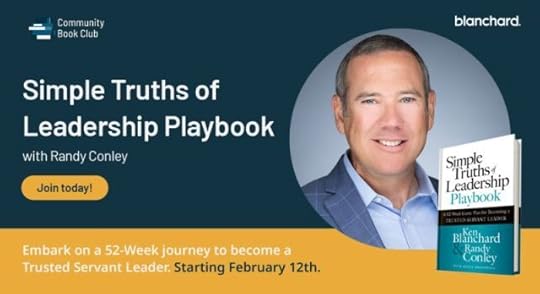
In our recently published workbook, Simple Truths of Leadership Playbook: A 52-Week Game Plan for Becoming a Trusted Servant Leader, Ken and I share several strategies leaders can use to build trust and create a psychologically safe environment.
First, be consistent in behaving in a trustworthy manner. Trust doesn’t just mysteriously happen. It’s a skill that leaders need to learn and develop to foster trust with their team. Consistently displaying trustworthiness allows your team to confidently know what they can expect from you, whereas inconsistent behavior breeds doubt and suspicion and erodes trust.
Second, treat mistakes as learning opportunities. Rather than assign blame, examine what was learned and what can be done differently in the future. Our friend, Garry Ridge, former CEO of WD-40, modeled this principle during his career. His treatment of mistakes as learning opportunities transformed what was once a fearful, risk-averse culture into one of innovation, trust, and safety.
A third strategy to create a culture of safety and trust is to communicate clearly, openly, and as transparently as possible. Clear communication reduces misunderstandings, and sharing information shows that you trust people with knowing the details.
A final strategy to pursue is to share the “why” behind decisions. I’ve learned that in the absence of knowing the logic and reasons behind a decision, people will make up their own versions of the truth, which is usually more negative than reality.
So, examine yourself and explore the deeper motivations behind your leadership. Do you find instances where you’ve led with fear? If you don’t, then you probably lie to yourself about other things in your life!
Which of these strategies might you pursue to eliminate fear and build trust and safety with your team? What will be your first steps?
To support you in the effort to become a trusted servant leader, I invite you to join me for a monthly book club on the Simple Truths of Leadership Playbook. Each month we will unpack a handful of the simple truths and discuss how to incorporate them into our daily actions. There’s no cost for the book club (other than purchasing your own Simple Truths Playbook) and it’s open to all members of the Blanchard Community (free to join). Click here to join.
I hope to see you there!
The post 4 Strategies to Remove Fear from Your Leadership appeared first on Leading with Trust.