Andrea Anderson Polk's Blog, page 7
May 21, 2022
Understanding People Who Abuse Others: Hurting People Hurt People

Understanding that hurting people hurt people can help you accelerate your healing process. The insight gained from this truth will open doors of freedom and give you the ability to navigate relationships with success.
In my treatment of clients over the years, I've discovered that hurting people hurt people. All people carry their wounds, unresolved pain, and heartaches from their past. I have worked with numerous individuals who experience intense guilt and regret regarding their abusive behavior and desire to make amends.
I have such empathy and compassion for these men and women since there exists an underlying shame, which is primary to why they become defensive and angry and go on the attack quite easily due to their woundedness and delicate ego. I have found that beneath that external facade of self-confidence is a deeper layer of fragility, insecurity, and a fear of being seen as weak and a failure. These people are typically victims of abuse and trauma earlier in life. They can often appear to be arrogant and emotionally distant or cold. This can be a survival mode to compensate for the lack of self, believing at their core that they are unlovable and unworthy.
The good news is that you can heal regardless of whether or not the abusive person in your life is willing to do the necessary work to change their unhealthy behavior. They are not responsible for your healing—you are. And with God’s help and the help of others, you can be free.
Freedom is knowing this truth, which begins to shift how you operate within certain relationships.It takes courage and deep commitment to do the healing work and not blame other people but still recognize your role in the relationship. Acknowledging this truth can be extremely difficult because when we face reality, face the lies we have been telling ourselves, and face painful emotions that we have buried. We become aware of just how much our false beliefs and toxic thoughts contribute to our suffering.
Healing consists of knowing the toxic relationships we have allowed in our lives and how we have nurtured them and neglected ourselves in the process.
Do you ever feel or experience the following things?
Leaving conversations with the person you are in a relationship with feeling confused, manipulated, deceived – even a bit crazy. Your voice is rarely heard, your needs are left unmet, and you feel misunderstood. You often feel ashamed and frustrated with yourself for not standing your ground and agreeing with them when you don’t. You feel lonely within your relationship. You say yes when you really mean no.If you answered yes to any of those, I have designed a coaching program that can help you overcome and experience transformation, healing, and breakthrough if you are in a toxic relationship in your toxic relationship. Click HERE to learn more.
In the next post, I’ll be sharing what all toxic relationships have in common as well as ways to prevent yourself from being suspectable and vulnerable to attracting painful, confusing relationships.


A Story of Emotional and Verbal Abuse

In a previous post we looked at what characterizes an abusive relationship and how to recognize if you are in one. If you haven't read it, click the link above and take a few minutes to read it before you continue.
The following is a story that illustrates emotional and verbal abuse.Thomas was given a drum set as a Christmas gift from his close friend Dave, who knew Thomas had played in college and hoped to encourage him to pursue his long-lost musical talent that work pressures had displaced. Thomas also enjoyed spending time with his family when he was not working.
Dave admired how Thomas prioritized his wife and family; they were his pride and joy. Dave knew Thomas tends to put the needs of others above his own and that he was too busy with work to purchase the drums himself.
Upon receiving the drums, Thomas was hesitant and a bit anxious to tell his wife that he was going to take lessons at the local community center after seeing the class advertised in the newspaper.
Once he mustered up the courage to tell her, he left the conversation feeling afraid and guilty for pursuing something he was passionate about outside of his work and family. Thomas’s wife criticized him repeatedly: “You are a terrible father for choosing to take lessons for your silly drums over spending time with your own children.” “You are going to damage your children because you are going to make them feel abandoned each time you go to your lesson.” “You don’t really want to spend time with our children or you wouldn’t play the drums.” “You are trying to avoid the responsibility of being a parent.” “I am like a single parent in this family, and you are like another child: selfish and irresponsible.”
Rather than celebrate his opportunity to pursue a personal passion and encourage him, despite his fears, she became passive-aggressive and did not speak to Thomas. She slept in another room and avoided him for long periods.
Although Thomas pursued his drum lessons, she repeatedly told him he was neglecting his children and her when he played the drums. He began seeking counseling because he felt disoriented and recognized that this painful pattern of constant criticism of him as a father and husband had manifested in other ways for a long time in his marriage. The verbal and emotional abuse had been invisible to him.
An abusive relationship slowly erodes your sense of self and thwarts your purpose.As a counselor, I have worked with many individuals and couples where abuse is present in the relationship. At times, abusers are unlikely to seek counseling because they may not want to believe that anything is wrong with them. If they seek counseling, following through with counseling is also difficult for these individuals because they can become defensive and question the counsel they are given by therapists who want to help.
I have found that these individuals become extremely upset and disappointed when they are not given the answers or the solutions they seek, or the special treatment they deeply believe they deserve. For this reason, it has been my experience that they tend to jump from counselor to counselor, hoping the next advice from a counselor will align with their behavior.
Based on my experience, it is more often for other symptoms such as substance abuse, infidelity, a work crisis, depression, or anxiety when they seek counseling. The problem occurs in the relationship when the person is unwilling to be accountable for their abusive behavior and do the necessary work to change their actions.
To repair such a relationship, it is essential that a person in an abusive relationship breaks the silence of their suffering and seeks help. The abusive person must be equally willing to pursue help and do the work necessary to overcome their toxic behavior patterns, so they do not continue to hurt their spouse or friend.
In the next post, I’ll help you understand people who abuse others by taking a deeper look into their heart and struggles to help you navigate the healing process.
May 14, 2022
Abusive Relationships: Death by a Thousand Cuts

What happens when you are in an abusive relationship? The impact isn’t realized for many people until the damage has been done. As you will see, there are several reasons for this.
Toxic relationships exist on a spectrum, with some forms more damaging and severe than others, such as abuse. Being in a relationship where abuse is present establishes a pattern. It feels like death by a thousand cuts, namely, painful moments that take pieces of your soul and bring that pain into your life again and again.
Abusive relationships leave you with a haunting confusion and immense suffering as they invade your life. They aim to deceive you by disguising their true self to use and take advantage of you. They secretly plan their agenda to harm you and monopolize your time and energy.
An abusive relationship is characterized by a person demonstrating deception, manipulation, and control, where the other person intentionally harms another person. Abuse comes in many forms, including physical, verbal, emotional, sexual, and spiritual.
Abuse can produce a painful, crazy-making feeling in which the person being abused falsely believes they are overreacting, selfish, difficult to be with, too sensitive, ungrateful, and a failure at relationships.
When these lies are repeated often by the abuser, the victim eventually comes to believe them.People who abuse others can be masters of adopting various disguises to hide their true nature and lure the other person into developing a relationship with them. They are highly intelligent, seeking to exploit weaknesses and vulnerabilities. At the beginning of the relationship, the abusive person can be incredibly kind and charming, but their deceptive nature slowly turns their kindness and eagerness into manipulation and control. It might feel good at first to feel important and special: someone pursues you, shows a strong interest in you and your life, and desires so much of your time. But after a while, you start to feel used, lied to, and taken advantage of.
Ultimately the relationship revolves around them, and they want you all to themselves.
The relationship is not mutual and reciprocal; it is one-sided and draining. You are doing all the work to please them and make them happy, yet they are consistently unsatisfied, and you are wounded in the process.
Deep down, you believe the lie that you are too much or not enough.
The abusive person becomes intense if you try to set boundaries, have a voice, express your needs, and make room for yourself in the relationship. They can shift blame, accuse, and criticize. Over time, you feel severely confused and hurt and become increasingly isolated; your reality alters.
One of the reasons people feel such self-doubt when they are in an abusive relationship is because an abusive person does not manifest abusive tendencies all the time. They can go for long periods without manifesting any abusive behaviors toward you. That is due mainly to the fact that they want to keep you engaged in the relationship.
At times you feel better than anyone else, and you feel lower than anyone else at other times. When they feel triggered by you pushing one of their hidden buttons, you are blindsided and shocked by their toxic behavior when it comes to the surface again. They can tend to quietly keep a record of your wrongs and wait for the opportune moment to punish you.
As I said, the abuse feels like death by a thousand cuts, painful moments that take pieces of your soul and bring that pain into your life again and again.
An abusive relationship slowly erodes your sense of self and thwarts your purpose.
As a counselor, I have worked with many individuals and couples where abuse is present in the relationship. At times, abusers are unlikely to seek counseling because they may not want to believe that anything is wrong with them. If they seek counseling, following through with counseling is also difficult for these individuals because they can become defensive and question the counsel they are given by therapists who want to help.
I have found that these individuals become extremely upset and disappointed when they are not given the answers or the solutions they seek, or the special treatment they deeply believe they deserve. For this reason, it has been my experience that they tend to jump from counselor to counselor, hoping the next advice from a counselor will align with their behavior.
Based on my clinical experience, when they seek counseling, it is more often for other symptoms such as substance abuse, infidelity, a work crisis, depression, or anxiety. The problem occurs in the relationship when the person is unwilling to be accountable for their abusive behavior and do the necessary work to change their actions.
To repair such a relationship, it is essential that a person in an abusive relationship breaks the silence of their suffering and seeks help. The abusive person must be equally willing to pursue help and do the work necessary to overcome their toxic behavior patterns, so they do not continue to hurt their spouse or friend.
In the next post, I’ll share a story of how one abused person was able to identify he was being abused for the first time.
Toxic Communication Characteristics: Help – I feel crazy!

One of the most challenging parts of being in a toxic relationship is communication. Trying to communicate with the person in your toxic relationship about how you feel and what is happening can lead to chronic experiences of feeling disillusioned.
They repeatedly make excuses for their hurtful behavior and blame you instead. Many clients say to me, “Maybe it is my fault.”
Toxic communication tactics are manipulative and deceptive. I explain to my clients, they complicate the simple and emote the factual. They twist the truth, avoid dealing with facts/reality in conversation and become overly emotional.
It is challenging to have a rational conversation because they make simple things (the facts) extremely confusing and complicated, leaving you questioning yourself, doubting reality, and wondering if you are somehow wrong.
For example, let’s say you are at a company dinner or happy hour for your spouse or significant other when you witness them acting in an inappropriate, romantic way with their colleague. When you gently bring your concern to their attention, they angrily respond, “You’re controlling. You want to dictate what I do and who I am friends with. You are just jealous and insecure.”
They ignore the reality of what happened between them and their colleague while becoming overly emotional. They are also complicating the facts of what you saw by accusing you of things that are not true.
When conflicts arise, these people focus on being right instead of being open and desiring to understand your perspective. They operate with a closed mentality during conversations, expect you to read their minds, and criticize you for not understanding them. If you disagree with them and share your opinion, they take it personally and become offended.
When you share your thoughts and needs, you receive no acknowledgment, and they continue their selfish and harmful behavior patterns toward you. When you communicate with them how you feel, they respond by saying how they think based on what you said rather than acknowledging your emotions and actively listening to you.
Here are some examples from my counseling sessions:“When I gently share with my mother that she hurt my feelings, she does not acknowledge me. She changes the subject. It’s as if the conversation never happened.”
“When I share how I am hurt by something my colleague said or did, I walk away from the conversation feeling confused, as if I have done something wrong.”
“When I share my feelings with my friend, he gets defensive, and I end up questioning myself and doubting my own feelings after a conversation with him.”
“When sharing my feelings with my father, it never feels like a two-way dialogue. My feelings are dismissed, criticized, or ignored.”
“When I tell my sister what I feel, she tells me I shouldn’t feel that way. Are my feelings wrong?”
“When I share how I feel with my boyfriend, he seems to have a way of always switching the focus back to himself.”
“When I share how I feel with my wife, she responds, ‘After all I’ve done for you, you still don’t appreciate me.’ I was simply trying to say that my feelings were hurt. And now I seem to have hurt her.”
Toxic communication intends that the person seeks to convince you that you are the dysfunctional and unhealthy one. They desire more and more of your time, energy, and attention. The longer you engage in toxic communication patterns within the relationship, feeding their ever-hungry, never-satisfied ego, the larger and larger their feelings become, and theirs consume your feelings.
You are filling a void in their life that you were never meant to fill. Meanwhile, your needs, dreams, desires, and purpose do not come to fruition.
In the next post I will dig deeper into toxic relationships by helping you to identify when the relationship is abusive.
April 15, 2022
Are You In A Toxic Relationship?
 Toxic relationships can be tricky and not easily recognized.
As a professional counselor who has spent fifteen years studying the human condition, I recognize groups of symptoms that collectively indicate a predictable yet invisible pattern of unhealthy relationships that lead to unnecessary suffering.
These patterns can deceitfully and subtly erode our careers, ministries, and most intimate relationships, including our relationships with ourselves. The patterns can show up as chronic neglect of self due to consistently taking care of someone else, receiving little or no reciprocation, or saying yes when you really mean no.
Ultimately you find yourself lost, wandering through life with haunting confusion, lingering emptiness, and persistent grief.Toxic relationships are not only confusing and painful, but they also overtake your life, so you take care of their needs, and ultimately you lose yourself. The relationship becomes your purpose because your life revolves around them and your purpose -desires, hopes, and dreams get tossed to the side.
Are you thinking of a certain relationship that creates a similar cycle of suffering in your life? Perhaps a relationship that once brought you joy is now bringing you hurt, or an already difficult relationship has now become harmful.
Here are ten questions to ask yourself to understand if you are in a toxic relationship. Is there someone in your life who tries to monopolize your time and consume your energy? Is there someone in your life who is more of a taker than a giver and does not give back to you in the same way? Is there someone in your life who leaves you feeling overwhelmed because your purpose in life revolves around them, and your voice, feelings, and needs are not mutually acknowledged? Is there someone in your life with whom you cannot have a rational conversation because simple things become very complicated? Is there someone in your life who leaves you feeling confused and misunderstood, but you cannot put your finger on exactly how or why? Is there someone in your life who you feel manipulates you, and your gut tells you something is not right? Is there someone in your life for whom you feel responsible carrying the emotional weight of the relationship? Is there someone in your life you feel has been gradually deceiving you over a period of time, and you realize this person is not who you thought they were? Is there someone in your life who is never satisfied, no matter how much you try to love, help, and please them? Is there someone in your life who twists the truth and avoids dealing with facts and becomes accusatory, critical, or overly emotional when you try to point it out?If you can relate to any of these questions, who is the person you are in a toxic relationship with?
If you answered no to all of the questions, you might not be in a toxic relationship. Instead, you might have toxic thinking or self-sabotaging behavior. Alternatively, perhaps you realize you display some toxic behavior in your relationships. Either way, I’ll address that in a future blog post.
Unhealthy relationships with a friend, spouse, mentor, pastor, counselor, sibling, parent, colleague, boss, or significant other can show up unexpectedly.It can also be a role you adopt based on a situation or event where you have taken on more responsibility than you are capable of handling—roles that allow you to feel needed and loved such as caretaker, the always-on-call person, the fixer, the peacemaker, or the rescuer.
You may find yourself saying things like this: “I’m always the person who . . .” For example, maybe you are the one who always organizes the carpool or schedules all the Zoom calls or does all the household chores or pays the bills, or runs all the errands.
Perhaps your spouse suffers from a chronic illness, and you are going beyond your capacity to take care of them because you believe your needs are not as important as theirs since you are not the one who is sick. You have falsely believed it is your sole responsibility to carry the full load.
Deep down, you feel resentful and have a strong desire to be alone and numb out.Our choices and associated behaviors offer some form of benefit. We would not be operating in a situation where we are absorbing the responsibility for another person or group of people. If you are the pleaser, caretaker, peacemaker, rescuer, or fixer, ask yourself, What am I getting from this role? Perhaps you feel worthy, important, or needed. Ask yourself, What does this role allow me to avoid? Maybe you avoid painful emotions such as the guilt from saying no and not being there for someone, or you avoid the fear of disappointing people you care about, or you are avoiding your own difficult issues.
Here is an example.
It’s the holiday season. You discuss with your spouse and make the decision that for Christmas this year you are going to vacation alone with your children to enjoy a relaxing change of pace. You want to spend some much-needed fun time together as a family. You want to take a much-needed break from the hustle and bustle to sit on a beach instead of sweating over a hot stove only to engage in the same religious and political conversations year after year.
You finally muster up the courage to tell your extended family you will not be hosting Christmas this year. They respond by trying to guilt-trip you into changing your mind. They are shocked and appalled at your decision.
How can you break this precious family tradition? After all, you have the nice house and space for everyone, and you are centrally located, making it so much easier on everyone.” Your family goes on and on about how their lives are more stressful than yours, how they really need a break. “Why can’t you go on vacation this summer instead of taking time off over the holidays?”
After engaging with them and trying to maintain your boundaries and state your needs, you feel the emotional weight of responsibility to make everyone happy. So you tell your spouse, “Let’s just host one more year.”
These decisions seem minuscule at first, but when the pattern continues in your relationships (chronic caretaking, putting other people’s needs above your own, having no boundaries), you eventually find yourself depleted and joyless, and your sense of self slowly eroded.
Every relationship requires effort, time, energy, and attention, which require fruits of the Spirit such as love, joy, peace, patience, kindness, goodness, faithfulness, gentleness, and self-control, characteristics found in a healthy relationship. Most importantly, the relationship is mutual because both people are equally attentive to each other’s needs, and they sacrifice and compromise accordingly.
The problem with a toxic relationship is that you deceive yourself into thinking you must do all the work to keep the relationship going, and you continue to nurture, take care of, and feed the toxic relationship, and that becomes your primary responsibility.The most important thing to remember about a toxic relationship is that they are imposters packaged in a seemingly good and healthy relationship, disguising themselves as the real thing, and mimicking who they think you want them to be.
The issue arises when the other person in the relationship, perpetually uses you, takes advantage of your kindness and openness, and does not reciprocate. Through a deceptive process, you have falsely come to believe you are being empathetic, patient, forgiving, and kind when the truth is that you are not long-suffering.
You are suffering.
If you are coming to the realization you are in a toxic relationship or more than one toxic relationship let me reassure you that you are not alone and there is hope. You may feel stuck in the toxic relationship but there is a strategy you can follow that will help you learn how to do the necessary work to break free and experience healing.
In the next post I’ll share the communication tactics that show up in toxic relationships and how you can effectively deal with them.
February 18, 2022
A Special Welcome Video From Andrea!
Andrea Anderson Polk, LPC, introduces her brand new book The Cuckoo Syndrome.
https://www.youtube.com/watch?v=qgJctt9yw7IJanuary 23, 2022
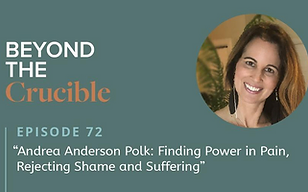
Podcast: The Crucible, Finding Power in Pain, Rejecting Shame and Suffering.
The crucibles Andrea endured made her question both her faith and the therapy her parents underwent to try, unsuccessfully, to improve their family life. It wasn't until she embraced her relationship with God that she took the journey to become a therapist herself—and today she helps clients realize their pain can be the source of their greatest power. The key, she has discovered through her counseling practice is focusing on what you treasure because in pursuing and embracing those things you will find your purpose and calling while avoiding shame and suffering.