Andrea Anderson Polk's Blog, page 5
October 3, 2022
13 Warning Signs of Toxic Therapy

As a licensed therapist, with over fifteen years of clinical experience counseling people, it saddens my heart to state the reality that professional therapists provide harmful counsel. By that I mean, rather than helping people, they are hurting people.
Below is a list of thirteen warning signs of toxic therapy that will help you identify when your therapist is displaying unprofessional, harmful behavior in your counseling sessions:
#1: They accuse you of things that are not true, such as “I think you’ve been sexually abused” when this is not based in reality, and your behavior does not warrant such an accusation.
#2: They excuse your partner’s harmful behavior and do not hold them accountable.
#3: They provide you with a personal opinion instead of professional counsel. “I would not want to be married to you.” “You spend way too much time with your children.” “Most couples have sex more often than you do.”
#4: They brag on themselves and invalidate you as a result. “I’ve done this a long time.” “I’m really good at this.” “I know what I am doing.” “I am the expert.” A healthy therapist will never announce how good they are; they will just counsel you.
#5: They always agree with your partner and take their side. Therapy is not about agreement and taking sides; it is about relationship and collaboration.
#6: They isolate and control you by telling you not to engage with or talk to anyone else but them because they see it as a threat.
#7: They tell you that you need medication and label you with a false diagnosis. If this happens and you feel misdiagnosed, seek a second opinion from a psychiatrist.
#8: You do not feel like a priority. You feel you are wasting their time. They are not truly listening to you. They constantly reschedule your appointments. They seem disinterested.
#9: They talk too much about themselves and their problems. They are too vulnerable and develop an inappropriate emotional intimacy with you as a result.
#10: They take what you say personally and tell you how they feel as a result. “This hurts me that you would say or feel .”
#11: They defend your partner and find fault with you and place the blame solely on you.
#12: They give you bizarre homework assignments that leave you feeling uncomfortable and are not helpful in any way.
#13: They are critical of your thoughts and emotions rather than providing a safe, inviting, and compassionate environment. A healthy therapist will address any pertinent issues in a manner that you do not feel attacked or wrong for feeling a certain way.
Never hesitate to tell your therapist exactly how you feel about them and how you feel the progress of your sessions is going. Also note that your therapist does not know you better than you know yourself. Trust your intuition, use your voice effectively, and honor your needs and feelings. The therapist models for the client what a healthy relationship looks like outside of the counseling room.
You do not want your counselor, of all people, to jeopardize your healing process or create more suffering in your life in addition to an already painful relationship or challenging circumstance.
I have counseled so many clients with a long history of professional counselors, psychologists, licensed therapists, and psychiatrists who have hurt them, and they are afraid of experiencing the same with me. The initial part of our time together is centered on bringing healing from their previous counseling experiences and building trust.
Experiencing toxic therapy creates an unsafe environment because you are submitting yourself to their clinical authority in the most vulnerable, emotionally intimate way and trusting their expertise. And if your therapist abuses their authority, you are no longer safe under their counsel. It is important for you to do your research and find another therapist.
If you or someone you know has experienced harmful counsel, I encourage you to not give up. There are wonderful, safe counselors out there who will be able to help you overcome your current harmful experience in counseling.
The last thing you want is to feel unsafe, afraid, hurt, confused, or ashamed in therapy.
Next week's post, will help you identify what makes a therapist a good therapist and how to define a healthy counseling relationship.
**The content for this blog post has been taken from chapter 9 (Cuckoo Counsel, Who Hurts You and Who Can Help You) of Andrea’s book, ,The Cuckoo Syndrome: The Secret to Breaking Free from Unhealthy Relationships, Toxic Thinking, and Self-Sabotaging Behavior
The photo accompanying this article was sourced from iStock and is in the public domain.


September 26, 2022
Should I Stay or Leave the Relationship? Part two.

In the previous post, we began to address the question: Should I stay or leave the relationship? The answer is neither straightforward nor black and white. It is complex and nuanced. Many of my clients do not know what to do, and they become trapped in the land of indecision. My goal is to help you make the decision to stay or leave from a place of clarity, not from a place of being stuck.
Overthinking the question of staying or leaving the relationship keeps you stuck and prevents you from knowing the answer. In today’s post, we will discuss what it looks like to do the work to find out.
Do the Work: How, Not WhatRather than focusing your attention on what to do, stay or leave, it is important to focus on how you make the decision. The how consists of the behavioral steps, which are setting boundaries, using your voice effectively, communicating your needs, and expressing your feelings. The how is the doing, the what is the thinking. If you do not take action in your relationship, you will remain stuck. Doing the work of applying those behaviors will guide you toward finding out if you should stay or leave.
It is not about what decision you are making; it’s about the process, the steps you take of how you arrive at a decision to stay or leave and how you do it. Then you have your answer.
If the other person in your relationship continues to not honor your boundaries and continues to control, manipulate, or hurt you, you can say, “You have crossed my boundary of ” or “You continue to hurt me after I’ve asked you not to ” or “You are still repeatedly doing after I have told you "no” or “If you do this behavior again, then I need you to move out” or “I cannot be in a relationship where you continue lying to me. That is not acceptable for me” or “This is my boundary, so if you do that again, I need to separate.”Furthermore, stop doing their work for them and stop carrying the emotional weight of the relationship. Stop allowing them to monopolize your time, energy, and attention. Some people are never satisfied no matter how much you try to love, help, and please them.
If you continue to give and they continue to take with no reciprocation, that tells you something. When your voice, feelings, and needs are not mutually acknowledged, that tells you something. If they continue to manipulate and control you, that tells you something. If they continue to lie to you and twist the truth, that tells you something.When you set boundaries and use your voice effectively, you are going to find out what is true in the relationship.
You will discover the reality of the other person’s behavior, whether it is a romantic partner, friend, work associate, church leader, or family member. Then you will know whether they are changing or not.
Will they stop keeping secrets from you, neglecting parental duties, cheating, engaging in addictive behaviors, abusing you, or whatever it may be that is hurting you? When you take action steps, it will reveal to you the truth about them, and you can make your decision from a place of reality after having witnessed the facts. You have been focusing on your healing journey, taking responsibility for your role in the relationship, and doing the necessary work. Have they? Only you can answer that question based on their actions, their behaviors.
Suffering and Stuck to Focus and FreedomIt takes tremendous courage to do the how and to apply the behavioral steps within your relationship. You face your fears. Many people do not take the steps because they are afraid to find out the truth about the other person in the relationship. They are ultimately afraid of losing the relationship. They are afraid the answer is going to be the painful answer of the person not being equally willing to do the work. This is a scary reality to accept.
However, you do not want to stay in an unhealthy relationship out of fear of losing the relationship. If you are staying because you are afraid, your choice to stay is not a true choice. You are staying because you’re stuck rather than out of the freedom to choose to be in a relationship with this person. That is not how you want to stay.
Leaving a relationship and creating a new life for yourself outside of the dysfunctional dynamic must be based on your choice and knowing that you have taken the steps to arrive at that decision as well as recognizing it is apparent the other person is not doing the necessary work to change, get help, or heal. You confidently believe that you are making the best choice for you instead of staying stuck in an unhealthy relationship where you are the only one doing the work, thus continuing the cycle of suffering.
Staying in a relationship must come from a deep inner knowing that you are making the best choice for you. You want to stay out of choice, knowing you could leave if you need to or want to, but you are staying because you choose to be with the person. You love the person, and they are also making the necessary changes to make the relationship work.
The ideal situation is one where we stay in our relationships and our relationships can be healthy. But not all relationships are healthy, and not all relationships are ones you can stay in.
Both decisions to stay or leave can be made in unhealthy ways, and both can be made in healthy ways. Therefore, leaving is not always the better way, and staying is not always the better way. You can stay from a healthy place or you can leave from a healthy place.
Remember, it is not about what decision you are making, it is about how you are making the decision and how you are walking it out. That is what influences whether the decision is a healthy decision that is best for you. How you do it is what is important.
As you grow and learn the truth, freedom emerges, and you can make major relational decisions from a place of empowerment and faith, not powerlessness and fear.
The joy for me as a therapist is seeing the transformation that takes place for people when they are committed to their healing and do the hard work to address their issues. There is hope. Healing for relationships is possible, yet not always, but healing is possible for you. Your healing is not dependent on the relationship.
**The content for this blog post has been taken from chapter 9 (Cuckoo Counsel, Who Hurts You and Who Can Help You) of Andrea’s book, ,The Cuckoo Syndrome: The Secret to Breaking Free from Unhealthy Relationships, Toxic Thinking, and Self-Sabotaging Behavior
The photo accompanying this article was sourced from iStock and is in the public domain.
September 10, 2022
Should I Stay or Leave the Relationship? Part one.

You might be wondering, Should I stay or leave the relationship? The answer is neither straightforward nor black and white. It is complex and nuanced. Many of my clients do not know what to do, and they become trapped in the land of indecision.My goal is to help you make the decision to stay or leave from a place of clarity, not from a place of being stuck. I’ve created an initial 3-step process addressing the multi-layered healing that takes place when people are willing to do the work and go from a place of suffering to finding a solution and freedom.
Step 1: Removing shame and blameBefore the truth can set you free, you must identify which lies are holding you captive. There are lies we tell ourselves (shaming) and lies we are told from others (blaming). Judging yourself and allowing others to judge your decision to stay or leave creates shame and blame.So, what are the lies? They are false beliefs about others and ourselves that are not grounded in reality and hold us back because of what we make things mean.Assigning Meaning: False Beliefs Around Staying or LeavingAssigning meaning to your decision to stay or leave or allowing someone else to do so is harmful. Placing assumptions on such a life-changing decision can create shame, doubt, and confusion. Some believe that leaving the relationship is the healthier choice to make or the stronger choice to make. The same could be said about staying. Staying means you have no self-respect or means you are weak. But all of these responses are unhealthy. They are false beliefs, false judgments. They oversimplify very complicated issues.Every person is different. Each relationship is different. Labeling a person’s decision to stay or go as unhealthy or healthy, strong or weak is destructive and untrue. Based on the available research in the fields of trauma, attachment studies, and neuroscience, these decisions are not simple because there are complex systems in place stemming from childhood even.
There is no right or wrong answer. The decision to stay or leave can be both made in unhealthy ways.Step 2: Get out of your head
,Overthinking the question of staying or leaving the relationship keeps you stuck and prevents you from knowing the answer. We must do the work to find out.Overthinking Keeps Us Stuck. For my clients, thinking about the answer to the staying-or-leaving question becomes all-consuming, emotionally overwhelming, and mentally tormenting. This is because they are obsessively overthinking in their effort to figure it out. In addition to an already painful relationship, there is an underlying layer of suffering in thinking about whether to stay or go.Overthinking is our mind’s way of keeping us preoccupied. It is paralysis by analysis. We become stuck (paralyzed) with indecision because of our constant overanalyzing.
Obsessing in your mind to figure out whether to stay or go prevents you from making the decision to stay or go.
You are living in your head rather than living in your behavior.
Overthinking is distracting us and keeping us busy; therefore, we falsely believe we are doing something. Thinking is not doing, and it is blocking us from doing, from staying or going.Essentially, we are thinking instead of behaving. Our behavior (i.e., setting boundaries, expressing needs, and using our voice) will expose dysfunctional dynamics and help us determine what is happening in our relationships rather than feeling stuck in a tormenting mental bubble. We must do the behavioral and emotional work. Overthinking is also a form of ,projectizing, making yourself a project to fix and a problem to solve rather than focusing your attention on the relationship and the other person involved. Frantically fixating on the stay-or-go question and needing an immediate answer inhibits you from arriving at the decision to stay or go from a healthy place.
Step 3: Face your fearsI’ve discovered in my clinical practice, it is always the fear of relational loss that hinders people. Over time, they lose themselves (their voice, boundaries, needs, wants, dreams, desires) because they are afraid of losing the person they love the most.
The Fear of Losing the Relationship. After meeting with countless clients who are stuck, I’ve discovered that fear is the driving factor in their place of suffering with whether or not to stay or leave the relationship. The fear of rejection, fear of feelings, fear of uncertainty, fear of the unknown, and fear of abandonment. This is due to the enormous emotional, spiritual, financial, and relational implications that are painful and intimidating.
When thinking about leaving a relationship, they face new and different challenges, such as how their decision will impact their family and children, finances, community, career, and living situation. All those realities can feel unbearable and create fear.
Most of all they are afraid of losing the relationship. They are afraid the other person is not willing to do the necessary work to change. That is a frightening reality to face. As a result, they become paralyzed and stuck, obsessively thinking about all these dynamics instead of taking action steps because of fear.
What will happen if I set a boundary or stand my ground or say no or say what I need, feel, and think? What if they leave? What if they continue to be hurtful, lie, avoid me, or manipulate? Continually thinking about the decision to stay or leave is a way to avoid such scary and hard questions.
Being unable to tolerate potential loss of the relationship can trigger fear. Even if that loss looks like, my spouse or significant other and I might have a fight or have conflict for a few days, or they will give me the silent treatment.
To know whether to stay or leave the relationship, you must be willing to do the work around fear and identify the false beliefs underneath the fear. Including facing your painful emotions and worse case scenarios.
You do not want fear of pain and fear of losing the person or fear of conflict to keep you stuck in a continuous cycle of suffering.
More importantly, you do not want to lose yourself because you are afraid of losing someone else.
These initial steps of removing shame and blame, getting out of your head, and facing your fears are essential and necessary to help you determine whether to stay or go.
Then, we must do the work to find out. It’s about the how, not what. The how is the doing, the what is the thinking.
Next week, we will discuss how to arrive at the decision to stay or leave the relationship.
**The content for this blog post has been taken from chapter 9 (Cuckoo Counsel, Who Hurts You and Who Can Help You) of Andrea’s book, The Cuckoo Syndrome: The Secret to Breaking Free from Unhealthy Relationships, Toxic Thinking, and Self-Sabotaging Behavior
The photo accompanying this article was sourced from Unsplash and is in the public domain.
September 8, 2022
TV Interview on 100 Huntley Street
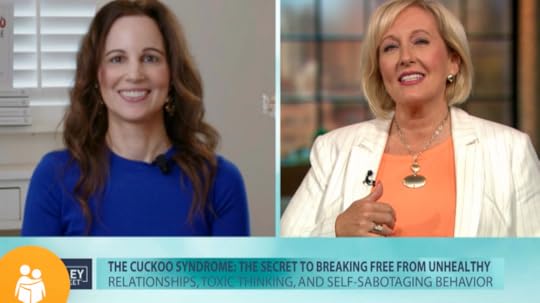
In a recent interview on the tv show, 100 Huntley Street, Andrea has an inspiring, deep, and meaningful conversation with Cheryl Weber about her new book: The Cuckoo Syndrome: The Secret to Breaking Free from Unhealthy Relationships, Toxic Thinking, and Self-Sabotaging Behavior.
Watch the Interview HERE
If the conversation resonates within you and you would like to explore the heart issues that arise in the interview, work with Andrea one-on-one to dive deeper into your struggles and stuck points. Her greatest joy is to help people face the deepest truths of their lives so they can be healed and happy.
Order Andrea’s new book, The Cuckoo Syndrome, today!

September 1, 2022
Andrea Published in The Science of Personality Magazine

In a recent interview with Karen Asp and published by Centennial Media, "The Highest Bar: If striving for perfection is making you miserable, it's time to take action," Andrea discusses perfectionism from a clinical, mental health perspective.
Andrea is quoted in these excerpts from The Science of Personality Magazine article:
You might assume that perfectionism simply means striving to be perfect. But it’s more complex than that. “It’s an obsessive preoccupation with performance, achievement and
appearance,” says Andrea Anderson Polk, LPC, CPC, a licensed professional counselor in Washington, D.C., and author of The Cuckoo Syndrome. “People with perfectionism look to people and work for approval and validation; their worth and value are tied to what they do
versus who they are.”
Shame may even be at the root of perfectionism. “Shame seems like a strong word, but people who struggle with perfectionism often have deep-seated feelings of low self-esteem, inadequacy and inferiority that they’re unconsciously trying to avoid,” Polk says. Shame
might stem from difficult childhood critic who’s constantly picking at you, saying things like, “You’re not good enough.”
“Perfectionism turns your passions into obsessions, which takes the joy out of them,”
Polk says.
“Because perfectionists want to do things perfectly and are afraid of failing, they may put off doing something they really enjoy or want to achieve,” Polk says.
“People who struggle with perfectionism are driven by internal pressures such as unreasonable and unrealistically high expectations as well as extremely high ideals and standards, and often their happiness is dependent upon their success and achievements,” Polk says, adding that this results in a lack of self-compassion and being self-critical. Rather than measuring your success by outcomes like social media followers and podcast ratings, instead think about how you’re helping people and making a real difference in their lives.
If the conversation resonates within you and you would like to heal from perfectionism, work with Andrea one-on-one to dive deeper into your struggles and stuck points. Her greatest joy is to help people face the deepest truths of their lives so they can be healed and happy.
Chapter 7, The Perfectionism Cuckoo: When Passions become Obsessions, will provide you with practical steps to overcoming perfectionism as well as identifying the root cause.
Order Andrea’s new book, The Cuckoo Syndrome, today!
August 29, 2022
My Migraine Miracle: The Defense of Projectizing, Part 5

Thus far in this series about projectizing, a deeper form of perfectionism, showing up in a tendency to anxiously fix ourselves, we discussed how important it is to refrain from making ourselves a project to be fixed or a problem to solve, rather than a person worthy of love and compassion. We also explored Sarah’s story of shame around her singleness and confusion around her faith as well helpful ways to overcome chronic overthinking and how to break free from obsessively trying to control our circumstances and relationships.
In today’s post, I am sharing a personal story of healing and breakthrough and how the defense of projectizing was creating unnecessary suffering in my life.I went through a season where I experienced chronic migraines. I was confused why I had them because everything else in my life seemed normal and fine.I reached out to my doctor, who prescribed medication for my migraines. The migraines always occurred in the early morning, so after I took the meds, they were gone after a couple of hours of lying in bed. Then I could go into the office to counsel clients. This pattern happened on and off for about eight months. I spent an inordinate amount of time, money, emotional energy, and overthinking trying to figure out why and how I had developed these migraines.I conducted a great deal of research on migraines. As a result, I scheduled an appointment with my primary care physician, met with a neurologist, did a sleep study, had an MRI, met with my dentist, saw an orthodontist, and started seeing a chiropractor to figure out the cause of my migraines. All of my results came back as normal. I was completely fine, and, in fact, very healthy, but I was frustrated.There must be a reason! I was scared. I feared the migraines would never go away or that eventually they would worsen and affect my counseling practice and my life. I anxiously thought: What if my migraines worsened so I couldn’t meet with clients? What if I couldn’t pay my bills? What if my social life is impacted?
In reality, this never was the case; it was my anxiety speaking. In addition to the anxiety, I felt ashamed. Somehow I falsely believed these migraines were my fault, so I had to fix them and find a reason. I was embarrassed to tell people I had them because I felt I had done something wrong. I was suffering.A couple of months later, I was at church and bumped into one of the pastors there. She asked how I was doing and I explained I was having migraines. She sat me down and said, “Let’s pray about this and see what Father God has to say.”As she prayed over me, she saw a vision of God turning on a faucet, which represented my emotions, which I had unknowingly turned off while I was experiencing the migraines. That resonated deeply with me, and I told her, with tears streaming down my cheek, that I was angry with myself for having migraines. Sounds silly, but that is what I was feeling deep down.She said, “I feel you need to ask your body for forgiveness.” That was the last thing I expected her to say! It felt odd and awkward, but I trusted her. She led me through a prayer, and I asked my body for forgiveness for being so mean and cruel to it, for judging it, trying to fix it, and being angry with it for the pain I was experiencing and for trying to control it. My migraines ceased completely and I’ve never had one since!
A Fear of Pain Rooted In ShameAfter that miraculous day, I was in awe, yet I developed an intense sadness. As I sat with that emotion and processed it, I realized the sadness was associated with how I treated myself during the migraine months. I grieved over the way I shamed and attacked myself. I was operating in the defense of projectizing—making myself a problem to be solved rather than comforting a hurting person. This shame manifested in expending so much time and energy trying to find a reason for my migraines instead of being compassionate and loving during a painful time in my life.I created unnecessary suffering by being cruel and mean to myself. I judged myself for having migraines. I treated my body as if it was a machine or a robot that wasn’t working properly and I wanted to fix it. Beneath the surface I was sad and angry. Instead of feeling my feelings, I developed anxiety, which fueled my need to know why, because if I knew why, I could stop the pain. But instead of stopping the pain of my migraines, I wanted to stop the shame of believing they were my fault, that I had done something wrong, and I feared they would never go away.I realize now, looking back at all my research, doctor appointments, time, and energy, that everything was being fueled by fear in an attempt to control my pain. Control is rooted in fear, and I was operating under a fear of pain. For me, pain equated to shame. I had failed. And it was my fault.Additionally, for me the pain equated to feeling responsible. I felt a heavy, oppressive, mentally tormenting, and exhausting burden to fix it. It was isolating and lonely. So pain in this case created much anxiety for me due to this false pressure I was placing on myself.For those reasons, it was not the actual pain of the migraine that was creating such suffering; it was both the shame and the burden of trying to fix it that was the issue and the real source of my pain.
When Past Pain Becomes a Present Reality
I developed this shame based mindset due to my painful childhood; it was an all-too-familiar narrative that was occurring subconsciously beneath the surface of my migraines. It was not because I had failed or done something wrong; it was an old pattern trying to subtly manifest itself in a new way. Anytime I experienced the unpredictable rage of a close family member as a child, I was ashamed because I was told I did something wrong, even though I didn’t, or I wasn’t told anything at all and was punished for no logical reason.I learned a valuable truth through this experience about my fear of pain and how it was causing me tremendous, unnecessary suffering. Avoiding my emotions and overthinking when I experienced pain that I did not understand or have a reason for was my pattern. This pattern caused me to ignore and dismiss my body, not have compassion on myself but rather try to force it to stop hurting.Releasing my anger, shame, and sadness was healing and freeing for me because it was a moment of beautiful conviction. Experiencing these emotions opened the door for truth to dismiss the lies I was believing, to be comforted by God and others, and to hear him speak to my heart. I made a promise to refrain from being mean or cruel to myself when I experience pain, physical or emotional. To feel my feelings. Instead of demanding an answer or a reason, I will choose love rather than making myself a project to fix, and I will nurture myself, believing the truth that the pain is not my fault. I am a person worth of compassion, not a prblem to solve. The most interesting truth of all was recognizing what was actually occurring during those months of migraines. When I felt a migraine coming on, I would take my medication and rest in bed, and within a couple of hours it was gone and I was back on my feet. All of the fears and what-if statements of not being able to counsel my clients, enjoy a social life, or pay my bills one day because I feared the migraines would never go away was not my reality.
The reality is that I was OK and my life was not severely disrupted as I had feared. The suffering I put myself through was the result of not giving myself permission to have pain, such as migraines, that most of the population has experienced at some point in their life. The humbling truth is that I was not an exception to experiencing chronic pain (or any kind of pain) and it was not my fault.
Essentially, my need to know why and to fix my migraines anxiously consumed my thoughts, exhausted me emotionally, stole my joy and peace, and created shame. I was trying to fix myself because of what I made my migraines mean: I did something wrong.
It was this breakthrough experience that led me to create the psychological term projecizing as a defense mechanism in treating my clients so I could put a name to what was creating unnessary suffering for so many. The defense of projectizing is the most common yet most subtle of all the defense mechanisms I witness in my clinical practice.
Heartbreak and a Crisis of Faith
In my clinical practice, many people apply the defense mechanism of projectizing to their emotional pain such as a broken heart due to a relationship ending. They beat themselves up because they feel they should "have known better" or "seen it coming" - when in reality, we cannot know the future. Nor can we predict the outcomes of our relationships and prevent heartbreak, rejection, abandonment, or betrayal.
Projectizing also applies to our faith and relationship with God. Spiritually speaking, people experience a crisis of faith when an emotional injury occurs such as divorce or being fired. This evolves into anxiety, unrest, and eventually shame: Did I not follow God's will? Did I not hear from him correctly? What if my relationship with God has never really been what I thought it was?
Obsessing about these questions leads to inner turmoil and develops into unnecessary suffering. Healing happens when we give ourselves permission to be human. Rather than seeing ourselves as a failure and trying to fix what is wrong with us, have self-compassion. Facing our pain uncovers the deepest truths of our lives so we can be healed and live free. I'm living proof!
Life is hard enough without being hard on ourselves.
**The content for this blog post has been taken from chapter 8 (When You Become A Cuckoo, Making Yourself a Project to Fix) of Andrea’s book, ,The Cuckoo Syndrome: The Secret to Breaking Free from Unhealthy Relationships, Toxic Thinking, and Self-Sabotaging Behavior
The photo accompanying this article was sourced from Unsplash and is in the public domain.
August 20, 2022
Connections Podcast Interview
In a recent interview on Connections Podcast, Andrea enjoys a faith-filled and inspiring conversation with Colleen Houde & Mike Thom about her new book, The Cuckoo Syndrome: The Secret to Breaking Free from Unhealthy Relationships, Toxic Thinking, and Self-Sabotaging Behavior.
During the interview, Andrea shares the breakthrough she received while navigating a difficult relationship with a close family member, the difference between religion and relationship, the invisible injury of toxic religion and how it shows up in our churches and faith-based communities, as well as how essential emotions are to our faith because we cannot grow spiritually beyond our emotional immaturity.
Through the lens of scripture, science, and psychology, she discusses ways to break toxic thinking patterns and how to deal with unhealthy relationships with ourselves and with others in order to live a life of freedom, meaning, and purpose.
Watch the interview HERE
If the conversation resonates within you and you would like to explore the heart issues that arise in the interview, work with Andrea one-on-one to dive deeper into your struggles and stuck points. Her greatest joy is to help people face the deepest truths of their lives so they can be healed and happy.
Order Andrea’s new book, The Cuckoo Syndrome, today!
August 10, 2022
Do you want to be fixed or be free? The Defense of Projectizing, Part 4

Thus far in this series about, projectizing, a deeper form of perfectionism, showing up in a tendency to anxiously fix ourselves, we discussed how important it is to refrain from making ourselves a project to be fixed or a problem to solve, rather than a person worthy of love and compassion. We also explored Sarah’s story, a woman desiring marriage and how she makes herself a project, as we dive deep into her story of shame around her singleness and confusion around her faith.
,Last week we identified how projectizing can show up through chronic overthinking and that overthinking is way to control, and control is rooted in fear. We overthink because we are afraid and feel out of control either situationally or relationally.
In today’s post, we will explore helpful ways to overcome toxic thinking patterns and how to break free from our tendency to obsessively fix ourselves.
Making Yourself a Project to FixClients who struggle with projectizing always ask, “How do I fix this?” or “Why do I do this?” They say, “I just want to know why, so I can fix it.” Understanding why we do the things we do is important; however, in these cases, the healing process it takes to get there is hijacked by their need to know right away.
As previously stated, knowledge in and of itself does not bring freedom. Healing begins with facing your pain. Your pain contains truth, and the truth will set you free. (John 8:32)
Once my clients are aware they are projectizing, they ask, “So how can I fix that?” We have a good laugh because they realize they are making their defense mechanism of fixing themselves a project to fix too! Their laughing shows progress because they are learning all the ways they try to projectized themselves every time a new problem emerges.
The following are signs of projectizing leading to suffering:
Regretting the past or fearing the future Rooted in shame: “It must be my fault” and “I must have done something wrong Driven by fear of feelings, abandonment, rejection, or failure Obsessively overthinking leading to mental torment Why questions driven by desperation to solve the issue What-if statements fueled by anxiety (i.e., What if I cannot pay my bills? What if my spouse leaves me? What if I never belong? What if I never have children?) Isolating and/or feeling lonely within relationships General sense of foreboding: Expecting worse case scenarios and a feeling of doom and gloom Anxious most of the time and/or experiencing bouts of depression Easily prone to stress and developing addictive behaviors (i.e., drinking, shopping, exercise, food, TV, social media)The following are signs of overcoming projectizing, leading to healing and freedom:
Accept the reality of difficult relationships and situations rather than escape and avoid them Make a choice to stay in the present moment vs peering into the future and ruminating on the past Acknowledge the truth that happiness is not contingent upon a pain-free life or problem-free life Have self-compassion: You are person worthy of love and compassion, not a problem to be solved Share your story: Vulnerably and authentically open you up to receive comfort from others and know you are not alone Feel your feelings: Experience painful emotions instead of ignoring them Face your fears: Gain the confidence to cope with challenging circumstances Embrace your true self and accept your imperfections, failures, and limitations as part of your storyThe Fear of FeelingsWhat my clients are experiencing alongside their projectizing defense is fear. They are afraid of feeling their pain and not having an answer to make it go away. What they do not realize is that making themselves a project to fix is causing them tremendous pain.
Their issues appear so big and scary because they feel this responsibility to fix it, which feels lonely and impossible to heal on their own. They seek to control by projectizing themselves and removing their heart and emotions from the equation.
For that reason, they want to have an intellectual conversation in therapy. They love homework and they want tools. I work with them so they understand what projectizing is and how the way they are thinking is complicated and chaotic because they are attacking themselves.
Projectizing deepens our suffering from already difficult situations and relationships. We want to fix problems instead of facing our fears and feeling our feelings. Those struggling with making themselves a project to fix carry a tremendous burden of what to do with the pain itself.
The burden of responsibility to fix their pain is what they are avoiding, because it is mentally exhausting and isolating. This is due to the vast amounts of thought life and emotional energy needed for demanding a reason why and then fixing it, alone.
I’ve discovered this defense of projectizing occurs beyond our conscious awareness and often develops in childhood, whether it involves rejection, abuse, neglect, or finding no validation or comfort in pain from our caregivers. As a result, we develop an unconscious vow that all pain is our fault. We believe on a deep level we must have done something wrong, which is why making ourselves a project to fix is ultimately rooted in shame.
Many clients come to me after receiving no help or relief from previous counseling experiences. They have gained a plethora of tools but continue to remain stuck. Unfortunately, many therapists do not realize there is a strong defense of projectizing that is operating beneath the surface of the client’s presenting problems, such as depression and anxiety.
The Question of Shame: What’s Wrong with Me?Most often we experienced childhood pain or trauma from our caregivers and felt shame that it was our fault, hence pain equates to shame, which becomes a foundational false belief into adulthood. We avoid the painful emotions of a difficult situation or relationship because we believe the lie that we did something wrong, we suffer by obsessively operating in fix-it mode and end up in an isolated, confused, anxious bubble of toxic overthinking.
Do you find yourself thinking, I wish things would go back to the way they were so I can be happy or normal again? Perhaps you have yet to experience the truth that happiness is not contingent upon a pain-free or problem-free life.
Before this truth can set you free, let's identify which lies are holding you captive.
Another common pattern that shows up when we make ourselves a project to fix is the lie we tell ourselves that, when something is hard, we make it mean something is wrong with us. We seek help, thinking something is wrong with us when the lies we are believing are wrong. Therefore, we try to fix what is wrong instead of facing what is hard. For example, accepting the reality of things beyond our control, facing our deepest fears, and feeling our painful emotions.
What if what is “wrong” within us points us to what is right? What if we stop running away from our pain and turn around to embrace it even if it’s scary? Facing our fears gives us the courage to face the deepest truths of our lives so we can be healed and live free.
It is important to remember: Just because it’s hard, doesn’t mean it’s wrong
Next week I will share my story of overcoming chronic migraines and how the psychological term for projectizing came about from my personal experience that led me to identify this defense mechanism and brought me to a place of healing and self-acceptance.
**The content for this blog post has been taken from chapter 8 (When You Become A Cuckoo, Making Yourself a Project to Fix) of Andrea’s book, ,The Cuckoo Syndrome: The Secret to Breaking Free from Unhealthy Relationships, Toxic Thinking, and Self-Sabotaging Behavior
The photo accompanying this article was sourced from Unsplash and is in the public domain.
August 4, 2022
Are You a Chronic Overthinker? The Defense of Projectizing, Part 3

Thus far in this series about, projectizing, a deeper form of perfectionism, showing up in a tendency to anxiously fix ourselves, we discussed how important it is to refrain from making ourselves a project to be fixed or a problem to solve, rather than a person worthy of love and compassion. We also explored Sarah’s story, a woman desiring marriage and how she makes herself a project, as we dive deep into her story of shame around her singleness and confusion around her faith.
In today’s post, we will explore toxic thinking patterns, prioritizing knowledge over relationship, and demanding answers over self-acceptance. A primary way we projectize is by trying to control our circumstances which exhausts vast quantities of attention spent in chronic overthinking that steals our joy and robs our peace of mind.
Where does chronic overthinking come from? I’ve discovered in my work with clients that overthinking is way to control, and control is rooted in fear. We overthink because we are afraid and feel out of control either situationally or relationally.
Overthinking is expending too much time and energy ruminating, rationalizing, reasoning, and analyzing everything which is harmful rather than helpful. It’s all consuming. In this way, overthinking is a self-protection that helps us feel in control. However, it’s a temporary solution to a deeper problem: fear. Fear of rejection, fear of failure, fear of abaandoment, fear of inadequacy, fear of feelings, or fear of intimacy.
One way control can show up is through an obsessive need to know that is not serving us well or creates suffering and anxiety. These toxic thinking patterns becomes an illness of introspection because we are scrutinizing ourselves, and we get stuck in paralysis by analysis. The more people try to fix and analyze themselves, the farther away the answer is and the more anxious they become.
Overthinking, the all-consuming need to control through knowing, becomes an intense drive within us to want to turn everything into a problem to be solved or turns us into a project to fix not as a person with a story and emotions.
However, knowledge in and of itself when used to avoid the reality of our pain does not satisfy the longings of our soul or the deep desires of our hearts. Yet many of us are afraid at our core to truly let another person know us at a vulnerable level because we are afraid if they knew everything about us, they might leave.
Knowing at the Cost of Being KnownOn their first visit, many clients share with me the reason they are seeking counseling, such as anxiety, depression, and relationship issues. Clients who are unconsciously suffering from the defense of projectizing sit tensely on the edge of the sofa, determined to fix themselves. They are highly intelligent, motivated, and successful people. Often, they hold back tears. They see feelings as a nuisance or an inconvenience to solving their problems. If they could just get their anxiety to stop, for example, they would be okay.
They are chronic overthinkers. They want tools so they can know exactly what to do and how to do it. They don’t want to know themselves; they want to know answers. They are impatient and, in a hurry, to fix the problem. They want things to go back to the way they were before they were struggling so they can be “happy or normal again.” They have yet to experience the truth that happiness is not contingent upon a pain-free life. They do not see the connection between their suffering and frantically wanting to fix themselves. They are unaware of past and present underlying pains in their life and how these are affecting their current issues.
This need, however, is never satisfied, because you will never have a pain-free or problem-free life. Your need to overthink and fix yourself every time a problem arises will overwhelm you, consuming your emotional energy and thought life. Instead of enjoying a life of purpose, fixing yourself and overthinking becomes your purpose.
These clients desperately want to know things and how to be fixed at the cost of being known as a person. Freedom from their suffering entails doing the necessary work by facing the reality of their deep-seated pain so healing can take place. Many people unknowingly live out of unresolved pain that shows up as chronic overthinking and a compulsion to fix themselves for most of their life.
Intellectual Knowing or Relational Knowing?Freedom from chronic overthinking is found through experience. The experience of relational intimacy, sharing our story with another, or feeling our feelings. “You shall know the truth, and the truth shall make you free” (John 8:32). The original Greek word for “know” is ginosko, which means to know the truth through personal, firsthand experience.* Knowledge in and of itself does not bring freedom, just as awareness does not lead to instant healing transformation.
Many clients have come to me for counseling after reading numerous self-help books and listening to podcasts on anxiety, perfectionism, and how to overcome chronic overthinking. Perhaps they have found some relief, yet they continue to remain stuck. Why? Because freedom and healing come through personal experience.
This means we need to experience our pain, face our fears, and embrace the reality of our challenging circumstances, even if they’re hard and scary. Likewise, we must feel our feelings and share our experiences with a safe person who can speak truth and help us expose the lies we are believing to be true.
You Are Not AloneAlthough people seek advice and counsel about their chronic overthinking and anxiety, they yearn for who they are buried beneath their fears, painful emotions, and the lies they believe about themselves. Having another person, such as a therapist, you enter into a relationship between two people where you heal through a heart-to-heart intimate co-creation of change. Not head-to-head dialogue about how to fix the problem, or worse - fix ourselves.
We don’t need advice and we don’t need answers, quick fixes, or how-to’s. We need to share our story and to have someone partner with us to face the deepest truths of our lives so we can be healed and live free from obsessive overthinking.
Next week, we will explore helpful ways to overcome toxic thinking patterns and our tendency to obsessively fix ourselves.
The content for this blog post has been taken from Andrea’s book, The Cuckoo Syndrome: The Secret to Breaking Free from Unhealthy Relationships, Toxic Thinking, and Self-Sabotaging Behavior
* Ginosko,” Bible Hub, https://biblehub.com/greek/1097.htm.
The photo accompanying this article was sourced from Unsplash and is in the public domain.
July 28, 2022
Andrea's Interview on 700 Club Interactive

Break Away from Self-Sabotaging Patterns and Mindsets
In a recent interview on the tv show, the 700 Club Interactive, Andrea has a conversation with Ashley about her new book: The Cuckoo Syndrome: The Secret to Breaking Free from Unhealthy Relationships, Toxic Thinking, and Self-Sabotaging Behavior.
During the interview, I share the breakthrough I received while navigating a difficult relationship with a close family member, how to deal with anxiety, the hidden pain of toxic religion, and how to stop letting unhealthy relationships and habits steal your joy.
Through the lens of scripture, science, and psychology, they discuss ways to break toxic cycles to live a life of freedom, meaning, and purpose.
Watch the Interview ,HERE!
If the conversation resonates within you and you would like to explore the heart issues that arise in the interview, work with Andrea one-on-one to dive deeper into your struggles and stuck points. Her greatest joy is to help people face the deepest truths of their lives so they can be healed and happy.
Order Andrea’s new book, The Cuckoo Syndrome, today!