Andrea Anderson Polk's Blog, page 3
September 10, 2023
The Need-To-Know-Syndrome

Do you need to know, right NOW?
I call this the Need-To-Know-Syndrome. When a solution to a problem is not obvious or knowing the answer is not immediate, we become impatient and anxious. This causes us to make poor decisions or creates unnecessary worry and stress.
An obsessive need to know is a form of control. Control is rooted in fear. We fear the unknown, we fear pain, and we fear rejection. Fear can look like being overly controlling in relationships with others, at work, or in our daily life and thinking patterns.
We want to control during moments of uncertainty when we are feeling unsafe, vulnerable, uncertain, anxious, and insecure. We control through toxic overthinking by ruminating, rationalizing, and reasoning.
The Tree of Knowledge: Can You Relate to Eve?The need to know is an age-old problem. In the book of Genesis, we read that God instructed Adam and Eve not to eat from the Tree of Knowledge. Eve’s conversation with the serpent led her to begin to contemplate “you will be like God, knowing good and evil” (Gen. 3:5).
Eve began to doubt God’s goodness and believed the lie that God was withholding something good from her (knowledge). Eve then saw that the tree was able to make her wise. Our knowledge in and of itself, apart from God, does not produce life (The Tree of Life). Adam and Eve made knowledge their god from that day forward, and they became self-conscious and ashamed.
The enemy’s tactics to tempt us and engage us in conversations that are based in a lie are still present today, just as our desire for knowledge apart from our Creator is still a temptation. When we try to become like God in our knowledge, we open ourselves up for God’s Word to be twisted, and we believe lies instead of the truth.
Trust in the Lord with all your heart and lean not on your own understanding; in all your ways acknowledge Him, and He shall direct your paths. Do not be wise in your own eyes (Prov. 3:5-7).
Many times we trust God only when we understand what he is doing, but whatever God is doing, it does not need to make sense to us for it to make sense to God. We do not need to understand why God does or does not do certain things.
We say, “I don’t understand why this happening, God.” Whatever is happening does not need our understanding. It exists whether we understand it or not.
Understanding is not a requirement for faith. Jesus says, “You don’t understand yet the meaning of what I’m doing, but soon it will be clear to you.” (John 13:7). If we understood everything perfectly, we would not need to rely on God. We would rely on ourselves and our knowledge.
The truth is…
No matter how ready you are – parts of your story, your healing, and your answer will remain hidden until it’s time for you to know them.
“Things are hidden temporarily only as a means to revelation” (Mark 4:22).
I continue to learn and apply these principles in my life and decided to share them in order to help you find a peace that passes understanding in moments of uncertainty.


August 14, 2023
Do You Have an Egyptian Mindset?

God answered your prayer: You got that promotion, new opportunity, new home, new business endeavor, new baby, or new relationship…
But you find yourself thinking: “This is too hard. I’d rather just go back to the way things were.”
God promised you something and now life is more complicated or everything that could go wrong, has. You feel frustrated, confused, and discouraged. You’re tired. You’re anxious. You’re overwhelmed. You feel alone.
The Israelites felt the same way…
God answered the Israelites’ prayer by sending Moses to lead them out of their captivity from Egypt to the promise land of freedom. They had to go through the desert first. It was intense, hard. They were unhappy, they complained, they were afraid, and sorry they had left Egypt. They were mad at God, blamed Moses, and although they were treated terribly in Egypt, they knew what to expect every day. Their captivity was a familiar way of life.
There are necessary “desert” seasons we must go through for our heart’s desires to be fulfilled even if we didn’t ask for the desert parts.
Our brain follows the path of least resistance so when we encounter difficult circumstances we’re not expecting, we look for the easy way out. We fear the unknown. We can’t see the promise anymore. Like the Israelites, we long for the old days.
Now it’s too much work. You’re having a confidence crisis. You’re a little bitter. Things aren’t going as well as you’d hoped.
The struggle is real and so you wish it to be different, but hoping for a different set of circumstances does nothing but leave you disappointed, empty, and heartsick. Hope deferred makes the heart sick (Proverbs 13:12).
This is the time to let go of control and surrender the promise back to God even though your current situation or relationship is harder than you imagined.
The sooner you face what is hard the sooner you’ll discover there’s a lot more strength and capacity in you than you ever knew and a lot more to God's promise than you ever dreamed possible. You’ll gain wisdom, maturity, and realize what is truly important.
Rather than wasting your energy on wanting to go back to an easier and more comforting time, remind yourself how during that time, you asked for this.
Living a life of purpose and promise is not for the faint of heart, yet…
“Being confident of this very thing, that he who began a good work in you will perform it.” (Philippians 1:6)
July 23, 2023
How Anger Helped Julie Overcome Anxiety

This is the final post in this series on anger. Read the first three posts here: When Anger is a Gift, Ways You Avoid Anger and Why, How to Deal with Anger and Set Boundaries.Julie* sat on my sofa anxious and confused. She expressed how she was introduced through a mutual friend at her church to a lovely man named Liam, whom she began dating. She shared how she was having an enjoyable time and was pleasantly surprised to discover that not only did they share their faith, which was extremely important to her, but his values and morals also matched her own in very specific ways. She said that he was an attorney and had also earned a doctorate in theology and volunteered in the prayer ministry at church. Julie very much enjoyed their intellectual, spiritual, and philosophical conversations. She was delighted because these qualities in a relationship were desires of her heart.On the surface, Liam looked good. He was everything she was looking for in a future husband. But she was acutely aware, each time they were together, that she felt no spark, no chemistry. Yet she continued to go on dates with him and hoped the chemistry would come. “I should just give it time,” she rationalized.
Simultaneously, she began to develop underlying symptoms of anxiety. She experienced nausea, headaches, difficulty concentrating, and she was not sleeping well at night. Each time she would describe her dates with Liam, she did not seem excited and spent more time trying to convince herself what a great man he was for her. When I brought this up, she said she felt a tinge of guilt about not being more excited about the relationship.I came to realize in the session that the emotion hidden underneath her anxiety was anger. When I asked her, “What do you want?” she responded, “I don’t know, but I feel stuck and trapped.” She felt as if she had to keep dating Liam, even though there was no chemistry on her end. After more work together. she discovered a lie that at a deep level she believed it was her fault that there was no chemistry, so she had to push herself to keep dating him until the chemistry came. After all, he appeared on the outside to be everything she was praying for and looking for in a potential spouse. She also spiritualized her emotions away by saying she should be grateful for this relationship and asking if this was God’s will for her. Therefore, she concluded she must be missing something or doing something wrong.Additionally, the feeling that she was trapped was rooted in shame based on some history repeating itself from her abusive childhood. Because the abusive episodes inflicted on her by her father were unpredictable in nature, and he told her she’d done something wrong, Julie felt trapped. In between the abusive episodes she felt ashamed, believing it was her fault, and was trying to figure out how to prevent the next one from happening. She ran in circles asking herself what she did wrong and how she could fix it.It was the same internal dialogue and familiar, unconscious pattern occurring while dating Liam. But as an adult, the reality was that Julie was not actually trapped. But her worry-brain did not know the difference, because at some deep level it felt the same. It was not safe to feel the anger toward her father as a child for abusing her. In her relationship with Liam, the more she ignored her anger, the more anxious she became. Anxiety was the symptom that told her something was wrong. She had internalized and absorbed her anger, which manifested in anxiety. As I mentioned in a previous post, anger is designed to be externalized, felt, and acted on as a protective mechanism by giving it a voice and setting a boundary.Julie had learned to drown out her heart and intuition by coming up with reasons as to why there was no chemistry: “Maybe I am too picky or maybe my expectations are too high.” “Maybe chemistry is not that important.” “Maybe I was not ready to date.” “Maybe my heart was not really open.” Ignoring her true feelings by overthinking was consuming her thoughts, draining her energy, and creating unnecessary suffering.Throughout our sessions together, Julie realized that none of the above scenarios she had considered were true; they were based in shame and a fear of never finding a man she would want to marry. The reality was that she was very much open to dating. There was no block or issue hindering her. And she was certainly not expecting too much or being too picky. Her shame of feeling as if there was something wrong with her was masking what was missing in her relationship: chemistry, joy, excitement.She was doubting herself and not acknowledging that she was wise, strong, and capable of making healthy choices based on her heart’s desires, because at some deep level she didn’t trust them. She said, “I did not realize I was angry with Liam. Even though our lack of chemistry is not his fault, I’m still angry with him.” After acknowledging her anger toward Liam, she was able to identify things he had said to her that irritated her and she had brushed off as no big deal. “I am also angry with God and was feeling ashamed about that. Why can’t he answer my prayers?”
Julie was able to see the connection between her avoided anger and believing she was stuck and trapped. She was also able to see the link between feeling anxious (headaches, nausea, insomnia, and so forth) and saying what she really wanted. Pointing out her guilt over not having chemistry with Liam led her to identify her true desires. She confidently said, “I know what I want now. I want to end the relationship with Liam.”Julie stated how freeing it was once she made the decision to call Liam and thank him for the lovely dates and let him know that she did not feel a spark or chemistry and wished him the best in his future dating endeavors. The wisdom gained from acknowledging and expressing her anger through having a voice with Liam set her free from her suffering related to her anxiety, toxic overthinking, and shame. Julie had gained the tools to identify her anger by not turning in on herself and trying to figure out what she did wrong. She chose to live in the reality of the present moment and not a possible future chemistry.During Julie’s final session, she explained how her previous therapist was not able to help her identify her hidden anger. She said the cognitive behavioral therapy sessions used by this therapist only provided a rational, conscious approach to her dating dilemma with Liam. She said the emotional processing she experienced in our sessions was just as important as identifying her cognitive distortions. In fact, it helped her understand them even more. Her healing went far beyond the Liam issue that brought her into therapy in the first place. She gained a deeper understanding of herself that she could carry with her throughout all the areas of her life. Ultimately, addressing Julie’s underlying anger gave her valuable information about herself that will protect her from entering unhealthy situations and relationships in the future, as well as the ability to trust herself and follow her intuition.
Where your anger resides, there you will discover buried wounds that need to be healed and unresolved issues that needs to be addressed.
Anger can be channeled into appropriate actions that help you, not hurt you. Anger is an emotion that occurs automatically in your brain and body, which means it is part of how God created you. It is how you deal with anger that makes a difference.
______________________________________________________________________
*The example of Julie in this post is a fictional composites based on the author's clinical experience with hundreds of clients through the years. The name is invented, and any resemblance between fictional characters and actual persons is coincidental.
The content for this blog post has been taken from chapter 11 (A Protection Against Cuckoos, The Gift of Anger) of Andrea’s book, The Cuckoo Syndrome: The Secret to Breaking Free from Unhealthy Relationships, Toxic Thinking, and Self-Sabotaging Behavior
The photo accompanying this article was sourced from istock and is in the public domain.
July 9, 2023
How to Deal with Anger and Set Boundaries

If you’ve tried everything and continue to be the perpetual people-pleaser and you’re consistently stressed, the issue could be ,,hidden anger. Yes, anger.
When you ,,avoid anger, you lose yourself and become vulnerable to anxiety, one-sided relationships, and you lack the boundaries needed for self-care.
Anger can be channeled into appropriate actions that help you, not hurt you. Anger is an emotion that occurs automatically in our brain and body, which means it is part of how God created us. It is how we deal anger that makes a difference.
Today’s post will explore how to practically deal with your anger in healthy ways through setting boundaries, trusting your intuition, expressing your needs, validating your feelings, and practicing self-care.
Let’s start with boundaries.
Boundaries: Giving Your Anger a VoiceBoundaries are personal guidelines you establish to identify safe and permissible ways for other people to treat you and to define how you will respond when those boundaries are crossed. Giving your anger a voice means telling another person the truth about how you feel, what you think, what you want, and what you need. This includes sharing your opinion, trusting your intuition, and saying no.
The ability to express your anger in a healthy way by setting a boundary allows you to be fully in charge of your life because you know who you are and what you want. Boundaries also put a limit on dysfunctional behavior, so you do not allow people to take advantage you.
For example, stop doing everything for other people and ask for help. Perhaps it is the carpool, grocery shopping, babysitting, bill budgeting, talking to extended family, or household chores.
Boundaries for protecting your peace, time, and energy can look like:
“I only have 10 minutes to talk.”
“Today is not a good day for you to visit.”
“Rather than stopping by unannounced, please ask first if it’s a good time to come over.”
When someone is trying to force their opinion on you or engage in conversation that feels emotionally inappropriate, you can say:“I’m not asking for feedback right now.”“I need time to think on that. I’ll respond when I’m ready.”
“I’m not comfortable discussing this topic any longer.”
“I’m going to end this call (or walk away) because I feel hurt and need space.”“I’d rather not explain myself or give reasons for my decision."
In my work with clients, I’ve found the following truths about boundaries helpful when dealing with difficult relationships whether it be with your partner, family members, friends, or colleagues:
You are allowed to have a voice. You are not the rescuer in every crisis. You are allowed to disagree. You do not need to defend yourself. You are allowed to walk away. You do not need to give a reason. You do not need to explain every situation. You are allowed to change your mind. You are allowed to have space.You are not emotionally responsible for other people; you can only be responsible for your actions and reactions. The truth is that you need boundaries to have mutually loving and giving relationships that are not one-sided or draining.
Boundaries for Vacations and Special OccasionsSummer vacation season is here and for many of you, vacations are more stressful than they are restful. The same goes for birthdays and special occasions as well as the holidays which some of you are probably dreading already. What everyone else does to celebrate or wants to do for vacation and special occasions is not always what is best for you.
For example:
You discuss with your spouse and make the decision that for summer vacation this year you are going to vacation together with your children to enjoy a relaxing change of pace. You want to spend some much-needed fun time together just as a family. You want to take a break from the hustle and bustle of dealing with extended family - stressing over meal planning, scheduling activities, arguing over who gets what room, and engaging in the same draining religious and political conversations year after year.You finally muster up the courage to tell your extended family you will not be going on vacation with them this year. They respond by trying to guilt-trip you into changing your mind. They are shocked and appalled at your decision."How can you break this precious family tradition? After all, you have time off work, a nice vacation home, and space for everyone, and you are right on the beach, making it so much easier on all of us.” Your family goes on and on about how their lives are more stressful than yours and how they really need a break. “Why can’t you go on vacation with just your family another time? Don’t you want to make memories together with us?”After engaging with them you feel the emotional weight of making yourself responsible for everyone's happiness. So, you tell your spouse, “Let’s just go with everyone one more year.”
Sound familiar?These decisions seem minuscule at first, but when the pattern continues in your relationships throughout the year (chronic caretaking, one-sided relationships, putting other people’s needs above your own, having no boundaries), you eventually find yourself depleted, secretly resentful, and joyless.
You gradually lose yourself trying to please everyone else.
Boundaries for vacations and special occasions can look like:
“Thanks for the invitation, however, we will be doing our own thing this year.”
“I appreciate you opening your home to us, but we’d prefer to stay in a hotel.”
“We are looking forward to being together, but we can only stay for a couple days.”
“I need help preparing the meal; I’m feeling overwhelmed.”
“I prefer to set my own schedule for the day and do what is restful for me.”
“I’d like to change the subject and avoid political discussions. I find them stressful.”
“I have a limited budget so I’m unable to contribute that $ amount and/or bring that # of dishes for the meal.”
“Please do not give me parenting or relationship advice and do not discipline my children or treat my partner poorly."
Here are some helpful truths specifically for the holiday season: (which will be here before you know it!)
It’s OK to not go all out decorating your home this year. It’s OK to skip preparing for the Big Meal and order take out instead. It’s OK to celebrate the holidays with NEITHER side of the family and do your own thing. It’s OK to turn down invitations for that holiday party/dinner/gathering and watch movies instead. It’s OK to take this year off from buying gifts for friends and extended family. It’s OK to take a bath, a nap, or read a book instead of searching for online shopping deals.I can hear you now, “that’s easier said than done.” I couldn’t agree more. It’s not just setting the boundary that is difficult, it’s how you feel after you set the boundary that is equally difficult.
What Boundaries Feel LikePeople will most often be upset and disappointed when you set a boundary because your behavior is no longer serving or benefiting them.
When my clients learn to set boundaries, they tell me how guilty they feel. Setting boundaries can be misconstrued as selfish, mean, or a lack of caring. For this reason, as you begin to set boundaries, anxiety tends to show up. This is because your pattern of people-pleasing or self-neglect is deep-rooted, typically stemming in childhood.
This makes setting boundaries difficult and feel scary, especially if you fear conflict and confrontation, or worse - losing the relationship. Gradually losing yourself and experiencing burnout, anxiety, and resentment is often the alternative.
Regarding family: Even though someone is a family member, it does not mean you’re obligated to have a relationship with them if they continue to hurt or harm you. Perhaps you cannot cut them out of your life, but you can set boundaries, refrain from closeness and deep conversations, or not see them regularly.
Hold your boundaries. Recognize that people who do not want to respect your boundaries do not want to understand them and therefore cannot honor them. Be consistent. Repeat yourself. Be strong. Stand your ground no matter what reaction you receive or how selfish or guilty you might feel.
Overcoming hardwired people- pleasing patterns takes hard work and a commitment to believing the truth that you are not doing something wrong when you make room for yourself in relationships.
Take it as a sign of growth and healing if you feel guilty and selfish when you set a boundary. That’s how you know you’re on the right path!Anger Must Be Felt
Most of us unconsciously internalize our anger and push it down deep inside. However, buried anger is still anger and it’s alive on the inside of you and can show up as anxiety, depression, shame + self-attack, rageful episodes, chronic illness + pain, or a general sense of being stuck or trapped in certain situations and relationships.
Anger is a gift and serves to protect you when you deal with it effectively. To express your anger in a healthy way is to feel it within yourself first instead keeping it bottled up inside. Where your anger resides, there you will discover buried wounds that need to be healed and unresolved issues that need to be addressed.
You always have feelings; you just learn to hide them from other people.
Ninety percent of this learning is unconscious. It is never your feelings of anger that cause your issues but the ways you choose to avoid anger.
What you do not feel, you cannot heal.
When clients come to see me for therapy, the problem isn’t what they thought it was. The actual problem is often unaddressed anger. Once they get in touch with their anger, they can have difficult conversations and set boundaries which allows them to take their life back and live each day with peace and purpose.
You are responsible for how you kindly, yet firmly communicate your feelings to others in an appropriate manner. This is not easy because of the negative, painful reaction you may receive. In toxic relationships, the other person consistently invalidates or dismisses your feelings.
They might even punish you with criticism, or passive aggressive behavior such as the silent treatment, instead of acknowledging your feelings. Perhaps you feel confused and angry because you are consistently told your feelings are not true or real, or that your feelings hurt them.
For example, when you share how you're feeling, they might respond: "That hurts me that you would say that." "You are criticizing me." "You don't care about me, or you wouldn't feel that way." "You are being selfish." "You are being insensitive." "You are disrespecting me." Essentially, they twist your feelings and make it about them, and they usually get defensive rather than trying to understand. They do not listen.
Maybe you are the toxic communicator because you let your avoided anger build up and then you explode or you do not listen to others, get easily offended, or highly defensive. Either way, your feelings, especially anger, are a compass to help guide you to know your boundaries and gain an inner sense of what is right or wrong for you.
The same is true for expressing your needs.
Your Needs MatterUnmet needs also lead to resentment, rage, burnout, and anxiety. Other people cannot meet your needs until you learn to communicate them. This takes practice and overcoming fear, doubt, and guilt because most of you are used to putting others' needs above your own.
As someone who continues to heal from neglecting my own needs, I hope you find these specific examples helpful. Expressing your needs can look like:
“When I wake up, I need 20 minutes of quiet time every morning to journal, pray, and meditate.”
“I need to go for a walk every day after work to move my body and clear my head.”
“I have an important work project due. I need you to take care of the household chores this week so I can meet my deadline.”
“This weekend, I’m planning on having a day date just for me. I need you to not make plans with friends or family.”
“When I share an issue I’m struggling with, I need you to listen to me vent instead of trying fix it.”
“I need some alone time before bed to zone out and relax after an evening out with friends, would you mind not interrupting me?”
“I need words of affirmation; it would mean so much if you would compliment me more often.”
Most of you go through life disconnected from your true selves and unaware of who you are and what you need. This is largely due to childhood because you witnessed your parents ignore their needs or they neglected your needs. This pattern can repeat itself in your closest relationships and it feels familiar.
Healing comes as you identify what your needs are and how those needs can be met. The more you meet your needs (personally and relationally), the more you will relate authentically to other people. This leads to a mutually loving and giving relationships that are not one-sided.
Anger Antidotes: Practicing Self-care + Overcoming People-PleasingWhether you’re a people-pleaser, peacemaker, rescuer, fixer, or a performer – it is difficult to express anger in healthy ways by setting boundaries and practicing self-care. It is easy to confuse these roles with love especially when your concept of love is based upon a need to be needed by others. Or you obtain your worth and value from your performance. Or you have been taught false religious doctrine that “self-denial” and neglecting your needs is Christ-like.
Perhaps you tend to lose yourself in a relationship. Maybe you feel other’s feelings at the expense of not feeling your own. Your needs become their needs. Your dreams become their dreams. Your beliefs become their beliefs.
Addressing your people-pleasing tendencies is an essential part of practicing self-care.
Here are common signs of people-pleasing:
You do whatever it takes to make people happy. You tend to be taken advantage of and used by others because you lack appropriate boundaries. You withhold your opinions, thoughts, or feelings to keep the peace. You avoid conflict at all costs. You push yourself to be the perfect partner, family member, colleague, or friend possible, and end up burned out and continually stressed. You feel unappreciated and secretly resentful. You find it difficult to ask for help. You often say yes when you really mean no. You take care of everyone else’s needs but your own. You give far too much, exhausting yourself and draining your emotional energy. You have mostly one-sided relationships where you are the one doing the work. You fear losing a relationship. You carry the emotional weight of others’ problems.To overcome your tendency to people-please and put others' wants and needs above your own, regularly check in with yourself by asking these questions:What do I feel? What do I think? What do I need? What do I want?Give yourself the same care, time, and attention you have continually given to others. There has been too much focus on taking care of the other person while you are continually neglecting yourself and secretly suffering with rage, anxiety, stress, and overwhelm.
Becoming aware of your hidden anger gives you the purpose and power necessary to identify your needs which protects the core of who you are.
It is important to keep in mind as you begin to remove yourself from the role of pleaser, fixer, or rescuer, some relationships might become conflictual or even lost as you go through these new changes. For this reason, prioritizing your needs can be scary and uncomfortable. You might occasionally fall back into old patterns of keeping your anger inside and neglecting your needs by being polite, agreeable, accommodating, and not having a voice.
It is important to believe and know deep down that it’s OK to prioritize your needs and well-being. It’s also OK to prioritize some relationships over others. You cannot be close to everyone and not everyone can be in your inner circle. You cannot please everyone and not everyone is going to understand and that’s OK.
Trust Your Intuition and Follow Your GutAn essential truth I teach my clients is: Trust your intuition and follow your gut. Many times, people think of their gut as some ethereal thing that does not have significance. Yet the reality is - your gut is your second brain. It contains millions of neurons as your brain does. Therefore, your gut is worth paying attention to. Your body hold wisdom. You can lie to yourself, but your body always tells the truth.
You know that sick, sinking feeling you get in your chest when something doesn’t feel quite right even though everything looks good on paper or makes rational sense? Or when deep down you just know that you know something is right even though it seems crazy to everyone else? This is your gut speaking.
Trust your gut because it’s a gift and serves as a protection from entering unhealthy relationships and situations. Spiritually speaking, many of you were taught as a person of faith that you cannot trust yourself. However, trusting your gut allows room for you to hear God’s still, small voice so you can receive his wisdom about you and your situation.
Do You “Should” All Over Yourself?Do you “should” all over yourself and say things like:
I should be over this by now.
I should eat better and lose weight and be thinner.
I should have a beautifully decorated home.
I should be involved in church or ministry.
I should be less tired and have more energy.
I should be grateful for what I have and stop desiring what I don’t.
I should be a better wife, mother, daughter, friend, or sister.
Most often what we think we “should” do and what we really want are two different things. “Shoulding” all over yourself is not helpful or productive although you might falsely believe it will lead to better choices. Most often, it leads to shame, blame, and pain.
People-pleasing is also a reason you “should” all over yourself because you are doing what everyone else thinks you should do instead of doing what is right for you.
You’re not a project to fix or a problem to solve. You’re a person worthy of love and compassion. Accepting your limitations and weaknesses and choosing to focus on the way things are in the present motivates you to pursue the desires of your heart instead of focusing on what is wrong with you and what you “should” do.
Practicing self-care is a major first step that allows you to overcome people-pleasing because you start taking your life back. I’ve learned these practices in my life and decided to compile them into a list to help you practice self-care.
Ways to practice self-care:
Don’t be afraid to say, “I don’t know.” Do things you enjoy and say no to things you dread. Stop trying to be all things to all people. Invest in the people who are in front of you. Look at one person at a time. At the end of the day think about what you did do instead of what you didn’t do. Develop a deep dependence on Jesus. Talk to him daily. Ask for help. Let go of your pride and reach out to someone now. Re-define success for yourself. What makes you successful doesn’t always make you happy. Remove should from your vocabulary. Throughout the day write down the teeny-tiny things you’re grateful for. It’s the little things, not just the big milestones. Preserve your energy: Stop over explaining and defending yourself to people who don’t truly care or have your best interest. You don’t need to convince anyone of anything. Go for a walk in nature and get some fresh air (without your phone). Be kind to you: Life is hard enough without being hard on yourself. Feel your feelings. Slow down. Don’t be driven by your to-do-list. Put blinders on: Chase your dreams and stop comparing yourself to everyone else’s. Pause and celebrate your wins and accomplishments. Go one day at a time. Tomorrow has enough worries of its own. Stop taking yourself so seriously: Make time to play and have fun.It’s OK to break your own rules if they no longer serve you well and to deviate from your routine every now and then. Allow yourself to be human. Sometimes I skip my daily run and sit on the patio with my husband. Or I listen to rock music instead of a podcast. Or eat a brownie instead of a smoothie. Or I read a fiction book instead of the Bible.
A closing thought: Do not make self-care stressful by assigning moral, "right or wrong" labels to practicing self-care. It’s not intended to be a burden or another item on your to-do-list. Don’t jeopardize self-care because you’re listening more to the “should” instead of paying attention to your moment-to-moment needs.
It’s OK to Say “No” More Than “Yes”Anger is a useful emotion to inform you when you are saying “yes” when you really mean “no.” I’ve learned in my own life, that when I say “yes” when I really mean “no,” it is a signal that I am people-pleasing or have a fear of being rejected or losing a relationship. Saying “no” can also mean I believe the lie that I am being selfish or mean.
Each time you say yes to something, you are saying no to something else. The something else is often YOU. Your time, energy, and capacity. While others are getting the best of you and most of your time, there is no room left to take care of you and to nurture your dreams and desires. Others can be: Your clients, your colleagues, your family, your ministry, your spouse, and your friends.
Even the most intelligent, compassionate, and spiritual people have difficulty knowing the difference between when to say yes and when to say no.
Keep your “yeses” for you best. For the work that provides you fulfillment. For the things and people who bring you joy. For mutual relationships. As I said earlier, boundaries are not bad, selfish, sinful, or wrong. Saying no is a boundary and a protection.
My personal mantra is: If it’s not a HECK yes, it’s a no.
You cannot help others or show up authentically and be present in your purpose when you are running on empty, when you are neglecting your needs, and when you are always stressed.
You cannot love your neighbor if you do not love yourself.
One of the most important ways to love yourself is to be a healthy person.
If you get stuck in people-pleasing patterns and consistently lack boundaries no matter how hard you try, there could be deeper-rooted issues, often unconscious, that are contributing to your difficulty - such as hidden anger.
I’ve witnessed hundreds of clients in my private psychotherapy practice who learn to listen to their anger motivating them to set boundaries, experience fulfilling relationships, restored physical health, genuine happiness, and professional success.
Having a therapist partner with you is the way healing and breakthrough happen. Therapy addresses your stuck points and helps you see things you cannot see within yourself. You do not need to be in a crisis, you can just be human and need some outside help.
In therapy you’re allowed to be MAD and maybe for the first time in years. And feel truly validated. You can unleash your feelings and just be yourself without fear of judgement or repercussions rather than a people-pleasing robot who’s afraid of upsetting anyone.
In the next post, I will share Julie’s story of how anger brought her clarity and healing.
___________________
The examples in this post are fictional composites based on the author's clinical experience with hundreds of clients through the years. All names are invented, and any resemblance between fictional characters and actual persons is coincidental.
The content for this blog post has been taken from chapter 11 (A Protection Against Cuckoos, The Gift of Anger) of Andrea’s book, ,The Cuckoo Syndrome: The Secret to Breaking Free from Unhealthy Relationships, Toxic Thinking, and Self-Sabotaging Behavior
The photo accompanying this article was sourced from, i,stock, ,and is in the public domain.
June 13, 2023
Ways You Avoid Anger and Why

Did you know anger is a gift and serves to protect you? In the, last post, we looked at Kate’s story and how avoiding anger can cause you to lose yourself and become vulnerable to unhealthy relational patterns and lack the boundaries needed for self-care.
You might not realize that your avoided anger is the hidden culprit behind your current struggles. Avoiding anger does not make it go away. You can ignore it, medicate it, or pretend it does not exist for days, even years at a time. But it will show up in some form, such as anxiety, depression, shame + self-attack, episodes of rage, chronic illness + pain, or a general sense of being stuck or trapped in certain situations and relationships.
The truth is, emotion researchers have proven that emotions are biological realities that occur automatically in our brain and body. Emotions (i.e., anger) are not “right” or “wrong” they’re just emotions. It’s important to listen to them because you can learn from them.
Anger is ScaryThe most common reason people avoid their anger is because they are afraid to feel and express their anger. You learn unconscious ways to avoid your emotion of anger because of past painful experiences. You witnessed your parents’ fighting in rage and learned that anger equals harm. There were insults, harsh words, and you were left wondering if that fight was going to be the one when all the shouting would result in someone hitting the other or someone leaving for good.
Perhaps growing up you were punished, belittled, neglected, or abandoned when you expressed anger instead of having a parent who created a safe place to validate and process your emotions in healthy ways. Now as an adult you avoid conflict at all costs and hide your anger.
Maybe your parents would argue and when things got bad, someone would storm out or go to their separate rooms and slam the door. Then eventually things get back to “normal,” yet things feel worse instead of better because you’re left confused, and nothing truly gets communicated or resolved. You lived under a foreboding anxiety of waiting for the next terrible thing to happen.
You brought home good grades, did extra chores around the house, and took care of your siblings hoping it would remove stress so your parents would fight less. Yet despite your best behavior their marriage continued to be toxic. As a young person you do not realize your parents' pain and resentment of each other was not because of what you did or did not do. Now as an adult, you have difficultly communicating, expressing your needs, and setting boundaries because as a child you had to be perfect, perform, and please everyone to avoid disrupting the peace and to prevent your parents from fighting so nobody would leave or get hurt.
The fear of emotional abandonment is very real for those of us who grew up in this type of dysfunctional home environment.
Through my own work in therapy, I’ve had to retrain my brain not to associate arguing or conflictual conversations with my husband to mean emotional abandonment.
Disagreements, differing opinions, changing your mind, and jealousy are all a part of intimacy. Relationships require intimacy and intimacy requires emotion. Every time I get angry with my husband, I experience time and time again his unconditional love and how safe and secure our relationship is. That I will not be punished with the silent treatment or abandoned when we have heated, intense arguments.
Perhaps every time you and your partner or a certain family member have a fight you wonder to yourself…my anger might push them to leave this time. I could lose them if things get bad.
On the other hand, for some of you, emotional intimacy in relationships might trigger fear and you become angry inside because you’re afraid the closeness means you will be swallowed up, lose your independence, be controlled, or unable to protect yourself. This is typically a result of seeing this happen to a parent growing up and vowing it will not happen to you too.
You may be in a romantic relationship where you are experiencing that expressing your anger leads to passive aggressive behavior in your partner like rejection, judgment, the silent treatment, criticism, blaming, and shaming. Or you are prone to unhealthy expressions of anger such as hostility, yelling, and rage and you feel ashamed about hurting the one you love.
Another reason why you might fear your anger is because you were taught false church doctrine that anger is a sin. For a list of false beliefs about God and anger and what scripture does say about anger read the pervious post,, When Anger is a Gift.
Andrea, I Feel Stuck
In my clinical psychotherapy practice, most of my clients do not seek counseling for anger management issues related to an inability to control their temper. Clients do not say, “I have unresolved anger” or “I am avoiding my deep-seated anger toward my mother when my spouse does not spend time with me” or “I am anxious because of my buried anger towards my boss.” Rather, they struggle with overwhelm, insomnia, depression, and anxiety-related symptoms and tell me, “I feel stuck.”
Stuck is a sign to me that my client is avoiding their anger.
If you keep repeating the same unhealthy behavior and thinking patterns over again or find yourself in one-sided relationships, or you say yes when you really mean no – you will get stuck. Your stuck-ness could be related to a friend, partner, colleague, or family member.
Many clients say to me, “Andrea, what good is it going to do to let myself be angry about it? I can’t change this person. What’s done is done. I just want to put it behind me and move on.”
I explain, “Of course you do. But the irony is that what is keeping you stuck is how you avoid your anger. If you let yourself be angry, it will help you to heal, gain clarity, and the confidence to move on, because it will free up all that energy that you’re using to push those angry feelings away.”
The first step to getting unstuck is to identify the specific ways you avoid your anger.
Anger AnxietyAnger is avoided in several ways: Through anxiety, using Thought Defenses, by detaching, and through sadness. Essentially, fearing your anger away, thinking your anger away, running away from your anger, or crying your anger away.
Let’s look at anxiety first. You can cover your anger with anxiety.
These are common anxiety responses to feeling anger that show up in session with my clients:
“I feel tense.”
“I will ruin my relationships.”
“I will become a violent person.”
“I will be abandoned.”
“I’ll say something cruel and hurt someone I love.”
“I will never stop being angry.”
“I will lose control.”
They do not yet know the difference between their anger from their anxiety. I help them understand the anxiety triggered by the anger. I say to my clients: “Do you see how when anger shows up, you become anxious? Your anxiety is covering your anger.” Remember, you did not invite this anxiety, you learned to fear anger growing up. Once you explore what specifically seems to be your anxiety about being angry, you can begin to feel your anger and give it a voice. I might ask:
“What if you really allowed yourself to feel what you’re feeling, without holding it back?”
“What’s the worst, scariest, and most difficult thing that could happen if you feel your anger?”
“What would happen if you let the lid off your anger a little bit? If you allowed yourself to be furious at this person rather than feel anxious?
“You want so much to be angry. What is your body feeling right now? What images toward this person come up with the feeling of anger?” What do you want to say or do to this person?”
It is important to know that what comes out, does not mean you have to say it to them. That is something to be figured out later. The first step is letting your anger out and giving it a voice.
It may feel like you will lose control or hurt someone, but you are only hurting yourself. You will be OK. In fact, the real difficulty is to stay with the anger until it is worked through. The problem is anger can feel so bad that most people want to run from, it rather than stay with it.
We all have feelings of anger. These feelings are not actions. You are not hurting anyone by feeling your anger and it can help you. It’s important to make peace with your anger and learn to listen to it. As my clients’ experience anger in the safe place of our therapy session, they feel safe and known. Anger was not safe before.
I help my clients look at what their anger is telling them and not to fear it, but to embrace it as a God-given gift that leads to healing, freedom from fear, and happy relationships.Thinking Your Anger Away
The second way you avoid anger is by thinking your anger away. I call these, Thought Defenses. Thought defenses are the specific ways you unconsciously avoid your anger by thinking your anger away. For example, you think instead of feel, and you do not know the difference between your thoughts and feelings of anger. Thought Defenses against anger can look like intellectualizing, rationalizing, and reasoning.
Because of your Thought Defenses, you do not know what you are feeling. It takes practice to see your Thought Defenses and learn to let go of them before you can access your feeling of anger. Your Thought Defenses cover your anger.
Here are common examples of Thought Defenses shared by my clients when I ask them about their feelings of anger:
I feel like leaving my job. I feel like my spouse doesn’t understand me. I feel confused. I feel they did that because of their childhood. I feel stuck. I feel like I should just get over it. I feel betrayed. I feel like my prayers aren't working. I feel scattered.ALL of these are thoughts. Not one of them is a feeling.
For example, when I ask a client how they feel toward their spouse, they respond, “I feel like my spouse doesn’t understand me.” This is a statement of thought rather than an expression of emotion. The underlying emotion to the thought statement in this case was anger towards their spouse.
Expressing anger in intimate relationships creates anxiety for this person due to past painful experiences where they learned expressing anger leads to harm or abandonment. Expressing anger in this case can look like, “I’m pissed at my spouse that every time I share how I feel, he turns it into a debate and somehow it becomes about him…I could just slap him! I can’t stand to be around him sometimes.”
Another client is feeling stuck at work because their boss is treating them poorly. When I ask them, “what are you feeling toward your boss?” they respond, “I feel like leaving my job.” This, too, is not a feeling; it’s a thought. It is what they want to do, not how they feel. This client believes they are being taken advantage of and have anger toward their boss, but they are afraid to feel anger and admit it to themselves because they are fearing it means they are weak or incapable. Or they might lose their job if they say how they really feel because they have no other options and don’t know how to resolve the situation. This person is angry with their boss for setting unrealistic expectations, being manipulative, and by threatening their job.
I say to my client: “If your anger is this strong, there must be a reason for it. Let’s explore it to see what part of it comes from your past relationships, and what part may be justifiable anger toward your boss. Can you go back to your feeling of anger and describe to me what you are feeling? Later we’ll talk over what needs to be done in reality to make your work situation better.
Another client’s mother-in-law keeps pushing her boundaries. I ask, “how do you feel toward your mother-in-law?” A client might say, “I feel confused about my mother-in-law’s behavior,” which is also not a feeling but a thought. Once her anger feeling does emerge, we can explore it.
As the therapist, I respond: “I understand. Maybe if you could just stay with those feelings for a while, you could find out what part of your anger is justified, and what part is the hurt part. We can talk later about how to handle your difficult mother-in-law. But now let’s just stay with how angry you become and what the feelings mean.” This helps the client refrain from overthinking how to fix the issue and puts the focus back on their anger.
Next time you feel angry toward someone in your life, ask yourself what your Thought Defenses are and learn to know the difference between your thoughts and feelings toward this person. Give yourself permission to be angry and express it so you can gain clarity, confidence, and begin to heal.
Crying Your Anger AwayAnother way you can avoid your anger is through crying your anger away. Yes, even other feelings such as sadness can be a way to avoid your anger.
For example, a client’s partner has cheated on her with a colleague by having an emotional affair. When I ask my client how she feels towards her partner, she responds, “I feel sad” as tears fall down her cheek. Sadness in this case is the feeling between her and herself, not the feeling of anger toward her partner. The sadness covers her anger. By uncovering her anger and beginning to feel it, she can take the necessary steps to face her greatest fears, find healing and gain clarity on how to handle the cheating partner and what this means for their relationship.
I help my clients understand how their tears are actually them avoiding their anger because in this case it is easier to feel sad than it is to feel anger.
Running Away from Your Anger
The final way you can avoid your anger is by running away through detaching and disconnecting. As soon as anger shows up, you shut down internally or leave the room. My clients will say: “How I dread talking about my anger. I just want to run.” When asked about their anger they might also respond: “I feel detached.” “I feel numb.” “I feel disconnected.” “I feel empty.” “I don’t know.”
Even though they want to shut down, I respond: “It feels like there is part of you that is holding back the anger. I know this is difficult, but can you try to not run away? Can you stay with the feeling of anger? What if you allowed yourself to really have your anger? To let the brakes off a little more?”
As my clients learn to feel their anger by no longer fearing and avoiding anger, they experience relief from anxiety and freedom from toxic relationships and self-sabotaging behaviors.
It takes time to help my clients identify their Thought Defenses that are covering their anger. The same goes for you.
Anger Toward You: Shame and Self-AttackMany of my client’s unknowingly direct their anger toward themselves rather than the person they are angry with, which can result in symptoms of anxiety and depression and even chronic illness. For some of you, when you get angry, it’s easier to blame yourself even when it is not your fault. I’m not saying do not take responsibility for your role in the relationship or for your actions, I’m saying to show up and use your voice effectively, set boundaries, and express your needs.
A client is upset with her partner for allowing his friends to come over unannounced to their home because she is an introvert and needs her home to be a space where she can fully let down and have privacy. She says, “I’m tired of bumping into one of his friends in the kitchen when I’m trying make dinner. Sometimes I’m even in my pajamas. Also, I don’t want to have a conversation in those moments, I want to be left alone!”
I ask her about how she feels towards her partner, and she says: “He’s so nice and it means a lot to him to be around his friends.” She is offering a thought about him rather than how she is feeling anger toward him. I respond: “I understand. How do you feel toward him when his friends just stop by?” She says, “When I imagine getting angry with him, I feel so mean!”
I respond: “Do you see how as soon as angry feelings come up, you turn them around and attack yourself? So, I’m going to ask you to just put all that aside for now and let yourself have your feeling of anger. We’ll come back later and work on how it makes you feel about yourself.”
Once she learns how she avoids her anger through self-attack she can explore what her anger makes her feel like doing and saying to her partner in the safety of my therapy office. She realizes how living with her self-attack and shame is costing her. She feels relieved and says, “I’m crying because of the years I’ve spent being so hard on myself. I feel lighter. I feel relief.” By having healthy ways to communicate her anger towards her partner she can have boundaries in place to protect her self-care without feeling mean or criticizing herself.
Two additional ways I see my clients turn their anger inward by shame and self-attack is through the defenses of spiritualizing and minimizing. Spiritualizing away your anger looks like: “I should be grateful to God for where I am.” “He is teaching me a lesson.” “God has already done so much for me.” “My faith must not be strong.” “My relationship with God should be enough.” Essentially you are not being real with yourself (and God) about the anger and pain you are really experiencing. Even your anger towards God.
You cannot grow spiritually beyond where you are stuck emotionally. Faith can grow out of anger.
Minimizing away your anger looks like: “It’s not that bad.” “It could be worse” (comparing one’s situation to another’s). “It’s not a big deal.” In this way you are reducing and undervaluing the severity of your anger and its significance.
In both instances, you are internalizing your anger by believing the lie that something is wrong with you.
The ability to tolerate your anger allows you to reduce the shame you feel about your anger and what you really want to say or do to in a relationship with someone who has hurt or upset you. Processing your anger also reduces your tendency to act out your anger in unhealthy ways such as hostility, yelling, and rage. Or by turning to unhealthy coping mechanisms to soothe such as food, alcohol, pills, TV, and social media to numb your emotion of anger.
Give yourself grace, compassion, and permission to be unashamedly honest about how you feel. Remember, anger is not right or wrong or sinful, it’s a God-given emotion that is a gift and serves to protect you when you learn from it and deal with it effectively.
An Exercise for YouWhich ways of avoiding anger do you most relate to? This realization is an important first step.
Next, name the person in your life you feel anger toward. Say the specific things that have hurt or upset you. Allow yourself to pause and sit with your anger.
How do you experience the emotion of anger in your body? Make the choice to stay in the moment and feel your anger. What images come up?
While you are alone, as part of this exercise, speak to this person as if they are in the room, and tell them what you honestly think and feel about them and what they have done. What do you say to them?
Consider a trusted friend you can call and share with them how you feel toward this person. The purpose of this exercise is for you to express your feelings of anger by releasing them in a safe environment so they now longer hold you captive.
Anger Heals YouYour avoided anger has always been there making everything harder than it should be. Many people spend decades living in repressed anger and lose themselves. Expressing anger in healthy ways allows you to make room in your heart to love more deeply and more freely without fear of people leaving or hurting you if I get angry. Communicating your anger allows you to feel better afterwards, not worse.
The reality is that experiencing anger in your closest relationships is normal and to be expected. Facing your deepest fears and learning from anger allows you and the other person to develop patience, mutual understanding, affection, tender conversations, and a genuine desire to understand the other person. This takes time and practice.
Friends say to me, “You and Dan are perfect for each other, you don’t fight. And you’re a therapist!” Of course, we fight. We show our anger differently, but we learn from one another. We treat each other as the most precious and valuable people. Dan is stable and dependable and he's always willing to pursue me with open arms when I hurt him (his unconditional love brings tears to my eyes as I write this). I’ve learned I will not be abandoned or given the silent treatment when I express anger. He’s learned that his anger does not mean he is going to be punished or that he is selfish or wrong but loved even more. We both experience healing from childhood wounds. Healing is hard work and sometimes includes therapy for me.
Whew! That was a LONG post. Thanks for sticking with it.
Now that you have learned the specific ways you avoid anger, the good news is that you can deal with it! In the next post, I will be sharing practical tips and tools to deal with anger such as how to use your voice, set boundaries, express your needs, and what self-care looks like.
___________________
The examples in this post are fictional composites based on the author's clinical experience with hundreds of clients through the years. All names are invented, and any resemblance between fictional characters and actual persons is coincidental.
The content for this blog post has been taken from chapter 11 (A Protection Against Cuckoos, The Gift of Anger) of Andrea’s book, The Cuckoo Syndrome: The Secret to Breaking Free from Unhealthy Relationships, Toxic Thinking, and Self-Sabotaging Behavior
The photo accompanying this article was sourced from istock and is in the public domain.
May 16, 2023
When Anger is a Gift

Did you know that anger is a gift and serves to protect you?
Kate has been consumed by her work as the CEO of an organization she is very passionate about. In addition to feeling scattered and stressed, she feels disconnected from God and from people. Although Kate feels blessed by her career, great husband, and church community - she is confused by her underlying feelings of sadness, loneliness, and unexpected moments of emptiness. People look to her as a leader and she feels she must put on a front so nobody sees her struggles. Kate cannot remember the last time she smiled.
Kate is anxious and afraid because she worries that her issues will continue despite her best efforts and prayers. She puts pressure on herself to be happy all the time and to be all things to all people and do all things well in every area of her life: professionally, relationally, and spiritually.
Kate’s unconscious patterns of self-neglect by pleasing, performing, and perfecting her way through life are starting to catch up with her. Now that she is in therapy, she has space to be unashamedly honest about her feelings and express them in a safe and compassionate environment. Kate becomes closely acquainted with her anger for the first time, and after decades she feels at home within herself. Through the hard work of uncovering her hidden and avoided anger, Kate can begin the healing process.**
In my nearly 20-year career as a clinical psychotherapist, I’ve discovered in my work with clients that anger is one of the most misunderstood emotions. Anger is not wrong, sinful, or bad. Anger is a gift, and it is meant to protect you. Anger protects you from being used or taken advantage of in your relationships. Anger can be a gift because it helps you stay true to who you are and what you really want.
Anger is a signal worth paying attention to.
Avoiding your anger often leads to relationship struggles, lack of boundaries, chronic body pain, and anxiety.
Anger may be a message that you are not addressing a significant pain in your life. My goal is to help you pay attention to how your anger is showing up in your life and what your anger is telling you so that you can experience healing, fulfilling relationships, and break free of fear.
Let’s start by defining anger. Anger is an emotion that occurs automatically in your brain and body, which means it is part of how God created you. I won’t bore you with the scientific research and biological details. Anger is an emotion you experience toward someone or something that is meant to motivate you to action and is designed to be experienced through the body and released. (Think of it as e-motion). Most of us tend to internalize our anger instead of externalizing it by releasing it in healthy ways.
Feeling Anger Instead of Fearing AngerWhat you do not feel, you cannot heal. When you fear your anger, you avoid feeling it. This is usually because of your upbringing or due to experiences in painful relationships, or because you are taught false doctrine in churches and faith-based communities that anger is sinful, bad, or wrong.
I created the Sponge Analogy to help my clients understand what happens when they do not feel or express their anger. Often when people start to feel a tinge of anger they become like a sponge and absorb the anger and turn it back on themselves. They unconsciously internalize their anger and push it down deep inside. However, buried anger is still anger and it’s alive on the inside of you and can show up as anxiety, depression, shame + self-attack, episodes of rage, chronic illness + pain, or a general sense of being stuck or trapped in certain situations and relationships.
Although anger is often considered a negative emotion, it can be highly constructive in helping motivate you to find solutions to the problems that are troubling you and hindering you professionally and personally. Anger helps you know how to deal effectively with difficult relationships in your life by motivating you to set boundaries, express your needs, and use your voice effectively. More on what this looks like practically and how to identify the specific ways you avoid your anger in the next post.
Anger keeps you in the present moment rather than hiding from past hurts or anxiously anticipating the future.
Feeling your emotions gives you a sense of identity, and anger is an emotion that protects the core of who you are. In this way, anger is a gift.
Anger and the BibleBiblically and spiritually speaking, many people mistakenly believe anger is a sin because they misunderstand what the apostle Paul meant when he wrote, “Be angry, and do not sin: do not let the sun go down on your wrath” (Eph. 4:26). Paul was saying it is OK to be angry, just do not sin when you’re angry. It is how you deal with your anger that makes a difference. Going to bed angry and not dealing with your anger, gives room for anger to grow into bitterness, resentment, and anxiety if not dealt with in a timely manner that is healthy, productive, and appropriate.
You cannot grow spiritually beyond your emotional immaturity.
There is a connection between your spiritual life and your emotional life, which means you cannot grow as a person or in your faith beyond where you are stuck emotionally. Many of you are stunted spiritually because you avoid your emotions due to false teaching from churches and faith-based communities, such as:
Emotions are not from God. Emotions are sinful. Emotions should be ignored. Emotions are irrelevant to your spiritual life. Emotions mean you lack trust in God. Emotions prevent you from following God’s will. Emotions should not be addressed in a church setting. Emotions are an obstacle to faith and should be disciplined or controlled.The reality is that scientific research has proven that emotions such as anger, sadness, fear, happiness, and disgust, are not right or wrong, they just are. Emotions are nondebatable experiences. You are created in the image and likeness of God (Gen. 1:26). As I mentioned earlier, they are biological realties that occur automatically in your brain and body. Emotions are indiciators, not dictators so you do not let them govern your behavior, but you pay attention to the valuable information they provide.
If you ignore or avoid your emotions, you are dismissing vital data God intended for you when he created you.
Because we are focusing on the emotion of anger today, anger helps you get unstuck, so you hear from God more clearly. Anger deepens your intimacy with God and others because anger helps you know the truth about yourself. Anger keeps you honest and authentic. As humans, we have an innate desire to fully known and accepted for who we really are.
Anger and RelationshipsWhen you avoid your anger, you lose yourself and you become vulnerable to unhealthy relational patterns, and you lack the boundaries needed for self-care. Anger is a crucial emotion in stopping the cycle of people pleasing or allowing others to continually take advantage of you, deceive you, and manipulate you.
Your anger can be telling you that your wants and needs are not being met. Perhaps you are not making room in the relationship for your own heart’s desires, purposes, and dreams or you feel guilty for doing so. Anger is an effective emotion informing you that you have become responsible for carrying the emotional weight of a relationship.
Anger may be a signal that you are saying “yes” when you really mean “no.”
Your anger may be sending you a message that something is not quite right. Your anger can be telling you that your feelings are being invalidated because every time you express how you feel you are told things such as: “That hurts me that you would say that.” “You are criticizing me.” “You don’t care about me or you wouldn’t feel that way.” “You are being selfish.” "You're making a big deal out of nothing." “You are too sensitive.” The other person is making your feelings about them, or you are left feeling wrong or belittled for the way you feel.
Anger is a valuable emotion signaling to you that the relationship is one-sided because you are doing all the work. Some people are never satisfied no matter how much you try to love and please them, so your anger may be telling you that you are giving more of yourself and doing more than you can comfortably do.
I’ve discovered in my work with clients that a primary reason it’s so difficult to express anger in your closest relationships is because of fear. Fear of losing the relationship. Fear of rejection. Fear of conflict. Fear of intimacy. Dealing with your anger allows you to face the deepest fears of your life so you can be healed.
You heal as you become aware of your anger and giving it a voice provides you with a secure identity and protects the core of who you are. Anger allows you to gain clarity and communicate your needs and boundaries effectively. Anger mobilizes you to find healthy, reciprocal relationships that are safe and trustworthy.
Can you relate to Kate?If you’re thinking, “I’m not feeling anger towards anyone or experiencing anger in my relationships right now” – then maybe the unhealthy relationship is the one you have with yourself. That said, perhaps you relate to Kate’s experience at the beginning of this post. I can certainly identify with Kate during certain seasons of my life.
Anger is a signal to me that I’m not protecting my peace.
I say no a lot more than I say yes. Anger tells me I’m believing the lie that I’m being mean or selfish when I set a boundary. My anger also tells me: I’m not honoring my needs. I’ve got underlying feelings of anxiety. I feel scattered and out of control. I’m overwhelmed relationally. I’m ignoring my intuition and the still small voice. I’m pushing myself beyond my limits and capacity. I’m not accepting the reality of my personality and hard wiring. I’m not making room for me. I’m not having adequate rest and alone time. I lack joy as my constant companion. I’m in comparison mode. I’m holding myself to high standards.
When any of these things show up in my life, I know there is anger beneath the surface that I’m not feeling or listening to.
I’ve learned to pay attention to my anger because it protects me from my own self-sabotaging thinking and behaviors.
I receive the gift of anger and take the necessary steps to reset my boundaries, face my deeper fears, and express my real feelings so I can return to me. Living into your authentic self is one of the greatest gifts you offer the world.
Hundreds of clients who have been under my care are living proof that anger is a gift.
The next post will help you understand the specific ways you avoid your anger and why because once you know the truth about you, freedom is inevitable.
___________
**'Kate's story is a fictional composite based on the author's clinical experience with hundreds of clients through the years. All names are invented, and any resemblance between fictional characters and actual persons is coincidental.
The content for this blog post has been taken from chapter 3 (The Cuckoo of Not Feeling Your Feelings) of Andrea’s book, The Cuckoo Syndrome: The Secret to Breaking Free from Unhealthy Relationships, Toxic Thinking, and Self-Sabotaging Behavior
The photo accompanying this article was sourced from istock and is in the public domain.
May 1, 2023
5 Things I'm Loving Right Now

For those of you who have been with me for a while know that my blog posts are about the integration of mental health and faith where I share practical tools and tips from my nearly 20-year career as a clinical psychotherapist as well as helpful stories from my own life.
Today I am starting a new thing I’m excited about! Every few months, I’ll be sharing with you a roundup of 5 things I’m loving right now – from books to skincare products and makeup, yummy yet healthy recipes, wellness habits, outfits, fashion and more!
Many of you have been inquiring about these things and now you have access to purchase them, wear them, read them, and cook them too. This is also a fun way to get to know a different side of me outside of the professional, clinical part of my life.
I strongly believe experiencing fullness of joy is about enjoying the little things and giving ourselves permission to have fun outside of things that are not necessary, impactful, and productive.
Sometimes, especially as believers, we tend to minimize, spiritualize, or downplay our heart’s desires whether it be to look good or indulge in something pleasurable that is not related to ministry or helping people professionally or personally. OK, turning off the mental health part of my brain now. Moving on to the fun part…
So, let’s jump in!
I hope you enjoy this post on the things I’m loving, fun links, and lots of photos below!
#1 It Cosmetics “Your Skin But Better” CC+ CreamI’ve been using this makeup product for 3 years now. It is my go-to, holy grail foundation because it provides full -coverage without looking like I’m wearing foundation and gives a flawless looking airbrushed complexion. It’s like a no -makeup natural look.
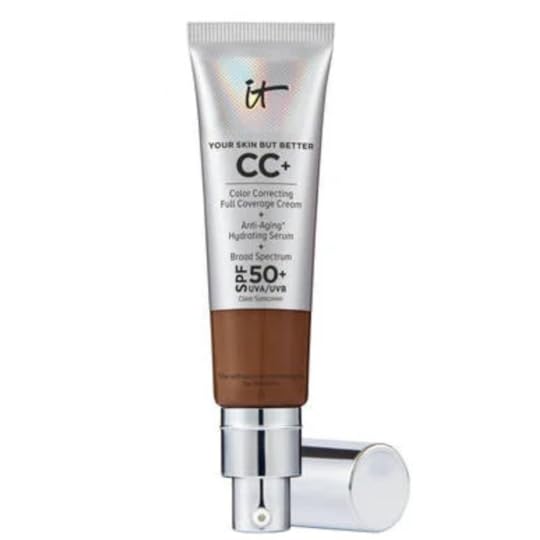
I do not want a super heavy foundation and this ,CC cream provides great coverage without being cakey. It’s also hydrating and has SPF 50 which is important especially this time of year now that spring is here, and we spend more time outdoors or vacationing.
If I’m not in counseling sessions or out speaking and having meetings, I am make-up free (and in my comfy cozy clothes!)
I don’t feel the need to “get ready for the day” and wear makeup if I’m not meeting with people, and I personally love being au natural when I am working from home.
All to say, when I do wear this foundation, I still look like me and feel confident too.
It’s my tried-and-true product that I have not once deviated from because it leaves my face looking natural and fresh. It stays on all day and the bottle has lasted me over a year so a little goes a long way.
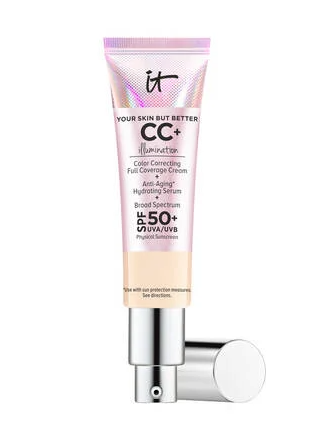
Overall, it provides color-correction, anti-aging benefits, full coverage, and sunscreen all in one product.
It Cosmetics also has a newer version of this foundation with an “illumination” feature I’m excited to try next time.
Here are some photos of me wearing the foundation so you can see what it looks like:
[image error][image error][image error][image error]The application brush
The brush I use to apply the It Cosmetics CC Cream (and my concealer) is my favorite so I’m linking it here as well: Heavenly Luxe Completion Perfection Brush #7.

For years prior to using a brush to apply makeup I used my hand or a blender type sponge. Now I’ll never not use a brush, specifically THIS brush.
The brush applies foundation evenly for a natural, airbrushed complexion. I have sensitive skin and the brush is so soft and allows me to access hard to reach places with precision to blend my foundation evenly. The opposite end with the smaller size brush is used to apply concealer and it blends so well.
#2 DIME Beauty perfumeInsert song by Etta James At Last: “At last, my perfume has come along”…
Dans Les Bois is my new favorite fragrance. I first heard about this perfume from content creator, Dani Austin. I’ve been following her on social media for quite some time. She’s a Believer, passionate about Jesus, an entrepreneur, and is one of my best-loved fashionistas. Dani is also authentic, relatable, and her style is trendy and bold yet she’s not afraid to show up makeup- less and in her pajamas. She’s also in therapy and a huge advocate of mental health. Her personal story and professional journey are beautiful and empowering.
OK, back to the perfume – the beauty brand, DIME, created a perfume after Dani hence the name, Dans Les Bois, and let me tell you, I will never use another perfume. People describe the perfume as a less expensive version of Baccarat. Anyhow, the scent of Dans Les Bois is woodsy, feminine, and sophisticated. There is a tiny hint of florals that makes the scent feminine but it’s not overpowering.
I’ve always had difficulty finding a perfume I like, a signature scent if you will. I love Chanel which I currently own, yet the scent is so strong. I am sensitive to strong perfumes, and they often give me a headache and I find other perfumes lead with an intense floral scent which are a bit much for me too.

I’ve been wearing this DIME perfume for a couple months now and get SO many compliments. Recently when I was at the salon, my hair stylist asked me what perfume I was wearing. She loved it and said, “It’s not too strong or floral and smells fresh.” She too is sensitive to certain scents and gets a headache from most perfumes.
Also, DIME is a brand that uses clean ingredients which I love. Trust me, this perfume is FABULOUS. It was love at first smell and this will be my go-to perfume. All the other perfumes on my dresser will collect dust. Ha!
#3 Greenheart Juice ShopIf you’re in the Northern Virginia, DC metro area…you’re welcome!
Once juicing became a thing, purchasing a juicer has been on my mental to-do-list but I could never bring myself to purchase a juicer and put in the time it takes every morning to juice. The process seemed intimidating, but I know the health benefits are HUGE. Then, I discovered ,Greenheart Juice Shop and it seemed too good to be true - fresh juice (no added ingredients) made daily and delivered directly to my door. Well, it is true.
Every week, I go on their website and select my juices for same day delivery because they believe juice should be made fresh every day. I purchase enough juice that will last for almost a week.
Right when I awake each morning, I pull a bottle of fresh juice out of my fridge, pour, and drink. It’s that simple and they taste delicious! The juices do not have that grassy taste where you want to plug your nose and get it over with kind of thing. And the juice comes in a beautiful glass bottle. A bonus is that the customer service experience is incredible, and they make you feel like part of the family.
I’m a huge proponent of supporting local businesses in my community. The founder, Alicia, has a story which is moving and provides so much hope in turning your pain into purpose. Truly the heart of this business.
If you are a busy professional or a busy mom and want to be a juicer to receive all the health benefits, but don’t have the time to juice everyday - you can now drink your fruits and veggies on the go.
Depending on where you live, they deliver directly to your doorstep.
In addition to their cold-pressed juices, they also offer salad, snacks, and smoothies. Speaking of salad, I alternate between the kale Caesar salad and the Thai salad. So fresh and yummy. After a day of counseling sessions or working from home, it’s so easy to grab a fresh salad from the fridge and enjoy. I can wind down with my favorite show and not have to worry about making dinner every night. Oh, and they have a cold brew latte for those of you who need caffeine and want all natural ingredients.

Here’s my weekly order including the health benefits + ingredients which are listed on the label:
Daily Greens: Spinach, Celery, Cucumber, Pineapple, Apple, Kale, Parsley, Ginger, Lemon, Mint | Alkalize the Body, Address Inflammation, Boost Immunity Defend: Red Apple, Green Apple, Orange, Lemon, Ginger, Ceylon Cinnamon | Boost Immunity, Improve Heart Health, Cancer Preventative Properties Immunity Boost Shot: 2oz: Ginger, Lemon | Boost Immunity, Improve Digestion, Protect Respiratory System Cold Brew Latte: House-Made Cold-Brew Coffee, Activated Cashews, Medjool Dates, Coconut Sugar, Vanilla Bean Powder, Himalayan Pink Salt | Increase Energy, Improve Brain Function Kale Caesar Salad: Kale, Roasted Chickpeas, Carrots, Grape Tomatoes, and a Creamy Cashew Caesar Dressing Raw Pad Thai Salad: Zucchini, Carrots, Red Cabbage, Edamame, Red Bell Pepper, Broccoli, Cilantro, Sesame Seeds, and a Thai-Style Tahini DressingMaking an investment in your health is worth it every penny. Cheers!
Here is the link to their website: ,Greenheart Juice Shop
#4 Ann Taylor pantsLoving these adorable pants from Ann Taylor.
[image error][image error]Now that Spring has arrived it means switching wardrobes for the warmer months. I personally prefer fall and winter fashion and colder weather in general. There is something about the quiet stillness that satisfies my soul. Most people dread the winter, but I embrace it. I find it an excuse to be indoors with a hot cup of tea, relaxing by the fire, with a good book in hand. There is not as much pressure or responsibility to be out and about with people and scheduling activities that fill up the calendar in spring and summer. Instead, I feel a sense of being rather than doing. Sitting quietly is always something I’m happy to do. I find it a gift.
I carry this mindset with me in every season, but especially in the colder months. I’m also an outdoor runner so in the spring and summer I’m always fighting off bugs and have difficulty breathing with the humidity – yuck! Anyways, I know I’m an outlier in this case! My friends think I’m weird because I like winter. Any of you feel the same or is it just me?
Because I love fashion, finding new spring clothes makes the change of season enjoyable for me. Wearing bolder colors in the spring is something fun I look forward to each year. I would describe my style as feminine and professional with a trendy edge. And these pants do the trick.
Many of us are working and connecting virtually these days which means people see us from the waist up – just our top. When we do go out, I think it’s fun to wear bold colored pants, a trendy dress, and shorts with a jacket and heels.
I would encourage you fashion wise to get out of your comfort zone, be bold, make a statement, and have fun with your style. Buy clothes that make you feel confident.
You deserve to feel comfortable in your own skin, not avoid mirrors, or dread getting dressed in the morning.
Speaking of making a fashion statement…
Fashion has always been a passion of mine. I love the way a good outfit makes me feel. How we look connects to how we feel. How you dress tells the world your story and who you are. Are you successful? Are you happy? Are you credible? Are you confident? Our appearance and how we carry ourselves is the first thing people notice; it’s just a reality. So, we can resist this reality and feel stressed or embrace it and feel better about ourselves.
To be seen and heard in your profession means you must dress the part, position yourself for success, and be taken seriously. Let’s be real: appearance matters, image is important, and so are first impressions. Not in an egotistical or self-absorbed way but you deserve to have a wardrobe you love, to show up looking the part, and create an authentic style that feels true to you. If you’re not at the weight you want, give yourself permission to buy clothes in a size that doesn’t remind you all day long of how you’re not at your “goal weight.”
As a believer, I think God created us a women to embrace our femininity and enjoy beauty. I help women of influence who are ministry leaders, business executives, influencers, pastors, professional therapists, coaches, authors, and in the media. A common theme among them is their fear of being powerful, brilliant, beautiful, and talented. As a result, they make themselves small because they are afraid of making others insecure, jealous, or appearing prideful. Often, this fear is greater and deeper than a fear of being inadequate.
As a child of God, I believe He created us to show His glory to the world IN EVERY WAY. I hope this gives you permission to embrace who you are and not to shrink, hide, or dimmish yourself in any way, including your appearance. The more you embrace this freedom mentality, the more you allow other women to do so too.
I had to make a mental and emotional health connection here. I couldn’t help myself!
Here are two different ways I styled these pants from Ann Taylor (one look with black and the other look with brown).
[image error][image error]Sadly, these exact pants are not available, but I’ve linked some similar items below that are also fantastic and make a statement.
You’ll love these alternatives! Tap the image to Shop Now
[image error][image error][image error][image error][image error][image error][image error][image error][image error]
Lastly, I can hear you commenting on my brown shoes – how fun are they?!?
So chic. those too!
#5 Half Baked Harvest: Chocolate Peanut Butter Oatmeal BarsI’ve recently been enjoying these VERY YUMMY snack bars. My husband and I have fallen in love with the recipes from Half Baked Harvest and this is one of our favs. Nobody describes these treats better than Tieghan Gerard of Half Baked Harvest:
“Retro-style – but updated, Chocolate Peanut Butter Oatmeal Bars. Think doughy, buttery oatmeal cookie base, layered with creamy peanut butter, and sweet salted chocolate on top. All made with simple, wholesome ingredients: oats, pure maple syrup, natural peanut butter, and dark chocolate. They’re sweet, salty, heavy on the peanut butter, extra chocolatey, gluten-free, and butter-free. Every last bite is truly delicious.”

These peanut butter bars have been my go-to snack in between counseling sessions or for a post-workout snack. They are very filing but not in an “I’m too full” or “I just ate bad for me food” kind of way. They taste delicious. There’s something about the combination of peanut butter and chocolate that really does it for me. The bottom layer of oats makes this snack more filling and still satisfies my sweet tooth. Oh, and keep them in the fridge, they are best devoured cold!
I’m a big fan of eating healthy but not in an obsessive way. I never go on diets or count calories. I enjoy food and believe everything should be consumed in moderation.
I strongly believe reaching goals and maintaining good habits, health or otherwise, comes from a place of joyful conviction not shame and self-deprivation!
Most people unconsciously work towards their goals by creating a way to avoid what they do not want (gaining weight, eating unhealthily). If your approach to getting to where you want to be is avoiding where you do not want to be, then your goal is not in getting what you want, it’s in avoiding what you don’t want. In other words, you are running away from something (being overweight or failing) instead of toward something (joy, wellness, and satisfaction).
OK the psychotherapist in me is popping up again – back to the bars.
Here is the recipe: Chocolate Peanut Butter Oatmeal Bars
Thanks for reading! I hope you all have a wonderful week!
April 11, 2023
My Gratitude Journal Changed My Life
An effective and powerful tool that I practice in my own life and encourage my clients to do so as well, is to have a daily gratitude journal. Keeping a gratitude journal has been a life changing experience for me over the last decade.
What does this look like practically? Start with the little things, the teeny-tiny moments each day brings.
Let me explain.
The Teeny-Tiny MomentsKeeping a gratitude journal is about the mini-moments of happiness, not just the significant successes or milestones. As you get in the habit of looking for the itsy-bitsy, teeny-tiny moments of happiness throughout your day, you will learn to find the good in everything.
When I wake up in the morning, I check my phone for any urgent issues and then I put it on silent mode, make my tea, and find a cozy place on my sofa with my gratitude journal in hand. I look outside at the beauty of God’s creation, I take a deep breath, close my eyes, and I let my mind wander to yesterday. I think about all the things that made me smile and brought me joy and I thank God for those things as I write them down. I take the time to unwrap each precious gift and savor them one at a time.
When I first started my gratitude journal, I felt silly because what made me happy seemed insignificant, frivolous, and maybe even weird. Now many years later I can say with absolute certainty - I cannot live without it.
Here's some examples from my gratitude journal:
Fun statement earrings The smell of homemade chili Opening the Bible at random and landing on the exact scripture I needed Dan's messy morning hair Sipping iced coffee as I walk home from my favorite neighborhood cafe Discovering a new fiction book The faint sound of bells ringing from the church down the street Flower petals from the trees falling around me during my run The UPS delivery person thanking me for my book and how it's helped himYou get the idea.
Now it's your turn to incorporate this practice into your life.
Each day, write down in your gratitude journal 3 things you are grateful for and be as detailed as possible. Be very specific...the teeny-tiny moments you experience. I'm not taking about general things like, “my job, my children, my home, my spouse, my friendships, my career, my ministry." Instead write something specific about each one that happened during the day. Like, "my husband unloaded the dishwasher because he knew I had a work deadline, my daughter gave me a hug even though we just had an argument, I received an email from somebody who shared how my work helped them get through a difficult time, or the person who does my hair felt comfortable sharing her story and I prayed for her."
I would encourage you to write first thing in the morning. Take at least 20 minutes after you wake up to sit in silence, pray, and create space by yourself before the chaos of the day begins. Make a choice to set aside focusing on what you didn't do and focus on what you did do and the unexpected moments that brought you joy. Get grounded in Jesus' love and allow Him to speak to your heart first before hearing from everyone else. Instead of anxiously having feelings of foreboding about all the things that could go wrong, you are intentionally setting yourself up to expect good things because you are focusing on the good things that did happen yesterday.
Although it is important to be specific about the little moments, it is equally important to write down the significant ones. Writing down the big milestones and dreams coming true in your gratitude journal is essential because doing so allows you pause and celebrate them before quickly moving on to the next thing. If you are in an especially busy season, it allows you to put words to them and come back to savor them later.
Speaking of dreams...
Living Your Dream Does Not Mean...We need simple joys even when we are living our big dreams. This is because having success and accomplishments does not leave you immune to life stressors. Living your dream does not mean life's daily responsibilities come to an end - like the carpool, laundry, pet responsibilities, exercise, emails, or household chores. Your loved ones still desire to spend time with you. Your deep-seated insecurities, unhealthy coping mechanisms, people-pleasing tendencies, or anxieties do not just go away either.
Over the last couple years, I celebrated huge dreams and milestones – I published my first book, moved into my dream home, and after much prayer and patience, got married to the love of my life. During those seasons, I was not as diligent with my gratitude journal. Mostly because quite suddenly my heart's desires and wildest dreams had come true, all at once. I did not pay as much attention to finding the teeny-tiny moments and simple joys because I was living my big dreams. So, I stopped keeping a gratitude journal for a while.
Gradually I realized living my dream did not solve all my problems and fix everything.
Talk about a humbling and convicting revelation!
In fact, life was harder in many ways, not easier. A bunch of new stressors occurred. Turns out, living your dream requires a lot more time, effort, and energy. Including, managing others' expectations, finding a new work-life balance, and multitasking on all the projects.
Now there is more to manage. More responsibility. More planning. More engagement. More deadlines. More obligations. More boundary-setting. More people to disappointment. And the most difficult for me—more to lose. There's also a greater risk of failure and rejection. Living mostly outside my comfort zone. Not wanting to lose momentum.
Along with my dreams came complexities I was not quite prepared for. This meant less self-care and less Andrea time. The time I had previously set aside to journal at the beginning and end of my day was replaced by answering one more email, crossing off one more thing on my to-do-list, and jotting down one more idea.
Internally at times, I was struggling with comparison and internal pressure to do more, be more, and produce more. My perfectionistic tendencies to do all things well came flooding back. If I was spending time with my husband and friends, I felt like I should be working and if I was working, I felt like I should be spending time with my loved ones. The daily tension I felt of not wanting to disappoint others and not give them my whole heart was difficult. All the while I was becoming increasingly disconnected from my own heart.
I found myself missing the simple joys and a slower pace of life when I would make time to write in my gratitude journal every morning and sit with myself. It was the best part of my day.
The constant thread of gratitude in my life was what kept me from unraveling when things became stressful.
I realized how with increased responsibility and obligation, there needs to be increased stillness and solitude, not less. Whether you received a promotion, a new home, a platform, a ministry position, a new baby, or you got married - whatever you dream looks like for you, be intentional about your gratitude journal.
Jesus models a lifestyle of making solitude and connecting with himself and his Father a priority, especially when his ministry was expanding:
"Yet the news about Him spread all the more, so that crowds of people came to hear Him...But Jesus often withdrew to lonely places and prayed." (Luke 5:15-16)
Jesus says to his disciples: “Come aside by yourselves to a deserted place and rest a while. For there were many coming and going." (Mark 6:31)
I made the life-changing decision to yet again set aside time each morning to sit with Jesus, my gratitude journal, and be still. I realized in all my ambitious endeavors I was operating in a state of busyness where perfecting, pleasing, and performing were drowning out the simple joys and the still small voice that whispers. I slowed down and began to pay attention. Now these sacred mornings with my gratitude journal have become a non-negotiable time for me (like exercising or eating breakfast). I protect them now with a passion and from an inner confidence that has continually given me peace and strength to face whatever the day brings.
You do not have to run on fumes, neglect yourself, and be driven by internal pressures. It's OK to live in the teeny-tiny moments AND celebrate the big, impressive dreams and milestones. The difference is that you experience a deep-seated joy of the soul regardless of what season of life you are in.
The Science of GratitudeThere's a science to gratitude. We re-wire our brain when we write down specific things we are grateful for because you will train your brain to have a positive bias. Meaning, you look for good things and so you find good things. This practice is important especially when you encounter painful and difficult circumstances because there is always something to be grateful for.
To rewire your brain in this way, it needs a lived experience to pair with it over just words and thoughts.
By writing down what you are grateful for, you are experiencing the joys all over again and reinforcing the truth that good things happen to you.
You are being intentional about creating space to document a lived experience rather than having fleeting thoughts about what you're grateful for that quickly disappear.
365 Days of RemindersThe primary reason my gratitude journal is a life-changing experience for me is because when I go back and read my journal from the previous week, month, year—I'm reminded of the precious gifts of everyday life. Most importantly, I'm reminded that God is always with me.
This practice of going back in time is my absolute favorite thing to do.
I'm in awe. I smile. I’m surprised. I laugh. I cry, and I’m grateful to God all over again. I re-live every gift, each moment, and it feels like Christmas morning. It's an overwhelming feeling of joy as if I am surrounded by so much beauty and don't know where to begin.
This exercise dramatically increases my faith because as I read 365 days full of mini-moments, I am powerfully reminded of God’s faithfulness. His goodness. The importance of His timing. How He provides for me in unexpected ways. How He takes care of me. How He protects me from myself. How He pursues me in the most intimate manner possible. If I did encounter hard and painful things, I gained the wisdom to deal with them and had the resiliency to overcome obstacles.
I gain a powerful perspective on what is truly important in this life and a reminder that no matter what happens, it is going to be OK. I'm reminded of how resilient I am. How Jesus is my very present help in time of need. How joy is my constant companion no matter the circumstances. I'm reminded of how far I've come. How much I've changed since this time last year. How much I've grown. I'm reminded of the things I was so worried about and how they never happened and how the desires of my heart did.
The photo accompanying this article was sourced from, i,stockand is in the public domain.
March 27, 2023
Overcoming Your Fantasy Friend

In the previous posts, I shared Rachel's story of heartbreak and more about her Fantasy Friend. We all have a Fantasy Friend we turn to that keeps us feeling safe, needed, loved, special, and important. Your Fantasy Friend can be any type of imagined companion or distraction in your life that you turn to and fantasize about when you are having a bad day, hurting, stressed, or struggling.
For example:
A woman is feeling inadequate among her skinny friends or perhaps she was recently rejected by a love interest or she did not receive the work promotion and begins fantasizing about what she would look like five or ten pounds lighter, what she would wear, whom she would impress, and how powerful she would feel. At this point, she is not counting calories, skipping meals, or starving herself. She does not have an eating disorder and she is not addicted to weight-loss supplements or drugs, at least for now. However, the fantasy is a defense mechanism that begins to interfere with her daily life and if not addressed, will gradually become toxic and all-consuming.
Deep down she believes the lie that her worth is tied to her appearance. Her Fantasy Friend, a skinnier version of herself, provides her with a false sense of comfort and security where she is beautiful and important. She entertains these images rather than honestly facing her painful feelings of inadequacy or rejection.
When you feel hurt, rejected, abandoned, ashamed, anxious, jealous, inadequate, or like an imposter, your Fantasy Friend makes you feel better.
Your Fantasy Friend comforts you. Your Fantasy Friend calls out to you, woos you, and draws you into denying your current reality, that is, the painful situation or relationship you are currently in. You fantasize by indulging and entertaining thoughts, ideas, conversations, or imaginations that are not real, but they fuel your denial.
During therapy I take my clients through the following exercise. I invite you to join me as well. Use a blank piece of paper or your journal to answer the questions below.
1. What is the difficult situation, unmet desire, or painful relationship you are trying to avoid?
Things such as heartbreak, the loss of a dream or a loved one, or not getting that promotion or position. Maybe you were recently fired, got diagnosed with an illness, gone through a divorce, infidelity, or bad breakup. Perhaps you experience overwhelming stress, no work-life balance, or regret of a missed opportunity.
Describe the painful thing:__________________
2. What or who is your Fantasy Friend that you turn to for comfort?
Here are some examples of who your Fantasy Friend may be:
A thinner, skinnier version of you A fancy new job, promotion, or position of power and influence A person you desire to be in a relationship with, to pursue you, and pay attention to you A perfectly decorated home in the best neighborhood that everyone envies and admires Traveling to exotic places with no responsibilities or commitments Children attending the top-rated schools and universities Romanticizing a previous version of yourself where you had less stress, more energy, more success, more adventure, more rest, or more time A larger audience: All the claps, follows, friends, and likesHere are some examples of what your Fantasy Friend can look like:
Food Work Sex Television Gossip Social Media To-Do Lists Drugs Sleep Shopping Exercising AlcoholName who or what your Fantasy Friend is:___________________
Most of these things are not bad or wrong in and of themselves. The problem arises when you use them to repeatedly escape reality. The reality of your pain (i.e. insecurities, heartaches, rejections, limitations, and losses).
Although these things provide immediate relief, the problem arises when we turn to these coping companions regularly for comfort. Coping companions begin in your imagination. Way before you turn to them for comfort, you fantasize about them in your imagination. The object of your fantasy, is your Fantasy Friend.
3. What painful emotions is your Fantasy Friend helping you to avoid?
Emotions such as grief, sadness, anger, fear, shame, anxiety, or feelings of insecurity, inadequacy, heartbreak, loneliness, or rejection.
Name the emotions:___________________
What You Can Name, You Can HealWhat you can name, you can heal. Now that you have named your Fantasy Friend, healing can begin.
The truth is, it is never our feelings that cause our issues but the way we choose to avoid those feelings. One way we avoid our feelings is through the defense of fantasy. Fantasizing is escaping a painful reality by longing for and imagining a different set of circumstances or relationships.
Your Fantasy Friend has been around for a while, knows you well, and feels familiar. But when you are hurt, you must make the decision not to turn to your Fantasy Friend. Your Fantasy Friend is depriving you of your God-given imagination. Your Fantasy Friend blocks you from healing, hearing God’s voice, receiving truth, and experiencing real comfort.
Your Fantasy Friend offers a quick, temporary fix. Your fantasy friend leaves you vulnerable to shame, to believing lies, and engaging in addictive behavior, because you are living in an illusion and clinging to your fantasy instead of clinging to the truth.
Rather than end our suffering by running toward the truth, we run toward our Fantasy Friend, our coping companions.
Your Fantasy Friend is an invisible imposter that invades your thought life and taints your pure imagination in order to sabotage your dreams and heart’s desires. Your Fantasy Friend will twist the truth to make it look like the object of your fantasy will satisfy you and take away your pain.
Fantasy is a distortion of the truth. The truth is conformity to reality, and fantasy is conformity to denial.
Make a choice to no longer turn to your Fantasy Friend for comfort. Take a stand for truth and face your hurt by inviting God into your pain and asking him to speak to you his words and to reveal his vision for your life. Eventually, your Fantasy Friend will no longer hold you captive and keep you stuck in a continual cycle of suffering, repeating the same unhealthy behaviors over and over again. Begin to say no to your Fantasy Friend and yes to God, yes to truth, and yes to freedom.
A Prayer For YouI invite you to say the following to prayer:
"Jesus, when I feel hurt, I turn to my Fantasy Friend of _________ for comfort. Forgive me for taking control of my pain by turning to things outside of myself to make me feel better. I desire you to be my comforter and my very present help in time of need. I ask you to help give me the strength to face my pain. I choose to feel my feelings instead of fear my feelings when I encounter something difficult and painful. Help me to live in the present moment, the here and now, instead of clinging to past hurts and fear of future pain. I will to cling to you instead of my Fantasy Friend.
My Fantasy Friend is easier to imagine and engage with. I no longer want to entertain the voice, images, and temporary relief of my Fantasy Friend. I want it to stop being my source of comfort and identity. I choose now to allow your voice, desires, and images to fill my heart and mind. Create within me a pure desire and imagination.
I am your child and you created me with purpose. I play an irreplaceable role in the lives of others because I am unique and special all on my own. I no longer want my source of worth and value to come from my performance, reputation, and appearance. I repent for allowing my jealousy, envy, and pride to be a driving force in my life. When things are hard or scary, when I have bad day, when I'm feeling hurt and alone, I choose to be courageous and deal with my pain instead of avoid it so I can be healed. Help me to accept the truth even when I'm afraid. I want the truth to set me free. Your redemptive power makes all things new and good. Thank you for being my Best Friend, My Constant Companion, and for never leaving me or forsaking me. In Jesus's name, Amen."
Then, ask Jesus: What do you want to give me in place of my Fantasy Friend?
Write down what you feel Him saying or showing you because...
Your Fantasy Friend is stealing from you the very thing Jesus has for you.
What Jesus desires to give you will satisfy the deep longings of your soul that your Fantasy Friend is trying to fulfill. There are passions, heart's desires, and dreams within you waiting to be discovered. There is hidden hurt waiting to be healed. There are deep truths waiting to bring you freedom. There is sadness waiting to be turned to joy. There is pain waiting to become your purpose. There are promises waiting to be fulfilled. There is a greater intimacy Jesus is waiting to have with you.
Overcoming your Fantasy Friend is not a one-time thing. Becoming aware of our patterns does not mean they will automatically disappear. It is as process and series of daily decisions. The healing process is not easy or pain-free; it is hard, but it's the right kind of hard.
We cannot change our painful circumstances, but we can learn to identify the lies we tell ourselves, the ways we live in denial, how we avoid our pain, and the ways we fantasize. Give yourself grace and compassion. When your Fantasy Friend calls to you, draws you in, and woos you, say, "No, I am choosing to walk away and not engage with you right now" and "Today, I am choosing to face my fears and deal with my pain." As you continually say no, your Fantasy Friend will no longer have a hold on your heart, consume your thoughts, and run your life.
**The content for this blog post has been taken from chapter 5 (What Feeds a Cuckoo? Lies we Believe and Defenses We Use) of Andrea’s book, ,The Cuckoo Syndrome: The Secret to Breaking Free from Unhealthy Relationships, Toxic Thinking, and Self-Sabotaging Behavior
The photo accompanying this article was sourced from, i,stock, ,and is in the public domain.
March 13, 2023
Rachel and Her Fantasy Friend

We all have a Fantasy Friend we turn to that keeps us feeling safe, needed, loved, special, and important.
Your "Fantasy Friend" can look like: A thinner, skinnier version of you; a fancy new job, promotion, or position of power and influence; a person you desire to be in a relationship with, to pursue you, and pay attention to you; a perfectly decorated home in the best neighborhood that everyone envies and admires; traveling to exotic places with no responsibilities or commitments; children attending the top-rated schools and universities; romanticizing a previous version of yourself where you had less stress, more energy, more success, more adventure, more rest, or more time; or a larger audience: All the claps, follows, friends, and likes.
None of these things are bad or wrong in and of themselves. The problem arises when you use them to repeatedly escape reality. The reality of your pain (i.e. insecurities, heartaches, rejections, limitations, and losses).
Here's an example:
Rachel was cake tasting for her wedding with her mother, sister, and maid of honor when she received the phone call. Her fiancé, Luke, said he needed to talk, and it was important. Her heart sank. A part of her knew the inevitable was approaching, although the stronger part of her was living in denial. She was hoping their engagement would make everything OK.
Luke told Rachel he loved her deeply and considered her his best friend, but he wasn’t quite sure if he was still in love with her. In fact, he had developed romantic feelings for someone else, a colleague at work. He said he had really hoped the engagement would solidify his love for Rachel and change his heart toward his colleague, but he nonetheless was beginning to feel trapped and increasingly anxious. He explained to Rachel he needed to explore his feelings for this other woman, whom he had considered a friend for so many years. Rachel had met this colleague while attending various work events, happy hours, and holiday parties over the years and had also overheard their phone conversations. She intuitively had a bad feeling about their work relationship and confronted Luke several times, yet she also desperately wanted to believe they were simply work friends.
Luke called off the wedding. He said he needed time and space to do some soul-searching. Rachel was ashamed, devastated, and heartbroken. Because the pain was intense, she began coping with her loss of both her fiancé and her dream of marriage by developing a fantasy to numb her pain. She fantasized how he would come back for her and realize the error of his ways, how he had made a horrible mistake. He would proclaim his love for Rachel, realizing that the other woman was nothing compared to Rachel and that his feelings for the other woman weren’t love but lust. As a result of her fantasy, she put her life on hold and waited for Luke.
Besides, she rationalized, he was honest with her about needing some time, so maybe he was right, he just needed some space to come to his senses. Or once his soul-searching season was over, he would be ready to make a commitment to marriage. She fantasized many different conversations they would have and imagined many scenarios of him surprising her and coming back for her. She even fantasized about how this entire situation could bring them even closer together than before, and they would tell this story to their children one day.
Rachel began to believe the lies she was telling herself, and her denial grew stronger and stronger. In the meantime, Luke avoided her phone calls. She even spiritualized away her pain by believing this must be God’s plan for their love story, and she just had to be patient and wait for him. Rachel was stuck. She was trapped in her fantasies caused by her denial.
Her underlying pain of sadness, rejection, heartbreak, and abandonment fueled her denial of reality that Luke had left her and that he said he might be in love with another woman. She never stopped to consider why she would want to marry a man like that. Instead, she hung on to the one wisp of hope she strongly believed she was hearing from him: “I need time to figure all this out.”
Rachel did not need to let go of Luke; he had already left. She needed to let go of her fantasy.
She needed to accept the reality that she was single and not getting married to Luke. Her fantasy was a defense mechanism she used to avoid her emotional pain. She was living in denial. Rachel was suffering.
Her source of suffering was not Luke or Luke’s leaving; it was her fantasy of him coming back. That is where she was stuck. Her fantasy was blocking her ability to heal and face the truth.
The truth is that she had been suffering in her relationship with Luke for years prior to their engagement. She could never quite trust him, especially regarding his relationship with his work colleague. Something seemed off. He spent longer hours at work. He slowly stopped pursuing Rachel, and she no longer felt special to him or a priority in his life.
By denying reality, she was unable to deal with her pain of abandonment in a healthy manner and grieve the loss of her fiancé. It was easier for her to relate to her fantasy instead, as she had very painful feelings of rejection over this loss. She was suffering because she had put her life and dreams on hold and waited for him.
Through our counseling sessions, Rachel was able to face her greatest fears, accept reality, let go of her fantasy, heal from her rejection and abandonment wounds, and embrace the grieving process. All of this gave her the freedom to enjoy her life again and trust God with her heart’s desires.
Years after her treatment ended, Rachel reached out to thank me for helping her see the truth during her sessions as well as to share a photo from her wedding day. She explained in her note that once she let go of her Fantasy Friend of Luke coming back, she found herself and truly enjoyed the company. She ended up marrying a wonderful man who was in her life all along, yet she had never noticed him while she was living in denial and caught up in her fantasies about Luke.
Many counselors in this case would treat Rachel for “love addiction” while also focusing the sessions on providing tools to help her let Luke go, not realizing they would be assisting her in avoiding reality because she needed to let her fantasy go, not Luke.
I've found in my work with clients, that denial is at the root of addictions.
We all have an addiction to denial, to not being present in the here and now when we experience pain and difficulties.
People who struggle with addictive behaviors, (whether it be your work, a substance, a relationship, or even your to-do-list), share one thing in common: They are addicted to denial; they want to escape their current reality because it is painful and scary. They do not want to be in the present moment, so they fantasize about an imaginary future. Their drug of choice is denial and their Fantasy Friend is waiting to provide comfort.
Perhaps your Fantasy Friend is not an addictive behavior or based upon losing a relationship, it could be any of the things I listed at the beginning of this article. Things related to your appearance, performance, or reputation. I encourage you to read the previous article, "Who's Your Fantasy Friend?" which provides an in-depth look at which coping companion you turn to for comfort and relief, and why.
Next week, I will share a specific exercise and a prayer to help you overcome your Fantasy Friend.
**The content for this blog post has been taken from chapter 5 (What Feeds a Cuckoo? Lies we Believe and Defenses We Use) of Andrea’s book, ,The Cuckoo Syndrome: The Secret to Breaking Free from Unhealthy Relationships, Toxic Thinking, and Self-Sabotaging Behavior
The photo accompanying this article was sourced from, i,stock, ,and is in the public domain.