
Stephen K. Ray's Blog, page 89
June 24, 2022
Day 11: St. Peter’s Basilca for Mass &Tour, Tre Fontaine and San Clemente
Still reveling in the Supreme Court decision yesterday to overturn Roe v. Wade after 50 years. Hallelujah!
Today is our final day together with our pilgrimage group. Tomorrow morning they fly home early. But today we cover some very important ground.
We arrive at St Peter‘s Basilica at 7:30 prepared for Mass. Then Liz Lev took us on a lively tour of the largest and most beautiful church in the world. From there we go to Tre Fontone which is ignored or unknown to most Pilgrims. But this is the site where Saint Paul was taken out of the Mammertine Prison in 67 A.D. and decapitated.
Not far from there is San Clemente which is very special for me because two of the Apostolic Fathers who helped bring me into the Catholic church are interred under the high altar. St. Ignatius of Antioch and St. Clement of Rome. Their writings helped convince me of the truths of the Catholic faith. But we also go down underneath into subterranean Rome and walk on the ancient streets of the first century.
After that, folks scattered throughout Rome to find nice cafés and restaurants for lunch, to do their last minute shopping and exploring, prayer and resting. We gather together at the end of the day for a nice Farewell Dinner at the Ristorante L’Archeologia on the Via Appia.
The post Day 11: St. Peter’s Basilca for Mass &Tour, Tre Fontaine and San Clemente appeared first on Defenders of the Catholic Faith.


Day 10: Ancient Rome, Peter’s Chair, St. Paul’s Tomb
On our first full day in Rome, we were joined by the inimitable Liz Lev, the art historian and superb Catholic guide for Rome. We began at St. John Lateran Church, which contains the Chair of St. Peter, the skulls of Peter and Paul, and it’s the “Mother Church of the World”.
I explained the typology between the Old and New Testaments magnificently lining the walls. We had Mass in this grand church. Next we toured around the Roman Forum and the Colosseum to understand the world that Peter and Paul stepped into in the 1st century.
Then to St. Paul Outside the Walls, the 2nd largest church in Rome that contains the tomb of the beloved apostle. A free afternoon to eat, shop, rest and explore on their own. Then we had dinner at one of our favorite restaurants “The Goose” for the best pizza we’ve ever found in Rome.
The post Day 10: Ancient Rome, Peter’s Chair, St. Paul’s Tomb appeared first on Defenders of the Catholic Faith.
Roe v. Wade finally overturned!
What wonderful long awaited news after nearly 50 years of babies being slaughtered in their mothers womb, the Supreme Court finally ends the Row v. Wade national abortion legalization with a 6-3 vote. God bless Donald Trump for the judges he picked and God bless America!
Now the battle enters a new stage which will take it state-by-state. Many states are going to forbid or restrict abortion and many states are going to promote it. We need to gear up for the new battles ahead and the hostility of the pro-death camp which is not going to take the sitting down.
Archbishop Cordileone just released a statement
The post Roe v. Wade finally overturned! appeared first on Defenders of the Catholic Faith.
June 23, 2022
What is the Opposite of the word “Believe” in the Bible?
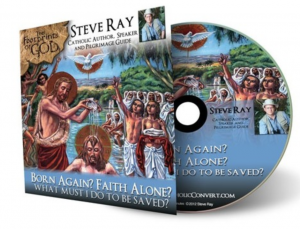 I received an email today regarding one of my talks I gave at Franciscan University of Steubenville. It is on my audio CD “Born Again? Faith Alone?” In the talk I said that the opposite of “believe” is to “disobey.” In other words, Jesus does not just require that we “believe” in him like we believe 2 + 2 = 4. When Jesus says “believe” he means complete obedience, a total surrender of our lives to him.
Here is the email I received:
Steve,
Yesterday, I watched the speech that you gave at the Franciscan University of Steubenville on “Faith Alone”, and I think your reference to the definition/opposite of belief in John 3:36 is a nail in the coffin to “Sola Fide”. My question is this: what if someone’s Bible doesn’t list the opposite of belief as “do not obey”, but rather “reject” or “not believe” (such as the KJV, NIV, Darby, etc.)? How do you argue for the version of the Bible that spells out “do not obey”, such as the RSVCE, that it’s the correct translation of Sacred Scripture?
Thanks Bill (made up name for anonymity)
Here is the text of John 3:36:
John 3:36 (RSVCE) “He who believes in the Son has eternal life; he who does not obey the Son shall not see life, but the wrath of God rests upon him.”
Here is my response:
Bill:
Every translation of the Bible has some bias. It is very difficult to translate the Bible into another language because of the difference in languages and words and nuances. Here are two articles I wrote on that https://www.catholicconvert.com/documents/Translations.pdfand https://www.catholicconvert.com/documents/NIVbias.doc.What really matters are two things: 1) what the word means in the original Greek and 2) how the first readers understood the word.Here are a few Greek dictionary entries for this word apeithe? from two of the most scholarly and reputable reference works on the Greek of the New Testament.36.23 apeithe? unwillingness or refusal to comply with the demands of some authority—‘to disobey, disobedience.’ ‘whoever disobeys the Son will never have life’ (literally ‘… will never see life’) Jn 3:36. ‘God’s wrath comes upon those who do not obey him’ Eph 5:6.(Johannes P. Louw and Eugene Albert Nida, Greek-English Lexicon of the New Testament: Based on Semantic Domains (New York: United Bible Societies, 1996), 467–468.)*****************************************
apeithe?. This word means “to be disobedient” and is a significant term in the LXX (Greek Old Testament) for disobedience to God. In the NT it is used of the wilderness generation in Heb. 3:18, that of the flood in 1 Pet. 3:20, all sinners in Rom. 2:8, and Gentiles in Heb. 11:31. Rom. 11:30. “To believe” is the opposite in Acts 14:1–2, and unbelief is parallel. We find an absolute use in Acts 14:2. Rom. 15:31; 1 Pet. 2:7. Important phrases are disobeying the word (1 Pet. 2:8), the gospel (4:17), and the Son (Jn. 3:36).
(Gerhard Kittel, Gerhard Friedrich, and Geoffrey William Bromiley, Theological Dictionary of the New Testament (Grand Rapids, MI: W.B. Eerdmans, 1985), 819–820.)
*******************************************
Disobeys occurs only here in John’s Gospel; it is obviously the opposite of believes, and so JB and Phps translate “refuses to believe.” It is possible to argue that the meaning of disobeys throws some light on the meaning of believes, that is, this kind of belief is the belief which leads to obedience. Therefore one may translate “Whoever obeys the Son has eternal life, and whoever disobeys the Son will never have life.” However, it is better to retain the terms “believes” and “disobeys,” since the very lack of clear opposition tends to reinforce the meaning of the respective terms.
(Barclay Moon Newman and Eugene Albert Nida, A Handbook on the Gospel of John, UBS Handbook Series (New York: United Bible Societies, 1993), 105.)
How it is translated in a variety of translations: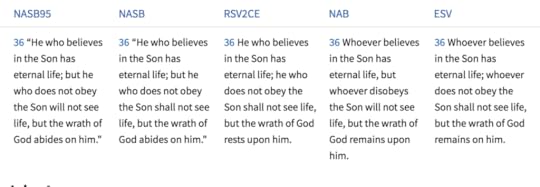 So, the bottom line is this: Belief is what is required and not just an intellectual belief, but a full surrender and obedience to Jesus Christ. This is what is required for our salvation.
The post What is the Opposite of the word “Believe” in the Bible? appeared first on Defenders of the Catholic Faith.
Day 9: Facecloth of Christ in Manoppello to Rome
Beautiful view of the Abruzzo Mountains from our breakfast window. We left the Excelsior Hotel in Lanciano and drove the one hour to Manoppello where we have the “Volto Santo — “the Holy Face”.
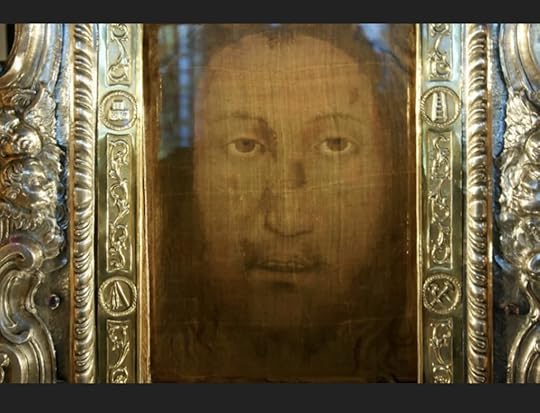
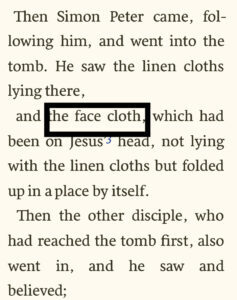
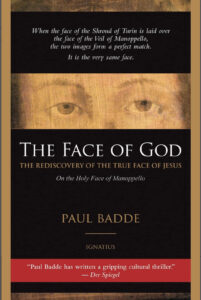
We had Mass in front of the Volto Santo which is always a highlight of our pilgrimages to Italy. The Face Cloth of Christ was the cloth that was covering his face in the tomb. When his life came back through the power of God, the image of that resurrection life imprinted itself on the translucent fabric made of muscle silk.
Paul Badde, the author of the Ignatius Press’s book “The Face of God” joined us for Mass and shared a few words to the delight of our pilgrims.
Then off to Rome with a few stops at rest areas and for lunch along the way. We settled in Rome and went out to a beautiful restaurant for dinner.
Bella Roma!
The post Day 9: Facecloth of Christ in Manoppello to Rome appeared first on Defenders of the Catholic Faith.
June 22, 2022
Response to an Ex-Catholic, now Baptist
A while ago I received an e-mail from a Southern Baptist and decided to take a few minutes to respond. Thought others might be edified by it so I have posted it here without using his name. His e-mail is contained in regular text and my response is in CAPITAL LETTERS but the capital letters are not YELLING but are used to differentiate.
****************************************************
HELLO FRIEND:
I WILL ANSWER BRIEFLY SINCE I GET OVER 100 EMAILS A DAY AND SOME ARE NOT ALWAYS HONEST — TRYING TO SET ME UP FOR AN ARGUMENT — BUG HOPEFULLY NOT YOUR E-MAIL. SO, I WILL TRUST YOU THAT YOUR ADMITTED INTEREST IS GENUINE AND I WILL ANSWER VERY BRIEFLY.
Dear Mr. Ray, I listened to a CD of yours,
WHICH ONE? I HAVE ABOUT 30.
but could not determine all of what you believe or find your Doctrinal Statement on the web. What we believe is pretty important (I know you agree). Do you have a Doctrinal Statement besides the Nicene Creed?
 Click here to buy a copy
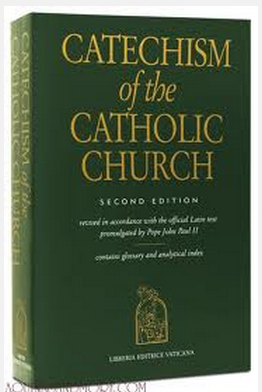
APOSTOLIC, NICENE, AND ATHANASIAN CREEDS. I USED TO SAY I HAD “NO CREED BUT THE BIBLE ALONE,” BUT EVEN PROTESTANTS CANNOT ACTUALLY DO THAT. THEY HAVE TO HAVE AN “EXTRA-BIBLICAL STATEMENT” TO ADD TO THE “BIBLE ALONE” TO EXPLAIN WHAT THEY BELIEVE BECAUSE THE BIBLE DOESN’T SEEM TO BE ADEQUATE. BUT FOR ME NOW — FOR THE WHOLE SHABANG — MY STATEMENT OF FAITH IS CONTAINED IN “THE CATECHISM OF THE CATHOLIC CHURCH.”
Having been to 12 years of Catholic School, a faithful altar boy, a good catholic, and an x-president of the local CYO, I am not altogether unfamiliar with Catholicism (at least the Catholicism of the 1950s, 60s and 70s).
IF YOU WERE EDUCATED DURING THAT TIME FRAME, I HATE TO DISAPPOINT YOU BUT YOU ARE PROBABLY VERY UNFAMILIAR WITH CATHOLICISM. THAT WAS A VERY BAD PERIOD OF THE CHURCH — JUST LIKE IT WAS VERY BAD FOR US BAPTISTS RAISED DURING THAT TIME PERIOD.
I “got saved”, as Baptist like to say, at age 24 by reading the Bible (unheard of in my Catholic Church at that time).
 MY GUESS, BASED ON GOOD EXPERIENCE, IS THAT YOU DIDN’T GET SAVED BY READING THE BIBLE ALONE BUT BY ACCEPTING A NEW AND NOVEL BAPTIST-ISH TRADITION AS COACHED BY SOME WELL-MEANING FUNDAMENTALIST — BASED ON THE BIBLE ALONE TRADITION WHICH IS VERY NEW ON THE RELIGIOUS SCENE AND NOT FOUND IN HISTORIC CHRISTIANITY.
So, from the Catholic perspective, since I have not attended Mass in 35 years, am I doomed to hell for un-confessed mortal sins? Or, is it possible that I may be saved outside of the Catholic Church? If so, how is that possible from a Catholic perspective?
THIS IS A VERY PREGNANT QUESTION. FIRST, ONLY GOD CAN READ THE HEART AND KNOW IF ONE IS “SAVED” OR NOT. SECOND, IT DEPENDS ON HOW KNOWLEDGEABLE OR IGNORANT ONE IS OF THE TRUTH DUE TO NO FAULT OF THEIR OWN. THIRD, IT DEPENDS ON IF ONE ACTUALLY HAS MORTAL SINS WHICH ARE ONLY MORTAL IF THE THREE QUALIFICATIONS FOR A MORTAL SIN HAVE BEEN MET.
FOURTH, THE CATHOLIC CHURCH TEACHES THAT ONE CAN BE OUTSIDE THE VISIBLE BOUNDS OF THE VISIBLE CATHOLIC CHURCH AND STILL BE SAVED, INCLUDING OTHER RELIGIONS OR NON-RELIGIONS (CCC 1260). IF YOU THINK THIS QUESTION YOU ASK IS UNANSWERED BY THE CHURCH, IT SHOWS YOU DO NOT UNDERSTAND CATHOLICISM, SINCE THAT WAS CAREFULLY EXPOUNDED AT VATICAN II WHICH WAS AN ECUMENICAL COUNCIL OF THE CHURCH. AND
FIFTH, I BELIEVE THAT MANY CATHOLICS WITHIN THE CHURCH WILL GO TO HELL FOR NOT OBEYING THE GOSPEL, NOT JUST THOSE OUTSIDE WHO HAVE REJECTED THE CHURCH EVEN THOUGH THEY KNEW WHAT THEY WERE DOING.
 I am heavily involved with cold call (door to door) evangelism in my community – not from a Baptist viewpoint, but simply from a general concern for the lost.
I WAS VERY INVOLVED WITH DOOR TO DOOR EVANGELISM TOO, BUT I ALWAYS ADMITTED I HAD A BAPTIST-TYPE TRADITION. WHY DO YOU WANT TO SHY AWAY FROM WHAT YOU REALLY ARE AND TEACH – A BAPTIST. I’VE NOTICED MANY BAPTIST CHURCHES ARE CHANGING THEIR NAMES TO REMOVE THE WORD “BAPTIST.” WHY RUN FROM YOUR HERITAGE AND WHAT YOU REALLY ARE?
I often talk with Catholics of all sorts. I always tell them and others that I don’t care where they go to church, as long as they have a heavenly home when they die. It would be nice to know what a leading Catholic author would say to me if he came to my Southern Baptist door evangelizing, and heard my story. When you ask someone if they are going to heaven when they die – as I am sure you know – you get a whole lot of interesting information in the response.
I USED TO QUOTE 1 John 5:13 UNTIL I REALIZED IT HAD TAKEN COMPLETELY OUT OF CONTEXT BY MY BAPTIST TRADITION. I HAVE WRITTEN EXTENSIVELY ON THAT VERSE IN MY BOOK “CROSSING THE TIBER.” DO YOU HAVE THAT BOOK?
I DARE SAY YOU WILL ALSO GET A LOT OF INTERESTING ANSWERS IF YOU ASK BAPTISTS THAT QUESTION — OR METHODISTS, OR ASSEMBLIES OF GOD, OR PENTECOSTALS, OR LUTHERANS, OR JEHOVAH’S WITNESSES.
 ALL IT PROVES IS THAT TOO MANY PEOPLE IN ALL THEIR VARIOUS TRADITIONS ARE POORLY CATECHIZED AND SADLY IGNORANT OF SCRIPTURE AND THE HISTORIC TEACHING OF THE CHURCH.
BY THE WAY, BAPTISTS DON’T “KNOW” IF THEY ARE GOING TO HEAVEN FOR SURE. THAT IS WHY SCRIPTURE CALLS IT “HOPE” AND WE KNOW THAT ONLY THOSE WHO PERSEVERE TO THE END WILL BE SAVED (Matt 10:22).
EVEN BAPTISTS BELIEVE THAT IF ONE FAILS TO DISPLAY THE APPROPRIATE WORKS TOWARD THE END IT PROBABLY MEANS THAT “IT NEVER TOOK.” SO, EVEN A BAPTIST IS NOT SURE UNTIL THE END AND THE NECESSARY WORKS CONTINUE TO BE DONE.
My beliefs, if you knocked on my door – I just happen to attend a Southern Baptist church right now (it is kind of like a mission field for me) – about salvation are simple. One is justified by faith in Jesus Christ as Savior – born again if you will.
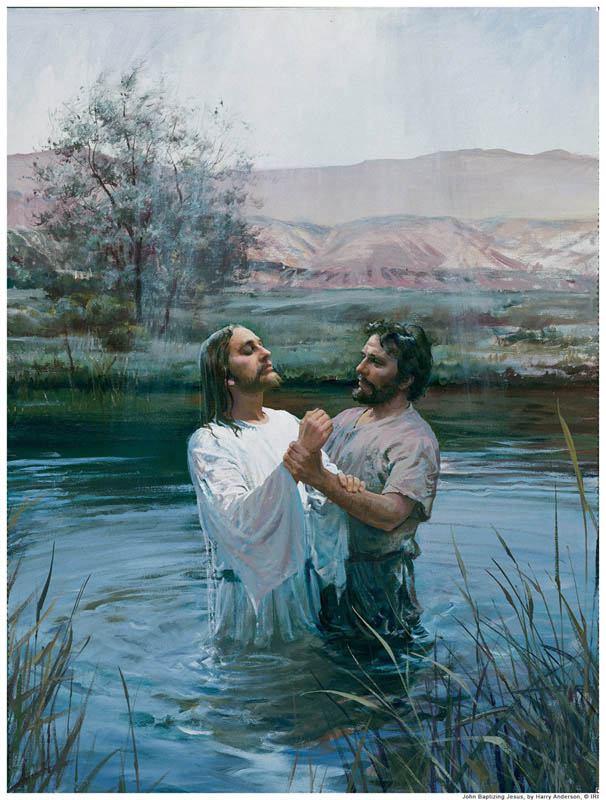 Jesus demonstrates “born again” by water and Spirit
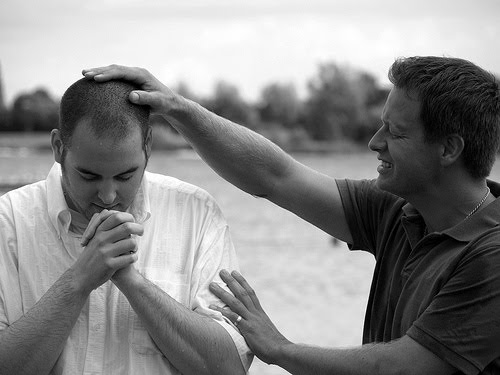
I WOULD BE CURIOUS TO KNOW HOW YOU WOULD EXPLAIN HOW ONE BECOMES “BORN AGAIN.” WHEN SOMEONE ASKS ME THAT I RESPOND BY SAYING, “YES, I AM BORN AGAIN, BUT I AM BORN AGAIN THE BIBLE WAY.” THIS OF COURSE IS BY “WATER AND SPIRIT” — WATER BAPTISM (Jn 3:3-5)
THE GOSPEL IS SIMPLE, THE THEN AGAIN IT IS NOT SIMPLE. FUNDAMENTALISTS TEND TO TALK ABOUT SALVATION WITH CONVENIENT “SOUND BITES” AND IN A TRUNCATED MANNER WHICH YOU WILL FIND NO WHERE IN THE EARLY YEARS OF THE CHURCH.
WHEN I USED TO TELL PEOPLE THEY WERE SAVED BY ONE THING: “BELIEVING IN CHRIST” — NOT BY ANYTHING WE CAN DO — WELL, I FORGOT THAT ‘BELIEVE” IS A VERB AND IS SOMETHING I MUST DO.
SO WE DO HAVE TO DO SOMETHING. WE DO HAVE TO “BELIEVE” AND “CONFESS WITH OUR MOUTH” (Rom 10:9-10) WHICH ONLY PROVES WE HAVE TO DO SOMETHING, SOME WORKS — WE HAVE TO “BELIEVE,” REPENT, CONFESS, EXERCISE FAITH, PRAY THE “SINNER’S PRAYER,” SURRENDER OUR LIVES — ALL THINGS WE MUST DO — WORK. (CF. John 6:28-29).
However, if there are no works following shortly thereafter, that one was not really saved (or justified). There must be works! However, those works are not a part of “justification”, but a part of the “sanctification” process. Works are a “sure-enough” sign of justification.
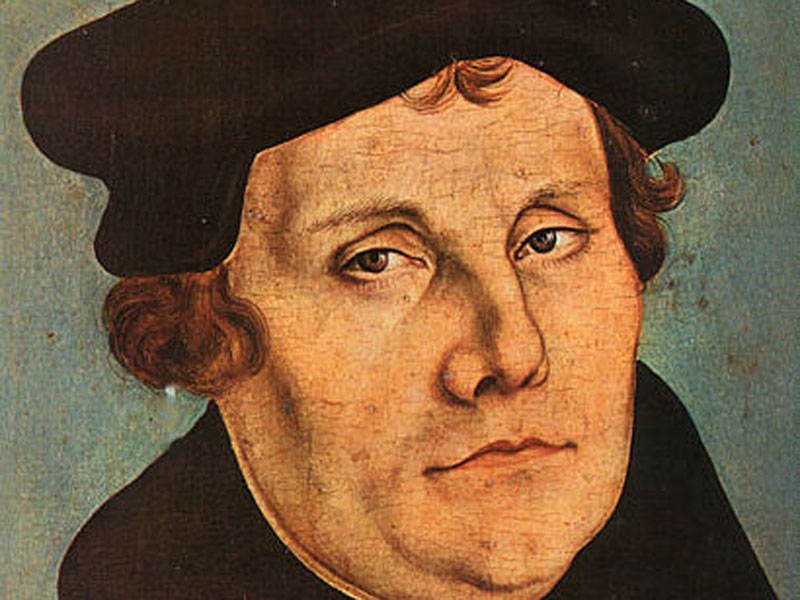 Confused Luther
WE AGREE IN PART THAT WORKS MUST ACCOMPANY INITIAL JUSTIFICATION. HOWEVER, THE REST OF WHAT YOU SAY IS INTERESTING BECAUSE SCRIPTURE SEEMS TO DISAGREE, WHICH IS WHY MARTIN LUTHER GOT HIS KNICKERS IN A KNOT).
TOO MANY PARROT MAN-MADE BAPTIST TRADITION AND TRITE SOUND BITES — CERTAINLY NOT SCRIPTURE IN ITS HISTORICAL AND CONTEXTUAL CONTEXT. I USED TO DO THAT TOO. BUT THE REALITY IS — JAMES IS PRETTY CLEAR EVEN IN THE NIV:
James 2:21: WAS NOT OUR ANCESTOR ABRAHAM CONSIDERED RIGHTEOUS [JUSTIFIED] FOR WHAT HE DID [WORKS] WHEN HE OFFERED HIS SON ISAAC ON THE ALTAR?
James 2:24-26 YOU SEE THAT A PERSON IS JUSTIFIED BY WHAT HE DOES [GREEK: WORKS] AND NOT BY FAITH ALONE.
IN THE SAME WAY, WAS NOT EVEN RAHAB THE PROSTITUTE CONSIDERED RIGHTEOUS [JUSTIFIED] FOR WHAT SHE DID [WORKS] WHEN SHE GAVE LODGING TO THE SPIES AND SENT THEM OFF IN A DIFFERENT DIRECTION?
I USED TO TRY TO TWIST JAMES AROUND LIKE A RUBBER NOSE TO KEEP IF FROM SAYING WHAT IT SAID. BUT THE FACT IS IT SAYS WHAT IT SAYS.
NOW WE AS CATHOLICS, AND YOU AS PROTESTANTS, DON’T BELIEVE WE GAIN INITIAL JUSTIFICATION THROUGH ANYTHING WE DO. NO ONE WILL STAND BEFORE GOD AND SAY, “YOU OWE ME.” HOWEVER, THAT DOES NOT DISMISS THAT FACT THAT ONCE INITIAL JUSTIFICATION HAS TAKEN APPLIED FREELY AND GRATUITOUSLY BY GOD.
HOWEVER, WE ARE THEN REQUIRED TO COOPERATE WITH THE GRACE OF GOD IN OUR JUSTIFICATION AND SANCTIFICATION. IN THE END REVELATION DOES NOT SAY WE ARE COVERED WITH THE RIGHTEOUSNESS OF CHRIST, BUT WITH THE RIGHTEOUS OF THE SAINTS! REV. 19:8.
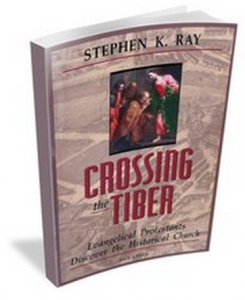 FROM MY BOOK “CROSSING THE TIBER”:
How does one receive salvation, justification, new birth and eternal life?
By believing in Christ (Jn 3:16; Acts 16:31)?
By repentance (Acts 2:38; 2 Pet 3:9)? [SOMETHING WE DO]
By baptism (Jn 3:5; 1 Pet 3:21; Titus 3:5)? [SOMETHING WE DO]
By the work of the Spirit (Jn 3:5; 2 Cor 3:6)?
By declaring with our mouths (Luke 12:8; Rom 10:9)? [A WORK]
By coming to a knowledge of the Truth (1 Tim 2:4; Heb 10:26)? [OUR ACHIEVEMENT]
By works (Rom 2:6, 7; James 2:24)?
By grace (Acts 15:11; Eph 2:8)?
By perseverance (Matt 10:22; Mk 13:13; Col 1:22-23)?
By his blood (Rom 5:9; Heb 9:22)?
By His righteousness (Rom 5:17; 2 Pet 1:1)?
By His cross (Eph 2:16; Col 2:14)?
I know the Catholic party line about faith and works from listening to your CD. My question above is outside of the typical party line and can most likely only be appreciated by someone with your background. Your response might help me deal with some of the less faithful Catholics (in greater proportion than any other group) that I come across from time to time.
I WOULD LOVE TO ASSIST YOU IF TIME ALLOWS. I HOPE MY RESPONSE IS HELPFUL TO ASSIST YOU IN UNDERSTANDING CATHOLICS. I MIGHT SUGGEST YOU GET MY BOOK “CROSSING THE TIBER” AND READ THE “CATECHISM” WHICH IS A MARVELOUS GIFT TO THE CHURCH. IT IS USED BY MANY PROTESTANT PASTORS IN PREPARING THEIR SERMONS
DON’T EXPECT ALL CATHOLICS TO ALWAYS UNDERSTAND AND BE ABLE TO EXPLAIN THEIR FAITH, ANY MORE THAN I EXPECT TO FIND BAPTISTS WHO CAN EVEN COME CLOSE TO EXPLAINING THEIR BELIEFS. IT IS NOT THE COMPETENCE OR INCOMPETENCE OF THE PERSON THAT MATTERS BUT THE ACTUAL TRUTH ITSELF. I RESPECT YOU FOR SEEKING FOR IT.
GOD BLESS AND STAY LOVING AND SERVING OUR LORD JESUS CHRIST.
STEVE RAY
The post Response to an Ex-Catholic, now Baptist appeared first on Defenders of the Catholic Faith.
Day 8: Milan to Eucharistic Miracle of Lanciano
The main portion of our a Oberammergau Passion play Pilgrimage through Germany, Switzerland and Italy has come to an end. Half of our pilgrims flew home this morning and the other half consolidated with us and one bus and headed south through Italy.
We were sad to say goodbye to them all and to our Polish guides Olga and Yatzik and our two excellent drivers. They all did a marvelous job and will be working with them again in August with our second Oberammergau trip.
It was a long day on the bus but we filled it with stories and prayers and naps and frequent rest stops and lunch. We made the best of it, but there were two accidents along the freeway that brought traffic to a stand still for about two hours.
We had Mass in front of the oldest and grandest of the Eucharistic miracles which is in Lunciano Italy. This miracle happened in the 700’s when a monk doubted the Real Presence and was surprised to have the host turn into heart muscle and drip blood from his hands.You’ll see more of this in the video below.
We had a nice dinner and settled into our hotel in Lanciano preparing for the Face Cloth of Christ in Manoppello Italy tomorrow on our way to Rome.
The post Day 8: Milan to Eucharistic Miracle of Lanciano appeared first on Defenders of the Catholic Faith.
June 21, 2022
Dear Protestant: Where Did You Get Your Bible?
Leila@LittleCatholicBubbleDear Protestant: Where did you get your New Testament?
At least a couple of times every week, Protestants use New Testament verses to show me where the Catholic Church is wrong about something. I always make them take the necessary step back by asking the following:
“Where did you get your New Testament?”
When they answer that it came from God (as indeed it did), I say, “Yes, but what was the mechanism God used to bring it to you today? How did it come to you, historically and in real-time, since it did not drop out of Heaven into your hands, leather-bound?”
Nine times out of ten, they have no answer because they have never considered the question.
The quick answer:
The Catholic Church officially determined and set the canon of the New Testament approximately 400 years after Christianity began. The canon was declared by the body of Catholic bishops at the Council of Carthage (397 A.D.) and confirmed by Pope Boniface (419 A.D.).
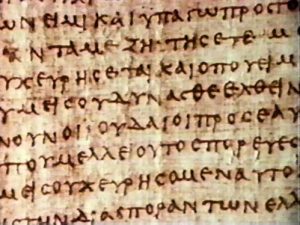
 Greek Manuscript
This is a historical fact.
Let me flesh out a few more of the details, which very few Christians (Protestant or Catholic) know.
After Christ’s ascension into Heaven, and after the Holy Spirit descended upon the first Christians at Pentecost, the Church thrived and grew exponentially for years before even one line of the New Testament was written. Let that sink in: Baptisms, catechesis, communal worship, conversions of thousands of sinners, Apostles and their companions traveling to other lands and risking imprisonment, torture, and death to evangelize the world with zeal — all went on for over a decade before the New Testament was even begun, much less completed.
Without having written a word, the Church was teaching, preaching, growing, and flourishing for many years.
Eventually, a very few Apostles and their disciples started writing down some of the Church’s oral Tradition: The Gospels, which recorded the life, death, and resurrection of Jesus, and also the Epistles (letters) of St. Paul and others, which gave encouragement and instruction to local churches being established throughout the world. The young Church cherished those gospels and letters and began to incorporate them into her liturgies and Masses.
 More and more written accounts and testimonies materialized as the Church grew, but contrary to today’s popular belief, it was not obvious to the early Christians which of these writings were truly God-inspired.
As brutal persecution of the Church continued in those first centuries, clarity about Christian writings became important. After all, Christians were being martyred routinely, and it was necessary to know which books were worth dying for.
Three categories of writings existed at that time:
1. Those writings that were universally acknowledged/accepted
2. Those writings that were disputed or controverted
3. Those writings that were known to be spurious or false
The first group included divinely-inspired books that we have in our Bible today, such as the four Gospels, the Epistles of St. Paul, and the Acts of the Apostles.
The second group included books that were simultaneously accepted in some Christian regions, rejected in others, and disputed in others. Some of these were indeed divinely inspired, such as the Epistles of James and Jude, one of Peter’s, two of John’s, the Epistle to the Hebrews, and the Book of Revelation, even as many Christians did not believe they were. Some were books that never made it into the final canon of the New Testament, but which several Christian communities considered inspired (and even used for catechizing and in the liturgy), such as the Shepherd of Hermas, the Epistle of Barnabas, Apostolic Constitutions, the Epistle of St. Clement, St. Paul’s Epistle to the Laodiceans, etc.
The third group consisted of the fakes floating around, spurious works which were never acknowledged or claimed by the Church, such as about 50 false gospels including the Gospel of Thomas and the Gospel of James, a couple dozen “Acts” (Acts of Pilate, Acts of Paul and Thecla, etc.), and some epistles and apocalypses.
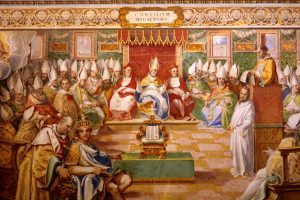 Under the promised guidance of the Holy Spirit and after a long series of historical events, a gathering of Catholic bishops went through the process of authoritatively and infallibly setting the books of the Christian canon, using the following criteria: a) The book in question must have been written in apostolic times by an Apostle or one close to an Apostle, and b) The book in question had to be doctrinally sound, completely conforming to Catholic Church teaching.
Several books met those criteria, and so it happened that some four centuries and 20 generations after Christ’s Resurrection, the Magisterium of the Catholic Church authoritatively set the canon of the New Testament, ending all confusion and doubt among the faithful.
Rome had spoken, and the canon was closed.
This leaves us with some takeaways:
— If the Catholic Church (bishops and pope) had the authority from God to set the New Testament canon, then she cannot be the corrupt and un-Christian “Whore of Babylon” as is claimed by many Protestants.
— If one accepts the canon of the New Testament, one must also accept the authority of the entity who gave it to us, i.e., the Catholic Church.
— If one rejects the authority of the Catholic Church, one should and must also reject the canon of the New Testament that came to us through the authority of the Catholic Church. (It makes sense that Martin Luther, the rebel behind the Protestant Reformation in the 1500s, wanted to throw out several of the New Testament books that he despised.)
— The New Testament cannot be “personally interpreted” by each individual Christian because it was never meant to be taken outside of the Church from which it came.
— The New Testament cannot and does not contradict Catholic doctrine, as it was Catholic doctrine that was used as a criterion for its authenticity and authority.
— The New Testament was discerned and canonized by men who had divine authority to do so — men who believed explicitly in the Mass, the Eucharist, the ministerial priesthood, Confession, Purgatory, veneration of Mary, infant baptism and infused grace, justification by faith and works, the Communion of Saints, etc., etc.
— The Bible came from the Church. In other words, the Bible is Church-based, not the other way around. If you get this paradigm wrong, you get some messed-up theology.
— If a Protestant uses Scripture to attack the Catholic Church, it’s like ripping off a man’s arm to beat him with it. Using a Catholic Book to beat up the Catholic Church makes no sense.
— If you believe that your eternal salvation is based entirely on a Book, isn’t it important to know where the Book came from and who was given authority to proclaim it? Who meticulously copied, preserved, protected, and guarded it with their lives, and who ultimately vouched for the fact that it is indeed the written Word of God?
There is so much more to discuss, and I would love to do so in the comments. Meanwhile, one of the best books on the subject, which I devoured when I came back to the Church, is Where We Got the Bible: Our Debt to the Catholic Church, by Henry G. Graham.
**Note: I did not include the Old Testament canon in this post, because I wanted to work with something that both Protestants and Catholics agree on, namely, the 27 books of the New Testament.
The post Dear Protestant: Where Did You Get Your Bible? appeared first on Defenders of the Catholic Faith.
Day 7: Milan Tour, Duomo, Da Vinci’s Last Supper
Milan is the 2nd largest city in Italy and a beautiful one at that. Marvelous churches, history and architecture. So with great enthusiasm everybody started out at 9 AM for a walking tour of downtown Milan. We visited the bones of St. Ambrose at his church.
Then to the Scalla Theatre which is the most famous opera house in the world.
Mass today was at the magnificent Duomo, the cathedral of Milan, and it has to be seen to be believed. We especially enjoyed seeing the often-missed baptismal font in the grotto where St. Ambrose baptized St. Augustine in 387.
A highlight of the day was acquiring very rare tickets to enter the temperature-controlled environment surrounding Leonardo da Vinci‘s painting “The Last Supper“. Very few people get to visit this amazing masterpiece of art so our group is very blessed today.
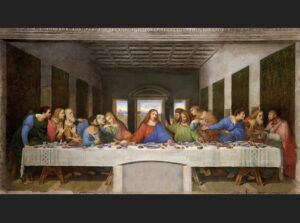
A bit of free time in the afternoon and then a delicious dinner at Sabatini Restaurant where we said “Good-bye” to the pilgrims heading home in the morning, while half of our group consolidates into one bus to continue on for the extension trip to Lanciano, Manoppella and two days in Rome.
The post Day 7: Milan Tour, Duomo, Da Vinci’s Last Supper appeared first on Defenders of the Catholic Faith.
June 20, 2022
Why Can’t Evangelicals See the Eucharist?
I was recently asked why Evangelicals cannot see the Eucharist and Real Presence in the Bible. This person said that when they read the Bible it seems so clear — especially John 6 where Jesus says “Unless you eat My Flesh and drink my Blood . . .” and at the Last Supper when he said, “This IS my flesh.”
“Why is it so easy to see for me,” she wrote, “while Evangelicals miss it?”
There are a good number of explanations for this, but I tried to put it in simple terms. I responded:
 “In answer to your question it all depends on what kind of glasses you are wearing. If you wear dark-colored glasses you see things differently than if you wear clear or red-shaded glasses. Every tradition, whether it is Catholic, Baptist, Mormon, or Lutheran has a tradition or grid through which they read and interpret the Bible. No one approaches the Bible objectively without any preconceived ideas or convictions.
“If one wears Baptist glasses and is convinced of the Baptist teaching, then they will see everything they read through their own Baptist ideas or tradition; they read their tradition into the text. Since they are told the Eucharist is only symbolic, they twist and tug to make Scripture fit their perspective.
“Also, as Evangelicals, we (or at least I) were convinced the Catholic Church was wrong and we didn’t even understand what they believed or the basis for it. I also didn’t know that ALL Christians for the first 1500 years believed what Catholics now teach. And that even now ALL Christians around the world believe in the Real Presence except for a very small sliver of the Christian pie — the Evangelicals, Fundamentalists, and a few other newly invented groups.
“The Catholic also has a tradition which has been handed down from the apostles. We can trace it with full confidence back to Jesus himself. When we read the Bible we have on our Catholic glasses which enables us to understand the Scriptures the way the apostles wrote it and the early Church understood it. We trust Scripture and the Tradition and this tradition is that which was taught by the apostles (2 Cor 11:2; 2 Thess 2:15; 3:6).
Be proud, yet humble, to be Catholic!”
The post Why Can’t Evangelicals See the Eucharist? appeared first on Defenders of the Catholic Faith.
Stephen K. Ray's Blog

- Stephen K. Ray's profile
- 27 followers

