
Stephen K. Ray's Blog, page 101
March 27, 2022
From Padre Pio to Rome
The morning we spent in San Giovanni Rotondo with Padre Pio. We started with Mass in the very chapel where Padre Pio regularly celebrated Mass with his famous confessional to the side. I gave a brief overview of the life of Padre Pio with some fun facts and spiritual challenges.
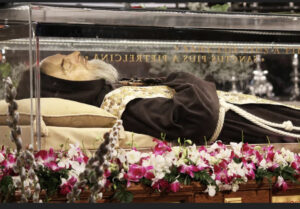
We visited and venerated his body which is in a glass case for easy. This was the highlight of the trip for many folks so we were not rushing anyone and gave them plenty of time to pray and appreciate this magnificent site.
Then we went to the new shrine, very modern in design, but beautiful in its own way, visiting the expansive museum and shop.
Then we boarded our bus and headed to Rome. Teresa and Dominick told the story of their saved marriage and coming into the fullness of Catholic life and I shared my conversion story as well. The priests shared their vocation stories.
We pretended Teresa was hosting a live “Catholic Connections”. Teresa, Fr.James and I fielded questions from the pilgrims. Had a grand time. Stopped several times along the way times for restrooms and sandwiches and such. We arrived at our exquisite hotel — the Michelangelo — which is only a five minute walk from St. Peters. Joan Lewis from EWTN joined us for dinner. Great dinner and to bed.
The post From Padre Pio to Rome appeared first on Defenders of the Catholic Faith.


March 26, 2022
Italy 8 Lanciano Eucharist Miracle to St Michael’s Cave to San Giovanni Rotundo
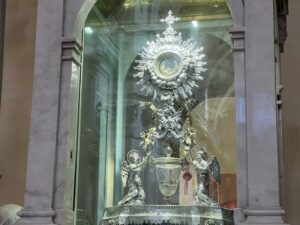 Another marvelous day with perfect weather. We started the day in Lanciano at the first and greatest Eucharistic miracle. We had Mass in front of the Eucharistic host that turned into heart muscle and the chalice which turned into human blood physically. This all happened in 750 A.D. when a priest doubted the Real Presence and was stunned by this miracle.
I gave my talk on the bus entitled “Defending the Eucharist”.
We then drove some gorgeous countryside with mountains and vineyards and olive groves and farmland and quaint villages arriving to the cave of Saint Michael which is the earliest apparition site in the 5th century. We entered right when they were praying the Divine Mercy and having adoration. Marvelous!
A nice lunch in Mount Saint Michael before a leisurely drive to San Giovanni Rotondo are we checked into our hotel had some free time and an excellent dinner.
The post Italy 8 Lanciano Eucharist Miracle to St Michael’s Cave to San Giovanni Rotundo appeared first on Defenders of the Catholic Faith.
March 25, 2022
Should Catholics Attend Non-denominational or Ecumenical Bible Studies?
Every day, Catholics are invited by coworkers, neighbors, and even family members to “ecumenical” Bible studies. Should they go? Certainly all of us would benefit from more study of Scripture, but as someone who has been a part of a number of Protestant Bible studies—I’ve even taught them—I discourage Catholics from attending them because of the foundational premises and principles in operation at these studies.
 Protestants are delighted to have Catholics attend their Bible studies, but it is often not because they want to hear and discuss the Catholic perspective on Scritpure. Instead, they see it as an opportunity to bring them to the “true Gospel”—to evangelize them, to get them saved.
In many cases, though certainly not all, the non-denominational Bible study is the Trojan Horse that infiltrates the Catholic’s mind and succeeds in drawing him away from the one, holy, catholic and apostolic Church—to join a Protestant group. Most of us have a family member or friend who has been affected in this way.
An unwary Catholic who steps into the Protestant Bible study usually does so with no intention of leaving the Catholic Church. They just want to study the Bible. The Catholic usually has a hard time finding a good and welcoming Bible study in Catholic circles—but this is changing.
First, while the Bible study may call itself “non-denominational,” Catholics and Orthodox are not usually included under this umbrella. While they may be invited, you’ll rarely find them in leadership.
Protestants think of themselves as people of the Book, not hampered by human tradition. They think of Catholics as, at best, followers of traditions for whom the Bible is secondary.
That is a huge misconception: Protestants are also people of tradition. No one reads the Bible objectively. People who claim to “just read the Bible” really read it through the eyes of a tradition they’ve already accepted, whether that be Fundamentalist, Calvinist, Pentecostal, Baptist or one of many others. Everyone depends upon tradition, but not everyone recognizes it.
“Bible Christians,” based on their tradition, study the Bible with these premises:
There is no binding authority but the Bible alone.There is no official binding interpretation or interpreter.The Bible is perspicuous (i.e., easy to understand) and can be interpreted and understood by anyone.An individual can and should read the Bible and interpret it for himself.Catholics, based on their Tradition, study the Bible with different premises:
The authority of the apostles and the Church preceded the Bible, and the Tradition of the Church is an equally infallible authority (2 Thess. 2:15; CCC 80–83). The Bible is part of the apostolic Tradition.The authoritative interpretation of the Bible is the prerogative of the Catholic Church (1 Tim. 3:15; Matt. 18:17; CCC 85-88).The Bible is not always easy to understand (2 Pet. 3:15-16) and needs to be understood within its historical and contextual framework and interpreted within the community to which it belongs.Individuals can and should read the Bible and interpret it for themselves—but within the framework of the Church’s authoritative teaching and not based on their own private interpretation (2 Pet 1:20-21).These basic differences place the Catholic and Protestant worlds apart even though they are opening the pages of the same book and accepting it as an authoritative revelation from God. The Catholic position is biblical and has been espoused from the first days of the Church. The Protestant position is unbiblical and is of recent origin. The Catholic is in full continuity with historical Christianity; Protestants are in discontinuity.
Catholics attending a non-denominational Bible study need to be aware of these differences and be ready not only to filter out false conclusions but also to guard themselves against the false underlying assumptions (e.g., that everything has to be found and proven explicitly in the Bible).
Catholics who are unaware often begin to adopt a Protestant mentality without knowing they are doing so, gradually learning to suspect the Catholic Church and trying to prove everything from the Bible.
Let’s Take Just One Example: Baptism
But what difference do these premises make? Let’s take the example of 1 Peter 3:18-21:
For Christ also died for sins once for all, the righteous for the unrighteous, that he might bring us to God, being put to death in the flesh but made alive in the spirit; in which he went and preached to the spirits in prison, who formerly did not obey, when God’s patience waited in the days of Noah, during the building of the ark, in which a few, that is, eight persons, were saved through water. Baptism, which corresponds to this, now saves you, not as a removal of dirt from the body but as an appeal to God for a clear conscience, through the resurrection of Jesus Christ.
Notice the words in italics. What does it say? To Catholics it makes perfect sense because Christians have always taught (until the Reformation) that baptism is essential for salvation. As Catholics, we can draw from a wealth of other biblical and patristic passages that consistently and continuously teach a seamless garment of doctrine—the constant teaching of the Church, of all Christians.
A few examples:
Jesus answered, “Truly, truly, I say to you, unless one is born of water and the Spirit, he cannot enter into the kingdom of God.” (John 3:5)
This has always been understood to mean water baptism, until descendants of the Reformation denied it and came up with new interpretations, such as that the water refers to the water in the womb, the word of God, or even a synonym for the Spirit (as in “water, even the Spirit”). There is no consensus among Protestants.
Other examples are Acts 2:38 and Acts 22:16. The first says, “And Peter said to them, ‘Repent, and be baptized every one of you in the name of Jesus Christ for the forgiveness of your sins; and you shall receive the gift of the Holy Spirit.’”
The second one says, “And now why do you wait? Rise and be baptized, and wash away your sins, calling on his name.”
These verses agree with the words of Jesus, Titus 3:5, and the rest of the New Testament about the necessity and importance of baptism. But many Evangelicals will offer in reply a list of verses that say salvation is by faith (e.g., John 3:16) and argue that since he can find twenty-five verses that say salvation is by faith, it can’t be by baptism.
Can we cut two verses out of the Bible because we find ten others that seem to contradict? Heavens, no! We have to find a way to explain and accept both and harmonize them into a cogent theology. That is what Catholics have been doing well for two millenia.
One of the great reliefs for me as a Catholic was to read the Bible without having to set aside verses that didn’t agree with my preconceived assumptions. Catholics do not have this problem.
A Figure of a Figure? Go Figure.
Now, back to 1 Peter 3:18-21. Protestant commentaries on Scripture admit it is one of the most difficult passages of the Bible to interpret. Here is a quote from my book Crossing the Tiber:
In his recent anti-Catholic book The Gospel according to Rome, James McCarthy says that “when Peter says that ‘baptism now saves you,’ he is speaking of the typological, or symbolic, significance of baptism. . . . It [the word figure] tells us that what follows, ‘baptism now saves you,’ is a figurative illustration that complements the symbolism of a preceding figure” (331-332).
It seems he is saying that baptism is a figure of a figure instead of the fulfillment of a figure. A Greek-English Lexicon of the New Testament and other Early Christian Literature offers a different and more straightforward interpretation: “Baptism, which is a fulfillment (of the type), now saves you, i.e., the saving of Noah from the flood is a . . . ‘foreshadowing’ and baptism corresponds to it [fulfills it]” (75).
McCarthy does go on to say: “This verse is part of one of the most difficult passages in the New Testament to interpret. Nevertheless, this much is clear: it does not support the Roman Catholic doctrine” (331-332). (Crossing the Tiber, p. 130, note 56)
The Catholic interpretation explains the passage quite comfortably without twisting the text from its clear meaning, accepting the literal meaning of the text, and complementing the rest of New Testament teaching. It is difficult for McCarthy to interpret because he comes to the passage with a handicap: his Fundamentalist preconceptions.
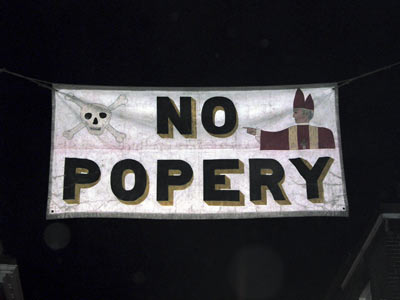 Catholics: Seen but Not Heard
Baptism is just one example, and we have only scratched the surface. Other examples of passages that are difficult for Evangelicals—and where unwary Catholics attending a non-denominational Bible study can be misled—are John 20:23, Colossians 1:24, James 2:24, Matthew 16:18-19, and John 5:28-29.
Catholics often find non-denominational Bible studies appealing because of the warm, serious, loving, and family-like environment. Being used to reverence and quiet devotion, Catholics find the welcoming and chatty nature of these gatherings refreshing and new.
But there is such a thing as an ecumenical Bible study that doesn’t allow knowledgeable Catholics to participate in leadership or where the Catholic perspective is not equally presented and discussed with respect. In a truly ecumenical Bible study, the Catholic interpretation and teaching is not treated as substandard or heretical.
Also, the Catholic Church is not a “denomination” (which means “to take a new name”); it is the Church. Those who are in schism, who break away or subsist apart from it are denominations or sects. The Church is not. It is the Church.
There’s still a long way to go to get Catholics to the point of scriptural study that Protestants have achieved. But it is happening, and you can help. For more information, see my article “Starting a Parish Bible Study” at www.catholicconvert.com.
SIDEBARS
Before Chapter and Verse
Chapter and verse divisions in the Bible are quite recent. They have proven quite helpful in biblical study and finding our way around. But they can also be a great hindrance if people begin to see the Bible as an unrelated collection of wise maxims listed numerically. It becomes quite easy to pluck a numbered statement (a verse) out of its context and quote it as in independent entity. For the first 1,600 years of Christianity, biblical study was conducted without verse numbers, forcing the reader to see whole texts and not simply lists of unrelated sentences randomly compiled.
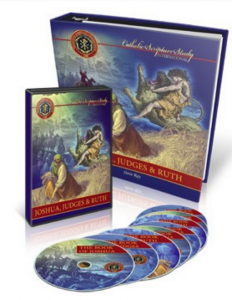 Bible Resources
Sites to help you find a Bible study, start a Bible study, or get Bible study materials:
www.catholicscripturestudy.com
A Catholic Answers booklet to help you get started reading the Bible:
Beginning Apologetics 7: How to Read the Bible by Jim Burnham and Fr. Frank Chacon (San Juan Catholic Seminars, 2003)
Books available at www.catholic.com to help your understanding of Scripture:
A Guide to the Bible by Antonio Fuentes (Four Courts Press, 1987)
Inside the Bible by Kenneth Baker, S.J. (Ignatius Press, 1998)
You Can Understand the Bible by Peter Kreeft (Ignatius, 2005)
How to Read the Bible Every Day by Carmen Rojas (Servant Books, 1988)
Books that answer common Protestant questions:
Where Is That in the Bible? by Patrick Madrid (Our Sunday Visitor, 1999)
Where We Got the Bible by Bishop Henry G. Graham (Catholic Answers, 1997)
The post Should Catholics Attend Non-denominational or Ecumenical Bible Studies? appeared first on Defenders of the Catholic Faith.
Italy 7: Assisi to Loreto to Manoppello to Lanciano
Another eventful day but also a good bit of bus time which we filled with fun activities. After a casual breakfast we left our Giotto Hotel and went down into the valley to visit the Church of Mary of the Angels. This is where the Portiuncola is situated, the small chapel where the San Damiano cross spoke to St. Francis around 1200.
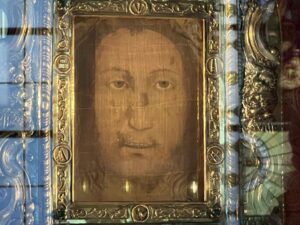 Another drive brought us to the Holy House of Loreto, then to Manoppello where we venerated the face cloth of Christ and had Mass. To understand what we saw here I am quoting from St. John’s gospel word explains the face cloth.
John 20:6–7 “Simon Peter came, following him, and went into the tomb. He saw the linen cloths lying there, and the face cloth, which had been on Jesus’ head, not lying with the linen cloths but folded up in a place by itself.”
Another hour drive to the beautiful Abruzzo region brought us to Lunciano where we settled into our hotel and had a nice dinner. Tomorrow we’ll have Mass in front of the Eucharistic miracle.
The post Italy 7: Assisi to Loreto to Manoppello to Lanciano appeared first on Defenders of the Catholic Faith.
March 24, 2022
Was Baptism Instituted Before or After Jesus’ Death and Resurrection?
The other day a friend wrote and asked a question. It was an interesting question.
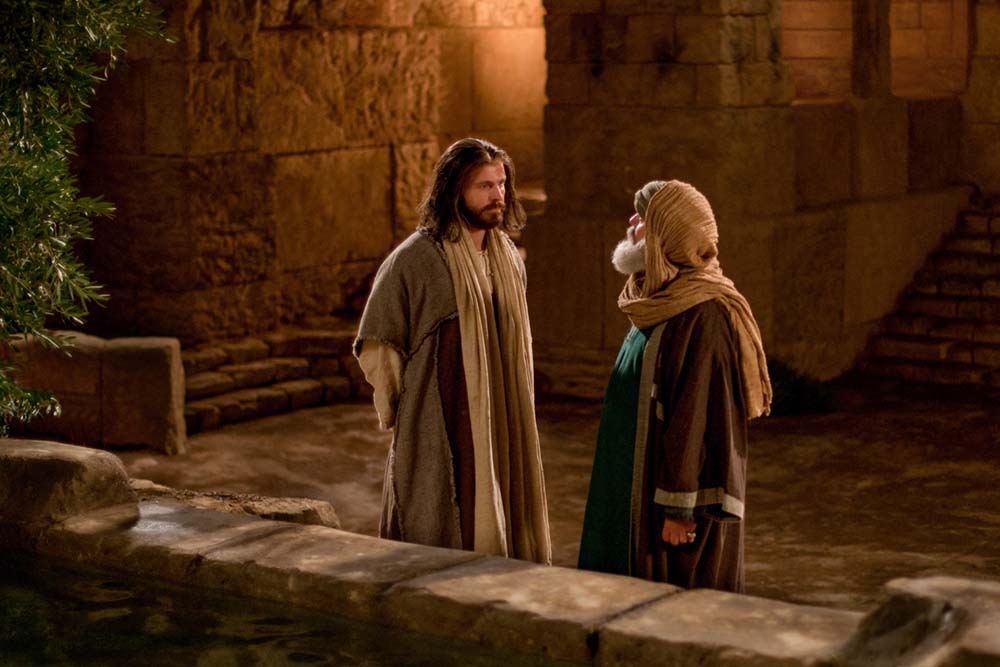 Jesus to Nicodemus, “You must be born again of water and the Spirit.”
“Is the answer to this that in the earlier examples, only the disciples did the baptizing and John is using a Hebraic figure of speech such that his disciples did them in his name and by his authority? If so, it would seem that these baptisms were not, in fact, salvific but were more like the non-sacramental baptism of John the Baptist. Am I getting close?
“FYI, the context here is a caller asked the same question and got two different answers from two different guests. The caller wanted to know how Jesus could administer the very salvific baptism he announces in John 3:5 when the Spirit had not been sent yet.
Thanks, author of John’s Gospel!”
Here is how I responded:
Transition periods in salvation history are not always easy to peg, for example, did the Apostles receive the Holy Spirit when Jesus breathed on them (Jn 20:22-23) or when the Holy Spirit came down on Pentecost?
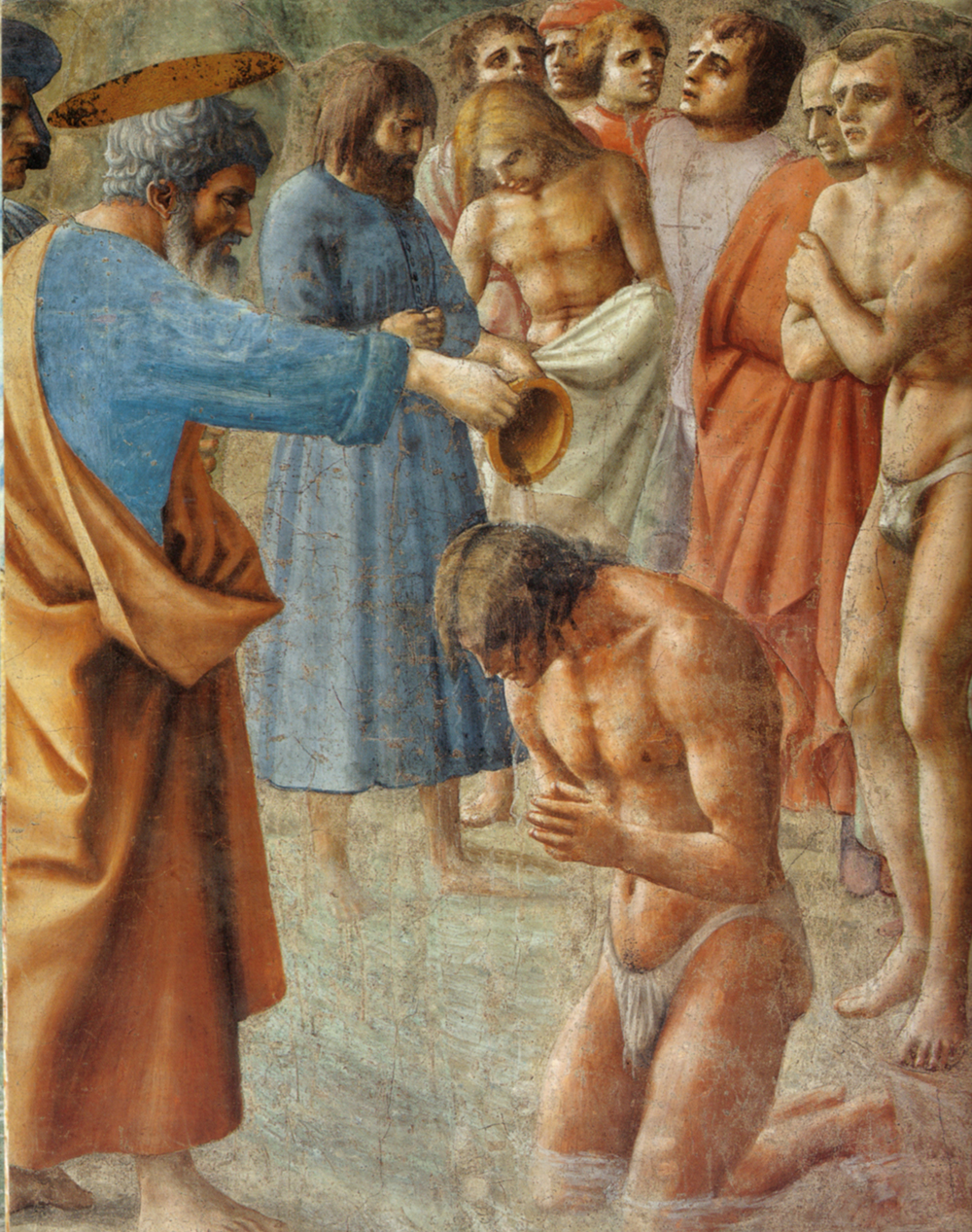 Another one, in Acts they were baptized in the “Name of Jesus” but Matthew says “in the Name of Father…Son…Holy Spirit.” The believers St. Paul found in Ephesus had only been baptized with John’s baptism and were then baptized by Paul in the name of Jesus to receive the Holy Spirit (Acts 19:1-7). Should it be in the Name of the Trinity, or in the Name of Jesus? And obviously some Christians were baptizing without the full understanding or proper method of baptizing.
Jesus stood as a bridge or transition between John the Baptist’s baptism of repentance and St. Paul’s baptism in the Name of Jesus that brought the Holy Spirit. I have to believe that when Jesus baptized, or rather when his disciples baptized in persona Christi, that something actually happened since Jesus had already announce the salvific quality of baptism earlier in John 3:3-5. Just like Jesus turned bread into his Body in the Upper Room, I believe that Jesus also through baptism brought about a regeneration. If not his baptism in John 4:1-3 is out of context with what He says in John 3:3-5.
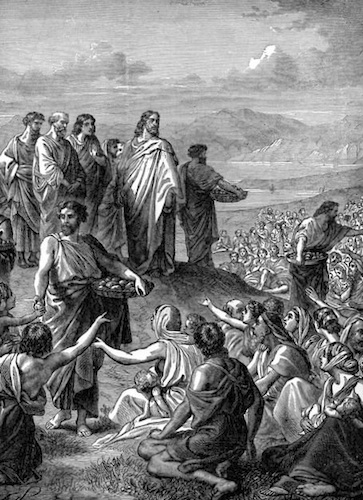 As to who baptized – Jesus or his disciples? Let’s begin with the multiplication of loaves and fish. When Jesus broke the loaves did HE give the miraculous bread to the people (Jn 6:11) or did his disciples distribute the bread and fish? Or did Jesus give it but THROUGH the hands of his disciples (Mt 14:19)?
Your comment about in persona Christi I think is very correct.
From my book St. John’s Gospel, A Commentary and Bible Study Guide:
In verse 11, how did Jesus distribute the bread and fish? How do the other Gospels shed light on the actual means of distribution (Mt 14:19; Mk 6:40–41; Lk 9:14–16)? How did Jesus work through his apostles (cf. Jn 4:1–2; CCC 1335) as his delegated agents, with the claim that it was done by Christ himself? How does this help us understand the priesthood and the sacraments (cf. Jn 4:1–2; CCC 1548)? How does this help us understand the deeper meanings and sacramental content of St. John’s Gospel?
» Theological note: This is the only miracle in which Jesus allows his disciples to participate. Why? What does it symbolize? Compare it with Numbers 11:13ff. Here the appointed leaders participate in the “spirit” with Moses; so with the apostles and their successors with Jesus. This is a beautiful picture of the Catholic Church: “all the people” representing the universal Church, gathered in “small groups” of fifty to one hundred, representing the local churches, all being fed by Christ, the great High Priest, who provides the miraculous “bread” of the Eucharist to all the people through the hands of his priests, the apostles.”
Also,
According to verse 1, how many disciples did Jesus have? What is symbolic and sacramental about the fact that “Jesus was making and baptizing more disciples … although Jesus himself did not baptize, but only his disciples” (Jn 13:20; CCC 858, 1548)?
» Theological note: The priest in the Catholic Church sacramentally stands “in the place of Christ” (CCC 1142, 1548). The priest shares in the work and priesthood of Christ, without in any way detracting from Christ’s unique and singular position as High Priest. As one who prays for another shares in the intercessory work of Christ (Rom 8:34; Heb 7:25; Rom 11:2, which refers to Elijah interceding with God; Eph 6:18; 1 Tim 2:1), so those who are disciples of Christ do things in his name, especially the priest who acts in a special way—in persona Christi—in the person of Christ.”
Now as to whether the baptism is sacramental or only a Jewish washing – as a sign of repentance, looking forward to the sacrament. This is an interesting question.
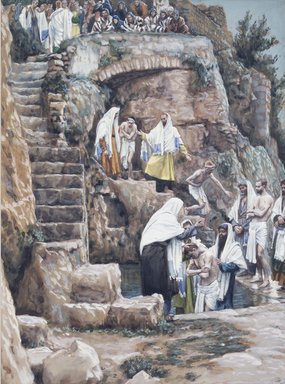 To suggest that Jesus through his disciples did not have the authority or the power to regenerate would seem rather weak. It is interesting that he is baptizing immediately following his statement that one “must be born of water and Spirit to enter the kingdom of God.” So do Jesus’ actions contradict what he just said to Nicodemus? Do the people being baptized expect more than Jesus is actually giving? And never do I see Jesus saying “you’ll have to be baptized again after my resurrection to be regenerated.”
On the other hand, since the Holy Spirit had not officially come yet on the day of Pentecost others have a good point saying that it’s not the baptism of the New Covenant, yet.
However, in the upper room Jesus broke the bread and said it WAS his Body even though he had not yet offered himself as the sacrifice, having not yet died on the cross. The sacrament of the Eucharist had been instituted as a New Covenant sacrament yet the descent of the Holy Spirit would not take place for another fifty three days. But Jesus still says that the bread he holds in his hand is his Body and Augustine says, “he held his own flesh in his own hands.”
So I can see both sides though I fall on the side of believing it did what the “sign” suggests. In other words, I believe Jesus instituted the sacrament of Baptism when he announced it to Nicodemus and began baptizing immediately thereafter.
For a very thorough discussion of this matter in the 1913 edition of the 13-volume Catholic Encyclopedia, which I read only after writing the above, click here. Seems we concluded the same thing 
The post Was Baptism Instituted Before or After Jesus’ Death and Resurrection? appeared first on Defenders of the Catholic Faith.
Italy 6: Assisi all day with Mass at St. Francis’ and dinner at a winery
Today is all day Assisi! People love this mountainside medieval village, or city. It’s always hard to get people to leave but we’re blessed to have a whole day and a half here with Mass at the two main churches and lots of free time as well.
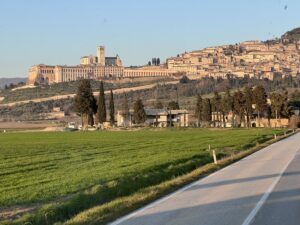 We started today with Mass at the church of St. Francis, actually in the Franciscan monastery attached, which is even more special. We had a guided tour of the whole city and the life of St. Francis and St. Clare, the birth place, their tombs and all the stories and events surrounding their lives.
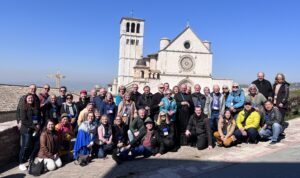 We also went to the Hermitage where St. Francis stayed up in the mountains. We all enjoyed another winery and dinner outside the city in the beautiful countryside. A great day for all!
The post Italy 6: Assisi all day with Mass at St. Francis’ and dinner at a winery appeared first on Defenders of the Catholic Faith.
March 23, 2022
The Eucharist: the Flesh Profits Nothing
Since we are in Capernaum today, I decided to share a few words related to the site. I was recently asked a related questions questionic Answers Live. Capernaum is where Jesus said “Eat My Flesh; Drink My Blood.” I thought it would be appropriate to answer an e-mail I received a while ago from a man named Tim. He asked:
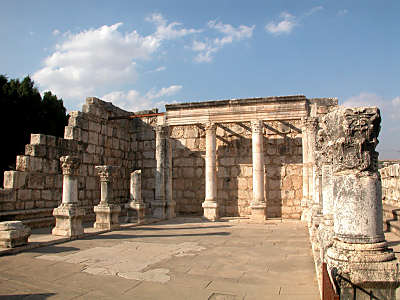 “I’m not sure if you normally field apologetics questions from your readers, but as I’ve had no response at other sites I thought I’d give you a go. I have been engaged in a debate with a Protestant regarding the Real Presence and have reached a bit of an impasse. My Protestant friend cites Matthew 13:34-35.
(Picture to left: Remains of synagogue in Capernaum)
All these things spake Jesus unto the multitude in parables; and without a parable spake he not unto them that it might be fulfilled which was spoken by the prophet, saying, I will open my mouth in parables; I will utter things which have been kept secret from the foundation of the world.
He presents this as evidence that when Jesus spoke of us eating his flesh in John 6:54-58, he was speaking metaphorically. He considers that because Jesus was addressing a crowd he must have been using a parable, thus the dogma of the Real Presence is not biblical. Unfortunately my friend chooses not to engage with the host of other arguments (“phago” vs “trogo”; the fact that Jesus’ insistence that His disciples eat His flesh drove them away; etc) and keeps reiterating that the apparent inconsistencies do not matter – all that matters is that the Bible says that Jesus spoke in parables to crowds. How would you answer this argument?”
So I responded:
I will try to answer quickly as you are right, I usually don’t have time to field these questions since I get 100 emails on a good day. But I do strongly suggest you post your question on my Message Board which was set up for this very purpose and you will get plenty of good answers.
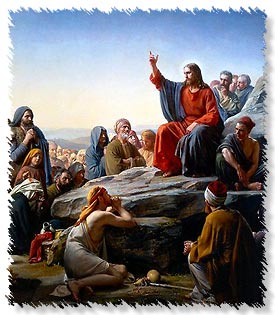 First, it is incorrect to make an absolute out of Jesus’ comments about speaking only in parables — as though he never spoke to the crowds NOT using parables is simply inaccurate and sorry to say — your friend has come up with a self-serving interpretation that is very incorrect.
Have your friend read the Sermon on the Mount in Matthew chapters 5-7. The other Gospels have shorter versions of this sermon and mention the great crowds that heard him speak. There are many instances when Jesus taught didactically without parables.
In the Protestant New American Commentary, it says “Verse 34b does not refer to Jesus’ teaching beyond this immediate occasion.“ What the commentary means is that it is only in this instance — it is to this specific crowd addressed in Matthew 13 that Jesus only spoke in parables. It does NOT mean that he never spoke to any other crowd without parables. Your friend is very mistaken and has a very poor understanding of Scripture — and seems to lack even a basic understanding of how to interpret it.
Second, what is a parable? According to the Protestant New Bible Dictionary, “a ‘parable’ is the somewhat protracted simile or short descriptive story, usually designed to inculcate a single truth or answer a single question.“
Of course Jesus often spoke metaphorically and of course he often spoke in parables. Parables are stories with a moral attached to them. We are all familiar with parables — stories — Jesus told about the Prodigal Son, the Lost Sheep, the Sower, etc. I would love to ask your friend what “story” or parable is being told in in John 6? Jesus is NOT telling a parable there; he is teaching didactically. Just because he told parables elsewhere does not mean everything and every time he taught it was strictly metaphorical. Your friend is mixing things up — don’t let him get away with it.
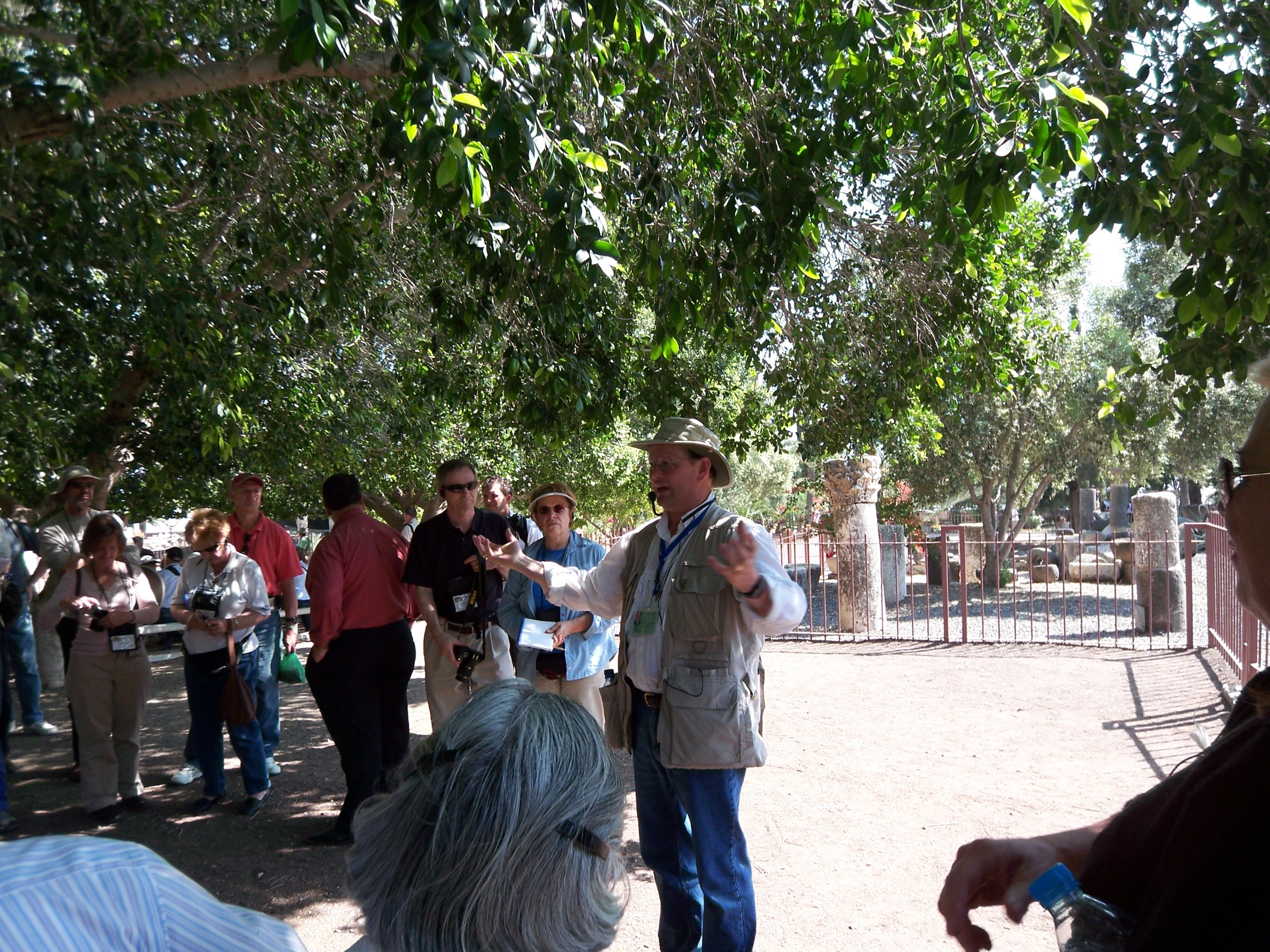 Third, Christians have always seen John 6 as metaphorical and literal. There is no problem with it being both. Many things are symbols that ARE IN SUBSTANCE what they symbolize. For example, the cross is a symbol of our redemption yet it is also a real cross from which you could get a sliver in your finger. Just because something has a symbolic element doesn’t mean that it is ONLY symbolic. Your friend is making distinctions that are not necessary and he proves what an incapable and poor Bible student he really is.
(Picture: Steve teaching on the Eucharist and John 6 at Capernaum where Jesus said these things.)
Fourth, and here we will dig in a little bit. The Jews did not believe Jesus that he said they had to eat his flesh an drink his blood. They walked away. If he was speaking metaphorically he would have called them back and said, “Hey guys, you don’t understand — see the Protestants have it right — what I just said is metaphor so you don’t have to be offended and walk away!” But he didn’t — he let the crowd of disciples walk away.
Your friend will also try to use this verse as an argument against you
“It is the Spirit who gives life; the flesh profits nothing; the words that I have spoken to you are spirit and are life.” (John 6:63, NASB95)
He will probably say, “The flesh profits nothing, see!”
Concerning this, Jesus is not speaking about His Flesh (“My Flesh”), in verse 63 but “the flesh” which is very different and which is missed by sloppy-thinking Protestants like your friend. When Protestants claim “My flesh” profits nothing, they prove way too much! They are claiming that the Incarnation of Jesus in the flesh and the bodily resurrection has no profit.
What Jesus means by “”the flesh profits nothing” is very simple because he uses the phrase again in John 8:15 (we must let the Bible interpret the Bible where he says:
“You judge according to the flesh; I judge no one.” (John 8:15, NKJV)
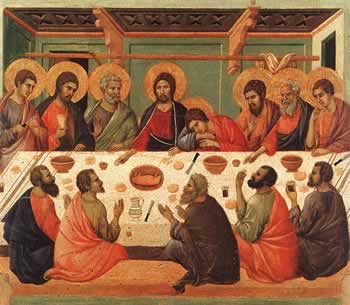 Other Bibles translate this “according to the flesh”, or “by human standards”, or “by appearances” or “with your human mind“. When Jesus uses the phrase “the flesh” he is referring to human understanding apart from divine revelation. Your friend judges the Eucharist by human standards (“Looks like bread, feels like bread, tastes like bread — must be bread”).
This statement of Jesus affirms what he has said about eating his Flesh and drinking his Blood and tells us it is a great mystery — spirit and life. With these words Jesus castigates the unbelieving Protestant along with the unbelieving Jews for judging spiritual things with earthly minds — by the flesh — and failing to understand the deep mysteries of God in the Eucharist.
And by the way, this “symbol only“ mentality about Scripture and this passage in particular is only as old as the Protestant Reformation (er, I mean Rebellion). From the beginning of the Church Christians have understood that Jesus was speaking of his Flesh and Blood in the Eucharist — after all Jesus did not say, “This represents my body.“ he said “This is My Body!“
Too bad your friend wants to erase the words of Jesus or add his own puny interpretation to what the Word of God clearly states. Too bad the mystery goes right over his head.
The post The Eucharist: the Flesh Profits Nothing appeared first on Defenders of the Catholic Faith.
Did Solomon’s Mother Bathsheba Demonstrate Mary is NOT a Good Intercessor?
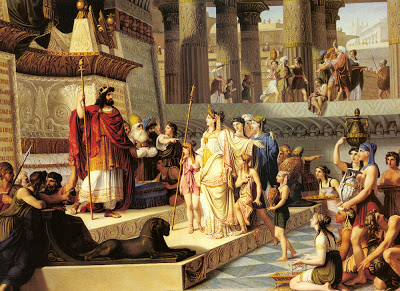 I put up a post a few days ago with a video of my talk in Ephesus about Mary being Queen of Heaven and an Intercessor for the people of God’s kingdom.
Someone wrote to object saying,
It is interesting Steve, as to what you left out in your reference to 1 Kings 2:19 , Solomon’s Mother did indeed come into the throne room, Solomon did indeed, rise and bow and have her sit at his right hand. But the Queen Mother’s request was in fact denied, and the first person to go to the Queen Mother with his request was put to death that very day! So much for taking requests to the Queen Mother, doesn’t always work!
I responded,
There are two ways to see the intercession of Bathsheba: 1) a naive request to the king for Adonijah and 2) a subtle and wise exposing of Adonijah’s continued deceit to claim the throne. Let me explain a bit. If we assume the first possible scenario, Solomon is a type of Christ yet Solomon was a sinner. Solomon’s sin does not detract from Jesus’ perfection as the quintessential king of Israel and the Universe.
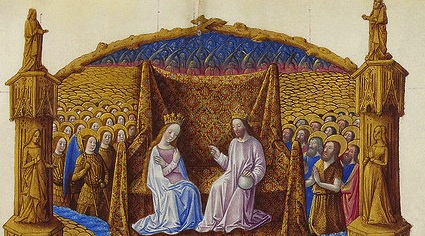
Every king in Israel/Judah had a queen but it was never his wife; it was his mother. She was called giborah, great lady and Queen Mother.
Being a sinner and flawed did not detract from the fact that Solomon was a type of Christ. Neither does Bathsheba’s sins and flaws detract from her being a prefigurement of Mary. Solomon and his mother were sinners; Jesus and his mother were not. What Solomon and his mother failed to do; Jesus and his mother do perfectly.
You could also note that Jesus said explicitly that the only sign he would give was the sign of Jonah, but Jonah was rebellious; does that mean Jesus’s crucifixion and burial was a result of his own rebellion? Of course not–that would be an improper use of typology.
Also, if you use Bathsheba’s indiscretion to diminish Mary, then you must be consistent and use Solomon’s sins to diminish Jesus. Queen mothers were flawed intercessors; the Mother of God is an intercessor without flaw.
But if we consider the second possibility, the second way to interpret the historical and political situation behind this event we see Bathsheba as being very wise and discerning.
It is possible and even likely that Bathsheba was wiser than she is normally given credit for and made this request to expose the deceitful intents of Adonijah? Did she inform Solomon of the plot in a diplomatic way?
The taking of a king’s concubine was a political move to grasp the throne. In this scenario, Bethsheba wisely and publically exposed Adonijah’s continued plot for the throne. It ultimately brought about the assassination of the competitor for her son’s throne. As an “image” of Mary, the request can be seen as a parallel to the revealing of the Evil One and his continued attempt to displace her Son.
Sorry, I didn’t miss anything.
The post Did Solomon’s Mother Bathsheba Demonstrate Mary is NOT a Good Intercessor? appeared first on Defenders of the Catholic Faith.
Italy 5: Siena, Wine-tasting, arrival in Assisi
Early morning today. Steve’s short talk and popes and St. Catherine of Siena. Drove from Florence to Siena to celebrate Mass at Church San Domenico. Toured the Basilica with local Catholic guide Gustone.
Guided tour of the city, including the Piazza del Campo and Church of St. Dominic and St. Catherine of Siena Cathedral. Lunch with wine tasting at Siena-Tenuta di Corsignano.
Arrived in Assisi for two nights at Hotel Giotto right in the heart of the city.
The post Italy 5: Siena, Wine-tasting, arrival in Assisi appeared first on Defenders of the Catholic Faith.
March 22, 2022
The Number 40 in the Bible – and Lent
Forty is no insiginficant number in the Bible! That is why we have the liturgical season of Lent for forty days which begins with Ash Wednesday and ends with Easter. Lent is the primary penitential season in the Church’s liturgical year, reflecting the forty days Jesus spent in the desert in fasting and prayer ( CCC 540, 1095, 1438).
The period of forty days or years is an important one in Scripture and in Jewish tradition. As the Church Fathers observed, it is most often associated with hardship, affliction, repentance and punishment.Notice these significant uses of the number 40 in Scripture and notice what each is associated with:
–The flood judgment in Noah’s day lasts forty days (Gen 7:4).
–The fasting of Moses (Ex 24:18; Deut 9:9).
–Elijah forty days of fasting while running to Mount Sinai (1 Kings 19:8).
–The generation in the wilderness wanders for forty years (Ex 16:35; Ps 95:10).
–Israel is in the hand of the Philistines for forty years (Judg 13:1).
–Forty days Ezekiel lies on his side to symbolize the punishment of Judah (Ezek 4:6).
–Jonah prophesies that Nineveh will be destroyed in forty days—unless they fast and repent for those 40 days (Jon 3:4).
–Punishment limited to forty stripes — lashes (Deut 25:3; cf. 2 Cor 11:24).
–Forty days between the in the Temple—forty days for Mary’s purification (Lk 2:22-24; Lev. 12:1-8, CCC 583).
–Jesus’ temptation for forty days and nights in the Wilderness (Mt 4:1-2).
–Jesus on earth forty days between resurrection and ascension (Acts 1:3).
Have a great Lent and remember, you are not the first to suffer through the number “40.”
The post The Number 40 in the Bible – and Lent appeared first on Defenders of the Catholic Faith.
Stephen K. Ray's Blog

- Stephen K. Ray's profile
- 27 followers

