Gretchen Rubin's Blog, page 24
August 27, 2021
Want to Start Your Own Happiness Project? Here, You’ll Find the Tools You Need
Drumroll...The Happiness Project!
More than ten years ago, I started my "happiness project," and in my bestselling book The Happiness Project, I write about the year I spent test-driving the wisdom of the ages, cutting-edge science, lessons from pop culture, and my own experiences to try to be happier.
Since its publication, I've heard from countless people who have done their own happiness projects. Groups meet to discuss the book, doctors and therapists recommend it, students read it in class...and they read the book to think about their own happiness projects. In my book, I offer my happiness project as an example, but it's meant to inspire you to ask, "If I want to be happier, what would work for me?"
The longer I study happiness, the more I realize that there's no magical, one-size-fits-all solution. Everyone's happiness project is different, because we all have different temperaments, interests, and values.
Different tools and different strategies work for different people.
Some people resist having someone looking over their shoulder; for others, accountability is crucial. Some want to note their progress in a physical journal; others want to record it in an app. Some tackle a challenging task early in the morning; others do better when they wait until night. Some swear by their "to-do" lists; others need the encouragement of a "ta-da" list.
So many experts argue that they've found the "best" way or the "right" way. But there is no one best way—only the way that works for you. And I've found, over and over, that it's much easier to create a happier, healthier, more productive, and more creative life when you do it in the way that's right for you.
So...big announcement!
I've launched a new website, the-happiness-project.com, a one-stop shop where you'll find all the practical tools, resources, and insights you need to start—or continue—your own Happiness Project. Whatever your aims, this collection will be your personal happiness toolkit where you can discover the particular tools that work for you to build the life you want, starting today.
You can learn whether you're an Upholder, Questioner, Obliger, or Rebel—because when you know your "Tendency," you'll find it much easier to set yourself up for success.
If you like to hold a tool in your hands, I offer physical tools, like journals, trackers, and productivity aids.
If you prefer the convenience of digital tools, there are free online resources right at your fingertips.
If you're discouraged because you've tried and failed to achieve your happiness aims in the past, this site can help. There's nothing wrong with you, you don't need to change yourself! Change the tools you use, so you're working in the way that's right for you. Whatever you need, you'll find it here.
The Happiness Project is still expanding. I'm continuing to create more tools, so stay tuned.
Now more than ever, it's the right time to start your own happiness project. After the stress and strains of the pandemic period, we're all focused on physical, mental, and emotional well-being. Workplaces, schools, families, and individuals are looking for ways to help people to feel energetic, enthusiastic, engaged, and purposeful.
With self-knowledge and self-compassion, we can take practical and effective steps to become happier, healthier, more productive, and more creative. Without spending a lot of time, energy, or money!
On the new Happiness Project site, you’ll find:
Thoughts on Happiness —insights and observations about happiness and good habits Digital Tools —free resources to help you find and use the right strategies for you Getting Started —step-by-step guides for your own Happiness Project Shop —new products designed to help you achieve your aimsAs I continue my research and create new tools related to happiness, The Happiness Project will continue to grow. Explore the Happiness Project collection, and join the mailing list here to to receive updates, tips, promotions, and exclusive content. You'll also be the first to know about new tools and features, coming soon.
If there's a tool you wish you had, let me know! We can all learn from each other.
Sometimes, people say to me, "I just wish I'd started my Happiness Project earlier." If you feel that regret, remember the old proverb, "The best time to plant a tree is twenty years ago. The second-best time is now."
Wherever you are, and whenever it is, now is always the right time to begin your Happiness Project. I hope the new site, with all its resources, will help.


August 26, 2021
Sarah Everts: “It’s Hard for Me to Change My Habits If There’s No Pleasure Involved.”
Interview: Sarah Everts.
Sarah Everts is an award-winning science journalist who has written about art and artifacts, fake foods, chemical weapons, the history of chemistry and alchemy, pheromones, sweat, and anything unexpected or absurd.
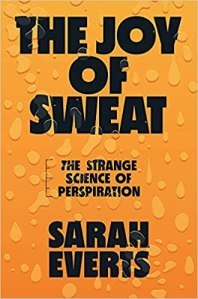
Her new book is The Joy of Sweat: The Strange Science of Perspiration (Amazon, Bookshop). In The Joy of Sweat, Sarah Everts delves into its role in the body—and in human history. I love reading this kind of deep dive into a subject that's familiar, yet one that I don't know much about.
I couldn't wait to talk to Sarah about happiness, habits, and health.
Gretchen: What’s a simple activity or habit that consistently makes you happier, healthier, more productive, or more creative?
Sarah: The catharsis of a good sweat, in a scorching sauna, where water infused with an essential oil has been poured on the rocks, resulting in a pulse of delicious, scented steam. During one of these ceremonies, which are popular in spas across Europe, a sauna employee takes a towel and uses it to whirl around the scented steam so that you feel like you’re in an aromatic wind tunnel. It’s heaven. My favorite essential oils for this are either citrusy (grapefruit and clementine) or woody (particularly eucalyptus). The ceremony is called an Aufguss—a German word for “infusion”—and I got hooked on it during the decade I lived in Berlin.
What’s something you know now about happiness that you didn’t know when you were 18 years old?
The only person responsible for my own happiness is me.
You’ve done fascinating research. What has surprised or intrigued you—or your readers—most?
For most of human history, we’ve tried to modulate our body odor with perfume… but the perfumes of history are quite different than many of the scents we use today. I went to a perfume archive in France called the Osmothèque – it’s actually in this cute little suburb of Versailles, not too far from the castle. They have recreated many perfumes from the past, based on ancient recipes that go back thousands of years. One of my favorite scents was penned by Pliny the Elder, and it was designed for royalty. It smelled, to me, like a mix of Catholic incense and apple crisp, a potent reminder that Christianity borrowed ceremonies from older practices, and that our (wealthy) human predecessors might have applied spices to help them work up an appetite. Another ancient perfume I sniffed was a 14th century scent worn by a Hungarian queen. At the time, it was marketed as an elixir of youth because she had lived to the then ripe old age of 75, and had married a much younger man. It smelled like a green herb garden—of rosemary and mint and thyme.
Have you ever managed to gain a challenging healthy habit—or to break an unhealthy habit? If so, how did you do it?
I’m kind of a hedonist at heart. It’s hard for me to change my habits if there’s no pleasure involved as a carrot. Which is why I am so grateful for podcasts. I pair them with healthy habits I’d like to form: During the pandemic, I fell off my exercise routine and could only motivate myself to get back into the swing of things by using podcasts as a soundtrack for walking, then running, then back to my previous HIIT regime. I also recently decided to dial down my consumption of delicious chips and ice cream, particularly late at night, by distracting myself with a walk and podcast instead. There’s very little I love more than salt & vinegar chips, and I’m not particularly good at moderation, but luckily I discovered a fascinating podcast about the sordid history of the Chippendales (Welcome To Your Fantasy). I’m amused that binging on a podcast about the history of one vice helped me to drop a different one.
Would you describe yourself as an Upholder, a Questioner, a Rebel, or an Obliger?
Turns out, I’m a Rebel.
Does anything tend to interfere with your ability to keep your healthy habits or your happiness?
Email. EMAIL. Did I mention email? Also the existence of Miss Vickie’s salt & vinegar chips.
Is there a particular motto or saying that you’ve found very helpful?
“A life lived in fear is a life half-lived.” This line from the delightful 1992 Australian romcom “Strictly Ballroom,” struck 16-year-old me like a ton of bricks. I haven’t watched the film in decades, but the line often pops into my head at pivotal moments in my life, and helps me drum up courage when and where it’s needed.
Has a book ever changed your life—if so, which one and why?
This is an inordinately hard question for me to answer succinctly! Any attempt would be a manifesto longer than many books themselves. In short: ALL THE BOOKS.
In your field, is there a common misconception that you’d like to correct?
The sweating detox myth. We sweat to cool off, that’s it. Sweat is sourced from the liquidy parts of blood minus the big stuff, like red blood cells. If we sweat to detoxify our body of nasty chemicals, we’d have to sweat out the entire liquid contents of our blood, leaving us dehydrated and probably dead. Instead, our kidneys filter out the nasty stuff and dispatch it out of the body in pee. All sorts of interesting stuff does come out in sweat, though, since it is sourced from blood: Everything from good stuff like hormones and vitamins to bad stuff like urea or heavy metals. Anything coming out in sweat is incidental, just grabbing a ride from the circulatory system to your skin.

August 24, 2021
Julie Klam: “Now I’m Really Good at Finding Happiness in What I Have.”
Interview: Julie Klam
Years ago, I got to know Julie Klam because we're both fans of children's literature, and because I'm a big fan of her writing. Also, when we were thinking about whether to get a dog, I was particularly interested in her books about her experiences with her dogs. (Spoiler alert: we did get a dog, six years ago.)
She's the New York Times bestselling author of You Had Me at Woof (Amazon, Bookshop), Love at First Bark (Amazon, Bookshop), The Stars in Our Eyes (Amazon, Bookshop), Friendkeeping (Amazon, Bookshop), and Please Excuse My Daughter (Amazon)—and she's written for publications from O: The Oprah Magazine to the New York Times Magazine.
Now she has a new book out: The Almost Legendary Morris Sisters: A True Story of Family Fiction (Amazon, Bookshop). The book is a funny and moving story of the Morris sisters, Julie Klam's distant relations with mysterious pasts.
I couldn't wait to talk to Julie about happiness, health, and habits.
Gretchen: What’s a simple activity or habit that consistently makes you happier, healthier, more productive, or more creative?
Julie: I’ve been in therapy with the same person since 1985. I’ve used it in different ways over the years (when I was single, getting married, having a baby, getting divorced) but I sort of feel like now it’s a maintenance thing. I dump my garbage there once a week and my therapist recycles it for people who are in need of neurosis.
What’s something you know now about happiness that you didn’t know when you were 18 years old?
I think when I was 18, I thought happiness would be found in a list of things that I didn't have. It was all—if I lose weight, get a boyfriend, get better grades, I will be happy. And now I’m really good at finding happiness in what I have (or maybe I finally don’t have to worry about my grades).
You’ve done fascinating research. What has surprised or intrigued you—or your readers—most?
I think that family myths are so prevalent. Like after I was struck by the amount of family stories in my own family that were not quite true, I talked to other people and it was an almost universal truth. We all grew up with stories and no way—or reason—to fact-check them, and so much of what we believed about ourselves were wrapped in these myths.
Have you ever managed to gain a challenging healthy habit—or to break an unhealthy habit? If so, how did you do it?
I think this the most boring answer but it was when I figured out that I felt horrible when I didn’t exercise, and I decided the way to do it was do it every day, not make it a question in the morning, just get up and go exercise. (I told you it’s boring, but it might be less boring if you picture me exercising in a hot dog costume.)
Would you describe yourself as an Upholder, a Questioner, a Rebel, or an Obliger?
I took the quiz and I was a Rebel, but I think I have a little Upholder in me, too. I don’t like breaking the rules, but I also don’t do well being told what to do.
Is there a particular motto or saying that you’ve found very helpful?
My therapist told me, “You can’t be where you’re not.” I was a lot younger then but it helped to realize that there are things you can’t force. Everyone can be telling you to get out of a marriage or change jobs, but you can’t do it until it’s right for you.
Has a book ever changed your life—if so, which one and why?
The book that changed my life was the first book I couldn't put down. It was Marjorie Morningstar (Amazon, Bookshop), and I wanted to read it all the time. Before that I wasn’t sure I was a reader, and after that I felt like I had a secret power, to get into a book, any time, any place.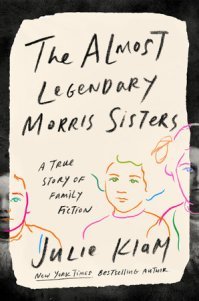

August 19, 2021
Lisa Miller: “Traveling Is an Excellent Way to Tap into This Spiritual Perception of Life.”
Interview: Lisa Miller
Lisa Miller, Ph.D., is the New York Times bestselling author of The Spiritual Child (Amazon, Bookshop) and a professor in the clinical psychology program at Teachers College, Columbia University. She is the founder and director of the Spirituality Mind Body Institute, the first Ivy League graduate program in spirituality and psychology, and has held over a decade of joint appointments in the department of psychiatry at Columbia medical school.
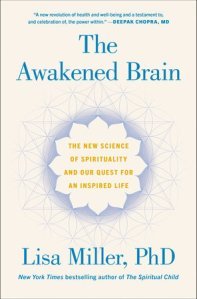
Now she has a new book: The Awakened Brain: The New Science of Spirituality and Our Quest for an Inspired Life (Amazon, Bookshop).
I couldn't wait to talk to Lisa about happiness, health, and spirituality.
Gretchen: What’s a simple activity or habit that consistently makes you happier, healthier, more productive, or more creative?
Lisa: Each morning I start by igniting my Awakened Brain, which I consider to be a kind of neural docking station of spirituality. This can be achieved in all kinds of ways—meditation, yoga, a deep breathing exercise, jotting a few sentences down in a gratitude journal—but the method that resonates most for me is one in which I take a moment of quiet and bring my awareness to the perception that I am one with the universe, loved, held and guided by our higher power, and thus, never alone.
Then I begin sending love to all living beings around our home; I visualize the ducks and geese, and trees, and even the otter out there on the river behind my house.
In this way, I am prepared to offer G-d an opening prayer and give thanks for the sun and air, earth and water, the forces of growth and renewal of which we are all a part. And only then do I make my requests: I ask for all the usuals—health, wholeness, love and guidance for our family and friends, and for the animals and other living organisms which I consider myself privileged to share this earth with.
Everything throughout the day, the difficult colleague at work, the dog not going inside, my teenage children spending too much money, and all the larger life decisions that we make in a day are shaped by this Awakened Awareness.
What’s something you know now about happiness that you didn’t know when you were 18 years old?
I wish that someone had warned me, whether a doctor, psychologist, parent or teacher, that just like clockwork you are going to face a tough depression around sophomore year of college. The “sophomore slump,” we call it. I wish someone could have explained that this depression would likely not be psychopathology, nor would it reflect a medical illness, but rather it would be situational, and most importantly, temporary. Like roughly two-thirds of young adults, depression will be part of a life-changing existential struggle to figure out the nature of life itself. The developmental depression coming your way is part of laying the foundation for the rest of your life, and it can be anticipated, mitigated, and leveraged into a more fulfilling engagement with life.
You’ve done fascinating research. What has surprised or intrigued you – or your readers – most?
The answer here is twofold. Together with my colleagues at Columbia medical school, we were studying the neuroanatomical correlates of spirituality. Meaning, we wanted to know if there were physically identifiable differences in the brains of spiritually engaged versus non-spiritually engaged people.
Now, before we ran the study, I already had a strong hunch that there would be a meaningful association between sustained personal spirituality and cortical thickness in the brain (i.e. strength), but as you might suspect, scientists are not allowed to submit their “hunches” for peer review—and for good reason. Such lines of inquiry can lead to confirmation bias that spoils the data.
But often over the course of my career, I’ve found that these intuitive suspicions have often turned out to be true, and have, with time, become welcome, pleasant surprises, even if I then have to back them up with hard science.
In this case, the science bore out to be true: two years after my initial hunch, our research found that there are broad and pervasive regions of cortical thickness that go hand in hand with a sustained spiritual awareness. That spiritual engagement and awareness produced a visibly stronger brain—better insulated from mental illnesses like anxiety and depression—was a jaw dropping discovery, and a sacred moment all the same.
Would you describe yourself as an Upholder, a Questioner, a Rebel, or an Obliger?
The quiz identifies me as an Upholder, which feels right. Some might think that, because of the nature of my research that I might be a Rebel or a Questioner, but in reality, the work that I do in fact “upholds” what I already, intuitively have felt to be true, in my life, and in the world at large. The science is merely my way of confirming that.
Does anything tend to interfere with your ability to keep your healthy habits or your happiness?
While not an interference, I find, like many people might, that traveling sharpens my Awakened Awareness. Traveling is an excellent way to tap into this spiritual perception of life. When you travel, there are always surprises, detours, or changes of course. Trail Angels appear in the form of a stranger to change your flat tire, or a fascinating seat mate on an airplane who gives you an idea for something you had already been thinking about. This kind of thing happens to me often. Unexpected obstacles and tricky situations show that “adversity” is often mis-recognized as synchronicity, which can bump us into better alignment with life, if only we are open to and anticipating it.
On the road, it is clear that we do not control life, we do not really know what is coming next. The Achieving Awareness driven by strategy and tactics can break down. We make on a voyage when we are in a two-way dance with life, we can embrace a vital dialogue with life. This is the stance of what I call Quest: a way of living, a discovery that we bring home to regular life at the office or carpool pick up. Quest is a way of living in a dynamic relationship with life.
I recall as a child living in Europe for the my third grade year. I could not speak a word to the other children in Belgium and France, but we definitely connected and played for hours in the park. I could feel the hue of their spirit, knew who they reminded me of back home.
Humans definitely do not control life, we are in a dialogue with the G-d, or the living force in and through the world. How can we engage our Awakened Brain to start dialoguing? Simply ask the question, “What is life showing me now? What does my deep inner wisdom say about that?
Is there a particular motto or saying that you’ve found very helpful?
It is a prayer that I say before any important moment, “G-d please work through me here and now to serve you in love." I pray before I do anything important. I pray it out loud on behalf of my family before meals, and before I give a talk or write a difficult paper.
Then its not just the Achieving Awareness in me, shoulder to the wheel, pushing hard, working alone. Instead through Awakened Awareness I start to perspective, there is a force of life, spirit, working through use. I am grateful for the novel insights or type of words that come.
Invite in spirit to direct the moment, and I am delighted by the right loving, guiding or healing, message appears as needed for the people in the room.
Has a book ever changed your life – if so, which one and why?
When I was 17 years old I discovered a copy of The Only Dance There Is; Talks at the Menninger Foundation 1970 and Spring Grove Hospital 1972 by Ram Dass (Amazon, Bookshop).
His spirit and deep knowing were held in the stories of his book, conveyed through his language of immediacy. Suddenly I realized that my entire life I had been in a type of epistemological exile—and that I just discovered my intellectual homeland.
Foremost I was delighted by acknowledgement of the greatest sacred force in life, Dass was clear about his view that being cut off from spiritual awareness is a form of mental illness. He held out the possibility that cultivating transcendent awareness could be healing, perhaps the antidote to mental suffering.
After all the books that I had read in high school comporting a latent secular materialism, I felt like someone finally made sense. Dass set my spirit free.
He lived authentically. His presence on the page was pure and enlivening.
Dass and I did have one difference in our paths, that I fully honor on both sides. He left academia to discover deep truth. My path is different, I am a woman, career academic, and a mother. I find my truth in the witness of spirit through my children, the portrait of numbers in science, and the thrilling experience of sharing the science of spirituality to see it awaken people! Were the problem sited by Doss real, yes. And our times are so different, he opened the door amidst radical secular materialism. I have chosen to make my home in the middle of society, to see the sacred in my children, the animals in our backyard, and all of every day life.
In your field, is there a common misconception that you’d like to correct?
Yes! Depression is a gateway to Awakening. For the majority of people, depression can be engaged as a “knock at the door” for growth and expanded awareness. Depression signals that we are out of alignment with the deep spiritual nature of life. Yesterday that may have been ok. Today however, given your inherent trajectory of growth, it is not a choice, you must deepen further to connect with spirit or G-d for the next phase of service.
Honoring the call of depression can start with asking the simple question: “What is life telling me now?” and, “What does my inner wisdom say about it?” Reflect and imagine, offer a prayer or meditation, serve another living being, guide yourself, a colleague or a friend in a spiritual visualizations (as in The Awakened Brain), pay attention to synchronicities including sudden encounters with people or an animal. Depression grab this moment to grow your spiritual awareness. Depression is the chance of your lifetime.

August 13, 2021
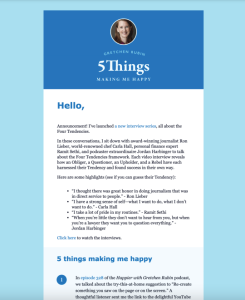
Ta-Da! I’ve Redesigned the “5 Things Making Me Happy This Week” Newsletter.
For years, I've been sending out my free "5 Things Making Me Happy This Week" newsletter. I love working on this newsletter—I write about my personal adventures and highlight interesting articles I've read, information I've learned, aphorisms I've written, favorite quotations, photographs, etc. I include links to new articles on my website and to new episodes of the Happier with Gretchen Rubin podcast.
As always in my work, I focus on happiness, good habits, and human nature—with a special emphasis, lately, on the five senses. (How I love learning about the five senses!)
More than one million people have subscribed to this newsletter.
Recently, I decided that the newsletter format was looking a bit stale. I worked with a terrific team to make it easier and more pleasant to read.
I launched the new format a few weeks ago, but didn't want to announce it, because as we all know, whenever we make a change to anything involving technology, as hard as we try to avoid glitches, we can't. (Speaking of aphorisms, here's my aphorism on that subject: "Technology is great—when it works.")
Thanks to all the readers who wrote to tell me of any issues they were facing—that was a big help as we worked out the kinks.
Now it's ready to be officially announced. Ta-da!
If you're already a subscriber, I hope you're enjoying the new look. If you want to sign up, click here.
(Want to see a sample? Here's a recent newsletter.)
Let me know if you have any suggestions for the newsletter—I want it to be as interesting as possible. And if you read other newsletters you love, send me your recommendations. I enjoy writing a newsletter, and I also enjoy reading them.

August 12, 2021
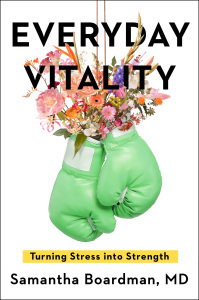
Samantha Boardman: “While Self-Care Is Important, It’s Important Not to Forget About ‘Other-Care’ as a Powerful Source of Vitality.”
Interview: Samantha Boardman.
Dr. Samantha Boardman is a New-York-based positive psychiatrist, who is committed to fixing what’s wrong and building what’s strong.
I've known Samantha for several years—we're interested in so many of the same things. Now she's written a new book: Everyday Vitality: Turning Stress into Strength (Amazon, Bookshop). She offers science-backed, research-driven, actionable strategies for countering stress and building resilience—and building vitality!
I couldn't wait to talk to Samantha about happiness, habits, and health.
Gretchen: What’s a simple activity or habit that consistently makes you happier, healthier, more productive, or more creative?
Samantha: My default is to worry about what went wrong or was left undone so these days I make a point of cultivating or noticing at least two ordinary moments each day that are uplifting. If I’m not deliberate about seeking delight, I might miss it. Intentionally bringing the unseen and the underappreciated into view leaves an imprint of grace and goodness. This morning, I saw a magnificent red cardinal outside my window. It was pure delight.
What’s something you know now about happiness that you didn’t know when you were 18 years old?
When I was 18 years old I believed that happiness was an inside job and up to the individual. Over the years I have learned that the most reliable wellsprings of happiness lie beyond the self. Everyday wellbeing resides not just in the head, but in the actions we take, the connections we make, and how we participate.
You’ve done fascinating research. What has surprised or intrigued you – or your readers – most?
That people can and do change. We often have fixed ideas about ourselves. We have trouble imagining ourselves any other way than the way we currently are. But research and life experience tell a different story. Looking back, it is obvious to see how much we have changed. Frankly, it’s a relief I am not the same person I was when I was twenty-one (and I’m not just talking about my fashion choices). Looking forward, it’s a lot harder to fathom the possibility of change or reinvention. Individuals who are open to the idea of growth are the people who tend to grow the most. Plus, just as it’s important to recognize your own potential to change and grow, it’s also important to allow for change in others.
Have you ever managed to gain a challenging healthy habit – or to break an unhealthy habit? If so, how did you do it?
I have a simple rule: whenever I’m with friends or family, I put my phone away. To minimize temptation, I keep it out of arm’s reach and out of sight. When I’m at home, I leave it in another room. When I’m out, I leave it in my handbag. I do my best to minimize my interaction with that little vampire of vitality so I can make the most of the time I spend with others. Being present and bearing witness are the essence of connection. Every moment spent staring at a screen in the presence of another is a moment un-shared.
Would you describe yourself as an Upholder, a Questioner, a Rebel, or an Obliger?
I am an Upholder through and through. As you have written about, I tend to experience “tightening” over time, becoming even more attached to habits and routines. Sometimes this is helpful but it can also work against me. It took me a while to make peace with the fact that there will be days I won’t take 10,000 steps. I plan to come back as a Rebel in my next life.
Does anything tend to interfere with your ability to keep your healthy habits or your happiness? (e.g. travel, parties, email)
Fatigue. When I was young, I prided myself on not needing much sleep, underestimating how significantly lack of sleep impacted every aspect of wellbeing—from my interactions to my mood to my motivation. I naively believed the circles under my eyes were a badge of honor, an emblem of a strong work ethic and symbol of stamina. How wrong I was. These days I make sleep a priority—being well-rested is not only good for me, it is good for the people around me.
Have you ever been hit by a lightning bolt, where you made a major change very suddenly, as a consequence of reading a book, a conversation with a friend, a milestone birthday, a health scare, etc.?
I got fired. One day a patient I’d been seeing for a few months came in and said to me, “Dr. Boardman, I hate coming to our weekly sessions. All we do is talk about the bad stuff going on in my life. I’m done.” And she was. That was our last session. It was also a turning point in my life. Her words stung but she was right. Admittedly, I had not focused on much else. I was trained in pathogenesis—the study of disease—not salutogenesis—the creation of health. I was well versed in dialing down misery but knew little about factors that promote well-being or enable a good day. I decided to go back to school to get a master’s degree in positive psychology—the study of positive human functioning. In the program, I studied resilience, optimism, and post-traumatic growth. I learned about lifestyle and psychosocial factors that improve overall wellbeing. It was essentially the opposite of what I had learned in medical school. Studying positive psychology enabled me to think more expansively about what it means to feel mentally strong and healthy.
Is there a particular motto or saying that you’ve found very helpful?
Know the difference between what is urgent versus what is important.
Has a book ever changed your life—if so, which one and why?
Books are constantly changing my life. There is so much to learn about oneself by plunging into someone else’s life and immersing oneself in a story that is different from one’s own. Whether it’s a biography, a memoir, or a work of fiction, I love the way books lift me out of myself and remind me that there are other ways to be. As I write about in Everyday Vitality, the mandate, “be yourself,” is not always the best advice, especially if it limits perspective, constraints potential, or provides an excuse for avoidance. Reading about the lives and choices of others—fictionalized or real—is an exercise in expansion and a window into alternative responses and reactions. It teaches me about the possibility of acting out of character and being “un-me” which ultimately helps me get closer to the version of myself I would like to be. Right now I’m reading Walter Isaacson’s The Code Breaker: Jennifer Doudna, Gene Editing, and the Future of the Human Race (Amazon, Bookshop) about pioneering biochemist Jennifer Doudna who led the discovery of gene editing tool, Crispr. It’s un-put-downable.
In your field, is there a common misconception that you’d like to correct?
While self-care is important, it’s important not to forget about ‘other-care’ as a powerful source of vitality and resilience. Everyday opportunities and activities that foster growth and build positive resources are not “icing on the cake” but the active ingredients of wellbeing.

August 10, 2021
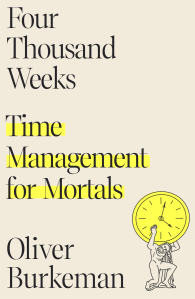
Oliver Burkeman: “The Desire to Focus on Multiple Things at Once Is Often Driven by Anxiety.”
Interview: Oliver Burkeman
I've known journalist and author Oliver Burkeman for many years—we're interested in so many of the same subjects. He's the author of The Antidote: Happiness for People Who Can't Stand Positive Thinking (Amazon, Bookshop) and an award-winning feature writer for The Guardian, where he wrote a long-running popular weekly column on psychology, “This Column Will Change Your Life.”
Now he has a new book out, called Four Thousand Weeks: Time Management for Mortals (Amazon, Bookshop). In it, he argues that we should set aside superficial efficiency solutions in favor of reckoning with and finding joy in the finitude of human life.
I couldn't wait to talk to Oliver about happiness, habits, and creativity.
Gretchen: What’s a simple activity or habit that consistently makes you happier, healthier, more productive, or more creative?
Oliver: Doing one thing at a time – and, wherever possible, seeing that thing through to completion before beginning another thing. I don’t think you can follow this rule religiously all the time and in all aspects of life; I certainly can’t. But whenever I manage it, I’m happier and more productive, which is the goal here, right…? The desire to focus on multiple things at once is often driven by anxiety – by the worry that we might not have enough time to do all the things we’re convinced we need to do in order to justify our existence on the planet. But the result of this approach is that you make less progress, because each time a project starts to feel difficult, you just bounce off to something else instead. If, instead, you can get better at slowing down and tolerating the feeling of discomfort about all the things you’re not getting done, you’ll get more of the important things done. Oh, and I don’t think you need to justify your existence on the planet, in any case.
What’s something you know now about happiness that you didn’t know when you were 18 years old?
That it doesn’t come from achieving some kind of perfect feeling of being in control, from “getting of top of things,” or from getting your life “in working order,” or anything like that. I spent much of my early adulthood chasing the fantasy that one day in the future I’d achieve sufficient self-discipline, efficiency, financial security (etc, etc, etc) to be able to start in on what really mattered. But all this actually ever did in reality was to keep me from doing the scary-but-important things I wanted to do with my life, essentially because I was waiting for when I could do them without fear or discomfort. But, duh – it turns out fear is part of the deal, and that feeling it won’t kill you. Certainly I'd never have committed to a long-term relationship, nor become a father, if I'd continued to insist on waiting until I felt ready.
Have you ever been hit by a lightning bolt, where you made a major change very suddenly?
In my new book I write about experiencing a very sudden change of perspective, although the behaviour changes followed more gradually. I was sitting on a park bench in Brooklyn, in winter 2014, mentally running through the overwhelming number of tasks I “had to get done” that day, and halfway through concocting yet another ingenious scheduling solution to achieve this clearly impossible goal, when I was suddenly struck by the thought that none of these productivity tricks were ever going to work – if by “work” I meant making it possible for me to do more than it was actually possible to do in a day, all the while feeling calm and in control. The irony was that my realization that I’d never achieve peace of mind this way led immediately to an increase in my peace of mind. There’s something hugely liberating about seeing that you’ve been fighting a futile battle to reach a victory you’ll never achieve. You get to relax back into reality, into the moment, and to focus on doing a few things that count, right now.
Is there a particular motto or saying that you’ve found very helpful?
I love basically any quote that points to the way so much of our unhappiness arises, not from what’s happening, but from our insistence that it ought not to be happening, or our refusal to acknowledge that it actually is happening. Charlotte Joko Beck says “What makes it unbearable is your mistaken belief that it can be cured.” Mel Weitsman says “Our suffering is believing there’s a way out.” Sam Harris points out somewhere that the problems most of us have to deal with are bad enough without the internal demand we put on top of them – that we ought not to have any problems at all.
Life certainly brings plenty of sadness and difficulty. But it’s so much worse when you mistakenly believe you’re entitled to some other kind of life, one that would be entirely sadness- and difficulty-free – because then every ordinary setback becomes a kind of terrible insult and an outrage, something that shouldn’t be happening. There’s vast freedom and empowerment in accepting the truth that this life, with all its irritations and annoyances, is the only one we’re going to get a shot at.
Author photo: (c) Nina Subin

August 5, 2021
Juliet Funt: “I’ve Been Trying to Retrain My Celebration Instinct Towards Rewards Without a Whiplash Effect.”
Interview: Juliet Funt
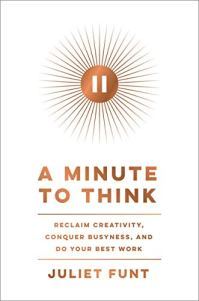
Juliet Funt is an advisor on work and efficiency, as the founder and CEO of the efficiency firm The Funt Group. She has a new book: A Minute to Think: Reclaim Creativity, Conquer Busyness, and Do Your Best Work (Amazon, Bookshop). There, she writes about the importance of giving ourselves open and unscheduled time to think.
I couldn't wait to talk to Juliet about happiness, habits, and productivity.
Gretchen: What’s a simple activity or habit that consistently makes you happier, healthier, more productive, or more creative?
Juliet: Being out of the house, ideally alone, in the subtle beauty of the early morning. I find something completely magical about the washed down sidewalks, the stores flipping their Open signs around and the coffee shops bustling awake with the sun beams highlighting the steam from the espresso machine. There’s so much purpose and possibility. I’m usually with my laptop and work with enormous focus and joy during these times.
Does anything tend to interfere with your ability to keep your healthy habits or your happiness? (e.g. travel, parties, email)
I have a problematic reflex response to moments of victory. After a huge win or when I finish a project for which I’ve wrung myself out, the very first thing that occurs to me is that I now “deserve” to do things that are unhealthy. Eating sugar all day or a Netflix marathon are the first things that come to my mind, but I’ve found they are not the gifts that keep on giving. I’ve been trying to retrain my celebration instinct towards rewards without a whiplash effect.
Your work is in helping people reclaim creativity and do their best work. Does happiness fit into that recipe anywhere?
It does. When people have the time and permission to use most of their professional day on meaningful work, rather than on a deluge of emails and busywork, that makes them dependably happier. That happiness then cycles back to fuel and fortify them through the next round of challenges and opportunities. It’s a wonderful circle of benefit when work can feel that way.
Have you ever been hit by a lightning bolt, where you made a major change very suddenly, as a consequence of reading a book, a conversation with a friend, a milestone birthday, a health scare, etc.?
I was a smoker in my early 20s and read an article that said that breathing with emphysema feels like putting a cigarette in your mouth, closing your lips tightly around it, and trying to inhale through the contents of the cigarette. I tried it and it scared me so much that I quit that day, which is a highly unusual switch-flip for me.
What’s something you know now about happiness that you didn’t know when you were 18 years old?
I grew up mostly in Manhattan and went to college in Chicago so I never had much exposure to the two things that have become my fast track to peace—nature that’s green and complete silence. I’m not a beach person but any tree, forest or wooded mountain I have the chance to stare at for a while centers me in an unfailing way that I wish I’d discovered earlier. And maybe it’s partly due to being the mom of three active boys, but true silence—the deep, solid kind of silence—makes me feel high with aliveness and calm at the same time.
In your book you talk about “high joy” vs. “deep joy." Can you help us understand that distinction?
Sure! I help people bring space into their day—open, unassigned time that gives them room to do good work but also the space to make sure they don’t miss their lives. Especially at home, this kind of open space creates inviting vacuums into which can flow two types of pleasure: “high joy” (experiences that make you gasp) and “deep joy” (experiences that reach down into your belly and warm you). High joy experiences can include surprise, risk, passion, physicality, exertion. Deep joy experiences can include friendship, gratitude, giving, peace, and pride. I personally have more natural facility with the “high joy” and need to keep coaching myself to embrace the less stimulant-oriented, quieter forms of fulfillment.
Is there a particular motto or saying that you’ve found very helpful?
Despite coming from a family that struggles with happiness, I’ve always been very lucky to have a high set point for it, hovering in “happy-mode” fairly easily. But contentment is harder for me. I slide easily into regret or being rough on myself. So, I need my inspiration to be front and center every day. Years ago, I took a Sharpie and began to write loving, inspiring messages to myself all over the bathroom walls, so that every day I’d be greeted by a rousing chorus of positivity. I saved a special spot just outside the shower for the one I read every day “How shall I spend the precious moments of this one and only today in my one and only life?” My second favorite saying helps me keep my fingers out of things that don’t need me, “Not my circus, not my monkeys.”

August 4, 2021
More Flexibility with Your Work Schedule? One Challenge No One Has Mentioned.
As we head into the "next normal," many people will have much more flexibility in their work schedules. Even just in my circle of acquaintances, I've talked to many people who will be working from home far more often, and I've heard about many workplaces that have significantly changed the layout of their workspaces and their expectations of in-person work. And with health guidelines changing daily, and people's preferences evolving, these shifts seem here to stay.
I've read a lot of discussions about who might and who might not benefit from this change; advantages and disadvantages; and various predicted consequences.
But here's one challenge that no one's mentioned: the effect on habits.
In Better Than Before, my book about habit change, I write about the 21 strategies we can use to make or break our habits. You might think, "Why include so many strategies?" I identify 21 strategies because people form habits in many different ways.
For most of us, habits form most solidly when they're followed consistently, every day of the week. I brush my teeth when I get up in the morning. I put on a seat-belt every time I get in a car.
Most of us also have weekday/weekend habits. We have habits for the five-day work week, and different habits for the two-day weekend. Maybe you get up at 7 a.m. during the week, and 9 a.m. on the weekends. Or you don't drink alcohol during the week, but have a few drinks on Saturdays and Sundays.
Many people tie habits to this 5-day/2-day schedule. In the pandemic period, many of these habits were disrupted. For instance, in the past, whenever a friend of mine didn't have a lunch plan, he went to the gym across the street from his office; when he wasn't going to the office anymore, he had to recreate his exercise habit.
Rebuilding these kinds of healthy habits can take a lot of time and effort. However, it's also true that many people were able to build new healthy habits when they were safer-at-home. "Because I wasn't commuting, I had plenty of time to go for a daily run," a friend told me.
I think that for many people, the lack of a consistent, familiar 5 day/2 day schedule will make it hard to keep up good habits.
Whether you leave for work at 8 a.m. five days a week, or you work from home five days a week, you have a consistent, predictable schedule on which to hang your habits. Many people wisely tie habits to a certain slot in the day.
But if you head to the office on different days on different weeks, and sometimes you go in early, and sometimes later, and maybe one week you go in every day or no days...well, it's harder for habits to stick.
Also, many people—and certainly Obligers—benefit from accountability in their habits, and the workplace itself tends to offer many forms of accountability. You and your co-worker have the healthy habit of taking a lunchtime walk. That's great if you work together every day—but in a more flexible schedule, maybe the two of you will overlap only one or two days each week. And then the habit is less robust.
Once you realize that you benefit from outer accountability, many possibilities open up. There are many ways to create outer accountability! (If you need ideas, I review some popular accountability measures here.)
For many people, and in many ways, greater flexibility will be a huge benefit. It's useful, though, to think about challenges that it might create, as well.
As we think about our habits going forward, it's always useful to ask: "When have I succeeded in the past?" If you've kept a good habit successfully when it was tied to some aspect of your work life, consider whether you'll need to find a new way to keep that habit strong, if the structure of your work life changes significantly.
For instance, if you consistently went to a Zumba class with a co-worker after work on Wednesdays, try to figure out why you succeeded in meeting that aim. Was it the convenience of going after work? Was it knowing that your co-worker was counting on you? Was it your love for Zumba? Thinking about a past success can help set you up for the future. Because if what you need is accountability, doing an online Zumba class might not work—but if it's your love for music and dance that kept you going, maybe an online class would work.
To understand what circumstances help them to keep their good habits—and not—many people find my Four Tendencies personality framework helpful. To find out if you're an Upholder, Questioner, Obliger, or Rebel, take the free, quick quiz here (more than 3.2 million people have taken it). Once you know your Tendency, you can much more effectively set yourself up for success—no matter what shape the future takes.
How do you think the "next normal" will affect your habits? If you foresee any challenges ahead, how do you plan to deal with them?

July 29, 2021
What I Read This Month: July 2021
For four years now, every Monday morning, I've posted a photo on my Facebook Page of the books I finished during the week, with the tag #GretchenRubinReads.
I get a big kick out of this weekly habit—it’s a way to shine a spotlight on all the terrific books that I’ve read.
As I write about in my book Better Than Before, for most of my life, my habit was to finish any book that I started. Finally, I realized that this approach meant that I spent time reading books that bored me, and I had less time for books that I truly enjoy. These days, I put down a book if I don’t feel like finishing it, so I have more time to do my favorite kinds of reading.
This habit means that if you see a book included in the #GretchenRubinReads photo, you know that I liked it well enough to read to the last page.
When I read books related to an area I’m researching for a writing project, I carefully read and take notes on the parts that interest me, and skim the parts that don’t. So I may list a book that I’ve partly read and partly skimmed. For me, that still “counts.”
If you’d like more ideas for habits to help you get more reading done, read this post or download my "Reading Better Than Before" worksheet.
You can also follow me on Goodreads where I track books I’ve read.
If you want to see what I read last month, the full list is here.
And join us for this year's challenge: Read for 21 minutes every day in 2021!
A surprising number of people, I've found, want to read more. But for various reasons, they struggle to get that reading done. #Read21in21 is meant to help form and strengthen the habit of reading.
July 2021 Reading:Mrs. Dalloway by Virginia Woolf (Amazon, Bookshop) -- It's my Summer of Virginia Woolf. How I love the work of Virginia Woolf! I've read this novel at least nine times, and I love it more each time. What a lark, what a plunge.
Crossing the Chasm: Marketing and Selling High-Tech Products to Mainstream Customers by Geoffrey A. Moore (Amazon, Bookshop) -- A classic; a fascinating business book about running start-ups that sell tech products.
Conversations with James Baldwin edited by Fred Standley and Darnell Pratt (Amazon, Bookshop) -- A compelling collection of interviews with James Baldwin; very interesting to see the development of his thinking over time.
Should We Stay or Should We Go by Lionel Shriver (Amazon, Bookshop) -- I'm a huge fan of Shriver's work, and this new novel is a page-turner and very thought-provoking.
To the Lighthouse by Virginia Woolf (Amazon, Bookshop) -- More Virginia Woolf. I love this novel. Love, love, love. Time passes.
Then Again, Maybe I Won't by Judy Blume (Amazon, Bookshop) -- One of my favorite Judy Blume novels, and that's saying a lot.
In Praise of Shadows by Jun'ichiro Tanizaki (Amazon, Bookshop) -- A compelling meditation on the power of shadows.
Selling Naked:A Revolutionary Approach to Launching Your Brand Online by Jesse Horwitz (Amazon, Bookshop) -- A practical, readable argument about how to sell products online.
How Do We Look: The Body, the Divine, and the Question of Civilization by Mary Beard (Amazon, Bookshop) -- An interesting discussion of art, history, the body. Great illustrations.
The Secret to Superhuman Strength by Alison Bechdel (Amazon, Bookshop) -- Terrific graphic novel. I've read every book Bechdel has written. Her interview for my site is here.
Patterns in Nature by Philip Ball (Amazon, Bookshop) -- An absolutely gorgeous book. Can anything be more beautiful than the patterns of nature? This book explains why those patterns form, and even better, includes dozens of full-color photographs.
Greenwitch (The Dark is Rising Sequence) by Susan Cooper (Amazon, Bookshop) -- How many times have I re-read this book? I love the whole series.
Highsmith: A Romance of the 1950's by Marijane Meaker (Amazon) -- A very interesting picture of a time and a relationship.
Clean Getaway by Nic Stone (Amazon, Bookshop) -- So many mysteries! A boy, his grandmother, an unexpected trip across the country, family secrets revealed...who can resist?
The Hero and the Crown by Robin McKinley (Amazon, Bookshop) -- Dragons, prophecy, hidden powers. I love McKinley's work.
The Anthropocene Reviewed: Essays on a Human-Centered Planet by John Green (Amazon, Bookshop) -- I loved this collection of essays; so thought-provoking.