Gretchen Rubin's Blog, page 23
October 1, 2021
What I Read This Month: September 2021
For four years now, every Monday morning, I've posted a photo on my Facebook Page of the books I finished during the week, with the tag #GretchenRubinReads.
I get a big kick out of this weekly habit—it’s a way to shine a spotlight on all the terrific books that I’ve read.
As I write about in my book Better Than Before, for most of my life, my habit was to finish any book that I started. Finally, I realized that this approach meant that I spent time reading books that bored me, and I had less time for books that I truly enjoy. These days, I put down a book if I don’t feel like finishing it, so I have more time to do my favorite kinds of reading.
This habit means that if you see a book included in the #GretchenRubinReads photo, you know that I liked it well enough to read to the last page.
When I read books related to an area I’m researching for a writing project, I carefully read and take notes on the parts that interest me, and skim the parts that don’t. So I may list a book that I’ve partly read and partly skimmed. For me, that still “counts.”
If you’d like more ideas for habits to help you get more reading done, read this post or download my "Reading Better Than Before" worksheet.
You can also follow me on Goodreads where I track books I’ve read.
If you want to see what I read last month, the full list is here.
And join us for this year's challenge: Read for 21 minutes every day in 2021!
A surprising number of people, I've found, want to read more. But for various reasons, they struggle to get that reading done. #Read21in21 is meant to help form and strengthen the habit of reading.
September 2021 Reading:My Family and Other Animals by Gerald Durrell (Amazon, Bookshop) -- My mother highly recommended this wonderful, high-spirited memoir. Now I want to watch the TV show based on it.
The Years by Virginia Woolf (Amazon, Bookshop) -- From my Summer of Virginia Woolf. I loved this novel; in many ways, it's quite different from Woolf's other novels.
The Inheritance Games by Jennifer Lynn Barnes (Amazon, Bookshop) -- Think The Westing Game crossed with Clue with a bit of The Wolves of Willoughby Chase.
Blind Man's Bluff: A Memoir by James Tate Hill (Amazon, Bookshop) -- A fascinating account of the author's experience of sight.
Billy Summers by Stephen King (Amazon, Bookshop) -- A page-turner! No one writes like Stephen King.
The Queen of Attolia (Queen's Thief, 2) by Megan Whalen Turner (Amazon, Bookshop) -- Los Angeles Times Book Prize;
Mythopoeic Fantasy Award. Years ago, I read The Thief, the first book in this series, and loved it, but didn't know about the other novels. Now I'm on a tear.
A Writer's Diary by Virginia Woolf (Amazon, Bookshop) -- How I love this collection of Woolf's diary entries related to writing. I've read it countless times, and find extraordinary new passages every time. My copy is falling apart.
The King of Attolia (Queen's Thief, 3) by Megan Whalen Turner (Amazon, Bookshop) -- More Queen's Thief! I have the fourth book ready to go.
The Yellow House: A Memoir by Sarah M. Broom (Amazon, Bookshop) -- 2019 National Book Award winner. A thought-provoking memoir of family, change, New Orleans, and the meaning of home.


September 30, 2021
Mel Robbins: “I Raise My Hand and High Five My Reflection.”
Interview: Mel Robbins.
Mel Robbins is a leading voice in personal development and an international bestselling author. Her work includes the global phenomenon The 5 Second Rule: Transform your Life, Work, and Confidence with Everyday Courage (Amazon, Bookshop), four #1 bestselling audiobooks, the #1 podcast on Audible, an extremely popular TEDx talk, "How to stop screwing yourself over," as well as signature online courses.
Now she has a new book: The High 5 Habit: Take Control of Your Life with One Simple Habit (Amazon, Bookshop).
I couldn't wait to talk to Mel about happiness, habits, and self-knowledge.
Gretchen: What’s a simple habit that consistently makes you happier, healthier, more productive, or more creative?
Mel: This is going to sound like the cheesiest thing you've ever heard but trust me, the research on this simple habit is mind-blowing.
During a time when I was feeling overwhelmed and defeated by life (hello, pandemic!), I did something corny, surprising — and powerfully transformational.
I call it The High 5 Habit: Every morning, I mindfully stand in front of my bathroom mirror to see (I mean, really SEE) the woman staring back. I think about what she needs (More fun? Some kindness? Some quiet?) and make an intention about how I’m going to show up for her today. Then, I raise my hand and high five my reflection.
I know it sounds unbelievably schmaltzy, but before you roll your eyes and stop reading, let me tell you: like Gretchen, I'm a former lawyer. I’m skeptical and cynical about quick fixes. I’d never share anything with you unless the research proves it really works.
And high fiving your reflection really works.
I saw a profound shift in my happiness, mood, and energy from doing this High 5 Habit — and it wasn’t just me. I posted a photo of myself doing it online, with no explanation, and soon, thousands of people were writing to me, sharing that they were also high fiving themselves, and seeing massive changes in their attitude and confidence.
Why is something so contrived, and so simple, so damn powerful and contagious? I started digging for answers.
A year-long research project unearthed heaps of information on the motivational power of a high five. I interviewed the people who were high fiving and spoke to some of the world's leading experts in behavior change and neuroscience. I dove into studies, research, and literature on motivation, happiness, self-esteem, and leadership.
There is so much deep, compelling science behind this habit. I know you love research, so I want to share some of what I found. There’s so much more that I explore in my new book, The High 5 Habit, but here are some of the highlights.
First, Dr. Daniel Amen, one of the world’s leading experts on brain health, said The High 5 Habit boosts your mood, confidence, and energy. Why? Because your brain gets a drip of dopamine with every high five. That’s how it switches your mood from “Blah” to “OMG” in seconds.
And that’s not all. You’ve got a lifetime of positive associations with giving high fives to other people. When you give somebody a high five, it says, “I believe in you,” “I love you,” “You got this,” “Let's do this.” So when you raise your hand to the mirror, all that positive programming gets fused with your reflection.
This is a field of research called neurobics. Neurobics uses mental exercises to create new neural pathways in the brain by employing the senses in unconventional ways, like a high five in the mirror. MIT uses similar body/brain exercises in their lab schools for kids with learning differences. Using the positive associations with a high five is one of the fastest ways to create new neural pathways associated with your reflection, and you don’t need to travel to Cambridge to do it!
Make The High 5 Habit part of your morning because it’s a way to foster self-confidence, motivation, and of course, more happiness in your life. You get a whole new, loving relationship with yourself (and a brain rewired for more positivity).
You don't need to believe me. You just need to do it for five days. Why five days? Because you’re going to resist it for the first few days. It’s normal for your mind to resist it — it’s a new habit. Ignore the resistance and do it anyway. Within five days you’ll be creating more positive automatic behaviors, beliefs, and new neural pathways in your mind.
What’s something you know now about happiness that you didn’t know when you were 18 years old?
That I'm not responsible for anyone else's happiness and they're not responsible for mine.
You’ve done fascinating research. What has surprised or intrigued you – or your readers – most?
Having struggled with anxiety for most of my life, I probably spent 45 years with a dysregulated nervous system. I was constantly on edge due to childhood trauma, and anxiety became my learned coping mechanism. Coming out of the pandemic, every single human being is living with a dysregulated nervous system, anxiety, and possibly some trauma.
One of the most fascinating things I learned in researching my new book The High 5 Habit is that you have to calm your nervous system before your brain can focus on anything or learn anything new. Think about it, if you're walking into work feeling like you're about to get fired, there's no way you could concentrate on a math problem. You’re too amped up. You have to calm down before you can think. That makes sense, right?
I've learned how to relax my on-edge sympathetic nervous system by flipping on my parasympathetic nervous system. Here’s the science, in short: Inside your body is a treasure called the vagus nerve. It's like an on/off switch for your nervous system. Putting yourself in a calm and grounded, “off” state is the ultimate power move. I call this “high fiving your heart” and I write about this in Chapter 13 of The High 5 Habit.
Here’s how to do it: Just put your hands on your heart, and say to yourself, “I'm okay, I'm safe, I'm loved.” Repeat it as many times as you need to. You'll notice, after repeating it over and over, it is true! You are okay, you are safe, and you are loved. You’ll also notice that you feel grounded in your body and ready to take on the day. Your nervous system is calmer, so you can move on feeling clear-minded and connected to yourself.
You may be noticing a pattern. The happiness tricks I recommend are simple, even cheesy at first glance, but they’re grounded in a tremendous amount of science. I love things that are easy, memorable, free, and that work for absolutely anyone who tries them.
Have you ever managed to gain a challenging healthy habit – or to break an unhealthy habit? If so, how did you do it?
My negative self-talk used to be relentless and a total beat down, and it was intertwined with the anxiety I felt.
About a decade ago, I created something that I call The 5 Second Rule. It's another super-simple, backed-by-science tool you can use to stop procrastination and launch into action.
To interrupt any negative pattern (like procrastination, negative self-talk, or worry) or habit (like smoking or overeating), you need to give yourself a five second window of control to insert the new action. To do it: Count backward from 5 and immediately jump onto the new action when you get to 1. Count, 5-4-3-2-1 and take action.
I use the countdown technique 5-4-3-2-1 to interrupt that jerk in my head that says, “It’s too cold to work out today,” or “The project can be a day late.” I also use it to silence my worry about pretty much anything (as an anxious person, I have a PhD in worrying). I just count down 5-4-3-2-1 and say, “I'm not thinking about that,” and move on with my day.
Here’s the science: The 5 Second Rule works like a cheat code for motivation. It interrupts the self-sabotaging habit loops programmed into your basal ganglia, and the counting backwards makes your prefrontal cortex come alive. Habit research classifies this as a starting ritual.
The 5 Second Rule started as a simple trick I created to get out of bed during the worst moment of my life, and has grown into a global phenomenon that has changed the lives of millions. The Rule is now used by pediatricians to help kids with anxiety, veterans organizations are using it to help reframe traumatic triggers, and I know of 111 people who have used it to stop themselves from attempting suicide.
Would you describe yourself as an Upholder, a Questioner, a Rebel, or an Obliger?
Obliger, for sure. I was really hoping to be a Rebel because it sounds cooler. But I’m an Obliger.
The fact is, I'm a people pleaser. I like it when people are happy. I like it when everyone feels good. And yes, I'm working on that—or really, I'm working with that. I know that's my tendency, so I notice it and make sure I don't fall into the traps.
High fiving my reflection in the mirror helps me get a handle on this. People pleasing comes from insecurity––you’re seeking validation outside of yourself.
If you can stand in front of a mirror and see a human being who is trying hard and needs your support and celebration, and then start validating yourself, you'll stop worrying about what other people think. If you're a people pleaser like me, you’ll love this High 5 Habit. It teaches you to stop focusing on external expectations, achievements, and it helps you build a habit of seeking that validation from yourself for yourself.
Have you ever been hit by a lightning bolt, where you made a major change very suddenly, as a consequence of reading a book, a conversation with a friend, a milestone birthday, a health scare, etc.?
The lightning bolt that struck me in the was hitting rock bottom and 2008. My husband and I were nearly a million dollars in debt and I was facing my problems by drinking myself into the ground and trying to blame everything on my husband.
I could barely get out of bed, the anxiety was so crushing. The lightning bolt moment was this thought: “Maybe, if I launched myself out of bed like NASA launches a spaceship into space, maybe I wouldn't be in that bed when the anxiety struck.”
That was the moment I created The 5 Second Rule, which I explained to you earlier. I started counting backward, 5-4-3-2-1, just to get out of bed. I discovered the secret to changing everything is taking action in that five second moment of hesitation. Psychologists explain this as a brain hack that moves you from “a bias towards thinking” to “a bias towards action.”
It just takes simple habits like these to change your life. And I hope that reading about The 5 Second Rule is a lightning bolt moment for you.
In your field, is there a common misconception that you’d like to correct?
Yes! That there is something wrong with you if you're trying to change your life.
Human beings are designed to grow, to change, and to learn. If you are like me, it’s the colossal screw ups, failures, mistakes, and regrets that teach you the most and create the biggest breakthroughs.
Maybe that's why most of us try to make changes in secret. But that’s not the proven way to get the best results. The fastest and easiest way to change your life is when you do it with other people. So if you feel stuck, frustrated, lonely, or overwhelmed, let me help you.
Please take my free five-day challenge, The High 5 Challenge. It’s free, you’ll be doing it with tens of thousands of other people. It will give you the boost, the tools, the coaching, the energy, and the positive community that you need right now. Plus, you’ll get coaching from me every day of the challenge.
I’ll help you break through the doubt that is holding you back and teach you how to take control, one high five at a time. Do not miss this—it’s exactly what you need. I’ll see you in The High 5 Challenge.

September 28, 2021
The Next Choice for the Happier Podcast Book Club: “No Cure for Being Human” by Kate Bowler
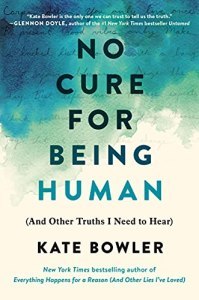
We've picked our next book for the Happier Podcast Book Club, the brilliant new memoir by Kate Bowler, No Cure for Being Human (And Other Truths I Need to Hear) (Amazon, Bookshop).
This memoir hits the shelves today, September 28. Even pre-publication, it has generated tremendous buzz.
The official description explains:
The bestselling author of Everything Happens for a Reason (And Other Lies I’ve Loved) asks, how do you move forward with a life you didn’t choose?
It’s hard to give up on the feeling that the life you really want is just out of reach. A beach body by summer. A trip to Disneyland around the corner. A promotion on the horizon. Everyone wants to believe that they are headed toward good, better, best. But what happens when the life you hoped for is put on hold indefinitely?
Kate Bowler believed that life was a series of unlimited choices, until she discovered, at age 35, that her body was wracked with cancer. In No Cure for Being Human, she searches for a way forward as she mines the wisdom (and absurdity) of today’s “best life now” advice industry, which insists on exhausting positivity and on trying to convince us that we can out-eat, out-learn, and out-perform our humanness. We are, she finds, as fragile as the day we were born.
With dry wit and unflinching honesty, Kate Bowler grapples with her diagnosis, her ambition, and her faith as she tries to come to terms with her limitations in a culture that says anything is possible. She finds that we need one another if we’re going to tell the truth: Life is beautiful and terrible, full of hope and despair and everything in between—and there’s no cure for being human.
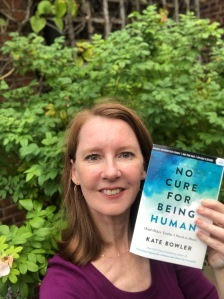
Elizabeth and I also both loved Kate Bowler's first memoir, Everything Happens for a Reason (And Other Lies I’ve Loved) (Amazon, Bookshop). (Kate is a history professor at Duke Divinity School, and I've also read her academic books: Blessed: A History of the American Prosperity Gospel (Amazon, Bookshop) and The Preacher's Wife: The Precarious Power of Evangelical Women Celebrities (Amazon, Bookshop.)
Kate has the remarkable gift of being able to talk about immense, serious subjects with a light voice. She goes deep, and she's also very funny.
If you'd like to listen to a short interview with Kate ahead of time, Elizabeth and I talked to her in episode 273.
Kate also has a terrific podcast, Everything Happens. If you'd like to listen to an interview of the two of us, it's here.
We'll talk to Kate in episode 349, on October 27, 2021. So get reading! Or listening, if you love audiobooks.
What are your questions or insights about the book? Add them in the comments, or share them on social media using #happierpodcastbookclub, and we'll incorporate them into the interview.
Remember: whenever it is and wherever you are, there's always a book waiting for you.

September 23, 2021
Dorie Clark: “Too Many Smart and Talented People Give Up on Their Goals Too Soon.”
Interview: Dorie Clark
Dorie Clark is a leading consultant and keynote speaker who teaches executive education at Duke University’s Fuqua School of Business and Columbia Business School. She's the author of Entrepreneurial You (Amazon), Reinventing You (Amazon, Bookshop) and Stand Out (Amazon, Bookshop), which was named the #1 Leadership Book of the Year by Inc. magazine.
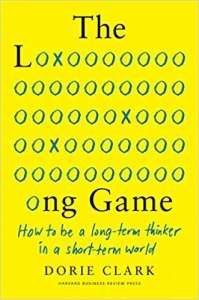
Her new book is The Long Game: How to Be a Long-Term Thinker in a Short-Term World (Amazon, Bookshop).
If you love a self-assessment as much as I do, Dorie offers the Long Game Self-Assessment to help people apply the principles of strategic thinking to their own life and career.
I couldn't wait to talk to her about happiness, habits, and creativity.
Gretchen: What’s a simple activity or habit that consistently makes you happier, healthier, more productive, or more creative?
Dorie: Growing up, I scarfed down way too much Coca-Cola, and I never liked the taste of water. But once I realized that water could be *carbonated just like soda,* I was sold. Today, I drink inordinate amounts of sparkling water, so I’m very well hydrated (which helps with sleep, mood, and more). Most of what’s positive in my life comes from finding ways to trick myself into doing the right things.
What’s something you know now about happiness that you didn’t know when you were 18 years old?
When I was a kid, I was always focused on “the next thing.” I was desperate to be 16 so I could drive and 18 so I could vote; I couldn’t wait to go to college or to get a job. I don’t think that was wrong, per se—it was a desire to be part of society, rather than be limited to the ‘playacting’ options that kids commonly have. But it was only a piece of the picture. As an adult—now that I’m able to do those things—I’m in a lot less of a rush, and have learned to force myself to pause and enjoy the slower moments that I know are special, like spending time with friends or watching a storm roll in.
You’ve done fascinating research. What has surprised or intrigued you – or your readers – most?
In my research for my new book The Long Game, I found a pair of separate studies that—taken together—revealed something bonkers about the way we live our lives now. In one study of 10,000 leaders, 97% said that strategic thinking was the most important thing they could be doing for the future of their organizations. And in a separate study, 96% said they didn’t have time for strategic thinking!
I realized that, for so many of us, that’s true in our own lives as well. I wrote The Long Game as a way of helping people think about how to create more white space in our schedule, so we can identify and focus on what really matters. If strategic thinking is that important—and rare—we shouldn’t just be doing it inside corporations. We should be applying it to our own lives and careers, as well.
Have you ever managed to gain a challenging healthy habit—or to break an unhealthy habit? If so, how did you do it?
I’m a big believer in “some is better than none.” I always struggled to take vitamins because swallowing a fistful of those huge pills is just dispiriting. It’s slightly embarrassing, and I know these aren’t as ‘turbocharged’ as the horse pills, but the way I’ve been able to build a sustainable vitamin habit is to eat gummies every day. They’re delicious.
Would you describe yourself as an Upholder, a Questioner, a Rebel, or an Obliger?
Like you, Gretchen, I’m an Upholder. I do my best not to be insufferable. 
Does anything tend to interfere with your ability to keep your healthy habits or your happiness?
Travel was very hard for me, because pre-Covid, I gave about 30-50 keynote talks per year. I have really severe motion sickness, so cabs to (and from) the airport were a nightmare. I could either drug myself with Dramamine, which made me hopelessly sleepy, or take my chances. (I think I hold a world record for the number of times someone has actually thrown up in a moving vehicle.) I was helped *a lot* when I discovered a recent invention—Boarding Ring glasses—which worked wonderfully for me. But they fog up when you wear a mask, so they’ve been a lot less useful during the pandemic (of course, I haven’t been traveling very much, either). So motion sickness was much better, on the whole, during Covid! And I actually managed to exercise a lot because there was nothing else to do. (I tracked my time and wrote an article about what I learned, in case it’s of interest.) But it was simultaneously very depressing because all my friends left New York, so #tradeoffs.
Have you ever been hit by a lightning bolt, where you made a major change very suddenly, as a consequence of reading a book, a conversation with a friend, a milestone birthday, a health scare, etc.?
Five years ago, a casual acquaintance brought me to a Broadway show, Fun Home. Going to Broadway wasn’t typical for me—it was only the second show I’d seen in a year and a half. But I woke up the next morning with the absolute conviction that I needed to learn how to write a musical. (I had no experience with this, aside from writing angsty teenage folk songs, and wasn’t even really a musical fan.) But it was such a strong feeling that I decided I needed to follow it, and in the five years since, I’ve been accepted into and completed one of the world’s top musical theater training programs, and have written a complete musical that I’m working to move forward (it’s a sexy lesbian spy thriller, obviously). Who knows if I’ll reach it, but the goal I’m working toward is getting a show on Broadway in the 2026 season. (In The Long Game, I write about my experience getting started in musical theater as a complete novice, and how I overcame my initial rejection from the training program and eventually wheedled my way in.)
Is there a particular motto or saying that you’ve found very helpful? Or a quotation that has struck you as particularly insightful?
My favorite quote is from Theodore Roosevelt: “In any moment of decision, the best thing you can do is the right thing, the next best thing is the wrong thing, and the worst thing you can do is nothing.” I’m the world’s biggest fan of being proactive.
Has a book ever changed your life – if so, which one and why?
When I was 13, my friend’s mom had a copy of Tony Robbins’ Unlimited Power (Amazon, Bookshop) laying around at their house. I picked it up and was looking at it, and she got so excited—apparently she’d tried to interest her own daughter in it, to no avail. She said, “If you read this book now, when you’re 13, and you really take it in, you’re going to be unstoppable!” She sent it home with me and made me promise to read it. It’s not that the ideas in it are necessarily revelatory (at least, to an adult). But as a young teenager, I’d never been exposed to the concept that we can control our thinking and that we actually have a huge amount of agency over our beliefs, our reactions, and our goals. And that was enormously empowering. You really couldn’t pay me enough money to walk on hot coals, but I give Tony Robbins a huge amount of credit for helping me, and many others, realize so much more of what we’re capable of.
In your field, is there a common misconception that you’d like to correct?
I coach a lot of professionals who want to grow their platform and increase their impact, and one of the reasons I was inspired to write The Long Game is that I think having accurate expectations is so important. Running a marathon is hard but do-able. What’s truly awful is thinking you’re signing up for a half-marathon, being near the end, and having someone suddenly tell you, “Oh, you’re not done—you’re only halfway there.”
Too many smart and talented people give up on their goals too soon, because they haven’t scoped out what it will take to achieve them and they get discouraged. What I’ve seen—both in my own experience, and through working with 600+ members of my Recognized Expert online community—is that it takes at least 2-3 years of consistent effort to show almost any progress in getting your ideas heard publicly, and about five years of effort to show clear and demonstrable results. That might sound like a long time—but the time is going to pass, anyway. If you have the right expectations upfront, it feels less like a slog, and more like a manageable journey toward something that really matters. That’s the essence of the long game.

September 16, 2021
Liz Plosser: “In Many Cases, Some Sleep and Fresh Perspective Will Re-Set Your Emotional State.”
Interview: Liz Plosser.
Liz Plosser is the Editor-in-Chief of Women’s Health magazine and also served as Deputy Editor of SELF and helped earn Cosmopolitan its first-ever national magazine award.
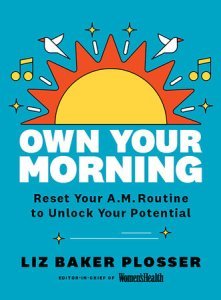
Her first book just hit the shelves: Own Your Morning: Reset Your A.M. Routine To Unlock Your Potential (Amazon, Bookshop). In it, she argues that your morning routine should reflect what matters most to you.
I couldn't wait to talk to Liz about happiness, habits, and health.
Gretchen: What’s a simple activity or habit that consistently makes you happier, healthier, more productive, or more creative?
Liz: My morning workouts. I always feel clearer, calmer, and more confident after them. “Sweat changes everything” is a Liz motto…and whether it’s a HIIT workout, kettlebells or even 10 minutes of stretching, there is no question that my daily movement practice makes me a better human. By the way, there is TONS of science backing this up…from improved mood, to reduced anxiety, the “psychological momentum” that you create by accomplishing a demanding task, like a workout. I want all of that good stuff coursing through me for the entire day.
What’s something you know now about happiness that you didn’t know when you were 18 years old?
The sun will rise again tomorrow. And in many cases, some sleep and fresh perspective will re-set your emotional state. So good to keep in mind on days that feel dark, figuratively or literally!
Have you ever managed to gain a challenging healthy habit—or to break an unhealthy habit? If so, how did you do it?
I am in a constant state of trying to implement healthier habits while unlearning not so healthy ones! I have a very gross “stress habit” of gnawing on the skin around my thumbnails when I am frazzled…I don’t even realize I’m doing it until I’ve gone to town, so to speak. During the pandemic, I used some of the extra time I found in my day because I was no longer commuting to the Women’s Health offices (from Brooklyn to Manhattan) to smooth oil on my nails and fingers every single morning and evening. And then on weekends, I do a self-manicure, carefully grooming my cuticles and eventually painting on a pale pink nail polish. The irony is that I’ve always believed the state of my hands is like a window into the state of my soul, and now I’m struck by what a chicken-or-egg situation this was. Did I feel stressed because my hands were a wreck, or did I take it out on my hands when life got extra chaotic? Regardless, my hands are feeling great, which reflects my emotional and mental state, too, these days!
Would you describe yourself as an Upholder, a Questioner, a Rebel, or an Obliger?
I’m an Upholder through and through!
Does anything tend to interfere with your ability to keep your healthy habits or your happiness?
Instagram! I have a love/hate thing happening with the platform. I love it because as a creative, I enjoy playing with visuals and words and engaging with a community there. And it’s an extraordinary place to come upon story ideas…both seeing what athletes, scientists, doctors and our readers are posting about, but even more than that, peeking into the comments where the real conversation is happening.
On the other hand, there are very real downsides: scrolling into the night, being only halfway engaged with my family because I’m taking pictures or posting content. So! This summer I took a lengthy Instagram break—no posts, period, for about six weeks—and it was cathartic and empowering. I got clear about how I want to interact with the platform: authentically. It’s taken pressure off of me to curate my life for followers, and allows me to focus on the moments that matter with my three young children. This relationship will continue to evolve, but I’m determined to enjoy a healthy and productive relationship with social media.
Have you ever been hit by a lightning bolt, where you made a major change very suddenly, as a consequence of reading a book, a conversation with a friend, a milestone birthday, a health scare, etc.?
When I was 22, I dreamt that I was the editor of a health magazine. At that time, I was a first-year investment banking analyst. A very unhappy one, because I was not stimulated or fulfilled. The paycheck was great for a college grad brand new to New York City, but I knew in my heart and soul that there was more for me out there. That dream changed everything for me…especially because, thankfully, I shared it with some running friends. It was a beautiful combo of manifesting, then being brave enough to say it out loud. There is power is speaking about your (in my case, literal) dreams.
My training buddies encouraged me to explore publishing and journalism, and thus began my journey of networking, applying for jobs, interviewing, and ultimately landing a job as an editorial assistant in the fitness department of SELF Magazine. That was my dream coming to life in my mind, but I could never have imagined that I was just getting started. After 17 years of zig-and-zagging, fetching lots of coffee, doing lots of the grunt work, rolling up my sleeves and diving in, working really hard, and taking advantage of every lucky break that popped up, I am indeed living the dream.
Is there a particular motto or saying that you’ve found very helpful?
"Let’s make better mistakes tomorrow." It has helped me through hard times, given me hope, and made me more compassionate toward myself and others. And I love the idea that we can always start again tomorrow—a re-set awaits every 24 hours.
In your field, is there a common misconception that you’d like to correct?
In my almost 20 years in the wellness space, I’m constantly stuck by the perception that doing something a specific way—eating this exact diet, running this many miles a week, meditating exactly this way—will magically transform your life, your body, your brain. It is probably human nature: We want answers, we want the fix! But the truth is that there are so many ways to be healthier and happier…and what works for someone you see on social media, or work with, or hang out with, or even live with, is not necessarily the right formula for you! The trick is experimenting and learning what resonates for you/works in your life. That is very much the mission of Women’s Health, my book, and for me as a leader in the health space: To illuminate science-backed, expert-based healthy options for people so that they dabble and learn what works best for them.

September 14, 2021
I Crossed Off an Item from My “21 for 2021” List: Cryotherapy!
Each year on the Happier with Gretchen Rubin podcast, my sister and co-host Elizabeth and I reveal our lists of things we want to do by year's end, based on the year's number. For instance, the first time we did it, we did "17 for 2017." This approach is a whimsical twist on the New Year's resolution, and seems more fun.
In episode 307, we each revealed our "21 for 2021" lists. On my list, item #6 was "Try cryotherapy."
I've always been so curious about whole-body cryotherapy—brief exposure to very cold temperatures—and because I'm writing my book about the five senses, I wanted to push myself to try this extreme sensation. Even though I wasn't convinced by the claims made by people offering cryotherapy, I still wanted to try the experience.
I was curious—but I also dreaded doing it! I'm someone who is always, always cold, and I shivered at the thought of willingly subjecting myself to a very cold temperature—and even paying for the privilege. But if I were going to do it, I wanted to go when it was still hot outside. The idea of going to cryotherapy during wintertime was very unappealing.
The months passed, and I kept procrastinating.
But a few weeks ago, a friend who's also always cold tried it, and she assured me that it wasn't a miserable experience. And another friend told me that he'd found it very invigorating.
As an Upholder, for me, the Strategy of Scheduling is very powerful; if something's on the calendar, it happens. So after my friend told me she thought I'd be fine, I went online and booked an appointment. (The great thing about New York City is that if I can dream it up, I can probably find it.)
I found a place that was within a fifteen-minute walk from my apartment—and went.
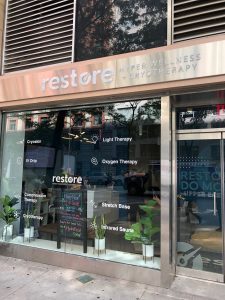
After I was checked in, I was relieved to learn that I did get some protection. I was given socks, slippers, a gaiter to pull up over my nose, a fleece band for my ears, a hat, hand liners and mittens. I stripped down to my underwear and put on a thin cotton robe for privacy. I took off all my jewelry.
The attendant was very friendly and reassuring. She did check a few times to make sure my skin was dry. "You haven't put on lotion," she asked, "or anything like that?" She showed me how I could push open the door to leave at any time, and how one side of the chamber was clear (though frosted for privacy below head-level), so I could see what was happening outside the chamber. It was surprising how much more comfortable I felt, being able to see out into the hallway.
When I was ready, I entered a chamber that was divided in two parts. Sometimes, in cryotherapy, you're in an enclosure where your head sticks out, but I walked into rooms the size of roomy walk-in closets.
I entered and stood in the very chilly antechamber for ten seconds, then when instructed, opened a door to stand in the truly frigid room for 2 minutes 50 seconds. I slipped off my robe (which, thin as it was, was surprisingly warming) to get the full experience.
I was happy to see a count-down clock, so I knew exactly how much time was left in my session.
The cold was interesting. I was very cold, but I didn't shiver, and it wasn't the kind of agonizing cold that I've often experienced. It didn't seem to penetrate through me, somehow. Near the end of the time, I started to feel a change in my skin, it felt tingly and almost...crackly.
I didn't have trouble staying until the end, but I didn't want to stay one second longer, either. When I got out, I discovered that as a first-timer, for me the chamber had been set to its least-cold setting. The person getting in after me had done cry0therapy seven times, and her session lasted thirty seconds longer, and was set to the most-cold setting.
So, how did cryotherapy make me feel?
I warmed up very fast. I did feel good. I had a curious trembling feeling—quite pleasant, but odd—that lasted several minutes. And my nose kept running for about twenty minutes. Did I feel more energetic or upbeat? I couldn't really tell.
I'm very glad I did it. It was a sensory adventure.
The attendant told me that the chamber was big enough to accommodate four people, and it occurred to me that this might be a fun adventure for people to do together.
Over the course of researching my book, I've realized that a great way to connect with other people is to share a sensory experience. It's very common to share meals, of course, or to sight-see together, but there are other, less obvious ways to share a sensory experience. I took a cheese-tasting class with my daughter Eliza, I went to a sound bath with a friend, and just a few nights ago, a friend and I realized that we're both textured-focused, and he and I talked about texture for a long time (satin makes his skin crawl; we both love a massage; neither of us like polished cotton; we both like velvet; etc. etc.).
We delight in our five senses. It's fun to experience something new and unexpected, either alone or with others. Two of my favorite immersive sensory experiences: I visit the Metropolitan Museum every day and I often walk in Central Park.
Have you tried cryotherapy—if so, what did you think?
Do you have other intense sensory experiences to recommend? I've tried Flavor University, a sensory deprivation tank, the Immersive Van Gogh exhibit, and I'm always looking for new experiences to try.

September 9, 2021
Stacey Vanek Smith: “Negotiation Does Not Have to Involve Conflict.”
Interview: Stacey Vanek Smith
Stacey Vanek Smith is the co-host of NPR's The Indicator from Planet Money. She's also a correspondent for Planet Money, where she covers business and economics. She has also worked for Marketplace, where she was a correspondent and fill-in host.
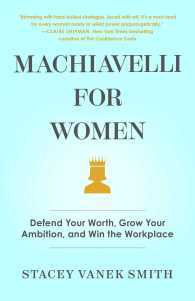
Her new book just hit the shelves: Machiavelli for Women: Defend Your Worth, Grow Your Ambition, and Win the Workplace (Amazon, Bookshop).
I couldn't wait to talk to Stacey about happiness, work, and habits.
Gretchen: What’s a simple activity or habit that consistently makes you happier, healthier, more productive, or more creative?
Stacey: Walking in nature (New York’s version of nature, that is.) In my case, it was Prospect Park in Brooklyn, a rather large, rambling park, full of joggers and dog-walkers and parents with strollers and chipmunks and lightning bugs and roller-bladers and giant, leafy trees. I would walk in the park for hours during quarantine. Somehow, no matter how dire things seemed (and they often seemed pretty dire), everything always seemed better after walking in the park. It made such an enormous difference in my state of mind that I have kept it up. I walk in the park most every day and when I don’t (when the siren song of Netflix is too strong) I really feel it.
What’s something you know now about happiness that you didn’t know when you were 18 years old?
I would tell my 18 year old self that accomplishing things and getting what you want will not make you happy. (Also: I know you THINK low-rise jeans are a good idea… but they are not.)
You’ve done fascinating research. What has surprised or intrigued you – or your readers – most?
Reading (and re-reading) Machiavelli’s The Prince (Amazon, Bookshop) and really coming to understand his work was the most surprising thing for me. The Prince was not what I thought it was at all. I had assumed it was a guide to being a power-hungry, soulless, spirit-crushing, megalomaniacal apex-predator. But in fact, Machiavelli’s intellectual through line in The Prince is clarity, that is, the ability to look clearly at a situation (without emotion), assess it and adapt your behavior in order to get your desired outcome. Instead of getting mired down in what ‘ought to be’ or enraged at injustices or wrongdoing, you simply observe what is going on and handle it the best you can: “Since it is my intention to say something which will be of practical use,” he writes “I have thought it proper to represent things as they are in real truth, rather than as they are imagined.” It is the honesty and clarity of Machiavelli’s observations about human beings, leadership and power that have made his book timeless (and so controversial).
Have you ever managed to gain a challenging healthy habit – or to break an unhealthy habit? If so, how did you do it?
Smoking! Marlboro Lights, half a pack a day for five years. I tried everything to quit, but nothing seemed to work. I got to a point where I had basically given up ever quitting (I tried patches, gum, books, meditation, cold turkey, herbal cigarettes etc) and I finally managed to quit using advice from a friend of mine. She told me I was being too hard on myself (which was very confusing to me: “You mean, I can’t quit smoking because I’m so angry at myself for smoking?!”) But it was the thing that worked. When I would have a craving or when I was at the store within arm’s reach of cigarettes I would pause and say to myself: “OK. If I really really need a cigarette, I will buy them. Do I really need one right now?” Amazingly, the internal permission proved to be very powerful. I spent many cumulative hours parked outside the 7-11 in the Los Feliz neighborhood of Los Angeles having this conversation with myself. That move away from being so angry and frustrated at myself and toward a more relaxed, permissive approach worked. I haven’t smoked in nearly 15 years.
Would you describe yourself as an Upholder, a Questioner, a Rebel, or an Obliger?
I was sure I would be an Obliger, but the quiz says I’m an Upholder. This does make a lot of sense. I am very hard-working and reliable and people like having me on their teams. But I have trouble delegating and I think I can be hard on the people I work with—I have trouble letting go of things or not thinking the way I want to do things is… correct. This sentence in the description of Upholder resonated with me: “There’s a relentless quality to Upholder-ness, which can be tiring both to Upholders and the people around them.” Pretty sure my co-workers would agree with this!
Does anything tend to interfere with your ability to keep your healthy habits or your happiness?
Work. I tend to totally pour myself into my work and will let other parts of my life go. I am very good at going on vacation, though. I just have to make sure I actually take vacation, which I’m less good at.
Have you ever been hit by a lightning bolt, where you made a major change very suddenly, as a consequence of reading a book, a conversation with a friend, a milestone birthday, a health scare, etc.?
I’ve had a few lightning bolts in my life, to be sure. One big one happened when I was 30. I had just been promoted to the position of Editor at the radio show where I was working. The trouble was, I wanted to be a reporter. In other words, I was part of the way up a (very cool) ladder that I was not interested in reaching the top of. I had been applying for reporting jobs at this company for years (and staying late to report pieces—so I *was on the air quite a bit) but when I applied for reporting jobs, I never even got an interview. Finally, after four years, I went to the boss of the company and asked him why I wasn’t being considered for reporting positions. He said my work was solid, but that it lacked “specialness” (still digesting that one!) and the jobs were very competitive. I was devastated and I did what any mature, adult woman would do when facing a professional crisis: I called my mom.
“It sounds like you need to quit, sweetie,” she said. I was floored. My mom was not the “throw caution to the wind” type and public radio freelancing definitely seemed windy. So, I told her what I felt: That there was no WAY I could quit. I was already 30—“Editor” sounded respectable and like a thing I could proudly tell people. Saying I was a freelancer sounded… unemployed and like I’d failed. I told her that I thought it would be too hard to tell people that I was 30 and basically unemployed. My mom said: “Do you think it will be easier when you’re 31?” That was a lightning bolt. I still remember where I was standing when she said it.
That day I started saving up money to quit, which I did 6 months after that conversation. I realize how lucky I was to be able to do this at all. I would never have been able quit if I hadn’t been incredibly privileged on many fronts: I didn’t have dependents or family members counting on my income; I didn’t have a lot of debt; and I made enough money that I could save up and have a little nest egg to get me through a lean time. A lot of people don’t have those advantages and even though I did have every advantage, it still took every bit of courage I had inside of me to do it. Looking back, I can honestly say it was the best career move I have ever made. It changed my life.
Is there a particular motto or saying that you’ve found very helpful? Or a quotation that has struck you as particularly insightful?
There is a quote from the poet Rainer Marie Rilke that I love and that I have put on Post-It’s in different places around my apartment: “Life is always right.” I think it contains profound wisdom and it always relaxes me when I see it. I actually think Rilke and Machiavelli would very much agree on that point. I am a person who can get very caught up in ideas of justice. If something seems unfair, I often cannot let it go and I will obsess about it. What this quote reminds me is that I can waste all of my time and energy raging against reality… but reality is reality. My opinions about it will not make it any less real. It is the present moment and it is the situation in front of me. It is so much better for me (in so many ways) to use my energy and mind to deal with the situation rather than being angry at it. And, it’s also much more likely that I can change that situation if I’m not worn out from raging against it.
Has a book ever changed your life – if so, which one and why?
So many! Very, very much including The Happiness Project. [Aww, thanks Stacey!] As far as this book I have written is concerned, I would have to say Loving What Is, by Byron Katie (Amazon, Bookshop). (I really wanted to give a very literary answer, but the truth is probably more useful). I saw Byron Katie interviewed by Oprah years ago and there was a part of that interview that completely changed the way I saw conflict and negotiating. During this part of the interview, Byron Katie and Oprah did a role-playing exercise having to do with people asking Oprah for money all the time (it was something Oprah was struggling with).
In the exercise, Oprah was being a friend asking for money. Bryon Katie said, “You know, thank you for asking and no.”
Oprah (as her family friend) came back with: “I can’t believe with all that you have and you’re helping other people all the time, that you won’t give me $100,000.”
Byron Katie came back with: “I know. It sounds nuts doesn’t it? But it feels right to me.”
During the whole exchange, Byron Katie was calm, warm and compassionate. To me, that moment was a revelation—it is truly the centerpiece for how I approach negotiating in my book: There’s often an idea that a negotiation is adversarial and that asking for more or drawing boundaries or pushing back in a situation needs to be aggressive. The truth is, it doesn’t. You can just say ‘no.' Or ‘I need X amount of money.' A negotiation does not have to be high noon. I have traditionally been terrible at negotiating and asking for more exactly because I thought of negotiations as high noon. Realizing there was another way, was a huge intellectual shift for me. As much as I love a good Western, I do not think it’s the best approach for a negotiation (unless Clint Eastwood is somehow involved and then it’s a fantastic idea).
What that moment and Loving What Is made me realize: Negotiation does not have to involve conflict. If you know what you need and do the proper preparation, there does not have to be any tension or stress in a conversation where you are asking for more. If you truly know your boundaries and your needs and are secure in them, getting angry and yelling and kicking up dust is not necessary.
In your field, is there a common misconception that you’d like to correct?
One big one: Women are to blame for getting paid less because they don’t negotiate. This is a very common story that really bothers me. The worst part is, it’s true! BUT, in this case, the truth is very complicated and, in reality, women are making practical and logical choices. The truth is, people don’t like it when women ask for more for themselves. I believe change is possible (and so important!) but I also think it’s important to move out of a mentality that women getting paid less, promoted less and getting fewer resources is because women are failing or because they’re lazy or wimpy. The truth is, women who ask for more money in a negotiation are automatically considered less desirable to work with. When women ask for more, it can cause a backlash and lingering resentment that is worth far more than $5,000 a year. There are absolutely solutions to this and ways to minimize this backlash, but, truly, when women don’t negotiate or hesitate to do so, it is not because they lack courage or are lazy. It is because they see a situation that has a very uncertain upside and very real downside. And they are not wrong!
Anything else you'd like to highlight from the book?
One of my favorite moments in the book came from AI super-genius Vivenne Ming. She has studied happiness, purpose and courage (along with many other things). But one thing she told me is something I think of most every day. She said, “Courage isn’t something you just have. It isn’t something you are. It’s something you practice and that practice is brutally hard. I think most of my life is about structuring it to be as easy as possible to be as courageous as possible, because I’m not that good at it.” For the record, I think Vivienne is VERY good at courage, but the idea that courage is a practice and that you can make choices in your life that make it easier to be courageous (to be the person you want to be) is very interesting to me. I think that is one of the keys to being the person you want to be (that and NEVER wearing low-rise jeans).

September 7, 2021
Are You A Lark Or An Owl? Weigh In.
Research shows that morning people, or “Larks,” really do differ from night people, or “Owls.” About 40% of people are Larks, about 30% are Owls, and the rest fit somewhere in between. True morning people and night people—the two chronotypes as measured by their sleep midpoint—find that they tend to be more productive and energetic at different points in the day.
I’m a Lark: I go to sleep and wake on the early side. Owls do just the opposite. I used to believe that Owls could become Larks if they made an effort to go to sleep earlier, but research suggests that this attribute is hardwired. Genes play a big role, as does age: young children tend to be Larkish; adolescents tend to be Owls (with a peak at age 19.5 for women and age 21 for men); older adults tend to be Larks.
Interestingly, research suggests that Larks are likely to be happier, healthier, and more satisfied with life than Owls—in part, because the world favors Larks. Owls fall asleep later than Larks do, and because work, school, and young children start early, Owls get less sleep, which makes their lives harder.
The world is full of people who claim their success is due to their early rising, and who give tips for making yourself a “morning person,” but true differences do exist.
Instead of trying to change our natures, we should try to change our situation and surroundings to suit us—whenever possible.
Larks, Owls, and everyone in between should consider that aspect of their nature when trying to shape a habit. An Owl probably shouldn’t bother trying to form the habit of getting up early to study, and a Lark shouldn’t try to fit in two hours of writing after dinner. If you’re planning when to exercise, when to do creative work, or when to take it easy, knowing your chronotype can help you set yourself up for success.
It’s important, too, to remember that everyone is different. If you’re scheduling an important brainstorming meeting, don’t assume that everyone on the team, like you, is at their most energetic and creative at 8:30 a.m. The group might be much more productive at a 10:30 meeting.
Sometimes we may not recognize our own type. A friend told me, “I went on a meditation retreat, where we woke up at four. It was like a switch flipped for me, and my life became so much better. Now I go to bed around 9:00 or 9:30, and I wake up at 4:00. I love it.”
Are you a Lark, Owl, or somewhere in between?

September 3, 2021
What I Read This Month: August 2021
For four years now, every Monday morning, I've posted a photo on my Facebook Page of the books I finished during the week, with the tag #GretchenRubinReads.
I get a big kick out of this weekly habit—it’s a way to shine a spotlight on all the terrific books that I’ve read.
As I write about in my book Better Than Before, for most of my life, my habit was to finish any book that I started. Finally, I realized that this approach meant that I spent time reading books that bored me, and I had less time for books that I truly enjoy. These days, I put down a book if I don’t feel like finishing it, so I have more time to do my favorite kinds of reading.
This habit means that if you see a book included in the #GretchenRubinReads photo, you know that I liked it well enough to read to the last page.
When I read books related to an area I’m researching for a writing project, I carefully read and take notes on the parts that interest me, and skim the parts that don’t. So I may list a book that I’ve partly read and partly skimmed. For me, that still “counts.”
If you’d like more ideas for habits to help you get more reading done, read this post or download my "Reading Better Than Before" worksheet.
You can also follow me on Goodreads where I track books I’ve read.
If you want to see what I read last month, the full list is here.
And join us for this year's challenge: Read for 21 minutes every day in 2021!
A surprising number of people, I've found, want to read more. But for various reasons, they struggle to get that reading done. #Read21in21 is meant to help form and strengthen the habit of reading.
August 2021 Reading:Milk Blood Heat by Dantiel W. Moniz (Amazon, Bookshop) -- An extremely thought-provoking collection of short stories.
The Princess and the Goblin by George MacDonald (Amazon, Bookshop) -- A classic tale of a magical land.
The Long Way to a Small, Angry Planet (Wayfarers, 1) by Becky Chambers (Amazon, Bookshop) -- Winner of the Hugo Award for Best Series. I love the work of Becky Chambers! Unlike most science fiction, the mood of her work is friendly and cheerful, as well as fascinating.
Blubber by Judy Blume (Amazon, Bookshop) -- I realized that I hadn't read this Blume novel since childhood.
Ordinary People by Judith Guest (Amazon, Bookshop) -- Haunting. So good.
First Person Singular: Writers on Their Craft by Joyce Carol Oates (Amazon, Bookshop) -- An interesting collection of essays.
A Closed and Common Orbit (Wayfarers, 2) by Becky Chambers (Amazon, Bookshop) -- Winner of the Hugo Award for Best Series. More Becky Chambers.
The Unseen by Zilpha Keatley Snyder (Amazon) -- I love Snyder's work and realized that somehow I'd skipped this novel.
But What I Really Want to Do Is Direct: Lessons from a Life Behind the Camera by Ken Kwapis (Amazon, Bookshop) -- As a huge fan of the TV show The Office, I wanted to learn more about Kwapis's process. I love all books about creativity, in whatever medium.
Record of a Spaceborn Few (Wayfarers, 3) by Becky Chambers (Amazon, Bookshop) -- Winner of the Hugo Award for Best Series. You guessed it, more Becky Chambers.
Open House: Of Family, Friends, Food, Piano Lessons, and the Search for a Room of My Own by Patricia J. Williams (Amazon, Bookshop) -- A fascinating memoir that covers many memories, people, and subjects.
Ladyparts: A Memoir by Deborah Copaken (Amazon, Bookshop) -- An astonishingly candid and thought-provoking memoir.
The Waves by Virginia Wolf (Amazon, Bookshop) -- A towering masterpiece. One of my favorites books ever. Inexhaustible.
The Galaxy and the Ground Within: A Novel (Wayfarers, 4) by Becky Chambers (Amazon, Bookshop) -- Winner of the Hugo Award for Best Series. More Chambers! Alas, I'm done with the series.
When You Trap a Tiger by Tae Keller (Amazon, Bookshop) -- One of my favorite devices is when metaphor turns literal—as here.
The Inheritance Games by Jennifer Lynn Barnes (Amazon, Bookshop) -- The Westing Game meets Knives Out meets Spiderweb for Two.
Kaffe Fassett in the Studio: Behind the Scenes with a Master Colorist by Kaffe Fassett (Amazon, Bookshop) -- I love color so couldn't wait to look at the pictures in this book.
Music, Lyrics, and Life: A Field Guide for the Advancing Songwriter by Mike Evvico (Amazon, Bookshop) -- As noted, I love reading about the creative process in any medium, so I was very interested in this examination of songwriting

September 2, 2021
Gary Ginsberg: “Even the Most Externally-Driven People Can Derive Satisfaction from Silence and Isolation.”
Author Interview: Gary Ginsberg
Gary Ginsberg has spent his career at the intersection of media, politics, and law. He worked for the Clinton administration, was a senior editor and counsel at the political magazine George, and then spent the next two decades in executive positions in media and technology at News Corporation, Time Warner, and SoftBank.
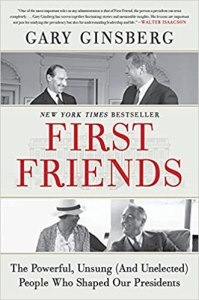
He recently published his first book, First Friends: The Powerful, Unsung (And Unelected) People Who Shaped Our Presidents (Amazon, Bookshop).
I couldn't wait to talk to Gary about happiness, habits, and relationships.
Gretchen: What’s a simple activity or habit that consistently makes you happier, healthier, more productive, or more creative?
Gary: My mind is clearest, my body the strongest, my concentration the sharpest after physical exertion – either by doing sprints on my rowing machine or a workout with my trainer.
What’s something you know now about happiness that you didn’t know when you were 18 years old?
That happiness and contentment can be attained without the applause and appreciation of others. When I was young, I thought I needed external validation to achieve that feeling. Now as I approach full-on late middle age I appreciate that one can derive happiness and indeed joy from accomplishing things (big and small) that only I know I did, and did well, even if others don’t see it or appreciate it. Has provided me much more peace of mind and satisfaction in the daily rhythms of life than what I experienced in my younger, perhaps more striving days.
You’ve done fascinating research. What has surprised or intrigued you – or your readers – most?
I was surprised at just how much the concept of my book – that Presidents need and rely on friends just as commoners do – caught on, even with the most hardened devotees/readers of the American presidency. I feared it almost trite when I first landed on it; but with its publication I’ve been thrilled at how it has resonated so deeply, in part I think because the pandemic reminded us all just how important friends are to our daily happiness and contentment.
Would you describe yourself as an Upholder, a Questioner, a Rebel, or an Obliger?
An Upholder with the freedom and desire now to morph into a Rebel. Untethering myself to a corporation and a corporate identify is the beginning (I hope) of a journey into a less structured, more purpose-driven and less conventional life than the one I’ve led for the past 58 years.
Have you ever been hit by a lightning bolt, where you made a major change very suddenly, as a consequence of reading a book, a conversation with a friend, a milestone birthday, a health scare, etc.?
Lightning bolts oddly have played a huge role in my life. I tend to get them in the middle of the night and awaken with this overwhelming sense that I now have full clarity on a vexing issue or a whole new idea to pursue. Certainly happened with First Friends. I’m often asked why I wrote it. The real answer: I awakened in the middle of the night in April 2018 with the idea. But I had clearly been thinking at least subconsciously about it for a long time, both because of the central role friends have played in whatever success I’ve achieved, and the realization that if true for me, how much more meaningful for the most powerful person on the planet? I had seen from my own political experience how important First Friends were in the rise and success of American presidents, yet I also knew that presidential literature was devoid of any books on the subject. It took the 3am lightning bolt to shake me into action, and three years later First Friends was published.
Is there a particular motto or saying that you’ve found very helpful?
“Push Push.”
It was the motto by which I drove myself as a college student to work harder to compete with the fancier students I encountered when I arrived at Brown University in 1980. As a middle-class kid from a public high school outside of Buffalo, New York, I knew I had a lot of catching-up to do, a lot of ground to cover, to feel a part of this more rarified, cultured environment I now inhabited. “Push-push” was my silent yet constant exhortation as I made my way through that experience of discovery and growth.
Has a book ever changed your life – if so, which one and why?
The Executioner’s Song by Norman Mailer (Amazon, Bookshop).
For the first time I felt the full power of the written word. I can still feel the electricity of the words flowing from the pages as I followed the life of Gary Gilmore. Mailer’s writing was so clear, so spare yet so powerful – and Gilmore’s travels through the judicial system so tortured yet fascinating– that as a high school senior I made two vows: that I would become a lawyer, and aspire later if circumstances allowed to be a writer.
In your field, is there a common misconception that you’d like to correct?
For twenty-five years I made my living in external relations. To be successful, I always assumed I had to be externally-driven and focused, and lived my life accordingly. My days were filled with hours on the phone or in meetings or at meals with large or small groups. When I got the idea for my book, I realized I would now need to fundamentally shift the way I lived. I didn’t know, however, whether I’d be constitutionally capable of living in relative isolation and silence for hours at a time—without the interruption of a phone or a meeting or a drop-by. I feared it, until I started to live it. And then I embraced it fully. Today, I’m living testament to the truth that even the most externally-driven people can derive satisfaction from—and even thrive in—silence and isolation. It was a wonderful discovery.