Anna Jones Buttimore's Blog, page 8
June 30, 2013
What I learned in Church today (30th June 2013)
It's inspired to ask twins to speak about individual worth!We should not seek the approval of others when God has already given us His approval. (Sabrina Allen)As children of God we all have something of the divine in us. This can be strengthened and made to grow until it outweighs our "natural man". We do this through daily prayer, scripture study and regular attendance at Church. (Oakley Allen)We are free to choose the course of our lives, but not the consequences of those choices. Gwen Jones)It is much easier for us to live up to our own standards if others around us know what they are. (Gwen Jones)True freedom is choosing obedience. (Gwen Jones)Cake is an extremely good analogy for heaven (even when it is shockingly wasted).Integrity is doing the right thing, even when no one is watching. Integrity is a conscious decision. (Ruth Coleman Goddard)We are each solely responsible for our actions, our thoughts and our words, and cannot lay the blame on anyone or anything else, with the exception of pregnancy hormones. (Ruth Coleman Goddard)The company we keep will hugely affect the course our lives will take.Because we have a scriptural record we don't have to relearn hard lessons learned anciently. We will be judged according to the scriptures and the lessons taught therein. (2 Nephi 29:11)One of the primary purposes of the Book of Mormon is to testify of the truthfulness of the Bible. (1 Nephi 14:23). (Bishop Jonathan Bleakley)


June 24, 2013
Swearing in Books
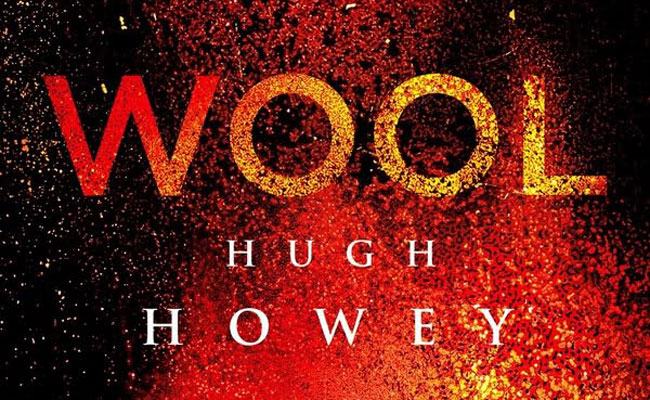
On Sunday as we sat in church waiting for the service to begin, I asked my husband how he was getting on with reading Wool by Hugh Howey, a book I have been raving about recently and had enthusiastically recommended to him.
"I'm struggling with it," he admitted, "Because I can't get past all the swearing."
Swearing? I didn't remember any swearing, and told him so. He opened his Kindle and showed me and indeed one character swears constantly. I was shocked that I hadn't noticed. Only a couple of months ago I refused to finish reading one of our book club assigned books because of all the bad language in the first couple of chapters. (If you want to know why I object to swearing, read this post.)
My first thought was that the fact that I hadn't noticed the swearing in Wool was testament to how well written it was. I must have been completely engrossed if my brain glossed over it. Maybe, like an addict in denial, my mind had refused to acknowledge it as a problem because it would mean that I had to give up my drug of choice (the book). Maybe again it was because (almost) all the swearing is done by one particular character, and it was so right for that character that my brain had taken against the character himself, not the book.
My second thought was utter mortification, because I recommended that book to the church book club! Even as I sat in my pew, the sensitive and delicate church ladies like myself (ahem) were reading it and probably having funny turns as Bernard threw out an F-bomb every other sentence, Doubtless they were wondering why that talkative blonde lady had put such filth in their paths, and thinking they might choose to avoid me in future in case I had other surprises in store for them.
Now, I'm a writer myself (which is why I have this blog) and my first four novels were written for delicate and sensitive souls because that's the audience my publishers cater to. In fact my first novel is so twee and saccharine and cheesy that I find myself wanting to vomit as I type it out all over again, copying it from the book itself because my new publisher wants to re-release it and I've lost the manuscript. Even in moments of dire peril my characters never utter anything more offensive to the ears than "Oh deary me!" My books are very much U certificate. Disney (old Disney, before they tried to get edgy and bought Star Wars) could film them. In fact, I'd rather like that. How about it, Disney?
Wool is definitely a 12A. (PG-13, if you're American.) I often wonder why books don't get classifications. After all, I rent DVDs using the classification as a guide to whether it's suitable for my tastes, so it comes as a bit of a shock when one buys a book called Fifty Shades of Grey and discovers that it's not actually about painting in monochrome.
Of course, one of the problems of being a writer who doesn't like swearing is that characters might occasionally swear. Not everyone is as, um, refined as me, and for some people it's perfectly normal, especially when they find themselves in stressful situations, and any book is a little dull if they don't. Here's one passage from my currently work-in-progress where I get around that problem. In it, Maralee has just discovered that the guy she has been dating is engaged to someone else. She goes to his office to confront him:
“You know what you are, Daniel? You’re a…” She groped for a word suitably scathing and abusive but couldn’t find one of the appropriate magnitude so she settled instead for stringing together every swear word, insult and offensive metaphor she could think of.
“Yes, yes I am. Are you free on Thursday night?”
“Absolutely.”
“If I come to your place and bring wine, will you say that to me again?”
(Needless to say, Daniel may go to Maralee's place on Thursday night, but the narrative doesn't. This book has a PG classification.)
So, going back to Hugh Howey, the guy is so approachable and down-to-earth (and get this--he encourages fan fiction!) that I'm betting I could ask him, ever-so-nicely, to do a quick find-and-replace on all the swear words in his books and put out alternative "cleaned up" ebook versions of Wool, Shift and Dust just for readers who are a bit anal have high moral standards.
It might be fun if Bernard's epithet of choice was "Holy Zarquon singing fish". And maybe then they'd let me come back to the church book club.
June 18, 2013
Why Muslims Don't Like Us
Imagine, for just a moment, that you grew up in a world where everyone believes in God and respects His laws. Your culture, society and traditions are based entirely on God's holy directives, and the lives of all citizens are dedicated to following His path.
In your society the fallen nature of man is well understood, in particular with reference to his carnal desires, and so your society protects men from themselves (and women from men) by putting in place strict rules and laws. Sex outside marriage is illegal. Women are protected from leers and lasciviousness by a protective barrier of fabric which they wear whenever they are among men. This "safety barrier" covers them from their glossy and alluring hair down to their fine ankles, so that no man can look upon them with lust. Maybe they are accompanied by a husband, father or brother, or some other man who can protect them whenever they venture out. Women know that their bodies are sacred and to be enjoyed, visually and physically, only by their husbands. This most holy and important truth is written into the laws of the land in which you live.
Now imagine that you are forced to leave that world for some reason, and you move to England (or the US, or almost any Western nation.). There you switch on the television and see someone performing on a prime-time television show, in front of millions of men, women and children, dressed like this:
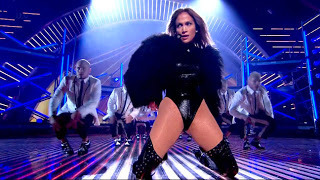
The next day you go shopping. On the way you pass women, including teenage girls, wearing tiny shorts or very short skirts, tops which are cut low to expose their breasts, or high to bare their midriffs. They wear bright and garish make-up to emphasise their beauty, and their hair is often styled to be particularly eye-catching and attractive. They laugh loudly and interact confidently and brashly with the men around them.
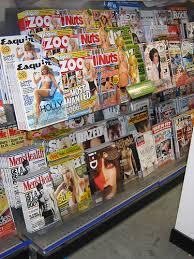
In the newsagent you see a shelf full of crude magazines for men, a newspaper which has a topless woman on only the third page, and a daily newspaper called "The Sport" which seems to contain little more than pictures of women wearing next to nothing and posing provocatively. Even the magazines for women shout from the cover that they include articles like "Fifty ways to spice up your sex life" or "Get a bikini body".
On billboards you see pictures like this:
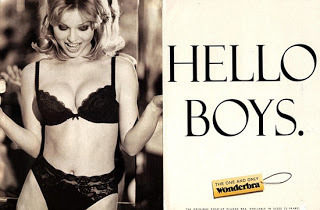
Imagine, for a moment, what a debauched and sunken society this seems. How ashamed and embarrassed you must feel on behalf of the women who allow themselves to be paraded before men like that. How angry you must feel towards men who not only allow their mothers, wives, sisters and daughters to be used in this way, but buy those magazines and newspapers and thus perpetuate this offensive parading of women to titillate men. How sick you must feel as you live your life amidst all this disrespect and disgusting salaciousness that somehow passes for "normal" in this Godless place.
Is it a Godless place, though? You have been told, and the churches dotted around your town would seem to attest, that it is a Christian country. This, then, is how Christians behave. How happy you must feel to be an enlightened Muslim.
Then you realise that the western world, including Christian countries like the UK and the USA, is putting pressure on Muslim countries to reform, to allow new "freedoms", to become more "modern". Like a pernicious and unstoppable cancer, Western ideologies are slowly polluting your home country.
Is it any wonder that some Muslims choose to fight back?
I don't condone for a moment the extremist and shocking acts of terrorism and murder we have seen recently--and neither does Islam--but when viewed from the perspective of faithful and honourable Muslims decrying what our debased culture and society appears to stand for it become easier to understand why these things happen.
But I would like to say two things to my honoured Muslim friends:
1) I am a Christian, and this society you see around you is NOT. Only 15% of people in the UK attend church with any regularity so we are vastly outnumbered by the non-believers. My church teaches me to dress modestly (which it defines as being covered from the shoulders to the knees) and to shun alcohol. Sex outside marriage is considered a heinous sin, and we try to be discerning in terms of what we read and watch. The wider society in which I live pokes scorn at the moral standards I live by.
2) The "modern ideology" which Western Society appears to be trying to force on Muslim nations is not our sexualisation of everything from advertising to clothing, our loose morals, or our love of alcohol. It's things like democracy, freedom of speech and communication, equality, fair treatment, education. Things which can run alongside Islam in building harmonious, happy and honourable societies where God is respected and so are the people He created, and where everyone is enabled to achieve their potential, to play a part in shaping their community for the better, and to live without fear.
Muslims, I apologise for Jennifer Lopez and for our "anything goes" society. I understand why you fear it encroaching on lands holier than ours. But I would ask you not to take extreme measures, but rather to help us understand and move towards a society where there is a deeper respect for self, and for others.
In your society the fallen nature of man is well understood, in particular with reference to his carnal desires, and so your society protects men from themselves (and women from men) by putting in place strict rules and laws. Sex outside marriage is illegal. Women are protected from leers and lasciviousness by a protective barrier of fabric which they wear whenever they are among men. This "safety barrier" covers them from their glossy and alluring hair down to their fine ankles, so that no man can look upon them with lust. Maybe they are accompanied by a husband, father or brother, or some other man who can protect them whenever they venture out. Women know that their bodies are sacred and to be enjoyed, visually and physically, only by their husbands. This most holy and important truth is written into the laws of the land in which you live.
Now imagine that you are forced to leave that world for some reason, and you move to England (or the US, or almost any Western nation.). There you switch on the television and see someone performing on a prime-time television show, in front of millions of men, women and children, dressed like this:

The next day you go shopping. On the way you pass women, including teenage girls, wearing tiny shorts or very short skirts, tops which are cut low to expose their breasts, or high to bare their midriffs. They wear bright and garish make-up to emphasise their beauty, and their hair is often styled to be particularly eye-catching and attractive. They laugh loudly and interact confidently and brashly with the men around them.
In the newsagent you see a shelf full of crude magazines for men, a newspaper which has a topless woman on only the third page, and a daily newspaper called "The Sport" which seems to contain little more than pictures of women wearing next to nothing and posing provocatively. Even the magazines for women shout from the cover that they include articles like "Fifty ways to spice up your sex life" or "Get a bikini body".
On billboards you see pictures like this:

Imagine, for a moment, what a debauched and sunken society this seems. How ashamed and embarrassed you must feel on behalf of the women who allow themselves to be paraded before men like that. How angry you must feel towards men who not only allow their mothers, wives, sisters and daughters to be used in this way, but buy those magazines and newspapers and thus perpetuate this offensive parading of women to titillate men. How sick you must feel as you live your life amidst all this disrespect and disgusting salaciousness that somehow passes for "normal" in this Godless place.
Is it a Godless place, though? You have been told, and the churches dotted around your town would seem to attest, that it is a Christian country. This, then, is how Christians behave. How happy you must feel to be an enlightened Muslim.
Then you realise that the western world, including Christian countries like the UK and the USA, is putting pressure on Muslim countries to reform, to allow new "freedoms", to become more "modern". Like a pernicious and unstoppable cancer, Western ideologies are slowly polluting your home country.
Is it any wonder that some Muslims choose to fight back?
I don't condone for a moment the extremist and shocking acts of terrorism and murder we have seen recently--and neither does Islam--but when viewed from the perspective of faithful and honourable Muslims decrying what our debased culture and society appears to stand for it become easier to understand why these things happen.
But I would like to say two things to my honoured Muslim friends:
1) I am a Christian, and this society you see around you is NOT. Only 15% of people in the UK attend church with any regularity so we are vastly outnumbered by the non-believers. My church teaches me to dress modestly (which it defines as being covered from the shoulders to the knees) and to shun alcohol. Sex outside marriage is considered a heinous sin, and we try to be discerning in terms of what we read and watch. The wider society in which I live pokes scorn at the moral standards I live by.
2) The "modern ideology" which Western Society appears to be trying to force on Muslim nations is not our sexualisation of everything from advertising to clothing, our loose morals, or our love of alcohol. It's things like democracy, freedom of speech and communication, equality, fair treatment, education. Things which can run alongside Islam in building harmonious, happy and honourable societies where God is respected and so are the people He created, and where everyone is enabled to achieve their potential, to play a part in shaping their community for the better, and to live without fear.
Muslims, I apologise for Jennifer Lopez and for our "anything goes" society. I understand why you fear it encroaching on lands holier than ours. But I would ask you not to take extreme measures, but rather to help us understand and move towards a society where there is a deeper respect for self, and for others.
June 16, 2013
What I Learned in Church Today (16th June 2013)
What I learned in Church today:
- Parents are like the defenders in a game of football, and their children are like the goalkeeper. Parents do their very best to protect their children from the things coming their way, but sometimes things get past them. Good parents have prepared their children to cope with the temptations and trials that are thrown at them.
- It doesn't matter that children don't come with a manual, because fathers wouldn't read it anyway.
- It doesn't take extravagant gestures to win a child's heart.
- If there was a website on which we could ask God questions and get answers everyone would be on it all the time. Prayer is that website.
- The first thing an enemy does in a war is to try to break down communications. When we are going through tough times and don't feel like praying, that's when we need to pray most. (2 Nephi 32:8-9)
- Prayer is the primary way we get close to God.
- Feeling that we are accepted by someone we love is a basic human needs. (Third on Maslow's Hierarchy of Needs.) However, seeking acceptance from the wrong sources or in the wrong way can be very destructive.
- "A broken heart" (see Doctrine and Covenants 97:8 / Psalm 51:17) can mean broken in the sense that we break a horse. A broken heart is not only repentant and sorrowful but submissive, respectful, teachable and obedient.
- "Knowing that God accepts you is your freedom for life from the constant worry of acceptance by others." (Yvonne I. Wilson)
Thanks to Cameron Herman, Ethan Page, Jacob William Page, Elder Davis and Elder Dowdle, and Kim Allen.
- Parents are like the defenders in a game of football, and their children are like the goalkeeper. Parents do their very best to protect their children from the things coming their way, but sometimes things get past them. Good parents have prepared their children to cope with the temptations and trials that are thrown at them.
- It doesn't matter that children don't come with a manual, because fathers wouldn't read it anyway.
- It doesn't take extravagant gestures to win a child's heart.
- If there was a website on which we could ask God questions and get answers everyone would be on it all the time. Prayer is that website.
- The first thing an enemy does in a war is to try to break down communications. When we are going through tough times and don't feel like praying, that's when we need to pray most. (2 Nephi 32:8-9)
- Prayer is the primary way we get close to God.
- Feeling that we are accepted by someone we love is a basic human needs. (Third on Maslow's Hierarchy of Needs.) However, seeking acceptance from the wrong sources or in the wrong way can be very destructive.
- "A broken heart" (see Doctrine and Covenants 97:8 / Psalm 51:17) can mean broken in the sense that we break a horse. A broken heart is not only repentant and sorrowful but submissive, respectful, teachable and obedient.
- "Knowing that God accepts you is your freedom for life from the constant worry of acceptance by others." (Yvonne I. Wilson)
Thanks to Cameron Herman, Ethan Page, Jacob William Page, Elder Davis and Elder Dowdle, and Kim Allen.
June 11, 2013
Book, Review: Dreamwalkers (Part One) by D.M. Andrews

This is the first instalment of what promises to be at the very least a trilogy aimed at young adults. Part 1 is very short indeed–I read it while waiting for the bride to arrive at a wedding–and does a good job of building the intrigue and setting the scene. I knew a bit about lucid dreaming already, and this book neatly takes the concept a step further. I found no errors, typos or editing issues at all, and the writing style is competent and appropriate to the intended readership.
At times it was confusing, and it took me a while to figure out the medieval town setting, but that was probably my fault for not concentrating; I’m sure the clues were there. I also suspect it’s going to be a predictable ending. The real-world news events bore so close a resemblance to the issues going on in the dream city that I wonder why the main characters haven’t joined the dots yet.
With an original idea and compelling and memorable characters, this is a series I will be buying in future.
June 3, 2013
The Power of Words
 I don't play an instrument, can't sing in tune, have no skill in any sport, and what little ability I had in drawing and painting has long since waned. The only talent I have is for writing.
I have always believed that this is a talent which is in every way as valuable as being able to act, dance or sing. The importance of being good with words was brought home to me recently because I have had to write two very important pieces.
The backstory is that I discovered recently that Essex County Council is undertaking a consultation on the future of my daughter's school. Like many of the parents, staff, and pupils I found out not from the Council, or from the Headmistress, but from a leaked document on the website of a neighbouring school which had apparently been asked by the council whether it could take the displaced pupils should my daughter's school close.
Within a few days a protest group had been put together and a petition was circulating. My daughter loves her school and is doing well there so I wanted to be part of the campaign to save it from closure. I was asked to compose and design a flyer to distribute locally to encourage the community to join us in our campaign to protect the school. I also wanted to write to the Head of Education at Essex County Council about the plans.
The flyer needed to be worded in such a way that it would be easily understood as a matter of importance and would engender a sympathetic response in the reader. It needed to have a friendly tone and make the point simply but firmly. It needed to outline the issue, explain why it had relevance to the reader, and give simple ways the local resident could help solve the problem. And it needed to do all this on one piece of A5 paper.
The letter to the man responsible for the decision called for even more care and effort. It needed to be professional and direct, not belligerent or in any way insulting or confrontational. It was a long letter so I needed to elicit his goodwill in the first sentence so that he would read the whole thing. It needed, in short, to get him to understand and feel sympathy for me and other parents concerned about their children's futures. It also needed to be perfectly composed with no errors or misspellings so that I could come across as an educated and intelligent individual whose option was worthy of his attention, and not just some shouty lady on the street.
He'd already received over 8,000 angry emails, so my letter needed to stand out from all the others, smooth over what had gone before, and make real viable suggestions which he would see as helpful. So, for example, whereas the council have said they cannot afford the £20.7 million to rebuild the school (which really does need rebuilding) I suggested a rolling rebuilding programme, thus spreading the cost over several years' budgets. My letter needed to have an effect on the Head of the Education Department at Essex County Council sufficient to persuade him to keep my daughter's school open and consider all and any suggestions which might make this possible.
Well-used words can change things. Words can move a reader to tears, or to action. They can lead to a sea-change in attitude, or convey emotion. I think the importance of using words to effect change has never been clearer to me than in writing that flyer, and that letter, knowing that the words I chose and they way I put them together could have a bearing on my child's entire future.
I don't play an instrument, can't sing in tune, have no skill in any sport, and what little ability I had in drawing and painting has long since waned. The only talent I have is for writing, but I wouldn't swap it for anything else in the world, because writing matters.
May 21, 2013
Why I Prefer Traditional Publishing

The ebook revolution is upon us, and with free publishing now available to everyone the landscape for writers has changed dramatically over the last ten years. Anyone, anywhere, with any level of skill can now write a book and publish it, at no cost to themselves, and it will be indistinguishable from a book published by a large, established publisher, like Penguin, HarperCollins or Macmillan.
Many authors, including established authors with traditional publishers, are celebrating and embracing self-publishing. Some are putting out their out-of-print back catalogue in ebook format, while others are eschewing traditional publishing altogether and going for the bigger royalties percentage promised by self-publishing.
And yet I continue to send my work out to agent after agent, publisher after publisher, again and again. I have now clocked up fifty-two rejections for my sci-fi magnum opus, Emon and the Emperor, and despite the regular assurances (often on the rejection slips) that publishing is a very subjective business and someone else may love my work, it's hard not to become disheartened and lose confidence in my own abilities.
So the obvious question is why? Why do I continue to chase that elusive publishing contract, or enthusiastic agent, when I could just spend an hour on Kindle Direct Publishing and have Emon and the Emperor for sale around the world by this evening?
I have experience of both types of publishing. My first five books were traditionally published by small presses primarily serving the LDS market in the American midwest. My first two were very successful and even made me a nice bit of money. The next three, not so much. By that time the number of available books had grown considerably (partly due to the self-publishing revolution), but the number of readers hadn't, and the amount of promotion the publishers did had dropped to almost zero, so the royalties didn't break the $1,000 mark.
My sixth book, co-written with my friend Hellen Riebold, was self-published because of its controversial subject matter. Royalties from that, so far, are zero. Well, not quite zero, but Amazon only send you a cheque once your royalties reach a certain level, and we're not there yet.
So if I make no money from either my traditionally published or self-published books, why am I still holding out to get my next effort traditionally published? Why not just self-publish it?
I'd like to say it's because I like getting my book professionally edited multiple times as part of the package. I like having professional cover designers, typesetters, etc, make my book look as good as it possibly can. With my first two books I really liked seeing them in catalogues, end-of-aisle displays, and on posters in bookstore windows. I like not having to do any complicated stuff, and having a team of professionals make my book as good as it can be, then send me twenty free copies. I like having my book actually appear on real shelves in real bookstores where people can browse through it and maybe even take it to the cash desk. (And that aspect shouldn't be underestimated - my books have all sold far more copies in stores in paperback than they have as ebooks online.)
Those things are all very nice. But actually the reason I like traditional publishing best is because of the validation. I like knowing that someone believes in my work enough to invest in it. I like imaging that industry professionals think I'm good at what I do. I like being taken seriously as an author: when anyone with any level of talent (or none) can put out a book, I like being set apart from them and recognised as someone whose work was actually put into print based on its own merits.
So I will keep on sending Emon and the Emperor to agent after agent, publisher after publisher, until I run out of agents and publishers to send it to. With fifty-two rejections already, that might be quite soon.
May 18, 2013
Stake Conference

If you follow me on Facebook or Twitter you'll know that each Sunday I post a "What I learned at Church today" update. I do this because a) taking notes helps me to concentrate, b) taking notes helps me to remember and c) I belong to a church (the Church of Jesus Christ of Latter-day Saints) which does a LOT of gospel teaching (three hours each Sunday) which means I learn a lot and I wanted to emphasise what an educational experience church is as well as a spiritual one. I believe learning is important and felt others could benefit from some of what I had learned. And this has, in fact, proved to be the case and my "What I learned in Church" posts have proved extremely popular.
Tonight was a little difference. This (Saturday) evening was the first session of our Stake Conference. I took so many notes–each so special and important–that they won't fit in a Facebook status. So I'm blogging them instead.
What I learned at Stake Conference tonight:
- The Greeks in Paul's day were very curious to learn new things and debate and question, and they still are. (Elder Luke Nicholls, recently returned from the Greece Athens Mission.)
- God really wants us to be joyful above all else, and all His commandments, guidelines, blessings and even challenges are with that end in mind. (Elder Nicholls)
- Once on the strait and narrow path, is all done? Nay. (See 2 Nephi 31:19-20) Ironically for Elder Nicholls, "Nay" (Neh) is Greek for "Yes".
- After climbing Mount Everest, Sir Edmund Hillary dedicated his life to helping the people of Nepal. Similarly when we reach spiritual peaks we may then go down, but we should never go back. A mission may be a spiritual peak, but we must continue to be going up on the spiritual incline because more spiritual experiences lie ahead of us. (See Philippians 3: 13) (Elder Jake Page, recently returned from the England Leeds Mission.)
- Lydia Jacobs was given a copy of The Book of Mormon in Southend High Street a few months ago. As a Christian, she decided to test the Book of Mormon, as the Bible suggested she should, to see if it was of God. She had a lot of questions at first and it was very challenging, but her spirit leapt for joy as she read it, and as she cross-referenced it with the Bible she couldn't find any fault with it. Since her baptism she cannot get enough of Church books, even though she has lost a beloved friend because she joined the Church. (Lydia Jacobs)
- The car number plate LD5 4 EVA sadly belongs to a Leeds United supporter, not a Latter-day Saint. (Jennie Bleakley)
- Living the gospel is very simple, but sometimes we complicate it. (Numbers 21:6-9) (Jennie Bleakley)
- The mission president and his wife have a "miracle line" for their missionaries to phone when they experience a miracle. It rings every day. Last night they heard about a man who lives in Canterbury but lives in London, so he saw the "I'm a Mormon" adverts often on his commute. At home he spent a few days looking at www.mormon.org and doing research, then via the site he asked for missionaries to come to his home. The request went from Salt Lake to the mission office in Hyde Park and then to Canterbury, to a new missionary, Elder Heath. When Elder Heath knocked on the door the man recognised him, and knew his name, because he had read his profile on Mormon.org, one of many thousands on the site. Elder Heath and his companion are now teaching the whole family. (Sister Jordan)
- The Book of Mormon musical has turned into a wonderful missionary opportunity as people have become intrigued by the Church and have been walking into Church buildings asking for copies of The Book of Mormon, and asking missionaries for their autographs. (Sister Jordan)
- England London Mission President, President Jordan, suggests that when asked why we're called Mormons we reply, "We're called Mormons because we believe in The Book of Mormon. It's a book of scripture like the Bible and it testifies of Jesus Christ. Would you like to read it?"
- God is in charge. He alone decides who has the keys of the kingdom and the authority to use them. God establishes His church and has done throughout history. (President Bleakley)
- Jesus Christ's church has always been a missionary church and has always sent out missionaries who preach with power and authority. (President Bleakley)
- Heavenly Father knows what is not yet well understood and so allows us to attend meetings where we can be taught the doctrines of the gospel that we need to hear. (President Barter)
- The two greatest missionaries in the church are the Book of Mormon and the Holy Spirit. We should always have these two with us. (President Barter)
I may have missed the dramatic conclusion to Doctor Who, but there is nowhere I'd rather have been than at Stake Conference this evening. Ican record Doctor Who, but apart from these paltry notes there is no way I can record the strength of the spirit which was present at that meeting. I love my sci-fi, but I love my Lord more. Thanks everyone who spoke. Looking forward to more of the same tomorrow!
May 14, 2013
Writing: The (not so) Lonely Endeavour

The lot of a writer is one of long hours hunched over a keyboard in a dimly lit room with nothing but a cat for company. Shut away from the real world we pull faces and make hand gestures as our characters do, mutter dialogue to ourselves, and live in a strange environment peopled entirely by creatures of our own imagination. Alone we face the frustrations of edit after edit, and the crushing disappointment of rejection after rejection of our precious offspring. It's little wonder that many of us seem to be a little eccentric, if not downright mad.
As least, that's how it used to be. These days writing is no longer the lonely and solitary profession.
Today a dear friend and fellow author is coming to my house to work on her next novel, Race for Eden, and do some pre-publication work on her sci-fi dystopian New Earth: Beginnings. She's coming partly because I have a spare desk and she won't be tempted to do housework in my house (although I've told her she'd be welcome to), but also for the company. And once in a while she can ask me, "What's that word that means..?" or "How would you describe the smell of..?" Hellen and I have, in fact, written a book together, and writing in the company of others is a lot of fun.Over in the USA a lot of wonderful writers are reflecting on all they learned at the LDS Storymakers Conference which was held in Utah over the last weekend, and culminated in the Whitney Awards Gala. I dream of going to that conference and rubbing shoulders with those talented and illustrious authors one day, but I think it's about as likely as me winning a Whitney.Years ago when my first novel was printed my editor put me in touch with a fellow author I admired, Kerry Blair, and she in turn "virtually" introduced me to several other LDS authors, most of whom I have now met in person. For many years we emailed each other frequently with messages of support and encouragement. We congratulated each other on books accepted and published and commiserated on rejections. We cooed over baby photos and offered prayers in times of illness and despair. Most of all, though, we shared the experience of writing, its rewards and its difficulties, and we were there for each other. We email less frequently than we once did, but we do now share a blog.Hardly a day goes by without me receiving an invitation via Facebook to a book launch party; probably because around half my Facebook friends are writers. I also belong to many writers groups on Facebook where I find discussions on editing, naming characters and every and any aspect of this strange craft of ours. I even started my own group for Indie authors who would give feedback on each others' work prior to publication.I belong to two writers' groups (Writebulb and Rayleigh WINOS) and thus two Saturdays a month are spent writing flash fiction, undertaking challenges and setting goals with other writers. It's a really wonderful opportunity. One Writebulb member pointed out "We learn far more in two hours than we could at any creative writing class".Nanowrimo (National Novel Writing Month - November) sees groups of writers meeting together in libraries for "sprints" on their laptops, badges popping up all over Facebook, and a real sense of solidarity as thousands of writers struggle to write 50,000 words in just one month. I've only done it once, and I failed due to poor planning (got 20,000 words in and realised I had no idea where the book was going and needed to do some major research) but I'm going to try again in this year.Writing may once have meant working in glorious solitude, but it doesn't have to any more. We authors can support and encourage one another, get together and share our experiences and goals, either online or in person. Even if, at the end of the day, we like to retreat to our dimly-lit attic room with our laptops to immerse ourselves once more in the worlds we create.
May 7, 2013
Taking Offence at your Edit
.jpg)
I discovered, pretty quickly, that one of the problems with running a group of generous and kind authors prepared to edit other authors' work for free (like, say, The Authors' Editing Co-operative) is that those not used to having their work edited can very easily take offence at what they see as "criticism" of their work.
It's very easy to see why. You send off a manuscript you have laboured hard over, honed and polished until it gleams, filled with characters you love and lines you are, frankly, very proud to have penned. Two weeks later it comes back with every little mistake, typo and misspelling brighly highlighted in bold red. Comments may say "this sentence is unclear", or "this word is redundant" or (if it's anything like my first manuscript) "POV" many, many times.
It's heartbreaking to see your precious manuscript torn to shreds.
Here's what you need to remember:
Every manuscript has errors. Usually many, many errors. As the author you're too close to see them, which is why you need an editor. A lot of corrections is not the sign of a bad manuscript, but of a good editor.The corrections don't mean your editor hates it. On the contrary, he/she may love the story, characters and technique. But it's not the job of an editor to gush - it's his/her job to point out the mistakes.If the editor has given you that service for free then they have done you a huge favour and you should be very grateful to them. It usually costs over £700 to get a full-length novel edited. Your fellow author who has acted as an editor for your book deserves your thanks and appreciation.If you disagree with anything the editor has said, don't do so publicly. Politely, discretely and respectfully (through email or a private message) ask them to clarify the point. DO NOT take issue with them in any public forum and DO NOT take offence. Some people, including your editor, may not like your book or may not think much of your writing abilities. If you can't live with that, you're in the wrong business. Writing is all about rejection so get used to it.It's your manuscript and it always remains entirely your choice whether to accept or reject what your editor has suggested. I like the Oxford comma, my editor doesn't. She may remove it, but I can select "Reject change" if I choose to. Ultimately it's going to be your name on the cover, and you can overrule your editor. In fact, he/she probably cares very little whether or not you take up the suggestions made and keep the changes and corrections.Editing is important--too many potentially good books are published before they are really ready--but I hope there are not authors out there who are resisting having their books edited because they are too fearful of what the editor might think of their work. The world really doesn't need more bad books, and a poorly edited first effort could badly harm your chances of selling copies of your second book.
So new rules for the Authors' Editing Co-operative: Editors should be able to comment freely and openly without any fear that you, the author, will have a meltdown or in any way give them grief for their honesty. And you, the author, will understand that comments on your manuscript are not in any way a personal attack or intended to cast aspersions on your writing ability, but are to help you make your book as good as it can possibly be. You will not use the group wall to comment or in any way contradict what your editor has said. Any posts I see which are not entirely friendly and happy and edifying will be removed immediately.