Anna Jones Buttimore's Blog, page 7
August 22, 2013
My Take on the Cedar Fort Gay Author Fiasco - Part 1

I think it's fair to say that the LDS publishing world has recently been rocked by a scandal involving Cedar Fort (who published my fourth book, Honeymoon Heist) and a single word in a bio. You can read the full story in the author's own words via this link, but in a nutshell Cedar Fort agreed to publish a book, edited it, designed the cover, started promoting it, scheduled it, and then dropped it when the authors refused to take the word "partner" out of one of the bios, thus indicating that one of the co-authors is gay.
They've been widely condemned by the LDS community for this decision. Their reasoning was that the large church-owned bookstore chains (Deseret Book and Seagull Book, primarily) who are their main marketplace would not carry a book by a gay author, and they could damage their important relationship with these shops. That is, sadly, probably true. However, I should add that this is a national market sci-fi book, not a specifically LDS book.
I'm sure there are still some Mormons who would see buying a book by a gay author as somehow endorsing, encouraging or enabling that lifestyle. They may therefore choose not to buy the book. I hope they also check, when they eat at a restaurant, that the chef isn't gay, and when they buy their groceries that the checkout operator isn't living with a same-sex partner. Doubtless they want to be quite sure that their money is not in any way supporting a homosexual lifestyle.
We shouldn't be surprised that there are still people like this. Homosexuality was illegal in England until 1967, in Scotland until 1980, and in some US states until as recently at 2003. Naturally the older generation will have a hard time coming to terms with accepting something which was taboo for much of their lives, especially if you add religion into the mix.
Where this case loses me, however, is when publishers and bookstores discriminate against someone in order to pander to these prejudices.
I'm fortunate enough to be heterosexual, which is lucky because I'm a Mormon and homosexual behaviour is considered sinful in LDS teaching (as is any sexual behaviour outside marriage). My religion also forbids me from drinking coffee (which is OK by me as I never liked coffee anyway). However, most people don't share my views--many don't believe in God at all--and they are therefore free to drink coffee, or even, should the mood take them, to engage in homosexual behaviour.
When buying books, I don't stop for a moment to wonder whether the author drinks coffee.
Next week - How this has happened before.


August 20, 2013
Help Me!

I need help with two of my current works-in-progress.
I'm not too big to admit I'm stuck. I don't have the creativity or imagination you'd think a writer would be blessed with. I've written myself into a corner, and I need YOU, dear friend or member of the general-blog-surfing-public, to help me out.
Reward? Um, not really. You'll get an honorary mention in the acknowledgements. Maybe a free ebook copy. But you'll have the eternal satisfaction of knowing that you helped an author write a book. What more could you want?
So, here are the sticking points:
Finders Keepers (Chick-lit): Amelia is on a singles cruise where she has been shockingly used by a man. (She thought he was asking her for a date; turned out he just wanted her to be on his quiz team.) Her friend Davina has sworn that the two women will have their revenge on this terrible cad. Short of throwing him overboard, what is a great funny prank to play on a guy on a cruise ship? (I really do wish I wouldn't write these things without knowing where the story is going.)
Emon and the Emperor (Sci-fi): Our intrepid party have evaded the might of the Empire's army and successfully negotiated many obstacles to cross the chasm which marks the Empire's border into safety. Now they have raised their own small army and are ready to head back and demand justice. The Empire's leaders have realised that they're too powerful to defeat head-to-head, but they will nevertheless try to stop them reaching their destination. I need adventures and challenges their might meet on their way. Any ideas? (My two ideas-men are meeting with me on Friday to discuss this problem. I'd love to have some suggestions of my own (well, yours) to contribute.)
As ever, I am also eager to hear funny stories of disastrous dates for Finders Keepers.
Any ideas? Comment below, or contact me through www.facebook.com/annajonesbuttimore.
Thank you!
August 13, 2013
Five Tools No Writer Should Be Without
I used Grammarly to grammar check this post, because it knows what "squinting modifiers" are, and despite having a degree in English, I don't.
My first novel was published thirteen years ago and I'm now working on my eighth. During that time I've come to rely on several tools which I couldn't imagine writing a book without. Now, I'm not talking about the obvious things like a computer and spell-check. Let's take those a read, shall we? But if you don't already know about them, these five things may just enhance your work as a writer.
 Dropbox (www.dropbox.com)
Dropbox is essentially a file-sharing tool (I believe others are available) and it's free to use unless you want to have mega amounts of storage space. For me it means security, and convenience. I save all my novels to the Dropbox folder which appears in "My Documents" on my desktop computer. If I'm out and about with my laptop I can go into "My Documents" and there will be a Dropbox folder containing the latest version of my work-in-progress. When I've finished working on it I save it, and when I get home, voila! it will have been automatically updated to the latest version on my home computer.
But what about if I'm at the gym and I'm changed and ready to go home and just waiting for my husband who wants to do another twenty lengths of the pool? Well, I can log onto one of the computers in the cafe area, click into the Dropbox website, and access my novel there. In other words, I can work on the latest version of my manuscript on any computer anywhere, provided it has an internet connection. I also have my phone synced to Dropbox, so in theory I could work on my novel on my smartphone.
As to peace of mind, if my house burns down and my desktop and laptop are both destroyed, my novel at least will be safe.
 Grammarly (www.grammarly.com)
Grammarly are sponsoring this blog post (thank you!) and I admit I'm quite new to it. It's an online proofreader, and seems to work in two ways. You can go to the Grammarly website and paste in some text, and it will check it for all sorts of grammatical problems from to comma use to unbalance pronouns. Alternatively you can download Grammarly and it appears on your toolbar and will work methodically through your text highlighting dangling modifiers and misuse of the subjunctive among other problems you've never heard of.
Thesaurus (Shift + F7)
In Microsoft Word, Shift and F7 opens the thesaurus and suggests all sorts of alternative words. Not only does it expand your vocabulary and improve your work, but it's fabulously helpful for finding that elusive word. Type the nearest one you can think of, hit Shift+F7 together, and the thesaurus will list every word which is vaguely similar in meaning. My writing would be immeasurably, vastly, inestimably, enormously and considerably poorer without it.
Coffitivity (www.coffitivity.com)

I only recently discovered this one, but it's so much fun! Ever imagined yourself the next JK Rowling, nursing a cup of lukewarm coffee in Starbucks as you type away at the next bestseller? I've written in public locations and for some strange reason the background noise is very comforting and helps provide focus. If you suffer from the typical writer's isolation, open Coffitivity.com and enjoy the comforting atmosphere which comes with having people chatting happily in the background.
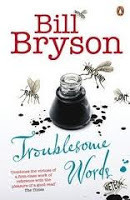
Troublesome Words
This one is a book by one of my favourite authors, Bill Bryson, and while it's set out like a dictionary, it's far more valuable. It looks at some of the most misused and understood words and outlines the correct usage. For example, do you know the difference between "imply" and "infer"? Or "nauseous" and "nauseated"? "Egoism" and "egotism"? Is it "straitjacket" or "straightjacket"? I always have this book to hand (or is it at hand?) when I'm writing just for such circumstances. Another thing I like about it is that it gives examples of when a word or phrase has been misused in print. It's good to know that even the most professional writers and journalists still get it wrong sometimes.
So those are the five tools I couldn't be without when I'm writing. Are there any other wonderful things you couldn't write without?
My first novel was published thirteen years ago and I'm now working on my eighth. During that time I've come to rely on several tools which I couldn't imagine writing a book without. Now, I'm not talking about the obvious things like a computer and spell-check. Let's take those a read, shall we? But if you don't already know about them, these five things may just enhance your work as a writer.
 Dropbox (www.dropbox.com)
 Dropbox is essentially a file-sharing tool (I believe others are available) and it's free to use unless you want to have mega amounts of storage space. For me it means security, and convenience. I save all my novels to the Dropbox folder which appears in "My Documents" on my desktop computer. If I'm out and about with my laptop I can go into "My Documents" and there will be a Dropbox folder containing the latest version of my work-in-progress. When I've finished working on it I save it, and when I get home, voila! it will have been automatically updated to the latest version on my home computer.
But what about if I'm at the gym and I'm changed and ready to go home and just waiting for my husband who wants to do another twenty lengths of the pool? Well, I can log onto one of the computers in the cafe area, click into the Dropbox website, and access my novel there. In other words, I can work on the latest version of my manuscript on any computer anywhere, provided it has an internet connection. I also have my phone synced to Dropbox, so in theory I could work on my novel on my smartphone.
As to peace of mind, if my house burns down and my desktop and laptop are both destroyed, my novel at least will be safe.
 Grammarly (www.grammarly.com)
Grammarly are sponsoring this blog post (thank you!) and I admit I'm quite new to it. It's an online proofreader, and seems to work in two ways. You can go to the Grammarly website and paste in some text, and it will check it for all sorts of grammatical problems from to comma use to unbalance pronouns. Alternatively you can download Grammarly and it appears on your toolbar and will work methodically through your text highlighting dangling modifiers and misuse of the subjunctive among other problems you've never heard of.

Thesaurus (Shift + F7)
In Microsoft Word, Shift and F7 opens the thesaurus and suggests all sorts of alternative words. Not only does it expand your vocabulary and improve your work, but it's fabulously helpful for finding that elusive word. Type the nearest one you can think of, hit Shift+F7 together, and the thesaurus will list every word which is vaguely similar in meaning. My writing would be immeasurably, vastly, inestimably, enormously and considerably poorer without it.
Coffitivity (www.coffitivity.com)

I only recently discovered this one, but it's so much fun! Ever imagined yourself the next JK Rowling, nursing a cup of lukewarm coffee in Starbucks as you type away at the next bestseller? I've written in public locations and for some strange reason the background noise is very comforting and helps provide focus. If you suffer from the typical writer's isolation, open Coffitivity.com and enjoy the comforting atmosphere which comes with having people chatting happily in the background.

Troublesome Words
This one is a book by one of my favourite authors, Bill Bryson, and while it's set out like a dictionary, it's far more valuable. It looks at some of the most misused and understood words and outlines the correct usage. For example, do you know the difference between "imply" and "infer"? Or "nauseous" and "nauseated"? "Egoism" and "egotism"? Is it "straitjacket" or "straightjacket"? I always have this book to hand (or is it at hand?) when I'm writing just for such circumstances. Another thing I like about it is that it gives examples of when a word or phrase has been misused in print. It's good to know that even the most professional writers and journalists still get it wrong sometimes.
So those are the five tools I couldn't be without when I'm writing. Are there any other wonderful things you couldn't write without?
August 4, 2013
What I learned in church today (4th August 2013)
What I learned in church today:
- People can - and do - praise God even for things they don't fully understand, but the more we learn about His plans and His doctrine the more we will praise Him. It is therefore our duty to listen, learn and seek.
- The church is strong, vibrant and growing in Australia.
- "And if it so be that you should labour all your days in crying repentance unto this people, and bring save it be one soul unto me, how great shall be your joy with him in the kingdom of my Father." (Doctrine & Covenants 18:15) That joy grows exponentially as someone you helped bring to The Lord goes on to bring others. (Viv Prentice)
- Jesus asked that the cup might be taken from Him (Matthew 26:39) but accepted that God's will be done. We too face trials, and may ask God to spare us them, but how much more should we say, "Thy will be done".
- One of the major differences between the LDS church and other traditions is that we see conversion as a two-way covenant. We covenant to take Jesus' name upon us and always remember and follow Him, and we receive salvation and eternal life in return. Those who break their covenant by rejecting Christ and turning their backs on the gospel lose their salvation and eternal life.
- People can - and do - praise God even for things they don't fully understand, but the more we learn about His plans and His doctrine the more we will praise Him. It is therefore our duty to listen, learn and seek.
- The church is strong, vibrant and growing in Australia.
- "And if it so be that you should labour all your days in crying repentance unto this people, and bring save it be one soul unto me, how great shall be your joy with him in the kingdom of my Father." (Doctrine & Covenants 18:15) That joy grows exponentially as someone you helped bring to The Lord goes on to bring others. (Viv Prentice)
- Jesus asked that the cup might be taken from Him (Matthew 26:39) but accepted that God's will be done. We too face trials, and may ask God to spare us them, but how much more should we say, "Thy will be done".
- One of the major differences between the LDS church and other traditions is that we see conversion as a two-way covenant. We covenant to take Jesus' name upon us and always remember and follow Him, and we receive salvation and eternal life in return. Those who break their covenant by rejecting Christ and turning their backs on the gospel lose their salvation and eternal life.
July 30, 2013
Strengths and Weaknesses

In writing, as in so many areas of life, we all have strengths and weaknesses. Even a really good writer will have elements of the craft that he or she is not particularly good at. Tolkien, for example, wasn't very good at battle scenes, and the film-makers charged with bringing his books to life for the big screen reported that they relished the opportunity to fully create a dramatic and authentic fight because there was so little to work with in the books.
A friend of mine is currently editing a book. She says that the writer is extremely good at writing interpersonal relationships and she is often moved to tears as she read these powerful sections, but is very poor at creating a fully visualised and relatable setting.
I'm not particularly good at characterisation or dialogue, but readers of my books have said that they like my descriptive scenes. I'm also a bit of a horror for writing myself into a corner. I'll have my character say something like, "I've got a brilliant idea for a prank we can play on him to get our own back for what he's done" and then have to spend the next few weeks trying to figure out what brilliant idea she might have had. Yes, really. That is actually the current situation with my work-in-progress, and I have resorted to asking random people "what's a great prank to play on a guy on a cruise ship?"
When I was writing Honeymoon Heist I had my characters hide out on a beach. And there they stayed for ten years because I couldn't figure out how to get them safely off that beach, so I gave up and started working on other projects instead. (If you want to know how I eventually had them escape their sandy prison, you'll have to buy the book.)
Even the greatest writers have areas they're not quite as good at, and other things they do really well. Maybe part of being a great writer is learning to work with what you can do as you work on what you can't.
July 28, 2013
What I Learned in Church Today (28th July 2013)
What I learned in Church today (Basildon Ward sacrament meeting, Southend Ward gospel principles and Relief Society):
- Life is like a long car journey. We know where we want to go, we know a few places we'd like to stop on the way, but we can't know the traffic, weather or state of the roads. When we come to difficult parts it helps to focus on the final destination.
- We should open our hearts if we are to receive all The Lord wants to give us.
- History turns on small hinges and our lives hinge on small decisions.
- Missionary work not only helps to grow the church, but to shrink it too. As missionaries are sent to far-off places they make connections and help ensure that every member of the church knows someone who knows someone...
- There are blessings the Lord reserves only for those who serve Him on a full-time basis. One of these is the gift of tongues.
- The Melchizedek Priesthood was originally called "The Holy Priesthood after the Son of God", but ancient peoples tried to avoid using the name of God too often due to respect and reverence, so instead started calling the priesthood after the name of one of the greatest men to hold it.
- It was Abraham's obedience which led to him being given the great blessing of becoming the father of God's chosen nation. (Genesis 22:18)
- Life is like a long car journey. We know where we want to go, we know a few places we'd like to stop on the way, but we can't know the traffic, weather or state of the roads. When we come to difficult parts it helps to focus on the final destination.
- We should open our hearts if we are to receive all The Lord wants to give us.
- History turns on small hinges and our lives hinge on small decisions.
- Missionary work not only helps to grow the church, but to shrink it too. As missionaries are sent to far-off places they make connections and help ensure that every member of the church knows someone who knows someone...
- There are blessings the Lord reserves only for those who serve Him on a full-time basis. One of these is the gift of tongues.
- The Melchizedek Priesthood was originally called "The Holy Priesthood after the Son of God", but ancient peoples tried to avoid using the name of God too often due to respect and reverence, so instead started calling the priesthood after the name of one of the greatest men to hold it.
- It was Abraham's obedience which led to him being given the great blessing of becoming the father of God's chosen nation. (Genesis 22:18)
July 21, 2013
What I Learned in Church Today (21st July 2013)
- When faced with a choice we tend to choose the path of least resistance, or the easiest option. Things will often prove to take more commitment than we originally thought, but we have consecrated our lives to the gospel of Christ and so we have to be ready to do all that is required of us.
- Church is not just an addition to the list of things we do. It should be who we are.
- The commandments God gives us are not difficult, and He will enable us to keep them.
- We can judge how well we are doing in the gospel by listening to the sacrament prayer and using it as a guide. Do we always remember Him? Do we keep His commandments? Do we take His name upon us?
- We are all called to be missionaries, whoever and wherever we are, and no matter what age we are.
- We need to create an environment to enable the Father to bring forth his promised work. Our contribution to that could be any number of things and will vary according to the individual.
Many thanks to Bishop Bleakley, President Barter and Elder Dryden, and to our lovely missionaries Elder Davis and Elder Kopischke.
- Church is not just an addition to the list of things we do. It should be who we are.
- The commandments God gives us are not difficult, and He will enable us to keep them.
- We can judge how well we are doing in the gospel by listening to the sacrament prayer and using it as a guide. Do we always remember Him? Do we keep His commandments? Do we take His name upon us?
- We are all called to be missionaries, whoever and wherever we are, and no matter what age we are.
- We need to create an environment to enable the Father to bring forth his promised work. Our contribution to that could be any number of things and will vary according to the individual.
Many thanks to Bishop Bleakley, President Barter and Elder Dryden, and to our lovely missionaries Elder Davis and Elder Kopischke.
July 16, 2013
Some of my Best Work
Like most writers, I have a day job. I love my job, and I'm very happy that it affords me the opportunity to use my writing skills. As an example I present exhibit A, which I think is some of my best work. Specifically, note just how many kettle puns I have managed to squeeze into just the first two sentences.


July 7, 2013
What I learned in Church today (7th July 2013)
What I learned in Church today:
- The Lord is picking up the pace in missionary work. Are we?
- New converts make great missionaries because friends see the changes in them, and they are filled with joy and righteous pride. (Go Mike!)
- We should pray for missionaries serving from our ward daily, by name, and pray specifically over the areas in which they are serving.
- We have an obligation to recognise and take advantage of any missionary opportunity which presents itself.
- All prophets before Christ testified that Christ would come. All prophets since Christ have testified that he did come. Prophets throughout time have testified of Christ and continue to do so.
- In the parable of the ten virgins the bridegroom comes in the darkest hour. No one knows when the second coming will be, but it will be during dark times.
- In today's money a talent (see Matthew 25) is about £300,000.
- The second servant in the parable of the talents gets exactly the same praise from his master despite having less than half as much. What we have or where we are matters less than what we make of it.
Thanks to everyone who bore their testimonies, the Elders for the Gospel Principles lesson, and Kathryn Gibson for the Relief Society lesson. Special congratulations to Chima on his baptism, and best wishes to Elder Davis as he moves to a new area.
- The Lord is picking up the pace in missionary work. Are we?
- New converts make great missionaries because friends see the changes in them, and they are filled with joy and righteous pride. (Go Mike!)
- We should pray for missionaries serving from our ward daily, by name, and pray specifically over the areas in which they are serving.
- We have an obligation to recognise and take advantage of any missionary opportunity which presents itself.
- All prophets before Christ testified that Christ would come. All prophets since Christ have testified that he did come. Prophets throughout time have testified of Christ and continue to do so.
- In the parable of the ten virgins the bridegroom comes in the darkest hour. No one knows when the second coming will be, but it will be during dark times.
- In today's money a talent (see Matthew 25) is about £300,000.
- The second servant in the parable of the talents gets exactly the same praise from his master despite having less than half as much. What we have or where we are matters less than what we make of it.
Thanks to everyone who bore their testimonies, the Elders for the Gospel Principles lesson, and Kathryn Gibson for the Relief Society lesson. Special congratulations to Chima on his baptism, and best wishes to Elder Davis as he moves to a new area.
July 2, 2013
Tax-Free Living

There seems to have a been a rise recently in people writing books about crazy things they did. From Yes Man (saying Yes to every proposal) to The Year of Living Biblically and Round Ireland with a Fridge (you figure it out) it's a fun way to have an adventure, write a book and make some money.
It's given me a new idea for a book: The Year of No Tax.
Unfortunately I can't write this book (you'll see why later) but I am happy for someone else to take up this idea and run with it, and maybe even make a good (taxable) income from the resulting book. Whoever that person might be, the premise is that the author has to live for a whole year without paying tax. Not just income tax, but other taxes too. Here's the demographic of the person who might be able to pull this off:
He would have to have earnings of under £10,000 per year, or whatever the current tax-free allowance is. (That rules me out.)He couldn't run a car. From road tax to fuel duty, motorists pay lots of tax.If he bought a bicycle instead, he'd have to buy it second-hand privately to avoid paying VAT (sales tax).He'd have to buy his clothes from charity shops, boot sales, etc. There's no VAT on children's clothes but there is on new clothing for adults.Similarly, he'd have to buy paperback books. There's no VAT on print books, but there is on ebooks.When shopping for food and other groceries, he'd have to choose carefully. Bread, milk, eggs, fruit, vegetables and the staples and essentials don't carry VAT, but "luxury products" like cakes and ready meals do. (If you look at your till receipts, items marked with a star are those which include VAT in the price.)"He" would have to be male. Feminine hygiene products are classed as "luxury" products and so we women have to pay tax on them. I've been complaining about it for years.He couldn't buy any home insurance, or indeed any other kind of insurance.He couldn't move house or invest money in an interest-bearing account.I've run into a few problems with my premise, of course. Unless the author heats his home and cooks using logs from his own trees then he's going to pay a tax on whatever fuel he uses. And then there's Council Tax, which covers the cost of your local council's waste and recycling services, local police, etc. So there may have to be some exceptions to the rule.
Anyone up for a year of tax-free living?