Anna Jones Buttimore's Blog, page 4
November 12, 2014
Six Reasons There's No Such Thing as a Bad Review

My eighth/first (long story) book was published last month. It's called Haven, and it's a gentle tale set in the mountains of North Wales, about how one woman's faith has a profound effect on those around her.
 I'm currently in full book-selling mode, and that means I need to encourage lots of reviews on Haven on Amazon, Goodreads, blogs, etc. A few lucky reviewers have received advance reading copies, and their reviews are starting to spring up.
I told my reviewers to be completely honest in their review, and I meant it. Even if they hated it, I told them, please still review it, because there is no such thing as a bad review.
Well, the first review popped up, and gave it only three stars. The main complaint was that one of the characters was very irritating and closed-minded, and that the book was too Mormon.
I wasn't disheartened by the review for several reasons.
1. That irritating character was supposed to be irritating. I was making a point with her about the unreasonable attitudes of certain people, and I'm glad that the point got across. When a reviewer singles out one character for criticism, it proves that the characters are distinguishable and fully-rounded.
2. The book being "too Mormon" is quite a selling point for some people. When it was first published fourteen years ago, I got a lot of fan mail (it was a bestseller in the genre) and in general the people who loved it were older LDS women who enjoyed travel and genealogy. They are my target audience, and they will see "too Mormon" as a positive advantage. Something one person is critical of may be the very thing another person sees as the book's strength.
For example, a friend of mine recently self-published a book about a woman who is kidnapped, brainwashed and kept as a sex-slave. Its not my usual fare, but I agreed to review it for her. In the review I described it as being "too dark and disturbing". Guess what? It's selling extremely well. Apparently some people love books which are dark and disturbing. Who knew?
3. Any review at all adds credibility to the book. It shows that people are reading it, engaging with it, thinking about it, and providing useful information for other would-be readers. An Amazon page with no reviews looks almost as sad and sorry as one with 100 five-star reviews (more on that later) but a good selection of varied and genuine reviews is interesting and really helpful to both readers and to the author.
4. Book reviews of any kind bring the book to people's attention. I can tweet and share that review. I can blog about it. I can use it as the vehicle to talk about my book. (Hey, I appear to be doing that right now!)
5. A bad review is very helpful to the author. Haven is the first in a trilogy, and reading critical comments helps me when it comes to preparing the other two books for publication. Maybe I'll want to tone down the religious element. Maybe I'll want to soften an annoying character. Maybe I'll take note of other suggestions in other reviews for future books, or revise the book being reviewed accordingly. All feedback, good or bad, helps improve the quality of the books you read.
6. Everyone knows people have different opinions, and some will hate what others love. A wide variety of reviews is important in showing that the reviews are genuine and providing balance. When making a purchase, I like to read the five-star reviews and the one-star reviews alike. Anything with only five-star reviews is immediately suspect.
A couple of years ago I self-published (jointly with the friend mentioned above) a book called The
 Saved Saint which looked at the conflict between Mormonism and traditional Christianity through a semi-fictional account of a Mormon missionary who becomes an evangelical Christian. It got several good reviews, but two very bad ones. One complained that it made the Christians look good and the Mormons look bad. The other one-star review said, "I was put off by the way Christians were depicted in the book while lifting up Mormons." Those two terrible reviews made us, the authors, very happy, because they proved that we really had struck the right balance and made the book completely fair and neutral.
So please, buy my books (click on the links above), review them honestly. I'm a big girl, I can handle criticism. I know I'm still learning my craft, and your comments really do help me.


June 24, 2014
Book Review: The Rebel Princess by Janice Sperry

There seems to have been a glut of re-imagined fairy tales of late. From Shrek to Maleficent, it seems we really can't get enough of new takes on the tired old stories and characters.
This book really does pack in all the beloved fairy tale cliches, from small animals needing kisses from princesses to fairy godmothers, evil twins and maidens locked in towers, but it throws them all in a blender, adds a large pinch of salt, and mixes them all up before churning them all out as high school students with issues.
Prince Charming is displaced in time, and is hanging around with the daughter of his intended princess. The princess in question wants to be dark and gothic and rebellious, but even her house is conspiring against her. Then there's their incompetent fairy godmother friend, and an enchanted forest where anything could happen.
The book is very fast-moving and dialogue heavy, but for its target audience of tweens to teens that's probably better than detailed description and ponderous prose. It's competently written and very amusing in places, but I found the main character annoying, and it didn't grab and hold my attention. That may well be because I'm twenty years too old and not a fan of fairy-tale fiction, of course. If you'd enjoy a light-hearted and surprisingly original approach to centuries-old characters and situations, then this could well be the book for you.
June 15, 2014
What I Learned at Church Today
- Faith is a choice we make daily.
- "Why call ye me, Lord, Lord, and do not the things which I say?" (Luke 6:46) "If ye love me, keep my commandments." (John 14:15) We should keep the commandments if we call ourselves followers of Christ.
- We have to accept that some people will stray from the church. We just have to ensure that we are not the reason they do so.
- If we are honest with ourselves we are all hypocrites because we are not living up to our own standards. But that is no reason to give up trying.
- We should not expect perfection in others around us any more than we can attain it for ourselves. We do not know what others are struggling with or working on.
- Saul was a good king. 1 Samuel 10-12 show that he was humble, honourable and faithful. But in 1 Samuel 13:9 he offers a burnt offering when he was not a priest and didn't have that authority. His punishment is that his descendants will not be king after him. (1 Samuel 13:13-14)
- "It's harder to get back than it is to stay."
- We are covenanted to The Lord and our contract is in the scriptures.
- We are a people who can be joyful and thankful even when we're grieving.
- "Why call ye me, Lord, Lord, and do not the things which I say?" (Luke 6:46) "If ye love me, keep my commandments." (John 14:15) We should keep the commandments if we call ourselves followers of Christ.
- We have to accept that some people will stray from the church. We just have to ensure that we are not the reason they do so.
- If we are honest with ourselves we are all hypocrites because we are not living up to our own standards. But that is no reason to give up trying.
- We should not expect perfection in others around us any more than we can attain it for ourselves. We do not know what others are struggling with or working on.
- Saul was a good king. 1 Samuel 10-12 show that he was humble, honourable and faithful. But in 1 Samuel 13:9 he offers a burnt offering when he was not a priest and didn't have that authority. His punishment is that his descendants will not be king after him. (1 Samuel 13:13-14)
- "It's harder to get back than it is to stay."
- We are covenanted to The Lord and our contract is in the scriptures.
- We are a people who can be joyful and thankful even when we're grieving.
June 5, 2014
What's My Goal?
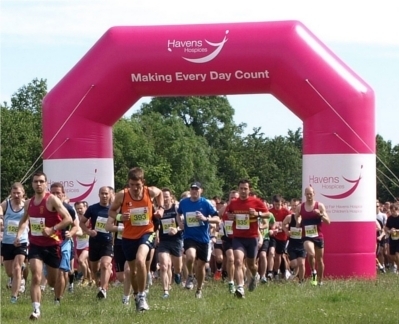
I was in Shoeburyness yesterday, and it was covered with high-vis signs which suggested that it was the start point for the Southend half-marathon.
It got me wondering whether a half-marathon is something I'd want to have a go at someday. Did I want my running to lead me to the point where I'd be lining up with those runners in Shoeburyness, facing thirteen-odd sweaty miles of running?
No. Really, a thousand times, no.
I'm running to get fitter and thinner. I have absolutely no aspirations to be one of those lycra-clad muscled women who think nothing of pounding the pavement for ten miles each morning before breakfast. There are no exercise-based items on my bucket list at all.
So what are my goals? Primarily weight loss. I have set myself a target of losing four stones by Christmas. It sounds tricky, but I have lost 9lbs in the past two weeks, so at a steady 2lbs a week it's entirely achievable. The main tool to help me in that goal is the wonderful Slimming World plan, but running helps keep my head in the right place, and keeps me away from the fridge.
My running goals are in stages. I can now--just about--run 1 km without slowing to a walk. I run 2.5km each day, and my first stage goal is to be able to run all of that without having to walk any of it. Once I can do that, I'll build up the distance slowly. Luckily the circuit from my house, down the road, up the middle of the Common and back to my house via the cut-through is exactly 1.25km, so I run two circuits, and will build up to three eventually and, finally, four.
That's my final, ultimate goal. I want to be able to run 5km comfortably, without slowing to a walk or stopping. Once I can do that, I'll maybe only aim to do it quicker, but I don't feel the need to do any more.
I think that'll be pretty impressive for a fat, middle-aged asthmatic woman.
June 4, 2014
Not my Best Day
 It was raining heavily at 2pm today (the one free hour a day I have to devote to exercise) so I had the bright idea (usually) of going to the gym to run on the treadmill. It was only as I drew into the car park and saw lots of people in workout attire standing outside that I remembered why I had written on my calendar not to go to the gym on 4th June: because they were testing the fire alarms.
So when I finally got in there wasn’t a whole lot left of my free hour.
I then picked a “new” treadmill. I usually run on one of the six treadmills lined up overlooking the pool, but for reasons I can’t begin to guess at now I decided a change would be nice. Of course, it’s probably entirely in my head, but running on that new treadmill seemed so much harder than running on one of my usual ones. Maybe I need a view of a beautiful cool blue pool when I’m working up a head of steam.
Then, partway into my run, I felt the Velcro on my armband—the one which holds my precious iPhone—start to come loose. I panicked and hit the emergency stop just as my phone started tumbling towards the belt and my pounding feet. Luckily I successfully caught my phone before disaster struck.
Unfortunately hitting the emergency stop on a treadmill completely deletes all the data. So I have no idea how far I had run, how fast, or how many calories I’d burned. I reset it and started again, but the Velcro was shot, and I find it really hard to run without the motivation of the beat of my music. So all in all, not a great run, but at least I tried.
June 3, 2014
Finding Time
So far I have done 5,780 school runs, with 840 still to go before my youngest child is old enough to walk to school by herself. That's a total of seventeen years of having to be at school gates at 9 and 3 each day. Let me tell you, that really eats into your plans for the day.
I also work five hours a day, and with two writing clubs, a book club, church responsibilities (teaching teenagers via Skype from 6.30-7.30 am each day) and attendance, plus the kids activities, and laundry, cooking and housework, it's been really tough in the past to find time to exercise.
But recently I arranged with my boss to change my working hours from 9.30-2.30, to 9-2. It means I have to rush (run?) back from the school run in the morning, and can no longer hang around chatting to the other mums, but it gives me precious free time each day, from the time I finish work each day, to the time I have to get to the school gate again at 3.
As I write this, I'm wearing my M&S tankini under my clothes (to save time). My bag is packed, and the moment 2pm comes round I'll be racing out of the blocks to the gym. I aim to be getting into the pool by 2.15 and out again (having swum 32 lengths - half a mile) by 2.45. That leaves me ten minutes to shower and dress (no time to dry my hair) so that I can get to school no. 1 at 3, and school no. 2 at 3.15.
Tonight is riding for my eldest, and the church youth group. Tomorrow is cheerleading for the middle child and Slimming World for me. Carving time for exercise into my schedule was something of a coup, I feel. (Just don't ask whether I ever do housework.)
How do you find time to exercise?
June 2, 2014
Whatever the Weather

I haven't been running long--maybe two months--but I think it's fair to say that thanks to the wonderful unpredictability of British climate I have run in all weathers.
This morning I checked the weather forecast, and discovered that it was predicted to be hot and sunny in the afternoon. That's my least favourite running weather, although ironically it's my favourite weather generally. If I'm going to get hot and sweaty I really don't need extra heat from the sun, thank you very much. (If I'm going to lie on a lounger by a pool with a good book, on the other hand, bring it on!)
I'm not too fond of windy, either. Running with the wind to your back is great, but running with the wind in your face is twice the effort for half the results. And since my running route is circular, I get both extremes on windy days.
But at 8.30 this morning my favourite running weather presented itself. Overcast, about 12 degrees, with the tiniest bit of drizzle. So I decided to throw in a quick run before work. I didn't do well, possibly because my body is used to running later in the day, and I gave up after only one circuit (more on excuses in a later post) so I'm going to have to go out again in the blazing sunshine after all.
Other great running weather includes snow, ice and storms. Because then I drive to the gym and do it on the treadmill in air-conditioned comfort.
June 1, 2014
The German Cake Shop Dilemma

So, Juneathon begins (www.juneathon.com). Only partway through 100 Happy Days (www.100happydays.com) I've signed up to another daily commitment. This time I've committed to do some exercise every day, and blog or post about it.
Today I face a choice. This afternoon, several of my friends are going to celebrate the one year anniversary of their favourite local coffee and cake emporium, Anke's. I've never been there, but I understand that the cakes are amazing. My sister recently moved to Germany largely, I suspect (from her numerous Facebook posts involving them), because of the superiority of German cakes, so I've been looking forward to visiting Anke's. And since I'm never averse to spending some quality time with quality people, this afternoon would be the ideal opportunity, especially with the party atmosphere and live music too.
But I need to do some exercise, and with most of the rest of the day taken up with church, cooking and driving to Witham, that two-hour slot this afternoon is the only opportunity I have. It's my swimming day today (I alternate swimming and running) so it would be 32 lengths of the pool followed by a ten minute relax in the spa.
So there's my simple dilemma. Cakes with friends, or a half mile swim?
Tipping the balance are several factors:
I've committed to a pretty major diet goal. I aim to lose 4 stone (56lbs) in 6 months. Tough, but do-able, provided I choose exercise over cakes.Last time I went to a cafe with said friends (and it was only Friday) it ended in sour cream, nutella, Doritos and pancakes, among other things. My eldest daughter is going to come to gym with me, and we can sit in the spa together and put the world to rights.So while pretty much all of me is clamouring for wonderful cakes in the company of my favourite people, my obligation, thanks to Juneathon and a potty diet goal, is to go for my swim. So my bag is packed, and I'm off now.
Hopefully Anke's will have a two-year anniversary party next year, and my friends will go again, and this time, having been at my goal weight for six months, I'll be able to join them and enjoy a wonderful German cake guilt-free.
April 25, 2014
Good Friday
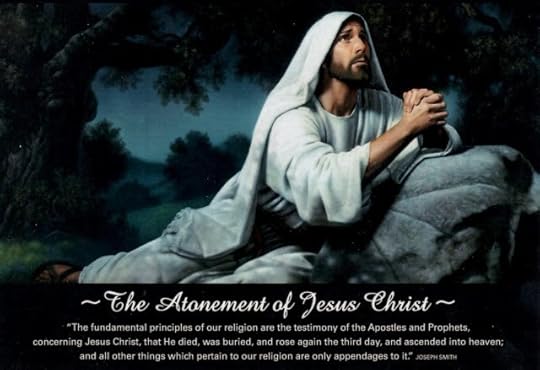
This is the text of the talk I gave in church on Easter Sunday, 2014. Well, most of it - I ad-libbed quite a lot. I'm posting it here following several requests for it. (And apologies to Hazel for the picture!)
Elder Richard G. Scott said "There is an imperative need for each of us to strengthen our understanding of the significance of the Atonement of Jesus Christ so that it will become an unshakable foundation upon which to build our lives." Accordingly, I’ve been looking at what the scriptures, the prophets and other church leaders have to say about what the atonement means.
The Atonement was wrought on Good Friday. I always used to think that it was odd that it was called Good Friday, since what happened that day was far from good. After all, in the course of just a little over a day Jesus was betrayed by his close friend Judas, denied by his best friend Peter, tried in a mockery of justice, savagely whipped and beaten, taunted and ridiculed, and finally executed in the most degrading and painful way possible. What could possibly be good about that? Jesus was the only perfect man who ever lived, the great exemplar, teacher and healer, loving and understanding. I love him, and it hurts me to even think about what happened to him. How could it possibly be called good?
Some sources (well, Wikipedia) tell me that good used to be synonymous with holy. (Shouldn't it be still?) But I don't think that's the only reason we refer to Good Friday. As I speak, I'd like you to bear in mind that the word gospel means good news. Is that something else we call good that isn't really?
Stephen E. Robinson talks in his wonderful book, Believing Christ, about how his wife came to understand the atonement. “Janet had a particularly exciting year that year. Besides being Relief Society President, she graduated from college for the second time, passed the CPA exam and took a job with a local firm, and she gave birth to our fourth child. One day the lights just went out. It was as though Janet had died to spiritual things; she had burned out. She became very passive in her attitude towards the church.
"Finally after almost two weeks I made her mad with my nagging and she said, 'All right. Do you want to know what’s wrong? I’ll tell you what’s wrong. I can’t do it anymore. My load is just too heavy. I can’t get up at 5.30 and bake bread, and sew clothes, and help the kids with their homework, and make their lunches, and do the housework, and do my Relief Society stuff, and have scripture study, and do my genealogy, and get our year’s supply organised, and do to my stake meetings, and write to the missionaries…' She just started naming, one after the other, all the things she couldn’t do, or couldn’t do perfectly—all the individual bricks that had been laid on her back in the name of perfection until they had crushed the light out of her.
"She said, 'I’ve finally admitted to myself that I’m never going to be perfect, I can’t make it to the celestial kingdom, so why should I break my back trying?'"
Do you sympathise with Sister Robinson? I know I do. A great deal is expected of us in this church. There is always somewhere we should be and something we should be doing, or someone we should be helping, or a calling we should be magnifying. And even discounting all the things we’re supposed to do, there are all the things we’re supposed to be. Loving, generous, happy, sober, healthy, chaste, worthy; standards far higher than those most of the rest of the world aspires to. It’s a wonder more of us don’t burn out. It’s especially a wonder that more converts don’t give up shortly after baptism, overwhelmed at all that is suddenly required of them.
But Brother Robinson goes on to say, “Finally it occurred to me what the problem was. Janet did not completely understand the core of the gospel—the atonement of Christ. She knew the demands, but not the good news. After all the meetings and lessons, after all the talks and testimonies and family home evenings, somehow the heart of the gospel had escaped her. She knew and believed everything except the most important part. You see, Janet was trying to save herself. She was trying to do it all with Jesus Christ as merely an advisor."
Jesus is not just an advisor, our exemplar, our friend, our brother or our Lord. He is our saviour. (In this church we refer to him as “The Saviour” a lot – more than we use his name, I think. In fact, during my anti-Mormon days, one of the criticisms I heard levelled at the church was that someone could go to a whole three-hour meeting block and not once hear the name of Jesus Christ. From my standpoint today I would like to ask first where that person was during the six opening and closing prayers and two sacrament prayers offered in his name, and second, how often that person heard “the saviour” referred to reverently and lovingly.)
Brother Robinson noted that “Janet was trying to save herself.” But we cannot save ourselves. We can never keep all of the commandments, do all the things we are supposed to do, be all the things that we are supposed to be. It just isn’t possible, however hard we try. If the gospel means that we have to do all these things, live up to all these standards and expectations, in order to get into the celestial kingdom, then it's not good news at all. In fact, it's pretty rubbish news, because no one can do it. And Good Friday was actually Fairly Pointless and Rubbish Friday because Jesus died for absolutely no reason at all.
We can’t refer to Jesus as “the saviour” if we don’t understand that he has saved us. If we are trying to save ourselves though our works, then we make a mockery of what he did on that Good Friday, and we deny the atonement.
Let’s look at a couple of scriptures. In Matthew 5:28 Jesus tells us to “Be ye therefore perfect, even as your Father which is in heaven is perfect.” That’s a tall order, and I think most of us take it seriously and are doing our best to live up to it, despite the burden. We have covenanted to follow Christ and keep his commandments to show our love for him, and we are obligated to do our very best. But as Sister Janet Robinson recognised, perfection really isn’t an attainable goal.
Or is it? There is a way be can be perfect, and the answer is in Moroni 10:32. It says, “Come unto Christ, and be perfected in him.” Through Christ, we can be made perfect. He can and does make up that difference between all we are supposed to be, and what we really are. In 2 Nephi 25:23 we read that “we know that it is by grace that we are saved, after all we can do.” In other words, after all that we can do, or maybe despite our best efforts to do good and live righteously, it is by grace that we are saved. Jesus Christ makes us perfect. He makes up the difference, and he makes all the difference. And that's the good news.
But what if we haven’t done our best? What if we haven’t even tried? Or what if we have made particularly grievous errors and committed sins which we can hardly bear even to think about, knowing how much we have hurt our father in heaven and shamed ourselves?
I read an interesting scripture the other day. It’s in Matthew 27, starting at verse 3. It reads, “Then Judas, which had betrayed him, when he saw that he was condemned, repented himself, and brought again the thirty pieces of silver to the chief priests and elders, saying ‘I have sinned.’” He had been paid thirty pieces of silver for betraying his Lord, and realising the enormity of what he had done, he tried to return it, to distance himself from his heinous crime. In the Joseph Smith translation we read what the chief priests and elders responded. They told Judas, “thy sins be upon thee.”
In other words, the repentant Judas could not put the matter right simply by recognising his guilt and returning the money. He had still committed the most terrible sin, and he couldn't turn back time and un-betray Jesus. We know what his terrible remorse drove him to do.
Some have questioned whether Judas truly repented. Maybe, just recognising that “he was condemned” – that others were angry with him, that his friends had turned on him – he was trying to save face. I don’t think so. I think his actions, his words, his despair, are the signs of someone who was truly repentant.
Although I hope none of us have sinned to the extent that Judas did, I think there are many of us here who know what it is to be truly repentant and recognise how Judas felt. However much we try to do good, to put right things we have done wrong, to make up for shortcomings in one area by working extra hard in another, we can’t do it. Our sins remain upon us.
The good news is that our sins, big and small, need not be upon us. The atonement of Jesus Christ means that we can be made perfect in him. Not just those of us who, like Sister Robinson, are doing our best but just can't quite manage it all, but those of us who haven't even got out of the starting gate when it comes to being righteous. Many of us repent regularly of small transgressions – forgetting someone’s birthday, eating too much chocolate – but those of us who have had real cause to use the power of the atonement for serious sins understand more than most, I think, what a wonderful thing it is. The knowledge that you’ve been forgiven, made clean, made perfect again, is something that brings overwhelming gratitude and joy.
In the most recent General Conference, Elder L. Tom Perry quoted Harry Emerson Fosdick who wrote: “Some Christians carry their religion on their backs. It is a packet of beliefs and practices which they must bear. At times it grows heavy and they would willingly lay it down.”
I think that’s how Sister Robinson felt, how I have felt when I have once again got out of bed at 6 a.m. to spend the next hour and a half preparing for and then teaching Seminary. I’m sure sometime we all feel the responsibilities placed up on us are heavy.
Fosdick continued, “Real Christians do not carry their religion, their religion carries them. It is not weight; it is wings.”
When we understand the atonement, when we are forgiven and filled with the joy of being saved by Jesus Christ, it lifts us. When we understand that we do not have to save ourselves, we only have to give our best, however paltry and pathetic our best may be, it frees us to experience the fullness of joy promised us.
And that’s why what happened on Good Friday was good.
I testify that Jesus Christ lives, that he is my saviour and yours, and that he can and will lift you to perfection.
Yn enw Iesu Grist, Amen.

Elder Richard G. Scott said "There is an imperative need for each of us to strengthen our understanding of the significance of the Atonement of Jesus Christ so that it will become an unshakable foundation upon which to build our lives." Accordingly, I’ve been looking at what the scriptures, the prophets and other church leaders have to say about what the atonement means.
The Atonement was wrought on Good Friday. I always used to think that it was odd that it was called Good Friday, since what happened that day was far from good. After all, in the course of just a little over a day Jesus was betrayed by his close friend Judas, denied by his best friend Peter, tried in a mockery of justice, savagely whipped and beaten, taunted and ridiculed, and finally executed in the most degrading and painful way possible. What could possibly be good about that? Jesus was the only perfect man who ever lived, the great exemplar, teacher and healer, loving and understanding. I love him, and it hurts me to even think about what happened to him. How could it possibly be called good?
Some sources (well, Wikipedia) tell me that good used to be synonymous with holy. (Shouldn't it be still?) But I don't think that's the only reason we refer to Good Friday. As I speak, I'd like you to bear in mind that the word gospel means good news. Is that something else we call good that isn't really?
Stephen E. Robinson talks in his wonderful book, Believing Christ, about how his wife came to understand the atonement. “Janet had a particularly exciting year that year. Besides being Relief Society President, she graduated from college for the second time, passed the CPA exam and took a job with a local firm, and she gave birth to our fourth child. One day the lights just went out. It was as though Janet had died to spiritual things; she had burned out. She became very passive in her attitude towards the church.
"Finally after almost two weeks I made her mad with my nagging and she said, 'All right. Do you want to know what’s wrong? I’ll tell you what’s wrong. I can’t do it anymore. My load is just too heavy. I can’t get up at 5.30 and bake bread, and sew clothes, and help the kids with their homework, and make their lunches, and do the housework, and do my Relief Society stuff, and have scripture study, and do my genealogy, and get our year’s supply organised, and do to my stake meetings, and write to the missionaries…' She just started naming, one after the other, all the things she couldn’t do, or couldn’t do perfectly—all the individual bricks that had been laid on her back in the name of perfection until they had crushed the light out of her.
"She said, 'I’ve finally admitted to myself that I’m never going to be perfect, I can’t make it to the celestial kingdom, so why should I break my back trying?'"
Do you sympathise with Sister Robinson? I know I do. A great deal is expected of us in this church. There is always somewhere we should be and something we should be doing, or someone we should be helping, or a calling we should be magnifying. And even discounting all the things we’re supposed to do, there are all the things we’re supposed to be. Loving, generous, happy, sober, healthy, chaste, worthy; standards far higher than those most of the rest of the world aspires to. It’s a wonder more of us don’t burn out. It’s especially a wonder that more converts don’t give up shortly after baptism, overwhelmed at all that is suddenly required of them.
But Brother Robinson goes on to say, “Finally it occurred to me what the problem was. Janet did not completely understand the core of the gospel—the atonement of Christ. She knew the demands, but not the good news. After all the meetings and lessons, after all the talks and testimonies and family home evenings, somehow the heart of the gospel had escaped her. She knew and believed everything except the most important part. You see, Janet was trying to save herself. She was trying to do it all with Jesus Christ as merely an advisor."
Jesus is not just an advisor, our exemplar, our friend, our brother or our Lord. He is our saviour. (In this church we refer to him as “The Saviour” a lot – more than we use his name, I think. In fact, during my anti-Mormon days, one of the criticisms I heard levelled at the church was that someone could go to a whole three-hour meeting block and not once hear the name of Jesus Christ. From my standpoint today I would like to ask first where that person was during the six opening and closing prayers and two sacrament prayers offered in his name, and second, how often that person heard “the saviour” referred to reverently and lovingly.)
Brother Robinson noted that “Janet was trying to save herself.” But we cannot save ourselves. We can never keep all of the commandments, do all the things we are supposed to do, be all the things that we are supposed to be. It just isn’t possible, however hard we try. If the gospel means that we have to do all these things, live up to all these standards and expectations, in order to get into the celestial kingdom, then it's not good news at all. In fact, it's pretty rubbish news, because no one can do it. And Good Friday was actually Fairly Pointless and Rubbish Friday because Jesus died for absolutely no reason at all.
We can’t refer to Jesus as “the saviour” if we don’t understand that he has saved us. If we are trying to save ourselves though our works, then we make a mockery of what he did on that Good Friday, and we deny the atonement.
Let’s look at a couple of scriptures. In Matthew 5:28 Jesus tells us to “Be ye therefore perfect, even as your Father which is in heaven is perfect.” That’s a tall order, and I think most of us take it seriously and are doing our best to live up to it, despite the burden. We have covenanted to follow Christ and keep his commandments to show our love for him, and we are obligated to do our very best. But as Sister Janet Robinson recognised, perfection really isn’t an attainable goal.
Or is it? There is a way be can be perfect, and the answer is in Moroni 10:32. It says, “Come unto Christ, and be perfected in him.” Through Christ, we can be made perfect. He can and does make up that difference between all we are supposed to be, and what we really are. In 2 Nephi 25:23 we read that “we know that it is by grace that we are saved, after all we can do.” In other words, after all that we can do, or maybe despite our best efforts to do good and live righteously, it is by grace that we are saved. Jesus Christ makes us perfect. He makes up the difference, and he makes all the difference. And that's the good news.
But what if we haven’t done our best? What if we haven’t even tried? Or what if we have made particularly grievous errors and committed sins which we can hardly bear even to think about, knowing how much we have hurt our father in heaven and shamed ourselves?
I read an interesting scripture the other day. It’s in Matthew 27, starting at verse 3. It reads, “Then Judas,
 which had betrayed him, when he saw that he was condemned, repented himself, and brought again the thirty pieces of silver to the chief priests and elders, saying ‘I have sinned.’” He had been paid thirty pieces of silver for betraying his Lord, and realising the enormity of what he had done, he tried to return it, to distance himself from his heinous crime. In the Joseph Smith translation we read what the chief priests and elders responded. They told Judas, “thy sins be upon thee.”
 In other words, the repentant Judas could not put the matter right simply by recognising his guilt and returning the money. He had still committed the most terrible sin, and he couldn't turn back time and un-betray Jesus. We know what his terrible remorse drove him to do.
Some have questioned whether Judas truly repented. Maybe, just recognising that “he was condemned” – that others were angry with him, that his friends had turned on him – he was trying to save face. I don’t think so. I think his actions, his words, his despair, are the signs of someone who was truly repentant.
Although I hope none of us have sinned to the extent that Judas did, I think there are many of us here who know what it is to be truly repentant and recognise how Judas felt. However much we try to do good, to put right things we have done wrong, to make up for shortcomings in one area by working extra hard in another, we can’t do it. Our sins remain upon us.
The good news is that our sins, big and small, need not be upon us. The atonement of Jesus Christ means that we can be made perfect in him. Not just those of us who, like Sister Robinson, are doing our best but just can't quite manage it all, but those of us who haven't even got out of the starting gate when it comes to being righteous. Many of us repent regularly of small transgressions – forgetting someone’s birthday, eating too much chocolate – but those of us who have had real cause to use the power of the atonement for serious sins understand more than most, I think, what a wonderful thing it is. The knowledge that you’ve been forgiven, made clean, made perfect again, is something that brings overwhelming gratitude and joy.

In the most recent General Conference, Elder L. Tom Perry quoted Harry Emerson Fosdick who wrote: “Some Christians carry their religion on their backs. It is a packet of beliefs and practices which they must bear. At times it grows heavy and they would willingly lay it down.”
I think that’s how Sister Robinson felt, how I have felt when I have once again got out of bed at 6 a.m. to spend the next hour and a half preparing for and then teaching Seminary. I’m sure sometime we all feel the responsibilities placed up on us are heavy.
Fosdick continued, “Real Christians do not carry their religion, their religion carries them. It is not weight; it is wings.”
When we understand the atonement, when we are forgiven and filled with the joy of being saved by Jesus Christ, it lifts us. When we understand that we do not have to save ourselves, we only have to give our best, however paltry and pathetic our best may be, it frees us to experience the fullness of joy promised us.
And that’s why what happened on Good Friday was good.
I testify that Jesus Christ lives, that he is my saviour and yours, and that he can and will lift you to perfection.
Yn enw Iesu Grist, Amen.
January 19, 2014
What I Learned in Church Today
- "Lord, I believe. Help thou mine unbelief." (Mark 9:24) We should recognise our strengths before we acknowledge our weaknesses.
- Wilford Woodruff was once challenged when preaching by a man who asked whether he had a college diploma, then told that he was not permitted to preach because he didn't. He pointed out to this man that Jesus and his disciples had no qualifications. The only qualification required to preach the gospel is the Holy Ghost.
- One of the first fruits of the Spirit is the ability to share it with others.
- Humility is the realisation of our sole dependence upon God.
- Gethsemane is an olive orchard, and the olives grown there were not eaten but were crushed for oil. The ripe olives being plucked from the life-giving vine to be crushed may be seen as a metaphor for the work Christ did in Gethsemane.
- “He that hath my commandments, and keepeth them, he it is that loveth me: and he that loveth me shall be loved of my Father” (John 14:21) Obedience shows love, and brings love.
- It's easier to obey a rule if we know the reason behind it, but we can't choose to only obey commandments and rules that we understand.
- God is our literal father, but Jesus Christ is also our father in many ways. We have our new lives through him, (Mosiah 5:7), we are adopted into his family when was are baptised and take his name upon us (Galatians 4:5) and under the direction of his father he created all things physically, including us. (John 1:3)
- Wilford Woodruff was once challenged when preaching by a man who asked whether he had a college diploma, then told that he was not permitted to preach because he didn't. He pointed out to this man that Jesus and his disciples had no qualifications. The only qualification required to preach the gospel is the Holy Ghost.
- One of the first fruits of the Spirit is the ability to share it with others.
- Humility is the realisation of our sole dependence upon God.
- Gethsemane is an olive orchard, and the olives grown there were not eaten but were crushed for oil. The ripe olives being plucked from the life-giving vine to be crushed may be seen as a metaphor for the work Christ did in Gethsemane.
- “He that hath my commandments, and keepeth them, he it is that loveth me: and he that loveth me shall be loved of my Father” (John 14:21) Obedience shows love, and brings love.
- It's easier to obey a rule if we know the reason behind it, but we can't choose to only obey commandments and rules that we understand.
- God is our literal father, but Jesus Christ is also our father in many ways. We have our new lives through him, (Mosiah 5:7), we are adopted into his family when was are baptised and take his name upon us (Galatians 4:5) and under the direction of his father he created all things physically, including us. (John 1:3)