Anna Jones Buttimore's Blog, page 11
December 4, 2012
Why a FREE Book?
 As you can hardly have failed to notice, this week the book I wrote with my Evangelical Christian friend Hellen Riebold is free to download on Kindle. I've been making a nuisance of myself all over Facebook about it. I'm sure there are people ready to block me if I mention it once more.
But you know what, it's a FREE BOOK! What's not to love?
Someone asked me why I was offering my book for free. After all, isn't writing about making money? Even at 70% royalties on Kindle books, 70% of nothing is... er... (never was very good at maths)... nothing.
There are several reasons why the book is free at the moment (only until Friday, though!):
Amazon offered a free period as a promotional tool. It's almost automatic to set up (you tick the box and set the dates and that's it) and we trust that Amazon, who are after all also in the business of selling books, know what they are doing. They are losing royalties on every free copy too. If Amazon tell us that a promotional free five days will do the business, we'll trust them in that.It pushes it up the best-seller charts. That makes it show up more on searches and in recommendations or lists.It's much easier to advertise something when it's free. I'm quite shameless about recommending it to people at the moment because I'm not actually asking them to part with any money.If more people read it then more people are likely to review it (please). And again, the more reviews it has (good or bad) the more credibility is has on Amazon and the more likely it is to get future sales.If more people read it they are more likely to tell their friends, or their book club, or their church, about it, resulting in sales we would not otherwise have had. In fact, given the nature of the book we anticipate people getting quite het up about it and telling lots of people to buy it because they want to be able to discuss with them the issues raised.But apart from all that, there are two really big, major reasons why we are offering this book free at the moment.We're not in this business to make money. There isn't actually a whole lot of money to be made from writing, and we knew this before we started. The vast majority of writers need to have a day job. They, and we, don't write for money but because they love writing. And we really loved writing this book. So it doesn't matter to us (much) if we have to give it away, we just really want to share it with people.We believe in this book. We think it has a very important message and can go far in increasing understanding and tolerance. We think it has the potential to break down the traditional division and misunderstanding between Evangelical Christians and Latter-day Saints. We want people to experience Harley and Jeannie's spiritual journeys and to be able to re-evaluate their own, and their attitudes to others', in light of what they have read. We want people to be able to understand how divisive and unhelpful it is when they criticise the valid spiritual experiences of others. In short, this is a very important book and we want it out there. And we don't care that we have to give it away to achieve that.If you haven't downloaded it yet, why not do so now? Even if you haven't got a Kindle you can download the free Kindle reading app for your PC, smartphone or tablet, and you've almost certainly got at least one of those (otherwise how are you reading this?) Here are the links:
Amazon in the UKAmazon in the US(If you live anywhere else, just search for "The Saved Saint" on your country's Amazon site.)
Thanks! Hope you enjoy the book, and don't forget to leave a review, or "like" the Amazon page.


November 29, 2012
Book Review: Cross Roads by Wm Paul Young
 Only the second book by Wm Paul Young, author of surprise bestseller The Shack, Cross Roads is an incredibly complex and ambitious book which needs to be read slowly, carefully and thoughtfully, and ideally with a notepad to hand.
Tony Spencer is a character I had problems getting to grips with. At the start of the book he's ambitious, sociopathic and paranoid. A brain tumour leaves his body in a coma and his soul, or maybe his spirit (the book did explain the difference but not in a way I could understand) wandering in a wilderness which represents his mind and interacting with Irish Jack, Jesus, and a Native American Grandmother who turned out to be the Holy Spirit. He responds by breaking down in remorse, and later he shows depths of compassion which seem at odds with the character built up in the first chapter. He also seems to take all the strange things that happen to him entirely in his stride, and knows a vast amount about Christianity for someone whose only religious teaching is from his late mother. In short, I wasn't convinced by Tony. But somehow that's okay, because actually I'm not sure the book was about him.
Part narrative, part metaphor but primarily sermon (maybe even treatise), as with The Shack the story and the character of Tony are largely the vehicle used to carry the religious message. And it is a book which has a lot to say on the subject of religion. I'm a deeply and devoutly religious person, but it got a bit much even for me at times and I enjoyed the moments of respite when there was actual narrative action. Even so, there was a great deal of profound truth, from "There are many ways to be alone" on page 2, to the poem on page 268 and Tony's ultimate understanding and triumph. It would be a hard-hearted reader indeed who was not, somewhere within the book, enlightened and enriched by new understandings and concepts, whatever their personal religious belief.
That's not the only similarity with The Shack, however. Despite the apparently very different subject matter I felt at times that I was reading a sequel. There were some wry nods to The Shack, but also some similar themes. One of the reasons I didn't like The Shack was because the violent murder of a child was a central theme and I find it difficult to read such things–I don't read misery memoirs, for example. Well, there's a dead child in Cross Roads too, and a shack, and three very familiar spiritual characters interacting with the father of that child, conveying creative concepts by means of very complex and lengthy sermons. (Like Young, I love a drop of alliteration.)
Young has been keen to address some of the criticism levelled at his theology in The Shack, with a lengthy defence of the Trinity doctrine to reassure readers who once again have qualms at his depiction of the Godhead, and several other reassurances which occasionally stood out uncomfortably against the story, especially for a non-Trinitarian such as myself with some views at odds with his. But the upshot is that he is unlikely to get the establishment backlash he suffered following his first book.
A great many people have reported that The Shack changed their lives. They won't be disappointed by the similarly powerful Cross Roads. Even those, like me, who find it rather heavy going will still draw from it profound and poignant ideas which will permeate their lives on every level. (And there I go with that alliteration again.)

November 27, 2012
Something New
 Writers are natural worriers. We spend years working on our book (baby), writing and rewriting, editing and editing again, a tweak here, a sub-plot there, until we are quite certain that there is nothing else we can do to make our work perfect. And then we turn it in to an editor or agent, or upload it, and it is out of our hands and released to the general public.
And then we sit back and worry. Should I have left out that chapter? Will the readers hate it? Will anyone buy it? Is it littered with typos which my editor and I have completely failed to spot? Is it actually any good? We can spend hours checking Amazon for new reviews, agonizing over sales figures, or (like me at the moment) making complete troll-idiots of ourselves on social media trying to persuade people to buy it.
Other writers have said over the years that the best solution is to throw oneself into the next project. And I have to confirm that they are quite right. When I was sending Emon and the Emperor to agent after agent, I was also writing The Saved Saint so that I didn't spend all day waiting for the rejection letters. And now that The Saved Saint is out there I'm embarking on my next book.
I'm really excited about it. Loving writing it, in fact, because I have remembered just how much I love writing. Like so many of my books it's one I started many years ago, but at only 2,000 words I have plenty more work to do on it. The working title is "The Faithful Feminist" and it's about an Anglican Female Vicar who becomes a Mormon and wrestles with no longer holding the priesthood. Heavy stuff (much like The Saved Saint) but I'm trying to make it light and funny to counterbalance that.
So, fellow writers, as you send your fully-grown project out into the world to face possible storms of criticism or poor reviews, distract yourself by starting a new book baby and getting right back to the basics. It's not only a good way of sparing yourself the self-doubt, but it reminds you that you are not writing for the money, the glory or the adulation (because, let's be honest, there isn't any) but because you have to.

November 20, 2012
A Little Christmas Gift
 Just got back from some riotous and eventful Christmas shopping and remembered that it's my blog day. I'm fresh out of inspiration, so maybe this is a good time to announce that I've got a little Christmas gift for you, dear reader. You're welcome.
So here it is: The Saved Saint, my latest book, will be FREE from 3rd-7th December.
That's it. For five whole days you could log onto Amazon.co.uk or Amazon.com, enter "The Saved Saint" into the search bar and find that it will cost you nothing at all to have it immediately downloaded to your Kindle, or iPad, or iPod, or PC, or any other device on which you have the (also free) Kindle reading app.
Have you ever read one of my books? Do you sometimes feel a little embarrassed because you've known me for a while, and you know I write books, but you haven't actually wanted to invest any of your money in my work? Well, here's your chance to rectify that awkwardness without blowing the budget. Mark 3rd-7th December in your diary and be sure to visit Amazon during that time to download your copy of controversial and ground-breaking novel The Saved Saint at 100% discount.
 But you know, it's Christmas for my co-author Hellen and me too. And it's more blessed to give than to receive. So here's what we'd like from you, if you're feeling kind and generous.
Once you have bought our book (for free) might you spare a moment to review it? A review on Amazon would be wonderful. The same review on Goodreads too would be even better. If you really haven't got time to review it, then just "Like" the book on Amazon, or "Like" the page on Facebook. I'll be really grateful and happy if you could do that.
And maybe you'd be able to do even more - give us an even better gift? Could you tell someone else about The Saved Saint? Whether you loved it and want to recommend it to all your friends, or you're incensed by it and want to have a noisy and belligerent discussion with others who've read it (there are book club questions and church study group questions at the back) suggest that they take a look at it too. It might not be free by then, but at only £3.09 it's still a bargain. You might even like to recommend it to your church auxilliary, or book club. We'd be thrilled with that.
Is it too early to wish you a Merry Christmas?
So, all those vital links:
The Saved Saint on Amazon.co.uk (Like, Buy, Review)
The Saved Saint on Amazon.com (Like, Buy, Review)
The Saved Saint Facebook page (Like, Discuss)

November 13, 2012
Amazon, Author Reviews, and why Argos Do It Better
 Amazon recently made a controversial decision and took down thousands of reviews because they were written by authors. You can read more about the fallout here, but essentially this was done because of all the crony-ism You know how that works - an indie author has maybe ten other indie author friends, often thanks to Facebook. Author 1 brings out a new book, and asks the other authors to post a five star Amazon review of his work. In return he will do the same for each book brought out by authors 2-10, and as a result each author will have nine glowing reviews on their Amazon page. And if that doesn't work there are, apparently, people out there who will pay you up to £7 to post a five-star review of their book or product on Amazon.
It's not difficult to review a book you've never read. At book club on Sunday one of our members talked about how her twelve-year-old son had been praised for his book reports, yet she knew he rarely read a book. When questioned he told her that he read the first page and the back cover blurb and that was enough to write a report which could convince his teacher that he'd read the whole thing. So those Amazon reviews might be a long the lines of "A lovely story, well written and highly recommended", but with no specifics at all.
Clearly, this sort of practice destroys the integrity of Amazon's review system and dupes readers into paying for a book which genuine reviews might have led them to avoid. I think Amazon were in a difficult position and I can understand how they have come to this decision.
But the problem is that I am a reader as well as a writer. Most writers are. And I might want to post a review of a Charles Dickens book without for a moment expecting the late Mr Dickens to return the favour. I might also read a superb book which I very much want to recommend not only to my friends, but to all the customers of Amazon who may be browsing and thinking about buying it. I'd really like my reviews to appear on the page, if Amazon don't mind very much.
The official reason Amazon gave for their decision (as opposed to saying that the review system couldn't be trusted because of crony-ism) was that authors are in direct competition with each other, and might post a bad review of another author's book in order to direct readers to theirs instead. But this argument doesn't hold water for two reasons. First, authors really are not in competition in the same way that, say, car manufacturers are. Most people only buy one car every four or five years, so Ford would have an interest in planting a few poor reviews of Vauxhall's vehicles. But readers may buy many books each year so there really is no reason in dissuading someone from buying a particular book, because with most indie books costing only £1 or so, readers can easily buy both. In addition, there are so many alternatives to choose from that posting a bad review of a "rival" author's book isn't necessarily going to result in the reader buying yours instead. After all, they have several million others to choose from.
I wonder if Amazon considered any alternative to a blanket ban on author reviews? One solution would have been more moderation of reviews, but there are so many of them this was probably dismissed as impossible to implement. Another might have been to use the review system employed by Argos. When you reserve something online to buy from Argos you get an email a couple of weeks later asking whether you would like to review it. The email includes a link to use, and this is the only way you can post a review. In other words, if you haven't bought the product from Argos, you can't review it on the Argos website.
People rely on Argos reviews. I know I do. My youngest child has been asking for a particular toy for several months, but the Argos reviews are highly critical so I haven't bought it for her and probably never will. I'll try to find her an alternative, because I know that people who have actually bought and used the toy are not happy with it.
If Amazon were to implement this system then all those indie authors would actually have to buy the book from Amazon before they are able to post a review. And the number of fake reviews might fall considerably as a result.

November 8, 2012
Why I Cycle on the Pavement
Bradley Wiggins, Britain's cycling champion (winner of the Tour de France, among many other accolades) is currently recovering in hospital after being knocked off his bike by a Vauxhall Astra van (see this link). I admire him enormously, and am horrified that this has happened. I hope he is soon completely better and winning cycling medals again.
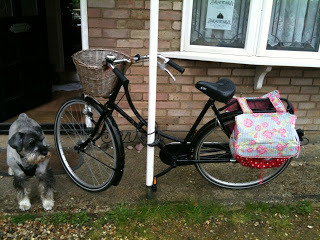 I've been wanting to blog about cycling for a long time because it's something I'm passionate about. I discovered I loved it during a visit to Center Parcs about six years ago, and when my car died shortly after that holiday I chose not to buy a new one, but to invest (£25) in a second-hand bike with a child seat on the back, and cycle everywhere instead. (I'm now on my third bike, Dutchess, and actually bought this one brand new.)
For a while after I started cycling everything was fine, but then one day I was riding along Church Road after dropping little Ceri off at pre-school when a Dreams lorry (my family will understand the significance of that) passed far too close. I was fine, and it was very lucky that Ceri wasn't in the baby seat at the time, but I was badly shaken and since then I have refused to cycle on the roads. It's just too dangerous.
The problem is that it is illegal to cycle on the pavement. I've never been stopped by the police and challenged about it (possibly because I'm generally cycling along behind Ceri who is still only 8) but if I did it wouldn't change anything, I would still do it. The roads near where I live are narrow and busy. In a collision between me and a pedestrian on the pavement we'd probably both have some scrapes and bruises, but we'd both survive. In a collision between me and a car I'd probably be seriously injured if not killed.
I'm told that the law requiring cyclists to ride on the road was made in the 1960's (although I can't find an exact date) when there were far fewer cars on the roads but the pavements were crowded with pedestrians. Now the roads are crowded and busy with lots of impatient people who are hostile towards vulnerable cyclists, and the pavements are empty. I have been cycling to my gym almost a mile away for over two years and in all that time I have only passed about three pedestrians on that stretch of pavement.
I am a very slow cyclist (I always get overtaken by other cyclists, and occasionally by joggers) and I recognise that pedestrians have right of way. If I get stuck behind someone who is walking on a narrow section I don't ring my bell, I wait until I can safely overtake them. When there is a grass verge between the pavement and the road I will ride there instead. If there were cycle lanes I'd use them, but there aren't. I do all I can to make sure I am a safe pavement-riding cyclist, because I will not ride my bike on the road.
 I've been wanting to blog about cycling for a long time because it's something I'm passionate about. I discovered I loved it during a visit to Center Parcs about six years ago, and when my car died shortly after that holiday I chose not to buy a new one, but to invest (£25) in a second-hand bike with a child seat on the back, and cycle everywhere instead. (I'm now on my third bike, Dutchess, and actually bought this one brand new.)
For a while after I started cycling everything was fine, but then one day I was riding along Church Road after dropping little Ceri off at pre-school when a Dreams lorry (my family will understand the significance of that) passed far too close. I was fine, and it was very lucky that Ceri wasn't in the baby seat at the time, but I was badly shaken and since then I have refused to cycle on the roads. It's just too dangerous.
The problem is that it is illegal to cycle on the pavement. I've never been stopped by the police and challenged about it (possibly because I'm generally cycling along behind Ceri who is still only 8) but if I did it wouldn't change anything, I would still do it. The roads near where I live are narrow and busy. In a collision between me and a pedestrian on the pavement we'd probably both have some scrapes and bruises, but we'd both survive. In a collision between me and a car I'd probably be seriously injured if not killed.
I'm told that the law requiring cyclists to ride on the road was made in the 1960's (although I can't find an exact date) when there were far fewer cars on the roads but the pavements were crowded with pedestrians. Now the roads are crowded and busy with lots of impatient people who are hostile towards vulnerable cyclists, and the pavements are empty. I have been cycling to my gym almost a mile away for over two years and in all that time I have only passed about three pedestrians on that stretch of pavement.
I am a very slow cyclist (I always get overtaken by other cyclists, and occasionally by joggers) and I recognise that pedestrians have right of way. If I get stuck behind someone who is walking on a narrow section I don't ring my bell, I wait until I can safely overtake them. When there is a grass verge between the pavement and the road I will ride there instead. If there were cycle lanes I'd use them, but there aren't. I do all I can to make sure I am a safe pavement-riding cyclist, because I will not ride my bike on the road.
November 6, 2012
Self Vs. Traditional Publishing
[It's four years since I started my blog! I know this because my first blog post was to congratulate the Americans on their lovely new President. And that's all I'm going to say about today's election because I've had a bellyful of it.]
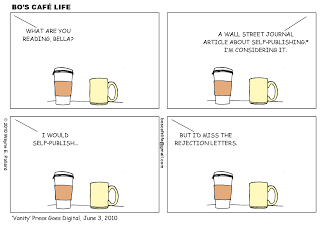 I am up and down like a see-saw in my opinion of self publishing. A year ago I was decrying it as something which brought down the quality of literature, diluted the market and duped the public into buying poorly edited and substandard works. But just two weeks ago I wondered aloud to my co-author, Hellen Riebold, why anyone traditionally publishes any more. Dazzled by the prospect of 70% royalties and complete control of, and involvement in, my own book, I was certain that I would by bypassing my traditional publishers (Covenant, Cedar Fort, and Walnut Springs) completely in future. But today I'm swearing never to self-publish again.
There have been many blog posts, comments and articles in the past along the lines of "What have traditional publishers done for us?" Well, here's my Monty Python-style list.
They put it in the book shops. The internet revolution notwithstanding, that's a really big one and can't be understated. My previous books were in Costco, Wal-mart, Seagull and several other LDS and non-LDS retailers throughout the US, plus in the two LDS bookstores in the UK. And on Amazon, Barnes & Noble and all the other major retailers. And as a result, people came across it, read the backliner, and bought it. My new book is only available on Amazon Kindle and no one will have any idea it's there unless I tell them. Having my book for sale on a shelf would be a huge boost to sales and general interest in it. But self-published books don't get into the bookshops.They professionally edit it. We were lucky enough to find an editor who would work for a share of the profits on The Saved Saint, but editing can be expensive (around £700/$1,000 for a full-length novel) and with a traditional publisher you are not limited to one edit. In fact, my books generally go backwards and forwards between my editor and me a number of times until we're both happy that it's perfect. That's not to say that mistakes and typos don't still creep in, but the overall finished version is likely to be far more polished.They produce a better cover. Yes, you can have a professional cover artist design your cover for you (again, at considerable cost) but an in-house designer at your publishers can do a brilliant job at no cost to you. I particularly love the covers of my books Easterfield (which was painted specially for my book) and Honeymoon Heist. A better cover means that the book stands out on the shelves (remember the importance of those?) and looks more professional.They market it. Not much these days, it has to be said, but enough to make a difference. When my first book, Haven, was published my publisher produced posters, bookmarks and a radio advert for it. They paid to have it appear in book catalogues, and wanted to arrange book signings for me (although I lived too far away for it to be practical). By the time my third book came out in 2008 the internet had changed things and there was very little in the way of this expensive marketing. I was advised to have a website, blog and Facebook page, and a Goodreads giveaway was organised for me. Now, I know this is still me doing my own marketing, but I had their advice and backup, and ultimately the onus for selling the book rested with them and they had a major financial interest in it doing wellSo have I sworn off self-publishing altogether? Not entirely. I think it still has its place, and I may self publish again some day. But I would far rather stick to traditional publishing if at all possible.
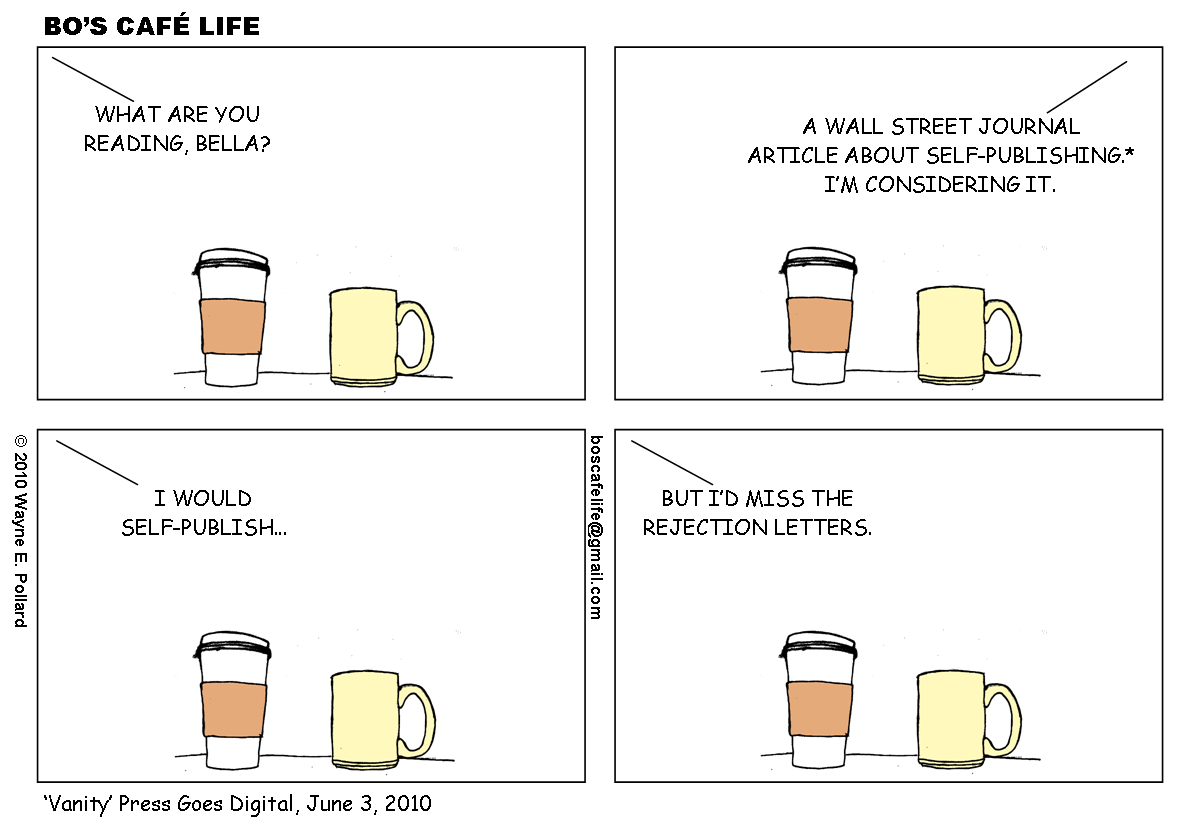 I am up and down like a see-saw in my opinion of self publishing. A year ago I was decrying it as something which brought down the quality of literature, diluted the market and duped the public into buying poorly edited and substandard works. But just two weeks ago I wondered aloud to my co-author, Hellen Riebold, why anyone traditionally publishes any more. Dazzled by the prospect of 70% royalties and complete control of, and involvement in, my own book, I was certain that I would by bypassing my traditional publishers (Covenant, Cedar Fort, and Walnut Springs) completely in future. But today I'm swearing never to self-publish again.
There have been many blog posts, comments and articles in the past along the lines of "What have traditional publishers done for us?" Well, here's my Monty Python-style list.
They put it in the book shops. The internet revolution notwithstanding, that's a really big one and can't be understated. My previous books were in Costco, Wal-mart, Seagull and several other LDS and non-LDS retailers throughout the US, plus in the two LDS bookstores in the UK. And on Amazon, Barnes & Noble and all the other major retailers. And as a result, people came across it, read the backliner, and bought it. My new book is only available on Amazon Kindle and no one will have any idea it's there unless I tell them. Having my book for sale on a shelf would be a huge boost to sales and general interest in it. But self-published books don't get into the bookshops.They professionally edit it. We were lucky enough to find an editor who would work for a share of the profits on The Saved Saint, but editing can be expensive (around £700/$1,000 for a full-length novel) and with a traditional publisher you are not limited to one edit. In fact, my books generally go backwards and forwards between my editor and me a number of times until we're both happy that it's perfect. That's not to say that mistakes and typos don't still creep in, but the overall finished version is likely to be far more polished.They produce a better cover. Yes, you can have a professional cover artist design your cover for you (again, at considerable cost) but an in-house designer at your publishers can do a brilliant job at no cost to you. I particularly love the covers of my books Easterfield (which was painted specially for my book) and Honeymoon Heist. A better cover means that the book stands out on the shelves (remember the importance of those?) and looks more professional.They market it. Not much these days, it has to be said, but enough to make a difference. When my first book, Haven, was published my publisher produced posters, bookmarks and a radio advert for it. They paid to have it appear in book catalogues, and wanted to arrange book signings for me (although I lived too far away for it to be practical). By the time my third book came out in 2008 the internet had changed things and there was very little in the way of this expensive marketing. I was advised to have a website, blog and Facebook page, and a Goodreads giveaway was organised for me. Now, I know this is still me doing my own marketing, but I had their advice and backup, and ultimately the onus for selling the book rested with them and they had a major financial interest in it doing wellSo have I sworn off self-publishing altogether? Not entirely. I think it still has its place, and I may self publish again some day. But I would far rather stick to traditional publishing if at all possible.
October 30, 2012
Stick to the Day Job
I recently came across this gem on an Amazon discussion. The writer had started the discussion because he had had a bad review for his first self-published book and wanted to know how he could get good reviews. Here's what he had to say (copied and pasted):
I av bin writing for about 5-6 years now n i fort id got it as good as i could really. I con tek bad reviews so long as I know what iv done wrong an con improve.
I am certain this gentleman is an excellent car electrician (his day job, according to comments later in his post) but he is not a good writer. I think I could tell him why he got a bad review. I suspect his reviewer paid good money for his book and was very disappointed to discover that the author had the literacy level of a six-year-old.
Sorry to be so harsh, mate, but if you can't write, don't. And the trick to getting good reviews is to write a good book.
I av bin writing for about 5-6 years now n i fort id got it as good as i could really. I con tek bad reviews so long as I know what iv done wrong an con improve.
I am certain this gentleman is an excellent car electrician (his day job, according to comments later in his post) but he is not a good writer. I think I could tell him why he got a bad review. I suspect his reviewer paid good money for his book and was very disappointed to discover that the author had the literacy level of a six-year-old.
Sorry to be so harsh, mate, but if you can't write, don't. And the trick to getting good reviews is to write a good book.
October 23, 2012
The Next Big Thing - The Saved Saint
[This post is part of a Blog Chain called "The Next Big Thing" in which authors of new books answer the same set of questions about their project.]
 The Saved Saint by Anna Jones Buttimore and Hellen Riebold
Where did you get the idea for your book?
I was asked to write it by a friend who used to be in my ward (and who appears in the book as Jeannie). Her RM son had joined another church and there was a lot of contention and conflict between them as a result. She thought a book about it could help them work through the issues together.
My background is that I was an evangelical Christian and a vehement and active anti-Mormon twenty years ago, until I finally read the Book of Mormon and joined the Church of Jesus Christ of Latter-day Saints. I’m also a published author, which is why Jeannie asked me to help.
I jumped at the chance to write such an interesting book, but halfway through I realised I didn’t have enough knowledge or experience of the current evangelical Christian experience to write certain parts convincingly from the perspective of Harley, the born-again RM. Luckily I have a good friend who is a Christian (and one of the pastors in her church) and a writer, so she came in with me as co-author.
What's the genre of your book?
It’s religious fiction, but it’s different in that it spans two religious traditions, and doesn’t favour one or the other.
Which actors would you choose to play your characters in the movie?
I know that it can be really helpful to pick actors in order to visualise the characters, but this book wouldn’t work as a movie as too much of the “action” is internal dialogue or feelings. Also, I don’t need to picture the characters because they are based on real-life people I have met. Sorry!
My elevator pitch:
A ground-breaking novel, based on a true story, exploring the conflict between evangelical Christianity and Mormonism.
Will your book be represented by a publisher or self-published?
I’m having to self-publish this one even though all five of my previous books were published by traditional publishers. It’s just too contentious for the LDS publishers, Christian publishers don’t want anything which shows the LDS Church in a favourable light, and secular publishers don’t go near religious stuff. So we’re lucky that we have the option to self-publish.
How long did it take you to write the first draft?
This is the quickest book I’ve ever written (my last two took seven and fifteen years) in that it took about a year between being given the idea and having something worth sending to an editor.
What other books compare to yours in your genre?
None. Seriously, novelising inter-religious dialogue has never been done before as far as I am aware. The only one I can think of is The Shack because that was essentially a religious treatise dressed up as a novel, but this is very different because it is actually a true story.
Who or what inspired your book?
As I’ve already mentioned, Jeannie and Harley Hesketh themselves. But also my long history as an anti-Mormon, and then in Mormon apologetics.
What else about this book might pique a reader's interest?
The book very much has a message–several important messages–and we hope it will be successful in creating understanding and dialogue between the traditions, and in reuniting families where religious differences may be causing problems. But we’ve also been careful to make it a good and readable story, a book which, aside from the message of tolerance, is entertaining, moving and enjoyable. A book which can be read by LDS Christians, Evangelical Christians and Non-Christians alike.

October 16, 2012
Adventures in Self Publishing
Last week I blogged about Vanity, Self and Indie publishing and how I feel that, however you dress it up, it's all just about paying to have a substandard book published to benefit your own ego.
But a week from today I'll be self-publishing my next book, something I swore I'd never do.
In a way this is even more exciting than publishing the old-fashioned way, because this really feels a lot more like "my" book. I designed the cover, and (with my co-author) I'll be doing the layout, chapter divisions, blurb, everything. And we'll be a collecting a full 70% in royalties rather than the 15% I'm used to. No objection to that, either.
But that's not why I'm doing it. I'm doing it because, even though I'm the author of five successful novels, no publisher will touch this book.
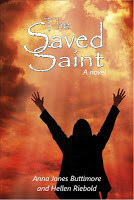 That's because our book, The Saved Saint, is based on a true story about a returned Mormon missionary who becomes a born-again Christian, and the effect his conversion has on his family. There are characters who are very critical to the Church of Jesus Christ of Latter-day Saints, as well as characters who are critical of the mainstream Christian tradition, and the good in each church is also documented through the experiences of the characters.
Because there are sections which are challenging for The Church of Jesus Christ of Latter-day Saints, my usual LDS publishers, quite understandably, are not interested. And because there are parts which are challenging about evangelical Christianity and complimentary about Mormonism, Christian publishers don't want it either. And because it's about religion, secular publishers won't touch it with a bargepole.
I find I'm suddenly very, very glad about the ebook revolution and the rise in Indie publishing. And I take back what I said about the books being substandard. While some of them may be (and the ones I read were poorly edited) the authors were nevertheless blazing a trail, insisting that their voices be heard amidst the rabble, and making it possible for groundbreaking books such as The Saved Saint to get the audience they never could have done otherwise.
I hope my book is not substandard, and it's definitely not poorly edited because we did hire a real professional editor. And I know I'm not publishing it because my own vanity demands it. No, I'm publishing this book because I believe it has a very vital message, a message important enough that it needs to be out there and read, by any means possible.
But a week from today I'll be self-publishing my next book, something I swore I'd never do.
In a way this is even more exciting than publishing the old-fashioned way, because this really feels a lot more like "my" book. I designed the cover, and (with my co-author) I'll be doing the layout, chapter divisions, blurb, everything. And we'll be a collecting a full 70% in royalties rather than the 15% I'm used to. No objection to that, either.
But that's not why I'm doing it. I'm doing it because, even though I'm the author of five successful novels, no publisher will touch this book.
 That's because our book, The Saved Saint, is based on a true story about a returned Mormon missionary who becomes a born-again Christian, and the effect his conversion has on his family. There are characters who are very critical to the Church of Jesus Christ of Latter-day Saints, as well as characters who are critical of the mainstream Christian tradition, and the good in each church is also documented through the experiences of the characters.
Because there are sections which are challenging for The Church of Jesus Christ of Latter-day Saints, my usual LDS publishers, quite understandably, are not interested. And because there are parts which are challenging about evangelical Christianity and complimentary about Mormonism, Christian publishers don't want it either. And because it's about religion, secular publishers won't touch it with a bargepole.
I find I'm suddenly very, very glad about the ebook revolution and the rise in Indie publishing. And I take back what I said about the books being substandard. While some of them may be (and the ones I read were poorly edited) the authors were nevertheless blazing a trail, insisting that their voices be heard amidst the rabble, and making it possible for groundbreaking books such as The Saved Saint to get the audience they never could have done otherwise.
I hope my book is not substandard, and it's definitely not poorly edited because we did hire a real professional editor. And I know I'm not publishing it because my own vanity demands it. No, I'm publishing this book because I believe it has a very vital message, a message important enough that it needs to be out there and read, by any means possible.